Human Responsibility for Global Development
GA 203
1 April 1921, Stuttgart
Translated by Steiner Online Library
Eighteenth Lecture
[ 1 ] If what we have often regarded as the subject of esoteric contemplation—what we have described in my Theosophy and in my Outline of Esoteric Science and in other books, as the structure of the human being—if we consider this, somewhat summarily, more from the outside—then we can look, on the one hand, at all that we might call the intellectual powers and faculties in the human being. Certainly, what we summarize here as intellectual faculties encompasses the most diverse aspects of what we have designated as the parts of the human being. Yet it is precisely through such considerations—which examine the various concepts and ideas we hold from different perspectives—that we make progress in our discussions. So, on the one hand, we see the more intellectual activities of human spiritual and soul life, and on the other hand, we see the activities of human spiritual and soul life that are more oriented toward the capacity for desire and the volitional. Today we want to consider these faculties from the perspective of humanity as a whole; that is, we want to ask ourselves: What significance do the more intellectual forces have in the life of humanity as a whole, and what significance do the more volitional forces have? If one undertakes such a line of inquiry, it can only be fruitful if one does not view the individual human being—or humanity as a whole—in isolation from the entire Earth, but rather as a part of the entire Earth. That we have a right to do so becomes clear to you from following the discussions found, for example, in Occult Science regarding the Saturn, Sun, and Moon phases of our Earth’s development.
[ 2 ] If you recall what is said there about the evolution of Saturn, the Sun, and the Moon, you will see that the matter is not viewed there in the same way as, for example, today’s geologists and natural scientists do—who, on the one hand, view the Earth geologically as if humanity were not part of it at all, and then, on the other hand, consider humanity in isolation within a kind of self-contained anthropology, as if humanity were strolling about on ground entirely foreign to it. Therefore, this cannot be a truly fruitful approach. If you follow what is said about the development of Saturn, the Sun, and the Moon, you will see that in this development, the forces at work within humanity itself and the forces at work in the rest of the planet cannot be thought of as separate. The fact that humanity has attained a certain degree of autonomy on Earth and, so to speak, walks about on the planet’s surface independently of it is a stage of development; it must not be the sole determining factor in our perspective. We must view humanity in the context of the entire development of the Earth. And here we must first say: When we consider the faculties of the intellect and recall what has been said about earlier metamorphoses—the Saturn, Sun, and Moon metamorphoses of Earth’s evolution—we will come to realize that this inner quality, which we now find in human beings as the development of the intellect, did not exist previously, that is, during the earlier metamorphoses of Earth’s evolution. What is today, so to speak, localized in our heads as intellect was, as a general intellectual faculty—a pervasive, law-governed intellectual faculty—distributed throughout the entire Earth. One could say: Intellect was at work in the facts of the entire Earth’s evolution. Human beings themselves—not to mention Saturn and the Sun—did not yet possess intellectual consciousness on the Moon, but rather a kind of dreamlike consciousness. This dreamlike consciousness gazed out at the phenomena of the world, and while possessing this dreamlike consciousness, human beings did not say to themselves: “Out there, the phenomena of the world are unfolding, and I comprehend them with my intellect”—but rather, human beings dreamed in images. Yet they perceived what we today experience as “intellect,” localized as if within our own heads, as permeating the things and facts outside. We distinguish between the laws of nature and that which within us grasps these laws of nature, and we call the latter our intellect. The human being of ancient times lived, in terms of soul consciousness, only in images, and this was indeed still the case during the earlier stages of our Earth’s development; he did not distinguish the laws of nature outside from his intellect, but nature itself possessed intellect; nature itself established its own laws. Out there, the intellect was at work. It is a stage in the development of our now independent humanity that we say: We carry reason within us, and the laws of nature exist outside of us. — For the people of prehistoric times, the sum of these laws of nature was reason.
[ 3 ] Now, as the human race on Earth, we have already developed, to a certain extent, the awareness that we possess reason and that the laws of nature exist outside of us, which we can only comprehend through our reason. By pointing out this fact, we are touching upon an important impulse for humanity’s development. But we must be aware that this important impulse for humanity’s development must be taken up more and more and developed even further. After all, it is not yet fully developed today. We tell ourselves, to be sure, that we possess reason within us and that the laws of nature prevail outside; but we have not yet fully made reason our own. As humanity, we have come to a standstill halfway along the path with regard to this internalization of reason, rationality, and the laws of nature. And especially in our time, this fact I have just touched upon is among the things that require the most attention, particularly from the standpoint of spiritual science. We are still extraordinarily proud today when, with regard to everything that belongs to reason—what we recognize as human knowledge—we share something in common as human beings. It is still regarded today as something that has an extraordinarily profound impact on the entire development of human nature: that science should, as it were, be developed as something hovering universally above humanity, and that people, by devoting themselves to science, should, as it were, sacrifice their individuality—that they should think the way “everyone” thinks. This is an ideal, particularly of our public institutions of higher education: to cultivate a science that is entirely impersonal, entirely devoid of individuality; to make this science into something in which one says “I” as little as possible and “one” as much as possible: “one” has discovered this or that; “one” must accept this or that as true! — And the ideal of today’s official representatives of science, in particular, would surely be that one could not really distinguish between individual professors—at most in terms of temperament—when moving from one university to another very far away. It would be considered nothing short of an ideal if one could, say, attend a botany lecture somewhere in the north, then take a quick hot-air balloon ride south, hear the continuation of that lecture there, and find that it corresponded exactly to what “one” currently knows in botany! Something entirely impersonal, non-individual—that is what is regarded as correct in this field, and there is a dreadful fear that something personal might somehow creep into this knowledge, into this work of the human intellect. It is precisely in this field that the leveling of the entire human culture applies most of all. People take pride in never, under any circumstances, deviating from what has been formulated once and for all in a certain way. So they want to separate what science is from the human being. Indeed, they separate it from the human being in many other respects as well. Examples of this can be cited. Just imagine for a moment how most people today who participate officially in scientific life write their dissertations, their private lecturer theses, their applications for professorship, and so on. They put as little of themselves into them as possible and expect as little as possible that these books will be read by the general public. They are written; but those who are supposed to examine them in the relevant academic body hardly ever read them—at most, one person skims them and then tells the others what to make of them. For science is, after all, something that “one” thinks about, not an individual personally, and then these works are stored away in libraries. When someone writes something similar again, they look through the library catalogs to see where they might find something they need to take into account, and then it gets stored away again, touching as little as possible on the individual and personal. It’s all separated off, after all. Countless items proliferate in the libraries that aren’t of any personal interest whatsoever. That is, fundamentally, a terrible state of affairs. But what’s even more terrible is that people don’t actually sense this at all; they feel completely at ease with the idea that they themselves don’t need to know anything, because you can find everything in the libraries if you can just look up the relevant keyword in the catalogs. That’s where things rest. Yet people walk hand in hand with science, which is something so general. However, this science would have to look different if people kept it in their minds rather than on the shelves of libraries.
[ 4 ] This is what, I would say, as if through a few holes—for one could cite many examples along these lines—gives us an indication of how the general culture of the intellect in humanity today is still unindividual and impersonal, how people would like to have it as something that hovers like a cloud above them. But what human beings bring forth does not belong only to human beings; it belongs to the universe. That is why I have said that, in order to arrive at a fruitful perspective, we must view human beings in relation to their planet and, in turn, the planet in relation to the entire universe.
[ 5 ] So whatever a person produces—whatever he applies his intellect to—he can approach it in two ways. On the one hand, they can exert this intellect to develop sciences, all of which then lead to “one thinks,” “one knows,” “one has made such and such progress”; then this is written down in books, then it is recorded, and then this becomes the science through which generations grow up; and people can wither away in the course of such an exercise of the intellect. They can approach it by seeking what they actually find interesting in various other things—just not in what is, after all, untruth: an untruth objectively untouched by the personal, which is objectively preserved in libraries; they can go about it by not touching on that at all; after all, one has known scholarly gatherings that used the term “shop talk” in their terminology. It was considered somewhat inferior to discuss the individual topics of science in small circles or the like after the official speeches. There, people talked about all sorts of other nonsense that was, in any case, quite far removed from what actually constituted scientific matters. And those who had the weakness of being somewhat enthusiastic about their field of study, and who then began—say, over tea or black coffee—to discuss this or that philological or other topic, were precisely the people who engaged in “shop-talk”; they were the ones who weren’t taken entirely seriously, who lacked a worldly spirit.
[ 6 ] I once encountered this impersonal attitude toward science in a very peculiar way. I was once at a gathering where Helmholtz was giving a lecture. During this lecture—which Helmholtz read verbatim from a text that had already been in print for quite some time by the time he delivered it—the audience listened in the way one simply listens to such a lecture. After the lecture, a journalist came up to me and said: “What was the point of that, really? There was no need for it at all. Anyone who wants to can just read a lecture like that once it’s published; why should it be read aloud to them as well? It would be much smarter if Helmholtz simply walked around the auditorium and shook everyone’s hand; that would be so much more—it would accomplish so much more.” — That’s such a perfect example of the alienation from what actually “floats around” so impersonally as science. And of course, people wither away in the process. That’s one way to grasp the culture of the intellect.
[ 7 ] The other approach is this: to take an interest in every detail, to let the mind catch fire and breathe life into science, to transform it into living concepts, so that everything we comprehend and grasp is truly received by our inner life of the mind. In this way, one can truly imbue everything that science offers with inner fire; in this way, by grasping the individual sciences, one can gradually penetrate the whole of worldly existence; in this way, one can shape something that becomes the most deeply personal concern of every person who pursues it. That is the other approach. And everything that is being pursued on the one hand is, in essence, impersonal and separate from human beings. People would most like to invent machines for scientific work, so that they would no longer have to think for themselves; then they might be productive without actually thinking. But what arises from the full, wholehearted pursuit of science—these are not merely matters of humanity; they are matters of the entire planet and thus of the entire universe. For what a person does—by thinking, by intellectually forming something in their mind—is an event just as much as when water flows from a spring down a river to the sea, or when it evaporates, or when it rains. What happens outwardly and materially in the rain, what happens when a plant sprouts, and so on—these are events of one kind. What happens through human beings are events of a different kind. It is not merely a human affair; it is a matter concerning the entire planet. And this is precisely the task of human beings in their development on Earth: to take into themselves the intellect that was previously spread out over the planetary realm, to unite it with themselves. Thus, it is an impulse in human development for a person to make this knowledge a personal matter, to carry it out with enthusiasm, so that it may pass into them and be seized by the fire of their heart. And if the latter does not happen—if humanity [merely] stores knowledge in an impersonal way—then something that is meant to happen in the context of Earth’s evolution does not take place. The culture of the intellect does not capture the heart of humanity. Intellectual culture develops, so to speak, only in the head and hovers too far above the surface of the Earth, existing merely in the heads; it develops only in the heads and ought to descend into the hearts. But what is not grasped by the hearts—what is not taken up by the human soul—is what the Luciferic spirits are waiting for. And that which the Luciferic spirits thus await—they can receive it when it hovers over the earth in this impersonal way. For the only way to wrest what belongs to the world of the intellect from the Luciferic spirits is to permeate it with the soul, to make it a personal matter. And what is happening in our time—what has been happening for a long time and what must change—is precisely that we are allowing earthly existence, through the detour of cold, sober intellectual aridity, to fall prey to the Luciferic world. This holds back the Earth’s development; this keeps the Earth stuck at an earlier stage. It does not reach its fulfillment. And if people continue to pursue the impersonal nature of so-called science for a long, long time, the consequence will be that they lose their soulfulness altogether. This impersonal science is the murderer of the human soul and spirit; it withers the human being, it dries them up. Ultimately, it will turn the Earth into what one might call a dead planet, inhabited by automaton-like human beings who lose their spiritual and soul aspects in this way. Here, too, it must be said: these matters must be taken seriously. We must not stand by and watch this cosmic murder being committed through the abstract, impersonal pursuit of knowledge on Earth. That is one thing.
[ 8 ] The other is the human capacity for desire. This is what is connected to the volitional aspect of human nature. What is connected to the volitional aspect of human nature can, in turn, take two paths. One path is for this volitional aspect to subordinate itself as much as possible to commandments, state laws, and the like, and to conform to what constitutes the more general law, so that the general law prevails and, alongside it, there is only the purely instinctive desire of human beings.
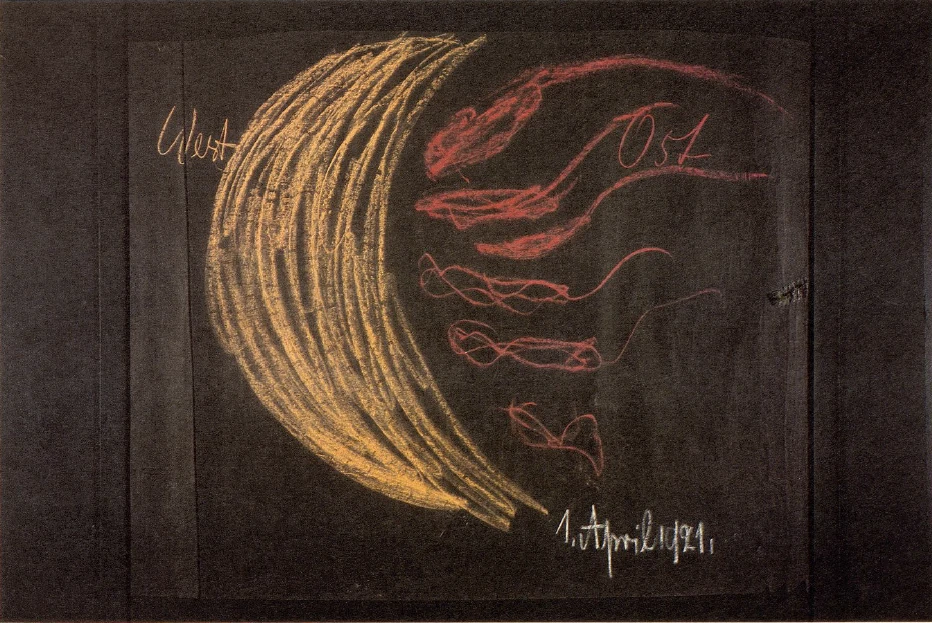
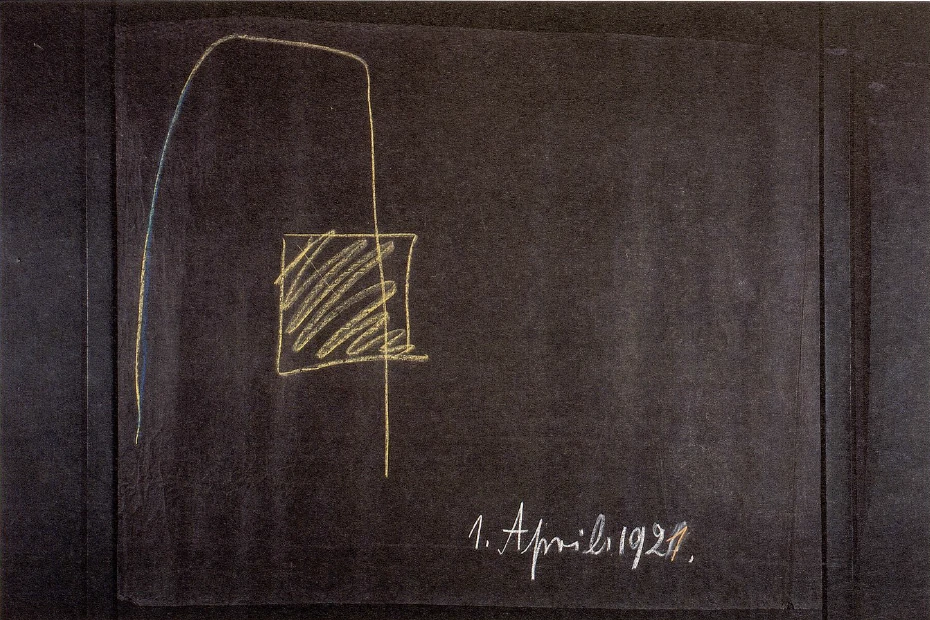
[ 9 ] The other path is for that which is reflected in human beings as the capacity for desire—that which exists as the capacity for will—to gradually rise to the level of pure thought, to express itself freely and individually, so that it flows into social life through love. This is the kind of expression of the will and the capacity for desire that I have described in The Philosophy of Freedom. There I showed how what constitutes universal human law must emerge from every human individuality, and that when what emerges from human individuality rises to the level of pure thought, social order arises through the harmonization of what people do. People fear any social order that is constituted by each individual setting their own course. They wish to organize what people are supposed to want. They wish to substitute “categorical imperatives” for the love that arises from within each person. But because such abstract commandments exist—whether they be commandments modeled on the Decalogue or the laws of any unitary state—because such commandments exist, only instinctual desires assert themselves from within the individual; those desires that we see reviving especially today and that, in essence, have become the sole social ingredient of the present age. Again, what happens within human beings as a result of their failure to shape their will up to the level of the individual, to elevate it to pure thinking—this, too, is not merely a matter concerning human beings alone, but the entire planet and thus the cosmos. And the Ahrimanic spirits eagerly await what happens when the human will cannot take on an individual form. These Ahrimanic spirits appropriate this, and they utilize everything in human beings that consists of desires not developed into love—desires that live through the will—and they use it in such a way that they transfer it to individual demonic beings. Just as a more general entity arises from the intellectual activity that hovers above humanity, so do entirely individually shaped demonic entities arise from the capacity for desire within individual personalities that has not been transformed into love. And if we did not strive for an individual form of free coexistence within the social order, the Earth would become filled with beings who, while individual, would lead an Ahrimanic, spirit-like existence and would deprive the Earth of the possibility of transforming itself into the next planetary metamorphosis—the Jupiter metamorphosis. Schematically, this would look something like this: on the one hand, abstract intellectual rationality would shape our planet (see diagram on the left), preventing it from reaching completion; and on the other hand (right), that which arises from will not transformed through love would give rise to a multitude of individual entities. This diagram illustrates what someone today, looking into the beginnings of a civilization that is undermining the proper developmental process of the Earth, can see as what will take shape if the impulses now sprouting so strongly in the Western world are allowed to proceed unchecked, and what is developing so strongly in the Eastern world (see drawing)—that which lies there, arising merely from human subjectivity, within the state culture that has fallen into decadence; this is actually what seeks to shape Earth’s evolution toward individual demons. What is developing in the West is that which seeks to sail into a general intellectual realm and gradually turn people into automatons.

[ 10 ] These things can be clearly perceived, albeit only in the mechanisms of those automatons that already exist today—in part; I say “in part” quite deliberately, for they are indeed still something very individual. In many respects, one can already see the automatism at work. But there is still something present in these machines in a very individual way, namely something that can still be noticed there as a sort of appendage to each of these individual machines—an appendage that, when things are not actually converted into banknotes, resonates with gold and silver. But the general automatism would already have the effect of turning even the individual wallets into general communist wallets.
[ 11 ] But this is precisely what must not be viewed today solely through the lens of mere likes and dislikes, but rather with a perspective that sees through world events—one that can view what happens among human beings in the context of cosmic events. When one views things in this way, one will say to oneself: It has been entrusted to human beings to wisely advance the planet in its evolution. — This particular form of existence, as schematically indicated here, if humanity does not attempt to transform knowledge into wisdom—which can only happen when human beings personally commit themselves to knowledge, take it in personally, and reconnect it with that which, through the circuitous path of love, becomes a matter of universal human concern arising from the individual capacity for desire. With a strong element of inner understanding, one can take these things in through spiritual science. Essentially, this is reflected today in what, I would say, has remained as a cosmic symbol in the Moon.
[ 12 ] When the moon is in its first or last quarter, what it reveals to us in its crescent shape is a reflection of what the Earth could become; on its darker side, it reveals to those who can perceive the supersensible these demonic little figures that move in a hideous manner within the inward curve of the crescent. So it is actually quite accurate to say: Through what I have just described, human beings must protect the Earth from a lunar existence. — The Moon reveals what the Earth can become in a cosmic image set before us. And so we must accustom ourselves to penetrating what we see out there in the cosmos in this very way with an inner sense. We must look at the Moon in such a way that we say: It points out to us something that has been set before us by cosmic evolution—like a caricature of earthly existence, like what earthly existence can become if human beings do not learn to make impersonal knowledge their personal concern, to transform individual desires into love, thereby turning them into what, in associative social life, can become a common concern of all humanity. One can better understand what happens in the cosmos by looking at what takes place within human beings, and conversely, one can properly perceive what constitutes humanity’s task by gaining a meaningful insight into the conditions of the cosmos. Then one’s attention naturally turns to that which is meant to live within humanity as morality and ethics.
[ 13 ] The things that are said about Lucifer and Ahriman are certainly not meant to be merely theoretical speculations, nor are they meant to be stated simply as “Ahriman is this” and “Lucifer is that.” Rather, one should now take these concepts to heart in such a way that, in everything that happens around one, one sees the workings of the Luciferic spirits who wish to hold back the Earth stage in its earlier phases, and that in everything that is Ahriman, one sees that which seeks to hold back the Earth stage so that it does not progress into future stages. But one must see through these things in detail. One must, I would say, be able to evaluate the moral in terms of natural law and the natural law in terms of morality. When that happens, then the great bridge will be built between the moral worldview and the theoretical worldview—a bridge of which I have, in fact, spoken often right here in this very place.
[ 14 ] The events taking place today must also be viewed from this perspective. For only when human free will intervenes in these world events can what has been outlined here for you today be put into practice. The future development of the Earth is, after all, entirely the task of human beings and humanity. This must not be overlooked. And those who wish only to theorize—who, for example, wish only to see or hear that ‘this will happen after so many centuries or millennia’—fail to take into account that we are already living in an age in which it has been entrusted to humanity to participate in the metamorphoses of Earth’s development; that what constitutes universal world understanding must be absorbed into the human soul, and that what lives individually within human beings as the capacity for desire must flow out from them in the form of universal love for humanity—which, however, can only be attained through pure, free thinking.
[ 15 ] I have thus presented to your inner eye two cultural currents that are of paramount importance, and in doing so I have attempted to show—again from a certain perspective—what the task of serious spiritual science is. This task lies along these lines. It truly does not consist in a few people deriving a sense of well-being from knowledge of this or that, but rather—the task of this serious spiritual science—in intervening in human development in such a way that world events are shaped in the right way out of humanity itself.