

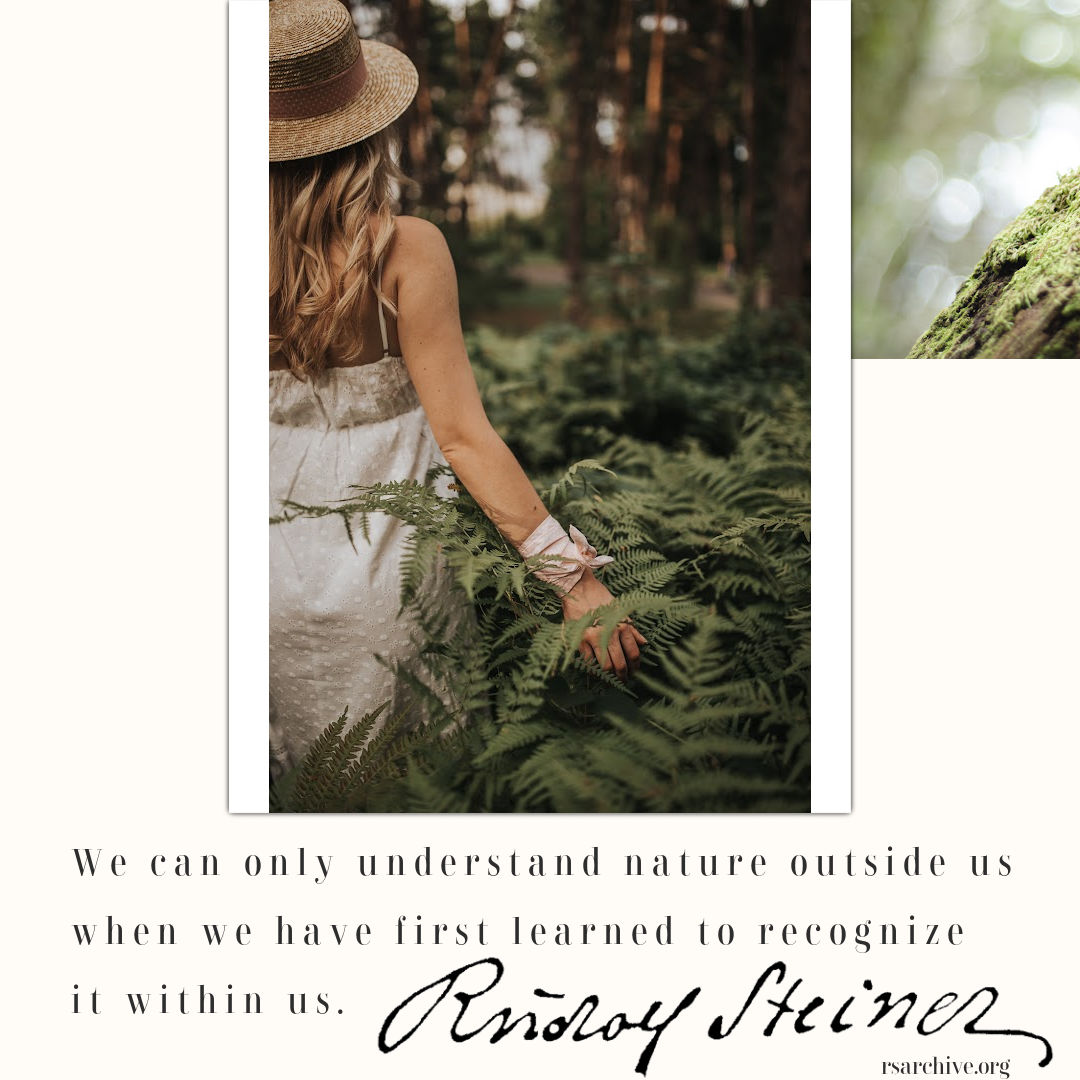
"Just as true as it is that we have estranged ourselves from nature, so is it also true that we feel: We are within nature and we belong to it. That which lives in us can only be nature's own influence.
We must find the way back to nature again. A simple consideration can show us this way. We have, it is true, detached ourselves from nature, but we must have taken something of it over with us, into our own being. This essence of nature in us we must seek out, and then we shall also find the connection with it once again. Dualism neglects this. It considers the inner being of man as a spiritual entity quite alien to nature, and seeks somehow to hitch it onto nature. No wonder it cannot find the connecting link. We can only understand nature outside us when we have first learned to recognize it within us. What within us is akin to nature must be our guide. This points out our path. We shall not speculate about the interaction of nature and spirit. But we shall penetrate the depths of our own being, there to find those elements which we took with us in our flight from nature.
Investigation of our own being must bring the solution of the riddle. We must reach a point where we can say to ourselves: Here I am no longer merely ‘I’, here I encounter something which is more than ‘I.’”
Two souls alas! are dwelling in my breast;
And each is fain to leave its brother.
The one, fast clinging, to the world, adheres
With clutching organs, in love's sturdy lust;
The other strongly lifts itself from the dust
To yonder high, ancestral spheres.
—Faust I, Scene 2
Read more: Rudolf Steiner, The Philosophy of Spiritual Activity, Chapter 2, The Fundamental Urge For Knowledge, GA 4, 1918.