

Occult History
Esoteric Reflections on the Karmic Connections
between Personalities and Events in World History
GA 126
31 December 1910, Stuttgart
Translated by Steiner Online Library
Fifth Lecture
[ 1 ] Gaining insight into the developmental course of such individualities—as we were able to trace them yesterday, so to speak, through two incarnations—allows us to glimpse the mysterious becoming and weaving of the world spirits during the course of human evolution and human history. For when we hold before our eyes the images that were able to emerge, at least in sketch form, before our souls yesterday—the images of Julianus the Apostate and of the next manifestation of this same individuality in the course of human evolution as Tycho Brahe, the great astronomer—then one thing in particular may strike us. Precisely in the case of such personalities who are significant within history, we can observe that, so to speak, the distinctive character of their individuality carries over from one incarnation to the next; yet, in this pure process of reincarnation, that which higher spiritual individualities of the upper hierarchies wish to accomplish in history asserts itself in a modifying way, and for this they make use of individual human beings merely as instruments. For we must admit: The individuality that appeared as Julian the Apostate had the task in the 4th century A.D. of, so to speak, providing a final impetus to bring the spiritual treasures of wisdom from earlier epochs of human development to a final, mighty blaze, and thus to preserve them from the fate they might easily have met had it been left solely to the rising Christianity to manage this treasure of wisdom. And on the other hand, we must tell ourselves that an individuality incarnated in a personality who had the good fortune to be initiated even into the Eleusinian Mysteries had, upon reincarnation, the conditions to allow an infinite abundance of temporal forces and of beings working into time to act upon him, as indeed was to happen in the 16th century. And we will indeed find it entirely understandable that the great and mighty thing that appeared before us yesterday in the personality of Tycho Brahe finds its explanation in the fact that a vast amount of macrocosmic science, in connection with the microcosm, could manifest itself in Tycho Brahe precisely because he had been an initiate in a previous incarnation. Thus, through such contemplations of occult history, we come to realize that it is indeed human beings who make history, but that ultimately history can only be understood when we find the connection between the individual personalities who appear and pass away in history and the individual threads that run, so to speak, through the entire development of humanity and reincarnate in these personalities. But we must always bear in mind what flows in from other, superphysical worlds through the powers of other hierarchies if we are to understand humanity on the surface of our Earth in the course of history.
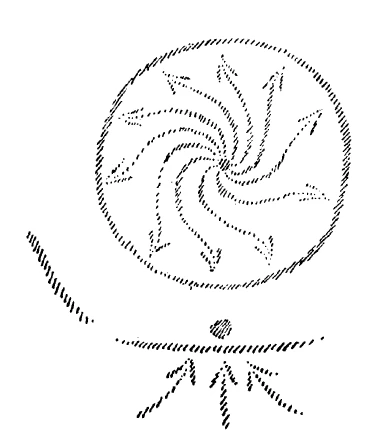
[ 2 ] Now, in our examination, it has become clear to us how, throughout all the cultural epochs following the Atlantean catastrophe, certain higher powers from the higher hierarchies have worked through human beings. We have said: This is most evident in the ancient Indian soul, which is, so to speak, merely a stage for the influence of higher spiritual beings. It recedes somewhat in the soul of the ancient Persian. And then we have seen that in the Egyptian-Chaldean culture, the soul already had the task—and this becomes particularly evident when we consider the Babylonian soul—of bringing down the transpersonal into the personal, the spiritual onto the physical plane. The personality thus gains ever greater significance the closer we approach the Greek era, and in this era, we must say, we see the weaving of the “I” within the “I,” the full expression of personality in the strong and vigorous figures we encounter in the Greek period. In the Greeks and later in the Romans, what can initially be given to individuality only from higher worlds receded most of all; in contrast, what emerged was what the human being expresses as his truly human nature in his personality.
[ 3 ] Now the question may arise, and only the answer to this question will enable us to gain a deeper understanding of the entire occult course of history: What kind of spirits are these, actually, that worked through the Indians, the ancient Persians, the Babylonians, the Chaldeans, and the Egyptians? To which hierarchies do they belong? Based on the research made possible by occult sources, we can, however, say to a certain extent which individualities of the higher hierarchies used each of these mentioned periods of human history as instruments through which to work. Into the ancient Indian soul—that is, into the soul that was, so to speak, a creator of culture immediately following the Atlantean catastrophe—those beings whom we are accustomed to calling angels poured their powers. So that in a certain sense we are correct when we say: When an ancient Indian spoke, when he expressed what moved his soul, it was not his own ego that spoke directly through his soul, but an angel, an Angelos. Since the angel stands only one step above humanity, he is the being in the higher hierarchies most akin to man, and therefore he was able, so to speak, to express himself most fully in his own character. It is precisely in the Indian mode of expression that the most humanly foreign comes to the fore, because the angel is most akin to man and can therefore express himself most clearly as an angel.
[ 4 ] Even less were those beings of the higher hierarchies able to express themselves in their immediate, unique nature through the ancient Persians. For these were beings of the next higher level—the archangels—who spoke through the soul of the ancient Persian people. And because they stand precisely two levels higher than human beings, what they can express through human instruments is more foreign to their own nature than what the angels were able to express through the Indians. Thus, step by step, the matter becomes increasingly human. Nevertheless, this flowing down from the higher hierarchies is always present. Through the soul of the Babylonian, Chaldean, and Egyptian peoples, the spirits of personality express themselves. This is why personality comes to the fore most strongly here, and why what humanity is still able to contribute from what flows down is most alien to its origin and becomes most human and personal. Thus, as we proceed into the Babylonian-Egyptian period, we have a continuous revelation of the angels, the archangels, and the spirits of personality.
[ 5 ] We can see particularly clearly in the case of the Persians how they were aware that the Archangels were the principal spirits working within what we might call the human organism, the entire organism. However, we need not take the average Persian as our example if we wish to consider the influx of what flows down from the higher hierarchies. It also flowed into the average Persian; but only those who were the immediate disciples of the inspirer of the ancient Persian culture, Zarathustra himself, could know how this happens and see through the matter. And they did indeed know this, for you may recall from various presentations of the Zarathustra teaching that I myself have given, or also from what has been handed down exoterically, that in the view of the ancient Persians, the Divine, Zervan Akarana, reveals itself through the two opposing powers, Ormuzd and Ahriman. Now the ancient Persians were clear that all such things that reveal themselves in human beings originate from the macrocosm, and that the phenomena of the macrocosm—namely, the movements and positions of the stars—have a mysterious connection with what lies in the microcosm, in the human being. Therefore, the disciples of Zarathustra saw the outer expression, the image of Zervan Akarana—that which, as a primal being, weaves and lives eternally through all ages—in the zodiac, and the word “Zodiakus” still recalls the word Zervan Akarana. Thus they saw it in the zodiac, and from the twelve directions of the zodiac the disciples of Zarathustra saw twelve powers coming forth, half of which were directed toward the light side, as it were, toward the luminous side of the zodiac, where the sun passes overhead by day; the other half was turned toward the dark side of the zodiac, toward Ahriman, as they said. Thus, coming from the twelve sides of the universe and penetrating into the human organism—this is how the Persians conceived of the macrocosmic forces; they flowed into the human organism, worked and acted within it, so that they are present and active in the human being. Therefore, what develops through the number twelve must also reveal itself microcosmically to human intelligence; that is to say, what is expressed through the number twelve of the Amshaspands (archangels) must also be expressed in the microcosm, namely as a final manifestation, so to speak, of these twelve spiritual macrocosmic beings who have already been at work earlier, who have prepared what has only found its final development during Persian culture.
[ 6 ] Modern physiology might know where the twelve microcosmic counterparts of the twelve Amshaspands are. These are the twelve main nerves that arise from the head; which are nothing other than something that arose through the influx of the twelve macrocosmic forces into the human being and has condensed materially within the human being. The twelve archangelic beings acted from the twelve points of the zodiac, as the ancient Persians imagined it, and in order to gradually bring forth what is today our intelligence, they acted upon the human head through twelve rays. Of course, in the primordial Persian era, they were not acting upon human beings for the first time, but rather in such a way that we now have twelve cosmic rays, twelve archangelic rays, which have then condensed within the human head into the twelve cranial nerves, as if they had frozen there in a material sense. And since in later times one naturally always knows what one already knew earlier, the Persians could also know that spirits lower than the archangels had previously worked in Indian culture. The next level below the Amshaspands, below the archangels, the Persians called Izads, and they distinguished twenty-eight to thirty-one of them. These are thus the ones that bring about less exalted activity, that is, soul activity in human beings. These are the ones who send in their rays and who correspond to the twenty-eight or thirty to thirty-one spinal nerves of the human being. Thus, you have translated our modern physiology into the spiritual, into the spiritual macrocosm, in the twelve Amshaspands of Zoroastrianism and in the twenty-eight to thirty-one Izads of the next lower hierarchy.
[ 7 ] Indeed, it is a fact of human history that what originally emerged as spiritual now presents itself to us through anatomical dissection, because the things that were once spiritually accessible through clairvoyant vision come to light in a materialistic form in later ages. Indeed, here we see a marvelous bridge between Zoroastrianism in its spirituality and our modern physiology in its materialism. It will, however, be the fate of the greater part of humanity that such an idea of the connection between the Persian Amshaspands and Izads and our nerves will be regarded as madness, especially by those who study materialistic physiology today. But we have time, for the Persian epoch will not fully repeat itself until the sixth, the epoch that follows our own. Only then will the fundamental condition be in place for such things to be understood by a large part of humanity. Therefore, we must be content with the fact that today we can point to such things within the spiritual-scientific worldview. But such references must also be made today if one is to speak of a spiritual-scientific worldview in the true sense of the word, and if one does not merely wish to draw attention to it in a general, clichéd way, stating that the human being is a microcosmic repetition of the macrocosm.
[ 8 ] In other regions, too, it was understood that what is expressed in human beings flows in from the outside. For this reason, for example, certain periods of Germanic mythology spoke of twelve streams flowing from Niflheim to Muspelheim. The twelve streams are not meant in a physical-material sense, but rather they are what, viewed clairvoyantly, flows into the human microcosm—into the being that walks the earth and is meant to develop through macrocosmic forces—as a certain reflection of the macrocosm. And it must certainly be emphasized that these currents are essentially to be regarded today as astral currents, whereas in the Atlantean times that immediately followed Lemuria, and in Lemuria itself, they could be perceived as etheric currents. Therefore, a planet related to Earth that is merely at an earlier stage of development must exhibit something similar. And since one can often observe from a distance things that elude our perception up close due to their isolation, one might still be able to observe these twelve currents today on a planet similar to Earth, provided it is sufficiently far away and is undergoing such earlier stages of development as our Earth did. However, they will look somewhat different from how they once appeared on Earth; yet the distance is necessary, for if, for example, you stand within a swarm of mosquitoes, the swarm does not appear to you with the cloud-like shading; you perceive that only when you view it from a distance. What I have just said underlies those observations that speak of Martian canals. What is described as Martian channels is in truth based on what I have just indicated to you; we are dealing here with certain currents of force that correspond to an earlier state of the Earth and that are described in Old Germanic myth as currents flowing from Niflheim to Muspelheim. This is, of course, a serious heresy for today’s academic physiology and astronomy; but these disciplines will, of course, have to accept many corrections over the course of the next millennia.
[ 9 ] All of this can point us toward the abyss of profound wisdom into which we intuitively gaze when the simple sentence is uttered: The human microcosm is a kind of mirror image of the macrocosm. Such statements really draw our attention to the fact that this phrase touches directly upon the deepest wisdom; for the statement that man is a microcosm in relation to the macrocosm may indeed be a mere trivial phrase, but when properly grasped, it can represent for us the synthesis of millions upon millions of individual, concrete insights. And this should be emphasized to show you what the configuration was like in the souls of the ancient Persian human culture. There was, particularly among the leading figures, a vivid sense of this connection between humanity and the macrocosm. Now, after those beings—whom we have successively designated as angels, archangels, and spirits of personality—had been active up to the Babylonian-Egyptian culture, there followed that remarkable Greco-Roman culture, which gave particular expression to the personality as such, to the weaving of the “I” within the “I.” There, too, certain beings revealed themselves who are on a higher level than the spirits of personality; the spirits of form revealed themselves. But the revelation of these spirits of form took place in a different way than that of the spirits of personality, the archangels, and angels. How do angels, archangels, and spirits of personality reveal themselves in our post-Atlantean era? They work into the human inner being: the angels inspiring the Indian, the archangels similarly inspiring the ancient Persian, yet in a way that the “human” aspect comes somewhat more to the fore; the spirit of personality, however, stood, as it were, behind the souls of the Egyptians, driving them to bring the spiritual forth onto the physical plane. The spirits of form reveal themselves differently. They reveal themselves from below to above as far more powerful spirits who are not dependent on merely using human beings as tools; they reveal themselves in the realms of nature that surround us, in the configuration of the beings of the mineral, plant, and animal kingdoms. And there, if human beings wish to recognize the spirits of form in their manifestation, they must turn their gaze outward, observe nature, and fathom what the spirits of form have woven into nature. Therefore, during the Greek period, when the spirits of form manifest themselves most prominently, human beings do not receive a direct influence that acts as inspiration. Rather, the influence of the spirits of form takes place in such a way that human beings are stimulated by the outer world of the senses, that their senses turn with joy and delight toward what is spread out all around them, that they are tempted to idealize and give form to what is spread out. Thus the spirits of form stimulate from the outside. And one of the principal spirits of form is the one who hides behind Yahweh or Jehovah. And although the spirits of form number seven and work in the various kingdoms of nature, the sensory capacity of present-day human beings is actually available only for the one spirit whom we designate as Yahweh. When we consider all this, it seems understandable to us that, as the fourth epoch approaches, humanity will be more or less abandoned—in the main—by these guiding powers, by the angels, archangels, and spirits of personality, and that it will turn its gaze entirely outward toward the external world, toward the physical horizon, where the spirits of form reveal themselves. They had, of course, already been present behind this physical world earlier on; they had, so to speak, simply not made themselves known to human perception. In the period immediately following the Atlantean catastrophe, the spirits of form were at work; they were at work in the natural realms, in the laws of wind and weather, in the laws of plants, animals, and minerals. They had also been at work in even earlier times. But human beings did not direct their gaze toward what met them externally, for they were inwardly inspired by the others. They were distracted from the external world. Where did this come from?
[ 10 ] How are we to understand that these other hierarchies, which, as we know, rank lower than the Spirits of Form, were able to exert their influence in such a dominant manner against the activity of the Spirits of Form, which was already in existence at that time? This is connected with a very specific periodic development of our entire Earth. To the clairvoyant eye, which looks backward with the aid of the Akashic Records, these things appear quite differently than they do in speculations based on today’s geological facts. If we go back beyond the activity of the spirits of personality in the Chaldean period, beyond that of the archangels in the Persian period and the angels in the ancient Indian period, we arrive at the period of our Earth when the Atlantean catastrophe raged most fiercely. We are gradually entering fully into the Atlantean catastrophe. It is the time to which the flood legends of various peoples point, and indeed, things looked different back then than the geological hypotheses of the present day depict. In the even earlier Atlantean period, things looked quite different again. Human beings were mutable beings. Before this catastrophe, the entire face of the Earth was different from what people can even imagine today. Now you can imagine that spiritual hierarchies were influencing the Earth to an even greater extent back then.
[ 11 ] We have, as it were, a boundary between the ancient influences of the Atlantean era and those of the post-Atlantean era—a boundary marked by the Atlantean catastrophe, by those events that completely transformed the face of our Earth in terms of the distribution of water and land. Such periods and their changes are connected with major processes in the constellation, the position, and the movement of the celestial bodies associated with the Sun. And indeed, what unfolds on Earth as such periods is directed here from the macrocosmic space. It would take us too far afield today if I were to explain to you how these successive periods are directed and divided by what is now called in astronomy the progression of the equinoxes. This is connected to the position of the Earth’s axis relative to the axis of the ecliptic; it is connected to major processes in the constellation of our neighboring celestial bodies, and there are indeed very specific times when, due to the Earth’s peculiar position in its axis relative to the other bodies in its system, a very different distribution of heat and cold exists on our Earth than usual. Climatic conditions change due to this position of the Earth’s axis relative to the neighboring stars. And indeed: over the course of a little more than 25,000 years, our Earth’s axis describes a sort of conical or circular motion, so that our Earth experiences conditions it undergoes at a certain time again in a different form after 25,000 to 26,000 years, precisely at a higher level. However, there are always smaller intervals between these major time periods. And the process does not proceed entirely continuously, but rather in such a way that certain years are turning points, deep turning points, in which important events occur. And we must point this out in particular, because it is of essential significance for the entire historical development of humanity on Earth that the 7th millennium B.C.E. was a particularly important astronomical moment — important because it manifested itself, through the alignment of the Earth’s axis with the neighboring stars, in such a distribution of climatic conditions on Earth that the Atlantic catastrophe was active at that very time, six to seven to eight thousand years before our era—it was active, after all, over long periods of time. We can only emphasize here what is correct and not the fantastical timeframes that are cited, for it lies far less in the past than is commonly believed. During this period, however, the macrocosmic conditions influenced the physical realm in such a way that the effect manifested itself in these tremendous physical upheavals on our Earth, which confront us as the Atlantean catastrophe and completely altered the face of the Earth. That was the most powerful physical transformation; that was the strongest influence of the macrocosm upon the Earth. In contrast, the influence from that direction on the human spirit was at its weakest at that time; therefore, during this period, the less powerful forces of the hierarchies were able to begin exerting a strong influence on humanity, which then gradually subsided.
[ 12 ] So where the spirits of form exerted a powerful, revolutionary influence on the physical world, they did not have enough time to also influence the human spirit, with the result that the physical world, so to speak, vanished from under people’s feet. On the other hand, however, it was precisely during the Atlantean catastrophe that human beings were most spiritually detached, and they only gradually returned to the physical world in the post-Atlantean era. Now it will not be difficult for you to imagine—if you consider that the least influence was exerted on the human spirit during this time, that is, some six to seven to eight thousand years before our Christian era, and the greatest influence on the physical conditions of the Earth—that there can be another point in time when the opposite is the case: where those who are capable of knowing such things feel, in a reversed manner, the least influence on the physical world, but instead feel the greatest influence on the human spirit precisely from the spirits of form. You can first construct a hypothetical scenario in your mind that there may be a point in history where the opposite of the great Atlantean catastrophe is the case. This will, of course, not be so easy to notice, for to the human being of our post-Atlantean era, who is so strongly inclined toward the physical, the Atlantean catastrophe, in which parts of the earth perish, will stand out very strongly. He will notice less when the spirits of form have a strong influence on the human personality and only a slight influence on what takes place externally. The point in time when this occurred—which, naturally, people notice less—is the year 1250 of the Christian era. And this year, 1250, is indeed an extraordinary, historically significant year. It fell within a period that can be characterized roughly as follows: The spirits felt compelled, so to speak, to express with the utmost precision the manner in which one looks up to the higher divine beings standing above the other hierarchies, how one seeks to establish a relationship with these beings—whom one first perceives as a unity, first through Yahweh, then through Christ—and applies all human knowledge to this end in order to unveil the mysteries of Christ Jesus. This was a time particularly suited to conveying to humanity the mysteries that manifest themselves directly in the connection between the spiritual and the workings of nature. Thus we see that this year is the starting point for great, precise elaborations of what was previously only believed or intuited: the starting point of Scholasticism, which is far too little appreciated today. But it was also the starting point of that revelation which found expression in spirits such as Agrippa von Netiesheim, and which manifested itself most deeply in the entire Rosicrucian movement. This thus points out to us that, if one wishes to seek the deeper forces of historical development, one must still take into account conditions quite different from those that are outwardly apparent. Indeed, behind what I have just said lie, for example, the very forces at work in the already existing and ebbing Crusades. The entire history of Europe, particularly what unfolds between the East and the West, is made possible only by the fact that forces such as those I have just described are at work behind the scenes.
[ 13 ] We can therefore say: There are two points in time, one of which can be described as a great upheaval on the outer physical plane, the other as the turning point of all that had been brewing within the mysteries. But we must bear in mind that, in fact, for all such things there are other laws that intersect with the main laws. And so we understand that the starting point for great revelations falls within this period, that this time is so well-suited for the appearance of a human being who, like Julian the Apostate, was once inspired in the Eleusinian Mysteries. He then allowed what emerged there—the revelations of the spirits of form—to work upon his soul. But it is always about four hundred years during which the initial onslaught of some powerful influence takes effect; then a ebbing begins, then the streams, so to speak, begin to separate. Thus, what was perceived at that time as a spiritual reality behind natural phenomena had such an effect that the spiritual was forgotten and only the natural phenomenon remained. That is the modern era. And Tycho Brahe is at the same time one of the last to still grasp the spiritual reality behind what is external natural science. And Tycho Brahe is precisely such a wonderful personality because he mastered external astronomy to such a high degree that he discovered thousands of stars and other celestial bodies, yet at the same time carried the spiritual workings of the great powers within his soul in such a way that he astonished all of Europe when he boldly and fearlessly predicted the death of Sultan Suleiman. We see: From the spiritual knowledge of nature, which begins in 1250 and which confronts us externally in such figures as Agrippa von Nettesheim, gradually emerges that which later becomes merely external natural activity; while the inner, the spiritual, remains within that mysterious current known to us as Rosicrucianism. There the two currents then flow on.
[ 14 ] Yes, it is remarkable how this process of separation manifests itself even within individuals. I have already pointed out, quite early on in our German movement, how what is unfolding here as a spiritual movement appears in a 15th-century figure, still connected to a certain knowledge of nature, and how the spiritual aspect is then cast aside and continues to live on in a purely external form. We can trace this in a single individual: that of Nicholas of Cusa. If we merely read him—though one can do more than just read his works—it becomes clear even through reading how, in his case, the deepest spiritual insight was still connected with external knowledge of nature, particularly where this takes the form of mathematical structures. And because he had an insight into how difficult this is to achieve in an age that is moving more and more toward external erudition, he named his work, out of a sense of world-historical humility, “Learned Ignorance,” “docta ignorantia.” Of course, he did not mean to imply that he was a particularly foolish fellow, but rather that what he had to say transcends what will now develop as mere external scholarship. If we wish to speak in terms of a phrase that has become popular today, we might say: This “learned ignorance” is a form of super-scholarship. - Then, as you know, he was reborn—and in this case very soon—as Nicolaus Copernicus. The same being that was in Nicholas of Cusa continued to work in Nicolaus Copernicus. But it becomes evident how, precisely in those times, the organization of humanity had advanced so much toward the physical that the entire depth of Nicholas of Cusa could only work in Copernicus in such a way that the external physical world system came into being. What lived in Cusanus was, as it were, filtered, the spiritual cast off and transformed into external knowledge. Here we see tangibly how that mighty impulse from the year 1250, which had its temporal center there, was to work in a short time. And what flowed into our Earth at that point continued to work in its own way. It continued to work in these two currents, one of which is materialistic and will become even more so, while the other strives toward the spiritual and manifested itself particularly in what we know as the Rosicrucian revelation, which flowed most intensely precisely from this starting point, even though it had already been prepared beforehand.
[ 15 ] As you can see, we have, so to speak, a period lasting six, seven, or eight millennia during which the Earth’s evolution undergoes an important cycle in relation to the historical events in which human evolution is interwoven. Such cycles are in turn intersected by others, for the most diverse periodic forces are at work on our Earth’s development. Only when we break down these forces, when we get to know the individual forces and, so to speak, examine how they interact, only then can we gradually come to understand how things happen on Earth. It is actually through all such forces and laws that humanity is propelled forward, that human progress is brought about. You know, after all, that from another current an important turning point has been set in our century, one hinted at in the Rosicrucian mystery: the looking back into the etheric world and the revelation of the Christ within the etheric world. But that belongs to another current. I am now speaking more of forces that work into the broad foundation of historical events.
[ 16 ] However, if we wish to fully understand historical events, we must also take into account that such turning points in development are always connected with certain positions of the stars, and that in the year 1250 our Earth’s axis was also in a certain position, such that the so-called minor axis of the ecliptic had a very special relationship to the Earth’s axis. So if we take into account that what happens on Earth is brought about by major celestial conditions, then we can already see from the external climatic conditions that within the Earth there is further specialization and differentiation. Is it not true that, because forces from the cosmos act in a certain way, the situation around the Earth’s equator is such that we have the hot zone there, followed by the temperate zone, and then the cold zone? This can be taken as a kind of example of how, on the physical plane, what is brought about by spiritual processes through the Sun and other conditions makes itself felt. But now, in turn, differentiation occurs within the Earth itself; the climate is different when, in the hot zone, one is dealing with depths or heights; it can still be very cold at high altitudes. Therefore, the climatic conditions are distributed quite differently at the same latitudes when we consider things in Africa or America. But there is also something in spiritual development that can be compared to this kind of differentiation, so that in fact, during periods when perhaps a very specific character prevails across the Earth due to the constellation of the stars, modifications occur in the spirits and souls of human beings, and special conditions arise. This is particularly important, for it must indeed sometimes happen that provision is made for the distant future.
[ 17 ] Just imagine that the wise guidance of the universe—though this is, of course, only a figure of speech—had to resolve, so to speak, thousands of years ago: There is a group of souls that I must prepare so that they can fulfill this or that task in their next incarnation. Connections must be created so that perhaps a small group of people who have just experienced something very specific, who have incarnated together in a small corner of the earth, can go through something that seems insignificant at this point in time. But when one considers how such people, who are crowded together in a small space, are scattered in their next incarnation, and how precisely what they received in that confined space later works for all of humanity, then the matter takes on a different perspective. And so we can understand that in times when the overall character of humanity is a very specific one, something occurs in isolated parts of culture that stands out quite strikingly, something that differs entirely from this overall character. You see, I would like to mention something like this to you because it is quite relevant to our time.
[ 18 ] Oberlin lived in Steinthal near Strasbourg. In particular, the profound German psychologist and researcher Schubert always referred to this Oberlin. This Oberlin was a peculiar personality, and he had a peculiar effect on people’s souls. He was a clairvoyant—I can only hint at this—and, having lost his wife at a relatively young age, he was truly able to live with her individuality just as one lives with a living person. And so, day after day, he recorded what was happening up there, where his wife lived, and he also depicted this on a map of the heavens and showed it to the people around him, so that in fact there was an entire community that participated in the life Oberlin led with his deceased wife. It is a peculiar, out-of-place thing that something like this should have been introduced at the turn of the 18th to the 19th century. But if you consider what I have said, you will see the meaning of such a thing. And such things, as they were revealed to Oberlin, belong to the most significant things that have emerged in this field in recent times. Perhaps I may draw your attention to the fact that we now have a very fine work of cultural history that deals with these circumstances in Oberlin: the novel by Fritz Lienhard. You will find it an extraordinarily stimulating read, not only with regard to the person of this pastor, but also to the other cultural conditions of that time. From such things, which are easily underestimated and regarded as coincidental, we can see how such an event fits into our development, how it can have an effect within the overall context of human development. For the people who are brought together in this way, who gather around a personality who acts as their leader, such people are destined to take on certain tasks in later incarnations.
[ 19 ] So you see—and this is what I wanted to bring to your attention today—how, so to speak, the greatest, the macrocosmic influence from distant worlds upon the human soul is connected to what can take place in the smallest of spaces. These things become particularly interesting, however, when one connects another law with such events, with such major turning points in evolution as the year 1250 was. At that time, the strongest influence was exerted upon the human soul—and this is less noticeable than the upheavals on the continents. During the Atlantean catastrophe, the spirits of form exerted the least influence on human souls; therefore, the younger hierarchies, so to speak, dominated the field at that time. And this is how the activities of the various classes of hierarchical beings are generally distributed. It is now important that we recognize that certain laws of ascent and decline are at work within these cyclical movements. I have already hinted at this when I said that there was a surge in the year 1250, followed by a decline that manifested itself in a purely materialistic current. We can observe this frequently. And it is interesting to see how ascending and descending cycles alternate in what unfolds as human history.