

Occult Reading and Occult Hearing
GA 156
19 December 1914, Dornach
Translated by Steiner Online Library
How does one bring Being into the World of Ideas? III
[ 1 ] Today we would like to make an observation that may seem to fall outside the series of observations we have been making here, but which will nevertheless be useful for our understanding of the whole.
[ 2 ] It is an age-old question: how can human beings bring what truly exists in the outside world into their knowledge, into their world of ideas? For us, the question is not as pressing as it must be for those outside our Spiritual Science movement, because we know that it is possible to rise up into the spiritual worlds and, by entering them, gain certainty about a true being, about a true reality behind the outer reality that lies before us on the physical plane. However, humanity as a whole will only be able to rise to such a perspective of, so to speak, extra-corporeal cognition from the present into the future, and the question of how to bring being and reality into knowledge and into the world of ideas will continue to have infinite significance for a long time to come.
[ 3 ] It is important for us to have some understanding of this issue because we must try to foster understanding with those who are still somewhat outside—or even far outside—our spiritual movement. We must be able to provide information about the puzzles and questions that those who have not yet drawn closer to this spiritual movement feel when they hear one thing or another about the results of spiritual research. The question I am referring to is truly the deepest, the most tragic question humanity has ever asked itself. For however much philosophical and other scientific research has been conducted, ultimately the question I have alluded to arises from a state of mind and in turn affects the entire state of mind and mood of the human being.
[ 4 ] Let us consider the matter from this perspective: in the morning, a person awakens from a world that must remain unknown and mysterious to them unless they delve into Spiritual Science, and they form their thoughts about the world into which they enter upon waking. Through these thoughts, they then seek to acquire what might be called a worldview. Here, the human being who approaches these matters with genuine, wholehearted feeling senses a certain weakness in their life of thought and imagination. He feels, one might say, that he is, in his innermost being, condemned to live in mental images about the nature of the processes of the external world, to form such mental images; and he finds, in turn, that these mental images are, in a sense, merely mental images, that they are not strong enough to take in the real being within themselves.
[ 5 ] People are particularly aware of this limitation of the mental images when they reflect on their memories. From past periods of our lives, we recall the facts and experiences we have gone through. We recall them by imagining them in retrospect, perhaps after a long time. In doing so, we must tell ourselves again and again: Yes, we have the experience only in our mental image, and the mental image does not have the power to conjure up reality anew.
[ 6 ] This is the one instance where we truly feel how powerless human beings are, in a sense, with their imaginative lives in the face of a reality that is so rich and full of substance. The other is when we enter the world of creative imagination. In this world of creative imagination, we can conjure up images of beauty and satisfaction in our minds, and we can feel how we are unable to penetrate real existence in any way with what we, so to speak, conjure up in our imagination. It is precisely these feelings one can have toward this world of fantasy images that lead the more materialistically minded people to their conclusions. They say: When you form mental images about a higher spiritual world, about God and the spiritual world, what guarantees you that these mental images you form are anything other than figments of the imagination? What guarantees do you have that, even if these mental images provide you with the deepest possible bliss, you are entering a world of genuine reality? What lies at the root of these feelings in the face of this powerlessness of imagination, of forming mental images, has led to what one might call millennia-old philosophical struggles regarding the question: How can human beings, with their concepts and mental images, penetrate into reality?
[ 7 ] Even if we set aside the most extreme forms of skepticism, there are certainly enough philosophical schools of thought that believe a satisfactory answer to this question—a satisfactory solution to this enigma of the human mind—has not yet been found. Certainly, people can pass by these world-puzzles, these questions, with a certain intellectual complacency. But even those who pass by with their consciousness and live accordingly will nevertheless feel that this dissatisfaction with the world’s puzzles ripples through their astral body and evokes certain moods toward the world—melancholic moods; moods that one might try to overcome through cynicism may arise. But such a passing over of the world’s mysteries can certainly not lead to true satisfaction in the inner life of the soul, to the harmony of the soul.
[ 8 ] We are faced with the necessity of approaching these mysteries of the world in the same way that we must approach so many other things; we are faced with the necessity of looking into the very essence of human nature and asking where this mystery comes from, why it exists. Certain philosophers, who are downright desperate to solve these mysteries and who have spoken of a deity that, as it were, misleads humanity into the chaos of worldly phenomena and has fashioned human nature in such a way that it cannot arrive at a satisfactory worldview, have shown that this can be perceived as infinitely tragic.
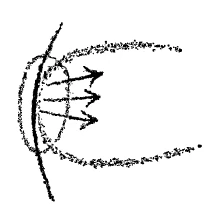
[ 9 ] Now let us recall something that has often been discussed in one context or another, but which can be particularly useful to us in relation to these mysteries of the world. Much has been said about what our life of thought, feeling, and imagination actually is. I have said that it is, in essence, a kind of reflection. It is indeed the case—I have explained this here once in particular detail—that in human beings we are dealing with what I would like to schematically indicate here as follows: This is the physical body. Outside this physical human being, what is actually the soul-spiritual essence of the human being lives, as it were, poured out into the infinite universe, and in waking daily life this soul-spiritual essence extends into the physical-soul being. This gives rise to a reflection, and this reflection is actually what we experience as the content of our waking daily life. Truly, our body is like a mirror, and just as we do not see the mirror itself but rather what is reflected in it, so too, when a person is awake, we do not essentially see what is happening within the body, but rather we see the reflection—that which is mirrored in it from the external physical world.
[ 10 ] But insofar as we are present in this world within our waking daily consciousness, our “I”—that which we are as spiritual beings—is, in essence, also a reflection in this world of mirror images. For the world around us is maya; it is a sum of mirror images. It is our waking self that is present within this sum of mirror images, and, as beings on the physical plane, we are essentially nothing other than a mirror image among mirror images.
[ 11 ] Let us just consider this for a moment. As long as we are on the physical plane, what remains of our entire life of imagination if we extinguish our waking consciousness? Then the ego is extinguished along with it. If it is not reflected, as is the case in deep, dreamless sleep, then the ego is also extinguished. And when we wake up and have the world of mirror images before us, our ego is also present in this world of mirror images; so that, as long as we live on the physical plane, we can have nothing of ourselves other than a mirror image.
[ 12 ] We move through the world as beings of the physical plane and never have anything of ourselves other than a reflection. We live in the world; but insofar as we are conscious, we do not have the living reality before us, but rather the reflection of this living reality. We live as a reflection among reflections; and what we come to recognize through Spiritual Science—that we live as a reflection among reflections, as maya among the components of the great maya—is what a person feels when they sense the powerlessness of all soul experience in the face of the full, vibrant reality. In ordinary life, a person does not say to themselves: I am a reflection among reflections—but they feel it, and they feel it all the more keenly when they ask: How can I reach the real, full-blooded existence with this reflection?
[ 13 ] Let’s take a moment to clarify what we’re dealing with here. Imagine you have a mirrored wall in front of you; it reflects what is spread out in the room, for example, a table. But you do not see the table; instead, you see the reflection. Imagine you wanted to step into the reflection, take out the table, and place something on it. You would not be able to do that, because you cannot place plates or soup bowls on the mirrored table. Just as it is impossible to place plates and soup bowls on the mirrored table, so it is impossible to derive the essence of the soul’s immortality from what a person experiences and has around them on the physical plane between birth and death while in the waking state. For it is the true soul that is immortal, not its reflection, which we experience on the physical plane. Just keep that very clearly in mind.
[ 14 ] Human beings long to perceive that which is constantly hidden from them and which, as they live on the physical plane, presents them only with a constant reflection. The philosophies of all ages have strived to deduce reality from these reflections, to prove immortality from them. They have undertaken the task, symbolically speaking, of extracting the table from the reflection, placing it in the room, and setting plates and bowls upon it.
[ 15 ] When one examines philosophies that have not been enriched by Spiritual Science, they appear to be nothing more than a futile endeavor. Basically, if you try to work your way through my book *The Riddles of Philosophy*, you will find it recounts how, ever since the beginning of humanity’s philosophical struggle, philosophy has, as it were, striven to remove the table from the mirror and place plates and bowls upon it. That is why, now that we have such a spiritual scientific movement, a concluding chapter had to be added to the book, one that shows that what was there before must be supplemented by Spiritual Science, which deals not with mirror images but with realities. Now you might say: Then this book is certainly one we need not read, for why should we concern ourselves with humanity’s futile struggle? Why should we even take philosophy into account, since it deals only with humanity’s futile efforts? — No, that is not how it is at all; it really is not! What we are doing by immersing ourselves in this struggle—which is indeed futile from a certain point of view—is nevertheless something infinitely significant, something that cannot be replaced by anything else. Philosophy will certainly always remain fruitless for the knowledge of the immortal nature of the soul, for the knowledge of the spiritual world, and also of the divine being; but it will not remain fruitless for the unfolding of certain human powers, for the development of certain human abilities. Precisely because philosophy as such proves incapable of achieving the things mentioned, because it remains, so to speak,鈍感 to these things, it all the more strengthens the powers of the human soul. And even if it cannot impart knowledge, it nevertheless—by being a concentrated life of thought—prepares the soul to make itself fit to penetrate into the spiritual world. What we gain through the study of philosophy lifts us into the spiritual world more than anything else. Precisely because no powers are lost in the pursuit of real knowledge, all powers are applied to the elevation of human capacities. But we must accept from this very consideration that experience on the physical plane, because it is an experience in images, has something unreal, something untrue about it, and that, in essence, by immersing ourselves in the philosophical world, we are living through something unreal in a soul-spiritual sense. But does it make sense, does it have any meaning, that we experience the soul-spiritual on the physical plane as something unreal? Can we find in this a wisdom of the world order? We must ask ourselves such a question, and to answer this question, we must bring certain insights from Spiritual Science to the forefront of our souls.
[ 16 ] When a person has progressed a little further through meditation, through concentration—in short, through the intensification of their soul-spiritual experience—they enter into an experience that is, as it were, a waking sleep, a life within the spiritual world. And the first experience a person has when they are, so to speak, at the starting point of initiation, will be one in which they experience moments when the spiritual world enters their consciousness in a glittering, shimmering, dreamlike way—they actually only realize this afterward, when they must say to themselves: Now you have experienced something of the spiritual world. Usually, this experience is given too little attention by the students of initiation; otherwise, they would make progress more easily.
[ 17 ] If human beings did not lose consciousness during sleep, they would live in this spiritual world the entire time, from falling asleep until waking up. In reality, they are in a world of objective thought-weaving the whole time. Anyone who carefully follows the instructions in “How Does One Gain Knowledge of the Higher Worlds?” will soon come to realize that upon waking, they know: You emerge as if you had been swimming under the sea and were now surfacing into the air; you emerge as if you had been weaving with your soul-experience in a world of pure thought. It is as if you were still catching the last fragments of this experience upon waking.
[ 18 ] This can make a profound impression, even though it fades immediately and is usually very difficult to retain in memory. But it is important for those who wish to make progress to seize precisely such moments of awakening, for that is where consciousness arises: Before you woke up, you were with your astral body in a weaving, objective world of thought within it, and as you have immersed yourself in your physical body, you come into contact with your physicality, which reflects back to you what you have experienced throughout the night, at first in such a way that it sparkles in the soul. This awareness can arise and should be heeded, and it is extraordinarily important that it does arise. When one has such an awareness, one begins to understand why it is difficult to truly bring the thoughts one experiences during sleep and also during initiation into the physical world, into physical thinking; for one lives with one’s thoughts quite differently outside the body than within it.
Translate text Select source language. Currently selected: English (detected) Swap source with target language Select target language. Currently selected: German Toolbar Source text
[ 19 ] To make this clear, let us consider the moment of waking up and the state of being awake. When one wakes up, one’s mental and spiritual being immerses itself in one’s physical body. That one continues to live there in the web of thoughts is not particularly remarkable, for one has lived within that web of thoughts all night long while sleeping. What happens, then, is as follows. Imagine—I will sketch it schematically—that you dive from the outside into the physical body; I will draw this only in relation to the head. While you are not yet inside, but still out there, you are in a wondrous world of weaving thoughts, in which the spirits of the next higher hierarchies carry out their activities. Before you have awakened, you are, with your soul-spiritual experience, within the world of the Angeloi, the Archangeloi, the Archai, and so on. Just as you are in the physical world among animals, plants, and minerals, during sleep you are within the world of the higher hierarchies. And this being within, this work of the higher hierarchies on your soul-being, takes place precisely through the thought forces that reign there. And now you submerge into your physical body. As you submerge into the physical body, you concentrate your thoughts by focusing them on the small part of space enclosed by your head. There you must draw together, in a highly concentrated manner, what is spread out on the outside. What is happening there is that the life of thought draws in, submerges into the nervous system. There, the life of thought actually pushes its way through the senses into the nervous system. And what happens there? There, in fact, the physical substance is continually grasped by the experience of thought—first the substance of the etheric body, then also the physical substance. And indeed, when you cram a thought into the physical body, this has a killing effect in a certain sense; by grasping a thought in your physical body, you are actually killing something in your nervous system. “Killing” is even the right word for it.
[ 20 ] We think something now—and after a while we reflect on what is actually inside us. As many nervous corpses as we have harbored thoughts, so many are now within us. What remains after we have thought something are truly nothing but corpses, so that when we fall asleep at night, we must essentially leave our physical body to its own devices so that it can carry away the thought-corpses we have created during the day through our thinking.
[ 21 ] Must these thought-corpses be there? Yes, they must be there, for these thought-corpses are actually the imprints of thought; and if we could not form these thought-corpses, we would be just as unable to consciously grasp a thought during the day as we are at night. At night, we stand within the spiritual world in the weaving of thoughts. There, we have no physical body at our disposal into which we could imprint thought-corpses. At night, the thought departs immediately and dissolves into the universal life of thought. This is the difference: during the day, we can hold onto thoughts by turning them into “thought corpses” that we bury within the physical body. There, the life of thought hardens, and this hardening enables us to be conscious of the life of thought.
[ 22 ] That is the precise process. Here again you have an example that illustrates how materialism actually misses the mark. The materialist believes that he must seek the cause of thought in what is happening inside, in the process of decay. But what takes place there are, in reality, processes of secretion by the mind, bodily processes; and the nervous system exists so that the process of secretion can be generated through the activity of the mind. What thinking leaves behind, what it cannot use, what it expels—that is what physical physiology examines. But through this, something forms during waking daily life that one might call the dying away of thinking within the physical body. The powers of thought that one develops are used to create, as it were, imprints or reflections of oneself. The powers flow into these imprints. During the night they do not go into such imprints; there we live, as it were, in the general sea of spiritual being. But because we cannot form such imprints in normal life without initiation, the thoughts also dissolve immediately into this general sea. When we want to grasp them in the morning, they have already dissolved; not even memory can hold onto them.
[ 23 ] If we examine the process very closely, we can say: A certain thought process develops. As it penetrates into our body, it produces those secretions in the nerves. But before it produces these secretions, it reflects itself. Before it passes into the body and bodily activity, it first reflects itself; the evocation of this activity is a reflection.

[ 24 ] Imagine for a moment that you are looking at an object through your eye, or hearing a sound or a harmony of sounds through your ear. Outside is the harmony of sounds. This harmony of sounds enters the ear. A process takes place in the auditory nerves—namely, this formation and secretion of matter. And what you hear is therefore the reflected sound, actually an inner echo.
[ 25 ] In this way, in our everyday experience, we are completely immersed in a world of reflections, and our own being is woven into this world of reflections. For we would grasp our true being if we felt ourselves floating outside our body in spiritual existence, if we felt: Now one of the angels is taking hold of you; in it you are now weaving, you are ascending into the realm of the angels, passing over into the realm of the archangels, into the realm of the primal forces, and so on. — There we would feel ourselves carried into the realms of the higher beings. We would feel the immortality of the souls and know: just as these beings carry the events of the world from age to age, so do they carry us along from age to age. But in ordinary life, human beings do not perceive this. They immerse themselves in the physical body, and the experience of their own self in true being dies away during life in the physical body, and only the world of mirror images remains.
[ 26 ] We can thus shed light deep into the process of cognition, and one would hope that an awareness of the nature of this process of cognition would truly take hold of our age. For this recognition of the world as a sum of mirror images, and the realization that true being lies behind it—this is already an ascent toward that to which humanity is truly to be led through Spiritual Science. We can therefore say no more and no less than this: Human beings enter the physical plane, and by entering the physical plane, they are in fact transported from the world of reality into a world of unreality, into a mere world of images. — And we must feel the full weight of this realization: that we stand within a world of images when we think, perceive, and create mental images on the physical plane.
[ 27 ] Thus we can say that the spiritual beings, by bringing us into the physical plane, have taken us out of the world of actual reality and placed us in a world of unreality. And we recognize this initially as a fact of the spiritual world order, even if not yet of the world plan. We only recognize it as a fact of the world plan when we raise the question: Why are we, insofar as we are beings of the real physical world, placed into a world of unreal images? Why? — Let us suppose we were not; let us suppose we were placed on the physical plane in such a way that we had not images but realities. What does that actually mean? It would mean: We stand perceiving the physical world; we hear, for example, a sequence of sounds; the effect of this sequence of sounds enters our ear, into our auditory nerves, and brings about a change there. If we were merely to enjoy what is happening in the auditory nerves and could not project it upward into our mental images, then we would be inside reality; we would have realities, not images. But that is not the case. We are truly cast out of the world of realities and transported into a world of images, into a world of unrealities. If we were truly in the world of realities, in a world of reality, then we could never have the opportunity to give reality to a world ourselves, for we cannot give reality to what we experience as reality. An object that I pick up from the outside is something. It is not merely an image; the object is something. Just as I cannot push the table I see in the mirror, I cannot do anything real with the world that is given to me only in images. But if the point is that we ourselves create realities, then it is precisely right that we live in a world of images, for then, although the images have no reality, we can endow them with reality. Do we do that?
[ 28 ] Yes, my dear friends, we do that—in one area of our lives, we do. We do that when we act morally. At the very moment when moral impulses flash through our inner lives, at that very moment we bring something into the world that would not exist without us. By creating mental images of the world, we have only images; by acting morally, we bring realities into the world. We would never be able to live with our morality in a world that in itself would truly stand in opposition to us. For there, whatever we wish to do morally would clash with the world at every turn.
[ 29 ] Take animals, for example. Animals experience the world very differently from humans. They do not experience it as a world of images, but as a world of actual realities. That is why animals cannot develop morality. Humans can develop morality because they are able to introduce moral impulses into the world, which is otherwise merely a world of reflections. What humans allow to flow into the world as moral impulses flows into the world as a reality emanating from them. The gods have placed us on the physical plane and made our spiritual experience a world of unreality so that we may be able to place moral impulses as reality within that unreality. There you have creation out of nothing, creation into nothing through mental images that are merely images, mere unrealities.
[ 30 ] If we look again at the sleeping person, we can say: Insofar as this sleeping person is outside of their physical body and their etheric body, they experience the world of weaving thoughts, into which the beings of the higher hierarchies are woven. But something else also permeates and flows through this world. What is it? The beings of the higher hierarchies are not merely thought-beings; they are real beings; they have substance, and what they possess as substance, we do not experience in our thoughts, but in our will, namely in the will permeated by love. In our will, by placing moral impulses into the world—which is otherwise for us merely a world of images—we bring down the substance of the higher beings into our world. What we truly do out of moral impulses means nothing other than bringing down the substance of the beings of the higher hierarchies into our world.
[ 31 ] Our thoughts, when we live with our spiritual-soul being within the physical body after waking up, are reflected in a part of our body: the nervous system, as it were, forms deposits of our waking thought life. The nature of moral impulses—which, in essence, originate from the higher hierarchies—penetrates our entire body, permeating our whole being, our entire organism, not merely the nervous system; so that the human being can, as it were, be conceived of as a dual entity: as a nervous being, and alongside this, the entire rest of the physical being, into which flows everything that lives out in their moral impulses. But we emerge from the world of spiritual realities as we immerse ourselves in our physical body. As we immerse ourselves in our physical body, emerging from the worlds of thought, they shimmer and glitter in reflection, forming the “corpses of thought” within the nervous system. We simply do not perceive this shimmering and glittering in our ordinary life. Thoughts live within us, but they are not living beings within us; they are reflected, and what we perceive is a kind of reading of these thought-remnants. But these thoughts that are reflected are a living force, and this has great significance in the order of the world. When a person stands before you and you look at this person and are aware: this person perceives, this person thinks—then what exists within them as a weaving of thoughts enters their nervous system, reflects in everything perceptible, in sounds and colors—what happens to the light of the spirit that enters them there, that makes impressions on their nervous system? What happens to the impressions that arise there? You see, the cherubim come, gather this light, and use it for the further order of the world, and we are all the lamps set up in the order of the world. By thinking, perceiving, and creating mental images, we are the lamps of the cherubim in the order of the world. Just as this light here in the physical world illuminates the space, so are we the candlesticks in the spiritual world for the cherubim. As we think, light arises within us; the light of thought radiates from us, and this illuminates the world in which the cherubim live.
[ 32 ] As we take into our bodies, from the world of hierarchies, those substances from which moral impulses are born, and as these permeate our entire organism, our volitional impulses and our actions take place. Everything we do happens because these impulses of will are at work within us. Not only does what takes place externally in the world through us occur, but, insofar as it is moral action, the Seraphim gather this moral action, and this moral action is the source of warmth for the entire world order. Under the influence of people who act immorally, the seraphim freeze, that is, they receive no warmth with which to heat the entire cosmic world. Under the influence of moral action, the seraphim gain those forces through which the cosmic world order is maintained, just as the physical world order is maintained by physical heat.
[ 33 ] You see, the worldview that Spiritual Science gives us becomes very real. It brings us to the realization: When you think, when you create a mental image, you are the lit light of the Cherubim. When you act, when you do something, when you unfold your will, then you are the source of warmth, the source of fire of the Seraphim. We walk through the world, conscious that we are not useless good-for-nothings within it, but that we stand within the world order for the benefit of the entire world order; and conscious that it is also within our power to be a source of darkness in the world. For if we choose to be dull and obtuse and not to think, then we increase the darkness, and the consequence of this is that the cherubim have no light. If we are evil and immoral, we increase the coldness throughout the entire world order, and the seraphim have no warmth.
[ 34 ] Spiritual Science does not provide us with mere theories, as external science might do when it is not a practical science and does not lead to technical applications. Spiritual Science gives us something through which we first learn to know what we, as human beings, are within the entire world order. That which then follows from Spiritual Science—the essential—is what is important. It is an elevated sense of responsibility toward the human condition. One feels what tasks one has toward the cosmos by virtue of being human. One feels that one can be human in the true sense and human in the false sense, that one can contribute one’s part to darkness and cold or to light and warmth within the world order.
[ 35 ] It is precisely with this practical, life-affirming goal that we wish to bring Spiritual Science out into the world, so that it may touch people’s hearts. For one can be certain that Spiritual Science will then truly be capable of creating a new state of the human soul—and with it, an entirely new form of human experience on Earth and throughout the universe—so that it is not merely a transmitter of knowledge, but a source of true, genuine life forces. One would so much like this to be grasped, to be grasped so deeply by those who today feel the urge toward the Spiritual Science! For all too often the Spiritual Science is still taken as something external, all too often in such a way that it is supposed to satisfy curiosity—or let us say the thirst for knowledge—just like other forms of knowledge. But the seriousness with which Spiritual Science is brought into life must grow. This is what our time so desperately needs: not merely belief in the spiritual world, but the possibility of relating to the spiritual world in such a way that the human soul truly inclines toward it. And just as the child draws nourishment from the mother’s breast, so does the human soul draw from what Spiritual Science is able to reveal to it the substance of life for a new form of earthly experience, of earthly activity, of knowing itself within the spiritual world order.
[ 36 ] Only when this magical breath of feeling and perception has permeated people’s relationship to Spiritual Science will Spiritual Science be understood in its true, innermost essence. But for this to happen, it will be necessary for it to take root first and foremost among those who participate in a common endeavor of spiritual scientific endeavors.
[ 37 ] What else can our building be but that in which we participate—especially those who are working on it—as a shared endeavor, as a convergence of minds that Spiritual Science awakens! That is what is so immensely important and significant. If the building is erected in this spirit, then it will not merely be this dry structure with its forms, but will be something that radiates far out into the world; it will be what those who have worked on it have placed there through loving creation, through genuine collaborative creation. Whatever they have allowed to flow into the building, whatever they have, as it were, left behind in this building—be it even the smallest activity, however loosely connected this activity may be to the building—if it is directed in love toward what the building is meant to be. And if it springs from that human disposition that seeks to merge into the cosmic order, then this building will be something that is not merely a lifeless thing, but a living thing, a truly living thing.
[ 38 ] That is, after all, the secret of our mental corpses: that for a certain time, we can always bring them back to life. And the other side, that of remembrance, I discussed last time: that which our thoughts have created within us as thought-corpses and which remains in its form, just as human corpses remain on the earth, can be revived by later soul forces. And when a memory surfaces, that which is merely a thought-corpse will shine alive within us once more for a while.
[ 39 ] Let us strive to ensure that our building is something akin to this in the human order, so that those who come to view it are unconsciously transported into that sphere of love with which it is built! For then it will be not merely a collection of lifeless forms, but something that comes alive in the act of viewing, like the thought-corpses of memory. And it will be so for all time to come that, through the way we work on it, this building will be something that can be brought to life again and again by those who stand before it.
[ 40 ] By allowing these thoughts to take effect on our souls, we gain a living relationship with this edifice of ours—that living relationship which humanity truly needs as it moves from the present into the future. For much will not be allowed to remain dead, but must live on; yet it will only be able to do so through the emergence of that new mindset which must be the result of Spiritual Science and spiritual insight.