

The Spiritual Backgrounds of the Outer World
The Fall of the Spirits of Darkness
GA 177
30 September 1917, Dornach
Translated by Steiner Online Library
Second Lecture
[ 1 ] Today I would like to provide some additional background information on the image, which I will then conclude in a more comprehensive manner tomorrow.
[ 2 ] The present is a time—as you will have sensed once again from the content of yesterday’s reflections—about which one can say that much will have to change in people’s thinking, feeling, and willing. The orientation of the soul will have to change. Especially with regard to the innermost life of the soul, old, inherited, and ingrained habits will have to fade away, and a new form of thinking and feeling will have to emerge. That is what the times will demand. I think it can make a significant and deeply moving impression on anyone who allows the truth discussed yesterday to take effect upon their soul—the truth, to put it simply, of the interchangeability of destructive processes here on the physical plane and the spiritualization of humanity. For let us just consider for a moment that, under the influence of such a truth, we are compelled to feel a sense of unity—let us say, a social unity—with the dead, with those who have passed on. One can certainly feel deep sorrow for what is happening here on the physical plane, and one should; but on the other hand, one must not forget that the souls who do not belong to the few who have embraced spiritual life in recent decades thirst for destructive processes here on the physical plane, because they draw strength from these destructive processes for their spiritual and soul life after death. And this gives us the practical call to do everything in our power to promote the one thing that will be able to rid humanity of these destructive forces in the future—spiritual life. We must simply make it very clear to ourselves that things were different in the past, that it was not yet the case to such an extent that every materialistic age must inevitably bring about an age of wars and devastation. But in the future, this will be the case.
[ 3 ] Humanity suffers from many illusions that have existed since time immemorial. Until now, these illusions have not been as harmful as they will be in the future development of humanity. Now, one can generally say that the souls of people today are still very much asleep and do not notice much of what is changing so dramatically in our present time. But sometimes this or that does come through instinctively. Some people then sense the great mysteries of the present. It is just that many are not yet predisposed to perceive them in all their depth and with all their intensity.
[ 4 ] Some people are now becoming aware of such a mystery in the wake of the turbulent, destructive events. But in many respects, these people are at a loss to find answers to such mysteries. The mystery I am referring to is the discrepancy that exists in human development between intellectual development and moral development. For the first time, this has become apparent in recent times—the age of materialistic ideas—precisely to the Darwinists; Haeckel, too, made a similar remark to this effect in his The Riddles of the Universe. But now, during this time of war, one realizes more and more how this disharmony between humanity’s intellectual and moral life in its development is becoming a mystery for certain souls. People rightly ask themselves: What tremendous progress has been made in intellectual life—the life of the mind, which many people today call “scientific life” and upon which they base today’s materialistic worldview? What tremendous progress has the human mind made in penetrating the laws of nature; the mastery of the laws of nature in order to build all manner of instruments—in recent times, especially instruments of murder! People will continue to reflect on other matters based on this science of theirs; for example, they will analyze the composition of food and manufacture chemical foods, without realizing that chemical foods are not food in the same sense as those provided by nature, even though they may consist of the same substances.
[ 5 ] Intellectual development—or, if we may put it that way, scientific development—has followed an upward trajectory. Human morality has not developed to the same extent. How could the current global catastrophe have come about, how could it have unfolded the way it is unfolding today, if human moral development had advanced to the same extent as intellectual development! Indeed, one can say: Precisely because humanity’s moral development has not advanced, intellectual development has taken on a certain immoral character; in many respects, it has actually become destructive. — Many people are already noticing today that there is a discrepancy, a disharmony, between humanity’s moral and intellectual development. However, the demands of our time do not call for such questions—if they are to serve the true evolution of humanity—to be addressed deeply enough, to be addressed at the very point where one truly sees: Modern human beings cannot even educate themselves about the deeper foundations of human thought and action, because everything that is separate within the human being and belongs to entirely different realms of the universe becomes jumbled together for them.
[ 6 ] Modern science has before it the human being—physical body, form-body or etheric body, astral body, and I—but all of these are jumbled together. Science does not distinguish between them. But how can a science sufficient to comprehend these things even come into being if everything is jumbled together, since these various aspects of human nature are assigned to entirely different realms of the universe and are connected to entirely different spheres of the universe? With our physical body and our formative powers, we are here in the physical world; with our astral body and our “I,” we enter a completely different world every night—a world that, at first glance, has very little to do with the world in which we spend our waking hours. The two worlds actually interact only insofar as they come together within human nature.
[ 7 ] And then consider how much younger the human “I” and the human astral body are than the physical body and the etheric body! We received the first rudiment of our physical body during the ancient Saturn era. It has passed through four stages: through the Saturn, Sun, Moon, and Earth eras, up to the present stage of Earth’s development. The etheric body has undergone three stages, and the astral body has undergone two. The “I” did not emerge until the Earth era; it is young; it therefore belongs to an entirely different cosmic age. Now, however, the apparatus for our intellectuality—that which serves as the instrument of our intellectuality—is intimately connected with our physical body. It is only because our physical body has undergone such comprehensive development through the Saturn, Sun, Moon, and Earth eras that it has become this perfect instrument, which we recognize in the development of the nervous system, the brain, and the blood. We use this perfect instrument when we engage in intellectual activity.
[ 8 ] Now, right here in this very place, I have already hinted at how much more complex the human being is than one might actually think. When we speak of the “physical body”—well, that, too, is not a simple matter. For this physical body carries within it the predispositions brought over from Saturn. Then the etheric body was added. But this etheric body, in turn, has established a member within the physical body; the astral body, in turn, has established a member within the physical body; and the I, in turn, has established a member within the physical body. So that this physical body is actually fourfold in itself: one part of the physical body is assigned to itself, one part to the etheric body, one part to the astral body, and one part to the I. Let us set aside for a moment the etheric body—which is itself threefold, since one part of the etheric body is assigned to itself, one part to the astral body, and one part to the I—and focus on the physical body. We can see that at night, when we sleep, that part of the physical body which is assigned to itself naturally continues its life; that which is assigned to the etheric body can also continue its life, for the etheric body is present with the physical body. But what happens at night to that part of the physical body that is assigned to the astral body—the part organized so that the astral body can go out into the world (since the astral body is, after all, outside at night)—and what happens to the part assigned to the “I”? The I is also out there. These two members—let us call them the astral-physical body and the other the I-physical body—these two members are abandoned at night by that which actually permeates them. After all, with our I and our astral body, we have stepped out of that to which they belong within the physical body. So, as long as we live here between birth and death, we actually leave something behind in bed that remains unattended—unattended by the part to which it is assigned. This must have a different effect during sleep than it does during waking life; you can surely see that. For during waking life, it is permeated and infused by the astral body and the “I,” whereas at night, during sleep, it is not. Today, people do not ask how this is, because, as I said, everything is jumbled together and mixed up for them, because they do not distinguish between these components of their physical being, which should be very clearly distinguished from one another.
[ 9 ] That aspect of the human physical body which one might call the astral-physical body acts during sleep at night with forces that are very similar to the forces of mercury—the mercurial forces—the forces that make mercury liquid, and so on. In contrast, that part of the physical body assigned to the “I” acts during sleep like salt, so that a person is actually permeated by salt and mercury while sleeping. Serious alchemists prior to the 14th century were still aware of such things. It was only later that alchemical sectarianism emerged, along with the books that are commonly read today. Such insights did, however, have a lasting influence on Jakob Böhme, who speaks of salt, mercury, and sulfur.
[ 10 ] These are certain mysteries of human nature. And what we have just been discussing could be described as follows: When we sleep, we look down upon a body that has become mercurial and salty. The fact that the body becomes mercurial has very significant consequences, which we may discuss over the course of these weeks. As for the body becoming salty—I mean, that wouldn’t even be that difficult for a person to notice when they get up in the morning.
[ 11 ] But what does that mean? In a sense, it means that what is salty, that is, has become mineral, which is enclosed within the human being, and into that which is mercurial—which in turn flows through the human being as a life-giving force—for the mercurial is in reality a life-giving force—into this, upon waking, the “I” and the astral body enter, having been in the spiritual world during the night’s sleep. Thus, things come together that are not together during nighttime sleep. In this interaction, there is the opportunity to bring forth what one has acquired in the spiritual world. Mercury and salt have been at rest; now the “I” and the astral body enter and permeate them with what they have experienced in the spiritual world. Through this, the instrument of the physical body—which has been developing since the time of Saturn—is further enriched. On the one hand, we have in the physical body an instrument that we use in our intellectual activity—one that is so venerable and well-developed because it has undergone such long periods of evolution—and on the other hand, through the process I have just described to you, an influence from the spiritual world can now come to bear in the present. This is why people today can influence the instrument of intellectuality from the spiritual world, and why intellectuality can be so significant in the present.
[ 12 ] But the world in which we find ourselves from the moment we fall asleep until we wake up has a certain peculiarity: it contains no moral laws. As strange as this may seem to you, from the moment you fall asleep until you wake up, you are in a world that contains no moral laws. It is a world which, one might say, is not yet moral. When we wake up, we do bring impulses out of this world that can then influence the physical body and the etheric body in the direction of intellectuality, but these impulses cannot influence them from this spiritual world in the direction of morality. That is entirely impossible, for in the world in which we exist from the moment we fall asleep until we wake up, there are no moral laws. Those people who believe it would be wiser if the gods had arranged things so that human beings did not have to live on the physical plane are very much mistaken, for human beings could then never become moral. For it is precisely through their life here on the physical plane that human beings acquire morality. People can become moral only on the physical plane. So, while we do bring wisdom from the spiritual world into the physical body, we do not bring morality with us.
[ 13 ] This is a very important and significant point that now explains to us why human beings must have lagged behind in moral terms, while the gods have made very good provision for human intellectuality—which they have not only bestowed upon human beings through the instruments of solar, the Sun, the Moon, and the Earth, but for which they also provide sustenance by imbuing the world with wisdom—a world into which humans enter while sleeping. We will not experience similar states—in which one comes into contact with a moral world during sleep—until later periods, in the second half of Venus’s evolution. This is a fact that shows us how infinitely important it is to ensure that our social life is permeated by morality.
[ 14 ] These are the things that modern humanity does not want to confront. As I told you, people sometimes sense these mysteries; but people do not want to delve into the deeper reasons because it is inconvenient for them, because they want to accept human beings as they are, and do not consider that this human being encompasses connections that extend into the worlds of the cosmos, beyond space and time, and that human beings cannot be explained at all in their ordinary way of living if these connections are not taken into account. This is the magnificent, awe-inspiring fact that sleep is indeed beneficial to our intellectual faculties, and even to genius—for genius, too, draws from sleep the very substance with which it permeates its mercurial and saline components, and the development of genius is based precisely on this—but that morality can only be fostered by the human being gradually imbuing themselves here on the physical plane with that which constitutes morality.
[ 15 ] After all, the center of moral life for humanity on Earth is the Christ impulse. That is why it is so important—as I have often emphasized from other perspectives—that human beings encounter the Christ impulse precisely here on the physical plane. This is something that must be grasped from a wide variety of perspectives. It will therefore seem understandable that even if someone possesses wisdom impulses through instinct—for wisdom impulses are imparted during sleep—to such an extent that they can invent the most complex machines and participate in scientific and technological progress, this need not be connected at all to morality, because morality actually lies in an entirely different sphere.
[ 16 ] Today, it is uncomfortable for people to experience and to know such things. And yet they must be made known if we are to emerge from the chaos into which the world has fallen. And these truths are of the utmost seriousness. Humanity’s development cannot proceed unless these truths take root in earthly life, for the gods did not intend to make human beings into automatons upon whom they could act, so to speak, automatically; rather, they intended to make them free beings capable of recognizing what will lead them forward. The objection: “Why don’t the gods intervene?”—does not hold. Steps must be taken; but if such a step toward spiritual insight fails, no false conclusion should be drawn from it; rather, those who come later must take this as all the more reason to act in a way that supports such a step toward spiritual development.
[ 17 ] Lately, I have had to devote a great deal of attention to a significant endeavor that was undertaken but did not succeed on a large scale at the time. It was when I wrote the first part of my essay—which will, however, be continued—on “The Chemical Wedding of Christian Rosenkreutz in the Year 1459” for the journal Das Reich. This “Chemical Wedding of Christian Rosenkreutz in the Year 1459” was written in the early 17th century. As early as 1603, people were already reading it; it was published in 1616. The author was Johann Valentin Andreae, but Andreae also wrote other works: the so-called “Fama fraternitatis” and the “Confessio”—remarkable writings about which people have expressed all manner of rhyming, but mostly nonsensical, opinions. Today I wish to say nothing more about these writings than that, although they may at first give the impression of being satires, they nevertheless provided a great impetus—the impetus to deepen the spiritual understanding of nature—one might say: the spiritual understanding of nature—to the point where, through a deeper grasp of the laws of nature, one also discovers the laws of social human life, the laws of human coexistence.
[ 18 ] In this area, it is particularly difficult for people to distinguish maya—illusion—from reality. The motives we often attribute to ourselves—or that others attribute to us—when we act are not the true ones. It pains people that this is the case, but—as I have often explained—they are not the true ones. And the positions people assume in their external social lives are not the true ones either. In most cases, the inner person is quite different from the outer person in social life and from how he appears to himself. How strongly do people believe, when they do this or that, that they are acting out of this or that motive! Some people believe they have truly selfless motives, while their real motives are nothing but the most brutal selfishness. But they do not know this, because they live in Maya when it comes to themselves and their social relationships. And in this area, too, one can only gain insight into reality by looking more deeply into the connections between essences.
[ 19 ] Among others, Johann Valentin Andreae was someone who wanted to look more deeply into these connections. To look into reality beyond Maja: that was one of the things that mattered to Johann Valentin Andreae, among other things. But of course he was no trivial thinker who believed this could be achieved through the kind of tirades with which today’s “deep” educators and the like seek to reform the world; rather, he was well aware that one must first cast a deeper gaze into the interrelationships of nature in order to find the spirit within nature. Then one also finds the threads through which human beings are truly connected to the spiritual realm. Only then, however, can one know which true social laws are needed. One cannot reflect on social relationships if one is a person who thinks in the scientific sense of today, because in that case one has nature on the surface and social life on the surface. Johann Valentin Andreae sought nature in its depths and social life in its depths. That is where they first come together. In reality, it is like this: If you imagine the boundary between Maya and reality, you have a peephole for nature on one side and a peephole for social life on the other. And only when you look deeper do you see: That is where they meet, in reverse.
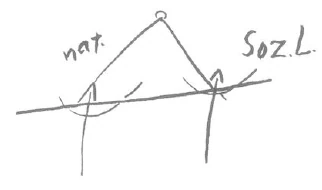
[ 20 ] But people will not get that far; they will stop short at observing a few laws of nature on the surface, and will then talk about social life in every possible way based on their feelings and their superficiality. But that way, one does not become someone who recognizes the connection, as Johann Valentin Andreae strove for; at best—forgive me, but sometimes one must call a spade a spade—at best, one becomes a Woodrow Wilson; there, things remain disconnected. Johann Valentin Andreae sought that connection. This aspiration runs through works such as his Fama fraternitatis and his Confessio fraternitatis. It was an appeal to the heads of state, to the statesmen of his time; it was an attempt to establish a social order that would correspond to the true nature of things, not to the nature of the Maya. The Fama fraternitatis was published in 1614, the Confessio in 1615, and in 1616, The Chemical Wedding of Christian Rosencreutz, which had already been written in 1603. In 1618, the Thirty Years’ War broke out, sweeping away—through the circumstances it created—the very noblest ideals that had been sought through the Fama fraternitatis and the Confessio.
[ 21 ] We live today in an age in which one year of war, due to its destructive power, amounts to as much as ten years did back then. We have already endured what amounts to a Thirty Years’ War, measured by the standards of that time. This, my dear friends, try to grasp as a thought that can lead you into the will and striving that arose in a similar way in the 17th century, but was interrupted by the events of the Thirty Years’ War. And as I have already said: When such things are present as a starting point, one must not allow oneself to be deterred later on, but rather, on the contrary, let oneself be spurred on to even greater activity, so that a subsequent attempt does not fail again. But for this, it is necessary to truly know life.
[ 22 ] Now I would like to link these reflections to those I shared here last year and at the beginning of this year. I have drawn your attention to a remarkable course of the entire human life, of the entire evolution of humanity. I have drawn your attention to the fact that, while the individual human being grows older—that is, 1, 2, 3, 4, and later 30, 35, 40, and so on—the opposite is true for humanity as a whole. Humanity as a whole was once old and is becoming younger and younger. If we go back in time—for these considerations, we need only go back to the boundary between the Atlantean era and the post-Atlantean era, to the Atlantean catastrophe—we first arrive at the ancient Indian, the primordial Indian epoch. Conditions in external life were quite different then; humanity as a whole was such that it remained capable of development well beyond the age of fifty. Today, we are capable of such development only during childhood and up to a certain age in youth, such that physical development is linked to soul-spiritual development. When we are children and then grow up as young men or women, physical development proceeds in parallel with soul-spiritual development. But then that comes to an end. — And so it continued: in ancient India, people remained dependent in their soul-spiritual development on their physical development well into their fifties. One continued to develop upward just as a child does, and this process was only complete when one became an elderly person. That is why, in those days, there was that unconditional, humble reverence for the elderly.
[ 23 ] Then came the Proto-Persian period. During that time, human beings were no longer capable of developing to such a high level, but only up to their forties and fifties—initially, up to the early fifties; then, during the Egyptian-Chaldean period, only up to their forties. Then came the Greek-Latin period; during that time, human beings were capable of developing only up to the age of 35. And then came the period—as you know, the Greek-Latin period begins in the 8th century before the Mystery of Golgotha—in which humanity remained capable of developing only up to the age of 33. That was the time when the Mystery of Golgotha took place. Humanity encountered, in its own age, the age in which Christ passed through the Mystery of Golgotha.
[ 24 ] But then humanity grew younger and younger. Whereas at the dawn of the fifth post-Atlantean epoch, in the 15th century, humanity was capable of development only up to the age of 28 and then came to a standstill, we have now reached the point where, left to nature’s own devices, people reach the age of only 27 at all. Whereas in ancient times people remained capable of developing on their own well into old age, today a person must bring their natural development—which arises spontaneously and is bound to their physicality—to a close at age 27, unless they spiritually absorb an inner, soul-based impulse and drive themselves forward from within. Those for whom this is not the case—who do not drive themselves forward from within, who do not absorb the spiritual—remain 27 years old today, even if they live to be 100. That is to say, they carry within themselves the characteristics and traits of a 27-year-old. Consequently, because people today refuse to seek inner, spiritual impulses, we have a culture and a social life that is stuck at the level of a twenty-seven-year-old. In our outer social life, we do not grow beyond the stage of a twenty-seven-year-old. The twenty-seven-year-old dominates humanity. If this continues, humanity will decline to 26, 25, 24 years; in the sixth post-Atlantean epoch, only to 21 years, and later to 14 years.
[ 25 ] We must look deeply into all these things, and we must not view them with pessimism, but rather in such a way that they inspire us to turn toward spiritual life and to seek from within what nature can no longer give us.
[ 26 ] This shows, from another perspective, how essential spiritual impulses are to culture. The most distinctive people—the leading figures of our time—are those who do not outgrow the age of 27. They set the tone. What, then, would be particularly influential? Well, let’s say that if a person were born today with a lively spirit and were to absorb not so much what is traditional but rather what nature provides, without much external influence, then he would, so to speak, carry within himself in a truly characteristic way that which comes of its own accord. For many, their upbringing shapes and nuances this. But let’s take a truly distinctive person who would embody only the characteristics of the present, who might be born into humble circumstances and would not receive an upbringing based heavily on tradition, but who would allow only what flows into him from his circumstances to influence him: He would grow up, initially becoming quite lively—because it is typical of our time to become lively by the ages of 7, 14, and 21—and might become a very energetic person up until the age of 21. But if he cannot develop spiritually, if he is such a truly representative person of the present, then he will come to a standstill precisely at the age of 27. If he were a truly representative person of the present, then something like the following would have to happen: At the age of 27, he would make a marked turning point in his life—one so marked that, in a sense, the circumstances into which he places himself at age 27 would then prevent him from moving forward any further, because he is fully committed to life. Under today’s circumstances, this could happen, for example, if such a person—after becoming a sort of self-made man with great energy and all the impulses that the times themselves provide—were elected to a parliament at the age of 27. Once you are elected to a parliament, you have committed yourself; you can no longer back away from certain things; you remain that way—this stems precisely from the development of our present age—and you thus become truly representative of that development. And since parliament is the ideal of the present age, this could be a particularly significant turning point for a person who rejects everything meant to grow into the future, who has become so completely entrenched in external circumstances, who, in a word, remains twenty-seven years old. Such a person would thus enter Parliament at the age of 27 as a strong, vigorous individual embodying the impulses of the times. After some time, he might even emerge from Parliament as a minister. One then moves forward; one becomes a leading figure of the present. But one becomes a person of the present, a characteristic twenty-seven-year-old.
[ 27 ] There is such a person. There is a person who was born into circumstances such that he absorbed only what those circumstances themselves provided him—nothing traditional—a person who has become strong and vigorous as a result of those circumstances, a person who stands by what one absorbs during the first 27 years of one’s life through thick and thin, and who was elected to Parliament at the age of 27, initially causing a stir in Parliament as a member of the opposition, but then quickly rose through the ranks and, in a sense, became a pivotal figure of the present: that is Lloyd George. There is no person more characteristic of the present age than Lloyd George. And the simple fact that this “man of his own making” became engaged in life—by being elected to Parliament—precisely in the week of his 27th year, and then his entire life’s course, points to how representative and characteristic he is of contemporary life—that very contemporary life with which we must break, and in whose place, at the age of 27, spiritual impulses should have taken hold.
[ 28 ] This is how one sees things when one can perceive life from within, discerning in those facts that other people overlook the most important events of the present. For those who understand the bigger picture, it is immensely significant that such a self-made man was elected to Parliament at the age of 27 and became actively involved there.
[ 29 ] These are facts that people must gradually observe and take note of; from them, they must come to understand the deeper connections that exist in life—connections that people today are so eager to ignore because they are uncomfortable. Uncomfortable because people would rather instinctively act out their passions and emotions—which they themselves cultivate in the external world—than seek understanding, since they want to experience the world through these emotions rather than from within themselves.
[ 30 ] Let's talk more about that tomorrow.