Human Responsibility for Global Development
GA 203
21 January 1921, Stuttgart
Translated by Steiner Online Library
Fifth Lecture
[ 1 ] Our reflections in the time before I left—and even weeks before that—all boiled down to showing how what we call spiritual science can flow into and influence real life, and how what we call the world is intimately connected with what we experience inwardly within the human being. And as you survey these reflections we have just made on these matters, I ask you to thoroughly consider the question of what it would mean for the overall development of humanity if the most compelling, the most significant findings of anthroposophically oriented spiritual science were to permeate the lives of people working together in society. We would come to know that when a human being comes to consciousness in the physical body, they preserve within that physical body something that points to the times before birth or, rather, before conception; that they were then in a state that carried within them the longing for this life between birth and death, and that they carried within them the sense that the soul, having lived for a long time only in spiritual worlds, needs to perceive the world through the physical senses, but also to act from within the physical body, in order to progress.
[ 2 ] This conscious reflection on the preexistence of the soul would not merely remain a theoretical view—if it were properly understood—but would take hold of our emotions and will, thereby immediately becoming a life force.
[ 3 ] We can see this in the people of today. They all reveal a certain lack of initiative on a grand scale. This lack of initiative on a grand scale, which has such a paralyzing effect on all the forces necessary to turn life’s downward course back into an ascent—this paralysis can only be remedied by human beings becoming aware of their connection to the spiritual world. However, this cannot be instilled in the soul through theoretical considerations, but only through a living perception of what human beings were before they descended into the physical world.
[ 4 ] If what looks beyond the time a person spends here between birth and death is not the subject of an indefinite belief, but rather the subject of clear knowledge, then it does not affect people as abstractly as religious creeds do today, but rather concretely as an immediate force within them. Human beings work in such a way that what lies within their work extends beyond death. But by taking such ideas into themselves, human beings infuse life into everything else they can know.
[ 5 ] Just consider for a moment that we now have extensive knowledge of nature. With regard to external knowledge, we must say: Humanity has made tremendous progress. The recent bloody years have shown that this progress has not been able to improve humanity in moral terms. And in fact, people like Wallace—whom I have often referred to in the past when I wanted to emphasize this point—have been proven right when they said: We have experienced tremendous progress in our understanding of the external world, but in terms of its moral condition, humanity remains as it was in primeval times; it has not progressed at all.
[ 6 ] This progress must surely come about today, in this historical era, for people cannot remain as they are now in their spiritual state. But how must this take place? How must the more theoretical view of the world be brought to life? Take what seems to be a crude example. We use coal for human life. We know that this coal consists of the remains of ancient forests; it is, therefore, essentially plant matter. But how is plant matter—how is the entire plant world—connected to human beings as such? — If we calculate over the course of a few millennia just how much carbon dioxide the air would contain as a result of our exhaling carbon dioxide—since we release carbon dioxide with every exhalation—the amount is immense. Over the course of millennia, this carbon dioxide would cause humanity to dwindle away; it would wipe out life. But plants absorb the carbon dioxide, release the carbon, and build their own bodies from what they take in—the waste products of human activity—and the plants that once covered the earth in turn form what are now our coal seams and coal deposits.
[ 7 ] As you can see, it is a strange journey. First of all, the qualitative aspect comes into play; for, of course, our coal did not arise from our own breathing, but from that of other beings—yet this qualitative aspect is what matters. What we, so to speak, excrete forms the basis of what we, in turn, draw from the earth. This is as far as one can think based on the theoretical conclusions reached by the natural sciences.
[ 8 ] Spiritual science leads us further. I remind you of what I have told you: Human beings shed their physical bodies by entering the spiritual worlds with their soul-spiritual nature. — But I have also told you: This physical body that is shed is what rebuilds the Earth.
[ 9 ] Just as we give carbon to the plant world through our exhalation, so do we give our bodies to the entire Earth. And what we see around us is indeed the product of beings such as ourselves—beings who were our predecessors during the Lunar, Solar, and Saturnian eras, the first three pre-earthly incarnations of our planetary system. They have imparted to the Earth what today constitutes the entire Earth. And when future worlds come into being, what we secrete as our physical substance will live on in them. It is a thought of immense significance when one follows it through. For from our understanding of nature—which otherwise remains only partial—we gain an understanding of the connection between the human being and the entire environment. It is extraordinarily important that we gain this insight. For when we take together what we have laid as the foundation for our reflections, we must say to ourselves: Within our entire being—not merely in our thinking, but in our entire being, right down to the outermost physicality—lives what we incorporate into our moral ideals. That dualistic view, which cannot bridge the gap between the natural worldview and the moral world order, cannot even conceive of how what we hold in our moral ideals connects with our muscular processes. If one views the world as we have done in our recent reflections, one sees how what we conceive in our moral ideals becomes embodied in our physical processes. One sees the spiritual and physical processes woven together as a unified whole.
[ 10 ] This way of thinking should become widespread. If it were incorporated into our children’s education, people would grow up who do not, on the one hand, view the world—in the sense of the Kant-Laplace theory—as having formed from nebular states from which stars, suns, and planets coalesced, from which humans then formed through the fusion of morally insubstantial matter—which in turn reverts to the purely natural—but rather, what springs forth within us as a moral ideal would be one and the same with what stood at the starting point of our world’s development in purely natural existence. And we humans would recognize ourselves as called upon to implant into natural existence that which we experience as a moral ideal. In future worlds, we would recognize that what we now experience morally will appear as laws of nature.
[ 11 ] If children were to grow up under the influence of such a view, they would relate to the world in such a way that they would feel themselves to be a part of the cosmos and, as a result, would experience a sense of life drawn from the forces they absorb within themselves as they come to know the cosmos. Indeed, as they are educated to act, they would know that what they do is imprinted upon the whole of the universe. If this were the case, how differently would people live compared to today, when it is possible for a person who asks himself, “What am I actually doing here in this world?” to see himself standing here alone, sprung from indeterminate natural forces, imbued with moral ideals as if with soap bubbles. Such a person can become paralyzed in his sense of life. When he looks up at the starry heavens, he sees the stars moving through space, yet has no connection to them; for they themselves are merely naturally arising, self-dissolving worlds without meaning and without inner spirituality.
[ 12 ] We must face the fact that this could become humanity’s spiritual worldview—a source of life force. We must point this out again and again, for this is precisely what people today understand the least. They speak of the spiritual worldview as being otherworldly. It is the current worldview that is otherworldly. Why? It operates on the dogmas of the past, which made sense in the past because they sprang from a certain instinctive clairvoyance. This instinctive clairvoyance has disappeared; people no longer have any connection to it. The dogmas that have survived are no longer understood. The issue is not that the dogmas are false, but that humanity today has no connection to them. And apart from what has been preserved as dogma, humanity today has a spiritless natural science. Anthroposophy aims to provide a natural science imbued with spirit, a natural science that enlivens human beings; and what trickles in there as an insight into the spirit in nature is transformed within the human being—just as food is transformed physically within the human being—into social power. If one were to seriously engage with these matters, one would experience that spiritual knowledge is taken in as nourishment for the soul and digested—if I may use that expression—in order to emerge as a socially effective force. We will gain social impulses in no other way than by taking in spiritual insights from the nature that surrounds us. Anyone who believes today that social reforms can be undertaken out of any other impulse thinks about the affairs of the world much as a person might think about a human being whom they forbid to eat in order to nourish them as well as possible. Anyone who speaks today of social structures without also speaking of spiritual insight wants to do the same thing with regard to the social order of humanity as someone who wants to nourish a person yet prescribes a starvation diet. This lies as a profound absurdity within humanity’s current views, and humanity is utterly unable to see through it. What we bring with us from the spiritual worlds when we enter this life between birth and death is, after all, merely an image. And fundamentally, our soul life is a life of images, and this life of images was, in earlier times, animated by what was already present as the spiritual in the view of nature. In ancient times, there was no view of nature without a view of the spirit. People today read about older views of nature; they find no mention there of a natural science that was devoid of the spirit. Anyone who goes back to the 13th or 14th century and reads what was said about nature at that time—even if they scoff at the childish or superstitious elements—will find that the essential point is that all these things that were described are depicted as permeated by the spirit. Today we strive as hard as possible to view natural phenomena without the spirit. Indeed, we see in this very the perfection of our observations: to view everything without spirit.
[ 13 ] But what we take in from nature without the spirit can by no means any longer have a life-giving effect on our existence as images today. We then remain stuck there and refuse to admit to ourselves that we are images, mere images—images of a past life that does not wish to be enriched by the present life. For this present life is meant to fertilize the past life, so that it may in turn be carried through the gate of death into spiritual worlds. Only when viewed in this living way can spiritual science give human beings what it is meant to give them.
[ 14 ] Take, for example, the dogmas found in old books on religious studies. Today, there are many people who simply fight against these dogmas because they find them nonsensical. They are by no means nonsensical—not even a dogma such as the Trinity; in fact, it has the deepest meaning of all. Through the means of the ancient, instinctive art of clairvoyance, it was perceived by human beings directly from nature itself. And there were millennia in human development during which this dogma contributed immensely to humanity. The institutional churches have preserved such dogmas. Today, they exist as little more than a certain wording. People today have no need to develop a relationship with what was once the subject of ancient clairvoyance. It remains something that has no relevance whatsoever to people given their present nature, whereas it was once living nourishment for the soul. In addition to these dogmas, we have external natural science—a natural science stripped of the spiritual—which kills our soul if it is not imbued with the spiritual.
[ 15 ] These are the two fundamental evils that spiritual science, as understood here, has in mind. It seeks to give the soul something that can enliven it, something that can instill strength in it, so that the soul can directly experience itself as a part of the entire cosmos and, in its social actions, feel the responsibility that arises from the fact that our small actions as individual human beings have cosmic significance for the entire development of the future. We must look beyond the narrow circle that we draw around ourselves today through an education devoid of the spiritual. For humanity itself has brought about this narrowing and seeks to do so more and more. This is why spiritual science faces such difficulties, because, at its core, it seeks to be precisely that which does not lie merely in words, in thoughts, or in ideas, but which, like a spiritual and soulful lifeblood, first flows through thoughts, through ideas, and through words, and then trickles directly into the human soul. That is why, when presenting spiritual science, how one speaks is far more important than what one says. Today we see the fierce conflict between materialism and spiritualism. This fierce conflict stems solely from the fact that people refuse to recognize that there is a profound basis for the saying: “The truth lies right in the middle between two opposing claims.”
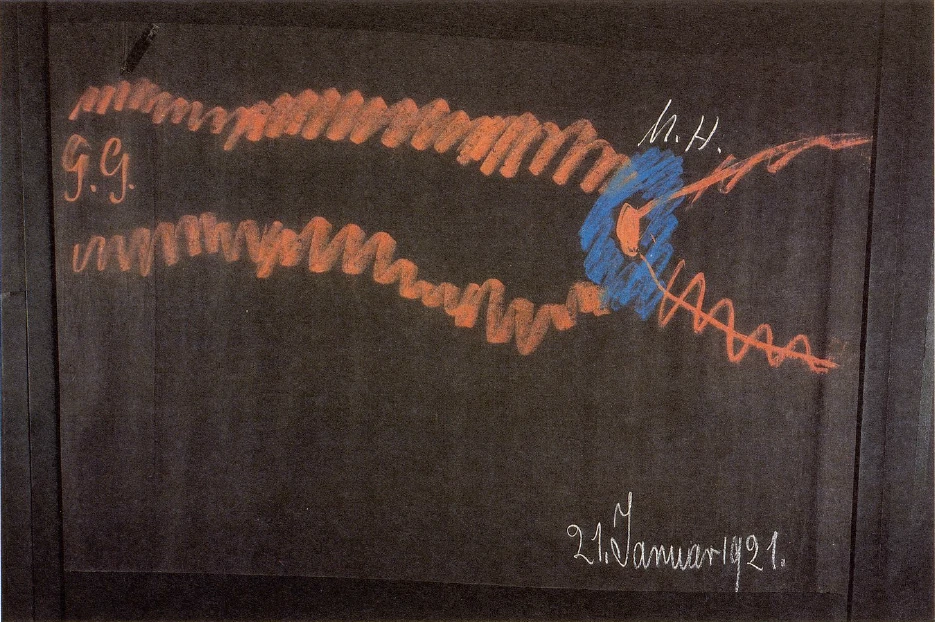
[ 16 ] Is it true that God is within us? — It is true that God is within us. — Is it true that we are within God? — It is true that we are within God. — The two statements are contradictory. Both are true: God is within us, and we are within God. The two statements are contradictory. The real, the whole truth lies right in the middle. And the essence of all ideological disputes in the world rests on the fact that people always gravitate toward a one-sided view that is true, but is precisely a one-sided truth, whereas the real truth lies between two opposing statements. One must know both if one wishes to approach the truth. For example, given the current state of world development, one must have the most earnest will to come to know material existence; one must not fall into the trap of those people who say: “We want to concern ourselves with the spirit; we do not want to come to know matter.” — To understand matter as such as much as possible—that is one aspect of human striving for knowledge and will; the other aspect is to understand the spirit as well. For what lies between the two is what we should actually be striving for, and both sides are wrong: those who say the world is only matter, and those who say the world is only spirit. For what is matter? Matter, as humans know it, is what remains of the spirit after the spirit has become spirit once more. Its human form is nothing other than what was once the thought of God (see drawing, left)—what were once the effects of divine thought. Imagine how water takes on a form as it freezes; in the same way, this divine thought takes on a form and becomes a human shell. And a new thought—a new divine thought—asserts itself within the human being, who then in turn goes out into the world; and this divine thought here (on the left) was, in turn, transformed from a form that was once a thought in earlier times. What we regard as matter is, after all, nothing other than spirit that has solidified, and what we regard as the human spirit is a young form, a shape in the process of coming into being. Spirit and matter differ in the world only according to their stages of life. And the mistake we make regarding them is not that we turn toward matter or that we turn toward spirit, but that we want to preserve in the present what we should be nurturing in life—what we should be enriching so that it can become the future.

[ 17 ] If we examine what we have brought from our pre-existence into the present—that is, our soul-spiritual life—solely through dry, external, spirit-deprived natural science, then we harden it, prevent it from germinating, prevent it from growing into future worlds; we make it Ahrimanic.
[ 18 ] And if we want to grasp what is form—what is divinity that has grown old, what has crystallized into forms—through a nebulous mysticism into which we project all manner of fantasies, then we are not relying on what the divinity has given us as our support, as our physical support; rather, we are “Luziferizing” the material. What is nebulous mysticism? — Human beings should look within themselves; they should recognize, from the cosmos within their physical organism, what they are in this life between birth and death. Instead, they fantasize that they have a deity within themselves. They do have it within themselves; but they do not attain it through mystical fantasy. They “Luciferize” what they should see in the later form of the physical body. It is false conceptions of the material and the spiritual that cause people to come into conflict with one another; for the material and the spiritual are one and the same, merely at different stages of life.
[ 19 ] This is precisely what our time needs to understand above all else. Otherwise, it will fail to grasp social life. Today, we must already make the effort to truly penetrate reality with our thoughts. People today do not want to do that. They want to remain on the surface.
[ 20 ] A few days ago, I was told a nice little story that happened very recently in Zurich. One of our friends spoke at a university ceremony in Zurich about the scientific significance of anthroposophy. In response, a man with socialist leanings remarked that people today should not be educated in such mystical fantasies, but rather in exact science—after all, Goethe had already said: “No creative spirit penetrates into the innermost depths of nature.”
[ 21 ] What this Swiss member of parliament has put forward stems merely from a superficial view of the things Goethe said. For when Goethe quotes this statement by Haller, he says: “I’ve heard that repeated for sixty years and curse it...” This is how intellectual life is conducted today; this is how people understand things; and this is how, to a certain degree, one is regarded as an authority today. But this is roughly the way people generally strive to understand the world today. Whether someone believes that Goethe actually uttered the remark he had been “cursing” for sixty years, or whether an economist allows himself to make the following claim—it ultimately makes no difference. A highly erudite economist has written a book on fixed and open price formation. In doing so, he had to conduct extensive research into the ways in which, I might say, the economy could be made social. Among the various topics he discusses is the following. He says: Georg Brandes had already stated that the people are guided in their social and economic actions not by reason but by instincts. Therefore, the people must be enlightened. Enlightenment must be brought to the people.
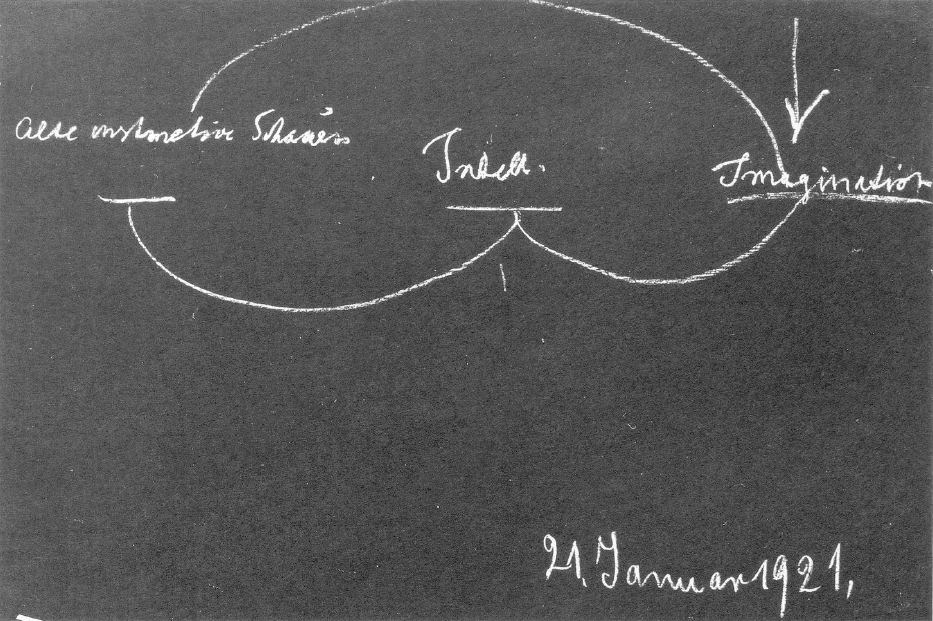
[ 22 ] Now, Georg Brandes is not a deep thinker; but one might counter: There are so many economists at so many universities; they are enlightened. But when they engage in economic activity together, instincts operate among them just as they do among others—in no way differently. For as things have turned out today, precisely because of highly developed intelligence, only instincts remain for social life. Instincts are at work. But now we must go further. Now we must ask ourselves: How do we shed light on this workings of the instincts? — For that alone can have social significance. It is simply nonsense to believe that a majority of people can be guided by these instincts. They cannot. The instincts simply arise from people living together. Something must be introduced that transforms these instincts, something that can penetrate them. Reason cannot penetrate the instincts. We must remember the ancient instinctive perception; it has evolved into our intellectualism. But this intellectualism lives only within the inner spiritual existence of the human being. In contrast, the outer social forces of action are steeped in instinct. Something must in turn penetrate this instinct that is related to this instinctive perception but has a spiritual dimension: imagination must penetrate it. So we have: ancient instinctive perception — intellect — imagination. Only imagination, as we call it in spiritual science, provides the power to bring light into instinctive life.
[ 23 ] What enables us to grasp things scientifically from a purely external perspective—to create botany, zoology, and mathematics—can be nourished by the intellect, but not what human interaction entails. What we have called imagination must be brought into play. Imagination must permeate social life. That is what matters. Human instincts were alive in all of social life, which had developed from ancient times right up to the most recent past. Strictly speaking, it was not until the second or third third of the 19th century that humanity fully entered the age that no longer requires old instincts. You can prove quite precisely that, even at the turn of the 18th to the 19th century, old instincts were still very much alive in social existence. The uncertainty of these instincts only set in during the very age in which the intellect developed most brilliantly. Social life then remained a matter of tradition.
[ 24 ] Just think for a moment of the enormous effort people had to make in the 19th century simply to maintain any moral views at all. They had to preserve, in the most abstract way possible, what had been handed down from ancient times. And they were only barely able to pass on the old moral ideals as fossils. Today we need a rebirth of morality, for only that can in turn give rise to the social. But this cannot arise from the intellect; it can arise solely and exclusively from moral intuition. The imagination—the moral imagination—must rise to the spiritual world in order to be enriched by it. This is what matters today; otherwise, humanity will lose its moral impulses.
[ 25 ] Those abstract professions of faith that merely point toward faith cannot draw strength for life from that faith. Faith alone does indeed feed the egoism of the soul; but with the egoism of the soul, one can, if necessary, still live as an individual. If one wishes to take action—and that means, of course, being active in society—then it is necessary for the spiritual-soul life-blood to permeate us. But this can come only from concrete spiritual life. This awareness of the life force of the anthroposophical worldview must flow through the anthroposophical movement.
[ 26 ] Pantheism is a common accusation leveled particularly against something like anthroposophically oriented spiritual science. Pantheism, in the eyes of contemporary creeds, is heresy—the delusion that the divine lives within the things that surround us. But why do contemporary creeds call our anthroposophically oriented spiritual science heresy? — Because these creeds are thoroughly permeated by materialism! — Certainly, if the Jesuit regards the world around him as nothing but matter, then it is blasphemy to say that this matter is God. But is it the fault of anthroposophically oriented spiritual science that Jesuit X can only regard the world around him as matter? — It is not matter; it is spirit, and what the Jesuit X perceives as matter in the world around him, anthroposophically oriented spiritual science reveals as an illusion. One does not at all explain the world that one declares to be an illusion as divine being—of course not. However, it is one thing to declare what surrounds us to be divine while at the same time recognizing external sensory existence as an illusion, and quite another to regard it as coarse, block-like matter and then attempt to declare this coarse, block-like matter to be the divine.
[ 27 ] You can see how far apart the ideas of others are from what actually exists here within our anthroposophical spiritual science. But we must not grow weary of truly bringing these ideas to the world’s attention. Otherwise, what was recently published here in a Swiss newspaper as an objection to my method of attaining knowledge of the spirit might happen. It says, more or less, that I claim one can see the spirit; but that is impossible, because the spirit is not something sensory, and only the sensory can be seen. Since the spirit cannot be grasped, no one can see it.
[ 28 ] You see, this is truly a bleak way of thinking, rooted in nothing less than the fact that the person in question says he cannot see the spirit, and therefore no one can say anything about the spirit; one cannot know anything about the spirit, because the spirit cannot be grasped. And the train of thought in an entire feature article unfolds along these lines. This is what has such a terribly devastating effect in the present day: that people simply lack the awareness that they must read to the end or even familiarize themselves with the subject matter at all. “No creative spirit penetrates the innermost depths of nature”—so read the first two lines of Goethe’s poem. People stop there and fail to notice that Goethe immediately goes on to say: “I have been cursing this for sixty years!”
[ 29 ] What we see everywhere today is superficiality; we cannot draw attention to this often enough. We must track down this terrible tendency toward superficiality everywhere. Today, it manifests itself primarily—and with particularly devastating external consequences—in the realm of social and economic thought. People there do not want to delve into things, nor into what lies at the heart of things.
[ 30 ] For example, I was told today that people in a certain region say—as is often said—that the “core issues of the social question” are so difficult to grasp. I think that when someone says, “Something is difficult to grasp,” they actually want something easy, something they can grasp easily. But if what one can grasp easily is of no use in social life—if one merely fumbles with it—and if it is precisely necessary to grasp that which is a bit difficult, requiring a bit of effort, because that is precisely what is necessary for social thinking today, to think about something more difficult—if that had been the immense harm of recent times, that people wanted to permeate social life with easily grasped thoughts and thereby ruined it—then the statement that a matter is difficult in this realm would be downright frivolous! And that is, in essence, what it is. The point is precisely not to harbor this inwardly frivolous thought that the matter is difficult. For if thoughts were simply given as one wishes them to be, they would be good for nothing but botching the job. To work properly, it will be necessary to truly overcome this apparent difficulty and engage with the matter at hand. That is what matters. It is in this serious manner that one should deal with the affairs of life in these serious times.
[ 31 ] Let's talk more about that tomorrow.