The Agricultural Course
Spiritual Science Foundations
for the Prosperity of Agriculture
GA 327
7 June 1924, Koberwitz
Translate the original German text into any language:
Versions Available:
The Agricultural Course, tr. SOL
Erster Vortrag
First Lecture
Meine lieben Freunde!
My dear friends!
[ 1 ] Mit tiefem Danke sehe ich auf die Worte zurück, die eben der Herr Graf Keyserlingk gesprochen hat. Denn es ist ja durchaus nicht bloß die Empfindung des Dankes derjenigen, die aus der Anthroposophie etwas entgegennehmen können, berechtigt, sondern es ist sozusagen auch wirklich der Dank der anthroposophischen Sache, der in unserer heutigen schwierigen Zeit allen Teilnehmern an anthroposophischen Interessen gezollt werden muss, ein solcher, den man tief empfinden kann. Und so möchte ich gerade aus dem Geiste anthroposophischer Gesinnung heraus in allerherzlichster Weise danken für die eben ausgesprochenen Worte.
[ 1 ] It is with deep gratitude that I reflect on the words just spoken by Count Keyserlingk. For it is by no means only the feeling of gratitude on the part of those who are able to benefit from anthroposophy that is justified; rather, it is, so to speak, truly the gratitude of the anthroposophical cause itself that must be expressed to all those with an interest in anthroposophy in these difficult times we are facing—a gratitude that can be felt deeply. And so, precisely in the spirit of anthroposophical conviction, I would like to express my most heartfelt thanks for the words just spoken.
[ 2 ] Es ist ja eine tief befriedigende Tatsache, dass es möglich ist, diesen landwirtschaftlichen Kursus gerade hier im Hause des Grafen und der Gräfin Keyserlingk abhalten zu können. Aus meinen früheren Besuchen weiß ich, welch wunderschön wirkende Atmosphäre, ich meine vor allem auch die geistig-seelische Atmosphäre, es hier in Koberwitz gibt, und wie gerade dasjenige, was hier an geistig-seelischer Atmosphäre lebt, ja die schönste Vorbedingung ist für dasjenige, was innerhalb dieses Kurses gesprochen werden soll.
[ 2 ] It is indeed deeply gratifying that we are able to hold this agricultural course right here at the home of Count and Countess Keyserlingk. From my previous visits, I know what a wonderfully inspiring atmosphere—and by that I mean above all the spiritual and emotional atmosphere—there is here in Koberwitz, and how precisely that which lives here in the spiritual and emotional atmosphere is, in fact, the most beautiful prerequisite for what is to be discussed in this course.
[ 3 ] Wenn der Graf darauf aufmerksam gemacht hat, dass es für den einen oder den anderen — in diesem Falle waren es die Eurythmiedamen, es können ja auch andere Besucher von auswärts davon betroffen sein — vielleicht manches Unannehmliche geben kann, so muss auf der anderen Seite in Bezug auf das, was uns eigentlich zusammengebracht hat, doch gesagt werden: Ich glaube, wir könnten für diesen landwirtschaftlichen Kursus kaum irgendwo besser untergebracht sein als gerade inmitten einer so ausgezeichneten und so musterhaft betriebenen Landwirtschaft. Zu allem, was auf anthroposophischem Felde zutage tritt, gehört ja das, dass man auch sozusagen in der nötigen Empfindungsumgebung drinnen stecken kann. Und das wird für die Landwirtschaft ganz sicher hier der Fall sein können.
[ 3 ] While the Count has pointed out that there may be some inconveniences for one person or another—in this case, the eurythmy dancers, though other visitors from out of town might also be affected—it must nevertheless be said, with regard to what actually brought us together: I believe we could hardly be better accommodated for this agricultural course than right in the midst of such an excellent and exemplary farm. After all, part of what comes to light in the field of anthroposophy is that one can, so to speak, immerse oneself in the necessary sensory environment. And that will certainly be the case here with regard to agriculture.
[ 4 ] Nun, das alles veranlasst mich, dem Hause des Grafen Keyserlingk den allertiefgefühltesten Dank auszusprechen, dem ja gewiss auch Frau Doktor Steiner beistimmen wird dafür, dass wir diese Festes-, ich denke, es werden auch Arbeitstage sein, gerade hier werden verleben können. Ich muss ja dabei bedenken, dass, ich möchte sagen, gerade dadurch, dass wir hier in Koberwitz sind, ein schon mit der anthroposophischen Bewegung verbundener landwirtschaftlicher Geist in diesen Festestagen walten wird. War es doch der Graf Keyserlingk, der von Anfang den Bestrebungen, die wir, ausgehend vom «Kommenden Tag», für die Landwirtschaft in Stuttgart entwickelten, mit Rat und Tat und aufopferungsvoller Arbeit zur Seite stand, der ja seinen aus einem so gründlichen Zusammengewachsensein mit der Landwirtschaft herangezogenen Geist in dem walten ließ, was wir in Bezug auf die Landwirtschaft tun konnten. Es war schon, ich möchte sagen, aus dem Innersten unserer Bewegung dadurch etwas an Kräften waltend, die wie mit einer gewissen Selbstverständlichkeit uns hierher zogen nach Koberwitz in dem Augenblicke, wo uns der Graf hier haben wollte. Deshalb kann ich auch versichern, dass ich glauben kann, dass jeder eigentlich gerne hier nach Koberwitz für die Abhaltung dieses Kursus gegangen ist. Das begründet, dass wir, die wir gekommen sind, ebenso tief unseren Dank dafür auszusprechen haben, ihn sehr gerne aussprechen dafür, dass das Haus Keyserlingk sich bereit erklärt hat, uns mit diesen Bestrebungen in diesen Tagen aufzunehmen.
[ 4 ] Well, all of this prompts me to express my deepest gratitude to the household of Count Keyserlingk—a sentiment to which Dr. Steiner will certainly agree—for allowing us to spend these festive days—which I imagine will also be days of work—right here. I must bear in mind that—I would say—precisely because we are here in Koberwitz, an agricultural spirit already connected to the anthroposophical movement will prevail during these festive days. For it was Count Keyserlingk who, from the very beginning, supported the efforts we developed for agriculture in Stuttgart—based on The Coming Day—with advice, practical assistance, and self-sacrificing work; he allowed his spirit, shaped by such a deep-rooted connection to agriculture, to guide what we were able to do in this field. I would say that, from the very heart of our movement, there was a force at work that drew us here to Koberwitz—almost as a matter of course—at the very moment the Count wanted us here. That is why I can also assure you that I believe everyone actually came here to Koberwitz willingly to attend this course. This is why we who have come owe our deepest thanks—and are very happy to express them—to the Keyserlingk family for agreeing to host us during these days as we pursue these endeavors.
[ 5 ] Was mich betrifft, so ist dieser Dank allerherzlichst gefühlt, und ich bitte das Haus Keyserlingk, ihn von mir ganz besonders entgegenzunehmen. Ich weiß, was es heißt, durch längere Tage hindurch in einer solchen Weise, wie ich es fühle, dass es geschehen wird, so viele Besucher aufzunehmen, und kann, glaube ich, daher auch in diesen Dank die nötige Nuance legen, und bitte auch, diese durchaus so aufzunehmen, dass ich auch die Schwierigkeiten durchaus bedenken kann, die der Abhaltung einer solchen Veranstaltung in einem Hause, das weit abliegt von der Stadt, entgegenstehen. Ich bin überzeugt davon, dass — wie auch jene Unannehmlichkeiten, von denen Graf Keyserlingk als in diesem Fall Vertreter selbstverständlich nicht der inneren, sondern der auswärtigen Politik der hiesigen Vortragsveranstaltungen gesprochen hat, sich ausnehmen werden — unter allen Umständen jeder von uns befriedigt hinweggehen wird, was anbetrifft die Bewirtung und die Aufnahme hier.
[ 5 ] As for me, I am deeply grateful, and I ask the Keyserlingk family to accept my thanks in a very special way. I know what it means to receive so many visitors over the course of several days—in the way that I sense it will happen—and I believe I can therefore convey the necessary nuance in this expression of gratitude; I also ask that it be taken to mean that I am fully aware of the difficulties involved in hosting such an event in a house that is located far from the city. I am convinced that—just as those inconveniences to which Count Keyserlingk, speaking in this instance as a representative, naturally referred not to the internal but to the external aspects of the local lecture series, will prove to be minor—each of us will leave satisfied in every respect with the hospitality and reception we have received here.
[ 6 ] Nun, ob Sie ebenso befriedigt hinweggehen können von dem Kursus selber, das ist natürlich durchaus die Frage, die wahrscheinlich immer diskutabler werden wird, trotzdem wir ja alles tun wollen, um uns auch in den späteren Tagen in allerlei Diskussionen über das Gesagte zu verständigen. Denn Sie müssen bedenken, es ist ja, obzwar von vielen Seiten ein lang gehegter Wunsch nach einem solchen Kursus bestand, zum ersten Mal, dass ich aus dem Schoß des anthroposophischen Strebens heraus einen solchen Kursus übernehme. Ein solcher Kursus erfordert gar mancherlei, denn er wird uns selber zeigen, wie die Interessen der Landwirtschaft nach allen Seiten hin mit dem größten Umkreise des menschlichen Lebens verwachsen sind und wie eigentlich es kaum ein Gebiet des Lebens gibt, das nicht zu der Landwirtschaft gehört. Von irgendeiner Seite, aus irgendeiner Ecke gehören alle Interessen des menschlichen Lebens in die Landwirtschaft hinein. Wir können selbstverständlich hier nur das zentrale Gebiet des Landwirtschaftlichen berühren. Allein, das wird uns wie von selbst führen zu manchem Seitenwege, der vielleicht gerade deshalb — weil das, was hier gesagt ist, durchaus auf anthroposophischem Boden gesagt werden soll, sich gerade dadurch als notwendig ergibt. Insbesondere werden Sie mir verzeihen müssen, wenn die heutige Einleitung zunächst so weit hergeholt werden muss, dass vielleicht nicht jeder gleich sieht, welche Verbindung zwischen der Einleitung bestehen wird und dem, was wir speziell landwirtschaftlich zu verhandeln haben. Trotzdem wird aber dasjenige, was da aufgebaut werden soll, auf diesem heute zu Sagenden, scheinbar etwas ferner Liegenden, fußen müssen.
[ 6 ] Well, whether you will be able to leave the course itself feeling equally satisfied is, of course, very much the question—one that will likely become increasingly open to debate, even though we want to do everything we can to reach a mutual understanding in the days ahead through all sorts of discussions about what has been said. For you must bear in mind that, although there has long been a widespread desire for such a course, this is the first time I have undertaken a course of this kind from within the realm of anthroposophical endeavor. A course of this kind requires many things, for it will show us how the interests of agriculture are intertwined on all sides with the broadest sphere of human life, and how, in fact, there is scarcely any area of life that does not belong to agriculture. From every angle, from every corner, all the interests of human life are part of agriculture. Of course, we can only touch upon the central aspects of agriculture here. Yet this will naturally lead us down many side paths, which may prove necessary precisely because what is said here must be spoken from a thoroughly anthroposophical perspective. In particular, you will have to forgive me if today’s introduction must initially be somewhat far-fetched, so that perhaps not everyone will immediately see the connection between the introduction and what we specifically have to discuss regarding agriculture. Nevertheless, what is to be developed here must be based on what is to be said today, even if it may seem somewhat remote.
[ 7 ] Gerade die Landwirtschaft ist ja auch in einer gewissen Weise betroffen, in ernstlicher Weise betroffen worden durch das ganze neuzeitliche Geistesleben. Sehen Sie, dieses ganze neuzeitliche Geistesleben hat ja insbesondere in Bezug auf [den] wirtschaftlichen Charakter zerstörerische Formen angenommen, deren zerstörerische Bedeutung von vielen Leuten heute noch kaum geahnt wird. Und solchen Dingen hat entgegenarbeiten wollen dasjenige, was in den Absichten lag der wirtschaftlichen Unternehmungen aus unserer anthroposophischen Bewegung heraus. Diese wirtschaftlichen Unternehmungen sind von Wirtschaftern und Kommerziellen geschaffen worden, allein sie haben es nicht vermocht, dasjenige, was eigentlich ursprüngliche Intentionen waren, nach allen Seiten hin zu verwirklichen, einfach auch schon aus dem Grunde nicht, weil in unserer Gegenwart allzu viele widerstrebende Kräfte da sind, um das rechte Verständnis für eine solche Sache hervorzurufen. Der einzelne Mensch ist vielfach den wirksamen Mächten gegenüber machtlos, und dadurch ist eigentlich nicht einmal bis jetzt das Allerursprünglichste in diesen wirtschaftlichen Bestrebungen, die aus dem Schoße der anthroposophischen Bewegung hervorgegangen sind, es ist das Allerwesentlichste nicht einmal zur Diskussion gekommen. Denn um was hat es sich praktisch gehandelt?
[ 7 ] Agriculture, in particular, has also been affected—and seriously so—by modern intellectual life. You see, this entire modern intellectual life has taken on destructive forms, particularly with regard to its economic character, the destructive significance of which many people today still scarcely suspect. And it was precisely these things that the economic enterprises arising from our anthroposophical movement sought to counteract. These economic enterprises were created by businesspeople and commercial operators; yet they have not been able to realize the original intentions in every respect—simply because there are far too many opposing forces in our present time to foster a proper understanding of such a cause. The individual is often powerless in the face of these active forces, and as a result, even the most fundamental aspect of these economic endeavors—which emerged from the heart of the anthroposophical movement—has not even been brought up for discussion to this day. For what, in practical terms, has been at stake?
[ 8 ] Ich will es an dem Beispiel der Landwirtschaft einmal erörtern, damit wir nicht im Allgemeinen, sondern im Konkreten sprechen. Es gibt heute zum Beispiel allerlei sogenannte nationalökonomische Bücher und Vorträge, die haben auch Kapitel über die Landwirtschaft vom sozialökonomischen Standpunkt aus. Man denkt nach, wie man die Landwirtschaft gestalten soll aus sozialökonomischen Prinzipien heraus. Es gibt Schriften heute, die handeln von den sozialökonomischen Ideen, wie man die Landwirtschaft gestalten soll. Das Ganze, sowohl das Abhalten von nationalökonomischen Vorträgen wie das Schreiben von solchen Büchern, ist ein offenbarer Unsinn. Aber offenbarer Unsinn wird heute in weitesten Kreisen geübt. Denn selbstverständlich sollte jeder erkennen, dass man über die Landwirtschaft nur sprechen kann, auch in ihrer sozialen Gestaltung, wenn man die Sache der Landwirtschaft zuerst als Unterlage hat, wenn man wirklich weiß, was Rübenbau, Kartoffelbau, Getreidebau bedeuten. Ohne das kann man auch nicht über die nationalökonomischen Prinzipien sprechen. Diese Dinge müssen aus der Sache heraus, nicht aus irgendwelchen theoretischen Erwägungen festgestellt werden. Wenn man so etwas spricht heute vor denjenigen Menschen, die an der Universität eine Anzahl von Kollegs gehört haben über Nationalökonomie in Bezug auf die Landwirtschaft, dann kommt ihnen das ganz absurd vor, weil ihnen die Sache so festzustehen scheint. Das ist aber nicht der Fall; über die Landwirtschaft kann nur derjenige urteilen, der sein Urteil vom Feld, vom Wald, von der Tierzucht hernimmt. Es sollte einfach alles Gerede aufhören über Nationalökonomie, das nicht aus der Sache selber herausgenommen ist. Solange man das nicht einsehen wird, dass es ein bloßes Gerede ist, was über den Dingen schwebend in nationalökonomischer Beziehung gesagt wird, solange wird es zu nichts Aussichtsvollem kommen, nicht auf diesem landwirtschaftlichen, nicht auf anderem Gebiete.
[ 8 ] I would like to discuss this using the example of agriculture, so that we are speaking in concrete terms rather than in generalities. Today, for example, there are all sorts of so-called books and lectures on national economics that also include chapters on agriculture from a socio-economic perspective. People are considering how to organize agriculture based on socio-economic principles. There are writings today that deal with socio-economic ideas on how agriculture should be organized. The whole thing—both giving lectures on national economics and writing such books—is sheer nonsense. But sheer nonsense is practiced today in the widest circles. For it goes without saying that one can only speak about agriculture—including its social organization—if one first has a solid grounding in the subject itself, if one truly understands what beet farming, potato farming, and grain farming entail. Without that, one cannot even speak about the principles of national economics. These matters must be determined from the subject itself, not from some theoretical considerations. When one speaks of such things today to people who have attended a number of university lectures on economics as it relates to agriculture, it strikes them as completely absurd, because the matter seems so firmly established to them. But that is not the case; only those who base their judgment on the fields, the forests, and animal husbandry can truly judge agriculture. All talk about economics that is not grounded in the reality of the matter itself should simply cease. As long as people fail to realize that what is said about economic matters—floating above the reality of things—is mere idle talk, nothing promising will come of it, neither in the agricultural sector nor in any other field.
[ 9 ] Dass es so ist, dass man glaubt, aus den verschiedensten Gesichtspunkten her über die Dinge reden zu können, [...] das kommt nur davon her, dass man wiederum innerhalb der einzelnen Lebensgebiete selber nicht auf die Grundlagen zurückgehen kann. Dass man eine Rübe ja als eine Rübe ansieht — gewiss, sie schaut so und so aus, lässt sich leichter oder schwerer schneiden, hat diese Farbe und diese oder jene Bestandteile in sich —, das alles kann man sagen. Aber damit ist die Rübe noch lange nicht verstanden und vor allen Dingen nicht das Zusammenleben der Rübe mit dem Acker, mit der Jahreszeit, in der sie reift und so weiter, sondern man muss sich über Folgendes klar sein:
[ 9 ] The fact that people believe they can discuss things from a wide variety of perspectives [...] stems solely from the fact that, within the individual spheres of life, they themselves cannot go back to the fundamentals. That one regards a turnip as a turnip—certainly, it looks this way or that, is easier or harder to cut, has this color and contains these or those components—all of that can be said. But that is far from understanding the turnip—and above all, it does not explain the turnip’s relationship to the field, to the season in which it ripens, and so on. Rather, one must be clear about the following:
[ 10 ] Ich habe öfters einen Vergleich gebraucht, um auf anderen Lebensgebieten das klarzumachen. Ich sagte: Man sieht eine Magnetnadel, man entdeckt, dass diese Nadel immer mit dem einen Ende nahezu nach Norden, mit dem anderen nach Süden zeigt. Man denkt nach, warum das ist, man sucht die Ursache dazu nicht in der Magnetnadel, sondern in der ganzen Erde, indem man ihrer einen Seite den magnetischen Nordpol, ihrer anderen den magnetischen Südpol gibt. Würde jemand in der Magnetnadel selber die Ursache suchen, dass sie sich in einer so [eigensinnigen] Weise hinstellt, so würde er einen Unsinn reden. Denn in ihrer Lage kann man die Magnetnadel nur verstehen, wenn man weiß, in welcher Beziehung sie zur ganzen Erde steht.
[ 10 ] I have often used an analogy to explain this in other areas of life. I said: You see a magnetic needle; you notice that one end of this needle always points almost north, and the other south. You wonder why this is so; you don’t look for the cause within the magnetic needle itself, but rather in the entire Earth, by assigning the magnetic North Pole to one side of it and the magnetic South Pole to the other. If someone were to look for the cause within the compass needle itself—why it aligns in such a [stubborn] way—they would be talking nonsense. For one can only understand the compass needle’s orientation if one knows its relationship to the entire Earth.
[ 11 ] Alles das, was für die Magnetnadel als ein Unsinn erscheint, das gilt für viele andere Dinge den Menschen als Sinn. Wenn Sie die Rübe in der Erde wachsen haben: Sie so zu nehmen, wie sie ist, in ihren engen Grenzen, ist in dem Augenblick ein Unding, wenn die Rübe in ihrem Wachstum vielleicht abhängig ist von unzähligen Umständen, die gar nicht auf der Erde, sondern in der kosmischen Umgebung der Erde vorhanden sind. Und so erklärt man heute vieles, so richtet man vieles im praktischen Leben ein, als ob man es nur zu tun hätte mit den eng umgrenzten Dingen und nicht mit den Wirkungen, die aus der ganzen Welt kommen. Die einzelnen Lebensgebiete haben furchtbar darunter gelitten und würden diese Leiden viel mehr zeigen, wenn nicht, ich möchte sagen, trotz aller Wissenschaft der neueren Zeit, noch ein gewisser Instinkt vorhanden wäre aus derjenigen Zeit, wo man mit dem Instinkt und nicht mit der Wissenschaft gearbeitet hat. Wenn diejenigen Menschen, die von ihren Ärzten verschrieben haben, wie viel Gramm Fleisch sie essen sollen, wie viel Kohl, damit das zur richtigen menschlichen Physiologie stimmt — es haben manche Leute neben sich eine Waage und wiegen sich alles das zu, was da auf den Teller kommt —, das ist ja schön, selbstverständlich, man soll so etwas wissen, aber ich muss immer wieder denken: Es ist doch gut, dass der Betreffende auch den Hunger spürt, wenn er mit dem Zugewogenen noch nicht genug hat, dass noch dieser Instinkt vorhanden ist.
[ 11 ] Everything that seems nonsensical to the magnetic needle makes sense to humans in many other contexts. If you have a turnip growing in the ground: to take it as it is, within its narrow limits, is absurd at that moment, since the turnip’s growth may depend on countless circumstances that do not exist on Earth at all, but rather in the cosmic environment surrounding Earth. And so today we explain many things and organize much of practical life as if we were dealing only with narrowly defined phenomena and not with the effects arising from the entire world. The various spheres of life have suffered terribly as a result and would reveal this suffering far more clearly if it were not for—I would say—a certain instinct that still persists from the time when people relied on instinct rather than science, despite all the scientific knowledge of recent times. When people follow their doctors’ prescriptions on how many grams of meat they should eat, how much cabbage, so that it aligns with proper human physiology—some people even keep a scale by their side and weigh out everything that goes onto their plate—that’s all well and good, of course; one should know such things, but I can’t help but think again and again: It’s a good thing that the person in question also feels hunger when the measured portion isn’t enough, that this instinct is still present.
[ 12 ] So war der Instinkt eigentlich allem zugrunde liegend, was Menschen tun mussten, bevor eine Wissenschaft auf diesem Gebiete da war. Und diese Instinkte haben manchmal ganz sicher gewaltet, und man kann heute noch immer außerordentlich überrascht sein, wenn man in solchen alten Bauernkalendern die Bauernregeln liest, wie ungeheuer weise und verständlich das ist, was sie ausdrücken. Denn, um in solchen Dingen nicht abergläubisch zu sein, dazu hat doch auch der instinkthaft sichere Mensch die Möglichkeit. Ebenso wie man für die Sache außerordentlich tiefsinnige Aussprüche hat, die für die Aussaat und Ernte gelten, findet man [...] Firlefanzereien, solche Aussprüche wie: «Kräht der Hahn auf dem Mist, so regnet es, oder es bleibt, wie es ist.» Der nötige Humor ist auch in diesem Instinkthaften überall darinnen, um Abergläubische abzuweisen.
[ 12 ] Thus, instinct was actually the foundation of everything people had to do before science existed in this field. And these instincts certainly prevailed at times, and even today one can still be extraordinarily surprised when reading the farmers’ sayings in such old almanacs—at how immensely wise and understandable what they express is. For even the instinctively confident person has the capacity to avoid being superstitious in such matters. Just as there are extraordinarily profound sayings about sowing and harvesting, one also finds [...] frivolous nonsense, such as: “If the rooster crows on the manure heap, it will rain, or things will stay as they are.” The necessary humor is also present throughout this instinctive way of thinking, serving to dispel superstition.
[ 13 ] Es handelt sich, wenn hier vom anthroposophischen Gesichtspunkte aus gesprochen wird, wirklich darum, nicht zurückzugehen zu den alten Instinkten, sondern aus einer tieferen geistigen Einsicht heraus das zu finden, was die unsicher gewordenen Instinkte immer weniger geben können. Dazu ist notwendig, dass wir uns einlassen auf eine starke Erweiterung der Betrachtung des Lebens der Pflanzen, der Tiere, aber auch des Lebens der Erde selbst, auf eine starke Erweiterung nach der kosmischen Seite hin.
[ 13 ] From an anthroposophical perspective, the point here is truly not to revert to the old instincts, but rather, through a deeper spiritual insight, to find what our increasingly unreliable instincts are less and less able to provide. To do this, we must open ourselves to a profound expansion of our view of the life of plants and animals—and indeed, of the life of the Earth itself—toward the cosmic realm.
[ 14 ] Es ist ja doch so, dass gewiss von einer Seite her es ganz richtig ist, Regenwitterung in trivialer Weise nicht mit den Mondphasen in Beziehung zu bringen, aber auf der anderen Seite besteht auch wiederum das, was sich einmal zugetragen hat. Ich habe es schon öfter in anderen Kreisen erzählt, dass in Leipzig zwei Professoren tätig waren, wovon der eine, Gustav Theodor Fechner, ein in geistigen Dingen mit so manchen sicheren Einblicken behafteter Mann, aus äußeren Beobachtungen heraus nicht so ganz nur mit Aberglauben hinblicken konnte darauf, dass gewisse Epochen des Regnens und Nichtregnens doch wiederum mit dem Monde und seinem Gange um die Erde zusammenhängen. Es hat sich das für ihn als eine Notwendigkeit aus statistischen Untersuchungen ergeben. Aber sein Kollege, der berühmte Professor Schleiden, der stellte in einer Zeit, in der man über solche Dinge hinwegsah, aus wissenschaftlichen Vernunftgründen alles das in Abrede. Nun hatten die beiden Professoren an der Leipziger Universität auch Frauen. Und Gustav Theodor Fechner, der ein etwas humorvoll angelegter Mensch war, sagte: Es sollen mal unsere Frauen entscheiden. Nun war damals in Leipzig noch eine gewisse Sitte. Es war das Wasser, das man zum Waschen der Wäsche brauchte, nicht so leicht zu erhalten. Man musste es weit herholen. Man stellte also die Krüge und Bottiche auf und fing das Regenwasser auf. Das tat sowohl die Frau Professor Schleiden wie die Frau Professor Fechner. Aber sie hatten nicht genügend Platz, um gleichzeitig die Bottiche aufzustellen. Da sagte der Professor Fechner: Wenn das ganz gleichgültig ist, wenn mein verehrter Kollege recht hat, dann soll einmal die Frau Professor Schleiden ihre Bottiche in der Zeit aufstellen, in der nach meinen Angaben nach der Mondphase weniger Regen kommt, und meine Frau wird den Bottich aufstellen in der Zeit, in der nach meiner Berechnung mehr Regenwasser kommt. Wenn das alles Unsinn ist, wird die Frau Professor Schleiden das ja gerne tun. — Und siehe da, die Frau Professor Schleiden ließ sich das nicht gefallen, sondern sie richtete sich lieber nach den Angaben von Professor Fechner als nach ihrem eigenen Gatten.
[ 14 ] It is certainly true, from one perspective, that it is quite correct not to make a trivial connection between rainy weather and the phases of the moon; but on the other hand, there is also the fact that something did happen once. I have often recounted in other circles that there were two professors working in Leipzig, one of whom, Gustav Theodor Fechner—a man endowed with many sound insights into intellectual matters—could not, based on external observations, dismiss the idea that certain periods of rain and dry spells were, after all, related to the moon and its orbit around the Earth as mere superstition. This conclusion emerged for him as a necessity based on statistical analyses. But his colleague, the famous Professor Schleiden, at a time when such matters were generally overlooked, denied all of this on the basis of scientific reasoning. Now, both professors at the University of Leipzig were married. And Gustav Theodor Fechner, who was a somewhat humorous man, said: “Let our wives decide.” Now, back then in Leipzig, there was still a certain custom. The water needed for washing laundry was not easy to come by. It had to be fetched from far away. So people would set out jugs and tubs to collect rainwater. Both Professor Schleiden’s wife and Professor Fechner’s wife did this. But they did not have enough space to set up the tubs at the same time. So Professor Fechner said: “If it really doesn’t matter, and if my esteemed colleague is right, then let Professor Schleiden’s wife set up her tubs during the time when, according to my data based on the moon’s phase, there’s less rain, and my wife will set up her tub during the time when, according to my calculations, there’s more rainwater. If all this is nonsense, Professor Schleiden’s wife will be happy to do so.” — And lo and behold, Professor Schleiden wouldn’t stand for that; instead, she chose to follow Professor Fechner’s instructions rather than those of her own husband.
[ 15 ] So ist es schon einmal. Die Wissenschaft kann ja richtig sein, aber die Praxis kann sich auf dieses Richtige der Wissenschaft nicht einlassen. Wir wollen nicht in dieser Weise sprechen, wir wollen ja ernsthaft sprechen. Es sollte das nur gesagt sein, um uns darauf hinzuweisen, dass man etwas weitersehen muss, als man heute gewohnt ist zu schen, wenn man nach dem hinschaut, das dem Menschen das physische Leben auf der Erde allein möglich macht, und das ist doch die Landwirtschaft.
[ 15 ] That is certainly true. Science may well be correct, but practical application cannot simply accept this scientific correctness. We do not want to speak in this manner; we want to speak seriously. This should simply be said to remind us that we must look further than we are accustomed to doing today when we consider what alone makes physical life on Earth possible for human beings—and that is, after all, agriculture.
[ 16 ] Ich kann nicht wissen, ob dasjenige, was heute schon aus Anthroposophie heraus gesagt werden kann, uns wird nach allen Seiten befriedigen können. Aber es soll versucht werden, das zu sagen, was aus Anthroposophie heraus für die Landwirtschaft gegeben werden kann.
[ 16 ] I cannot know whether what can already be said today on the basis of anthroposophy will be able to satisfy us in every respect. But we should try to articulate what anthroposophy has to offer in the field of agriculture.
[ 17 ] Damit möchte ich einleitungsweise beginnen, hinzuweisen auf Wichtigstes in unserem irdischen Dasein für die Landwirtschaft. Wir haben ja heute so die Gewohnheit, wenn wir von etwas reden, den hauptsächlichsten Wert zu legen auf die chemisch-physikalischen Bestandteile. Nun wollen wir einmal nicht ausgehen von den chemisch-physikalischen Bestandteilen, sondern wollen einmal ausgehen von etwas, was hinter den chemisch-physikalischen Bestandteilen steht und doch von einer ganz besonderen Wichtigkeit ist für das Leben der Pflanze auf der einen Seite, des Tieres auf der anderen Seite. Sehen Sie, wenn wir das Leben des Menschen betrachten und in einem gewissen Grade auch das Leben des Tieres betrachten, so haben wir eine starke Emanzipation des menschlichen und tierischen Lebens von der äußeren Welt zu verzeichnen. Je mehr wir zum Menschen heraufkommen, eine umso stärkere Emanzipation haben wir zu verzeichnen. Wir finden Erscheinungen im menschlichen und tierischen Leben, die uns zunächst heute ganz unabhängig erscheinen von der außerirdischen oder auch den unmittelbar die Erde umgebenden atmosphärischen und dergleichen Einflüssen. Das scheint nicht nur so, sondern ist sogar in Bezug auf vieles im menschlichen Leben außerordentlich richtig. Gewiss, wir wissen, dass durch gewisse atmosphärische Einflüsse die Schmerzen gewisser Krankheiten stärker werden. Wir wissen schon weniger, dass gewisse Krankheiten im Menschen so ablaufen, oder auch sonstige Lebenserscheinungen so ablaufen, dass sie in ihren Zeitverhältnissen nachbilden äußere Naturvorgänge. Aber sie stimmen in Anfang und Ende nicht mit diesen Naturvorgängen überein. Wir brauchen uns ja nur daran zu erinnern, dass eine der allerwichtigsten Erscheinungen, die weiblichen Menses, in ihrem Verlaufe zeitlich Nachbildungen sind des Verlaufes der Mondphasen, allein in Anfang und Ende stimmen sie nicht damit überein. Es gibt zahlreiche andere feinere Erscheinungen, sowohl im männlichen wie im weiblichen Organismus, welche Nachbildungen sind von natürlichen Rhythmen.
[ 17 ] I would like to begin by pointing out what is most important in our earthly existence as it relates to agriculture. Today, we have a tendency, when we talk about something, to place the greatest emphasis on its chemical and physical components. Now, let us not start from the chemical and physical components, but rather from something that lies behind them and is nevertheless of very special importance for the life of plants on the one hand and animals on the other. You see, when we consider human life—and to a certain extent, animal life as well—we observe a marked emancipation of human and animal life from the external world. The closer we come to the human being, the greater this emancipation becomes. We find phenomena in human and animal life that, at first glance, appear to us today to be entirely independent of extraterrestrial influences or even of the atmospheric and similar influences immediately surrounding the Earth. This is not merely an impression; it is, in fact, exceptionally true with regard to many aspects of human life. Certainly, we know that certain atmospheric influences intensify the pain associated with certain illnesses. We are less aware, however, that certain diseases in humans—or other life phenomena—unfold in such a way that their temporal patterns mirror external natural processes. Yet their beginning and end do not coincide with these natural processes. We need only recall that one of the most important phenomena—the female menstrual cycle—follows a temporal pattern that mirrors the phases of the moon, yet its beginning and end do not correspond to them. There are numerous other, more subtle phenomena, in both the male and female organisms, that are reflections of natural rhythms.
[ 18 ] Wenn man viel intimer auf die Dinge eingehen würde, würde man zum Beispiel vieles, was sich im sozialen Leben abspielt, besser verstehen, wenn man die Periodizität der Sonnenflecken richtig verstehen würde. Man sieht aber auf solche Dinge nicht hin, weil das, was im menschlichen sozialen Leben der Periodizität der Sonnenflecken entsprechen kann, nicht dann anfängt, wenn die Sonnenflecken anfangen, und dann aufhört, wenn die Sonnenflecken aufhören, sondern weil es sich davon emanzipiert hat. Es zeigt dieselbe Periodizität, es zeigt denselben Rhythmus, aber nicht das zeitliche Zusammenfallen. Es hält innerlich fest die Periodizität und den Rhythmus, aber macht diese Periodizität und diesen Rhythmus selbstständig, emanzipiert sich davon. Es kann nun jeder kommen, dem man sagt: Das menschliche Leben ist ein Mikrokosmos, es ahmt nach den Makrokosmos, und kann sagen: Das ist ja ein Unsinn. Wenn man nun behauptet, es gibt für gewisse Krankheiten eine siebentägige Fieberperiode, so könnte er einwenden: Dann müsste ja, wenn irgendwelche äußeren Erscheinungen eintreten, auch das Fieber erscheinen und den äußeren Erscheinungen parallel laufen und dann aufhören, wenn die äußeren Erscheinungen aufhören. — Das tut das Fieber zwar nicht, aber es hält den inneren Rhythmus fest, wenn auch nicht der zeitliche Anfang und das zeitliche Ende mit den äußeren Erscheinungen zusammenfallen.
[ 18 ] If one were to examine things in much greater detail, one would, for example, gain a better understanding of much of what takes place in social life if one properly understood the periodicity of sunspots. But people do not pay attention to such things because what corresponds to the periodicity of sunspots in human social life does not begin when the sunspots begin, nor does it end when the sunspots end—rather, it has emancipated itself from them. It exhibits the same periodicity, the same rhythm, but not the temporal coincidence. It internally maintains the periodicity and the rhythm, but renders this periodicity and this rhythm independent, emancipating itself from them. Anyone to whom one says, “Human life is a microcosm; it mimics the macrocosm,” might well respond, “That’s utter nonsense.” If one were to claim that there is a seven-day fever period for certain illnesses, such a person might object: “Then, when any external symptoms appear, the fever would also have to appear, run parallel to the external symptoms, and then cease when the external symptoms cease.” — The fever does not actually do that, but it maintains the inner rhythm, even if its temporal beginning and end do not coincide with the external symptoms.
[ 19 ] Diese Emanzipation ist für das menschliche Leben fast vollständig im Kosmos durchgeführt. Für das Tierische schon etwas weniger, aber das Pflanzliche ist zu einem hohen Grade noch durchaus drinnenstehend im allgemeinen Naturleben auch [des Außerirdischen]. Und daher wird es ein Verständnis des Pflanzenlebens gar nicht geben können, ohne dass bei diesem Verständnis berücksichtigt wird, wie alles das, was auf der Erde ist, eigentlich nur ein Abglanz dessen ist, was im Kosmos vor sich geht. Beim Menschen kaschiert sich das nur, weil er sich emanzipiert hat. Er trägt nur den inneren Rhythmus in sich. Beim Pflanzlichen ist es noch im eminentesten Sinne der Fall. Und darauf möchte ich in diesen Einleitungsworten heute hinweisen.
[ 19 ] This emancipation has been almost completely realized in the cosmos with regard to human life. For the animal realm, this is somewhat less so, but the plant realm is still, to a high degree, thoroughly embedded within the general life of nature—including that of extraterrestrial life. And therefore, there can be no true understanding of plant life without taking into account that everything on Earth is, in fact, merely a reflection of what is taking place in the cosmos. In humans, this is merely concealed because they have emancipated themselves. They carry only the inner rhythm within themselves. In the plant kingdom, this is still the case in the most eminent sense. And that is what I would like to point out in these introductory remarks today.
[ 20 ] Sehen Sie, die Erde ist zunächst umgeben im Himmelsraum von dem Mond und dann den anderen Planeten unseres Planetensystems. Man hat in einer alten instinktiven Wissenschaft, in der man die Sonne zu den Planeten gerechnet hat, diese Reihenfolge gehabt: Mond, Merkur, Venus, Sonne, Mars, Jupiter, Saturn. Nun möchte ich ohne alle astronomischen Auseinandersetzungen auf das planetarische Leben hinweisen, auf das, was zusammenhängt in diesem planetarischen Leben mit dem Irdischen. Da haben wir zunächst, wenn wir hinschauen auf das irdische Leben im Großen, die Tatsache zu berücksichtigen, wie in diesem irdischen Leben im Großen wiederum eine denkbar größte Rolle spielt alles das, was ich nennen möchte das Leben der Kieselsubstanz in der Welt. Kieselsubstanz finden Sie ja zum Beispiel in unserem schönen Quarz in die Gestalt des Prismas und der Pyramide eingeschlossen. Sie finden diese Kieselsubstanz, verbunden mit Sauerstoff, in unseren Quarzkristallen; wenn man sich den Sauerstoff wegdenkt, der im Quarz mit dem Kiesel verbunden ist, das sogenannte Silicium. So haben wir diese Substanz, die die Chemie heute zu den Elementen — Sauerstoff, Stickstoff, Wasserstoff, Schwefel und so weiter — zählt, dieses Silicium, das sich mit dem Sauerstoff verbindet, so haben wir den Kiesel als ein chemisches Element. Aber wir dürfen nicht vergessen, dass das, was da im Quarz als Silicium lebt, zu siebenundzwanzig bis achtundzwanzig Prozent auf unserer Erdoberfläche verbreitet ist. Alle anderen Substanzen sind in weniger Prozent vorhanden, nur der Sauerstoff in siebenundvierzig bis achtundvierzig Prozent. Es ist ungeheuer viel Silicium vorhanden. Nun gewiss, dieses Silicium, wenn es sich findet in solchen Gesteinen wie dem Quarz, so tritt es in einer solchen Form auf, die, wenn man das äußere Materielle, den Erdboden betrachtet mit seinem Pflanzenwachstum — den vergisst man eben —, keine große Bedeutung zeigt. Denn es ist nicht löslich im Wasser. Es ist wasserundurchgängig. Also mit den allgemeinen banalen, trivialen Lebensbedingungen scheint es zunächst nicht viel zu tun zu haben. Wenn Sie aber wiederum nehmen den Ackerschachtelhalm, das Equisetum, so haben Sie in ihm zu neunzig Prozent Kieselsäure drin, dasselbe, was im Quarz ist, in sehr feiner Verteilung. Aus alledem können Sie ersehen, welch ungeheure Bedeutung der Kiesel, das Silicium, haben muss. Es ist ja fast die Hälfte dessen, dem wir auf der Erde begegnen, aus Kiesel bestehend.
[ 20 ] You see, in outer space, the Earth is first surrounded by the Moon and then by the other planets of our solar system. In an ancient, instinctive science—in which the Sun was counted among the planets—this was the order: Moon, Mercury, Venus, Sun, Mars, Jupiter, Saturn. Now, without getting into any astronomical debates, I would like to point out planetary life—specifically, what in this planetary life is connected to earthly life. First of all, when we look at earthly life on a grand scale, we must take into account the fact that, within this earthly life on a grand scale, everything that I would like to call “the life of the siliceous substance in the world” plays an immensely significant role. You find siliceous substance, for example, enclosed in our beautiful quartz in the form of prisms and pyramids. You find this siliceous substance, combined with oxygen, in our quartz crystals; if you mentally remove the oxygen that is bound to the silicon in the quartz, you are left with what is called silicon. Thus, we have this substance—which modern chemistry classifies among the elements (oxygen, nitrogen, hydrogen, sulfur, and so on)—this silicon that combines with oxygen; thus, we have silicon as a chemical element. But we must not forget that what exists in quartz as silicon makes up twenty-seven to twenty-eight percent of our Earth’s surface. All other substances are present in smaller percentages; only oxygen accounts for forty-seven to forty-eight percent. There is an enormous amount of silicon present. Now, certainly, this silicon, when found in rocks such as quartz, occurs in a form that—when one considers the external material world, the soil with its plant growth—which one tends to overlook—does not seem to be of great significance. For it is insoluble in water. It is impermeable to water. So at first glance, it doesn’t seem to have much to do with the general, mundane, trivial conditions of life. But if you take field horsetail, the Equisetum, for example, it consists of ninety percent silicic acid—the same substance found in quartz—in a very fine dispersion. From all this, you can see what immense significance silica, or silicon, must have. After all, nearly half of what we encounter on Earth consists of silica.
[ 21 ] Nun liegt das Merkwürdige vor, dass dieser Kiesel so wenig bemerkt wird, dass er sogar von den Dingen, in denen er außerordentlich wohltätig wirken kann, heute noch so ziemlich ausgeschlossen ist. In der aus der Anthroposophie hervorgehenden Medizin bildet die Kieselsubstanz einen wesentlichen Bestandteil sehr vieler Heilmittel. Ein ganzer Trakt von Krankheiten wird durch inneres Eingeben oder Baden mit Kieselsäure behandelt, weil fast alles das, was sich in Krankheitsfällen in abnormen Zuständen der Sinne zeigt, was nicht in den Sinnen selber liegt, sondern in den Sinnen zeigt, auch in den inneren Sinnen, was da oder dort in den Organen Schmerzen hervorruft, weil alles das in merkwürdiger Weise beeinflusst wird gerade von Silicium. Silicium spielt aber auch überhaupt in dem, was man — man hat ja dieses althergebrachte Wort — den Haushalt der Natur nennt, die denkbar größte Rolle. Denn das Silicium ist nicht nur da vorhanden, wo wir es finden, im Quarz oder in anderem Gestein, das Silicium ist in außerordentlich feiner Verteilung auch in der Atmosphäre, es ist überall eigentlich vorhanden. Die Hälfte der uns zur Verfügung stehenden Erde ist ja eigentlich Kiesel, denn achtundvierzig Prozent sind es. Sehen Sie: Was tut denn dieser Kiesel? Ja, das müssen wir uns fragen in einer hypothetischen Form.
[ 21 ] Now, what is remarkable is that this silica is so little recognized that it is still largely excluded today even from the very areas where it can have an extraordinarily beneficial effect. In medicine based on anthroposophy, silica is an essential component of a great many remedies. An entire range of illnesses is treated by internal administration or bathing with silicic acid, because almost everything that manifests in abnormal states of the senses in cases of illness—that which does not lie in the senses themselves but manifests in them, including the inner senses—and that which causes pain here and there in the organs, is influenced in a remarkable way precisely by silicon. But silicon also plays the greatest possible role in what is traditionally called—as the old saying goes—the “household of nature.” For silicon is not only present where we find it, in quartz or other rocks; it is also distributed in an extraordinarily fine form in the atmosphere—it is actually present everywhere. Half of the Earth available to us is actually silica—forty-eight percent, to be exact. You see: What does this silica do? Yes, we must ask ourselves that in a hypothetical sense.
[ 22 ] Nehmen wir einmal an, wir hätten nur die Hälfte von Kiesel in unserer Erdenumgebung, da würden wir Pflanzen haben, die alle mehr oder weniger pyramidale Formen hätten. Die Blüten würden alle verkümmert sein, und wir würden etwa die für uns so abnorm erscheinenden Kakteenformen fast in allen Pflanzen haben. Die Getreideformen würden ganz komisch ausschauen: Die Halme würden nach unten dick, sogar fleischig werden, die Ähren verkümmern, wir würden keine vollen Ähren haben.
[ 22 ] Let’s assume we had only half as much silica in our Earth’s environment; in that case, we would have plants that all had more or less pyramidal shapes. The flowers would all be stunted, and we would find the cactus-like forms—which seem so abnormal to us—in almost all plants. The cereal plants would look quite strange: the stalks would become thick and even fleshy toward the bottom, the ears would be stunted, and we would have no full ears.
[ 23 ] Nun sehen Sie, das ist auf der einen Seite. Wir finden auf der anderen Seite, dass, wenn auch nicht so ausgebreitet wie die Kieselsubstanz, Kalksubstanz und Verwandtes wiederum überall in der Erde sich finden muss, Kalk, Kali, Natriumsubstanz sich finden muss. Wären diese wiederum weniger vorhanden, als sie sind, dann würden wir bekommen Pflanzen mit ausschließlich dünnem Stängel, Pflanzen, die etwa zum großen Teil gewundene Stängel hätten, wir würden lauter Schlingpflanzen bekommen. Die Blüten würden zwar auseinandergehen, aber sie würden taub sein; sie würden auch keine besonderen Nährstoffe liefern. Nur in dem Equilibrium, in dem Zusammenwirken dieser beiden Kräfte — wenn ich zwei Substanzen herausgreife —, in dem Zusammenwirken von kalkähnlichen und kieselähnlichen Substanzen gedeiht das Pflanzenleben in der Form, wie wir es heute sehen.
[ 23 ] Now you see, that is on one side. On the other side, we find that—even if not as widespread as siliceous matter—calcareous matter and related substances must also be found everywhere in the earth; lime, potash, and sodium compounds must be present. If these were present in smaller quantities than they actually are, we would end up with plants that have exclusively thin stems—plants that would largely have twisted stems; we would end up with nothing but climbing plants. The flowers would indeed open, but they would be sterile; they would also provide no special nutrients. Only in the equilibrium, in the interplay of these two forces—if I single out two substances—in the interplay of calcium-like and silica-like substances does plant life flourish in the form we see today.
[ 24 ] Nun aber wiederum weiter. Sehen Sie, das alles, was im Kieseligen lebt, hat Kräfte, die nicht von der Erde stammen, sondern von den sogenannten sonnenfernen Planeten: Mars, Jupiter, Saturn. Dasjenige, was ausgeht von diesen Planeten, wirkt auf dem Umwege durch das Kieselige und Verwandtes auf das Pflanzenleben. Aber von all demjenigen, was erdennahe Planeten sind: Mond, Merkur, Venus, wirken die Kräfte auf dem Umwege des Kalkigen auf das Pflanzliche, auch auf das tierische Leben der Erde herein. So können wir sprechen jedem Acker gegenüber, der bebaut ist: Da drinnen wirkt Kieseliges und wirkt Kalkiges. Im Kieseligen wirken Saturn, Jupiter, Mars, im Kalkigen Mond, Venus, Merkur.
[ 24 ] But now let us continue. You see, everything that lives in the siliceous realm possesses forces that do not originate from the Earth, but rather from the so-called outer planets: Mars, Jupiter, and Saturn. That which emanates from these planets acts, indirectly through the siliceous realm and related elements, upon plant life. But the forces emanating from all the planets close to Earth—the Moon, Mercury, and Venus—also influence plant life, as well as animal life on Earth, indirectly through the calcareous. Thus, we can say of every cultivated field: Within it, siliceous and calcareous forces are at work. Saturn, Jupiter, and Mars act through the siliceous; the Moon, Venus, and Mercury act through the calcareous.
[ 25 ] Nun schauen wir uns demgegenüber die Pflanzen selber an. Zweierlei müssen wir am Pflanzenleben beobachten. Das Erste ist dasjenige, dass das ganze Pflanzenwesen und auch die einzelne pflanzliche Art in sich selber sich erhält, die Reproduktionskraft, die Fortpflanzungskraft entwickelt, dass also die Pflanze ihresgleichen hervorbringen kann und so weiter. Das ist das eine. Das andere ist, dass die Pflanze als ein Wesen eines verhältnismäßig niederen Naturreiches den Wesen der höheren Naturreiche zur Nahrung dient. D zwei Strömungen im Werden der Pflanze haben zunächst wenig miteinander zu tun. Denn in Bezug auf den Vorgang der Entwicklung von der Pflanzenmutter zur Pflanzentochter, Enkel und so weiter kann es den Bildekräften der Natur ganz gleichgültig sein, ob wir die Pflanze essen und uns dadurch ernähren oder nicht. Es sind zwei ganz verschiedene Interessen, die sich da drinnen äußern, und [zwar] wirken in dem Kräftezusammenhange des Natürlichen die Dinge so, dass alles dasjenige, was mit der inneren Reproduktionskraft, mit dem Wachstum zusammenhängt, was dazu beiträgt, dass Pflanzengeneration auf Pflanzengeneration folgt, in dem wirkt, was von Mond, Venus, Merkur auf dem Umwege des Kalkigen vom Kosmos auf die Erde hereinwirkt. Schauen wir einfach das an, was bei solchen Pflanzen zutage tritt, die wir nicht essen, die sich einfach immer erneuern, so sehen wir so hin, als ob uns nur interessieren würde das kosmische Hereinwirken durch die Kräfte von Venus, Merkur, Mond; die sind beteiligt an dem, was auf der Erde im Pflanzenwesen sich reproduziert.
[ 25 ] Now, in contrast, let us look at the plants themselves. There are two aspects of plant life that we must observe. The first is that the entire plant organism—and also the individual plant species—sustains itself, develops the power of reproduction, and is thus able to produce its own kind, and so on. That is one aspect. The other is that the plant, as a being of a relatively lower kingdom of nature, serves as food for the beings of the higher kingdoms of nature. At first glance, these two currents in the plant’s development have little to do with one another. For as far as the process of development from the mother plant to the daughter plant, granddaughter, and so on is concerned, it may be entirely irrelevant to the formative forces of nature whether we eat the plant and thereby nourish ourselves or not. These are two entirely different interests at work here, and [indeed] within the interplay of forces in nature, things function in such a way that everything connected with the inner reproductive power—with growth—and everything that contributes to one generation of plants following another, operates through the influence of the Moon, Venus, and Mercury, acting upon the Earth from the cosmos via the calcic medium. If we simply observe what becomes evident in such plants—those we do not eat, which simply renew themselves continually—we look at them as if we were interested only in the cosmic influence exerted by the forces of Venus, Mercury, and the Moon; these forces are involved in what reproduces itself in the plant kingdom on Earth.
[ 26 ] Aber wenn Pflanzen im eminentesten Sinne Nahrungsmittel werden, wenn sie sich so entwickeln, dass sich in ihnen die Substanzen zum Nahrungsmittel ausgestalten für Tier und Mensch, dann sind daran beteiligt Mars, Jupiter, Saturn auf dem Umwege des Kieseligen. Das Kieselige schließt auf das Pflanzenwesen in die Weltenweiten hinaus und erweckt die Sinne des Pflanzenwesens so, dass aufgenommen wird aus allem Umkreise des Weltenalls dasjenige, was diese erdenfernen Planeten ausgestalten; daran sind beteiligt Mars, Jupiter, Saturn. Aus dem Umkreise von Mond, Venus, Merkur hingegen wird dasjenige aufgenommen, was die Pflanze zur Fortpflanzung fähig macht. Nun, das erscheint zunächst nur wie ein Gegenstand des Wissens. Aber solche Dinge, die von einem etwas weiteren Horizont hergenommen sind, führen ganz von selbst vom Erkennen auch zum Praktischen hin.
[ 26 ] But when plants become food in the truest sense—when they develop in such a way that the substances within them take shape as food for animals and humans—then Mars, Jupiter, and Saturn are involved in this process through the siliceous element. The siliceous element extends the plant being out into the vastness of the cosmos and awakens the plant’s senses in such a way that it absorbs, from the entire expanse of the cosmos, that which gives form to these distant planets; Mars, Jupiter, and Saturn are involved in this. From the sphere of the Moon, Venus, and Mercury, on the other hand, the plant absorbs that which enables it to reproduce. Now, at first glance, this may seem merely a matter of knowledge. But such things, taken from a somewhat broader perspective, lead quite naturally from understanding to practical application.
[ 27 ] Sehen Sie, wir müssen uns nun fragen, da von Mond, Venus, Merkur Kräfte auf die Erde hereingehen und diese Kräfte zur Wirksamkeit kommen im Pflanzenleben: Wodurch wird das befördert oder mehr oder weniger gehemmt? Wodurch wird befördert, dass der Mond oder der Saturn auf das Pflanzenleben wirkt, und wodurch wird es gehemmt?
[ 27 ] You see, now that forces from the Moon, Venus, and Mercury are acting upon the Earth and these forces are having an effect on plant life, we must ask ourselves: What promotes this effect, and what more or less inhibits it? What promotes the influence of the Moon or Saturn on plant life, and what inhibits it?
[ 28 ] Wenn man beobachtet den Lauf des Jahres, so verläuft dieses ja so, dass es Regentage und Nichtregentage gibt. Der Physiker von heute untersucht ja eigentlich am Regen nur dasjenige, dass eben beim Regen mehr Wasser auf die Erde fällt als beim Nichtregnen. Und das Wasser ist ihm ein abstrakter Stoff, bestehend aus Wasserstoff und Sauerstoff, und er kennt das Wasser nur als dasjenige, was aus Wasser- und Sauerstoff besteht. Wenn man das Wasser durch die Elektrolyse zerlegt, zerfällt es in zwei Stoffe, von denen sich der eine so, der andere so betätigt. Aber damit hat man noch nichts Umfassendes über das Wasser gesagt. Das Wasser birgt vieles andere noch als bloß dasjenige, was dann chemisch als Sauerstoff und Wasserstoff erscheint. Wasser ist im eminentesten Sinne dazu geeignet, denjenigen Kräften, die zum Beispiel vom Monde kommen, die Wege zu weisen im Erdenbereiche, sodass das Wasser die Verteilung der Mondenkräfte im Erdenbereiche bewirkt. Zwischen Mond und Wasser auf der Erde besteht eine gewisse Art von Zusammenhang. Nehmen wir also an, es sind eben Regentage vergangen, auf diese Regentage folgt Vollmond. Ja, mit den Kräften, die vom Monde kommen in Vollmondtagen, geht ja auf der Erde etwas Kolossales vor. Die schießen herein in das ganze Pflanzenwachstum. Sie können nicht hereinschießen, wenn die Regentage nicht vorangegangen sind. Wir werden also zu sprechen haben davon, ob es eine Bedeutung hat, wenn wir Samen aussäen, nachdem in einer gewissen Beziehung Regen gefallen ist und darauf Vollmondschein kommt, oder ob man gedankenlos zu einer jeden Zeit aussäen darf. Gewiss, herauskommen wird auch dann etwas, aber die Frage ist aufgeworfen: «Ist es gut, sich zu richten mit der Aussaat nach Regen und Vollmondschein?» — weil eben dasjenige, was der Vollmond tun soll, bei gewissen Pflanzen wuchtig und stark nach Regentagen, schwach und spärlich nach Sonnenscheintagen vor sich geht. Solche Dinge lagen in den alten Bauernregeln. Da sagte man einen Spruch und wusste, was zu tun ist. Sprüche sind heute alter Aberglaube, und eine Wissenschaft über diese Dinge gibt es noch nicht, zu der will man sich nicht bequemen.
[ 28 ] If one observes the course of the year, one sees that it alternates between rainy days and dry days. Today’s physicist, however, examines rain only insofar as more water falls to the earth when it rains than when it does not. And to them, water is an abstract substance consisting of hydrogen and oxygen; they know water only as that which consists of hydrogen and oxygen. When water is broken down by electrolysis, it decomposes into two substances, one of which behaves in one way and the other in another. But this still does not provide a comprehensive understanding of water. Water contains much more than merely what appears chemically as oxygen and hydrogen. Water is, in the most eminent sense, suited to guiding the forces—such as those coming from the moon—along their paths within the earthly realm, so that water brings about the distribution of the moon’s forces within the earthly realm. There is a certain kind of connection between the moon and water on Earth. So let’s assume that rainy days have just passed, and these rainy days are followed by a full moon. Indeed, with the forces coming from the moon on full moon days, something colossal takes place on Earth. These forces surge into the entire process of plant growth. They cannot surge in unless the rainy days have preceded them. So we will have to discuss whether it matters if we sow seeds after rain has fallen—in a certain sense—and the full moon follows, or whether one can sow thoughtlessly at any time. Certainly, something will grow even then, but the question arises: “Is it good to time sowing according to rain and the light of the full moon?”—because precisely what the full moon is supposed to do occurs powerfully and strongly in certain plants after rainy days, but weakly and sparingly after sunny days. Such things were found in the old farmers’ sayings. People would recite a saying and know what to do. Today, such sayings are considered old superstitions, and there is still no science on these matters—one is not yet willing to engage with it.
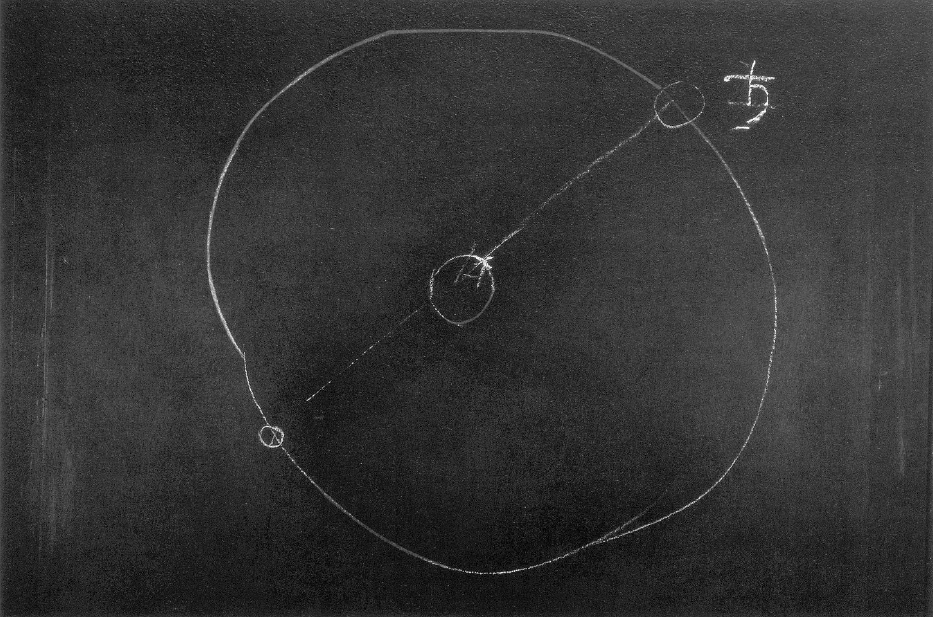
[ 29 ] Weiter: Wir finden um unsere Erde herum die Atmosphäre. Ja, die Atmosphäre hat vor allen Dingen außer demjenigen, dass sie luftartig ist, die Eigentümlichkeit, manchmal wärmer, manchmal kälter zu sein. Zu gewissen Zeiten zeigt sie eine beträchtliche Wärmeanhäufung, die sich dann sogar, wenn die Spannung zu stark ist, in Gewittern entlädt. Nun, wie ist es denn mit der Wärme? Da zeigt die geistige Beobachtung, dass, während das Wasser keinen Bezug zum Kiesel hat, diese Wärme dennoch einen ungeheuer starken Bezug zum Kiesel hat, geradezu diejenigen Kräfte, die durch das Kieselige wirken können, zu besonderer Wirksamkeit bringt, und das sind die Kräfte, die von Saturn, Jupiter, Mars ausgehen. Diese Kräfte, die von Saturn, Jupiter, Mars ausgehen, müssen in einem ganz anderen Stile betrachtet werden als die Kräfte des Mondes. Denn wir müssen bedenken: Der Saturn braucht dreißig Jahre in seiner Umdrehung um die Sonne, der Mond nur dreißig oder achtundzwanzig Tage zu seinen Phasen. Saturn ist also nur fünfzehn Jahre sichtbar. Er muss in ganz anderer Weise zusammenhängen mit dem Pflanzenwachstum. Nun allerdings, er ist nicht bloß wirkend, wenn er auf die Erde herunterscheint, er ist auch wirksam, wenn seine Strahlen durch die Erde durchgehen müssen.
[ 29 ] Next: We find the atmosphere surrounding our Earth. Yes, apart from the fact that it is air-like, the atmosphere has the peculiarity of sometimes being warmer and sometimes colder. At certain times, it exhibits a considerable accumulation of heat, which—if the tension becomes too great—even discharges in thunderstorms. Now, what about heat? Spiritual observation reveals that, while water has no connection to quartz, this heat nevertheless has an immensely strong connection to quartz—it actually brings the forces that can act through quartz to particular effectiveness—and these are the forces emanating from Saturn, Jupiter, and Mars. These forces emanating from Saturn, Jupiter, and Mars must be considered in an entirely different way than the forces of the Moon. For we must bear in mind: Saturn takes thirty years to orbit the Sun, while the Moon takes only thirty or twenty-eight days to complete its phases. Saturn is therefore visible for only fifteen years. It must be connected to plant growth in a completely different way. However, it is not merely active when it shines down upon the Earth; it is also active when its rays must pass through the Earth.
[ 30 ] Wenn er in dreißig Jahren so langsam herumgeht, so werden wir, wenn wir die Sache zeichnen, da den Saturn[um]gang haben und finden, dass er zuweilen direkt auf einen Fleck Erde scheint; aber dann auch durch die Erde hindurch diesen Fleck bearbeiten kann. Da ist es immer abhängig von dem Wärmezustand in der Luft, wie stark die Saturnkräfte an das Pflanzenleben der Erde herankönnen. Bei kalter Luft können sie nicht heran, bei warmer Luft können sie heran. Und dasjenige, was sie tun, worin sehen wir das im Pflanzenleben? Das sehen wir, wenn nun nicht einjährige Pflanzen entstehen, die im Jahreslaufe entstehen und wiederum vergehen, nur Samen hinterlassen, sondern was der Saturn tut mit Hilfe der Wärmekräfte unserer Erde, das sehen wir, wenn Dauerpflanzen entstehen. Denn diese Kräfte, die auf dem Umwege durch die Wärme ins Pflanzliche gehen, deren Wirkungen sehen wir in der Rinde und der Borke der Bäume, in alledem, was die Pflanze zu einer Dauerpflanze macht.
[ 30 ] If it moves so slowly over the course of thirty years, then when we draw this process, we will see the Saturn[al] cycle and find that it sometimes shines directly on a spot on Earth; but then it can also work on that spot by passing through the Earth. It always depends on the thermal state of the air to what extent the forces of Saturn can affect plant life on Earth. In cold air they cannot reach it; in warm air they can. And what they do—where do we see this in plant life? We see it when, instead of annual plants that arise in the course of a year and then perish, leaving only seeds behind, we see what Saturn does with the help of our Earth’s heat forces—we see this when perennial plants develop. For these forces, which enter the plant kingdom indirectly through heat—we see their effects in the bark of trees, in everything that makes a plant a perennial.
[ 31 ] Das rührt davon her, weil eben zusammenhängt das einjährige Leben der Pflanze und das Beschränktsein der Pflanze auf kurze Lebensfrist mit den Planeten, die kurze Umlaufzeiten haben. Dagegen dasjenige, was sich herausreißt aus diesem Vorübergehenden, was die Bäume mit Borke, mit Rinde umgibt, was sie dauernd macht, das hängt zusammen mit den Planetenkräften, die auf dem Umwege mit den Kräften von Wärme und Kälte wirken und die eine lange Umlaufzeit haben, wie der Saturn dreißig, der Jupiter zwölf Jahre. Es ist daher schon von Bedeutung, wenn einer einen Eichbaum pflanzen will und er sich gut versteht auf Marsperioden. Denn ein Eichbaum, richtig angepflanzt in der entsprechenden Marsperiode, wird ja anders gedeihen, als wenn man ihn gedankenlos, einfach wenn es einem passt, in die Erde hineinversetzt. Oder haben Sie Anlagen von Nadelholzwäldern, wo die Saturnkräfte eine so große Rolle spielen, [dann] wird [dort] ganz anderes entstehen, wenn man in einer sogenannten Aufgangsperiode des Saturn oder in einer anderen Periode den Nadelwald anpflanzt. Und derjenige, der solche Dinge durchschaut, der kann ganz genau sagen, in den Dingen, die wachsen wollen oder nicht wachsen wollen, ob man das mit dem Verständnis des Kräftezusammenhanges gemacht hat oder nicht. Denn dasjenige, was nicht so offen fürs Auge zutage tritt, das tritt in den intimeren Verhältnissen des Lebens doch recht zutage.
[ 31 ] This stems from the fact that the plant’s one-year life cycle and its limitation to a short lifespan are connected to the planets, which have short orbital periods. In contrast, that which breaks free from this transience—that which surrounds the trees with bark, making them enduring—is connected to the planetary forces that act indirectly through the forces of heat and cold and have long orbital periods, such as Saturn’s thirty years and Jupiter’s twelve years. It is therefore significant if someone wants to plant an oak tree and is well-versed in Mars periods. For an oak tree, properly planted during the appropriate Mars period, will thrive differently than if it were thoughtlessly planted in the ground simply whenever it suits one’s convenience. Or if you are planting coniferous forests, where the forces of Saturn play such a major role, the result will be quite different depending on whether the coniferous forest is planted during a so-called ascending period of Saturn or during another period. And anyone who understands these things can tell with complete precision—in the case of plants that thrive or fail to thrive—whether they were cultivated with an understanding of the interplay of forces or not. For what is not so readily apparent to the eye becomes quite evident in the more intimate aspects of life.
[ 32 ] Nehmen wir zum Beispiel an, wir verwenden Holz von Bäumen, die unverständig in Bezug auf die Weltperioden auf die Erde gepflanzt sind, zum Brennen, so gibt uns das keine so gesunde Wärme, als wenn wir Hölzer verwenden, die mit Verständnis gepflanzt sind. Gerade in den intimeren Verhältnissen des täglichen Lebens, in das diese Dinge so hineinspielen, gerade da zeigt sich die ungeheuer groRe Bedeutung einer solchen Sache, aber das Leben ist heute für die Leute schon fast ganz gedankenlos geworden. Man ist froh, wenn man an solche Dinge nicht zu denken braucht. Man denkt sich, die ganze Sache muss so vor sich gehen wie eine Maschine; da hat man die entsprechenden Vorrichtungen, zieht man die Maschine auf, so geht sie. So stellt man sich vor — nach materialistischer Art —, dass es in der ganzen Natur auch geht. Aber dadurch kommt man schon zu solchen Dingen, die sich dann im praktischen Leben ungeheuerlich ausmachen. Da kommen dann die großen Rätsel.
[ 32 ] Let us suppose, for example, that we use wood from trees that were planted on Earth without regard for the world periods; this does not provide us with as healthy a heat as when we use wood from trees that were planted with understanding. It is precisely in the more intimate contexts of daily life—where these things play such a significant role—that the immense importance of such matters becomes apparent; yet life today has become almost entirely thoughtless for people. People are glad when they do not have to think about such things. People imagine that the whole thing must run like a machine; you have the necessary mechanisms, and when you wind up the machine, it runs. That is how they imagine—in a materialistic way—that it works throughout nature as well. But this leads to situations that have tremendous consequences in practical life. That is where the great mysteries arise.
[ 33 ] Warum ist es heute unmöglich, solche Kartoffeln zu essen, wie ich sie noch in meiner Jugend gegessen habe? Es ist so, ich habe dies überall probiert. Man kann nicht mehr solche Kartoffeln essen, auch da nicht, wo ich sie damals gegessen habe. Es ist im Laufe der Zeit manches durchaus zurückgegangen in seiner inneren Nährkraft. Die letzten Jahrzehnte zeigen das im eminentesten Sinne. Weil man gar nicht mehr versteht die intimeren Wirkungen, die im Weltenall wirkend sind und die doch wiederum gesucht werden müssen auf einem solchen Wege, wie ich ihn heute einleitend nur angedeutet habe. Ich wollte nur hinweisen, wo Fragen sind, die weit über heutige Gesichtskreise hinausgehen. Wir werden das nicht nur fortsetzen, sondern auch vertieft auf die Praxis anwenden.
[ 33 ] Why is it impossible today to eat potatoes like the ones I used to eat in my youth? It’s true—I’ve tried them everywhere. You can no longer eat potatoes like that, not even where I used to eat them back then. Over time, the intrinsic nutritional value of many things has definitely declined. The last few decades demonstrate this in the most striking sense. Because people no longer understand the more intimate forces at work in the universe—forces that must nevertheless be sought in the manner I have just hinted at in my introduction. I simply wanted to point out where there are questions that extend far beyond today’s horizons. We will not only continue this, but also apply it more deeply in practice.