

Self-Knowledge and God-Knowledge II
GA 90b
20 February 1905, Berlin
Translate the original German text into any language:
Versions Available:
Self-Knowledge and God-Knowledge II, tr. SOL
7. Die Apokalypse und Theosophische Kosmologie IV
7. The Apocalypse and Theosophical Cosmology IV
[ 1 ] Heute möchte ich einiges über die Entwicklung der Zukunft sagen. Die irdisch menschliche Entwicklung müssen wir uns klar machen, weil sie bei der Apokalypse notwendig ist, denn es sind sehr leicht Zweifel möglich.
[ 1 ] Today I would like to say a few things about the development of the future. We must understand earthly human development, because it is essential to the Apocalypse; doubts can very easily arise.
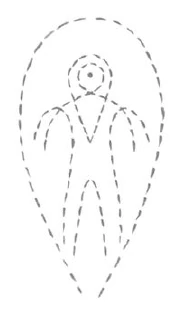
[ 2 ] Wenn man durch gewisse Methoden, die man anwenden muss, dahin kommen kann, zurückzublicken, kann es doch zweifelhaft sein, in die Zukunft zu schauen.
[ 2 ] If, through certain methods that one must apply, one can look back, it may still be doubtful whether one can look into the future.
[ 3 ] Aber prophetisch sein ist nun doch weniger zweifelhaft, weil alles in der Natur Gesetze hat, jedoch nur der kann etwas sagen, der die Gesetze durchschaut.
[ 3 ] But being prophetic is, after all, less questionable, because everything in nature is governed by laws; however, only those who understand these laws can speak with authority.
[ 4 ] Wer die Gesetze der Chemie kennt, weiß genau die Stoffe zu mischen, so kann der Erkennende der geistigen Gesetze die Schlüsse ziehen.
[ 4 ] Those who understand the laws of chemistry know exactly how to mix substances; in the same way, those who understand the spiritual laws can draw conclusions.
[ 5 ] Also durch Methoden gelangen wir dazu, in die Zukunft zu schauen — ich möchte im Einzelnen ausführen, wie die Stadien der Vergangenheit sind und wie die Umstände, unter welchen man zum Schauen, Hellsehen gelangt. Es gibt Stufen des Hellsehens. Die Entwicklung vor unserem irdischen Zustand war der astrale, vor diesem der Rupa und vor diesem der Arupa. Den irdischen nimmt man wahr durch die physischen Sinne. Den kann jeder Mensch sehen. Den vorhergehenden sowie den Zukunftszustand kann man nicht mit physischen Sinnen sehen, dennoch ist es möglich, sie wahrzunehmen. Der Mensch hat außer seinem Wachzustand noch zwei Schlafzustände den traumlosen und den Traum.
[ 5 ] So, through certain methods, we are able to look into the future—I would like to explain in detail what the stages of the past are like and the circumstances under which one attains the ability to see, or clairvoyance. There are levels of clairvoyance. The state preceding our earthly existence was the astral state; before that was the rupa state, and before that, the arupa state. The earthly state is perceived through the physical senses; every person can see it. The preceding state, as well as the future state, cannot be seen with the physical senses, yet it is possible to perceive them. In addition to the waking state, humans have two states of sleep: the dreamless state and the dreaming state.
[ 6 ] Wer keine Entwicklung durchgemacht hat, der wird nur verworrene Träume haben, aber der geschult ist, kann Regelmäßigkeit in sein Traumleben hineinbringen.
[ 6 ] Those who have not undergone any development will have only confused dreams, but those who have been trained can bring regularity to their dream life.
[ 7 ] Die Träume des rein materialistisch Gesinnten werden nur von solchen materiellen Dingen handeln. Der aber nach dem Grundsatz des Goethe-Wortes lebt «Vergängliches ist nur ein Gleichnis», dem werden die Träume Symbole werden.
[ 7 ] The dreams of those with a purely materialistic outlook will deal only with such material things. But for those who live by the principle expressed in Goethe’s words, “The transitory is but a parable,” their dreams will become symbols.
[ 8 ] Das ist natürlich noch kein Hellsehen; der ist Hellseher, der während seines wachen Tagesbewusstseins fortwährend überspringen kann in das astrale Anschauen; wach muss er sein und in die astrale Welt schauen. Der Hellseher sieht die Aura des Menschen. Die Aura umgibt den Menschen wie eine Wolke. Beim unentwickelten Menschen ist diese Wolke verworren, je klarer die Gedanken, dessen Aura ist geordnet, gegliedert.
[ 8 ] Of course, this is not yet clairvoyance; a clairvoyant is someone who, while fully awake and conscious, can continuously shift into astral perception; he must be awake and look into the astral world. The clairvoyant sees a person’s aura. The aura surrounds a person like a cloud. In an undeveloped person, this cloud is chaotic; the clearer the thoughts, the more orderly and structured the aura is.
[ 9 ] Wie entwickelt man nun die Sinnesorgane zum Schauen?
[ 9 ] How, then, do we develop the sensory organs for seeing?
[ 10 ] Diese Sinnesorgane liegen an verschiedenen Stellen der Aura. Man sieht ein längliches Gebilde vom Gehirn zur Brust, in diesen Leib - Gebilde - sind eingebettet die «heiligen Räder, «Lotusblumen» genannt. In der Tat sind in diesem Körper sechs Lotusblumen. Diese sind die astralen Sinnesorgane. Zwischen den beiden Augenbrauen ist die zweiblättrige Lotusblume, die sich von rechts nach links dreht. Der nun imstande ist zu schauen, da fängt an bei ihm, die Lotusblume sich zu drehen.
[ 10 ] These sense organs are located at various points in the aura. One can see an elongated structure extending from the brain to the chest; embedded within this bodily structure are the “sacred wheels,” known as “lotus flowers.” In fact, there are six lotus flowers in this body. These are the astral sense organs. Between the two eyebrows is the two-petaled lotus flower, which rotates from right to left. For those who are now able to see, the lotus flower begins to rotate within them.
[ 11 ] Eine zweite Lotusblume befindet sich im Kehlkopf, es ist die sechzehnblättrige, sie dreht sich von rechts nach links. In der Vergangenheit war der traumhafte Mensch damit begabt, er trug nichts dazu bei, es war ihm von der Natur gegeben. Bei der Ausbildung des Verstands wieder verloren gegangen. Acht Blätter waren vollständig ausgebildet in hellglänzenden Farben, später also hat sich diese Blume verdunkelt, weil der Mensch zum hellen Bewusstsein heranreifte.
[ 11 ] A second lotus flower is located in the larynx; it is the sixteen-petaled one, and it rotates from right to left. In the past, the dreamlike human being was endowed with this; he contributed nothing to it—it was given to him by nature. It was lost again during the development of the intellect. Eight petals were fully formed in bright, lustrous colors; later, this flower darkened as the person matured into a state of clear consciousness.
[ 12 ] Wir können nun einen Blick in die Geheimnisse des Initiierten tun und begreifen, wenn Buddha in seiner Lehre vom achtgliedrigen Pfad spricht.
[ 12 ] We can now gain insight into the mysteries of the Initiate and understand what Buddha means when he speaks of the Eightfold Path in his teachings.
[ 13 ] Acht Tugenden sind es, die der Geheimschüler sich aneignen muss:
[ 13 ] There are eight virtues that the secret student must acquire:
I. Glaube und Verständnis für das Karma
II. Klar denken
Ill. Klar reden
IV. Richtig handeln
V. Richtige Lebensart
VI. Seine Pflichten erfüllen
VII Gedächtnis kontrollieren
VIII. Konzentration der Gedanken
I. Faith and Understanding of Karma
II. Clear Thinking
III. Clear Speech
IV. Right Action
V. Right Livelihood
VI. Fulfilling One's Duties
VII. Controlling the Mind
VIII. Concentration of Thought
[ 14 ] Wer immer auf diesem Pfade sich bewegt, da fangen an die anderen acht Blätter sich zu bewegen, die ersten acht werden mitgezogen. So drehen sich die sechzehn Blätter von rechts nach links. Buddha hat also nicht umsonst vom achtfachen Pfad gesprochen.
[ 14 ] Whoever follows this path sets the other eight petals in motion, and the first eight are drawn along with them. Thus, the sixteen petals rotate from right to left. It is no wonder, then, that the Buddha spoke of the Noble Eightfold Path.
[ 15 ] Ein drittes Organ ist in der Nähe des Herzens, es ist die zwölfblättrige Lotusblume. Um diese Sinne zu entfalten, sind wieder andere Methoden nötig. Jeder Theosoph weiß von sechs Tugenden, die ausgebildet werden müssen.
[ 15 ] A third organ is located near the heart; it is the twelve-petaled lotus flower. To develop these senses, yet other methods are necessary. Every theosophist knows of six virtues that must be cultivated.
I. Toleranz
II. Gelassenheit, Geduld
III. Glaube, Vertrauen
IV. Liebe zur Freiheit
V. Gedankenkontrolle, Kontrolle der Handlungen
VI. Gedankenkonzentration
I. Tolerance
II. Serenity, Patience
III. Faith, Trust
IV. Love of Freedom
V. Control of Thoughts, Control of Actions
VI. Concentration of Thoughts
[ 16 ] Sechs von diesen zwölf waren schon einmal früher beim Menschen entwickelt. Auch hier werden die sechs nächsten anfangen, sich zu drehen, und dann die sechs ersten mitbewegen. Dadurch erhält man die Fähigkeit des astralen Schauens. Durch eifriges Meditieren gelangt man zu diesen Tugenden, durch diese zum astralen Schauen. Das Meditieren ist gesund, es führt zur moralischen Gesundheit. Dann weiter unten ist die zehnblättrige Lotusblume, etwas tiefer die sechsblättrige und dann tiefer die vierblättrige Lotusblume.
[ 16 ] Six of these twelve had already been developed in humans at an earlier time. Here, too, the next six will begin to rotate, and then the first six will move along with them. This results in the ability to see astral visions. Through diligent meditation, one attains these virtues; through them, one attains astral vision. Meditation is wholesome; it leads to moral health. Further down is the ten-petaled lotus flower, a little lower the six-petaled one, and then lower still the four-petaled lotus flower.
[ 17 ] Wer den astralen Sinn der sechzehnblättrigen Lotusblume ausgebildet hat, kann in die Gedankenwelt des anderen Menschen blicken. Wer den der zwölfblättrigen Blume ausgebildet hat, kann in die Sinnenwelt des anderen Menschen schauen, wer aber die der zweiblättrigen ausgebildet hat, die obere zwischen den Augen, der kann in das Karma der anderen Menschen schauen. Über die Ausbildung dieses Sinnes kann ich nur in ganz intimen Kreisen sprechen.
[ 17 ] Anyone who has developed the astral sense of the sixteen-petaled lotus flower can glimpse into the thought world of another person. Those who have developed the sense of the twelve-petaled flower can look into the sensory world of another person, but those who have developed the sense of the two-petaled flower—the upper one between the eyes—can look into the karma of other people. I can speak about the development of this sense only in very intimate circles.
[ 18 ] Die Befähigung des Menschen, die zwei Globen vor und nach der irdischen - physischen - wahrzunehmen, tritt dann ein, wenn er es so weit bringt, im tiefen Schlaf etwas wahrzunehmen, traumlos. Er erfährt dann, was auf der Mentalwelt oder auch im Devachan vorgeht und kann es hier anschauen. Aber nicht bloß im Schlaf, sondern im Hellsehen kann er die beiden höheren Globen wahrnehmen.
[ 18 ] A person’s ability to perceive the two spheres before and after the earthly—physical—one arises when he reaches the point where he can perceive something in deep, dreamless sleep. He then experiences what is happening in the mental world or in Devachan and can observe it there. But it is not only in sleep; through clairvoyance as well, they can perceive the two higher spheres.
[ 19 ] Es gehört dazu: Energisches Versetzen in die beiden ersten Sätze von «Licht auf den Weg», aber nicht bloß gedacht, gefühlt müssen sie werden. Und wenn man ebenso die beiden anderen Sätze
[ 19 ] This involves immersing oneself energetically in the first two movements of “Light on the Path”—but not merely in thought; they must be felt. And if one does the same with the other two movements
Ehe vor den Meistern kann die Stimme sprechen,
muss das Verwunden sie verlernen.
Ehe vor ihnen stehen kann die Seele,
muss ihres Herzens Blut die Füße netzen.
Before the masters can the voice speak,
it must unlearn through wounding.
Before the soul can stand before them,
the blood of its heart must wet its feet.
[ 20 ] in sich aufgenommen hat, wird man die Sinne wecken, um die höheren Globen schauen zu können. «Licht auf den Weg» ist in solcher hohen Zeichensprache geschrieben und von einer höheren Wesenheit diktiert.
[ 20 ] Once one has internalized this, one’s senses will be awakened so that one may perceive the higher spheres. “Light on the Path” is written in such a lofty symbolic language and was dictated by a higher being.
[ 21 ] Doch gibt es noch andere Methoden, ein andermal davon.
[ 21 ] But there are other methods as well—more on that another time.
[ 22 ] Es wird aber gerade durch eifriges Meditieren der Manas geweckt.
[ 22 ] But it is precisely through zealous meditation that the manas is awakened.
[ 23 ] Wer den hohen Zustand schauen kann, ist Adept. Nur der Adept ist fähig dazu.
[ 23 ] Whoever can perceive the higher state is an adept. Only the adept is capable of this.
[ 24 ] Versetzen wir uns in die Entwicklung unserer Erde. Unsere Erde wird immer dünner, feiner, zuletzt nur astral und dann nur geistig. Künftig werden es alle Menschen wahrnehmen. Die Erde macht also sieben mal sieben Zustände durch.
[ 24 ] Let us consider the evolution of our Earth. Our Earth is becoming increasingly thinner and more subtle, eventually becoming purely astral and then purely spiritual. In the future, all people will perceive this. The Earth thus goes through seven times seven states.
[ 25 ] Betrachten wir, was heute geschieht. Der Mensch kann nur mineralisch wahrnehmen, er kann nicht das Leben des Tieres oder der Pflanze unmittelbar wahrnehmen, es muss sich ihm erst durch die Sinne kundgetan werden. Der Mensch kann keinen Pflanzenkeim bereiten, aber er kann Maschinen machen, weil er auf Unlebendiges eingerichtet ist, es ist die niederste Form seines Geistes.
[ 25 ] Let us consider what is happening today. Human beings can perceive only the mineral realm; they cannot directly perceive the life of an animal or a plant—it must first be revealed to them through the senses. Human beings cannot produce a plant seed, but they can build machines because they are attuned to the inanimate; this is the lowest form of their spirit.
[ 26 ] Es hat einmal keine Maschinen gegeben, es wird später eine vollkommene Bearbeitung des unbelebten Steines, des Kristalles - ein dumpfes Bewusstsein hat auch der Stein — geben. Am Ende der zweiten Runde hat der Mensch den ganzen Boden umgearbeitet, er hat dann seinen Verstand in die physische Welt hineingearbeitet. Er prägt dem Mineralischen, Leblosen seine Gesetze auf, indem er die mineralische Welt umgearbeitet hat. Er hat dann seinen Verstand hineingearbeitet. Die Erde ist dann ein Produkt des menschlichen Verstandes.
[ 26 ] There was a time when there were no machines; later, there will be a perfect shaping of inanimate stone and crystal—for even stone possesses a dull consciousness. By the end of the second cycle, humanity had transformed the entire earth; it had then imbued the physical world with its intellect. By transforming the mineral world, it imposed its laws upon the mineral, lifeless realm. It had then imbued it with its intellect. The earth is thus a product of human intellect.
[ 27 ] Der Hellseher kann das schon vorher erleben, was heute alle Menschen durchmachen. Er kann die Lotusblumen als astrales Sinnesorgan in sich früher entwickeln, als es die Durchschnittsmenschen haben; wenn die Wesen im astralen Zustand sind, werden sie es auch haben. Die Lotusblume spielt in schönen Farben, regelmäßig.
[ 27 ] The clairvoyant can experience in advance what all people go through today. He can develop the lotus flowers within himself as astral sense organs earlier than the average person does; when beings are in the astral state, they will have them as well. The lotus flower shimmers in beautiful, regular colors.
[ 28 ] Der Mensch erreicht also die Verwandlung der Naturprodukte in Kunstprodukte mit seinem Verstande. Die astrale Welt ist ein Abdruck des Verstandes der Menschen. Die Bewegungen der Blumen passen dann zu dem, was er hineingearbeitet hat.
[ 28 ] Humans thus transform natural products into works of art through their intellect. The astral world is a reflection of human intellect. The movements of the flowers then correspond to what humans have imbued them with.
[ 29 ] Was früher im Unlebendigen gearbeitet wurde, wird nun belebt durch die sich drehende Lotusblume. Er verwandelt die Erde in ein lebendiges astrales Wesen.
[ 29 ] What was once worked on in the inanimate is now brought to life by the spinning lotus flower. It transforms the earth into a living astral being.
[ 30 ] So wird dann auf dem späteren Globus der Geist die Körper bewegen. [Formzustände]
[ 30 ] This is how the Spirit will then move the bodies on the future globe. [States of Form]
[ 31 ] So wie heute das Wort aus dem Kehlkopf des Menschen hervorgeht, so wird er dann selbst Wort sein. Er ist ein Geistwesen, welches selbst schwingt, das tönend sein manasisches Selbst tönt. Nachdem er nun geistig geworden, belebt er alles um sich, er erfüllt dann den Erdenball mit seiner Wesenheit; er wird mit eigener Bewusstheit durchdringen, was er mit seiner Lotusblume gemacht hat. Nach uns wird das Pflanzenleben das unterste Reich sein, es verschwindet dann, und das Tierreich ist das unterste; dann verschwindet auch das Tierreich, dann wird die ganze Erde ein Gebilde sein, was der Mensch selbst sich bereitet. Dann kommt ein Pralaya. Dann kommt der nächste Zyklus der Erde - Runde -, es wird noch einmal alles wiederholt. Dann in der fünften Runde ist die Erde so entwickelt, dass sie den Zustand als physisch hat, was der nächste unserer heutigen Runde — Runde vier - sein wird, ähnlich der astralischen Pflanzennatur. Der Mensch ist dann auf einer Erde, deren niedrigstes Reich Pflanzen sind; also unsere nächste Metamorphose wird verdichtet sein- es wird dann verdichtet sein, was unser nächster Zustand astral sein wird. Die Lotusblume wird dann wirklich blühen. Der Mensch ist heute auf der Stufe seiner mineralischen Entwicklung. Auf der fünften Runde wird er in seiner Pflanzenentwicklung sein, es wird dann «organisiert» sein, was heute «mechanisiert» ist.
[ 31 ] Just as the word emerges from a person’s larynx today, so will he himself then be the Word. He is a spiritual being who vibrates of his own accord, whose Manasic self resounds with sound. Now that he has become spiritual, he animates everything around him; he then fills the globe with his essence; he will permeate with his own consciousness what he has created with his lotus flower. After us, plant life will be the lowest kingdom; it will then disappear, and the animal kingdom will be the lowest; then the animal kingdom, too, will disappear, and the entire Earth will become a formation that humanity itself has prepared. Then a Pralaya will come. Then the next cycle of the Earth—the Round—will begin, and everything will be repeated once more. Then, in the fifth round, the Earth will be so developed that its physical state will correspond to what will be the next stage of our current round—the fourth round—similar to the astral nature of plants. Humanity will then be on an Earth whose lowest kingdom consists of plants; thus, our next metamorphosis will be condensed—what will be our next astral state will then be condensed. The lotus flower will then truly bloom. Humanity is currently at the stage of its mineral development. In the fifth round, it will be in its plant development; what is “mechanized” today will then be “organized.”
[ 32 ] Wenn er die physische Erde wird durchgearbeitet haben, wird er sie selbst beleben. Was er auf technischem Wege getan, wird er vorfinden; es sind Formen - Entelechien -, die er heute gemacht, die wird er dann beleben.
[ 32 ] Once he has worked through the physical earth, he will bring it to life himself. He will find what he has accomplished through technical means; these are forms—entelechies—that he has created today, and he will then bring them to life.
[ 33 ] Das sind die höheren Entwicklungsstadien des Menschen. Es ist keine Torheit, wenn wir von der Zukunft sprechen. Eingeweihte können sich in gewisse Bewusstseinszustände versetzen, um das zu schauen, was heute Ideale des Verstandes sind.
[ 33 ] These are the higher stages of human development. It is not folly to speak of the future. Initiates can enter certain states of consciousness in order to perceive what are today ideals of the intellect.
[ 34 ] Der hohe Mensch erhebt sich zur Prophetie, deshalb spricht man von Propheten in der jüdischen Geheimsprache, wenn Gottbegnadete den Impuls bekamen, um in die Zukunft zu schauen.
[ 34 ] The exalted person rises to the level of prophecy; that is why, in Jewish esoteric language, one speaks of prophets when those blessed by God received the impulse to look into the future.