

At the Gates of Theosophy
GA 95
4 September 1906, Stuttgart
Translate the original German text into any language:
Versions Available:
At the Gates of Theosophy, tr. SOL
Vierzehnter Vortrag
Fourteenth Lecture
[ 1 ] Wir haben gestern die verschiedenen Gebiete charakterisiert, durch die der Schüler der orientalischen und der christlichen Schulung zu höheren Erkenntnissen gelangt; nun will ich Ihnen heute in ähnlicher Weise die Stufen beschreiben, durch welche die rosenkreuzerische Schulung aufsteigt.
[ 1 ] Yesterday we outlined the various areas through which students of Eastern and Christian training attain higher levels of knowledge; today I would like to describe to you, in a similar manner, the stages through which Rosicrucian training progresses.
[ 2 ] Man darf sich nicht vorstellen, daß diese Rosenkreuzer-Schulung den beiden anderen widerspricht. Sie besteht ungefähr seit dem 14. Jahrhundert, und zwar mußte sie damals eingeführt werden, weil die Menschheit noch eine andere Form der Schulung brauchte. In den Kreisen der Eingeweihten sah man voraus, daß Menschen kommen würden, die durch das sich allmählich entwickelnde Wissen im Glauben beirrt werden würden. Deshalb mußte eine Form geschaffen werden für diejenigen, die in den Zwiespalt von Glauben und Wissen geraten. Im Mittelalter waren die größten Gelehrten auch zugleich die gläubigsten und frömmsten Menschen; aber auch noch lange Zeit später war für die in der Naturwissenschaft Fortgeschrittenen durchaus kein Widerspruch denkbar zwischen Glauben und Wissen. Man sagt, durch das Kopernikanische System sei der Glaube erschüttert worden, aber durchaus unberechtigterweise, hatte doch Kopernikus sein Buch dem Papst gewidmet! Erst in der allerletzten Zeit ist dieser Zwiespalt nach und nach gekommen. Das sahen die Meister der Weisheit voraus, und daher mußte für diejenigen, die durch die Wissenschaft vom Glauben abgebracht worden waren, ein neuer Weg gefunden werden. Für diejenigen Menschen, die sich viel mit der Wissenschaft befassen, ist es nötig, diesen RosenkreuzerWeg zu gehen, um ein Eingeweihter zu werden, denn die Rosenkreuzer-Methode zeigt, daß das höchste Wissen des Weltlichen mit dem höchsten Wissen der übersinnlichen geistigen Wahrheiten durchaus zusammen bestehen kann; und gerade durch die Rosenkreuzer-Methode kann derjenige, der sonst durch eine scheinbare Wissenschaft vom christlichen Glauben abgefallen wäre, diesen erst recht erkennen. Jeder kann durch diese Methode die Wahrheit des Christentums erst recht und mit tieferem Verständnis verstehen. Die Wahrheit ist eine einzige, doch kann man zu ihr auf verschiedenen Wegen gelangen, geradeso wie die verschiedenen Wege am Fuße des Berges auseinandergehen, am Gipfel jedoch alle zusammenlaufen.
[ 2 ] One must not imagine that this Rosicrucian training contradicts the other two. It has existed since approximately the 14th century, and it had to be introduced at that time because humanity still needed another form of training. In the circles of the initiated, it was foreseen that people would come who would be led astray in their faith by the gradually developing knowledge. Therefore, a form had to be created for those who found themselves caught in the conflict between faith and knowledge. In the Middle Ages, the greatest scholars were also the most devout and pious people; but even long afterward, those advanced in the natural sciences could not conceive of any contradiction between faith and knowledge. It is said that the Copernican system shook the foundations of faith, but this is entirely unjustified, since Copernicus had dedicated his book to the Pope! Only in very recent times has this conflict gradually arisen. The Masters of Wisdom foresaw this, and therefore a new path had to be found for those who had been led away from the faith by science. For those who are deeply engaged in science, it is necessary to follow this Rosicrucian path in order to become an initiate, for the Rosicrucian method demonstrates that the highest knowledge of the material world can indeed coexist with the highest knowledge of the supersensible spiritual truths; and it is precisely through the Rosicrucian method that one who might otherwise have strayed from the Christian faith due to a so-called science can come to recognize it all the more clearly. Through this method, everyone can understand the truth of Christianity even more fully and with deeper insight. There is only one truth, yet one can reach it by various paths, just as the various paths diverge at the foot of the mountain but all converge at the summit.
[ 3 ] Das Wesen der Rosenkreuzer-Schulung kann bezeichnet werden mit den Worten: wahre Selbsterkenntnis. Dazu muß man zwei Dinge unterscheiden, und man muß sie als Rosenkreuzer-Schüler nicht bloß theoretisch unterscheiden, sondern auch praktisch, das heißt, sie ins praktische Leben einführen. Es gibt zwei Arten von Selbsterkenntnis. Die niedere Selbsterkenntnis, die der Rosenkreuzer-Schüler Selbstbespiegelung nennt, durch sie soll man das niedere Selbst überwinden; und die höhere, durch Selbstentäußerung geborene Selbsterkenntnis.
[ 3 ] The essence of Rosicrucian training can be described as true self-knowledge. To achieve this, one must distinguish between two things; and as a Rosicrucian student, one must not merely distinguish between them in theory, but also in practice—that is, apply them to one’s daily life. There are two kinds of self-knowledge: lower self-knowledge—which the Rosicrucian student calls “self-reflection”—through which one is to overcome the lower self; and higher self-knowledge, born of self-renunciation.
[ 4 ] Was ist nun niedere Selbsterkenntnis? Das ist die Erkenntnis unseres alltäglichen Selbst, dessen, was wir schon sind, was wir in uns tragen, wie man sagt, ein Hineinschauen in das eigene Seelenleben. Man muß sich aber klarmachen, daß man dadurch nicht zum höheren Selbst kommen kann, denn wenn der Mensch sich selbst anschaut, findet er nur, was er ist; aber gerade darüber soll er ja hinauswachsen, um dieses Selbst des gewöhnlichen Lebens zu überwinden. Aber wie? Die meisten Menschen sind überzeugt, daß ihre Eigenschaften die allerbesten sind, und wer diese nicht auch hat, ist ihnen unsympathisch. Wer über diese Meinung hinaus ist, nicht nur in der Theorie, sondern im Gefühl, der ist schon auf dem Wege zu einer wahren Selbsterkenntnis. Hinaus kommt man über diese Selbstbespiegelung durch eine besondere Methode, die immer angewandt werden kann, wenn man einmal fünf Minuten Zeit findet. Man muß von folgendem Satz ausgehen: Alle Eigenschaften, die du hast, sind einseitig; du mußt erkennen, worin deine Eigenschaften einseitig sind, und mußt sie zu harmonisieren suchen. - Es ist dies ein Satz, der nicht nur in der Theorie, der in der Praxis der geeignetste ist. Wer fleißig ist, muß sich prüfen, ob er es nicht an einer falschen Stelle ist. Flinkheit ist auch einseitig, ich muß sie ergänzen durch eine sorgfältige Bedachtsamkeit. Jede Eigenschaft hat ihren Gegenpol; den muß man sich aneignen und dann die konträren Eigenschaften zu harmonisieren suchen, zum Beispiel: Eile mit Weile, flink sein und doch bedächtig, bedächtig sein und doch nicht träge. Dann fängt man an, über sich hinauszuarbeiten. Das gehört nicht zur Meditation, das muß man sich daneben erringen.
[ 4 ] What, then, is lower self-knowledge? It is the knowledge of our everyday self—of what we already are, of what we carry within us—as they say, a glimpse into our own inner life. One must realize, however, that this alone cannot lead to the higher self, for when a person looks within, they find only what they are; yet it is precisely this that they must transcend in order to overcome the self of ordinary life. But how? Most people are convinced that their own qualities are the very best, and they find those who do not share them unappealing. Anyone who has moved beyond this view—not just in theory, but in their feelings—is already on the path to true self-knowledge. One can move beyond this self-reflection through a specific method that can always be applied whenever one finds five minutes of time. One must start from the following principle: All the qualities you possess are one-sided; you must recognize in what ways your traits are one-sided, and you must seek to harmonize them. — This is a principle that is most suitable not only in theory but also in practice. Anyone who is diligent must examine whether they are being so in the wrong area. Quickness is also one-sided; I must complement it with careful deliberation. Every quality has its opposite; one must acquire it and then seek to harmonize the contrasting qualities—for example: haste with deliberation, being quick yet thoughtful, being thoughtful yet not sluggish. Then one begins to work beyond oneself. This is not part of meditation; it must be achieved separately.
[ 5 ] Dieses Harmonisieren besteht namentlich im Aufmerken auf kleine Züge. Wer zum Beispiel die Eigenschaft hat, andere nicht ausreden zu lassen, der muß sorgfältig darauf achten und einmal sechs Wochen sich vornehmen: Jetzt schweigst du überhaupt dem andern gegenüber, so lange es möglich ist. - Dann gewöhne man sich, nicht zu laut und nicht zu leise zu sprechen. Solche Dinge, die der Mensch gewöhnlich gar nicht bedenkt, gehören zu dieser intimen Selbstentwickelung des Innern, und auf je unbedeutendere Eigenschaften man eingeht, desto besser ist es. Wenn man es gar dazu bringt, sich nicht nur bestimmte moralische, intellektuelle oder Gefühlseigenschaften anzueignen, sondern irgendeine äußere Gewohnheit abzugewöhnen, so ist das insbesondere wirksam. Es handelt sich weniger um eine Erforschung des Inneren im gewöhnlichen Sinne als vielmehr um eine Vervollkommnung der Eigenschaften, die man noch nicht genügend ausgebildet hat, und um eine Ergänzung des Vorhandenen durch eine entgegengesetzte Eigenschaft. Selbsterkenntnis gehört zu den allerschwersten Dingen für den Menschen, und gerade diejenigen, die sich am besten zu kennen glauben, täuschen sich am leichtesten. Sie denken zu viel an ihr eigenes Selbst. Das fortwährende Hinstarren auf sich selbst und das fortwährende Hinsagen des Wortes «Ich»: Ich denke, ich glaube, ich halte das für richtig - das sollte man sich schon in der Redeweise abgewöhnen. Vor allen Dingen muß man sich die Idee abgewöhnen, als wenn auf die eigene Meinung mehr ankäme als auf die Meinung anderer Menschen. Nehmen wir zum Beispiel an, es ist einer ein sehr gescheiter Mensch. Wenn er nun seine Gescheitheit in einer Gesellschaft von Menschen anbringt, die auf einer viel tieferen Stufe stehen, so ist sie sehr deplaciert: Er bringt sie ja nur um seinetwillen an. Er sollte aber aus dem Geiste der anderen heraus wirken. Insbesondere Agitatoren verletzen diese Regel sehr leicht.
[ 5 ] This harmonization consists, in particular, of paying attention to small details. For example, someone who has a tendency not to let others finish speaking must pay close attention to this and resolve for a period of six weeks: From now on, you will remain completely silent in the presence of others for as long as possible. — Then one should get into the habit of speaking neither too loudly nor too softly. Such things, which people usually do not even consider, are part of this intimate inner self-development, and the more insignificant the traits one addresses, the better. If one manages not only to acquire certain moral, intellectual, or emotional qualities but also to break any external habit, this is particularly effective. It is less a matter of exploring one’s inner self in the ordinary sense than of perfecting the qualities one has not yet sufficiently developed, and of supplementing what one already possesses with an opposing quality. Self-knowledge is one of the most difficult things for a person, and it is precisely those who believe they know themselves best who are most easily deceived. They think too much about themselves. The constant fixation on oneself and the constant use of the word “I”—I think, I believe, I consider this to be right—one should break this habit even in one’s way of speaking. Above all, one must rid oneself of the notion that one’s own opinion matters more than that of other people. Let’s take, for example, a very intelligent person. If he displays his intelligence in a group of people who are at a much lower level, it is very out of place: after all, he is displaying it only for his own sake. He should, however, act in accordance with the spirit of the others. Agitators, in particular, violate this rule very easily.
[ 6 ] Dazu muß ferner das kommen, was man im okkulten Sinne Geduld nennt. Die meisten, die etwas erreichen wollen, können nicht warten, weil sie glauben, sie seien schon reif, alles zu empfangen. Diese Geduld fließt aus einer strengen Selbsterziehung. Auch das hängt mit der Selbsterkenntnis zusammen.
[ 6 ] To this must be added what is known in occult terms as patience. Most people who want to achieve something cannot wait because they believe they are already ready to receive everything. This patience stems from strict self-discipline. This, too, is connected with self-knowledge.
[ 7 ] Die höhere Selbsterkenntnis beginnt erst dann, wenn wir anfangen zu sagen: In dem, was unser alltägliches Ich ist, liegt gar nicht unser höheres Selbst. In der ganzen Welt draußen ist es, oben bei den Sternen, bei der Sonne und dem Mond, im Stein, im Tier: Überall ist dasselbe Wesen, das in uns ist. - Wenn einer sagt: Ich will mein höheres Selbst pflegen und mich zurückziehen, ich will nichts wissen von allem Materiellen, dann verkennt er vollständig, daß gerade das Selbst überall draußen ist und daß sein eigenes höheres Selbst nur ein kleiner Teil ist von diesem großen Selbst draußen. Gewisse «geistige» Heilweisen machen diesen Fehler, der sehr verhängnisvoll werden kann; sie bringen dem Kranken die Vorstellung bei, es gäbe nichts Materielles, und so gäbe es auch keine Krankheiten. Das beruht auf einer falschen Selbsterkenntnis und ist, wie schon bemerkt, sehr gefährlich. Während sich eine solche Heilweise mit einem christlichen Namen bezeichnet, ist sie eigentlich antichristlich.
[ 7 ] Higher self-knowledge begins only when we start to say: Our higher self does not lie at all in what constitutes our everyday self. It is found throughout the entire world outside—up among the stars, in the sun and the moon, in stone, in animals: everywhere is the same essence that is within us. —When someone says, “I want to cultivate my higher self and withdraw; I want nothing to do with anything material,” they completely fail to recognize that it is precisely this Self that is everywhere outside, and that their own higher self is only a small part of this great Self out there. Certain “spiritual” healing methods make this mistake, which can be very disastrous; they instill in the sick person the idea that nothing material exists, and thus there are no illnesses either. This is based on a false self-understanding and is, as already noted, very dangerous. While such a healing method bears a Christian name, it is actually anti-Christian.
[ 8 ] Das Christentum ist eine Anschauung, die in allem eine Offenbarung des Göttlichen sieht. In jedem Materiellen haben wir eine Illusion, wenn wir es nicht als einen Ausdruck des Göttlichen ansehen. Verleugnen wir die Außenwelt, so verleugnen wir das Göttliche; negieren wir die Materie, in der sich Gott offenbart hat, dann negieren wir Gott. Es handelt sich nicht darum, in sich hineinzuschauen, sondern wir müssen das große Selbst zu erkennen suchen, das in uns hineinleuchtet. Das niedere Selbst sagt: Ich stehe da und friere. - Das höhere Selbst dagegen sagt: Ich bin auch die Kälte, denn ich lebe als das einige Selbst in der Kälte und mache mich selbst kalt. - Das niedere Selbst sagt: Ich bin da, ich bin im Auge, das die Sonne sieht. — Das höhere Selbst dagegen sagt: Ich bin in der Sonne und sehe im Sonnenstrahl in deine Augen hinein.
[ 8 ] Christianity is a worldview that sees a revelation of the Divine in everything. In every material thing, we are under an illusion if we do not regard it as an expression of the Divine. If we deny the external world, we deny the Divine; if we negate the matter in which God has revealed Himself, then we negate God. It is not a matter of looking within ourselves, but rather we must seek to recognize the Great Self that shines within us. The lower self says: I am standing here and freezing. — The higher self, on the other hand, says: I am also the cold, for I live as the one Self in the cold and make myself cold. — The lower self says: I am here; I am in the eye that sees the sun. — The higher self, on the other hand, says: I am in the sun and see into your eyes through the sunbeam.
[ 9 ] Wirklich herausgehen aus sich selbst heißt Selbstentäußerung. Daher geht die Rosenkreuzer-Schulung darauf aus, das niedere Selbst herauszubringen aus dem Menschen. In der theosophischen Bewegung ist anfangs der allerschlimmste Fehler gemacht worden dadurch, daß man sagte: Man muß absehen vom Äußeren und in sich hineinschauen. — Das ist eine große Illusion. Man findet nur sein niederes Selbst, das vierte Prinzip, das niedere Ich, das sich einbildet, ein Göttliches zu sein, das aber gar kein Göttliches ist. Man muß aus sich heraus, um das Göttliche zu erkennen. «Erkenne dich selbst» heißt zugleich «überwinde dich selbst».
[ 9 ] To truly step outside of oneself means self-renunciation. Therefore, the Rosicrucian training is aimed at bringing the lower self out of the human being. In the Theosophical Movement, the very worst mistake was made at the outset by saying: “One must turn away from the external and look within oneself.” — That is a great illusion. One finds only one’s lower self, the fourth principle, the lower “I,” which imagines itself to be divine but is not divine at all. One must step outside oneself to recognize the divine. “Know thyself” also means “overcome thyself.”
[ 10 ] Die Gebiete, um die es sich bei der Rosenkreuzer-Schulung handelt, sind folgende, und sie müssen Hand in Hand gehen mit der Ausbildung der bereits erwähnten sechs Eigenschaften: Gedankenkontrolle, Initiative des Handelns, Gelassenheit, Unbefangenheit oder Positivität, Glaube, inneres Gleichgewicht.
[ 10 ] The areas covered by Rosicrucian training are as follows, and they must go hand in hand with the development of the six qualities already mentioned: control of thought, initiative in action, serenity, impartiality or positivity, faith, and inner balance.
[ 11 ] Die Schulung selbst besteht in folgendem:
[ 11 ] The training itself consists of the following:
[ 12 ] 1. Studium. Ohne Studium kommt der jetzige Europäer nicht dazu, selbst zu erkennen. Er muß versuchen, erst die Gedanken der ganzen Menschheit in sich hervorzubringen. Er muß mit dem Weltensystem denken lernen. Er muß sich sagen: Wenn andere das gedacht haben, so muß es doch menschlich sein, und ich will einmal probieren, wie es sich damit leben läßt. - Man braucht darauf ja nicht wie auf ein Dogma zu schwören, aber man muß es kennenlernen durch Studium. Der Schüler muß die Entwickelung der Sonnen und Planeten, der Erde und der Menschheit kennenlernen. Diese Gedanken, die uns für das Studium überliefert werden, reinigen unseren Geist. An den strengen Gedankenlinien ranken wir uns hinauf dazu, selbst streng logische Gedanken zu bilden. Dieses Studium reinigt auch wiederum unsere Gedanken, so daß wir streng logisch denken lernen. Wenn wir zum Beispiel ein sehr schweres Buch studieren, so kommt es weniger darauf an, den Inhalt zu begreifen, als darauf, daß wir auf die Gedankenbahnen des Verfassers eingehen und mitdenken lernen. Deshalb darf man auch kein Buch zu schwer finden; das hieße bloß, man ist zu bequem zu denken. Die besten Bücher sind gerade diejenigen, die man immer und immer wieder studieren muß, die man nicht gleich versteht, die man Satz für Satz durchdenken muß. Beim Studium kommt es nicht so sehr auf das Was als auf das Wie an. Durch die großen Wahrheiten, wie zum Beispiel die Planetengesetze, schaffen wir uns große Denklinien an, und das ist das Wesentliche an der Sache. Auch darin steckt viel Egoismus, wenn jemand sagt: Ich will mehr moralische Lehren haben und keine über Planetensysteme. — Richtige Weisheit bewirkt ein moralisches Leben.
[ 12 ] 1. Study. Without study, today’s European cannot come to understand things for himself. He must first try to bring forth within himself the thoughts of all humanity. He must learn to think in terms of the world system. He must tell himself: If others have thought this, then it must be human, and I want to try and see how one can live with it. - One need not swear to it as if it were a dogma, but one must get to know it through study. The student must learn about the evolution of the suns and planets, the Earth, and humanity. These ideas, handed down to us for study, purify our spirit. Clinging to these rigorous lines of thought, we climb our way up to forming strictly logical thoughts ourselves. This study, in turn, purifies our thoughts, so that we learn to think strictly logically. When we study a very difficult book, for example, it matters less to grasp the content than to follow the author’s train of thought and learn to think along with him. That is why one must not consider a book too difficult; that would simply mean one is too lazy to think. The best books are precisely those that one must study over and over again, those that one does not understand right away, those that one must think through sentence by sentence. In study, it is not so much the “what” that matters as the “how.” Through the great truths—such as the laws of the planets—we develop broad lines of thought, and that is the essence of the matter. There is also a great deal of selfishness involved when someone says, “I want more moral teachings and none about planetary systems.” — True wisdom leads to a moral life.
[ 13 ] 2. Das zweite ist die Imagination, das Erwerben von imaginativer Erkenntnis. Was ist sie und wie erlangt man sie? Auf folgende Weise gelangt man dazu: Man geht durch die Welt und beobachtet sie streng nach dem Goetheschen Grundsatz «Alles Vergängliche ist nur ein Gleichnis». Denn Goethe war ein Rosenkreuzer, und er kann uns in das seelische Leben einführen. Jedes Ding muß in mehrfacher Beziehung ein Gleichnis werden. Nehmen wir an, ich gehe an einer Herbstzeitlose vorbei: Sie ist durch Form und Farbe für mich ein Sinnbild der Trauer. Eine andere Blume, der Windling, ist ein Sinnbild der Hilfsbedürftigkeit, eine rote Blume, die kühn ihre Blätter in die Höhe richtet, kann mir ein Zeichen sein für Munterkeit und so weiter. Ein Tier mit bunten Farben kann ein Gleichnis sein für die Koketterie. Oft liegen in den Namen schon die Gleichnisse ausgedrückt, zum Beispiel Trauerweide, Vergißmeinnicht und so weiter. Je mehr man in dieser Weise nachdenkt, daß die äußeren Dinge Sinnbilder werden für das Moralische, desto leichter kann man zu dieser imaginativen Erkenntnis aufsteigen. Auch bei den Menschen findet man solche Gleichnisse. So kann man zum Beispiel an dem Gang eines Menschen sein Temperament studieren. Beobachten Sie nur einmal den schleppenden, langsamen Schritt des Melancholikers, den festen, bestimmten Schritt des Cholerikers, den leichten, mehr auf den Fußspitzen ruhenden Schritt des Sanguinikers.
[ 13 ] 2. The second is imagination, the acquisition of imaginative insight. What is it, and how does one attain it? One arrives at it in the following way: One walks through the world and observes it strictly according to Goethe’s principle, “Everything transitory is but a parable.” For Goethe was a Rosicrucian, and he can introduce us to the life of the soul. Every thing must become a parable in multiple ways. Let’s suppose I walk past a fall crocus: through its shape and color, it is a symbol of mourning to me. Another flower, the windflower, is a symbol of need; a red flower that boldly raises its petals upward can be a sign of cheerfulness to me, and so on. A brightly colored animal can be a metaphor for coquetry. Often the metaphors are already expressed in the names themselves—for example, weeping willow, forget-me-not, and so on. The more one thinks in this way—that external things become symbols of moral qualities—the more easily one can rise to this imaginative insight. Such allegories can also be found in people. For example, one can study a person’s temperament by observing their gait. Just observe the dragging, slow stride of the melancholic, the firm, determined stride of the choleric, and the light, almost tiptoeing stride of the sanguine.
[ 14 ] Hat man das eine Weile getrieben, dann geht man über zu den Übungen für die eigentliche Imagination. Man hält sich zum Beispiel eine natürliche Pflanze vor, sieht sie recht an, vertieft sich ganz hinein in sie, holt das Innere seiner Seele heraus und legt es sozusagen in die Pflanze hinein, wie es in meinen Aufsätzen «Wie erlangt man Erkenntnisse der höheren Welten?» beschrieben ist. Das bringt die Imagination herauf. Dadurch gelangt man zum astralen Schauen. Man. bemerkt dann tatsächlich nach einiger Zeit, wie eine kleine Flamme aus der Pflanze hervorgeht; es ist die astrale Bedeutung dessen, was wächst. Ein anderes Beispiel: Man legt ein Samenkorn vor sich hin und sieht dann die ganze Pflanze, wie sie in der Wirklichkeit erst später sein wird, in Gedanken vor sich erscheinen. Das sind äbungen für die Imagination, auf die die Rosenkreuzer viel Aufmerksamkeit verwenden.
[ 14 ] Once you have practiced this for a while, you move on to the exercises for actual imagination. For example, you hold up a natural plant, look at it closely, immerse yourself completely in it, draw forth the innermost part of your soul, and place it, so to speak, into the plant, as described in my essays “How Does One Attain Knowledge of the Higher Worlds?” This brings about imagination. Through this, one attains astral vision. After some time, one actually notices a small flame emerging from the plant; this is the astral significance of what is growing. Another example: One places a seed in front of oneself and then sees the entire plant—as it will actually be later on—appear in one’s mind’s eye. These are exercises for imagination to which the Rosicrucians devote a great deal of attention.
[ 15 ] 3. Das dritte ist das, was man nennt das Lernen der okkulten Schrift. Es gibt nämlich eine okkulte Schrift, durch die man tiefer hineindringen kann in die Dinge. Ich will Ihnen ein Beispiel sagen, damit Sie sehen, was ich eigentlich meine: Mit dem Untergang der alten Atlantis hat eine neue, die altindische Kultur begonnen. Das Zeichen eines solchen Entwickelungsstadiums, wo eine Kulturepoche aufhört und eine andere anfängt, ist der Wirbel. Solche Wirbel gibt es auch in der Natur, Sternennebel, der Orionnebel zum Beispiel und so weiter. Auch da geht eine Welt zugrunde, und eine neue tritt hervor. Beim Aufgang der altindischen Kultur stand die Sonne im Krebs, in der Zeit der persischen Kultur stand die Sonne in den Zwillingen, während der ägyptischen Kultur im Stier, während der griechisch-lateinischen Kultur im Widder. Da nun das astronomische Zeichen des Krebses ist, war dieses auch das Zeichen für den Aufgang der altindischen Kultur.
[ 15 ] 3. The third is what is called the study of occult script. For there is indeed an occult script through which one can penetrate more deeply into things. Let me give you an example so that you can see what I actually mean: With the downfall of ancient Atlantis, a new culture—the ancient Indian culture—began. The symbol of such a stage of development—where one cultural epoch ends and another begins—is the vortex. Such vortices also exist in nature: stellar nebulae, such as the Orion Nebula, for example, and so on. There, too, one world perishes, and a new one emerges. At the dawn of the ancient Indian culture, the Sun was in Cancer; during the Persian culture, the Sun was in Gemini; during the Egyptian culture, in Taurus; and during the Greco-Roman culture, in Aries. Since Cancer is the astronomical sign, it was also the sign marking the dawn of the ancient Indian culture.
[ 16 ] Ein weiteres Beispiel ist der Buchstabe M. Jeder Buchstabe führt auf einen okkulten Ursprung zurück. So ist M das Zeichen der Weisheit. Es ist entstanden aus der Bildung der Oberlippe und ist zugleich das Symbol für die Meereswellen; daher wird die Weisheit durch das Wasser symbolisiert. Diese Zeichen sind stets Anklänge an sinnvolle Dinge. Zahlreiche solche Zeichen werden in der Rosenkreuzer-Schulung gelehrt.
[ 16 ] Another example is the letter M. Every letter has an occult origin. Thus, M is the sign of wisdom. It originated from the shape of the upper lip and is also the symbol for ocean waves; therefore, wisdom is symbolized by water. These signs always allude to meaningful things. Numerous such symbols are taught in Rosicrucian training.
[ 17 ] 4. Rhythmisierung des Lebens. Vom chaotischen zum rhythmischen Leben übergehen. Die Kinder haben den Vorteil, in die Schule zu gehen; beim Erwachsenen fehlt leider oft der Stundenplan. Man muß versuchen, gewisse Stunden des Tages für die Meditation festzulegen. Die Rhythmisierung des Atems spielt keine so große Rolle wie bei den Orientalen, aber sie gehört auch zur Schulung, und der Rosenkreuzer weiß, daß schon durch das Meditieren die Verbesserung der Atemluft eintritt.
[ 17 ] 4. Bringing Rhythm to Life. Transitioning from a chaotic to a rhythmic life. Children have the advantage of going to school; adults, unfortunately, often lack a schedule. One must try to set aside certain hours of the day for meditation. Regulating the breath does not play as significant a role as it does for Eastern practitioners, but it is also part of the training, and the Rosicrucian knows that simply by meditating, the quality of the air one breathes improves.
[ 18 ] 5. Das Entsprechen von Mikrokosmos und Makrokosmos. Es ist das der Zusammenhang zwischen der großen und der kleinen Welt oder zwischen dem Menschen und der Welt draußen. Sie wissen, daß der Mensch allmählich entstanden ist, seine einzelnen Wesensglieder haben sich im Laufe der Evolution gebildet. Auf der alten Sonne hat der Mensch noch keinen Astralleib gehabt. Deshalb konnten gewisse Organe noch nicht entstehen. Ein solches Organ ist zum Beispiel die Leber. Bei einem Wesen, das nur einen Ätherleib hat, gibt es keine Leber, auch nicht in der Anlage. Zwar ist die Leber nicht ohne den Ätherkörper möglich, sie wird aber erst vom Astralleib geschaffen. Ebenso kann niemals ein Wesen warmes Blut haben, das nicht zu der Zeit entstanden ist, wo sich das Ich ausbildete.
[ 18 ] 5. The Correspondence Between the Microcosm and the Macrocosm. This refers to the connection between the great world and the small world, or between the human being and the external world. You know that the human being developed gradually; its individual constitutional elements formed in the course of evolution. On the ancient Sun, the human being did not yet have an astral body. For this reason, certain organs could not yet develop. One such organ is, for example, the liver. A being that has only an etheric body does not have a liver, not even in embryonic form. Although the liver is not possible without the etheric body, it is created only by the astral body. Similarly, a being can never have warm blood unless it arose at the time when the “I” developed.
[ 19 ] Zwar haben die höheren Tiere auch warmes Blut, aber diese haben sich vom Menschen abgespalten, als er das Ich ausbildete. So gehört jedes Organ des menschlichen Leibes, auch das kleinste, zu einem seiner Wesensglieder. Die Leber entspricht dem Astralleib, das Blut dem Ich. Und wenn der Mensch nun seine Aufmerksamkeit objektiv auf sich selbst richtet, wie auf eine Sache, wenn er sich zum Beispiel auf den Punkt an der Nasenwurzel konzentriert und damit ein bestimmtes Wort verbindet, das der okkulte Lehrer ihm gibt, so wird er zu dem, was diesem Punkte entspricht, hingeführt, und er lernt es kennen. So wird der Mensch, der sich auf diesen Punkt unter bestimmter Anleitung konzentriert, die Natur des Ich kennenlernen. Eine andere, sehr viel spätere Übung richtet sich auf das Innere des Auges; dadurch lernt man die innere Natur des Lichtes und der Sonne kennen. Die Natur des Astralen lernt man dadurch kennen, daß man sich mit bestimmten Worten auf die Leber konzentriert.
[ 19 ] Although higher animals are also warm-blooded, they diverged from humans when humans developed the “I.” Thus, every organ of the human body, even the smallest, belongs to one of its essential components. The liver corresponds to the astral body, and the blood to the “I.” And when a person now objectively directs his attention to himself, as if to an object—for example, by concentrating on the point at the root of the nose and associating it with a specific word given to him by the occult teacher—he is led to that which corresponds to this point, and he comes to know it. In this way, the person who concentrates on this point under specific guidance will come to know the nature of the “I.” Another exercise, performed much later, focuses on the interior of the eye; through this, one comes to know the inner nature of light and the sun. One comes to know the nature of the astral body by concentrating on the liver using specific words.
[ 20 ] Das ist die richtige Selbstentwickelung, wenn man durch jedes Organ, auf das man seine Aufmerksamkeit richtet, aus sich herausgeführt wird. Diese Methode ist besonders in neuerer Zeit wirksam geworden, weil die Menschheit so materiell geworden ist. So kommt man durch das Materielle zum Verursacher des Materiellen, zu den schöpferischen Kräften, die diese Organe gebildet haben.
[ 20 ] True self-development occurs when one is led out of oneself through every organ to which one directs one’s attention. This method has become particularly effective in recent times because humanity has become so materialistic. In this way, through the material, one arrives at the source of the material—at the creative forces that formed these organs.
[ 21 ] 6. Das Verweilen oder Sichversenken in den Makrokosmos. Das ist dasselbe, was als Dhyanam beschrieben wurde, die geistige Kontemplation. Sie geschieht folgendermaßen: Man versenkt sich in das Organ der Kontemplation, zum Beispiel in das Innere des Auges. Wenn man sich darauf eine Weile konzentriert hat, läßt man die Vorstellung des äußeren Organs fallen, so daß man nur noch an das denkt, worauf das Auge hingewiesen hat: auf das Licht. Dadurch kommt man zum Schöpfer des Organs und hinaus in den Makrokosmos. Dann fühlt man, wie der Körper immer größer wird, so groß wie die ganze Erde, ja, er wächst sogar über die Erde hinaus, und alle Dinge sind in ihm. Der Mensch lebt dann in allen Dingen darinnen.
[ 21 ] 6. Dwelling or immersing oneself in the macrocosm. This is the same as what has been described as dhyana, or spiritual contemplation. It occurs as follows: One immerses oneself in the organ of contemplation—for example, the interior of the eye. After concentrating on this for a while, one lets go of the image of the external organ, so that one thinks only of what the eye has pointed to: the light. Through this, one reaches the Creator of the organ and emerges into the macrocosm. Then one feels the body growing ever larger, as large as the entire Earth—indeed, it even grows beyond the Earth—and all things are within it. One then lives within all things.
[ 22 ] 7. Der siebente Zustand entspricht dem orientalischen Samadhi; man nennt ihn in der Rosenkreuzer-Schulung Gottseligkeit. Man läßt die letzte Vorstellung fallen, aber man behält die Kraft des Denkens. Der Inhalt des Denkens hört auf, aber die Tätigkeit des Denkens bleibt. Dadurch ruht man in der göttlich-geistigen Welt.
[ 22 ] 7. The seventh state corresponds to the Eastern concept of samadhi; in Rosicrucian training, it is called godliness. One lets go of the final thought, but retains the power of thought. The content of thought ceases, but the activity of thought remains. Through this, one rests in the divine-spiritual world.
[ 23 ] Diese Stufen der Rosenkreuzer-Schulung sind mehr innere Stufen und erfordern eine subtile Pflege des höheren Seelenlebens. In unserem materiellen Zeitalter ist die weitverbreitete Oberflächlichkeit ein starkes Hindernis für die nötige Verinnerlichung des gesamten Seelenlebens; sie muß überwunden werden. Diese Schulung ist auf den Europäer zugeschnitten, sie erfordert eine gewisse seelische Energie, sie ist aber nicht schwer. Jeder kann sie ausführen, der nur ernstlich will. Doch gilt auch hier der Goethesche Satz: «Zwar ist es leicht, doch ist das Leichte schwer.»
[ 23 ] These stages of Rosicrucian training are more inward in nature and require a subtle cultivation of the higher life of the soul. In our materialistic age, widespread superficiality is a major obstacle to the necessary internalization of the entire life of the soul; it must be overcome. This training is tailored to Europeans; it requires a certain amount of soul energy, but it is not difficult. Anyone who is truly serious can carry it out. Yet Goethe’s saying applies here as well: “It is easy, yet the easy is difficult.”
[ 24 ] Meine lieben Freunde! So sind wir nun auf die verschiedenen Methoden der Schulung eingegangen; und nun will ich damit die Vorträge schließen, daß ich Ihnen noch einen Einblick gebe in den Zusammenhang zwischen dem Menschen und der ganzen Erde, damit Sie sehen, wie der Mensch zusammenhängt mit alle dem, was sonst auf der Erde vor sich geht.
[ 24 ] My dear friends! We have now discussed the various methods of training; and I would like to conclude these lectures by giving you some insight into the connection between human beings and the entire Earth, so that you may see how human beings are connected to everything else that takes place on Earth.
[ 25 ] Ich habe Ihnen die Entwickelung des Menschen geschildert, wie er ein immer höheres Wesen werden kann. Die Menschheit als Ganzes wird ja alles das im Verlaufe der Entwickelung erreichen, was jeder einzelne durch eine okkulte Schulung für sich erreichen kann. Was geht nun mit der Erde vor, während sich so Mensch und Menschheit entwickeln? Denn für den Okkultisten ist die Erde nicht dasjenige, was sie für den gewöhnlichen Geologen oder Naturforscher ist, der darin gleichsam nur einen großen leblosen Ball sieht, der innen nicht viel anders ausschaut als außen, höchstens daß die Stoffe im Innern flüssig sind. Es ist ziemlich unverständlich, wie dieser tote Ball allerlei Wesen hervorbringen soll.
[ 25 ] I have described to you the evolution of the human being and how he can become an ever higher being. Humanity as a whole will, in the course of its evolution, achieve everything that each individual can achieve for himself through occult training. What, then, is happening to the Earth while human beings and humanity are developing in this way? For the occultist, the Earth is not what it is to the ordinary geologist or naturalist, who sees it, as it were, merely as a large, lifeless sphere that looks much the same on the inside as on the outside—except, at most, that the substances within are liquid. It is quite incomprehensible how this dead sphere is supposed to give rise to all manner of beings.
[ 26 ] Wir wissen, daß unsere Erde ganz bestimmte Erscheinungen zeigt, die in das Schicksal vieler Wesen tief hineinspielen; doch das wird von der heutigen Naturwissenschaft als außer Zusammenhang mit diesem Schicksal stehend betrachtet. So wird zum Beispiel durch Erdbeben und Vulkanausbrüche in das Schicksal von Hunderten und Tausenden eingegriffen. Hat des Menschen Wille darauf einen Einfluß oder ist es Zufall? Gibt es tote Gesetze, die blind wüten, oder ist ein Zusammenhang zwischen diesen Ereignissen und dem Willen des Menschen? Wie steht es mit dem Menschen, der bei einem Erdbeben zugrunde geht? Was sagt der Okkultist über das Innere der Erde?
[ 26 ] We know that our Earth exhibits very specific phenomena that profoundly influence the fate of many beings; yet modern science regards these as unrelated to that fate. For example, earthquakes and volcanic eruptions intervene in the fate of hundreds and thousands of people. Does human will have any influence on this, or is it mere chance? Are there dead laws that rage blindly, or is there a connection between these events and human will? What of the person who perishes in an earthquake? What does the occultist say about the Earth’s interior?
[ 27 ] Die Geheimwissenschaft aller Zeiten sagt über das Innere der Erde das Folgende: Wir haben uns die Erde zu denken bestehend aus einer Reihe von Schichten, die aber nicht genau voneinander abgegrenzt sind wie bei einer Zwiebel, sondern sanft ineinander übergehen. Die oberste Schicht, die mineralische Masse, verhält sich zum Innern wie die Schale zum ganzen Ei. Diese oberste Schicht nennt man die mineralische Erde. Unterhalb derselben zeigt sich etwas, was sich mit keiner Substanz der Erde vergleichen läßt, man nennt es die flüssige Erde. Es ist aber nicht eigentlich eine Flüssigkeit gemeint, denn unsere Flüssigkeiten sind ja auch mineralisch; diese Schicht hat besondere Eigenschaften. Diese Substanz beginnt nämlich hier geistige Eigenschaften zu haben, darin bestehend, daß sie, als Substanz mit etwas Lebendem zusammengebracht, dieses Leben sofort heraustreiben und vernichten würde. Der Okkultist kann diese Schicht durch eine reine Konzentrationsarbeit untersuchen.
[ 27 ] The secret science of all ages states the following about the Earth’s interior: We must imagine the Earth as consisting of a series of layers, which, however, are not sharply demarcated from one another as in an onion, but rather merge smoothly into one another. The outermost layer, the mineral mass, relates to the interior as the shell does to the whole egg. This outermost layer is called the mineral Earth. Beneath it lies something that cannot be compared to any substance on Earth; it is called the liquid Earth. However, this is not actually a liquid in the conventional sense, for our liquids are also mineral in nature; this layer possesses special properties. This substance begins here to exhibit spiritual qualities, consisting in the fact that, if brought into contact with anything living, it would immediately drive out and destroy that life. The occultist can examine this layer through pure concentration.
[ 28 ] 3. Die Luft-Erde: Das ist eine die Empfindung vernichtende Substanz; wird sie zum Beispiel mit einem Schmerz zusammengebracht, so verwandelt sie ihn in Lust, und umgekehrt. Es wird sozusagen die Empfindung in der Art, wie sie besteht, ausgelöscht, so wie die zweite Schicht das Leben auslöscht.
[ 28 ] 3. Air-Earth: This is a substance that annihilates sensation; if, for example, it is brought into contact with pain, it transforms it into pleasure, and vice versa. Sensation is, so to speak, extinguished in the very way it exists, just as the second layer extinguishes life.
[ 29 ] 4. Die Wasser- oder Form-Erde: Diese Schicht besteht aus Kräften, die aus jedem Ding materiell das machen, was im Devachan geistig geschieht. Dort haben wir die Negativbilder zu den physischen Dingen. Hier würde zum Beispiel ein Würfel vernichtet werden, sein Negativ aber entstehen. Die Form wird sozusagen in das Gegenteil verwandelt, alle Eigenschaften begeben sich in die Umgebung. Der Raum selbst, den der Würfel einnahm, ist leer.
[ 29 ] 4. The Water or Form-Earth: This layer consists of forces that make every thing materially what happens spiritually in Devachan. There we have the negative images of physical things. Here, for example, a cube would be destroyed, but its negative image would come into being. The form is, so to speak, transformed into its opposite; all its properties disperse into the surrounding space. The space itself that the cube occupied is empty.
[ 30 ] 5. Die Frucht-Erde: Diese Substanz ist voll von strotzender Wachstumsenergie. Jedes Teilchen derselben wächst sofort weiter wie ein Schwamm, wird immer größer und kann nur zusammengehalten werden von den oberen Schichten. Sie dient den Formen der vorhergehenden Schicht als dahinterstehendes Leben.
[ 30 ] 5. The Fruit-Earth: This substance is full of bursting energy for growth. Every particle of it continues to grow immediately like a sponge, becoming ever larger, and can only be held together by the upper layers. It serves as the life force behind the forms of the preceding layer.
[ 31 ] 6. Die Feuer-Erde: Diese Substanz hat als solche Empfindung und Wille. Sie empfindet Schmerz; sie würde schreien, wenn sie getreten würde. Sie besteht sozusagen ganz und gar aus Leidenschaften.
[ 31 ] 6. Fire-Earth: This substance, as such, possesses sensation and will. It feels pain; it would scream if it were kicked. It consists, so to speak, entirely of passions.
[ 32 ] 7. Der Erdenspiegel, Erdreflektor: Diese Schicht hat ihren Namen daher, daß ihre Substanz, wenn man sich darauf konzentriert, alle Eigenschaften der Erde ins Gegenteil verwandelt. Wenn man alles Darüberliegende nicht sehen will, sondern direkt im Geist auf diese Schicht heruntersieht und sich dann zum Beispiel etwas Grünes vorlegt, so erscheint das Grüne rot; jede Farbe erscheint in ihrer Komplementärfarbe. Es entsteht eine polarische Spiegelung, eine Widerspiegelung ins Gegenteil. Das Traurige würde von dieser Substanz in Freude verwandelt.
[ 32 ] 7. The Earth Mirror, Earth Reflector: This layer gets its name from the fact that, when one concentrates on it, its substance transforms all the properties of the Earth into their opposites. If one chooses not to see everything above it, but instead looks down directly into this layer with the mind and then, for example, holds up something green, the green appears red; every color appears as its complementary color. A polar reflection occurs—a reversal into its opposite. Sadness would be transformed into joy by this substance.
[ 33 ] 8. Der Zersplitterer: Konzentriert man sich mit entwickelter okkulter Kraft darauf, so zeigt sich einem etwas ganz Merkwürdiges. Es erscheint dort zum Beispiel eine Pflanze zahllos vervielfältigt, ebenso alles andere. Aber das Wesentliche ist, daß diese Schicht auch die moralischen Eigenschaften zersplittert. Sie ist schuld durch die Kraft, die sie auf die Oberfläche der Erde ausstrahlt, daß es überhaupt auf der Erde Streit und Disharmonie gibt. Die Menschen müssen zusammenwirken in Harmonie, um die zersplitternde Kraft dieser Schicht zu überwinden. Dazu wurde diese Kraft in die Erde hineingelegt, damit die Menschen die Harmonie selbst entwickeln können. Alles Böse wird substantiell hier vorbereitet und organisiert. Streitsüchtige Menschen sind so organisiert, daß diese Schicht einen besonderen Einfluß auf sie hat. Alle, die aus dem Okkultismus heraus geschrieben haben, wußten das. Dante beschreibt diese Schicht in seiner «Göttlichen Komödie» als Kains-Schlucht. Der Streit zwischen den beiden Brüdern Kain und Abel kommt von daher. Diese Schicht hat substantiell das Böse in die Welt gebracht.
[ 33 ] 8. The Fragmenter: If one concentrates on it using developed occult power, something quite strange becomes apparent. For example, a plant appears there multiplied countless times, as does everything else. But the essential point is that this layer also fragments moral qualities. It is to blame, through the force it radiates onto the Earth’s surface, for the very existence of strife and disharmony on Earth. People must work together in harmony to overcome the fragmenting force of this layer. To this end, this force was placed within the Earth so that people could develop harmony on their own. All evil is substantially prepared and organized here. Quarrelsome people are constituted in such a way that this layer exerts a particular influence on them. All those who have written from an occult perspective knew this. Dante describes this layer in his Divine Comedy as the Gorge of Cain. The conflict between the two brothers, Cain and Abel, originates from there. This layer has substantially brought evil into the world.
[ 34 ] 9. Der Erdkern: Das ist substantiell dasjenige, durch dessen Einfluß auf der Welt schwarze Magie entsteht. Von hier geht die Kraft des geistig Bösen aus.
[ 34 ] 9. The Earth's core: This is essentially the source through whose influence black magic arises in the world. The power of spiritual evil emanates from here.
[ 35 ] Aus dem Obigen können wir entnehmen, daß der Mensch einen Bezug hat zu all diesen Schichten, denn sie strahlen fortwährend ihre Kraft aus. Die Menschen stehen unter dem Einfluß dieser Schichten und müssen fortwährend die Kräfte derselben überwinden. Wenn einmal die Menschen auf der Erde selbst Leben ausstrahlen werden, wenn sie Lebenförderndes ausatmen werden, dann überwinden sie die Feuer-Erde. Wenn sie den Schmerz geistig überwinden durch Gelassenheit, dann überwinden sie die Luft-Erde, und so weiter. Wenn die Eintracht siegt, wird der Zersplitterer besiegt. Wenn die weiße Magie siegt, gibt es kein Böses mehr in der Welt. So bedeutet also die Evolution des Menschen eine Umgestaltung des Erdinnern. Im Anfang war der Erdkörper so, daß er alles hemmte, was sich entwickelte. Zuletzt wird die ganze Erde, durch die Kraft der Menschheit umgewandelt, eine vergeistigte Erde sein. Der Mensch teilt so sein Wesen der Erde mit.
[ 35 ] From the above, we can see that human beings have a connection to all these layers, for they constantly radiate their power. Human beings are under the influence of these layers and must continually overcome their forces. Once human beings on Earth themselves begin to radiate life—once they exhale life-sustaining energy—they will overcome the Fire-Earth. When they spiritually overcome pain through serenity, they will overcome the Air-Earth, and so on. When harmony prevails, the Destroyer will be vanquished. When white magic prevails, there will be no more evil in the world. Thus, the evolution of humankind signifies a transformation of the Earth’s interior. In the beginning, the Earth’s body was such that it hindered everything that was developing. Ultimately, the entire Earth, transformed by the power of humankind, will be a spiritualized Earth. In this way, humankind imparts its essence to the Earth.
[ 36 ] Nun kann der Fall eintreten, daß die substantielle Leidenschaft der Feuer-Erde rebellisch wird. Durch die Leidenschaften der Menschen angeregt, dringt sie durch die Frucht-Erde hindurch, zwängt sich dann durch die Kanäle in die oberen Schichten und fließt sogar in die feste Erde hinein, erschüttert diese und bewirkt ein Erdbeben. Stößt diese Leidenschaft der Feuerschicht innere Erdensubstanz aus, dann entsteht ein Vulkan. Das hat sehr viel zu tun mit dem Menschen. In der lemurischen Rasse war die obere Schicht noch sehr weich, und die Feuerschicht lag noch weit oben. Nun besteht eine Verwandtschaft zwischen der menschlichen Leidenschaft und der Leidenschaftssubstanz dieser Schicht. Wenn der Mensch also sehr böse ist, so verstärkt er diese Leidenschaft. Das geschah am Ende der lemurischen Zeit. Da machte der Lemurier durch seine Leidenschaft die Feuer-Erde rebellischer und richtete den ganzen lemurischen Kontinent auf diese Weise zugrunde. Nirgendwo anders kann er die wahre Ursache zu diesem Untergang finden als in dem, was er selbst aus der Erde heraufgezogen hat. Heute sind die Schichten dichter und fester geworden, aber noch immer stehen die menschlichen Leidenschaften mit der Leidenschaftsschicht der inneren Erde im Zusammenhang; immer noch bewirkt eine Ansammlung böser Leidenschaften und Kräfte Erdbeben und Vulkanausbrüche.
[ 36 ] Now it may happen that the substantial passion of Fire-Earth becomes rebellious. Stirred up by human passions, it penetrates the fruit-earth, then forces its way through the channels into the upper layers and even flows into the solid earth, shaking it and causing an earthquake. If this passion of the fire layer expels the earth’s inner substance, a volcano is formed. This has a great deal to do with human beings. In the Lemurian race, the upper layer was still very soft, and the Fire layer was still far above. Now there is a connection between human passion and the passionate substance of this layer. So when a person is very evil, he intensifies this passion. This is what happened at the end of the Lemurian era. Through his passion, the Lemurian made the fiery earth more rebellious and in this way brought the entire Lemurian continent to ruin. Nowhere else can one find the true cause of this downfall except in what they themselves have drawn up from the Earth. Today the layers have become denser and more solid, but human passions are still connected to the passion layer of the inner Earth; an accumulation of evil passions and forces still causes earthquakes and volcanic eruptions.
[ 37 ] Wie der Mensch mit seinem Schicksal und Willen zusammenhängt mit dem, was da geschieht, das können wir an zwei Beispielen, die wirklich okkult untersucht worden sind, ersehen. Man hat nämlich gefunden, daß Menschen, die bei einem Erdbeben zugrunde gingen, in der nächsten Inkarnation spirituelle, geistgläubige Menschen geworden sind. Sie waren so weit gewesen, daß es nur noch dieses einen Schlages bedurfte, um ihnen die Vergänglichkeit des Irdischen zu zeigen. Das wirkte im Devachan so sehr nach, daß sie als Frucht für das nächste Leben lernten, daß das Materielle das Hinfällige, der Geist aber das Überwindende ist. Nicht alle haben das eingesehen, doch viele leben heute auf diese Weise als Menschen, die irgendwelchen spirituellen, theosophischen Bewegungen angehören.
[ 37 ] We can see how human beings, through their destiny and free will, are connected to what is happening through two examples that have been thoroughly investigated from an occult perspective. It has been found, in fact, that people who perished in an earthquake became spiritual, faith-filled individuals in their next incarnation. They had reached a stage where all it took was this single blow to show them the transience of earthly existence. This had such a profound effect in Devachan that, as a result for their next life, they learned that the material is transitory, while the spirit is what overcomes. Not all of them came to this realization, but many live in this way today as members of various spiritual and theosophical movements.
[ 38 ] Bei dem anderen Beispiel wurden die Menschen untersucht, deren Geburt mit einem Erdbeben oder mit einem Vulkanausbruch zusammenfiel. Man fand dabei heraus, daß alle diese Menschen merkwürdigerweise ganz materialistisch gesinnte Menschen geworden sind. Das Erdbeben oder der Vulkanausbruch war nicht die Ursache, sondern es waren die vielen materualistisch gesinnten Seelen, die, reif zur Geburt, sich durch ihren astralen Willen in die physische Welt hineinarbeiteten und die Kräfte der Feuerschicht entfesselten, welche dann bei ihrer Geburt die Erde erschütterten.
[ 38 ] In the other example, researchers studied people whose births coincided with an earthquake or a volcanic eruption. They discovered that, strangely enough, all of these people had grown up to be quite materialistic. The earthquake or volcanic eruption was not the cause; rather, it was the many materialistically minded souls who, ripe for birth, worked their way into the physical world through their astral will and unleashed the forces of the fire layer, which then shook the earth at the moment of their birth.
[ 39 ] So hängt der Wille des Menschen mit dem, was auf der Erde vorgeht, zusammen. Der Mensch verwandelt mit sich zugleich seinen Wohnplatz. Mit seiner eigenen Vergeistigung vergeistigt er die Erde. Er wird dereinst, auf einem nächsten Planeten, diese Erde durch seine eigene Schaffenskraft veredelt haben. In jedem Augenblick, wo wir denken und fühlen, arbeiten wir mit an dem großen Gebäude der Erde. Die Führer der Menschheit schauen hinein in solche Zusammenhänge und suchen der Menschheit solche Kräfte zuzuführen, welche im Sinne der Entwickelung wirken. Eine der letzten dieser Bewegungen ist die theosophische. Sie soll harmonisierend und ausgleichend wirken bis in die tiefsten Untergründe der menschlichen Seele hinein. Wer noch immer seine Meinung über die Liebe stellt, das Rechthabenwollen über den Frieden, der hat die theosophische Idee noch nicht ganz begriffen. Die Gesinnung der Liebe muß bis in die Meinung hinein wirken. Wer in einer okkulten Entwickelung begriffen ist, der lernt das naturnotwendig, sonst kommt er nicht weiter. Er verzichtet überhaupt auf eine eigene Meinung und will nur ein Werkzeug sein der objektiven Wahrheit, die von den Geistern kommt und die Welt durchströmt als die eine große Wahrheit, und je mehr man sich selbst entäußert und das Sprachrohr wird für die eine große Wahrheit und seine eigene Meinung nicht mehr in Betracht zieht, desto mehr übt man die wahre theosophische Gesinnung. Das ist heute außerordentlich schwer. Aber die theosophische Lehre ist selbst eine Friedensstifterin. Wenn wir zusammenkommen, um in der Lehre zu leben, so stiftet sie Frieden. Wenn wir aber hineinbringen, was draußen ist, dann bringt man Zwietracht hinein, und das müßte eigentlich eine Unmöglichkeit sein.
[ 39 ] Thus, human will is connected to what is happening on Earth. As human beings transform themselves, they simultaneously transform their dwelling place. Through their own spiritualization, they spiritualize the Earth. One day, on a future planet, they will have ennobled this Earth through their own creative power. At every moment that we think and feel, we contribute to the great edifice of the Earth. The leaders of humanity look into such interconnections and seek to channel into humanity those forces that work in the interest of evolution. One of the most recent of these movements is the Theosophical movement. It is meant to have a harmonizing and balancing effect down to the deepest recesses of the human soul. Anyone who still places their own opinion above love, or the desire to be right above peace, has not yet fully grasped the theosophical idea. The spirit of love must permeate even one’s opinions. Anyone engaged in occult development learns this as a natural necessity; otherwise, they will not progress. They renounce their own opinions entirely and seek only to be an instrument of the objective truth that comes from the spirits and flows through the world as the one great truth; and the more one renounces oneself and becomes a mouthpiece for the one great truth—no longer taking one’s own opinion into account—the more one practices the true theosophical spirit. This is extraordinarily difficult today. But theosophical teaching itself is a peacemaker. When we come together to live by the teaching, it brings peace. But when we bring in what is outside, we bring discord into it, and that should actually be impossible.
[ 40 ] So muß die theosophische Weltanschauung übergehen in ein Gefühl, in etwas, was ich nennen möchte eine geistige Luft, in der die Theosophie lebt. Sie müssen den Willen haben zum Verständnis, dann schwebt die Theosophie wie ein einheitlicher Geist über den Versammlungen, und dann wirkt sie auch hinaus in die Welt.
[ 40 ] Thus, the theosophical worldview must evolve into a feeling, into something I would like to call a spiritual atmosphere in which theosophy lives. You must have the will to understand; then theosophy will hover like a unified spirit over the gatherings, and it will also have an impact on the world at large.
Fragenbeantwortung
FAQ
[ 41 ] In früherer Zeit war der Ätherleib des Menschen noch außerhalb seines physischen Leibes, ebenso natürlich das Ich-Bewußtsein. Die Seele arbeitete von außen am physischen Leibe. Ebenso ist es noch mit dem Ätherleib des heutigen Pferdes.
[ 41 ] In earlier times, the human etheric body was still separate from the physical body, as was, of course, the sense of self. The soul worked on the physical body from the outside. The same is still true of the etheric body of today’s horse.
Woher kommen die Namen der Tierkreissternbilder?
Where do the names of the zodiac constellations come from?
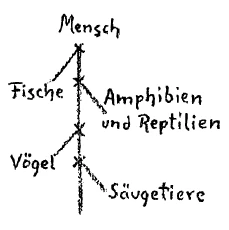
[ 42 ] Das gesamte Tierreich war einstmals im Menschen darinnen, das heißt der Mensch stand auf einer Stufe zwischen dem heutigen Tierreich und Menschenreich. Um sich weiter entwickeln zu können, mußte er die Teile aus sich ausscheiden, die seine Entwickelung nicht mitmachen konnten. Er schied damals das aus, was dann heute unser Tierreich bildet. Ursprünglich also waren die Tiere weit weniger vom Menschen unterschieden als jetzt. Sie degenerierten dann allmählich. Nun ging das Ausscheiden des Tierreiches aber nicht plötzlich vor sich, sondern ganz allmählich. Erst die Fische, dann Reptilien und Amphibien, dann Vögel und Säugetiere. Und bei diesen Gruppen gab es ja auch wieder nur ein allmähliches Ausscheiden. So wurden die Raubtiere zum Beispiel früher ausgeschieden als die Affen. Als nun die Löwen ausgeschieden wurden, da nannte man das Sternbild, in dem die Sonne stand, Löwe, und als der Mensch die Stiernatur ausschied, nannte man das Sternbild Stier. Die Namen der vier apokalyptischen Tiere in der Offenbarung des Johannes deuten auf dasselbe hin. Sie heißen Adler, Löwe, Stier, Mensch. Aber damit sind noch nicht die Namen aller Tierkreisbilder erklärt.
[ 42 ] The entire animal kingdom was once contained within human beings; that is to say, human beings stood at a stage between today’s animal kingdom and the human kingdom. In order to continue developing, they had to expel from themselves those parts that could not keep pace with their evolution. At that time, they expelled what now constitutes our animal kingdom. Originally, then, animals were far less distinct from humans than they are now. They then gradually degenerated. However, the separation of the animal kingdom did not occur suddenly, but rather very gradually. First the fish, then the reptiles and amphibians, then the birds and mammals. And within these groups, too, there was again only a gradual separation. For example, the predators were separated earlier than the apes. When the lions were separated out, the constellation in which the Sun was located was named Leo, and when humanity separated out the nature of the bull, the constellation was named Taurus. The names of the four apocalyptic beasts in the Book of Revelation point to the same thing. They are called the eagle, the lion, the bull, and the man. But this does not yet explain the names of all the zodiac constellations.
[ 43 ] Der Mond früherer Zeit - bevor sich die Erde ausschied - bestand aus weicher Pflanzenmasse, wie lebendiges Moor oder Spinatmasse, durchzogen von einem holzartigen Gerüst, das heute sich zu Felsen verhärtet hat. In dieser weichen Masse lebten die Mondpflanzen, eigentlich Pflanzentiere, zwischen den heutigen Tieren und Pflanzen stehend. Sie lebten also in Pflanzenmasse. Bei der Ausscheidung der Erde, wo sich die vier Naturreiche, Mineralien, Pflanzen, Tiere und Menschen bildeten, machten einige die volle Umwandlung zur heutigen Pflanze nicht mit. So entstanden die Schmarotzerpflanzen.
[ 43 ] The Moon of earlier times—before the Earth had solidified—consisted of soft plant matter, like living peat or a mass of spinach, interwoven with a woody framework that has since hardened into rock. Within this soft mass lived the lunar plants—actually plant-animals—which occupied a position between today’s animals and plants. They thus lived within plant matter. During the Earth’s separation—when the four kingdoms of nature—minerals, plants, animals, and humans—were formed—some did not undergo the complete transformation into today’s plants. This is how parasitic plants came into being.
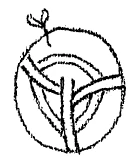
«Eh’ vor den Meistern kann die Stimme sprechen, muß das Verwunden sie verlernen.» (Aus «Licht auf den Weg» von Mabel Collins.)
“Before the voice can speak before the masters, the wounded must unlearn it.” (From Light on the Path by Mabel Collins.)
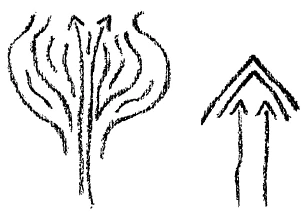
[ 44 ] Wenn wir einen Liebesgedanken aussenden, so bildet er eine wunderschöne Gedankenform, aussehend wie eine Blume, die sich sanft öffnet und den, dem der Liebesgedanke gilt, ganz umfaßt. Denkt man einen Haßgedanken, so bildet er einespitze,eckigeForm, oben geschlossen, um zu verwunden. Dasjenige, was wir als «Meister» bezeichnen, ist die göttliche Stimme, die in uns spricht. Sie spricht immer, aber wir lassen sie nicht immer heraus. Der Liebesgedanke ist offen, da kann die Stimme des Meisters hindurchtönen. Aber die geschlossene Gedankenform des Hasses läßt die göttliche Gedankenform keinen Ausweg finden, so daß sie ungehört bleiben muß.
[ 44 ] When we send out a thought of love, it forms a beautiful thought-form, resembling a flower that gently opens and completely envelops the one to whom the thought of love is directed. If we think a thought of hatred, it forms a sharp, angular shape, closed at the top, designed to wound. What we call the “Master” is the divine voice that speaks within us. It speaks constantly, but we do not always let it out. The thought of love is open, allowing the Master’s voice to resonate through it. But the closed thought-form of hatred leaves no way out for the divine thought-form, so that it must remain unheard.
Eine Lüge ist ein Mord im Astralen.
A lie is murder in the astral realm.
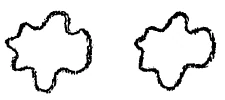
[ 45 ] Nehmen wir an, ich denke folgenden Gedanken: Ich bin einem Menschen begegnet. Eine ganz bestimmte Gedankenform wird dadurch erzeugt. Nun sage ich dasselbe zu einem andern: Ich bin einem Menschen begegnet. — Wiederum wird dieselbe Gedankenform erzeugt. Die beiden Gedankenformen begegnen sich und verstärken einander. Lüge ich aber und sage: Ich bin dem Menschen nicht begegnet - so wird eine Gedankenform erzeugt, die der ersteren entgegengesetzt ist. Die beiden Gedankenformen prallen zusammen und zerstören einander. Die Explosion erfolgt im Astral leib des Lügners.
[ 45 ] Let’s suppose I have the following thought: I met a person. This creates a very specific thought form. Now I say the same thing to someone else: I met a person. — Once again, the same thought form is generated. The two thought forms encounter each other and reinforce one another. But if I lie and say, “I did not meet that person”—then a thought form is generated that is opposite to the first one. The two thought forms collide and destroy each other. The explosion takes place in the liar’s astral body.
Wodurch schützt man seinen Astralleib vor schlechten Einflüssen?
How can you protect your astral body from negative influences?
[ 46 ] Am besten dadurch, daß man selbst rein und wahr ist. Als besonderes Schutzmittel kann man sich aber auch durch energische Willenskonzentration eine astrale Hülle, einen blauen Einebel bilden. Man sagt sich fest und eindringlich: Alle meine guten Eigenschaften sollen mich umgeben wie ein Panzer!
[ 46 ] The best way to do this is by being pure and truthful oneself. However, as a special means of protection, one can also form an astral shell—a blue veil—through vigorous concentration of the will. One tells oneself firmly and emphatically: “All my good qualities shall surround me like a shield!”
Warum hatten die ersten Christen neben dem Symbol des Lammes auch das des Fisches?
Why did the early Christians use the symbol of the fish in addition to that of the lamb?
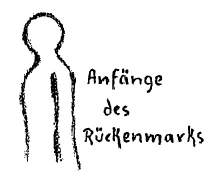
[ 47 ] Bei den Fischen, speziell beim Amphioxus, fängt das Rückenmark an, sich zu bilden. Der Mensch stand einmal in diesem R nfänge Stadium, er hatte die Fischnatur des noch in sich, war ganz Seele und arbeitete von außen an seinem Leibe. Dann schied er die Fische aus. Aus dem Rückenmark bildete sich später das Gehirn. - Dies hat Goethe schon gewußt. Dr. Steiner fand dies als kleine Notiz mit Bleistift in ein Notizbuch eingetragen, als er im Goethe-Archiv in Wei mar arbeitete. - Dadurch wird der Mensch ein Selbst. Aber veredelt wird dies Selbst durch das Christentum, und daher ist der Fisch das Symbol der Christen. Dasselbe sagt die Sage von Jonas. Jonas - der Mensch - ist erst außerhalb des Fisches, das heißt als Seele von außen arbeitend. Dann wird er ein Selbst und schlüpft in den Fisch den physischen Leib — hinein. Bei der Einweihung verläßt der Mensch den physischen Körper wieder.
[ 47 ] In fish, especially in the amphioxus, the spinal cord begins to form. Human beings once were in this early stage; they still had the nature of fish within them, were entirely soul, and worked on their bodies from the outside. Then they separated themselves from the fish. The brain later developed from the spinal cord. - Goethe already knew this. Dr. Steiner found this as a small note written in pencil in a notebook while he was working in the Goethe Archive in Weimar. - Through this, the human being becomes a self. But this self is ennobled by Christianity, and that is why the fish is the symbol of Christians. The legend of Jonah tells the same story. Jonah—the human being—is first outside the fish, that is, working from the outside as a soul. Then he becomes a self and slips into the fish—the physical body. At initiation, the human being leaves the physical body again.
Sieht man nach dem Tode physische Gegenstände?
Can you see physical objects after death?
[ 48 ] Nach dem Tode sieht man nichts Physisches, aber das entsprechende Astrale, astrale Kraftgegenbilder, und devachanische. Das Mineralische fehlt; es erscheint als Hohlraum, wie ein photographisches Negativ. Eine Uhr sieht man im Devachan, da eine menschliche Absicht dabei ist. So sieht man dort jedes Menschenwerk.
[ 48 ] After death, one sees nothing physical, but rather the corresponding astral forms—astral force-images—and devachanic forms. The mineral aspect is absent; it appears as a void, like a photographic negative. One sees a clock in Devachan because human intention is involved. Thus, one sees every human creation there.
| Atma | umgestalteter physischer Leib | |
| Budhi | umgestalteter Ätherleib | |
| Manas | ||
| Kama Manas | Ich | |
| Kama | Astralleib | |
| Prana | Ätherleib | |
| Physischer Leib |
| Atma | transformed physical body | |
| Budhi | transformed etheric body | |
| Manas | ||
| Kama Manas | Self | |
| Kama | Astral body | |
| Prana | Etheric body | |
| Physical body |
[ 49 ] Die allgemeine Lebensflut heißt Prana. Sie rinnt wie Wasser; ist sie aber geformt, wie man Wasser in ein Gefäß gießt, in den physischen Leib gegossen, so spricht man von Ätherleib. Ebenso heißt die allgemeine Astralmaterie Kama, das heißt Wunschmaterie. Zu einem Leibe geformt, sagt man Astralleib. Das Ich ist das Zentrum der Person. Kama ragt hinein und ebenso Manas. Das Ich ist also aus Kama und Manas zusammengemischt. Das Kama soll ganz umgewandelt und veredelt werden, so daß Manas daraus wird. Wird der Ätherleib veredelt, so entsteht Budhi, und Atma entsteht durch Verwandlung des physischen Leibes.
[ 49 ] The universal life-force is called Prana. It flows like water; but when it is shaped—just as water is poured into a vessel—and poured into the physical body, it is called the etheric body. Similarly, the universal astral matter is called Kama, which means “matter of desire.” When formed into a body, it is called the astral body. The “I” is the center of the person. Kama extends into it, as does Manas. The “I” is thus a mixture of Kama and Manas. Kama must be completely transformed and refined so that it becomes Manas. When the etheric body is refined, Budhi arises, and Atma arises through the transformation of the physical body.
| Die Mental-Ebene | ||
| Arupa | VII | Kausalleib |
| VI | Kausalleib | |
| V | Kausalleib | |
| Akasha Chronicle | ||
| Rupa | IV | Ätherkreis |
| III | Luftkreis | |
| II | Meeresgebiet, wie das Blut im Menschenleib | |
| I | Kontinentalgebiet |
| The Mental Realm | ||
| Arupa | VII | Causal Body |
| VI | Causal Body | |
| V | Causal Body | |
| Akasha Chronicle | ||
| Rupa | IV | Ether Circle |
| III | Air Circle | |
| II | Oceanic region, like the blood in the human body | |
| I | Continental region |
[ 50 ] Das Kontinentalgebiet enthält alles Physische, das Meeresgebiet alles Leben, der Luftkreis alle Empfindungen und der Ätherkreis alle Gedanken. An der Grenze des Ätherkreises ist die Akasha-Chronik. Sie enthält alles, was je gedacht ist. Jenseits der Akasha-Chronik liegt alles noch nicht Gedachte, Arupa. Alles neu Gedachte, alle Erfindungen und so weiter kommen aus der Aruparegion. Wer Kama Manas entwickelt hat, kommt nach dem Tode bis in den Ätherkreis, zu selbständigen Gedanken. Das Ich gestaltet den Astralleib, so daß Manas daraus wird. Alles Manas, was noch nicht ins Astrale gezogen wurde, ist Arupa.
[ 50 ] The continental realm contains all physical matter; the maritime realm, all life; the air realm, all sensations; and the etheric realm, all thoughts. At the boundary of the etheric realm lies the Akashic Records. They contain everything that has ever been thought. Beyond the Akashic Records lies everything that has not yet been thought—Arupa. All newly conceived thoughts, all inventions, and so on originate from the Arupa region. Those who have developed Kama Manas reach the etheric sphere after death, where they encounter independent thoughts. The “I” shapes the astral body so that it becomes Manas. All Manas that has not yet been drawn into the astral is Arupa.
Lebensverneinung und Lebensbejahung.
Denial of Life and Affirmation of Life.
[ 51 ] Schopenhauer sagt, der vernunftlose Wille erbaue die Welt. Ihn müsse drum die Vernunft vernichten, damit die Welt zugrunde gehe. Dadurch werde der Mensch erlöst. Schelling, Hegel und Fichte vertreten eine andere Richtung, die sich ausdrücken läßt in den Worten: «Von Gott - zu Gott!» Betrachten wir die Lebensverneinung und Lebensbejahung in einem Gleichnis: Ich zeige jemandem ein Stück magnetisches Eisen und sage ihm, daß in dem Eisen eine unsichtbare Kraft steckt, die Magnetismus heißt. Er antwortet: Ich will nichts von dieser Kraft wissen, ich bejahe das Eisen. - Ganz ähnlich so macht es der, welcher gegenüber den Dingen in der Welt sagt, er bejahe die Welt. Gewiß, er bejaht die Welt, aber er verneint die unsichtbaren Kräfte darin. Nur der bejaht in Wahrheit das Leben, der die geistigen Wesenheiten sucht. Das halbe Leben verneint der andere. Manche Theosophen sagen: Ich kümmere mich nicht um die Welt, ich will nur mein höheres Selbst entwickeln. — In Wahrheit suchen diese nur den niederen Menschen. Der höhere Mensch ist überall draußen. Wenn ich die ganze Welt in mir fühle, dann habe ich mich, mein höheres Selbst gefunden. Mein Selbst ist außer mir. Welt-Erkenntnis ist Selbst-Erkenntnis!
[ 51 ] Schopenhauer says that the irrational will builds the world. Reason must therefore destroy it so that the world may perish. Through this, humanity will be redeemed. Schelling, Hegel, and Fichte advocate a different approach, which can be expressed in the words: “From God—to God!” Let us consider the negation and affirmation of life in a parable: I show someone a piece of magnetic iron and tell him that there is an invisible force within the iron called magnetism. He replies: “I want nothing to do with this force; I affirm the iron.”—In much the same way, the person who, when faced with the things of the world, says he affirms the world acts. Certainly, he affirms the world, but he denies the invisible forces within it. Only the one who seeks spiritual beings truly affirms life. The other denies half of life. Some Theosophists say: “I don’t care about the world; I only want to develop my higher self.” — In truth, these people seek only the lower human being. The higher human being is everywhere outside of us. When I feel the whole world within me, then I have found myself—my higher self. My self is outside of me. Knowledge of the world is knowledge of the self!
Welche Wirkung hat die Suggestion?
What effect does suggestion have?
[ 52 ] Die Suggestion wirkt auf das Ich. Die höheren Körper werden aus dem physischen Leibe herausgehoben und der Ich-Leib folgt dann ohne physisches Gehirn dem Hypnotiseur unbewußt. Das physische Gehirn, die Kontrolle der Handlungen, wird gelöst. Beim Eingeweihten ist es anders. Er behält die Kontrolle und das Bewußtsein auch ohne physisches Gehirn und kann deswegen nicht hypnotisiert werden.
[ 52 ] The suggestion affects the “I.” The higher bodies are lifted out of the physical body, and the “I”-body then unconsciously follows the hypnotist without a physical brain. The physical brain—which controls actions—is disconnected. It is different for the initiate. He retains control and consciousness even without a physical brain and therefore cannot be hypnotized.
Die «Pistis-Sophia».
“Pistis Sophia.”
[ 53 ] Dieses Buch ist in koptischer Sprache verfaßt und enthält viel von den Reden Christi bei der Einweihung seiner Jünger, viele innere Auslegungen der Gleichnisse. Am bedeutsamsten ist das 13. Kapitel. Die αίμαρμένη (Haimarmene) ist Devachan. Die ganze übersinnliche Welt wird eingeteilt in zwölf Äonen. Dies sind die sieben Abteilungen des Astralplanes und die fünf untersten Abteilungen des Devachan. Vom Devachan aus können abgeirrte Geister gereinigt werden. Der Lichtreiniger vor Christus ist Melchisedek. Er ist gemeint, wenn vom ἐπίσκοπος (Episkopos) des Lichts die Rede ist.
[ 53 ] This book is written in Coptic and contains much of Christ’s teachings during the initiation of his disciples, as well as many inner interpretations of the parables. The 13th chapter is the most significant. The αίμαρμένη (Haimarmene) is Devachan. The entire supersensible world is divided into twelve eons. These are the seven divisions of the astral plane and the five lowest divisions of Devachan. From Devachan, straying spirits can be purified. The Purifier of Light before Christ is Melchizedek. He is the one referred to when speaking of the ἐπίσκοπος (Episkopos) of Light.
[ 54 ] Unter ἄρχοντες (Archontes) sind die bösen Mächte zu verstehen.
[ 54 ] The term ἄρχοντες (Archons) refers to the evil powers.
Frage nicht notiert.
Question not recorded.
[ 55 ] Kampf und Diskussion ist nicht das Gebiet der Theosophie. Wir sollen nicht mit Streiten unnütz Zeit vergeuden, sondern nur zu denen reden, die Herz und Sinn für die Theosophie haben.
[ 55 ] Strife and debate are not the domain of Theosophy. We should not waste time on arguments, but speak only to those who have a heart and mind open to Theosophy.
Warum sagt Christus: «Ich bin der Weg, die Wahrheit und das Leben» - wo doch schon vor ihm große Religionsstifter den Weg wiesen?
Why does Christ say, “I am the way, the truth, and the life”—when great religious leaders had already shown the way before him?
[ 56 ] Man muß sich zunächst in die Sprechweise der damaligen Zeit versetzen. Damals hörte man mit dem äußeren Wort auch zugleich den geistigen Inhalt des Wortes. Dann bedenke man folgendes: Christus war die Verkörperung der zweiten Person Gottes. Kein Religionsstifter vor ihm hatte die ganze Fülle des Logos in sich verkörpert. Was aber an Göttlichem sich in seinen Vorgängern verkörperte, das war schon ein Teil des Logos, also Christus selbst. Er begreift also alles vor ihm mit ein in die Worte: «Ich bin der Weg, die Wahrheit und das Leben.» Dann kann man diese Worte auch noch in anderem Sinne wörtlich nehmen. Die Religionsstifter vor Christus zeigten den Weg und lehrten die Wahrheit, aber sie lebten nicht das Gottes-Mysterium der Menschheit vor. Sie konnten darum sagen: Ich bin der Weg und die Wahrheit. - Christus allein kann sagen: Ich bin der Weg und die Wahrheit und das Leben. - Nun heißt Elias «Weg» und Moses «Wahrheit». Bei der Verklärung erscheint Christus und mit ihm Elias und Moses. Die Verklärung sagt also: Ich bin der Weg, die Wahrheit und das Leben. — Das Eingehen Buddhas in Nirvana, sein Tod, ist dasselbe wie die Verklärung Christi. Wo Buddha also seine Wirksamkeit beendet, da beginnt eigentlich erst Christi Wirken, sein Leben.
[ 56 ] One must first put oneself in the mindset of that time. Back then, when one heard the outward word, one also heard its spiritual content at the same time. Then consider the following: Christ was the embodiment of the second Person of God. No religious founder before him had embodied the full abundance of the Logos within himself. But whatever divine essence was embodied in his predecessors was already a part of the Logos—that is, Christ himself. He thus includes everything that came before him in the words: “I am the Way, the Truth, and the Life.” These words can also be taken literally in another sense. The founders of religions before Christ showed the way and taught the truth, but they did not exemplify the divine mystery of humanity. They could therefore say: “I am the way and the truth.” — Christ alone can say: “I am the way, the truth, and the life.” — Now, Elijah is called “the way” and Moses “the truth.” At the Transfiguration, Christ appears, and with him Elijah and Moses. The Transfiguration thus declares: “I am the way, the truth, and the life.” — Buddha’s entry into Nirvana—his death—is the same as Christ’s Transfiguration. Thus, where Buddha’s ministry ends, Christ’s ministry—his life—actually begins.