

At the Gates of Theosophy
GA 95
2 September 1906, Stuttgart
Translated by Steiner Online Library
Twelfth Lecture
[ 1 ] From yesterday’s remarks on developing a sense of human community, you will have seen how important it is to overcome self-centeredness when it comes to penetrating more deeply into the spiritual world. For the beginner who aspires to occult development, the first fundamental condition is this: he must rid himself of every form of selfishness. For example, he must not say: “What good does it do me if others tell me about occult things and I cannot see them myself?” That is a lack of trust. It is necessary to have trust in those who have already attained a certain degree of development. People influence one another, and when one has achieved more, he has not achieved it for himself alone, but for everyone else, and they are called upon to listen to him. In this way, one’s own powers are enhanced, and these listeners, precisely because they first have trust, gradually become knowledgeable themselves. One must not try to take the second step before the first.
[ 2 ] There are three paths of occult development: the Eastern path, the Christian-Gnostic path, and the Christian-Rosicrucian—or simply Rosicrucian—path. They differ primarily in terms of the student’s devotion to the teacher. What actually happens to a person who is undergoing occult development? What are the conditions for occult development?
[ 3 ] To illustrate this, let us consider the life of an ordinary person today. The life of such a person unfolds in such a way that, from morning till night, they go about their work and daily experiences, applying their intellect and using their external senses. They thus live and work in a state we call the waking state. But that is only one state; another lies between waking and sleeping. In this state, a person is aware that images are passing through their soul—dream images. These do not relate directly to the external world or to ordinary reality, but rather indirectly. We can call this state the dream state. It is very interesting to study how this state unfolds. Many people will be of the opinion that dreams are something completely meaningless. That is not the case. Even for people today, dreams have a certain meaning—just not the same meaning as experiences in the waking state. When we are awake, our perceptions always correspond to specific things and experiences; in dreams, this is different. For example, one might fall asleep and dream of hearing the clatter of hooves on the street; one wakes up and realizes that one had heard the ticking of a clock lying next to one. The dream is symbolic; it expressed the ticking of the clock symbolically as the clatter of hooves. One can dream entire stories. A student, for instance, dreams of a duel with all the preceding details—from the challenge to draw pistols to the crack of the shot that wakes him up. It then turns out that he had knocked over the chair that stood next to his bed. Another example: A farmer’s wife dreams of going to church. She enters the church; the priest speaks solemn words, his arms moving; suddenly his arms turn into wings, and then the priest suddenly begins to crow like a rooster. She wakes up, and outside the rooster is crowing.
[ 4 ] It can be seen from this that dreams operate under entirely different temporal conditions than waking consciousness, for in the dreams cited, the actual cause occurred chronologically as the final event. This stems from the fact that, compared to physical reality, such a dream flashes through the soul in an instant and awakens a whole series of images in the blink of an eye; in doing so, the person himself transplants time into the dream. One must imagine this in the following way: As the person waking up recalls all the details, they internally extend time itself, so that it appears to them as though the events had unfolded over the corresponding length of time. A minor event thus often becomes a long, dramatic sequence in a dream. Here we can gain insight into how time appears in the astral realm.
[ 5 ] Internal states can also be symbolically represented in dreams; for example, a headache: A person dreams that they are in a dim, cobwebbed cellar. A racing heart and internal heat are perceived as a glowing stove. People who possess a particular inner sensitivity may experience other things as well. For example, they might see themselves in an unfortunate situation in a dream. In such cases, the dream acts as a prophet; it is a symbol that an illness is lurking within them, one that will manifest in a few days. Indeed, some people even dream of the remedies for such an illness. In short, a completely different mode of perception is at work in these dream states.
[ 6 ] The third state of human existence is the dreamless sleep, in which nothing rises up in the soul and the person sleeps unconscious. When, through inner development, a person begins to perceive the higher worlds, this first manifests itself in their dream state—specifically, by dreams becoming more regular and more meaningful than before. Above all, a person gains insights through their dreams; they need only pay close attention to them. Later, they notice that the dreams become more frequent, until they feel as though they have been dreaming all night long. Likewise, they may observe that the dreams are connected to things that do not exist at all in the external world—things that cannot be physically experienced. They realize that in their dreams, they no longer see mere things that either affect them externally or symbolize states of being, as described above, but rather—as mentioned—they experience images of things that do not exist at all in sensory reality, and they then realize that their dreams are conveying something meaningful to them. For example, it might begin in the following way: He dreams that a friend is in danger of a fire, and he sees the friend moving into that danger. The next day, he learns that this friend had fallen ill during the night. He did not see that the friend had fallen ill, but he did see a symbol of it. In this way, influences from the higher worlds can also affect dreams, so that one learns of something that does not exist at all in the physical world; impressions from the higher worlds pass into the dream. This is a very important transition toward higher occult development.
[ 7 ] Now someone might object: “But that’s all just a dream—how can you take it seriously?” — That’s not correct. Let’s take the following example: suppose Edison had once dreamed of how to make an incandescent light bulb; he would then have remembered this dream and actually built an incandescent light bulb according to the dream, and now someone would have come along and said: “That light bulb is nothing—it was just a dream!” — The point is whether what was dreamed has significance for life, not that it was a dream. Often, such dream states are completely ignored because people aren’t paying enough attention. That’s not good. We should direct our attention precisely to such subtle things; that’s what moves us forward.
[ 8 ] Later, a state sets in where the nature of reality is revealed to the student in dreams, and he can then test his dreams against reality. When he has reached the point where he sees the entire world of images not only in sleep but also during the day, he can use his intellect to discern whether what he sees is true. One must not, therefore, regard and use dream images as a basis for wisdom, but must wait until they make their way into the waking world. If one consciously controls them, a state will soon arise in which the student not only sees what is physically present, but can also truly observe what constitutes the human aura, the soul, and the astral aspect of the human being. One then learns to understand what the forms and colors in the astral body signify—which passions, for example, are expressed in them. One gradually learns to “decipher,” so to speak, the world of the soul. However, one must always be aware that everything is symbolic.
[ 9 ] One might object: If one sees only symbols, then an event can be symbolized by all sorts of symbols, and it is impossible to realize that such an image refers specifically to something particular. — At a certain level, however, a thing always presents itself under the same image, just as an object is always expressed through the same concept. For example, passion is always expressed through flash-like reddish colors. One simply has to learn to relate the images to the correct meaning. One recognizes the state of mind from the image.
[ 10 ] Now you understand why all religious texts almost exclusively speak in images. For example, wisdom is referred to as light. The reason for this is that to those who are spiritually developed, the wisdom of human beings and other beings always appears as an astral light. Passions appear as fire. Religious texts convey not only events that take place on the physical plane, but also occurrences on higher planes. These texts all originate from clairvoyants and refer to higher worlds; therefore, they must speak to us in images. Everything that has been recounted from the Akashic Records has therefore also been depicted in such images.
[ 11 ] The next state the student experiences is what is referred to as continuity of consciousness. When the ordinary person is completely detached from the sensory world during sleep, he is unconscious. For a student, this is no longer the case once he has reached the aforementioned stage. Uninterrupted, day and night, the student lives in full, clear consciousness, even when the physical body is at rest. After some time, the entry into a new, specific state is heralded by the addition of sounds and words to the daytime consciousness and to the images. The images speak and tell him something; they speak a language he can understand. They state what they are; at that point, deception is no longer possible at all. This is the devachanic sound and speech, the music of the spheres. Every single thing then utters its own name and its relationship to other things. This is added to astral vision, and this marks the clairvoyant’s entry into Devachan. Once a person has attained this Devachanic state, the lotus flowers—the chakras or wheels—begin to rotate at certain points in the astral body, from left to right like the hands of a clock. They are the sense organs of the astral body, but their perception is active. The eye, for example, is at rest; it allows light to enter and then perceives it. In contrast, the lotus flowers perceive only when they move, when they encompass an object. The rotation of the lotus flowers excites vibrations in the astral matter, and thus perception arises on the astral plane.
[ 12 ] What, then, are the forces that form the lotus flowers? Where do these forces come from? We know that during sleep, the exhausted forces of the physical and etheric bodies are replenished by the astral body; through its regularity, it is able to compensate for irregularities in the physical and etheric bodies during sleep. But it is these forces—which are used to overcome fatigue—that form the lotus flowers. A person who begins their occult development is thus actually drawing forces away from their physical and etheric bodies. If these forces were continually drawn away from the physical body, the person would fall ill; indeed, complete exhaustion would even set in. Therefore, if they do not wish to harm themselves physically and morally, they must replace these forces with something else.
[ 13 ] One must bear in mind a universal law: Rhythm replaces power! This is an important occult principle. Today, people live extremely irregular lives, particularly in their thoughts and actions. A person who merely allows the distracting external world to influence them and goes along with it could not escape this danger—the danger into which their physical body is plunged by occult development due to the depletion of vital force. Therefore, a person must work to bring rhythm into their life. Of course, they cannot arrange things so that every day is exactly the same. But there is one thing they can do: they can perform certain activities on a very regular basis, and this is something that anyone undergoing occult development must do. For example, they should perform meditation and concentration exercises every morning at a time they have set for themselves. Rhythm also enters one’s life through an evening review of the day. If one can then introduce other regular practices, so much the better, for then everything proceeds, so to speak, in accordance with the laws of the world. The entire world system, after all, operates rhythmically. Everything in nature is rhythm: the course of the sun, the succession of the seasons, day and night, and so on. Plants grow rhythmically. However, the higher we go, the less pronounced the rhythm becomes; yet even among animals, a certain rhythm can still be perceived. Animals, for example, still mate at regular intervals. Only human beings fall into an arrhythmic, chaotic life: nature has cast them aside.
[ 14 ] He must now consciously restore rhythm to this chaotic life, and to achieve this, he is given certain means through which he can bring harmony and rhythm into his physical and etheric bodies. Gradually, these bodies are set into regular vibrations, so that they correct themselves even when the astral body leaves the physical body. Even if they were driven out of rhythm during the day, they return to the correct movement of their own accord during rest.
[ 15 ] These methods consist of the following six exercises, which must be performed in addition to meditation:
[ 16 ] Thought control. It consists of not letting all sorts of thoughts wander aimlessly through one’s mind—at least for short periods of the day—but rather allowing a moment of calm to settle into one’s train of thought. One thinks of a specific concept, places this concept at the center of one’s mental life, and then logically links all one’s thoughts to it in such a way that they are based on this concept. And even if this happens for just one minute, it is already of great significance for the rhythm of the physical and etheric bodies.
[ 17 ] Initiative in action—that is, one must force oneself to perform actions, even if they are insignificant, that arise from one’s own initiative, to fulfill duties one has imposed on oneself. Most of the causes of action lie in family circumstances, in one’s upbringing, in one’s profession, and so on. Just consider how little actually arises from one’s own initiative! So one must devote a little time to allowing actions to arise from one’s own initiative. These need not be important matters at all; even very insignificant actions serve the same purpose.
[ 18 ] Serenity. The third element at stake here can be called serenity. It involves learning to regulate the state of fluctuating between “ecstatic joy” and “deep sorrow.” Anyone who refuses to do so—believing that it will cause them to lose their authenticity in action or their artistic sensibility—cannot undergo occult development. Serenity means remaining in control in the face of the highest joy and the deepest pain. Indeed, one becomes truly receptive to the joys and sufferings of the world only when one no longer loses oneself in pain and pleasure, when one no longer becomes selfishly absorbed in them. It is precisely through this serenity that the greatest artists have achieved the most, because it has opened their souls to subtle and inwardly significant things.
[ 19 ] Impartiality. The fourth is what can be described as impartiality. This is the quality that sees the good in all things. It focuses on the positive aspects of everything. As an example, we can best cite a Persian legend connected to Jesus Christ: Jesus Christ once saw a dead dog lying by the roadside. Jesus stopped and looked at the animal, but those standing nearby turned away in utter revulsion at the sight. Then Jesus Christ said, “Oh, what beautiful teeth this animal has!” — He did not see the bad or the ugly; rather, even in this repulsive carcass, he found something beautiful: the white teeth. When we are in this frame of mind, we seek out the positive qualities—the good—in all things, and we can find it everywhere. This has a very powerful effect on the physical and etheric bodies.
[ 20 ] Faith. The next is faith. In the occult sense, faith expresses something different from what is generally understood by the term in everyday language. When one is engaged in occult development, one should never allow one’s past to determine the future through one’s judgment. In occult development, one may under certain circumstances have to set aside everything one has experienced so far in order to be able to approach every new experience with a spirit of faith. The occultist must do this consciously. If, for example, someone comes along and says, “The church tower is leaning; it has tilted 45 degrees”—everyone would say, “That can’t be.” — But the occultist must still leave himself a little wiggle room. Yes, he must go so far as to be able to believe everything that happens in the world and comes his way; otherwise, he blocks his own path to new experiences. One must open oneself up to new experiences; this puts the physical and etheric bodies into a state comparable to the sensuous state of an animal that is about to give birth.
[ 21 ] Inner balance. And the next quality that follows is inner balance. It develops gradually and naturally through the other five qualities. A person must be mindful of these six qualities. He must take control of his life and move forward slowly, in keeping with the saying: “Constant dripping wears away the stone.”
[ 22 ] If a person acquires higher powers through any kind of magical artifice without taking this into account, he finds himself in a dire situation. In this present life, the spiritual and the physical are so thoroughly intermingled, much like a blue and a yellow liquid in a glass. With occult development, a process begins that resembles what happens when a chemist separates these two liquids. In a similar way, the soul and the body are separated. As a result, however, the person loses the benefits of this mixture. Because the soul is housed within the physical body, the ordinary person is not subject to passions that are overly extreme. Through this separation, however, it can happen that the physical body is left to its own devices with its inherent characteristics, and this can lead to all manner of excesses. Thus, it can happen to a person engaged in occult development—if they do not take care to cultivate moral qualities—that bad qualities actually come to the surface, qualities that would not otherwise have manifested. They suddenly become deceitful, quick-tempered, vengeful; all manner of traits that were previously tempered come to the fore in a striking way. Indeed, this can happen when someone, lacking moral development, becomes overly preoccupied with the wisdom teachings of theosophy.
[ 23 ] We have seen that a person first passes through the stage of seeing and only then reaches the stage of spiritual hearing. While one is at the stage of seeing, one must, of course, first learn how the images relate to the objects. One would be thrust into the stormy sea of astral experiences if one were to surrender to it without further ado. That is why one needs a guide who, upon entry, explains how things are connected and how to find one’s way there. This is the basis for the necessity of relying strictly on the guru. In this context, three different paths of development are distinguished:
[ 24 ] The Eastern path—also known as the path of yoga—is one in which a single initiated individual living on the physical plane serves as the guide, or guru, to another, and the latter relies completely on the guru in every detail. This is best achieved by completely setting aside one’s own self for the duration of the development and surrendering it to the guru. The guru must even provide guidance regarding the initiative to act. The Indian temperament is suited to such a complete dissolution of the self; European culture does not permit such devotion at all.
[ 25 ] Christian development replaces the individual guru with the one great guide of humanity, Christ Jesus himself. The sense of belonging to this Christ Jesus—oneness with him—can replace devotion to an individual guru. But one must first be led to him by an earthly teacher. Even then, one is, in a certain sense, dependent on the teacher, the guru, on the physical plane.
[ 26 ] One is most independent during Rosicrucian training. The guru is no longer the leader; he is the advisor. He is the one who gives instructions on what one should do inwardly. At the same time, he also ensures that, parallel to the occult training, there is a rigorous training of the mind—without which one cannot undergo such occult training. This is because the mind possesses a quality that other things do not have. For example, when we are on the physical plane, we perceive with our physical senses only what is on the physical plane—nothing else. On the astral plane, astral perceptions apply, and devachanic hearing applies only in Devachan; in short, each plane has its own perceptions. But one thing runs through all the worlds, and that is logical thinking. Logic is the same on all three planes. Thus, one can learn something on the physical plane that is also valid for the higher planes, and the Rosicrucian path follows this method by primarily training the mind on the physical plane using the means of the physical plane. A penetrating mind is already developed through the study of theosophical truths or through direct mental exercises. If one wishes to train the intellect even further, one can study books such as The Philosophy of Freedom and Truth and Science, which are deliberately written in such a way that a mind trained by them can navigate the highest planes with absolute confidence. Even someone who studies these writings and knows nothing at all about Theosophy could thereby find their bearings in the higher worlds. But as I said, the Theosophical teachings also work in the same way. This is the system of Rosicrucian training. One’s own sharp thinking is the truest inner guide. The guru is then merely the student’s friend, offering advice, for the best guru is cultivated within oneself through one’s own reason. Of course, one still needs the guru here as well, because he must provide guidance on how to achieve one’s own free development.
[ 27 ] Among the European population, the Christian path is the most suitable for those who have developed a greater sense of spirituality. Those who have more or less broken away from the Church, who are more grounded in science, and who have begun to doubt because of science, are best served by following the Rosicrucian path.
Q&A
Question about the Work of the Self
[ 28 ] There is work to be done on the astral body, the etheric body, and the physical body. Every human being works on the astral body; all moral education is work on the astral body. Even when a person begins their initiation and occult training, they still have much work to do on their astral body. What begins with initiation is a more intensive work on the etheric body through the cultivation of aesthetic enjoyment and religion. The initiate consciously works on the etheric body.
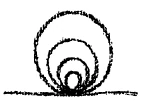
[ 29 ] Astral consciousness is four-dimensional in a certain sense. To get a rough idea of this, consider the following: What is dead tends to remain within its three dimensions. That which is alive continually transcends the three dimensions. That which is growing contains the fourth dimension within its three dimensions through its movement. If something moves in a circle and the circle is assumed to become ever larger, one eventually arrives at a straight line. However, we would not return to our starting point along this straight line—because our space is three-dimensional. In astral space, however, one does return, because astral space is enclosed on all sides. There is no way to go into infinity there. Physical space is open to the fourth dimension. Height and width are two dimensions; the third dimension is the act of projecting outward and bringing inward into the fourth. A different geometry prevails in the astral realm.
Why are the Theosophists still so imperfect?
[ 30 ] One should not let personal feelings influence one's judgment, but rather make an objective assessment of the situation.
About the State in Devachan.
[ 31 ] Pain and sorrow are external in Devachan. One does not feel one’s own pain there. One sees the pain there. One sees it as thunder, as lightning, as color. That is bliss. These are images of what is happening to the other person down here. The state of peace in Devachan depends on a person’s life here between birth and death. Harmony here brings about peace there. A person is constantly present in the three worlds. “Rest in peace!” is not entirely accurate.
Is there any value in having Masses said for the repose of the soul?
[ 32 ] Kind thoughts are like balm for the dead. One should send them selfless love, not grieve over the fact that one no longer has the dead with us; that disturbs the dead and is like a leaden weight to them. The love that endures—the love that does not insist on having the deceased here with us anymore—benefits the deceased and increases their bliss.
Remorse?
[ 33 ] Repentance is of no value. One must make amends; that shortens the time spent in Kamaloka.
About communion with loved ones in the Kamaloka.
[ 34 ] This community is more distinct and clearer in the Devachan, for consciousness in the Kamaloka is clouded by the process of atoning for personal guilt.
Lotus flowers?
[ 35 ] The lotus flowers represent inner movements; they exist within a person.
What's it like when you don't get along with your parents?
[ 36 ] Disagreements with one's parents are usually a matter of karmic destiny.
What does the astral body look like?
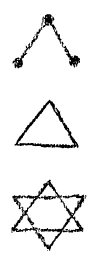
[ 37 ] When the astral body is united with its physical body, it is roughly egg-shaped. After death, it is a wonderfully luminous, mobile form. Depending on its characteristics, it takes on various colors—vibrant colors. — These three luminous points are initially widely separated but connected, with an open connection at the bottom. The three points represent centers of power; they draw closer and closer together and then take on the appearance of a small triangle: 1. Heart, 2. Liver, 3. Brain. These three points play a role in reincarnation. In Devachan, they are luminous centers of power emanating from the three points. In the astral world, these three points form a triangle; in Devachan, they form a hexagon. In Devachan, they take this form: two triangles nested within one another. They are bells.
Question not recorded.
[ 38 ] Atoms are a matter of speculation. That is why we avoid speaking of atoms, since it is, after all, merely a hypothesis. One should not think of anything that is not a fact; one should only look and observe. (The question had been raised about the “permanent atom,” which was being discussed at the time in Theosophical circles.)
Can we see into the future?
[ 39 ] It is possible to see into the future, but the occultist refrains from doing so because only the highly initiated can bear to know the future. The initiated one’s vision does not determine what others do; they act in the future entirely of their own free will.
About Family Relationships.
[ 40 ] In families with a strong family tradition, there is a very specific law through which family karma plays out. The ancestral progenitor sustains the family until he can build a new body for himself in the next incarnation. Continuity is maintained through blood; the family bond depends on blood.
About Art.
[ 41 ] Art is the revelation of secret laws of nature. Goethe says: “Beauty is a manifestation of secret laws of nature that, were it not for its appearance, would have remained hidden from us forever.” Nature can carry out its intentions only to a certain extent; man can express them, but the artist must omit the blood and life.
What Happens to Human Labor?
[ 42 ] Whatever a human being has once imprinted upon the physical world remains in the idea. Whatever he has implanted in matter remains. Whatever human beings once shaped will later grow on Earth. The clouds will later become paintings, and a structure like Cologne Cathedral will later grow.
About Group Souls.
[ 43 ] The group souls will later—much later—absorb within themselves the same experiences that human beings have today. They will later build a body of their own. They will become single individuals and will then have an individual soul. Animals will never become human beings, but group souls will become human beings—albeit human beings quite different from us. One can pass through the human stage in a variety of ways: on the Saturn stage, the Sun stage, the Moon stage, the Earth stage, and so on.
What is your opinion of the Lord's Prayer?
[ 44 ] The original Christian prayer goes: “Lord, let this cup pass from me; yet not my will, but yours be done.” One should not pray selfishly. Prayer should be an ascent into the spiritual world, a source of strength and encouragement.
About Marriage.
[ 45 ] Marriage is a dualism. Our age wrongly seeks to reduce everything in the world to the sexual. A great cosmic contrast comes into play in the realm of marriage: the man has a feminine etheric body and the woman a masculine etheric body. The spirit, the soul aspect in the man, is more feminine, and vice versa. Our soul strives toward the Highest. The man will therefore compare this Highest to the feminine, because his soul is feminine. The outer form, the body, becomes merely the outer symbol; it is only a parable. “All that is transitory is but a parable.” “The Eternal Feminine draws us upward.”
On the “I”-Body.
[ 46 ] The “I-body” appears to the clairvoyant as a blue hollow sphere between the eyes, behind the forehead. When a person begins to work on it, rays emanate from this point.
On the Nature of Comets.
[ 47 ] The comet is a collection of kama, the substance of desire, without the corresponding mental substance. The comet reaches only as far as the astral body. The comet’s visibility results from the intense friction of the etheric substance through which the astral body has passed.
About Seeing the Aura.
[ 48 ] Perceiving the aura is simply a matter of seeing.
How Was Gold Formed?
[ 49 ] First, there is the ether mass.
| Fire | Fire Ether |
| Air | Light Ether |
| Water | Chemical Ether |
| Earth | Vital Ether |
[ 50 ] No life can arise without the life ether that fills the body. Any form of ether can cool and thereby solidify. Gold once flowed in crevices, and even earlier it was gaseous—it was fire-ether, light-ether. The rays that reach us today from the sun were once etheric matter. All gold was, back then, solar ether, light-ether. Gold is condensed solar ether, condensed sunlight; silver is condensed moonlight.
What beings inhabit the Moon?
[ 51 ] The Moon is populated by beings who have remained at an earlier stage of development—who have been left behind: Luciferic beings. On the ancient Moon, there were beings who had fallen so far into evil that they could no longer continue with the process of evolution. These beings took root on the Moon. These malevolent beings are particularly evident during the waning Moon. During the waxing Moon, they are less harmful. Grueling beings inhabit the Moon, but so do benevolent beings—beings that influence growth and birth.
About the Book of Revelation.
[ 52 ] This book with the seven seals in the Revelation of John is written first and foremost by humankind itself. It evolves and unfolds within it. What is written into it first are the seven subraces. Each subrace has written a page into it and sealed it, and in the next subrace it is unsealed.
On the Difference Between Cremation and Burial.
[ 53 ] The difference applies mainly to the etheric body. As for the physical body, combustion then brings about its gradual dissolution into outer space. “Decay” means: returning to one’s essence.
On Love for One's Neighbor.
[ 54 ] Loving one's neighbor is a matter of course; I must do it myself.
About the Life of Jesus.
[ 55 ] The life of Jesus is both a symbol and a historical fact. Only spiritual science can provide proof of Jesus’ life. No historical evidence can be found because Christ, as a high-ranking initiate, was unknown to those who wrote the history of that time.
On the Inner Word.
[ 56 ] The inner word develops after a person has already learned to see in the astral realm. Then he enters the state of Devachan, where he hears the mysteries of the world resounding within him, and there he hears the name that every thing possesses. Later, the initiate, too, is told his own name, and meditating on it is of very special efficacy. That is then the inner word. It awakens him, and this inner word is then the sure guide for his future development.