

An Occult Physiology
GA 128
22 March 1911, Prague
Translated by Steiner Online Library
Third Lecture
[ 1 ] These first three lectures, including today’s, are intended to provide us with a general orientation regarding what is relevant to life and to the essence of the human being. Therefore, in these initial lectures, we will first introduce some key concepts that would otherwise remain somewhat vague, since the more detailed explanations are, of course, to follow later. It is better if we first acquire an overview of the entire approach to viewing the human being in the occult sense, so that we can then incorporate into this perspective—which we will provisionally accept as hypothetical—what may appear to us as the deeper reasons.
[ 2 ] I already touched on this at the end of yesterday’s lecture. I tried to show that through certain spiritual exercises, through intense concentration of thought and feeling, a person can bring about a state of being that differs from the ordinary one. The ordinary state of life is expressed by the fact that in our waking daily life there is a close connection between the nerves and the blood. To put it schematically, we can say: What happens through the nerves is inscribed in the tablet of the blood. Through spiritual exercises, one can now bring about a state in which the nerves are so strongly tensed that their activity no longer extends into the blood, but rather is reflected back into the nerve itself. Since the blood is the instrument of our ego, a person who, through intense concentration of feeling and thought, has, as it were, freed their nervous system from the blood, feels alienated from their own ordinary being, as if lifted out of it; they feel, as it were, standing opposite it, so that they can no longer say of this ordinary being of theirs: “That is me”—but can say: “That is you.” He thus stands before himself as before a foreign personality living in the physical world. If we consider for a moment the state of life of such a person, who has in a certain sense become clairvoyant, we must say: Such a person feels as if a higher being were reaching into his soul life. — This is a completely different feeling from what one has when facing the external world in the normal state of life. In ordinary life, one feels alien to the things and beings of the external world—animals, plants, and so on—one feels oneself as a being standing beside them or outside of them. One knows quite clearly, when one has a flower before one: The flower is there, and I am here. - It is different when one lifts oneself out of one’s subjective “I” in the manner described, when one ascends into the spiritual world by detaching one’s nervous system from the circulatory system. Then one no longer feels: “There is the foreign being standing opposite us, and here we are”—but rather, it is as if the other being were entering into us and we felt at one with it. Thus one may say: The person becoming clairvoyant begins, through advanced observation, to get to know the spiritual world—that spiritual world with which the human being is in constant connection and which, indeed, also reaches us in ordinary life through our nervous system, indirectly via sensory impressions.
[ 3 ] This spiritual world, of which human beings are initially unaware in their normal state of consciousness, is what is then inscribed in our bloodline and thereby in our individual self. For we may say: Underlying everything that surrounds us externally in the sensory world is a spiritual world that we perceive only as through a veil woven by sensory impressions. In normal consciousness, we do not see this spiritual world, over which the horizon of the individual ego spreads a veil. But the moment we are freed from the ego, the ordinary sensory impressions also fade away; we no longer have them. We ascend into a spiritual world, and this is the very same spiritual world that actually lies behind the sensory impressions, with which we become one when we lift our nervous system out of our ordinary blood organism.
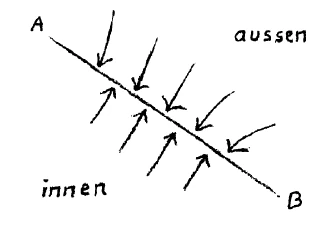
[ 4 ] With these observations, we have, so to speak, traced human life as it is stimulated from the outside and acts upon the blood through the nerves. But we already pointed out yesterday that we can see a kind of condensed external world within the purely organic, physical inner life of the human being, and we specifically noted how a kind of external world, condensed into organs, is present in our liver, gallbladder, and spleen. We can say: Just as the blood, on the one hand—the upper side of our organism—flows through the brain to come into contact with the external world there—and this happens through the external sensory impressions acting upon the brain—so, as the blood moves through the body, it comes into relation with the internal organs, of which we have first considered the liver, gallbladder, and spleen. And the fact that the blood does not come into contact with any external world within them is ensured by the fact that these organs do not open outward like the sense organs, but are enclosed within the organism and covered on all sides, so that they unfold only an inner life. These organs can all act upon the blood only in accordance with their own nature. The liver, gallbladder, and spleen do not receive external impressions like the eye or the ear; therefore, they cannot transmit effects to the blood that are stimulated from the outside, but in the effect they have on the blood, they can only express their own nature. So when we consider the inner world into which the outer world is, as it were, compressed, we can say: Here an internalized outer world acts upon the human blood. If we wish to sketch this schematically again, we can use the diagonal line A-B (see drawing on page 50) to indicate the blood table; the upper arrows can illustrate everything that approaches the blood table from the outside, and the lower arrows everything that inscribes itself into the blood table from the inside. Or, if we wish to view the matter somewhat less schematically, we can say: When we consider the human head and the blood flowing through it, as perceived from the outside by the sense organs, the brain, in its activity, acts upon the blood in the same transforming way as the internal organs act upon the blood. For these three organs—liver, gallbladder, and spleen—act upon the blood from the other side, which we wish to depict here as if it were flowing around the organs. Thus, the blood would be able to receive, as it were, radiations and influences from the internal organs and would thereby, so to speak, as an instrument of the ego within this ego, express the inner life of these organs, just as our brain life expresses what surrounds us in the world.
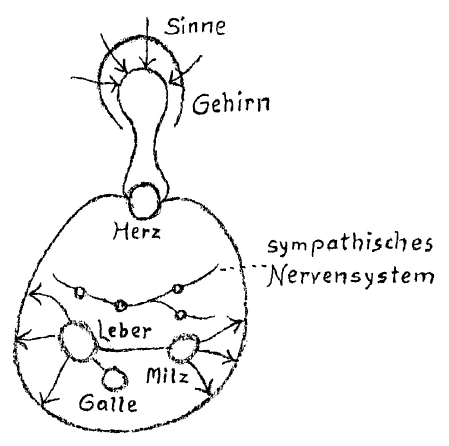
[ 5 ] We must, however, be clear that something very specific must occur for these effects of the organs on the blood to be possible. Let us recall that we said that it is only in the interaction between the nerves and the bloodstream that the possibility arises for an effect to be exerted on the blood, for something to be inscribed into the blood, so to speak. If effects are to be exerted on the blood from the side of the internal organs—if, so to speak, the human inner world system is to act upon the blood—then something like a nervous system must be interposed between these organs and the blood. The inner world must first be able to act upon a nervous system in order to then be able to transmit its effects to the blood.
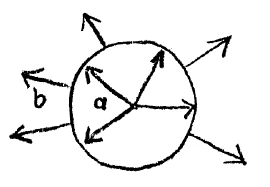
[ 6 ] Thus, simply by comparing the lower part of the human body with the upper part, we see that we must assume that something like a nervous system must be involved between our internal organs—represented by these three organs: the liver, gallbladder, and spleen—and the blood circulation. If we turn to external observation, it indeed shows us that what we call the sympathetic nervous system is connected to all these organs; this system fills the human body cavity and stands in an analogous relationship to the human inner world and the blood circulation, just as the spinal cord nervous system stands between the external world and the human blood circulation. From this sympathetic nervous system, which initially runs along the spine and then, branching out from there, permeates and spreads through the various parts of the organism, and also exhibits a network-like spread, particularly in the abdominal cavity, where a part of this system is popularly called the solar plexus—from this sympathetic nervous system, we would expect it to differ in a certain way from the other nervous system. And it is, after all, interesting—even if it is not intended to serve as proof—to ask: How might this nervous system be structured in relation to the spinal nervous system if the conditions we have now hypothetically posited were to be fulfilled? — You can see: just as the spinal nervous system must open out toward the surrounding space, so this sympathetic nervous system must be oriented toward that which is compressed within the internal organization. Thus, if our premises are to be met, the sympathetic nervous system relates to the spinal cord nervous system roughly as the radii of a circle directed from the center to the periphery (see drawing a) relate to the radii extending outward from the periphery (b). Thus, in a certain sense, there must be a contrast between the sympathetic nervous system and the nervous system of the brain and spinal cord. This contrast also exists in reality. And here we see how much can already be gained from the fact that we are able to demonstrate: If our premises are correct, then external observation must confirm them in a certain way, and it turns out that external observation does indeed confirm what we have posited as a premise. While in the sympathetic nervous system there are essentially strong nerve nodes, and the radiations from these nodes—the connecting fibers—are relatively thin and of little significance compared to the nodes, in the brain-spinal cord nervous system the exact opposite is true: there the connecting fibers are the essential element, while the nerve nodes are of only secondary importance. Thus, observation does indeed confirm what we assumed as a premise. If the sympathetic nervous system has the task that, according to what we have said, it must have, then the inner life of our organism—which is expressed in the nourishment and warming of the organism—must, as it were, pour into this sympathetic nervous system, and this nervous system would have to transmit it to the blood just as external impressions are transmitted to the blood through the brain-spinal cord nervous system. Thus, through the instrument of the ego, the blood—by way of the sympathetic nervous system—conveys the impressions of our own physical interior into the individual ego. But since our physical interior, like all physical things, is built up out of the spirit, we receive what has condensed as the spiritual world in the corresponding organs of the inner human being, up into our [awake] ego via the detour through the sympathetic nervous system.
[ 7 ] Here, too, we see how this duality within the human being—which served as the starting point for our reflections—is expressed even more clearly. We see the world at work on the outside, and we see it at work on the inside; in both cases, we see this world at work in such a way that one nervous system serves as the instrument for this effect in one instance, and the other nervous system in the other.
[ 8 ] Yesterday we said—and we have repeated it today for the sake of clarity—that human beings are capable of freeing their nerves, insofar as they lead out into the sensory world, from the effects of the external world on the circulatory system, so to speak. We must now ask ourselves whether something similar is also possible in the opposite direction. And we will see later that such exercises of the soul are indeed possible, which make the same effect we have spoken of today and yesterday possible in the other direction. However, there is a certain difference here. While we can, through concentration of thought, concentration of feeling, and occult exercises, detach the nerves of our brain and spinal cord from the blood, we can, through such concentrations that, as it were, penetrate into our inner life, into our inner world—and these are specifically those concentrations that can be summarized under the name “mystical life”— —penetrate so deeply into us that we certainly do not leave our ego, and thus also its instrument, the blood, out of consideration. The mystical absorption, of which we know—as will be explained in more detail later—that through it the human being, as it were, submerges into his own divine being, into his own spirituality, insofar as it lies within him, this mystical absorption is not primarily a withdrawal from the ego. On the contrary, it is a sinking into the ego, a strengthening, an energizing, an intensification of the sense of self. We can convince ourselves of this if we—setting aside what contemporary mystics say—engage a little with the older mystics. These older mystics, regardless of whether they stand on a more or less religious ground, are above all concerned with penetrating into their own ego and turning away from everything the external world can offer us, in order to become free from all external impressions and to submerge themselves entirely within themselves. This inner contemplation, this immersion in one’s own self, is initially like a drawing together of all the power and energy of the self into one’s own organism. This then continues to affect the entire human organism, and we can say: This inner contemplation, this “mystical path”—as it should properly be called—is, in contrast to the other path we have described, such that we do not withdraw the ego’s instrument, the blood, from the nerves, but rather push it more strongly toward the nerves, toward the sympathetic nervous system. So while we sever the connection between the nerve and the blood in the process we discussed yesterday, in contrast, through mystical contemplation we strengthen the connection between the blood and the sympathetic nervous system. This is the physiological counterpart: in mystical contemplation, the blood is driven deeper into the sympathetic nervous system, whereas in the other type of spiritual exercises, the blood is pushed away from the nerve. What takes place in mystical contemplation is thus like a pressing of the blood into the sympathetic nervous system.
[ 9 ] Let us now suppose that we could, for a moment, set aside the fact that when a person enters into a state of mystical contemplation within themselves, they do not detach themselves from their ego, but rather push it deeper into their inner being, taking with them all the bad and less-than-good qualities they possess. When one sinks into one’s inner self, one is not initially aware that one is also pressing all these less-than-good qualities into this inner self; in other words, that everything that is in the passionate blood is imprinted into the sympathetic nervous system. But let us suppose we could set this aside for a moment and tell ourselves that the mystic took care, before reaching such a mystical absorption, to ensure that the less-than-ideal qualities disappeared more and more, and that selfless, altruistic feelings took the place of the egoistic ones, that he had prepared himself by attempting to awaken within himself a feeling of compassion for all beings, in order to paralyze the qualities that focus solely on the ego through selfless compassion for all beings. Let us assume, then, that the human being has prepared himself sufficiently carefully to immerse himself in his inner world. If the human being then carries the ego into his inner world through the medium of his blood, it comes to pass that this inner nervous system—the sympathetic nervous system, of which the human being is naturally unaware in normal consciousness—enters into ego-consciousness, so that he begins to realize: You have something within you that can convey to you something of your inner world, just as your brain-spinal cord nervous system conveys the outer world to you. — One becomes aware of one’s sympathetic nervous system, and just as one can perceive the outer world through the brain-spinal cord nervous system, so now the inner world comes to meet one. But just as we do not see the nerves themselves in the case of external impressions, but rather the external world enters our consciousness through the optic nerves, so too in mystical contemplation do the inner nerves not enter consciousness; the human being merely becomes aware that he has in them an instrument through which he can look into the inner world. Something quite different occurs: the inner world appears before the human faculty of cognition, which has become clairvoyant inwardly. Just as our outward gaze reveals the external world to us, and our nerves do not come into our consciousness in the process, so too does our sympathetic nervous system not come into our consciousness, but rather that which presents itself to us as the inner world. We must only realize that this inner world, which comes into our consciousness, is actually ourselves as physical human beings.
[ 10 ] It may not be particularly obvious, but I would still like to say: A slightly materialistic thinker might feel a kind of horror if he were to tell himself that he can see his own organism from the inside, and he might perhaps think: But I do see something to that, if I become clairvoyant through my sympathetic nervous system and get to see my liver, gallbladder, and spleen! — I mean, it may not be particularly obvious, but one could still say that. But that is not how it is. For such an objection would fail to take into account that in ordinary life, a person views their liver, gallbladder, and spleen—and so on—from the outside, just like any other external object. Just as you learn about the liver, gallbladder, spleen, and so on in anatomy and ordinary physiology when you cut open a human being, these organs are naturally viewed through the external senses, through the brain-spinal cord-nervous system, just like anything else. But a person is in a completely different situation when they try to use their sympathetic nervous system to become clairvoyant inwardly. There they do not see at all the same thing they can see from the outside, but rather they see that for which the clairvoyants of all times have chosen such strange names for these organs, as I mentioned to you in the second lecture.
[ 11 ] For there he realizes that, in fact, to the external gaze—mediated by the brain-spinal cord-nervous system—these organs appear as Maya, as an external illusion, in the image they present to the outside world, rather than in their inner, essential significance. One actually sees something quite different when, with the eye turned inward, one can clairvoyantly observe this inner world. There one gradually becomes aware of why clairvoyants of all times have seen a connection between the organs and the effects of the planets. As we said yesterday, the action of the spleen was associated with the name of Saturn, that of the liver with Jupiter, and that of the gallbladder with Mars. For what one sees within oneself is, in fact, fundamentally different from what presents itself to the outer gaze. One becomes aware that one is truly faced with distinct, interconnected parts of the external world within the internal organs. Above all, one thing becomes clear, which shall serve as an example for us: by arriving at this kind of insight, which goes beyond ordinary observation, we can convince ourselves that the human spleen is a very significant organ. For when viewed from within, this organ truly appears as if it were not composed of external substance, of fleshly matter, but—if the expression is permitted, though it can only approximately convey what is seen—the spleen actually appears like a luminous celestial body in miniature, teeming with all manner of inner life that is highly complex. I pointed out to you yesterday that the spleen, viewed externally, can be described as a blood-rich tissue, embedded within which are the aforementioned white corpuscles. So that, starting from an external physiological perspective, one can say that the blood flowing through the spleen is filtered through it as through a sieve. From an inner perspective, however, the spleen presents itself as an organ set into a constant rhythmic motion by manifold inner forces. We can already see from such an organ that, fundamentally, an immense amount in the world depends on rhythm. We can indeed gain a sense of the significance of rhythm in the overall life of the world when we recognize the outer rhythm of the cosmos in the pulse of the blood. Externally as well, we can trace the rhythm in the organs, including the spleen, quite precisely. To the one who observes the organs with a clairvoyant gaze turned inward, the differentiations of the spleen reveal themselves as in a body of light; they are there to give the spleen a certain rhythm in life. This rhythm differs quite considerably from other rhythms we otherwise perceive. And it is particularly interesting to study, in the case of the spleen, how this rhythm of the spleen differs quite considerably from every other rhythm; for it is far less regular than other rhythms. Why? This is the case because the spleen is, in a certain sense, closely related to the human digestive system and has something to do with it. You will understand this immediately if we consider for a moment how incredibly regular the rhythm of the blood must be in humans so that life can be sustained in the proper way. It must be a very regular rhythm. But there is another rhythm, and it is only slightly regular, although it would be desirable for it to become more and more regular through people’s self-discipline, especially during childhood: this is the rhythm in which we nourish ourselves, the rhythm of eating and drinking. A reasonably orderly person does indeed maintain a certain rhythm in this regard; they take their daily meals—breakfast, lunch, and dinner—at specific times, so that they do have a certain rhythm as a result. But what is the actual state of this rhythm? In many respects—as is sadly well known—this regularity is disrupted by the indulgence of many parents toward their children’s cravings, to whom they simply give something whenever they happen to want it, disregarding any rhythm. And adults, too, are not exactly eager to always maintain a precise rhythm regarding eating and drinking. This is not meant in a pedantic or moralizing way, for modern life does not always make this possible. How irregularly food is stuffed into people, how irregularly—especially—drinking takes place, is well known and should not be criticized, but merely noted. However, what we feed our organism in a rhythmically deficient manner must gradually be re-rhythmized so that it fits into the organism’s more regular rhythm; it must be adjusted so that at least the grossest irregularities in food intake are eliminated. Let us suppose that a person is forced by his profession to have breakfast at eight in the morning and lunch at one or two o’clock, and that this regular daily schedule has become a habit for him. Now let us further suppose that he were to visit a good friend, and that politeness—which, incidentally, cannot be praised highly enough—would require him to have a light meal between these two main meals. In doing so, they have disrupted the usual rhythm of their eating in a very significant way, and this exerts a very specific effect on the rhythm of their organism. There must now be something in the organism that correspondingly strengthens what is regular in its rhythm and weakens the effect of what is irregular. The grossest irregularities must be balanced out, so that when food passes into the blood system, an organ must be involved that balances the irregularity of the digestive rhythm against the necessary regularity of the blood rhythm. And this organ is the spleen. Thus, through very specific rhythmic processes, as has now been described, we can gain an understanding that the spleen acts as a regulator to balance irregularities in the digestive tract so that they become regularities in the blood circulation. For it would indeed be a very serious matter if certain irregularities in the intake of nutrients—particularly during one’s student years or at other times—were to carry their full effect over into the blood. There is much to balance, and only as much should be transferred to the blood as is beneficial to it. This task is performed by the spleen, which is connected to the bloodstream and radiates its regulating effect throughout the entire human organism in such a way that what has just been described comes to pass.
[ 12 ] What we have now gleaned from the insight of the now clairvoyant eye is also evident from external observation, namely that the spleen follows a certain rhythm. It is extremely difficult to determine this function of the spleen through external physiological examinations alone; however, external observation reveals that the spleen remains swollen for several hours after a hearty meal and that, unless more food is consumed, it contracts again once a reasonable amount of time has passed. Through a certain expansion and contraction of this organ, the irregularity in food intake is adjusted to the rhythm of the blood. And if you are aware that the human organism is not merely what it is often described as—namely, a sum of its organs—but that all organs send their secret effects to every part of the organism, then you will also be able to imagine that the rhythmic activity of the spleen depends on the external world, namely on the intake of food, and that these rhythmic movements of the spleen radiate throughout the entire organism and can exert a balancing effect across the whole organism. This is, of course, only one way in which the spleen functions; for it is impossible to list all types equally.
[ 13 ] It would indeed be extraordinarily interesting to see whether external physiology would confirm such things as have just been stated, if it were to accept them—since not all people can become clairvoyant—as, I might say, a “casual idea,” if it were first stated: Let me imagine for a moment that what the occultists say isn’t entirely nonsense; I won’t believe it or disbelieve it just yet, but will leave it as an idea and examine whether anything about it can be proven through external physiology. - Then investigations of external physiology could be undertaken that might provide proof for what has been gained from clairvoyant observation.
[ 14 ] We have already mentioned one such example: the expansion and contraction of the spleen. Since the spleen expands after a meal, it is clear that this process depends on the intake of food. Thus, we have found in the spleen an organ that, on the one hand, is dependent on human will, and on the other hand, in relation to the blood, eliminates the irregularities of human will, dampens them—that is, it switches them over to the rhythm of the blood—and thereby enables the physical aspect of the human being, so to speak, to be shaped in accordance with its essence. For if the human being is to be shaped in accordance with his essence, then the central instrument of his essence—the blood—must be able to exert its effect in the proper manner, in its own blood rhythm. Insofar as the human being is the bearer of his blood circulation, he must be separated within himself, isolated from what is happening irregularly in the external world, and from what affects the human being through the fact that he ingests his food in a completely unrhythmic manner.
[ 15 ] It is, therefore, a process of isolating the human being, of making it independent of the external world. In occultism, any such individualization or making of a being independent is called “Saturnian,” something brought about by the influence of Saturn. This is the original idea, the essence of the Saturnian: that a being is set apart, isolated, and individualized from a comprehensive whole organism, so that it can develop a distinct regularity within itself. I will now set aside the fact that, according to modern astronomy, Uranus and Neptune are also counted as part of our solar system beyond Saturn’s orbit. For the occultist, all the forces necessary to lift our solar system out of the rest of the world, to separate, isolate, and individualize it, and to give it its own laws, are found in the Saturn forces.
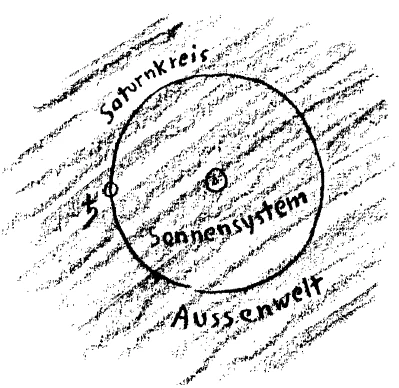
[ 16 ] All these forces are present in what is the outermost planet in our solar system. If one imagines the world, one could say that within Saturn’s orbit, the solar system is situated in such a way that it can follow its own laws within that orbit and become independent by breaking free from its surroundings and the formative forces of its environment. For this reason, occultists of all ages have seen in the Saturn-like forces that which our solar system contains within itself, which enables the solar system to develop its own rhythm, one that is not the same as the rhythm outside, which prevails beyond the world of our solar system.
[ 17 ] We encounter something similar in our organism in the spleen. In our organism, we are not dealing with a separation from the entire external world, but only from the environment insofar as it contains the food for our organism. In the spleen, we see the organ in the body that treats everything coming from outside in the same way that what lies within the orbit of Saturn in the solar system is treated by the forces of Saturn: that is, it is first re-rhythmized into the rhythm and laws of the human being. What takes place through the spleen isolates our blood circulation from all external influences, making it a self-contained, regular system capable of maintaining its own rhythm.
[ 18 ] This brings us a step closer to understanding the reasons that, in occultism, were decisive in the choice of planetary names for the organs. In the occult schools, these names were not originally applied merely to the individual physically visible planets. The name “Saturn,” for example, was, as already mentioned, applied to everything that causes something to separate itself from a larger whole and to close itself off into a system that is rhythmically structured within itself. The fact that a system closes itself off and forms a self-contained rhythmic structure has a certain disadvantage for the development of the world as a whole, and this has always troubled the occultists somewhat. It is, after all, easy to understand that in the small world and in the large world, all effects are related to one another, that everything relates to everything else. Now, if anything—be it a solar system or the human circulatory system—separates itself from the entire environment and follows its own laws, this means that such a system breaks through and violates the external, all-encompassing laws; that it becomes independent of the external laws and creates its own internal laws and its own rhythm, which initially contradict those of the environment. We shall see how this can also be applied to the physical human being, although it must be clear to us, after all the discussions in today’s lecture, that it is initially a blessing for the human being to have received this inner rhythm created by the Saturn-like nature of the spleen. But we shall see that a being, be it a planet or a human being, by closing itself off within itself, brings itself into contradiction with the surrounding world. A contradiction is created between what is around us and what is within us. This contradiction, which does indeed exist, cannot be resolved until the rhythm established within has fully adapted once more to the external rhythm. We shall yet see how this also applies to the physical human being; for as it has now been stated, it appears as though the human being must adapt to the irregularity. But we shall see that it is otherwise. Once the inner rhythm has established itself, it must strive to align itself once more with the entire outer world—that is, to abolish itself. This means, then: the entity that arises within and works independently must have the aspiration to adapt once more to the outer world and to become, in relation to this outer world, just as the outer world itself is. In other words: Everything that becomes independent through a Saturnian influence is at the same time condemned by this Saturnian influence to destroy itself again. The myth expresses this in an image: Saturn—or Cronus—devours his own children.
[ 19 ] Thus you see a deep harmony between an occult idea and a myth that expresses the same thing in imagery, in symbol: Cronus devours his own children. - If one allows such things to take effect on oneself in ever-increasing numbers, a subtle sense of the relationships of the kind indicated develops, and then, after some time, it will no longer be as easy as external rationalism would have it to say: Well, there are a few dreamers who imagine that the ancient myths and legends contain pictorial expressions of profound wisdom. - If one hears two, three, or even ten such parallels—especially as they are often presented in literature, namely in a rather superficial manner—then one can certainly object to the idea that myths and legends contain deeper wisdom than external science. But whoever delves deeper into the matter will find it to be true that myths and legends lead deeper into the true nature of the world and the formation of the organs than is possible through the external scientific approach. Whoever repeatedly allows such images to take effect upon them—as they are scattered throughout the entire globe in the wondrous myths and legends—can, by lovingly engaging with these images in the entire feeling and thinking of peoples, in the pictorial conceptions of human beings, find the transformation of the deepest wisdom. Then one understands why some occultists can say that one has truly grasped myths and legends only when one has penetrated through them into the occult physiology of human nature. — More than what external science grasps, myths and legends contain true wisdom about the human being, true physiology. Once people come to fathom how much physiology lies, for example, in names such as Cain and Abel and their descendants—these ancient names, after all, stem from times when an inner meaning was still imbued into names— then people will develop an immense respect, an immense reverence for all that has been conceived by wise people in the course of historical development, so that where one cannot yet look into the spiritual worlds, souls may experience their connection with these spiritual worlds through images. There, the arrogance inherent in the phrase that plays far too great a role in our time will be thoroughly dispelled: “How wonderfully far we have come today!”—by which one means: “How we have cast off the old pictorial expressions of the wisdom of primeval humanity.”
[ 20 ] One completely misses the point if one does not immerse oneself with deep love in the course of human development through the various epochs. What the clairvoyant physiologically fathoms with his open inner eye as the inner nature of the human organs is expressed in images and allows him to see that myths and legends contain, as it were, human origins. The clairvoyant sees expressed in myths and legends this miraculous process whereby worlds have been condensed into human organs. He sees how, over the course of infinitely long ages, the organs have crystallized together in order to become what functions within us as the spleen, the liver, and the gallbladder. We will speak further about this tomorrow. To be able to express all this in images truly requires a deep wisdom, a deep knowledge of what we can only begin to glimpse through occult science. What acts within our inner human organism is born from the worlds, just as a microcosm is born from the macrocosm, and we see all this immense wisdom expressed in myths and legends. That is why those occultists are right who find meaning in the names of myths and legends only when they recognize the physiology within them.
[ 21 ] We should merely allude to this today, because it can help us cultivate the sense of awe that was spoken of in the first lecture. If we adopt such a perspective, we can truly point to what a deeper exploration of the spiritual content of the human organs reveals. Even if we can only illustrate this to a very limited extent, it will nevertheless become clear to us what a marvelous structure this human organism is. And in this series of lectures, we will attempt to shed a little light on this inner essence of the human being.