

Occult Reading and Occult Hearing
GA 156
12 December 1914, Dornach
Translated by Steiner Online Library
How does one bring Being into the World of Ideas? I
[ 1 ] Some time ago, we spoke here—at least in passing—about what is called occult reading and occult hearing, and today and tomorrow I will continue these reflections by picking up on those discussions about occult reading and occult hearing, because this will allow me to develop some important ideas regarding our building in connection with them.
[ 2 ] If one looks at the external scientific view—insofar as it pertains to the life of the soul—today, one finds many difficulties in this external scientific view as soon as one attempts to gain even a somewhat satisfactory overview of the relevant concepts. Among the many difficulties, the one that arises when one considers the external scientific view of human memory is truly no small matter.
[ 3 ] Now, I would have to cite many examples here if I were to discuss this or that aspect of what external psychology or the study of the soul has to say about human memory. But it would not get us very far if I were to elaborate on all of that. I would simply like to draw your attention to the difficulty this external science faces when it comes to understanding memory and its peculiarities.
[ 4 ] Isn't it true that human memory presents itself to us in such a way that we can recall to consciousness at a later time the mental images, concepts, and ideas that we have absorbed at some point in the past? There is thus a psychological fact that, for example, we have a certain perception or experience today, and that after some time—without being confronted with the same event that gave rise to the perception or experience—we can once again bring the mental image of that event or experience to life from within ourselves.
[ 5 ] It seems, then, as though the human soul, in a sense, retains within itself everything it takes in from the outside. So, for example, when we meet someone, we form an impression of them. We transform this impression into a mental image, and then we store this image in our subconscious; when we need it, we recall it.
[ 6 ] Wouldn’t it be the case, then, that our soul—insofar as it develops the power of our memory—is, let’s say, a box into which one can place all one’s mental images and experiences and in which one can store them, and from which one can take them out again when needed in order to bring them to consciousness? So down there in this soul-cupboard, all kinds of experiences would be stored, and they could in turn be brought forth from there.
[ 7 ] When one reads books today that deal with memory, one does, however, get the impression that authors often believe the soul is truly a kind of storage cabinet for all manner of experiences. Now imagine that you were walking around with your soul and carrying within that soul a cabinet for all your impressions and experiences. There is, one must readily admit, a difficulty here. People have tried to bridge this difficulty with all sorts of scientific concepts, but nothing particularly satisfactory has come of it. This difficulty will only be overcome when we acquire a deeper insight into the structure of the human being—comprising the physical body, the etheric body, the astral body, and the I. For this etheric body of the human being must indeed be studied if one wishes to gain a true understanding of the nature of human memory, and the astral body must be studied no less for this purpose.
[ 8 ] Let us try to form at least a rough mental image of what this astral body of the human being actually is. After all, in everyday waking life, a person does not experience themselves in their astral body, any more than they experience themselves in their etheric body. From the moment of waking until falling asleep, a person experiences themselves through their ego, and all experiences are ego-experiences. A person does not experience themselves in their astral body. For this astral body is—as I have emphasized on other occasions—fundamentally infinitely wiser than the ego-person. It is capable of far more than the ego-person can do. This astral body can indeed read what I have described to you in general terms as occult writing. The astral body can read this occult writing; it can truly read it.
[ 9 ] Among the many other mental images that can help us understand the astral body, we can also view it as a reader of the occult script. The etheric body, on the other hand, is—among its many other qualities—something like a tablet upon which the occult script is continually inscribed through the events of the world.
[ 10 ] While we live—and we are always living, whether awake or asleep, between birth and death, and from death to a new birth—processes are constantly taking place in the universe, in the cosmos, and events are unfolding. Essential life exists in the cosmos. All of this is reflected, inscribed into the etheric body. The human etheric body is, in fact, a true mirror of the entire cosmos. There is nothing in the cosmos that is not pictorially imprinted in the human etheric body and, if one may use the expression, imaginatively reflected. And the human astral body continually reads what the world inscribes into the human etheric body. This indeed takes place in the human subconscious: the human astral body reads what the world inscribes into the human etheric body.
[ 11 ] But when we ourselves, in our conscious, waking daily life, encounter an event or even an object that makes an impression on us, we form a mental image of that object. In forming this mental image of the object, the astral body is initially engaged. It is in a vehement state of movement while we form a mental image of an object or form the mental image of the impression of an external event. What we thus form as a mental image, what we experience as a soul experience, is also inscribed into the human etheric body and remains inscribed there. Just as the world with its events continually inscribes itself into our etheric body, so too do we inscribe into our etheric body that which we ourselves experience soulfully. It remains inscribed there. When we remember something, a complex process actually takes place. Our astral body reads what has been inscribed in our etheric body, and the result of this reading is the emergence of a mental image that we call a memory.
[ 12 ] Well, this would reduce memory to a kind of reading of our astral body within the etheric body. And indeed, once we know this, we will no longer fall into the simplistic mental image that the soul is some sort of storage cabinet for what we have experienced, but will realize: there are in fact few habits—I say explicitly habits; we will understand the word even better tomorrow—into which the astral body repeatedly places itself when it has experienced something, and which it then imprints into the etheric body. Just as our writing has few letters, so our astral body has few, very few habits. And just as we use our few letters, through various combinations in writing, to communicate the entire infinite wealth of what people have to say to one another about themselves and the world, so too does what memory preserves take shape from a few habits, through their combinations.
[ 13 ] If we understand that this is a process of reading, then we will no longer believe that every single experience must be recorded; rather, a few habits of the astral body are combined, and these are then fixed in the etheric body. Just as we can fix a new word in our minds using the old letters when we hear it, so too can we fix every new experience in the etheric body using a few habits of the astral body. This is because both our etheric body and, in particular, our astral body are connected to the entire cosmos. We must not, in fact, take what an ancient wisdom teaching has drawn out of the cosmos as something chosen at random, but rather recognize that it has a deep meaning and significance.
[ 14 ] If we consider the twelve constellations of the entire zodiac, we can say that our astral body is indeed in a living connection with these twelve constellations. For the astral body, these twelve constellations truly represent twelve specific habits, twelve specific ways of moving. And then our astral body is also connected to the seven planets, as we have often discussed. These, in turn, give rise to certain habits within it. Through these habits—I say expressly “habits”—which are kindled in our astral body by the planets of our solar system, something similar to the vowels arises in the astral body; and through the habits that are stimulated in it by the influence of the zodiac, something similar to the consonants arises.
[ 15 ] So what I mean to say is: Let us suppose that at some moment in life—and such moments always exist, because we are always in connection with the world—our astral body is in connection with the forces streaming forth from the constellation of Aries. Because our astral body is connected to or under the special influence of what radiates from the constellation of Aries, the possibility develops within this astral body to close itself off in its particular form, to set a boundary for itself; whereas, when the astral body is more under the influence of Libra, a movement develops within it that allows it to be more open to the rest of the world.
[ 16 ] Thus, a specific tendency toward movement develops under the influence of each constellation. Under the influence of one constellation or another, the astral body stretches its upper part upward in particular; under the influence of one of the other constellations, it stretches its lower part in particular. There are twelve such specific types of movement, twelve such habits, and in turn seven specific habits under the influence of the planets. These are more internal movements under the influence of the planets, through which the inner parts move or come into a relationship with one another. Thus, fundamentally, our astral body has 12 + 7 = 19 habits implanted by the cosmos.
[ 17 ] Just as we can record everything using our written characters—the symbols for vowels and consonants—by combining them whenever we wish to express what we bring to light through our wisdom, so too does our astral body form everything it needs to form through the combinations of its nineteen habits. When a person stands before us with a face that looks at us in a certain way—whether good or evil—our astral body makes specific movements that are a combination of these nineteen habits. This is then inscribed into the etheric body, and at a later time, the astral body can read what has been inscribed there. And this is the basis of memory! For as soon as one goes beyond what the senses and the intellect bound to the senses yield, one immediately arrives at the relationship of the human being to the cosmos. The physical body merely conceals this relationship of the human being to the cosmos.
[ 18 ] So we have a continuous inner reading, and if we could go back—even historically—to the origins of writing, we would find that this inner reading of human beings is indeed imitated in the oldest pictographic scripts. It is not the case that written characters arose by chance; rather, the original consonant characters were imitations of the zodiac constellations, and the original vowel characters were imitations of the planetary constellations. External reading was nothing other than a reproduction in the external world of what humans experienced as inner reading.
[ 19 ] This is connected to the attitude people had in ancient times toward the art of writing. It was regarded as something immensely sacred because it was derived from the cosmic mysteries. And it is known from Egyptian culture that scribes, if they made mistakes, were subject to the most severe punishments under the strict laws of that time, depending on the magnitude of the error they committed—even the death penalty if the error was grave enough. It was regarded as something infinitely lofty and sacred to write down what man could know of the sacred mysteries, because one still had a sense of the connection between these written characters and all the sacred mysteries of human nature and their connection to the Divine.
[ 20 ] The important thing is that, as we gradually take Spiritual Science into ourselves, we regain a sense of the sacred in the hidden aspects of human nature. This sense is far more important than the mere theoretical absorption of concepts from Spiritual Science. But this is also connected to the fact that, at the very moment when, in the course of human development, we had to abandon all connection with the sacredness of Scripture, we also sensed that, fundamentally speaking, I would say, something eerie was taking place in human history. Pick up a book from the early Middle Ages in a library and try to imagine how such a book came into being, how, I might say, a monk wrote on this book for years, even decades, how he labored over a single letter for a long, long time. Back then, people knew that writing was something to be held sacred. They knew that through writing, one was connected to the good gods, and in a sense, what was entrusted to writing was a way of bringing into the outer world that which comes from the good gods.
[ 21 ] But as you know, it is a sign of evolution that everything which comes from the good gods can be distorted in the world by Ahrimanic or Luciferic forces. At the very moment when the ordinary art of printing arose—which then developed into the source from which humanity derives most of its wisdom today— by bending his head over the paper bearing ghastly symbols—which are merely the apes of the ancient characters—that reveal to him what people have or have not thought about the world and its mysteries—the art of writing has been distorted. As a result, the system of written communication has indeed entered a new stage, a stage in which it has lost all the aura of the sacred, a stage in which—as one might say—the Ahrimanic stage of written communication has set in. And just as the ancient characters are the revelation of hidden mysteries, albeit in imitation, in symbolism—just as these characters are the revelation of hidden mysteries to the outer world, and just as these mysteries correspond to the nature of the entities of the spiritual world that are progressing in the good sense— so what we have today, especially in the form of printed type—but in a broader sense this also applies to cursive writing—is of a decidedly Ahrimanic character. And the people sensed this when they attributed the art of printing to the ‘black powers,’ called it a ‘black art,’ and even attributed its invention to the devil.
[ 22 ] There is indeed a deeper connection when one links the invention of printing to Faust, just as Goethe links printing to precisely what Faust goes through during a certain phase of his life. The Ahrimanic epoch of communication began with the advent of printing. We know, of course, that we must rightly unlearn the habit of crossing ourselves at the very mention of anything called Ahrimanic. But we also know that we must name and understand things by their proper names. As practitioners of Spiritual Science, we must not be among those who say: The art of printing is Ahrimanic, so we must eradicate it. — We will not do that; it will not occur to us, of course, because we understand that the Ahrimanic is also necessary in the development of the world, that it is also part of the world’s progress. But we must also see things as they are. We must not reinterpret things in order to place ourselves in the comfort of being able to live in the world without Lucifer and Ahriman. It is more pleasant not to know that Ahriman is actually staring at us from every book today; but it is necessary for those who see the world in its true light to endure this state and not to reinterpret it as something else. To learn to understand the world—that is the task of those who feel themselves drawn more and more to Spiritual Science.
[ 23 ] In our time, we see a conventional natural science that would prefer to reduce everything to a kind of mechanical motion of minute subatomic particles. I have often spoken about this worldview that conventional natural science imposes on our world. We are told: Oh, colors—red, yellow, green, violet, blue—are nothing but vibrations in reality! Color is merely something the eye conjures up. A certain number of vibrations in the ether produce red, a certain number produce yellow, a certain number produce blue, and a certain number produce violet. — And one might say that the modern observer of the world has a tendency to erase from his worldview that which he perceives in the world through his senses, and to substitute a material whirlwind in its place.
[ 24 ] One of the last great minds to have rebelled, particularly in the field of color theory, against what might be called a whirlwind of material particles is Goethe. And because the modern world has increasingly adopted this materialistic view—this obliteration of the manifold world that surrounds us—people have been unable to understand what Goethe actually intended to convey in his theory of colors.
[ 25 ] Spiritual Science will restore some order here, and Goethe’s theory of colors will come into its own to the same extent that Spiritual Science permeates human beings. For to Goethe it undoubtedly seemed like a kind of “little madness”—I say “little madness,” given his particular way of expressing himself, he might perhaps have said “great madness”—to imagine, in place of the colors flooding the world, that these colors are nothing more than what the eye conjures up from a vortex of vibrations, from a vibrating cosmos.
[ 26 ] This vibrant cosmos—which I have often described as a fantasy of modern science—simply did not exist for Goethe; for him, it was one of Mephistopheles’s temptations. For Goethe, with his alert senses, was truly and fully absorbed in the entire abundance of color and the flood of colors in the world, and he lived amidst these floods of color. It would have seemed to him like the bleakest, grayest theory if he had been required to replace this surging sea of colors with the ghastly vibrations of modern physics.
[ 27 ] Why was that? Because Goethe—and one may say this in the deepest sense of the word—possessed a well-rounded, healthy human nature, and through this healthy human nature he always strove to maintain the right relationship with the world. Such a healthy nature—I am now going to say something that may seem very trivial, but which is not trivial, but rather contains a significant wisdom—such a nature as Goethe’s also sleeps healthily. Yes, a trivial truth! But sleeping healthily actually means a great deal to the spiritual researcher. In sleep, the human being is outside their physical and etheric bodies, present in their I and their astral body. There they are truly immersed in the experiences within that connect their astral body, for example, with the entire starry cosmos. Everything that can make itself felt through the influences of the zodiac signs and the planets shines forth in the astral body. Just as a person lives with the outer world in the waking state, so does a person live with the world of the stars in the sleeping state. But as you all know: a person does not know very much about this life with the world of the stars, and it is important to understand why a person does not know much about this coexistence with the world of the stars. Why is that, actually?
[ 28 ] Isn't it true that you can't see a landscape when it's covered in fog? The fog drifts across the landscape, and the parts of the landscape—the rivers, mountains, plains, and so on—don't appear to us when they're shrouded in fog. So too is the human being shrouded in a mist, a spiritual mist, when he sleeps. What does this spiritual mist consist of? It is a mist of desires, consisting of desires, and these desires are formed by the longing for the physical body. When a person is outside the physical body and the etheric body—that is, during the time between falling asleep and waking up—they constantly have a longing for the physical body; they want to return to their physical body. He is drawn out of the physical body by the forces of the cosmos, and only when these forces release him does he slip back into the physical body upon waking. Then his desire for the physical body is satisfied once more.
[ 29 ] For a person like Goethe, healthy sleep is achieved because his desire for the physical body is less than that of many other people, and therefore the influences from the cosmos are greater than for other people during sleep. You can quite easily create a mental image of a person like Goethe as being more receptive to the influences of the cosmos during sleep, and that is his healthy sleep. The desire for the physical body is certainly there, but it is healthier than in other people. And why is it healthier? It is healthier precisely because Goethe is so healthily devoted to the impressions of the outside world while awake, because, for example, he did not allow himself to substitute something theoretical like vibrations for colors, but because he regarded the colors themselves in their reality, in their full, rich reality. There is a difference between a person like Goethe, who, though full of wisdom, walks through nature and sees green as green, the violet as violet, and the relationship of green to violet or to yellow and so on—that is, someone who perceives the content directly as color—or whether a dry theorist walks through the field and does not see the colors, but speculates about what kind of trillion or million vibrations correspond to green or red or yellow.
[ 30 ] Why does he go through life as such a dry theorist? Not because he is devoted to the world of colors, but because he is too strongly devoted to his physical body—even if, at first, it is his physical brain. All gray theory stems from an excessive devotion to the physical body during waking hours. We would not have all these materialistic theories today if people were not so strongly devoted to the physical body. For the more a person devotes himself selflessly to the content of the world during waking life, the more he has the opportunity to be devoted in turn to the influences of the extraterrestrial cosmos during sleep, and then to bring back the healthy aftereffects of these impressions into daily life. Then they will not, like the person described as a withered physicist, suspect atomic vortices behind the surging colors, but rather spirit, elemental spirituality, and genuine spiritual activity.
[ 31 ] To know, then, that behind the impressions of the senses lies the living spiritual world—this is an aftereffect of healthy sleep. For if, while awake during the day, one cannot devote oneself selflessly to what is flowing out there in the world, but instead forms ghastly theories about it—theories that are actually phantasms— then one develops a stronger, overpowering urge toward the physical body during sleep, and not only does consciousness become clouded in relation to the impressions during sleep, but alongside consciousness, the intensity and strength of these impressions themselves are also diminished. This is connected to the fact that, in truth, the more Spiritual Science comes to vividly engage the human soul life, the more precisely such wisdom as that of Goethean physics will once again take hold of people in contrast to the grim theories that are now running rampant in external science.
[ 32 ] The acceptance of Spiritual Science by humanity is thus connected to many things. It will truly be a monumental event when general consciousness is once permeated by the truth: At night, as a human being in the extraterrestrial universe, you are present there in a spiritual sense, and in daily life you immerse yourself in your physical and etheric bodies. With this knowledge, people will learn to feel and perceive many, many things in common.
[ 33 ] For example—as I now turn to a more spiritual subject—we will have to learn that what we call life with the national spirit, with the national soul to which we belong in the strictest sense, is present from the moment we are immersed in the physical and etheric bodies of the human being. Thus, coexistence with the national soul is present from waking until falling asleep, for what the national soul is, the forces and activities it develops, are poured into the physical body and the etheric body—into the physical body more the racial aspect, into the etheric body more the national aspect. It is poured into those sheaths that we enter when we wake up. There we are, in fact, in a constant exchange of forces with our own Folk-souls. That science which is universally human, which has nothing to do with the configurations and differentiations poured into human beings by the Folk-souls—this science must indeed be derived from that part of human nature which can free itself, can make itself independent of the physical, just as the human being is independent of it in sleep. This science is necessarily universal to humanity because it is derived from those aspects of human nature that are independent of the physical body and the etheric body.
[ 34 ] If one were to assume that someone who is truly able to look into the spiritual world and gain knowledge of it could be bound by popular prejudices, one would simply be failing to give due consideration to the mysteries of initiation. For just as life in sleep is quite different from life in wakefulness in the cases mentioned earlier, yet both are related to one another, so it is with regard to the relationship of the human being to the nature of the national soul and the national character. From the moment of falling asleep until waking, the human being is not in contact with the forces that emanate directly from the Folk-souls, for these can be sent into the physical and etheric bodies alone. Thus, the person who has attained the conscious inner experience of their ego and their astral body is, while experiencing this—which they must then shape into Spiritual Science—outside the physical and etheric bodies; they experience outside the physical and etheric bodies. Yet one is not outside the world. For while, as soon as one slips into one’s physical body and thus also into one’s etheric body, one is united with one’s national spirit, when one slips out of the physical and etheric body—as happens during sleep or in initiation—one is outside one’s own folk-soul, which works into the physical and etheric body. One is outside, but one is not outside the circle of Folk-souls in general, for these are spiritual beings. And when one is in the spiritual world outside one’s physical and etheric bodies, one is actually only outside a single Folk-soul that has a specific significance for one at the present time—namely, outside one’s own Folk-soul, the one that works into the physical and etheric bodies. Because one is in communion with it or enters into communion with it while awake, interest in it is lost during sleep and during initiation. The peculiar fact emerges that during sleep and during initiation one is essentially together with all other Folk-souls, just not with one’s own.
[ 35 ] So when you have a mental image of the circle of contemporary Folk-souls, as a human being, when you are in your physical body and perceive it while awake, you are united with your own Folk-soul; when, on the other hand, you are in a state of sleep or in a state of initiation, you are united with all other Folk-souls, but not with your own. This is an objective truth.
[ 36 ] Now you can create a mental image of how absurd it would be if someone who is capable of consciously connecting with other Folk-souls were to misunderstand those other Folk-souls, or if they were to regard them with sympathy or antipathy. It is as if one refused to acknowledge the Folk-souls. Only for those who have not progressed to the point of initiation does it make sense to harbor sympathy or antipathy toward this or that Folk-soul, because they do not know that during the sleeping half of their lives they are truly united with the other Folk-souls. But there is now a difference. While in waking life one is, so to speak, connected to a national soul—one’s own—in the life of sleep one is connected to the other Folk-souls; that is, not merely to the effects emanating from one, but to the interplay of the others—as it were, to what the other Folk-souls perform in harmony, dancing in a circle.
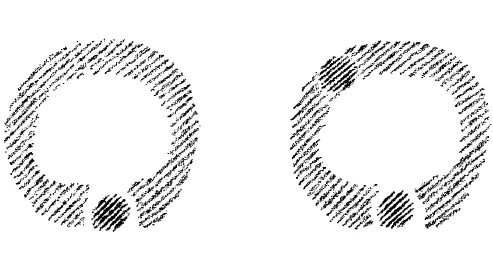
[ 37 ] So you can form a mental image of life with one folk-soul and life with the other folk-souls. The former is life in wakefulness; the latter is life in sleep. During sleep or during initiation, one is in communion with the interplay of the other folk-souls. A person cannot be alone with their own folk-soul unless they were to remain awake constantly. It is completely impossible for them, because then they would have to stay awake all the time. The difference is precisely that in the waking state one exchanges forces with one’s own folk-soul, whereas in the sleeping state one does not exchange with one’s own, but with the whole, with the circle of the other folk-souls.
[ 38 ] But there is a way to be united with a particular folk-soul even in sleep, to be influenced more by the forces emanating from that folk-soul rather than by the totality of folk-souls. Then, in sleep, one is, as it were, bound to this one national soul. This means consists in hating this national soul particularly while awake. A national soul that one hates particularly while awake is torn from the circle of the other Folk-souls, and it binds one, it ties one to its particular characteristics. If I may put it in trivial terms, my dear friends, it must be said—you will not hold the trivial expression against me in this case: to truly hate a Folk-soul while awake means condemning oneself to having to sleep with that Folk-soul! — This is truly an occult truth, albeit a shattering one, a truth about which there is really nothing to laugh. One must face this fact if one wishes, from a certain perspective, to gain an understanding of how Spiritual Science must influence, as it spreads throughout the world, the mindset of human beings, how it must permeate the entirety of their sensibility and feeling.
[ 39 ] I have deliberately expressed what I have to say regarding the relationship between the individual and the Folk-souls in a formula that makes you laugh. I had to do this because, as an occultist, one very often feels the urge to help people cope with what is most shocking and tragic by not stating it in all its tragic gravity—since that would overwhelm them—but rather by expressing it in a way that helps them accept it just like any other scientific mental image.
[ 40 ] Nevertheless, we must not overlook the fact that Spiritual Science shows us quite thoroughly to what extent we are willing to accept the world as maya. For as soon as we delve into Spiritual Science with the deepest seriousness, things become serious—I would say, they become truly profoundly serious—with regard to Spiritual Science and everything it is meant to be for humanity. One could say that today most people still have something against Spiritual Science because they cannot grasp with their intellect what Spiritual Science is actually meant to do for humanity. People today do not understand the fundamental essence of Spiritual Science. But it is not merely that they cannot grasp it with their intellect; there is something far deeper at work. When we delve deeper into the wisdom of Spiritual Science, it places demands not only on our intellect but also on our emotions and our will. It reveals humanity to us in a light in which we usually do not wish to see ourselves. It is not only our intellect that prefers to turn to maya rather than to reality, but also our will.
[ 41 ] If I may speak in trivial terms again, I can say: it is highly inconvenient to live with the deeper insights of Spiritual Science, because life must take on a different face under the influence of Spiritual Science. The moment one realizes what it means when, on the stage of life, Capesius and Strader stand facing each other in their spiritual forms and exchange words, yet in truth these words cause tumult and upheaval in the most elemental forces of the world; the moment one realizes what is happening in the world, in the entire cosmos, when a human being experiences this or that in their soul, then the full gravity of Spiritual Science becomes apparent, and only then does one realize how human beings wish to live not only with their intellect in maya, but also, in truth, merely with their will in maya. We need only develop this or that sympathy or this or that antipathy, and what we do there then becomes the cause of our being driven, as sleeping or dead human beings, into the realm of this or that being of the cosmos and bringing about this or that there. For through our association with this or that being of the cosmos, cosmic events occur once again.
[ 42 ] With such words, one seeks to convey a sense of how Spiritual Science truly aims not only to speak to people’s intellects, but to touch the whole person, the whole soul, because human life today is at a stage where the signs of the times clearly show us how this life must be grasped if it is to continue—by that wave which contains the spiritual mysteries and does not merely leave the human being in maya, but leads them into true reality. These are things we must consider if we wish to arrive at a deeper understanding of our Spiritual Science intent. And we will speak further about such things tomorrow and likely arrive at something connected to a fundamental idea of our building.