

Chance, Necessity, and Providence
Imaginative Insight and Processes after Death
GA 163
4 September 1909, Berlin
Translated by Steiner Online Library
Sixth Lecture
[ 1 ] If you think back to the appearance of the “blessed boys” in the final scene of Goethe’s *Faust*, you will recall the verse:
Boys! Born at midnight,
Minds and spirits only half-awakened,
As good as lost to their parents,
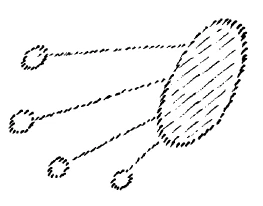
A gain for the angels!
[ 2 ] I have drawn your attention to some of the infinite depths contained in this final scene of Goethe’s *Faust*. But there is much more to it than I was able to explain at the time—and than one can explain at all within a limited time.
[ 3 ] These four lines, which I just quoted, also serve, in a sense, as the leitmotif for the deeper discussions in Spiritual Science that we intend to have here today, tomorrow, and on Monday.
[ 4 ] Today, by way of an introduction, so to speak, I would like to draw attention to how we can further deepen—in the true sense of the Spiritual Science—the statement from which I began my recent reflections here on the characteristics of sleep and wakefulness, as well as a few other topics. I said that one must always strive to find the correct perspective when confronting the facts of the world—this is what Spiritual Science, in particular, demands by its very nature. And I have pointed out how this correct perspective can initially be found only if one seeks it in the same way we have sought it for the alternating states of sleep and wakefulness. There we tried to understand how differently consciousness functions in wakefulness and how differently in sleep. But we can recognize much more here if we consider the way in which consciousness functions, whether it be consciousness in human beings or consciousness in other beings. In particular, this is also expressed in Goethe’s four lines:
Boys! Born at midnight,
Minds and spirits only half-awakened,
As good as lost to their parents,
A gain for the angels!
[ 5 ] This refers to a state of consciousness—initially of a human nature—in which those souls resided who were among the “boys born at midnight,” who were “as good as lost to their parents,” that is, who had died immediately after birth. But it is explicitly pointed out that these souls are a blessing to the angels.
[ 6 ] We shall see how this statement—that such souls are “a gain for the angels”—can only be understood if one considers the state of consciousness of those beings who are counted among the angels, the Angeloi. However, to make these matters—which are intended to lead us deeper into an understanding of the spiritual worlds—somewhat more comprehensible, let us first develop some preparatory mental images regarding them.
[ 7 ] I will assume that we know from various insights in Spiritual Science just how far removed from reality, in essence, is what we in everyday life call “knowledge” and “truth”—that is, the world of ideas we have on the physical plane. People are even glad when these insights—these worlds of imagination that we have on the physical plane—do not contribute anything to reality. In this, people see “the fidelity” of knowledge; in this, they see “the unvarnished truth”—that through our very process of cognition, through what we experience in our souls regarding things, we do not add anything to those things. Let us just consider for a moment how carefully modern science, in its own way, strives to ensure that nothing comes from the soul when it speaks of the world, but that everything is merely a reflection of what takes place outside. Let us consider how those who cobble together a worldview from all manner of daydreams strive to show that what they conceive does not originate from within themselves at all, but is dictated to them by some reality existing outside of them. This extends all the way back to the source of those alleged “occult insights”—of varying value—that certain people speak of. Fundamentally, even those who seek occult insights here on the physical plane are primarily concerned with ensuring that they themselves contribute nothing to the mental images they develop. How proud such people often are when they can say: This or that entity has appeared to them, this or that has been “dictated” to them, this or that has been mysteriously communicated to their spiritual ear. — Then these people are satisfied, for they feel that, in a sense, the mental images they have created are merely a pale imitation of reality, that they have produced nothing of their own. One could say: for the sake of the fidelity of the knowledge they seek, people strive to let this knowledge itself be, as it were, the fifth wheel on the wagon. Knowledge is not supposed to add anything at all to what is already there; then it is regarded as particularly faithful, as particularly correct.
[ 8 ] As for the relationship between cognition and reality—well, one can only gain a genuine, true understanding of this by gradually ascending from ordinary cognition on the physical plane to the higher forms of cognition. And we know that the next higher stage of cognition is what is called imaginative cognition. But if imaginative cognition is to have anything to do with reality, it cannot be acquired through our inner life within the physical body. In order to truly acquire imaginative cognition, we must be able to free ourselves from all dependence on the physical body. We must have reached the point where we no longer use the physical body as a tool. However, we still use the etheric body as a tool when we seek imaginative cognition. Indeed, for the imaginations to become truly concrete for us—for the imaginations to be present—it depends on our ability to make use of our etheric body in the process of imagination just as we make use of our physical body in perceptions on the physical plane. Now it becomes apparent that when the clairvoyant has progressed to the point where he has, so to speak, torn himself away from his physical body with his soul and uses the etheric body as an instrument of his cognition, what is otherwise called “knowledge” in the physical world, namely, knowledge sought by the human being who wishes to bring nothing of his own to bear on things, remains behind on the physical plane. Everything that, for example, today’s natural scientist strives for is, so to speak, set aside and left behind on the physical plane when one leaves the physical plane and ascends into the world of imaginations. Nothing remains of what today’s natural scientist or natural philosopher conceives as a world of swirling atoms—which, however, is a dream, not true reality, as I have often explained—nothing remains but the images of this world. This means that once one has left the physical plane, one realizes that the mental images of a world of swirling atoms left behind on the physical plane were merely dreams. Incidentally, the insights gained on the physical plane are of no direct use in the world of the imagination to which one has ascended. Mind you: they are of no direct use. We will see later how things stand in more detail, but we must ascend step by step.
[ 9 ] But I have already explained to you in earlier lectures that the spiritual power underlying thought undergoes a transformation when the clairvoyant detaches himself from the physical body as his instrument. I have told you that it is as if all thinking were to come alive, as if we were not immersing ourselves in such a passive world of thought as we experience on the physical plane, but rather as if all thinking were to come alive, as if everything were to begin, so to speak, to crawl, when we find our way into the world of imaginations. I once used a dramatic comparison—first in Munich—that when one enters this imaginative world, the thoughts that one was previously accustomed to sending here and there as entirely passive activities and commanding in this way transform as if one were to stick one’s head into an anthill or a wasp nest, and the thoughts would come alive, as if they were buzzing and swirling, and every thought were to take on a life of its own! One must endure this; one must endure it in such a way that one does not feel unfree when, as it were, one is torn away from oneself by this independent life of the thoughts.
[ 10 ] One gradually comes to realize that the insights gained in this way on the physical plane—the mental images that are merely reflections of external reality—fall away from one, as it were, like rain that falls back onto the physical plane and does not accompany one into the world of the imagination. These insights, these mental images—they fall away like that; they remain behind in the physical world. And what remains behind in the physical world is then nothing more than a memory. So one can look back on everything that has been acquired through the power of thought and remains in the physical world; but it simply remains behind. It is something finished, something that is no longer within one’s own control or power. So, to put it schematically, it really is like this:
[ 11 ] We would have our physical body here, and the human being would now step out of his physical body; then he would immediately see how his physical knowledge falls away from him, as if in drops, into the physical world. Physical knowledge is thus outside.
[ 12 ] This is very interesting and very strange. So when we ascend into the first spiritual, the imaginative world, we see our thoughts, as it were, dripping away from us, and then we see: the thought-forms become beings that initially make a peculiar impression on us when we truly see them. When we see these thoughts dripping away from us in this way, our initial impression is: This is something that has been torn away from you, something that has meaning only on the physical plane.
[ 13 ] Now, it is extremely difficult to form a precise mental image of what is leaving one, of what is trickling out of one. As soon as one ascends into the higher worlds, one can hardly gain true insight through anything other than careful comparisons. One must first figure out what to compare these thoughts—which have trickled out of the physical plane—with. These thoughts that have trickled out of the physical plane become very, very vivid; they become very alive, and one might say: the curious thing is that these thoughts, which one sees remaining behind on the physical plane, actually perform all sorts of dances—a kind of eurythmy. One can hardly find these thoughts in a state of complete stillness.
[ 14 ] I said, to perform a kind of eurythmy. This eurythmy is not the one we practice. But it is a kind of regular movement. Specifically, the thoughts have something very, very peculiar about them: they live inwardly when they are expressed in this way from within us. And this fact—that they live inwardly—is what makes them, I would say, worthy of being considered the first stage of clairvoyance, the first true stage of clairvoyance, comrades.
[ 15 ] If you’ve said something incredibly stupid in real life—that is, something very, very stupid—then you certainly don’t try to hold on to that stupidity for too long once you’ve realized it. Most people like to brush off their own stupid mistakes once they’ve realized them. A truly foolish thought—once it’s out there, it laughs! It laughs in proportion to how foolish it is! And you see the other thoughts in much the same way. These thoughts reveal an inner life, a very lively play of expressions; they convince us that we cannot utter a foolishness without that foolishness becoming immortal.
[ 16 ] Let’s use an analogy: We have no other way of understanding what these strange thought-forms, which appear so vividly, are really like than by using an analogy. We can only find it if we are able to see our thought-forms as I have just described. And if we are able to see our thought-forms in this way, then we are also capable of the other thing I now wish to express. For this comparison, we need the vast world of the gnomes—the entire gnome people—who govern all of earthly nature out there. These gnomes, who belong to the inorganic realm out in the world just as other elemental beings belong to the plants, to water, and just as still others belong to fire, to air, and so on—this entire world of gnomes is of the same character and possesses the same inner essence as these thought-forms. I would say: The gnomes belong to the same class as our thought-forms. But only those thought-forms that reflect mental images relating to the physical plane.
[ 17 ] You see, now we have a comparison. And that is why there is also a kind of inner kinship between the thoughts we have acquired on the physical plane and the world of the gnomes. This world of the gnomes, however, has a certain kinship with our understanding of the physical plane. I have already told you how people strive for their insights and perceptions to be quite accurate, and that insight is actually the fifth wheel on the wagon.
[ 18 ] In a similar way, the gnomes feel about the world in which they live. Truly, if I may put it this way, when one speaks with such a gnome—it is, of course, a euphemistic expression, but one can certainly use the term, for it corresponds to reality—when one speaks with such a gnome, he looks upon the world to which he belongs with extraordinary melancholy. For this world to which he belongs—he has, after all, very little to do with it. He has about as much influence on this world as a human being, with his external knowledge, has on the surrounding physical world. It is quite irrelevant to the surrounding physical world how we think about it using the thinking of the physical plane. A tree does not grow any faster or any slower when we think about it using the knowledge of the physical plane, or when we walk past it without thinking about it. Only we benefit from it—as I mentioned recently—when we think about the tree. But our thought is something indifferent to the tree.
[ 19 ] The world of the gnomes also stands in such an external relationship to the world to which it outwardly belongs. I would like to say: Although the world of the gnomes belongs to what we call the earthly world—the world of the solid—one can, when considering the world of the solid, disregard the world of the gnomes, just as one can disregard the watchmaker when considering the laws governing the watch. It is extremely important to understand, in the proper sense, a comparison such as the one I have often used—the comparison of the interconnection of the worlds with the mechanism of a clock. Anyone who wants to understand a clock today must understand it from the perspective of its own mechanism, and it would be nonsense for someone to say: “Well, the hands of the clock keep moving, so there must be little demons inside guiding the hands.” — There are no such demons inside. But if someone were to claim—because he understands the clock on its own terms—that the clock has nothing to do with the clockmaker who once made it, he would, of course, be speaking nonsense. Nor is it proof of the absence of a spiritual foundation for the world that one can comprehend the world on its own terms, or that the natural scientist is able to discover the laws of nature. We also find within the clock the laws by which it governs itself. So when it is said, “Since we find in nature the laws that govern nature, we do not need a divine being in the world”—this is just as thoughtless as if one were to say, with regard to the clock, that we do not need a clockmaker because the clock can be explained by itself.
[ 20 ] In the world around us—a world that is entirely self-explanatory—the gnomes have a role to play. They are something like a fifth wheel; they are companions to the world to which they belong, but they do not actively intervene in it. I ask you to consider the inner kinship between the world of the gnomes and our physical world of thought; then you will realize that one must begin to grasp something like the world of the gnomes by visualizing a state of consciousness. Then one will ask oneself: How do we know about this physical world? We know about the physical world by forming a mirror image of it, as I have explained. Just as the mirror image has nothing to do with what it reflects, so physical knowledge has nothing to do with that of which it is knowledge. It does not create in the physical realm. If one grasps this relationship of physical cognition as a state of consciousness, then—in sensing this superfluity of the mirror in relation to what is reflected—if one truly brings this superfluity to consciousness—one comprehends the mood that pervades the world of the gnomes. That is their mood. The gnomes therefore cannot comprehend how one can be connected to this world in any way other than by actually having little to do with it.
[ 21 ] If a person were clairvoyant and felt suffering and pain—as is only natural in response to certain events on the physical plane—and if the gnomes were to approach, as he could perceive them as a clairvoyant, he would find that the gnomes do not understand his pain. They do understand that one can generally feel a kind of sadness, a kind of depression, but they do not understand that one can be attached to physical existence; they laugh at that. And one could say: Many things that one considers valuable on the physical plane cease to be valued once one enters into contact with the world of the gnomes; for the gnomes thoroughly laugh at the values one attaches to various things on the physical plane!
[ 22 ] So one can understand the gnomes’ state of mind if one becomes aware of the state of consciousness that our physical perception has in relation to their world, which it represents.
[ 23 ] In contrast, when it comes to beings that have an inner kinship not with the earthly but with the aquatic—with everything that moves and trickles like water; one might call them Undines or whatever—one must keep something else in mind. Nor can one truly understand a plant by merely looking at it and forming an image of it as it happens to be at any given moment, for otherwise one might just as well have a plant made of papier-mâché. What one holds in one’s consciousness when one looks at a plant just once and creates a mental image of it does not, in reality, convey any true image of the plant. It is exactly the same with these beings. One has a true image of the plant only when one knows how it first exists as a root, then unfolds its first shoots, how it pushes forth the stem, develops leaves, produces flowers, how the flowers wither away, how the plant develops fruit, and so on. “One must observe the plant as it is becoming,” says Goethe in his beautiful poem on the metamorphosis of plants. In addition to what the plant itself is, other elemental beings live within it; within the plant live the mobile elemental beings that have an intimate kinship with the water that is taking shape, trickling, and stirring.
[ 24 ] And now you must come to terms with the fact that the imaginative world into which one enters once one has transcended the physical plane is one of such inner movement—I would say, like the ever-changing world of clouds, like everything that trickles, like everything that flows. The imaginative world itself has something flowing, something dynamic about it. So when, at the very first step one takes into the spiritual world, —I would say, one finds oneself confronted with the world of one’s own physical thoughts, and, if circumstances are favorable, one finds oneself facing the elemental world of the gnomes—one still lives within the world of the higher elemental beings just as, for example, a water wave lives within the water, which must also be counted as part of the water, which is a part of the greater body of water, the greater mass of water; that is how one lives within it.
[ 25 ] Of course, these things are difficult to characterize, but here, too, we must keep the state of consciousness in mind. When I say that our entire thinking begins to come alive, that we are carried away by thoughts that come to life—as if the thoughts we then have, which are imaginative thoughts, were to unfold their own life—then it becomes [understandable. Ed.]. There (see drawing on p. 95), the earlier, purely physical thoughts are left behind. The world left behind! Then we can say to ourselves: Yes, the gnomes also live in the world to which we have surrendered our physical thoughts. But we now live within this world of undines; it moves in the same element in which we find ourselves.
[ 26 ] Please take this very carefully into account: We step out of our physical body; we become estranged from our physical body. We begin to lead an inwardly dynamic life, like a constantly shifting, active trickle within ourselves. Everything comes alive within us as we feel ourselves in our etheric body. This is also how the deceased feels—only at a more measured pace, I would say—in the etheric body immediately after death has occurred.
[ 27 ] This experience of the imaginative world is merely a higher stage of what human beings originally experienced on the Moon. There, however, they lived through a dreamlike imaginative world, a dreamlike world of images. On Jupiter, human beings will experience a fully conscious world of images. One ascends to this world by living one’s way out of the physical body, as I have described. Just imagine this very vividly: The world of the senses fades away; what the eyes can see is no longer seen, what the ears can hear is no longer heard. Sensation also ceases. The thoughts that relate to the external sensory world are set aside in such a way that one could express it with the words: “You gnomes, I give you my physical thoughts as companions; in the meantime, entertain yourselves with my physical thoughts!” — But in its place, an inner life and weaving begins—a sharing in all that on Earth trickles, flows, and lives inwardly, just as everything fluid within the Earth lives and weaves—a sharing in the earthly realm that at the same time recalls the ancient lunar times. Something remarkable begins: In addition to what one perceives—that one knows one is living in a world of elemental beings belonging to the plants and to the flowing water—one knows something else quite special. One knows something very peculiar: one knows that one is living into a rhythm that is connected to the inner rhythm of the Earth, yet at the same time is connected to the rhythm of breathing. One gets a mental image: Our breath, as a rhythm, is intrinsically related to a rhythm of the Earth. In short, one senses something of the fact that one is becoming a part of the entire Earth organism. It truly feels as if one belonged to the Earth organism. One is moved by the Earth organism.
[ 28 ] It may well be, as Goethe told Eckermann on April 11, 1827: “I imagine the Earth, with its atmosphere, as a great living being engaged in an eternal cycle of inhaling and exhaling.” And just as in this inhaling and exhaling, that is how one feels inside it. In a peculiar way, one shares in the life of the Earth.
[ 29 ] And I would like to point out an important aspect that will once again show you how, particularly in the case of distinctive personalities, the Spiritual Science sheds a fruitful light on the findings of the natural sciences; how everything fits together so beautifully with the findings of the natural sciences. Here I must remind you of how Archimedes, the ancient Greek philosopher, once exclaimed his now world-famous “I’ve found it!”—“Eureka!”—while he was in the bath. What had he discovered? While in the bath, he raised his feet out of the water and then lowered them again, and he was then able to observe: When his feet are in the water, they are lighter than when they are out of it. And he discovered the important principle that every body in water loses as much of its weight as the weight of the volume of water displaced by that other, solid body. This is also the basis for the ascent of a hot-air balloon, which always loses as much of its weight as the weight of the displaced air. And the same is true when you have water and a solid object within that body of water: the object loses as much of its weight while submerged as the weight of the water it displaces, which occupies the space around it. It appears to lose this weight while submerged; when it lies on the bottom, it does not lose it, but it does lose it while submerged. This is a general principle of nature. It is, however, an important principle; for, you see, something extraordinarily important in human beings is connected to this principle.
[ 30 ] You’ve probably already heard how heavy a human brain is: on average, about 1,350 grams. So this human brain is quite heavy—it weighs almost one and a half kilos. Now, there are very delicate organs located beneath the brain. If you were to place one kilo on top of these delicate organs, they would be crushed immediately—they simply couldn’t withstand it. It is constantly the case that you carry a brain within you whose weight is such that it is bound to crush the organs lying beneath it, at the base of the brain. But it does not exert this weight of one kilogram; in reality, at most twenty grams press against the base of the brain! Why is that? Because the brain is completely suspended in cerebrospinal fluid. And in fact, the brain loses twenty grams of its weight because it floats in the cerebrospinal fluid—not the weight measured on a scale, but the weight that exerts direct pressure. It exerts only twenty grams of pressure on the base. You can create a quite correct mental image of this by imagining: the brain (as depicted), floating in cerebrospinal fluid, which then flows down through the spinal canal.
[ 31 ] Now imagine that this cerebrospinal fluid moves rhythmically up and down. Just as the diaphragm moves up and down during breathing, just as inhalation and exhalation occur in general, so does this cerebrospinal fluid—in which the brain floats—move rhythmically, and breathing participates in this process. And the entire thought process—insofar as the brain is its instrument—has its physical connection to the respiratory process in this way. As a result, the brain is at the same time an extraordinarily sensitive organ of perception for what acts in the earthly realm as continuous forces.
[ 32 ] Goethe, who had a deep understanding of these matters, absolutely refused to accept, for example, what crude meteorology says about the rise and fall of barometric pressure—which focuses solely on external air compression and rarefaction, on the rise and fall of atmospheric pressure. Goethe devoted an immense amount of his life to carefully recording barometric readings from various regions, and he sought to determine how regular the rise and fall of barometric pressure is across the entire Earth, and how this can be compared to what corresponds to an inner force of the Earth—an exhalation and inhalation of the Earth—with which, of course, all the regular and irregular phenomena of meteorology are connected. One need not—despite the regularity that prevails in the Earth’s inhalation and exhalation—be surprised by the barometer’s capriciousness; for after all, despite all the regularity of human breathing, people still catch colds and experience other conditions that serve as a barometer indicating that something is amiss.
[ 33 ] But this wondrous regularity in the Earth’s gravity, this inner life of the earthly realm—that is what human beings perceive. In physical life, it remains subconscious. But just as a person looks out into the world or listens with their ears, so too do they perceive, in the ceaseless ebb and flow of the cerebrospinal fluid, the mysterious inner processes of the “earthly beast,” about which Goethe says: “I imagine the Earth, with its atmosphere, as a great living being engaged in an eternal inhalation and exhalation.” Human beings perceive this shared experience of the Earth, but it remains in the subconscious. But as soon as one has the etheric body as an organ, one begins to perceive and participate in this life of the Earth; then one is a limb of this great Earth creature. It is truly only in our time that we have come to stand before such things, I might say, completely without understanding. Even Kepler—who is regarded as a great mind even by those who today would like to stifle all spiritual knowledge—speaks of the fact that our Earth, as he puts it, has a whale-like respiration in periods, a sleeping and waking dependent on the solar cycle, accompanied by the swelling and subsiding of the ocean. Pushed down into the subconscious and expressed through a physical process that has nothing to do with consciousness, human beings experience these things.
[ 34 ] Now you will no longer be surprised when your clairvoyant insight tells you: On the ancient Moon, where dreamlike clairvoyance existed, what has now receded into the interior of the organism—this peculiar connection between the external air and our thought processes, mediated by the blood and the ebb and flow of cerebrospinal fluid—was an external aspect of the organism. There, outside, was the moving air. There was the human being itself—since anything earthly did not yet exist; the Moon was still watery, or at most condensed water—like a swirl within the lunar matter. And then, within this swirling, lived that which perceived this swirling—that which floated there in the water as condensed water, as a human being, as a lunar human. What we were as lunar humans is still within us. And when one studies how the brain is immersed in cerebrospinal fluid and how all its functions work, and how this relates to the respiratory process, then one sees: Yes, it is true—there you actually stand, you legacy of the ancient Moon; you have merely withdrawn into the interior. There you are as the brain.—Inside the cerebrospinal fluid, it floats, surging up and down.
[ 35 ] From this one can see how the ancient ebb and flow of the Moon is reflected within it—that which was the physical aspect of the human being on the Moon. And over this, as it were, the entire sensuous realm—which is perceived through the external senses and the nerves—has spread out like an outer shell covering it. And what lies beneath has remained as a legacy from the ancient Moon.
[ 36 ] This is how things come together everywhere. They come together in a beautiful way. However, as long as one looks outward through one’s eyes and listens outward through one’s ears, one knows nothing of these connections through inner insight. But the moment one ceases to use the senses and sets aside one’s thoughts in the way I have described to you, one feels at one with earthly life, and one knows, through one’s inner constitution, that one is one with the earthly gravity of our ethereal life—that life into which one immediately passes upon leaving the physical body and entering the state of so-called ‘death.’