

Chance, Necessity, and Providence
Imaginative Insight and Processes after Death
GA 163
6 September 1909, Berlin
Translated by Steiner Online Library
Eighth Lecture
[ 1 ] If you consider how the transition had to be described—from perceiving the outer physical world to perceiving the next higher world, the elemental world—you will find that the worlds underlying our physical world, from which everything in our physical world arises, are very different from our physical world. Someone who may not exactly be a theoretical materialist, but—I would say—a “convenience materialist,” might say: “Well, why should I bother with all these worlds that Spiritual Science talks about? I’m content with the world in which I live; other worlds may exist, but I don’t concern myself with them any further.” —
[ 2 ] Such a statement is as unreal as anything can possibly be, for human beings are simply incapable of not concerning themselves with the spiritual worlds. And precisely when they deny them and say they do not concern themselves with them, they are very strongly under the influence of the spiritual worlds. For such a statement is never made without the person in question being led astray by Ahrimanic forces.
This little crowd never senses the devil,
Even if he had them by the collar!
[ 3 ] This is a statement that is certainly true, even if the person who made it intended it to be quite ironic.
[ 4 ] Human beings can never come to terms with the spiritual worlds by remaining ignorant of them, but only by getting to know them. However, we must take into serious consideration that the physical plane haunts not only our mental images, but also all our feelings and sensations. Even when we seek to approach the spiritual world, we usually feel the need—or rather, the longing—to find these spiritual worlds quite similar to the physical worlds, to be able to characterize them at least in such a way that we can make do with the mental images we have become accustomed to in the physical world. But I have often pointed out that the mental images we draw from the physical world are simply not sufficient to characterize the spiritual worlds. If, little by little, a greater number of our members could come to understand precisely what I have just said, it would be possible—and indeed necessary—to introduce more and more such new terms, as I attempted to do yesterday in a single instance: using “younger” alongside “older” and similar terms, in order to express the fundamentally different nature of the spiritual world even in our terminology. That would be absolutely necessary.
[ 5 ] I would like to draw your attention right away to something that can show you just how essential it is to find new words if one truly wants to immerse oneself in the spiritual worlds. And many would find it easier to notice how they begin to perceive the spiritual worlds relatively quickly if they could break free from the habit of clinging to words.
[ 6 ] You see, when a person passes through the gate of death, the first phenomenon, the first fact that occurs, is that they shed their physical body. And we know then—regardless of the type of burial chosen, which we will not go into now—that this physical body, so to speak, dissolves into the elements of the earth.
[ 7 ] So the physical body dissolves into the elements of the earth. We can indeed call this dissolution of the physical body “dissolution.” It appears to us that the physical body, so to speak, breaks down into its smallest parts, and these smallest parts are physically incorporated into the matter of the earth. That is the physical reality. We can therefore speak of a dissolution of the human body into the matter of the earth, taking into account everything we already know about matter and substance. We know, of course, that this dissolution is also a spiritual process. But that need not concern us further at this point. For what is important to us is what, so to speak, constitutes the physical reality that presents itself to us.
[ 8 ] However, it is extremely important that we realize that this dissolution of the physical body is by no means merely the process perceived by a person’s physical senses. This process of the dissolution of the physical body has a far greater significance than that. To gain an understanding of this, we must consider the following.
[ 9 ] Throughout the entire period between birth and death, while awake, a human being is contained within the physical body along with their ego and astral body. In the waking state, it was always the case, so to speak, that—if I were to draw the physical body schematically as a vessel for my own purposes (I could draw it differently, but that doesn’t really matter)—the astral body and the “I” are contained within it during the waking state.
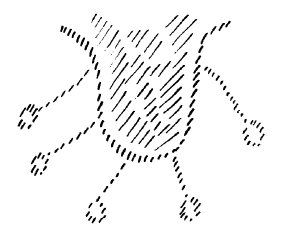
[ 10 ] Let us take a very close look at this fact: that we, with our “I” and our astral body, are housed here within the physical body; we are also in the etheric body, but let us focus on the physical body for now. When we sleep and our consciousness leaves the body, we are not inside it—I have described this many times. But then we also lose our sense of self, and even our awareness of the astral body in its normal state. And we only regain it when we, as it were, press ourselves back into the physical body. This pressing back into the physical body is what causes us, between birth and death, to actually feel ourselves as an “I” in a soulful sense; I could also say that we feel ourselves as a soul permeated by the “I.”
[ 11 ] At death, the physical body dissolves into the matter of the earth. This is significant. When we sleep—as I have often mentioned—the desire to return to the physical body lives on within us. This desire dominates us from the moment we fall asleep until we wake up; in a sense, we long to return to the physical body. Once we have shed it in death, we can no longer long for it or force ourselves back into it. From this, however, it follows that we can no longer develop this desire to return to the physical body. This desire, which we have from the moment we fall asleep until we wake up, now ceases. Something else takes the place of this desire. In its place arises the thought of our physical body, which emerges in our astral body and, in particular, in our I. We now look upon our physical body. It lives in our consciousness. It becomes a content of our consciousness. And the dissolution of our physical body into its elements now causes us to carry the consciousness of our physical body through the time that elapses between death and a new birth.
[ 12 ] But through this, we are aware of ourselves—as if recalling our physical body—as a “self” throughout the entire period between death and a new birth. Thus, the awareness of the physical body takes the place of actually having the physical body. A state of consciousness, a phenomenon of consciousness, takes its place. This entire experience of the physical body that we have from birth to death is replaced after death by the consciousness of our physical body. And through this consciousness—that is, through a purely spiritual state—we remain sufficiently connected to earthly life.
[ 13 ] Now we know that the next phenomenon, the next event that occurs after death, is the shedding of the etheric body, the separation from the etheric body. Through the etheric body—as I already hinted at yesterday—we are connected to everything beyond the Earth. Just as we are connected to the earthly realm through the physical body, we are connected to everything beyond the earth through the etheric body.
[ 14 ] When the etheric body detaches itself from us—as you can now gather from the various details I have given you—it passes into the etheric world. The physical body passes into the physical world of the Earth; the etheric body passes into the etheric world.
[ 15 ] But it would be entirely wrong to think of this passing of the etheric body into the etheric world as a dissolution similar to the transition of the physical body into physical earthly matter. It is not a dissolution; rather, what the human being has worked into this etheric body remains within it: the etheric body expands. Admittedly, only in special cases—when it has been kept together while still young, as in the case of people who died young—can it still have a special task, as I have explained in the course of these lectures. But in general we can say: The etheric body passes into the etheric world; but in such a way that it carries into the etheric world what it has received between birth and death, so that the etheric world is enriched. Through what we have given to the etheric body, we enrich the etheric world after our death. We cannot, therefore, speak of the etheric body dissolving into the ether; rather, we must try to conceive of a process entirely different from anything that can occur in the physical world. And it is good to choose a word for this that does not correspond to any physical process. I have thought a great deal about this, and if I want to describe the way in which this etheric body is absorbed into the etheric world, I could best describe it as “integration.” The physical body, then, undergoes dissolution; the etheric body undergoes integration. That is to say, what we have given it is bound into it, connected with the entire etheric world; bound into it = “inbinding” as opposed to dissolution. Thus, it is good when we try to use an expression for a reality that does not exist in the physical world—one that has no application in the physical world and that, in a certain way, describes what is actually at stake.
[ 16 ] One can therefore speak of an integration, because the following occurs: Let us assume, for example, that someone had communicated this or that to their etheric body during their lifetime. The etheric body, as I told you, is connected to everything supersensible. So to the extent that a person takes in something during their lifetime—and every person does this, even those who are materialists, though they are simply unaware of it—that is of a supraterrestrial nature, it lives within this etheric body. It is now incorporated into this etheric world, bound into the etheric world. And if one observes the etheric body shed by a human being with an awakened soul’s eye, one finds within it information regarding a very specific question; I would say, one finds an answer to the question: What could the heavens—if I use the term “heavens” to encompass all that is supernatural—make of this human being during his or her life for themselves, that is, for the heavens? What could the heavens make of this human being for themselves?
[ 17 ] This is so extraordinarily different from what the Earth can make of a human being for physical observation. When we look at the earthly remains of a human being, to the physical eye it is a small heap of earth, just like any other earthly substance. And so, in a sense—though it is not entirely correct—one assumes: “Oh, the Earth would be the same even if this small heap of earth from the human physical body had not been incorporated into it upon the person’s death.” One assumes that it does not mean much to the Earth that, during a person’s life, this small piece of earth was taken from it—because the person had it within them—and that it has now been returned to it.
[ 18 ] But one who contemplates the relationship of the etheric body to what I have just called “the heavens”—a relationship that comes into being after death—has a different view. They could not help but say: For everything that a human being has earned during life through their thinking, feeling, and willing, through their work, through their entire being, and for whatever of what has occurred on Earth has flowed into their etheric body through them—for all of this, the heavens, in receiving it, are full of gratitude! — And a cloud of gratitude overwhelms the one who, I might say, turns his clairvoyant eye toward an etheric body cast off by a human being. The exact opposite, I might say, of the Earth—which is devoid of all gratitude—is present on the part of the heavens! When we look upon human graves, we do not at first hear a word of gratitude from the Earth that it has received back the substance it had to give up to form the human being. The heavens resound with gratitude toward us for all that the human being has bestowed upon his etheric body during his life. The heavens have bound the human etheric body within themselves. What was hinted at yesterday is also connected to such things: that when we consider Spiritual Science in the true sense of the word, every spiritual-scientific concept becomes morally deepened within our soul, takes on an ethical nuance, and at the same time permeates us with the warmth of life.
[ 19 ] Now let us consider what we have said in these lectures: that when a human being ascends into the spiritual worlds—and he does so even after death—he then possesses a completely different kind of consciousness, a completely different way of perceiving things. I have already hinted at how inwardly flexible thinking becomes. But this is only the first stage of the ascent into the spiritual worlds—that this thinking becomes inwardly flexible. As one ascends further into the spiritual worlds—and human beings do ascend into these higher worlds, in the sense I mean, as soon as they have shed their etheric body, that is, shortly after death—consciousness takes on a completely different character than it does here in the physical world. Here in the physical world, we have objects outside of ourselves. We perceive objects in the physical world; we stand outside these objects. When we have ascended into the spiritual world to the extent I have just described, we no longer face such objects; rather, that which is most impenetrable in the physical world—the inner soul life of animals and human beings—becomes the most permeable thing for the beings of the higher worlds. We participate in the soul life of the higher worlds. We do not have a world of objects, a world of things outside of ourselves: we have beings outside of ourselves. That is what is significant.
[ 20 ] Isn’t it true that when we stand side by side here as human beings on the physical plane—you standing here, me standing there, with the table between us that we both reach for—it is an object, a thing? You must now set aside all such material things. You must imagine yourself in a world of souls, and how you come together with these souls in such an inner way as you do here on the physical plane with your thoughts and your feelings. That is what you must imagine. With a being from the hierarchy of the Angeloi, you do not come together with it by taking its hand, but you come together with it by living together with it in the same way that you live together here with your thoughts and your feelings. I have often expressed this by saying: These beings enter into our thoughts and feelings. Indeed, we are expressing it correctly when we say: these beings live within us.
[ 21 ] You will find what I am saying right now already described in my *Outline of Esoteric Science*. It is already fully stated there that after death we are in a much more intimate communion with the other beings—who, if I may put it that way, also live on after death—than we can ever be with human beings on Earth, because we are as intimately united with them as we are with our own thoughts and feelings, and also that we draw near to the dead with our souls here on Earth, if we attain this through what has been said: through reading aloud and the like. — We will have to make this our own in order to truly understand how the dead really come to us. We will have to strive to achieve this inner coexistence with them, just as we coexist with our thoughts and feelings.
[ 22 ] Just how little people are inclined to engage with these higher concepts of internalized reality is best illustrated by materialistic spiritualists. It may be a strange term—“materialistic spiritualists”—but a large portion of spiritualists are, in fact, far more materialistic than ordinary materialists! Ordinary materialists say: there is no spirit, and they call matter “matter.” But a large portion of spiritualists want—in order to see the spirit—to see the spirit in a material way, whether it appears to them in a glow of light, that is, materially, or whether it somehow touches them. There are, of course, various nuances involved in this “contact” with spirits. This amounts to a materialization of the entire spiritual world. We must cultivate the ability to postulate a deeper reality than that which is conveyed externally through the senses. It even becomes completely absurd when the spiritualist—the materialistic spiritualist—ultimately wants to see the dead with his physical eyes, even though he cannot assume that after death he will see the dead with physical eyes; for he has, after all, laid aside his physical eyes after death. If one wishes to see a deceased person, one must strive to see them as one oneself would be seen as a deceased person—that is, without one’s physical eyes, of course.
[ 23 ] This fact—that one must approach the spiritual world with a completely different mode of consciousness than that used for the physical world—is usually expressed as follows: One perceives the physical world objectively, while one perceives the spiritual world subjectively; that is to say, one perceives the spiritual world by extending one’s subjective experience to encompass it. — It is a form of perception far more intense than physical vision; yet it is precisely a subjective perception, a subjective seeing, an inner connection with what one perceives. In more recent times, very few people have actually sensed that this is how one must speak of the spiritual world. And those who did sense it struggled with the words. One who tried to express, even just a little, how one must relate to the spiritual world went too far right away; I mean Berkeley. It became clear to him that even when perceiving the so-called external material world, a person cannot actually say, “There is something behind what is perceived,” but can only say: “When I open my eyes, I see colors and so on; when I listen with my ears, I hear sounds and so on; but whether there is anything behind what is perceived, apart from the perception itself, is something about which nothing can be said.” — It seemed downright absurd to him to say anything other than: “To be is to be perceived.” There is no other way of being than to be perceived,” said Berkeley.
[ 24 ] He was both right and wrong. He was right insofar as it is a crude and clumsy mental image to believe that there is some special matter lying behind what we perceive, for what we perceive is the world. To be is to be perceived; therefore, there are only minds and their perceptions. For Bishop Berkeley, the matter—if I am to put it in radical terms—is this: There are so many people here; if we judge from the standpoint of ordinary, everyday life, we say, “There are one, two, three, four people sitting there, and so on; they have their bodies, and so forth.” — But that is not true, Berkeley would say; in reality, only souls are there; the bodies are merely what the souls perceive. The bodies are merely an illusion; souls are there! That is to say, every soul that exists has within itself something like an external dream image of all the other bodies; but Miss M., for example, should not believe that Mrs. K. is sitting there in her body; rather, Miss M. has the image of Mrs. K. in her soul, and Mrs. K. has the image of Miss M. in her soul. The other is an illusion; souls are what exist. To be is to be perceived.
[ 25 ] Bishop Berkeley was right only in a certain sense, but he was not a scholar of Spiritual Science, and therefore he could not grasp the following point, which I can most easily illustrate to you in this way. Suppose, for a moment, that Mrs. K. were not looking at Miss M. right now, but were instead looking at some event that took place five days ago—an event that just came to her mind. An event is not a mind, after all—any event, such as her having broken a pot five days ago. Let’s assume that this were to come to her mind right now: the entire image of how the pot slipped from her hands back then, how it fell, how it shattered into a hundred pieces—this entire image would now arise. One can certainly say: this is not another soul. Nevertheless, if you take the whole soul as it is now, this event that is now surfacing in the soul is something that, in a certain sense, is perceived objectively just as the other object that is outside is; in one case, what stands before the eyes is looked at; in the other, a past event surfaces and becomes conscious. It is not inside the soul now either; it has first gone out of the soul, for otherwise you would have had to think about this breaking of the pot every hour for all five days, as long as you were awake. Truly, this image—let us assume, for the sake of argument, that it is for your own good—was outside your soul, and now this image is resurfacing. It was just as much outside the soul as anything else was outside. It was once inside, but then it left the soul. Here you have something that is not a spirit, for this breaking of the pot is neither a spirit nor a soul, yet it enters the soul; it is something objective.
[ 26 ] Now, if you combine this with something I have discussed in these lectures—namely, that what exists out there in the world is actually the past, something long forgotten—you will be able to form a picture of what the external world actually is, insofar as we perceive it as the external world and not as another soul.
[ 27 ] If I were to draw a schematic diagram: Imagine for a moment that we have a soul here; within this soul there are past events—let’s assume, for example, the event of the broken pot; somewhere else there is another event—I don’t want to describe every single event. The sphere of what is immediately conscious—let that be within this circle. The fact that the broken pot can be formed as a mental image in memory is based on the fact that it has already left consciousness; this event merely returns to consciousness via memory. It has been pushed down into the objective realm. Just imagine the longing some people have to push something like this broken pot down into the objective realm, to avoid remembering it as often as possible, to prevent it from rising back into consciousness as much as possible! Things can be pushed further and further into the objective realm. And once they have been pushed out entirely, they exist outside of it. Except that the things and events around us were already thought by beings during the Moon era and the Sun era, and were then pushed down into the objective realm, where they now exist. Everything we have around us was once thought, once felt, was once in consciousness, and has since departed from consciousness. We could say: the objective world is what the gods and spirits have thought and forgotten, what they have set forth from themselves.
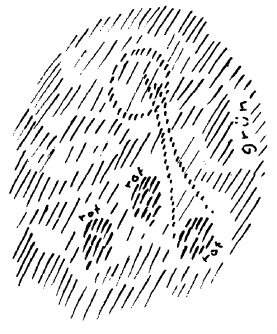
[ 28 ] So, of course, Berkeley is wrong on the other hand when he says: there is no world out there at all; there are only souls. For what is out there has simply been forgotten. Of course, your bodies have not been forgotten by every single soul that is here, for the initial foundations have already been laid—conceived by spirits on ancient Saturn, then objectified, and so on. We must simply be clear about this: that consciousness precedes being, that what exists out there first sprang from consciousness, just as what we have in our memory as the first stage of objectification. For the individual human soul of today, objectification extends as far as the broken pot. For the beings who have gradually developed through Saturn, the Sun, and the Moon, it extends so far that the thoughts once conceived can now confront us as solidly as the rocks of our mountains, and that—because we are connected to the entire spiritual world—we perceive what the gods thought in times past.
[ 29 ] But now, as you consider this, it will also become clear to you how important it is that an objective world be set apart from the subjective worlds. For I have often emphasized: just as our memory must remain intact if we are to preserve our sense of self at all, so too must the gods create a world out of themselves. Just as we carry within us the images of memory from the time as far back as we can recall, so the gods have brought the entire world into being from within themselves in order to have their consciousness in this world. And so the human being brings forth his physical body and his etheric body in order to attain a higher consciousness through this act of bringing them forth.
[ 30 ] Death—as I have already emphasized from a different perspective—is a terrible thing only when viewed from the standpoint of the physical world. Viewed from the standpoint of the spiritual world, where we find ourselves immediately after death, death is the starting point of all subsequent consciousness! As we look back toward death, the consciousness we have between death and a new birth is kindled within us. And just as little as a person here in the physical world can look back on their own birth, so too do they continually look back after death toward the most glorious moment of their last life. It is, as it were, the case that when we look back in time after death, we eventually come up against death itself; and this encounter with death, which stands before us as in a perspective—a perspective of time—gives us the sense of self, the enduring sense of self after death, which is thus also a reflection, mirrored precisely by the fact of death.
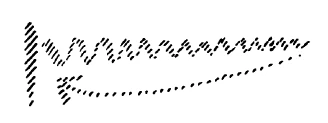
[ 31 ] Thus, as we pass through death, we grow out of the perspective that compels us to focus on objects in the physical world, and we grow into a perspective in which we feel as follows: We are increasingly absorbed by spiritual beings; we are increasingly united with other spiritual beings. Here, as long as we live in our bodies, our thoughts, our feelings, and our impulses of will encompass only ourselves. As we pass through death, our thoughts, our feelings, and our impulses of will—which belong to other spiritual beings—pour into the world; they live within us. We multiply ourselves. Our consciousness expands. From a state of unity, we become multiplicity—unity within multiplicity; and multiplicity reveals itself by embracing our unity within itself.
[ 32 ] Growing into the world that we usually refer to as the world of hierarchies—that is what occurs as soon as a person enters the spiritual world. So while a person here on earth speaks of objects and of experiences they have with objects, the deceased speaks only of beings and of the messages these beings convey to them—about being together with other beings, about strong and weak connections with other beings, and so on.
[ 33 ] One can only try, little by little, to give—I would say—a reasonably adequate mental image of what this “growing into” the spiritual world is like. Now that we have tried to gain a more precise—or at least somewhat more precise—understanding of the nature of this growing into the spiritual world, let us turn once again to the other fact we considered yesterday: the death of a person in youth and the death of a person who has grown old.
[ 34 ] A person who dies in youth passes through the gate of death; their physical body dissolves, and their etheric body is bound up. But when a person has passed through the gate of death at a very young age—in boyhood, in girlhood, or indeed in childhood—they take with them a particularly strong mental image of the inner cohesion of this marvelous structure that we must perceive as the human physical body. This, in fact, is one of the most remarkable inner experiences of a person who dies young: that they carry through the gate of death a strong inner, imaginative awareness of the marvelous structure of the physical body. There is truly nothing one can conceive of that is as wonderfully magnificent in its construction as the human physical body—this great work of art, this greatest wonder of the world. I have spoken about this on several occasions. But it is precisely this that fills the young person who has died.
[ 35 ] And this mental image—this inner filling with such a mental image—first brings the youth who has died into contact with the beings we call members of the Hierarchy of the Spirits of Form, so that his soul grows intimately together with them. And so we see that those who have died young are received with special favor and grace by the Spirits of Form. Furthermore, they grow together inwardly with the spirits from the Hierarchy of the Spirits of Will. I would like to say that these Spirits of Will and the Spirits of Form stand in such a relationship to the world that they continually call out to those who enter into their mysteries: “Ours are those who must leave their lives on Earth early; for what they bring us is an essential ingredient in our work on the process of humanity’s becoming.” Those who die after reaching old age are less permeated by the wondrous structure of the human body; rather, they are more deeply permeated within themselves by the wondrous structure of the entire universe, by the wondrous structure of the entire cosmos. The thoughts and feelings of the deceased who have reached old age are directed more toward the outer world, and they merge particularly quickly and easily with those spirits we call the spirits of wisdom. It is these beings who receive him with kindness and grace. And one gets a strong impression—if, I might say, one examines this in detail—of how the human being lives together after death with the higher spiritual beings. Truly, when one lovingly delves into what Spiritual Science can explore, it does not remain at the level of empty abstractions, of vague talk about the spirit, or of vague talk about the human being being received by a spiritual world; rather, one can point out how one person is received by the spirits of movement and the spirits of wisdom, and another by the spirits of form and the spirits of will. And then one gains a mental image of how, deep down, everything that happens—viewed from a higher perspective—is good, just as that which remains incomprehensible from the perspective of the physical worlds becomes fully comprehensible to us from a higher perspective. For the spirits of the higher hierarchies know what to do not only with those who have grown old, but above all with those who have died young. No one has lived in vain! And the entire process of humanity’s development could not exist if everything did not happen just as it has already happened once before in the world.
[ 36 ] But one can only gain an understanding—and an ever-expanding understanding—of all these things by truly engaging with Spiritual Science, and by truly allowing oneself to be imbued with the awareness that it is actually only our time that is so devoid of spirit, and that in our time, the only ones who truly think materialistically are those who do not actually think at all, those who do not want to think.
[ 37 ] I have given you here an example of a philosopher who truly thought, and from whom I have quoted a saying as testimony to where a truly thinking philosopher arrives—that is, one who does not know everything, but reflects on how much a human being can know from what can be experienced on the physical plane. One might well say: The more foolish people are, the smarter they usually feel. The smarter they are, the more they know what is necessary to discover the meaning of life. That is why, some time ago, I read to you a statement by a man who thought deeply, who says that someone might assert that a chicken egg contains not only egg white and yolk, but also a supernatural specter—in other words, someone who has truly taken the trouble to engage in philosophy, who knows how little one can know with ordinary mental images, says: “Someone might claim: ‘A chicken egg contains not only egg white and yolk, but also an invisible specter. This specter takes on a physical form; and once it has completed its materialization, it breaks through the hard eggshell with its pointed beak, immediately runs toward the grains scattered before it, and pecks them up.’” — There is really nothing to object to in this strange assertion other than that the preposition ‘in’ is used here in an unusual sense—namely, not in the geometric sense, but in the metaphysical sense. Understood in this way, however, it is entirely correct.”
[ 38 ] The same philosopher, Otto Liebmann, who was a thorough thinker but chose to limit himself to the physical plane, goes on to mention in his book *Thoughts and Facts*—I cite this because it illustrates how people who truly think can see what can actually be achieved today with thinking that is bound to the external world: “Not only children, but also superstitious barbarians and fanciful poets—and even enlightened thinkers—have always regarded the physical world as something thoroughly animated. Thales, who attributed a soul to the magnet and amber because of their attractive force, is—like other natural philosophers of antiquity—said to have declared that the cosmos is animated and that everything is full of gods: [GREEK PASSAGE]. Aristotle, *De Anima* I, 5. Plato calls the celestial bodies divine animals and speaks in the (Timaeus> of the world soul. Aristotle and the Peripatetics posited astral spirits; and the doctrine of the animacy of celestial bodies has been passed down through a chain of tradition—one that has likely never been completely interrupted—right up to modern and contemporary times. Kepler speaks of the
[ 39 ] Gustav Theodor Fechner did indeed say quite a few things in jest. He was, in general, a man who was always in the mood for joking. As you know—I’ve mentioned this before in my lectures—he wrote the book *Professor Schleiden and the Moon*. Gustav Theodor Fechner set out to investigate the moon’s influence on weather conditions in greater detail, and he wrote quite a bit about it. The materialist botanist Schleiden made fun of it quite a bit. But then Fechner, for his part, refuted Schleiden in his book *Professor Schleiden and the Moon*. This is the same Fechner who, long ago, back in his youth, once lambasted the flippancy of the scientific mindset in a lovely little treatise. There is a short treatise by Gustav Theodor Fechner in which he takes a strictly scientific approach. He develops the argument in all seriousness, proving that the moon is made of iodine! His aim is to show that, using scientific reasoning, one can prove with absolute certainty that the Moon consists of iodine! Just as one can prove other things with absolute certainty through scientific reasoning, so too could one prove—using exactly the same lines of reasoning used to prove those other things—that the Moon consists of iodine.
[ 40 ] And when the men simply could not agree on Fechner’s claims regarding the moon’s influence on weather conditions, Fechner said: “Then perhaps we’ll let our wives take care of the story!” Circumstances were simpler back then; to get water for washing, people would set their buckets out in the rain. And then Gustav Theodor Fechner said to himself: “Good old Professor Schleiden simply refuses to believe that it rains less during certain phases of the moon than during others! Perhaps we can prove it indirectly through Professor Schleiden’s wife!” Since her husband couldn’t care less whether weather conditions are one way or another during certain phases of the moon, his wife—Professor Schleiden’s wife—could set her buckets out in the courtyard during the time when Fechner had calculated that less water would fall, and Professor Fechner’s wife would set her buckets out during the time when he had calculated that more water would fall! — I won’t go into further detail about how the wives couldn’t agree on this as easily as their husbands, because Professor Schleiden’s wife was, after all, somewhat jealous of Professor Fechner’s wife, since, due to her husband’s prejudices, she always received less water than Professor Fechner’s wife.
[ 41 ] The above quote from Otto Liebmann continues as follows: “But in view of our complete ignorance of the roots of spiritual life, one might nevertheless raise the question that the serious Lessing poses at the end of his *The Education of the Human Race* in contrast to the ancient Egyptian, ancient Indian, and Pythagorean doctrines of the transmigration of souls: ‘Is this hypothesis so ridiculous simply because it is the oldest? Because the human mind, before it was scattered and weakened by the sophistry of the school, immediately fell for it?’
[ 42 ] What more could one want? That no amount of sharp thinking can protect one from accepting the doctrine of the transmigration of souls—Otto Liebmann states this quite bluntly! Thus, those who have learned to think know just how little thinking that is limited to the physical plane can shed light on the true roots of life.
[ 43 ] All these things naturally show—to anyone who is truly able to respond seriously to the inner impulses of our Spiritual Science movement—just how necessary this movement is for our present and for the near future, and it does no harm for us to familiarize ourselves again and again with the seriousness that must underlie our movement. It is this seriousness, after all, that must truly hold us together. Indeed, we must reflect again and again on the seriousness of our movement in order to be able to have the right attitude toward many of the difficulties it faces from both sides.
[ 44 ] And in this regard, I truly want to leave no stone unturned in urging you to consider the seriousness of our movement, and that we should really strive to do everything we can to demonstrate this seriousness to the outside world and to uphold it.
[ 45 ] It must be said that the carelessness of some members in one direction or another actually makes it quite difficult for our movement to breathe, and it takes a great deal of inner struggle when one must resolve to speak out, after all, about the intimate, significant, and serious truths of Spiritual Science. And time and again, one can observe that some people take the whole context of our cause far too lightly. I do not wish to point out specific details today of how some members make life quite miserable and difficult for us by behaving, I might say, in the most careless manner as members of the Society. I am not speaking of private matters, but we are, after all, living in extraordinary times, and it should not be the case that a large number of members fail to consider that it is simply inadvisable to write about all sorts of things across all sorts of national borders today! That’s not necessary, after all; I’m not talking about private matters—those, of course, are none of the Society’s business. This is obviously not about anything wrong; the Society has no aspirations that could involve anything wrong. But the way certain matters are handled by members naturally gives rise to difficulties. And more and more difficulties are arising! We really need to give some thought to what makes our movement unique. We must cherish this movement as something sacred to us. We won’t make any progress if we always apply the same kind of judgment to our movement that is otherwise common in the outside world. It may be convenient for us, but we won’t make any progress. We must always bear in mind that we are surrounded by a world that, for a wide variety of reasons, is deeply hostile to our movement in the truest sense of the word, and that seeks to interfere wherever it can.
[ 46 ] To find the right path, it is essential that we view the outside world with the proper attitude toward our movement. We should not be able to forgive ourselves if we do not observe the outside world attentively and keenly enough. If we do not do this correctly, all sorts of things can make our lives infinitely miserable. We would then make it impossible for the movement to continue in this way. You see, we really must not be able to brush things off lightly. We must not overlook the fact that our movement has enemies of a very peculiar kind.
[ 47 ] I have often emphasized that it gives me very little satisfaction when, time and again, members come and point to this or that, saying: “So-and-so spoke from the pulpit; he spoke in a thoroughly Theosophical manner!” That is our worldview!” — Most of the time, what follows—what is deemed “entirely Theosophical”—is utter nonsense. — But we must not take our movement so lightly, as is often done. You see, we need a movement today that takes things in the world seriously; this is attested to by hundreds and hundreds of facts that we can always observe. I want to cite a few from just the very last few days. I only hope that no member sitting here will be so careless as to pass on what is being said here among us.
[ 48 ] “Recently, at a teachers’ conference held in this area, someone spoke who—without knowing anything about our movement—had already written about it. The organization in question was asked to at least hear from one of our earliest members and, if possible, allow that person to respond. The manner in which this was rejected is a telling reflection of our times. The letter refusing to allow one of our members to participate at an event where one of our neighbors spoke about our movement contains, among other things, the following sentence: ‘... since, if someone from your group were to come to us, they would likely feel that the person speaking on our behalf knows far too little about your movement, we ask you not to come—so that the person speaking to us does not have the unpleasant feeling that someone from your movement is present; for we would not have time for a discussion, and it would otherwise only create an uncomfortable atmosphere, since the speaker does not know you.”
[ 49 ] This is the reason for the rejection—one might say, “Bring out the slate.” We must say it again and again: it is possible today for someone to say, “We don’t want any of you here because someone is speaking about you who knows nothing about you.” That is possible, my dear friends. This is a fact!
[ 50 ] The world has come to such a state that people not only think such things, but write them down—and use them to justify their rejection! Such is the morality of our time. But this is not limited to this single instance; it is everywhere. Unfortunately, we had to decide to show the building to that same group so that people couldn’t say we were just as rude to them as they were to us. Unfortunately, it seems that a eurythmy class was taking place at the very moment the building was being shown. I do not wish to speak of what this eurythmy evoked in the sordid imaginations of those to whom the hall was shown. I am sorry that it is necessary to say these things. I am not saying them to characterize or criticize the outside world, the people out there. They have only my deepest sympathy. Rather, I say this for your sake, so that you may accustom yourselves to finding the right perspective and to knowing that opposition, hostility, and malice lurk everywhere, everywhere. It is not enough that something is sacred to a number of people today; that by no means protects it from being dragged down, pulled down into the most unholy of places.
[ 51 ] If, for whatever reason, there is hatred, we must bring this to our awareness. This is necessary because we are far, far too careless about the way we position ourselves in relation to the outside world. Truly, it is uncomfortable to adopt the right attitude toward the outside world; but it is certainly not good to close our eyes and remain unaware of how hatred and hostility lurk everywhere.
[ 52 ] Above all, we must be clear about this: No objective opposition can ever harm us. We can handle objective opposition just fine. But it becomes difficult when the opposition is of such a nature that one actually has to wash one’s hands every time one faces it—as is the case, for example, with that factory in Leipzig, which does not operate on the basis of objective reasons but rather relies entirely on slander presented as plausible arguments. Even if you write to them objectively, they respond from a mindset that belongs on the same level as the one I just described.
[ 53 ] One can foresee that precisely because—I would say—the world takes notice of us, simply by the fact that our building stands there, opposition upon opposition will be provoked; for envy and resentment also grow tremendously the more the building is noticed by the world. For us, however, this gives rise to very special obligations.
[ 54 ] If we work the way we used to—sitting here and there among the general population, scattered in small groups—then things go more smoothly. But here we are all gathered together in such large numbers, and we must be extremely careful not to give anyone a reason to take an interest in us. They’ll find something here or there anyway, because even when the Leipzig smear campaign couldn’t make any true claims, it still made allegations. But since we are all gathered here—so many of our kind living together in one place—we must try not to give any cause that might create the appearance that we are doing something wrong, which could provide grounds for taking a stand against us. In this regard, it must be said that not all of our members always take this point of view into account. It is truly difficult to talk about these things. I do not wish to say more than this today; but if only I could impress upon each of us, time and again, the full gravity of our cause, I would do so. If only we did not have to notice, time and again, how, in the eyes of the outside world, one or the other—and it is enough that it is just one or the other—still repeatedly falters, out of personal courtesy or for other reasons that essentially boil down to convenience, and ends up doing this or that. It happens again and again. We must always bear in mind that we are sitting here, with so many of us gathered together, as if in a glass house. I don’t know to what extent I am being understood. If I am not understood, I will have to speak differently another time. Otherwise, it is not possible to advance our movement in the appropriate manner. Truly, it is difficult to have to remember that we are here, essentially to erect the building, and that our thoughts must therefore be focused on the construction. Those who are working seriously here must work on the construction, and I cannot express how repulsive it is to me to even think of taking time away from what must be devoted to the construction in order to rebuke a fool who, out of ignorance, spreads claims about our teachings that are directly contrary to the truth. A well-meaning man told me recently that he had been told that such-and-such and such-and-such were so-and-so and so-and-so! So this or that does happen, which time and again creates the appearance—which others take for reality—that our members do not behave toward the outside world as they should. It is truly necessary that we safeguard our cause and, in addition to trying not to give the outside world even the slightest opening for attack, refrain from engaging in propaganda. Those who engage in propaganda here in the immediate vicinity are, in fact, enemies of our cause, insofar as this cause is connected to the construction. It is also completely unnecessary. Those who are meant to come to us will come anyway. Furthermore, we should avoid talking about all sorts of clairvoyance to people on the outside who don’t understand the matter. I may be speaking a language that is incomprehensible to many, though perhaps understandable to some.
[ 55 ] It will likely still become necessary, however, to speak in a way that is increasingly understandable. And since we live together here in a small community, we must feel a sense of obligation to protect our cause in an appropriate manner. Just as the private affairs of individual members are none of our business—precisely because we live together in a small community—we cannot help but take some action to protect the movement when individual members do things that are extremely harmful to it, at least insofar as they are connected to the construction project. We have many members who work very hard here. Why should the work of these hardworking members be made so much more difficult simply because some people do things that cause difficulties for the movement? Perhaps more on this another time.”