

The Spiritual Unification of Humanity
through the Christ Impulse
GA 165
6 January 1916, Dornach
Translated by Steiner Online Library
Transformations of the Human Elements of Feeling and Thought from the Fourth to the Fifth Cultural Epoch I
[ 1 ] It falls to me to speak a bit about the difference in the modes of thought and imagination of our fifth post-Atlantean epoch compared to the fourth post-Atlantean epoch. Specifically, I would like to begin today by indicating with regard to which element of thought and feeling much has changed from one epoch—that one— cycle to the other cycle. And I would like, in particular, to indicate to what extent certain modes of imagination and feeling have, so to speak, descended into a deeper sphere, and then to suggest what is especially necessary in the fifth post-Atlantean epoch—in which we ourselves now live—so that humanity can once again embark on an ascent.
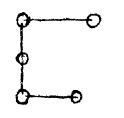
[ 2 ] I have long sought to determine how this matter can be presented most vividly, and based on these explorations, I would like to try today to bring the matter to life, so to speak, in a pictorial way. For this reason, I would like to begin by telling you—let’s say—in a sort of short-story format—about certain things that have come together in my mind.
[ 3 ] I would like to tell the story of how, not very long ago, there was a family that was close to another family. And because all sorts of events in the first family were of extraordinary interest and significance to a member of the other family, this member of the other family tried to get to the bottom of the reasons behind those events. I’ll assume that in this first family there was a young girl—as I said, this story is already somewhat in the past—who was still far from reaching her twenties. This girl’s father was a soldier, and the period we are now focusing on took place before a major war in which her father was to take part. The girl, however, was, so to speak, engaged to another soldier who also had to go to war, and she loved him dearly, so that she was deeply, deeply unhappy that he had to go to war. And since she believed that her father was partly to blame for the outbreak of the war, she began to harbor a kind of resentment toward him deep within herself, though she did not initially let it show outwardly. And the closer the time drew near, the more the mental images and feelings of this young girl became confused. She simply could not bear the thought of losing her beloved. And because these feelings ran so deep within her, the image she had of her own father became completely distorted. The resentment within her grew ever stronger. The war came. But what had taken root in the young girl’s soul grew into a kind of mental confusion—the sort that doctors today would certainly classify as a form of mental illness. And so, particularly following the outbreak of the war, this young girl experienced all manner of psychological phenomena—ones that already bordered on mental illness: visions and all manner of similar phenomena. One particularly powerful vision was this: her beloved would fall in the war, and everything she could still have accomplished in the world together with him would be lost with his death, and she herself, along with all her aspirations, would in fact become a victim of the war. Her mental illness became increasingly pronounced. It came to the point where the doctors deemed it best to place her in a remote rural setting, where she was well supervised, and where the particular nature of the people around her—as can sometimes happen with such patients—had a beneficial effect on her, though there was never any hope that the full extent of her mental illness would not resurface if she were removed from those circumstances and placed in a different environment. And so she lived there for years.
[ 4 ] The war had long since ended, and other tragic circumstances had since arisen within the family—circumstances I do not wish to describe in detail—all sorts of tragic circumstances, including the fact that, after quite a number of years, this girl’s brother also developed a mental illness. But what turned out to be peculiar was that the brother, who had channeled the girl’s mental illness into a masculine form, was now—following all sorts of other decisions that had been made—taken by a sensible person to the very place where the girl was. And lo and behold, the most remarkable fact emerged: that the brother, even though he too was considered mentally ill, had a beneficial effect on the girl; and that, in their solitude—where they had found each other among other people—and prompted by the entire environment, they recognized one another despite not having seen each other for many years, and were healed by each other’s presence. As a result, the girl was able to return home and establish a kind of asylum in her hometown, which was set up in such a way that patients like the two of them, in particular, could be healed in a reasonable manner—through an understanding of the underlying causes—and in a spiritual sense. The asylum she founded had a deeply religious character.
[ 5 ] Now, I said, this family—to whom these events pertained—was close to another family. A member of that other family took a keen interest in all these strange occurrences and said, “We must investigate what kind of curious case this actually is.” The events I am about to describe took place a few years ago. He therefore turned to a man with a background in medicine and the natural sciences—a doctor he knew—who called himself a psychopathologist because he practiced psychopathology. Let’s call this doctor, this psychopathologist, Lövius—Professor Dr. Lövius. He first told the doctor what he knew, specifically about the two children, about how the girl’s illness had arisen from her resentment toward her father; how he had been able to observe her, and what he had witnessed regarding the matter. Professor Dr. Lövius listened very attentively, put on an exceptionally serious expression, thought deeply, and said: “There must be a hereditary predisposition of the highest degree. Hereditary predisposition—there is no doubt about it; we are dealing with a hereditary predisposition. We must examine the family records closely and investigate every detail!”
[ 6 ] And lo and behold, all sorts of information was gathered from the family records. As they say, a fortunate coincidence arose: it became possible to trace the characteristics and qualities of the ancestors far back—all the way to the grandfather, great-grandfather, and even the great-great-grandfather. Professor Dr. Lövius spent a long time studying this case, and it became increasingly clear that they were dealing with an extraordinary case of hereditary predisposition, as it is called—indeed, a textbook case of hereditary predisposition, a textbook case of an extraordinary nature. Professor Dr. Lövius, who had already studied the psychopathy of Conrad Ferdinand Meyer, Viktor Scheffel, Hebbel, and others, found this textbook case exceptionally interesting and compiled all the data that could be used to explain it.
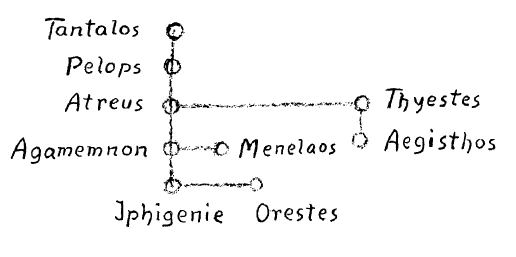
[ 7 ] Let’s try to follow the man’s line of thought schematically. So, based on what was known about the case, we are initially dealing with the daughter of that warrior and her brother—these are the two individuals in question. Moving on, we come to the father. Professor Dr. Lövius initially focused on the father, finding that he had something extraordinarily violent in his character and was a man of excessive ambition, though also a man with great initiative. He had traits that were reflected in a very peculiar way—as traits transformed into strength—in his brother—one must, after all, examine the entire family relationships in such a case—only his brother possessed them in a much more amiable, more feeble manner. But the father of the two siblings was a man who was exceedingly ambitious and possessed an extraordinary amount of initiative.
[ 8 ] Such an excess of ambition, drive, and even a certain resilience in the face of the world—one must, of course, trace these traits further back in the family line. So, we first went back to the father’s father. This brings us to the father’s father, who, in turn, had a brother. There, an extraordinarily interesting fact emerged: across two generations, the brothers exhibited certain similarities as well as differences. For there was, in turn, the father’s father—that is, our young girl’s grandfather—who, while her father was merely an excessively ambitious and energetic man, was already something of a hothead. In the father, this trait had weakened. But the brother was a kind man whose goodness actually bordered on the pathological, on the abnormal. Abnormal—that is the similarity—they were both in the generation before last, but one degenerated into a hothead, and the other degenerated through his goodness. And then Professor Dr. Lövius realized that this hothead—that is, our young girl’s grandfather—was always intent on sowing discord and mischief in his brother’s family. And this hothead actually succeeded, Professor Dr. Lövius noted—so we’re now talking about the grandfather—in completely corrupting his brother’s sons. He turned one into a gambler; he led the other astray in a different way; in short, he thoroughly corrupted the father’s sons. That much could be gleaned from the family records: all sorts of evil things had happened there. It wasn’t entirely clear how the matter had unfolded. But one thing was certain: ultimately, one man had behaved so badly toward his brother—the other man—that the entire family, all the sons, had actually gone astray; only one remained, who decided to avenge his father against his brother. But in doing so, through these acts of vengeance, he brought even more disaster upon the families, particularly upon the family of our girl’s father. All sorts of complications arose.
[ 9 ] And now Professor Dr. Lövius said to himself: One must go even further back in the family line. For this young girl had exhibited very strange visions at the onset of her madness. She kept dreaming of places very far away—places she had never visited during her girlhood—but which strangely corresponded to a specific location. From a family diary, Professor Dr. Lövius discovered that these visions contained something of what the area was like where her great-great-grandfather and great-great-great-grandfather had once lived. “Ah,” Professor Dr. Lövius said to himself, “this is a particularly interesting case study: here, heredity manifests itself in mental images; her great-great-grandfather and great-grandfather were somewhere other than the area where their descendants most recently lived!” And what earlier generations had actually experienced had been passed down in such a way that the great-granddaughter or great-great-granddaughter had visions of it in her madness! — This was, of course, something extraordinarily interesting to the professor. So he came to the conclusion that the grandfather, in turn, had a father who—as mentioned, according to an old family diary—had emigrated from a completely foreign, that is, different region, one that was culturally distinct in every respect. I won’t name any specific location, because that’s so unpleasant these days: People are so at odds with one another, and if you name specific places now, it immediately stirs up strong feelings. So my great-grandfather and great-great-grandfather came from a foreign region. Well, this diary revealed that this great-grandfather was also quite a remarkable person. He had gotten up to all sorts of crazy antics in this remote region and was also a hothead who would occasionally fly into a rage. Since he had caused all sorts of trouble during his fits of rage, he couldn’t stay in the area; he simply had to emigrate and moved to the region where his descendants were. But in the region where his descendants were, he immediately caused trouble again, even though he later became a highly respected man. In the region where his descendants lived, he caused trouble by killing the woman’s father in a duel—simply because he was in love with her and her father refused to consent to the marriage. In this way, he ended up marrying the daughter. The matter was, as they say, swept under the rug, and he was able to become a respected man.
[ 10 ] Thanks to the family register, Professor Dr. Lövius was able to trace his lineage all the way back to his great-great-grandfather. And this great-great-grandfather was a particularly remarkable man. He lived in a very exotic region; he was a man who had acquired a kind of deeper insight into the mysteries of history. He was a very spiritual man. But, said Professor Dr. Lövius, someone who takes the spiritual to such extremes as this great-great-grandfather did must have something wrong with his head anyway. And as he continued to delve into the family records, he discovered that this great-great-grandfather, despite being thoroughly versed in spiritual matters, had nevertheless retained certain human traits. Above all, he couldn’t stand anyone who had arrived at spiritual insight not in his own way, but through some official means. They were a thorn in his side. And playing some sort of prank on them was something he actually regarded as a bit of a spiritual delicacy. What I am about to recount is an event that dates back to around the 1760s. But history repeats itself: Eduard von Hartmann later did something similar to the philistines of the 19th century, a story I have told on more than one occasion. This great-great-grandfather once published something like a treatise—but he did not put his name on it; instead, he had it published anonymously—in which he thoroughly refuted everything that constituted his own doctrine. He portrayed everything as confused, stupid, and foolish, and always in such a way that the others could take great delight in it, because he always brought up their own arguments—the very things they might have said themselves: These were then treats for the others; he had played a great prank on them.
[ 11 ] Then Professor Dr. Lövius said to himself: Well, that explains everything! Even all the way back to the days of the great-great-grandfather, one can see at work in the hereditary line what has now manifested itself in the descendants in such a terrible way. Even the great-great-grandfather’s good side—his spiritual gift—was evident again in the great-great-granddaughter, who founded a kind of spiritual sanctuary. As you can see, all the good and all the bad traits are, in this textbook case, “hereditary burdens” of the highest order! This story therefore interested Professor Dr. Lövius to an extraordinary degree. He had, of course, resolved to write a thick book about this typical textbook case, and once explained it in detail to a colleague. And you see, on this occasion, someone was listening who didn’t want to at all, but he simply couldn’t help himself—he listened. Someone who not only had insight into human nature but also an understanding of the world in terms of human evolution—he listened, and all sorts of thoughts came to him while Professor Dr. Lövius recounted his case. I would like to present these thoughts to you in a certain form—the form itself isn’t very important—and in doing so, I will always refer back to this family tree, the family tree of Professor Dr. Lövius’s school case.
[ 12 ] So the following thoughts occurred to the man: Once upon a time, in the course of human evolution, there was a distinguished lineage. The fate of the founder of this lineage, Tantalus, who suffered in Tartarus, is widely known. He was initiated into the mysteries of the gods. The Greeks express this by saying that such a person, who is initiated into the mysteries of the gods, can even take part in the feasts of the gods. But he had a certain inclination—he found it, as it were, a thorn in his side—or one might also say, a delicacy—to deceive the gods, the officially recognized gods. And so—as you all know—he set before them his own son, whom he had dismembered, as a delicacy for the gods. And the gods, having erred in their omniscience, ate of it and drank of the blood as well. For this, Tantalus was cast into Tartarus, where he had to endure the torments of Tantalus described in Greek mythology. Through a series of crimes passed down from one generation to the next, the vengeance of the gods was thus inherited by his descendants right down to the very last. First, Pelops, the son of Tantalus, was banished from heaven, where the gods had taken him in. He wandered through Asia Minor to Greece and won Hippodameia as his wife by defeating her father.
[ 13 ] These thoughts occurred to the listener as Professor Dr. Lövius spoke—was it not true that he had fought a duel with the father and thereby won his wife? Yet, as his good fortune proved, Heaven’s favor had by no means been withdrawn from him. But soon, through various actions, he rendered himself so unworthy of that favor that divine blessing departed from his house. From his marriage to Hippodameia came his two sons, Atreus and Thyestes, who, tainted by the guilt of murder, fled to Argos, where they inherited the throne of that kingdom from their cousin Eurystheus. There, the two brothers committed new atrocities, so that the royal palace of Mycenae became the scene of a blood feud that destroyed the individual members of both families, one child after another. The worst crime was the so-called “Feast of Thyestes.” For Atreus, having learned that his wife had been seduced into infidelity by Thyestes, invited the latter and his two sons to a banquet. Guilt-ridden, Thyestes allowed himself to be lured and attended the feast.
[ 14 ] This reminded this expert on human nature very much of the feud between his grandfather and his grandfather’s brother, who had led his sons astray and gotten them involved in all sorts of things, causing the sons to come to ruin, as recorded in the family records.
[ 15 ] But the horrific event occurred: Atreus set before his brother the pair of sons he had secretly slaughtered. His brother drank their blood. — That, in fact, is also a “hereditary burden”: Old Tantalus had already done this to the gods, and now his grandson is doing it! — This was a heinous crime, at the sight of which Apollo turned his sun-red rays away in horror as he looked down upon Mycenae. Its avenger was a son of Thyestes born later, named Aegisthus. Aegisthus, having learned of the horrific incident, first killed his uncle Atreus and then lay in wait for his children as well.
[ 16 ] Atreus had two sons by his wife A&rope, Agamemnon and Menelaus, known as the Atreides or sons of Atreus. Aegisthus, the youngest son of Thyestes, hatched treacherous plans for revenge against them. But he could not emerge from hiding until the two brothers had set out on their great campaign to Troy. After their departure, he managed to beguile the passionate queen. Clytemnestra had borne her husband three daughters and a son—the daughter who interests us most is named Iphigenia—and the son Orestes. Iphigenia, the eldest daughter, was to be sacrificed on the altar of Artemis, or Diana, for this goddess had harbored a fierce grudge against the departing Greeks and had to be appeased through the daughter’s sacrifice. The mother hated her husband and yielded to the murderous thoughts whispered into her ear. — Now we know that Iphigenia was taken away to Tauris and came to her senses within the confines of a temple. We know that she was sent to a rural area, to a place where she posed no threat—a fate similar to that of our great-great-granddaughter. — I need not recount the further events that took place in the household. But now the myth goes on to relate the following: After Orestes had found his sister Iphigenia again in Tauris and she had cured him of his madness, he brought her back to Greece. It is further recounted that Iphigenia, upon her return to Greece, established a kind of oracle, a place of sacrifice dedicated to the Taurian Diana—which, translated into Greek terms, would be roughly equivalent to someone today establishing a sanatorium for the mentally ill according to the principles of Spiritual Science that I have mentioned.
[ 17 ] All I meant to say was: It’s conceivable that a similar process took place in ancient Greece and in more recent times. It unfolds according to the times. For you see that the event from the 19th and 18th centuries, which I described at the beginning, could have taken place exactly as I described it. No one will be able to doubt the slightest detail. Likewise, no one will be able to doubt the whole story I have developed. But there is a certain difference: namely, how one perceives this case, how one thinks about it.
[ 18 ] We have seen how Professor Lövius observed in the 19th and 20th centuries: Hereditary burden! A case for the school! The Greek said to himself: When something like this happens, it is precisely in such an event that the deeper forces at work in human history are expressed, and he composed a myth about it. There was no Professor Dr. Lövius in ancient Greece, but there was a poet who, in a deeper sense, understood these one, two, three, four, five generations (see illustration) and depicted them in such a way that poets have continued to draw inspiration from them ever since, right up to Goethe’s magnificent Iphigenia. And yet the difference is not even that great. For just consider this: if you were to pick up any book on psychology or psychiatry by one of the many natural scientists who write about the study of the soul and mental faculties, you would find everywhere that the following is stated: The healthy human being, as such, is extraordinarily difficult to study in terms of his or her psychological characteristics. But at the sickbed, in the clinic, and through the autopsy of the mentally ill, one also learns much of the same about the normal functioning of the healthy soul, and an immense amount is inferred about the healthy soul from the sick one. I would simply like to point out that, for example, people believed they had identified the speech center—the location where speech is concentrated—by examining it in a sick person suffering from impaired speech. Thus, they reasoned: It is precisely from what is not in order that one can learn what prevails in the healthy person.
[ 19 ] If we were to imagine this not in the 19th century, but in the language of the Greeks, it would read as follows: If we want to know what forces are at work in the course of human development, we must not turn to those people and study them who, in their inner life and in everything they are, display only what is called “normal”; rather, we must turn to all kinds of people who possess characteristics that are abnormal in relation to the norm. These Greek poets—who were, in a certain sense, still Greek in their way, because wisdom and beauty were united in them—sought to understand what had become of the Greeks. Thus it came to pass that these Greek poets depicted the very fate of Greek civilization through these abnormal generations.
[ 20 ] But the Greek saw things differently. The great difference between the way Professor Dr. Lövius speaks and the way the Greek speaks lies in the fact that the Greek knows something about the mysteries of the human soul. There is a great difference between what the tale of the extraordinary myth of the Atreides—Iphigenia, Tantalus, and Pelops—evokes in the soul, and all the mental images that take root in our souls when we hear the bespectacled Professor Dr. Lövius say: “It’s all hereditary burden!” For “hereditary burden” is precisely what, according to modern science and the knowledge of the fifth post-Atlantean epoch, fully characterizes the school case. Herein lies the contrast to a person who is still wholly immersed in the Greek spirit. Imagine the Greek who also wanted to describe how Iphigenia, after having lived through what the Greeks expressed in the events at Aulis, would then have been transported to a foreign land, to Tauris, where she would have experienced the reunion with Orestes and so on—everything the Greeks recounted—now imagine how all of that was brought to life in Goethe’s Iphigenia! Imagine that single moment when King Thoas stands before Iphigenia in Tauris, in Goethe’s passage where he woos Iphigenia, and where Iphigenia feels compelled to utter the words: “Hear this! I am of the lineage of Tantalus!” — “You speak these weighty words with composure.”
[ 21 ] The entire Greek spirit is revived in what the Greek—or the reborn Greek—has to say in such a moment of the soul’s life: “I am of the lineage of Tantalus.” And then, after that has been said, one feels as if Professor Dr. Lövius were peering in through a little window grille, chuckling: “Hihihi! Hereditary burden!” — Therein lies the entire difference between what the fourth post-Atlantean epoch offered and what the fifth, our own post-Atlantean epoch, offers. For indeed, the two things may be compared with one another. I have not exaggerated in the slightest, but have merely described the situation objectively. The two things may be compared with one another, precisely because the doctrine of hereditary burden has now taken the place of the structure of Greek myth—that is, of what was meant by Greek myth—even extending into poetry. After all, one need only compare Sophocles or Aeschylus with Ibsen to find exactly the same contrast in poetry as well—except that among the Greeks, science and poetry were not so sharply divided. You need only read what I have said about the Mysteries and about the origin of art and religion from the Mysteries, and you will understand that alongside a Greek Ibsen there was not also a Greek Professor Dr. Lövius: they would have been one and the same. But they would have been precisely those who composed the entire myth—that which the myth contained as truth. For what constituted health, what constituted the art of medicine, and what the art of Mercury with his caduceus represented—all of this was presented in ancient Greece in no other form than that of narratives, just like the story of Tantalus’s lineage and Iphigenia. It was not customary in those days to speak in abstract terms; rather, people spoke in images. And truth was depicted through images. And what filled the Greek inner life, what organized the Greek soul from within, relates to what is accepted today as truth—or as the essential character of truth—in the same way that “Hear this! I am of the lineage of Tantalus!” relates to “Hihihi! Genetic predisposition.”
[ 22 ] This, my dear friends, is what we must take to heart regarding something that has descended from ancient Greece to the present day—a downward path. It can guide us in understanding what must be developed in order to ascend once more. That would take us too far afield today. For those who still wish to hear it, I will continue these reflections tomorrow.