

The Riddle of Man
The Spiritual Background of Human History
GA 170
31 July 1916, Dornach
Translated by Steiner Online Library
Third Lecture
[ 1 ] When we look back on what has been discussed over the past two days and reflect on the main conclusion, it is indeed that the human being is, in essence, the expression of a dual nature. We have seen how everything that animates the human soul in waking consciousness can be traced back to influences and impressions that—if the term is taken in a cosmic sense—are imprinted upon the human being from the heavenly, from the universal. What underlies certain deeper regions of human nature—what in normal life only surges up into consciousness in dreams—can be traced back to influences and impressions from the terrestrial, from the earthly in the narrower sense. When we view the world from a spiritual-scientific perspective, then everything that appears to the senses must be seen as a true expression of the spiritual.
[ 2 ] Now, human beings are truly an expression of this dual nature of theirs, even in terms of their physical appearance and their sensory manifestation. The best way to visualize this—because it becomes clearest there—is to look at the skeleton, which very clearly consists of two parts: the head, the skull, and the rest of the body, and both are essentially connected only by a thin skeletal strand. The head is actually just perched on top. One can lift it off. This also expresses, outwardly and visually, that dual nature; for it is through having his head—his skull—that a human being possesses waking consciousness; and it is through having the rest of his nature—which, in the skeleton, is attached to the head—that he possesses everything that takes place more or less in the subconscious and surges up in dreams, and it also surges up through the fact that it glows through, burns through, and illuminates ordinary waking consciousness in the creative imagination of the poet and the artist. Here, even the noblest aspect of earthly nature—and yet, precisely because it is earthly nature—is always at work through what is otherwise ordinary waking consciousness. Yesterday we saw how, based on the consciousness of a particular historical culture—the Hebrew culture—one can point directly to how people possessed insights, detailed and thorough insights into the connection between human waking consciousness and supernatural processes, supernatural realities. We have seen how what might be called the cosmic world of thought—which expresses itself in the movements of the stars—creates its own image in what human beings experience as their waking consciousness, which they possess by making use, for the purposes of waking consciousness, primarily of the organ of their head. We have considered that wondrous way in which human beings stand within the entire universe—in a sense, within both the heavenly and earthly realities at the same time.
[ 3 ] If one wishes to do justice to everything connected with these serious, significant facts, one must free oneself from prejudices. And such an Ahrimanic prejudice is particularly prevalent among those who, in a certain sense, still wish to be mystics. It is the prejudice that finds expression in a certain feeling and consists in saying: The earthly is worthless, something that must be overcome at all costs; it is the crude, base matter of which a person truly striving toward the spiritual world does not even speak; what one must strive for is the spiritual! — Even if one often has the most confused notions of this spiritual realm and perhaps forms merely sensory images of it, one still feels this way. That is why I say that what is at stake here is expressed more in a certain emotional orientation. But one will never be able to understand the essence of both humanity and the world if one wishes to live solely within this prejudiced sentiment. For one can only have this feeling if, as a human being living on Earth in a physical body, one views the Earth in a certain one-sided sense, and from this earthly perspective harbors the certainly justified longing for what is supernatural and what must be lived through between death and a new birth. But one will never be able to fully develop a kind of understanding feeling for the life between death and a new birth if one speaks of earthly matters in the way I have just indicated. For, as paradoxical as it may sound, it is true, and you will be able to see this clearly from certain cycles, where you will find it described in detail: What comes to mind for a human being between birth and death—that is, for a human being in a physical body—when speaking of heaven, comes to mind in the same way for the dead person who stands between death and a new birth—the human being living in spirit and soul—so that they speak of the earth in the same sense. For those who live in heaven, the afterlife is the earth; for them, the earth is the precious thing toward which they look. They speak of the earth just as we speak of heaven. It is the land of their longing, to which they wish to return in a new incarnation—the land toward which they strive. And one gets a false impression of how the dead live if one does not take this into account.
[ 4 ] I have often pointed out that one must not be pedantic and believe that the principle “in the spiritual realm, everything is reversed” can simply be applied in such a way that one says: One conceives of the spiritual world correctly if one imagines it as the reverse of the physical world. Nothing particularly meaningful will come of an abstract application of such a statement. The facts must be considered in detail, but it is true that this principle of reversal, as I have just indicated, applies to many things. For example, someone who lives a life of exploration in the spiritual worlds can come to know a strange land—a land in which individual human beings find themselves among other human beings. The other people among whom these individuals are found are ordinary people, just like the devout people on Earth—I say, the devout people on Earth. — These are the ones who have a certain feeling for the heavenly, a certain feeling for the earthly. But among these others, there are individuals living in the realm of which I speak who completely deny the earthly, deny all matter, all substance—who say that only the spiritual exists, and that it is superstition to speak of matter. The land I am telling you about, however, is not here in the physical world; rather, it is a spiritual realm that one discovers when one directs one’s gaze toward certain parts of the spiritual world—say, from the mid-eighteenth to the mid-nineteenth century. At that time, all of you were still living in the spiritual world—one might well say that, at least during the first part of that period, we were all still living in the spiritual world—and, on average, we were people in the spiritual world who, as souls, had perceptions of the heavenly realm in which we were immersed and of the earthly realm toward which we were striving, which is the hereafter. But then there were some who regarded talk of the earthly realm as superstition, who claimed that only the spiritual existed, and that everything earthly and material was a fantasy. Yes, these people were, of course, born as well. Their names were Ludwig Büchner, Ernst Haeckel, Carl Vogt, and so on. These people, whom you know well enough in terms of how they lived out their lives in the physical world, are the very ones who, especially in the final stage of their physical existence, declared all material things to be superstition; they recognized the spiritual as the only reality because that was what surrounded them, and because they did not want to look at anything that was not around them—that which lay in the hereafter. You will ask: How is it, then, that these people were born and gradually developed into souls who speak of matter as the only thing that exists? — You will ask that, but it should be understandable to you, for these people, after all, showed no understanding of matter before they were born, and that has remained with them; for whoever describes matter as absolute—and not as something that is merely an expression of the spirit—simply understands nothing about matter; and one is not a materialist if one advocates materialism as these individuals do; one is not a materialist by understanding the material as material, but precisely by failing to understand the material as material. So in this respect they have not changed: they have no understanding of material life.
[ 5 ] Here you can immediately see an area in which there is a complete reversal—a true reversal—in the spiritual world compared to what one believes here in the physical world based on outward appearances. But as I said, one must not now extend this principle in an abstract way to everything. I am saying all this—particularly regarding the otherworldly nature of earthly existence during our life between death and a new birth—so that one does not interpret the contrast, which in ancient Greek mythology is expressed by the two words “Uranos” and “Gaia,” is not understood as if one were absolutely valuable and the other absolutely inferior, but rather so that it is understood as if they were simply two opposing poles of a single unity. Uranos is, so to speak, the circumference, and the polar opposite of the circumference is the center, Gaia. When the Greeks spoke of Uranos and Gaia, they did not initially have in mind the narrowly defined sexual aspect of human beings or of the earthly realm, but rather this contrast that we have now characterized—the heavenly and the earthly—this contrast as such is what they meant.
[ 6 ] I had to explain this because otherwise we would not be able to gain any understanding of what I am about to say. It is, after all, very difficult today to make certain deeper truths accessible to humanity. But one can, in a sense, touch upon them, and that is what should be done, as far as possible.
[ 7 ] In light of these considerations, which we must now address, I ask you to take careful note of the exact sense in which human beings possess a dual nature, and how this dual nature is outwardly expressed in the structure of their physical body—namely, in the fact that it consists of the head and the rest of the body. The human head undergoes its most fundamental shaping—its entire formation—actually during the period between the last death and the new birth. Of course, the physical head is produced on earth; but that is not the point. Rather, the form it takes, the way it is shaped, is connected to forces that lie far back in time. The human being’s head is in fact shaped from heaven, for all the forces at work between death and a new birth are truly intended to form the human being’s head. Even though the head must take its course through physical birth and physical heredity, the human being receives his head from heaven. Only the rest of the body comes from the earth. Thus, in terms of physical form, the human being is a product of Uranus and Gaia: the head is the result of heavenly forces, and the rest of the body is the result of earthly forces, Uranus and Gaia.
[ 8 ] Now the human being enters into existence, and when he is born, this is very strongly imprinted within him—so strongly that one can say: Something is brought into the physical world that, in terms of the head, is truly an imprint of the forces that act from the heavens, and there is the body, which is a reflection of the forces that act from the earth. This is particularly pronounced when a human being has just been born. For those who can perceive the human being with deep insight, there is a stark contrast between the head and the rest of the body. In a small child, this contrast is truly striking. One need only learn to observe such things impartially to realize that there is a great, powerful contrast between the head—the Uranus realm of the human being—and the rest of the body—the Gaia realm of the human being.
[ 9 ] Let us consider life up to the first significant milestone—roughly the age of seven, when the baby teeth are replaced. We know that this is the first significant stage of a person’s life. This period is very important, for here lies the paradox that must be understood correctly. For during this time between birth and the age of seven—or the change of teeth—the person is, in fact, viewed entirely incorrectly by those who observe him or her from a physical perspective. I have pointed this out on several occasions from other perspectives. During the first seven years of life—to put it briefly—a human being is viewed as if they were already male or female. From a higher perspective, this is completely wrong. Only today’s materialism holds this view; that is why today’s materialism always interprets expressions during the first seven years of life as sexual expressions, which they are not at all. A much healthier view will one day be one that recognizes that during the first seven years of life, the child is not yet a sexual being at all, but rather an asexual one. If I may put it simply, I would say that it only appears as though a human being is already male or female during the first seven years. And the reason it looks that way is that in the physical realm—which is the only thing that exists for materialism—there is no real difference between what people today mistakenly call “male” in the first seven years of life and what they later call by that name, nor between what they call “female.” What comes later appears to be a continuation of what is already there; but that is not the case at all. And now I truly ask you to take what I have said very much to heart, so that you do not misunderstand it and, following the pattern of how things are done today in other fields—where judgments are no longer made objectively but solely on the basis of value judgments—immediately introduce value judgments into a context where only objective considerations are intended.
[ 10 ] What appears to be masculine in the first seven years—and here I ask you to bear in mind what I have said about Uranus and Gaia—is not masculine as such, but is merely shaped outwardly in such a way that what otherwise acts upon the head, the heavenly, continues to work and shapes the human being and the human form according to the extraterrestrial, the heavenly. This is why it looks like the masculine. It is not masculine at all; it is shaped according to Uranus, according to the extraterrestrial! I said: the human head is primarily celestial, while the rest of the body is earthly. But just as the earthly is permeated by the celestial, so too is the celestial permeated by the earthly. Everything interacts; it is just that one or the other predominates. I would say that in one type of human being, the heavenly overshadows the body—including the body outside the head—and makes it such that one says, “He is male.” But this has nothing to do with sexuality; it is simply an organization that is more Uranian, whereas in other individuals, a different organization is more terrestrial, more Gaian. During the first seven years, the human being is not at all a sexual being; that is Maya. They differ in that in one body the heavenly aspect is more active, while in the other the earthly aspect is more active. And I have stated from the outset that, for a universal view of the world, the earthly is just as valuable as the heavenly, so that no value judgment can take hold, so that it cannot be believed—in the manner of Weininger—that the feminine should be disparaged by being deemed, from a lofty mystical standpoint, merely earthly or gäisch. Each is the opposite pole of the other, but this has nothing to do with gender.
[ 11 ] Now, what takes place within the human being, within the human organism, during the first seven years? Everything I say must be understood to be what primarily takes place; the opposite is always present as well, but what I am describing is, in essence, what is predominantly there. You see, during the first seven years there are continuous currents and forces flowing from the rest of the organism toward the head. Certainly there are also currents flowing from the head to the rest of the organism, but during this period they are weak in comparison to the strong currents flowing from the body to the head. When the head grows during the first seven years, as it continues to develop, this is because the body is actually sending its forces into the head; the body presses itself into the head during the first seven years, and the head adapts to the body’s organization. This is the essential aspect of human development: that the head adapts to the body’s organization during the first seven years. Hence this peculiar phenomenon that can be observed if one has a keen sense for the transformation of the human face during the first seven years of life—this surging upward of the rest of the organism. Just observe for a moment what the child’s face is like, and how it has become completely different after the teeth have fallen out, when the entire body has, so to speak, poured itself into the facial expression.
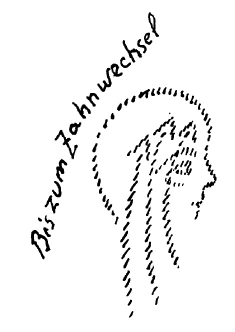
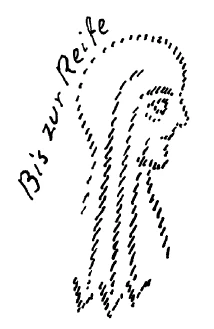
[ 12 ] Then comes the period from about the seventh to the fourteenth year of life, the second stage of human life, leading up to sexual maturity. During this time, the exact opposite takes place: a continuous flow of the head forces into the organism, into the body; the body adapts to the head. It is very interesting to observe how a complete revolution takes place within the organism: a flow, a striving upward from the body into the head during the first seven years, which then culminates in the change of teeth, followed by a reversal—a downward flow, a striving downward. And it is through this downward flow, this striving downward, that the human being first becomes a sexual being. Only now does the human being become a sexual being. And what transforms the organs—which are initially heavenly or earthly—into sexual organs comes from the head; it is the spirit. The physical organs—one can put it quite plainly—are not at all intended for sexuality; they are only adapted to sexuality. And anyone who claims that they were originally adapted to sexuality is judging solely on the basis of outward appearances. They are such that some are adapted to the heavenly, others to the earthly. They are images. Their sexual character is only imprinted upon them by what comes from the flow of the head between the ages of seven and fourteen. Only then does the human being become a sexual being.
[ 13 ] It is extremely important to take a close look at these matters; for we see it happening all the time in practice today: people come with their very young children and complain that the children are exhibiting sexual misbehavior. This is not at all possible before the age of seven, because what is present at that stage is not sexual at all; it simply does not have that meaning. And a cure could not be achieved here through medical means, but rather in a natural way—by no longer referring to these things by false names and thereby casting false conceptual veils over them. Let us regain that—I would say—sacred innocence that the ancients possessed with regard to these matters; with their still atavistic knowledge of the spiritual world, it would never have occurred to them to speak of sexuality to children at all. I have already alluded to these matters from other perspectives.
[ 14 ] But if you take what we have been able to glean from the spiritual world—meaningful truths about human beings and their connection to the earthly and heavenly worlds—then you will see all the more clearly how a person like Weininger, as caricatured, corresponds to certain legitimate ideas. For if he were to see things as they have been presented here, he would be able to say, with some justification: Human beings are placed in the physical world from the spiritual world in such a way that it is only through what their minds acquire during the first seven years here in the physical world that they transform the heavenly into the masculine and the earthly into the feminine. It will be our task later to return to certain currents and forces that remain important for human development in the later years of life. For now, it would be good for us to focus our attention on human development during the first fourteen years. It is through such things that you will first gain an idea of how true it is that outer life is actually a life in Maya, in the great illusion. For it is truly an illusion—and nothing more than an illusion—that human beings are placed into the world as male and female. It is only the earthly qualities they acquire through their heads during the first seven years that make them sexual beings on Earth.
[ 15 ] Now, for anyone who takes such things to heart—not merely with the mind, but with the whole understanding of the heart—a question must surely arise that cannot be easily dismissed: How is it, after all, that human beings live in Maya, in illusion? Does this have any significance? Isn’t it, after all, something that could make one sad—that human beings live in illusion? Wouldn’t it have been, one might say, much more appropriate on the part of the Deity and the gods if they had not allowed human beings to live in illusion at all, but had instead enabled them to view the world in such a way that they would not first have to seek the truth behind appearances and would not need to live in illusion? Why, after all, must human beings live in illusion to begin with? — This question—why human beings must live in illusion—could give rise to a very pessimistic worldview. Well, there are good reasons why human beings must live in illusion; for if human beings were born into the truth from the very beginning, if the truth were innate to them, if they did not have to seek it, then human beings would never be able to become personalities, never be able to become free. Human beings can only attain freedom within the earthly sphere. But they can do so only by developing a personality through earthly striving. The fact that what is still an illusion initially confronts them externally—and that they must first seek the inner reality behind this illusion—is what unleashes within them the forces that gradually, over the course of many incarnations, transform them into free personalities. You can easily understand this through a comparison. Take any valuable book, say Dante’s Divine Comedy. Theoretically—and not just theoretically—it would be entirely conceivable that people today might come to know Dante’s Divine Comedy in a completely different way than is actually the case. How, then, do people today come to know Dante’s Divine Comedy? Either by having it recited to them—that is, by hearing it, externally in sounds that have absolutely nothing to do with the content of The Divine Comedy—or by reading it. When they read it, they actually have nothing before them but signs that have not the slightest connection to the content of The Divine Comedy. Theoretically, they might just as well be other symbols. Yes, this is how people today become acquainted with the content of a valuable work. Externally, they become acquainted with it through recitation, but the speech has nothing to do with the content of the work as it sprang from Dante’s mind; it is merely an external medium. And theoretically—but not only theoretically, I emphasize—it would also be possible for us to arrive at the content of The Divine Comedy in another way: from within, by the content simply rising up into our soul at a certain age, into our waking consciousness through a dream. This is not merely theoretical; it could very well be the case if the world were not arranged in such a way that we must first pass through Maya. If we did not first have to pass through Maya, then the situation would be as follows: what has already been accomplished—say, by Homer, Dante, Plato, and so on—we would one fine day see rise up like a dream. We would not need to acquire knowledge of it through an external mediator. Raphael would not have needed to paint his pictures, but only to grasp them vividly in his mind, and those who live afterward—receiving nothing more than a kind of guidance toward Raphael—would be able to let them arise from within themselves.
[ 16 ] What I am telling you is not even a hypothesis; that is exactly how things were for us on the Moon—that is how everything was conveyed there. That is truly how it was. On the Moon, one did not learn to read; everything arose from within. It must have existed at some point; but then it arose from within. Yet one could not be free. One was entirely like an automaton of ancient times. Ancient times caused everything to arise within one. One could not become a free personality there. We do not acquire our knowledge so that we can engage in a superfluous repetition of what is already out there, but so that we may become free personalities. Only by tempering ourselves through what at first has nothing to do with what we are striving toward do we become free personalities. And that is the progress from the Moon era to the Earth era: that back then we were not free beings, but everything arose within us as imagination. And now we must reach outward. And by undergoing the spiritual process of contemplation—which consists of reading or listening—we become free individuals. When it is said that human beings acquire knowledge for the sake of knowledge, that is not entirely correct. Human beings acquire knowledge so that they may become free, individual beings. That is the one thing we wish to focus on.
[ 17 ] The other point we wish to consider can be introduced by another question. The question may arise: Yes, but why do we even repeat the external world through our concepts and ideas? What is the point of that, really? Why does a person even repeat the external world in their thoughts and ideas? Surely the external world couldn’t possibly care that we repeat it! — You’ll grasp this idea most clearly if you direct your thinking toward the following: A person is here. If he had been murdered in his youth, he would not be here. Because he is here, in addition to the world being here, his world of experience lives within him—in a sense, a repetition, an image of the world. But that could be entirely absent if he had been murdered in his youth. The external world would not change as a result. If he intervenes, that is something else, but for the external world, what lives in our pure cognition is merely a pure repetition. If we were automatons and were stimulated from the outside to do even what we, as human beings, accomplish between birth and death, then our cognition would be completely superfluous. We would therefore still do what must happen through us, and we would have in our cognition a completely superfluous parallel phenomenon. From this, however, you can form the idea that human beings carry within their cognition something that actually adds to nature, to the universe, and it may be quite indifferent to nature, to the universe, that such a thing is added. Nature could just as well create automatons that do not track what is happening with thoughts and concepts. For, after all, it makes no difference out there whether we follow the events of the world, whether we create images with our thoughts and concepts or not. When you photograph a landscape with a camera, the image exists in addition to the landscape itself, but the landscape is utterly indifferent to whether the image is there or not. Something quite similar actually underlies our ideas. They are an addition. Why, then, is nature not arranged in this way?—one might ask. All of us who have become so accustomed to thinking, for whom thinking has become so dear, no longer ask this question, because thinking is as familiar to us as eating and drinking; that is why this question does not arise for us. But you know how many people there are out in the world who would be quite happy if they didn’t have to think, if they could work like machines—people for whom thinking is too difficult, who actually flee from every thought. Well, that is once again the expression of the question: Yes, why hasn’t nature endowed human beings in such a way that they do not possess the capacity to think? We have, after all, already answered part of this question. Through their thinking, human beings become free individuals. But such a question always has multiple answers. It is not the only thing that can lead us to understanding.
[ 18 ] Let’s assume we were organized in such a way that we would be born as children, heaven would give us our mind, earth would give us our body, and through the beings of the hierarchies—the angels, archangels, and so on—we would be placed where we need to be and would do what we are meant to do; yet we would not be worn down by the inner life of the soul, with all the pain and torment it often entails. Suppose we were like that; then something significant would result. We could only be like that if we were born just once and died just once, if there were no need for repeated earthly lives. A plant that grows without developing fruit in its bloom lives only once. In the seed, it can continue to develop. By developing a soul life, we develop the seed for the next earthly life. The seed lies within us. If we did not develop a soul life through spiritual insight, our life would have to come to an end with our earthly death. Thus, it is not merely a repetition of what is outside us; rather, we carry the future within us by shaping our soul life through spiritual insight. This is so significant. Everything we carry within and with us, apart from what is based on insight, is, in a sense, the result of the past having worked upon us. Everything we develop within ourselves that is based on insight represents the real seed of the future. Within our insight, the real seed of the future develops within us.
[ 19 ] And now I would like to conclude with a thought that will serve as the central theme of our next lectures, which will then lead us into important realms of human existence.
[ 20 ] We therefore carry within us everything that constitutes our knowledge, whether it be the most naive form of cognition or the most abstract—the two are not as vastly different as one might think; people do not assess this correctly— we carry this within us, deep beneath the surface, but in a supersensible way, for the content of knowledge is, of course, something supersensible. It is, in reality, a sum of forces that lies dormant within us. We pass through the gate of death—what happens then? Well, I have described what happens many times before, but I would now like to describe it once more from the perspective of these forces. As human beings, we consist of the body and the head. Our head—no matter how valuable it may be to you—is nevertheless subject to this truth: our head has, in fact, “wasted away.” I am always speaking of the forces, not of the outer forms, and you can, of course, let the human body decompose or burn it; the force-form remains; it does not disintegrate; it remains outside, as does the spiritual aspect underlying the body. But the head—it disappears. It doesn’t matter; you may, as I said, consider it a valuable part of the organism, but after death, the head is nothing special. This, of course, does not refer to the soul’s content, but to the outer form of the head. For what actually becomes important for heaven during the passage between death and a new birth is that which you received from the earth in your last earthly life: the rest of the body. This, with its forces, is transformed into a new head in the time between death and a new birth. Here you have the head; there you have the rest of the body. This head was a body in your previous life; your present body will become a head in your next life. And the forces you develop through your head in this present life transform the forces of your body into a new head for the next life. The body is provided to you by the Earth. And the head you now bear is your transformed body from your previous life, for metamorphosis applies everywhere in life. It is not only that a plant leaf transforms into a petal, nor is it only the metamorphosis of the lowest forms that applies—metamorphosis applies in all cases. Your body is a head that has not yet come into being; your head is a transformed body.
[ 21 ] So I’d like to explore this idea. You are now carrying your own head. Phrenologists study the head based on its shapes, but this phrenology has little value if it is not grounded in initiation, because everyone has their own head. It simply cannot be otherwise—the head is the legacy of one’s body from a previous life. Every person’s head is different from that of every other person, and the typical characteristics that are identified are, in essence, only rough generalizations. Consider this marvelous connection: Human beings are dual in nature, but beyond that duality, they already carry the past and the future within their very outward form. Reincarnation is palpable in our heads, for what we find shaped there is the result of our previous life. The head we will bear in our next life will be the transformation of our body. Metamorphosis is, in fact, something that underlies existence when one looks at this existence in its depths. When one surveys such things as we have now discussed, one can look deeply, deeply into the becoming, into the being of the beings of the worlds, of humanity. And I wanted to introduce this thought, which, as I said, will form the leitmotif of the next two lectures: how does one incarnation influence the next, and how does the preceding incarnation influence the present one, in that there is a metamorphosis between the physicality of the human being and the mental aspect of the human being, if I may put it that way.