

The Polarity of Duration and Development in Human Life
GA 184
7 September 1918, Dornach
Translated by Steiner Online Library
Second Lecture
[ 1 ] A complete understanding of the conditions we are now addressing is not possible without taking a closer look at the nature of the human being during the period from falling asleep to waking up—that is, in the state of sleep. You are all familiar, at least in general terms, with this state of sleep: what is called—if one wishes to use that term— the “I” and the astral body, separates from the physical body and the etheric body. But if one wishes to examine the nature of sleep more closely, one must realize that it is precisely in the state of sleep that the human being experiences the reality of what we spoke of yesterday, when we said: Augustine seeks to grasp the real, true certainty about the world through inner experience. — But in the waking state, a person does not fully grasp their inner self. One must be clear that what is referred to as the “I” and the “astral body” does not actually come into a person’s consciousness at all in the waking state; rather, in this waking state, only an image, a reflection of the “I” and the astral body, comes into a person’s consciousness. In the state of sleep—that is, from falling asleep until waking up—if a person were conscious—or, we might also say, if they became conscious through those exercises that are available to you, which you will find described in the various writings— —if a person were to become aware of what they are experiencing during the state of sleep, they would, so to speak, experience the true form of the “I” and the astral body, not the mirror image as in the waking state, but the true form. But one must then be clear about the fact that this true form of the I and the astral body appears before the human soul, before the imaginative consciousness, in such a way that during the state of sleep, the human being experiences in their inner life—that is, within their I and their astral body—what we call the third hierarchy: the hierarchy of the Angeloi, Archangeloi, and Archai.
[ 2 ] While awake, a person does not experience this intimate connection that actually exists throughout their entire life with the beings known as Angeloi, Archangeloi, and Archai. And therein lies the very illusion of the waking state: that it remains confined to the abstract “I” that a person experiences, and to the shadowy images and thoughts that fill the human soul—for shadowy they indeed are—or even to the half-dreamlike sensation of volitional impulses. This is the essential point: that during the waking state, a person must remain confined to experiencing this shadowy aspect of their “I” and their astral body, and that they cannot become aware that the beings of the third hierarchy are working within their “I.” At the moment when a human being were truly to “wake up” from sleep, if I may use that expression, he would not have an external nature around him, but he would sense within himself the beings of the angels, archangels, and the spirits of the ages. And this is why we possess something in our soul’s constitution that we would not otherwise have. If the hierarchy of the Angeloi did not act upon our ego and our astral body, we would not be able to feel ourselves as personalities. Thus, it is through the influence of the hierarchy of the Angeloi upon our spiritual-soul being that we feel ourselves as free personalities.
[ 3 ] Because the hierarchy of the Archangeloi exerts its influence upon us, we feel ourselves to be members of the whole of humanity. We could also say that because the Archangelic beings shine into our spiritual-soul being and inspire it, we actually feel ourselves to be human. And because the essence of the Archai, the spirits of the ages, pulses into our being and is intuitively sensed by it, we feel ourselves to be earthly beings—that is, members not only of present-day humanity, but of all of Earth’s humanity, from the beginning of Earth’s existence to its end. Thus, we feel ourselves to be part of the entire development of the Earth. We feel this only dimly, because we perceive the spirits of the ages only dimly within ourselves.
[ 4 ] We cannot say that we perceive ourselves as a personality; we can do so only when we attain imaginative consciousness. This imaginative consciousness remains a kind of reflection as long as we experience our thoughts only in such a way that, through our free life of thought, we feel ourselves to be a personality. Let us once again clarify what it is that makes us feel like a personality: We feel like a personality because we can arbitrarily link one thought to another. You would immediately cease to feel like a personality if you were forced to link one thought to another in the same way that one natural phenomenon follows another. This experience of inner freedom—in the continuation of our thinking lies our sense of self as a personality—is what comes most clearly to human consciousness during waking hours. And it comes to consciousness during waking hours because, from the moment of falling asleep until waking, the human being is permeated by their angelic being, and this angelic being belongs to our “I.”
[ 5 ] We feel much more apathetic, much less strongly and intensely, as members of the whole of humanity, because we are naturally farther removed from the archangelic being—which enables us to feel ourselves as human beings—than we are from the angelic being. And that which places us as personalities within the entire current of human evolution remains, for most people, something quite, quite shadowy. We are, after all, attempting, on the basis of spiritual science, to awaken precisely this sense of belonging to all of humanity by making it clear to ourselves: In the fifth post-Atlantean epoch, human beings experience life in this way; in the fourth post-Atlantean epoch, they experienced it in that way; in the third post-Atlantean epoch, in yet another way. We gain an awareness, through spiritual science, of how the state of the soul changes throughout the various epochs, brought about by the different spirits of the age—the beings from the hierarchy of the Archai. It is, in fact, this awareness that first gives human beings the ability to feel themselves as historical beings, to become aware that: “I live as a personality in the 20th century.” Most people are not even aware that their personality is conceivable—that it can only be real as a personality—because they are situated within a specific historical period. This living permeation of the human spirit-soul being by the beings of the third hierarchy—that is what would come to human consciousness if one were to strive for imaginative insight in a somewhat more intensive way.
[ 6 ] Now, as you can see, this imaginative insight is not present in the ordinary course of human development. From the moment of falling asleep until waking, the reality of the “I” and the astral body fades, and while awake, the human being loses connection with the beings of the third hierarchy. This stems from the fact that, particularly in our present cycle of time, human beings are also subject to an illusion while awake. As we have just seen, they are subject to an illusion during sleep, as if their “I” and their astral body were then inactive. They are not inactive; they are in lively interaction with the beings of the third hierarchy. In the waking state, the situation is such that, in the present cycle of time, our physical body and our etheric body, so to speak—one might say—unlawfully absorb our spirit-soul being; they become imbued with this spirit-soul being. Normally, it would be quite different for human beings; normally, a person would experience themselves in the waking state as their “I” and astral body, and perceive the physical body and the etheric body as a kind of shell into which they slip, as something they carry with them. But that is not how human beings actually feel. They feel as if the physical body and the etheric body were themselves. That is not the case at all. We are already this spirit-soul being that makes use of the physical and etheric bodies as tools, but we cannot rise above this illusion, which lies in the effects of our present age. We must, as it were, regard what would appear to us in normal consciousness as the hammer we hold in our hand and with which we strike—we must feel ourselves to be identical with our physical body and our etheric body; we must surrender to the illusion that it is we who are walking through space in the flesh. But that is not us; it is only so because our sense of self is unlawfully absorbed by our physical body and our etheric body. And this stems from the fact that, in the present cycle of time, the Ahrimanic forces are more powerful than they would be in the normal development of humanity. They, so to speak, draw the “I” and the astral body toward the physical and etheric bodies and create the illusion in human beings that this head they carry is themselves, that these hands and the entire body are themselves. The physical body unlawfully appropriates consciousness, so that it appears as if our physical body were the source of our personality. Anyone who believes that their physical body somehow constitutes their personality is subject to the same illusion as someone who stands in front of a mirror and believes that the mirror produces them, because they see their own image reflected back. To say that this fleshly form we carry is who we are is no more sensible than if someone were to hold his hand up to a mirror and believe that the mirror is producing his hand for him. And yet, modern science as a whole lives under this illusion. All of modern science believes that what we experience inwardly as our personality has something to do with the physical body and the etheric body, and does not believe that the physical body and the etheric body reflect back this “I” and astral being, forming that illusory image which we recognize from the moment we wake up until we fall asleep as our “I” and as our thoughts—that is, our astral body.
[ 7 ] This is, in a sense, the fundamental truth that one must first recognize. With regard to this fundamental truth, people today—drawing on the forces of our current cycle of time—are succumbing to an illusion of consciousness that consists precisely in what I have just said: We believe that what we experience inwardly—whether thoughts or feelings—comes from our body. But human beings are naturally subject to this illusion; in their present state of consciousness, they cannot escape it. Just as the sun, when it is low on the horizon, appears larger than when it is high in the sky—we know it is an illusion, but it still appears that way—so it must appear to human beings that they, in a sense, regard their flesh and blood as their personality. This is an illusion of consciousness. But this illusion of consciousness, to which human beings are subject today, has not always been the case; rather, this illusion of consciousness is essentially a characteristic feature of humanity in the post-Christian era, following the Mystery of Golgotha. Before the Mystery of Golgotha, there was not an illusion of consciousness, but a different kind of illusion. Before the Mystery of Golgotha, human beings did not believe that their consciousness was connected to their physical body. Of course, history tells us nothing of this, but it is nevertheless true. It is nonsense to expect a person from the 2nd or 3rd millennium B.C. to have regarded their soul as somehow separate from their physical body. In ancient times, no human being felt their soul-spiritual being so bound to the body as people do today.
[ 8 ] However, this person from pre-Christian times had a vivid awareness of the beings of the third hierarchy. He certainly did. Because he knew that his soul was not identical with his body, he had a clear awareness that this soul was not bound to the blood or the muscles and so on, but that this soul was bound to the beings of the third hierarchy. Only, a different kind of illusion arose for him—not an illusion of consciousness, but an illusion of life. He regarded this soul, bound to the beings of the third hierarchy, as being bound to external nature in much the same way that modern human beings believe their soul to be bound to their physical body. Modern human beings succumb to the illusion of consciousness that their soul is bound to their physical body, and as a result they do not see angels, archangels, and archai, because their physical body obscures them from view. Ancient man—even though he had a clear awareness that the beings of the third hierarchy were present and connected to his soul—did not see external, sensory nature directly, but rather dimly. Modern man, in his delusion of consciousness, believes that his soul is bound to his body; ancient man believed that the beings of the third hierarchy were bound to the external nature he perceived with his senses. At that time, he mingled divine beings—the beings of the third hierarchy—with natural phenomena, and he saw them expressed through natural phenomena. Modern man places his soul within his flesh and blood, while ancient man placed the beings of the third hierarchy within external nature. After all, he had no natural science as we do today, but regarded natural phenomena as caused by this or that demon—more or less spiritual-divine beings—and thus succumbed to an illusion of life. They succumbed to this illusion of life because they imagined it, as it were, in a sensory way, as active within natural phenomena. It is important to note that this is how human development unfolded: in pre-Christian times, people succumbed to the illusion of life described above, whereas after the Mystery of Golgotha, people succumb to an illusion of consciousness. The effect of Christ Jesus—which we will discuss further tomorrow—is said to consist precisely in this: in a manner similar to how the ancient mysteries worked to dispel the old illusion of life, to dispel this illusion of consciousness in human beings, at least in terms of consciousness; through the “Christ within me,” the human being is to feel that what constitutes the “I” and the astral body lives in free spirituality and is not bound to his flesh and blood. Of course, he can perceive this only through spiritual science; he can feel it through Paul’s words, “Not I, but Christ in me.”
[ 9 ] From what I have presented to you, you will see the reasons why human beings must, in a sense, experience this duality: on the one hand, the natural order, which contains no ideals and which necessarily links one event to another, in which cause is linked purely and simply to effect and effect to cause, so that one can never think: moral or other ideals are realized through what takes place in nature itself. On the other hand, human beings become aware that they would not be able to lead a life worthy of their dignity if they did not have ideals, if they did not hold fast to something other than the mere external natural order. But with the conventional consciousness he possesses today, he cannot view his ideals in such a way that he could believe in them as effectively as he believes in electricity, magnetism, or thermal energy—so that these ideals would be capable of intervening in the natural order. Consequently, the natural order and the ideal order stand side by side for him, and he cannot build the bridge between them. He cannot build the bridge because, day and night, he does not look into the world where this bridge is to be built. If, during the day, a person were to possess normal consciousness—Ahriman-free consciousness—in which he were to realize: “As a personality, I am no more bound to my physical body and my etheric body than I am bound when I stand before a mirror and the mirror reflects my image back to me”— if a person had this awareness of their “I” and their astral body, if they recognized this “I” and this astral body as something real, not merely a reflection, then they would also acknowledge, through the ideals they hold, that: These are real forces, like electricity and magnetism; they simply do not act in the present, but rather extend their influence from the current incarnation to the next, from this earthly existence into the next.
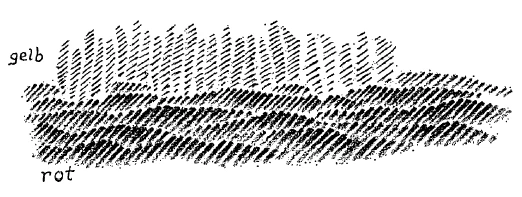
[ 10 ] And if a person were to recognize while awake that his ego and his astral body are connected to the beings of the third hierarchy—in other words, if a person were to truly see through himself completely, not merely sense himself as a free personality, as a human being, and as an earthly human—if a person were to feel this within himself just as he mistakenly feels he is a human being of flesh and blood, then he would not believe that the natural order out there, which presents itself to his senses, is something real enough to withstand the power of ideals. They would know that what is today the natural order disintegrates along with all matter, that there is no conservation of matter, but rather that what is nature destroys itself. And when what is nature today is no longer there, then another external, sensually perceptible reality will have taken its place: what are today ideals will be the nature of the times to come. So that we can say: Today we experience the natural order (see diagram, red) and the ideal order (yellow). The physicist believes that there is a conservation of force and matter, that the natural order continues, and that the same atoms and the same forces will remain active into the future. If he is honest, this physicist can say nothing else but: The ideal order was a dream; it must sink and disappear, just like the dream itself, so that in the final state of the Earth, the ideal dream will no longer be there—it will be buried.
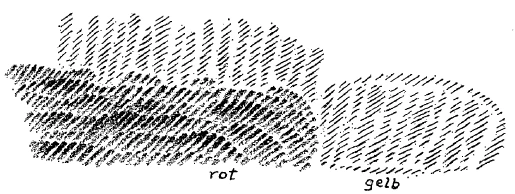
[ 11 ] Spiritual science shows that this is a falsehood, an illusion. We have the natural order, but there is no conservation of energy and matter; rather, what constitutes the natural order ceases at a certain point, and what is today the ideal order forms the continuation of the natural order. As I have already explained—what surrounds our eyes, our ears, and all our senses today will no longer exist once the Earth has entered the Venus state. Then, within that nothingness, the possibility will exist that the ideals of today’s humanity will have become the outer natural order. No worldview that does not recognize the annihilation of the sensory realm can have any hope that the ideal has the power to realize itself; for if the sensory realm were eternal, if there were a conservation of force and matter, the ideal world would be a mere dream. This is what is so immensely significant: that this realization must come to humanity in the present—that the ideals of the present are the nature of the future, and that it is a great delusion to believe that atoms and forces are eternal; they are precisely not the eternal, they are the temporal. One might even say that this is also the fatal flaw of spiritual science: that it must contradict a view which is regarded by today’s mainstream science as the most certain of all, and which is yet nothing other than an Ahrimanic delusion.
[ 12 ] Let us look back once more at what I have just drawn your attention to. Before the Mystery of Golgotha, what might be called human illusion was an illusion of life; after the Mystery of Golgotha, it is an illusion of consciousness. Knowing this helps us understand a great deal about human evolution. Above all, it explains why, before the Mystery of Golgotha, people—who possessed atavistic clairvoyance—did not see what they perceived in its true form, but instead saw the spiritual beings of the higher hierarchies as demons. That is why the ancient mythologies essentially consist of demonology. The gods of ancient mythologies are, without exception, demons. This was due to the illusion of life, which caused human beings, as it were, to conceive of a kind of false natural order as the divine order, just as today they must conceive of a false physical order as the order of humanity.
[ 13 ] Then came the Mystery of Golgotha. Human beings had to, in a sense, attune their state of soul to recognize what had come about through the Mystery of Golgotha. In the waking state prior to the Mystery of Golgotha, the human soul stood in a more direct relationship to the beings of the higher hierarchy than it does today, when the illusion of consciousness prevails. People saw the beings of the higher hierarchy; they merely reimagined them—through the illusion of life—as Zeus, Apollo, and so on; these are beings of the third hierarchy, but they have been reimagined; they are seen under the influence of the illusion of life, just as we today see everything relating to human beings under the influence of the illusion of consciousness. Yet, despite all this, a divine world order shone forth into humanity. Just think how closely the people of bygone times felt their human world was connected to the divine world order! There was the human hierarchy, and then came the divine hierarchy. People did not feel, I might say, as cut off from above as they do today; rather, they extended the world in the direction of the gods. How closely did the Greeks feel their world of gods was connected to the human world, to the human hierarchy!
[ 14 ] Then came the Mystery of Golgotha. From that point on, that was no longer the case. Not the Mystery of Golgotha itself—which was, after all, intended to provide a substitute for what had been lost—but the course of time brought about a development in human history whereby people were cut off from this conscious connection with the divine-spiritual world of the third hierarchy. Yet a memory, a historical memory, remained of it. And so began the first period following the Mystery of Golgotha. People already had to think somewhat differently than before the Mystery of Golgotha, but something from the immediate past still had an effect. In the immediate past, humanity knew that the divine-spiritual beings worked into the fabric of the Earth and influenced and ordered what human beings do on Earth. That is why the people of old were convinced that when they established states—if one wishes to use the word “state” here, it is not entirely accurate, but people today are accustomed to speaking this way—when the people of old, so to speak, established social structures, they knew: These social structures are founded under the influence of the third hierarchy. Humanity perceived its institutions on Earth as divine institutions. You need only study Egyptian history—without even resorting to clairvoyance—to realize that the Egyptians were fully convinced that what people do in their social life here on Earth is established by the beings of the third hierarchy. That was the case before the Mystery of Golgotha. After the Mystery of Golgotha, only the memory of it remained. And what was the consequence? Well, as you know, little by little the Church was established after the Mystery of Golgotha. The Church established a specific sequence of ranks within the ecclesiastical hierarchy: there were deacons, archdeacons, bishops, archbishops, and so on. Such hierarchical structures were established. But behind this establishment of hierarchical structures lay a very specific idea. This is still very clearly evident in the writings of the early Church Fathers. If you read Dionysius the Areopagite, you can clearly see this. The structure of church administration was intended to be such that it would be a reflection of the divine order. Just as the deacon relates to the archdeacon, so this was to be a reflection of how an angel relates to an archangel. And likewise, the relationship between the archdeacon and the bishop was to be a reflection of that between the archangel and the arch. And so the social structure of the Church should be a kind of reflection of theocracy: at the top, in the spiritual world, the hierarchies stand in successive levels; at the bottom, as a reflection of the spiritual hierarchies, the ecclesiastical dignitaries should stand in successive levels. In the early period following the Mystery of Golgotha, this was not conceived in legal terms, but rather in theocratic terms; it was a reflection; the church hierarchy was conceived as a reflection of the spiritual-divine hierarchy. Thus, in the early Christian centuries, the intention was to cultivate institutions on earth that would allow the relationships between people on earth to appear as a reflection of the hierarchies above in the spiritual world.
[ 15 ] Gradually, people lost the awareness they had retained—through memory, through historical memory—from the time of the ancient theocracy, when they still knew that earthly institutions were truly a consequence of divine acts. Abstract concepts took the place of the living world of gods that people had once beheld in ancient times and still knew about. The awareness that there is a world of individual gods up above was replaced by abstract metaphysical concepts. And the centuries came when people substituted abstract concepts—a metaphysics of abstract concepts—for individual gods, whom the Christians called angels. The divine order, which was supposed to have its reflection in the human order, imparted something theocratic; the application of mere concepts to the human social order imparted something—indeed, something that could only be intended to maintain order in human coexistence. Whereas people had previously sought to create a reflection of the divine world within the structure of human society—the social structure of humanity—during the metaphysical era they focused solely on maintaining order, punishing the wicked, sparing the good, or even rewarding them, as appropriate, in order to establish order so that the social order might endure. When abstract metaphysical concepts had taken the place of living gods, the sole concern was to create a human order that, so to speak, stamped people with a mark, making one person the superior of another—not because this superiority was meant to be a reflection of the relationship between the archangel and the angel, but because order can exist only when one commands and the other obeys. Abstraction took the place of the living interweaving of the social order.
[ 16 ] This is essentially the era of real metaphysics throughout the Middle Ages. Roman consciousness essentially provided the elements for this metaphysical order, which spread everywhere. The term “prince,” for example, still serves as a reminder of the theocratic order; he is the first because someone must be first, just as in the divine hierarchy, too, someone is first. A remnant of the purely metaphysical order—the bureaucratic order, the administrative order, which is order for its own sake—is the word “Count,” which is related to grapho, “to write.” The fact that everything is recorded by maintaining order, by drafting documents, and by drawing up contracts—that is the metaphysical order.
[ 17 ] Then the modern era dawned. It brought with it a rejection of abstract concepts and a rejection of metaphysics. People could only believe in what was outwardly perceptible, even in human life. An awareness of those traditions that still existed in ancient times—when traditions were, in fact, a living awareness that something else was at work in the social structure—whether, in earlier times, people believed in gods or, later, in metaphysical concepts—such a living awareness could no longer exist in modern times. This must first be regained through the paths indicated by spiritual science. And industrialism has brought about a radical eradication of all awareness of the spiritual foundation of the social structure. That is why Auguste Comte and Saint-Simon felt particularly connected to the age of industrialism, since they were willing to accept only positivist science—that is, that which relates solely to the external, sensory, and causally necessary order of nature.
[ 18 ] As a result, the very concept of truth has undergone a complete transformation. People today do not yet have the proper sense that the concept of truth has evolved over time; they still lack a clear understanding of this. People who still saw themselves as living within a theocratic order did not have the same concept of truth as people today, who arrive at their concept of truth based on the authority of natural science. It is extraordinarily difficult to speak about these things. Today, people think: With regard to the world order, truth is the correspondence between a concept and an external reality. — That stems from natural science. Such a concept of truth did not exist even in the early Christian centuries; there was a different one, and this other concept of truth is essentially linked to the theocratic social order. This concept of truth, as it lives in all souls today, truly did not exist back then. This extraordinarily important fact is often overlooked. The concept of truth that prevailed back then can be grasped much more readily if one relates it to the judgment of God, to the idea of God’s judgment. When two people engage in a duel—how people approach duels today is beside the point; I’m only using this as an example—it cannot be decided in advance by any kind of calculation: that A will win and B will lose; if that were the case, they would hardly engage in the duel at all; rather, the truth only becomes apparent as events unfold. We still hold onto this concept of truth today when war is waged. One would probably not wage war if one knew everything from the outset, just as when conducting an experiment in a chemistry lab, having weighed all the factors, and then knowing how it will turn out; if one knew from the outset how a war would end, one would not wage that war. The old concept of truth is still embedded there today—that truth can only be revealed in the course of events, that one can do nothing but wait and see how God’s judgment turns out. That is the old concept of truth.
[ 19 ] Those who, like Auguste Comte or today’s socialists, have completely broken with this concept of truth—for other people do not possess it; they merely believe in it—recognize truth only when events can be foreseen based on their natural course. “To know in order to foresee”—that is Auguste Comte’s motto. “To know in order to foresee”—that is the radical reversal of the concept of truth in our time. But with this concept of truth that we have today, we can only comprehend nature. And in this regard, people still succumb to a truly colossal delusion. For example, they believe they can grasp historical life with this concept of truth held by Auguste Comte and Saint-Simon. That is impossible! Nor can it be done with the old concept of truth based on the “judgment of God,” for that was influenced by the illusion of life; our present-day concept of truth is influenced by the illusion of consciousness. We must embrace the concept of truth in anthroposophy—a concept of truth that is arrived at in a far more comprehensive way than, for example, Augustine arrived at his concept of truth; for his, as I have explained to you, was subject to illusion.
[ 20 ] This is connected to many things; a great deal depends on it. For it is not enough to speak in general and in the abstract about the development of the concept of truth; rather, one must know in detail how the concept of truth leads the human soul down different paths, depending on the nature of that concept. To speak of nationality today in the same sense as was possible in pre-Christian times is an anachronism; for in pre-Christian times, it was not merely a human conception that the divine order extended into the human order—it was actually the case. Now it no longer extends into it. Therefore, wherever human consciousness today is attached to natural orders—to that which is brought about merely by the sequence of births, to the national principle, for example—there one is caught in an anachronism. Today, in the post-Christian era, human beings are compelled to seek structures for their social order other than those imposed from without. The person of old could look to their nationality because they regarded nationality as an institution of the divine order and earthly life as a reflection of the divine order. The modern person cannot, in the same sense and without falling into an anachronism, revere the nation itself as something special; they must seek other social structures. To revere the nation as something special would bring about today’s Ahrimanic delusion. Nations are remnants of the pre-Christian era, and modern humanity must move beyond them through the development I have indicated to you. One must recognize how concretely people are striving for a specific development of the concept of truth. This is important, even if it is uncomfortable today. But if we are to adopt an unbiased standpoint for a true grasp of reality, we must accept many such uncomfortable truths.
[ 21 ] People today are now actively moving toward what anthroposophy seeks. The worldview that found a prominent representative in Auguste Comte is limited solely to the external order of nature. We must once again penetrate into the spiritual world, and a bridge must be built between reality and ideality. That is precisely what I wish to emphasize in these lectures. But this cannot be achieved merely by talking about these things; rather, it requires grasping the concrete impulses that exist in the world. To do so, however, one must look at certain facts with complete impartiality. There are curious facts associated with the things we are now considering. Just think: yesterday I spoke to you about Saint-Simon and Auguste Comte. Both regard only positivist science—that is, that which relates solely to sensory experience and the causal order of nature—as decisive. And yet there is the curious fact that Auguste Comte turned away from his teacher and mentor, Saint-Simon, because Saint-Simon gradually became too mystical for Auguste Comte; and many of Auguste Comte’s followers turned away from him because he became quite mystical in his old age. Here is the strange fact: both Saint-Simon and Auguste Comte, on the one hand, stand quite directly on the ground of the most Ahrimanic scientism—and consciously place themselves on the ground of the most Ahrimanic scientism in the age of industrialism—and yet they become mystics! Strange, indeed—it is a strange fact!
[ 22 ] One must ask why this is the case. However, the “why” behind such a fact becomes clear only when one objectively considers this way in which people live in opposition to spirituality. Unconsciously, people strive toward spirituality. And even those who, like Auguste Comte and Saint-Simon, seek only to grasp the external order of nature, strive toward spirituality.
[ 23 ] There is something very peculiar about modern human life. Let us consider another fact, which we wish to examine with complete impartiality, without any national chauvinism, which does not become us. The views that have emerged as the flowering of modern national cultures reflect, in a certain way, what lies at the foundation of these cultures. And from this perspective, I would like to draw your attention to another fact; I would like to draw your attention to a very influential English philosopher, Bentham, who lived from 1748 to 1832. Bentham can be regarded as characteristic of his people’s way of thinking. And one has, with some justification, described Bentham’s views as utilitarianism—and, in a deeper sense, as utilitarianism; for a certain principle regarding the ideal world order underlies Bentham’s thinking. This principle is commonly referred to as the maximization of human happiness. This human happiness consists in the fact that Bentham formulated the proposition that the good—that is, the ideal to be striven for—consists in the greatest happiness of the greatest number of people on earth. Let us consider this proposition carefully: The good consists in the greatest happiness of the greatest number of people on earth. — This proposition regarding the maximization of happiness on earth is, in fact, a cornerstone of the philosophy of utility.
[ 24 ] Now one must bear in mind that this statement was described as absolutely Ahrimanic—not by Bentham himself and his followers, but by those who stand on spiritual ground. The occultists of our own country say that Bentham formulated this purely diabolical proposition. They call it diabolical because, as the occultists say, if it were true that the good consists in the greatest happiness of the greatest number of people, then evil would have to consist in the greatest happiness of the smallest number of people.
[ 25 ] I am not going to present you with something I myself consider a definition or an explanation, but rather what people say. So, on the one hand, there is Bentham’s English philosophy: the maximization of happiness; on the other hand, there is English spiritualism, which says: Bentham’s principle is purely diabolical, for it would then mean that evil is the greatest happiness for the smallest number of people; from which it would follow that evil and happiness could coexist, which the spiritualist cannot accept under any circumstances. I am presenting to you here just one fact of intellectual life that is, in the most eminent sense, significant of the most immense opposition in which Spiritualism finds itself vis-à-vis the external worldview in a certain part of the world.
[ 26 ] And now, as I draw your attention to the fact that these contradictions are to be resolved in tomorrow’s reflection, I will once again offer a brief insight to conclude my remarks. You can group three things together: Goetheanism, Comteanism, and Benthamism. These three things stand in a certain relationship to humanity’s spiritual striving toward the future in three distinct ways. German Goetheanism, as such, is of such a nature that Spiritualism can develop from it; French Comteanism is of such a nature that Spiritualism can develop alongside it, just as a remarkable mysticism emerges alongside positivist philosophy in the works of Auguste Comte and Saint-Simon; in English utilitarianism, as seen in Bentham, nothing else is possible but the sharpest opposition from spiritualism against the popular view. This is something inherent in the very nature of development itself. The French character must develop in such a way that idealism and realism, mysticism and positivism coexist; in England, within the British character, things will develop more and more in such a way that the minds that become spiritualists there will, in the sharpest manner, have to gradually combat their own folk tradition—that is, that which the folk tradition produces as a philosophical flowering.
[ 27 ] In the case of Auguste Comte—I am not presenting theories to you, but rather stating the facts, or at least certain facts—even though he rejected his teacher Saint-Simon when he turned to positivism, there is such a clear inclination toward mysticism that, toward the end of his life, he explicitly embraced a trinity. He venerates three things: first, the Great Fetish; second, the Great Medium; third, the Great Being. And he says: The Great Fetish is the womb of humanity in space. Space is the medium from which humanity emerges from the womb. The Great Being is humanity itself, in the abstract, spread across the earth. Auguste Comte acknowledges this Trinity. A remarkable fusion of positivism and mysticism! We will discuss this further tomorrow.