

Past and Future Influences on Social Events
GA 190
28 March 1919, Dornach
Translated by Steiner Online Library
Fourth Lecture
[ 1 ] First, I have a few points to make that may seem less directly related to the discussions we are currently having here—namely, the discussions regarding the social question. But it will become clear as early as tomorrow just how this connection does indeed exist. Last time, I concluded by showing you the reasons why children born in recent years—since around 1912–1913—bring with them from their spiritual life before birth, one might say, a certain ‘reluctance to immerse themselves in what they find here on Earth as a cultural heritage from their direct or indirect ancestors of the past centuries. I told you that among the concrete experiences one can have of the spiritual world is that a kind of encounter takes place in the spiritual world between the souls of those who have recently passed away—who thus return through the gate of death into the spiritual world—and those souls who are just preparing to re-enter the earthly realm. The connections people had with the spiritual world before they died continue to have a very strong effect after they have passed through the gate of death. This is of particular significance for our time. In our time, only a few atavistic feelings remain in human beings that connect them to the spiritual world. Therefore, they receive impulses—which they can then carry upward into this spiritual world after passing through the gate of death—only if they consciously engage with the spiritual world through their imagination. There is already a significant difference today between those who have passed away who have received ideas about the spiritual world from somewhere—ideas that exist in the form of genuine thoughts—and those who have lived solely within the concepts of our materialistic culture. There is a great difference between these souls in the afterlife, and this difference is felt particularly strongly by those souls who are just preparing to descend to Earth once more for incarnation.
[ 2 ] Now, as you know, in recent times—right up into the 20th century—materialistic tendencies, materialistic thinking, and materialistic feelings have become increasingly intense on Earth. Thus, the people who pass through the gate of death into the spiritual world have few impulses that, so to speak—if I may put it that way—awaken favorable expectations regarding their earthly sojourn in those who now wish to descend to Earth.
[ 3 ] This had reached its peak in the second decade of the 20th century. And so those children who were born in the second decade of the 20th century came into the world with a strong spiritual aversion to what was considered traditional culture and traditional education. This stream of impulses that entered the world with these newly born children contributed powerfully to arousing on Earth the inclination to wipe away, to sweep away, this old culture—the culture of the capitalist and technological age. And anyone who is truly able to grasp the connection between the physical and the supersensible worlds will not misunderstand when it is said that the longing for a spiritual culture that lives in the hearts and souls of our youngest fellow human beings has played a significant role in what has been happening on Earth in recent years. You see, my dear friends, this is, so to speak—if I may say so—the bright side of the sad, the terrible events of recent years. It is a bright side because it shows that the terrible things that have been wrought—if I may put it that way—due to the stagnation of the materialistic age, were willed by Heaven and sent down as a message through the subconscious of the most recently born children. This is the expression of the soul, which is quite different in the very youngest children than in those born, say, in the 19th or early 20th century. And it will certainly be necessary for humanity to attune itself to such more subtle observations. Today, humanity takes pride in its practical sense. But where this practical sense ought to be applied to the observation of real life, everything is overlooked; people talk and think their way past it all. People today pay little attention to the melancholic expression that has been appearing on the faces of many very young children over the past five to six years. If they were to notice it, they would draw from it—from that alone—the impulse that a powerful social movement must take hold.
[ 4 ] But one must simply cultivate a sense for the gaze, for the physiognomy that a person bears in the very earliest years of their earthly existence; for this, however, it is necessary that people develop this sense. Now, much of this sense can be developed—as grotesque as that may still seem to some today—if one engages a little—but not merely by seeking sensation, but by being fully present with one’s soul—with what eurythmy actually aims to achieve. You will soon see why.
[ 5 ] Anyone who is able today to communicate with the dead through occult experience—since one communicates with the dead through thoughts—will very soon notice that many of the thoughts through which one seeks to communicate with the dead are not understood by them. Many of the thoughts of people here on Earth—the thoughts to which people have become accustomed—sound to the dead—you must, of course, take this in the appropriate context; I am speaking of thought communication with the dead—like an incomprehensible, foreign language. And when one examines this entire relationship more closely, one finds in particular that verbs, as well as prepositions and, above all, interjections, are understood relatively easily by the dead, whereas nouns are hardly understood at all. They constitute, so to speak, a certain gap in the dead’s understanding of language. The dead person never understands when you try to speak to them using many nouns. And you notice that when you try to convert a noun into a verb, they then begin to understand. For example, if you say to a deceased person, “The seed of something—,” the word “seed” remains incomprehensible to them in most cases; indeed, it is as if they heard nothing at all. If you say that something is sprouting—that is, if you transform “the seed” into the verb “something is sprouting”—then they begin to understand.
[ 6 ] Why is that? You come to realize that it is by no means the fault of the deceased, but rather your own. It is due to the person speaking to the dead, and this is because, since the mid-15th century—at least in all Central and Western European languages (and this is all the more true the further west one goes)—people have lost the vivid visual sense of what a noun expresses: it has become something nebulous that really only resonates in the mind when a person uses a noun today; very few people even think of anything concrete at all when they speak in nouns. When they then have to transform the noun into a verb, they are inwardly compelled to think a little more concretely. When someone says “the seed,” in most cases—especially when speaking in abstract terms—you will not find that they are still concretely picturing any particular plant seed, such as a sprouting bean; they imagine something quite nebulous, just something in principle. If you say “what germinates” or “that which germinates,” then you are at least compelled—by the fact that you’re using the verb form—to think of the process of emerging, that is, of something that is moving. This means: you move from the abstract into the concrete. By moving from the abstract into the concrete yourself, the dead begin to understand you. But people will be compelled—because, for reasons I have often cited here, the living connections between those living here on Earth and the disembodied souls who have passed through the gate of death must become ever closer and closer, and because the impulses of the dead must increasingly influence the Earth— they must gradually incorporate into their language, their speech, and thus their thinking, something that bridges the gap from the abstract to the concrete. It must become a genuine endeavor for people to think in a pictorial, imaginative way once again when they speak.
[ 7 ] Now I ask you: How many people, for example, think in concrete terms when they—let’s say—read about a court hearing where judges were present, who adjudicated, handed down judgments, and thus exercised their judicial functions? Where on earth does anyone think in concrete terms when someone utters the noun “the law”? Just imagine for a moment this most elusive abstraction that exists in people’s minds when the law is discussed, when “right” or “what is right” is expressed in language? What, strictly speaking, is the law? We have spoken at length about how the state should, above all, be a state governed by the rule of law. But what, in and of itself, is the law? For most people, it remains a very shadowy concept—one that plays out in abstractions of the wildest kind. How, then, can you arrive at a concrete conception of the law? Let’s go through this in detail using a specific case.
[ 8 ] You’ve probably heard that certain people are called “clumsy.” What are clumsy people? You see, when we try to do something with our left hand—unless we’re left-handed—we usually do it awkwardly; we’re not very good at it. If someone behaves throughout their entire life the way you yourself behave when you do something with your left hand, then they are “left-handed.” The term “left-handed” is based on a very concrete idea: They do everything the way I do it when I do something with my left hand; not some vague abstraction, but something very concrete: That person behaves the way I behave in those situations where I do something with my left hand. Taken concretely, this gives rise to an emotional contrast between what is “left-handed” and what is “right-handed”—between what one does with the right hand and what one does with the left hand. And what is “right-handed” becomes, as a noun, “the right.” The Law is simply, in its original sense, that which is so skillfully adapted to reality as what one does with the right hand and not with the left.
[ 9 ] You’ve already brought some concreteness to the matter. But now imagine—you only need to picture it with a watch, but there are numerous other cases where one could do something similar—when you have to set a watch, you generally don’t turn it with your left hand, but with your right: that’s how you set the watch. This turning from left to right, which you do with your right hand, is the concrete act of setting, of adjusting. People even say “to set things right.” There you have the concrete image of moving in a circle from left to right, of setting things in order. That is “richting.” Someone who has strayed to the left, where they should not have gone, is set straight by the judge.
[ 10 ] It is through such things that you come to associate concrete, pictorial images with words. You see, until the 15th century, such pictorial images were still linked to words for everyone. This pictorial imagination has only recently been cast aside. To achieve this, one must once again train oneself to return to this kind of visual imagination. For the dead understand only that which still resonates visually within language. Everything that—as is usually the case in today’s speech—no longer sounds visual, that which is no longer formulated in a visual way so as to evoke a visual image in the listener’s mind, is incomprehensible to the dead.
[ 11 ] If you think about it further, you will see that, in all this translation into imagery, it is actually the substantive aspect that is lost first. It all shifts into the verbal, into the realm of verbs—or at least it shifts into something such that one is compelled to develop visual images. If one develops a style today in which visual imagery underlies everything, the usual response is: “People don’t understand this; it’s hard to grasp.” But anyone who is sincere about our times consciously strives for a style that can be conveyed entirely through images. In the pamphlet I’ve just published on social issues—even there, where one is so strongly pressured toward abstractions, because the present, whenever the social question is discussed, brings forth almost nothing but abstractions—even there I have strived to stylize my writing as much as possible so that things can be translated into images. Especially in today’s discourse on social issues, the capacity for abstraction has been pushed to the absolute extreme. And people have gradually become accustomed to accepting words, as it were, as mere verbal coins, with which they no longer associate any concrete imagery whatsoever. Read a social pamphlet or a book on social issues today: you can only make sense of it if you’ve spent years getting used to what is meant, for the entire meaning of such discourse actually rests solely on the conventional use of words. Who today, when speaking of “the propertied,” feels that this word has any connection whatsoever to “being possessed”! And yet, the genius of language—which, as I have often observed, is far, far more significant than what any single human individual can think or say—has created countless connections that merely need to be discovered by the individual in order to re-enter a certain spiritual life. And precisely when we strive to seek the verb behind every noun, and—as a matter of practice—do not always speak of “light” and “sound,” but rather of “that which shines” and “that which resounds,” and then find ourselves compelled to focus more and more on the essential as opposed to the non-essential, we embark on a path that can be beneficial in this regard.
[ 12 ] The adjective is already much better than the noun. It is much more concrete when I say, “Whoever is diligent—” than when I simply say, “The diligent one.”—But “the diligent one” is, in turn, much more concrete than if I were to invoke that dreadful specter—“the dead” perceive it as a dreadful specter, after all—“diligence.” When you say: “the how,” “the what”—Goethe once coined the beautiful phrase: “Consider the what, but consider the how even more”—then that is living language for the dead precisely because you yourself are compelled, by using such words as “what” and “how” as nouns, to feel them concretely. If you say today: “As a matter of principle, I take a certain standpoint”—then you have cited two spectres for the dead: first, “principle,” because hardly anyone today associates anything concrete with the word “principle”; second, “standpoint.” This specter of “StandPunkt” is, after all, already so corrupted in our language and in all Western European languages that when someone speaks, they usually omit the very most important part. Even typesetters sometimes correct you! When I write in a manuscript: “When one sees something from a standpoint—,” the typesetter usually removes the “from,” and one has to put it back in the proof; for people have grown accustomed to saying the nonsense: “When one sees something from a standpoint.”—When speaking concretely, one can only say: “When one sees something from a standpoint”—this introduces a sense of concreteness. But “if one sees something from a standpoint”—at most, for someone speaking concretely, it’s possible to imagine seeing something from the point on which one is standing: a little bit of that point. Well, a little bit of that point is already hard to imagine in and of itself, isn’t it?
[ 13 ] You see, these things are extraordinarily important and significant, for they point to the intimate connections between the sensory and the spiritual worlds. These things give a much better sense of the relationship between the sensory and the supersensory than most of what is expressed about it today in abstract terms. Go through the spiritual science literature that I have attempted to write, and examine it in terms of its method. This is an examination that very few people have likely undertaken to this day, for the method has always been such that one thing is explained through another, and that things always point to one another. And a true understanding of the spirit cannot be brought about in any other way than by one thing always pointing to another. Just take the word “spirit”! Spirit, spirit, spirit—everyone today seems to feel they must speak of it if they want to rise above materialism. Let’s take “spirit” in the German language. In Latin, it has an even more concrete character: Spiritus—but, isn’t that something that won’t lead most people very far toward the Spirit, in the sense of what is meant by “Spirit”? And when you then reflect on it, the matter becomes very abstract, because you can’t really imagine a “Spiritus,” can you? Yet that is the concrete concept that underlies it. But what is “Spirit”? Most people, when they imagine the spirit—and I’ve often criticized this—picture only a very, very thin substance, a sort of quite thin mist, and when they want to talk about the spirit in any context, they speak of “vibrations.” I used to hear people say often—not exactly in theosophical gatherings, but at theosophical tea parties—that: “There are such good vibrations here!”—I don’t know what they meant by that, but in any case, that, too, is a very material process that one imagines into the room. The word “Geist,” “Gischt,” “Geischt,” “Geschti” is, after all, something like steam spurting out of some opening; that would be the concrete image. But in our present age, the fifth post-Atlantean cultural epoch, it’s impossible to arrive at any concrete conception of the spirit in this way; it’s simply impossible. For, isn’t it true that either you get stuck with some shadowy abstraction that you associate with the word “spirit,” or you’re compelled to think of alcohol, of wine spirit; in the case of an “enthusiastic person,” you would then arrive at a curious notion. Or else you might think of spray, of “Geischt”—something that sprays out of some crevice where a valve opens. That is how you would arrive at the concrete.
[ 14 ] Now, in the method introduced here in the anthroposophical practice of spiritual science, an attempt is made to gradually translate these concepts into concrete terms through the interdependent conditions to which reference is made. Just consider that, on the one hand, it is said that the human being is composed of the physical body, the etheric body, the astral body, the soul of sensation, the soul of understanding, and the soul of consciousness; and then “spirit” appears: the spiritual self, the life spirit, the spiritual human being. These terms are only touched upon with full awareness, since most of those listening to this subject cannot yet form concrete concepts of them. But very soon afterward, people are told: Consider the course of a human life: from birth to the age of seven, until the teeth change, the physical body is primarily active; then, until the age of fourteen, the etheric body; then the sensory soul; then, from the age of twenty-one to twenty-eight, the soul of feeling; then, in one’s thirties, the soul of understanding or the emotional soul; and so on. This is meant to point people toward the following: Observe externally, in the specific individual who is developing throughout the course of their life, the differences that arise. When you observe a person with their particular characteristics who is in their early twenties, let these characteristics serve as symptoms of what you are to imagine when the term “feeling soul” is used. If you observe a child with the characteristic of wanting to do everything that adults do—to live through the physical body—then the way the child behaves gives you an idea of what is actually meant by the “physical body.” And if you observe an elderly person with gray hair and a wrinkled face, where the physical form is noticeably withering, and you observe him in his movements, in the way he lives through them, then you no longer see—as with the child—how something that is within him lives out its life primarily through the physical body; rather, you see at work in the old man that which is already beginning to detach itself from the physical body. Observe the elderly person: through his gestures and the nature of his behavior, you will gradually rise to a conception of the spirit. When you compare the elderly person with the child and the elderly person’s gestures with the child’s imitative gestures, a sense of the difference between spirit and matter awakens in your soul. — Consider how this aids imagery and imaginative visualization. Here, the person is prompted: Imagine the course of a person’s life in concrete terms and feel something through that life story; then your otherwise abstract words will be filled with concrete meaning.
[ 15 ] And once again, attempts are being made in every possible way to show how humanity as such has become younger and younger, how we are now twenty-seven years old—that is, how our culture consists in the fact that we, as humanity, are twenty-seven years old. If you compare this with what you know of earlier cultural periods, and what you can hope for from later cultural periods, this in turn supports your ability to visualize. Making comparisons—or forming mental images—is something through which you progress from the abstract to the concrete and come to the point where you gradually no longer regard abstractions as abstractions at all, but rather transform them into the concrete, listening in on the genius of language.
[ 16 ] Today, schools really ought to step in to help with this—which is a major cultural task. Exercises should be conducted in school to make these ideas concrete, so that when a person speaks, they begin to feel at home in their speech, to feel at home in the world through their speech. Take, for example, suppose I’ve written something on the blackboard. Someone says to you, “I don’t understand that.” — Think of the shadowy abstractions you sometimes have in your mind when you say, “I don’t understand that.” — They would become concrete, in fact, if you tried to imagine that you wanted to grasp it, to reach out for it, yet you don’t grasp it; you fall short; you can’t get to the heart of the matter. — But then you would have to visualize it with your hands. Try doing this with the most important words—what will you do then? You will actually be practicing eurythmy in your mind! For when you speak concretely, you’re actually doing eurythmy in your mind. You simply can’t help but do eurythmy in your mind. And anyone who is truly alive to such things perceives most people today—forgive me—as terrible slackers, as people who are actually always walking around with their hands in their pockets, unwilling to move, and yet still talking. For to imagine abstractly—as perceived spiritually—is to bring the heels and the tips of the feet together, put the hands in one’s pockets, and constrict everything within oneself as much as possible! That is how people today speak. To leave concreteness out of one’s ideas: that is, in fact, to be “sluggish”! But that is how most people are today. People must become flexible again inwardly; that is, they must empathize with the world. Even those who do so sometimes do it only unconsciously. You know, when people think about something, they do it with their finger on their nose. But people aren’t even aware that this is a very concrete eurythmic gesture for the desire to feel strong in order to make a decision. People today don’t even think about why they have a right and a left hand, or why they have two eyes. And scholarly books contain the most outlandish claims—particularly regarding vision with two eyes—that actually explain nothing at all. For if we did not have two hands, so that we could grasp the left with our right, we could never have a proper sense of the “I.” It is only by grasping like with like from right to left that the sense of the “I” gradually becomes possible in the right way. And just as we can bring our right hand to cross over our left—just as we perceive ourselves and are amazed by our perception, by the fact that we perceive ourselves—so too do we cross the axes of our eyes. They are simply not as visibly crossed as our two hands. And so that we can cross them, we have two eyes, for the same reason that we have two hands or arms.
[ 17 ] This is what one must keep in mind when considering the more intimate necessities of human development from the present into the future: this necessity to incorporate into language what is currently lacking in it. And because it is missing, human beings shut themselves off from the entire world in which they find themselves, caught between death and a new birth. That is why we are always advised that, if we wish to establish a connection with a deceased person, we should not simply speak to them in abstract terms, for that does not lead to much; rather, we should imagine a specific situation: You stood beside them, you heard their voice, and that brought you together with them in feeling—to imagine the situation and everything that happened there in very concrete terms; that is what connects us to the deceased. For people today need language in a way that effectively cuts them off from the world of the dead; the genius of language has, for the most part, died and must be brought back to life. This will likely require letting go of many things that people today are accustomed to regarding as figures of speech and the like! This is what so much, so very much depends on, my dear friends. For only in this way will we—as I have already mentioned here as necessary for future development—return to imaginative thinking, by truly trying to listen in on the genius of language to discover what concrete reality underlies the words. Then we will gradually free ourselves from this convoluted abstraction.
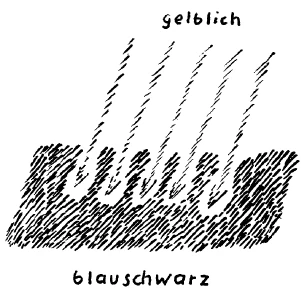
[ 18 ] And something else will happen. Today, people feel immense satisfaction when they can think in abstractions, when they can break free from reality—which for them is sensory reality. But in doing so, they actually only fall into nothing but holes in their imagination—at least for the dead, these are holes in their imagination. And when people today speak of spirit, spirit, spirit, these are just as many holes in their imagination, for people do not imagine anything concrete. Most thoughts today are abstractions. The farther one goes east—so say the Europeans—the more figurative the language becomes. That is precisely why language becomes more in tune with the spirit the farther one goes east: because it is more figurative. Speaking in abstractions should not, in fact, lead one away from sensory-concrete imagination, but should merely shed light on it. But just think for a moment: Have many of you—or will many of you—have thought of the concrete nature of the very sentence I have just uttered: “Sensory-real conceptions are to be illuminated by abstractions”?—You must therefore imagine the sensory-concrete conceptions as dark, as a darkness; into which light is shed by abstraction. So when we utter the sentence: “Abstraction sheds light into our concrete representations”—we imagine rays of light falling into a dark room, which may be blue-black, while the light falling into it shines with a yellowish glow. When I say the sentence: “Abstractions shine into our concrete sensory images”—I have a dark room in my mind into which bright rays of light fall (see drawing). How many people today actually have such an image alive in their minds? They utter the word “illuminate” without in any way still possessing the concrete image in what they call their mental consciousness. But what matters is that we not only conceive of the concrete, the sensory, differently when we move toward abstraction, but that we have a sensation of this different way of conceiving! We can acquire this sense by observing Boryilism; for there, what lies in the words is expressed through a different, less worn-out means—namely, the gesture. And people can find their way back to pictorial imagination.
[ 19 ] Few people are aware that stretching out a hand is a true “I,” because they do not realize that when they pronounce the “I” and associate this “I” with a concrete image, they are stretching something in their etheric body. But you gradually come to realize that you are stretching something in your etheric body when you pronounce “I,” when you observe precisely this same movement in eurythmy. So this is not some arbitrary concept that is now being introduced, but rather something that is in fact extremely closely connected to our cultural development.
[ 20 ] You see, it is important to understand this. We are now in the fifth post-Atlantean epoch; ahead of us lie the sixth and seventh, leading up to a major turning point in human development. During this fifth post-Atlantean epoch, languages must once again return to concreteness, to pictorial imagination. Only in this way can we truly fulfill the task of this fifth post-Atlantean epoch. Now, the more the state subjugates spiritual life, the less languages will return to pictorial imagination. The more schools and institutions of the spirit have been nationalized in recent centuries, the more abstract life as a whole has become. Only a spiritual life built upon itself will be able to bring about this necessary visualization of the spiritual essence of the human being—a visualization that must be brought about. Within this endeavor, events will arise in the course of the fifth post-Atlantean epoch that will interfere very disruptively with spiritual endeavors. During this fifth post-Atlantean epoch, every human being will feel truly at home only if they can imagine themselves in the following situation: You are standing in the world; you must be aware that, on the one hand, you are constantly drawing closer to the Luciferic entity, and on the other hand, to the Ahrimanic entity (this is illustrated). This vivid sense of being placed within this trinity as a human being must increasingly permeate people during the fifth post-Atlantean epoch; through this, they will transcend the great dangers of this fifth post-Atlantean epoch. The most diverse human characters will emerge during this fifth post-Atlantean epoch: there will be idealists, and there will be materialists. But the idealists will constantly face the danger that their ideas will lead them into Luciferic realms, that they will become dreamers, fantasists, fanatics, Lenins, Trotskyists—without any real grounding; their will can easily turn Ahrimanic, despotic, tyrannical. What, in fact, is the difference between a tsar and a Lenin? — The materialists will easily become Ahrimanic in their ideas—sober, philistine, dry, bourgeois; in their will, the materialists can become Luciferic—animalistic, lustful, nervous, sensitive, hysterical. I will write this on the board:
Idealists:
Ideas can easily become Luciferic;
Enthusiasts, dreamers, visionaries.
Will can easily become Ahrimanic; despotic, tyrannical.
Materialists:
Concepts can easily become Ahrimanic;
sober, philistine, dry, bourgeois.
Will can easily become Luciferic;
animalistic, lustful, nervous, sensitive; hyeteric.
[ 21 ] As you can see, idealists and materialists—albeit from different perspectives—face the same dangers in the fifth post-Atlantean epoch: idealists face the Luciferic forces on the level of thought and the Ahrimanic forces on the level of will; the materialists, on the part of their ideas, to the Ahrimanic, and on the part of their will, to the Luciferic. The various characters that emerge will exhibit this in a wide range of degrees. Therein will lie the difficulty of truly advancing humanity, for all of these will simultaneously be sources of humanity’s straying. For human beings will never be able to make true progress by being one-sidedly idealists or materialists, but only when they have the good will to penetrate material reality with understanding, just as they must, on the other hand, allow themselves to be enlightened by the spirit in the right way. But one must not become one-sided, not even with regard to the most concrete aspects of life—certainly not then.
[ 22 ] Those who love only children run the risk of being subjected to very strong Ahrimanic influences; those who love only the elderly run the risk of being subjected to very strong Luciferic influences. A diversity of interests—that is what people will need if they wish to contribute to the fruitful development of culture as we look toward the future. This will be the primary task of the fifth post-Atlantean epoch. But these three epochs, which are yet to come, will overlap considerably. What will come to expression in the sixth period must already be developed in the fifth, as must what will come to expression in the seventh; in the future, things cannot be separated as clearly as they were in the past. And for the sixth epoch, it will be necessary above all for human beings to succeed in binding the Ahrimanic forces—that is, to come to terms with reality in the right way. How will they cope with reality? For this, it is necessary above all that the legal life—which has separated spiritual life from economic life—that this legal life, that is, the life that must be lived democratically from person to person, must now become as conscious as it was unconscious during the Egyptian-Chaldean cultural period. Human beings must learn to perceive, in all that takes place in the world between one person and another, that significant events have a higher significance. Such ideas must come alive, as they were sketched out in my last Mystery Drama in that Egyptian scene where Capesius explains how what is happening there in that confined space has significance for the entire course of world events. When people come to realize once again that one cannot lie to anyone without powerful forces raging in the spiritual world, then something will be fulfilled that must increasingly be fulfilled in the sixth post-Atlantean epoch. — And when we once again come to the possibility of a wisdom-based paganism existing alongside Christianity, then something will be realized that is particularly necessary not only for the seventh post-Atlantean epoch but also for the present time. People have lost their connection to nature. Nature no longer speaks to people through its signs. How many people today can still imagine what is meant when one says: “In summer the earth sleeps; in winter the earth awakens”? — For them, this is an abstraction. It is no abstraction! We must once again establish such a relationship with all of nature that human beings actually feel themselves to be one with all of nature.
[ 23 ] These are things that are essential to our innermost spiritual life. We will talk more tomorrow about how they relate to what we might call social impulses.