

Past and Future Influences on Social Events
GA 190
6 April 1919, Dornach
Translated by Steiner Online Library
Eighth Lecture
[ 1 ] When we allow such thoughts to pass through our souls—as we discussed once again yesterday—we do so in light of the gravity of our times, which, as we know, is unfortunately not universally felt, nor even truly felt by a reasonably large circle of our contemporaries. We will only be able to say that this gravity of our times is truly felt when a larger number of people come to realize that a path—specifically, a path appropriate to our times—toward spiritual understanding is necessary, and that this path toward spiritual understanding is, in a sense, the only real cure for the ills and maladies of our time. Faced with such a situation, the question must inevitably arise within us: Where do the foundations of the ills of our time lie? What is the actual cause of the maladies of our time? — And even though many people today are inclined to look for these ills, these maladies of our time, elsewhere than in human beings themselves, it is nevertheless infinitely important to realize that seeking these ills within human beings themselves is the only path that can in any way lead to a goal.
[ 2 ] When we look at the present, we can see how the warning signs are shining from Eastern Europe. Even today, one cannot say that the people of Europe are inclined to take these warning signs seriously in any way. After all, things are always viewed in such a way that people find it inconvenient to truly form judgments about the great affairs of humanity. In such matters, the idea that points out what has been neglected can be useful time and again. For if one gains some understanding of what has been neglected, one may be deterred from causing similar omissions in the future. From the East—about which it has often been said here that, despite whatever may be happening there, the seeds of the sixth post-Atlantean culture lie there—signs have been coming from that East for a long time. They were not written in such bloody letters as those of recent times, but they would still have been worthy of being heard and taken to heart. Many things have been pointed out here for years. Today, in the first part of our discussion, I would like to mention some of what has already been brought up here from one side or the other. When one looks at what has long been alive in Eastern Europe, one could summarize it in a question that is extraordinarily characteristic of our present time: What, after all, is a human being?
[ 3 ] One might say that this question—What, after all, is a human being? What is the human being’s place in the universe?—has been taken most seriously in recent times by the most diverse segments of the population in Eastern Europe. The West, for the most part, had other things to do than to reflect on the question: “What, after all, is a human being?” Certainly, there has been much theoretical discussion of this question; but such theoretical discussions, if they are not imbued with genuine spiritual life, are of no use.
[ 4 ] I want to mention just a few things that point to the question so eagerly asked in the East: What, after all, is a human being? These are significant words that could be heard precisely from the East. I have already referred to such a statement once before. Among those who have contributed in recent times to the emergence of views on the social question, one of the most gifted individuals was Bakunin, who later became Marx’s opponent. In contrast to Marx, who approached social life and the social movement entirely from a Western European perspective, Bakunin approached the social movement from Eastern perspectives and impulses. Throughout Bakunin’s work, there is a glimmer of a philosophy of life, of a deeper understanding and perspective on life. And so it is from Bakunin that a very significant phrase originates—a phrase that seeks to shed light on the question: “What, after all, is a human being?”—by contrasting the concept of humanity with the concept of God. You see, this statement by Bakunin, which I would now like to discuss, arose from his perception of modern life. He believed that deep within human nature lies the impulse toward freedom—the impulse of the free human being. What more could one want in life than to be a free human being?—this is roughly how one might express the yearning of a person who thinks similarly to Bakunin. Set against this yearning impulse of inner human nature is, in such a person, the other sensation he derives from observing modern life: where the individual—if he belongs to bourgeois circles—is bound by a vast array of state and other prejudices, and if he belongs to proletarian circles, by industrialism and capitalism; in fact, within modern life, for someone who views this life as freely and independently as Bakunin does, a person is a kind of slave. Freedom must be understood in a fundamental way, as I have attempted to do in my *Philosophy of Freedom*. If this freedom is not grasped in such a fundamental way, one will always be tossed about—on the one hand by the craving for freedom, on the other by the perception of present-day life, which embodies everything other than freedom. And so Bakunin literally looks up to what millennia have taught us—to humanity’s religious sense of God—and contrasts this with modern life. “God exists, therefore man is free.” Bakunin posits that if God exists, then man cannot help but be free. “Man is a slave, therefore there is no God. I am convinced,” Bakunin continues, “that no one can escape this cycle, and now let us choose.”
[ 5 ] This is a word that should actually make a more profound impression on people than many world events, which, precisely because of their outward nature, are suited to making an impression on people’s sensibilities. If only one could get people to feel something for such a word, through which a modern person confesses: I cannot escape this dilemma; on the one hand, I must say: God exists, therefore man is free; on the other hand, however, I must say: But man is a slave, therefore there is no God! — We must choose, choose between the eternal longing of the human heart for freedom and the invincible experience of modern life that man is a slave. The one—human nature itself—leads to the proof of God. Modern life leads to atheism. And in between, there is no decision—says Bakunin—based on a judgment; in between, there is only a choice. One can choose one way or the other if one is a modern person, because, fundamentally, nothing compels one to do anything other than choose.
[ 6 ] Well, one could certainly say that most people today don’t make a choice at all, but instead drift aimlessly through this dilemma, this vicious cycle, mentally and emotionally.
[ 7 ] Another phrase from the East that Gorky has one of his heroes say: “I want to write a little book. I want to call it *The Prayer for the Dying*; there are such prayers, spoken over the dying. And this society, burdened by the curse of inner weakness, will, before it dies, reach for my book as if for musk.”
[ 8 ] You see, this is the kind of word that, from a certain point of view, can already be called out to modern humanity—yet modern humanity seeks only all manner of narcotics, psychological and spiritual narcotics, so as not to have to take such a word seriously enough. And in the East, after all, that peculiar school of philosophy—let’s call it that—has emerged, one that has drawn a kind of life-consequence from modern existence: the sect of the barefoot philosophers, as some call them. Gorky has one such barefoot philosopher utter the words: “Something is not right within me.” Consequently, I was not born into this world as a human being ought to be. I find myself on a special path. And I am not alone. There are many like us. We must become peculiar people and do not conform to any order.... Who is to blame before us? We ourselves are to blame before ourselves and before life!”
[ 9 ] In the East, it was not just a few individuals who spoke this way—many did—and even if, for the time being, this was due to external factors—which is not yet possible today — the history of these last turbulent years in Europe can be written, then one will surely discover just how much such a worldview has contributed to the entire fate of our time, and how, on the other hand, such a worldview is rooted in what I characterized yesterday as the confusion, superficiality, and thoughtlessness of our age.
[ 10 ] So one must ask oneself again and again: How, in the details, is what I said yesterday expressed—namely, that our age, especially since the beginning of the 18th century, is passing through a wave of confusion, a wave of tangled thoughts that are forming and bewildering people? You see, anything that can shed light on this question can really only be found on the basis of a true spiritual science. What, after all, is the thing that spreads most easily today among a certain kind of people? Thoughts—so-called thoughts! Admittedly, these are mostly thoughts expressed in words—ideas that can spread rapidly today on printed paper—thoughts, in particular, of the kind of which people are most proud: thoughts about sensory-material life, as promoted today in all circles by the natural sciences, which are, after all, sufficiently popularized. One should compare the enormous difference between the inner life of people today and that of a person from, say, the 15th century—or even the 16th century. Back then, people shared their thoughts with one another; they did not read printed paper every morning containing the thoughts that then actually carry a person through the entire day, usually without them having the slightest inkling of it. What impression does it really make on people today when they hear a sermon on Sunday after having read their newspaper with a completely different frame of mind? This helps spread a certain kind of education. But in our age, this education is entirely devoid of any real spiritual content, for true spiritual content can only come about through a spiritual culture.
[ 11 ] Now, ideas such as those that have become widespread in recent times have no real value for humanity unless they can be related to the supersensible life. All thoughts—to put it rather radically, but it is true—that cannot be connected to the supersensible life are actually harmful to human beings. And therein lies one of the main ills of our time: that from all sorts of sources—notably the popularization of scientific ideas—thoughts are disseminated that people do not relate to the supersensible life, and which are therefore harmful. Thoughts should, in fact, always be related to the supersensible life. They have a destructive, devastating effect on human life if they are not related to the supersensible. For without relating the thoughts generated within a human being to the supersensible, the fundamental question—“What, in fact, is a human being?”—cannot be answered at all. Since human beings, by their very nature, already possess the supersensible, there will always remain for them a sense of loss, something that leaves them deeply unsatisfied, if they cannot relate the thoughts—which are, after all, generated within them in a supersensible way—to the supersensible. Now, the longing for an answer to this question will never die out in the human soul—the longing for an answer to the question: What, in fact, is a human being?—This longing cannot die out. It can be numbed; a person can, in a sense, deprive themselves of self-reflection, so that this reflection does not extend to the question: What, in fact, is a human being? — Then, in all manner of nervous and other states, this question—“What, after all, is a human being?”—will gnaw at the person. But this question—“What, after all, is a human being?”—cannot be extinguished from the life of the human soul.
[ 12 ] Yet the 19th century, with its overall culture, was entirely unsuited to answering this question in a way that would satisfy humanity. The great impulses of an era are always expressed in significant symptoms. One such significant symptom of modern intellectual life as a whole is the existence of Friedrich Nietzsche. It is indeed very regrettable that modern-day narrow-mindedness and philistinism have also masqueraded as followers of Nietzsche, and that, above all, attention has not been paid—or at least has been paid by only a few—to the actual phenomenon of Nietzsche.
[ 13 ] I have always put it this way: Nietzsche embodies the modern human being who suffered the most emotionally—and who was also destroyed by—the culture of the last third of the 19th century. I often said: The others gave rise to this culture of the 19th century. There was Schopenhauer. He contributed a certain aspect of the culture of the 19th century. Nietzsche suffered from it as a Schopenhauerian. There was Richard Wagner; he, too, contributed an aspect of the culture of the 19th century. Nietzsche suffered from it as a Wagnerian. Then there was the revived Voltaireanism, the free-thinking spirit of the last third of the 19th century; Haeckel, Büchner, Feuerbach, and others gave rise to this free-thinking spirit of the last third of the 19th century. Nietzsche suffered because of it. Throughout the entire modern culture of the last third of the 19th century, it became evident that this culture was bound to reduce itself to absurdity. Art converged on values that could only be understood by perceiving them in their self-dissolution. Science increasingly came to preach its own insignificance in the face of the supernatural as the highest wisdom. Nietzsche suffered from this. He suffered from Schopenhauer, from Richard Wagner, from the revived Voltaireanism of the last third of the 19th century; he suffered from the entire culture of the last third of the 19th century, and out of this suffering he forged two grandiose, overwhelming, yet despair-inducing ideas: the idea of the Übermensch and the idea of the return of the same. The idea of the Übermensch—why the Übermensch? Because there was no way to answer the question: “What, then, is man?” This led a man suffering as deeply as Nietzsche did to flee from humanity, to rush toward something that transcends humanity. For Nietzsche, the Übermensch is simply a powerful, grand illusion—an anesthetic against the impossibility of arriving at a conception of man from within 19th-century culture.
[ 14 ] The Return of the Same: One need only imagine the full gravity of this idea in Nietzsche. Just think for a moment how we are sitting here, united as we are now; we have sat here countless times before and will sit here countless times again; each of us has gone through countless times what we are going through now in this moment and will go through it countless times again. No evolution that truly gives rise to the idea of an ascent or progress. — Because one cannot arrive at a conception of humanity—hence the “Overman”—because one cannot conceive of any real progress in the development of either humanity or the cosmos: the recurrence of the same. Nietzsche has arrived at these conclusions. The others, who perhaps laugh at these conclusions, do so out of thoughtlessness. For either one arrives at these conclusions, or one must turn to spiritual science, which does not speak of the “Superman,” but of that which has already developed through the Saturn, Sun, and Moon eras, through Earth’s evolution and onward into the cosmic metamorphoses of our Earth, and which also does not speak of the return of the same, but is capable of speaking of real progress—just read my *Outline of the Secret Science*. But where is the inclination today to regard these things with their full seriousness? What, after all, is infinitely more important to most people than this great, all-encompassing matter?
[ 15 ] Given all these circumstances, one must ask: What is actually going on here? — Even when delving into the deepest depths, it is not easy today to grasp what is actually happening. I would like to mention a particular point of view today. When one endeavors to contemplate the experiences of those people who have just or recently passed through the gate of death—who are thus at the beginning of that life lived between death and a new birth—one notices something very peculiar. I confess to you openly, my dear friends, that this observation I am now speaking of has long been something quite inexplicable to me—something one can only gradually come to terms with once one has encountered such a fact. It is the fact that a large number of people who pass through the gate of death today—that is, in our presence—are extraordinarily surprised by what they experience after death, by the unknown that lies before them. I have, after all, spoken to you about what the deceased experiences after passing through the gate of death. Amid all that is easier to understand—things one can more readily come to terms with and that are also easier to talk about—there are many elements that cannot be characterized in any other way than by saying: it surprises the deceased that such things exist there as well. That is one aspect. The awareness lives within them that they would not actually have imagined that experiences of this kind would present themselves to their soul.
[ 16 ] On the other hand, in the case of people who died at an older age—this is less often the case with those who died young—this phenomenon, which presents itself to the soul with a certain air of unfamiliarity, also makes it clear that it has something to do with the person themselves, that it actually originates, in some way, from the person who has passed through the gate of death. So it is something unknown that the deceased encounters, but at the same time something that he clearly knows originates from himself—as I said, especially if he is among those who died at an older age.
[ 17 ] When one notices this fact, it is indeed quite difficult to find an explanation for it. One can only find an explanation for it when one takes very seriously something else that must be considered in this context, namely the fact that modern human beings, living within today’s social order, experience a vast array of things about which they either know nothing at all or harbor all sorts of illusions. It is a vast array of experiences that can be counted among the subconscious experiences that affect people, just like those they consciously go through—but which they either ignore entirely, even though they are taking place within them, or to which they assign a completely false interpretation. This, in fact, is the defining characteristic of modern man: that he readily reinterprets what he himself experiences. He does not like to take an honest account of himself. He wants to color what relates to his attitude toward the world in one direction or another. Just examine yourself in this regard once and ask yourself how often you actually admit to yourself that you are wrong about something. In most cases, where you should admit that you are wrong, you will imagine something else that numbs you to what you would otherwise have to tell yourself: that you are wrong about something. But this is only one of the phenomena that could already outwardly indicate to a person that they are unconsciously experiencing many things today about which they harbor illusions in their conscious mind. As one grows older and then dies, one carries within oneself a vast accumulation of such subconscious experiences. And it is these subconscious experiences that, as if transformed into something essential, confront a person after death. Once one discovers this connection between what was experienced subconsciously and what the deceased, after passing through the gate of death, experiences something surprising—only then can one come to terms with this phenomenon; only then can one begin to understand why so many people today, who do not like to reflect on how they experience this or that but leave it in the subconscious, are so surprised when this entire subconscious realm truly confronts them after they have passed through the gate of death. They are surprised by it, even though they have experienced these things, and at the same time they must realize that they themselves had a great deal to do with what they are experiencing. It is actually a part of their own life—a part of their own experience that they either did not notice at all or only very vaguely.
[ 18 ] Appreciating such things in the right way is today a necessary, yet still difficult, task of humanities scholarship. But pointing out this fact is of fundamental importance for our time. For only by taking these things as a starting point can one actually arrive at a truly reasonable answer to the question: Why has the answer to the question “What is a human being, really?” become such an extraordinarily difficult one for people today?
[ 19 ] If we consider human life in its inner development as a whole, it can actually be divided into three parts. The first encompasses what we perceive as our gifts, our talents, and our abilities. The second part encompasses everything we develop in our interactions with our fellow human beings, through the interplay of our consciousness with the consciousness of others. And the third area encompasses our experience. Our time takes a very, very one-sided view of these three aspects of human nature, really taking into account only the middle one. Certainly, there is a lot of complaining today from certain quarters about the failure to recognize gifted people, but it is mostly the gifted people themselves who are complaining. The devoted way of nurturing gifts is, after all, fading more and more. But the appreciation of human experience is also fading away. People today are no longer aware—as I have often pointed out—that one does not merely grow older, but that in growing older one accumulates experience, that in growing older one becomes wiser and more discerning. This sense of human development is also increasingly being lost to people. Today, once they have reached a certain age, people all want to be equally wise, to have an equal say in everything; and in the view of many, neither natural talent nor the experience gained through life should play a role in this participation. This is, in essence, the foundation of our entire democratic worldview—a worldview that will always tend to dig its own grave: that once a person has reached a certain age, they can make decisions—together with their fellow human beings—about God, the world, and three more villages, about absolutely everything.
[ 20 ] But what human beings develop in association with their fellow human beings through the interaction of consciousness with consciousness belongs solely to one sphere of social life: political life. The state has, however, become an idol, precisely because people are willing to accept only that which pulsates among human beings in the manner just described. They do not want to recognize the other two spheres as independent social organizations, because the spiritual organization would involve the special cultivation of individual abilities. And in the economic organization, what is called “experience” would come to the fore above all else, driven entirely by inner forces. In the management of life, one actually only becomes wiser—though by “management of life” I do not, of course, mean merely milking cows and cooking cabbage, but the management of life in the broadest sense. The management of life also includes the spiritual realm, insofar as spiritual achievements have a certain commodity value—and they must have it; otherwise, one could never make a living from spiritual achievements. Of course, they also have value in other areas, but they have commodity value. It is precisely from this economic activity—which thus includes the production of intellectual values, inso far as these values are commodity values—that experience arises. Now, outside the realm of spiritual science, people today actually do not know how to distinguish between these three areas of human nature: lower, ordinary talents, through which we are gifted in one or the other branch of intellectual activity, or through which we are skilled in one thing or another—for physical skills also belong to individual talents—all these things, as human beings are today, do not actually belong entirely to individual human nature. Basically, as paradoxical as this may sound to you, the more brilliant a person is today, the less they are actually an individual human being. For our talents, our individual abilities, are produced by an interaction of the cosmos before our birth—or rather, before our conception—with the forces of heredity spanning many generations. I have described this once before. Our brilliant talents and, indeed, all our individual abilities depend entirely on the mind. Whatever a person’s special talent may consist of—even if it appears to be connected to particular muscular developments—these special talents nevertheless have their origin in the mind, even to the extent that they are expressed in a person’s physical stature and the like. Whether someone is a giant who can snap trees—even thick-trunked ones—or a tiny little person, their individual abilities depend on this in many respects. It all has its origin in the mind. Whatever individual abilities are, so to speak, innate in a person all have their origin in the mind.
[ 21 ] What a person does in relation to other people has its origin precisely in this interplay, in the life between birth and death—just as with language, so too with all social elements in human life. But with the experiences we go through, we enter a chapter that is much, much more difficult than most people today can imagine, for people today very rarely become experienced individuals because they do not allow experience to reach them. Most people today even feel a certain embarrassment at the prospect of gaining experience. If they were to admit that they now judge something differently than they did ten years ago, they would feel ashamed—even though they should not be ashamed of having become wiser over the past ten years—yet they are ashamed nonetheless. Using life to become wiser is not an ideal for people today. Today, people largely squander their lives when it comes to gaining experience. But it is in this process of gaining experience that the individual expresses itself. You may be a genius in business: what you produce through your business genius will be influenced only to a very small degree by what you have gone through in your previous incarnations. These past incarnations are usually entirely innocent of the actual genius itself, for that is something brought about by an interaction between the cosmos and the forces of heredity across generations. Geniuses are given to humanity—they are certainly not dropped from the heavens merely to satisfy themselves. But what we acquire by becoming wiser year by year, right up into our old age—that is something people are particularly embarrassed by today. The fact that we become wiser year by year, that we take in life’s experiences to become wiser—that is connected to our incarnations.
[ 22 ] You see, when one looks at a figure like Goethe in this context, one arrives at very, very remarkable and very significant conclusions. One can speak of Goethe’s genius. This Goethean genius was already evident in his youth. But the abilities that emerge in him during his youth have, I would say, the value of something that has fallen from heaven. Yet as Goethe grows older and becomes more and more mature—never ceasing to mature—what he brought with him from his earlier incarnations gradually takes shape and evolves. But people today hate that, too. Goethe himself had to complain that what he did not count as his own achievement—the works of his youth—were particularly valued by people, whereas they rejected what he had acquired through his life experience. I have often quoted to you a saying he made in reference to the first part of his *Faust*—the second part was not yet in sight at that time:
[ 23 ] So they praise Faust
And whatever else
In my writings rages
In their favor.
The old Mick and Mack,
That pleases them greatly,
The rabble thinks,
That they are no longer what they used to be.
[ 24 ] But that went on well into our own time. Just think how the genuine, highly intelligent, and gifted Swabian Vischer—the so-called V-Vischer—raged against the second part of Goethe’s *Faust*, parodied it, and called it a cobbled-together, glued-together piece of trash from Goethe’s old age, because in our time we have little appreciation for maturing or for gaining experience. This, however, is connected to the fact that modern life offers nothing to answer the question: What, after all, is a human being as a human being? — For, in truth, the answer to the question “What, after all, is a human being as a human being?” can come only from life experience today. — But this life experience must not be gained in such a way that the spiritual is excluded from it. In the course of one’s evolving individual life, one must gradually be able to develop the sense that: You learn not only from the outward, sensory course of events, but you also learn from what rises up from the depths of things. All these factors are such that, viewed from a certain higher perspective today, they almost inevitably raise the question: How do we separate spiritual life from political life? — If spiritual life were to remain linked to political life, this spiritual life could not develop in the way that people need in order to gain genuine life experiences. The state would have to increasingly trivialize spiritual life, because the state could not address those intimate aspects of spiritual life that lead to genuine experiences. The state could only engage with a spiritual life that were entirely democratic, for democracy belongs to the state. But spiritual life, in its own depths, can never function entirely democratically. You cannot descend into the depths of spiritual life—nor into the depths of human understanding—if you remain within the framework of democracy. Yet within the state, everything must be democratic. In the state, only that which every person can judge about every other person should be judged. But in this way, a true understanding of human nature can never come about. It must be set aside for the realm that is entirely self-contained and unfolds as spiritual life in its own right. People pass each other by today, and will continue to do so until they see one another in the spirit.
[ 25 ] In earlier times, this was not necessary for the simple reason that people in those days were not as complex as they are today. The complexity of human nature today arises particularly from the fact that human beings—as I have explained to you from a different perspective—actually only reach the age of twenty-seven as a species; that is, they develop on their own only up to the age of twenty-seven. Whatever comes after that does not develop on its own as it did in the old days; for that, development must be sought. And so it is today that a young person, up until the age of twenty-seven, undergoes a phase of development in which the elements of humanity come to them. They expect life to provide these elements up until that twenty-seventh year. Now, when the twenty-seventh year arrives, life itself offers nothing more. Yet the individual does nothing to contribute to this process. Therefore, from that point on, life begins to feel hollow, empty, and desolate unless the individual raises themselves up to embrace within themselves the spiritual life—which I have described as pouring over humanity like a wave—today.
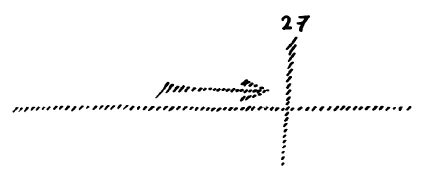
[ 26 ] This crisis, which actually occurs in every person’s life today around the age of twenty-seven—and lasts until around the age of thirty-five—manifests itself in characteristic ways today. For everything that lives within general human nature is expressed in individual manifestations in a particularly radical and intense way. Until recently, for example, there was a person regarded as a leader—although she did not actually lead much—who, at a certain point in time, was faced with an important decision. But at the same time as this decision, something else manifested itself in this individual. This individual had once been incarnated in the 9th century of the Christian era and, in that 9th century, had been a sort of black magician in a southern part of Europe. This had such an effect on this person’s current incarnation that, when the decisive moment—the moment of that decision—arrived, this person actually died; that is, the body was abandoned by the soul that had reincarnated there. But the person continued to live outwardly; they were still there, nonetheless. Just think of the opportunities for all manner of Ahrimanic spirits and individualities to continue living within such a deceased human being! This is one of those cases that the complexity of modern life frequently brings about. Such things play a role in what are today human actions, in what are also today human destinies. Today, one cannot form a judgment about what is happening without at least having a sense of such far-reaching matters as the case I have just mentioned. I have often emphasized this—and there are people here to whom I have frequently made this point—that the so-called prelude to this catastrophe of the World War cannot be judged in the same way that history was written in the past, because windows were open everywhere for Ahrimanic beings to enter. And because spiritual causes of the most dubious and strange kind played a role in the events of July 1914, it will not be possible to speak historically—without the aid of spiritual factors—about what led to this World War catastrophe.
[ 27 ] But consider how essential it is to take things truly seriously today. So take what I just mentioned as a fundamental phenomenon: By the age of seven, a human being develops their physical body; by about the age of fourteen, the etheric body; by the age of twenty-one, the astral body; and by the age of twenty-eight, the feeling soul. But the twenty-seventh year is particularly important today. Then, up to the thirty-fifth year, first the intellectual soul is active, then the conscious soul; in the intellectual soul—look it up in my *Theosophy*, and you will find it—the “I” emerges. Now, however, human beings develop—in accordance with human nature—only up to the age of twenty-seven. They develop in such a way that they anticipate the emergence of the “I” in the intellectual soul. But this does not happen of its own accord, because the development from the age of twenty-eight to thirty-five no longer proceeds spontaneously.
[ 28 ] This is the immense question facing people today. They live beyond the age of twenty-seven. They have done nothing to develop what gives rise to a true sense of self—and thus a sense of humanity, an understanding of what it means to be human. What emerges? The question: What is a human being, really? — The answer is: Away from the human being, toward the superhuman —, which amounts to nothing more than a mere lyrical concept. Or else things like: “Something is not right within me.” Consequently, I was not born into the world as a human being ought to be. I find myself on a special path. And I am not alone. There are many like us. We must become peculiar human beings and do not fit into any order. Who is to blame before us? We ourselves are to blame before ourselves and before life!”
[ 29 ] Here, from the perspective of spiritual science, you have the question: What, in fact, is a human being? — It arises from human nature as it is today. I ask you: Is it not a serious task for the future to consider truly separating the spiritual life—which enables us to have life experiences through the spirit—from that which could never provide intimate life experiences: democratic political life? Do you believe that anything could ever emerge from the faculties of theology, law, philosophy, medicine, political science, or the natural sciences—I believe all these faculties already exist today—that might, for example, draw attention to the fact that: In this dangerous period from the age of twenty-seven to thirty-five, people can experience inner desolation; in extreme cases, to such an extent that the soul may even depart, so that the person later lives only in appearance, possessed by some Ahrimanic nature. The complexity of modern life demands that spiritual life be able to truly flow into the spiritual realm. The most important questions today cannot be grasped at the surface of life. And how could mere political democracy—which is entirely justified in the realm of political life—make possible what must now come to pass for humanity: that in the future, people will emerge who will become ever more necessary, people who convey what they have to say about life entirely as a spiritual message from the spiritual world? If it were not possible for spiritual messages from the spiritual world to be carried into humanity’s future, then Earth’s evolution would by no means be able to reach its goal. But the possibility of such a spiritual life emerging depends on the freedom of spiritual life; it depends on spiritual life truly being emancipated from the state and standing on its own. Otherwise, what once happened somewhere far from here will keep happening: At a university where only people who had nothing special to say taught, loud cries arose in the democratic assembly demanding that “experts” be appointed. But the democrats banged their canes on the ground: “We don’t want experts—we want ordinary folks! Ordinary folks!”
[ 30 ] You see, my dear friends, all these things have a serious, profound foundation. And it is our task to point out this serious, profound foundation and, above all, to combat the most terrible evil of modern times: superficiality and thoughtlessness. It is often said that the social question is also a spiritual question. But spiritual life must then be considered in its foundations and truly in its depth; otherwise, spiritual reflection on the social question, above all, remains quite superficial and sticks to the surface.
[ 31 ] We will continue these reflections next Friday, or—if, as requested, there is another lecture taking place somewhere nearby on Friday—then on Saturday at seven o'clock.
[ 32 ] However, I have now been asked to inform you that on Wednesday at 8:00 p.m., I will be giving a lecture titled “Social Will and Proletarian Demands” at the Bernoullianum, in one of the branches of the Swiss Student Union in Basel, to which all of you are cordially invited by the students.