

Past and Future Influences on Social Events
GA 190
11 April 1919, Dornach
Translated by Steiner Online Library
Ninth Lecture
[ 1 ] From the various discussions of humanity’s current stage of development, you will have seen that, from a certain higher perspective, it must be said of the present that humanity is passing through a very significant phase of its existence. When I say “in the present time”— one must of course be aware that this “present” is a very, very long period of time, and when we speak of the present today, we are essentially speaking of the period of development of the consciousness soul, into which humanity, as we know, entered around the middle of the 15th century, and in which it will remain for two thousand years. We know that this is the fifth post-Atlantean epoch, and we also know that this epoch will be succeeded by another in which a completely different essence of human nature will come to the surface than was present in the past epochs. Let us just consider for a moment what is actually at stake here.
[ 2 ] We always divide the overall development of humanity—whether we consider longer or shorter periods of time—into seven distinct phases. We are therefore now in the fifth epoch and know that in the sixth epoch the spiritual self is to take possession of humanity in a certain way, and that our epoch—even though it essentially expresses the consciousness soul—belongs to the development of the “I.” From this you can already see that, in the transition from the fifth to the sixth post-Atlantean epoch, humanity crosses a kind of Rubicon (see diagram); humanity as a whole enters a phase of development that ascends into higher spirituality. This is a very important and significant fact. Now, it is always inadequate to characterize stages of development on a large scale—for example, stages of development that affect all of humanity—by referring to the developmental stages of the individual human being. This can easily lead to mere comparisons. What I am about to mention is, however, more than a mere comparison, but you must be careful not to take the matter too literally; you must take it with an open mind.
[ 3 ] You know that when a person enters the world we call the supersensible world, they must cross what we call the threshold of the Guardian. One enters the supersensible world by crossing this threshold. I have described this crossing in my little book *The Threshold of the Spiritual World*. If you combine what is described there with certain chapters of the work *How Does One Attain Knowledge of the Higher Worlds?*, you will gain a clearer understanding in a certain direction. You know that the unity within the human soul—composed of thinking, feeling, and willing—becomes more divided when one crosses the threshold; that, in a sense, thinking becomes more independent in itself, feeling becomes more independent in itself, and willing becomes more independent in itself, whereas in ordinary mental life on this side of the threshold, these three human activities are more fused together, and are more interwoven.
[ 4 ] So let us take these two facts very carefully into account: that if one wishes to enter the supersensible world, one must cross the threshold, and that then, in a sense, a kind of division occurs among the three main activities of human soul life—thinking, feeling, and willing—which make them independent. What a person can consciously experience during the transition into the supersensible world is what all of humanity is undergoing in this fifth post-Atlantean epoch, without each individual necessarily being aware of it. In this fifth post-Atlantean epoch lies the threshold (see diagram) that all of humanity must cross.
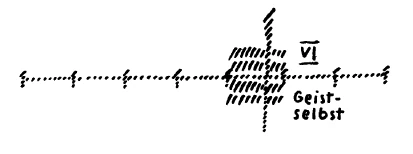
[ 5 ] The fact that all of humanity is passing through this threshold does not need to be immediately apparent to the individual. If, for example, people were to persist in the attitude held by the majority today—the rejection of all spiritual knowledge—then all of humanity would indeed pass through the threshold in the course of this fifth post-Atlantean epoch; but the majority of people would not notice it. That momentous event for humanity—which is a spiritual-soul event and can be described as the crossing of the threshold—can only become conscious to people if they open themselves to the insights conveyed by spiritual science. But even if no one were to notice that this crossing of the threshold by all of humanity is taking place—that humanity is, in fact, already in the midst of this crossing—what this crossing signifies for human development would still truly be there. The fact that such an event is part of human development does not depend at all on whether people notice it or not. People may fail to notice it. Through their stubbornness, they may erect an obstacle to the acquisition of knowledge about this fact. But this does not prevent what this fact signifies from finding expression in the entire course of human development.
[ 6 ] If you take this at face value for now, you will be able to say to yourself: During this fifth post-Atlantean epoch of ours, during the development of the conscious soul, something significant and magnificent is taking place within humanity. And what is also taking place within humanity is a certain separation of the life of thought, the life of feeling, and the life of will. So please, keep this clearly in mind. A certain separation—a becoming independent—of the life of thought, the life of feeling, and the life of will is taking place within humanity during the fifth post-Atlantean epoch. These three spheres of the soul life of humanity as a whole are becoming more independent. And this is what will distinguish the humanity of the future from the humanity of the past: whereas in the past the soul was more centered within itself, in the future the soul will experience itself as threefold. When a person is alone, they will indeed be able to undergo their development in the sense indicated in *How Does One Attain Knowledge of the Higher Worlds?*; this concerns the individual human being. But when people are together—and people are indeed together as a people, as a state, within the economic cycle, and so on—when people interact with one another, recognize their common interests, and satisfy them, what I have just described develops: in the living interaction of people, this division of the collective soul life into the three spheres develops, because, as I said, behind the scenes of existence, all of humanity is passing through a phase of development that can be compared to the individual human being’s passage through the threshold into the supersensible world, to the individual human being’s transition through the threshold into the supersensible world.
[ 7 ] Now, one could say that there are certainly people in our time who are aware of these events unfolding behind the scenes of existence. Only, they are aware of them—I would say—in a negative sense. I have often mentioned the name Fritz Mauthner to you, who wrote a “Critique of Language” and published a thick, two-volume “Dictionary of Philosophy.” Since I have recently spoken to you in earnest about the significance of language in human life, it may be of interest to you to now consider the question: How does a person today think about the actual inner life of the human being—someone who, like Fritz Mauthner, focuses his attention specifically on language, but who has no idea of the existence of spiritual science, who has no inkling of what spiritual science can offer humanity? Such a person—who is completely ignorant of spiritual science but possesses a keen intellect, and who is more intelligent than countless official scholars—expresses peculiar insights into human development when he turns his attention to what becomes of the human soul under the influence of language. All in all, as you know, humanity today is still infinitely proud of what it calls its science. Fritz Mauthner is not at all proud of this science. He thinks absolutely nothing of this “science.” For he believes that while people think they possess a science, they are actually merely rummaging through words, clinging to words; and because they think in words and communicate through words, they imagine they possess an inner spiritual life—whereas, in essence, they are merely moving within the realm of external words. Fritz Mauthner has proven this.
[ 8 ] Now, remember that I told you the other day: Of the entire structure of our language, the dead clearly understand, at most, what we say to them using verbs—the words that indicate time—while they are almost completely unaware of what we mean when we speak to them using nouns. From this alone you can sense the significance that speech has in the true spiritual life of human beings. And if a person cannot detach their so-called thinking from the content of language, then when they think in terms of nouns, they are actually thinking something entirely non-spiritual—something that does not penetrate the spiritual world at all. Through noun-based thinking, they simply cut themselves off from the spiritual world. This is also very much the case today, that people cut themselves off from the spiritual world through a certain kind of noun-based thinking. Peoples who have already fallen into decadence and who even perceive verbs in a very noun-like way—such as Black people—completely cut themselves off from the spiritual world as a result.
[ 9 ] Since Fritz Mauthner believes that everything people today consider to be science is actually nothing more than a kind of self-deception through language, he arrives at a view of human inner life that is highly peculiar to the present day. He says: People initially face the world. Since they face the world with their senses, they initially perceive only those impressions of the world that they describe with adjectives. People don’t pay attention to that. But it is a good observation. When you see a bird flying, when you see a table standing there, you actually perceive through your senses only the qualities—let’s say, the color of the bird; you also perceive only the qualities of the table. That you perceive, in addition to these attributes, a specific table—that you perceive, in addition to the impressions you describe with adjectives, something else that you can designate with a noun—is merely self-deception; it is merely an illusion. Sensually, a person perceives only the properties of things. But by expressing these sensory properties through adjectives—through the descriptive words of language—he lives externally and sensually with things. And a person like Fritz Mauthner asks himself: What, then, can a person—if he lives externally with things—actually take in from things and reproduce from them? — He can only take in from things, says Fritz Mauthner, that which is conveyed through art. In this context, however, one must consider art from the most primitive stages of humanity all the way up to what can be described as the highest level of art to date. When a person processes what they perceive with their senses—what they can express through descriptive words—art emerges. For people like Fritz Mauthner, who have shed much of the superstition of the present day—and who, above all, have shed the superstition of our school—artistic creation, which thus includes even the most primitive forms of artistic expression, is the only thing a person can achieve in creating in harmony with things. But human beings are not satisfied with merely expressing the qualities of things through adjectives. They form nouns. Yet nouns do not denote anything at all of what approaches human beings in the external sensory world. Fritz Mauthner makes this particularly clear to himself, and that is why he says, in the second stage: When a person ascends to an illusory life by forming nouns, mysticism arises in their soul. There they believe they are penetrating the essence of things and do not realize that they actually have nothing in these nouns. In this realm, Fritz Mauthner believes, one can only dream. So he says to people: If you truly want to live, you must imagine artistically; that is where you are truly awake. If you have no sense for artistic imagination, then you are not truly awake with your soul at all; you are dreaming when you believe you can penetrate the essence of things beyond the mere artistic shaping of the material of sensory qualities. Your mysticism leads you into unreality, yet you derive a certain satisfaction from this mysticism. You dream about things by forming nouns out of them.
[ 10 ] Although this is a claim that is nonsensical from the standpoint of the humanities, it is an extraordinarily astute one, and one of great significance for the present day, because in fact, if a person develops only those qualities that are valued today, they will experience nothing but dream-like illusions in the entire substantive world in which they can live mystically. Most people simply do not realize this. As strange as this may sound, it is a fact of extraordinary significance for contemporary life: people work with the external, sensory qualities of the things they express through adjectives. They shape these external things by altering their qualities in some way. Then, apart from working on these external things—say, in primitive art (and craftsmanship, too; every activity is a form of primitive art)—people also turn, let’s say, to the church or to school. There, they believe, they learn something about the essence of things. But there they receive only a “substantive” education—that is, something that is actually nothing but illusions. A person like Fritz Mauthner has a very accurate sense of this. When you walk across a meadow, seeing that green expanse, differentiated in the most varied ways, dotted with white, blue, yellow, and reddish flower blossoms, then you have what is actually real in the sensory world. But people believe they have something beyond that. When they walk along the path, one beside the other, and one reaches out his hand to pick something that looks yellow, he asks the other: “What is this plant called?” — The other may have once heard from someone else or in school what this plant is called and utters a noun. But this entire activity is an illusory activity; it is a dreamlike activity. The real activity is solely the seeing of something yellow, a formed yellow; but whatever is said about it in terms of nouns is a dreamlike activity. People today love this dreamlike activity, but it actually has no substance. Many people who are dissatisfied with merely fiddling with external, attribute-based impressions listen to sermons and attend church services. But everything that lives in their souls through these sermons and church services is, at the root of it, nothing more than a dream, a sum of illusions—it is nothing real. People like Fritz Mauthner, who examine the nature of language more closely, realize this and point out to others that the moment they move beyond artistic or artificial manipulation, they immediately enter the realm of mystical dreaming.
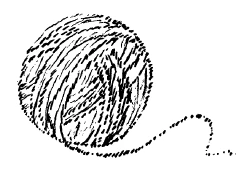
[ 11 ] Fritz Mauthner then distinguishes a third stage in the inner life of modern human beings. He calls this stage “science.” Today, science takes particular pride in the idea of development, of evolution. It expresses what it represents primarily through verbs. But now consider what I have told you regarding the experience of verbal activity—the activity of verbs. How many people today experience verbs in a eurythmic way? How dry, sober, and abstract is what people experience in verbs! The German says: “Entwicklung.” “Evolution” is used when one wants to express the same thing differently. But the words “evolution” or “Entwicklung” are of no use at all if one is not able to feel the entire word concretely, to live it through inwardly. Yet how many people, when they say that the present physical human being has evolved from lower organisms, think of a ball of thread that is wound up and then unwound—that is, “developed”? If you have a ball of thread, have wound a thread around it, and then unwind it, you say: You are developing it. That is development. There you have this concrete idea. Now take Ernst Haeckel, when he says that humans evolved from apes. We do not want to discuss the substance of the matter. Do you think he has in mind that there is a ball of thread and that something has been unwound, in that a human being has emerged from an ape? Surely, nothing so concrete is contained in the words spoken when one says that humans evolved from apes; otherwise, one would have to think of unwinding a thread from a ball. What does it mean to utter the word “evolved” without actually imagining anything by it? That is precisely what is strange: that people today, in thinking scientifically, express themselves primarily verbally, taking refuge in verbs—in time-related words—yet no longer think anything at all when using those verbs. For if they were to clarify for themselves linguistically what they are actually thinking, they would not be able to come to terms with what they are really thinking. Scientific concepts are actually nothing more than scientific thoughtlessness. You can open the thickest scholarly books today—especially in economics—and go through the concepts; there are just as many instances of thoughtlessness as there are concepts within them.
[ 12 ] Now, of course, someone like Fritz Mauthner, who has no understanding of the humanities, cannot grasp the reasons for the thoughtlessness that we now recognize, having recently discussed matters related to language. But Fritz Mauthner senses that, in fact, when people speak scientifically today, due to the limitations of linguistic thought, this scientific discourse is nothing more than thoughtlessness. It is, after all, a harsh reality that one must admit: at the lowest levels of schooling—where, as it is, children are already subjected to plenty of wrongdoing—the child’s mind, because it still craves something sensory, necessitates that one still provide it with some concrete thoughts. But once people enter high school, or become “daughters of the upper classes,” one can expect more thoughtlessness from them, and the content of conceptual thinking comes to an end. And when one even reaches the university level, the pinnacle of thoughtlessness is what is passed down there as “science,” for what is regarded as reality today consists solely of manipulations, the artificial—what is carried out of the laboratory, the dissection room, and so on—the technical, the artificial. But that which is thought—I’m talking nonsense when I say “that which is thought,” because nothing is actually thought; thoughtlessness is cultivated—that which is thought is not something thought, it is thoughtlessness.
[ 13 ] This is how Fritz Mauthner feels. That is why he establishes this three-tiered scale: first, art; second, mysticism—which, however, is a form of dreaming; and third, science, which he says is in reality a *docta ignorantia*, a learned ignorance. When such words are spoken by a man like this, one must take them as a confession from a representative figure of the present. This is precisely the kind of thing said by a person who has cast off the superstition under which most people live today—a person who, notably through his study of language, has come to realize the emptiness that pours over humanity today, as so-called thoughts are taught at the highest levels of education, thoughts that are in fact nothing but thoughtlessness. And this thoughtlessness, clattering with words, then pours into popular literature and ultimately becomes the dreadful quagmire of words in journalism, from which most people today draw their intellectual sustenance.
[ 14 ] If you consider this, as I have demonstrated to you using a representative figure of our time who has no idea about spiritual science, and if you consider that just as I have taken Fritz Mauthner as an example, I could cite many other contemporary figures who simply do not express the matter as precisely, not in such a narrow-minded, systematic way, and if you consider, without prejudice, the conversations that people today have with one another—from ordinary coffee-table chatter all the way up to the assemblies of the estates, the federal parliament, and the Reichstag, right up to the Duma—there is a clamour of speech sounds, words, and thoughtlessness, a clamour that permeates it all.
[ 15 ] But this is how one characterizes the true nature of what one must today call “culture” when speaking of it; this is how one characterizes the world that one must today call the “cultural world” if one does not wish to offend it by addressing it. I have described to you nothing more than facts that simply exist. And it is the task of the scholar of the humanities to see through this reality impartially and courageously, without self-delusion. And you see, people who stand outside the humanities are already coming to realize that it is a terrible superstition to regard science, as it prevails today, as anything at all—that it is a “docta ignorantia.” And that is what it has gradually become. Ever since Nicholas of Cusa described it in the 15th century with the term “docta ignorantia,” our science has increasingly become just that. Of course, some fools might now come along and say: “What are you talking about? You’ve told us so often that the present age has achieved magnificent triumphs in the natural sciences, and that you want to fully acknowledge precisely these triumphs of the natural sciences!” Yes, my dear friends, but nature is that which contains no thoughts within itself! It can achieve its greatest potential precisely in the age of thoughtlessness! Natural science can achieve its greatest potential precisely in the age of thoughtlessness, because one needs no thoughts, but only external formulaic words, to hold the scientific facts together. It is precisely to this circumstance that natural science owes its greatness: that, in order to be true natural science, it may—and indeed must—be thoughtless. But what I wanted to draw your attention to above all else is that even in the present, it is evident how humanity is going through a phase that turns its inner spiritual life into a dream and true science into a slumber—into a state of ignorance. This is also the comfort that people today find in science and scientific thinking: that it allows them to sleep so comfortably in their souls. You would not believe how deeply humanity today is asleep, believing it knows something, how it is everywhere excessively deferential to authority regarding what it calls science and what is presented to it as science, yet how it is nowhere able to apply this science to the real world while still in its deep slumber. Indeed, it regards it as mere fantasy when “scientific” concepts are applied to external life.
[ 16 ] If you were to gather together in a library—it would have to be very large—all the scholarly works on psychiatry, all the works on the study of the insane, you would find a great deal of insightful material there, in keeping with the spirit of our times. But one must also assume that psychiatrists who deal with these matters professionally are familiar with what is written in the books; at least in the main, they ought to be familiar with it, and they are—but it lies dormant within them. For when it comes, for example, to examining life and realizing that a person who for years has dominated events across a large part of Europe was and is truly insane, then their knowledge of psychiatry is of no use to them, because they fail to apply their science to real life.
[ 17 ] These things were not always this way in human evolution. If we go back to other periods, they were not present to the same extent. And the further back we go, the less prevalent it was. When people still possessed the ancient, atavistic gift of clairvoyance, their dreams were not dreams in the modern sense; rather, their dreams had a spiritual content in which they perceived something real. And people explored human affairs precisely through their sleep. But today it has come to pass that if people wish to remain human, they must acquire a different kind of knowledge than that which Fritz Mauthner finds them confronted with—a “docta ignorantia” or a dreamy mysticism. People must awaken, and they can only awaken through spiritual scientific knowledge. That is why I call what must take place an “awakening.” This awakening must become something very real, something that intervenes very, very deeply in life. People today speak and think in language. We have already characterized this. Therefore, they believe they also have thoughts. But in reality, these thoughts are not there. For what are thoughts for modern people when they truly grasp them as thoughts? They are not actually real at all; they are reflections of something real. And even when modern people—indeed, precisely when they rise to genuine thoughts and strive for a genuine life of ideas—they must be aware that these ideas are shadows of a reality, not a reality in themselves.
[ 18 ] I recently presented a chapter on Hegel to you. I told you it would be difficult for you because Hegel always moves within the realm of thought. It is, after all, so terribly difficult for people today to move within the realm of thought. It’s even considered offensive—highly offensive—to engage in abstract thought. When I first began speaking about anthroposophy, initially in Berlin, all sorts of people from the most diverse strands of so-called spiritual life came to see what it was all about; people who had been involved in spiritualism, who had tried to learn something about the spiritual world through all sorts of questionable mediumistic practices, people who had dreamed all manner of things about the spiritual world—they simply came along. And it often turned out that precisely such people, especially if they themselves had some mediumistic abilities, would regularly fall asleep during my lectures. You could see quite a few of them sleeping soundly. Then they stopped coming. And some of them said they were no longer allowed to attend these lectures, because the spirits had told them that ideas and thoughts were being worked with there, and they weren’t supposed to go. I still vividly remember a lady who—she seemed to have become unwell—ran out the door rather quickly, but no sooner was she outside than she lay down flat on her back. That was the effect the sharing of thoughts had had on her. People today are generally not really trained in thinking, because they prefer to regard moving through the projections of language as thinking. But precisely when one engages in thinking, one realizes that in our present fifth post-Atlantean epoch, by truly thinking—that is, by living in thoughts—one has shadow images of something; one realizes that when one correctly grasps the nature of the life of thought, the soul moves, as it were, on the surface of thoughts, and behind that lies something that remains in the unconscious. There is the soul. But it sees something that it, so to speak, sends ahead as the shadows of that in which it lives. Yet the soul must enter into that in which it truly lives. It must grasp the shadows—thoughts, ideas—and carry them into something that remains largely unconscious to people today. How can it do this? It can do so only by incorporating into the life of thought that which, when we take it in, leaves no room for any illusion: that is the will to think, the sensation of willing as we think—the sensation that we are actively engaged in the act of thinking—that we are truly moving from one thought to the next, that we always have a vivid image underlying our thinking. People today do not appreciate this. People today sit, walk, and stand, and their thoughts run through their minds—what I have just described, which is actually thoughtlessness, but it runs through their minds. People abandon themselves to these so-called thoughts; they surrender to them passively, accepting every so-called thought that rolls through their minds. And the result of this is that the will to think—the arbitrary, active force at work in thought—has become one of the rarest things in people’s souls today.
[ 19 ] The person who considers himself the trendsetter today is the one least willing to sit down and act out of his own will. He quickly reaches for the newspaper so that his thoughts are fed to him from the outside, or for a book, so as not to develop within himself the activity that truly leads to active thinking. With regard to this active thinking, humanity today lives in a state of—one can’t call it anything else—social laziness.
[ 20 ] All of this reveals the true nature of the transition that a person like Fritz Mauthner experiences when he expresses something such as what I described to you earlier. But all of this is merely a side effect of humanity’s passage through the threshold. In this fifth post-Atlantean epoch, all of humanity must pass through the serious guardian, past the serious guardian. And it should become clear, precisely in the epoch of the development of the consciousness soul, that humanity is passing through this stage of its development. But a kind of division of the soul life must occur. That which was previously centralized as a unity must be split into a trinity, and each individual member must be centralized in its own right. This can only happen—because we are dealing with humanity in its collective life, not with the individual human being—if there are external points of reference against which this tendency toward inner threefolding can develop. These external points of reference must now be present in the social organism in which human beings live. This is by no means a random insight that we must speak today of the threefold social organism. This is precisely what must be made clear to humanity from the signs of the times—from those signs of the times that arise when one considers that humanity must pass before the solemn Guardian of the Threshold. And if you are looking for an inner characterization of the reasons why the threefold structure must take shape within the social organism, then please read once more that chapter in *How to Attain Knowledge of the Higher Worlds* that deals with the Guardian of the Threshold. Everything is already set forth there from a different perspective.
[ 21 ] You can see from this that by studying spiritual science, one studies the most important impulses of humanity’s present development; spiritual science points, from a wide variety of perspectives, to the most intensely active necessities of life in the present. And when that chapter on the Guardian of the Threshold in *How to Attain Knowledge of the Higher Worlds* points to the division of the human soul into its three members—thinking, feeling, and willing—it simultaneously challenges all of humanity to consider the threefold social organism.
[ 22 ] This is how things are connected. Consider the individual who crosses the threshold into the supersensible world; you can say to yourself: This person experiences within themselves a division into a life of thought, a life of feeling, and a life of will. Consider humanity today, which, as it passes through the fifth post-Atlantean epoch, is crossing the threshold behind the scenes of historical development; then you must say: Humanity must find its life of thought in an independent spiritual organism; its life of feeling—that is, the relationships of feeling that play out between one person and another—in the independent legal organism; and its life of will in the economic cycle, the economic organism.
[ 23 ] If you look at these things in this way, you will have the right foundations—the deeper foundations—for understanding the necessity of the threefold social organism. Then, however, you will also move beyond the mere clamor of words that so often dominates the present. Then you will realize that at present one should not argue with words, but rather recognize that words only gain their weight and point to thoughts when they are directed in the right direction—when, for example, one considers that everything that must develop as a life of thought within humanity’s spiritual organism is the cultivation of people’s individual abilities; that individualism must prevail in the spiritual organism, in the legal or state organism—because this has to do with the relationships each person develops with every other person—democracy must prevail; and in the realm of the economic organism, associative life must prevail—which encompasses professional associations or cooperatives, which also arise through the connection of production with consumption—in other words, socialism must prevail in the realm of the economic organism. But these three independent spheres must function separately.
[ 24 ] We are still living in a time when Ahriman plays games with people by lulling them into illusions about what is actually supposed to happen. Thus, as in ancient times, he causes them to mix the organism of the will with the organism of feeling—namely, socialism and democracy—and makes them say: “We are striving for social democracy.” In doing so, the individualistic element is completely omitted, because people do not love ideas. Otherwise, one would have to say: “We must strive for individual-social democracy,” which would negate the most important concepts held by programmatic social democracy today. In the confusion inherent in the fusion of socialism and democracy within social democracy, you see a scheme that Ahriman is carrying out with human beings. But at the same time, you see in it how one must feel that what is right must be developed out of the game that Ahriman plays with human beings. And one will only sense the gravity of this “right path” when one contemplates the passage across the threshold into the fifth post-Atlantean epoch and knows that—because all of humanity lives within the social organism—a threefolding of the social organism must occur, just as surely as a threefolding of the individual’s soul life must occur when that individual crosses the threshold.
[ 25 ] We'll talk more about that tomorrow; we'll meet here again tomorrow at seven o'clock.