

The Social Question as a
Question of Consciousness
GA 191
2 November 1919, Dornach
Translated by Steiner Online Library
Twelfth Lecture
[ 1 ] Yesterday’s reflections will have shown you that, in order to gain insight into the very workings of human becoming and human existence, we must truly grasp with the eye of the soul the workings of the Luciferic power, the Christ power, and the Ahrimanic power. The point is that these forces have certainly been at work throughout the course of world evolution thus far. But they have operated in spheres that did not require human beings to have a clear awareness of the nature and manner of these forces’ activity. This is precisely the purpose of our fifth post-Atlantean epoch: that human beings may gain an ever-increasing awareness of what actually works through them in their earthly existence. In fact, it would already be necessary today to reveal much, much more of the mysteries of human life if humanity were more inclined to approach these matters in a more matter-of-fact and objective manner. But without certain insights, particularly in the direction indicated yesterday, humanity will not be able to make progress—at least for the time being—in either its social or inner life. For just consider something related to the social reflections we have been cultivating over the past several months. These aim to demonstrate the necessity of separating spiritual life—alongside legal and political life—from purely economic life. Above all, they aim to create conditions throughout the world—or at least—since we cannot do more for the time being — than to regard as correct those conditions throughout the world that establish an independent spiritual life, a spiritual life that is not dependent on the other structures of social life, unlike our present spiritual life, which is completely embedded in economic life on the one hand and in political and state life on the other. Either today’s civilized humanity will have to resign itself to accepting such an independent spiritual life, or the present civilization must face its downfall, and something that holds the future for humanity must emerge from the Asian cultures.
[ 2 ] Anyone who does not yet believe that the situation is this serious is, in a certain sense, fostering the very conditions that prepare the way for the future Ahrimanic incarnation. Indeed, even today, many things can be discerned in external events—in the outward facts of human life—that could shed light on this truth. The Ahrimanic incarnation will be particularly fostered when people refuse to establish an independent, free spiritual life and allow spiritual life to remain entangled in the economic cycle or in political life. For the power that has by far the greatest interest in such a further entanglement of spiritual life with economic life and legal life is precisely the Ahrimanic power. The Ahrimanic power will perceive free spiritual life as a kind of darkness. And this Ahrimanic power will perceive people’s interest in this free spiritual life as a fire burning within it—a spiritual fire, but one that burns intensely. Therefore, it is precisely up to human beings to establish this free spiritual life in order to find the right stance and the right relationship to the Ahrimanic incarnation in the near future. But there is still a strong tendency today to conceal precisely the facts that were discussed yesterday. The vast majority of people conceal these things because they simply do not want to look at the truth, at what is real in things, because they want to be deceived by words that are far removed from reality. Sometimes this striving to avoid coming into contact with reality is a so-called honest, well-intentioned effort.
[ 3 ] Just consider, for example, the letter by Romain Rolland that has now been published, in which he states that we should no longer be blinded by what the now-victorious powers used to say about justice, the defense of rights, and so on. He was prompted to speak out in this way by the treatment Russia is receiving from the Entente powers. He says: Regardless of whether one is dealing with monarchies or republics, what is said there about law and justice is, after all, merely a phrase; it is, of course, really only about power.
[ 4 ] Now one might say: Such an apparent realization of realities will, time and again, seek only to be deluded; for the delusion in Romain Rolland is just as great today as it was in the past; the deception has not diminished. The deception would only diminish if such people were to move beyond mere rhetoric at all, if they were to see that everything they long for in this way means nothing as long as they do not truly grasp that the old unitary state, as such, regardless of its constitution or structure—whether it is a democracy, a republic, a monarchy, or anything else—if it is a unitary state, if it is not tripartite, the path leads to the Ahrimanic incarnation. And that is why all of this is merely rhetoric, including this latest “World Circular Letter” by Romain Rolland. People do not grasp reality, for today one can only grasp reality by realizing how things must be deepened through spiritual insight. And one must truly immerse oneself thoroughly in the essence of things in this direction.
[ 5 ] You are surely familiar with a word or a series of words that are often repeated throughout the world: “In the beginning was the Word, and the Word was with God, and the Word was God.” Try to figure out for yourself whether people really take these three lines seriously. They say them, but they often say them as mere phrases. This may already become clear to you from what follows. Most people, after all, do not attach any particular importance to the fact that these lines are expressed in the imperfect tense:
In the beginning was the Word
and the Word was with God
and the Word was God,
[ 6 ] whereby “Word” must at the same time have the older, Greek meaning. It is not the word as it is understood by people today—the mere spoken word—but rather the inner, spiritual reality. Yet even here, the imperfect tense is used: “In the beginning was the Word, and the Word was with God, and the Word was God.” So one would have to say: Since the Word was in the beginning, it is no longer there now. — Otherwise it would mean: Now the Word is. And the Word is not with God; it was with God. And the Word was God. So it is no longer there now. — It is no longer there either. That is stated in the Gospel of John itself; for what other meaning would it have if it said, “And the Word became flesh and dwelt among us”? It tells us what lies in the further development of the Word. And by “the Word” is also meant everything that human beings can attain through their own efforts and through their intelligence as intellectual wisdom. We must be clear that everything human beings can attain through what is here rendered by the word “Word” is not what should be sought by people of the present and the near future. If one were to address something of the present, one would actually have to say: Let humanity seek the Spirit that reveals itself in the Word. For the Spirit is with God. And the Spirit is a God.
[ 7 ] Humanity must move forward from the word to the Spirit, to the perception and understanding of the Spirit. When I remind you of something like the opening words of the Gospel of John, you can see how little people today are inclined to take these things truly seriously, to truly go beyond an arbitrary interpretation of them. After all, it is precisely this arbitrary interpretation that is so frequently adopted today, even for the most serious matters. The point is to recognize that even within the human being himself, that which constitutes intelligence should be set aside to some extent and illuminated by what is revealed through spiritual vision—though it is not always a matter of spiritual vision itself, but rather of understanding what has been spiritually perceived. For I have always emphasized this again and again: It is not merely the clairvoyant who can perceive the truth of what is experienced clairvoyantly today, but every human being, because the spiritual element within the human being is certainly mature enough—if only people would resolve to truly apply their efforts, if they were not too complacent to do so. But in order to rise to these things, so that a person truly attains the corresponding level that is appropriate for them today, it is essential to take matters such as those with which yesterday’s reflection concluded very seriously. Yesterday I drew your attention, through a trivial example, to how easily one can be deceived by numbers. But isn’t there today a veritable superstition among humanity regarding numbers? Anything that can be counted in any way is considered valid in science. In the natural sciences, people love to weigh and count. In the social sciences, people love statistics, which is also nothing more than weighing and counting. And how difficult it will be for humanity to bring itself to acknowledge that everything—absolutely everything—that is conveyed to us from the external world through measurement and numbers is an illusion.
[ 8 ] Look, what does “measuring” mean? Measuring means comparing something to a standard. I can measure a line by comparing it to a small line—one, two, three, and so on. When you measure this way—whether you’re measuring lengths, areas, or weights—the qualitative aspect is completely left out. The number three is always the same number, whether you use it to count sheep or people or statesmen—the number three always remains the same; what matters is not the qualitative aspect, but only the quantity. And that is precisely the essence of measure and number: that the qualitative aspect does not matter. But as a result, everything that is handed down to us through measurement and number becomes an illusion, and we must take this seriously: that the moment we enter the world that can be measured and weighed—that is, the world of space and the world of time, as they are given to us— we are approaching the world of illusion, the world that is a mere mirage as long as we regard it as if it were reality. This is, in fact, the ideal of contemporary thought: to discover, regarding all things in the external world of space and time, what they signify in space and time; whereas in truth, what things signify in space and time is merely their outward appearance, and we must penetrate beyond space and time into the deeper realm if we wish to arrive at the truth, at the essence. So a future must come in which human beings say to themselves: Yes, I can grasp the natural external world with my intelligence. I can grasp the external world with my intelligence in the way that, for example, is envisioned today as the ideal of natural science. But the view I gain through this is purely Ahrimanic. — This does not mean that one should reject this natural science, or that one should not have it; but one must become aware that through this natural science one attains only the Ahrimanic illusion. Why is that? Why should one still have this natural science, even though through it one attains only the Ahrimanic illusion? Because humanity, in the course of Earth’s evolution, is on the descending branch of its development. Humanity is a being that is already in decline. If you take the fourth of the five post-Atlantean epochs—the Greco-Latin epoch—one can say: At that time, humanity was, in terms of its knowledge, relatively at its highest point. But now humanity is already in decline once again. And while humanity is in decline—I have explained this from various perspectives—it, as a being that is already becoming physically weak again, would not be able to endure perceiving the world as the Greeks still perceived it.
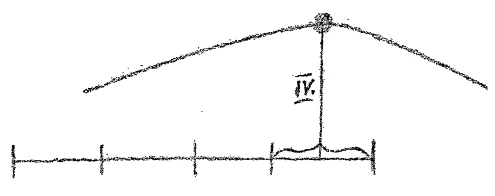
[ 9 ] That, you see, is not “external history”! What would today’s well-behaved historians say about this, who treat Greece just as they would any other region of their own time, because they do not know that the Greeks looked at nature through different eyes than people today, that they listened to the world through different ears than people today. People today—and the historians don’t tell you this—would suffer constant headaches or migraines if they were to see and hear in the external world what the Greeks saw and heard. The Greeks had a much more intense sensory experience of the external world. We have already become numb in our perception of the external world. In order for us to be able to tolerate it, we must be presented with nothing more than a mirage of the external world. And we are presented with nothing more than a mirage of the external world. And what is most of all a mere mirage is not merely what we see with our senses, but what we dream up in our conceptions of this external world through our science. The greatest dreamers about the outside world today are actually those who believe themselves to be realists in their thinking. Darwin or John Stuart Mill—they are true dreamers. Those who believe they are being entirely realistic—they are the dreamers.
[ 10 ] But we cannot rely entirely on our inner selves either. There are many among you who, from the course of the movement that has taken place within the Theosophical Society—insofar as this Theosophical Society is indeed the Theosophical Society—could recognize how the mere pursuit of the inner life, when carried out as many people strive to do today, also leads nowhere in terms of what a person should be guided toward today, or toward what they should guide themselves. For in many cases, the aim is not for a person to move beyond ordinary life to a higher perspective through their own free decision, but rather, in many cases, an appeal is made precisely to the unfree part of the human being. All manner of hallucinatory and illusory abilities are called upon.
[ 11 ] But a person should tell themselves: Just as external science becomes Ahrimanic, so too does the higher development of a person’s inner being simply become Luciferic if they mystically deepen this inner being as they were born with it. — In every person who today, without the self-education discussed in the book *How to Attain Knowledge of the Higher Worlds*, sets out to mystically deepen what already lies within them, the Luciferic awakens and becomes particularly powerful. 'But this will surely bear witness to the fact that in every person today, the moment they even begin to ponder their inner life, the Luciferic element emerges. This Luciferic element is actually terribly powerful in humanity today. It manifests itself today in a form of selfishness that most people do not even notice in themselves. Just think how often one encounters people today who, when they have done something, are satisfied if—as they often say—they have carried out the task in such a way that they have nothing to reproach themselves for, that they have done it to the best of their knowledge and conscience. This is a purely Luciferic point of view that is being asserted. For in what we do in life, it does not matter at all whether we have reason to reproach ourselves or not; rather, what matters is that we grasp things objectively—entirely apart from ourselves—that we see through the world, and that we carry out our actions based on the objective course of events. And most people today do not strive for an objective understanding of the matter, for a recognition of how things must unfold as a result of world-historical development.
[ 12 ] That is why, precisely on the basis of spiritual science, we must emphasize how things are objectively: that Ahriman is preparing his incarnation—which can be recognized by how he prepares it, and by how we as human beings must relate to it! When it comes to such questions, it really does not matter that we tell ourselves: “We do this or that so that we need not reproach ourselves”—rather, we must learn to recognize objective realities. We must learn to recognize what is at work in the world and act accordingly for the sake of the world.
[ 13 ] All of this, however, actually points to the fact that modern human beings can only judge themselves correctly when they acknowledge that they are, in fact, always oscillating between two extremes: between the Ahrimanic on the one hand, which presents them with an external illusion, and the Luciferic within, which instills in them a tendency toward illusions, hallucinations, and so on. Today, people live out their Ahrimanic tendencies in science and their Luciferic tendencies in religion. And in the arts, people oscillate back and forth between the two. In recent times, there have been artists who had more Luciferic tendencies, while others had more Ahrimanic tendencies. Those with more Luciferic tendencies became Expressionists; those with more Ahrimanic tendencies became Impressionists. And oscillating between all of this are those who actually want to be neither one nor the other—who neither properly assess the Luciferic nor the Ahrimanic, but wish to avoid both. Just not Ahriman! — I mustn’t do that, I don’t want to do that, because then I’ll end up in the Ahrimanic realm. — I mustn’t do that, I don’t want to do that, because then I’ll end up in the Luciferic realm! — And one wants to be “very well-behaved,” avoiding both the Ahrimanic and the Luciferic realms.
[ 14 ] No, that is not the point; rather, the point is to view the Ahrimanic and the Luciferic as two pans of a scale, both of which must be present. And we must represent the balance beam, which is in a state of equilibrium between the two. That is what this is all about.
[ 15 ] And how can we train ourselves to do such a thing? By infusing what manifests as Ahrimanic within us very strongly with a Luciferic element. What manifests as Ahrimanic in people today? The perception of the external world. The most Ahrimanic thing of all is the material perception of the external world, for this is nothing but an illusion. But if we can become enthusiastic about it, if we develop an interest in it—if we are terribly interested in the illusions that arise from chemistry, physics, astronomy, and so on—then, through our own Luciferic interest, we detach from Ahriman something that actually belongs to him.
[ 16 ] That is precisely what people do not want. They find it very boring. And many who are actually fleeing external, material knowledge misunderstand their task and provide Ahriman with the very best incarnation in earthly existence. And what is welling up within people today, in turn, has a very strong Luciferic character. How can we properly educate ourselves in this regard? By delving into our own inner Ahrimanic nature—that is, by trying to avoid all illusions about our own inner being—and by approaching ourselves in the same way we approach the external world, that is, by observing ourselves as we would otherwise observe the external world. Modern people must actually experience how very necessary it is for them to educate themselves in this way. Anyone who has a certain keen sense of observation for such things will very often encounter the following fact in life today.
[ 17 ] A person comes to him and tells him what upsets him about Person A, Person B, Person C, and countless others. He describes in great detail how he is upset about this and that regarding Person A, Person B, Person C, and so on. He has no idea that everything he describes are his own characteristics! People have no idea of this! This trait in human beings has never been as widespread as it is today. And those who believe that this is not the case with them are the ones in whom it is most evident. The point is that people today should indeed approach their own inner selves with Ahrimanic cold-bloodedness, with Ahrimanic sobriety. People’s inner selves are still heated enough, even if they have cooled down somewhat! There is no need to fear that they will cool down too much. And it is indeed the case that, in order to gain the right attitude toward the future incarnation of Ahriman, humanity today needs to become more objective about its inner life and to bring much, much more subjectivity—not fanciful constructs, but interest, attention, and devotion—into the outer world; in particular, interest and devotion to the things of life, of immediate life.
[ 18 ] You see, one greatly promotes the path Ahriman intends to take to make his incarnation as favorable as possible when, depending on one’s upbringing or other life circumstances, one finds this or that aspect of external life boring. Just think how many people today find this or that boring. For example, I have met countless people who find it boring—let’s say—to familiarize themselves with the practices of banks or the stock market, or to study single-entry and double-entry bookkeeping. But it is never right to find anything absolutely boring. To find something boring simply means that one has not yet found the point where it becomes intensely interesting; any dry cash book can, if you find the point from which it becomes fascinating, be just as interesting as Schiller’s *The Maid of Orleans* or Shakespeare’s *Hamlet* or anything else—for example, Raphael’s *Sistine Madonna*. It’s simply a matter of finding the point from which everything in life is interesting.
[ 19 ] Based on what I have just said, you might think that the matter is quite paradoxical. But it is not. It is only modern man who is paradoxical in his relationship to the truth. Rather, modern man feels the need to assume—very, very strongly—that he cannot do something, rather than that the world cannot do it. And nothing paves the way for Ahriman’s future incarnation better than finding this or that boring, considering oneself too good for one thing or another, or refusing to participate in one thing or another. It is simply a matter of finding the point from which one thing or another becomes interesting. What is at stake today is not that we subjectively reject or accept things, but that we objectively recognize to what extent there is something Ahrimanic or Luciferic in one thing or another, so that the scales may tip too far in one direction or the other. Finding something interesting does not mean finding it justified; it merely means developing an inner strength to unite with the subject in question and steer it precisely into the right course.
[ 20 ] You know—it’s been a long time now—that a number of friends bought mathematics books. A certain “theosophical sport principle” had crept in. Many people bought Lübsen’s mathematics books. Most of them then put them on their bookshelves after a while, because their mathematical knowledge didn’t really take hold. Of course, I do not mean to say that you should immediately set about doing such things again; I do not presume to tell you to do so, nor do I wish to urge you to do just that. But to take on something that at first does not interest you at all, precisely in order to find the possibility of arriving at a new understanding of world existence from some point of departure—that is of immense significance. And today, human beings truly need something like this. For such matters must be taken seriously and with gravity, just like those I have sought to convey to you in these reflections: the ways in which Lucifer and Ahriman intervene, alongside the Christ impulse, in the development of humanity.
[ 21 ] You see, if it had not been for Luciferic wisdom, we would not have gained an understanding of the Mystery of Golgotha through the Gnosis of the first centuries. For as Luciferic wisdom fell into decadence, so too did the understanding of the Mystery of Golgotha gradually decline. And today? Yes, where is one to look for this understanding of the Mystery of Golgotha? That it cannot be found through external Ahrimanic science becomes clear to those who have some insight into that science. Take a figure such as Cardinal Newman, who played a major role in religious development during the second half of the 19th century. At his investiture as a cardinal in Rome, he declared that he saw no hope for the religious development of humanity unless a new revelation were to come! — But that was as far as it went. He showed no particular inclination to receive anything of what can now penetrate into humanity from the spiritual worlds as a new spiritual life. It remained a mere abstraction!
[ 22 ] Humanity needs a new revelation. We can see this in every area of life. Discussions are taking place today in which it is said that the moral condition of humanity has deteriorated over the past four to five years. From this, it is concluded that denominational religious instruction must once again be introduced more intensively into schools. In contrast, it cannot be emphasized often enough: Denominational religious instruction was already there, and the times we live in today have come about precisely under its influence. If the old ways—what the denominations have brought about—are to be reintroduced now, then we might as well start the whole process all over again. Then, in time, we’ll find ourselves back where we were in 1914 if we revive the old institutions. We should really recognize that deep in people’s subconscious, there are longings for something entirely different from what is expressed on the surface.
[ 23 ] When we founded the Waldorf School in Stuttgart, we were, of course, compelled to organize religious instruction in such a way that it would be taught by the respective pastors. We set aside a separate period for religious education: the Catholic pastor teaches the Catholics, and the Protestant pastor teaches the Protestants. Now, I don’t want to go into the difficulties that arose on the part of the pastors. That’s a whole other story. But I do want to mention that a desire immediately arose to also offer religious education outside the denominational framework. At first, I thought participation would be very insignificant compared to that in denominational classes. Nevertheless, even though there will soon be no pulpit left in Stuttgart from which the anthroposophical movement is not denounced, a large number of children—far more, at least five times as many as we could have expected—have signed up for a kind of anthroposophical religious education, which must be taught in two classes. This is something that, subjectively speaking, need not be at all pleasant for us, for it can, of course, be our undoing. But I do not wish to speak of that today. I merely wanted to show that a longing for progress does indeed exist within people, but that people are asleep and do not see how forces are suppressing this human longing. And then, for the most part, the courage is lacking to truly bring this human longing to the surface of life.
[ 24 ] But consider what an impact such an insight might have—one concerning the future human incarnation of Ahriman, who is preparing for it precisely through the very things I described yesterday and today. It is necessary that we educate ourselves objectively about these matters so that we may adopt the correct attitude toward all that is taking place around us in preparation for the future incarnation of Ahriman. Only when you give ample and careful consideration to what we have said about such Ahrimanic currents in these two reflections will you be able to grasp the gravity of the matter.