

The Social Question as a
Question of Consciousness
GA 191
2 November 1919, Dornach
Translate the original German text into any language:
Versions Available:
The Social Question as a Question of Consciousness, tr. SOL
Zwölfter Vortrag
Twelfth Lecture
[ 1 ] Die gestrigen Betrachtungen werden Ihnen gezeigt haben, daß wir, um hineinzusehen in das eigentliche Getriebe des Menschenwerdens und Menschenwesens, gar sehr ins Seelenauge fassen müssen die Wirksamkeit der luziferischen Macht, der Christus-Macht, der ahrimanischen Macht. Es handelt sich darum, daß diese Mächte ja gewiß auch im bisherigen Verlauf der Weltenentwickelung gewirkt haben. Aber sie haben gewirkt in Sphären, die es nicht notwendig machten, daß der Mensch ein deutliches Bewußtsein habe von der Art und Weise der Wirksamkeit dieser Mächte. Das ist gerade der Sinn unseres fünften nachatlantischen Zeitraumes, daß der Mensch immer mehr und mehr ein Bewußtsein empfange von dem, was eigentlich dutch ihn im Erdendasein durchwirkt. Es würde auch im Grunde heute schon notwendig sein, viel, viel mehr von den Lebensgeheimnissen der Menschheit zu enthüllen, wenn die Menschheit geneigter wäre, die Dinge sachlicher und objektiver aufzunehmen. Aber ohne gewisse Erkenntnisse gerade nach der Richtung hin, die gestern gezeigt worden ist, wird die Menschheit weder im sozialen noch im innerlichen Leben zunächst vorwärtskommen können. Denn bedenken Sie nur einmal etwas, was zusammenhängt mit unseren durch Monate hindurch gepflogenen sozialen Betrachtungen. Die zielen darauf hin, den Nachweis zu führen von der Notwendigkeit, das geistige Leben neben dem Rechts- oder Staatsleben von dem bloß wirtschaftlichen Leben abzusondern. Vor allen Dingen zielen sie darauf hin, Verhältnisse über die Welt hin zu schaffen, oder wenigstens — mehr können wir ja zunächst nicht tun — Verhältnisse über die Welt hin als die richtigen zu betrachten, welche ein selbständiges Geistesleben begründen, ein Geistesleben, das nicht abhängig ist von den anderen Strukturen des sozialen Lebens, wie unser gegenwärtiges Geistesleben, das ganz drinnensteckt im Wirtschaftsleben auf der einen Seite und im politischen Staatsleben auf der anderen Seite. Entweder wird die heutige zivilisierte Menschheit sich dazu bequemen müssen, ein solches selbständiges Geistesleben hinzunehmen, oder die gegenwärtige Zivilisation muß ihrem Untergang entgegengehen und aus den asiatischen Kulturen muß sich etwas Zukünftiges für die Menschheit ergeben.
[ 1 ] Yesterday’s reflections will have shown you that, in order to gain insight into the very workings of human becoming and human existence, we must truly grasp with the eye of the soul the workings of the Luciferic power, the Christ power, and the Ahrimanic power. The point is that these forces have certainly been at work throughout the course of world evolution thus far. But they have operated in spheres that did not require human beings to have a clear awareness of the nature and manner of these forces’ activity. This is precisely the purpose of our fifth post-Atlantean epoch: that human beings may gain an ever-increasing awareness of what actually works through them in their earthly existence. In fact, it would already be necessary today to reveal much, much more of the mysteries of human life if humanity were more inclined to approach these matters in a more matter-of-fact and objective manner. But without certain insights, particularly in the direction indicated yesterday, humanity will not be able to make progress—at least for the time being—in either its social or inner life. For just consider something related to the social reflections we have been cultivating over the past several months. These aim to demonstrate the necessity of separating spiritual life—alongside legal and political life—from purely economic life. Above all, they aim to create conditions throughout the world—or at least—since we cannot do more for the time being — than to regard as correct those conditions throughout the world that establish an independent spiritual life, a spiritual life that is not dependent on the other structures of social life, unlike our present spiritual life, which is completely embedded in economic life on the one hand and in political and state life on the other. Either today’s civilized humanity will have to resign itself to accepting such an independent spiritual life, or the present civilization must face its downfall, and something that holds the future for humanity must emerge from the Asian cultures.
[ 2 ] Wer heute noch nicht glaubt, daß die Dinge so ernst liegen, der fördert auch in einer gewissen Richtung dasjenige, was Vorbereitung ist für die ahrimanische Zukunftsinkarnation. Es ist ja heute schon im Grunde genommen aus den Außendingen, aus den äußeren Tatsachen des menschlichen Lebens manches, was in bezug auf diese Wahrheit Aufschluß geben könnte, zu erkennen. Die ahrimanische Inkarnation wird dann ganz besonders gefördert werden, wenn man es ablehnt, ein selbständiges freies Geistesleben zu begründen, und das Geistesleben weiter drinnenstecken läßt in dem Wirtschaftskreislauf oder in dem Staatsleben. Denn diejenige Macht, welche das weitaus größte Interesse hat an einer solchen weiteren Verquickung des Geisteslebens mit dem Wirtschaftsleben und mit dem Rechtsleben, das ist eben die ahrimanische Macht. Die ahrimanische Macht wird das freie Geistesleben wie eine Art von Finsternis empfinden. Und das Interesse der Menschen an diesem freien Geistesleben wird diese ahrimanische Macht empfinden wie ein sie brennendes Feuer, ein seelisches Feuer, aber ein sie stark brennendes Feuer. Daher obliegt es geradezu dem Menschen, um die richtige Stellung, das richtige Verhältnis zur ahrimanischen Inkarnation in der nächsten Zukunft zu finden, dieses freie Geistesleben zu begründen. Aber es ist heute noch eine starke Neigung vorhanden, gerade die Tatsachen, von denen gestern gesprochen worden ist, zu verhüllen. Die weitaus größte Menge der Menschen verhüllt diese Dinge, weil sie einfach nicht hinschauen will auf das Wahre, auf das in den Dingen Wirkliche, weil sie sich täuschen lassen will durch Worte, die abseits liegen von den Wirklichkeiten. Manchmal ist dieses Streben, nur ja nicht heranzukommen an die Wirklichkeiten, ein sogenanntes ehrliches, ein gut gemeintes.
[ 2 ] Anyone who does not yet believe that the situation is this serious is, in a certain sense, fostering the very conditions that prepare the way for the future Ahrimanic incarnation. Indeed, even today, many things can be discerned in external events—in the outward facts of human life—that could shed light on this truth. The Ahrimanic incarnation will be particularly fostered when people refuse to establish an independent, free spiritual life and allow spiritual life to remain entangled in the economic cycle or in political life. For the power that has by far the greatest interest in such a further entanglement of spiritual life with economic life and legal life is precisely the Ahrimanic power. The Ahrimanic power will perceive free spiritual life as a kind of darkness. And this Ahrimanic power will perceive people’s interest in this free spiritual life as a fire burning within it—a spiritual fire, but one that burns intensely. Therefore, it is precisely up to human beings to establish this free spiritual life in order to find the right stance and the right relationship to the Ahrimanic incarnation in the near future. But there is still a strong tendency today to conceal precisely the facts that were discussed yesterday. The vast majority of people conceal these things because they simply do not want to look at the truth, at what is real in things, because they want to be deceived by words that are far removed from reality. Sometimes this striving to avoid coming into contact with reality is a so-called honest, well-intentioned effort.
[ 3 ] Just consider, for example, the letter by Romain Rolland that has now been published, in which he states that we should no longer be blinded by what the now-victorious powers used to say about justice, the defense of rights, and so on. He was prompted to speak out in this way by the treatment Russia is receiving from the Entente powers. He says: Regardless of whether one is dealing with monarchies or republics, what is said there about law and justice is, after all, merely a phrase; it is, of course, really only about power.
[ 3 ] Beachten Sie nur einmal so etwas wie den jetzt veröffentlichten Brief von Romain Rolland, in welchem Romain Rolland ausspricht, wie man nicht mehr sich blenden lassen solle durch dasjenige, was früher auf seiten der heutigen siegenden Mächte gesagt worden ist von Gerechtigkeit, von der Vertretung des Rechtes und so weiter. Er ist darauf gekommen, sich in solcher Weise auszusprechen, durch die Behandlung, welche Rußland erfährt von seiten der Ententemächte. Er sagt: Ganz gleichgültig, ob man es zu tun hat mit Königstümern, mit Republiken, dasjenige, was da gesprochen wird von Recht und Gerechtigkeit, ist ja doch nur eine Phrase, es handelt sich ja selbstverständlich doch nur um Macht.
[ 4 ] Now one might say: Such an apparent realization of realities will, time and again, seek only to be deluded; for the delusion in Romain Rolland is just as great today as it was in the past; the deception has not diminished. The deception would only diminish if such people were to move beyond mere rhetoric at all, if they were to see that everything they long for in this way means nothing as long as they do not truly grasp that the old unitary state, as such, regardless of its constitution or structure—whether it is a democracy, a republic, a monarchy, or anything else—if it is a unitary state, if it is not tripartite, the path leads to the Ahrimanic incarnation. And that is why all of this is merely rhetoric, including this latest “World Circular Letter” by Romain Rolland. People do not grasp reality, for today one can only grasp reality by realizing how things must be deepened through spiritual insight. And one must truly immerse oneself thoroughly in the essence of things in this direction.
[ 4 ] Nun kann man sagen: Solch ein scheinbares Daraufkommen auf Wirklichkeiten wird sich doch immer wieder und wiederum bloß blenden lassen wollen; denn die Blendung ist bei Romain Rolland heute ebenso groß wie sie früher war; die Täuschung ist nicht geringer geworden. Die Täuschung würde erst dann geringer werden, wenn solche Menschen überhaupt über die Phrasen hinauskämen, wenn sie sehen würden, daß alles das nichts bedeutet, was sie in solcher Weise ersehnen, solange sie nicht wirklich begreifen, daß der alte Einheitsstaat als solcher, ganz gleichgültig welche Verfassung, welche Struktur er hat, ob er Demokratie oder Republik oder Monarchie oder irgend etwas ist, wenn er Einheitsstaat ist, wenn er nicht dreigeteilt ist, der Weg ist zur ahrimanischen Inkarnation. Und daher sind das alles nur Deklamationen, auch dieser neuerliche «Weltrundschreibebrief» von Romain Rolland. Die Menschen fassen nicht die Wirklichkeit, denn die Wirklichkeit kann man heute nur fassen, wenn man einsieht, wie die Dinge durch geistige Erkenntnis vertieft werden müssen. Und man muß in dieser Richtung wirklich gründlich in das Wesen der Dinge untertauchen.
[ 5 ] You are surely familiar with a word or a series of words that are often repeated throughout the world: “In the beginning was the Word, and the Word was with God, and the Word was God.” Try to figure out for yourself whether people really take these three lines seriously. They say them, but they often say them as mere phrases. This may already become clear to you from what follows. Most people, after all, do not attach any particular importance to the fact that these lines are expressed in the imperfect tense:
[ 5 ] Sie kennen gewiß ein Wort oder eine Reihe von Worten, die viel in der Welt wiederholt werden: «Im Urbeginne war das Wort, und das Wort war bei Gott, und ein Gott war das Wort.» Versuchen Sie einmal sich zurechtzulegen, ob die Menschen diese drei Zeilen wirklich ernst nehmen. Sie sprechen sie, aber sie sprechen sie vielfach als Phrase. Das mag Ihnen schon aus dem folgenden hervorgehen. Die meisten Menschen legen ja keinen besonderen Wert darauf, daß diese Zeilen ausgesprochen werden im Imperfektum:
In the beginning was the Word
and the Word was with God
and the Word was God,
Im Urbeginn war das Wort
und das Wort war bei Gott
und ein Gott war das Wort,
[ 6 ] whereby “Word” must at the same time have the older, Greek meaning. It is not the word as it is understood by people today—the mere spoken word—but rather the inner, spiritual reality. Yet even here, the imperfect tense is used: “In the beginning was the Word, and the Word was with God, and the Word was God.” So one would have to say: Since the Word was in the beginning, it is no longer there now. — Otherwise it would mean: Now the Word is. And the Word is not with God; it was with God. And the Word was God. So it is no longer there now. — It is no longer there either. That is stated in the Gospel of John itself; for what other meaning would it have if it said, “And the Word became flesh and dwelt among us”? It tells us what lies in the further development of the Word. And by “the Word” is also meant everything that human beings can attain through their own efforts and through their intelligence as intellectual wisdom. We must be clear that everything human beings can attain through what is here rendered by the word “Word” is not what should be sought by people of the present and the near future. If one were to address something of the present, one would actually have to say: Let humanity seek the Spirit that reveals itself in the Word. For the Spirit is with God. And the Spirit is a God.
[ 6 ] wobei «Wort» zu gleicher Zeit die ältere, griechische Bedeutung haben muß. Es ist nicht das Wort, wie es heute verstanden wird von den Menschen, das bloße Laut-Wort, es ist das innerliche Geistige. Aber auch von diesem wird ja das Imperfektum gebraucht: «Im Urbeginne war das Wort, und das Wort war bei Gott, und ein Gott war das Wort». Also müßte man sagen: Da im Urbeginn das Wort war, ist es jetzt nicht mehr. — Sonst würde es heißen: Jetzt ist das Wort. Und das Wort ist nicht bei Gott, es war bei Gott. Und es war ein Gott das Wort. Es is/ also jetzt nicht mehr. — Es ist auch nicht mehr. Das steht ja im Johannes-Evangelium selber; denn was würde es denn sonst für eine Bedeutung haben, daß da steht «Und das Wort ist Fleisch geworden und hat unter uns gewohnet»? Es wird ja erzählt, was in der Weiterentwickelung des Wortes liegt. Und mit dem «Worte» ist auch alles dasjenige gemeint, was der Mensch durch seine Anstrengungen, durch seine Intelligenz als intellektuelle Weisheit gewinnen kann. Wir müssen uns klar darüber sein, daß alles, was der Mensch dutch das gewinnen kann, was hier mit dem Worte «Wort» wiedergegeben wird, nicht dasjenige ist, was gesucht werden soll durch den Menschen der Gegenwart und der nächsten Zukunft. Wollte man ein Gegenwärtiges ansprechen, dann müßte man eigentlich sagen: Es suche der Mensch den Geist, der sich im Worte offenbart. Denn der Geist ist bei Gott. Und der Geist ist ein Gott.
[ 7 ] Humanity must move forward from the word to the Spirit, to the perception and understanding of the Spirit. When I remind you of something like the opening words of the Gospel of John, you can see how little people today are inclined to take these things truly seriously, to truly go beyond an arbitrary interpretation of them. After all, it is precisely this arbitrary interpretation that is so frequently adopted today, even for the most serious matters. The point is to recognize that even within the human being himself, that which constitutes intelligence should be set aside to some extent and illuminated by what is revealed through spiritual vision—though it is not always a matter of spiritual vision itself, but rather of understanding what has been spiritually perceived. For I have always emphasized this again and again: It is not merely the clairvoyant who can perceive the truth of what is experienced clairvoyantly today, but every human being, because the spiritual element within the human being is certainly mature enough—if only people would resolve to truly apply their efforts, if they were not too complacent to do so. But in order to rise to these things, so that a person truly attains the corresponding level that is appropriate for them today, it is essential to take matters such as those with which yesterday’s reflection concluded very seriously. Yesterday I drew your attention, through a trivial example, to how easily one can be deceived by numbers. But isn’t there today a veritable superstition among humanity regarding numbers? Anything that can be counted in any way is considered valid in science. In the natural sciences, people love to weigh and count. In the social sciences, people love statistics, which is also nothing more than weighing and counting. And how difficult it will be for humanity to bring itself to acknowledge that everything—absolutely everything—that is conveyed to us from the external world through measurement and numbers is an illusion.
[ 7 ] Vorzurücken hat die Menschheit von dem Worte zum Geiste, zu der Anschauung und Erkenntnis des Geistes. Indem ich Sie erinnere an so etwas wie die ersten Worte des Johannes-Evangeliums, können Sie sehen, wie wenig die Menschen der Gegenwart geneigt sind, diese Dinge wirklich ernst zu nehmen, wirklich über eine Willkürinterpretation der Dinge hinauszugehen. Es ist ja die reine Willkürinterpretation, die heute sehr häufig gerade für die ernstesten Dinge angenommen wird. Es handelt sich darum, zu erkennen, daß auch im Menschen selbst dasjenige, was die Intelligenz bedeutet, etwas hingerückt werden sollte und beleuchtet werden sollte durch dasjenige, was im geistigen Schauen sich offenbart, wobei es ja nicht immer auf geistiges Schauen ankommt, sondern auf Verständnis des geistig Geschauten. Denn ich habe es ja immer wiederum betont: Nicht etwa bloß der Hellseher kann heute einsehen die Wahrheit desjenigen, was hellsichtig erfahren wird, sondern jeder Mensch, weil für das geistige, das spirituelle Element des Menschen durchaus die Reife vorliegt, wenn die Menschen sich nur entschließen wollten, ihre Arbeitskraft wirklich zu gebrauchen, wenn sie nicht zu bequem wären dazu. Aber um zu diesen Dingen aufzusteigen, so daß der Mensch den entsprechenden Grad wirklich einnimmt, der ihm heute zugemessen ist, handelt es sich darum, solche Dinge wie diejenigen, in die die gestrige Betrachtung ausgeklungen ist, durchaus ernst zu nehmen. Ich habe Sie gestern aufmerksam darauf gemacht durch ein triviales Beispiel, wie leicht man durch die Zahl getäuscht werden kann. Aber herrscht denn nicht heute geradezu ein Aberglaube der Menschheit gegenüber der Zahl? Was gezählt werden kann in irgendeiner Weise, das gilt in der Wissenschaft. In der Naturwissenschaft liebt man das Wägen, das Zählen. In der sozialen Wissenschaft liebt man die Statistik, die auch nur ein Wägen und Zählen ist. Und wie schwer wird sich die Menschheit dazu entschließen, anzuerkennen, daß alles, alles, was uns überliefert wird von der Außenwelt durch Maß und Zahl, Täuschung ist.
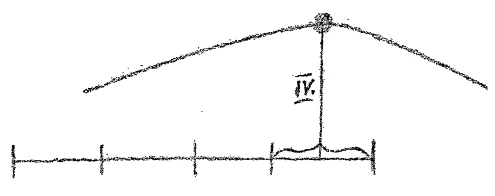
[ 8 ] Look, what does “measuring” mean? Measuring means comparing something to a standard. I can measure a line by comparing it to a small line—one, two, three, and so on. When you measure this way—whether you’re measuring lengths, areas, or weights—the qualitative aspect is completely left out. The number three is always the same number, whether you use it to count sheep or people or statesmen—the number three always remains the same; what matters is not the qualitative aspect, but only the quantity. And that is precisely the essence of measure and number: that the qualitative aspect does not matter. But as a result, everything that is handed down to us through measurement and number becomes an illusion, and we must take this seriously: that the moment we enter the world that can be measured and weighed—that is, the world of space and the world of time, as they are given to us— we are approaching the world of illusion, the world that is a mere mirage as long as we regard it as if it were reality. This is, in fact, the ideal of contemporary thought: to discover, regarding all things in the external world of space and time, what they signify in space and time; whereas in truth, what things signify in space and time is merely their outward appearance, and we must penetrate beyond space and time into the deeper realm if we wish to arrive at the truth, at the essence. So a future must come in which human beings say to themselves: Yes, I can grasp the natural external world with my intelligence. I can grasp the external world with my intelligence in the way that, for example, is envisioned today as the ideal of natural science. But the view I gain through this is purely Ahrimanic. — This does not mean that one should reject this natural science, or that one should not have it; but one must become aware that through this natural science one attains only the Ahrimanic illusion. Why is that? Why should one still have this natural science, even though through it one attains only the Ahrimanic illusion? Because humanity, in the course of Earth’s evolution, is on the descending branch of its development. Humanity is a being that is already in decline. If you take the fourth of the five post-Atlantean epochs—the Greco-Latin epoch—one can say: At that time, humanity was, in terms of its knowledge, relatively at its highest point. But now humanity is already in decline once again. And while humanity is in decline—I have explained this from various perspectives—it, as a being that is already becoming physically weak again, would not be able to endure perceiving the world as the Greeks still perceived it.
[ 8 ] Sehen Sie, was heißt messen ? Messen heißt, mit einem Maße irgend etwas vergleichen. Eine Linie kann ich messen, wenn ich sie mit einer kleinen Linie eins, zwei, drei und so weiter vergleiche. Wenn man so mißt, gleichgültig ob man Längen oder Flächen oder Gewichte mißt, bleibt ganz weg das Qualitative. Die Zahl drei ist immer dieselbe Zahl, ob Sie mit ihr abzählen Schafe oder Menschen oder Staatsmänner, die Zahl drei bleibt immer dieselbe; es kommt nicht auf das Qualitative an, es kommt nur auf das Quantum an. Und das ist gerade das Wesentliche bei Maß und Zahl, daß es nicht auf das Qualitative ankommt. Aber dadurch wird alles, was uns durch Maß und Zahl überliefert wird, zu einem Blendwerk, und dies müssen wir ernst nehmen, daß in dem Augenblicke, wo wir die Welt betreten, welche gemessen und gewogen werden kann, das heißt die Welt des Raumes und die Welt der Zeit, wie sie uns gegeben sind, wir herantreten an die Welt der Täuschung, an die Welt, die eine bloße Fata Morgana ist, solange wir sie so betrachten, als ob sie eine Wirklichkeit wäre. Das ist ja eigentlich das Ideal des gegenwärtigen Denkens, über alle Dinge der räumlichen und zeitlichen Außenwelt das zu erfahren, was sie im Raum und in der Zeit bedeuten, während in Wahrheit dasjenige, was die Dinge im Raum und in der Zeit bedeuten, eben nur ihre Außenseite ist, und wir gerade über Raum und Zeit hinweg in das Tiefere eindringen müssen, wenn wir zur Wahrheit, zur Wesenheit kommen wollen. Es wird also eine Zukunft kommen müssen, durch die sich der Mensch sagt: Ja, ich kann mit meiner Intelligenz die natürliche Außenwelt erfassen. Ich kann mit meiner Intelligenz so die Außenwelt erfassen, wie es zum Beispiel als Ideal heute vorschwebt der Naturwissenschaft. Aber diese Anschauung, die ich dadurch gewinne, ist die rein ahrimanische. — Das heißt nicht, man soll diese Naturwissenschaft verwerfen, man soll diese Naturwissenschaft nicht haben; aber man soll sich bewußt werden, daß man durch diese Naturwissenschaft bloß das ahrimanische Blendwerk erlangt. Warum denn? Warum soll man trotzdem diese Naturwissenschaft haben, trotzdem man durch sie nur das ahrimanische Blendwerk erlangt? Weil der Mensch in der Erdenentwickelung auf dem absteigenden Ast seiner Entwickelung ist. Er ist ein Wesen, das bereits im Niedergang ist. Wenn Sie unter den fünf nachatlantischen Zeiträumen den vierten nehmen, den griechisch-lateinischen, so kann man sagen: Da war der Mensch in bezug auf seine Erkenntnis verhältnismäßig im höchsten Punkte. Jetzt aber ist der Mensch bereits wiederum im Niedergang. Und während der Mensch im Niedergang ist — ich habe das von verschiedenen Gesichtspunkten her erläutert —, würde er, das bereits wiederum leiblich schwach werdende Wesen, es nicht vertragen, die Welt so wahrzunehmen, wie sie noch der Grieche wahrgenommen hat.
[ 9 ] That, you see, is not “external history”! What would today’s well-behaved historians say about this, who treat Greece just as they would any other region of their own time, because they do not know that the Greeks looked at nature through different eyes than people today, that they listened to the world through different ears than people today. People today—and the historians don’t tell you this—would suffer constant headaches or migraines if they were to see and hear in the external world what the Greeks saw and heard. The Greeks had a much more intense sensory experience of the external world. We have already become numb in our perception of the external world. In order for us to be able to tolerate it, we must be presented with nothing more than a mirage of the external world. And we are presented with nothing more than a mirage of the external world. And what is most of all a mere mirage is not merely what we see with our senses, but what we dream up in our conceptions of this external world through our science. The greatest dreamers about the outside world today are actually those who believe themselves to be realists in their thinking. Darwin or John Stuart Mill—they are true dreamers. Those who believe they are being entirely realistic—they are the dreamers.
[ 9 ] Das, sehen Sie, sagt keine «äußerliche Geschichte»! Was würden dazu die braven heutigen Historiker sagen, die Griechenland geradeso tradieren, als wenn sie irgendeine Gegend ihrer Zeitgenossen tradieren würden, weil sie nicht wissen, daß die Griechen aus anderen Augen in die Natur geschaut haben als die heutigen Menschen, daß sie aus anderen Ohren hinaus gehört haben in die Welt als die heutigen Menschen. Die heutigen Menschen — das sagen Ihnen die Historiker nicht — würden fortwährend Kopfschmerz oder Migräne haben, wenn sie dasjenige sehen und hören würden in der Außenwelt, was die Griechen gesehen und gehört haben. Ein viel intensiveres Außenleben der Sinneswelt hatten die Griechen. Wir sind bereits in bezug auf die Auffassung der Außenwelt abgestorben. Uns muß, damit wir es vertragen können, eine bloße Fata Morgana der Außenwelt vorgeführt werden. Und es wird uns eine bloße Fata Morgana der Außenwelt vorgeführt. Und am meisten ist dasjenige eine bloße Fata Morgana, was wir nicht bloß sehen mit unseren Sinnen, sondern was wir durch unsere Wissenschaft in unseren Vorstellungen über diese Außenwelt träumen. Die größten Träumer über die Außenwelt sind heute eigentlich diejenigen, die glauben, die Realistischen im Denken zu sein. Darwin oder John Stuart Mill, das sind richtige Träumer. Diejenigen, die glauben, gerade ganz realistisch zu sein, das sind die Träumer.
[ 10 ] But we cannot rely entirely on our inner selves either. There are many among you who, from the course of the movement that has taken place within the Theosophical Society—insofar as this Theosophical Society is indeed the Theosophical Society—could recognize how the mere pursuit of the inner life, when carried out as many people strive to do today, also leads nowhere in terms of what a person should be guided toward today, or toward what they should guide themselves. For in many cases, the aim is not for a person to move beyond ordinary life to a higher perspective through their own free decision, but rather, in many cases, an appeal is made precisely to the unfree part of the human being. All manner of hallucinatory and illusory abilities are called upon.
[ 10 ] Aber wir können auch nicht uns ganz verlassen auf unser Inneres. Viele sind unter Ihnen, die könnten aus dem Verlaufe der Bewegung, die durch die Theosophische Gesellschaft gegangen ist, insofern diese Theosophische Gesellschaft eben die Theosophical Society ist, erkennen, wie das bloße Verfolgen des Inneren, wenn es so gemacht wird, wie es heute viele Menschen anstreben, auch nicht zu irgend etwas führt, wozu der Mensch heute geführt werden soll, wozu er sich selbst führen soll. Denn da wird vielfach angestrebt, daß der Mensch nicht in Freiheit durch seinen selbsteigenen Entschluß über das gewöhnliche Leben hinaus zu einer höheren Anschauung komme, sondern es wird vielfach gerade appelliert an den unfreien Teil des Menschen. Es werden allerlei halluzinatorische, allerlei Ilusionsfähigkeiten in Anspruch genommen.
[ 11 ] But a person should tell themselves: Just as external science becomes Ahrimanic, so too does the higher development of a person’s inner being simply become Luciferic if they mystically deepen this inner being as they were born with it. — In every person who today, without the self-education discussed in the book *How to Attain Knowledge of the Higher Worlds*, sets out to mystically deepen what already lies within them, the Luciferic awakens and becomes particularly powerful. 'But this will surely bear witness to the fact that in every person today, the moment they even begin to ponder their inner life, the Luciferic element emerges. This Luciferic element is actually terribly powerful in humanity today. It manifests itself today in a form of selfishness that most people do not even notice in themselves. Just think how often one encounters people today who, when they have done something, are satisfied if—as they often say—they have carried out the task in such a way that they have nothing to reproach themselves for, that they have done it to the best of their knowledge and conscience. This is a purely Luciferic point of view that is being asserted. For in what we do in life, it does not matter at all whether we have reason to reproach ourselves or not; rather, what matters is that we grasp things objectively—entirely apart from ourselves—that we see through the world, and that we carry out our actions based on the objective course of events. And most people today do not strive for an objective understanding of the matter, for a recognition of how things must unfold as a result of world-historical development.
[ 11 ] Der Mensch sollte sich aber sagen: So wie die äußere Wissenschaft ein Ahrimanisches wird, so wird die höhere Entwickelung des Inneren des Menschen einfach ein Luziferisches, wenn er dieses Innere so, wie er damit geboren ist, mystisch vertieft. — In jedem Menschen, der sich heute ohne jene Selbsterziehung, von der die Rede ist in dem Buche «Wie erlangt man Erkenntnisse der höheren Welten?», in die Hand nimmt, um das, was schon in ihm liegt, mystisch zu vertiefen, wacht auf das Luziferische, wird das Luziferische besonders mächtig. 'Aber das wird Ihnen ja bezeugen, daß in jedem Menschen heute, wenn er überhaupt nur anfängt nachzugrübeln über das Innere, das Luziferische auftritt. Dieses Luziferische ist heute eigentlich furchtbar mächtig in der gegenwärtigen Menschheit. Es prägt sich dieses Luziferische heute aus in einem Egoismus, den die meisten Menschen bei sich gar nicht bemerken. Denken Sie nur, wie oft trifft man heute Menschen an, die, wenn sie irgend etwas getan haben, zufrieden sind, wenn sie, wie sie oftmals sagen, die Sache so verrichtet haben, daß sie sich keinen Vorwurf zu machen haben, daß sie nach bestem Wissen und Gewissen die Sache gemacht haben. Das ist ein rein luziferischer Gesichtspunkt, der geltend gemacht wird. Denn es kommt bei dem, was wir im Leben tun, gar nicht darauf an, ob wir uns einen Vorwurf zu machen brauchen oder keinen Vorwurf zu machen brauchen, sondern es kommt darauf an, daß wir die Dinge objektiv, ganz abgesehen von uns objektiv erfassen, daß wir die Welt durchschauen, daß wir aus objektivem Tatsachenverlauf heraus die Dinge vollziehen. Und die meisten Menschen streben heute nicht nach einer objektiven Durchdringung der Sache, nach einem Erkennen, wie die Sachen aus dem weltgeschichtlichen Werden heraus zu geschehen haben.
[ 12 ] That is why, precisely on the basis of spiritual science, we must emphasize how things are objectively: that Ahriman is preparing his incarnation—which can be recognized by how he prepares it, and by how we as human beings must relate to it! When it comes to such questions, it really does not matter that we tell ourselves: “We do this or that so that we need not reproach ourselves”—rather, we must learn to recognize objective realities. We must learn to recognize what is at work in the world and act accordingly for the sake of the world.
[ 12 ] Deshalb müssen wir gerade auf dem Boden der Geisteswissenschaft betonen, wie die Dinge objektiv sind: Daß also Ahriman seine Inkarnation vorbereitet, woran man erkennt, wie er sie vorbereitet, wie man sich als Mensch dazu zu stellen hat! Bei solchen Fragen kommt es wirklich nicht darauf an, daß wir uns sagen: Wir tun das oder jenes, damit wir uns keine Vorwürfe zu machen brauchen —, sondern wir müssen die objektiven Sachen erkennen lernen. Wir müssen dasjenige erkennen lernen, was in der Welt wirkt, und uns danach verhalten um der Welt willen.
[ 13 ] All of this, however, actually points to the fact that modern human beings can only judge themselves correctly when they acknowledge that they are, in fact, always oscillating between two extremes: between the Ahrimanic on the one hand, which presents them with an external illusion, and the Luciferic within, which instills in them a tendency toward illusions, hallucinations, and so on. Today, people live out their Ahrimanic tendencies in science and their Luciferic tendencies in religion. And in the arts, people oscillate back and forth between the two. In recent times, there have been artists who had more Luciferic tendencies, while others had more Ahrimanic tendencies. Those with more Luciferic tendencies became Expressionists; those with more Ahrimanic tendencies became Impressionists. And oscillating between all of this are those who actually want to be neither one nor the other—who neither properly assess the Luciferic nor the Ahrimanic, but wish to avoid both. Just not Ahriman! — I mustn’t do that, I don’t want to do that, because then I’ll end up in the Ahrimanic realm. — I mustn’t do that, I don’t want to do that, because then I’ll end up in the Luciferic realm! — And one wants to be “very well-behaved,” avoiding both the Ahrimanic and the Luciferic realms.
[ 13 ] Das alles aber zielt eigentlich darauf hin, daß der gegenwärtige Mensch sich nur dann richtig beurteilt, wenn er sagt, er schwebe eigentlich immer zwischen zwei Extremen, zwischen dem Ahrimanischen auf der einen Seite, das ihm ein äußerliches Blendwerk vorlegt, und zwischen dem Luziferischen im Inneren, das ihm die Neigung einimpft zu Illusionen, zu Halluzinationen und so weiter. Heute lebt der Mensch seine ahrimanischen Neigungen aus in der Wissenschaft, seine luziferischen in der Religion. Und im Künstlerischen pendeln die Menschen zwischen dem einen und dem anderen hin und her. In der letzten Zeit gab es solche Künstler, die mehr luziferische Neigungen hatten, andere waren solche, die mehr ahrimanische Neigungen hatten. Diejenigen, die mehr luziferische Neigungen hatten, sie wurden Expressionisten; die, welche mehr ahrimanische Neigungen hatten, wurden Impressionisten. Und zwischen alledem pendeln dann diejenigen, die eigentlich weder das eine noch das andere sein wollen, weder das Luziferische richtig beurteilen noch das Ahrimanische richtig beurteilen, sondern beides meiden wollen. Nur ja nicht Ahriman! — Das darf ich nicht tun, das will ich nicht tun, denn da komme ich ins Ahrimanische hinein. — Das darf ich nicht tun, das will ich nicht tun, da komm ich in das Luziferische! — Und man will «ganz brav» sein, weder in das Ahrimanische noch in das Luziferische hineinkommen.
[ 14 ] No, that is not the point; rather, the point is to view the Ahrimanic and the Luciferic as two pans of a scale, both of which must be present. And we must represent the balance beam, which is in a state of equilibrium between the two. That is what this is all about.
[ 14 ] Ja, darum handelt es sich nicht, sondern es handelt sich darum, Ahrimanisches und Luziferisches zu betrachten wie zwei Waagschalen, die beide da sein müssen. Und den Waagebalken, der im Gleichgewichtszustande zwischen beiden ist, müssen wir darstellen. Das ist dasjenige, um was es sich handelt.
[ 15 ] And how can we train ourselves to do such a thing? By infusing what manifests as Ahrimanic within us very strongly with a Luciferic element. What manifests as Ahrimanic in people today? The perception of the external world. The most Ahrimanic thing of all is the material perception of the external world, for this is nothing but an illusion. But if we can become enthusiastic about it, if we develop an interest in it—if we are terribly interested in the illusions that arise from chemistry, physics, astronomy, and so on—then, through our own Luciferic interest, we detach from Ahriman something that actually belongs to him.
[ 15 ] Und wie können wir uns zu einer solchen Sache erziehen? Indem wir das, was in uns ahrimanisch auftritt, sehr stark mit einem luziferischen Elemente durchdringen. Was tritt ahrimanisch auf im heutigen Menschen? Die Erkenntnis der Außenwelt. Das Allerahrimanischeste ist das materielle Erkennen der Außenwelt, denn diese ist nur ein bloßes Blendwerk. Können wir uns aber dafür begeistern, entwickeln wir Interesse dafür, interessiert es uns furchtbar, was da für ein Blendwerk entsteht aus Chemie, aus Physik, aus Astronomie und so weiter, dann bringen wir etwas, was eigentlich dem Ahriman gehören soll, durch unser eigenes luziferisches Interesse von Ahriman los.
[ 16 ] That is precisely what people do not want. They find it very boring. And many who are actually fleeing external, material knowledge misunderstand their task and provide Ahriman with the very best incarnation in earthly existence. And what is welling up within people today, in turn, has a very strong Luciferic character. How can we properly educate ourselves in this regard? By delving into our own inner Ahrimanic nature—that is, by trying to avoid all illusions about our own inner being—and by approaching ourselves in the same way we approach the external world, that is, by observing ourselves as we would otherwise observe the external world. Modern people must actually experience how very necessary it is for them to educate themselves in this way. Anyone who has a certain keen sense of observation for such things will very often encounter the following fact in life today.
[ 16 ] Gerade das möchten die Menschen nicht. Den Menschen ist das sehr langweilig. Und viele, die eigentlich das äußere materielle Wissen fliehen, die verkennen ihre Aufgabe und bereiten dem Ahriman die allerbeste Inkarnation im Erdendasein. Und was in dem Inneren der heutigen Menschen aufquillt, das hat wiederum einen sehr stark luziferischen Charakter. Wie können wir nach dieser Seite uns richtig erziehen? Indem wir gerade mit unserem eigenen Ahrimanischen in uns hineingehen, das heißt versuchen, alle Illusionen über unser eigenes Innere zu vermeiden, und indem wir uns so nehmen, wie wir sonst die Außenwelt nehmen, also uns selber so betrachten, wie wir sonst die Außenwelt betrachten. Der heutige Mensch muß eigentlich erleben, wie er gar sehr nötig hat, sich zu so etwas erst zu erziehen. Wer einen gewissen Beobachtungssinn für solche Dinge hat, der trifft heute sehr häufig die folgende Tatsache im Leben an.
[ 17 ] A person comes to him and tells him what upsets him about Person A, Person B, Person C, and countless others. He describes in great detail how he is upset about this and that regarding Person A, Person B, Person C, and so on. He has no idea that everything he describes are his own characteristics! People have no idea of this! This trait in human beings has never been as widespread as it is today. And those who believe that this is not the case with them are the ones in whom it is most evident. The point is that people today should indeed approach their own inner selves with Ahrimanic cold-bloodedness, with Ahrimanic sobriety. People’s inner selves are still heated enough, even if they have cooled down somewhat! There is no need to fear that they will cool down too much. And it is indeed the case that, in order to gain the right attitude toward the future incarnation of Ahriman, humanity today needs to become more objective about its inner life and to bring much, much more subjectivity—not fanciful constructs, but interest, attention, and devotion—into the outer world; in particular, interest and devotion to the things of life, of immediate life.
[ 17 ] Ein Mensch kommt zu ihm und erzählt ihm, worüber er entrüstet ist bei dem Menschen A, bei dem Menschen B, bei dem Menschen C, bei unzähligen Menschen. Er schildert sehr genau, wie er entrüstet ist über dies und jenes bei dem Menschen A, bei dem Menschen B, bei dem Menschen C, und so weiter. Keine Ahnung hat er, daß alles, was er erzählt, seine eigenen Eigenschaften sind! Keine Ahnung haben die Menschen davon! Diese Eigenart der Menschen war nie so verbreitet wie in der Gegenwart. Und diejenigen, die glauben, daß es bei ihnen nicht so sei, bei denen ist es am allermeisten so. Es handelt sich darum, daß tatsächlich mit ahrimanischer Kaltblütigkeit, mit ahrimanischer Nüchternheit der Mensch sich heute seinem eigenen Inneren nahen sollte. Hitzig ist es immer noch genug, auch wenn es noch etwas abgekühlt wird, dieses eigene Innere der Menschen! Man braucht sich gar nicht zu fürchten, daß es zu stark abgekühlt wird. Und es ist schon so, daß die heutige Menschheit notwendig hat, um eine richtige Stellung zur künftigen Ahrimaninkarnation zu gewinnen, über das Innere objektiver zu werden, in das Äußere viel, viel Subjektives, aber nicht Phantasiegebilde, sondern Interesse, Aufmerksamkeit, Hingabe hineinzubringen, insbesondere aber auch Interesse, Hingabe an die Dinge des Lebens, des unmittelbaren Lebens.
[ 18 ] You see, one greatly promotes the path Ahriman intends to take to make his incarnation as favorable as possible when, depending on one’s upbringing or other life circumstances, one finds this or that aspect of external life boring. Just think how many people today find this or that boring. For example, I have met countless people who find it boring—let’s say—to familiarize themselves with the practices of banks or the stock market, or to study single-entry and double-entry bookkeeping. But it is never right to find anything absolutely boring. To find something boring simply means that one has not yet found the point where it becomes intensely interesting; any dry cash book can, if you find the point from which it becomes fascinating, be just as interesting as Schiller’s *The Maid of Orleans* or Shakespeare’s *Hamlet* or anything else—for example, Raphael’s *Sistine Madonna*. It’s simply a matter of finding the point from which everything in life is interesting.
[ 18 ] Sehen Sie, sehr gut fördert man den Weg, den Ahriman nehmen will, um seine Inkarnation so günstig wie möglich zu gestalten, wenn man das oder jenes nach seiner Erziehung oder nach seinen sonstigen Lebensverhältnissen in bezug auf das äußere Leben langweilig findet. Denken Sie nur, wie viele Menschen heute dies oder jenes langweilig finden. Ich habe zum Beispiel unzählige Menschen kennengelernt, die finden es langweilig, sagen wir, sich mit den Usancen von Banken oder der Börse bekanntzumachen oder einfache und doppelte Buchführung zu betrachten. Dies ist aber nie richtig, irgend etwas absolut langweilig zu finden. Irgend etwas langweilig finden, heißt nur, den Punkt noch nicht gefunden zu haben, wo es brennend interessant ist; jedes trockene Kassenbuch kann, wenn man den Punkt findet, von dem aus es brennend interessant ist, genau ebenso interessant sein, wie die «Jungfrau von Orleans» von Schiller oder der «Hamlet» von Shakespeare oder irgend etwas, zum Beispiel die «Sixtinische Madonna» von Raffael. Es handelt sich nur darum, den Punkt zu finden, von dem aus alles im Leben interessant ist.
[ 19 ] Based on what I have just said, you might think that the matter is quite paradoxical. But it is not. It is only modern man who is paradoxical in his relationship to the truth. Rather, modern man feels the need to assume—very, very strongly—that he cannot do something, rather than that the world cannot do it. And nothing paves the way for Ahriman’s future incarnation better than finding this or that boring, considering oneself too good for one thing or another, or refusing to participate in one thing or another. It is simply a matter of finding the point from which one thing or another becomes interesting. What is at stake today is not that we subjectively reject or accept things, but that we objectively recognize to what extent there is something Ahrimanic or Luciferic in one thing or another, so that the scales may tip too far in one direction or the other. Finding something interesting does not mean finding it justified; it merely means developing an inner strength to unite with the subject in question and steer it precisely into the right course.
[ 19 ] Von dem, was ich eben gesagt habe, könnten Sie vielleicht denken, die Sache sei doch recht paradox. Sie ist es aber nicht. Der heutige Mensch nur ist paradox in seinem Verhältnis zur Wahrheit. Der heutige Mensch hat es vielmehr nötig, recht, recht stark vorauszusetzen, daß er etwas nicht kann, nicht daß die Welt das Betreffende nicht kann. Und nichts bereitet Ahriman den Weg für seine künftige Inkarnation besser vor, als dies oder jenes langweilig zu finden, sich zu gut zu finden für das eine oder andere, nicht mitmachen zu wollen das eine oder das andere. Es handelt sich eben überall darum, den Punkt zu finden, von dem aus das eine oder das andere eben interessant ist. Das, worum es sich heute handelt, ist nicht, daß wir subjektiv ablehnen oder akzeptieren die Dinge, sondern daß wir objektiv erkennen, inwiefern in dem einen oder in dem anderen Ahrimanisches oder Luziferisches ist, so daß der Waagebalken nach der einen oder anderen Seite zu stark ausschlagen kann. Etwas interessant finden, bedeutet ja noch nicht, es berechtigt zu finden, sondern es bedeutet nur, daß man eine innere Kraft entwickelt, um sich zusammenzuschließen mit dem Betreffenden und es gerade in das richtige Fahrwasser zu bringen.
[ 20 ] You know—it’s been a long time now—that a number of friends bought mathematics books. A certain “theosophical sport principle” had crept in. Many people bought Lübsen’s mathematics books. Most of them then put them on their bookshelves after a while, because their mathematical knowledge didn’t really take hold. Of course, I do not mean to say that you should immediately set about doing such things again; I do not presume to tell you to do so, nor do I wish to urge you to do just that. But to take on something that at first does not interest you at all, precisely in order to find the possibility of arriving at a new understanding of world existence from some point of departure—that is of immense significance. And today, human beings truly need something like this. For such matters must be taken seriously and with gravity, just like those I have sought to convey to you in these reflections: the ways in which Lucifer and Ahriman intervene, alongside the Christ impulse, in the development of humanity.
[ 20 ] Sie wissen — es ist jetzt schon lange her —, da hat eine Anzahl von Freunden sich Mathematikbücher gekauft. Da hatte sich ein gewisses «theosophisches Sportprinzip» eingeschlichen. Man hat sich vielfach die Lübsenschen Bücher für Mathematik gekauft. Die meisten haben sie dann nach einiger Zeit in ihre Bibliotheken gestellt, denn das mathematische Wissen ist nicht sehr stark aufgetaucht. Ich will selbstverständlich damit nicht sagen, daß Sie jetzt gleich wieder darangehen sollen, solche Dinge zu machen; das mute ich Ihnen nicht zu, ich will Sie nicht wiederum gerade zu dem mahnen. Aber etwas in Angriff zu nehmen, was einen zunächst gar nicht interessiert, um gerade die Möglichkeit zu finden, von irgendeinem Punkte aus zu einem neuen Verständnis des Weltendaseins zu kommen, das ist von einer ungeheueren Bedeutung. Und heute hat der Mensch so etwas schon notwendig. Denn solche Dinge sind ernst und gewichtig zu nehmen, wie die, die ich Ihnen in diesen Betrachtungen nahebringen wollte: auf welche Weise Luzifer und Ahriman eingreifen neben dem Christus-Impuls in die Entwickelung der Menschheit.
[ 21 ] You see, if it had not been for Luciferic wisdom, we would not have gained an understanding of the Mystery of Golgotha through the Gnosis of the first centuries. For as Luciferic wisdom fell into decadence, so too did the understanding of the Mystery of Golgotha gradually decline. And today? Yes, where is one to look for this understanding of the Mystery of Golgotha? That it cannot be found through external Ahrimanic science becomes clear to those who have some insight into that science. Take a figure such as Cardinal Newman, who played a major role in religious development during the second half of the 19th century. At his investiture as a cardinal in Rome, he declared that he saw no hope for the religious development of humanity unless a new revelation were to come! — But that was as far as it went. He showed no particular inclination to receive anything of what can now penetrate into humanity from the spiritual worlds as a new spiritual life. It remained a mere abstraction!
[ 21 ] Sehen Sie, wäre die luziferische Weisheit nicht gewesen, so hätte man nicht durch die Gnosis der ersten Jahrhunderte ein Verständnis errungen für das Mysterium von Golgatha. Denn als die luziferische Weisheit in die Dekadenz kam, da kam allmählich auch das Verständnis für das Mysterium von Golgatha in Abnahme. Und heute? Ja, wo soll man es denn suchen, dieses Verständnis für das Mysterium von Golgatha? Daß man es nicht finden kann durch die äußere ahrimanische Wissenschaft, das geht denjenigen Menschen auf, die die äußere ahrimanische Wissenschaft etwas durchschauen. Nehmen Sie eine solche Persönlichkeit wie den Kardinal Newman, der eine große Bedeutung hat für die religiöse Entwickelung in der zweiten Hälfte des 19. Jahrhunderts. Bei seiner Einkleidung als Kardinal in Rom hat er die Worte ausgesprochen, er sehe kein Heil für die religiöse Entwickelung der Menschheit, es sei denn, es käme eine neue Offenbarung! — Aber dabei ist es geblieben. Er hat keine besondere Neigung gezeigt, etwas von dem zu empfangen, was als neues Geistesleben aus den geistigen Welten jetzt in die Menschheit hereindringen kann. Es blieb beim bloßen Abstraktum!
[ 22 ] Humanity needs a new revelation. We can see this in every area of life. Discussions are taking place today in which it is said that the moral condition of humanity has deteriorated over the past four to five years. From this, it is concluded that denominational religious instruction must once again be introduced more intensively into schools. In contrast, it cannot be emphasized often enough: Denominational religious instruction was already there, and the times we live in today have come about precisely under its influence. If the old ways—what the denominations have brought about—are to be reintroduced now, then we might as well start the whole process all over again. Then, in time, we’ll find ourselves back where we were in 1914 if we revive the old institutions. We should really recognize that deep in people’s subconscious, there are longings for something entirely different from what is expressed on the surface.
[ 22 ] Die Menschheit braucht eine neue Offenbarung. Das können wir auf allen Gebieten sehen. Da werden heute Diskussionen gepflogen, in denen gesagt wird, daß die moralische Verfassung der Menschheit in den letzten vier bis fünf Jahren Schaden genommen hat. Daraus wird dann gefolgert, man müsse nun wiederum den konfessionellen Religionsunterricht intensiver in die Schulen einführen. Demgegenüber kann man nicht oft genug betonen: Der war ja da, der konfessionelle Religionsunterricht, und die heutigen Zeiten sind ja gerade unter seinem Einfluß gekommen. Wenn jetzt wiederum das Alte eingeführt werden soll, dasjenige, was die Konfessionen heraufgetragen haben, dann können wir ja den ganzen Prozeß noch einmal anfangen. Dann werden wir ja in einiger Zeit wiederum da sein, wo man 1914 war, wenn man die alten Einrichtungen wieder erneut pflegt. Man sollte gar sehr sehen, daß schon im Unterbewußtsein der Menschen etwas ganz anderes da ist an Sehnsuchten, als dasjenige, was sich an der Oberfläche äußert.
[ 23 ] When we founded the Waldorf School in Stuttgart, we were, of course, compelled to organize religious instruction in such a way that it would be taught by the respective pastors. We set aside a separate period for religious education: the Catholic pastor teaches the Catholics, and the Protestant pastor teaches the Protestants. Now, I don’t want to go into the difficulties that arose on the part of the pastors. That’s a whole other story. But I do want to mention that a desire immediately arose to also offer religious education outside the denominational framework. At first, I thought participation would be very insignificant compared to that in denominational classes. Nevertheless, even though there will soon be no pulpit left in Stuttgart from which the anthroposophical movement is not denounced, a large number of children—far more, at least five times as many as we could have expected—have signed up for a kind of anthroposophical religious education, which must be taught in two classes. This is something that, subjectively speaking, need not be at all pleasant for us, for it can, of course, be our undoing. But I do not wish to speak of that today. I merely wanted to show that a longing for progress does indeed exist within people, but that people are asleep and do not see how forces are suppressing this human longing. And then, for the most part, the courage is lacking to truly bring this human longing to the surface of life.
[ 23 ] Als wir in Stuttgart die Waldorfschule gründeten, da waren wir ja genötigt, den Religionsunterticht so einzurichten, daß er von den entsprechenden Pfarrern erteilt wird. Wir sondern die Stunde für den Religionsunterricht aus, der katholische Pfarrer erteilt für die Katholiken, der evangelische Pfarrer für die Evangelischen den Religionsunterricht. Nun will ich nicht davon sprechen, welche Schwierigkeiten von seiten der Pfarrer gekommen sind. Das ist ein Kapitel für sich. Aber ich will davon sprechen, daß gleich aufgetaucht ist die Sehnsucht, man solle nun auch einen Religionsunterricht außerhalb des konfessionellen erteilen. Zunächst dachte ich, die Teilnahme werde sehr unbedeutend werden gegenüber der am konfessionellen Unterricht. Trotzdem nun in Stuttgart bald keine Kanzel mehr sein wird, von der aus nicht gewettert wird über die anthroposophische Bewegung, haben sich eine große Anzahl Kinder, viel mehr, jedenfalls fünfmal so viel als wir erwarten konnten, für eine Art anthroposophischen Religionsunterricht gemeldet, der in zwei Abteilungen erteilt werden muß. Das ist etwas, was uns subjektiv gar nicht angenehm zu sein braucht, denn es kann uns natürlich den Strick drehen. Aber davon will ich heute nicht sprechen. Ich wollte nur zeigen, daß in den Menschen tatsächlich die Sehnsucht vorhanden ist nach einem Vorwärts, daß die Menschen aber schlafen und nicht sehen, wie Gewalten niederhalten dieses Menschheitssehnen. Und dann fehlt zumeist doch der Mut, wirklich dieses Menschheitssehnen an die Oberfläche des Lebens zu tragen.
[ 24 ] But consider what an impact such an insight might have—one concerning the future human incarnation of Ahriman, who is preparing for it precisely through the very things I described yesterday and today. It is necessary that we educate ourselves objectively about these matters so that we may adopt the correct attitude toward all that is taking place around us in preparation for the future incarnation of Ahriman. Only when you give ample and careful consideration to what we have said about such Ahrimanic currents in these two reflections will you be able to grasp the gravity of the matter.
[ 24 ] Aber bedenken Sie, was eine solche Einsicht wirken könnte, wie die von der künftigen menschlichen Inkarnation des Ahriman, der sie vorbereitet gerade durch solche Dinge, wie ich sie gestern und heute geschildert habe. Es ist notwendig, daß wir uns über diese Dinge objektiv unterrichten, damit wir die richtige Stellung gewinnen können zu alldem, was rings um uns vorgeht an Vorbereitungen für die künftige Ahrimaninkarnation. Nur wenn Sie reichlich und reiflich überlegen, was wir über solche ahrimanische Strömungen in diesen zwei Betrachtungen gesagt haben, dann werden Sie den Ernst der Sache ins Auge fassen können.