

Healing Factors for the Social Organism
GA 198
21 March 1920, Dornach
Translated by Steiner Online Library
Second Lecture
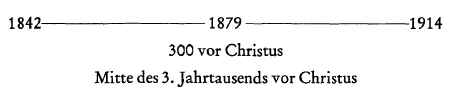
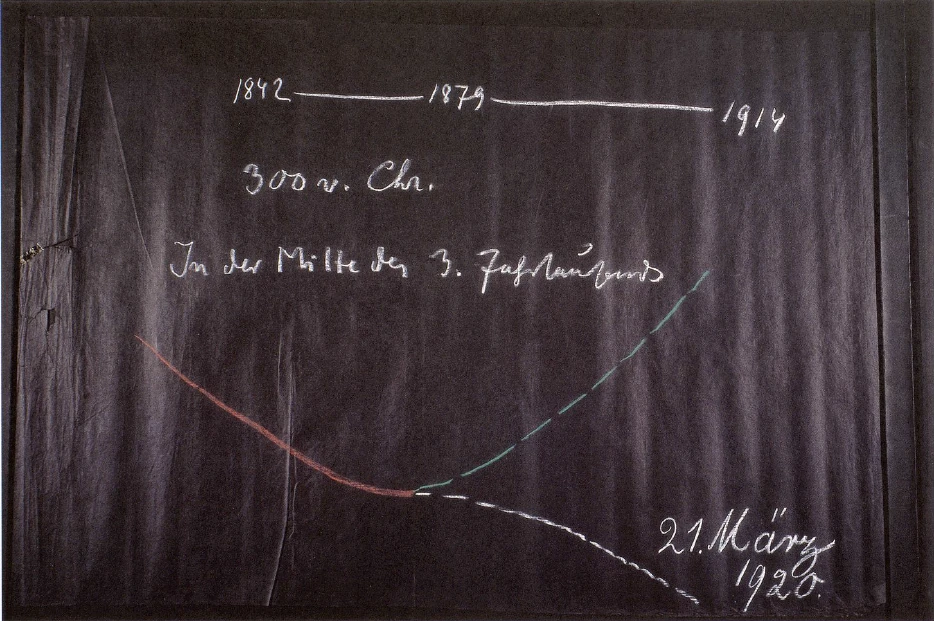
[ 1 ] Today, it will be my task to bring together, from various sources, some of the insights that formed the basis of earlier reflections—insights with which a large number of our friends are already familiar—and to connect them with what I said yesterday. I would just like to point out once more that the essential point of what I said yesterday was that such a—in a sense—neutral form of cognition, as we currently practice it, is essentially a creation of modern times; that such an indifferent form of knowledge—which medicine treats as a science on par with others—has only emerged over the course of the last three to four centuries, whereas all knowledge in ancient times was aimed at healing; and the pursuit of knowledge and the discovery of remedies for the healing of humanity were one and the same, in the sense I indicated yesterday. Now you know from various hints that have been made here and there in lectures that an important spiritual event occurred in the last third of the 19th century—that in the 1870s, something significant took place, so to speak, behind the scenes of world history, of external, physical world history. To give this event a name—though we could just as easily have chosen another—we have called it the victory of that archangelic being whom we refer to as Archangel Michael over opposing spiritual forces. Let us first consider this outcome as a process in the spiritual world with which our human history is connected. Such events unfold in such a way that they are first prepared in the spiritual world. One could say, for example, that the event I am referring to has been in preparation since the year 1842. A certain decision was then reached in the spiritual world around 1879, and it has been necessary for people on Earth to act in harmony with this spiritual event since the year 1914. What has happened since 1914 is essentially a clash between human narrow-mindedness and what was actually supposed to happen, according to the spiritual powers responsible for guiding humanity. So we can say: In the second half of the 19th century and the early years of the 20th century, something very significant was taking place behind the scenes of human development—namely, a call to humanity to behave as these spiritual beings desire: to bring about a turning point, to do something that would introduce a new kind of civilization to humanity—a new way of understanding social life, artistic life, and spiritual life on Earth in general. Such events have occurred repeatedly in the course of human development. External history records few such events, because external history is, after all, merely a “fable convenue,” but these events have indeed occurred repeatedly. The event that can be compared to the one mentioned took place about three hundred years before the birth of Christ; another, even earlier one, occurred around the middle of the third millennium before the birth of Christ:
[ 2 ] However, with regard to humanity, there is a very significant difference between the experience of these two events and the experience of the event that took place in the 19th and 20th centuries; for most of you have, at least in part, witnessed the events of the second half of the 19th century and the beginning of the 20th century, and most of you will also know how little humanity as a whole took notice of the fact that a radical change in spiritual life was actually about to take place.
[ 3 ] Humanity will be forced by hardship to take note of this necessity. And the hardship will not cease until a sufficiently large number of people have taken note of this necessity, including with regard to the conduct of public affairs. We may ask: Why have people not taken notice? And was this also the case with regard to the other two historical events—that of the third millennium and that of, say, the third century? — No, that was certainly not the case with those events. If one were able to correctly interpret the spiritual history of the Greek people—and even that of the Roman people, who were admittedly somewhat coarse in disposition—one would realize that, in fact, there was indeed an awareness among both the Greek and Roman peoples: Something is happening in the spiritual world that must be taken into account. — Yes, especially in the event that took place around the year 300 B.C., we can see very clearly how it slowly builds up, how it reaches a certain climax, and how it then runs its course. The people of the 3rd and 4th centuries B.C. had a clear awareness of this: something is happening in the spiritual world that is having an impact on the human world. — And what they saw there—we can describe it today as follows: that was the actual birth of human imagination.
[ 4 ] You know, people today tend to think: “The way we think today, the way we feel today—that’s the way we’ve always thought, the way we’ve always felt.” — But that’s not the case; even our sensory perceptions have changed over time, as I showed you yesterday. Of course, artistic creation existed even before the 3rd or 4th century B.C.; but this artistic creation did not arise from what we today call imagination. This artistic creation arose from a genuine clairvoyant imagination. Those who were artists could see how the spiritual realm revealed itself to them, and they simply copied the spiritual reality that was revealed to them. That ancient, atavistic clairvoyance—that ancient imagination—was the foundation upon which the artist built. That imagination, which first emerged at that time and then continued to develop all the way to the creations of a Leonardo, Raphael, or Michelangelo, only to decline again—that imagination has its origin in those days; this imagination, which does not create as if something spiritual were appearing, is imagined, but rather as if one were simply arranging something from within oneself, as if one were simply shaping something from within oneself. And the fact that they were endowed with this imagination, people of that time attributed to a struggle among divine beings who reigned over them, on whose behalf they acted on Earth.
[ 5 ] Even more significantly, in the middle of the third millennium—around the year 2500 B.C.—people came to realize how their entire existence was intertwined with events that extended from the spiritual world into the physical realm. Around this time, still in the middle of the third millennium before our era, no one would have found it reasonable to say, “Here, people are walking around on Earth”—without also saying, “Spiritual beings are here.” That would have seemed nonsense to everyone, for people imagined the Earth to be populated by beings that were both physical and spiritual at the same time.
[ 6 ] Compared to the nature of spiritual life in those ancient times, the one that took hold in the course of the 19th century is, of course, somewhat different, for people became aware of how mundane, ordinary events unfolded on Earth. But people did not perceive that a significant spiritual struggle lay behind all this. Why is it that they did not perceive this? It stems precisely from the peculiarity of our own age, which, as you know, began around the middle of the 15th century and in which we still find ourselves—the age we refer to as the fifth post-Atlantean epoch. In this age—that is, the one in which we currently find ourselves—the most outstanding and significant force available to human beings is the intellect. Since the 15th century, human beings have grown particularly great as intelligent beings. People are still proud today of being such intelligent beings. One must not, however, believe that another form of intelligence did not also exist in earlier times; it’s just that this intelligence was born together with a certain kind of insight. This intelligence was created within human beings at the same time as a certain spiritual content. We possess an intelligence that actually has no real spiritual content, that is essentially merely formal, for our concepts and ideas have nothing in themselves; they are merely reflections of something. Our entire intellect is a sum of mere reflections of something. That is, after all, the essence of the intelligence that has developed particularly since the mid-15th century: that the intellect is merely a mirroring apparatus. But what is reflected there has, fundamentally speaking, no power within the human being. It is, in essence, passive. That is, in fact, the peculiarity of the intellect of which present-day humanity is so proud—that this intellect is passive. We let it influence us; we surrender to it. We develop little willpower in this kind of intellect. This is the most striking characteristic of people today: that they actually hate the active intellect. If they are expected to be somewhere where they are required to think along with what is being presented, they find it boring—very boring. That is when general drowsiness sets in very quickly—at least mental drowsiness—as soon as thinking is required. In contrast, when it comes to a movie, when one does not need to think—but rather when thinking is lulled to sleep—when one merely needs to watch and passively surrender to what is unfolding, and when thoughts run their course like independent cogs, that is when people today feel satisfied. It is the passive mind to which people have become accustomed. This passive mind has no power, for what, after all, is this passive mind? One comes to know its nature when one recalls how the types of human knowledge were still classified in the ancient mystery schools. There, three types of knowledge were distinguished: First, that knowledge which arises from a person’s physical life, which, so to speak, emerges from the physical experience of the world—one might call it physical knowledge; second, intellectual knowledge—the knowledge one forms oneself, primarily in mathematics, the knowledge one lives within—intellectual knowledge; third, spiritual knowledge—the knowledge that comes not from the physical but from the spiritual. Of these three kinds of knowledge, intellectual knowledge is particularly cultivated and popular in our age. It has literally become an ideal to approach spiritual life in the same way one has become accustomed to approaching mathematics—to approach spiritual life with a certain neutrality, with a certain indifference. It is actually unheard of, but true, that in our time even the bearers of knowledge—university professors, for example—once they have closed the doors behind them and are outside, want to do something else as quickly as possible that has nothing to do with their knowledge. It is an abstract devotion to knowledge, and that actually runs quite deep.
[ 7 ] A few days ago, when I was giving a public lecture in Zurich, a proletarian joined the discussion. Since I had mentioned the Waldorf School and the replacement of the truly mind-numbing curriculum, he said: “But such a curriculum would dwell on a single subject for too long; there has to be variety. If a subject has become too boring for the children from eight to nine, then another subject must be introduced from nine to ten, otherwise the children will get too bored!” — Of course, I could only reply: “It is not the task of the Waldorf School to anticipate boredom, but rather to ensure that the children do not become bored, that they are truly engaged in the subject at hand; that is precisely the task of the pedagogy and didactics that are to be cultivated in the Waldorf School.” — So it has become second nature to people that intellectual life is actually boring, and that one must break away from intellectual life—indeed, must not lose oneself in the subject matter. But this stems solely from the fact that our entire intellectual life actually consists only of images, of reflections, and that we lack substance in this intellectual life.
[ 8 ] Such a spiritual life, devoid of substance, is in fact isolated—isolated both from the physical world and from the spiritual world. In truth, our age knows little of either the physical world or the spiritual world. It really knows only what it conceives of on its own. Because of this nature of our intellectuality—as a sum of reflections—the people of the 19th century were cut off from knowing anything of what was taking place spiritually behind the scenes of world history. They did not experience that great, significant upheaval that took place in the spiritual realm behind the scenes of world history in the second half of the 19th century, and they must first learn through their own efforts that the physical world must follow the spiritual world. They will have to learn this, for if they do not, hardship will grow ever greater, and civilization throughout the entire present-day civilized world will descend into barbarism. To avoid this, it is precisely necessary for people to become inwardly aware that they, too, must experience something akin to what was experienced around the year 300 B.C.: the birth of the imagination. Thus, in our time, the birth of the active intellect must be experienced: back then, the active imagination; now, the birth of the active intellect. At that time, the possibility arose to create imaginatively by recreating external forms. Now people must be seized by a powerful inner creation of ideas, through which each person forms a picture of their own being and sets this before themselves as the goal they strive toward. Self-knowledge in the broadest sense of the word must seize people; but not a self-knowledge in which one merely broods over what one ate yesterday, but a self-knowledge that extends to the active realization of one’s own nature. And this self-knowledge is clearly demanded by the development of the human being, who must now rise to the birth of the active intellect.
[ 9 ] It will come to pass that people will find something very peculiar in their ordinary recollections, in their ordinary memory. Today it is still just about manageable because we have become somewhat coarse-grained and fail to notice the things that are actually already present in the human soul. Today it is still just about manageable that, when we look back on our own lives, only memories of ordinary experiences emerge from that life we are looking back on. But that is no longer purely the case; in fact, it is no longer quite like that. Instead, time and again there are people among us who are already experiencing something different—people who, when they reflect on what they experienced ten or twenty years ago, do not merely recall what they actually experienced, but something else comes to mind: something they did not experience, yet which rises from their past experiences like an independent entity. And the folly of psychoanalysis, which examines the past in the soul without any understanding of the nature of the present. What foolish psychoanalysis cannot find, spiritual science must present to people: that in fact, when we look back from any stage of life—let’s say from the age of 45—and see all the waves of experiences as a kind of current (see drawing), there are not only the experiences we have lived through; that was, so to speak, once the case, and a large number of somewhat “slimy” people still experience nothing else even today. The person who is sensitive to such things experiences that, when looking back on life, not only are these ordinary experiences present, but they also experience something that stands out (red)—something they have not experienced themselves, but which emerges, as it were, demonically from past soul experiences. And this will become stronger and stronger. If people do not learn to be attentive to such things, they will lose their minds because of them. This is the danger facing human development as we move into the future. And one must not harbor any illusions about this, for this is the reality. In the experiences that human beings go through, something new will emerge that can only be grasped with this active intellect. This is something of extraordinary significance! Just as new phases emerge in an individual’s life after losing baby teeth, reaching sexual maturity, and so on, so too does such a metamorphosis occur in all of humanity after a certain era; and the metamorphosis of our age can be characterized in this way: when one sometimes looks back on one’s life—one can already notice it when reflecting on a single day— one not only recalls what one has experienced in the gross, tangible sense, but demonic figures well up from these experiences. It is roughly as if one had to say: Yes, we experienced this and that; but in retrospect, I now dream daydreams out of these experiences, which subsequently emerge from them.
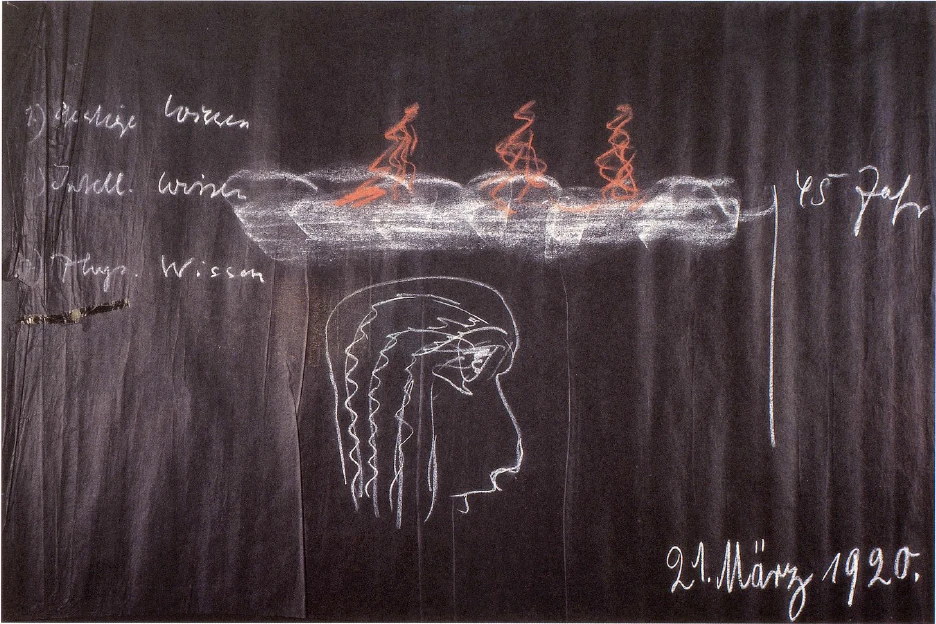
[ 10 ] This will become the norm; we must be mindful of it. But this will require people to become much more active inwardly, to overcome the passivity that characterizes humanity today and that drives people to despair in the face of the great demands of the times. Humanity must overcome this passivity. The lethargy that prevails among humanity today—this inability to rouse oneself to take things seriously and with dignity—is indeed a terrible thing. In our time, many people lack the very ability to be indignant about anything. But those who cannot be indignant at evil cannot be enthusiastic about good. Yet when this active intellect takes hold of people, something else will be connected with it. And one can say: Today, humanity still fears the experience it is about to have. —For, you see, people will come to know the mind through its activity; they will come to know this much-praised intellectuality, and it will become clear what this intellectuality actually is, what this arising of images really is. One can only understand this by grasping something that I have already discussed here on several occasions: We can feel, we can will, by living, but we could not, if we merely lived, also think. We could not do that. We can think only because we continually carry the principle of death within us. This is the great mystery of human beings: that, as it were, from the senses—if I take the eye as the representative of the senses (see drawing)—something destructive continually flows into the human being through what we understand as nerves. It is as if the human being were being filled, from the senses through the nerve strands, with a crumbling material substance. When you see, when you hear, or even when you simply feel warmth, it is like a crumbling material substance flowing inward from the senses. This crumbling material substance must be absorbed by that which flows out from within the human being. It must, so to speak, be burned away. We must constantly fight against the death reigning within us through our thinking. People today simply do not know—because they are only aware of their thoughts as reflections—that, fundamentally, they live only through what is not the head, that the head is actually just an organ that is constantly dying. We would be constantly exposed to the danger of dying if only what is in our head were to happen. This constant dying is prevented only by the fact that the head is connected to the rest of the organism, and the vitality of the rest of the organism prevents this dying. When human beings come to master this active intellect—just as humanity in the Greek and Roman eras mastered the active imagination, whereas the imagination of ancient, atavistic clairvoyance was a passive imagination—then they will perceive within themselves the constant dying off of a part of their being. This will be important. For just as we must grow into a state of consciousness through which we perceive the continual dying off of a part of our being, so an ancient humanity—which, however, extended into the Greek era—perceived that which lives in the human principle of vitality, that which lives in the will, and that which lives in the metabolism connected to the will. There lives that which combats the principle of decay, that which continually paralyzes the human principle of decay.
[ 11 ] One could say: In this respect, the ancients were better off than those who will come after them in our age. The ancients perceived—through an instinctive clairvoyance—vitality, life itself. The principle of healing is precisely connected to this vitality, to this life. We do not die because our head wants to die, but we constantly carry pathogens within us through our head—since it is the organ of our thinking—and we must continually pay the price for our thinking, which consists in countering the disease-causing head with the healing powers of the rest of the organism. Today this is still largely overlooked, but forms of illness will arise—as you know, they are changing—in which the origin in the human head will be more readily apparent than is the case with many diseases of the present. Then people will realize that, fundamentally, the entire healthy process taking place within a human being is a healing process against the damage caused by our intellectual life. While the ancients could say of their science and their knowledge that there was something healing in them, in the future we will have to say: What we make of our intellect—what becomes of that which we are so proud of today—will show us in the future that, if it reigns alone, human beings would gradually fall into decadence, into complete decadence; and that, in contrast, a form of knowledge must be asserted that can, in turn, counter this with healing forces. I hinted at this yesterday from a different perspective; today I am approaching it more from the standpoint of human constitution. We must realize that we need spiritual science as the vehicle for a new healing process. For if that intellect—which lives in mere images and of which humanity is so proud today—continues to develop in this direction, then the reign of this intellect would cause all of humanity to undergo a process of illness. This process of illness must be counteracted. I can well imagine, of course, that there might be people who would now say: “So let’s prevent people from becoming wise through reason; let’s do away with the intellect—after all, there are people who would like to ensure that the intellect does not develop—then there will be no need to heal its damage.” - But true human progress can have nothing in common with this Jesuitical principle; rather, the point is that human development must be such that what arises from the powers of the human soul—that which is healing—must develop upward to the level of the intellect; otherwise, it will develop downward and lead humanity into decline. In contrast, what arises from spiritual scientific knowledge—and what can continually counteract the forces of decline that stem precisely from a one-sided intellect—must assert itself.
[ 12 ] This is where I must draw your attention to something—something very specific. As you know, in the very same 19th century in which all the events I am telling you about today took place—events to which I have often drawn your attention—rational materialism gained prominence. People emerged—I need only mention Moleschott, Vogt, Clifford, and so on—who essentially advocated the view that all thinking consists solely of a metabolic process in the brain. People spoke of the brain “phosphorescing,” saying: “Without phosphorus in the brain, there is no thinking.”—So thinking is merely a byproduct of a certain kind of cerebral digestion. One cannot say that the people who put forward this idea were among the most foolish of their age. For—whatever one may think of this statement by the theoretical materialists—one can also take a different approach: one can apply the standard of intellectual capacity to the people of that age and ask: Were people like Moleschott or Clifford—or others like them—smarter, or were those who opposed it back then out of some old doctrinal prejudice, opposing it without any understanding of the human sciences? Was Haeckel smarter, or were his opponents smarter? — This question can still be raised today. And if one bases one’s judgment not on personal opinion but on an observation of intellectual capacity, then one certainly cannot say that Haeckel’s opponents were smarter than Haeckel, or that the opponents of Moleschott and Clifford were smarter than Moleschott and Clifford. The materialists were very intelligent people, and what they said was certainly not without significance. Where does it come from, then? What is actually behind it? One must get to the bottom of this, to answer the question of what is actually behind it. Certainly, there were also well-meaning opponents of the materialists, such as Moriz Carriere, whom I have already mentioned to you. He said: If everything a person thinks and experiences in their soul is merely concocted by the brain, then everything put forward by one side is just as much a concoction as what is put forward by the other side. So there is actually no difference in truth between what Moleschott and Clifford claim and what the Pope claims. — There is no difference, because both are concocted by the human brain. One cannot distinguish between true and false. Nevertheless, the materialists fight for the truth—which they, of course, interpret in their own way. But they have no right to fight for the truth; yet they are astute; they possess a certain intellectual capacity. What is actually going on here?
[ 13 ] The fact is that these materialists were bound to emerge in an age in which thought is expressed only in images, lives in images, and images do not exist without a mirror mechanism at work—and that mirror mechanism is the brain. For ordinary thinking—for the kind of thinking that flourished in the 19th century—the materialists are indeed correct. That is a fact. Materialism would be wrong only if it claimed that all thinking that goes beyond the intellect is also merely an image, that it is dependent on physicality; for that is not the case. That which goes beyond the intellect can only be attained through human development, only by becoming independent of physicality. But the kind of thinking that asserted itself precisely in the 19th century must be interpreted materialistically. Even if these are merely images, they are entirely dependent on the instrument of the human brain, and the curious thing is that materialism is actually most correct when applied to the spiritual life of the nineteenth century. This spiritual life of the nineteenth century is indeed bound to physical matter. But it is precisely this spiritual life that must be transcended. Human beings must rise above this spiritual life. They must learn once again to infuse these images with spiritual substance. This cannot be achieved merely by becoming clairvoyant, for—as I must say again and again—not everyone needs to become so; rather, spiritual substance already flows into one’s thinking when one reflects on what has been spiritually investigated—but not without judgment! One can judge it once it is there; common sense is entirely sufficient to grasp what has been researched by spiritual science. If one denies this, one is simply disregarding common sense; if one denies this, one thinks: Common sense is what has been cultivated in civilized humanity for a long time now. — Yes, this “civilized” humanity does indeed form “very certain” judgments! And when these judgments are then refuted by the facts, it doesn’t even notice—it doesn’t want to notice. Such things, which speak volumes, are forgotten at the very moment they should be remembered.
[ 14 ] I’d just like to give you a cute little example: It was 1866, when people said that what had happened back then—Prussia’s victory over Austria—was proof of the excellence of Prussian schools, and the saying arose: “In 1866, the Prussian schoolteacher triumphed.” — That was repeated over and over again. And it would be interesting to tally how often, from 1870 through 1914, all sorts of people—both qualified and, in particular, unqualified—repeated the phrase: “The Prussian schoolmaster won the Prussian victories.” — I don’t think anyone will now come up with a similar saying to replace it, and the truth of the other one can no longer really hold up in the face of the events that have since taken place. But in the age of the intellect, when people consider themselves quite clever, they are reluctant to acknowledge the contradictions that arise in life. Facts, after all, play little role in an intellectual life; but these facts will have to come into play when the purely intellectual is once again imbued with spiritual content. Then, however, it will become clear how a process of stagnation and decadence is taking hold of humanity and how this must be overcome through a new spiritual insight. One might say: The ancients sensed and felt, in their insight that welled up from the physical body, the healing power. In the future, humanity will have to accustom itself to recognizing, in the development of the intellect, that which is harmful and disease-inducing, in order to feel the necessity of drawing the healing power from the spirit. Science must once again become a source of healing. But the impetus will come from the opposite direction—from the perspective that shows how external life, precisely as it advances in knowledge, is a force that makes humanity sick, and against which the principle of healing must be set.
[ 15 ] Through such things, we intervene in the course of human development, insofar as it is a reality. After all, contemporary history does not depict the reality of human development, but rather worthless abstractions. That is precisely what modern people lack so much: a sense of reality. Modern people have very little of it. In Central Europe, throughout the 19th century, people became adept at portraying what already existed in the spiritual realm. One of the most wonderful portrayals of what was already there can be found in the work of Herman Grimm. Herman Grimm reached the height of his powers precisely when he wrote about Goethe’s Tasso and Goethe’s Iphigenia. But he was unable to portray Goethe himself. He did, after all, write a biography of Goethe, but in it Goethe stands there like a shadow. That spiritual power was absent in the 19th century. People lived in images, and images cannot conquer reality. In the future, this reality must be conquered. We must not only understand human creations; we must understand human beings themselves above all else, and through them, in a broader sense, understand nature more fully than we have so far. Such things, I believe, could strike a chord in the human soul with the necessary seriousness. It will probably be some time yet before a sufficient number of people come forward who allow themselves to be penetrated by the fire that can already emanate from such a realization, which indeed shows: Humanity must fall ill if it does not wish to become spiritualized! — But at least those who have drawn somewhat closer to anthroposophical knowledge should allow themselves to be penetrated by this realization.
[ 16 ] One thing must be made clear: in many cases, those who have become anthroposophists have come to this anthroposophical movement, I would say, out of more subtle egoistic tendencies—they wanted something for their spiritual well-being; they wanted to be satisfied, to experience something of the spiritual world in some way. That will not be enough. What is at stake is not that we can personally rest on our laurels because we are satisfied with our share of the spiritual world. What humanity needs is an active intervention by the spirit into the material world, a conquering of the material world by the spirit. And until one grasps this and then allows one’s will to be guided by this insight, it will not be possible to escape the distress that has now befallen humanity.
[ 17 ] One would so dearly like to see such insight—and such a will—take root, at least within anthroposophical circles. Of course, one might say: What can we few people do against the delusion of the whole world! — That is not correct. Such a statement is completely incorrect. For in saying this, one fails to consider that the very point is to first cultivate this will and then wait to see what happens. Let each person do what they can in their own place, and let them wait to see what others do; but let them truly do it—and above all, let them do it in such a way that as many people as possible in the world live together, imbued first and foremost with the necessity of spiritual renewal—then something else will surely follow. Today, many forces are at work to prevent this spiritual renewal. Only if we are vigilant, only if we stand firm on the ground upon which spiritual science places us, can we move forward and will what is already necessary today for the progress of humanity.