

Healing Factors for the Social Organism
GA 198
2 July 1920, Dornach
Translated by Steiner Online Library
Ninth Lecture
[ 1 ] Anyone who looks around a bit in Germany today and does not focus on outward appearances, but rather sees with the eye of the soul—that is, anyone who does not merely take in what presents itself to the visitor, who, as a rule, does not even get to know the actual conditions during their visit; anyone who does not stop at the fact that a few chimneys are smoking again, that the trains arrive at their destinations on time, but who is able to look into the spiritual state of mind—to such a person a picture presents itself today that is symptomatic not only of this territory—for that might perhaps be viewed in a less alarming light from one side or the other—but of the entire decline of our world culture in the present cycle of humanity. I would like to begin today by drawing your attention to a spiritual-psychic symptom that is more significant than many slumbering souls, even in Germany, would care to imagine.
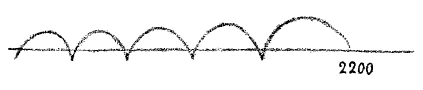
[ 2 ] Today, old Germany is indeed in a state of decay and decline, and the external factors—which, of course, I have listed only in part—cannot hide this decline. But in spiritual and psychological terms, that is not what I wish to point out now, for we see decay occurring frequently throughout world history, and from that decay we then see the impulses of renewal spring forth. But anyone who judges primarily on the basis of outward appearances, anyone who, based on what has often been experienced and out of a habitual judgment, says to themselves: “Well, things will surely be the same here again as they were before”—such a person fails to see certain deeper symptoms. One such symptom—though just one of many—a spiritual-psychological one that I would like to highlight, is the remarkable impression made by a book; I am referring to Oswald Spengler’s The Decline of the West, which is symptomatic simply by virtue of the fact that it was able to come into being in our time. It is a thick book and a widely read one, a book that has made an extraordinary impression, particularly among the younger generation in what is now Germany. And what is remarkable is this: the author explicitly states that he did not conceive the basic idea of this book during the war or after the war, but rather that he had already conceived this basic idea several years before the catastrophe of 1914.
[ 3 ] The book makes a very profound impression, especially on the younger generation. And when one tries to express, through one’s feelings, what is present there, it strikes one—I would say—among the imponderables of life, so to speak, between the lines of life, with particular intensity. I was scheduled to give a lecture to the students at the Technical University in Stuttgart, and I actually went to that lecture still deeply under the influence of Oswald Spengler’s book The Decline of the West. It is a very thick book. Thick books are expensive in Germany these days; yet they are widely read. I can illustrate just how expensive they are by pointing out that a Reclam paperback, which cost twenty pfennigs in 1914, now costs one mark and forty-five pfennigs. Books, of course, have not risen in price at the same rate as beer, which now costs about ten times what it did in 1914, or lard, which costs thirty times as much. Books must always remain within modest limits, even when such untenable economic conditions prevail. But at any rate, the price increase of books also reveals what has been taking place in the economic undercurrents of recent years.
[ 4 ] I took Oswald Spengler’s book very seriously during one of my public lectures in Stuttgart, but I also vigorously opposed it. The book’s content can essentially be summarized quite quickly. It describes how Western culture has now reached a point that the vanished cultures—when studied in succession—in the ancient East, in Greece, and in Rome had also once reached during certain periods of their history; and Spengler calculates that, according to a strict historical reckoning, this complete decline of the entire Western culture must be completed by the year 2200. But today, it is not only the content of such a work that matters, but just as much—if not more—the spiritual and emotional qualities of a book. Today, what matters is whether the author—regardless of his ideological leanings—possesses intellectual qualities, whether he is a personality to be taken seriously intellectually and perhaps even held in high intellectual esteem. The author of this book is undoubtedly such a person, for the man has a complete command of—one might say—perhaps ten to fifteen contemporary fields of scholarship. He has a penetrating judgment regarding what has transpired in the course of history, as far back as history extends, and he also possesses—something that people today almost entirely lack—a sound insight into the signs of decline in contemporary civilizations. Fundamentally, there is a great difference between someone like Spengler and all those people today who have no sense at all of what the impulses of decline are, and who go to all sorts of lengths to derive some sign of renewal from these judgments of decline—which is, of course, impossible. If it weren’t so heartbreaking, it would actually be humorous to see how people today cling to their old, familiar ideas—ideas that are, in fact, permeated by impulses of decline—and believe they can create signs of renewal out of decline through all sorts of programs. But a person who truly knows something—such as Oswald Spengler—does not succumb to such delusional superstition; rather, he calculates, so to speak—I would say as a rigorous mathematician—the rate of these signs of decline, and with a judgment that is truly more than a vague prophecy, he concludes that by the year 2200, this Western culture must have fallen into complete barbarism.
[ 5 ] It is this convergence of the decline that is evident everywhere—particularly in the intellectual and spiritual realms—with the view of a serious theorist that this decline is a necessary one, one that unfolds according to a certain natural-historical law, it is this convergence that makes this book so remarkable, and it is this convergence that actually makes a particular impression on the younger generation. Today we have not only signs of decline; we also already have theories that describe this decline as necessary and present it as strictly scientifically provable. In other words, we have not only the decline itself, but also a theory of decline—and a theory that must be taken very seriously. And one might ask: Where are the forces to come from—those inner forces of will that spur people on to rise up from within themselves—when the best minds, based on their theories and a comprehensive overview of ten to fifteen contemporary sciences, arrive at the conclusion, with all that these sciences seek to reveal about the course of nature and humanity, to say: “This decline is not merely a matter of perception; it can be proven just like any physical process!” — In other words, the time is already beginning when belief in decline is no longer held only by the worst among us. One must emphasize again and again just how serious the times actually are, and how mistaken it is to sleep through this gravity of the times, to let it slip away in a dreamlike state.
[ 6 ] When one considers the full gravity of this situation, one cannot help but ask: How, exactly, must our thinking be oriented so that pessimism toward Western civilization does not appear to be a matter of course, and so that belief in progress is revealed as superstition? One must ask: Is there anything that can still lead us out of this pessimism? It is precisely the way in which Spengler arrives at his conclusions that is of the utmost interest to the scholar of the humanities. Spengler does not view individual cultures as sharply delineated as we do, for example, in the post-Atlantic era, when we distinguish between Proto-Indian, Proto-Persian, Chaldean-Egyptian, Greco-Latin, and modern cultures. He simply does not have the humanities at his disposal; yet, in a certain sense, he does consider such cultures as well. And he examines them through the eyes of a natural scientist. He examines them using the methods that have emerged in Western civilization over the course of the last three to four centuries and that have taken hold, in the broadest sense, among those minds that are not confined by the narrow bounds of the traditional, Catholic, Protestant, Mosaic, and so on creeds. Oswald Spengler is, so to speak, a man who is thoroughly imbued with modern, materialistic natural science. And now, in his own way, he views the rise and fall of cultures—Oriental, Indian, Persian, Greek, Roman, and the culture of the present-day West—as if they were organisms that go through a certain childhood, experience a certain age of maturity, then undergo aging, and, after they have aged, die. This is how Spengler views individual cultures: they go through a childhood, an age of maturity, a period of aging, and then die out. And the day of death for our current Western civilization would be the year 2200.
[ 7 ] The book is currently available only as Volume 1. Anyone who now allows this first volume to sink in will find a strictly theoretical justification for the decline, the strictly theoretical proof of the decline, but nowhere any glimmer of light pointing to any rise, nowhere anything that hinted at any ascent. And one cannot even say that, for the observer of the natural sciences, this is an incorrect way of thinking. For if one considers life today—even though all manner of questions arise, the very questions Nietzsche has already mocked—and does not succumb to the delusion that the fruits of the future can ripen from insubstantial programs, then one sees, at first glance, no sign of ascent in what the majority of people recognize in the external world. If, then, one regards rising and declining cultures as organisms, and if one also regards our culture as an organism—our entire Western civilization—then one cannot help but say: The West is perishing, descending into barbarism. Nothing can determine where any new rise, any other center of the world, will emerge again.
[ 8 ] Spengler’s book is a work of intellectual merit, born of keen observation and written from a genuine immersion in contemporary scholarship; only the casual indifference of everyday life can overlook such things superficially. When such a phenomenon arises, precisely that historical concern emerges in the observer of the world—the one I have often spoken of here—which I can briefly characterize with the following words. Anyone today who truly familiarizes themselves with the inner nature of what is at work in social, political, and spiritual life—anyone who sees how everything that is active is striving toward decline—must say to themselves, if they now know spiritual science as it is meant here: There can be healing only if what is called the wisdom of initiation flows into human evolution. — For let us imagine for a moment that this wisdom of initiation were to cease to exist; let us imagine that what we here call, in the best sense, spiritual insight were to be completely disregarded by humanity, banished, and play no role in the further course of human development—what would the inevitable consequence have to be? You see, when we look at ancient Indian culture, it has, like an organism, a state of childhood, maturity, aging, decay, and death; then it continues. But what it continues is, in reality, no longer alive. We then have the Persian, the Chaldean-Egyptian, the Greco-Latin, and our own era; but there is always something that Oswald Spengler did not take into account—something he, as a strictly scientific observer, could not have taken into account. He has been criticized for this by some of his opponents. For quite a bit has already been written against Spengler’s book—even some of it more intelligent than the extraordinarily simplistic article Benedetto Croce wrote against Spengler’s book. Croce, who otherwise always wrote intelligently, suddenly became a fool when it came to Spengler’s book. Spengler has thus been accused of failing to recognize that cultures do not merely undergo childhood, maturity, decline, and death, but that they continue on, and so it will be with ours as well: if it were to die a blessed death in the year 2200, it would simply continue on once again. — The only peculiar thing to note here is that Spengler is, in fact, a keen scientific observer and therefore finds no signs of continuity; consequently, he cannot speak of a seed that might be present within our culture, but only of the signs of decline that present themselves to him, the scientific observer. And those who speak of cultures continuing have not had anything particularly insightful to say about this book in particular. A very young man has put forward a somewhat vague mysticism in which he speaks of a “world rhythm”; but even this merely creates a vague mysticism, not anything that would have transformed the proven pessimism into optimism. Thus, what actually emerges from Spengler’s book is only that decline will come, but that an ascent cannot take place.
[ 9 ] What Spengler does is view things from a scientific perspective: he examines the childhood, maturity, decline, aging, and death of the cultural or civilizational organism across the various eras in the only way that is fundamentally possible from a scientific standpoint. But anyone capable of looking a little further knows that in ancient Indian life, beyond the outward aspects of civilization, the wisdom of the mysteries—the initiatory wisdom of primeval times—was still alive. And this initiatory wisdom of primeval times, which was still powerful in India, in turn planted a new seed within Persian culture. The Persian mysteries were already weaker, but they were still able to plant the seed in the Egyptian-Chaldean era. The seed was also able to be planted in the Greek-Latin era. Then, as it were, the cultural current continued, following the law of inertia, right into our own time, and there it dries up.

[ 10 ] You have to feel this! Those who belong to our spiritual science have been able to feel this for nearly twenty years. For one of the first remarks I made right at the outset of our spiritual science movement was this: If one wants to compare what human cultural life produces outwardly—what drives it forward—to something, one can compare it to the trunk, the leaves, the blossoms, and so on of a tree. But what we wish to infuse into this ongoing current can be compared to the sap of the tree; it must be compared to the growth forces at work within the sap. I wanted to draw attention to the fact that spiritual science must once again seek out what was once handed down from ancient, atavistic primordial wisdom but has now dried up. This awareness of being placed within the world in this way—that is what, in essence, should constitute the consciousness of those who count themselves among the anthroposophical movement. But I have made yet another remark—admittedly, particularly here in recent years, but very frequently in other places as well. I have said: If one takes everything that can be gleaned from modern science, forms a perspective from it, and applies this perspective, for example, to social life or, in particular, to historical life, one can thereby grasp only the phenomena of decline. When one applies the approach taught by the natural sciences to history, one captures only what is in decline in history; and when one applies it to social life, one creates only phenomena of decline.
[ 11 ] What I have said on this subject over the years could not, in essence, have found a better illustration than that now provided by Spengler’s book. A true scientist steps forward, writes history, and discovers through this historiography that Western civilization will die in the year 2200. In essence, he could not have discovered anything else. For, first of all, a scientific approach can only create or discover signs of decline; secondly, the entire Western world—in terms of its intellectual, political, and social life—is thoroughly permeated by scientific impulses and is thus in an era of decline. The crux of the matter is that what has hitherto driven one culture out of another has dried up, and that in the third millennium, no new civilization will emerge from our declining Western civilization.
[ 12 ] No matter how many nuances of social issues you raise, no matter how many nuances of women’s issues you raise, no matter how many meetings you hold on this or that issue—if you shape your program based on what has been handed down from the past, then you are creating something that is only seemingly a creation, and to which Oswald Spengler’s ideas are entirely applicable.
[ 13 ] The concern I have spoken of must be addressed because it is necessary that a completely new form of initiation now begin, arising from human will and human freedom; because, in fact, if we rely solely on the external world and on tradition, we will perish in the West, we will sink into barbarism, and we can rise again only through the will, through the creative power of the spirit. A new wisdom of initiation must take hold. This wisdom of initiation, which must begin in our era, will—just like the old wisdom of initiation, which only gradually succumbed to egoism, selfishness, and prejudice—have to spring from objectivity, impartiality, and selflessness. From there, it will have to permeate everything.
[ 14 ] One can see this as a necessity. One must see it as a necessity if one looks more deeply into the current unfortunate course of this Western civilization. But when one looks at it this way, one notices something else as well; one notices that a legitimate call is being distorted into a caricature. And now there is a particular need to thoroughly understand how a legitimate call is being distorted into a caricature. Certainly, no call is more legitimate in our time than the call for democracy. But it is distorted into a caricature as long as democracy is not recognized as an impulse necessary solely for purely political and constitutional life, and as long as it is not recognized that economic and spiritual life must be separated from it. It is distorted into a caricature because, fundamentally, instead of objectivity—that is, impartiality and selflessness—today subjectivity, namely personal arbitrariness in both science and social life, and selfishness are being elevated to the status of cultural factors. Everything is drawn into the realm commonly called the political, the realm in which the rule of law is supposed to prevail. But when this happens, objectivity and impartiality gradually disappear, for intellectual life cannot flourish if it derives its direction from political life. It is thereby always bound up in prejudice. And selflessness cannot flourish if economic life is subsumed within the political, for then it is necessarily driven into selfishness. If, then, that which can generate selflessness in the economic sphere—associative life—is corrupted, everything tends today toward allowing people to walk their paths in prejudice and selfishness. And the consequence of this is that they reject precisely what objectivity and selflessness must be based upon: the science of initiation. In outer life today, everything is geared toward rejecting this science of initiation, which alone can lead us beyond the year 2200.
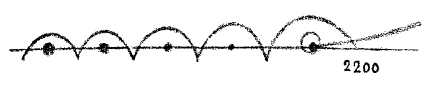
[ 15 ] This is the great cultural anxiety that can overcome one when one casts an unbiased, alert—rather than sleepy or dreamy—glance at current events. For, in this context, I regard Spengler’s book as nothing more than a symptom. Is there any way today to say, for example: “Well, Spengler was wrong; cultures have risen and fallen, ours will fall, and a new one will emerge from it? — No, there is no such refutation of a view like Spengler’s at all. It is based on a completely false premise. For confidence in an ascent cannot today be built on the belief that something will already develop out of the cultures of the West. No, it is precisely when one builds on this belief that nothing will develop. For objectively speaking, there is simply nothing present at this point that stands as a seed beyond the beginning of the third millennium; rather, since we are in fact living in the fifth post-Atlantean cultural epoch, a seed must first be created. One cannot therefore say to people: Believe in the gods, believe in this, believe in that—it will all work out! — That is no refutation today; rather, one must say to people today: Those who speak of signs of decline and even prove them are right with regard to what exists in the external world. But it is up to each individual to ensure that they are not proven right. For the ascent does not come from the objective; the ascent comes from the subjective realm of the will. Each person must will and must take up the spirit anew, and must, from the newly taken-up spirit of the declining civilization itself, provide a new impetus; otherwise, it will perish. — So today one cannot appeal to an objective law; one can appeal solely to the good will of human beings. Here [in Switzerland], since things have naturally unfolded differently, there is hardly any sign of the actual course of events, even though it is present here as well. But when one crosses the border into Germany, everything one experiences—if one looks with the spiritual-soul eye—reveals precisely what I have just described to you. Then the great, terribly painful contrast presents itself to one’s soul: between the necessity of incorporating the wisdom of initiation into spiritual, legal, and economic life, and the perverse instincts to reject everything that comes from this side. The fact is that today, when one senses this contrast, one really has to think long and hard about how to characterize it; and for those who do not resort to words lightly, finding the right words is by no means an easy task today.
[ 16 ] In Stuttgart, I spoke about Spengler’s book and, in that context, about all sorts of contemporary phenomena, and I also used this term to mean “the perverse instincts of the present”; and I must say: I used it again today because I feel it is the only appropriate one. When I stepped down from the podium that day, one of those people who best understand the word “perverse” in its technical sense—a doctor—approached me. He was very taken aback that I had used precisely this word. But his consternation, I would say, stemmed from very peculiar underlying reasons. Basically, people today no longer assume that someone who characterizes things solely from the depths of the factual world of reality chooses his words with care; rather, they assume that everyone shapes their words the way they are shaped today out of the superficiality of contemporary consciousness. And I then had a conversation with that doctor and told him this and that, and he replied: “Well, then I’m glad that at least the term ‘perverse’ wasn’t meant in a sensationalist or literary sense!” — I could only say: “That is certainly not the case, for I am not at all accustomed to meaning anything in a literary or sensationalist way.”
[ 17 ] The point, then, is that in the current way of thinking among people today, it is no longer even assumed that there could be such a thing as “creating from the spirit,” and that when someone says something like “perverse instincts,” everyone simply assumes they are speaking from the same underlying assumptions as the run-of-the-mill fiction writer or feature columnist. For what is discussed today in fiction or in the arts and culture sections essentially dominates people’s minds, and their minds are shaped by it. And the weight of these expressions shapes people’s understanding of the matter itself—a fact of which people are no longer even aware. It is precisely in such a phenomenon that one encounters the contrast between what is so necessary for humanity today—a genuine deepening that must, however, go back to the depths of initiatory wisdom—and what emerges today as “spiritual life” through the caricature of democracy. People are far too complacent to even attempt to draw up within themselves any of these hidden powers of consciousness. Everyone goes on and on, turning everything into sensationalized gossip or fiction—whether at coffee parties, at happy hour, in political meetings, or in parliaments. This ties in with what I have often said: that today the wording itself is meaningless, but what can be felt as the power of the spirit within the wording is the main thing. To utter witty remarks is the easiest thing in the world today, for we live in a dying culture where wit simply flows to people. But the spirit we need—the spirit of initiatory wisdom—people must draw from their own will. And they will not find it unless the power of this initiatory wisdom comes upon them—that is, upon their souls. Therefore, one cannot say: “One refutes books such as Spengler’s.”—One can, of course, characterize such a book: it is born of the spirit of the natural sciences.—But what others bring forth from the spirit of the natural sciences is, after all, the same thing. So Spengler is right—unless that which turns this right into wrong penetrates into the sphere of human will! Today, one no longer has the luxury of proving that the argument for decline is false; rather, one must use the power of the will to turn what is true into falsehood.
[ 18 ] You see that one apparently has to speak in completely paradoxical terms. But we live in an age in which old prejudices must be shattered, and in which we must recognize that we cannot create a new world based on those old prejudices. Isn’t it perfectly natural for people to encounter spiritual science and say to themselves: “We don’t understand this”? — It is as self-evident as anything. For what they understand is what they have learned, and what they have learned is decline; it therefore leads into decline. The point, then, is not to take in what one readily understands from manifestations of decline, but to take in that which one must first rise up to in order to understand. Such is the nature of initiatory wisdom. But how can one expect those who today wish to be teachers of the people, leaders of the people, or the like, to realize that what enables a person today to exercise judgment must first be drawn up from the subconscious depths of the soul’s life—that it is not already sitting up there in the head! What actually sits up there in the head, however, is a destructive element.
[ 19 ] These are the things one encounters everywhere where the consequences of decline have already been drawn, where these consequences of decline are already evident on the surface. Of course, it is understandable that where there are initial apparent successes—where one need only look at these apparent successes at first glance—the awareness of the decline of Western civilization cannot easily arise at all. And so today we are very much under the impression of this contrast I have described to you: on the one hand, the necessity of the influence of initiatory wisdom on the entire civilization, and on the other hand, the rejection of this impulse. Things simply cannot get better unless a sufficiently large number of people become aware of the necessity of this influence from initiatory wisdom. Precisely when one attaches great importance to temporary improvements, one fails to notice the broad outlines of decline, is deceived by them, and moves all the more toward this decline by failing to seize the only means available: to kindle a new spirit arising from the will of human beings. But this spirit must take hold of everything. Above all, this spirit must not remain stuck in theoretical questions of worldview. It would indeed be a very bitter delusion if a large number of people—perhaps precisely those who find the new wisdom of initiation somewhat appealing and who derive a little inner spiritual pleasure from it—were to believe that it is enough simply to pursue this wisdom of initiation as something spiritually comforting and pleasant. For this would lead precisely to the rest of external, real life sinking deeper and deeper into barbarism, and the little bit of mysticism that might be achieved in this way among a number of people who have a certain spiritual inclination toward vague mysticism would very, very soon have to disappear in the face of general barbarism. What constitutes initiatory wisdom must permeate everywhere—and above all, in all seriousness—the individual branches of science and education, and above all the most essential areas of practical life, especially practical volition. Fundamentally, anything that is not willed today out of the impulse of initiatory wisdom is a waste of time. For all the energy one expends on other forms of will is, in essence, merely a hindrance, because one is content with such a surrogate for true will. Instead of wasting time and energy in this way, one should devote all one’s time and energy to carrying the impulse of initiatory wisdom into the various branches of knowledge and life.
[ 20 ] Whatever is set in motion by the impulses of the old—no one will be able to stop it in its tracks, and one should take a closer look at how, among the youth—especially in the defeated countries—an indefinable sense of fulfillment still surges, fueled by old slogans, old chauvinism, or the like. That youth is certainly out of the question. But the youth upon whom the full weight of the pain of decline rests today is worth considering. And they exist. It is their will that could first be broken by theories such as those in Spengler’s book. That is why, in Stuttgart, I called this book by Oswald Spengler a brilliant but terrible book, a book that harbors the most terrible dangers, for it is so brilliant that it indeed conjures up a fog before people’s eyes—especially before the eyes of the youth.
[ 21 ] The rebuttals must be presented in a completely different “tone” than the one we are accustomed to when discussing such matters, and it can never be a belief in this or that which might save us. After all, people today are often told, quite reasonably, to place their faith in such things and are told: Just believe in the good forces within people and so on, and then the new culture will surely come, as if with a new generation. — No, today it cannot be a matter of faith; today it is a matter of will, and spiritual science speaks to the will. That is why it is not understood by those who wish to accept it merely as a matter of faith or as a theory. It is understood only by those who know how it appeals to the will—to the will in the deepest chamber of the heart, when a person is quietly alone with themselves, and to the will when a person is in the struggle of life and must face their humanity in that struggle. Spiritual science cannot be understood without striving for this will. I told you that for anyone who reads my Outline of Esoteric Science the way one reads a novel or any other book today—for anyone who merely wishes to surrender to it passively—this Outline of Esoteric Science is a tangle of words; and, in essence, so are my other books as well. Only those who know that in every moment they devote themselves to reading, they must create something from the depths of their own soul through their most intimate will—for which the books are meant to serve as a stimulating impulse—only they succeed in viewing these books as musical scores and in deriving the actual piece of music from them through their own soul’s experience. But it is this active experience of the soul that we need.