

Healing Factors for the Social Organism
GA 198
3 July 1920, Dornach
Translated by Steiner Online Library
Tenth Lecture
[ 1 ] Yesterday I attempted to explain the gravity of the times we are actually living in, through a reflection that drew on Oswald Spengler’s book The Decline of the West. I noted that anyone who knows how to take such matters seriously today must be overcome by a profound concern for culture—a concern that can be characterized in a very specific way, namely, the concern arising from the fact that our civilization cannot continue to develop without an impulse coming from the science of initiation; that it is therefore necessary for all human activity, all human will must be fertilized by that which can be spiritually perceived today. Then, when the threshold between the physical and the supersensible world is crossed through that knowledge which can draw nothing from the physical world, yet which has a thoroughly enlightening effect on this physical world, the impetus for social life in the present and in the near future must also come from this knowledge. And today, people are actually led to regard everything that stems from the traditional cultural current as antiquated; they are led, in fact, to view all questions that may arise today from the perspective provided by this science of initiation. Concern for culture arises when one observes, at the same time, how what seeks to assert itself as such initiatory wisdom is under attack from all sides, and how all external forces of civilization in the present are in fact directed toward preventing such initiatory science from becoming a real factor in our civilization. Here, necessity and rejection stand in opposition to one another in the most stark manner imaginable in almost all areas of our present-day life, and one would like to appeal again and again precisely to those who can at least take seriously, in their hearts, the call for a rebuilding of our cultural and civilizational life. Instead, we see that, due to the lethargy of even the most advanced segments of contemporary humanity, the upper hand is always gained by those indeed vigilant individuals and groups who carry very specific spiritual impulses from the past into the present like shadows, and who, despite everything, know exactly what they actually want. So while those who call themselves progressive today are fragmented over individual issues, fragmented over this or that program that barely sees beyond the end of its nose, we see the old spiritual currents—which have already amply demonstrated how they were bound to lead modern civilization into catastrophe—at work everywhere, and we see them, I would say, “happily” at work. This is something that cannot be considered sufficiently from all sides, and to which one should return again and again anew.
[ 2 ] I have often made a remark to you on various occasions. I have said: When one becomes acquainted today with what can arise from modern initiation—what one can know today, based on the conditions of humanity’s development, about the spiritual world and its connection to the physical world—only then does one truly begin to feel a sense of wonder at what has been handed down as the primordial wisdom of humanity. This primordial wisdom of humanity in its true form has, after all, been lost, and only its later traces have been preserved in a wide variety of documents, monuments, and so on. The most important aspects of it were deliberately and ruthlessly destroyed by the Church as it spread throughout the West, across Africa, and into the Near East. But what has been preserved is now being collected by scholars and can be read today in all manner of writings—though it is difficult to read, because contemporary philological scholarship renders the things it has to communicate to the world as unreadable as possible through commentaries and the very manner in which these things are presented to the world. Yet the things are being communicated. One might say, however, that they cannot actually be read, for the most important things can only be gleaned if one rediscovers the lost key to reading them. And this key cannot be discovered through historical research conducted in the manner of our scholarship. In essence, one can only bring the words to light. Today, the true, deeper meaning can no longer be found in any other way than by rediscovering the truths and facts from within the spiritual world itself—independently of what has been handed down—and then, through today’s fully conscious science of initiation, gaining insight into what was contained in the ancient, atavistic primordial wisdom handed down by the gods. Only through what is being researched today in a truly original way from the forces of spiritual inquiry—only through that can one approach the ancient primordial wisdom, and in reality, one can truly read the external documents only through that as well.
[ 3 ] For example, it is also handed down by scholars that in the ancient mysteries there was a kind of sun cult, and that in these ancient mysteries, that which modern science designates with the word “sun”—or, rather, for which it has only the word “sun”—was worshiped as a kind of supreme deity. But one cannot grasp what was actually meant by the “sun” in the ancient mysteries—which, after all, essentially refers to what we conceive of as the central celestial body of our planetary system, and what the word “sun” was originally intended to express. In those ancient mysteries, the Sun—this physical Sun that the physical eye sees—was regarded merely as a kind of reflection of what the spiritual Sun is. This spiritual Sun was not bound to any particular place. It was something beyond space. It was that which the initiate absorbed into himself, which the initiate absorbed as the central spirituality of the world and made part of his own being. And only when one truly gains, based on today’s knowledge of initiation, a conception of what was venerated there as the solar being—what was experienced there as the solar being—when this solar being was taught about in rituals within the Mysteries—only then does one also gain a proper understanding of how those ancient people said to themselves: If you, inhabitants of the Earth, wish to rise to that which is in truth the origin of your own being, then you must not remain on this Earth at all. You see minerals, plants, and animals on this Earth; you also see your fellow human beings in their physical form. All of this is, of course, earthly. But within you lives something that is not earthly, and even if you know everything there is to know about minerals, plants, animals, and physical human beings, you are still far from knowing what leads you to an understanding of the essence of the human being, for this essence of the human being can never be known through knowledge that relates to the earthly, because this essence of the human being is not at all related to the earthly, but is related to the super-earthly, which unfolds first and foremost in the light of the sun.
[ 4 ] Thus, the initiates of ancient times were called upon—in order to recognize their own being, to fulfill the command “Know thyself”—to turn their spiritual gaze upward toward the sun, toward the sun in the spiritual sense, because nothing could be found on Earth of what constitutes a human being, of what defines the human essence. Only when one grasps the full richness of these central concepts of those ancient mysteries—which, during a certain period, could be found in the Near East just as on the island of Ireland—only when one penetrates this mysterious connection between the human soul and the solar being and can say to oneself: “The people of ancient times had to go beyond the Earth to find their own essence”—only then does one gain a true understanding of the full significance of the Mystery of Golgotha for earthly life, for only then can one realize that a great cosmic event took place there, one that had a fundamental, central significance for the Earth. Only through this could one realize that the very being to whom the sun-worshippers looked up—those who turned their faces, their spiritual faces, toward the sun in order to experience the essence of the human being—that these people, when they truly experienced the flow of time, said to themselves: That being which had been sought in the ancient mysteries beyond the Earth has now descended and united itself with Earth’s evolution, — How, then, could one gain an understanding of the essence of Christ, of the entire process of the Mystery of Golgotha, other than by seeing how that Being—which was not initially on Earth, which could only be sought in extra-terrestrial regions—can be found in the human world from the Mystery of Golgotha onward, if one seeks it in the human world in the right way.
[ 5 ] In fact, what we have to say about the Mystery of Golgotha from an anthroposophical standpoint only takes on its true nuance when we measure it against what was conceived by the ancient mystery priests, when we understand what sun worship and solar wisdom meant in those ancient mysteries. Only then can we truly appreciate what it means when we speak of Christ, the Sun Spirit, in the present. Thus, in my lectures—which are reproduced in the book Christianity as a Mystical Fact—I attempted to show how all pre-Christian life was an ascent toward the Mystery of Golgotha, and how the Mystery of Golgotha steps onto the world-historical stage as a mystery for all humanity—that which, in the ancient mysteries, played out only as a reflection, symbolically and allegorically, if we were to put it that way, but condensed into ritual, has now become reality as the Mystery of Golgotha for all humanity. Thus, right from the very beginning—for these lectures are among the very first I have given in the course of our anthroposophical movement—the tone has resounded within our anthroposophically oriented spiritual science from the very outset, a tone that is concerned above all with ensuring that the Mystery of Golgotha is properly situated within the development of the Earth. In a corresponding way, attempts have always been made to characterize that unique progression—from the pre-Christian era through the Christian era—which can only be properly understood in our time.
[ 6 ] The point now is to understand correctly how those movements that bring a certain spirituality from ancient times into the present actually relate to these matters. Today—and this will be elaborated further tomorrow—I would like to point out the following. If you familiarize yourselves with what has been preserved in the Christian creeds as rituals—in the Protestant tradition, this has, for the most part, been greatly toned down, whereas in Catholic rituals you will still find much, though some elements have also found their way into Protestant prayers—if you take all of that, you will find little with which you can actually associate a truly serious perspective, unless you start from spiritual science and imbue what has been handed down as empty phrases with these spiritual-scientific insights.
[ 7 ] If you take, for example, the Mass or another ritual of the Catholic Church, you will find words—many words. But if you look at these things honestly, you’ll find that while you—or rather, the faithful—can take in these words, a true meaning can only be attached to them if one approaches the matter with the utmost seriousness. It’s no different in Protestantism. Where does this come from? You see, if one actually investigates something like the Catholic Mass—and the same applies to other rituals—especially using the methods of spiritual science, one comes to realize that these things are far older than the founding of Christianity. If one takes the Mass, one must go back to very ancient forms of the ancient mysteries in order to understand its content. In a certain sense, the rituals of the ancient mysteries were conducted in a manner similar to the sequence of the Mass. And the point is this: when the Mystery of Golgotha took place within the course of Earth’s evolution, the sages—the true sages of all mystery traditions, who are, after all, represented in the Bible by the “Three Wise Men from the East”— in a sense offered up their ritual, their worldview, and their insights as a sacrifice to honor and comprehend the Mystery of Golgotha. In a sense, what had been offered to the old gods was transferred to the new God who had passed through the Mystery of Golgotha. So that if one now wishes, I might say, to imbue the formulas of today’s church with spiritual vitality, one can attain such spiritual vitality only by looking back to the meaning that was associated with these things in the Mysteries. Otherwise, they remain empty; otherwise, they remain devoid of content. If they remain empty, devoid of content, then one can certainly lull congregations to sleep with them, but one cannot awaken them; one cannot bring them into a true connection with the spiritual world; one can only ensure that the congregation sleeps gently in its members.
[ 8 ] We live today in a time when people’s spirits really need to be awakened. You can see this from a reflection such as the one we undertook yesterday. But over many centuries, people have lulled the spirits to sleep by presenting as tradition—as a legacy—that which actually originates from the ancient mysteries, yet whose inner meaning has been lost. In such matters—which, in terms of wording, are borrowed from the ancient mysteries, where one had not merely the wording but the inner meaning—in such matters, the religious creeds possess a powerful, one might say magically effective, means of lulling the souls of broad segments of the congregations to sleep, for the empty phrases retain their effect in a certain sense. And the creeds wish to preserve this effect; they do not wish to lose this potential for influence. Therefore, when a spiritual current emerges today that, based on original insight, points once again to the substance of these matters, this is, of course, most detrimental to those who wish to preserve only the empty torrent of words, the empty phrases. It is easy to say: The churches preserve these empty phrases. — But the modern mindset—that very modern mindset which today asserts itself in all manner of movements of the most modern kind—does not care about these creeds. Above all, one can put on airs and declare, from the standpoint of modern scientific thinking, that one has moved beyond these empty phrases, that one is enlightened. But one is not enlightened if, for example, one establishes a worldview in the spirit of modern natural science—such as the modern monistic worldviews, or the worldviews that modern social institutions seek to bring about. One is not enlightened for this very reason: because this modern science is nothing other than the continuation of those empty phrases. Without realizing it, that is exactly what it is. You study natural science today, and the moment you ascend to the laws of nature, you have nothing but the distillates of medieval empty phrases—phrases in which, even in the Middle Ages, there was far more of the old meaning than there is in science today. No wonder we are living in a time of decline!
[ 9 ] But on the other hand, you can see from this how much those who possess such knowledge must be concerned that its origin not be revealed. A large part of the most recent efforts by the various denominations—which have led the West into catastrophe—is directed toward combating, by every possible means, anything that points specifically to the origin of what is contained in the verbal formulas of the individual Christian denominations. It is precisely the official representatives of the Christian denominations who are most eager to prevent anything from coming to light that points to the origin of their verbal formulas, because this would render them incapable of keeping the souls of their congregations asleep. For the moment one infuses these verbal formulas with a true spirit—the moment people find themselves ready to receive such a spirit—it becomes clear that keeping the souls asleep is no longer possible. The souls may indeed close themselves off and continue to sleep, but they will not find the necessary peace in this sleep; at the very least, they will begin to dream all manner of things. In any case, however, only those who say to themselves, “These creeds contain the empty phrases for great cosmic mysteries,” can view today’s creeds correctly. But the bearers of these empty phrases today strive to deny this origin and to persecute those who point to it.
[ 10 ] Give a specific example. Whether on the part of Protestant professors or pastors, whether on the part of Catholic ones, whether on the part of the university “pastors” of natural history, physiology, mathematics, or the like—astronomy, in short—whether on the part of the clergy of any persuasion, whether atheistic or theistic, you will find today that people are making fun of it, and they do not realize how closely they are following the saying: “They mock themselves and do not even know it!” — For all these creeds—where do they get what they impart to the slumbering souls of their believers from their various religious texts? From the Akashic Records! But the trail is to be covered up. It is to be obscured that what is contained in all religious texts, including the Bible, was drawn from the Akashic Records through ancient, atavistic clairvoyance. So when someone today comes along and points to this Akashic Records and says, “That’s nonsense!”—then he is, of course, saying that what he himself teaches is also nonsense, for it comes from the same source. This very source is thereby denied; lies are told about this source, only now these lies are told by official authority. That is what is corrupting our time, for it lulls the souls to sleep. It leads people everywhere to the most confused judgments, even in everyday life. This means that even today, one can be a follower of anthroposophically oriented spiritual science and still not have reached the point where one sees what is happening with open eyes—indeed, one does not even want to look at certain connections. And when one does look, one usually interprets them in exactly the opposite way.
[ 11 ] I would like to draw your attention to a contemporary phenomenon, about which I can already say that it will continue to shimmer in the most varied hues, because those who stand to gain from it will continue to squabble for a long time to come. But even today, this phenomenon already points to deeper connections. Perhaps you have noticed that the world is saying everywhere today: The Entente is backing down; it is moving somewhat away from the terrible provisions of the Treaty of Versailles. People in Central Europe point to such things with a certain satisfaction; they discuss them in neutral countries. But they do not connect this to the phenomenon with which it is actually linked. Even if the powers will continue to squabble and the connection will once again be obscured, today it is indeed connected. Fehrenbach is the German Reich Chancellor; he belongs to the Center Party. Roman clericalism is in the process of making tremendous inroads throughout the world, and now that Rome’s prospects are better than they were weeks ago, people are thinking differently about the revision of the Treaty of Versailles than they might have thought before. It doesn’t matter that those in former Germany—who are always the shrewd politicians—have said: “The Entente certainly won’t be pleased with Fehrenbach, the reactionary!”
[ 12 ] If one wants to understand these things, one must consider entirely different factors in order to gain some insight into what actually lies at the heart of the currents of civilization’s development. You are probably aware that, at a conservative estimate, nearly one in every twelve sermons somewhere within the Catholic Church rails against Freemasonry. This is, after all, a phenomenon with which you are quite familiar. Well, this railing against Freemasonry may be of interest to people today in light of certain currents—currents that know exactly what they are doing and that, for example, originate from the West. For we are dealing here, on the one hand, with the Roman Catholic movement; I am not speaking now of Christianity, but of the Roman Catholic movement, for there are few Christians, but many adherents of the Roman Catholic Church. On the other hand, we are dealing with a whole series of secret societies in the Anglo-American countries, and I did, after all, point out during the war the tendencies and goals of such secret societies. There are such secret societies of the most diverse kinds. Those who are in the so-called lower degrees of such secret societies generally know very little of what the top leaders actually intend; but even within the top leadership there are the most diverse currents. I would like to speak today about one such current—which, however, is itself part of a larger whole that we will not consider today; we will limit ourselves to this one current. You see, there are such currents that build upon Freemasonry. Freemasonry initially has three degrees for its members, which today have essentially become empty phrases, verbal formulas, ritual shells, and ritual formulas—from which meaning can only be found if one sheds light on these things with modern spiritual insight, modern spiritual vision. But at any rate, in all such societies, the three lowest degrees are structured in such a way that anyone with sufficient spiritual insight to follow the ritual correctly can at least grasp how this ritual is based on ancient ceremonies—mystical ceremonies. And in a certain sense—though not merely by allowing this ritual to take effect upon oneself, but by illuminating it with insights from spiritual science—one can sense something of the connection between what took place in the mysteries before the Mystery of Golgotha and what humanity’s task is after the Mystery of Golgotha. But now, in many such Masonic movements, a whole series of higher degrees has been superimposed upon these three degrees. I am speaking now—and I want to note this once again—not in general terms about the higher degrees, but about certain higher degrees of certain Masonic orders and other occult societies, such as the Odd Fellows and so on; nor am I speaking of all of them, for in this field it is always extremely difficult to distinguish the genuine from the inauthentic; but I am speaking of certain very widespread currents in this field. Building upon the three lowest degrees—in which people are initiated into humanity, into “Know Thyself,” and into the mystery of death and its connection to the course of the cosmos—an entire system of high degrees is constructed. Some of these orders have ninety-five degrees. You can imagine how proud one might be to be initiated into ninety-five degrees. But you cannot imagine how meager these initiations are, because people usually imagine something extraordinarily profound and significant behind those empty phrases—yet they are there. They do, however—I would say—have certain threads connecting all these things, these empty phrases, to their actual content. There is, after all, quite a bit hidden within these empty phrases, and those who use such phrases always count on the fact that there are some people who will then reflect on them, who will think that there must be something inside them as well,
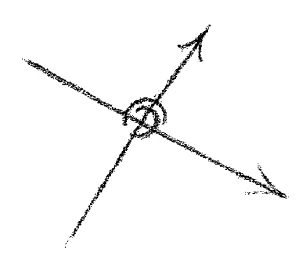
[ 13 ] Now something very peculiar happens. When people actually begin to reflect on what lies within these higher degrees—which have been bestowed upon them or into which they have been initiated—there are people who then start to think—a very specific result sets in. Even if these people have already reflected on the three lower degrees and have somehow at least sensed something in them, what they sensed in the three lower degrees is completely destroyed by what is instilled in them in the higher degrees. A terrible fog is cast over whatever might have been sensed in the three lower degrees. And without people usually having any clarity about it in their consciousness, they are clouded over in these higher degrees. Where does this come from? It stems from the fact that during certain periods—the late 18th and early 19th centuries, but continuing right up to our own time—certain people infiltrated those Masonic orders, gained entry, and introduced these higher degrees, establishing them within Freemasonry, so that in a number of these higher-degree Masonic orders, these foreign elements are present; High Degrees, developed by outside figures who have infiltrated them. People are, after all, gullible, even when they are well-versed in these matters. And those who have infiltrated them are the members of the “Society of Jesus”—the Jesuits. At a certain point in time, starting at the end of the 18th century, the Masonic orders were teeming with Jesuits, and they established the high degrees for certain orders. So you don’t just find Jesuitism where Freemasonry is reviled or preached against, but you find a great deal of the purest Jesuitism within the high degrees themselves. From the Jesuit perspective, it does no harm at all to attack what one has oneself established, for in this realm that is part of politics—of the proper guidance of people. If one wants to lead people toward a specific goal—a clear goal, one that is clear to the people themselves, not merely to the leader—then it is best to approach them from only one side and show them a path to that goal. But if one wants to keep them as dull and drowsy as possible, one shows them two paths, or perhaps even more, though two are sufficient for now. One path goes this way, and one goes that way (see drawing). One is a Jesuit by officially belonging to the Society of Jesus and taking this path, or one is a Jesuit by belonging to some high-degree Masonic order and taking that path. Then the person looks around. He will find it very difficult to find his way. It is very easy to confuse him.
[ 14 ] Our public life is permeated in the most diverse ways by such confusing currents. People today have every reason to wake up and take a good look at things, for there is no need to succumb to them. But most people today do succumb to these things. One need only look back over a somewhat longer span of life to see how people with whom one was young—and who are still alive—have, instead of turning to some form of spiritual science, returned entirely to the bosom of the Catholic Church. I know of many such examples. They merely point to some of what is taking place in our time, and it is unacceptable not to draw attention to these things, not to point them out. Especially at the present time, it is of the utmost urgency that our anthroposophical friends be made aware of such things, even if this may only serve to inspire the truly necessary seriousness in a very small number of them. For it is precisely this seriousness that is lacking today—the very seriousness for which we so deeply long. You must first come to terms with the fact that, on the basis of anthroposophically oriented spiritual science, we are facing an important turning point. Of course, this spiritual movement had to begin—I will elaborate on these matters in greater detail tomorrow; today I will merely outline a few points and will go into more detail tomorrow on certain aspects specifically in this area—it was first necessary to convey a body of spiritual truths. Now we face the necessity—the absolute necessity—of putting these spiritual truths into practice. This turning point should be taken very seriously among us. As long as the anthroposophical movement was merely a spiritual-scientific movement—a movement of teaching and the dissemination of ideas—it was, so to speak, something that carried on like a spiritual current in a riverbed. Even if cliques, even if a great deal of frivolity, playfulness, and nebulous mysticism were to take hold among the followers, the spirit always forges its own path and transcends cliques, prejudices, and selfishness. The moment anthroposophically oriented spiritual science seeks to intervene in social life—the moment it seeks to become practical, as it has been doing for more than a year—that approach is no longer viable; we are truly faced with new spiritual tasks, and these new spiritual tasks must be taken seriously. We must truly understand once and for all that clique mentality—and everything that has crept into our ranks as frivolity, as playfulness, as false mysticism—cannot continue, because it would have a destructive effect. One simply has to tell oneself this: Things are becoming serious in the face of what is currently sweeping through the world. — And in contrast to that, I have said so often: One would like to be able to imbue one’s words with something quite different from what one can usually do, in order to evoke a resonance in people’s souls for what one actually has to say regarding the affairs of the present. What is said finds so little echo; please forgive me for putting it so bluntly and openly, but it finds little echo. Time and again, it is pointed out that things cannot be understood immediately, that one must first make some progress, and so on. But if one were not deceived by prejudices—if one did not even cherish prejudices—one would be much more readily moved by the actual impulse that lies at the heart of this spiritual-scientific life I am referring to. The opponents are well aware of this, and I would like to say: The opponents demonstrate that one truly does not need to be a genius to find effective means.
[ 15 ] Before I left, I gave a public lecture here titled: “The Truth About Anthroposophy and Its Defense Against Falsehood.” In that lecture, I said—of course, merely as a figure of speech—that I could not attribute the attacks published by the so-called “Spektator” to an educated person, for an educated person could not possibly utter such things as are reproduced there; nor could I assume that it had been written by anyone who had received any education—whether a high school or university education—since the style and tone clearly pointed to a thoroughly uneducated person. — As I said, it was merely a figure of speech, and so I was taken aback by the title page of the essays, now compiled into a pamphlet. The pamphlet is titled “The Secret of the Temple at Dornach: Part One”; a second part is thus still to come: “A Historical Account of Theosophy and Its Offshoots,” by Max Kully, pastor of Arlesheim. It would seem, then, that unless Arlesheim has a pastor who has not attended high school or studied theology, the person who wrote these things must indeed be an educated individual.
[ 16 ] Well—more on that later—the second part of this brochure, which has already been started, is promised: it will provide a very detailed account of these matters. It is said that it will shed light on the Steiner method, occult schools, and doctrinal systems; Steiner as judged by former “theologians”; Steiner as a financier; and in his very latest role as a sociologist. — So, as you can see, there are still many things to come!
[ 17 ] And after all, there are some interesting things in this little pamphlet that was handed to me today, along with a bundle of attacks that have come in recently. As you can see, it’s quite a nice little bundle! I’ve only skimmed through these things, but still, the way that “educated man” writes is interesting. I certainly don’t need to remind you of what I’ve said here about this man’s knowledge of the Akashic Records. He wrote about it as if it were a book you’d find in a library and copy from. Now, in an addendum to his article, he says: “In his lecture”—it’s that lecture on ‘The Truth About Anthroposophy...’—“Steiner also touched on the Akashic Records. He denied and mocked what Spektator published in the Katholisches Sonntagsblatt on this subject.”
[ 18 ] So this “educated man” has gleaned something about the Akashic Records from the lectures delivered in Stuttgart and Düsseldorf that were passed down to him, and from the explanation of the Lord’s Prayer; and, because it was necessary to say that the “fool” is incapable of understanding such things—yet since he believes that the infallibility of the Church naturally extends to him as well— he cannot be fallible, he therefore feels it necessary to say that I denied my own writings—he says this even though the only thing that had to be denied was what the pastor of Arlesheim says!
[ 19 ] As you can see, things are going a bit too far in relation to what was sufficiently outlined here in that lecture before I left. But now, what follows is quite striking; not to me, for I will not shy away—even if such things are not false—from saying what I consider necessary in light of the times we live in, that it must be said. But I do ask you to listen to the following statements with some attention: “Since then, we have been initiated into this matter by an authoritative source. By ‘Akasha Chronicle,’ the theosophist means something that supposedly exists in the spiritual world,” and so on. It would be quite helpful if you would listen to this and, above all, focus your attention a little on the fact that it can be said from this perspective: “Since then”—that is, since June 5, 1920—“we have been informed on this point by an authoritative source.” That is to say, if this is not a lie, then this pastor has been told by someone here listening to the lectures what he is to understand by the “cycles” in the Akashic Records. I would like to draw your attention a little to this fact—as I said, if it is not a lie—because it could well be that there are people among us who would simply skim over such a statement carelessly. All sorts of things happen, after all. In the package, for example, I also find a nice article written from a Protestant clerical perspective. The whole issue is now spilling over from the Catholic camp into the Protestant one, and we are already dealing with a follow-up to an article in the Evangelisches Schulblatt, which, incidentally, has some very peculiar characteristics. That “Schweizerisches Evangelisches Schulblatt”—the official publication of the Protestant School Association of Switzerland, a weekly journal for Christian education in the home and school—has announced in its “Book Corner” a series of “pamphlets,” including “The Struggle for the New Art” by the Jesuit Father Kreitmaier! Just a side note. But you see, people do come together in strange ways!
[ 20 ] But I would like to read you a short excerpt from that review, which appears in this Evangelisches Schulblatt. It discusses all sorts of things; but let us focus in particular on the part of the review that concerns the threefold social order and the “key points,” and I ask you to pay close attention now:
[ 21 ] “So, according to Steiner’s three-part socialism, this much-praised urban culture is to be transplanted to the countryside! The farmer’s wife must finally receive music lessons and take courses on how to decorate her living room. The farmer’s son will join a little eurythmy dance circle, where he’ll ‘learn to move,’ in case he ever ends up in a more refined family. His sister will dance to preludes from The Well-Tempered Clavier, or, if she isn’t quite as talented, at least to the popular tune—‘that’s what girls like so much.’ Why are country folk so contemptuously excluded from these magnificent achievements? Well—“because the political state doesn’t consider it necessary...” How happy these poor, neglected people will one day be when this urban fragrance competes with the appalling manure piles and chicken droppings in front of their houses! How will this poetry of clean laundry, stand-up collars, and patent leather shoes finally supplant the rustic prose of the barn atmosphere! And then there’s Russian cleanliness, which will finally bring us public bathhouses that aren’t even found in Germany yet, as the poor, disillusioned Russian prisoner of war so movingly recounted... What a paradise we are heading toward!! Instead of the farmer sitting in front of his little cottage after work, comfortably smoking his pipe—or, heaven forbid, playing a game of Jass over a glass of beer—he will thus satisfy his thirst for knowledge with Steiner’s phraseology in these “thorough and democratic” lecture series. But how does that fit together when it is stated immediately afterward that these honest country folk, once “true education has made them capable,” would never “particularly yearn for urban culture, which could offer the people nothing but the disadvantages of an unhygienic life”? Indeed, it even states that the hotbeds of social unrest would be depopulated by bringing urban culture to the countryside. This very culture—which has just been praised to the highest degree—is simultaneously supposed to deter villagers from wanting to become city dwellers. This is clearly a contradiction, and the entire assumption rests on such shaky ground that even an infant could knock it over.
[ 22 ] “So we get confused and ask ourselves what Steiner actually wants. Above all, we must first learn to read Steiner. Perhaps then we’ll be on the right track. In these factories with educational cooperatives, specialized libraries, bathhouses, home decoration courses, and so on, the fund—which, of course, must be financed by the factory owner—is naturally not forgotten; it not only pays for all of this but—pay attention! — “at the same time, through sufficient funds, has the ability to attract the best representatives of intellectual life to lecture series.” That’s probably (since there’s something to be gained) where the rub lies, and there’s no need at all to add afterward, “this helps both sides.” Mr. Steiner correctly surmises that these factory workers’ educational cooperatives generate the funds he so eagerly wishes to “earn.” He classically refers to this as “allowing the necessary funds to flow to science for its further development.” These intentions are so transparent and the whole thing so clumsy—if we just read a little between the lines.
[ 23 ] “Are we really to go along with the trends toward uniformity that are brazenly on the rise everywhere—including, above all, the exclusion of all religious instruction from schools—by smearing this educational mush even into the countryside and the factories? Surely life itself should teach us that it is utter nonsense to want to bring all people to the same educational level. Generation after generation has failed at this unnatural problem, yet nowhere is anyone willing to learn from it—not even from the most obvious source: nature! We need only cast a glance at the animal kingdom—or even the plant world—to recognize everywhere the most tremendous differences among its creatures. The human race will never be an exception; the entire past teaches us the fact that a small minority stands in contrast to a great multitude, that only a few gifted individuals ever excel. Shouldn’t a little appreciation for these differences (especially in matters of race and nationality) find its way into a school curriculum for once? We would probably soon discover where the people are ailing! Certainly not in the countryside.
[ 24 ] “But enough! I have long since exceeded the intended scope of my response. It could easily be expanded to twice or three times its current length if I were to thoroughly examine the entire complex of naivety and lack of a sense of reality that is evident in the article. ([Footnote:] If desired, I can provide exhaustive information on this in further articles, and I will not miss the opportunity to cast the entire Steiner movement in its proper light!) But I must ask one more question: Where does Pastor Ernst get the audacious claim that “we are striving in the embryonic stage for what Steiner sought on a grand scale?... ”
[ 25 ] Well, I read that and asked myself: Where exactly does this come from—what is being refuted here as the tendency to “bring city culture to the countryside, along with the manure and chicken droppings,” and so on? I asked myself: Where exactly does that say in the “Key Points” or in our literature on the threefold social order, if that’s what’s being attacked here? — Finally, it occurred to me that I had been given not just two issues of this “wonderful” magazine, but a third as well. These “wonderful” attacks, titled “A False Prophet”—which I read aloud—appear in issues 26 and 27, and in issue 23 there is an article: “The Relationship Between School and State According to Dr. Steiner,” and this article contains all the ideas—as natural consequences, as necessary in the sense of the threefold order—that are further elaborated upon and attacked in issues 26 and 27. This article was written by Pastor Ernst in Salez and is written in an exceptionally benevolent tone, but it is written in such a way that the threefold social order is supposed to exist in order to “bring urban culture to the countryside” and so on. So you see, one suffers harm not only when attacked by pastors, but even more so when defended by them! There’s really no need to be all that thrilled to have supporters on this side, because, when it comes down to it, the supporters actually make things worse than the opponents do.
[ 26 ] Well, some of our friends could learn a thing or two from this as well; for whenever I encounter such things, I am reminded time and again of how often I have heard: “Here and there I was in a church again, and someone was preaching in a thoroughly anthroposophical or theosophical manner.” — I have often pointed out that one should not be taken in by such things, and explained how things actually stand. But today I was at least able to surprise you with the interesting fact that there are now already such followers who then provoke rebuttals in which one is no longer at all familiar with the subject matter!
[ 27 ] Tomorrow we intend to discuss the notes that were raised today in a somewhat more serious manner.