

Healing Factors for the Social Organism
GA 198
16 July 1920, Dornach
Translated by Steiner Online Library
Fifteenth Lecture
[ 1 ] Today I would like to preface these three days of reflections with an introduction intended to provide, from a certain perspective, an orientation regarding the relationship between the anthroposophically oriented spiritual science movement and earlier spiritual research movements. You have surely noticed—and I have often mentioned and described—how, due to the circumstances of our time, it has become necessary to treat the knowledge and understanding of the supersensible things we speak of within our spiritual science movement differently from the way the knowledge and understanding brought to people in the ancient mysteries were treated. You also know that the comparison of this contemporary spiritual scientific knowledge with the initiatory knowledge of the ancient mysteries is justified, despite the differences between the two. It is true, however, that the ancient mystery traditions were such that they imparted insights based entirely on an atavistic—one might say, semi-dreamlike—state of consciousness on the part of the seeker. The modern spiritual knowledge of which we are speaking here is such that everything within it must be attained down to the smallest details with full consciousness—a consciousness that is entirely comparable to the consciousness we have, for example, when we take in and process geometrically comprehensible or, indeed, mathematically comprehensible truths. Thus, the fully awakened spiritual experience is attained through this modern spiritual movement in a soul life that must be completely illuminated by the same light that also illuminates our waking daily life when we are truly awake. But this knowledge, like the instinctive, half-dreamlike knowledge of the ancient mysteries, is meant to lead us to the higher supersensible forms of existence.
[ 2 ] We have often spoken of the unique character of this ancient mystery knowledge. We have pointed out that it goes back to a primordial knowledge, to a primordial wisdom of humanity. It is only because of the prejudices of modern materialistic-Darwinist views that it is obscured today: humanity did not originate in its development from animal-like states, but from states for which there is absolutely no analogue in today’s physical world—states that, however, encompassed the life of the soul in such a way that, across the entire inhabited earth of that time, a knowledge of the spiritual instinctively acquired, was present throughout the entire inhabited Earth of that time. We must, however, bear in mind, when we consider this fact of supersensible primordial knowledge, that humanity in those primeval times held a more naive, more elemental—one might say, more innocent—view of life; that within this primeval humanity, in a certain sense, lay those impulses which the divine-spiritual beings themselves had placed within the souls. So one can say: In the realm that we might today call the moral realm, the people of primeval times were beings who simply functioned as instruments for the deeds of the divine spiritual beings, so that one cannot speak of these people having their own responsibility, of a possibility of personally becoming sinful, for this time—nor of an actual straying from the will of that divine-spiritual being from which human soul-hood ultimately emerged. But this very fact also encompasses the reason why, in those earlier times, it was possible to spread and maintain within humanity a knowledge of supersensible things. This knowledge, if it is true knowledge—even in its atavistic state of primeval times—is in reality precisely linked to the mastery of certain forces of material existence. Today we take pride in the fact that we have shaped our technology based on our few scientific ideas, and that in this sense, through our understanding of nature, we have mastered the natural world around us to a certain degree. In a completely different way, however, the people of primeval times were able to master the various natural forces of material existence by virtue of the knowledge inherent in their innocent state of mind, and this very state of mind deprived them of the possibility of using the supersensible knowledge bestowed upon them by the gods to the detriment of humanity.
[ 3 ] You know from my descriptions that this primordial humanity was not dense and material in the same sense as later humanity or as humanity today; in a certain respect, it was much less material. This was also connected to the fact that the impulses of divine-spiritual existence could express themselves in a much more direct way than was later possible. What gradually occurred in the development of humanity is, after all, a union of the spiritual-soul aspect with the physical-material aspect. In a sense, human beings descended deeper and deeper into matter. But it was precisely with this descent into matter that what one might call the possibility of sinning also arose—the possibility of straying from the paths that sprang from the impulses of the divine-spiritual beings themselves, that is, the possibility of doing evil, and hence also the possibility of applying supersensible knowledge in an evil sense. This possibility arose only at a certain point in human development. At this point, however, something quite special occurred. It was then, in fact—as you know from the description of the Atlantean world I gave in my Outline of Esoteric Science—that the most central mystery being truly concentrated itself in the oracles, in the mysteries. It was then, so to speak, that knowledge of the supersensible worlds was first withdrawn from the broad masses of humanity, and this knowledge became the property of those initiated into the Mysteries. Thus, the course of development is such that, in fact, supersensible knowledge gradually vanishes from the great mass of people and is preserved in its true form within the Mysteries. However, as you know, these mysteries at that time still encompassed a vast range of primordial wisdom, and they continued to do so until well into the Christian era, with some persisting into much later times. But various mysteries containing the deepest knowledge—such as one, or rather two, in the region of present-day France—were, as I recently hinted to you, completely eradicated by the Romans in the century before the emergence of Christianity, and were even eradicated in a terribly bloody manner. And at these sites—which must be pointed out—a wondrous, profound body of knowledge still flourished within Europe during the last pre-Christian centuries, a knowledge that has since vanished entirely from Europe. The same was true in other parts of Europe as well.
[ 4 ] Then the ancient wisdom could only be preserved within very narrow circles. It was also within these circles—where it was extremely rare to find people who, through their own direct experience, could ascend into the supersensible worlds—that knowledge of the supersensible worlds was subsequently applied in a variety of directions in a harmful, nationally self-serving sense—a fact that remains evident to this day in the cases I have been describing to you here for years, specifically characterizing them as the work of certain secret societies within the English-speaking population.
[ 5 ] Well, there is a certain way in which those people who, in the true spirit of ancient times, reflect on the knowledge of the supersensible worlds, still explain today the reasons why the knowledge of the mysteries has been so carefully withheld from the masses by the custodians of the mysteries. The dutiful representatives of secret societies—who, with varying degrees of justification and in ways ranging from sound to highly questionable, preserve this knowledge—still speak today of the fact that a certain kind of knowledge—the highest kind of knowledge about the supersensible—cannot be revealed to the masses, because the masses today are absolutely not ready for certain aspects of this knowledge. These things are said, and the way in which certain parties justify this is always significant in a certain sense. It is indeed necessary that we discuss this a little by way of introduction today, because I have all sorts of important things to speak to you about tomorrow and the day after tomorrow. We must do this because it is precisely from this point that the principle is followed of adopting—with regard to the dissemination of knowledge about the supersensible worlds—a standpoint that I would call democratic in nature.
[ 6 ] You know that I have not withheld—at least to a certain extent—the communication of certain supersensory insights, even from the broadest public. And insights of the kind that I already present today in public lectures—even though they are little understood there—are, in a certain respect, regarded by very esteemed representatives of the modern mystery tradition as insights that must not be communicated to the public in this manner. Of course, one cannot go as far as certain pinnacles of insight; but up to a certain level, these insights simply must be conveyed to the public today, if only because, as I have often emphasized, they must flow into the social impulses that are absolutely essential—in the most eminent sense—for present-day humanity and for humanity in the near future. And so it has come to pass that I have continued to share such insights, which, as I said, are unfortunately understood very little. Precisely the most important things—which are already being incorporated into public lectures and which one might often think would have a profound effect—are actually received in such a way that one can see: the souls receiving them are, in fact, sleeping a very sound sleep as these things bounce off their ears. Nevertheless, these things must be communicated to the public today, and in a certain way I have tried again and again to bring them to an even higher level within the Anthroposophical Society, although my experiences in this regard have not been the best.
[ 7 ] Everyone will consider it absurd to entrust higher geometry to someone who does not know elementary geometry. The comparison is flawed, as all comparisons are, because what is presented as a certain higher knowledge from the field of anthroposophically oriented spiritual science does not relate quite in the same way—though only seemingly—to the elementary as higher geometry does to elementary geometry. The fact is this: For someone who does not know elementary geometry, the reality is that if one presents higher geometry to them, they will reject it because they are fully aware that they do not understand it. But if one presents the higher insights of anthroposophy to someone who does not yet have the elementary background knowledge of anthroposophy, they will accept them. They understand it just as little as the other person understands higher geometry, but since the insights must be clothed in understandable, popular language, they believe they understand them, mock them, or talk about them like Pastor Kully—and we are then faced with the impossible situation where these higher insights are presented to humanity in a completely distorted form, in a deceptive form. But presenting true knowledge to people in a deceptive form means contributing to the destruction of humanity. Therefore, it would be necessary to be able to assume a certain understanding of such matters—to assume that this higher knowledge should be protected from being presented to those who do not already possess the lower knowledge. But for decades now, quite negative experiences have been had within the Anthroposophical Society—experiences that, if one were to hold on to the old ideas about discretion regarding supersensible knowledge, might actually compel one to cease the entire proclamation of the supersensible world system. For what have we not experienced! The talkativeness—both internal and external—has indeed been no small matter over the decades; and even very recently, we had to experience, to our great regret, that when we were compelled to protect our writings from possible misinterpretation in light of certain facts, a downright naive and uncomprehending revolt arose from a certain quarter. It is of no use to leave these things unsaid, because a thoroughly comprehensive understanding of them—especially of their sacredness—is lacking. If there were an awareness of the place of supersensible knowledge within the whole social being of humanity, it would not have been possible at all for those things that belong to the most sacred matters of humanity to be carried out into the world in such a distorted, mendacious form, where they were then stripped bare in such a manner. Despite all this, however—even though a large number of people treat what ought to be treated with the utmost seriousness as if it were a trivial matter—it is nevertheless necessary, urgently necessary, that these things be brought to humanity today. The duty toward the spiritual world, the duty toward the spiritual guiding powers of humanity—this must be regarded today as taking precedence over what can be observed from the outside in the manner just described. The time has now come when a certain body of supersensible knowledge must absolutely be conveyed to the world.
[ 8 ] Supersensible insights generally remain harmless when they deal with spiritual matters in an abstract way; but seriousness immediately becomes a necessity—if there is any seriousness at all—when it comes to the supersensible insights of the ancient initiates. Such matters are, after all, fully comprehensible only to those who, in turn, can discover the wisdom of the ancient initiates through their own research. The ancient initiate said: If one reveals occult truths only in threes, then one can generally cause all sorts of social harm; one can stupefy people, lull them into complacency, cloud their minds, and so on; but if one reveals all sevenfold forms of the mysteries concerning the supersensible worlds, then one is imparting to people something that, if they are of a malicious disposition, must inevitably lead them to evil. — So the initiate says: Revealing the supersensible knowledge in the triad may, under certain circumstances, cause only external social harm; revealing it in the septet, however, poses a danger the moment people who are capable of evil in any form come into contact with these sacred mysteries. — What does that mean?
[ 9 ] You see, there is a kind of harmless mysticism. Such harmless mysticism takes place when people gather in small, sectarian circles and, to a group of—say—seven, eight, or a hundred people, share all sorts of information about the etheric body, the astral body, reincarnation, karma, and so on—in short, when one speaks about these things in abstract terms, much as one speaks about the things of ordinary life, without being in a different state of mind than that of ordinary life, at most in a mystical reverence of a nebulous sort and the like. Of course, the problem that arises is that, in the end, the people who gather together like this are, shall we say, stealing a little time from the good Lord, since it would be much wiser if, during the very hour they spend conveying such mystical messages to others, they were sewing, knitting, cooking, doing laundry, or the like. Such abstract musings on supersensible truths are, when you get right down to it, not worth much more than the other kind of activity that is now being promoted through numerous channels under the guise of so-called worldviews. But you know: we, on our anthroposophical ground, have never, when we were serious, engaged in such abstract nonsense. We have, of course, always emphasized that one must possess certain substantive insights into the human being, into the nature of the universe, and so on, if one truly wishes to form concepts of the supersensible. The aim of our anthroposophically oriented spiritual science has always been to bring spiritual scientific insights into real life—into medical practice, social life, scientific experimentation, and other areas—where, above all, the integration of supersensible insights is necessary before one can even begin to think about achieving a social recovery from our catastrophic conditions. But when, let us say, one brings supersensible insights into medicine, one immediately enters the very realm that true initiates know can cause harm in the hands of evil people. For when we exert our soul forces—thinking, feeling, and willing—as we initially carry them in their abstract form within our soul, these soul forces are very, very much mere images; when applied to ordinary consciousness, they are mere images, strongly shadowed images. Within them (the triangle) there is only a very slight intensity of reality. What people can think is, I would say, an image of an image; what they can feel, even more so; and they do not descend into the realm of volition at all—they perceive it only through images of external events that unfold on the physical plane as a result of this volition. Since what a person experiences there has so little connection to reality, not much harm can be done there. One enters, after all, into the realm of abstract concepts. One can speak very eloquently about Atma, Buddhi, Manas, and so on, but one is actually speaking of abstract words—words that are far from truly penetrating reality.
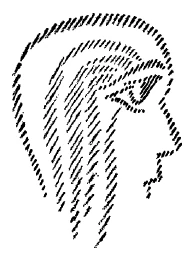
[ 10 ] With our instincts—that is, with everything that underlies what we might call our temperamental nature, and with whatever else underlies our instinctive nature—we are already more firmly grounded in reality. With, for example, what our hunger is—what emerges from our hunger as an outflow of our volitional instincts—we are very deeply immersed in our reality; and if there were no hunger and the volitional instincts associated with it—which today are often perverted—there would be no Russian Bolshevism or the like. Reality is already more closely connected to this life (square), from which thinking, feeling, and willing (triangle) rise only like a shadow—to this life of our instincts, our drives, and our temperaments. Just as our inner life is threefold, so too is this reality fourfold, and it has always been depicted as such by the initiates. And when one views the whole human being in this way, one finds a sevenfold being. But the lower members—those in which the human being, in a certain sense, repeats the animal nature—appear before us with a much more intense character of reality than the shadowy, distilled abstraction of thinking, feeling, and willing.
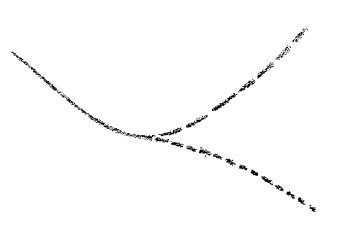
[ 11 ] But knowledge of the supersensible worlds—even if it can be grasped only abstractly in consciousness—does nevertheless influence our instinctual life, our temperament, and our life of drives; and in doing so, it influences the world of actual facts, reality. One might say: If one were to depict this world of the soul—as it exists in human beings today—in very faint lines, one would depict the world of the instinctive, the impulsive, and the temperamental in very thick and real lines; and it is into this world that supersensible knowledge plays a role (see diagram). But this world must be ennobled; otherwise, it becomes an evil world. Supersensible knowledge may therefore only act upon this world in such a way that it is ennobled, so that at the very moment one approaches realities with supersensible knowledge—that is, when one immerses oneself in the material world— it depends entirely on whether this occurs with a pure, ethical, and free disposition or with an impure, immoral, and unfree—that is, emotional, instinctual, and animalistic—disposition.
Translate text Select source language. Currently selected: English (detected) Select target language. Currently selected: German Toolbar Source text Translation results
Dictionary
Click on a word to look it up or to see alternative translations.
You’re logged in and have a DeepL Pro plan. Your content is secure.
Translation copied
Translation results
Dictionary
Click on a word to look it up or to see alternative translations.
You’re logged in and have a DeepL Pro plan. Your content is secure.
Translation copied
[ 12 ] These matters have been understood by those guardians of humanity’s primordial wisdom who have preserved the higher knowledge within the mysteries for those prepared to receive it. But this seclusion is not something that can be claimed today as an absolute necessity, and those people who, for example, belong to secret societies today and, in an abstract sense, insist on the necessity of secrecy regarding higher knowledge are completely mistaken. They are mistaken because such people do not understand the signs of the times at all. They cling to old traditions; even today they repeat what the great teachers of mystery wisdom said millennia ago. It is interesting, for example, that in the books of Aelena Petrovna Blavatsky, precisely where Blavatsky speaks most brilliantly about occult matters, one finds expounded views on the concealment of occult wisdom, views that are by no means accepted today, views that Blavatsky espoused precisely because she had learned them from those who had absolutely no understanding of the actual necessities of the present age. And so Blavatsky acted like a figure who might just as well have lived millennia ago; she had no understanding of the practical necessities of the present, speaking of the need to keep certain mystical truths secret, just as the mystery priests spoke millennia ago. As a result, even if one does not intend to, one becomes untruthful toward one’s fellow human beings in the present. And certain supersensory movements, viewed from this perspective, are in the most profound sense untruthful toward their fellow human beings of the present, for the times in which we live today speak a clear and distinct language, and this language testifies, in the spiritual and psychological realm, to an extraordinary aberration among human beings.
[ 13 ] I recently drew your attention to a literary work of the utmost significance: the book The Decline of the West by Oswald Spengler. I told you that this book has a profound influence on young people, particularly on the student body of Central Europe, and that when I recently spoke to the students at the Stuttgart University of Technology about the significance and nature of research in the humanities and anthroposophy, I went into that lecture with my mind thoroughly filled with the impression that Spengler’s ideas about the Decline of the West are making on today’s youth, particularly the academic youth. You may have noticed how justified it is today to speak of the profound impact of Spengler’s ideas, for far beyond the borders of Central Europe, wherever literary developments are followed today, Spengler’s book is taken into account. The Times has even published detailed reviews of the book on several occasions.
[ 14 ] What kind of remarkable theory does Spengler’s book reveal? In this thick volume, we find a man who, as I told you, has in fact mastered twelve to fifteen disciplines in a brilliant manner, evidence presented in the manner in which evidence is presented in science today—for the fact that Benedetto Croce, who has since risen to high office, has spoken nonsense about this book, even though he has otherwise spoken wisely, need not mislead us— we find that it demonstrates how the entire Western world, along with its American offspring, is growing old, how civilization is becoming senile, how the death of this Western culture looms at the beginning of the third millennium, how barbarism must break in, and how, around the year 2200, precisely what is today Western civilization must be supplanted by barbarism. We find this, as I said, substantiated by all the tools of modern science, and we must recognize that against such a terrifying view—terrifying above all because of the scientific tools with which it presents itself—that against such a terrifying, humanity-destroying view, only a deepening of the spiritual sciences can arise, and that only a deepening of the humanities is capable of pointing to the very place within the human soul where that which will once again drive the West out of its decline springs forth. If the West were to retain only what is now presented to people in universities, high schools, middle schools, and elementary schools—what is conveyed through our newspaper literature and our popular scientific literature—Spengler’s prediction that barbarism must descend upon the West by the year 2200 would be justified. Yet the appeal to the will of the human soul—as spiritual science can provide it, because it kindles spiritual forces within that human soul, because it opposes the external, forces that are today pushing everything toward decline with the very force that human beings must oppose through their will—only spiritual science has the right to rise up at this moment against such a scientific arsenal as that presented by Oswald Spengler. Ordinary, profane refutations of Spengler’s book are a farce.
[ 15 ] But what do we learn from this very book by Spengler? From the very way it is conceived, and the way the research is presented within it, one can see that Spengler’s thinking has emerged entirely from the thinking of the broad masses of today’s educated humanity—except that Spengler is simply far more intelligent and ingenious than the average person of today. That is why he says the exact opposite of what the average person today says about many things; yet what he says is merely a direct continuation of what the average person thinks today, of what the average person today considers to be right. But how does this book—which makes a profound impression on thousands upon thousands of souls today—appear to us when we view it impartially through the lens of initiatory wisdom? It literally enlightens us about the innermost structure of today’s traditional worldview, of today’s conventional thinking. What is remarkable about Spengler’s book is that one can be a genius—Spengler is a genius, an extraordinary genius—and yet utter the greatest follies; for his book also contains the greatest follies, but follies that, in truth, only a genius can discern today. Other people are not capable of discovering such great follies as Spengler has discovered. Now imagine the confusion that a book must cause in people’s minds—a book in which, on every page, one can admire both genius and folly at the same time!
[ 16 ] Today, extremes clash in a way that one might not have even dreamed of a hundred years ago—or perhaps a hundred and twenty years ago. And if, for example, the philistines accuse me today of calling someone a genius one moment and a fool the next, I must say that I reserve the right to do so. I may even make the mistake today of calling Oswald Spengler both a genius and a fool at the same time, for he is both at once. But that is what happens when one grows out of the peculiar configuration of today’s literature in particular. One has to be as clever as Spengler—truly clever—to concoct such nonsensical stupidities as Spengler did. With only a modest degree of intelligence, for example, one cannot arrive at Spengler’s fascinating, dazzling assertions that true socialism is Prussianism, and that Western culture—which is in decline until the year 2200, and thus utterly doomed—has no other way out than to become entirely Prussian, that is, to become entirely socialist in Spengler’s sense. And a pamphlet that serves as a supplement to the book The Decline of the West, Prussianism and Socialism, is filled on every page with the most brilliant insights one can have today into individual details of the intellectual and social fabric. What Spengler says there, for example, about Russian culture sometimes reminds me—though I must always take into account everything I have just said about Oswald Spengler—of some of the things I myself said many years ago about Russian culture, about the future of Russian culture, and about the character of the Russian people. And since Spengler explains that he will elaborate further on what he says about Russian culture—specifically regarding its scientific validity—in the second volume of The Decline of the West, I must say: I look forward to that “brilliant insight” that will be offered in this second volume regarding the future of Europe under the influence of an ever-evolving Russian culture.
[ 17 ] You see, today one must resort to paradoxes if one wants to truthfully describe what is actually happening around us, and one cannot make sense of it unless one describes what is happening among us in such a paradoxical form. A third point, which can also be found in Oswald Spengler: he portrays nothing but pessimism. For it is indeed pessimism to say: “By the year 2200, all Western civilization will have been supplanted by barbarism.”—And it is particularly pessimistic to prove this so rigorously—drawing on twelve to fifteen disciplines—as Spengler does. But Spengler, in a certain sense, worships this pessimism with religious humility. He revels in this pessimism; I would say he glorifies this pessimism, this socialism, or this Prussianism—which will take hold of the entire world, because only through organization and the permeation of society in the Prussian sense can the inevitable downfall be postponed until the year 2200. All of this is surely pessimism! But the whole thing that Oswald Spengler has before him—this socially Prussianized world, this Western world that will still be alive until the year 2200 and then die—is, in a sense, still glorified by him. He describes it with inner fire, but it is not a lasting fire; it is a theatrical fire, if one looks closely.
[ 18 ] I don’t like to speak in abstract terms; I prefer to speak in facts. And if one were to ask the reason: Why must a brilliant person today, precisely because he has a keen eye for certain details of contemporary civilization, be so foolish at the same time? Why must such a fundamentally intelligent person simultaneously assert such blatant nonsense? Why must such a person, who paints a picture of pessimism, paint that picture with such theatrical fervor that—if one can forget that it leads to ruin—this pessimism appears like magnificent optimism, as if challenging us to admire this catastrophic downfall? Why is all this happening?
[ 19 ] I would like to respond with a very specific statement: Oswald Spengler, while thinking entirely in scientific terms, calls for psychology for the 20th century, but he doesn’t have the faintest idea about the human soul. Why? Because the very moment he utters the word “theosophy”—he seems unfamiliar with “anthroposophy”—the moment he uses the words “theosophy” and “occultism,” his face turns red and he becomes quite agitated. Consequently, his brilliant approach can only address the outer shell, not the inner reality through which the soul must be sought. Consequently, his fire cannot be that which springs from the elemental primal forces of the human being, but is, in essence, merely theatrical fire. Oswald Spengler turns red in the face whenever he utters the words “theosophy” and “occultism,” and he seems unable to find any other purpose for occultism and theosophy than to use them to prop up Bolshevism and Spartacism a little, turning them into a sort of salon socialism. — This, in turn, is the grandiose stupidity of a man whose genius is born of the spiritual substance of the present. But it also testifies that where there is no insight, but only a red face in the face of spiritual depth, it is precisely there that the most bewildering cultural phenomena of the present must come to light, even if they appear ingenious.
[ 20 ] That is what I wanted to say today by way of introduction to the important observations I will then present to you tomorrow and the day after tomorrow.