

Healing Factors for the Social Organism
GA 198
11 July 1920, Dornach
Translated by Steiner Online Library
Fourteenth Lecture
[ 1 ] Today, building on yesterday’s reflections, I would like to say a few things intended to summarize some of what has been presented over time, in order to offer a kind of summary explanation of the Mystery of Golgotha. Of course, when speaking of this central point of human life in modern times, one can only ever offer something aphoristic, something episodic—in a sense, a snapshot of all that we must work through with a broad perspective in order to comprehend this Mystery of Golgotha.
[ 2 ] If one wishes to truly understand the Mystery of Golgotha, one must be clear that the entire earlier system of mysteries—which preceded the Mystery of Golgotha, which then gradually began to fade away, and which, in essence, had already faded to a very great degree by the time the moment approached when the Mystery of Golgotha was to take place, that this ancient mystery tradition, in its very essence, pointed entirely toward this central earthly event, toward this Mystery of Golgotha. If one truly allows what I attempted to describe in my book Christianity as a Mystical Fact to sink in, one will find that in the symbolic-ritual mode of presentation practiced in the ancient mysteries, the most diverse mysteries of the world unfolded with dramatic power before the neophyte, before the one to be initiated. But at the heart of all the rites and all the symbolism practiced in the Mysteries to deepen human understanding lay the mystery of the human being dying within the body—one who, in a sense, anticipates death, who dies to everything he could live for if he were to orient himself solely toward the sensory world, and who then, out of an inner soul force, precisely through this passage through dying—through this experience of dying—awakens to a higher life.
[ 3 ] The way this was portrayed in the mysteries—to stimulate people’s inner experience— bore a great resemblance to what later actually took place in Palestine as the Mystery of Golgotha. And one could say: There, at the center of Earth’s evolution, stands the cross raised on Golgotha. There, humanity can look upon the image of Christ passing through death—but in an image that spoke directly in an eternal language to the neophytes, to those to be initiated. This Mystery of Golgotha was foreshadowed in the ancient mysteries, so that these ancient mysteries were, in a certain sense, a preparation for the Mystery of Golgotha itself. What can unfold individually within each human being is, in a certain sense, cosmic.
[ 4 ] What happens within each individual when they truly undergo the experience of initiation? That which is born with them—the inherited qualities, the aspects that can be shaped in the ordinary sense of the word through conventional upbringing—sinks into the unconscious. That dies away, becomes dormant, and from the depths of the soul arises the human being’s higher self—the self that does not belong to this physical world, but which is called to carry out a mission in this physical world. What takes place within the human being is an individual process, a resurgence of the better, higher self. Before this, the human being does not have this higher self in their consciousness. Let us imagine this process extended to the entire Earth: Let us imagine the whole Earth as a kind of living being, a conscious living being—as it indeed is in reality—then we must say: Up until the Mystery of Golgotha, in the course of humanity’s historical development, this Earth did not possess its higher self, for this higher self did not enter the Earth along with what had developed from it; thus, it did not live within the ancient pagan wisdom, nor within Jewish wisdom—it did not live with the Earth at all. This higher Self of the Earth now dwelt within the human being Jesus of Nazareth; as we know, it entered through John’s baptism in the Jordan, and since the fulfillment of the Mystery of Golgotha, it has been an active impulse in earthly life. Earthly life has thereby received its higher Self. One can therefore say: On a microcosmic level, a certain special inner process takes place within every human being who merely strives for it and desires it; on a macrocosmic level, the same process is brought about for the Earth through the Mystery of Golgotha. What the awakening of the higher self in the human being is on a microcosmic level, the Mystery of Golgotha is on a macrocosmic level. This, however, is already linked to the fact that the Christ Being, who dwelt in the human being Jesus of Nazareth, was not previously on Earth, but descended from spiritual, from cosmic heights and united with Earth’s evolution.
[ 5 ] But this also implies something else. It implies that understanding the Mystery of Golgotha requires a different kind of knowledge, a different kind of insight, than that which a person gains through the observation of the external natural world—the knowledge a person acquires simply by looking around in everyday life. A transformation of the human being is necessary. And the transformed human being can then attain a kind of knowledge through which he or she comprehends the Mystery of Golgotha. This Mystery of Golgotha stands as a fact of world history, but one must always distinguish between this fact—which stands there in the course of humanity’s historical development—and the comprehension of this fact: that is, the concepts a person can muster to understand this fact, this Mystery of Golgotha. When the Mystery of Golgotha took place, the ancient wisdom of the mysteries had, in a certain sense, already faded away. Remnants of it, however, still existed. And those who still possessed such remnants—who still had tradition or even inner vision and were able to communicate the results of this inner vision to others—were called upon to contribute to the understanding of the Mystery of Golgotha. In other words: The ancient wisdom of the mysteries was used to comprehend the Mystery of Golgotha. On the one hand, then, stands the fact—the Mystery of Golgotha—and on the other hand stands what people sought to bring to bear in order to comprehend this Mystery of Golgotha.
[ 6 ] So that I am not misunderstood, I would like to reiterate here: It is not necessary to be a clairvoyant in order to comprehend the Mystery of Golgotha; but it is necessary to interpret the findings gained through clairvoyance with common sense, thereby allowing concepts, images, and ideas to enter one’s soul that do not pertain solely to the sensory world, but which also encompass the supersensory world. Just as one does not need to be a spiritual researcher oneself in order to understand the Mystery of Golgotha, but just as one must take in what comes from spiritual vision in order to understand the Mystery of Golgotha with the help of these concepts—which are, after all, meaningless in relation to the mere sensory world—so, too, could an understanding of the Mystery of Golgotha be derived from the ancient wisdom of the mysteries. Thus, what was originally mystery wisdom was used in the first centuries of Christianity to understand the Mystery of Golgotha. And ultimately, nothing other than what was mystery wisdom found its way into the Gospels. This is precisely what I have attempted to illustrate in my work Christianity as a Mystical Fact. The Gospels were thus, in a certain sense, the ancient wisdom of the mysteries applied to the Mystery of Golgotha. People sought to gather together the very best they had in terms of concepts, ideas, and inner spiritual experiences in order to understand this Mystery of Golgotha in the right way.
[ 7 ] That was during the first centuries of Christianity. But this mystery wisdom has since faded away completely. If it is presented to people today and one appeals to their common sense, they can no longer understand or grasp anything of this mystery wisdom. It speaks in a language that is no longer accessible to people today. Only gradually does one once again struggle to grasp what has been preserved of the traditions of mystery wisdom, when, through modern spiritual science, one recognizes the same realm that existed in atavistic knowledge as ancient mystery wisdom. This modern spiritual science is today entirely comprehensible to common sense, but not the ancient mystery wisdom, which can only be understood once one has familiarized oneself with the findings of modern spiritual insight. And so it came to pass that, along with the ancient mystery wisdom, people increasingly lost the means to comprehend the Mystery of Golgotha. Mystery wisdom dried up; the Mystery of Golgotha could no longer be understood.
[ 8 ] We see this, after all, in a large part of contemporary theology. This contemporary theology seeks to understand the mystery of Golgotha from the same source of knowledge from which, for example, the natural sciences are built today. We have often said here that there is an ever-increasing tendency toward the impossible—to completely obliterate Christ and to understand only the Jesus of Nazareth, or, as one of these theologians puts it, the “simple man from Nazareth.” Christ has been lost to theology simply because Christ cannot be understood in Jesus from the standpoint of external, sensory science. The ancient supersensory science—the legacy of the Mysteries—has been lost to humanity. Even in the centuries before the Mystery of Golgotha, the last great mysteries—such as those that existed in France—were destroyed by the encroaching Romanism, which is, after all, the embodiment of sobriety everywhere. In the last century before the emergence of Christianity, the ancient Druidic mysteries were destroyed by Roman troops at a certain site in France. Hundreds upon hundreds of initiates were put to death in just a few days at that time. One might say it was a form of inquisition long before the Catholic Inquisition. And if history were not merely a conventional fable, we would know, for example, other things to tell about the Roman Caesar besides what is usually recounted; one would know how to tell of his persecutions of the ancient mystery sages; one would see in him, in particular, one of those who had made it their mission to eradicate, root and branch, whatever of the mystery heritage had found its way into that era. Nevertheless, echoes of the ancient mystery wisdom persisted—even into the Middle Ages, indeed all the way up to the 18th century—and it was still possible, in a certain sense, to understand the Mystery of Golgotha with the help of this ancient mystery wisdom. The inability to understand the Mystery of Golgotha actually did not arise until the 19th century. And in the 19th century, we actually see modern “theology” developing in such a way that the concept of Christ is increasingly lost, so that people understand less and less of the true nature of the Mystery of Golgotha—namely, those people who strive to truly understand something, who do not accept things merely because of the dictates of an external church.
[ 9 ] What, then, can it actually be about when we consider the science of initiation in the present day in relation to the Mystery of Golgotha? It can only be about rediscovering Mystery wisdom, so that through this new Mystery wisdom, the Mystery of Golgotha might once again become comprehensible to human beings. It is truly the case that if development were to continue in the same way that it led to Western natural science, to Galileanism, and to Copernicanism, the Mystery of Golgotha would disappear completely from the increasingly barbaric life of the West. This is precisely what should be taken with the deepest seriousness in the present day. If the ideal of knowledge that is officially espoused today were to spread universally, we would have conditions in the West—relatively soon a “civilization,” if one could still call it that—though one would actually have to call it barbarism—that knows nothing at all, that no longer speaks of the Mystery of Golgotha. It might be that, within this barbarism, the worship of, for example, the Roman Catholic Church would have been preserved through external coercive measures. But those who think would no longer find any meaning in the acts taking place there. They would perceive them as external matters, just as the ceremonies performed by the ancient Germanic peoples in honor of Odin and so on were once perceived as external matters. This would rob the evolution of the Earth of its meaning, for this evolution can only have meaning through the effect of the Mystery of Golgotha.
[ 10 ] I would like to put it this way, as I have often done. Let’s suppose a Martian came down here to Earth who knew nothing about Earth—since, after all, the Martians have never experienced anything of Earth’s conditions—and he saw everything that exists here on Earth. He would find it quite incomprehensible. But the moment he saw a reproduction of Leonardo’s “Last Supper” and contemplated what was depicted there, he would be able to make sense of life on Earth. It is precisely this point that I would like to mention often, for in this painting—in a particularly expressive depiction—everything that pertains to the Mystery of Golgotha is in fact of universal significance, a significance such that through a correct understanding of it, one grasps the meaning of earthly life. But one first needs the concepts, the ideas, to understand what is fact. These concepts and ideas are lacking in today’s external education. They must be known once again. They must come to life once more from within human beings; and they have disappeared to such an extent that we should not yearn today for a Renaissance of old ideas. That would not help humanity today. We do not need a Renaissance; we need a Naissance—we need a complete rebirth of spiritual life. We do not need a revival of the old, but rather the birth of something new.
[ 11 ] In contrast, the anthroposophically oriented spiritual science referred to here can point to its own fundamental foundations. What, then, is the foundation of this anthroposophically oriented spiritual science? Let us consider the world around us. We see it unfolding in the mineral, plant, and animal kingdoms. In recent times, natural science has produced much knowledge about what occurs during the development of the animal, plant, and mineral kingdoms. It will continue to produce much more that sheds light on the evolution of the mineral, plant, and animal kingdoms. But this natural science has produced nothing of particular significance regarding human beings. For if you really examine what natural science has produced about human beings based on a description of their anatomy, physiology, and so on, you will find that this natural science actually considers only those aspects of human beings that make them appear as the final link in the animal chain. As a natural science, it is doing the right thing, but precisely because of this, it considers only that which makes human beings appear as the highest link in the animal chain—as, so to speak, the most perfect animal. Yet this natural science pays no attention to what actually makes human beings appear to us as human beings—what sets them apart from the other kingdoms of the universe that surround them. Our spiritual science, however, is truly engaged—not in an amateurish way, but through conscientious research—in deepening our understanding of what natural science has to say about the mineral, plant, and animal kingdoms. And if people today would only listen a little to what anthroposophy has to say, they would not think that anthroposophy is a matter of a sect, that it is something cultivated out of the preference of a few “aunties,” but they would see that it is something entirely different, that in terms of scientific rigor and research it can fully measure up to the methods of the natural sciences, and that what it produces is simply richer than what the external natural sciences provide.
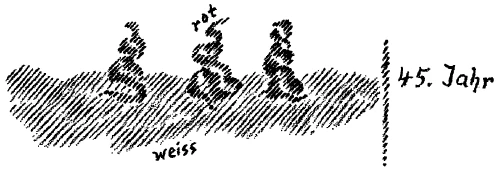
[ 12 ] Isn’t it actually ridiculous for the natural sciences to oppose anthroposophy? After all, anthroposophy takes nothing away from the natural sciences. It stands alongside the natural sciences and says: Yes, you are right in the field you are researching. — It merely adds what it then investigates regarding the mineral, plant, and animal kingdoms. And who has the right to deny what they themselves have not yet investigated, when no one disputes what they have already investigated! One cannot really imagine a greater tyranny than that which is exercised against what one has not researched oneself and does not wish to research. But where does anthroposophically oriented spiritual science lead by researching the mineral, plant, and animal kingdoms in its method? It comes to realize that what can be discovered through the scientific method—what can be found through observation of the external sensory world—can certainly be applied to our understanding of the human being, but only insofar as it explains to us, in conceptual terms, that which dies within the human being: how the human being dies, how he already begins to die when he is born, how he is in a state of descending evolution. If you want to understand the withering of the human being that begins at birth—and which comes to an end in an instant at death—if you want to study this entire downward course of development, then look to nature; then investigate all the laws of nature. And once you have explored all the laws of nature and applied them to human beings, you will discover the laws governing human death; you will understand what it is within a human being that dies (white).
[ 13 ] Now, in contrast to this, it must be said that at the very moment of birth, there is not only a dying away, but also an ascent (red). You cannot find this ascending development through today’s scientific approach, no matter how much you have shaped it toward the ideal. That which is once again brought to life within the human being—which is constantly present alongside this dying—cannot be grasped from the sensory realm; it can only be grasped from the supersensory realm. Anthroposophy must add knowledge of the supersensible to the sensible realm so that human beings can be understood at all. You can see from this that if one wishes to get to know human beings at all, one must necessarily turn to the science of the supersensible. In fact, one perceives human beings only as mortal beings when one looks at the sensible realm. The Christian creeds, which have never concerned themselves with true knowledge, have witnessed the rise of natural science, which deals with mortal human beings; thus, as I already indicated yesterday, they concern themselves with the immortal, with that which does not die, and set it before the egoism of the human soul.
[ 14 ] The matter takes on a different character when one considers what ascent and evolution are—that which comes into being, continues to come into being, and grows ever more and more from the moment of a human being’s birth, and which reaches its culmination on Earth when the human being passes through the gate of death. There, because one must appeal not to feeling, not to faith, but to knowledge, one must speak of the Unborn, of the Unborn-like—a term I have often said must gradually find its way into our vocabulary. Just as the word “immortal” has entered the vocabulary of modern people, so too must the word “unborn” enter it, for in relation to our higher being we are just as little born as we are dead. But traditional religious creeds have concerned themselves only with what belongs to sensory science. They deny death through mere words, mere hopes, and mere faith. They do not point to what can be spiritually known; they condemn what can be known spiritually through supersensory methods and modes of inquiry.
[ 15 ] This is essentially a characteristic of what we refer to here as anthroposophically oriented spiritual science. It is essentially dependent on ascending to the supersensible. But by ascending to the supersensible, it brings humanity something that is kindred in essence to the ancient wisdom of the mysteries, which can therefore lead once again to an understanding of the Mystery of Golgotha. Therefore, given the entire course of contemporary development, we are compelled to seek an anthroposophically oriented spiritual science so that the insights into the Mystery of Golgotha do not disappear altogether.
[ 16 ] No matter how closely what is practiced today as natural science at our universities approaches its ideals, it cannot prevent the disappearance of the mystery of Golgotha. No matter how closely what is developing as history approaches its ideal, it cannot prevent the disappearance of the Mystery of Golgotha. And one can actually say that for anyone who looks closely at what prevails in our public education today, it becomes quite clear: everything is tending toward making the understanding of the Mystery of Golgotha disappear. Traditional religious creeds will never be able to halt this disappearance, for they preserve only the empty phrases of what once had meaning, but which can no longer make sense to human reason today unless it is rediscovered through consciously applied spiritual research. From this, however, you can see how intimately connected the continued understanding of the Mystery of Golgotha is with the development of true spiritual knowledge. One would not say such things if they did not present themselves as something that must necessarily be understood in the present. If one were to develop this spiritual science merely—I might say—out of some subjective curiosity about the supersensible, one would feel far too presumptuous to claim that the progress and understanding of Christianity depend on the revitalization of this anthroposophically oriented spiritual science. It is only because this fact imposes itself so absolutely—because one cannot escape it if one has a genuine sense of what is happening—that one speaks of it and does not shy away from being accused of being presumptuous and perhaps fanciful by those who do not wish to face the gravity of the times.
[ 17 ] Times are so grave today that one cannot help but knock on the door of the deepest truth, behind which lie the truths that humanity needs today. Western humanity, along with its American counterpart, will sink into barbarism if the understanding of Christ is not preserved. But given the way this humanity has acted—and given its current disposition to continue doing so—the understanding of Christ will disappear. Only among those who recognize today that it is necessary to arrive at a new understanding of the spirit—a new path in the knowledge of the supersensible human being—only among them does a true, serious, and strong will exist to preserve the understanding of the Christ Mystery for humanity. However, there will be no social life—as it is understood today out of dull, often perverse instincts—if the understanding of Christ is completely lost. For this social life can only develop if a common bond is able to live within human hearts. What else could this common bond be? This common bond can only be what Paul already described with the words: “Not I, but Christ in me.” — As many people as can say, “Not I, but Christ in me,” so many people will be able to come together as members of a single humanity across the entire earth, without distinction of nationality or other divisions, in the foundation of the new social life.
[ 18 ] We see this trend emerging in many ways today. We see individual nations, in a sense, unfurling the banner of nationality once again. What is the essence of this development? I have already characterized it here from certain perspectives. The essence is the ancient religion of Yahweh. It consisted in Yahweh being the leader of the people—specifically, the one Yahweh as the leader of the Jewish people. Today, as nations prioritize their nationality, they all arrive only at Yahweh—only each has its own image of Yahweh. It cannot, therefore, be the true Yahweh, but only a reflection. A figure can be reflected many times over. In fact, the reality is that people today—because they have lost the ancient wisdom of the mysteries, which could point to the mystery of Golgotha—have all, to a greater or lesser extent, adopted the religion of Yahweh under the leadership of the liberal, secular “Chief Rabbi” Wilson! He, who spoke of the illusion of the “League of Nations”—that is, of an abstraction in place of the concrete Christ impulse moving through human hearts—found faith, only to destroy it, through his own behavior, very quickly indeed, among those who are still capable of thinking for themselves.
[ 19 ] What matters is that people find their way back from Yahwist nationalism to a universal understanding of Christ—to that which allows people to appear simply as human beings, yet does not impoverish them in relation to the national, but rather enriches them. This is only possible if we first clear a path toward an understanding of the supersensible. Only when we have the ideas and concepts that lead into the supersensible can we also understand the Mystery of Golgotha, which is precisely an event that pertains to the supersensible world, not to the sensory world. What took place in the sensory world as part of the Mystery of Golgotha is merely its outer reflection. No one who grasps only the outer reflection can comprehend what truly took place; this can be understood only by those who can lift their thoughts and ideas into the supersensible world. What, then, can one comprehend if one is not willing to rise to the supersensible in this new way?
[ 20 ] If we consider the beginning of the Earth here (see drawing), then one realizes—if one limits oneself to what is today considered scientific knowledge—that what was once ancient mystery wisdom is now in decline and will have reached its lowest point in the 3rd millennium (O). No matter how much natural science we pursue, we are barbarians in the West—and barbarians in America as well—in the third millennium. We then grasp only that which dies in earthly life, and we live only that which dies in earthly life. We then try to derive everything from the observation of the earthly, but we arrive only at the mortal. We need to grasp the moment when the cross is raised on Golgotha, and to grasp what happened there—what was initially understood through the remnants of the ancient mystery wisdom, but which gradually faded away, which is now already obscure, and which must now be illuminated (blue) by what emerges on the new, anthroposophical path as a way into the supersensible. In a sense, salvation—the understanding of the event at Golgotha—is closely connected with the anthroposophical deepening of humanity, with a renewed, genuine understanding of the nature of the human being. Hence the name “anthroposophy,” which means: wisdom that springs forth when the human being finds himself in his higher self.
[ 21 ] One cannot really find a more apt name than “anthroposophy” when one wishes to describe the kind of knowledge that does not deal with human beings in the same way as ordinary history, anthropology, or similar disciplines. But if one wishes to point to what knows within the human being—when the human being does not see through his eyes or hear through his ears, but seeks to perceive through his soul-spiritual nature—if one wishes to point to that which the higher human being can know, then this must not be called the “science of man,” but rather “human science,” the science of the higher human being, or anthroposophy. And anthroposophy applied to the macrocosm is Christology! What happens to the individual human being when he or she proves capable of receiving anthroposophical knowledge is what happens to universal humanity as it increasingly resolves to grasp the event of Golgotha in its true spiritual essence. Is it not, in contrast, highly peculiar that those who protest most vehemently against this clear affirmation of the Mystery of Golgotha are precisely those who claim, by virtue of their office, to interpret the Mystery of Golgotha for humanity? — But this fact exists, and it must be faced. We must look at it; we must not close our eyes to it, but rather, precisely by opening our eyes to it, we must form ideas about how to approach a truly sincere progress of Christianity. Indeed, the words spoken long ago by a famous church leader, Cardinal Rauscher, in the Austrian House of Lords in the 1860s still ring in my ears: “The Church knows no progress!” — This, in essence, sets forth the Church’s program—the very program of which I was able to give you some idea yesterday. I believe that among those who deal with matters such as the emergence of new spiritual ideas—even among those engaged in anthroposophically oriented spiritual science—far too little consideration is given to what it actually means when traditional religious confessions rail against something that alone can lay the foundation for the progress of Christianity. Unfortunately, people know far too little, for example, that the author of any such Catholic book—even if it deals with philosophy and logic—must obtain the archbishop’s imprimatur! And even when people do know this, they accept it as a fact they happened to come across and are not at all aware of its full significance. Consequently, people do not properly assess the nature of the current storm of opposition directed against the anthroposophically oriented spiritual science inaugurated here. And that is why I feel compelled to repeatedly draw your attention to what is constantly and repeatedly put forward by the enemies of truth—the enemies of the truth we must strive for today.
[ 22 ] Today I only need to read you a small sample, but this small sample will be enough for you—if you have a sense of what is actually happening here—if, on the one hand, you keep in mind what anthroposophically oriented spiritual science honestly seeks in relation to Christianity, and, on the other hand, you observe how those who call themselves Christians respond to this spiritual science. Here is an announcement for the publication—it was published in a purple cover—which is a summary of the “Spektator” articles:
[ 23 ] (Letter to the Editor.) “The Secret of Dornach.” “‘ The Secret of Dornach’ is now, after six years of existence, finally being uncovered in ever greater detail by a number of Catholic newspapers—earlier by the Baselland Sonntagsblatt, more recently also by the Evangelical Schulblatt and the Catholic Schweizerschule, and today as well by a series of articles in the ‹Schweizerisches Protestantenblatt› under the title: ‹Theology and Anthroposophy›. It explains, among other things: “...”. One really can’t read it all anymore; one simply can’t get hold of everything that’s being trotted out by the opposing side! “Just a few years ago, in 1914, an anthroposophical branch broke away from this Theosophical Society in Basel; its leader and representative is Dr. Rudolf Steiner, who built a Theosophical place of worship in Dornach at a cost of several million, along with a Theosophical—or rather, Anthroposophical—university for mysticism and adepts—as the initiates are called. This new organization is called the ‘Secret Order of the Star in the East,’ also known as the Goetheanum, formerly the Johanneum. Dr. Steiner has published numerous writings on this sect, and in Basel he gives propaganda lectures from time to time that have (so far) drawn good crowds, as he does in various cities in Switzerland, Germany, Russia, and Austria.”
[ 24 ] This little sample, too, comes from a strictly Catholic newspaper, the “Basler Volksblatt”! As you can see, things are being put out there that lie in such a frivolous manner that they are capable of presenting what I have fought against from the very beginning—the “Star of the East”—as the hallmark of Dornach. So lies are being told in the most frivolous way, by attributing to us the name of something that we have opposed from the very beginning as nonsense, as frivolity. That is “Catholic truthfulness” here in the area, for it does indeed seem that people regard it as Catholic truthfulness, since at the same time you will find a report about the Dorneck-Thierstein Shield Guard. It reads:
[ 25 ] “From the Local Area. Dorneck-Thierstein Civil Guard (Excerpt) The general assembly of the Dorneck-Thierstein Civil Guard, which met in Grellingen on June 27, 1920, had now proven that all the pessimistic “buts and ifs” previously leveled against it have no place here in the Schwarzbubenland. What a joyful surprise swept through the hall when the Reverend Father and Editor M. Arnet...”. Dr. Boos has called him a liar and a spiritual poisoner here. I do not know whether, in response to this statement by Dr. Boos—made here, from this very spot—which occurred some time ago, anything has been done on that side. Has anything been done? [Interjection by Dr. Boos: No, nothing!] So nothing has been done yet, even though Pastor Arnet of Reinach was called a liar and an intellectual poisoner right here from this very spot. — And now, continuing: “What a joyful surprise swept through the hall when the Reverend Pastor and Editor M. Arnet from Reinach and the Reverend Pastor Hauß from Münchenstein stepped into our midst accompanied by a small contingent of sentinels. The enthusiasm was even greater when the Reverend Superior from the Mariastein Monastery, Father Gallus Jecker, appeared in his simple Benedictine habit,” and so on; now comes the following: “The Reverend Father Arnet from Reinach was given the floor to deliver his address. In short, pithy sentences, like a true sentinel, he outlined for us the storms that the Catholic Church has had to weather throughout the centuries. But time and again, men appeared—enlightened and strengthened by the Holy Spirit—who took up the fight against falsehood and unbelief, so that the Catholic Church ultimately achieved final victory time and again.”
[ 26 ] This is how the “fight against untruth” is waged here: by lying in the most frivolous way about the exact opposite of what is actually true! Then they use phrases like this: “After the speaker had briefly discussed the Theosophical question, he pointed out, above all, that our Catholic people should study more Catholic literature instead of novels of all kinds.” It goes on to say: “The Reverend Father Hauß spoke with convincing force, using examples to illustrate the necessity of the Schildwehr groups.” The Reverend Father Gallus, O.S.B., warmly and enthusiastically welcomed the awakening of the Catholic youth. Every village should have a protective circle of devoted Catholics, young and old, to shield the village and the parish from these terrible avalanches of unbelief. On the subject of Theosophy, Rumpel referred to the Catholic Conference of Northwestern Switzerland in Dornach. He was of the opinion that this conference would be ideally suited to lay the foundation for the anti-theosophical movement, which is emerging not only on the Catholic side but also on the Protestant side, so that the entire Christian-minded Swiss population can be effectively influenced very soon. The Dornach propaganda center must be opposed at all costs. Let us briefly mention the main points from the annual program of the Dorneck-Thierstein Shield Defense: “Promotion of the Catholic press”—this Catholic press that provides such samples!—“through individual work in the parishes, mainly at the change of quarters. Vigorous support for the struggle against Steiner’s “Theosophy,” the struggle against materialism, the “Judaization” of the press and literature, socialism, and liberalism. Promotion of missionary work. Support for the Catholic school issue (election of Catholic teachers, etc.). Struggle against civic education. Abolition of fire department drills on Sundays,” and so on.
[ 27 ] You see what is called “truth” here! — But the matter hides behind all sorts of masks. At the same time, you’ll find here a report from Arlesheim about some meeting, which states: “It [the school and community center] can also continue to serve cultural purposes in another way by housing Arlesheim’s two largest public libraries—those of the tourist association and the Catholic People’s Association. Finally, it also aims to help alleviate the housing shortage and provide more housing than before. Who would have dreamed that this increase in housing would one day lead to a ‘mysterious’ foreign infiltration from the Dornach hill? The citizens and residents of Arlesheim will therefore ensure that justice is done at the upcoming municipal assembly, just as they did when they once refused to grant a certain building subsidy to the anthroposophists,” and so on.
[ 28 ] Well, strictly speaking, by citing such examples, one is merely describing the “truthfulness” of the vast majority of humanity today, for after all, these are the leaders, and those who are led are sometimes not all that much better than the leaders. In fact, when the leaders are like that, those who are led are usually considerably better. But since they still want to be led, even if they are better, nothing special can come of it.
[ 29 ] Unfortunately, it is always against one’s own will that such matters are mentioned here. But it must be repeatedly made clear, on the one hand, what anthroposophically oriented spiritual science actually wants and is meant to do with regard to the Mystery of Golgotha, and, on the other hand, what is raging against it. For there is a great deal of opposition, and what can be cited here is merely a small part of the worst kind of that very opposition. All the more reason, then, for us to take what we have grasped of anthroposophical impulses into our hearts and into our will. For whether Christianity will still exist in the future depends on whether people resolve to seek the path to the spirit once again. Christianity must, after all, rest upon the words of Jesus: “I am the way, the truth, and the life.”
[ 30 ] Only in truth can one find wisdom—that was the motto we wrote when we attempted to have “Principles” printed for the Anthroposophical Society. But can contemporaries who speak untruth in such a way really invoke Jesus Christ, who was certainly not the way of error, untruth, and death! Let us understand correctly what Christ’s words mean: “I am the way, the truth, and the life.” Therefore—let us take the sense of truth into our hearts, into our minds. For only in this way will we find the means to promote and nurture the proper development of Christianity. Falsehood will certainly not be able to do so.