

Healing Factors for the Social Organism
GA 198
11 July 1920, Dornach
[ ] Translate the original German text into any language:
Versions Available:
Healing Factors for the Social Organism, tr. SOL
Vierzehnter Vortrag
Fourteenth Lecture
[ 1 ] Ich möchte heute, anknüpfend an die gestrigen Betrachtungen, einiges sagen, was geeignet sein soll, manches zusammenzufassen, was im Laufe der Zeit vorgebracht worden ist, um daraus eine Art zusammenfassender Erklärung des Mysteriums von Golgatha zu geben. Selbstverständlich kann ja, wenn über diesen Mittelpunkt des menschlichen Lebens in der neueren Zeit gesprochen wird, nur immer die Rede davon sein, daß man etwas Aphoristisches, etwas Episodisches gibt, gewissermaßen einen Ausschnitt aus alledem, was von uns in reichlicher Überschau erarbeitet werden muß, um dieses Mysterium von Golgatha zu begreifen.
[ 1 ] Today, building on yesterday’s reflections, I would like to say a few things intended to summarize some of what has been presented over time, in order to offer a kind of summary explanation of the Mystery of Golgotha. Of course, when speaking of this central point of human life in modern times, one can only ever offer something aphoristic, something episodic—in a sense, a snapshot of all that we must work through with a broad perspective in order to comprehend this Mystery of Golgotha.
[ 2 ] Wenn man das Mysterium von Golgatha richtig begreifen will, so muß man sich klar sein darüber, daß das ganze ältere Mysterienwesen, das dem Mysterium von Golgatha vorangegangen ist, das dann nach und nach ins Versiegen gekommen ist und das im Grunde genommen schon in einem sehr hohen Grade versiegt war, als die Zeit heranrückte, in der das Mysterium von Golgatha geschehen sollte, daß dieses alte Mysterienwesen durchaus seinem ganzen Wesen nach hinwies auf dieses zentrale Erdenereignis, auf dieses Mysterium von Golgatha. Wenn man richtig auf sich wirken läßt, was ich versuchte darzustellen in meinem Buche «Das Christentum als mystische Tatsache», wird man finden, daß in der symbolisch-rituellen Darstellungsweise, die in den alten Mysterien gepflogen wurde, die verschiedensten Weltengeheimnisse sich mit dramatischer Kraft vor dem Neophyten, vor dem zu Initiierenden abspielten. Aber was im Mittelpunkt stand all der Riten, all der Symbolik, welche in den Mysterien zur Vertiefung der menschlichen Erkenntnis gepflogen wurden, das war das Geheimnis von dem innerhalb des Leibes sterbenden Menschen, der gewissermaßen den Tod vorausnimmt, der abstirbt alledem, dem er leben kann, wenn er nur auf die Sinneswelt hin sich orientiert, und der dann aus einer innerlichen seelischen Kraft heraus gerade durch dieses Hindurchgehen durch das Sterben, durch dieses Erleben des Sterbens, zu einem höheren Leben erwacht.
[ 2 ] If one wishes to truly understand the Mystery of Golgotha, one must be clear that the entire earlier system of mysteries—which preceded the Mystery of Golgotha, which then gradually began to fade away, and which, in essence, had already faded to a very great degree by the time the moment approached when the Mystery of Golgotha was to take place, that this ancient mystery tradition, in its very essence, pointed entirely toward this central earthly event, toward this Mystery of Golgotha. If one truly allows what I attempted to describe in my book Christianity as a Mystical Fact to sink in, one will find that in the symbolic-ritual mode of presentation practiced in the ancient mysteries, the most diverse mysteries of the world unfolded with dramatic power before the neophyte, before the one to be initiated. But at the heart of all the rites and all the symbolism practiced in the Mysteries to deepen human understanding lay the mystery of the human being dying within the body—one who, in a sense, anticipates death, who dies to everything he could live for if he were to orient himself solely toward the sensory world, and who then, out of an inner soul force, precisely through this passage through dying—through this experience of dying—awakens to a higher life.
[ 3 ] Die Art und Weise, wie das dargestellt wurde in den Mysterien, um anzuregen das innere Erfahren der Menschen, das hatte eine große Ähnlichkeit mit dem, was sich dann später in Wirklichkeit zutrug in Palästina als das Mysterium von Golgatha. Und man könnte sagen: Da steht im Mittelpunkt der Erdenentwickelung das auf Golgatha erhöhte Kreuz. Da kann die Menschheit hinschauen im Bilde auf den durch den Tod gehenden Christus, aber in einem Bilde, das unmittelbar eine ewige Sprache gesprochen hat zu den Neophyten, zu den zu Initiierenden. Es wurde vorausgenommen dieses Mysterium von Golgatha in den alten Mysterien, so daß diese alten Mysterien in einem gewissen Sinne eine Vorbereitung waren für das Mysterium von Golgatha selbst. Es ist in gewissem Sinne kosmisch dasjenige, was sich im einzelnen Menschen individuell abspielen kann.
[ 3 ] The way this was portrayed in the mysteries—to stimulate people’s inner experience— bore a great resemblance to what later actually took place in Palestine as the Mystery of Golgotha. And one could say: There, at the center of Earth’s evolution, stands the cross raised on Golgotha. There, humanity can look upon the image of Christ passing through death—but in an image that spoke directly in an eternal language to the neophytes, to those to be initiated. This Mystery of Golgotha was foreshadowed in the ancient mysteries, so that these ancient mysteries were, in a certain sense, a preparation for the Mystery of Golgotha itself. What can unfold individually within each human being is, in a certain sense, cosmic.
[ 4 ] Was spielt sich im einzelnen Menschen individuell ab, wenn er wirklich die Initiationserfahrung durchmacht? Dasjenige, was mit ihm geboren wird, was die vererbten Eigenschaften trägt, was im gewöhnlichen Sinne des Wortes heranerzogen werden kann durch die gewöhnliche Erziehung, das geht ins Unbewußte hinunter. Das stirbt ab, wird abgelähmt, und aus den Tiefen der Seele heraus aufersteht des Menschen höheres Ich, dasjenige Ich, das nicht angehört dieser physischen Welt, das aber berufen ist, eine Mission auszuüben in dieser physischen Welt. Das, was da im Inneren des Menschen vorgeht, das ist ein individueller Vorgang, ein Auferstehen des besseren, des höheren Selbstes des Menschen. Vorher hat er in seinem Bewußtsein dieses höhere Selbst nicht. Denken wir uns diesen Vorgang ausgedehnt auf die ganze Erde: Denken wir uns die ganzeErde als eine Art von Lebewesen, von bewußtem Lebewesen, wie es ja auch ist in Wirklichkeit, dann muß man sagen: Bis zu dem Mysterium von Golgatha im Laufe der geschichtlichen Entwickelung der Menschheit hatte diese Erde ihr höheres Selbst nicht, denn dieses höhere Selbst ist eben nicht mit dem, was aus der Erde heraus sich entwickelt hat, in die Erde eingezogen, lebte also auch nicht in der alten heidnischen Weisheit, auch nicht in der jüdischen Weisheit, lebte überhaupt nicht mit der Erde. In dem Menschen Jesus von Nazareth wohnte nun dieses höhere Selbst der Erde, zog ein, wie wir wissen, durch die Johannestaufe am Jordan und ist seit dem Vollzuge des Mysteriums von Golgatha wirksamer Impuls im Erdenleben. Das Erdenleben hat dadurch sein höheres Selbst bekommen. Man kann also sagen: Mikrokosmisch spielt sich ein gewisser innerer spezieller Vorgang in jedem Menschen ab, der ihn nur anstrebt und haben will; makrokosmisch ist derselbe Vorgang durch das Mysterium von Golgatha für die Erde gegeben. Was mikrokosmisch die Auferweckung des höheren Selbstes im Menschen ist, ist makrokosmisch das Mysterium von Golgatha. Damit ist aber schon verknüpft, daß das Christus-Wesen, welches in dem Menschen Jesus von Nazareth wohnte, früher nicht auf der Erde war, sondern herabstieg aus geistigen, aus kosmischen Höhen und sich mit der Erdenevolution verband.
[ 4 ] What happens within each individual when they truly undergo the experience of initiation? That which is born with them—the inherited qualities, the aspects that can be shaped in the ordinary sense of the word through conventional upbringing—sinks into the unconscious. That dies away, becomes dormant, and from the depths of the soul arises the human being’s higher self—the self that does not belong to this physical world, but which is called to carry out a mission in this physical world. What takes place within the human being is an individual process, a resurgence of the better, higher self. Before this, the human being does not have this higher self in their consciousness. Let us imagine this process extended to the entire Earth: Let us imagine the whole Earth as a kind of living being, a conscious living being—as it indeed is in reality—then we must say: Up until the Mystery of Golgotha, in the course of humanity’s historical development, this Earth did not possess its higher self, for this higher self did not enter the Earth along with what had developed from it; thus, it did not live within the ancient pagan wisdom, nor within Jewish wisdom—it did not live with the Earth at all. This higher Self of the Earth now dwelt within the human being Jesus of Nazareth; as we know, it entered through John’s baptism in the Jordan, and since the fulfillment of the Mystery of Golgotha, it has been an active impulse in earthly life. Earthly life has thereby received its higher Self. One can therefore say: On a microcosmic level, a certain special inner process takes place within every human being who merely strives for it and desires it; on a macrocosmic level, the same process is brought about for the Earth through the Mystery of Golgotha. What the awakening of the higher self in the human being is on a microcosmic level, the Mystery of Golgotha is on a macrocosmic level. This, however, is already linked to the fact that the Christ Being, who dwelt in the human being Jesus of Nazareth, was not previously on Earth, but descended from spiritual, from cosmic heights and united with Earth’s evolution.
[ 5 ] Damit ist aber noch etwas anderes gegeben. Damit ist gegeben, daß zum Begreifen des Mysteriums von Golgatha ein anderes Wissen, eine andere Erkenntnis gehört, als diejenige ist, welche der Mensch durch die Anschauung der äußeren Natur gewinnt, welche der Mensch erhält, indem er sich im gewöhnlichen Leben umschaut. Es ist eine Umwandelung des Menschen nötig. Und der umgewandelte Mensch kann dann eine Art von Wissen erlangen, durch das er das Mysterium von Golgatha begreift. Dieses Mysterium von Golgatha steht als eine Tatsache der Weltgeschichte da, aber man muß immer unterscheiden zwischen dieser Tatsache, die einmal dasteht im Verlaufe des geschichtlichen Werdens der Menschheit, und zwischen dem Begreifen dieser Tatsache, dem, was der Mensch aufbringen kann an Begriffen, um diese Tatsache, um dieses Mysterium von Golgatha zu verstehen. Als das Mysterium von Golgatha geschah, da war die alte Mysterienweisheit in gewissem Sinne schon verglommen. Reste von ihr waren aber noch vorhanden. Und diejenigen, die noch solche Reste besaßen, die noch Tradition oder auch noch innere Anschauung hatten und die Ergebnisse dieser inneren Anschauung anderen Menschen mitteilen konnten, diewaren dazu berufen, etwas zum Verständnis des Mysteriums von Golgatha beizutragen. Mit anderen Worten: Man hat die alte Mysterienweisheit dazu benützt, um das Mysterium von Golgatha zu begreifen. Auf der einen Seite also steht die Tatsache, das Mysterium von Golgatha, auf der anderen Seite steht dasjenige, was die Menschen versuchten aufzubringen, um dieses Mysterium von Golgatha zu begreifen.
[ 5 ] But this also implies something else. It implies that understanding the Mystery of Golgotha requires a different kind of knowledge, a different kind of insight, than that which a person gains through the observation of the external natural world—the knowledge a person acquires simply by looking around in everyday life. A transformation of the human being is necessary. And the transformed human being can then attain a kind of knowledge through which he or she comprehends the Mystery of Golgotha. This Mystery of Golgotha stands as a fact of world history, but one must always distinguish between this fact—which stands there in the course of humanity’s historical development—and the comprehension of this fact: that is, the concepts a person can muster to understand this fact, this Mystery of Golgotha. When the Mystery of Golgotha took place, the ancient wisdom of the mysteries had, in a certain sense, already faded away. Remnants of it, however, still existed. And those who still possessed such remnants—who still had tradition or even inner vision and were able to communicate the results of this inner vision to others—were called upon to contribute to the understanding of the Mystery of Golgotha. In other words: The ancient wisdom of the mysteries was used to comprehend the Mystery of Golgotha. On the one hand, then, stands the fact—the Mystery of Golgotha—and on the other hand stands what people sought to bring to bear in order to comprehend this Mystery of Golgotha.
[ 6 ] Damit ich nicht mißverstanden werde, möchte ich auch hier wieder einfügen: Es ist nicht notwendig, daß man zum Begreifen des Mysteriums von Golgatha ein Hellseher sei; aber es ist notwendig, daß man die durch Hellsichtigkeit gewonnenen Ergebnisse mit dem gesunden Menschenverstand auffaßt und dadurch in seine Seele Begriffe, Vorstellungen, Ideen hereinbekommt, welche nicht auf die Sinneswelt allein gehen, sondern welche die übersinnliche Welt mit umfassen. Geradeso wie man jetzt nicht selber ein Geistesforscher zu sein braucht, wenn man das Mysterium von Golgatha begreifen will, aber wie man nötig hat, dasjenige aufzunehmen, was aus der Geistesschau kommt, um mit Hilfe dieser Begriffe, die ja sinnlos sind gegenüber der bloßen sinnlichen Welt, das Mysterium von Golgatha zu verstehen, geradeso konnte aus der alten Mysterienweisheit ein Verständnis für das Mysterium von Golgatha aufgenommen werden. Dasjenige also, was ursprünglich Mysterienweisheit war, das wurde in den ersten Jahrhunderten des Christentums verwendet, um das Mysterium von Golgatha zu verstehen. Und schließlich ist auch in die Evangelien nichts anderes eingeflossen als das, was Mysterienweisheit war. Das habe ich gerade darzustellen versucht in meiner Schrift «Das Christentum als mystische Tatsache». Die Evangelien waren also in gewissem Sinne die alte Mysterienweisheit, angewendet auf das Mysterium von Golgatha. Das Beste, was die Menschen hatten an Begriffen, an Ideen, an inneren Seelenerlebnissen, suchte man zusammenzutragen, um dieses Mysterium von Golgatha in der richtigen Weise zu verstehen.
[ 6 ] So that I am not misunderstood, I would like to reiterate here: It is not necessary to be a clairvoyant in order to comprehend the Mystery of Golgotha; but it is necessary to interpret the findings gained through clairvoyance with common sense, thereby allowing concepts, images, and ideas to enter one’s soul that do not pertain solely to the sensory world, but which also encompass the supersensory world. Just as one does not need to be a spiritual researcher oneself in order to understand the Mystery of Golgotha, but just as one must take in what comes from spiritual vision in order to understand the Mystery of Golgotha with the help of these concepts—which are, after all, meaningless in relation to the mere sensory world—so, too, could an understanding of the Mystery of Golgotha be derived from the ancient wisdom of the mysteries. Thus, what was originally mystery wisdom was used in the first centuries of Christianity to understand the Mystery of Golgotha. And ultimately, nothing other than what was mystery wisdom found its way into the Gospels. This is precisely what I have attempted to illustrate in my work Christianity as a Mystical Fact. The Gospels were thus, in a certain sense, the ancient wisdom of the mysteries applied to the Mystery of Golgotha. People sought to gather together the very best they had in terms of concepts, ideas, and inner spiritual experiences in order to understand this Mystery of Golgotha in the right way.
[ 7 ] Das war in den ersten Jahrhunderten des Christentums. Aber diese Mysterienweisheit ist seitdem ganz verglommen. Wenn sie heute den Menschen der Gegenwart vorgeführt wird und man dabei an ihren gesunden Menschenverstand appelliert, können sie nichts mehr verstehen, nichts mehr begreifen von dieser Mysterienweisheit. Sie spricht in einer Sprache, die dem gegenwärtigen Menschen nicht mehr zugänglich ist. Man ringt sich erst allmählich wiederum durch zu dem Begreifen dessen, was erhalten ist an Traditionen aus der Mysterienweisheit, wenn man nun selbst durch neuere Geisteswissenschaft dasselbe Gebiet wieder erkennt, das in atavistischem Erkennen vorhanden war als alte Mysterienweisheit. Diese neuere Geisteswissenschaft ist heute für den gesunden Menschenverstand durchaus zu durchschauen, nicht aber die alte Mysterienweisheit, die erst durchschaut werden kann, wenn man sich heute hineingearbeitet hat in die Ergebnisse der neueren Geistesschau. Und so kam es denn, daß immer mehr und mehr den Menschen abhanden kam mit der alten Mysterienweisheit auch das Mittel, um das Mysterium von Golgatha zu begreifen. Die Mysterienweisheit versiegte, das Mysterium von Golgatha konnte nicht mehr begriffen werden.
[ 7 ] That was during the first centuries of Christianity. But this mystery wisdom has since faded away completely. If it is presented to people today and one appeals to their common sense, they can no longer understand or grasp anything of this mystery wisdom. It speaks in a language that is no longer accessible to people today. Only gradually does one once again struggle to grasp what has been preserved of the traditions of mystery wisdom, when, through modern spiritual science, one recognizes the same realm that existed in atavistic knowledge as ancient mystery wisdom. This modern spiritual science is today entirely comprehensible to common sense, but not the ancient mystery wisdom, which can only be understood once one has familiarized oneself with the findings of modern spiritual insight. And so it came to pass that, along with the ancient mystery wisdom, people increasingly lost the means to comprehend the Mystery of Golgotha. Mystery wisdom dried up; the Mystery of Golgotha could no longer be understood.
[ 8 ] Wir sehen das ja an einem großen Teile der Theologie der Gegenwart. Diese Theologie der Gegenwart will aus demselben Wissensquell heraus, aus dem man heute etwa Naturwissenschaft aufbaut, auch das Mysterium von Golgatha begreifen. Wir haben es oftmals hier gesagt, daß man immer mehr und mehr nach dem Unmöglichen hindrängt, den Christus ganz zu verwischen und nur noch zu verstehen den Jesus von Nazareth, oder wie einer dieser Theologen sagt, den «schlichten Mann aus Nazareth». Der Christus ist der Theologie abhanden gekommen, weil einfach der Christus in dem Jesus von dem Gesichtspunkte äußerer sinnlicher Wissenschaft nicht verstanden werden kann. Die alte übersinnliche Wissenschaft, das Erbe der Mysterien, ist für die Menschen verlorengegangen. Sogar schon in den Jahrhunderten vor dem Mysterium von Golgatha sind die letzten großen Mysterien, die zum Beispiel in Frankreich waren, durch den eindringenden Romanismus, welcher ja überall die Verkörperung der Nüchternheit ist, zerstört worden. Im letzten Jahrhundert vor der Entstehung des Christentums wurden an einer bestimmten Stätte in Frankreich durch die römischen Truppen die alten Druidenmysterien zerstört. Hunderte und Hunderte von Initiierten wurden dazumal in wenigen Tagen vom Leben zum Tode befördert. Man kann sagen, es war das eine Inquisition weit vor der katholischen Inquisition. Und wenn einmal die Geschichte nicht eine Fable convenue sein würde, würde man zum Beispiel von dem römischen Cäsar noch andere Dinge zu erzählen wissen, als gewöhnlich erzählt werden, würde man zu erzählen wissen von seinen Verfolgungen gegenüber den alten Mysterienweisen, würde gerade in ihm sehen einen derjenigen, die sich zur Aufgabe gestellt haben, mit Stumpf und Stiel auszurotten, was an Mysterienerbschaft in die damalige Zeit hereingekommen ist. Dennoch erhielten sich aber immer, selbst bis in das Mittelalter herein, ja bis herauf in das 18. Jahrhundert, Nachklänge der alten Mysterienweisheit, und man konnte immer noch in einer gewissen Weise mit Hilfe dieser alten Mysterienweisheit das Mysterium von Golgatha verstehen. Die Unmöglichkeit, das Mysterium von Golgatha zu verstehen, ist eigentlich erst im 19. Jahrhundert heraufgestiegen. Und im 19. Jahrhundert sehen wir eigentlich die moderne "Theologie sich so entwickeln, daß immer mehr und mehr der Christus-Begriff verlorengeht, daß immer weniger die Menschen etwas verstehen von dem eigentlichen Wesen des Mysteriums von Golgatha, diejenigen Menschen nämlich, die sich bemühen, wirklich etwas zu verstehen, die nicht auf das Diktat einer äußeren Kirche hin die Dinge annehmen.
[ 8 ] We see this, after all, in a large part of contemporary theology. This contemporary theology seeks to understand the mystery of Golgotha from the same source of knowledge from which, for example, the natural sciences are built today. We have often said here that there is an ever-increasing tendency toward the impossible—to completely obliterate Christ and to understand only the Jesus of Nazareth, or, as one of these theologians puts it, the “simple man from Nazareth.” Christ has been lost to theology simply because Christ cannot be understood in Jesus from the standpoint of external, sensory science. The ancient supersensory science—the legacy of the Mysteries—has been lost to humanity. Even in the centuries before the Mystery of Golgotha, the last great mysteries—such as those that existed in France—were destroyed by the encroaching Romanism, which is, after all, the embodiment of sobriety everywhere. In the last century before the emergence of Christianity, the ancient Druidic mysteries were destroyed by Roman troops at a certain site in France. Hundreds upon hundreds of initiates were put to death in just a few days at that time. One might say it was a form of inquisition long before the Catholic Inquisition. And if history were not merely a conventional fable, we would know, for example, other things to tell about the Roman Caesar besides what is usually recounted; one would know how to tell of his persecutions of the ancient mystery sages; one would see in him, in particular, one of those who had made it their mission to eradicate, root and branch, whatever of the mystery heritage had found its way into that era. Nevertheless, echoes of the ancient mystery wisdom persisted—even into the Middle Ages, indeed all the way up to the 18th century—and it was still possible, in a certain sense, to understand the Mystery of Golgotha with the help of this ancient mystery wisdom. The inability to understand the Mystery of Golgotha actually did not arise until the 19th century. And in the 19th century, we actually see modern “theology” developing in such a way that the concept of Christ is increasingly lost, so that people understand less and less of the true nature of the Mystery of Golgotha—namely, those people who strive to truly understand something, who do not accept things merely because of the dictates of an external church.
[ 9 ] Um was kann es sich denn eigentlich nur handeln, wenn wir die Initiationswissenschaft in der Gegenwart gegenüber dem Mysterium von Golgatha betrachten? Es kann sich nur darum handeln, daß wiederum Mysterienweisheit gefunden werde, daß durch diese neue Mysterienweisheit das Mysterium von Golgatha den Menschen wiederum verständlich werden könne. Es ist wirklich so: Wenn die Entwickelung in derselben Weise fortginge, wie sie geführt hat zur abendländischen Naturwissenschaft, zum Galileismus, zum Kopernikanismus, so würde aus dem sich immer mehr und mehr barbarisierenden Leben des Abendlandes das Mysterium von Golgatha vollständig verschwinden. Das ist schon das, was in der Gegenwart durchaus mit dem tiefsten Ernste genommen werden sollte. Wenn das Ideal von Wissen, das heute offiziell vertreten wird, sich allgemein ausbreitete, so würden wir Verhältnisse haben im Abendlande, verhältnismäßig bald eine — wenn man es dann noch so nennen könnte — Zivilisation haben — man müßte eigentlich sagen eine Barbarei —, die gar nichts mehr weiß, die gar nicht mehr spricht von dem Mysterium von Golgatha. Es könnte sein, daß sich innerhalb dieser Barbarei durch äußere Machtmittel der Kultus zum Beispiel der römisch-katholischen Kirche erhalten hätte. Aber diejenigen, die denken, würden keinen Sinn mehr verknüpfen mit den Handlungen, die sich da vollziehen. Sie würden sie als äußerliche Dinge empfinden, wie in einer gewissen Zeit als äußerliche Dinge empfunden worden sind die Zeremonien, welche die alten Germanen gegenüber ihrem Odin und so weiter vollzogen haben. Das würde der Erdenentwickelung ihren Sinn nehmen, denn diese Erdenentwickelung kann ihren Sinn nur haben durch die Wirkung des Mysteriums von Golgatha.
[ 9 ] What, then, can it actually be about when we consider the science of initiation in the present day in relation to the Mystery of Golgotha? It can only be about rediscovering Mystery wisdom, so that through this new Mystery wisdom, the Mystery of Golgotha might once again become comprehensible to human beings. It is truly the case that if development were to continue in the same way that it led to Western natural science, to Galileanism, and to Copernicanism, the Mystery of Golgotha would disappear completely from the increasingly barbaric life of the West. This is precisely what should be taken with the deepest seriousness in the present day. If the ideal of knowledge that is officially espoused today were to spread universally, we would have conditions in the West—relatively soon a “civilization,” if one could still call it that—though one would actually have to call it barbarism—that knows nothing at all, that no longer speaks of the Mystery of Golgotha. It might be that, within this barbarism, the worship of, for example, the Roman Catholic Church would have been preserved through external coercive measures. But those who think would no longer find any meaning in the acts taking place there. They would perceive them as external matters, just as the ceremonies performed by the ancient Germanic peoples in honor of Odin and so on were once perceived as external matters. This would rob the evolution of the Earth of its meaning, for this evolution can only have meaning through the effect of the Mystery of Golgotha.
[ 10 ] Ich möchte das so aussprechen, wie ich es oftmals ausgesprochen habe. Nehmen wir an, hier auf diese Erde herunter käme ein Marsbewohner, der nichts von der Erde erfahren hätte, weil unter den Marsbewohnern ja nichts erlebt worden wäre von den Erdenverhältnissen, und er sähe alles dasjenige, was auf der Erde hier vorhanden ist. Er würde es ziemlich unverständlich finden. In dem Augenblick aber, wo er ein Nachbild sehen würde des Leonardoschen «Abendmahles» und betrachten würde, was da dargestellt worden ist, würde er mit dem Erdenleben einen Sinn verbinden können. Gerade dieses möchte ich oftmals erwähnen aus dem Grunde, weil in diesem Bilde in einer besonders ausdrucksvollen Darstellung alles dasjenige, was zum Mysterium von Golgatha gehört, tatsächlich von einer universellen Bedeutung ist, einer solchen Bedeutung, daß man durch das richtige Verständnis davon den Sinn des Erdenlebens erfaßt. Aber man braucht eben erst die Begriffe, die Ideen, um dasjenige, was Tatsache ist, zu verstehen. Diese Begriffe und Ideen fehlen der heutigen äußeren Bildung. Sie müssen wiederum gewußt werden. Sie müssen aus dem Inneren der Menschen wiederum heraus leben; und sie sind so verschwunden, daß wir heute nicht ersehnen sollen eine Renaissance alter Ideen. Das würde der heutigen Menschheit nicht helfen. Wir brauchen keine Renaissance, wir brauchen eine Naissance, wir brauchen eine völlige Neugeburt des geistigen Lebens, nicht ein Heraufheben des Alten, sondern ein Geborenwerden eines Neuen brauchen wir.
[ 10 ] I would like to put it this way, as I have often done. Let’s suppose a Martian came down here to Earth who knew nothing about Earth—since, after all, the Martians have never experienced anything of Earth’s conditions—and he saw everything that exists here on Earth. He would find it quite incomprehensible. But the moment he saw a reproduction of Leonardo’s “Last Supper” and contemplated what was depicted there, he would be able to make sense of life on Earth. It is precisely this point that I would like to mention often, for in this painting—in a particularly expressive depiction—everything that pertains to the Mystery of Golgotha is in fact of universal significance, a significance such that through a correct understanding of it, one grasps the meaning of earthly life. But one first needs the concepts, the ideas, to understand what is fact. These concepts and ideas are lacking in today’s external education. They must be known once again. They must come to life once more from within human beings; and they have disappeared to such an extent that we should not yearn today for a Renaissance of old ideas. That would not help humanity today. We do not need a Renaissance; we need a Naissance—we need a complete rebirth of spiritual life. We do not need a revival of the old, but rather the birth of something new.
[ 11 ] Demgegenüber darf die hier gemeinte anthroposophisch orientierte Geisteswissenschaft auf ihre eigentlichen Grundlagen verweisen. Was ist denn die Grundlage dieser anthroposophisch orientierten Geisteswissenschaft? Betrachten wir die Welt ringsherum. Wir sehen sie sich entwickeln im mineralischen, im pflanzlichen, im tierischen Reiche. Die Naturwissenschaft hat in der neueren Zeit manches hervorgebracht über das, was vorgeht bei der Entwickelung des tierischen, des pflanzlichen und des mineralischen Reiches. Sie wird auch weiterhin manches hervorbringen, was Aufklärung schafft über die Evolution des Mineralischen, des Pflanzlichen, des Tierischen. Über den Menschen hat diese Naturwissenschaft nichts Sonderliches hervorgebracht. Denn gehen Sie wirklich ein auf das, was die Naturwissenschaft über den Menschen aus einer Beschreibung seiner Anatomie, seiner Physiologie und so weiter hervorgebracht hat, so werden Sie finden, daß diese Naturwissenschaft eigentlich nur das vom Menschen betrachtet, was ihn als letztes Glied der Tierreihe erscheinen läßt. Sie tut als Naturwissenschaft ganz recht, aber sie betrachtet eben dadurch nur dasjenige, was ihn als höchstes Glied der Tierreihe, gewissermaßen als vollkommenstes Tier erscheinen läßt. Nichts aber betrachtet diese Naturwissenschaft, was uns den Menschen eigentlich als Menschen erscheinen läßt, was ihn heraushebt aus den anderen ihn umgebenden Reichen des Weltenalls. Unsere Geisteswissenschaft, sie beschäftigt sich wahrhaftig nicht in dilettantischer, sondern in gewissenhaft forschender Weise mit einer Vertiefung desjenigen, was die Naturwissenschaft über das Mineralische, über das Pflanzliche, über das Tierische zu sagen hat. Und würden die Menschen der Gegenwart nur etwas hinhorchen auf das, was Anthroposophie zu sagen hat, dann würden sie nicht meinen, daß diese Anthroposophie eine Sektensache sei, daß sie etwas sei, was durch die Vorliebe einiger «Tanten» gepflegt wird, sondern sie würden sehen, daß sie noch etwas ganz anderes ist, daß sie an Strenge der Wissenschaftlichkeit und des Forschens es voll aufnehmen kann mit den Methoden naturwissenschaftlicher Anschauung, und daß dasjenige, was sie hervorbringt, nur eben reicher ist als das, was die äußere Naturwissenschaft gibt.
[ 11 ] In contrast, the anthroposophically oriented spiritual science referred to here can point to its own fundamental foundations. What, then, is the foundation of this anthroposophically oriented spiritual science? Let us consider the world around us. We see it unfolding in the mineral, plant, and animal kingdoms. In recent times, natural science has produced much knowledge about what occurs during the development of the animal, plant, and mineral kingdoms. It will continue to produce much more that sheds light on the evolution of the mineral, plant, and animal kingdoms. But this natural science has produced nothing of particular significance regarding human beings. For if you really examine what natural science has produced about human beings based on a description of their anatomy, physiology, and so on, you will find that this natural science actually considers only those aspects of human beings that make them appear as the final link in the animal chain. As a natural science, it is doing the right thing, but precisely because of this, it considers only that which makes human beings appear as the highest link in the animal chain—as, so to speak, the most perfect animal. Yet this natural science pays no attention to what actually makes human beings appear to us as human beings—what sets them apart from the other kingdoms of the universe that surround them. Our spiritual science, however, is truly engaged—not in an amateurish way, but through conscientious research—in deepening our understanding of what natural science has to say about the mineral, plant, and animal kingdoms. And if people today would only listen a little to what anthroposophy has to say, they would not think that anthroposophy is a matter of a sect, that it is something cultivated out of the preference of a few “aunties,” but they would see that it is something entirely different, that in terms of scientific rigor and research it can fully measure up to the methods of the natural sciences, and that what it produces is simply richer than what the external natural sciences provide.
[ 12 ] Ist es denn nicht eigentlich läppisch, wenn von seiten der Naturwissenschaft die Anthroposophie bekämpft wird? Die Anthroposophie nimmt ja der Naturwissenschaft gar nichts. Sie stellt sich vor diese Naturwissenschaft hin und sagt: Ja, Ihr habt recht auf dem Gebiete, das Ihr erforscht. — Sie fügt nur dasjenige hinzu, was sie dann erforscht über das mineralische, über das pflanzliche, über das tierische Reich. Und wer hat denn ein Recht, hinwegzuleugnen das, was er selbst noch nicht erforscht hat, wenn man ihm nicht bestreitet, was er erforscht hat! Man kann sich eigentlich keine stärkere Tyrannis denken als diejenige, die da ausgeübt wird gegenüber dem, was man selber nicht erforscht hat und nicht erforschen will. Aber wohin kommt denn anthroposophisch orientierte Geisteswissenschaft, indem sie in ihrer Methode Mineralisches, Pflanzliches und Tierisches erforscht? Sie kommt dazu, einzusehen, daß das, was man durch die naturwissenschaftliche Methode, was man durch die Beobachtung der äußeren Sinneswelt finden kann, gewiß auf die Erkenntnis des Menschen auch angewendet werden kann, aber nur so, daß es uns dasjenige in Begriffen erklärt, was im Menschen abstirbt: wie der Mensch stirbt, wie er schon anfängt zu sterben, wenn er geboren wird, wie er in absteigender Entwickelung ist. Wollen Sie das begreifen, was bei der Geburt beginnt an Verdorren des Menschen, was beim Tode eben in einem Augenblick zu Ende geht, wollen Sie diese ganze absteigende Entwickelung studieren, dann schauen Sie in die Natur, dann erforschen Sie alle Naturgesetze. Und wenn Sie alle Naturgesetze erforscht haben und sie anwenden auf den Menschen, dann bekommen Sie die Sterbegesetze des Menschen, dann bekommen Sie dasjenige, was am Menschen abstirbt (weiß).
[ 12 ] Isn’t it actually ridiculous for the natural sciences to oppose anthroposophy? After all, anthroposophy takes nothing away from the natural sciences. It stands alongside the natural sciences and says: Yes, you are right in the field you are researching. — It merely adds what it then investigates regarding the mineral, plant, and animal kingdoms. And who has the right to deny what they themselves have not yet investigated, when no one disputes what they have already investigated! One cannot really imagine a greater tyranny than that which is exercised against what one has not researched oneself and does not wish to research. But where does anthroposophically oriented spiritual science lead by researching the mineral, plant, and animal kingdoms in its method? It comes to realize that what can be discovered through the scientific method—what can be found through observation of the external sensory world—can certainly be applied to our understanding of the human being, but only insofar as it explains to us, in conceptual terms, that which dies within the human being: how the human being dies, how he already begins to die when he is born, how he is in a state of descending evolution. If you want to understand the withering of the human being that begins at birth—and which comes to an end in an instant at death—if you want to study this entire downward course of development, then look to nature; then investigate all the laws of nature. And once you have explored all the laws of nature and applied them to human beings, you will discover the laws governing human death; you will understand what it is within a human being that dies (white).
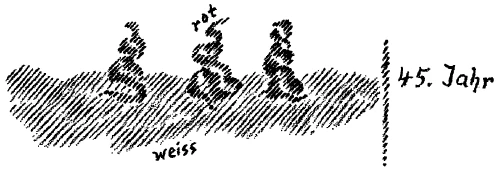
[ 13 ] Nun muß demgegenüber gesagt werden, daß in dem Augenblicke, wo das Geborenwerden stattfindet, nicht nur ein Absterben da ist, sondern auch ein Aufsteigen (rot). Diese aufsteigende Entwickelung können Sie nicht finden durch die heutige naturwissenschaftliche Betrachtung, wenn Sie diese auch noch so sehr zum Ideal hin gestaltet haben. Das, was da wiederum belebt wird im Menschen, was immerfort einfach neben diesem Absterben da ist, das läßt sich nicht begreifen aus dem Sinnlichen heraus, das läßt sich nur begreifen aus dem Übersinnlichen heraus. Anthroposophie muß die Erkenntnis des Übersinnlichen hinzufügen zu dem Sinnlichen, damit der Mensch überhaupt begriffen werden könne. Sie sehen daraus, daß, wenn man überhaupt den Menschen kennenlernen will, man notwendig hat zu appellieren an die Wissenschaft des Übersinnlichen. Man bekommt eigentlich den Menschen nur als sterbliches Wesen, wenn man auf das Sinnliche hinschaut. Die christlichen Religionsbekenntnisse, die sich niemals um wirkliche Erkenntnisse bekümmert haben, haben heraufkommen sehen die Naturwissenschaft, die sich mit dem sterblichen Menschen beschäftigt; also beschäftigen sie sich, wie ich gestern schon angedeutet habe, mit dem Unsterblichen, mit dem, was nicht stirbt, stellen es vor den Seelenegoismus des Menschen hin.
[ 13 ] Now, in contrast to this, it must be said that at the very moment of birth, there is not only a dying away, but also an ascent (red). You cannot find this ascending development through today’s scientific approach, no matter how much you have shaped it toward the ideal. That which is once again brought to life within the human being—which is constantly present alongside this dying—cannot be grasped from the sensory realm; it can only be grasped from the supersensory realm. Anthroposophy must add knowledge of the supersensible to the sensible realm so that human beings can be understood at all. You can see from this that if one wishes to get to know human beings at all, one must necessarily turn to the science of the supersensible. In fact, one perceives human beings only as mortal beings when one looks at the sensible realm. The Christian creeds, which have never concerned themselves with true knowledge, have witnessed the rise of natural science, which deals with mortal human beings; thus, as I already indicated yesterday, they concern themselves with the immortal, with that which does not die, and set it before the egoism of the human soul.
[ 14 ] Anders wird die Sache, wenn man sich mit dem, was ein Aufstieg, eine Evolution ist, befaßt, mit dem, was wird und wird und immer mehr und mehr wird von der Geburt des Menschen ab und was seinen Kulminationspunkt auf der Erde erlangt, wenn der Mensch durch die Pforte des Todes geht. Da muß man, weil man eben da appellieren muß nicht an das Gefühl, nicht an den Glauben, sondern an die Erkenntnis, von dem Nichtgeborenwerdenden sprechen, von dem Ungeburtlichen, ein Wort, von dem ich öfters gesagt habe, daß es in unseren Sprachschatz allmählich hineinkommen muß. Geradeso wie das Wort «unsterblich», so muß auch das Wort «ungeburtlich» in den Sprachschatz der neueren Menschen hineinkommen, denn wir werden in bezug auf unser höheres Wesen ebensowenig geboren, wie wir in bezug auf dieses höhere Wesen sterben. Aber die traditionellen Religionsbekenntnisse haben sich nur um das bekümmert, was Sinneswissenschaft ist. Das Sterben negieren sie durch ein bloßes Wort, durch bloße Hoffnungen und durch bloßen Glauben. Sie weisen nicht auf das hin, was spirituell erkannt werden kann; sie verpönen das, was spirituell, durch übersinnliche Methode und Forschungsweise erkannt werden kann.
[ 14 ] The matter takes on a different character when one considers what ascent and evolution are—that which comes into being, continues to come into being, and grows ever more and more from the moment of a human being’s birth, and which reaches its culmination on Earth when the human being passes through the gate of death. There, because one must appeal not to feeling, not to faith, but to knowledge, one must speak of the Unborn, of the Unborn-like—a term I have often said must gradually find its way into our vocabulary. Just as the word “immortal” has entered the vocabulary of modern people, so too must the word “unborn” enter it, for in relation to our higher being we are just as little born as we are dead. But traditional religious creeds have concerned themselves only with what belongs to sensory science. They deny death through mere words, mere hopes, and mere faith. They do not point to what can be spiritually known; they condemn what can be known spiritually through supersensory methods and modes of inquiry.
[ 15 ] Das ist im wesentlichen eine Charakteristik desjenigen, was wir hier nennen anthroposophisch orientierte Geisteswissenschaft. Sie ist im wesentlichen darauf angewiesen, hinaufzusteigen zu dem Übersinnlichen. Indem sie aber wiederum hinaufsteigt zu dem Übersinnlichen, bringt sie der Menschheit etwas, was wesensverwandt ist mit der alten Mysterienweisheit, was daher wieder führen kann zu einem Verständnis auch des Mysteriums von Golgatha. Daher sind wir aus dem ganzen Gang der Entwickelung der Gegenwart heraus darauf angewiesen, anthroposophisch orientierte Geisteswissenschaft zu suchen, um die Anschauungen des Mysteriums von Golgatha nicht überhaupt verschwinden zu lassen.
[ 15 ] This is essentially a characteristic of what we refer to here as anthroposophically oriented spiritual science. It is essentially dependent on ascending to the supersensible. But by ascending to the supersensible, it brings humanity something that is kindred in essence to the ancient wisdom of the mysteries, which can therefore lead once again to an understanding of the Mystery of Golgotha. Therefore, given the entire course of contemporary development, we are compelled to seek an anthroposophically oriented spiritual science so that the insights into the Mystery of Golgotha do not disappear altogether.
[ 16 ] Lassen Sie dasjenige, was heute an unseren Universitäten als Naturwissenschaft betrieben wird, noch so sehr seinen Idealen sich nähern, das kann das Verschwinden des Mysteriums von Golgatha nicht aufhalten. Lassen Sie dasjenige, was sich als Geschichte entwickelt, noch so sehr sein Ideal erreichen, das kann nicht aufhalten das Verschwinden des Mysteriums von Golgatha. Und man kann eigentlich sagen, für denjenigen, der hineinschaut in das, was heute in unserer öffentlichen Bildung waltet, für den zeigt sich ganz klar: Alles tendiert darauf hin, das Verständnis für das Mysterium von Golgatha verschwinden zu machen. Die traditionellen Religionsbekenntnisse werden dieses Verschwinden niemals aufhalten können, denn sie bewahren ja nur die Worthülsen desjenigen, was ehemals einen Sinn gehabt hat, was aber heute für den Menschenverstand keinen Sinn mehr haben kann, wenn es nicht neuerlich gefunden wird durch eine bewußt angewendete geistige Forschung. Daraus aber ersehen Sie, wie innig verbunden ist der Weiterlauf des Verständnisses des Mysteriums von Golgatha mit der Entwickelung einer wahren geistigen Erkenntnis. Man würde solche Dinge nicht sagen, wenn sie sich nicht aufdrängten als etwas, das notwendig von der Gegenwart begriffen werden muß. Würde man nur, ich möchte sagen, aus irgendeiner subjektiven Wißbegierde nach dem Übersinnlichen hin diese Geisteswissenschaft ausbilden, man käme sich viel zu unbescheiden vor, wenn man sagen möchte, daß von der Belebung dieser anthroposophisch orientierten Geisteswissenschaft abhängt der Fortgang, das Verständnis des Christentums. Nur weil sich diese Tatsache so unbedingt aufdrängt, weil man ihr nicht entkommen kann, wenn man einen wirklichen Sinn hat für das, was geschieht, deshalb spricht man es aus und scheut sich nicht davor, von denjenigen Menschen, die nicht auf den Ernst der Zeit hinschauen möchten, unbescheiden und vielleicht phantastisch gescholten zu werden.
[ 16 ] No matter how closely what is practiced today as natural science at our universities approaches its ideals, it cannot prevent the disappearance of the mystery of Golgotha. No matter how closely what is developing as history approaches its ideal, it cannot prevent the disappearance of the Mystery of Golgotha. And one can actually say that for anyone who looks closely at what prevails in our public education today, it becomes quite clear: everything is tending toward making the understanding of the Mystery of Golgotha disappear. Traditional religious creeds will never be able to halt this disappearance, for they preserve only the empty phrases of what once had meaning, but which can no longer make sense to human reason today unless it is rediscovered through consciously applied spiritual research. From this, however, you can see how intimately connected the continued understanding of the Mystery of Golgotha is with the development of true spiritual knowledge. One would not say such things if they did not present themselves as something that must necessarily be understood in the present. If one were to develop this spiritual science merely—I might say—out of some subjective curiosity about the supersensible, one would feel far too presumptuous to claim that the progress and understanding of Christianity depend on the revitalization of this anthroposophically oriented spiritual science. It is only because this fact imposes itself so absolutely—because one cannot escape it if one has a genuine sense of what is happening—that one speaks of it and does not shy away from being accused of being presumptuous and perhaps fanciful by those who do not wish to face the gravity of the times.
[ 17 ] Die Zeiten sind heute so ernst, daß man nicht anders kann, als an das Tor tiefster Wahrheit zu klopfen, hinter dem liegen diejenigen Wahrheiten, die die Menschheit heute braucht. Die Menschheit des Abendlandes mit ihrem amerikanischen Anhang wird verkommen in Barbarei, wenn das Christus-Verständnis nicht erhalten bleibt. So aber, wie es diese Menschheit gemacht hat, und so, wie sie heute noch gesonnen ist, es fortzumachen, wird das Christus- Verständnis verschwinden. Einzig und allein bei denen, die heute einsehen, daß es notwendig ist, zu einem neuen Geistverständnis zu kommen, zu einem neuen Weg in der Erkenntnis des übersinnlichen Menschen, nur bei denen ist ein wahrer, ein ernster, ein starker Wille vorhanden, das Verständnis des Christus-Mysteriums für die Menschheit zu erhalten. Es wird aber kein soziales Leben geben, so wie es heute aus dumpfen, oftmals perversen Instinkten heraus verstanden wird, wenn das Christus-Verständnis völlig verlorengeht. Denn dieses soziale Leben wird sich doch nur dadurch entwickeln, daß in den Menschengemütern ein Gemeinsames wird leben können. Was kann dieses Gemeinsame nur sein? Dieses Gemeinsame kann nur das sein, was schon Paulus bezeichnet durch das Wort: «Nicht ich, sondern der Christus in mir.» — So viele Menschen werden sagen können: «Nicht ich, sondern der Christus in mir», so viele Menschen werden sich als Glieder einer Menschheit über die ganze Erde hin ohne Unterschied von Nationalität und anderen Differenzierungen zusammenfinden können in der Begründung des neuen sozialen Lebens.
[ 17 ] Times are so grave today that one cannot help but knock on the door of the deepest truth, behind which lie the truths that humanity needs today. Western humanity, along with its American counterpart, will sink into barbarism if the understanding of Christ is not preserved. But given the way this humanity has acted—and given its current disposition to continue doing so—the understanding of Christ will disappear. Only among those who recognize today that it is necessary to arrive at a new understanding of the spirit—a new path in the knowledge of the supersensible human being—only among them does a true, serious, and strong will exist to preserve the understanding of the Christ Mystery for humanity. However, there will be no social life—as it is understood today out of dull, often perverse instincts—if the understanding of Christ is completely lost. For this social life can only develop if a common bond is able to live within human hearts. What else could this common bond be? This common bond can only be what Paul already described with the words: “Not I, but Christ in me.” — As many people as can say, “Not I, but Christ in me,” so many people will be able to come together as members of a single humanity across the entire earth, without distinction of nationality or other divisions, in the foundation of the new social life.
[ 18 ] Dem sehen wir ja heute vielfach entgegenstreben. Wir sehen die einzelnen Nationen wiederum gewissermaßen die Fahne der Nationalität entfalten. Was ist das Wesen solcher Entfaltung? Ich habe es auch hier schon von gewissen Gesichtspunkten aus charakterisiert. Das Wesen ist die alte Jahve-Religion. Sie bestand darin, daß Jahve der Führer des Volkes war, und zwar der eine Jahve ein Führer des jüdischen Volkes. Heute, indem die Nationen ihre Nationalität voranstellen, kommen sie alle nur bis zu dem Jahve, nur hat jeder seine eigene Gestalt des Jahve. Es kann also nicht der wahre Jahve sein, sondern nur ein Spiegelbild. Eine Gestalt kann sich vielmals spiegeln. Eigentlich ist es doch so, daß die Menschen in der Gegenwart, weil sie verloren haben die alte Mysterienweisheit, die hinweisen konnte auf das Mysterium von Golgatha, alle mehr oder weniger angenommen haben die Jahve-Religion unter der Führung des liberal-weltlichen «Oberrabbiners» Wilson! Er, der vom Trugbilde des «Völkerbundes» gesprochen hat, also von einer Abstraktion an der Stelle des konkreten, durch die Menschengemüter gehenden Christus-Impulses, er hat Glauben gefunden, bis er ihn durch sein eigenes Verhalten, allerdings sehr bald, bei denjenigen, die noch ein wenig denken können, zerstört hat.
[ 18 ] We see this trend emerging in many ways today. We see individual nations, in a sense, unfurling the banner of nationality once again. What is the essence of this development? I have already characterized it here from certain perspectives. The essence is the ancient religion of Yahweh. It consisted in Yahweh being the leader of the people—specifically, the one Yahweh as the leader of the Jewish people. Today, as nations prioritize their nationality, they all arrive only at Yahweh—only each has its own image of Yahweh. It cannot, therefore, be the true Yahweh, but only a reflection. A figure can be reflected many times over. In fact, the reality is that people today—because they have lost the ancient wisdom of the mysteries, which could point to the mystery of Golgotha—have all, to a greater or lesser extent, adopted the religion of Yahweh under the leadership of the liberal, secular “Chief Rabbi” Wilson! He, who spoke of the illusion of the “League of Nations”—that is, of an abstraction in place of the concrete Christ impulse moving through human hearts—found faith, only to destroy it, through his own behavior, very quickly indeed, among those who are still capable of thinking for themselves.
[ 19 ] Auf was es ankommt, ist, daß die Menschen wieder den Weg finden, aus dem jahvetischen Nationalismus heraus zu dem universellen Christus-Erfassen zu kommen, zu demjenigen, was den Menschen nur als Menschen erscheinen läßt, aber ihn dadurch nicht verarmt gegenüber dem Nationalen, sondern ihn gerade bereichert. Das ist nicht anders möglich, als wenn wir uns zunächst den Weg bahnen zu einem Verständnis des Übersinnlichen. Nur wenn wir die Ideen, die Begriffe haben, die ins Übersinnliche hineinführen, können wir auch das Mysterium von Golgatha verstehen, das eben ein Ereignis ist, das mit der übersinnlichen, nicht mit der sinnlichen Welt zu tun hat. Was sich in der sinnlichen Welt zugetragen hat vom Mysterium von Golgatha, ist nur der äußere Abglanz. Was sich wirklich zugetragen hat, begreift keiner, der nur den äußeren Abglanz begreift; das begreift nur der, der seine Gedanken, seine Vorstellungen in die übersinnliche Welt erheben kann. Was begreift man denn, wenn man sich nicht in der neueren Weise zum Übersinnlichen erheben will?
[ 19 ] What matters is that people find their way back from Yahwist nationalism to a universal understanding of Christ—to that which allows people to appear simply as human beings, yet does not impoverish them in relation to the national, but rather enriches them. This is only possible if we first clear a path toward an understanding of the supersensible. Only when we have the ideas and concepts that lead into the supersensible can we also understand the Mystery of Golgotha, which is precisely an event that pertains to the supersensible world, not to the sensory world. What took place in the sensory world as part of the Mystery of Golgotha is merely its outer reflection. No one who grasps only the outer reflection can comprehend what truly took place; this can be understood only by those who can lift their thoughts and ideas into the supersensible world. What, then, can one comprehend if one is not willing to rise to the supersensible in this new way?
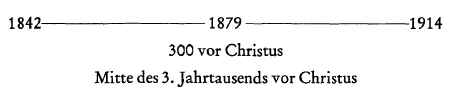
[ 20 ] Wenn wir uns hier den Erdenanfang denken (siehe Zeichnung), dann begreift man, wenn man sich nur zu dem erhebt, was heute naturwissenschaftlicher Inhalt ist, dasjenige, was erst alte Mysterienweisheit war, dann im Abstieg ist, und was auf seinem Nullpunkt angelangt sein wird im 3. Jahrtausend (O). Wenn wir noch so viel Naturwissenschaft treiben, wir sind im Abendland Barbaren und auch in Amerika Barbaren im 3. Jahrtausend. Wir erfassen dann nur dasjenige, was im Erdenleben stirbt, und wir leben dar nur das, was im Erdenleben stirbt. Wir versuchen dann alles der Beobachtung des Irdischen zu entnehmen, aber wir kommen nur zum Sterblichen. Wir haben nötig, den Punkt zu ergreifen, da das Kreuz auf Golgatha erhöht wird, und zu erfassen dasjenige, was da geschah, was zunächst begriffen wurde noch durch die Reste der alten Mysterienweisheit, das aber schwand nach und nach, das jetzt schon dunkel ist, das neuerdings erhellt werden muß (blau) durch dasjenige, was sich auf dem neuen, auf dem anthroposophischen Weg ergibt als Bahn ins Übersinnliche. Eng hängt gewissermaßen zusammen die Rettung, das Verständnis des Ereignisses von Golgatha mit der anthroposophischen Vertiefung der Menschheit, mit einer neuerlichen wirklichen Erkenntnis des Wesens des Menschen. Deshalb der Name Anthroposophie, das heißt: Weisheit, die entspringt, wenn der Mensch sich in seinem höheren Selbst findet.
[ 20 ] If we consider the beginning of the Earth here (see drawing), then one realizes—if one limits oneself to what is today considered scientific knowledge—that what was once ancient mystery wisdom is now in decline and will have reached its lowest point in the 3rd millennium (O). No matter how much natural science we pursue, we are barbarians in the West—and barbarians in America as well—in the third millennium. We then grasp only that which dies in earthly life, and we live only that which dies in earthly life. We then try to derive everything from the observation of the earthly, but we arrive only at the mortal. We need to grasp the moment when the cross is raised on Golgotha, and to grasp what happened there—what was initially understood through the remnants of the ancient mystery wisdom, but which gradually faded away, which is now already obscure, and which must now be illuminated (blue) by what emerges on the new, anthroposophical path as a way into the supersensible. In a sense, salvation—the understanding of the event at Golgotha—is closely connected with the anthroposophical deepening of humanity, with a renewed, genuine understanding of the nature of the human being. Hence the name “anthroposophy,” which means: wisdom that springs forth when the human being finds himself in his higher self.
[ 21 ] Man kann eigentlich keinen prägnanteren Namen finden als «Anthroposophie», wenn man dasjenige Wissen bezeichnen will, welches nicht vom Menschen handelt wie die gewöhnliche Geschichte, wie die Anthropologie oder ähnliches. Wenn man aber hinweisen will auf das, was im Menschen weiß: wenn der Mensch nicht durch seine Augen schaut, durch seine Ohren hört, sondern durch sein Seelisch-Geistiges erkennen will, wenn man hinweisen will auf dasjenige, was der höhere Mensch wissen kann, dann muß das nicht als «Wissenschaft vom Menschen», sondern als «Menschenwissenschaft», als Wissenschaft des höheren Menschen, als Anthroposophie bezeichnet werden. Und Anthroposophie ins Makrokosmische umgesetzt, ist Christologie! Was mit dem einzelnen Menschen vorgeht, wenn er sich geeignet erweist, anthroposophische Erkenntnis aufzunehmen, das geht mit der universellen Menschheit vor, wenn sie sich immer mehr dazu entschließt, das Ereignis von Golgatha in seiner wahren spirituellen Wesenheit zu erfassen. Ist es demgegenüber nicht etwas höchst Eigentümliches, daß gerade diejenigen am meisten Sturm laufen gegen dieses klare Bekenntnis zum Mysterium von Golgatha, die vorgeben, von Amts wegen das Mysterium von Golgatha für die Menschen zu interpretieren? — Aber diese Tatsache ist einmal vorhanden und diese Tatsache muß ins Auge gefaßt werden. Man muß hinsehen auf sie, man muß nicht die Augen davor verschließen, sondern man muß gerade, indem man ihr gegenüber die Augen öffnet, Vorstellungen darüber bekommen, wie man sich zu stellen hat zu einem wahrhaft ehrlich gemeinten Fortschritt des Christentums. Mir tönen allerdings noch jene Worte in den Ohren, die einstmals ein berühmter Kirchenfürst, der Kardinal Rauscher, in den sechziger Jahren des vorigen Jahrhunderts gesprochen hat im österreichischen Herrenhaus, indem er sagte: Die Kirche kennt keinen Fortschritt! — Damit ist im Grunde genommen das Programm der Kirche angegeben jenes Programm, von dem ich Ihnen auch gestern eine gewisse Vorstellung geben konnte. Ich glaube, daß auf seiten derjenigen, welche sich mit solchen Dingen wie Heraufkommen von neuen geistigen Ideen befassen, selbst auf seiten derjenigen, die sich mit der anthroposophisch orientierten Geisteswissenschaft befassen, viel zu wenig berücksichtigt wird, was es eigentlich heißt, daß die traditionellen religiösen Bekenntnisse Sturm laufen gegen etwas, was einzig den Fortschritt des Christentums fundieren kann. Man weiß eben leider viel zu wenig, daß zum Beispiel ein Verfasser für jedes solches katholische Buch, selbst wenn es über Philosophie und Logik handelt, das Imprimatur des Erzbischofs sich holen muß! Und wenn man es weiß, nimmt man es als eine zufällig aufgelesene Tatsache hin und wird sich der Tragweite davon gar nicht bewußt. Daher beurteilt man auch nicht in der richtigen Weise, was jetzt Sturm läuft gegen die von hier aus inaugurierte anthroposophisch orientierte Geisteswissenschaft. Und deshalb bin ich schon genötigt, Sie immer wieder hinzuweisen auf dasjenige, was von den Feinden der Wahrheit, von den Feinden der heute anzustrebenden Wahrheit immer wieder und wiederum vorgebracht wird.
[ 21 ] One cannot really find a more apt name than “anthroposophy” when one wishes to describe the kind of knowledge that does not deal with human beings in the same way as ordinary history, anthropology, or similar disciplines. But if one wishes to point to what knows within the human being—when the human being does not see through his eyes or hear through his ears, but seeks to perceive through his soul-spiritual nature—if one wishes to point to that which the higher human being can know, then this must not be called the “science of man,” but rather “human science,” the science of the higher human being, or anthroposophy. And anthroposophy applied to the macrocosm is Christology! What happens to the individual human being when he or she proves capable of receiving anthroposophical knowledge is what happens to universal humanity as it increasingly resolves to grasp the event of Golgotha in its true spiritual essence. Is it not, in contrast, highly peculiar that those who protest most vehemently against this clear affirmation of the Mystery of Golgotha are precisely those who claim, by virtue of their office, to interpret the Mystery of Golgotha for humanity? — But this fact exists, and it must be faced. We must look at it; we must not close our eyes to it, but rather, precisely by opening our eyes to it, we must form ideas about how to approach a truly sincere progress of Christianity. Indeed, the words spoken long ago by a famous church leader, Cardinal Rauscher, in the Austrian House of Lords in the 1860s still ring in my ears: “The Church knows no progress!” — This, in essence, sets forth the Church’s program—the very program of which I was able to give you some idea yesterday. I believe that among those who deal with matters such as the emergence of new spiritual ideas—even among those engaged in anthroposophically oriented spiritual science—far too little consideration is given to what it actually means when traditional religious confessions rail against something that alone can lay the foundation for the progress of Christianity. Unfortunately, people know far too little, for example, that the author of any such Catholic book—even if it deals with philosophy and logic—must obtain the archbishop’s imprimatur! And even when people do know this, they accept it as a fact they happened to come across and are not at all aware of its full significance. Consequently, people do not properly assess the nature of the current storm of opposition directed against the anthroposophically oriented spiritual science inaugurated here. And that is why I feel compelled to repeatedly draw your attention to what is constantly and repeatedly put forward by the enemies of truth—the enemies of the truth we must strive for today.
[ 22 ] Heute brauche ich Ihnen ja nur ein kleines Pröbchen vorzulesen, aber Sie werden von diesem kleinen Pröbchen wiederum genug haben können, wenn Sie einen Sinn dafür haben, was da eigentlich geschieht, wenn Sie sich auf der einen Seite vorhalten in Ihrem Herzen, was anthroposophisch orientierte Geisteswissenschaft gegenüber dem Christentum ehrlich will, und auf der anderen Seite hinschauen, wie diejenigen, die sich Christen nennen, dieser Geisteswissenschaft begegnen. Hier ist eine Ankündigung der Schrift — sie ist in violettem Umschlag erschienen —, die eine Zusammenfassung der «Spektator»-Artikel ist:
[ 22 ] Today I only need to read you a small sample, but this small sample will be enough for you—if you have a sense of what is actually happening here—if, on the one hand, you keep in mind what anthroposophically oriented spiritual science honestly seeks in relation to Christianity, and, on the other hand, you observe how those who call themselves Christians respond to this spiritual science. Here is an announcement for the publication—it was published in a purple cover—which is a summary of the “Spektator” articles:
[ 23 ] (Eingesandt.) «Das Geheimnis von Dornach.» «‹Das Geheimnis von Dornach› wird nun doch endlich nach sechsjähriger Existenz immer gründlicher aufgedeckt durch eine Reihe von katholischen Zeitungen, frühzeitig durch das basellandschaftliche Sonntagsblatt, vor kurzem auch durch das evangelische Schulblatt und die katholische Schweizerschule und mit heute auch noch durch eine Artikelserie des ‹Schweizerischen Protestantenblatt› unter dem Titel: ‹Theo- und Anthroposophie›. So erklärt esu.a.:...». Man kann wirklich das nicht mehr alles lesen, man kann es gar nicht mehr alles bekommen, was da von der Gegenseite aufgefahren wird! «Erst vor wenigen Jahren, 1914, hat sich in Basel von dieser theosophischen Gesellschaft ein anthroposophischer Zweig losgelöst, dessen Haupt und Vertreter Dr. Rudolf Steiner ist, der in Dornach für mehrere Millionen eine theosophische Kultusstätte und eine theosophische, bzw. anthroposophische Hochschule für Mystik und Adepten — so heißt man die Eingeweihten — erbaut hat. Es heißt diese neue Gründung «geheimer Orden des Sternes im Osten», auch Goetheanum, früher Johanneum. Dr. Steiner hat zahlreiche Schriften herausgegeben über diese Sekte, und in Basel hält er von Zeit zu Zeit Propagandavorträge mit (bisher) gutem Zulauf, ebenso in verschiedenen Städten der Schweiz, Deutschlands, Rußlands und Österreichs.»
[ 23 ] (Letter to the Editor.) “The Secret of Dornach.” “‘ The Secret of Dornach’ is now, after six years of existence, finally being uncovered in ever greater detail by a number of Catholic newspapers—earlier by the Baselland Sonntagsblatt, more recently also by the Evangelical Schulblatt and the Catholic Schweizerschule, and today as well by a series of articles in the ‹Schweizerisches Protestantenblatt› under the title: ‹Theology and Anthroposophy›. It explains, among other things: “...”. One really can’t read it all anymore; one simply can’t get hold of everything that’s being trotted out by the opposing side! “Just a few years ago, in 1914, an anthroposophical branch broke away from this Theosophical Society in Basel; its leader and representative is Dr. Rudolf Steiner, who built a Theosophical place of worship in Dornach at a cost of several million, along with a Theosophical—or rather, Anthroposophical—university for mysticism and adepts—as the initiates are called. This new organization is called the ‘Secret Order of the Star in the East,’ also known as the Goetheanum, formerly the Johanneum. Dr. Steiner has published numerous writings on this sect, and in Basel he gives propaganda lectures from time to time that have (so far) drawn good crowds, as he does in various cities in Switzerland, Germany, Russia, and Austria.”
[ 24 ] Dieses Pröbchen ist wiederum aus einer streng katholischen Zeitung, dem «Basler Volksblatt»! Sie sehen, da werden Dinge in die Welt gesandt, die in so frivoler Weise lügen, daß sie imstande sind, dasjenige, was von Anfang an von mir bekämpft worden ist — der «Stern des Ostens» —, das nun als die Signatur von Dornach hinzustellen. Also es wird in der frivolsten Weise gelogen, indem wir mit dem Namen desjenigen belegt werden, was vom Anfange an als ein Unsinn, als eine Frivolität von uns bekämpft worden ist. Das ist «katholische Wahrhaftigkeit» hier in der Umgebung, denn es scheint schon, daß man es als katholische Wahrhaftigkeit auffaßt, denn gleichzeitig finden Sie eine Mitteilung über die Schildwehr Dorneck-Thierstein. Da heißt es:
[ 24 ] This little sample, too, comes from a strictly Catholic newspaper, the “Basler Volksblatt”! As you can see, things are being put out there that lie in such a frivolous manner that they are capable of presenting what I have fought against from the very beginning—the “Star of the East”—as the hallmark of Dornach. So lies are being told in the most frivolous way, by attributing to us the name of something that we have opposed from the very beginning as nonsense, as frivolity. That is “Catholic truthfulness” here in the area, for it does indeed seem that people regard it as Catholic truthfulness, since at the same time you will find a report about the Dorneck-Thierstein Shield Guard. It reads:
[ 25 ] «Aus der Umgebung. Schildwehr Dorneck-Thierstein (Eing.) Die am 27. Juni 1920 in Grellingen tagende Generalversammlung der Schildwehr Dorneck-Thierstein hatte nun bewiesen, daß alle die ihr früher entgegengehaltenen pessimistischen «Aber und Wenn: bei uns im Schwarzbubenlande noch nicht am Platze sind. Welch freudige Überraschung ging durch den Saal, als Hochw. Herr Pfarrer und Redaktor M. Arnet...». Dr. Boos hat ihn hier einen Lügner und geistigen Giftmischer genannt. Ich weiß nicht, ob auf diese Aussage des Herrn Dr. Boos — von hier, von dieser Stelle aus —, die schon vor einiger Zeit geschah, von jener Seite etwas unternommen worden ist. Ist etwas erfolgt? [Einwurf Dr. Boos: Nein, nichts!] Es ist also noch nichts erfolgt, obschon der Pfarrer Arnet von Reinach hier von dieser Stelle aus ein Lügner und geistiger Giftmischer genannt worden ist. — Und nun also weiter: «Welch freudige Überraschung ging durch den Saal, als Hochw. Herr Pfarrer und Redaktor M. Arnet aus Reinach und Hochw. Hr. Pfarrer Hauß aus Münchenstein miteinem Fähnlein von Schildwächtern in unsere Mitte traten. Noch größer war die Begeisterung, als Hochw. Herr Superior aus dem Kloster Mariastein P. Gallus Jecker im schlichten Benediktinergewande erschien», und so weiter, nun kommt das Folgende: «Hochw. Hr. Pfarrer Arnet aus Reinach erhielt das Wort zu seinem Referate. In kurzen und markigen Sätzen, als echter Schildwächter, schilderte er uns in Hauptzügen die Stürme, die die kathol. Kirche durch alle Jahrhunderte hindurch zu bestehen hatte. Aber immer und immer traten wieder Männer auf, vom hl. Geiste erleuchtet und gestärkt, die den Kampf gegen Unwahrheit und Unglaube aufnahmen, so daß die kathol. Kirche schließlich immer wieder den Endsieg errang.»
[ 25 ] “From the Local Area. Dorneck-Thierstein Civil Guard (Excerpt) The general assembly of the Dorneck-Thierstein Civil Guard, which met in Grellingen on June 27, 1920, had now proven that all the pessimistic “buts and ifs” previously leveled against it have no place here in the Schwarzbubenland. What a joyful surprise swept through the hall when the Reverend Father and Editor M. Arnet...”. Dr. Boos has called him a liar and a spiritual poisoner here. I do not know whether, in response to this statement by Dr. Boos—made here, from this very spot—which occurred some time ago, anything has been done on that side. Has anything been done? [Interjection by Dr. Boos: No, nothing!] So nothing has been done yet, even though Pastor Arnet of Reinach was called a liar and an intellectual poisoner right here from this very spot. — And now, continuing: “What a joyful surprise swept through the hall when the Reverend Pastor and Editor M. Arnet from Reinach and the Reverend Pastor Hauß from Münchenstein stepped into our midst accompanied by a small contingent of sentinels. The enthusiasm was even greater when the Reverend Superior from the Mariastein Monastery, Father Gallus Jecker, appeared in his simple Benedictine habit,” and so on; now comes the following: “The Reverend Father Arnet from Reinach was given the floor to deliver his address. In short, pithy sentences, like a true sentinel, he outlined for us the storms that the Catholic Church has had to weather throughout the centuries. But time and again, men appeared—enlightened and strengthened by the Holy Spirit—who took up the fight against falsehood and unbelief, so that the Catholic Church ultimately achieved final victory time and again.”
[ 26 ] So wird hier der «Kampf gegen Unwahrheit aufgenommen», daß in der frivolsten Weise das Gegenteil von dem gelogen wird, was Tatsache ist! Dann redet man in solchen Phrasen: «Nachdem der Referent die Theosophenfrage kurz besprochen hatte, wies er hauptsächlich darauf hin, daß unser kathol. Volk mehr katholische Lektüre statt Romane aller Art studieren sollte.» Dann geht es noch weiter: «Hochw. Hr. Pfarrer Hauß sprach mit überzeugender Schärfe anhand von Beispielen über die Notwendigkeit der Schildwehrgruppen. Warm und ideal begrüßte Hochw. Hr. P. Gallus O. S. B. das Erwachen des kathol. Jungvolkes. Jedes Dorf sollte einen Bannwald begeisterter Katholiken, Jung und Alt, besitzen, um das Dorf, die Gemeinde vor diesen fürchterlichen Lawinen des Unglaubens zu schützen. In Sachen Theosophie wies Rumpel auf die Katholikentagung der Nordwestschweiz in Dornach hin. Er war der Ansicht, daß dieser Tag geradezu geeignet wäre, um die antitheosophische Bewegung, die nicht nur auf katholischer, sondern auch auf protestantischer Seite im Werden ist, zu fundamentieren, damit recht bald das ganze christlich denkende Schweizervolk wirksam beeinflußt werden kann. Die Agitationszentrale Dornach muß unter allen Umständen bekämpft werden. Vom Jahresprogramm der Schildwehr Dorneck-Thierstein seien kurz die Hauptpunkte erwähnt: Förderung der katholischen Presse» — dieser katholischen Presse, die solche Pröbchen liefert! — «durch Einzelarbeit in den Gemeinden, hauptsächlich am Quartalwechsel. Kräftige Unterstützung des Kampfes gegen die Steinersche 'Theosophie, Kampf dem Materialismus, der Verjudung von Presse und Literatur, dem Sozialismus und Liberalismus. Beförderung des Missionswesens. Unterstützung der katholischen Schulfrage (Wahl kath. Lehrer usw.). Kampf gegen den staatsbürgerlichen Unterricht. Beseitigung der Feuerwehrproben an Sonntagen» und so weiter.
[ 26 ] This is how the “fight against untruth” is waged here: by lying in the most frivolous way about the exact opposite of what is actually true! Then they use phrases like this: “After the speaker had briefly discussed the Theosophical question, he pointed out, above all, that our Catholic people should study more Catholic literature instead of novels of all kinds.” It goes on to say: “The Reverend Father Hauß spoke with convincing force, using examples to illustrate the necessity of the Schildwehr groups.” The Reverend Father Gallus, O.S.B., warmly and enthusiastically welcomed the awakening of the Catholic youth. Every village should have a protective circle of devoted Catholics, young and old, to shield the village and the parish from these terrible avalanches of unbelief. On the subject of Theosophy, Rumpel referred to the Catholic Conference of Northwestern Switzerland in Dornach. He was of the opinion that this conference would be ideally suited to lay the foundation for the anti-theosophical movement, which is emerging not only on the Catholic side but also on the Protestant side, so that the entire Christian-minded Swiss population can be effectively influenced very soon. The Dornach propaganda center must be opposed at all costs. Let us briefly mention the main points from the annual program of the Dorneck-Thierstein Shield Defense: “Promotion of the Catholic press”—this Catholic press that provides such samples!—“through individual work in the parishes, mainly at the change of quarters. Vigorous support for the struggle against Steiner’s “Theosophy,” the struggle against materialism, the “Judaization” of the press and literature, socialism, and liberalism. Promotion of missionary work. Support for the Catholic school issue (election of Catholic teachers, etc.). Struggle against civic education. Abolition of fire department drills on Sundays,” and so on.
[ 27 ] Sie sehen, was hier «Wahrheit» genannt wird! — Aber die Sache versteckt sich ja in allerlei Masken. Sie finden gleichzeitig hier einen Bericht aus Arlesheim von irgendeiner Versammlung, wo es heißt: «Auch kann es [das Schul- und Gemeindehaus] in anderer Art fortfahren, Kulturzwecken zu dienen, indem es Arlesheims beide größten Volksbibliotheken, diejenige des Verkehrsvereins und des katholischen Volksvereins, beherbergen soll. Endlich will es auch noch der Wohnungsnot etwas steuern helfen und ein Logis mehr als bisher bieten. Ob es sich wohl träumte, daß es mit der Logisvermehrung einst einer «geheimnisvollen» ausländischen Überfremdung vom Dornacher Hügel her nachgeben sollte. Bürger und Einwohner von Arlesheim werden drum auch in der kommenden Gemeindeversammlung zum Rechten sehen, wie einst bei Verweigerung einer gewissen Bausubvention an die Anthroposophen» und so weiter.
[ 27 ] You see what is called “truth” here! — But the matter hides behind all sorts of masks. At the same time, you’ll find here a report from Arlesheim about some meeting, which states: “It [the school and community center] can also continue to serve cultural purposes in another way by housing Arlesheim’s two largest public libraries—those of the tourist association and the Catholic People’s Association. Finally, it also aims to help alleviate the housing shortage and provide more housing than before. Who would have dreamed that this increase in housing would one day lead to a ‘mysterious’ foreign infiltration from the Dornach hill? The citizens and residents of Arlesheim will therefore ensure that justice is done at the upcoming municipal assembly, just as they did when they once refused to grant a certain building subsidy to the anthroposophists,” and so on.
[ 28 ] Nun, im Grunde genommen schildert man, indem man solche Beispiele anführt, doch nur die «Wahrhaftigkeit» eines größten Teiles der gegenwärtigen Menschheit, denn schließlich sind das die Führer, und um gar so viel besser als die Führer sind manchmal die Geführten auch nicht. Sie sind ja meistens doch, wenn die Führer so sind, erheblich besser. Aber da sie eben doch geführt sein wollen, so kann, selbst wenn sie besser sind, nichts Besonderes dabei herauskommen.
[ 28 ] Well, strictly speaking, by citing such examples, one is merely describing the “truthfulness” of the vast majority of humanity today, for after all, these are the leaders, and those who are led are sometimes not all that much better than the leaders. In fact, when the leaders are like that, those who are led are usually considerably better. But since they still want to be led, even if they are better, nothing special can come of it.
[ 29 ] Leider muß es ja immer wiederum gegen den eigenen Willen sein, daß man solche Sachen hier erwähnt. Aber es muß schon immer wieder auf der einen Seite hingestellt werden, was anthroposophisch orientierte Geisteswissenschaft gerade dem Mysterium von Golgatha gegenüber will und soll, und was auf der anderen Seite Sturm läuft gegen sie. Denn es läuft vieles Sturm, und was davon hier angeführt werden kann, das ist ja nur etwas, was zu der übelsten Sorte desjenigen gehört, was eben Sturm läuft. Um so mehr müssen wir das, was wir erfaßt haben von anthroposophischen Impulsen, in unsere Herzen, in unseren Willen aufnehmen. Denn davon, daß die Menschen sich entschließen, den Weg zum Geiste wiederum zu suchen, hängt es ab, ob es möglich sein wird, daß es in der Zukunft noch ein Christentum gebe oder nicht. Das Christentum muß doch ruhen auf dem Jesus-Worte: «Ich bin der Weg und die Wahrheit und das Leben.»
[ 29 ] Unfortunately, it is always against one’s own will that such matters are mentioned here. But it must be repeatedly made clear, on the one hand, what anthroposophically oriented spiritual science actually wants and is meant to do with regard to the Mystery of Golgotha, and, on the other hand, what is raging against it. For there is a great deal of opposition, and what can be cited here is merely a small part of the worst kind of that very opposition. All the more reason, then, for us to take what we have grasped of anthroposophical impulses into our hearts and into our will. For whether Christianity will still exist in the future depends on whether people resolve to seek the path to the spirit once again. Christianity must, after all, rest upon the words of Jesus: “I am the way, the truth, and the life.”
[ 30 ] Nur in der Wahrheit findet man die Weisheit — so ist das Motto gewesen, das wir geschrieben haben, als wir versuchten, «Grundsätze» drucken zu lassen für die Anthroposophische Gesellschaft. Aber, können Zeitgenossen, die in einer solchen Weise die Unwahrheit sagen, irgendwie sich auf den Christus Jesus berufen, der doch ganz gewiß nicht war der Irrweg, die Unwahrheit und der Tod! Wir wollen in der rechten Weise verstehen, was das Christus-Wort ist: «Ich bin der Weg und die Wahrheit und das Leben.» Darum — nehmen wir auf den Sinn für die Wahrheit in unsere Herzen, in unsere Gemüter. Denn nur dadurch werden wir finden die Möglichkeit, eine rechte Fortentwickelung des Christentums zu fördern und zu pflegen. Die Unwahrheit wird das ganz gewiß nicht können.
[ 30 ] Only in truth can one find wisdom—that was the motto we wrote when we attempted to have “Principles” printed for the Anthroposophical Society. But can contemporaries who speak untruth in such a way really invoke Jesus Christ, who was certainly not the way of error, untruth, and death! Let us understand correctly what Christ’s words mean: “I am the way, the truth, and the life.” Therefore—let us take the sense of truth into our hearts, into our minds. For only in this way will we find the means to promote and nurture the proper development of Christianity. Falsehood will certainly not be able to do so.