The Bridge Between the Spiritual and
Physical Realms of Human Beings
GA 202
11 December 1920, Dornach
Translated by Steiner Online Library
Seventh Lecture
[ 1 ] Today we want to point out a few things that concern the moral human being as such, so that tomorrow we can show how what can be addressed in the human being as the spiritual-moral aspect extends into the macrocosm. The point is that one can only properly evaluate two human qualities if one wishes to arrive at a thorough assessment of the human being as a moral and spiritual being.
[ 2 ] Human beings are, in a sense, caught between two extremes, between two polar opposites. These opposites come to their consciousness as the order of nature and the order of the moral world. We have pointed out how, based on that worldview that has emerged in recent centuries and has become increasingly popular, it is impossible to build a bridge between the natural order and the moral order in the universe. Two characteristics of human beings must be considered above all else if one is to even begin to approach the mysteries of life and the universe that are connected with these polar opposites of nature and, let us say, the spirit—or indeed, the moral order of the universe. Human beings are undoubtedly subject to nature; in a sense, they are dependent on the natural order with regard to their soul—and thus also their moral being. But if he wishes to feel like a true human being, he must also rise above the mere natural order and feel that he stands within a cosmic order that is not subsumed by nature; and it is really only through spiritual science that one can arrive at a clear understanding of what underlies this. Let us first point to what I would call a profoundly erroneous view that prevents human beings from arriving at a solution to the corresponding mysteries hidden here. Based on an old tradition, people believe that one can simply come to an understanding of one’s own human nature by seeking, in some way—if I may put it that way—the connection between the spiritual-soul aspect and the physical-bodily aspect within the human being. People imagine that there is the physical being of the human being, and that within this physical human being, the spiritual and soul aspects are somehow contained. And now one searches for this connection. Much has been sought regarding this connection, and a large part of humanity’s philosophical endeavor is actually aimed at resolving this question: What is the connection between the spiritual-soul and the physical-bodily?
[ 3 ] As you know, in the humanities, most of the questions that are raised in popular discourse appear in a completely different light. In the humanities, the questions themselves must be framed differently than they are often still framed in a trivial manner today. Especially in the 19th century, certain views gained significant traction—even in theoretical circles—and the idea took hold that one could not find a psychological-spiritual realm alongside the physical-bodily realm, and that the spiritual-psychological could be regarded as a kind of result of the physical-bodily. This view held an extraordinary appeal for those who became acquainted with the great findings of scientific research. One need only recall how dependent human beings actually are, in their lives between birth and death, on their physical processes, on their entire physical organization. Time and again, materialist thinkers pointed out that, just as the outer body develops from the earliest days of childhood, so too do the spiritual and psychological faculties develop alongside the growth of the outer body; and that if a person is not properly cared for in terms of their physical and bodily needs, they also lag behind spiritually and psychologically. It has been pointed out that in old age, when the physical body begins to decline, the spiritual and soul capacities also undergo a decline. It was pointed out that when a person suffers any kind of injury, they also exhibit abnormalities in their mental and emotional life, so that a person is dependent on the nature of their physical constitution. It was pointed out how a person ingests certain poisons—which, strictly speaking, can only produce a chemical effect within them—and yet can thereby be driven into certain states of mental abnormality; how states of mental and emotional paralysis can be induced by physical substances administered to the body, and so on. It was thus demonstrated how what one might say is clearly evident in external physical research testifies that, fundamentally, the spiritual-soul aspect is merely a function of the physical-bodily aspect. Indeed, those researchers who developed their perspective specifically around such phenomena were also able to point to, I might say, more detailed facts of this kind. A phenomenon such as this—that thyroid disorders exert an influence on the spiritual-psychic faculties—has, for example, led researchers like Gley to say that the highest human faculties, the spiritual-psychic ones, are ultimately dependent on the chemical processes that take place in the thyroid gland. All these ideas had, after all, a certain appeal stemming from the very way in which scientific thinking has developed in recent times. And in fact, one cannot help but say that as more and more people became immersed in this scientific way of thinking, concepts of the spiritual-psychic realm were increasingly pushed into the background; the spiritual-psychic was increasingly viewed as something that has no independent significance. And, so to speak, a stark contrast emerged with great intensity among the population of the civilized regions of the Earth: on the one hand are those who are more or less influenced by the scientific way of thinking of modern times, who regard it as a great step forward for their spiritual development—if they are willing to speak of such a thing at all—to reject any reference to an independent spiritual-psychic realm. And on the other side stands that part of the population which wishes to continue living according to old religious creeds, old conceptions of the spiritual and soul, and a moral-divine world order—but which, in fact, can only maintain its views, handed down from ancient times, by keeping its distance from the views brought about by the scientific way of thinking.
[ 4 ] On the one hand, we have a large population that is viewed by others as backward, as people who simply know nothing of the laws of the natural order, and who can therefore cling to old religious beliefs. However, something else has become increasingly apparent in recent times. That—I would say—fascinating persuasive power that scientific ideas held for a large part of humanity in the middle or even at the beginning of the last third of the 19th century has gradually waned. It has even waned among many who think scientifically, and people have become more tolerant of what was previously regarded as something that persists only among backward, ignorant people—but which was thought to be destined to disappear. This latter phenomenon, however, can actually be attributed solely to the general lethargy of modern souls. For, fundamentally speaking, it is impossible to have, on the one hand, the all-powerful natural order and, on the other, a moral-spiritual world order that is in any way real. As the natural order is viewed in modern times, it is incompatible with a moral world order, and only those who do not think rigorously can somehow place today’s view of nature alongside what has been preserved from ancient traditions in the various creeds. In essence, the only people who have been consistent are those who, around the middle of the 19th century—and also in the 1850s and 1860s—pointed out with the utmost decisiveness that human beings are physical, bodily beings, that the phenomena of spiritual and soul life arise from the processes of their physical, bodily organization, and that whatever stands in opposition to this view must gradually be eradicated. And I have also pointed out on one occasion in a public lecture in Basel and in other places that there have been people who have argued with the utmost rigor that one must reject the legitimacy of a moral worldview and that, fundamentally speaking, a criminal has just as much a right to live out his life as someone who lives according to so-called moral concepts.
[ 5 ] Those were the consistent people on one side. It was impossible to stand firm with such consistency. People became careless, sleepy, and that is precisely what led to the situation I have just described. However, the others are also consistent—those who proceed much like the more Jesuit-minded members of the Catholic Church, who say: “Away with all science that seeks to investigate anything other than external facts”—who drum into people a belief in a spiritual-soul-based world order and seek to enforce it through every possible form of external coercion. Neither of these approaches can certainly be sustained in the face of humanity’s further development.
[ 6 ] But neither can we accept what has arisen from ancient times based solely on unclear, confused concepts. Above all, it is untenable to conceive of the human being as a physical entity with a soul within it, and to seek to understand how this spiritual-soul aspect relates to the physical aspect by focusing solely on the present. For without extending one’s perspective beyond the present moment—without calling upon time to help us understand the human being—we cannot make any progress. This model of human existence is a completely untenable one. Only through the following ideas can clear concepts emerge, which, as we shall see, will then lead us to build a bridge between the moral worldview and the physical worldview.
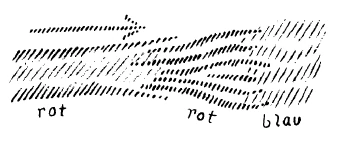
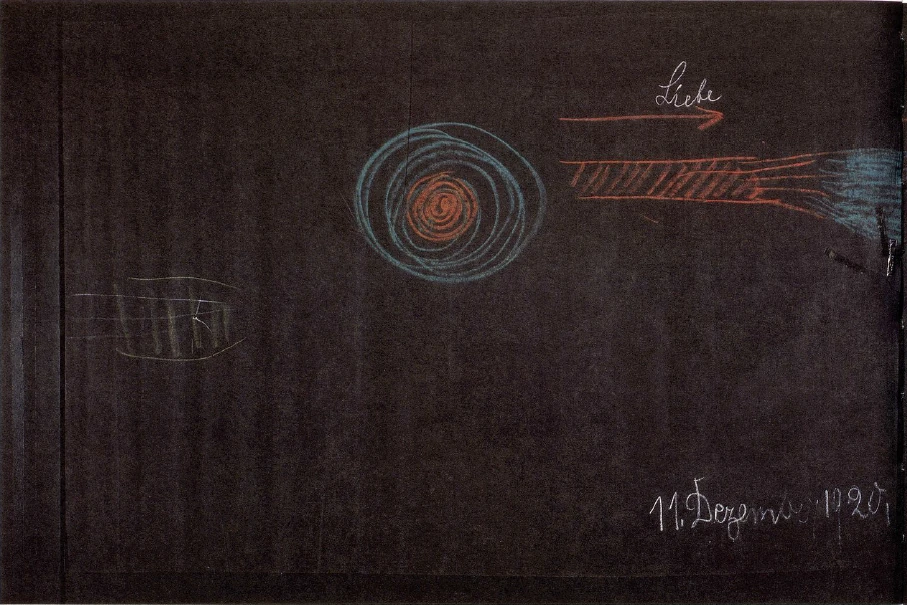
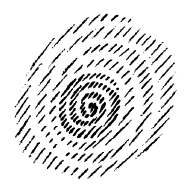
[ 7 ] We know that before a human being comes into physical, earthly existence, he or she lives in a spiritual world between death and a new birth. If we take this line as characterizing time (arrow), we have a spiritual-soul life between death and a new birth that flows precisely within the stream of time. Now, in connection with the facts I attempted to explain yesterday, within this spiritual-soul entity of the human being—over the course of time during which the human being develops without a physical body—the processes of the spiritual world within the human being give rise, above all else, to what can be called the longing for physical embodiment. This process of further development gradually becomes a longing for physical embodiment (red). And if one grasps the idea of metamorphosis correctly, one comes to realize that the situation is as follows: This longing actually flows over into physical embodiment (blue), so that when we look at a child, we must say: What appears to us in the child is the fulfillment of the longing for physical embodiment that the soul-spirit had before it entered physical existence. — We should not, so to speak, see a duality between the physical-embodied and the spiritual-soul. We should not merely see the physical-bodily as something into which the spiritual-soul aspect, so to speak, slips; rather, we should see the physical-bodily as something into which the spiritual-soul aspect actually transforms itself.
[ 8 ] Of course, this presents significant difficulties for modern scientific thinking. For this modern scientific way of thinking, which focuses on what is immediately at hand—which observes how the human embryo develops in the womb—succumbs to the belief that this human being simply grows out of the womb after fertilization, because the womb contains the forces that cause the human embryo to grow. But that is not how it is. Such an explanation focuses only on what is immediately apparent. The human being is, after all, a being that stands in the world in connection with the entire cosmos, a being that is in constant interaction with the entire cosmos. What would you say if someone were to claim that a certain amount of air that you have within you at a given moment had grown out of your body? It did not grow out of your body; you inhaled it, and you possess it because you form a whole with the entire environment. Simply because one cannot see externally how the entire macrocosm is at work when the human embryo develops in the womb—simply because one cannot see that external influences are also at work there, and that the human being is, all the more so, connected to the entire macrocosm—people believe that the human embryo simply grows within the mother’s body out of the forces of the mother’s body itself. This human embryo actually comes unequivocally from the spiritual world. It merely uses that place where it finds, so to speak, the gateway to enter the physical world. Nowhere within what extends around us in space is there a gateway for the human being who has lived through the time between death and a new birth to enter the physical world. This gateway exists only within the human body itself. And what is at work there, what is active there, are not the forces of the father and mother, but rather cosmic forces that, after fertilization, seek their way into the physical world through the mother’s body—a world for which they, as spiritual-soul beings, have developed a longing.
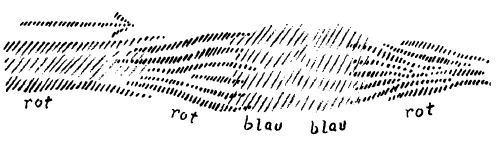
[ 9 ] Thus, the human being is transformed into a physical being; but this physical being is only the outer form of a spiritual one. We see the child, which at first has, I might say, undifferentiated features, and how the human form develops more and more from within it. And we are wrong when we say: There is something inside the child that is developing outward. We are right when we turn our gaze away from the child and back to what was active before birth, before conception, and what is still having an effect now, what is now manifesting its influence. In what we observe in the child from day to day, week to week, and year to year, we see the influence of a past that the human being has undergone spiritually and psychologically before birth or before conception. We are only doing the right thing when we view the child in such a way that we say: “Here is the child’s constitution.” We see how the child develops certain characteristics. We do not seek these within the child, where they, so to speak, radiate outward, but rather we seek them in the child’s past, from which these rays continue to influence the present. — The fact that people are unwilling to do this is the great misfortune of the modern worldview. To draw upon time—to think of what has passed as still active in the present—that is what matters. And as we then continue to develop life within time (blue, right), we in turn transform back what is physical-bodily, and we gradually come to transform the physical-bodily back into the spiritual-soul (red, right). By becoming physical human beings, the spiritual-soul aspect has indeed been transformed into the physical-bodily, and we are transforming the physical-bodily back into the spiritual-soul aspect. You will say: Yes, but there is a difficulty here! — One could understand how the physical-bodily is transformed back into the spiritual-soul-related if this were to happen gradually, if one could see that a person, let’s say, perhaps by the age of thirty-five had become entirely physical, but then began, little by little, to become spiritual again, and if by the end of his life he had become so spiritual that death would be nothing more than a gradual transition into the spiritual-soul realm. Internally, this is indeed the case, but not externally—appearances are deceptive here. The fact is that in the second half of life—the somewhat older people sitting here may not hold this truth against me too harshly—as we grow older, we are already dragging our body along as something that no longer belongs entirely to us. We are slowly becoming a corpse, and death actually consists only in this corpse becoming too heavy for us, in gravity becoming too strong, as we return with our soul to this body again and again each morning upon waking. But if one focuses one’s senses on outward appearances, one simply cannot see what changes are actually taking place within a person, and how life in this second half of life is already a slow dying.
[ 10 ] The point is not that we accept the spiritual-soul aspect on the one hand and the physical-bodily aspect on the other, but that we learn to understand how, when we make use of the concept of time, the spiritual-soul aspect transforms into the physical-bodily aspect, and the physical-bodily aspect in turn transforms back into the spiritual-soul aspect. Although this, so to speak, merely expresses the outward course of human development, it is connected with two significant characteristics of the human being. How can we gradually metamorphose from a spiritual-soul aspect into a physical-bodily aspect, so that we become the physical-bodily aspect, so that we become one with the physical-bodily aspect? Human beings can grasp this when they learn to understand what the moral quality of love is. And this is an important, fundamental truth: Human beings enter the physical world through love, through pouring themselves out into the physical-bodily realm. And how do they leave it again? They withdraw from the physical-bodily metamorphosis, they transform themselves back, and no other force gives them this possibility of transforming back than freedom. So that we say: Our continued development, our passing through death, happens precisely through freedom. We are born through cosmic love; we enter the spiritual-soul world through the gate of death by the power of freedom that we possess within ourselves. And when we develop love in the world, this love is, in essence, the echo, the reverberation of our spiritual-soul being as we possessed it before our birth—or, let us say, before our conception. And when we develop freedom in our existence between birth and death, we develop within ourselves—as if prophetically in advance—that which is our most important spiritual-soul force once we have left the body through death.
[ 11 ] What does it essentially mean, in a cosmic sense, to be a free being? To be a free being—to be able to transform oneself back from the physical-bodily realm into the spiritual-soul realm—essentially means to be able to die; whereas love means being able to transform oneself from the spiritual-soul realm into the physical-bodily realm. To be able to love means to be able to live, in a cosmic sense.
[ 12 ] Here you can see how processes—such as human birth and the shedding of the physical body, birth and death—which can undoubtedly also be understood in purely natural terms, and which external natural science regards solely as natural processes, can be understood as phenomena, as manifestations of love and freedom. And as we develop love within ourselves—spiritually and soulfully—out of our own will, what are we actually doing? We are forming a spiritual-soul image within ourselves, within our skin, of what constituted our entire being before we were conceived. Before our conception, we live in the cosmos through the power of love. And in a sense, the unfolding of love as a moral virtue during our life between birth and death is like an emotional and volitional memory of this cosmic life. The virtue of love appears to us as a microcosmic refinement of what is spread out macrocosmically before our birth, and our awareness of freedom arises from the fact that, spiritually and emotionally, during our life between birth and death, we carry within us that which—like a natural force—will act entirely within the cosmos once we have passed through the gate of death. We experience love and freedom between birth and death. They are nothing other than the human echoes of cosmic forces, for cosmic love is connected to every birth, and cosmic freedom is connected to every death. Ever since the natural sciences have celebrated their “triumphs,” we have spoken of all manner of natural forces—light, heat, electricity, and so on; but we do not speak of those forces of nature—or rather, cosmic forces—that lead us humans into physical-sensory existence and, in turn, lead us out of this physical-sensory existence. For the matter is this: Consider the physical-chemical and biological sciences, and take all the forces described to you there as constituting the world. From these forces that constitute the world, you will be able to understand everything in the world that is not human, but never the human being. For in order for the human being to exist, in addition to the fact that electricity, light, heat, and so on are at work in the world, there must also be freedom and love. When one adopts such a perspective—by truly learning to understand human beings—one arrives at concepts of the natural world that are at once moral and natural concepts; and the moral world order does not float on one side without connection to nature, nor does the natural order float on the other side without connection to morality.
[ 13 ] Something has now occurred in the course of human history that, while it certainly has a profound inner logic, must nevertheless be overcome by humanity in the course of future earthly development, if humanity is not to fall into decline. Humanity, in the course of Earth’s evolution, originated from the kind of spiritual development that arose in the East, that reached its peak in the East, and that—as we know—was, in the most ancient times, during the post-Atlantean era, even higher than what later emerged in the Vedic literature or in Vedanta philosophy. But this was a worldview that essentially aimed only at what constitutes the moral-spiritual world order. This moral-spiritual world order was grand and resplendent in certain past ages of human development, but it has fallen into decadence, particularly in the East. It was unable to give rise to a natural order from within itself.
[ 14 ] In more recent times, the concept of the natural order of the world has emerged in the West. As it first emerged in the West, this concept understands the world solely in terms of the forces that can be observed in external nature through the senses. It cannot arrive at a moral world order. This is, after all—as we have already considered from various perspectives—the immense contrast between the East and the West: in the East, humanity was predisposed toward a one-sided understanding of the spiritual and soul-related, while in the West, humanity initially tended toward a one-sided understanding of the physical and corporeal. This then carries over into all other human perspectives. People usually do not even notice how radically different people’s concepts of the Earth are. What the true Westerner brings into his consideration when he speaks of the human being is something that is quite foreign to the Easterner. When the Easterner speaks of the human being, he is actually speaking of something that, in essence, does not even exist on Earth itself. The Eastern person directs the gaze of the soul entirely toward that which, in essence, is not touched by the Earth at all. If one were to have the primordial states of the Eastern worldview, one would view all births—everything that governs human development—in such a way that no account would actually be taken of what constitutes physical-sensory existence. There, the human being is entirely a spiritual-soul being and does not develop a true sense for physical-sensory existence. This has a significant influence on everything the Eastern person is capable of thinking. Today it is in a state of decline; but in ancient times, what the Eastern person is capable of thinking with regard to the human being as a social being was quite distinctly present.
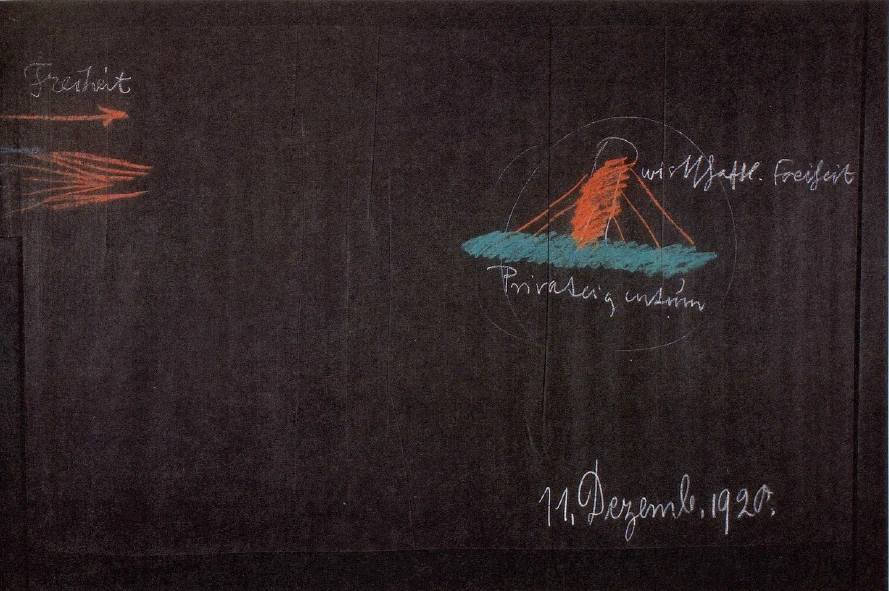
[ 15 ] And what do Westerners think? Let’s take the most outstanding social thinkers of the West, for example, Adam Smith. Just as Western natural science does not deal with human beings at all—it deals only with what is outside of humanity—so, too, Western social science does not deal with human beings. For just study Adam Smith: In his Wealth of Nations, he does not speak of human beings at all, but rather of a certain piece of land and of what grows on it and stands upon it; and then he speaks of an automaton that he causes to sow, to harvest, and so on. There is a piece of land, there is an automaton (it is depicted), which, solely by virtue of its automatism, must be able to act freely upon this piece of land. Everything must then be carried out by this automaton in the proper manner with regard to this piece of land. Adam Smith is actually speaking of these two, and he calls the principal characteristics of what functions as an automaton “economic freedom,” and he calls what constitutes a piece of land “private property.” And that is, in fact, the fundamental unit of his social being: a piece of private property with an economic automaton that is independent of the other automatons situated on other pieces of private property. The concepts Adam Smith employs deal solely with cultivated land, private property, and such an economic automaton endowed with economic freedom. These are his true concepts. When he encounters a human being, he does not regard him as a human being, but says to himself: This represents a piece of private property and an economic automaton, and it is merely shaped in such a way that it has a head on top, a torso in the middle, and limbs, and to all of that, of course, a ghost is also attached. — But one does not think about that; one has no concept of it. It merely appears that way on the surface of private property. And as the economic automaton goes about its business, it outwardly takes on the form of a phantom endowed with a head, a torso, and limbs. Nowhere, if you examine Adam Smith, will you find any concept of a human being. Try it for yourself! You’ll find a combination of private property and an economic automaton, but you won’t find a concept of the human being. You’ll find, so to speak, what surrounds the human being, but not the human being itself. What is characteristic here is that there remains a faint shadow of freedom, which is then projected onto the economic automaton. One does not speak of human freedom; one does not speak of that which, arising from the moral imagination and filled with spiritual content, fulfills the human being as a complete human being—for then one would have to speak as I did in my Philosophy of Freedom—but rather one speaks of a connection between private property and an economic automaton. On the one hand, we have what remains of the wisdom of the East: the inability to move from the human soul-spiritual being into the physical world. From the Western countries, we have the ability to see: Yes, there is something real in the world, for there is something in the world that operates automatically; His Lordship has vast estates, His Lordship has external forces through which these estates are managed and hunted. There one sees that His Lordship has something there. But what wanders about there is actually nothing more than a human specter.
[ 16 ] You see what we must seek: we must seek the human being as such. We must gain a living understanding of the human being as such by entering into the state of his soul. We have Western natural science, which has the animal kingdom. First we have simple animals, then increasingly complex ones; the most complex walk on four legs, then they eventually stand upright, becoming vertical instead of horizontal—and there, at the top, is the highest animal, which is called “human.” We really only have the animal kingdom, and the human is simply the highest link in that chain. So we do not view the human from the perspective of natural science. Nor is he viewed from the perspective of the social sciences, for there one considers what he possesses as private property in and of itself, and what he is as an economic automaton. Human beings fall outside the scope of social observation, of the social view of nature. The peculiarity of modern humanity is, after all, that it does not even notice that there is nothing human there at all. There is nothing human there at all. Hence, a certain need arises. Just imagine: people live in the external social sphere. Let’s assume they live as Adam Smith describes them, for the fact that he expressed this view stems solely from the fact that he merely articulated what the thinking of many people tends toward. Imagine that people, as Westerners, now look at their social existence: they aren’t even there! Private property is there, and an economic automaton; people aren’t even there. How is one supposed to extract anything from this concept of the human being that lies beyond birth and death? One must then simply accept this on authority. And as such concepts continued to flourish further and further, it simply came to pass that, with regard to the spiritual, everything was gradually placed under authority—indeed, that people even developed a certain aversion to thinking about the spiritual in any way. Modern proletarian science has taken this idea further. Only it took it seriously and said: Yes, the bourgeoisie have reflected on the human being, but there is really nothing there about the human being; there is private property, and there is the economic automaton. So let’s not talk about this nonsense of a distinct human being, but let’s just talk about economic forces; they produce everything. Let’s take this view seriously! The others don’t take it seriously; all week long they talk as if there were nothing but private property and the economic freedom of the automaton, and on Sunday they let themselves be preached to that there is also an immortal soul.
[ 17 ] This is something that must be understood with complete clarity. For if one does not have the courage to view things with such clarity, then one simply cannot move forward. And it is quite understandable that there are quite a few forces at work today that have absolutely no desire to see these matters illuminated by a proper light. For it is naturally unpleasant when it is pointed out that while the social sciences are supposed to understand harmony among people, they actually know nothing about human beings themselves, but only about private property and the economic freedom of the economic automaton.
[ 18 ] I have tried to show you what a perspective truly grounded in a living understanding of metamorphosis looks like, and how a perspective has emerged that wants nothing to do with such an understanding of metamorphosis. Tomorrow we will have to examine the deeper reasons that lead to the fact that what necessarily arises as the macrocosmic consequence of such a view is so rarely allowed to reach people today. So tomorrow we will explore what I would call the macrocosmic counterpart to the facts presented today, and then we will move on to the human consequences of both worldviews.