The Bridge Between the Spiritual and
Physical Realms of Human Beings
GA 202
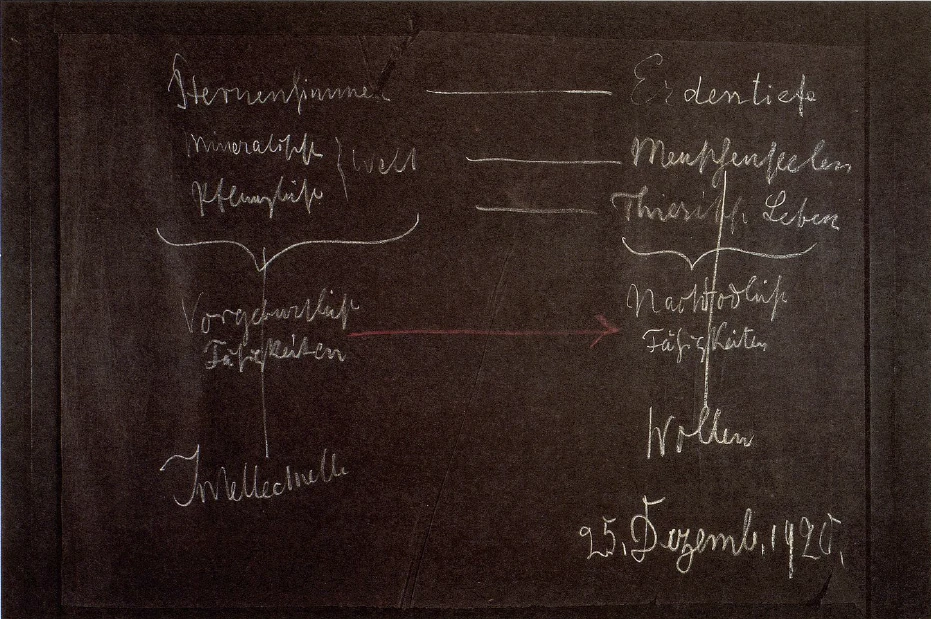
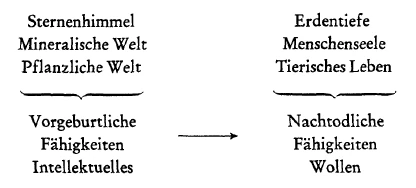
25 December 1920, Dornach
Translated by Steiner Online Library
Fifteenth Lecture
[ 1 ] When it comes to understanding the event at Golgotha in the light of the Christmas mystery, we can look in two directions: toward the starry sky on the one hand, with all its mysteries, and toward the inner life of the human being on the other, with all its mysteries. Over the course of these days, I have pointed out how the so-called Magi from the East recognized the arrival of Christ Jesus on earth through the starry sky, and how the poor shepherds in the fields received the announcement of this Savior through the visions that arise from within the human soul. Today we want to turn our attention once more to these two sources, from which, in essence, all human knowledge springs—and from which, therefore, the highest knowledge of the true meaning of life on earth must also have come to us.
[ 2 ] When we look back at the times that preceded the Mystery of Golgotha, we find that the human soul’s relationship to the universe and to itself was quite different than it was after the Mystery of Golgotha. However, from an external historical perspective, this is not apparent in a particularly intense sense, for the reason that this ancient knowledge belongs, to a marked degree, to times that preceded the Mystery of Golgotha by millennia in the post-Atlantean era. As the Mystery of Golgotha drew near, this kind of knowledge had already grown weaker, and we can say that it was only a few, particularly chosen individuals—such as the three Magi from the East—who could possess such far-reaching insight as was evident in their case; and that, on the other hand, only very specially favored shepherds—that is, people of the common folk who were receptive to inner realities—could develop such visions from sleep as these shepherds did. But these were precisely the legacies of humanity’s ancient relationship of knowledge with the universe—both on the one hand with the Magi and on the other hand with the shepherds.
[ 3 ] We, too, cannot yet say—especially not in our present time—that humanity is already expressing in a particularly clear way the kind of knowledge that has been woven into human development since the Mystery of Golgotha; but in general, what we wish to bring to mind this evening does hold true. The pre-Christian attitude toward the starry sky was such that people did not view the stars merely in the prosaic, abstract way in which they are viewed today. The fact that people in earlier times spoke of the stars as if they were living beings did not stem, as a highly imperfect science believes, from mere imagination, but rather from a spiritual—albeit instinctive, atavistic—perception of the starry sky. In earlier times, people viewed the starry sky not merely as points or patches of light, but as something spiritual—which could be described in the same sense that these ancient people described the constellations, for they perceived the individual planets of our solar system as being animated by living beings. They simply saw the spiritual in the vast starry sky. And in this context, in which these ancient people saw the starry sky in its spiritual elements, they also saw everything pertaining to the mineral and plant worlds. Thus, the starry sky, the mineral world, and the plant world—these three realms of existence—were perceived by these ancient people through their capacity for insight. They spoke of the stars as animated beings, but they also spoke of minerals and plants as animated beings.
[ 4 ] We must not imagine that people’s capacity for knowledge in those ancient times was the same as ours. Some time ago, I described to you a stage of cognition that is not all that different from our own, but which, in essence, many people today still find difficult to imagine. I said that the Greeks, especially in their earliest culture, did not perceive the color blue at all—that is to say, they did not have a blue sky above them. That was something the Greeks lacked. They perceived color more on the active, red-yellow side. Nor did they paint with what we today consider to be shades of blue. This blue only appeared later in human perception.
[ 5 ] Just imagine that all shades of blue were to disappear from the world—so that even all the green would look different from how it appears to us today—then you would have to admit: Even to the Greeks, the world around them looked different than it does to people today. To an even greater extent, the world appeared different to people of earlier times than it does to us today. The spiritual gradually withdrew from the world as the ancients perceived it. The spiritual withdrew from the worlds of the stars, from the mineral worlds, and from the plant worlds; and as the spiritual withdrew, the living, active colors grew duller. In contrast, what could be perceived as blue rose up from the depths. And as the capacity for blue—for the darker colors—arose more and more within humanity, what the ancients had experienced in their vividly appealing, I would say, actively colorful astrology, into the gray, colorless geometry and mechanics with which we today—by drawing this geometry and mechanics from within ourselves—no longer perceive in our surroundings the mysteries of the starry worlds. Ancient astrology was transformed into this world, as we imagine it today in the Copernican-Galilean-Keplerian sense—into the world of celestial mechanics, into the world of mathematics. That is one side of it.
[ 6 ] The other side of the matter is that in those ancient times, human beings possessed an intense inner ability to perceive what emanated from the Earth—as it were, the Earth’s fluids—and surrounded them. So, I would like to say that, just as the starry sky revealed itself through an inner faculty of perception, so too did the Earth’s fluids and the qualities of the Earth manifest themselves through certain inner faculties. In ancient times, people had a subtle sensitivity to all the distinctive characteristics of their country’s climate, to all the distinctive characteristics of the soil. Whether a person lived on limestone soil or on granite soil, this meant a different kind of upwelling for them of what was within the Earth. But what they felt welling up in this way did not present itself to them as a mere dark feeling, as a dull, muted experience; rather, it rose within them as colors and clouds that they felt deeply within themselves. And just as they sensed the depths of the earth, so too did they sense the human soul in their fellow human beings, and so too did they sense animal life. This perception was more vivid, more intense. Just as there was a kind of external faculty of perception through which human beings gazed into the starry sky, through which they surveyed the minerals and plants in their spiritual nature with atavistic, instinctive clairvoyance, so too did they perceive, through an instinctive, inner vision, what lived spiritually in the depths of the earth. He did not merely speak of limestone soil; rather, specific elemental beings arose to him—of one kind from the limestone soil, of another kind from the granite or gneiss soil.
[ 7 ] He also perceived what lived within other human beings as auric, but which was, so to speak, clothed by the Earth; and in particular, he perceived animals in their auras as earthly beings. For him, what lived in the earth—as the soil itself, as the earth’s inner warmth—continued, as it were, throughout the entire animal world. When the ancient human saw butterflies flitting over the plants, he always perceived them as trailing behind them that which was emerging from the earth. He perceived what flitted across the earth in the form of animals as if in an auric cloud. All of this gradually receded, and the prosaic world remained for human perception, which shifted outward, so that human beings now began to view their surroundings as we see the colorful world today, without perceiving the spiritual. And what human beings had thus seen through inner perception was transformed into our modern understanding of nature; what they had spiritually perceived through outer perception was transformed into our modern mathematics and mechanics.
[ 8 ] Thus, on the one hand, we have developed our modern view of nature from what the poor shepherds in the fields perceived inwardly, and from what the Magi from the East perceived regarding the star that heralded the coming of Christ, we have developed our dry mathematics and mechanics. So much of both outer and inner perception had still been preserved in individual people at that time that the mystery of Jesus’ birth could be heralded in this way from both perspectives.
[ 9 ] But what, then, actually underlay this perception? Well, during the time we go through between death and a new birth—that is, the time we went through before we entered earthly existence through _birth—during that time we actually lived through worlds. There, our individuality was not so bound to the space enclosed by our skin, but rather this existence extended across cosmic realms. And that ancient ability of magical vision—which the sages of the East and the magicians of the Orient still possessed—was essentially an ability that penetrated particularly deeply into human beings during the time between death and birth; in other words, a prenatal ability. What the soul experienced within the world of the stars before birth was awakened as a special ability in those who became disciples of the magicians. As the disciples of the magicians developed these special abilities, they could, so to speak, say: “I have indeed experienced very specific things before I descended here into this earthly world—with Mercury, with the Sun, with the Moon, with Saturn, with Jupiter.” — And the fact that this cosmic memory, so to speak, surfaced led them to now see the spiritual in the entire outer world as well, to see the destiny of human beings on Earth through what they had seen within the world of the stars via the memory of their pre-birth existence.
[ 10 ] The abilities with which one perceived the depths of the earth, the mysteries of the human soul, and the nature of the animal realm—these were abilities that had only developed in a nascent form within the human being and that emerged only after death; that is, postmortem abilities that were to become creative only after death, but were young and full of potential. Although these abilities only become particularly creative for human beings after death, they do appear in earthly life as vibrant, nascent abilities—especially in the early stages of a child’s earthly existence. The growth forces that the growing child possesses in particular—which, after all, sprout and continue to sprout from the spiritual—then recede in later years; they withdraw, and it is precisely those forces that were present before birth that come to fill us more fully. But after death, these childlike abilities reappear. Only particularly gifted people retain them well into old age. For—as I have already mentioned here—the genius-like abilities we possess in later years are due to the fact that we have remained more childlike than those who lack these abilities or possess them to a lesser degree. The preservation of childlike abilities into later life endows us with special inventive abilities and the like. The more we are able to retain childlike abilities—despite maturing—the more productive and creative we are. These creative forces, however, then emerge particularly strongly again after death.
[ 11 ] Among certain peoples of the pre-Christian era, in particular, there was the possibility of using the abilities retained from the pre-birth stage to enrich the post-death abilities. Because these peoples developed to a lesser extent the insights that had emerged specifically among the magi of the Orient—by allowing these insights to recede into the background and letting the post-death faculties come to the fore, so that the two interpenetrated in such a way that the pre-birth faculties enriched and enlivened the post-death faculties— the gift of prophecy developed in such people—the gift of prophetically foretelling the future through post-death faculties. What we call the Jewish prophets are people in whom the post-death abilities developed particularly strongly; yet they did not remain merely at the level of instinct, as was the case with the poor shepherds at the Annunciation in the fields, but were imbued with those other abilities that were more intensely developed in people such as the Magi from the East, and which indeed led to very special insights—insights relating to the mysteries of the starry sky and its processes.
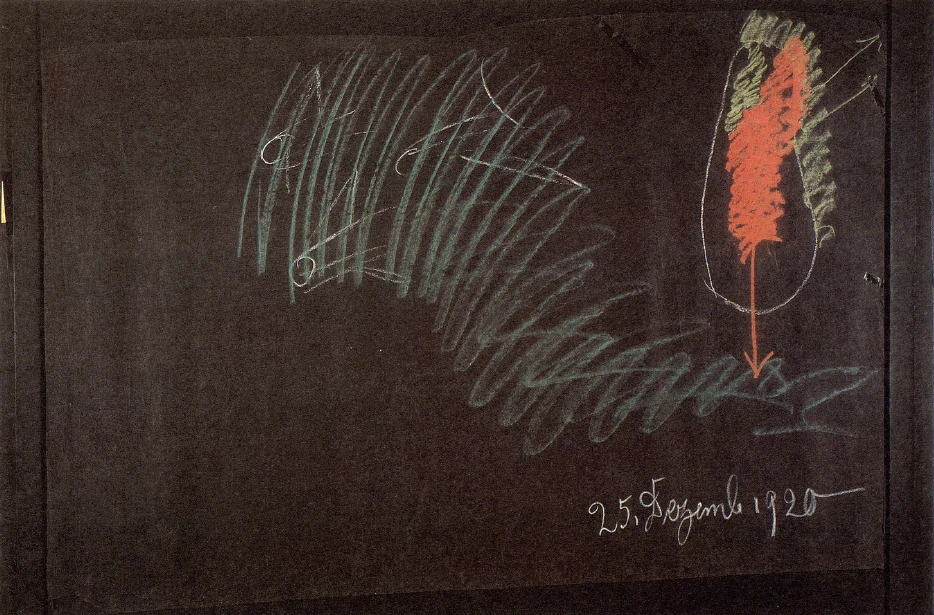
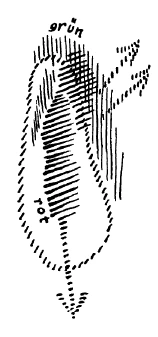
[ 12 ] Now it will seem clear to you how the announcement of the shepherds in the fields and the insight of the Magi from the East must have been in harmony. The insight of the Magi from the East was such in their field that they were able to perceive particularly profound mysteries of the starry heavens. Thus they were able to arrive at the realization that from those worlds in which the human being exists between death and a new birth—from which they derived the abilities that enabled them to penetrate the starry heavens—that from an elevation of this insight came the vision: From that world—to which our life between birth and death does not initially belong, but to which our life between death and a new birth does belong—a being, the Christ, descends to Earth. —From their knowledge of the stars, the Magi discerned the coming of the Christ.
[ 13 ] And what happened to the shepherds in the fields, who developed the special ability to sense into the depths of the earth? Well, the earth itself became something different as Christ drew near. The earth sensed Christ’s approach. The earth carried within it new forces that arose precisely because Christ was approaching. What the earth reflected—the way the earth reacted to Christ’s approach—was sensed by the shepherds in the field from the depths of the earth through their devout intuition. Thus, for the Magi from the East, the vastness of space heralded the same thing that the depths of the earth heralded to the shepherds.
[ 14 ] It was a time when remnants of those ancient insights were still present. Therefore, we must turn our attention to those who were exceptional even by the standards of that era—such as the three Magi from the East, and these particular shepherds in the fields. Both, in their own way, had preserved what had already more or less faded away for humanity at large. That is why, as it drew near, the Mystery of Golgotha was able to reveal itself to them in the way it did.
[ 15 ] One must certainly view these things in such a way that one adds to the usual historical perspective the insights that can be gained through spiritual science. One must, so to speak, attempt to fathom the vastness of space and the depths of the soul. And if one fathoms the vastness of space in the right way from a specific point of view, then one learns to understand the manner in which the Magi from the East experienced the approach of the Mystery of Golgotha. If one attempts to fathom the depths of the soul, one gains an understanding of how what was drawing so close to the Earth—so close that the Earth itself already sensed within itself the forces of this approaching event—was revealed to the shepherds. What was expressed in the magicians as pre-birth abilities corresponds more to an intellectual faculty, to a form of cognition. However, intellectual understanding at that time was different from what it is today. What, on the other hand, was at work in the shepherds corresponds more to a will, and it is this will that simultaneously represents the forces of growth in the universe. So that, I would say, the shepherds were connected through their will to that which was approaching the Earth as the Christ Being. One also senses how the stories of the Magi from the East—even though they are presented in a highly imperfect way in today’s Bibles—reflect the kind of insight with which the Magi approached the Mystery of Golgotha: it is what lives for them in their outer consciousness. And in this narrative—this heartfelt account of the Annunciation to the shepherds as it appears in the Gospel—we sense how it points to human will, to the soul, and to inner emotion: “Revelation of God from heaven, and peace on earth to people of good will.” One senses the flow of the will in the Annunciation to the Shepherds. And when you sense the radiance of magical knowledge, you sense a completely different kind of experience.
[ 16 ] In this way, we come close to the full, profound meaning of what is recounted in the New Testament—as magical insight and the proclamation of the shepherds—when we try to look deeply into human understanding and human will, into what precedes birth and what follows death.
[ 17 ] For us, I said, what was a living spiritual world for our ancestors—the world of the stars, the mineral world, and the plant world—has become mathematics and mechanics. What used to be inner knowledge has been drawn to the surface. If we consider the human being and imagine his inner knowledge—as it appeared especially among the shepherds—as the inner realm, and what appeared among the magicians as the outer realm, then this outer knowledge among the magicians is what reaches out into the vastness of space to perceive the spirit; what lives as the inner realm leads to the visions that perceive the depths of the earth, but also spiritually.
[ 18 ] And what is inner insight—what emerged among the shepherds (see drawing, red)—grows more and more “outward” in the further development of humanity and becomes what we today call external perception. This becomes what we today call experiential perception. What, on the other hand, conveyed to the magicians an understanding of the animate world of the stars, withdraws inward—I would say, more toward the brain—and this becomes our mathematical, our mechanical world (green). A crossover has thus taken place. What used to be, in pre-Christian times, inner knowledge—pictorial, naive, instinctive imagination—becomes our outer knowledge, becomes sensory perception; what was outer knowledge, through which one encompassed the world of the stars, withdraws inward and becomes the dry, geometric-mathematical-mechanical world that we now have from within.
[ 19 ] Through inner enlightenment, modern man perceives nothing other than the mathematical and mechanical. And only select minds, such as Novalis, rise to the level of perceiving the poetic, the deeply imaginative aspect of such things and also of portraying it poetically—for it is precisely this mathematical-mechanical inner world that Novalis has celebrated in such a beautiful, indeed harmonious, way. What Novalis sings of is, for the ordinary person today, the arid world of triangles and quadrilaterals, the arid world of squares, sums, and differences; for the ordinary person, this is the world where we, for example, describe how the resultant of two forces manifests itself in a parallelogram. The average person is prosaic enough to perceive this world as sober, as dry; they do not like it. The exceptional Novalis sings of it because within him still lives something of the echo of what this world was when it had not yet withdrawn into the inner realm. There it was, that world from which the spirit of Jupiter and Saturn, and from which the spirit of Aries, Taurus, and Gemini were perceived. That was the ancient, light-filled world of the stars, which has merely withdrawn and, in the first stage of its withdrawal, appears as the seemingly dry, mechanical-mathematical world.
[ 20 ] And what took on a different intensity for the shepherds in the fields as they heard the voice of the angel from on high has become within us—dry, sober, and diminished—the perception of the external sensory world. Through this, we perceive minerals, plants, and stars today, while through the other—barely articulated—we perceive the depths of the earth or the world of humans and animals. But what has today been weakened into the mathematical-mechanical-phoronomic world—that which was once astrology—possessed such power within it for ancient knowledge that Christ revealed Himself to the magicians as a celestial being through this knowledge. And the profound influence on the Earth, the full power with which Christ was to work within the Earth, it proclaimed—not to what is today our ordinary sensory perception, with which we see nothing but the green surface of the grass, the brown hides of the animals—but to this perception, when it was still within, when it had not yet been drawn out into the mere eyes, into the mere skin; it announced to the shepherds in the fields what Christ was to become for the Earth.
[ 21 ] We must find our way back; we must once again be able to find the possibility for the inner world—which today is nothing but dry mathematics—to intensify into vivid imagery. We must learn to grasp the imagery provided to us by the science of initiation. What, then, is contained in these imaginations? They are, after all, a continuation of that through which the magicians of the East recognized the coming of Christ. The imaginations are the offshoots, the descendants of what the ancients saw in the constellations, in the stellar imaginations, in the mineral imaginations—gold, silver, and copper. Thus, the ancients saw through corresponding imaginations, and the descendants of all this are today’s mathematical abilities. Mathematical abilities today are becoming the very faculties that comprehend these imaginations. And so, through the cultivation of the inner self, we must seek an understanding of the Christ-being.
[ 22 ] But external perception, too, must be deepened. External perception is itself a descendant of what were once inner experiences of an instinctive nature. The power that, at the time of the Annunciation, was still within the shepherds—in their hearts—is today found only in their eyes and ears. It has shifted entirely to the outer side of the human being and therefore perceives only the external world, the tapestry of the senses. But it must go even further outward. To do so, however, the human being must leave his body and become capable of inspiration. Then this inspiration—that is, the perception to be attained outwardly today—will be able to provide, through the science of initiation, the very same thing that was given to the shepherds’ naive inner recognition in the field through the Annunciation.
[ 23 ] If, just as astrology once did among the Magi and the intuition of the human heart among the shepherds of the field, what comes from the science of initiation through imagination and inspiration works together within modern humanity, then humanity will, through the insights of imagination and inspiration, rise once more to a spiritual grasp of the living Christ. One must understand how Isis—the living, the divine Sophia—had to be lost in the face of that development which drove astrology into mathematics, geometry, and mechanics. But one will also understand that when, from this field of corpses—from mathematics, phoronomy, and geometry, the living imagination is raised up, this then signifies the finding of Isis—the finding of the new Isis, the divine Sophia—whom humanity must find if the Christ-force, which it has possessed since the Mystery of Golgotha, is to become alive within it, fully alive—that is, permeated with light.
[ 24 ] We are now standing on the threshold of this turning point in history. The material world will not provide humanity with the goods it has become accustomed to demanding in recent times. The great conflicts that have caused the terrible catastrophes of recent years have already turned a large part of the Earth into a wasteland of cultural ruin. Further conflicts will follow. People are preparing for the next great world war. Civilization will be shattered even further. From what has emerged as the most valuable source of knowledge and will for modern humanity, there will be nothing to be gained in the immediate future. Outward earthly existence, insofar as it is a product of earlier times, will pass away, and those who believe they can continue the old habits of thought and will are hoping in vain. What must emerge is a new understanding and a new will in all areas. We must familiarize ourselves with the idea of the passing of a culture, of a civilization; but we must look into the human heart, into the spirit that dwells within the human being. We must have confidence in this human heart and this human spirit that dwell within us, so that through everything we can do amid the shattering of the old civilization, new forms may arise—truly new forms.
[ 25 ] These new entities will not come into being unless we bring ourselves to truly and earnestly consider what must necessarily happen for humanity. Please refer to my book How Does One Attain Knowledge of the Higher Worlds?. There you will find a description of how, if a person wishes to attain higher knowledge, they must first develop an understanding of what is called the encounter with the Keeper of the Threshold. It is pointed out there how this encounter with the Keeper of the Threshold means that willing, feeling, and thinking must separate in a certain way, so that a triad must emerge from the chaotic unity of the human being. This understanding, which must open up to the student of spiritual science as they come to realize what the Keeper of the Threshold is, must also open up to all of modern humanity in relation to the course of civilization. Even if not for outer consciousness, in terms of inner experiences, humanity is passing through the realm that can also be described as the realm of the Keeper of the Threshold.
[ 26 ] Modern humanity is crossing a threshold where a significant guardian stands, a solemn guardian. And this solemn guardian declares, above all else: Do not cling to what has been carried over from ancient times. Look into your hearts, look into your souls, so that you may create new forms! You can create these new forms only if you have the faith that the powers of knowledge and the powers of will can come from the spiritual world to bring about this spiritual re-creation. — What must be a particularly intense experience for the individual upon entering the higher realms of knowledge is, in a sense, taking place unconsciously for all of humanity at the present time. And those who have come together as the anthroposophical community should realize that one of the most essential tasks at the present time is to help people understand this passage through the threshold region.
[ 27 ] Just as human beings, as thinking beings, must understand that their thinking, feeling, and willing are, in a certain sense, separate, and that they must hold them together in a higher sense, so must modern humanity be made to understand that spiritual life, legal or political life, and economic life must be separated from one another, and that a higher bond of cohesion must be created than the state has been up to now. It is not merely programs, ideas, or ideologies that can lead individuals to recognize this necessity for a threefold social order; but rather it is the deep insight into the further development of humanity that shows us that this development is reaching a threshold, that the solemn guardian stands there, demanding—just as he demands of the individual human being who is progressing toward higher knowledge: “Endure the separation of thinking, feeling, and willing”—that he demands the same of all humanity: “Separate what has been intertwined in chaotic unity within the idol of the State until now; separate it into a spiritual entity, into a legal-state entity, into an economic sphere.” — Otherwise, humanity will not move forward; otherwise, the old chaos will burst apart and fall apart. But when it falls apart, it will not take on the form necessary for humanity, but rather an Ahrimanic or Luciferic form, whereas only the form in accordance with Christ can provide the insight into the threshold passage in the present that arises from spiritual science.
[ 28 ] This is something we must remind ourselves of even now, during the Christmas season, if we are to truly understand anthroposophy. The little child lying in the manger must be for us the child of spiritual development leading into the future of humanity. Just as the shepherds in the fields set out after the Annunciation, just as the Magi from the East set out after the Annunciation to see how that which was to advance the human world appeared as a small child, so must the new human world set out toward the science of initiation, in order to perceive through the science of initiation— I would say in the form of the little child, to perceive what is to become of the threefold social organism supported by spiritual science for the future. The old form of government would have to burst apart—if humanity did not structure it—it would have to burst apart in such a way that it would develop, of its own accord, on the one hand, a spiritual realm—which, however, would then be all the more chaotic, taking on completely Ahrimanic-Luciferic traits—and, on the other hand, an economic realm, again with Luciferic-Ahrimanic traits, and both would drag along fragments of the state structure. In the East, more Ahrimanic-Luciferic spiritual states would develop; in the West, more Ahrimanic-Luciferic economic states—unless human beings, through the Christification of their being, come to understand how they can avoid this, and how, out of their knowledge and their will, they can carry out the threefold division of that which seeks to separate.
[ 29 ] This will then be human knowledge permeated by Christ; this will be human will permeated by Christ; and it will manifest itself in no other way than by dismantling the old idol of the unitary state into its three corresponding parts. Those who are then truly immersed in spiritual life will, like shepherds in the field, recognize what the earth is experiencing through the Christ Being. And those who are truly immersed in economic life, in economic associations, will develop, in the true sense, a will that brings about a Christ-imbued social order.