The Bridge Between the Spiritual and
Physical Realms of Human Beings
GA 202
26 December 1920, Dornach
Translated by Steiner Online Library
Sixteenth Lecture
[ 1 ] Let us recall some of the facts that have been the subject of our reflection these past few days. I have pointed out the significant fact that in the account of the Mystery of Golgotha, on the one hand, the shepherds appear with their proclamation—that is, people of simple hearts—and on the other hand, the Magi from the East—that is, according to the understanding of that time, people who had ascended to the highest wisdom that could be attained. For the Magi, the Mystery revealed itself through the stars and the secrets that humanity had gleaned from them. For the uneducated, simple shepherds, the same Mystery revealed itself through what, in those days, could still emerge from devout hearts as a certain kind of clairvoyance. In this, I explained, we are reminded of the last remnants of ancient views of humanity, which in much earlier times were, so to speak, the normal views of humanity—views that, at the time the Mystery of Golgotha took place, still appeared in their final vestiges among select individuals of one kind—the learned—or even among select individuals of the uneducated kind. So one might say, for example, that at the time when the last remnants of the ancient human worldview were still present in individual people—remnants that were just sufficient to grasp the supersensible nature of the event of Golgotha—it was then that this event of Golgotha also took place on Earth.
[ 2 ] Now let us once again describe how these types of insight manifest in human beings. On the one hand, we have the shepherds. Through inner, naive, instinctive visions, they perceive what is happening in the human world. Such inner visions—as I have pointed out to you—arise from the fact that the forces of the Earth planet work within human beings. These forces of the Earth planet do not act merely in the lower realms, but they also act within human beings. Modern humanity, particularly the people of the present day, no longer experiences these earthly forces directly within themselves—forces that, so to speak, rise up from the Earth and then manifest as visions within the human being. But the further back we go in the development of humanity, the more we find such visions arising within human beings, which differ in their entire configuration and in their particular nature depending on the various climates, the various regions of the Earth, and so on. What can be observed externally in this regard is, however, often deceptive, for the people of earlier times were not entirely sedentary either. The inner powers of perception they acquired through the forces of the Earth they developed in some region of the Earth; they then migrated to other regions through the movements of peoples and tribes, and subsequently passed these on through heredity. Thus, we cannot always say that what manifested as inner visions was directly connected to the territory in which it occurred through human beings at that time.
[ 3 ] Just as the animal world of a particular part of the Earth has a very specific configuration—in animals, this is expressed more in their external growth, external form, and way of life—so, when human beings were still closer to the forces of nature, they had a connection, in terms of their inner configuration, with what are the inner forces of the Earth. However, these inner forces of the Earth are, in turn, not entirely independent of the forces of the universe. In the course of their life between birth and death, human beings are subject to these earthly forces. They are subject to them in regard to certain aspects of their human being—in regard to the physical body and the etheric body. Not in regard to the astral body and the “I,” but in regard to the physical body and the etheric body, human beings are entirely subject to the forces of the Earth. Human beings, with their physical bodies and their etheric bodies, are subject to what is at work down there in the earthly realm, so to speak. And since in earlier times humanity was much more dependent on the physical and etheric bodies than it is today, the effects of the Earth at work within human beings were also expressed more strongly in human consciousness, and this imparted to people, in particular, a certain instinctive activity of the soul in relation to the knowledge of the human world itself, in relation to the knowledge of the Earth as a planet, and in relation to the knowledge of even the animal world.
[ 4 ] In ancient times, people came to know the animal world by having a specific image, a specific conception, of each animal species. All that remains of this conception that the ancients had of animal species is the abstract concept of “species.” We speak of the species or genus of wolves, tigers, and cats, and so on. These are the last abstract remnants of what existed in ancient times as living images—what existed in perception, in instinctive perception. Similarly, in earlier times, people did not have toward one another the abstract feeling we have today toward our fellow human beings, whom we almost pass by without really getting to know them; but through the forces that lived within people in the manner described, when a person encountered another, they received—admittedly determined by shared karma, by a shared destiny, but nonetheless a definite image—a perception of their fellow human being that manifested very concretely as naive imagination.
[ 5 ] Likewise, within this primordial humanity, there was often a sense of something that concerned the entire Earth or, at least for many peoples, the territories in which they lived. This was an inner contemplation of the Earth itself, of the events in the human world as they played out in social life, and also of the events in the animal world. Our ordinary sensory perception then developed out of this inner contemplation. One could say that what once filled the whole human being inwardly—inner perception and vision—has, in more recent times, shifted entirely toward the surface of the senses, and this has become our perception, as we revere it today, particularly in scientific observation, where we are willing to accept only what the intellect combines from sensory perceptions. This sensory perception—the perception with which we survey the tapestry of the senses today—is the descendant of what confronts us when we study the ancient times of human development in reality, not through the phantasms of modern psychology or anthropology. What confronted us in ancient times as inner vision has today, for the time being, become our outer vision.
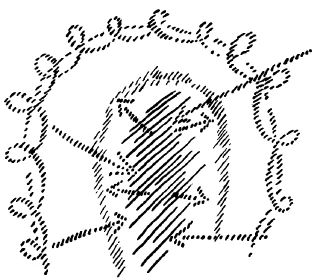
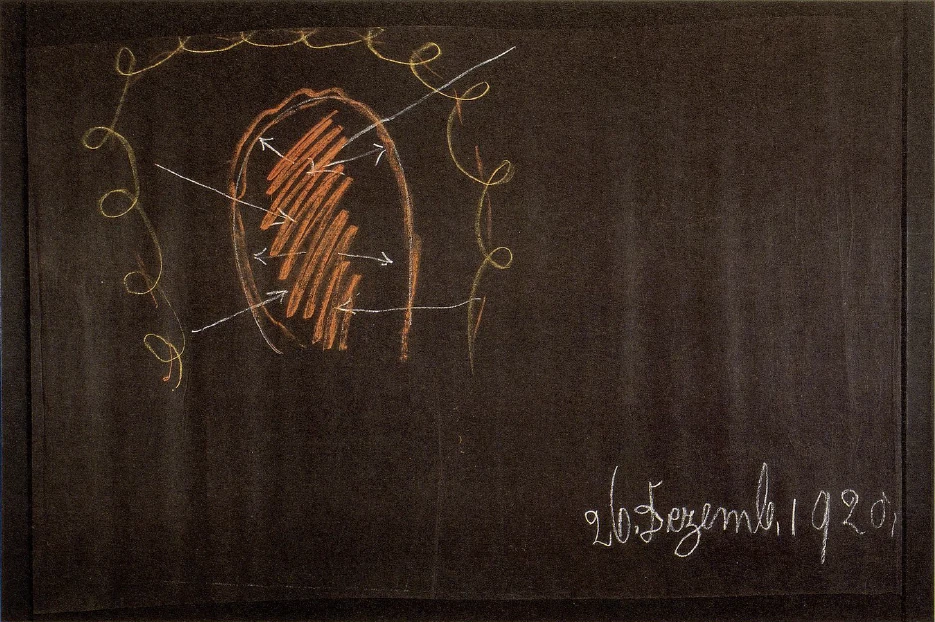
[ 6 ] The other aspect that now characterizes us is the knowledge of the magicians of the East, which has become abstract. It is that which has now taken the opposite path. While inner vision has come to the surface and become sensory perception, outer vision—which expressed itself in the imaginative, instinctive-imaginative knowledge of the starry world and its mysteries — as expressed in the ancient form of astronomy, which, admittedly, also calculated with numbers and geometrized with figures, to use this Platonic term — this perception, which, in a sense, saw living mathematics realized in the cosmos, where every star was at the same time a spiritual being, has taken the opposite path (see drawing). The other view turned to the surface of the senses, becoming what we today call our external perception, our empiricism. But that which was external perception entered the inner being of the human being and became abstract mathematics, abstract mechanics, or phoronomy—all that which rises from within us as mathematical-mechanical knowledge.
[ 7 ] Thus, in what approaches human beings today—on the one hand as sensory perception and, on the other, as a mathematical-mechanical construction of the world—we find the legacies, the abstract legacies of humanity’s ancient, instinctive visions. Specifically—even if this remains inaccessible to external anthropology—the last remnants of these ancient views have essentially faded away since the advent of the Mystery of Golgotha. For the majority of the Earth’s population, they had already disappeared much earlier; for if we truly wish to understand these ancient ways of perceiving the world, we must go back to very, very early millennia—to the millennia before what later became Egyptian-Chaldean, Greek culture, and so on spread out from the Turan highlands. But the last remnants still meet us in the Christian tradition through the vision of the shepherds, who come to know an important event in human history through instinctive, imaginative clairvoyance, and through the vision of the Magi from the East, who see the same thing through their knowledge of the stars.
[ 8 ] These ancient worldviews are, after all, conveyed to us in their last remnants as a clear hallmark within the development of humanity. Since the Mystery of Golgotha, the newer way of thinking has spread more and more; incidentally, this had already been foreshadowed in Greek culture, for things do not transition abruptly, but rather build up and then fade away. What was prepared in Greek civilization is something that, in essence, has only become truly intense in the very recent past—something that has been particularly evident in human development since the mid-15th century and that did not reach its peak until the 19th century, though it had already become clear in the 18th century, particularly in Western Europe. It consists in the fact that the ancient, spirit-imbued view of the vastness of the heavens has become abstract mathematics and mechanics; so that we view the heavens in the Galilean-Keplerian sense, as if they could be comprehended as mere objects of mathematics and mechanics, and that we must limit what we call perceptions to what our senses alone convey to us, so that the perceptual power of the whole human being—which was instinctively present in primeval times—has become dormant.
[ 9 ] We have often said that humanity must return to developing visions. What arises within as mathematics or mechanics must be unfolded once again into imagination. That which, coming from the outside, can only be applied to the sensory realm—otherwise it descends into speculation and develops all manner of mechanical theories about sensory processes, speaking of all sorts of wave oscillations or the like—must once again be subjected to the visions of inspiration. Through this, humanity will once again find a connection to its true origin—to the spiritual, which is, after all, the very essence of the human being. Thus, as the last remnants from those ancient times, we have preserved mathematical intuition and what constitutes external sensory perception. And what has emerged from this in the course of human development?
[ 10 ] Let’s take a look at the 18th century. Let’s go back to the English philosopher Locke, who had such a profound influence on the development of the sciences. There we find that Locke initially pointed to knowledge mediated through the senses as the only possible form of knowledge. Only sensory perception was permitted to be combined mathematically, because—especially in the West (the East has always resisted this)—only external sensory perception was retained, while internal perception became merely abstract and mathematical.
[ 11 ] In 18th-century France, attempts were made to understand human beings and to answer the question: What is a human being, really? — The aim was to understand human beings through the powers of cognition that human beings themselves are capable of mustering. And this gave rise to works such as Man a Machine by de La Mettrie. This did not arise from the mere whim of a single individual, but rather from a world-historical necessity in the development of humanity. The equivalent in ancient times would have been to understand human beings within the context of the entire macrocosm, based on all the scientific knowledge that ancient astronomy had been able to gain about celestial phenomena; that is, to understand human beings, so to speak, through qualitative mathematics—which is nothing other than ancient astronomy, or, if you will, astrology. Human beings would have been understood concretely in that way—if not through our conscious cognitive faculties, then at least through the instinctive cognitive faculties of the ancients.
[ 12 ] What remains of this? In the universe, people imagined only purely abstract, spatially extended mathematical lines and forces—as one might conceive them internally in the abstract. People wanted to imagine human beings as machines. A clever concept that, at its core, sought to conceive of human beings solely in terms of mathematical-mechanical forces—this idea continued to haunt the 19th century, overwhelming all scientific perspectives. People rebelled against it, if at all, only in theory. People said: Yes, that cannot be the case; there must be something else at work within human beings. — But no other approach was adopted, even though one admitted, on a theoretical-philosophical level, that things could not be as depicted in the work Man as a Machine. After all, no forces other than those essentially applied to machines were employed to understand human beings. Humanity had to pass through the development of the spirit—which is indeed spirit in the most abstract sense, but which, precisely because it is spirit only in the abstract sense, can comprehend only the mechanical-mineral. It is only through this process that the awareness of freedom came to humanity. No matter how tumultuous the drive for freedom may have appeared in 18th-century Western Europe, there is an inner connection between that pitiful conception of humanity expressed in “Man is a Machine” and the drive for human freedom as expressed in the French Revolution. On the one hand, there is the worst decadence of cognition arising from inner forces; on the other, the intense demand for human dignity in freedom.
[ 13 ] The other—the inner vision that human beings had cherished—was driven into the senses and faded into mere external sensory perception. Nothing remained of what leads human beings to become human in their conception; only feeling remained as a social driving force. And in the 19th century—and in Central Europe in particular, though in the West as early as the 18th century—certain figures emerged—in the West, Dapuis, and in Central Europe, minds such as Ludwig Feuerbach and others—who, in the peculiar way in which such matters were then grasped in Central Europe, recalled that humanity, in the course of its development, had beheld the spiritual—gods or, ultimately, God—when looking out into the macrocosm. But then a strong instinct arose: When I look out into the external world, I have only the tapestry of the senses; I have only what is given to sensory perception. What has been handed down—what was once seen shining from the stars, which are, after all, primarily sensory phenomena—and what has been presented as the spiritual content of the mineral and plant worlds—that, people told themselves, was something humans had imagined; it is all anthropomorphism; humans have projected these ideas from their own imagination onto the external world. It was not the gods who created human beings; rather, human beings created the gods out of their own soul nature. First Dupuis, then people like Ludwig Feuerbach in the mid-19th century, presented this view to the public.
[ 14 ] On the other hand, thinkers such as Darwin and those of a similar mindset strongly argued that human beings have, as a form of perception, only external sensory perception. They established doctrines in which only this external sensory perception was to play a role. And it became apparent that human beings cannot be understood through these doctrines. In a grandiose conceptual framework, a theory of evolution was presented, ranging from the simplest organisms all the way up to the most complex, and human beings were placed at the pinnacle of the animal kingdom. What did people understand about human beings? They understood about human beings only what could be observed externally through mere sensory perception.
[ 15 ] While in 18th-century France it had been conceived that human beings were machines, in the 19th century people now viewed human beings only from the outside and did not penetrate into the inner being of the human being. Only the human shell presented itself. This human shell, however, stands at the pinnacle of the animal kingdom. What this human shell encloses, however, does not stand at the pinnacle of the animal kingdom at all, but originates from entirely different worlds into which one no longer had any insight, because only sensory perception remained—into which the old clairvoyance had developed—and because only mathematics and mechanics remained—into which the old astronomy, which had been a living spiritual science, had developed. Thus, through inner science, one could construct the human being only as a machine; through outer science, one could not construct the human being at all, but only his shell. The human being gradually fell by the wayside. And today, fundamentally, people have no awareness of just how far they have lost sight of the human being in their understanding. We dissect animals, we study animal physiology, and then apply that to human beings with a few modifications. But today’s endeavors lack a true understanding of the human being. Today, humanity cannot gain any awareness of the human being from what it currently recognizes as the highest authority—science. Our scientific mindset was preceded by the view of the human being as a machine, and by an understanding of the sensory external world within which the human being cannot be found.
[ 16 ] In one of the more recent books—and since then, of course, another new one has already been published; the pamphlets intended to refute anthroposophy these days have recently grown into full-fledged books—in the penultimate major book against anthroposophy, we find that many aspects of anthroposophy are said to be reminiscent of ancient mythologies. Indeed, the only thing underlying such an approach is that the person in question simply does not understand anthroposophy at all. The author of this work holds a licentiate in theology; he is a very learned gentleman. They are all learned gentlemen, of course—one can always say that as a refrain when recalling the famous speech in Shakespeare’s Julius Caesar: “They are all honorable men.” — They are all learned gentlemen, and this one, precisely because he does not understand anthroposophy at all, finds something in common with ancient mythologies.
[ 17 ] We know that anthroposophy is a fully conscious understanding of the world—an understanding that takes place with the kind of consciousness through which realities are otherwise only internally penetrated in mathematics—and thus that it is truly not a matter of mythological fiction. And yet, at times, when our inner being is deeply stirred, it is precisely through anthroposophy that we are made aware of the profound meaning of ancient mythologies and mythological conceptions. These ancient mythologies are by no means fiction in the sense that fiction is understood today; rather, they arose from naive imaginings that nevertheless correspond to a certain content of the world. They simply conveyed, in pictorial form, what this worldview contained within itself. And when one allows the profound significance of these images to sink in, something truly wonderful—a certainty of knowledge—sometimes reveals itself in these ancient images. Today I would like to recall an ancient Indian poem addressed to the god Varuna, which I would like to share with you in roughly the following manner:
Varuna is the source of power in all beings.
It is Varuna who has spread the air throughout the forests.
It is Varuna who bestows speed upon swift-footed animals.
It is Varuna who bestows milk upon the milk-bearing cows.
It is Varuna who stirs the will in the human heart.
It is Varuna who stirs the flashes of lightning in the waters of the clouds.
It is Varuna who causes the light of the sun to shine in the vault of heaven.
It is Varuna who produces the Soma drink on the mountain.
[ 18 ] In this address to Varuna, we find, in a wonderful way, what I explained to you yesterday. Let us first summarize what flows from the inner forces of the Earth into the human being—into his physical and etheric bodies—so that then only the astral body and the “I” can rise into his consciousness and transform it— let us thus grasp that the Earth’s forces play into consciousness and bring about what in ancient times became the forces of manifestation within, what animated the inner being of both humanity and the Earth—then we find the meaning in the fact that it is first indicated how Varuna, the god of transformations, is the one who lets the wind and the air sweep through the forests, that is, through the forest-covered earth; how this same powerful being, acting from the earth through the animals, brings about speed in horses; how it brings about the life substance in creatures that give milk; and how, in the human heart, it brings about the impulses of the will from which precisely that which was ancient inner clairvoyance arose. We have, I would say, in this allusion something that makes the perspective of the shepherds in the field understandable to us. And in what now follows, we have what makes the special perspective of the magicians from the East understandable to us. For it is Varuna who stirs up the fire of lightning in the waters of the clouds—one looks out into the macrocosm and finds there the forces recognized in the magician’s way—who causes the light of the sun to appear in the sky, and who produces the Soma drink on the mountain, that which acts within the human being so that he can survey the world.
[ 19 ] However, a note must be made here. The poem dates from a time when the most ancient, purest perception of the external world no longer existed—a time when people no longer sought, through purely spiritual acts of breathing—as was customary in ancient times, when one did not seek to draw from the inhalation that which then yielded a perception of the vastness of the world—but rather — and this was widely practiced in the later mysteries — sought to stimulate themselves to look outward through a certain potion prepared from plants; just as people later, when inner vision had been lost, sought to stimulate themselves inwardly by consuming very specific substances. In the East, people sought to stimulate themselves through certain plant juices for the external contemplation of the macrocosm. In the West, it then became customary to seek stimulation through internal substances. In the East, they called that which was used to evoke, once again through external means—by ingesting something—the ability that had ultimately appeared in the magician’s remnant, the “somatic potion.” In the West, well into the late Middle Ages—and indeed even into more recent times—what one sought to ingest internally in order to attain the wisdom that evokes inner perception was called the Philosopher’s Stone.
[ 20 ] In the standard textbooks intended to teach you about Orientalism, you will find references to the Soma drink and the Soma juice everywhere. All sorts of very witty explanations can be found about it, because people, being unaware of the true wisdom of initiation, have never been made aware of what the Soma drink actually is in substance. Likewise, you will find references in all sorts of historical books to the fact that no one really knows what substance the Philosopher’s Stone is. However, I do not exactly intend to speak about these two substances either. I would simply like to point out the humor in the fact that a certain scholarly tradition maintains that one cannot know what the Soma juice actually is, even though a large number of people drink this Soma juice—which, as is stated here in the Song of Varuna, grows on the mountain—by the liter. And so it is also pointed out that a certain substance exists as the philosopher’s stone, that one does not actually know what the learned alchemists mean by this philosopher’s stone, even though people today burn this philosopher’s stone by the kilogram. It is simply a matter of seeing these things in the right light. It is curious that what is actually very familiar to people is often presented as something utterly unknown, simply because they do not know how their present-day worldview relates to the worldview of a relatively recent past.
[ 21 ] But we must make it absolutely clear to ourselves that, fundamentally speaking, we view the world today through the worst possible lenses and, despite our scientific training, do not understand the significance of what is closest to us; we do not understand the effects of certain substances that we use in everyday life. We are immersed in these effects; we experience them. But just as scholarship today does not know what the Somatic Potion is, just as it does not know what the Philosopher’s Stone is—even though one can find only a few people who are not quite familiar with the substances in question (they simply do not know which ones they are)—one might just as well say: People today see that certain things take place in the interactions between banks and industrial enterprises, and most people clip the coupons from the relevant securities they receive, yet they know just as little about what this actually means in the overall social context of life as they do about the other things just mentioned. Our way of looking at things is precisely such that it “puts glasses on us”—that is, equips us with a pair of glasses—so that we go about our daily activities without actually recognizing anything about the inner connections of the world.
[ 22 ] It is strange how people today strive to remain within these concepts that float on the surface, how they do not want to dive down, on the one hand, into a new inner world, or emerge, on the other hand, striving for new external knowledge. From dark feelings, what most people actually already want deep in their unconscious sometimes struggles to emerge, but they shrink back from raising this desire into consciousness.
[ 23 ] One of our friends recently gave me a copy of the Rheinische Musik- und Theater-Zeitung. The first article in this “Rheinische Musik- und Theater-Zeitung” draws on the specific experiences of a musician—that is, on direct experience in a particular life situation. It is extraordinarily interesting to read what someone has written based on such a specific experience. I’d like to read just a few sentences from it. For example, we read: “Added to this inner problem of music, the general social and economic upheaval has now brought about an external one—that of the new audience, which approaches art quite unprepared. Which art has lasting value, and how do we bring art and the people together? These are the two questions that are particularly important at the moment.”
[ 24 ] It must be said that most people do not even sense the gravity of these questions; here, at least, one senses the gravity of these questions, for these questions weigh heavily upon the world.
[ 25 ] “Many, very many problems would be solved better and more easily if the music profession were organized. But we still lack a musicians’ association that could represent the common interests of all professional musicians; not even the individual interest groups are truly united yet.”
[ 26 ] Now the person in question is reflecting on the organization in question. He now says: “Hardly any of the associations encompasses all members of the profession; perhaps the strongest are the German Musicians’ Association, which includes primarily orchestral musicians, and the organizations of music retailers, which, of course, share a common basis due to their economic goals. Far behind them come the various groups of academic and non-academic music teachers, school vocal teachers, organists, conductors, and critics, as well as performing and recording musicians. Isolationism and rivalry have kept many away from these groups. There is still a long way to go before all professionals in the creative fields recognize the necessity of uniting. Thus it has come to pass that authority in the musical sphere—especially regarding all public matters—is not exercised at all by experts who know what is needed, but rather that, particularly in the broader national sphere as well as in the smaller provincial and municipal administrations, dilettantes hold this office, these days—depending on the strength of the political parties—politicians who, in a sense, only oversee the arts on the side, often certainly with good intentions, but in many cases without the necessary expertise and impartiality. Thus, the state in particular has almost completely failed to meet the legitimate demands of the music world. But this phenomenon does not affect music alone; it is typical of all cultural affairs. Recognizing that even a nation’s economic issues cannot be dealt with objectively by the existing, politically oriented representative bodies, a new “Economic Council” was recently formed. Out of approximately 400 seats, barely three were allocated to the arts—such was the modest assessment of their importance! And even if we believe that one or two votes are not enough to represent the interests of the German music community—even on purely economic issues—we must still ask: where, then, are the cultural interests of the people even discussed? We reject the way these matters have been handled in parliaments thus far. To the best of our knowledge, not a single professional musician sits in the Reichstag, and even if there were ten or twenty of them, they would still be unable to make a difference in a place where discussions and votes are guided by party politics.
[ 27 ] Thus, there remains only one path—one that is logical and clear—and one that will therefore be taken one day for the good of our entire people. In addition to the political parliament, which administers the legal status of the individual in relation to the collective and of the entire nation in relation to the international community, and in addition to the Economic Council, which is tasked with overseeing the material foundations of national life, we need a Cultural Council that addresses intellectual matters and is charged with promoting them.
[ 28 ] The idea of this threefold social order is not new. However, it was only recently formulated precisely by Dr. Rudolf Steiner and is now being promoted by the office of an association called <“Threefold Social Order,” located at Champignystraße 17 in Stuttgart, from which anyone can obtain further material on the subject.
[ 29 ] Once you have given this matter some thought, you will find it difficult to let go of the idea—so clear is it, and so surely does it solve the problems with which we have been hopelessly struggling for so long. Its implementation will and must lead to the recovery of our entire national life!»
[ 30 ] I am reading this to you because, from the perspective of a single discipline, you express a longing for the threefold social order. Now, there are those who must be rejected here—those who have, in fact, only a superficial political education and believe that this threefold division is a utopia. No, it is not a utopia; it is drawn directly from the innermost essence of each individual discipline. And every single person who is deeply immersed in a very specific subject, in a very specific field—such as the person who wrote this article here—he is the editor of the newspaper; it is rare for newspaper editors today to write in this way—every single person who is deeply immersed in a specific, concrete situation can sense how even the most practical view of life ultimately leads one to say to oneself: “Once you have thought your way into the matter, you will find it difficult to free yourself from this idea again, so clear is it, and so surely does it solve the problems with which we have been hopelessly struggling for a long time. Its implementation will and must lead our entire national life to recovery!”
[ 31 ] Well, what is referred to here as an institution that required special justification—a Cultural Council—was established exactly one year ago this May. And this Cultural Council has faded into obscurity; it is forgotten today. Those who held positions of authority in academic or artistic circles were the ones who understood it the least.
[ 32 ] This is what must be emphasized more and more: that we have a very great need today to take things extremely seriously! People find this seriousness uncomfortable. They would like to believe, time and again, that things will just carry on as they always have. No, things will not carry on as they always have! If we continue to live as we do now—without the inspiration that comes from the spiritual world—then industry can continue to operate, banks can exist, universities can exist where all manner of sciences are taught, and other professions can continue to be practiced—but all of this leads to decadence, to barbarism, to the downfall of civilization. Anyone who does not wish to incorporate into their immediate life what can come from spiritual science does not, in essence, want progress; they want decline. And the majority of people today want decline and merely delude themselves into believing that a rise can still come out of decline.
[ 33 ] That is what I wanted to emphasize here in particular, from various perspectives, on this Christmas. Let the others continue to go about their usual business in the old way—a way that, in recent times, has always been nothing but a great lie about life! I encountered this “lie of life” when I was a young man. When it came to life, to reality, to the truth of life, I understood very well what was most universal—and everything that is truly unrelated to sympathy or antipathy toward any human race—because for a long time, many years, I was a tutor in a Jewish household. But every year, when Christmas time approached, the entire extended family—close and distant relatives alike, all of whom were, without exception, members of the Jewish faith—would set out to buy Christmas stockings and, finally, to purchase the Christmas tree. And all of this was done exactly as the rest of the population, which calls itself Christian, does as well. All of this was done in honor of what is celebrated with the phrase: “Today the Savior is born to us!” That is how much these things have become mere empty phrases. People simply do not want to admit how much these things have become mere empty phrases, how they have ceased to have any substance! Today—and for a long time now—it makes no difference whatsoever whether someone who associates a living, heartfelt devotion with the Savior sits down by the Christmas tree and places gifts beneath it, or whether someone who clings to a maxim that rejects the Savior sits down by the Christmas tree and distributes gifts beneath it! It is in such things that one must see through the lies of humanity that have become reality, the empty phrases that have become reality in our civilization. One must see through these things in all seriousness. The point today is not to say, for example: “One must not be so radical!”—for not being radical in this regard means going along with humanity’s descent into decline. That is precisely what I wanted to address on this Christmas occasion within the realm where, in truth, there is absolutely nothing left of the old style. You will find no traces of old architectural styles in our architecture here at the Goetheanum. Nor, for that matter, will you find anything in the rest of the Goetheanum that reflects the old customs. That is why this Goetheanum is so hated by many—precisely because there is nothing left of the old customs. But there must not be anything left, for today there must be at least one place—no matter how much one hates it, no matter how much one wishes for its downfall—there must be a place that draws attention to what humanity needs today.
[ 34 ] The Goetheanum contains nothing of the old. That which is clearly the science of Goetheanism, as cultivated here, hardly contains anything that is old. When we establish something for practical life—the response it receives already shows that it is not exactly in the old style either. Now, as to whether everything old has already been overcome in the daily habits of all anthroposophical friends, the anthroposophical speaker’s courtesy prevents him from commenting. But he would like to express the hope that our habits, right down to the way we treat our children, may increasingly align with what we recognize as a necessity for the development of humanity.
[ 35 ] The year we are beginning with this Christmas celebration will not be an easy one for our anthroposophical development; it will be a difficult year. What stands in our way will not diminish in strength; it will only grow stronger. For those forces that have an interest in ruining anthroposophy are very active, very alert, as I have often said. And there is one thing I would like to recall today in particular: here in this very place, when the “Futurum” was to be founded in Dornach, our dear friend Mr. Molt stood and spoke of what was also to find its way into practical life. He was certainly right in every word. I then took the floor and said that I was not concerned about all that is needed to embody anthroposophical thoughts, ideas, and feelings in external, practical institutions; I was concerned—as I said at the time—only about one thing: whether we would be able to find a sufficiently large number of people capable of demonstrating the competence required to carry out such a project.
[ 36 ] It is absolutely essential that we always strive to bring together capable people from around the world who can develop the skills to truly put anthroposophy into practice, for the recent centuries have not only dulled human knowledge, but have also effectively stifled people’s practical—truly practical—abilities. And it is necessary for people to try to truly draw these powers forth from the deepest recesses of their being—for that is where every human being possesses the necessary powers. We need such a renewal of humanity’s outer practical powers as well, arising from the deepest inner core of the human being. We should keep this birth in mind: the birth of a capable being that seeks to emerge from within the human being, in contrast to the incapable being we encounter in the outer world today. We should keep this birth in mind in everything we experience as the Christmas spirit.
[ 37 ] Even in the sciences, take things as they arise. A young medical student visited me a few days ago and spoke about various difficulties he was facing in his studies. All I could say was: The worst thing happening at present is that, particularly in the most important sciences, human powers of thought are not being developed at all. Pick up any therapeutic or pathological textbook today: very often, you’ll find the heart, lungs, digestive system, and so on all piled up side by side according to external sensory perception, with thinking excluded as much as possible. And if you approach it with any kind of thinking, then what happened to me just now in the book by Kurt Leese, who holds a licentiate in theology, will happen to you. He tells you: Reading Steiner’s writings is annoying and unbearable, because he presents ideas that speak of the threefold nature of the human being, and one is supposed to imagine that these three aspects are not side by side, but within one another. — This is a masterpiece of thought, says Kurt Leese, who holds a licentiate in theology.
[ 38 ] Anyone who earns a licentiate in theology at our universities today has had all critical thinking thoroughly driven out of them by their studies! And then they find it irritating and unbearable when they are asked to think; they find that, of all things, the most uncomfortable. But then it comes to the point where everything that wells up from the very depths of a person’s being, for example, even truthfulness, appears even among the leaders of Christianity—as in the case of that pastor, for instance, who does not merely say that some drunkard told him a statue of Christ is being made that, as he presents it as a definite fact, has Luciferic features above and animalistic characteristics below—but rather he presents it as something he knows for certain. So he inserts a completely objective lie into a book through which he intends to characterize anthroposophy. And people accept such things without questioning them, without rebelling against them. Do you believe that any social recovery can take place when, incidentally, such things are possible within the social order? If you believe that, you are indulging in false hope. It is essential that people develop their sound judgment regarding what constitutes moral weeds. It does not matter at all whether anthroposophy is under attack or not; what matters is that a book has appeared containing not just one, but a whole number of such untruths. Whoever writes such untruths in this book naturally writes them in his other works as well. It is a habit. And this, fundamentally, is what is being presented to young people. This must be taken into account. We must not fail to pay attention to it.
[ 39 ] For ultimately, if the child who lay in the manger has something to say to us today, it is this: A healing renewal of what lives deepest within the human heart is necessary. We must arrive at a new proclamation of what was revealed, on the one hand, to the poor shepherds in the fields and, on the other, to the wise Magi from the East. We must be able to understand, from the very foundation, what is truly the healing, the Christ-like aspect of human development. Only then are we worthy to say: The Savior is born to us. — That is what we need. I wanted to point this out once more before we have to interrupt the lectures here for a very short time.