Perspectives on Human Evolution
The Materialistic Impulse toward Knowledge
and the Task of Anthroposophy
GA 204
24 April 1921, Dornach
Translate the original German text into any language:
Versions Available:
Materialism and the Task of Anthroposophy, tr. St. Goar
Neunter Vortrag
Lecture IX
[ 1 ] Wir haben im Verlaufe der letzten Woche eine Reihe von Betrachtungen angestellt, die geeignet sind, Licht zu verbreiten über die geistige Verfassung der Gegenwart und der nächsten Zukunft. Wir haben ja in der letzten Zeit ganz besonders hingewiesen auf jenen Zeitpunkt europäischer Menschheitsentwickelung im 4. nachchristlichen Jahrhundert, der einen tiefen Einschnitt bildet. Vorher verstand man, wenigstens im Süden Europas, bis zu einem gewissen Grade aus orientalischen Weisheitsuntergründen heraus das Mysterium von Golgatha. Man hatte noch mit einem gewissen Verständnis umfaßt, was heute so sehr mit Antipathie angesehen wird von gewissen Seiten: die sogenannte Gnosis. Die Gnosis war ja eben der letzte Rest orientalischer Urweisheit, jener Urweisheit, die aus instinktiven Erkenntniskräften der Menschen hervorgegangen ist, die aber tief eingedrungen ist in das Wesen des Weltgefüges. Was nun im Mysterium von Golgatha sich abgespielt hat, man konnte es einsehen mit Hilfe derjenigen Vorstellungen und Empfindungen, die man aus diesem gnostischen Erkennen heraus gewonnen hatte. Aber an dem Zugrundegehen dieses gnostischen Erkennens arbeitete ja jene christliche Strömung, die immer mehr einmündete in das römische Staatswesen, die immer mehr und mehr annahm die Form des römischen Staatswesens. Diese christliche Strömung rottete aus bis auf ganz geringfügige Reste, aus denen wenig zu gewinnen ist, alles das, was einst als Gnosis vorhanden war. Und wir haben ja gesehen, es blieb dann nichts zurück von der alten orientalischen Urweisheit im lebendigen europäischen Menschheitsbewußtsein als die einfachen, in materielle Geschehnisse gekleideten Erzählungen über das, was sich in Palästina zur Zeit des Mysteriums von Golgatha zugetragen hat.
[ 1 ] In the course of the last week we reflected on a number of considerations suited to throw light on the spiritual condition of the present and the immediate future. Recently, we have referred in particular to the decisive turning point of humanity's development in Europe in the fourth century. Earlier, at least in the south of Europe, people understood the Mystery of Golgotha to some extent on the basis of Oriental wisdom. They still grasped with a certain comprehension something that is viewed today with such antipathy by some circles, namely, the Gnosis. The Gnosis was indeed the final remnant of Oriental primeval wisdom, that primeval wisdom which, though proceeding from instinctive forces of human cognition, did penetrate deeply into the nature of the world's configuration. With the aid of the conceptions and feelings acquired through Gnostic knowledge, people were able to have insight into what had taken place in the Mystery of Golgotha. But the Christian stream that increasingly flowed into the Roman political system and took on its form was actively involved in destroying this Gnostic world outlook. Except for a few quite insignificant remainders from which little can be gained, this Christian stream eradicated everything that once existed as Gnosis. And, as we have seen, nothing was left behind of ancient Oriental wisdom in the consciousness of mankind in Europe except for the simple narrations, clothed in material events, about what took place in Palestine at the time of the Mystery of Golgotha.
[ 2 ] Diese Erzählungen wurden zunächst ja in jene Form gekleidet, die aus dem alten Heidentum heraus stammte, wie Sie das am «Heliand» sehen. Sie bürgerten sich ein in der europäischen Zivilisation. Allein man hatte immer weniger das Gefühl, daß man sie mit einer gewissen Erkenntniskraft durchdringen soll. Man hatte immer weniger das Gefühl, daß ein tiefes Weltenrätsel und Geheimnis zu schauen sei in dem Mysterium von Golgatha; denn über dasjenige, was als Christus mit dem Jesus verbunden war, hatte man durch Konzilsbeschlüsse festgestellte Formeln aufgebracht. Man hatte den Glauben gefordert an diese festgestellten Formeln, und allmählich ging alles, was an lebendigem Wissen noch vorhanden war bis in die Zeit des 4. nachchristlichen Jahrhunderts, eben in das festgefügte Formelwesen der römischen Staatskirche über.
[ 2 ] To begin with, these narrations were clothed in the form that originated in ancient paganism, as you can see in the Heliand. They were adopted by European civilization. But there was less and less of a feeling that these stories should be penetrated with a certain cognitive force. People increasingly lost the feeling that a profound world riddle and secret should be sought for in the Mystery of Golgotha. For concerning the one who had been united with Jesus as Christ dogmas determined by council decisions had been established. The demand had been raised that people believe in these established dogmas; thus, gradually all living knowledge that had still existed up until the time of the fourth Christian century passed over into the solidly structured system of doctrines of the Roman State Church.
[ 3 ] Und wenn man, ich möchte sagen, das ganze System dieser abendländischen christlich-kirchlichen Strömung überschaut, dann sieht man eben, daß in gewisse feste, starre, immer mehr und mehr unverständliche Formeln gekleidet wurde dasjenige, was das Mysterium von Golgatha war, daß aber ein lebendiges spirituelles Wissen eigentlich ausgerottet wurde.
[ 3 ] Then, if we have an overview of this whole system of the Occidental Christian church stream, we see that the nature of the Mystery of Golgotha was enveloped in certain firm, rigid, and more and more incomprehensible doctrines, and that any living spiritual knowledge was in fact eradicated.
[ 4 ] Es liegt da eine eigentümliche Tatsache europäischer Entwickelung vor. Man möchte sagen: Dasjenige, was fruchtbares, lebendiges orientalisches Urwissen war, das floß ein in die Formeln und erfror in den Formeln, welche das römische Kirchentum annahm. Und in Formeln pflanzte es sich fort durch die folgenden Jahrhunderte. Diese Formeln waren da. Es gab allerdings Leute, welche aus diesen Formeln noch irgend etwas zu machen wußten; aber es war unmöglich geworden, daß das allgemeine Menschheitsbewußtsein eben etwas anderes empfing als tote Form. Gewiß, wir haben eine Reihe ganz ausgezeichneter Geister. Wir brauchen uns nur an manche derjenigen zu erinnern, die von den irländischen Wissensstätten ausgingen, wir brauchen uns nur an den am Hofe Karls des Kahlen lebenden Scotus Erigena zu erinnern. In solchen Persönlichkeiten haben wir eben Menschen, welche die Formeln aufnahmen und in diesen Formeln den Geist noch ahnten, oder ihn mehr oder weniger herausfanden. Wir haben dann die Scholastik, über die wir ja öfters in einem gewissen Zusammenhang gesprochen haben, die in einer mehr abstrakten Form dann versuchte, die Formeln erkenntnisgemäß zu durchdringen. Es liegt eben die Tatsache vor, daß ein weit ausgebreitetes System religiösen Inhaltes in Formeln erfroren vorlag, durch die Jahrhunderte von Generation zu Generation verpflanzt worden ist und als solches Formelwesen weiterlebte. Auf der einen Seite lagen also die theologischen Formeln vor, auf der anderen Seite die in materialistische Bilder gekleideten Erzählungen über die Ereignisse in Palästina.
[ 4 ] We are faced with a strange factor in European evolution. One might say that the fertile, living Oriental wisdom flowed into the doctrines adopted by the Roman Church and became rigid. In dogma, it continued on through the ensuing centuries. This dogma existed. One must remember that there were some people who to some extent knew what to make of these dogmas, but it had become impossible for the general consciousness of humanity to receive anything but a dead form. Certainly, we encounter a number of splendid minds. We need only to recall some of those who came from the Irish centers of knowledge; we need only recall Scotus Erigena who lived at the court of Charles the Bald.1Johannes Scotus Erigena, A.D. 810–877, Irish philosopher of scholasticism in Paris. In individuals like him, we have people who received the doctrines and still sensed the spirit in them, or discovered it more or less. Then we have scholasticism, often mentioned here in a certain connection, which attempted in a more abstract form to penetrate the doctrines with its thinking. We face the fact that an extensive system of religious content was present in rigidified doctrines and was handed down from generation to generation; it survived as a system of dogmas. On the one hand, there were the theological dogmas, on the other, the narrations concerning the events of Palestine clothed in materialistic pictures.
[ 5 ] Man darf nun durchaus nicht vergessen, wenn man die heutige Zeit verstehen will, was es im Grunde genommen mit diesen in römische Staatsbegriffe gekleideten römisch-katholischen Formeln auf sich hat. Da sind Formeln von großer Bedeutung, großartige Formeln. Da ist vor allen Dingen die Formel der Trinität, die Formel also, welche hinweist, in der Terminologie der späteren Zeiten, auf Vater, Sohn und Geist. In dieser Formel war allerdings eine alte, tiefe Urweisheit eingefroren, etwas Großes und Gewaltiges, das einstmals die menschliche Erkenntnis instinktiv besessen hat. Aber höchstens der genial inspirierte Blick einzelner konnte ahnen, was in einer solchen Formel steckt.
[ 5 ] Now, if we wish to comprehend our modern age, we must not forget what these Roman-Catholic dogmas couched in Roman political concepts are fundamentally all about. Among them are doctrines of great significance, splendid doctrines. There is, above all, the doctrine of the Trinity, which, in other terminology of later times, points to the Father, the Son, and the Spirit. An ancient and profound primordial wisdom was frozen into this doctrine, something great and mighty that human perception once possessed instinctively. Yet, only the brilliant, inspired insight of a few could fathom what is contained in such a doctrine.
[ 6 ] Da war dasjenige, was durch die verschiedenen Konzilsbeschlüsse durchgehend zuletzt erfroren ist in der Formel über die zwei Naturen des Christus und des Jesus in einer Person. Da waren Formeln über die Geburt, über die Wesenheit des Christus Jesus, über Tod und Auferstehung und Himmelfahrt. Da waren endlich Formeln, welche die verschiedenen Feste festsetzten, und alles das war im Grunde genommen das Gerippe, das Schattenbild einer wunderbaren uralten Weisheit. Und dieses Schattenbild, dieses Gerippe setzte sich durch die Jahrhunderte fort. Es konnte sich namentlich dadurch fortsetzen, daß es eine gewisse Form alter Kulte annahm, und dasjenige, was in Formeln, in die höchsten Formeln gekleidet war, wie zum Beispiel die Formel der Verwandlung des Brotes und Weines in den Leib und in das Blut des Christus, das konnte sich fortpflanzen, weil es gekleidet wurde in eine uralt heilige Kultform wie das Meßopfer, das nur eben etwas umgestaltet wurde, aber sich als solches fortsetzte. Es lebten dann die verschiedenen Metamorphosen der christlichen Feste durch das ganze Kirchenjahr hindurch. Es lebten diejenigen Dinge, die Sie kennen als die Sakramente, welche gewissermaßen durch die Kirche den Menschen herausheben sollten aus dem gewöhnlichen materiellen Leben und ihn hinaufheben sollten in eine höhere geistige Sphäre. Durch das alles und durch seine Verbindung mit dem Impuls des Christentums lebte sich das in den Jahrhunderten europäischer Entwickelung fort. Daneben, wie gesagt, war die schlichte, aber in materialistische Formeln gekleidete Erzählung über die Ereignisse in Palästina.
[ 6 ] Running through the various council resolutions, there was what finally rigidified into the dogma of the two persons of Christ and Jesus in one man. There were dogmas concerning the birth, the nature of Christ Jesus, the death, the Resurrection, and the Ascension. Finally, there were dogmas establishing the various festivals; and all this was basically the skeleton, the silhouette of a wondrous, ancient wisdom. Now this shadowy image, this skeleton, continued on through the centuries. One particular reason why it was able to go on was that it assumed a certain form of ancient cults. The content of what was thus expressed in dogmas, in the most sublime dogmas, such as the dogma of the transubstantiation of the bread and wine into the body and blood of Christ, could spread because it was clothed in the form of an ancient, sacred cult, namely, the Sacrifice of the Mass. The ancient cult was just altered a bit but as such continued on. The various metamorphoses of the Christian festivals lived on through the whole ecclesiastical year. Those aspects lived on that you know as the sacraments. They were intended to lift the human being out of the ordinary material life through the agency of the Church, so to speak, into a higher, spiritual sphere. Because of all this and because of its link with the impulse of Christianity, this content lived on throughout the centuries of historical development in Europe. Side by side with this, as I have said, existed the humble narration of the events in Palestine, but garbed in materialistic formulas.
[ 7 ] Das aber alles zusammen war etwas, was dutch seinen bedeutsamen Inhalt — weil man ja im Grunde etwas anderes nicht hatte, um eine Beziehung zu begründen zu den übersinnlichen Welten — auf diejenigen Geister wirkte, die nach solcher Erkenntnis strebten; was aber auch diejenige Art von Wirksamkeit entfalten konnte durch den Kultus, durch die schlichte Evangelienerzählung, welche auf die große breite Masse der europäischen Bevölkerung ihren Einfluß gewonnen hat.
[ 7 ] Because of its significant content and because people basically had nothing else with which to establish a relationship to the super-sensible worlds, all these doctrines together were something that affected minds striving for such higher knowledge. Due to the ritual and the simple narration of the Gospel, however, these doctrines could also unfold that form of activity that gained influence over the broad masses of Europe's population.
[ 8 ] Daneben pflanzte sich nun fort als Einzelnes ein anderes System des Kultus, das weniger mit dem Christentum als solchem rechnete, das das Christentum oftmals aufnahm, aber im Grunde genommen nicht organisch mit dem Christentum verbunden war, das mehr hervorging aus noch älteren Kultformen. Es pflanzte sich dasjenige fort, was dann in das Formelwesen der neuzeitlichen Freimaurerei einmündete, was eben nur eine äußerliche Beziehung zu dem Christentum hatte und hat. Und Sie wissen ja, daß sich das, was sich in die Form der römisch-katholischen Dogmatik kleidete und den römisch-katholischen Kultus hat, und dasjenige, was in freimauterischer Weise an andere Kultformen und an andere Symbolik anknüpft, sich bis in unsere Tage herein bis aufs Messer bekämpfen.
[ 8 ] In addition to this, another separate and different cult system spread, one that counted less on Christianity as such but frequently accepted it. It was basically not organically connected with Christianity but proceeded more from older cults. This other system culminated in the dogma of present day Freemasonry, which, indeed, had and still has only a superficial relationship to Christianity. As you know, the element that clothed itself in the form of Roman-Catholic dogmatism and the element that in Masonic tradition is linked to other cults and symbolism fight each other tooth and nail to this day.
[ 9 ] Diese Entwickelung ist ja mehr oder weniger zu verfolgen, wenn man nur mit einigem Sinn die geschichtlichen Tatsachen, die vorliegen, ins Seelenauge faßt. Aber so richtig verstehen kann man das, was da vorliegt, eigentlich doch nur, wenn man hinblicken kann auf jenen Einschnitt europäischer Entwickelung, der im 4. nachchristlichen Jahrhundert sich vollzog und der, ich möchte sagen, wie in einen Abgrund hinunter versenkte dasjenige, was alte spirituelle Weisheit und ihre Nachklänge waren; so daß man eigentlich in Europa durch die folgenden Jahrhunderte wenig wußte von dem, was orientalische Urweisheit war.
[ 9 ] This development can be traced more or less if only we focus our soul on the historical facts with some sense. But what presents itself can be fully comprehended only when we look to that turning point of European evolution in the fourth Christian century that, in a sense, sank all the ancient spiritual wisdom and its aftereffects into a sort of abyss. Due to that, people in Europe knew little of Oriental primeval wisdom throughout the ensuing centuries.
[ 10 ] Nach und nach waren ja der Menschheit die inneren Fähigkeiten hingeschwunden, welche es dem Menschen in alten Zeiten, wie ich das gestern angedeutet habe, möglich machten, Gewicht, Zahl und Maß in ihrem eigenen Wesen zu erleben. Maß, Zahl, Gewicht wurden Abstraktionen, und als Abstraktionen wurde mit ihnen dann im fünften nachatlantischen Zeitraum dasjenige begründet, was heute unsere naturwissenschaftliche Weltanschauung ist, was den Menschen nicht aufnehmen konnte in sein Gebiet, was vor dem Menschen haltmachte, was den Menschen ganz und gar nicht begriff, was aber eben mit den Abstraktionen von Gewicht, Zahl und Maß die äußeren Naturerscheinungen, abgesehen vom Menschen, mit einer gewissen Großartigkeit umfaßte, und was dann eine Art Höhepunkt erreichte im 19. Jahrhundert.
[ 10 ] As I pointed out yesterday, the inner faculties that enabled human beings in ancient times to experience weight, number, and measure in their own being had gradually disappeared. Measure, numbers, and weight then turned into abstractions. With these abstractions, people then established in the fifth post-Atlantean epoch what has today become our natural scientific world view, something that could not include human beings in its sphere and stopped short of them, unable in any way to comprehend them. By means of the abstractions of weight, number, and measure, it did, however, grasp the external natural phenomena with a certain excellence and arrived at a kind of culmination point in the nineteenth century.
[ 11 ] Zu diesen Dingen haben die Menschen heute noch zuwenig Distanz; sie sehen noch nicht, wie tatsächlich in der Mitte des 19. Jahrhunderts ein ganz besonderer Zeitpunkt europäischer Entwickelung war. Das intellektuelle Streben, das reine Verstandesstreben, das kam in der Mitte des 19. Jahrhunderts zu seiner vollsten, zu seiner höchsten Entfaltung. Es war dies dasjenige Streben, das sich aus denselben Quellen heraus ergeben hatte, aus denen eben seit dem ersten Drittel des 15. Jahrhunderts die modernen naturwissenschaftlichen Anschauungen flossen. Es war aber zu gleicher Zeit dasjenige Streben, welches zuletzt nichts mehr anfangen konnte, im Grunde genommen schon lange nichts mehr hat anfangen können mit dem Kultus, der sich fortgepflanzt hatte, welches schon lange nichts mehr hat anfangen können mit den dogmatischen Formeln, die durch die Konzilien festgelegt worden waren. Lediglich einige Ranken waren geblieben, einige Abfälle, wie zum Beispiel der Abfall des Konzils von 869, wo man beschlossen hatte, daß der Mensch nicht bestehe aus Leib, Seele und Geist, sondern nur aus Leib und Seele, und daß die Seele einige geistige Eigenschaften habe. Dieser Abfall war geblieben, und dieser Abfall lebt in den modernen philosophischen Anschauungen fort, die glauben, unbefangen zu sein, die aber im Grunde genommen nur nachplappern, was dieser katholischen Dogmatik entstammt.
[ 11 ] People today do not yet have enough distance from these matters; they do not yet realize that a quite special point in time was actually reached in European development in the middle of the nineteenth century. Intellectual striving, pure rational effort, attained to its fullest and greatest unfolding at that time. It was the trend that resulted from those same sources from which the modern natural scientific views have been flowing since the first third of the fifteenth century. Yet, at the same time, this was the trend that ultimately could no longer make anything of the cult that had spread; indeed, this trend basically had been unable for a long time to do anything with the ritual and dogmatic formulas established by the Church councils. Merely a few vestiges had survived, a few remnants; for example, the vestige of the Council of 869,2Council of 869: See Johannes Geyer, “Ein Konzilbeschluss and seine kulturgeschichtlichen Folgen” in Die Drei, vol. X (1922) and Alfred Schuetze, “Das Konzil 869 zu Konstantinopel and die Verleugnung des Geistes” in Die Christengemeinschaft, vol. I and II. where it had been resolved that the human being consists not of body, soul, and spirit, but merely of body and soul, with the latter possessing a few spiritual qualities. This vestige remained and lived on in the modern philosophical views that believed themselves to be objective but actually only reiterated what had originated in this Catholic dogmatism.
[ 12 ] Aus all diesen Strömungen heraus bildete sich die moderne Stimmung der europäischen Zivilisation, die immer mehr hintendierte zu einer rein intellektuellen, zu einer verstandesmäßigen Auffassung des Weltenalls. Und diese Stimmung, die aber schon durch Jahrhunderte vorbereitet war, erreichte ihren Höhepunkt in der Mitte des 19. Jahrhunderts. Und wie können wir, wenn wir auf den Menschen hinschauen seelisch-geistig, diesen Höhepunkt begreifen? Da müssen wir einmal einen Blick auf die Menschennatur werfen, wie sie in alten Zeiten war, und wie sie allmählich geworden ist. Wir haben es von verschiedenen Gesichtspunkten aus schon getan, wollen es heute wiederum von einem gewissen Gesichtspunkte aus tun.
[ 12 ] The modern mood of European civilization, which tended increasingly to a purely intellectual, rational view of the universe, formed out of all these directions. Having been prepared for centuries, this mood reached its culmination in the middle of the nineteenth century. How can we understand this culmination if we observe the human being from a soul-spiritual standpoint? We have to focus on human nature, as it was in ancient times and as it has gradually changed. We have done this already from a number of different viewpoints and shall do so again today from yet a certain other standpoint.
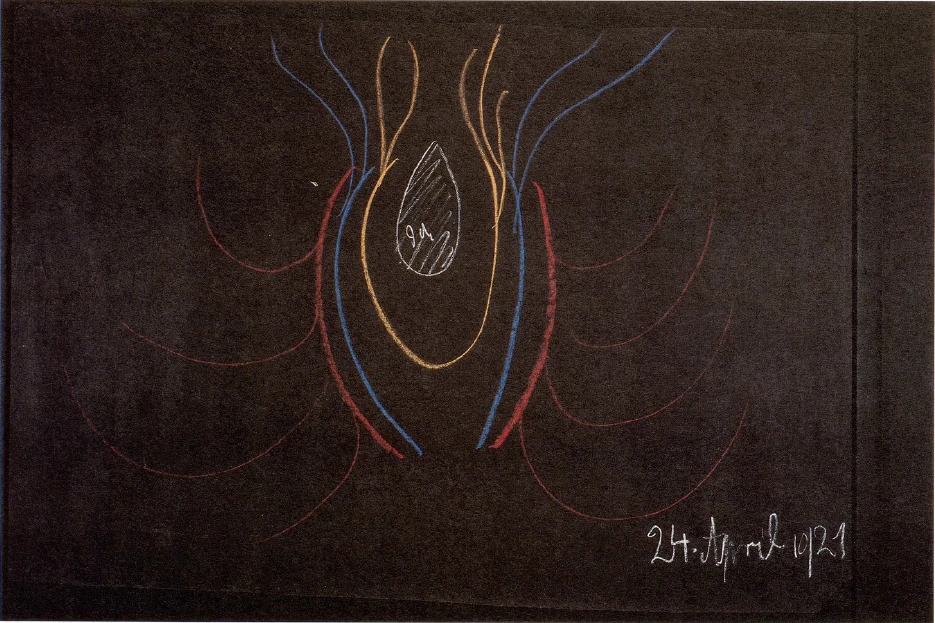
[ 13 ] Stellen wir einmal schematisch die menschliche Wesenheit vor uns hin. Nehmen wir zunächst einmal des Menschen physischen Leib (siehe Zeichnung, rot). Wie gesagt, ich zeichne schematisch.
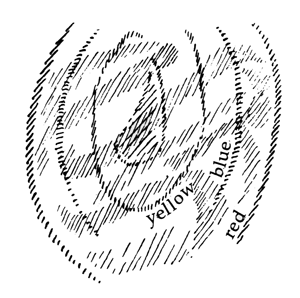
[ 13 ] Let us place the human being schematically before us. Take, first of all, man's physical body (red). As I said, I am making a schematic drawing.
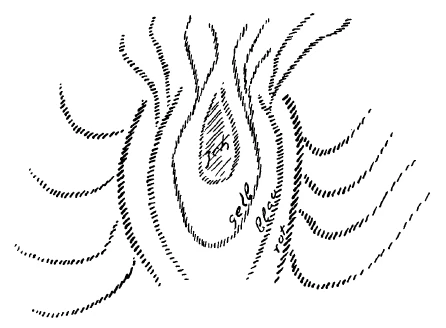
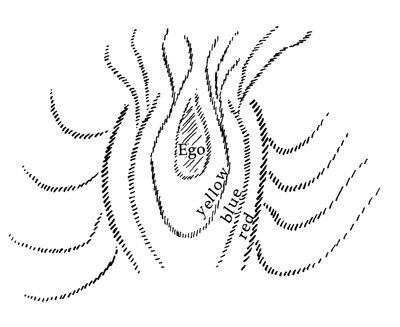
[ 14 ] Nehmen wir des Menschen Ätherleib (blau); nehmen wir des Menschen astralischen Leib (gelb), und nehmen wir des Menschen Ich. Betrachten wir nun zunächst einmal diese menschliche Wesenheit, wie sie war in alten Zeiten, in jenen alten Zeiten, in denen das instinktive Hellsehen noch vorhanden war, das dann abblühte, verwelkte und allmählich verschwand. Das Ich ist ja im Grunde genommen Erdenprodukt, auf das brauchen wir weniger zu sehen; allein klar müssen wir uns sein, daß in des Menschen physischem Leib, Ätherleib, astralischem Leib ja im Grunde genommen die ganze Welt lebt. Wir können sagen: In diesem physischen Leib lebt dasjenige, was die ganze Welt ist. Er ist herausgeboren, ergänzt sich noch immer durch die Nahrungsaufnahme aus ihr. Im ätherischen Leib lebt die ganze Welt; fortwährend kommen auf den verschiedensten Wegen in ihn hinein diejenigen Dinge, welche auf überphysische Weise in den Menschen hereinwirken, die sich in seinen Wachstumskräften äußern, die sich zum Beispiel in der Zirkulation seines Blutes äußern, die im Atem leben und so weiter, und die nicht etwa dieselben sind wie die Kräfte, die in der Nahrungsaufnahme und in der Verdauung leben. Wir haben dann alles das, was in seinem astralischen Leibe lebt, was ja auch aufnimmt Eindrücke aus der Welt, was durch die Sinne eindringt und so weiter. Das war so und es ist heute noch so, als der Mensch mit seinem alten instinktiven Hellsehen lebte; aber es war während dieser Zeit des alten instinktiven Hellsehens der Mensch intimer verbunden mit seinem physischen Leib, mit seinem Ätherleib, mitseinem Astralleib, als er es heute ist. Wenn er des Morgens aufwachte, so tauchte er hinein mit seinem Ich und seinem astralischen Leibe in seinen physischen Leib und in seinen Ätherleib. Ein inniges Gefüge bildete sich zwischen seinem Ich und seinem astralischen Leibe und seinem Ätherleibe und seinem physischen Leibe. Und er lebte nicht nur in seinem physischen Leibe, er lebte in den Kräften, die in seinem physischen Leibe darinnen arbeiteten.
[ 14 ] This is man's etheric body (blue); that is the human astral body (yellow); here we have man's ego. Let us first consider the human being as he was in ancient times, those ancient times when instinctive clairvoyance still existed, which then faded, withered, and gradually disappeared. The ego is basically a product of the earth and we need to give it less consideration. But we must be clear about the fact that the whole world actually dwells in man's physical, etheric, and astral bodies. We can say, in this physical body lives the element that represents the whole world. The corporeality is born out of it and continues to reconstruct itself through the intake of nourishment. In the etheric body, the whole world lives as well; in the most diverse ways, influences enter constantly into it and send their effects into the human being in a superphysical manner, effects that express themselves in the forces of growth, for example in the circulation of the blood, in the breath, and so on. They are by no means identical with the forces that are present in the intake of food and in digestion. In addition, there are all the influences living in our astral body that receive impressions from the world through the senses, and so forth. It is like this to this day and was like this in the days when the human being still lived with his ancient instinctive clairvoyance, but in that age, he was more intimately connected with his physical body, his etheric, and astral bodies than he is today. When he woke up in the morning, he submerged with his ego and astral body into his physical and etheric bodies. A close connection developed between his ego and astral body and his etheric body and physical corporeality. And he not only dwelled in his physical body, he also lived in the forces that worked within the latter.
[ 15 ] Ich möchte Ihnen das ganz anschaulich schildern. Nehmen Sie einmal an, der Mensch des alten Hellsehens aß eine Pflaume. Es nimmt sich ja für den heutigen Menschen fast grotesk aus, wenn man so etwas schildert, aber es ist tief wahr. Nehmen wir an, der Mensch des alten Hellsehens aß eine Pflaume; diese Pflaume hat in sich ätherische Kräfte. Wenn der Mensch heute eine Pflaume ißt, weiß er ja nicht, was in dieser Pflaume vorgeht. Der Mensch des alten Hellsehens aß eine Pflaume, hatte sie nun im Magen, verdaute sie und erlebte mit, wie das, was da ätherisch in der Pflaume lebte, in seinen Leib überging; er erlebte es kosmisch mit. Und erst wenn er nun innerlich seinen Vergleich anstellte zwischen den verschiedenen Dingen, die er in seinen Magen hineinbeförderte, da lebte alles das, was an Beziehungen vorhanden war in der Welt draußen, das lebte in ihm weiter fort, das nahm er innerlich wahr. Er erfüllte sich vom Aufwachen am Morgen bis zum Einschlafen am Abend mit einem innerlichen lebendigen Anschauen desjenigen, was draußen die Pflaumen leben, was die Äpfel leben, was auch vieles andere noch lebt, das er zu sich nahm. Er kannte innerlich durch den Atmungsprozeß die geistige Wesenhaftigkeit der Luft. Er kannte durch das, was in seinem Zirkulationsprozesse vor sich ging, wenn die Wärme drinnen zirkulierte, was als Wärmekräfte im Kosmos in seiner Umgebung war. Er hörte nicht damit auf, das Licht im Auge bloß zu empfinden; sondern er fühlte, wie das Licht durch seine Augennerven einstrahlte, in seinem eigenen Ätherleib aufstieß auf die physischen Glieder, in den physischen Gliedern lebte; er erlebte sich ganz konkret drinnen im Kosmischen. Das war allerdings ein dumpfes Bewußtsein, aber es war eben vorhanden. Es war allerdings während des Tages übertönt von dem, was auch der damalige Mensch schon äußerlich wahrnahm. Aber selbst in den ersten Zeiten der griechischen Zivilisation war es so, daß die Menschen schon noch einen Nachklang desjenigen hatten, was heute ja nur noch andere Wesen haben. Ich habe schon einmal oder sogar vielleicht öfters darauf hingewiesen, daß es außerordentlich interessant ist, mit spirituellem Blick hinzuschauen auf eine Weide, wo Kühe liegen und verdauen. Dieses ganze Geschäft des Verdauens ist für die Kühe ein kosmisches Erleben, für die Schlangen erst recht; wenn sie liegen und verdauen, so erleben sie in der Tat Weltgeschehen. Da blüht und sproßt aus ihrem Organismus für sie, für ihre Anschauung etwas auf, was Welt ist. Da steigt aus ihrem Inneren etwas auf, was viel schöner ist als alles dasjenige, was der Mensch jemals durch Augen von außen sehen kann. Und so etwas war, ich möchte sagen, als Unterton bei den Menschen, die das alte instinktive Hellsehen hatten, vorhanden. Es war allerdings die größte Zeit des Tages gedämpft durch das äußere Anschauen. Wenn aber dann diese Menschen einschliefen, dann trugen sie das, was sie da erlebt hatten und was sie aufgenommen hatten in ihren astralischen Leib und in ihr Ich, hinaus, wenn ihr Ich mit seinem astralischen Leib allein war, und dann stieg es in Form von realen Träumen mächtig auf; dann erlebten sie in Form von realen Träumen nach, was sie nur dumpf während des Tages erlebt hatten.
[ 15 ] Let me give you a vivid description of this. Imagine that a person possessing ancient clairvoyance ate a plum. It seems almost grotesque to a human being of today when something like this is described, but it is profoundly true. Assume that such an ancient clairvoyant ate a plum; this plum contains etheric forces. If a person eats a plum today, he is not aware of what goes on within this plum. The ancient clairvoyant ate a plum; it was then in his stomach, was digested, and he experienced how the etheric forces in the plum passed over into his body. He cosmically participated in this experience. When he inwardly made comparisons between the various things he ingested into his stomach, he saw that all the relationships in the outside world continued inside the human being, and he perceived them inwardly. From waking in the morning to going to sleep at night, such a person was filled with the vivid inner perception of the life lived outside by the plums, by the apples, and by much else that he ate. Inwardly, through the breathing process, he was aware of the essential, spiritual being of the air. Through the warmth that coursed through his circulation process, he was familiar with the warmth forces of the cosmos in his surroundings. He did not stop short at merely sensing the light in his eyes. He felt how the light rays streamed in through the nerves of his eyes; how, in his own etheric body, they encountered the physical limbs and dwelled within them. Such a person experienced himself quite concretely within the cosmic element. While it was a dim consciousness, it was present. During the day, it was muted by what a person perceived outwardly even in those days. But even in the early times of Greek civilization, it was true that human beings still retained an aftereffect of what is possessed today only by creatures other than man. I have already mentioned several times that it is most interesting to look with spiritual sight upon a meadow where cows are lying down and digesting. This whole activity of digestion is a cosmic experience for the cows. It is even more so the case with snakes; they lie down and digest and do indeed experience cosmic events. Out of their organism, something blossoms and sprouts that is “world” to their perception. Something arises out of their inner being that is much more beautiful than anything we are ever able to see with our eyes from outside. Something like this was present as an underlying mood in human beings who still possessed ancient, instinctive clairvoyance. While it was muted throughout most of the day by external perceptions, when these people fell asleep, they carried with them what they had thus experienced and received into their astral body and ego. Then, when their ego was alone with its astral body, these experiences arose powerfully in the form of true dreams. Then, in the form of true dreams, these people experienced after the fact what they had only dimly experienced during the day.
[ 16 ] Sehen Sie, da weise ich Sie hin auf das innerliche seelisch-leiblich-physische Erleben der Menschen älterer Zeiten, die gerade dadurch, daß sie so seelisch-leiblich-physisch erlebten, kosmisch erlebten, die gerade darinnen ihr kosmisch-übersinnliches Schauen hatten. Und wenn dann im Orient die Menschen den Somatrank tranken, dann wußten sie, was der Geist der Höhe ist. Dieser Somatrank, der durchsetzte und durchwühlte und durchwob ihr Inneres, der durchlebte ihr Blut. Und wenn sie dann einschliefen und dasjenige, was als Ich und astralischer Leib im Blute gewoben hatte, mitnahm die Formen, die entstanden waren durch das Verdauen des Somatrankes, dann dehnte sich ihr Wesen aus in Raumesweiten, und sie fühlten die Geistigkeiten des Kosmos nach in ihrem nächtlichen Erleben.
[ 16 ] You see, I am referring you to the inner soul-bodily manner of experiencing on the part of human beings of ancient times; because they were able to experience in this way, they had cosmic experiences. It was in this that they found their cosmic, super-sensible perception. Then, when people in the Orient drank the Soma drink,3Soma drink (Sanscrit): The fermented juice of the soma plant, a leafless vine (sarcostemma acidum), mixed with milk or barley, whose intoxicating and enthusing power was worshipped as the God, “Soma.” Concerning the occult significance of “Soma” see also H. P. Blavatsky, The Secret Doctrine, vol. I and II. they knew the nature of the Spirit of the Heights. This Soma drink permeated, surged, and wove through their inner being, enlivening their blood. When these people subsequently fell asleep and the ego and astral body, which had been active in the blood, took along the forms that had come into being through the digestion of the Soma drink, then their being widened out in the widths of space and, in their nocturnal experience, they felt the spiritual beings of the cosmos.
[ 17 ] Solch ein Erleben war durchaus noch zu finden bei denjenigen, bei denen der alte Zarathustra in der urpersischen Zeit ein geneigtes Ohr fand. Man versteht das, was schließlich aus den orientalischen Urkunden, die geblieben sind, zu uns herübertönt, nicht, wenn man nicht solche Dinge weiß. Aber dieses lebendige kosmische Schauen, es verglomm allmählich. Es ist schon in der historisch-ägyptischen Zeit wenig zu finden, aber es sind die Nachklänge noch da, und es schwindet bis auf letzte Reste, die sich bei primitiven Menschen ja immer erhalten haben, im 4. nachchristlichen Jahrhundert dahin. Und von da ab rang sich immer mehr aus dem Menschen heraus das, was nun ganz und gar an den bloßen physischen Leib gebunden ist in seiner Isoliertheit von der Welt: der Intellekt, das Verstandesmäßige. Man kann nicht anders, wenn man ein bildliches Vorstellen hat und hinuntertaucht in seinen Leib, als etwas Kosmisches mitempfinden.
[ 17 ] Such an experience was still present in those among whom the ancient Zarathustra found willing listeners in the ancient Persian epoch. If one is unaware of these things, one does not understand what finally came down to us from the Oriental scriptures that have survived. This living cosmic perception gradually became extinguished. Already in the historical Egyptian age, little of it can be found, only its aftereffects are still present. And except for final vestiges that have always been retained among primitive human beings, it then disappeared in the fourth Christian century. From then on, the intellect, the rational element, increasingly struggled to come to the fore in the human being, the element that is completely tied to the mere physical body in its isolation from the world.
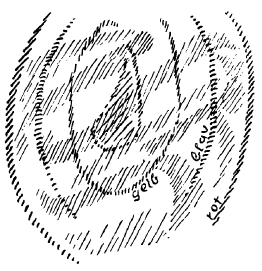
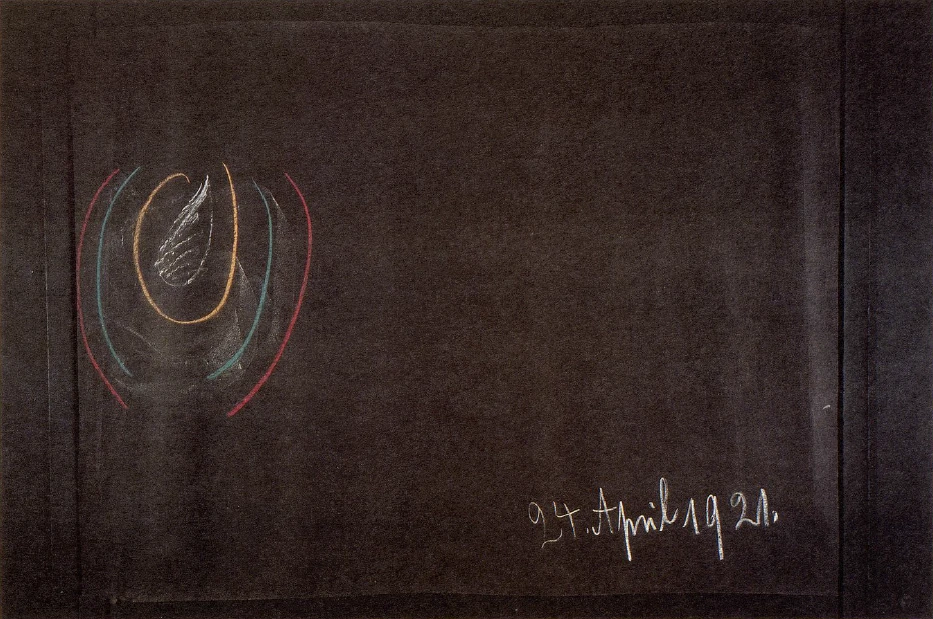
[ 18 ] Man kann nicht anders, wenn man noch etwas von der inneren Eigenschaft der Zahl hat und dann hinuntertaucht in seinen Leib, als die Zahlenmäßigkeit des Kosmos miterleben. Und so ist es auch mit den Gewichtsverhältnissen. Aber wenn man mit der Kraft des Ichs, welche als rein Verstandesmäfßiges, als rein Intellektuelleswirkt, wenn man damit hinuntertaucht in den menschlichen Organismus beim Aufwachen, dann taucht man damit nur in den isolierten menschlichen Leib ein, in dasjenige, was der menschliche Leib nur durch sich ist, was er ist ohne seine Verbindung mit dem Kosmos. In den irdischen menschlichen Leib in voller Isolierung taucht man ein, so daß man, wenn man dieses verstandesmäßßig zeichnen wollte, eben sagen müßte: Da ist zwar auch vorhanden Ätherleib, Astralleib, Ich (siehe Zeichnung blau, gelb, Mitte); aber das Ich erlebt hier in der menschlichen Wesenheit nichts vom Kosmischen mehr. Es erlebt eben nur dumpf sein Sein, sein Untergetauchtsein in den isolierten menschlichen Organismus. Wenn daher dieses rein verständige Ich schlafend in die Umwelt herausgeht, nimmt es nichts mit. Und dieses Nichts-Mitnehmen, das bewirkt, daß höchstens Reminiszenzträume, Traumbilder irrealer Art im Menschen auftauchen können, aber daß dieses Ich nicht kosmisch irgendwie von etwas durchdrungen ist. Der Mensch erlebt also im Grunde genommen vom Einschlafen bis zum Aufwachen nichts Wesentliches, weil sein ganzes Erleben auf den isolierten menschlichen Organismus berechnet ist, der aber nunmehr mit denjenigen Kräften auf dieses Ich wirkt, welche nichts mit dem Kosmos zu tun haben. Daher wird das Ich stumpf vom Einschlafen bis zum Aufwachen. Das muß auch so sein. Die alten instinktiv-hellseherischen Menschen haben zwar ihr kosmisches Schauen gehabt, sie haben, in instinktiven Intuitionen, in instinktiven Inspirationen, in instinktiven Imaginationen gelebt; aber sie haben nicht ein selbständiges Verstandesdenken gehabt, denn dieses selbständige Verstandesdenken, dieses eigentlich intellektuelle Denken, das muß sich bedienen des Werkzeuges des isolierten menschlichen Leibes, wenn es sich ausbilden will. Das muß stumpf sein zwischen dem Einschlafen und Aufwachen, bringt daher auch beim Aufwachen nichts mit, während der alte Mensch mitgebracht hat das, was er, nachdem er das Erleben im Leibe hinausgetragen hatte in den Kosmos, erlebt hat im Begegnen dieser Nachklänge, dieser kosmischen Nachklänge mit dem draußenstehenden wirklich geistig-kosmischen Geschehen. Von dem, was er da erlebt hat, brachte er wieder Nachklänge zurück; er hatte dadurch einen lebendigen Verkehr mit dem Kosmos. Was im verstandesmäßigen Denken vom Menschen errungen wird, das wird errungen vom Aufwachen bis zum Einschlafen, wird stumpf nach dem Einschlafen. Der Mensch ist nun auf das Wachen angewiesen.
[ 18 ] If you have a pictorial imagination and enter into your body, you cannot help but experience something cosmic. If you have retained something of the inner quality of numbers and enter into your body with it, you cannot help but experience the number element of the cosmos. The same is true for the ratios of weight. However, if you enter into the human organism with the power of the ego, which is active as a purely rational, intellectual element, then you immerse yourself only in the isolated human body, in what the human body is by virtue of its own nature, without its relationship to the cosmos. You enter into the earthly human body in its total isolation. Thus, if I would try to sketch this from the point of view of the intellect, I would have to do it like this: The etheric body, the astral body, and the ego (see above, blue, yellow, and shape in the middle) are present there too. But the ego no longer experiences anything of the cosmic element here within the human being. It only has a dim experience of its own existence, of its own immersion in the isolated human organism. Therefore, when this purely intellectual ego goes into its surroundings in sleep, it takes nothing along. The fact that it takes along nothing is the reason that at most reminiscences, dream images of an unrealistic kind, can arise in the human being, and that this ego can in no way be permeated by anything from the cosmos. Basically, from the moment of falling asleep until awakening, the human being experiences nothing of significance, because his whole manner of experiencing is calculated for the isolated human organism, which in turn affects the ego with those forces that have nothing to do with the cosmos. This is why the ego is dulled from the moment of falling asleep until waking up. Indeed, it must be so, for though instinctively clairvoyant ancient human beings possessed cosmic vision and dwelled in instinctive Imaginations, Inspirations, and Intuitions, they possessed no independent rational thinking. If this independent rational thinking, this actual intellectual thinking, is to develop, it has to make use of the instrument of the isolated human body. It has to be dull during sleep and therefore brings nothing along when it awakens. The ancient human being, on the other hand, having carried his experiences in the body out into the cosmos, brought with him what he had experienced in the encounter of the cosmic aftereffects with the actual spiritual-cosmic occurrences out there. Again, he brought back aftereffects of what he had experienced there and thus enjoyed a lively relationship with the cosmos. What is attained by the human being through intellectual thinking is acquired in the period from waking up until falling asleep and dims down after sleep begins. Human beings now have to depend on the time when they are awake.
[ 19 ] Sehen Sie, es liegt ein merkwürdiges Verhältnis vor, es liegt das Verhältnis vor, daß in alten Zeiten der Mensch mehr an seinen Leib gebunden war als er es heute ist, aber daß er eben im Leibe das Geistige des Kosmos erlebte. Dieses Erleben im Leibe hat der neuere Mensch verloren. Der neuere Mensch ist geistig, aber er hat den verdünntesten Geist, er lebt im Intellekt und kann im Geiste nur leben vom Aufwachen bis zum Einschlafen, und er wird stumpf, wenn er in die geistige Welt geht mit seinem ganz verdünnten intellektiven Geiste.
[ 19 ] We come across the strange phenomenon that in ancient times the human being was bound more to his body than he is today, but that he experienced in this body the spiritual aspect of the cosmos. Modern man has lost this experience in the body. The human being today is more spiritual but he has the most rarefied spirit; he lives in the intellect and can dwell in the spirit only from the time he awakens until he falls asleep. When he enters the spiritual world with his completely rarefied intellectual spirit, his consciousness is dimmed.
[ 20 ] Warum haben wir eigentlich den Materialismus bekommen? Und warum haben die alten Menschen den Materialismus nicht gehabt? — Die alten Menschen haben den Materialismus nicht gehabt, weil sie in der Materie des Leibes gelebt haben; die neueren Menschen haben den Materialismus, weil sie nur im Geiste leben, weil sie ganz frei sind von einem kosmischen Zusammenleben mit ihrem Leibe. Der Materialismus kommt gerade daher, daß der Mensch geistig geworden ist, aber verdünnt geistig. Am geistigsten war der Mensch in der Mitte des 19. Jahrhunderts; aber er hat sich ahrimanisch selbst belogen, indem er nicht erkannte, daß das, worin er lebt, der verdünnte Geist ist, und er nahm nur auf in das Geistigste, was ihm werden konnte, die Vorstellung von der Materialität. Der Mensch war ganz und gar ein geistiger Behälter geworden; aber er ließ in diesen geistigen Behälter nur die Gedanken vom materiellen Dasein hineinfließen. Das ist das Geheimnis des Materialismus, daß der Mensch wegen seiner Geistigkeit sich der Materie zuwandte. Das ist die Ableugnung des modernen Menschen gegenüber der eigenen Geistigkeit. Der Kulminationspunkt des Geistigseins war in der Mitte des 19. Jahrhunderts erreicht; aber der Mensch erfaßte dieses Geistigsein nicht.
[ 20 ] Why have we developed materialism? And why did ancient humanity not have materialism? The ancients did not have it because they dwelled within the matter of the body; modern men have materialism because they dwell only in the spirit, because they are completely free of a cosmic connection to their body. Materialism actually comes about because the human being became spiritual, but spiritual in a rarefied manner. People were most spiritual during the mid-nineteenth century. But they lied to themselves in an ahrimanic way inasmuch as they did not recognize that it was the rarefied spirit in which they dwelled. Into the most spiritual element possible for the human being, he only absorbed the concept of materiality. The human being had turned into a completely spiritual vessel, but into this vessel he only let flow the thoughts of material existence. It is the secret of materialism that human beings turned to matter because of their spirituality. This is modern man's negation of his own spirituality. The culmination point of this spiritual condition was in the middle of the nineteenth century, but human beings did not grasp this condition of spirituality.
[ 21 ] Das aber, wie gesagt, bereitete sich langsam vor durch die Jahrhunderte. Hinabgeglommen war die alte instinktive Geistigkeit im 4, nachchristlichen Jahrhundert, herauf kam die neue Geistigkeit im ersten Drittel des 15. Jahrhunderts; dazwischen ist gewissermaßen eine Episode des menschlichen Erlebens. Aber jetzt, nach diesem Zeitpunkt, nach dem ersten Drittel des 15. Jahrhunderts, nach dem 15. Jahrhundert überhaupt, machte sich dieses Angewiesensein des Menschen auf seinen isolierten irdischen physischen Leib geltend. Jetzt fing er eben an, keine Beziehung mehr zu entwickeln zu dem, was eingefroren war in den dogmatischen Konzilienformeln, was ja allerdings eingefroren war, aber doch einen großartigen Inhalt hatte. Und er konnte im Grunde genommen auch keine Beziehung mehr finden zu den schlichten Erzählungen von Palästina. Er zwang sich noch einige Zeit, einen Sinn damit zu verbinden. Man kann aber nur einen Sinn damit verbinden, wenn man sie erkennend durchdringt. Insbesondere aber konnte er keinen Sinn mehr damit verbinden, dieser moderne Mensch, immer weniger und weniger Sinn verbinden mit den Kultformen, mit dem Kultus selbst. Das Meßopfer, eine Handlung von höchster kosmischer Bedeutung, wurde zum äußeren Symbolum, da man es nicht verstand; das Sakrament der Transsubstantiation, das sich forterhalten hatte das Mittelalter hindurch, und das eine tiefe kosmische Bedeutung hat, wurde in die rein intellektuelle Diskussion der Menschen hineingeworfen. Es war ganz selbstverständlich, daß man mit dem isolierten Verstand, wenn man anfing zu fragen, in welcher Weise der Christus enthalten sei im Altarsakrament, das nicht begreifen konnte; denn zum Verstandesbegreifen sind diese Dinge eben nicht geeignet. Jetzt fing man an, sie mit dem Verstande begreifen zu wollen.
[ 21 ] As I said, this developed slowly through the centuries. The ancient instinctive spirituality had slowly died down in the fourth Christian century; beginning in the first third of the fifteenth century, the new spirituality dawned; the time between is in a sense an episode of purely human experience. Now, however, after this point in time in the first third of the fifteenth century and after that century as a whole this dependence of man on his isolated physical body made itself felt. Now he no longer developed any relationship to what was frozen into dogmatic council doctrines and what, although rigidified, still possessed a grandiose content. Now, too, human beings basically could no longer find any relationship to the humble narrations of Palestine. For a while yet, they forced themselves to connect some meaning with them. However, meaning can be connected with them only when they are penetrated by knowledge. In particular, modern human beings no longer could connect any meaning with the cults, the ritual itself. The Sacrifice of the Mass, a religious act of the greatest cosmic significance, turned into an external, symbolic act because it was no longer understood. The sacrament of the Transubstantiation, which had survived through the Middle Ages and which has profound cosmic significance, became part of purely intellectual disputes. Certainly it goes without saying that when people began to question with their isolated intellect how the Christ could be contained in the sacraments of the altar, they could not comprehend it, for these matters are not suited for comprehension by the intellect. But now human beings began to try to understand them by means of the intellect.
[ 22 ] Das führte dann dazu, daß jene Diskussionen von so großer weltgeschichtlicher Bedeutung auftauchten, die als «Abendmahlsstreit» bekannt sind, und die geknüpft sind an Namen wie Has und andere. Und die fortgeschrittensten, die im verständigen Auffassen der Welt fortgeschrittensten Menschen der europäischen Zivilisation mündeten in die verschiedenen Protestantismen hinein. Es ist die Reaktion des Intellekts gegen dasjenige, was aus einer viel breiteren, viel intensiveren Erkenntniskraft hervorgegangen war als es der Intellekt ist. Wie fremd standen sich gegenüber die Kräfte, die sich in der modernen Seele gebildet hatten als intellektive Kräfte, und dasjenige, was in den eingefrorenen Formeln lebte, aber ‚was in sich doch umschloß ein Gtoßes, ein Gewaltiges! Die evangelischen Bekenntnisse der verschiedensten Art kamen herauf, Kompromisse zwischen dem Intellekt und den alten Überlieferungen, und das 16., 17., 18., 19. Jahrhundert, sie liefen ab, und der Mensch stand eben in der Mitte des 19. Jahrhunderts auf dem Höhepunkt seiner intellektuellen Entwickelung; er wurde ein ganz und gar geistiges Wesen. Er konnte durch diese Geistigkeit begreifen, was in der äußeren Sinneswelt ist; aber er begriff sich selber nicht als Geist. Kaum hatte man noch eine Ahnung, was ein solcher Satz bedeutete, wie der des Leibniz, der da sagte: «Nichts lebt im Intellekt, was nicht vorher in den Sinnen gelebt hat, außer dem Intellekt selber.» Diese letztere Wendung hatte der moderne Mensch ganz und gar weggelassen und er bekannte sich nur zu dem Satze: Nichts lebt in dem Intellekt, was nicht vorher in den Sinnen gelebt hat —, während Leibniz ganz und gar durchschaute, daß der Intellekt ein durch und durch Geistiges ist, etwas, was im Menschen arbeitet, ganz unabhängig von aller physischen Körperlichkeit.
[ 22 ] This then led to the emergence of debates of great importance in world history known as the “Eucharist-Dispute,”4Eucharist-Dispute: The dogma of the Transubstantiation, the transformation of bread and wine into the body and blood of Christ (Fourth Lateran Council, A.D. 1215), was rejected by the Reformation. and linked to names like Hus5Johannes Hus: around 1370–1415, early Czech reformer from Bohemia, banned by the Church in 1410 and burned as a heretic in 1415. and others. The most progressive individuals in Europe, those most advanced in the rational comprehension of the world, then arrived at the various forms of Protestantism. It is the intellect's reaction against something that had emerged from a much broader, much more intense power of cognition than is the intellect itself. The powers that had developed in the modern soul as intellectual faculties and what dwelled in the rigid dogmas yet containing something great and mighty, these two confronted each other as two alien views! Protestant confessions of the greatest variety arose as compromises between the intellect and the ancient traditions. The sixteenth, seventeenth, eighteenth and nineteenth centuries passed, and in the middle of the nineteenth century the human being reached the culmination of his intellectual development. He became a spiritual being through and through. With this spirituality, he could comprehend what exists in the outer, sensory world, but he did not comprehend himself as spirit. People hardly had an inkling any longer of the meaning of a sentence such as the one by Leibnitz that states, “Nothing dwells in the intellect that did not dwell earlier in the senses, except for the intellect itself.”6Gottfried Wilhelm Leibnitz, 1646–1716, German philosopher. Modern people completely omitted the phrase at the end and acknowledged only the sentence, “Nothing dwells in the intellect that did not dwell earlier in the senses,” whereas Leibnitz clearly discerned that the intellect is something totally spiritual at work in the human being quite independently of all aspects of the physical corporeality.
[ 23 ] Wie gesagt, der Intellekt wirkte, aber er erkannte sich nicht. Und so haben wir es erlebt, daß der Mensch nun auf dem Übergange zu einer anderen Entwickelungsphase seines Lebens ist, und er trägt gewissermaßen nichts in die Nacht hinaus. Denn dasjenige, was verstandesmäßig erarbeitet wird, wird durch den Leib erarbeitet und hat keine Beziehung zu dem Außerleiblichen. Nun muß sich der Mensch neuerdings hineinarbeiten in die geistige Welt. Es tritt für ihn die Möglichkeit ein, in diese geistige Welt hineinzuschauen; sie ist deutlich da. Was der Mensch früher aus seinem physischen, aus seinem Ätherleib, aus seinem astralischen Leib herausgeholt hat an instinktivem Anschauen über den Kosmos, es kann heute wieder errungen werden. Wir können zu Imaginationen kommen und können die Weltentwickelung durch Saturn, Sonne und Mond, Erde und so weiter in Imaginationen schildern. Wir können dasjenige, was da lebt, in die Zahlnatur, in die Zahlwesenheit hineinschauen und können dadurch die Inspiration empfangen, wie aus der Weltengeistigkeit heraus sich durch die Zahlengesetzmäßigkeit die Welt gestaltet. Es ist zunächst durchaus möglich, daß das da ist, was in dieser Weise imaginativ und inspirativ und intuitiv über die Welt zu erringen ist.
[ 23 ] As I have said, the intellect was active but did not recognize itself. Thus, it has been our experience that human beings are now in the transition to another phase of development in their life, and, so to speak, they carry nothing out with them into the night. For what is intellectually acquired is attained through the body and has no relationship to what is outside the body. People now have to work their way anew into the spiritual world. The possibility distinctly exists for them to look into this spiritual world. What people earlier had attained from their physical and etheric bodies as well as from their astral body in regard to an instinctive view of the cosmos can be attained again today. We can come to Imaginations and by means of them we can describe the world evolution from Saturn, Sun, Moon, to earth, and so on. We can behold what dwells in the nature of numbers, namely, the being of numbers. Through Inspirations, we can receive insight into how the world is shaped out of cosmic spirituality according to the laws of numbers. It is entirely possible that we can have insight into the world in this way through Imagination, Inspiration, and Intuition.
[ 24 ] Die meisten Menschen werden sagen: Wenn wir nicht selber hellsichtig geworden sind, so können wir das höchstens studieren. — Gut, aber man kann es studieren, und immer wieder und wiederum ist gesagt worden, der gewöhnliche Intellekt kann es einsehen. Heute soll hinzugefügt werden, warum der gewöhnliche Intellekt es einsehen kann. Nehmen Sie an, Sie lesen so etwas wie die «Geheimwissenschaft im Umrißs». Nehmen Sie an, Sie versuchen, sich mit dem gewöhnlichen Intellekt in diese Dinge hineinzuversetzen ‚Sie nehmen es auf mit dem Intellekt, der nur an den isolierten menschlichen Leib gebunden ist. Sie nehmen aber etwas auf, was Sie durch diesen Intellekt nicht haben aufnehmen können, weil dieser Intellekt sich selber nicht begriffen hat durch die Jahrhunderte hindurch. Jetzt nehmen Sie etwas auf, was für diejenigen Begriffe, die der Intellekt nur aus der äußeren Sinneswelt entlehnt, unverständlich ist, was aber verständlich wird, wenn der Intellekt sich aufrafft, um aus sich selber heraus etwas zu verstehen, um zunächst nicht zu bejahen oder zu verneinen, sondern nur zu verstehen. Das ist ja, was gesagt wird: Verstehen soll man die Dinge. — Man braucht sie zunächst einfach nur zu verstehen. Versteht man sie, so schafft man ja mit dem, was das Ich sich als Verständnis errungen hat, nun in die Nacht hinein. Da bleibt man nicht mehr stumpf, wie bei dem bloßen intellektiven Verhalten zur Welt, da lebt man vom Einschlafen bis zum Aufwachen mit einem anderen Inhalt in der fein filtrierten Geistigkeit. Und dann wacht man auf und hat, eine allerdings immer nur kleine Möglichkeit des innerlichen Aneignens zugesetzt zu dem, was man sich bemüht hat, intellektuell zu verstehen. Aber ich möchte sagen, mit jeder Nacht, mit jedem Schlafen setzt sich etwas dazu von einer innerlichen Beziehung, der Mensch bekommt eine innerliche Beziehung. Er trägt das, was er als Nachklang seines Tagesverstehens in die außerkörperliche Welt hinausträgt, beim Einschlafen wieder herein, und dadurch bekommt er eine Beziehung, eine ganz aus dem Realen herausgeholte Beziehung zu der geistigen Welt, wenn er sich diese Beziehung nicht ruiniert durch dasjenige, wodurch er sie sich ja heute vielfach ruiniert; ich habe diese Hilfsmittel des Ruinierens der Geistigkeit ja öfters angeführt. Sie wissen, zahlreiche Menschen sehen sehr darauf, vor dem Einschlafen etwas zu erlangen, was sie die «Bettschwere» nennen; sie trinken so viele Gläser Bier, bis sie die nötige Bettschwere haben. Das ist ein ganz gewöhnlicher Ausdruck, der heute weit verbreitet ist gerade in der «Intelligenz». Da allerdings können sich jene Kräfte nicht hineinentwickeln, von denen ich jetzt eben gesprochen habe.
[ 24 ] Most people will say: If we have not ourselves become clairvoyant, we can at most study these matters. Good and well, but one can study them, and it has been said again and again that the ordinary intellect can grasp them. Today, I shall add the reason why the ordinary intellect is able to grasp these matters. Assume that you are reading something like An Outline of Occult Science. Imagine that you try to place yourself into these descriptions with your ordinary intellect. You take it in with the intellect, which is only linked to the isolated human body. But you do take something in that you could not receive through this intellect, since throughout the past few centuries this intellect did not comprehend itself. Now you take something in that is incomprehensible on the basis of those concepts that the intellect derives from the external sense world. It does become comprehensible, however, when the intellect on its own makes the effort to understand it, initially neither agreeing nor disagreeing but only comprehending. After all, the emphasis is on understanding these things. Initially, you need simply understand them. If you do, then you create something with the insight the ego has gained that extends into the night. Then, during the night, you no longer remain dull as is the case with the merely intellectual attitude towards the world; then, from the time of falling asleep until waking up, you dwell in a different content in the delicately filtered spirituality. Then, you awaken and find that the possibility has been added—small though it is each time—of inwardly acquiring what you have struggled to understand intellectually. With each passing night, every time we sleep, something of an inner relationship is added, we acquire an inward connection. Each time, upon falling asleep, we bear the aftereffect of our daytime comprehension with us into the world beyond corporeality. In this way, we acquire a relationship to the spiritual world, a relationship acquired completely out of reality. This, however, is the case only if the human being does not ruin this relationship by means of something with which he so frequently ruins it today. I have mentioned these means for ruining spirituality quite often. As you know, many people are intent on acquiring a certain state of sleepiness prior to going to sleep; they consume as many glasses of beer as it takes to have the necessary degree of sleepiness. This is a quite common practice, especially among “intelligent” people. In that case, the faculties I just mentioned certainly cannot develop.
[ 25 ] Aber die Geistigkeit ist zu erforschen. Die Geistigkeit kann auf die eben geschilderte Weise auch erlebt werden. Der Mensch ist herausgewachsen aus der Geistigkeit. Er kann wiederum hineinwachsen in diese Geistigkeit. Wir stehen heute am Anfange dieses Hineinwachsens in die Geistigkeit. Was sich in den verflossenen Jahrhunderten, seit dem 15. Jahrhundert bis ins 19. Jahrhundert herein, wo der Verstand auf der höchsten Stufe stand, entwickelt hat, was sich gerade unter den fortgeschrittensten Menschen Europas entwickelt hat, das ist zwar eine gewisse Geistigkeit, die aber zunächst ohne Inhalt ist; denn erst wenn man wieder an die Imagination sich wendet, bekommt diese Geistigkeit den ersten Inhalt. Das, was höchstfiltrierte Geistigkeit ist, das muß seinen Inhalt bekommen. Er wird zunächst noch von den weitesten Kreisen der Welt abgelehnt. Die Welt will bei der filtrierten Geistigkeit bleiben und nur einen Inhalt geben, der der äußeren materiellen Welt entlehnt ist. Sie will mit diesem Verstande sich nicht aufraffen, um dasjenige, was aus dem Schauen der geistigen Welt gegeben wird, zu verstehen. Die Evangelienbekenntnisse, sie sind eben Kompromisse zwischen dem Intellekt und den alten Traditionen; sie haben den Zusammenschluß verloren. Der Kultus sagt ihnen nichts, daher hat der Kultus nach und nach ziemlich aufgehört innerhalb dieser Bekenntnisse. Bis zu abstrakten Vorstellungen ist es gekommen statt des lebendigen Erfassens von so etwas wie der TIranssubstantiation. Die schlichten Erzählungen können höchstens erzählt werden, aber man kann mit ihnen ja keinen anderen Sinn verbinden als den, den man eben mit einer materialistischen Theologie verbinden kann: daß man es nämlich zu tun hat mit Ereignissen, die sich angliedern lassen an den schlichten Mann aus Nazareth und so weiter. Das ist etwas, was zu keinem Inhalte kommen kann, das ist etwas, was allen Zusammenhang mit der Geistigkeit verliert.
[ 25 ] Spirituality can be researched, however, and this spirituality can indeed be experienced as well in the manner just described. The human being has grown away from spirituality. He is capable of growing into it again. Today, we are only at the beginning of this process of growing into spirituality. In the past few centuries, from the fifteenth century into the nineteenth century when the intellect had reached its highest level, a certain spirituality has developed, in particular among the most progressive people in Europe, albeit a spirituality that has as yet no content. For it is only when we turn to Imagination that this spirituality receives its first content. This spirituality, which is filtered to the extreme, must first receive its content. At this point in time, this content is being rejected by the majority of the people. The world wishes to remain with the filtered spirituality; it wishes to produce a content derived from the outer material world. People do not wish to struggle with their intellect to comprehend the results of insight into the spiritual world offered. The confessions that follow the Gospel are, after all, compromises between the intellect and ancient traditions; they have lost the connecting link. Ritual means nothing to them. This is why the latter has gradually disappeared within these confessions. People arrived at abstract concepts instead of a living comprehension of, for example, the Transubstantiation. At most, the simple stories can be told, but no meaning other than the one that is compatible with a materialistic theology can be connected with them, namely, that one is dealing with occurrences that can be linked to the humble man from Nazareth, and so forth. All this can no longer lead to a content; it is something that loses all connection with spirituality.
[ 26 ] Und so haben wir heute die Weltsituation, daß dasteht dasjenige, was zunächst den Intellekt abgelehnt hat, was solche Kompromisse nicht eingegangen ist, wodurch in weiten Kreisen der Bevölkerung eine Beziehung sich erhalten hat, wenn auch eine völlig instinktive, zu den Formeln, die in den Dogmen leben, deren Inhalt für den Menschen nicht mehr daliegt, aber der ja doch ausgeflossen ist in diese Formeln. Auch haben sich diese Kreise ihr lebendiges Verhältnis zum Kultus, zum Zeremoniell erhalten, ihren Zusammenhang mit dem Sakramentalen. So sehr auch das alles ausgepreßt ist, es lebte einmal in dem, was da Gerippe, was Schatten geworden ist, die alte Geistigkeit, diejenige Geistigkeit, zu der eben noch durch die Formeln eine Beziehung da ist. In den neueren Bekenntnissen protestantischer Art, in denen man einen Kompromiß versucht, lebt eine solche Beziehung nicht. — Und dann sind die Menschen da, die sich die ganz aufgeklärten nennen, die bloß im Intellekt leben, der allerdings geistig ist, der aber das Geistige nicht erfassen will.
[ 26 ] Thus, the situation in the world today is such that there is, first of all a faith that has rejected the intellect and did not strike any compromise. Due to this, in vast segments of the population a relationship has been retained, albeit an instinctive one, to the doctrines and dogmas, the content of which is no longer accessible to human beings but did flow out into these dogmas. This segment of the populace also has retained its living relationship to the cult, to the ceremonial ritual; it has retained its link to the sacraments. As depleted as all this is, the ancient spirituality—the spirituality to which there is still a connection through dogmas—did once dwell in what has become a skeleton, a shadow. Among the more recent Protestant confessions, where a compromise is being tried out, such a connection is no longer alive. And then we have those who call themselves quite enlightened and dwell only in the intellect, which is spiritual but does not wish to grasp the spirit.
[ 27 ] Das sind die drei Strömungen, die wir haben, und wir können ja rechnen für die Zukunft nicht mit solchen Strömungen als fruchtbaren, die nur einen äußerlichen Kompromiß haben eingehen wollen, wir können nicht rechnen mit der bloßen Intellektualität, die zu keinem Inhalt kommen kann, die daher sich selbst verlieren muß, weil sie sich nicht selbst erkennen will. Wir können nur rechnen mit dem, wozu allmählich die Strömungen auslaufen, immer deutlicher und deutlicher laufen sie aus, wir können rechnen mit dem, was sich in alte Formeln gegossen hat, was die fortlebende römisch-katholische Kirche ist, und mit demjenigen, was ernst macht mit der neuen Intellektualität, diese Intellektualität imaginativ, inspirativ und intuitiv vertieft und zu einer neuen Geistigkeit kommt. In diesen zwei Gegensätzen lebt sich die moderne Welt auseinander. Auf der einen Seite stehen die Menschen da mit dem Intellekt. Sie sind innerlich träge, sie wollen diesen Intellekt nicht anwenden; aber sie brauchen einen Inhalt. Sie greifen zurück zu den toten Formeln. Gerade unter intelligenten Leuten, die aber innerlich träge sind, die in gewisser Beziehung intellektuell-dadaistisch sind, in denen macht sich heute eine jungkatholische Bewegung geltend, welche aufgreifen will das Alte, das in Formeln erstarrt ist, welche von außen einen Inhalt bekommen möchte, in historischen Erscheinungen aber erstarrt. Sie krampft aus dem Intellekt heraus, einen Sinn zu verbinden mit dem alten Inhalt, und wir haben solche intellektualistischen Krämpfe, welche dutch alten Inhalt ihre erstarrten Formeln sich neuerdings zubereiten wollen zum Gebrauche der Menschen.
[ 27 ] These are the three streams we confront. In regard to the future, we cannot count on the fruitfulness of those streams that only tried to make an external compromise; we cannot count on mere intellectuality that cannot arrive at any content and therefore can only lose itself since it does not want to understand itself. We can only count on the direction in which these streams are gradually heading, and they are more and more clearly heading there, namely, we can count on what has been poured into ancient doctrines and is represented in the surviving Roman-Catholic Church. We can count on the attitude that takes the new intellectuality seriously and deepens it Imaginatively, Inspiratively, and Intuitively, thus arriving at a new spirituality. The modern world is becoming divided and estranged in these two contrasting directions. On the one hand stand people with their intellect. They are inwardly lazy and do not wish to utilize this intellect, but they need a content. So they refer to the dead dogmas. Particularly among intelligent people, who are, however, mentally indolent, who are in a certain respect intellectual and Dadaistic, a neo-Catholic movement is making itself felt that is trying to take hold of the old traditions that have rigidified in dogmas and that is trying to receive a content from outside, through historical phenomena but that rigidifies in historical forms. Based on the intellect, this trend tries desperately to make some sense of the ancient content; thus we have intellectual battles that, by means of the old content, try to prepare their rigidified doctrines in a new way for the use of human beings.
[ 28 ] Wir haben zum Beispiel ein intellektuell verkrampftes Sich-Hinneigen zu erstarrten Formeln auf vielen Seiten in dem neuen «Tat»Heft. Denn der Verleger Diederichs tut schließlich alles, er bringt alles in Kategorien und auf Papier, und so hat er auch einer jungkatholischen Bewegung jetzt ein ganzes «Tat»-Heft gewidmet, woraus man sehen kann, wie man heute krämpfig denkt, wie man ein innerlich-krämpfiges Denken entwickelt, um nicht sich innerlich aufzuraffen, um innerlich träge bleiben zu können und mit dem Intellekt, der nun schon einmal da ist, das sich am trägsten Fortschiebende aufzufassen. Das alles versuchen die Menschen, um ablehnen zu können dieses lebendige Hinarbeiten aus der neueren Intellektualität heraus zu der Geistigkeit, die ergriffen werden kann und die ergriffen werden muß. Und immer mehr und mehr werden sich die Dinge so zuspitzen, daß eine mächtige Bewegung durch die Welt geht, welche faszinierend wirkt, suggerierend wirkt, hypnotisierend wirkt auf alle diejenigen, die träge bleiben wollen im Intellekt. Eine katholische Welle geht durch die Welt selbst der intelligenten Leute, die aber in ihrer Intelligenz träge bleiben wollen. Die schläfrigen Seelen merken es nur nicht. Aber unfruchtbar muß das bleiben, demjenigen zuzustreben, was Oswald Spengler so anschaulich geschildert hat in seinem «Untergang des Abendlandes». Man kann das Abendland katholisch machen, aber man tötet damit seine Zivilisation. Dieses Abendland muß sich zuwenden dem Aufwachen, dem Innerlich-regsam-Werden, dem Nicht-träge-Bleiben der Intelligenz, denn diese Intelligenz, sie kann sich aufraffen, sie kann sich innerlich erfüllen mit Verständnis für die neue Geistesanschauung.
[ 28 ] To cite an example, on many pages in the newest edition of the magazine Tat,7“Die Tat”—Monthly Magazine for the Future of German Culture. VIII, 1921, vol. 1. we can observe an intellectual, cramped tendency towards rigidified doctrines. After all, the publisher, Diederichs, does everything; he puts everything into categories and on paper. Thus, he has now dedicated a whole edition of Tat to the neo-Catholic movement. It allows us to discern how cramped people's thoughts are today, how people are developing inwardly cramped thinking so that they can avoid having to rouse themselves and can remain mentally lazy in order to grasp with the intellect whatever moves forward most indolently. People experiment with all this in order to be able to reject this life-filled striving out of modern intellectuality towards spirituality, a striving that can and must be grasped. More and more, things will come to a head in such a way that a powerful movement with a fascinating, suggestive, hypnotic effect on all those wishing to remain lazy within the intellect permeates the world. A Catholic wave is even pervading the world of intelligent people who wish, however, to remain lazy within their intelligence. The drowsy souls just do not realize it. But it must remain unfruitful to strive for what Oswald Spengler described so vividly in his Decline of the West.8Oswald Spengler, 1880–1936, German philosopher of culture. One can turn the Occident Catholic, but one will thereby slay its civilization. This Occident has to concern itself with waking up, with becoming inwardly active. Its intelligence must not remain lazy, for this intelligence can rouse itself; it can fill itself inwardly with an understanding for the new view of the spirit.
[ 29 ] Dieser Kampf, er bereitet sich vor, er ist da, und er ist die Hauptsache. Alles andere gerät in der Zukunft zwischen diesen beiden Strömungen unter die Räder in bezug auf dasjenige, was Weltanschauungsfragen sind. Auf das hin muß der Blick gerichtet werden, denn was sich da auslebt, verbirgt sich in mancherlei Formeln und Formen. Und wer da glaubt, mit dem, womit man vielleicht noch im Beginne dieses Jahrhunderts sich einem Traum hingegeben hat, weiterkommen zu können, der lebt nicht mit das Leben der Gegenwart. Derjenige lebt allein das Leben der Gegenwart, der sich ein Auge entwickelt für das, was in diesen beiden geschilderten Strömungen lebt. Darauf muß mit wachen Augen hingesehen werden. Denn all das, wovon ich vor acht Tagen gesprochen habe, daß heute zahlreiche Menschen das Böse lieben und aus dem bloßen Hang zum Bösen in der Weise verleumden, wie es Ihnen charakterisiert worden ist, das muß uns vor die Seele treten. Jene innere Unwahrhaftigkeit muß uns vor die Seele treten, daß, wie ich es Ihnen erwähnt habe, die Leute, welche in ihrem katholischen Bewußtsein gestärkt werden sollen, in die katholische Kirche in Stuttgart zum Vortrag des Generals von Gleich geschickt werden, und daß dieser katholische General mit dem Lutherliede schließt! — Da findet sich das zusammen, was nicht auf das Bekenntnis hält, sondern was nur im Ausschleimen der Lüge zusammenströmen will.
[ 29 ] This battle is in preparation; in fact, it is here—and it is the main point. In the future, everything else concerning world views will become crushed between these two streams. We must turn our attention to this, for what is coming to expression conceals itself in any number of formulas and forms. Nobody is living fully in the present who believes that he can make progress with something that people were perhaps still dreaming about at the beginning of this century. He alone lives fully in the present who develops an eye for what dwells in the two streams described above. We have to be aware of this. For everything I have discussed a week ago when I said that nowadays a great number of people love evil and, purely due to their tendency towards evil, indulge in slander in the way I described—all this is what must come before our souls. We must bear in mind that inner untruthfulness, which expresses itself in the facts—as I told you—that people, who are supposed to be strengthened in their Catholic faith, are sent to the Catholic church in Stuttgart to attend a lecture by General von Gleich, and that this Catholic general concludes with a hymn by Luther! There, the two tendencies come together that care nothing about the confessions but only try to stream together in the proliferation of lies.
[ 30 ] Auf diese Dinge muß heute hingesehen werden. Wenn man nicht hinsieht, so schläft man, macht nicht mit dasjenige, was heute eigentlich doch nur den Menschen zum wahren Menschen machen kann.
[ 30 ] These things must be noticed today. If this is not done, then one is asleep and does not participate in what alone can make the human being today truly human.