

Anthroposophy as Cosmosophy I
GA 207
14 October 1921, Dornach
Translate the original German text into any language:
Versions Available:
Cosmosophy Vol. I, tr. Klein, et. al.
Neunter Vortrag
Lecture IX
[ 1 ] In den letzten Betrachtungen habe ich gezeigt, wie der Mensch ein Verhältnis zur Welt dadurch finden kann, daß er dieses Verhältnis sucht zum Geistigen, zum Seelischen und zum Leiblichen. Und ich habe Ihnen gezeigt, daß wenn wir im Ernste das geistige Wesen des Menschen zu unserem Bewußtsein bringen wollen, wir das nicht anders können als dadurch, daß wir den Blick hinaufwenden in die geistigen Welten. Denn tatsächlich spielen in unserem Menschengeiste die Taten und die gegenseitigen Beziehungen derjenigen Hierarchien, die immer von uns zusammengefaßt worden sind als Hierarchie der Angeloi, Archangeloi und Archai und so weiter. Und die Taten und Beziehungen dieser Wesenheiten sich zum Bewußtsein zu bringen, heißt zugleich des Menschen eigene Geistigkeit sich zum Bewußtsein bringen.
[ 1 ] In our recent studies I have shown how the human being can find a relationship to the world, a relationship that he is seeking to the spiritual, the soul, and the bodily. I have also shown you that if we seriously wish to bring the spiritual nature of the human being into our consciousness, we can only apply our gaze to the spiritual worlds. For, in fact, playing into our human spirit are the deeds and reciprocal relationships of those hierarchies that we group together as the hierarchies of the angeloi, archangeloi, archai, and so on. By bringing the deeds and relationships of these beings to consciousness, the human being at the same time brings his own spirituality to consciousness.
[ 2 ] Von dem Seelischen konnte ich Ihnen ausführen, wie das Denken sich abspielt zwischen dem ätherischen Leibe des Menschen und dem physischen Leib, wie das Fühlen sich abspielt zwischen dem ätherischen Leibe des Menschen und seinem astralischen Leibe, wie das Wollen sich abspielt zwischen dem astralischen Leib und dem Ich des Menschen. Und dann zeigte ich Ihnen, wie das, was der Mensch heute seine Leiber nennen kann, nunmehr aufgefaßt werden muß, wenn man es in seiner wahren Gestalt sich zum Bewußtsein bringen will, als Keim für zukünftige Welten. So daß tatsächlich dasjenige, was im Weltensein der Zukunft sich gestalten wird, die Keime hat in den Menschenleibern, die wir an uns tragen: in unserem physischen Leib, den wir hier auf der Erde ablegen — aber indem er im Erdenbereich aufgelöst wird, wird er Keim für dasjenige, was die Erde wird, nachdem sie als Erde verschwunden sein wird. Unseren Ätherleib lernen wir kennen — kurze Zeit, nachdem wir durch die Pforte des Todes gegangen sind, löst er sich scheinbar im weiten Weltenall auf; aber er wird Keim für dasjenige, was die Erde werden soll in Zukunft. Und so ist es auch mit unserem astralischen Leib und mit dem, was unsere Ich-Hülle ist. Diese Ich-Hülle aber, so wie wir sie hier auf Erden haben als Menschen, haben wir in unser Wesen erst während dieses Erdendaseins eingegliedert bekommen.
[ 2 ] In relation to the soul element, I was able to describe to you how thinking occurs between man's etheric body and physical body, how feeling occurs between man's etheric body and his astral body, and how willing occurs between the astral body and the I. Then I showed you how what man today can call his bodies must now be understood—if one wishes to bring them in their true form into consciousness—as the seed for future worlds. In fact, what will be formed in the world's future existence has its seed in the human bodies that we bear with us in life: in our physical body, which we lay aside here on the earth, but which, in being dissolved in the earthly realm, becomes seed for what the earth becomes after it has disappeared as earth; we learn to know our etheric body—for a short time, after we have passed through the portal of death, it apparently dissolves itself in the wide universe, but it becomes the seed for what the earth is to become in the future. This is also the case with our astral body and with that which is the sheath of our I. This I-sheath, however, as we have it here on earth as human beings, we received into our being only during this earthly existence.
[ 3 ] Nun leben wir heute, das heißt, wir leben schon durch lange Zeiten hindurch im intellektualistischen Zeitalter. Die Menschen begreifen, was in der Welt um sie herum ist, so wie man es eben heute begreift, durch den Intellekt, durch das verstandesmäßige Erkennen. Alles, was heute an den Menschen als Bildung, als Zivilisation herantritt, ist eingestellt auf diese äußere Erkenntnis. Und auch dann, wenn wir fühlen, so bleibt ja das Gefühl dumpf und traumhaft. Was auch im Fühlen dem Menschen klar wird, ist eben das, was die Welt heure aus ihrer autoritativen Wissenschaft heraus als eine äußere Erkenntnis liefert. So daß der Mensch heute von der Zeit an, da er der Schule übergeben wird, innerhalb unserer gewöhnlichen Zivilisation nur dasjenige als inneres Seelenleben erhält, was verstandesmäßige Beherrschung der Umwelt ist. Wie weit aber wirkt das, was verstandesmäßige Beherrschung der Umwelt ist? Ich könnte auch so sagen: Wie tief kommt das, was verstandesmäßige Beherrschung der Umwelt ist, in unser Seelenleben hinein?
[ 3 ] We live today, which means that we have already been living for a long time in the intellectual age. The human being understands what surrounds him in the world in the same way as things generally are understood today, by means of the intellect, by means of intellectual knowing. Everything that the human being encounters today as culture, as civilization, is adjusted to this outer knowledge. Even when we feel, then, the feeling remains dull and dreamlike. What becomes clear to the human being in feeling is just what the world today presents from its authoritative science as an outer knowledge. Thus the human being, from the time he enters school, receives as inner soul life within our ordinary civilization only an intellectual mastery of the environment. How far, however, will this kind of intellectual mastery of the environment take us? I could also put the question this way: how deeply does this intellectual mastery of the environment penetrate into our soul life?
[ 4 ] Nehmen wir einen Menschen, der heute mit sechs Jahren der Schule übergeben wird, jenen Schulen, in denen an die Menschen nur nach äußeren Methoden eine Beziehung zur äußeren Welt herangebracht wird. Nehmen wir an, dieser Mensch werde durch unsere höheren Schulen durchgeführt. Er kann dann sogar weiter irgend etwas lernen, kann die höheren Bildungsstufen durchmachen und all das in sich aufnehmen, wodurch man heute ein Führer der Menschheit auf irgendeinem Gebiete wird in geistiger Beziehung. Was nimmt denn ein solcher Mensch, der im Sinne der Bildung unserer heutigen Zeit sein Seelenleben gestaltet bekommt, was nimmt denn der eigentlich in diese seine Seele auf? Er nimmt nur das auf, was bis in sein Ich geht. Er nimmt nicht mehr auf als das, was bis in sein Ich geht. Er bekommt es dann zurückgestrahlt von denjenigen Gliedern seiner Menschenwesenheit, in die das Ich zwar eingesenkt ist, die aber nicht zur eigentlichen selbstbewußten Betätigung aufgerufen werden. Er nimmt von diesen wie Zurückstrahlungen auf seine Gedanken, seine Erinnerungsbilder, seine Gefühle, das, was er weiß über seine Willensimpulse. Alles übrige, was er erlebt, ist abgeschwächt, abgelähmt. Sein Seelenleben verläuft lediglich im Ich. Und alles das, was ihm vermittelt wird, wird ihm nur soweit vermittelt, daß es in sein Ich hineinkommt.
[ 4 ] Let us consider a person who today enters school at six years of age, enters the kind of school in which he is brought into a relationship to the outer world only by outer methods. Let us assume that this person goes right through our higher education. He then is able to learn even more, is able to pass through the higher stages of culture and absorb all this into himself, by which means one becomes a leader of humanity in some realm today, in a spiritual respect. What does such a person, who has formed his soul life in accordance with the culture of our modern time, actually receive in his soul? He receives only what goes as far as his I. He receives no more than what goes as far as his I. He receives it, then, rayed back by those members of his human nature in which the I is certainly immersed but that are not called to do actual self-conscious activity. He receives as reflections his thoughts, his memory pictures, his feelings, and what he knows about his will impulses. Everything else he experiences is weakened, paralyzed. His soul life runs its course merely in the I, and everything that is communicated to him is communicated only to the extent that it enters his I.
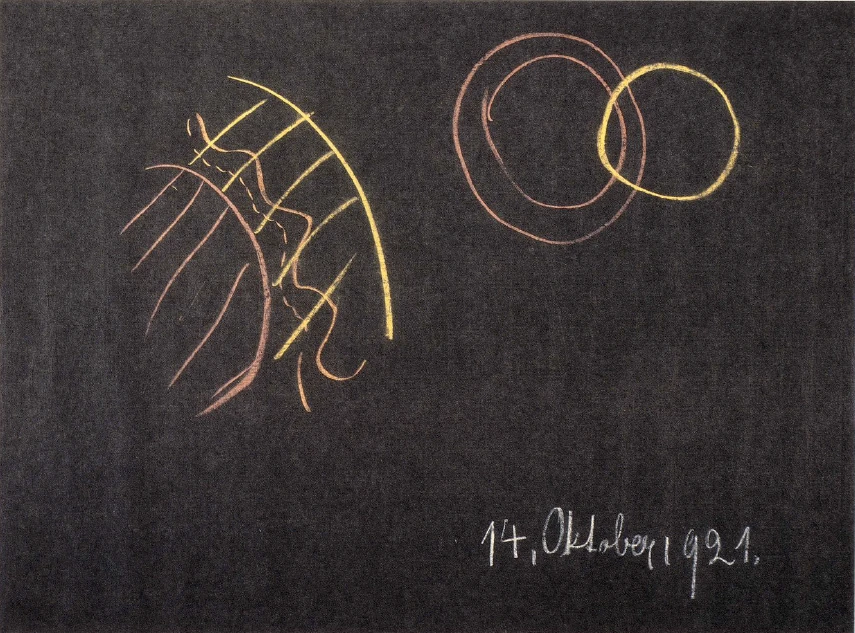
[ 5 ] Wie ist es nun, wenn an einen Menschen herantritt, was wir anthroposophische Geisteswissenschaft nennen? Wenn an einen Menschen herantritt, was wir anthroposophische Geisteswissenschaft nennen, dann sollte er eigentlich so etwas fühlen lernen, was ähnlich ausgesprochen werden kann wie: «... das Ich zu erkennen als ein Gebilde, das mit einer Gewalt, gegen die die Schwerkraft der Hauch einer Schneeflocke war, zu einem Zustande strebte, in dem nichts mehr von dem, was die moderne Kultur als Geistesgabe bezeichnete, eine Rolle spielte... .» Der Mensch sollte nämlich, indem er an anthroposophische Geisteswissenschaft herantritt, wirklich dazu kommen, sich zu sagen: An dich wird mit dieser anthroposophischen Geisteswissenschaft ein ganz besonderer Anspruch gemacht. Du kannst Dinge verstehen, die du als Ideen in deine Seele aufnimmst, von denen die anderen, die nur in der heutigen Bildung leben, sagen, sie seien phantastisch oder verrückt, denen also diejenigen, die in der heutigen Bildung leben, mit ihrer Ich-Kultur nicht beikommen. Sie kommen nicht an sie heran mit ihrer Ich-Kultur. Das Erden-Ich kann das nicht begreifen, was da aus Anthroposophie heraus als ein Begriff an den anderen gereiht wird, was da erzählt wird über Saturn-, Sonnen-, Mondenentwickelung, über die geistige, seelische, leibliche Wesenheit des Menschen. Man denke nur, wenn man einen heutigen richtigen Philosophen, der nicht bis zu diesem Grade verrückt oder «gescheit« geworden ist, daß er «den Darwin für eine Hebamme und den Affen für Kunstgewerbe anschaut», wenn man einem heutigen richtigen Philosophen zumutet, er solle verstehen, daß der Geist des Menschen, über den er so viel redet aber er redet nur Worte, der Philosoph von heute —, nur begriffen werden kann im Zusammenhange mit den höheren Hierarchien; daß die Seele des Menschen nur begriffen werden kann nach Denken, Fühlen, Wollen, wenn man zwischen die Glieder physischen Leib, Ätherleib, astralischen Leib und Ich hineinschaut! Und nun sollte man gar einem solchen Philosophen zumuten, daß er in den Leibeshüllen des Menschen, die er ja schon als phantastisch ansieht, Keime für Weltenzukünfte sche! Dazu kann man natürlich mit dem, was das heutige Ich überschaut, nicht kommen. Ist man nun doch in der Lage, irgend etwas vom seelischen Leben mit diesen grotesken Ideen verbinden, verknüpfen zu können — man braucht dazu gar nicht selbst Hellseher zu sein, sondern braucht nur die Dinge des Hellsehers hinzunehmen als Ideen —, dann tut man dies nun nicht im Ich, sondern im astralischen Leibe. Die Gedankenschatten, die man heute im Ich als Reflexion aus dem astralischen Leibe bekommt, die strengen den astralischen Leib nicht an. Die kann man mit der Ich-Kultur haben. Denn wenn das der astralische Leib ist (siehe Zeichnung, rot) und hier das Ich (grün), dann ist alles das, was der moderne Mensch erlebt, hier im Ich, und seine Gedanken sind nichts anderes als das, was der astralische Leib als Schattenbilder in das Ich hineinwirft (gelb). Man braucht sich dabei nicht anzustrengen. Man läßt das Ich walten, das man eben durch die Erdenorganisation bekommen hat. Man braucht sich wirklich nicht anzustrengen. Man konstruiert ein Mikroskop, legt darunter ein Präparat, verfolgt ein Präparat, ein zweites Präparat, guckt und stellt die Gedankenschattenbilder zusammen, macht einige Rechnungsoperationen, die ja auch so, wie sie als Schattenoperationen gegeben werden, in sich ablaufen. Man kann sich dabei in bezug auf sein inneres Miterleben der Welt ganz passiv verhalten. Man bildet dann diese Passivität weiter aus, indem man sich — aber jetzt nicht im Goetheschen Sinne — vom inneren Arbeiten auf das Schauen verlegt. Man geht nicht mehr gern zu Vortragsbetrachtungen, in denen man mitdenken muß, sondern lieber zu Vortragsbetrachtungen, in denen viel Experimente gemacht werden, und zwischen den Experimenten, in dem unangenehmen Geräusch, durch das die Experimente erklärt- werden, schläft man dann ein. Oder aber man geht gar ins Kino. Da braucht man schon gar nicht irgendwie aktiv zu sein.
[ 5 ] What happens, then, if what we call anthroposophical spiritual science approaches a person? If this happens he should actually learn to feel something that can be expressed in the following way: he should feel a recognition of “... the I as a structure that strives to attain, with a power against which the force of gravity is like the breath of a snowflake, a state of being in which nothing that modern culture designates as talent plays a role. ...”9 Quotation from Epilog, by the German poet Gottfried Benn, 1886–1956. A person, in approaching anthroposophical spiritual science, really should arrive at the point of being able to say: a very special demand is made on you with this anthroposophical spiritual science. You are able to understand things that you receive as ideas in your soul, which other people, who live only in today's culture, claim to be fantasies or deranged visions; you receive, therefore, what those who live in today's culture do not approach with their I-culture. They do not approach this with their I-culture. The earthly I cannot comprehend the concepts which, following one another, proceed from anthroposophy: what is related about the ancient Saturn, Sun, and Moon evolutions or about the spiritual, soul, and bodily nature of the human being. It can only be assumed that if one had a competent modern philosopher, one who has not become deranged or “clever” to the extent that he “takes Darwin for a midwife and the ape for an artist,”10Ibid. if one takes such a competent modern philosopher he should understand that the spirit of the human being, about which he says so much—though the philosopher of today speaks only with words—can be comprehended only in connection with the higher hierarchies, that the soul of the human being can be comprehended according to thinking, feeling, and willing only if one looks between man's members, the physical body, etheric body, astral body, and I. Could you expect that such a philosopher would see in the bodily sheathes of the human beings, which he considered as fantasy, seeds for future worlds? One cannot arrive at such a view, of course, with what the modern I encompasses. If one is nevertheless able to link something from the soul life with this unusual idea—and to do this it is not necessary to be a clairvoyant oneself, but only to the research of the clairvoyant as ideas—this is done not in the I but in the astral body. The thought shadows, which one receives today in the I as a reflection of the astral body, do not strain the astral body. One can have these with the I-culture. If the astral body is here (see next drawing, red) and the I here (green), then all that modern man experiences is here in the I, and his thoughts are nothing but what the astral body casts into the I as shadow images (yellow). It is not necessary to strain oneself by these. One allows the I to prevail, which has been received through the earthly organization. A person constructs a microscope, places a slide under it, followed by another slide and another, peers at them, and compares the thought shadows, making some mathematical calculations that proceed just as they are given, as shadow processes. It is thus possible to relate to the world, in relation to one's inner experience, completely passively. This passivity is then developed further by shifting this way of viewing to one's inner work, though not now in the Goethean sense. Such a person no longer likes to attend lecture courses in which he must participate actively with his thinking; he prefers lecture courses in which lots of experiments are done and, between the experiments, in the unpleasant babble by which the experiments are explained, he falls asleep. Or he even goes to the movies. There one need not be active at all.
[ 6 ] Das ist eben die Ich-Kultur. Sie wird immer weiter und weiter kommen. Aber da tritt anthroposophische Geisteswissenschaft auf, da kann man es nicht so machen. Ein Theologe der Gegenwart hat zwar gesagt, er würde die «Akasha-Chronik» selbst dann nicht lesen, wenn ich sie ihm in einem illustrierten Prachtexemplar spendieren würde. Aber er braucht nicht zu fürchten, daß er die «Akasha-Chronik» in einem illustrierten Prachtexemplar spendiert bekommen würde, denn man muß sie in einer Weise sich aneignen, daß man innerlich bildend mitarbeitet. Wenn man wirklich symbolisierend künstlerisch auch das, was man in der «Akasha-Chronik» findet, einmal fixieren würde dieser Theologe, der würde auch dann nicht in der Lage sein, mit einem solchen «illustrierten Prachtexemplar» der «Akasha-Chronik» irgend etwas anzufangen, weil er eben auf das «Illustrierte» den Hauptwert legte. — Nun ja.
[ 6 ] This is truly the I-culture. It is prevailing more and more. Anthroposophical spiritual science comes along, however, and with that one cannot work in this way. A modern theologian said that he would not read the Akashic Chronicle even if it were bestowed on him in a special illustrated edition;11Christoph Schrempf, theologian, 1860–1944. but he need not have feared that he would receive the Akashic Chronicle in a special illustrated edition, for it must be acquired in such a way that one participates in an inwardly forming way. Even if once one were really to fix in a symbolic, artistic way what is found in the Akashic Chronicle, this theologian still could not do anything with it because he primarily values the illustrations.
[ 7 ] Bei anthroposophischer Geisteswissenschaft, da muß man innerlich mitarbeiten, sonst hört man natürlich nur Worte, die man ja in beliebiger Weise als Phantasterei ansehen kann. Aber dieses innerliche Mitarbeiten, das muß man lieben lernen. Zu dem muß man sich entschließen. Es ist unbequem; aber man merkt, wenn man sich dazu entschließt, daß es erfrischt, daß es den Menschen seelisch und leiblich frischer macht.
[ 7 ] With anthroposophical spiritual science, one must participate inwardly, for otherwise one naturally hears only the words, which can be regarded arbitrarily as fantasy. This inner participation, however, one must learn to love. One must resolve to do this. It is uncomfortable, but it becomes noticeable, if one resolves to do it, that this activity refreshes, that it makes the human being fresher in soul and body.
[ 8 ] Ich weiß, daß manche Menschen auch manches einwenden gegen dieses Frischerwerden. Aber die möchten gern das, was sie durch ein aktives Mitarbeiten des astralischen Leibes in einem schwer sich weiterringenden Verständnis sich erwerben sollen, sich eben nur durch das passive Denken erwerben, so wie jener Theologe wohl am liebsten haben würde, wenn man ihm die ganze «Geheimwissenschaft im Umriß» im Kino abspielen würde. Denn so ungefähr sind seine Begriffe, die er ja auch sonst in dem Aufsatz gebraucht, wo er von der «illustrierten Prachtausgabe» der «Akasha-Chronik» spricht.
[ 8 ] I know that many people raise objections concerning this becoming refreshed, but they would very much like to attain through merely passive thinking what should be attained through an active participation of the astral body in a difficult wrestling for comprehension, just as that theologian would have been most content to have the entire Outline of Occult Science played out for him in a movie. This is just how he uses his concepts in the essay where he speaks of a “special illustrated edition of the Akashic Chronicle.”
[ 9 ] Kurz, durch die anthroposophische Geisteswissenschaft kommt etwas in Regsamkeit, was nun nicht das bloße Ich ist, sondern was der astralische Leib ist. Es gibt allerdings auch solche Leute, die das dann spüren, wenn sie ein anthroposophisches Buch lesen. Da spüren sie so etwas; da quirlt in ihnen etwas. Nun sind sie darauf eingerichtet, sich innerlich nur passiv, als Gedankenschatten, fortzubewegen. Nun fängt da so etwas wie ein aktiver Verstand an zu quirlen. Da kommt es ihnen so vor, wie wenn sie innerlich Läuse hätten, und dann werden sie nervös über dieses innerliche Quirlen, und dann sagen sie: Das ist ungesund. Und dann klagen sie über diese schwierigen Dinge, die den Menschen in anthroposophischer Geisteswissenschaft dargeboten werden. Und insbesondere diejenigen, die dann solche innerlich merkwürdig affizierten Menschen als Bruder, Schwester, Tante, Onkel beobachten können, die machen sich dann die Klage zu eigen, daß Anthroposophie etwas ist, was die Menschen nervös macht.
[ 9 ] Briefly, by means of anthroposophical spiritual science something comes into activity that is no longer merely the I but that includes the astral body. There are certainly those people who sense this when they read an anthroposophical book. As they read it they sense something; something stirs in them. Before things were disposed to move inwardly only passively, as thought shadows. Now something like an active intellect begins to stir in them. Something emerges from them as if inwardly they had lice, and then they become so nervous about this inner stirring that they say: this is unhealthy. Then they complain about the difficult things with which people in anthroposophical spiritual science are challenged. Especially those who then observe people who are noticeably affected inwardly in this way—their brothers, sisters, aunts, and uncles—complain that anthroposophy is something that makes people nervous.
[ 10 ] Aber wie steht es da nun, wenn wir jetzt fragen: Welches Verhältnis ist zwischen der Ich-Kultur, die der Mensch zunächst während der Erdenzeit aufnimmt, und derjenigen Kultur, die angeeignet werden kann durch anthroposophische Geisteswissenschaft? Das kann eine einfache schematische Zeichnung klarmachen. Nehmen wir also an, wir hätten hier die Erde (siehe Zeichnung, rot). Ihr würden vorangegangen sein Mond, Sonne, Saturn. Wir hätten hier als nächsten Planeten, der sich aus der Erde herausverwandelt, nachdem die Erde ihrem Untergang entgegengegangen ist, den Jupiter (grün). An dem Jupiter sind nun intensiv beteiligt diejenigen Glieder der menschlichen Wesenheit, jetzt als Keim, die physischer Leib, Ätherleib, astralischer Leibsind;aber das Ich nur unter einer bestimmten Voraussetzung. Wenn das Ich nämlich nichts aufnimmt, als was es aufnehmen kann durch die Erdenkultur, dann hört dieses Ich-Bewußtsein auch mit der Erde auf, dann ist der Mensch ein Erden-Ich geworden, und er hört auf, ein Erden-Ich zu sein mit der Erde. Er muß in andere Formen sich weiterentwickeln.
[ 10 ] What happens, however, if we now ask, what is the relationship between the I-culture, which man received first during earthly existence, and the culture that can be acquired through anthroposophical spiritual science? A simple sketch can make this clearer. Let us assume that the earth is here (see drawing below, red). It would have been preceded by ancient Moon, Sun, and Saturn. Here we would have the next planet, Jupiter (green), which will be transformed from the earth after the earth has passed through its decline. On Jupiter, then, there participate intensively those members of the human being that exist now, as seed: the physical body, etheric body, and astral body; the I, however, takes part only under a certain condition. If the I takes up only what can be taken up through earthly culture, this I-consciousness ceases along with the earth; then the human being becomes an earthly I, and, as an earthly I, he ceases to exist along with the earth. He must evolve himself further in other forms.
[ 11 ] Wenn aber der Mensch sich hineinentwickelt hat bis in seinen astralischen Leib, wenn er seinen astralischen Leib in Aktivität gebracht hat, dann strahlt diese Aktivität auch zu seinem Ich zurück. Der Mensch hat dann eine Wesenheit von Ich und astralischem Leib, die innerlich tätig sind. Er fühlt nicht, als ob er — wie ich vorhin gesagt habe — innerlich Läuse hätte, sondern er fühlt, als ob er innerlich von starken, gesunden Lebenskräften durchzogen wäre, von solchen Lebenskräften, die ihn nun verbinden mit dem, was eben schon von seinen Leibeshüllen als Keim hinausgeht in zukünftige Erdenmetamorphosen, um in zukünftigen Erdenmetamorphosen sich weiterzuentwickeln.
[ 11 ] If the human being has developed himself right into his astral body, however, if he has brought his astral body into activity, then this activity radiates back to his I. The being of man then consists of an I and astral body that are inwardly active. He does not feel—as I described it previously—as though he had lice inside but rather as if inwardly he were permeated by strong, healthy life forces, by life forces that now link him with what already proceeds from his bodily sheaths, as seed, into future metamorphoses of the earth, in order to develop himself further in these future earthly metamorphoses.
[ 12 ] Anthroposophische Geisteswissenschaft muß durchaus als etwas Lebendiges betrachtet werden. Sie gibt dem Menschen nicht bloß eine "Theorie oder eine theoretische Weltanschauung, sie gibt dem Menschen die Lebenskraft, die ihn über das bloße Erdendasein hinausführen kann.
[ 12 ] Anthroposophical spiritual science absolutely must be studied as something living. Then it gives the human being not merely a theory or a theoretical world view, but it gives the human being the life force that can guide him beyond mere earthly existence.
[ 13 ] Insbesondere nun, wenn wir eine solche Erkenntnis, wie wir sie in den letzten drei Vorträgen hier vor unserer Seele sich haben entrollen lassen, ganz ernst nehmen, wenn wir den Menschen hineinstellen nach Geist, Seele und Leib in das ganze Weltenwerden und etwas dabei fühlen an innerem menschlichem Gehalte, reicher werden dadurch, dann gliedern wir diesem Menschen etwas ein, was ihn hinausträgt über das Erdendasein. Denn es könnte durchaus so sein — obwohl es hoffentlich nicht der Fall sein wird —, daß die Menschen, weil sie in der vorhin charakterisierten Weise müde davon werden, abweisen anthroposophische Geisteswissenschäft. Darin würde allerdings die menschliche Hülle sich auch weiterentwickeln, aber sie würde von anderen Wesen als von den Menschen in Anspruch genommen werden, und die Menschen würden hinuntersinken in ein niedrigeres Dasein als das ist, zu dem sie bestimmt sind.
[ 13 ] Especially if we take completely seriously a knowledge such as we have unfolded before our souls in the last three lectures—if we place the human being from the point of view of spirit, soul, and body within the entire evolution of the world and feel something as a result in the inner human content by which we become richer—then we incorporate into this human being something that carries him beyond earthly existence. For it could be—although this will not be the case, one hopes—that the human being, because he has become tired in the way characterized before, rejects anthroposophical spiritual science. Then the human sheath would continue to develop further, but it would be taken hold of by other beings than by the human beings entitled to it, and the human beings would sink into a lower existence than the one intended.
[ 14 ] Das ist es schließlich, was ein paar Menschen in der Gegenwart dazu bringt, ängstlich zu werden über des Menschen kosmische Zukunft, was ein paar Menschen dazu bringt, zu ahnen, daß der Mensch durch seine Schuld verlorengehen könnte im Weltenall. Und dazu muß nur noch manches andere kommen, daß die Menschen nicht etwa bloß einsehen: «Darwin war eine Hebamme und der Affe ein Kunstgewerbe», daß sie nicht bloß einsehen, daß man schließlich «unter Führung der Schulmedizin» redet von «Nervenschwäche, Ermüdbarkeit, Psychasthenie» und so weiter, daß sie nicht bloß dazu kommen, sich zu sagen: «Ich schreibe nichts mehr, man müßte mit Spulwürmern schreiben. Ich lese nichts mehr. Wen denn? Die alten ehrlichen Titaniden in Stullenpapier?»
[ 14 ] This is ultimately what it is that makes a few people in the present fearful about the cosmic future of the human being, that makes a few people sense that man, due to his trespasses, could be lost in the universe. Therefore still others must come whose insight extends beyond the assumption that “Darwin is a midwife and the ape a work of art,” who do not merely believe that one ultimately speaks “under the guidance of standard medicine,” about “weak nerves, fatigue, psychological weaknesses,”12Quotation from Epilog, by Gottfried Benn. and so, who do not merely come to the point of saying to themselves, “I won't write any more, for one would have to write with pinworms. I won't read anymore. Who is there to read? The ancient, honest Titans wrapped in sandwich paper?”13Ibid.
[ 15 ] Nun, trotz des Höllengelächters, das von manchen Seiten angestimmt wird, muß man eben sagen: Diejenigen, die keinen Glauben mehr haben an die «Titaniden mit den Ikaridenflügeln in Stullenpapier», diejenigen, die einsehen, daß man über all das, was keimhaft veranlagt ist in unserer Niedergangskultur, eigentlich nur «mit Spulwürmern schreiben» müßte, die dann fragen: Was soll man denn noch lesen, womit soll man sich denn beschäftigen? — die dann fragen können: Lebt man denn überhaupt noch? — denen sollte, wie gesagt, trotz des Höllengelächters, das von manchen Seiten in der Gegenwart angestimmt wird, anthroposophische Literatur in die Hand gegeben werden, und sie sollten auf irgendeine Weise, sofern das nur irgend vermocht wird, eine seelische Arzenei bekommen, damit sie die durch die Gegenwartskultur verursachten Hemmungen loswerden, welche sie hindern, das aufzunehmen, was die Seele heute unbedingt braucht.
[ 15 ] Now, despite the infernal laughter which is welling up on every side, one must still say that those who have no faith anymore in the “Titans with Icarus wings wrapped in sandwich paper,” those who see that everything that still has a germinal quality in our declining culture actually can only be “written about with pinworms,” then ask themselves, what should one read, what should one concern oneself with? They should be given anthroposophical literature, despite the infernal laughter coming today from all sides, and they should receive, if at all possible, a soul remedy so that they can be relieved of the inhibitions that prevent them from receiving what the soul undoubtedly needs today.
[ 16 ] Es gehen viele Leute heute in der Welt herum, die mit sich nichts anzufangen wissen, denen ihr Leib zu schwer, innerlich zu krüppelig wird. Gerade sie müßten oftmals im vollen Ernste darauf hingewiesen werden, welch kraftende, gesundende Impulse in einem wirklichen Sich-Erarbeiten der Gedanken, der Ideen anthroposophischer Geisteswissenschaft liegen.
[ 16 ] Many people go around in the world who do not know what to do with themselves, people whose body becomes too heavy, inwardly crippled. They often must be shown in full seriousness the strengthening, health-giving impulses that lie in a real self-achievement of the thoughts, the ideas of anthroposophical spiritual science.
[ 17 ] Diese Dinge müssen schon durchaus, ich kann es immer nur wieder und wiederum sagen, mit hohem Ernste genommen werden. Man muß schon heute durchaus ein wenig einsehen können, wie es eigentlich liegt in unserer Zeit mit demjenigen, was so als die Konsequenzen hervorgehen kann aus den Richtungen, die die materialistische Kultur eingeschlagen hat.
[ 17 ] These things—I must say this again and again—have to be taken up with the greatest seriousness. It is necessary to have a little insight into the consequences actually imminent in our time from the direction upon which materialistic culture has entered.
[ 18 ] Möge nun auch gespürt werden, wie sehr es notwendig ist, daß heute aus Ursprungsquellen heraus eine Erneuerung unserer Kultur stattfindet!
[ 18 ] May it also be felt how very necessary it is for the renewal of our culture to take place today from primal sources! Tomorrow we shall continue.