

Faculty Meetings with Rudolf Steiner
GA 300b
1 March 1923, Stuttgart
Forty-Eighth Meeting
At the beginning, Graf Bothmer gave a lecture about teaching gymnastics with approximately the following content:
Exercises: Conscious penetration of the body with the child’s forces of life. The close connection to eurythmy. Eurythmy enlivens, gymnastics carries those forces into the outermost limbs through the will. Eurythmy is not done as consciously. There are movements that can give the impression of death or make things alive. The relationship of gymnastics to experiencing growth and to opening of the body. The gymnastics teacher works like a sculptor with the child. Guidelines about how to act in the class. Children doing gymnastics feel their way into the room. Children should have a strong inner contact with the dimensions of the room. Squatting to the Earth or springing away from it. Experiencing inhaling and exhaling. “I tell the children to straighten up your head, straighten your back, straighten your shoulders because children have a tendency to let them hang. But, I am not certain if I should say such things.” In gymnastics, we are particularly concerned with will.
Exercises using equipment: Modern equipment is mostly dead. Usually, it is quite abstract, for example, the parallel bars. Fortunately, we do not have a climbing pole. They are completely dead in comparison with the rope. Today, gymnastics on equipment is quite simply routine. With such dead things, the children are not there with their whole being. In order to encompass their whole body, you can combine two devices, for example, the horizontal bar and the horse. If you combine two movements at the same time or one directly after the other, gymnastics is much more lively, particularly outdoors. The most beautiful thing is jumping over a ditch and over a hedge. Our children do not have much opportunity to exercise in that way.
Games and sports: Dr. Steiner has said that too many games make children too soft. We don’t have time for that. Sports such as swimming, shot-put, throwing the discus or javelin should be emphasized over other, more external, sports. Emphasize the beauty of the movement and not simply breaking a record.
Should boys and girls participate together or exercise in the same room, but separately? Girls hold the boys up. Should we group the children according to their temperaments? That would be the ideal.
Dr. Steiner: Perhaps I can say something more general about gymnastics later. When we have time before the beginning of the new school year, I can discuss gymnastic exercises in relationship to the child’s age and how to make them whole. That is what we will do. Today, I would like to speak about what you just presented. Please consider what I do not speak about as meaning I agree with what you said. I will not emphasize anything I agree with.
Concerning the relationship of gymnastics to eurythmy, there can actually not be any conflict between gymnastics and eurythmy. In general, we can generally see gymnastics exercises and how they are presented as a continuation of eurythmy exercises. Suppose we take a particular movement of the arm in eurythmy and a corresponding movement in gymnastics. In eurythmy we need to take care that the form of the movement itself lies nearer the center of the body than it would in gymnastics. Thus, there can actually be no conflict.
You can best understand that when you realize that in eurythmy you are primarily concerned with that part of the human organism that is directly connected with the inner breathing process. Thus, what an arm or leg, a finger or toe does in eurythmy is directly connected with what plays out as the inner breathing process, that process of the transition from air to blood. On the other hand, what happens in gymnastics is primarily connected with the human organic process basic to the transition from blood to muscle. That is primarily physiological and sheds complete light upon what we develop. As soon as we understand that instinctively or intuitively, we will see that every movement in gymnastics is connected with strengthening the muscles, with their growth, and with making them elastic by forcing blood into the muscles. The more you understand that, the more you will be able to develop free exercises.
We can say the same thing from a different perspective. Eurythmy is primarily a pliable forming of the organism. Or, I could also say that eurythmy exists in the sculpting of the organism. Gymnastics lives in the statics and the dynamics of the organism. Of course, you, Graf Bothmer, felt that when you mentioned that the children feel the room during gymnastics. You can best understand that through the picture of how an arm or leg moves in space, or their relationships to weight.
That we do not have any conflict with eurythmy, we can see if we take character into account. We do that much too little in pedagogical eurythmy because it is not so important in artistic presentations, but it is much more important in pedagogy. If you have seen the eurythmy figures, you will have noticed that we differentiate between movement, feeling, and character. In movement and feeling, which you have taken into account almost exclusively, things are going well. However, character has not permeated eurythmic movements to any great extent. That is natural because it has no great importance in artistic eurythmy that is viewed by others.
In contrast, the character of a movement should be a significant part in pedagogical eurythmy. A person doing the eurythmy should feel how a movement or position flows back into their own feeling. For example, such a person should feel the pressure of one limb upon another in a eurythmy movement and how that pressure flows back into the center of the body. For that reason, I colored the eurythmy figures so that it would be clear. You will find three colors in all the eurythmy figures. One is for the movement, the second, which is like a veil over the first, is for feeling, and the third is for character. For a person doing eurythmy, it indicates the specific part of the body where the muscles should be tensed, and the feeling that muscle tension should produce. That is part of the life of eurythmy within the form of the body.
The students have asked if we could present the figures during the pedagogical week at Easter, so I will bring them here. We should have such a series here. The Waldorf teachers should study those figures because they are also important for a more psychological physiology. The Waldorf teachers should study them to gain greater understanding of the human organism. At the same time, they can form the basis of a more general feeling for art, for a greater understanding of the inner aspects of the human organism.
We can, therefore, say that the gymnastics teacher should have an idea of the spiritual relationship of statics and dynamics in the human organism. The gymnastics teacher should have a clear picture of what it means to raise a leg or to drop an arm in relationship to gravity. On the other hand, the eurythmy teacher should have a strong feeling for what will develop the limbs sculpturally. It is incorrect to say that the gymnastics teacher is like a sculptor. That would be true for the eurythmy teacher. The work of gymnastics teachers is to picture an ideal human being in terms of lines, forms, and movements to which they must develop these lazy, sloppy people they have before them. You were certainly correct when you mentioned how children should carry themselves. Whereas the eurythmy teacher should work so that the muscles feel themselves, feel how they gain strength through the character of the movement, the gymnastics teacher should feel how people can properly perceive the heaviness or lightness of a limb. The child should learn, not through reason, but instinctively, how to perceive the lifting of an arm or leg in relationship to gravity. Children should, for example, develop a feeling for how their foot becomes heavy when they stand on one leg and lift the other.
The task of the gymnastics teacher is, therefore, to place the dynamic ideal human being he or she carries in his or her soul into another person. Of course, the artistic must also play a role, since we can realize human statics or dynamics only through artistic feeling. Whereas, artistic feeling plays a major role in eurythmic sculpturing, it must precede the forms the gymnastics teacher creates statically and dynamically.
Concerning the question of breathing, it is significant that eurythmy lies closer to the breath, whereas gymnastics lies closer to the blood process. Aside from the fact that the tempo of breathing increases during the course of the exercises, something that is a physiological process, it is important that we should develop gymnastic technique in such a way that it does not affect the breathing process. We could call a gymnastics exercise incorrect if, while maintaining the proper physical position, the exercise negatively affects the breathing process. We should exclude those gymnastic exercises that disturb the breathing process, even though the body is properly held. Now that I have seen everything you are doing, it seems to me that all the breathing exercises in modern gymnastic methods are directed toward maintaining proper posture, and that breathing is treated as a reaction. I have noticed that all the things presented are directed primarily toward creating proper posture, at least to the extent it is expressed through the breathing process. That is something Swedish gymnastics for the most part takes into account. That is what I want to say about that.
In gymnastics, it is important that we take the will into account. The teacher must, therefore, whether instinctively or intuitively, live directly into the connection between movements of the body and expressions of the will. The teacher must have a feeling for what the connection between movement and will is. In eurythmy, there is also a development of will, but one that uses a more indirect path through inner feeling and occurs at a level where will is expressed through feeling. That is what I just referred to as character, and it is the experience of feeling in an act of will. The gymnastics teacher works directly with the act of will, but the eurythmy teacher works with experiencing the feeling in an act of will. You can see how there is everywhere a very strict separation and we need to take that into account when developing a curriculum. Perhaps we cannot immediately do that, but we should certainly see it as our ideal. Then, from these two things we will clearly see why it is much easier for girls in eurythmy and for boys in gymnastics. Things are more clearly differentiated with boys. For that reason, we will, in fact, have to allow the boys and girls to do their gymnastics in the same room, but in different groups. The girls can form a group for themselves and do those exercises that create a relationship between them. If we do such exercises that are modified for boys and girls, they will enjoy them more.
I think we will see that when we discuss the curriculum in detail. That is also true of the differences in age.
Concerning exercises with equipment, I would like to remark that we could modify the form of the equipment and make it more appropriate. In that way, at least to an extent, we can make the most common pieces of equipment not quite so bad, so we can do something with them. Although I do not want to be fanatical about this, I would also like to see that we have no climbing poles, but I don’t want to complain about them too much.
Those people who have observed what boys in the villages do when a tree is brought from the woods and placed atop a pole on a church holiday will know how valuable such climbing poles can be. Up there, a few branches remain with a small kerchief, a piece of candy, or maybe a small bottle of wine, and the boys have to climb their way up to that little tree attached to the top of the pole from which the bark has been removed. The victor is the boy who brings it down. That very strongly connects the activity of the will to the nature of the body. We do this same thing artificially with a climbing pole. It is certainly better when the children have to learn how to climb a rope. The pole has a rather limited significance in gymnastics, I would say, but I do not want to completely remove it. With the parallel and high bars, with the horse and so forth, if they are properly used, you can certainly gain something from them.
I also agree you should do the exercises, at least to an extent, by combining the different pieces of equipment, because that emphasizes what equipment exercises should achieve, namely, more presence of mind. That has a secondary effect of also strengthening the muscles. The children thus develop proper strength and elasticity.
I also agree that the high bar should be more prominent, and that it will gain that through a kind of observation, not an observation with the eyes, but through bodily feelings. One useful exercise would be to have the children swing so they must then catch the bar. They would need to hold themselves in the air. That is only an example to give the direction I am thinking of. It could be done with the hands or also with the entire arms, but the movement really becomes significant only if it is done with the arms. You could, however, allow the children to begin with their hands.
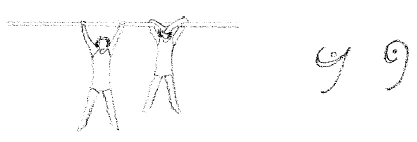
These things that allow the children to feel the device with their entire body can also give them a greater sympathy for the equipment. That is particularly true with the high bar when the children learn to work on it with their legs. You could combine exercises with the high bar by first having them do what I mentioned above and then having them “walk” the bar with their legs dangling.
All that simply gives the spirit of the direction. I don’t think I need to speak about dead equipment and simple routine. That is the way things were, but things do not need to be routine when we emphasize this way of experiencing the equipment. The children can use their legs in wonderful ways on the bars.
I completely agree with what you said about games and sports. Our gymnastics should lead to what you described.
We want to discuss the gymnastics curriculum at the next opportunity. Then, we will also consider the temperaments at various ages.
The school doctor: Some of the anemic older girls often become tired easily.
Dr. Steiner: This is where the pathology and therapy of gymnastics begins. What you have termed “gymnastics pain” arises because the process between the blood and the muscles in such children leads to the crystallization of uric acid. What is important is that we combat this nearly inorganic metabolic process through diet. That is, of course, a task only when we see that gymnastics tires the children beyond a certain degree. At that point, we need to try therapy. Through gymnastics we can most easily see whether a child is healthy or not. If you wanted to determine whether someone will have gout in three years, you could have that person do some physical exercise, and if he or she shows some kind of gout-like feelings, that person will most certainly have gout within three years. Today, when children are so malnourished, many of them will have such symptoms because the process between the blood and muscles no longer functions properly.
I would like to take this opportunity to ask you to do something. Mrs. R. gave me a donation. I have discussed the matter with her, and these million Marks should be used to start a fund so that something can be done about the children’s nutrition. I would like to see these million Marks she gave used to improve the children’s health. We should create such a fund, and this could be its foundation.
A teacher asks about how to occupy the children during breaks and on field trips.
Dr. Steiner: The question of children’s play is certainly appropriate. We should not overdo play since it could soften the children. It is valid to object if there is insufficient time for play, but we could also make a valid objection now. Nevertheless, I would say that it is not sufficient to speak just about play. When the children need a break, what is important is to allow them to sit. First, they need to sit and eat. They need to be able to occupy themselves with that, but quite consciously and with real appetite. When they have fully satisfied their hunger, you can allow them to play, as you have done. If you lead this activity, you must try to see to it that they eat as slowly as possible, so that they use the time available for eating to savor every bite.
Games where the children just crawl around are not very good. Children’s play should require their attention, and their games should offer them some enjoyment. What you have described gives them some enjoyment because of their anticipation. Amusement is necessary in games. You also need to be sure the children drink, so they have fluid throughout their bodies before you continue the field trips. There is no harm in allowing them to drink when they sit down during a break. During the break, they should begin with eating, and drink at the end. The time in between should be amusing, so that their souls are occupied with anticipation, with solving a problem, with excitement or disappointment. That is how we should include the element of entertainment. What you are doing now is simply boring. Sports are not particularly exciting, they are actually boring. In games, we need to avoid being like the English. Our games should not be influenced by the West. They should be healthy, entertaining games.
I certainly do not want to imply that the old games are very good simply because they come from older times. They need to be replaced. Blind Man’s Bluff or such things are the right thing. Or, A-Tisket, A-Tasket. In other words, games that do not require a lot of effort, but that are amusing. When the children are resting, they should first have something good to eat. I would also have them stretch, or perhaps sing. After they have played for a while, they could sing, have something to drink, and end the break.
A teacher asks about marching and singing.
Dr. Steiner: These military or war-like games can be done in a healthy way if they are done artistically. What was done where I grew up was pure nonsense. Someone composed some sentences, and then two from the group of children shouted out one sentence. The others standing further away could no longer understand what was said. We need to drop things like that. On the other hand, if we connect something genuinely rhythmic with walking as a group or with marching, that is quite proper. When art plays a part, you can allow people to do something as a group, allow them to think together, or something of that sort. It is important that there is no fooling around. Playing Cowboys and Indians and so forth is healthy if it is done with spirit. We can differentiate among all those things, between play at the right time and sport. Healthy play occupies you with something you enjoy because of the movement in healthy thinking and feeling. Sports are so bad because you simply move without any thinking, and thus become lazy in your thinking. People want to do things so they do not have to be mobile in their thought and feeling. It would be good if we could remove from our bodies those things that exist in the English-speaking world due to their belief in sports.
A question is asked about cooking outdoors.
Dr. Steiner: That is good to do since it extends mealtime, that is, it extends the time used for eating. There is nothing better. When you take the children outside, you should extend their mealtime during rest period as far as possible. It is best if you make them as uncomfortable as possible, so that they have to make some effort.
A teacher: Should we have swimming in school?
Dr. Steiner: That would hurt nothing and could be quite good. However, I think that for technical as well as scheduling reasons, it would not be possible. We need to do what is possible under present circumstances.
The gymnastics teacher: Could we arrange to have showers?
Dr. Steiner: That would be good. The only problem then is that when it becomes known that a child is lacking in that area, then people think that the child has to be bathed. If we had showers, we would have to avoid that kind of negative thought, but that is, of course, often difficult to do. If we had a boarding school, we could do all sorts of such valuable things. I have, however, found no way of avoiding such negative thoughts. We should see to it, however, that the children come to school properly dressed and washed. There would be no negative opinions if we required children to come to school clean and well-kept. In such cases, there is sometimes something pathological present. There are people who cannot avoid looking dirty and smelling bad even when they are washed. I would agree to having showers, but we would have to find some way to connect it with a moral perspective.
A teacher: Should I take up Virgil in Latin? Perhaps the Fourth Song of the Aeneid.
Dr. Steiner: That would be very good if you could connect it with other things. Very good indeed.
Achtundvierzigste Konferenz
Rudolf Steiner reiste am 23. Februar zur Vorbereitung der Delegiertentagung von Dornach nach Stuttgart. Sie wurde am 25. eröffnet und dauerte bis zum 28. Februar. Im Laufe dieser Tagung schlug Steiner vollkommen unerwartet zwei Gesellschaften vor, die alte und eine lose Vereinigung freier Gemeinschaften. Auf einige junge Anthroposophen wirkte diese Idee zündend und sie nahmen sie begeistert auf, darunter auch der zukünftige \Waldorflehrer Ernst Lehrs. Am 1. März war die Nachbesprechung der Tagung und anschließend Lehrerkonferenz; am nächsten Morgen kehrte Steiner nach Dornach zurück. Schon am 6. März war er wieder für zwei Tage in Stuttgart, hielt zwei Vorträge über das Tonerlebnis im Menschen (GA 283), besprach sich mit Vertretern der zwei Gesellschaften und hielt eine Konferenz mit den Lehrern ab. Am 9. März war die Rückreise nach Dornach.
Themen [48. und 49. Konferenz]: Grundsätzliches zu einem Turnlehrplan, auch im Zusammenhang mit der Eurythmie. Hinweis auf psychologisches-physiologisches Studienmaterial für die Lehrer anhand der von Steiner entwickelten Eurythmiefiguren (Gefühl, Bewegung und Charakter). Vorbereitungen auf das Abitur. Stundenplan-und Personalfragen.
Bemerkungen: Rudolf Steiner bat um die Unterrichtsziele für die oberste Klasse; er wollte daraus den Lehrplan für die 121 Klasse bilden, war aber zugleich kritisch mit Bezug auf die Erfolgschancen im Abitur. Der Unterrichtsstil der Lehrer war doch zu vortragsmäßig, und ,,die Schüler [haben], trotzdem wir mehrmals darüber gesprochen haben, noch nicht genügend mitgearbeitet».
Steiner gab seiner Freude über das Mitwirken von Martin Tittmann und Ernst Lehrs im nächsten Jahr Ausdruck.
Vorsitz: Fritz von Bothmer.
Zu Beginn der Konferenz erwähnt FRITZ VON BOTHMFR eine Erklärung der Schüler der oberen Klassen, die bei Gelegenheit der Delegiertentagung abgegeben worden war. Er bittet Herrn Rudolf Steiner um einen Wink, wie sich die Lehrerschaft dazu steilen solle. Dann gibt er ein Referat über den Turnunterricht.
FRITZ VON BOTHMER: Ich möchte beginnen mit dem, was ich über das Turnen zu sagen habe. Zu einzelnen Beobachtungen habe ich mich nicht durchringen können, die eine Grundlage wären für wirklich gültige Erfahrungen. Es wäre wohl der beste Ausgangspunkt gewesen, hier bei bestimmten Kindern anzufangen, wie sie sich dargestellt haben in dem Zeitpunkt, wo wir das Turnen begonnen haben, und wie sie sich jetzt darstellen.
1. Freiübungen: Bewusste Durchdringung des Körpers mit den im Kinde sich regenden Lebenskräften. [Er macht Übungen vor:]
| Turnen | Wachen | Schlafen |
|---|---|---|
| Wachrufen der Reservoirkräfte | Ermüdung des Körpers | Auffrischen der Kräfte |
Eine nahe Berührung mit der Eurythmie ist vorhanden. [Eurythmic belebt, Turnen trägt durch den Willen diese Kräfte bis in die äußersten Gliedmaßen. Eurythmie wird nicht so bewusst gemacht. Es gibt Bewegungen, die den Eindruck des Toten oder aber des Lebendigen machen. Verhältnis des Turnens zum Erleben des Wachsens, zum Sich-Öffnen des Körpers.] Der Turnlehrer steht dem Kinde gegenüber wie der Plastiker seinem Kunstwerk. Der turnende Mensch fühlt sich in den Raum hinein. Stellung im Raume: Man [soll] mit den Dimensionen des Raumes in einen starken innerlichen Kontakt treten. Auch das Wachsen kann man erleben. Der Turnlehrer in unserer Anschauung setzt sich in Bewusstseinsverbindung mit den den Körper aufbauenden geistigen Kräften. Anleitung zum Sich-Hineinstellen in den Raum. [Zur Erde sich zusammenhocken, oder im Sprung sich von der Erde lösen. Erleben von Aus- und Einatmen.] Ich sage den Kindern: Traget euren Kopf, [traget euren Oberkörper], eure Schultern, weil die Neigung besteht, den Körper hängen zu ]assen. Ich weiß nicht, ob man so etwas sagen kann. Beim Turnen hat man es in besonderem Maße mit dem Willen zu tun.
2. Geräteübungen: Die Geräte sind heute meist etwas Totes. Manche sind ganz abstrakt, zum Beispiel die Barren. Kletterstangen [haben wir Gott sei Dank nicht; sie] sind völlig tot, etwa gegenüber den Seilen. Das Geräteturnen ist heute sehr stark eine Sache der bloßen Routine. [Die Kinder sind bei diesem Toten nicht mit dem ganzen Wesen dabei.] Man kann aber, um den ganzen Körper zu erfassen, zwei Geräte miteinander kombinieren, zum Beispiel Reck und Bock. [Wenn] zwei verschiedene, Bewegungen des Körpers zu gleicher Zeit oder unmittelbar hintereinander 'sich vereinen], tritt das Affenartige in Erscheinung. [Es wird viel lebendiger], besonders bei der angewandten Art des Turnen im Freien. [Das Schönste wäre Springen über Gräben und Hecken. Es fehlt unseren Schülern die Gelegenheit, sich auszutoben.]
3. Spielen und Sport: [Rudolf Steiner habe gesagt], zu vieles Spielen verweichliche die Kinder. — [Dazu haben wir keine Zeit.] Solche Sportarten wie [Schwimmen, Kugelstoßen], Diskuswerfen, Speerwerfen müsste man herausheben aus dem völlig veräußerlichten Sportbetrieb. [Schönheit der Bewegung, nicht das bloß Rekordmäßige.]
[4. Jungen und Mädchen:] [Soll man Buben und Mädchen untereinander stellen, oder sollen sie zwar im] gleichen Raum turnen, aber gesondert? [Die Mädchen haken die Buben auf. Soll man die Kinder] nach Temperamenten [gruppieren]? [Das wäre] idealer.
RUDOLF STEINER: Vielleicht können wir im Allgemeinen einiges über das Turnen sprechen und dann später bei der nächsten Gelegenheit vor Beginn des neuen Schuljahres eingehen darauf, wie sich die einzelnen Turnübungen nach dein Lebensalter des Kindes doch auch für einen bestimmten Lehrplan gliedern lassen. Das wollen wir machen. Heute möchte ich anknüpfen an dasjenige, was Sie hingestellt haben, wobei ich Sie bitte, dasjenige, was ich nicht sagen werde, so zu betrachten, dass ich mit dem, was Sie gesagt haben, einverstanden bin. Ich werde das nicht hervorheben, womit ich einverstanden bin.
Über die Beziehungen des Turnens zur Eurythmie. Eine Kollision zwischen Turnen und Eurythmie kann es nicht eigentlich geben. Im Allgemeinen liegt die Sache so, dass die Turnübungen, die Gestaltung der Turnübungen, sich ausnehmen werden, natürlich gilt das nur im Allgemeinen, als eine Fortsetzung der Eurythmieübung. Ich will also sagen: Nehmen wir eine Armbewegung der Eurythmie und eine entsprechende Armbewegung beim Turnen, so wird man bei der Eurythmie zu bemerken haben, dass die hervorgerufene Gestaltung näher dem Körperzentrum liegt als beim Turnen. Aber eine Kollision kann nicht zustande kommen.
Das wird am besten einzusehen sein, wenn ich darauf hinweise, dass man es bei der Eurythmie im Wesentlichen zu tun hat mit demjenigen im menschlichen Organismus, das sich in unmittelbarer Angliederung an den inneren Atmungsprozess abspielt. Also: Dasjenige, was ein Arm oder Bein oder ein Finger oder Zehe bei der Eurythmie ausführt, ist in unmittelbarer Berührung mit dem, was innerlich sich als Atmungsprozess, als innerer Prozess abspielt, der beim Übergang der Luft ins Blut geschieht, während das Turnen im Wesentlichen derjenige Vorgang ist, dem zugrunde liegt im menschlichen Organismus der Übergang des Blutes in den Muskel. Das ist im Wesentlichen das Physiologische; das gibt zu gleicher Zeit ein völliges Licht über dasjenige, was ausgebildet werden soll. Sobald man zum Verständnis kommt — instinktiv, intuitiv muss das gemacht werden wie man es zu tun hat bei jeder Turnbewegung mit dem Starkwerden, Wachsen, dem Elastischwerden des Muskels durch das Hineinschießen des Blutes in den Muskel, desto mehr wird man diese Erfindung der Freiübungen in sich selbst ermöglichen.
Nun, dieselbe Sache kann man auch von einer anderen Seite sagen. Die Eurythmie ist im Wesentlichen eine plastische Gestaltung des Organismus, plastische Gestaltung, oder besser gesagt: Die Eurythmie lebt in plastischer Gestaltung des Organismus; das Turnen lebt in Statik und Dynamik des Organismus_ Sie haben das dadurch gefühlt, indem Sie gesagt haben: Eigentlich wird beim Turnen der Raum gefühlt. Man kommt am besten darauf, wenn man sich die Hilfsvorstellung bildet, wie sich der Arm oder das Bein in die Raumrichtungen oder in die Schwereverhältnisse im Raum hineinlegt.
Dass hier keine Kollision mit der Eurythmie hervorgerufen wird, das wird dann eingesehen werden, wenn auch noch Rücksicht genommen wird bei der [pädagogischen] Eurythmie — was viel zu wenig geschehen ist, weil es bei der künstlerischen Darstellung weniger in Betracht kommt, dagegen beim Pädagogischen ganz besonders in Betracht kommen würde — auf den «Charakter». Wenn Sie die Eurythmiefiguren gesehen haben, so werden Sie bemerkt haben, dass wir unterscheiden zwischen «Bewegung», «Gefühl» und «Charakter». Mit Bewegung und Gefühl, [was bis jetzt fast allein beachtet wird], geht es ganz gut, dagegen was Charakter ist in der eurythrmischen Bewegung, das ist noch nicht durchdrungen. Es ist auch natürlich, dass es noch nicht durchdrungen ist, weil es beim künstlerischen Auswirken der Eurythmie, wo es von anderen geschaut wird, von so großer Bedeutung nicht ist.
Dagegen muss der Charakter einer Bewegung ein wesentliches Element bilden beim Didaktischen. Es muss der Eurythmisierende dabei fühlen das Zurückkommen irgendeiner Bewegung oder Haltung in seine eigene Empfindung. Also es muss zum Beispiel der Eurythmisierende bei den eurythmischen Bewegungen fühlen den Druck des einen Gliedes auf dem anderen und das Zurückströmen des Druckes ins Körperzentrum. Ich habe einen Farbenauftrag gemacht in den Figuren, damit dies deutlich wird. Sie sehen überall drei Farbgebungen in den Eurythmiefiguren, die eine ist für Bewegung, die andere für das Gefühl — das geht dann in [den] Schleier über — und die dritte für den Charakter, das heißt für dasjenige, wo der Eurythmisierende an einer bestimmten Stelle seines Körpers den Muskel besonders anspannen muss, und das Gefühl dieser Anspannung des Muskels haben muss, der Richtung nach. Das gehört zum Leben des Eurythmischen in der inneren Körperplastik.
Es ist ohnedies von den Studenten gebeten worden, dass bei der pädagogischen Woche zu Ostern die Figuren da sein sollen. Ich werde eine Serie herüberschaffen. Es muss eine solche Serie da sein. Weil es auch wichtig ist für eine mehr psychologische Physiologie, müssten sich mit diesen Figuren die Waldorflehrer überhaupt befassen; für die Erkenntnis des menschlichen Organismus müssten sich die Waldorflehrer damit befassen. Es ist [zugleich] eine Grundlage für allgemeines künstlerisches Empfinden, für eine Erkenntnis des inneren menschlichen Organismus, was man daran lernen kann, an diesen Figuren.
Sodass man sagen muss, der Turnlehrer hat im Wesentlichen zu sein derjenige, dem vorschwebt in geistiger Beziehung Statik und Dynamik des menschlichen Organismus, der ein scharfes Bild davon hat, was es heißt, [das] Bein hochheben, [den] Arm senken, heben, alles im Verhältnis zur Schwerkraft, während der Eurythmist ein starkes Gefühl haben muss: So will der Körper seine Glieder plastisch ausformen. Das ist nicht richtig, wenn man sagt, dass der Turnlehrer wie der Plastiker gegenüber dem Bildwerk steht. Das würde für den Eurythmielehrer gelten. Der Turnlehrer hat die Aufgabe, einen Idealmenschen vor sich zu haben, der aus Linien, Formen und Bewegungsgestaltungen besteht, in den er diesen wirklich verschlamperten, verzerrten, verrenkten Menschen, den er vor sich hat, hineingestalten muss. Sie haben das richtig ausgesprochen, wenn Sie hingewiesen haben, dass die Kinder ihren Körper tragen sollen. Während der Eurythmist danach streben muss, dass der Muskel sich fühlt, dass er sein In-sich-Verdichten als den Charakter der Bewegung fühlt, muss der Turnlehrer fühlen, ob der Mensch das Schwere oder Leichte eines Gliedes richtig empfindet. Das Kind muss, nicht verstandesmäßig, sondern instinktiv, jedes Heben des Armes, jedes Heben des Beines auch schwerkraftmäßig empfinden, muss zum Beispiel eine Empfindung dafür bekommen, wie der Fuß schwer wird, wenn man mit einem Beine steht und ein anderes aufhebt.
Also der Turnlehrer hat den in dynamischer Beziehung idealischen Menschen in seiner Seele und will in diesen Idealmenschen den Menschen, den er vor sich hat, hineinstellen. Natürlich muss dabei das Künstlerische insoferne mitspielen, als man eine menschliche [Statik und] Dynamik nur herausbekommt mit künstlerischem Empfinden. Während das künstlerische Empfinden eine große Rolle spielt bei der eurythmischen Plastik, muss das künstlerische Empfinden beim Turnlehrer vorausgehen den Gestaltungen, die er in Statik und Dynamik hervorruft.
Was die Frage des Atems betrifft, so handelt es sich darum, dass Eurythmie näher dem Atem liegt, während Turnen näher dem Blutprozess liegt. Das für das Turnen Wesentliche ist, dass mit Ausnahme der Beschleunigung des Atems im Verlauf des Turnens, was ein physiologischer Prozess ist, das Turnen im Wesentlichen eigentlich methodisch so gestaltet werden muss, dass der Atmungsprozess nicht davon tangiert wird. Eine Turnübung kann man als unrichtig bezeichnen, wenn sie den Atmungsprozess bei richtiger Körperhaltung beeinträchtigt. Es müssten Turnübungen ausgeschlossen werden, wenn man sehen würde, dass der Atmungsprozess gestört würde bei richtiger Körperhaltung. Aber im Wesentlichen scheint mir, wenn ich alles gesehen habe, was vorhanden ist, dass alle die Atemübungen, die registriert werden in den neuen Turnmethoden, dass die alle im Wesentlichen darauf beruhen, dass man die richtige Körperhaltung hervorrufen will, dass man das Atmen wie eine Reaktion behandelt. Ich habe bemerkt, dass dasjenige, was angegeben ist, im Wesentlichen Herstellung der richtigen Körperhaltung ist, insoferne es sich durch den Atmungsprozess ausdrückt. Das ist das, worauf beim schwedischen Turnen eine große Rücksicht genommen worden ist. Das wären die Bemerkungen, die ich berühren möchte.
Es ist richtig, dass im Turnen der Wille in Betracht kommt, und unmittelbar daher ein instinktives, intuitives Sich-Einleben in den Zusammenhang zwischen Körperbewegung und einer Willensäußerung heim Turnlehrer da sein muss. Er muss das Gefühl haben, so und so hängt eine Bewegung mit dem Willen zusammen. Bei der Eurythmie ist auch eine Willenskultur da, aber auf dem Umwege des inneren Gefühles, auf einem anderen Niveau, wie sich ein Wille durch das Gefühl äußert. Das gerade, was ich als Charakter bezeichnet habe, das ist das Erleben des Gefühles [bei] einem Willensakte. Der Turnlehrer hat es unmittelbar mit dem Willensakt zu tun, der Eurythmielehrer mit dem Erleben des Gefühles beim Willensakte. Überall kann man eine strenge Trennung haben. Darauf wird man sehen müssen, wenn wir den Lehrplan ausarbeiten. Vielleicht wird es sich nicht gleich so machen lassen, dass man gleich höchste Ideale verwirklichen kann. Dann wird man doch auch auf diese beiden Dinge sehen, dass freilich leichter bei Mädchen das Eurythmische ins Turnen hineingeht als bei Knaben. Bei Knaben sind die Dinge [mehr] differenziert. Daher wird es dazu kommen müssen, dass man tatsächlich Knaben und Mädchen im selben Raume turnen lässt, aber doch in verschiedenen Riegen, sodass die Mädchen für sich eine [Riege] bilden, und die Freiübungen eine gegenseitige Beziehung herstellen. Dass man solche Übungen macht, die modifiziert bei den Knaben und Mädchen auftreten, dadurch wird die Freude erhöht.
Nun, ich meine, das wird sich erst ergeben, wenn der Lehrplan im Speziellen [für das Turnen] besprochen werden kann. Das ist auch mit den Lebensaltern verschieden.
Was das Geräteturnen betrifft, so möchte ich die Bemerkung machen, dass die Form der Geräte modifiziert und vervollkommnet werden könnte, dass aber im Allgemeinen, annähernd wenigstens, die gebräuchlichen Geräte nicht so fürchterlich schlecht sind, dass man doch mit ihnen etwas anfangen kann. Ich möchte auch nicht, obwohl ich nicht fanatisch dafür eintreten wollte, dass wir Kletterstangen haben, ich möchte doch die Kletterstangen nicht so schimpfieren.
Derjenige wird auch die Kletterstangen zu schätzen wissen, der beobachtet hat, was die Jungen in den Dörfern davon haben, wenn bei einem Kirchtag ein Waldbaum geholt wird aus dem Wald und aufgestellt wird. Oben ist ein bisschen geblieben von dem Reisig, da ist ein Tüchlein oben und eine Schleckware und ein Flascherl Wein, und nun müssen die Buben sich bemühen, an dem von der Rinde geschälten Baum sich hinaufzuarbeiten. Derjenige ist der Sieger, der dies herunterbringt. Das ist etwas, was mit dem Wirken des Willens auf die Körpernatur sehr stark zusammenwirkt. Das ist etwas, was auf Kletterstangen künstlerisch geübt werden kann. Gewiss, es hat etwas voraus, wenn die Kinder am Strick klettern müssen. Die Stange ist, ich möchte sagen, ein Turngerät von eingeschränkter Bedeutung. Aber so ganz möchte ich nicht die Kletterstangen ausschalten. Barren und Reck, Bock und so weiter, wenn man sie richtig verwendet, so kann man immerhin aus ihnen etwas machen.
Ich bin einverstanden damit, dass man die Übungen gewissermaßen durch Kombinierungen [der Geräte] verrnannigfaltigt, weil dadurch tatsächlich dasjenige mehr in Betracht kommt, was beim Geräteturnen ausgeführt werden muss: die Geistesgegenwart. Was auch zurückwirkt; das macht die Muskeln stark. Sie bekommen so die richtige Stärke und Elastizität. Also ich bin einverstanden, glaube aber doch, dass auch das Reck eine größere Bedeutung noch gewinnt, wenn man auf dieses schnelle und zweckmäßige Beobachten — nicht Beobachten mit den Augen, sondern mit dem Körpergefühle —‚ wenn man auf dieses einen größeren Wert legt. Schon dies eine ist nützlich: Man lässt das Kind sich schwingen, sodass es das Reck erfangen muss. Es muss sich in der Luft halten. Diese Übung nur, um die Richtung anzugeben. Es kann mit den Händen gemacht werden, aber auch mit dem ganzen Arm. Die Bewegung bekommt erst Bedeutung, wenn es mit dem Arm geschieht. Man kann es mit den Händen beginnen lassen.
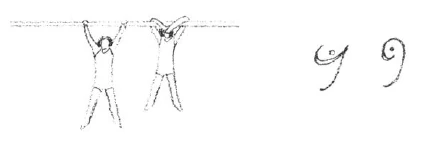
Also diese Dinge, die eigentlich dazu führen, dass das Kind das Gerät empfinden muss mit seinem ganzen Körper, die sind etwas, was dazu führt, dass die Geräte sympathischer werden, als sie von Anfang sind. Dann kommt beim Reck in erster Linie in Betracht, dass das Kind lernt, mit den Beinen am Reck zu arbeiten. Dann kann man auch die Übung dadurch kombinieren, dass man es am Reck etwas gehen lässt mit den Beinen, mit den hängenden Beinen.
Das soll nur den Geist und die Richtung angeben. Ich glaube, dass man nicht gerade unbedingt nötig hat, von toten Geräten zu sprechen und von einer bloßen Routine. Das ist so geworden. Es braucht nicht Routine zu sein, wenn man dieses Erleben des Gerätes hervorruft. Am Barren können die Beine in einer ganz wunderbaren Weise verwendet werden.
Nun, was Sie in Bezug auf Spiel und Spart gesagt haben, damit bin ich einverstanden. Da muss unser Turnen zu dem führen, was Sie angedeutet haben.
Bei der nächsten Gelegenheit wollen wir auf den Lehrplan eingehen. Die Temperamente kommen dann bei den Lebensaltern zur Geltung.
EUGEN KOLISKO: Es ergibt sich öfter bei [blutarmen] älteren Schülerinnen, dass sie leicht müde werden.
RUDOLF STEINER: Hier beginnt die Pathologie [und Therapie] des Turnens. Was Sie Turnschmerzen nennen, beruht darauf, dass jener Prozess zwischen Blut und Muskeln bei solchen Kindern dazu führt, dass sich Harnsäurekristalle ablagern, und da handelt es sich darum, dass man diesen ins Anorganische hineingehenden Stoffwechsel be-kämpft, medizinisch oder durch Diät. An sich kann das nur da die Aufgabe sein, wo man sieht, dass das Turnen nicht [bloß] bis zu einem gewissen Grade ermüdet, sondern über den Grad hinaus. Da muss man versuchen, ins Therapeutische hinüberzugehen. Das Turnen zeigt am meisten im Leben, ob ein Kind gesund ist oder nicht. Wenn man prüfen will, ob einer in drei Jahren die Gicht kriegt, so könnte man das so machen, dass man ihn sich anstrengen lässt, und wenn er da zunächst funktionell gichtische Empfindungen zeigt, dann bekommt er in drei Jahren die Gicht. In unserer jetzigen Zeit, wo die Kinder unterernährt sind, weil dieser Prozess zwischen Blut und Muskeln nicht mehr funktioniert, in unserer Zeit werden die Kinder im höchsten Maße sich so zeigen.
Bei dieser Gelegenheit darf ich bitten, dies zu übernehmen. Frau Rieger hat mir eine Spende gegeben. ich habe [mit ihr] besprochen, dass diese Million als der Anfangsfonds verwendet werden möge, dass irgendwie etwas für die Ernährung getan werden kann. Für die Aufbesserung der Gesundheitsverfassung der Kinder möchte ich diese Million gestiftet haben. Es soll ein solcher Fonds gemacht werden, und das soll die Grundlage sein.
HERMANN VON BARAVILLE fragt wegen der Beschäftigung der Kinder beim Rasten auf Ausflügen.
RUDOLF STEINER: Das Spiel ist bei dieser Gelegenheit wohl am Platze. Das Spiel soll man nicht übertreiben, weil es sonst verweichlicht. Das kann man einwenden, wenn man sagt, zum Spielen haben wir keine Zeit. Aber bei dieser Gelegenheit kann es angewendet werden. Dennoch möchte ich sagen, dass es nicht genügt, wenn man bloß vom Spielen spricht. Es handelt sich darum, wenn man eine Rast zu machen hat, dass es darauf ankommt, dass man die Kinder sitzen lässt. Zuerst müssen sie sitzen und essen. Sie müssen sich damit beschäftigen können, jetzt ganz bewusst und mit vollem Appetit sich mit dem Essen beschäftigen. Wenn sie gründlich gegessen haben — man muss dabei versuchen, wenn man so etwas zu führen hat, dass man die Kinder veranlasst, möglichst langsam zu essen, sodass sie lange Zeit damit zubringen, es muss jeder Bissen ausgekostet werden —, dann kann man Spiele machen, wie Sie sie gemacht haben.
Solche Spiele sind nicht deshalb gut, weil man dabei herumkriecht, sondern sie sind dann gut, wenn sie möglichst so gestaltet werden, dass sie die Aufmerksamkeit fördern und Unterhaltung geben. Es muss viel Unterhaltung gegeben werden. Das, was Sie geschildert haben, dabei wird die Unterhaltung herbeigerufen durch die Spannung. Dieses unterhaltende Element, das ist dasjenige, was bei diesen Spielen gemacht werden muss. Dann muss man darauf sehen, dass die Kinder trinken, sodass sie Flüssigkeit in den Körper hineinkriegen, bevor die weitere Tour angetreten wird. Also es schadet nichts, wenn man sie einen Schluck trinken lässt beim Niedersetzen der Rast. Das Essen am Anfang der Rast, das Trinken am Ende, in der Mitte soll es amüsant sein, sodass die Seele beschäftigt wird in Spannung, Lösung, Aufregung, Enttäuschung; da muss das unterhaltliche Element hineinkommen. Dasjenige, was jetzt auftritt, ist langweilig. Sportmäßige Spiele sind nicht anregend. Sie sind eigentlich langweilig. Da muss man sich hüten vor dem Engländertum beim Spielen. Da darf gar nichts hinein. Es müssen gesunde, unterhaltliche Spiele sein.
Nicht wahr, ich will [nicht?] sagen, dass heute noch immer die alten Spiele gut sind, nicht weil sie aus der Tantenzeit herrühren, die müssen ersetzt werden, aber «Blinde-Kuh»-Spiel, oder solche Dinge, die sind das Richtige. Oder: «Schaut euch nicht um, der Plumpsack geht nm!» Wo also nicht wiederum eine Anstrengung da ist, sondern wo Unterhaltung da ist- Wo [das Kind] sich unterhaltend ausruht; zuerst muss es sich gründlich [essend] ausgeruht haben. Ich würde sie systematisch sich hinstrecken lassen. Singen würde ich sie auch lassen. Singen würde ich sie lassen; wenn sie unterhaltend gespielt haben, nachher noch singen lassen, dann trinken [und dann aufbrechen].
HERMANN VON BARAVALLE fragt wegen Marschieren und Singen
RUDOLF STEINER: Diese militärischen, strategischen Dinge, [Kampfspiele], die können dann gesund gestaltet werden, wenn sie artistisch gemacht werden. Es ist ein Unfug, was insbesondere in der Gegend sehr häufig gemacht worden ist, wo ich meine Jugend zugebracht habe. Man hat Sätze erdichtet, die zwei Ersten hat man einen bestimmten Satz heulen lassen. Dann haben diejenigen, die sich weiter weg gestellt haben, nicht mehr die Laute unterscheiden können. Das muss wegbleiben, diese Dinge müssen wegbleiben. Aber wirklich Künstlerisch-Rhythmisches verbinden mit dem Gehen in der Gemeinschaft, mit dem Marschieren, das ist etwas, was richtig ist. Wenn das Künstlerische mit eine Rolle spielen kann, dann kann man auch die Menschen in Gemeinschaft etwas machen lassen, etwas zusammen denken oder dergleichen. Es kommt darauf an, dass die Lausbübereien wegbleiben. Das Indianerspiel [mit Überfällen und so weiter] ist etwas Gesundes, wenn es geistreich gemacht wird. Bei alldem kann man unterscheiden: gesundes Spielen am rechten Ort und Sport. Gesundes Spielen ist: sich [so] beschäftigen, dass man Freude hat in der Bewegung am gesunden Denken und Fühlen. Sport ist das, wo man sich so bewegt, dass man dabei empfindungsfaul werden kann. Die Leute wollen sich [so] beschäftigen, dass sie sich ersparen, ihr Denken in Bewegung zu bringen oder ihr Empfinden. Da wird das Gute, das im Körperlichen noch ist in der englischen Nation, durch den Sportglauben ausgetrieben.
HERMANN VON BARAVALLE fragt wegen Abkochen im Freien.
RUDOLF STEINER: Das ist schon deshalb gut, weil dadurch die Essenszeit verlängert wird, die Zeit, die auf das Essen verwendet wird, Es ist nichts besser; sobald man die Kinder hinausbringt, muss man bei der Rast die Essenszeit [so sehr wie möglich] verlängern. Wenn man ihnen dies so unbequem wie möglich macht, dass sie sich mühen müssen dabei, sieh anstrengen, das ist das Allerbeste.
JOHANNES GEYER: Sollten wir das Baden und Schwimmen von der Schule aus pflegen?
RUDOLF STEINER: Das kann nicht schaden, das kann ganz gut sein. Ich glaube, es wird vor allen Dingen aus zeitlich-technischen Gründen nicht gehen. Man muss alles so arrangieren, wie es möglich ist unter den sozialen Verhältnissen.
FRITZ VON BOTHMER: Könnte man Duschen einrichten?
RUDOLF STEINER: Gut wäre es. Nur kommt da in Betracht, dass solch ein Kind, von dem das bekannt wird, eigentlich etwas Makelhaftes bekommt. Es entsteht das Urteil: Der muss erst gebadet werden. —Das muss berücksichtigt werden, dass dies Odium vermieden werden könnte. Da ist es natürlich immer sehr schwierig, etwas zu machen. Wenn man ein Internat hat, kann man alles Mögliche machen. Es wäre schon wünschenswert. Ich habe noch nicht das Mittel herausgefunden, dieses Odium zu vermeiden. Es sollte darauf gesehen werden, dass die Kinder ordentlich gewaschen in die Schule kommen. Dadurch wird das Odium nicht hervorgerufen, wenn den Kindern gesagt wird, sie müssen gewaschen in die Schule kommen. In einem solchen Falle, da liegt manchmal etwas Pathologisches vor. Es gibt Menschen, die können sich auch durch das Waschen nicht davor behüten, dass sie schmierig aussehen und übel riechen. Ich wäre ganz einverstanden damit, aber es muss herausgefunden werden, wie man es mit der moralischen Seite verbinden kann.
MARIA RÖSCHL: Ich kann nicht fertig werden mit dem Stoff in Religion.
RUDOLF STEINER: Den kann man weiterführen.
MARIA RÖSCHL: Cicero, Vergil, Tacitus. Soll ich [im Lateinischen] Vergil nehmen, den 4. Gesang der Aeneide?
RUDOLF STEINER: Es wäre, wenn [da] eine Anknüpfung gemacht werden kann, sehr gut!
Forty-eighth Conference
Rudolf Steiner traveled from Dornach to Stuttgart on February 23 to prepare for the delegates' conference. It opened on February 25 and lasted until February 28. During the conference, Steiner unexpectedly proposed two societies, the old one and a loose association of free communities. This idea sparked the enthusiasm of some young anthroposophists, including the future Waldorf teacher Ernst Lehrs. On March 1, there was a debriefing of the conference, followed by a teachers' conference; the next morning, Steiner returned to Dornach. On March 6, he was back in Stuttgart for two days, gave two lectures on the experience of sound in human beings (GA 283), discussed with representatives of the two societies, and held a conference with the teachers. On March 9, he returned to Dornach.
Topics [48th and 49th conferences]: Fundamentals of a physical education curriculum, also in connection with eurythmy. Reference to psychological-physiological study material for teachers based on the eurythmy figures developed by Steiner (feeling, movement, and character). Preparations for the Abitur (German university entrance qualification). Timetable and personnel issues.
Comments: Rudolf Steiner asked for the teaching objectives for the top class; he wanted to use them to form the curriculum for the 121st class, but at the same time he was critical of the chances of success in the Abitur. The teachers' teaching style was too lecture-like, and “despite the fact that we have discussed this several times, the students have not yet participated sufficiently.”
Steiner expressed his delight at the participation of Martin Tittmann and Ernst Lehrs in the coming year.
Chair: Fritz von Bothmer.
At the beginning of the conference, FRITZ VON BOTHMFR mentions a statement made by the upper class students on the occasion of the delegates' meeting. He asks Rudolf Steiner for advice on how the teaching staff should respond to this. He then gives a presentation on physical education.
FRITZ VON BOTHMER: I would like to begin with what I have to say about physical education. I have not been able to bring myself to make individual observations that would form the basis for truly valid experiences. It would probably have been best to start with certain children, how they were when we began physical education and how they are now.
1. Free exercises: Conscious penetration of the body with the life forces stirring within the child. [He demonstrates the exercises:]
| Gymnastics | Waking | Sleeping |
|---|---|---|
| Awakening the reservoir forces | Fatigue of the body | Refreshing the forces |
There is a close connection with eurythmy. [Eurythmy enlivens, gymnastics carries these forces through the will to the outermost limbs. Eurythmy is not made so conscious. There are movements that give the impression of being dead or alive. Relationship of gymnastics to the experience of growing, to the opening of the body.] The gymnastics teacher stands opposite the child like a sculptor stands opposite his work of art. The person doing gymnastics feels their way into the space. Position in space: one [should] enter into strong inner contact with the dimensions of the space. Growth can also be experienced. In our view, the gymnastics teacher connects consciously with the spiritual forces that build up the body. Instructions for placing oneself in space. [Crouch down to the ground, or jump off the ground. Experience exhaling and inhaling.] I tell the children: Carry your head, [carry your upper body], your shoulders, because there is a tendency to let the body hang. I don't know if you can say something like that. In gymnastics, you have to deal with the will to a particular degree.
2. Apparatus exercises: Today, the apparatus is mostly something dead. Some are completely abstract, for example the parallel bars. Climbing poles [thank God we don't have them; they] are completely dead, compared to ropes, for example. Apparatus gymnastics today is very much a matter of mere routine. [Children are not fully engaged with this lifeless equipment.] However, in order to engage the whole body, two pieces of equipment can be combined, for example the high bar and the vaulting horse. [When] two different movements of the body are combined at the same time or immediately after each other, the monkey-like aspect comes to the fore. [It becomes much more lively], especially with the type of gymnastics practiced outdoors. [The best thing would be jumping over ditches and hedges. Our students lack the opportunity to let off steam.]
3. Play and sport: [Rudolf Steiner said] that too much play makes children soft. — [We don't have time for that.] Sports such as [swimming, shot put], discus throwing, and javelin throwing should be separated from the completely commercialized sports industry. [The beauty of movement, not just record-breaking performances.]
[4. Boys and girls:] [Should boys and girls be placed together, or should they] exercise in the same room but separately? [The girls tease the boys. Should the children] be grouped according to temperament? [That would be] ideal.
RUDOLF STEINER: Perhaps we can talk about gymnastics in general and then later, before the start of the new school year, discuss how the individual gymnastic exercises can be structured according to the age of the child and a specific curriculum. Let's do that. Today I would like to follow up on what you have said, and I would ask you to consider what I am not going to say as meaning that I agree with what you have said. I will not emphasize what I agree with.
On the relationship between gymnastics and eurythmy. There can't really be a conflict between gymnastics and eurythmy. In general, the situation is that gymnastic exercises, the form of gymnastic exercises, will stand out, of course this only applies in general, as a continuation of eurythmy exercises. So what I mean is: If we take an arm movement in eurythmy and a corresponding arm movement in gymnastics, we will notice that in eurythmy the resulting form is closer to the center of the body than in gymnastics. But there can be no conflict.
This can best be understood when I point out that eurythmy essentially deals with that part of the human organism which is directly connected to the inner breathing process. In other words, what an arm or leg or finger or toe does in eurythmy is in direct contact with what is happening internally as the breathing process, as the inner process that takes place when air is transferred into the blood, whereas gymnastics is essentially the process that is based on the transfer of blood into the muscles in the human organism. That is essentially the physiological aspect; at the same time, it sheds complete light on what is to be trained. As soon as one comes to understand — instinctively, intuitively — that this must be done as one does with every gymnastic movement, with the strengthening, growth, and elasticity of the muscle through the rush of blood into the muscle, the more one will enable this invention of free exercises within oneself.
Now, the same thing can also be said from another perspective. Eurythmy is essentially a plastic shaping of the organism, plastic shaping, or rather: Eurythmy lives in the plastic shaping of the organism; gymnastics lives in the statics and dynamics of the organism. You have felt this by saying: Actually, space is felt in gymnastics. The best way to understand this is to imagine how the arm or leg is positioned in the directions of space or in the gravitational conditions in space.
The fact that this does not conflict with eurythmy will be understood when consideration is also given to the “character” in [educational] eurythmy — which has been done far too little, because it is less important in artistic performance, but would be particularly important in education. If you have seen the eurythmy figures, you will have noticed that we distinguish between “movement,” “feeling,” and “character.” Movement and feeling [which have been almost the sole focus up to now] are going quite well, but what character is in eurythmic movement has not yet been fully understood. It is also natural that it has not yet been thoroughly understood, because it is not so important in the artistic effect of eurythmy, where it is seen by others.
On the other hand, the character of a movement must be an essential element in teaching. The eurythmist must feel the return of a movement or posture in his own sensation. For example, when performing eurythmic movements, the eurythmist must feel the pressure of one limb on another and the pressure flowing back into the center of the body. I have applied color to the figures to make this clear. You can see three colors in the eurythmy figures: one is for movement, the other for feeling — which then merges into [the] veil — and the third for character, that is, for where the eurythmist must tense a particular muscle in a certain part of their body and feel the tension of that muscle in that direction. This is part of the life of eurythmy in inner body sculpture.
The students have already asked for the figures to be available during the educational week at Easter. I will bring a series over. Such a series must be available. Because it is also important for a more psychological physiology, Waldorf teachers should deal with these figures at all; for the understanding of the human organism, Waldorf teachers should deal with them. It is [at the same time] a basis for general artistic feeling, for an understanding of the inner human organism, what one can learn from these figures.
So one must say that the physical education teacher must essentially be someone who has a mental picture of the statics and dynamics of the human organism, who has a clear image of what it means to lift a leg, lowering and raising the arm, all in relation to gravity, while the eurythmist must have a strong feeling: this is how the body wants to shape its limbs plastically. It is not correct to say that the physical education teacher stands in front of the sculpture like a sculptor. That would apply to the eurythmy teacher. The physical education teacher has the task of having an ideal human being in front of them, consisting of lines, forms, and movements, into which they must shape the truly sloppy, distorted, contorted human being they have in front of them. You expressed this correctly when you pointed out that children should carry their bodies. While the eurythmist must strive to make the muscle feel its own condensation as the character of the movement, the gymnastics teacher must feel whether the person correctly senses the heaviness or lightness of a limb. The child must feel, not intellectually but instinctively, every lift of the arm, every lift of the leg in terms of gravity; for example, they must develop a sense of how the foot becomes heavy when standing on one leg and lifting the other.
So the gymnastics teacher has the ideal human being in his soul in a dynamic relationship and wants to place the person he has in front of him into this ideal human being. Of course, the artistic must play a part in this, insofar as human [statics and] dynamics can only be brought out with artistic sensitivity. While artistic sensibility plays a major role in eurythmic sculpture, the physical education teacher's artistic sensibility must precede the formations he or she evokes in statics and dynamics.
As far as the question of breathing is concerned, eurythmy is closer to breathing, while physical education is closer to the blood process. The essential thing for gymnastics is that, with the exception of the acceleration of the breath in the course of gymnastics, which is a physiological process, gymnastics must essentially be methodically designed in such a way that the breathing process is not affected. A gymnastic exercise can be described as incorrect if it impairs the breathing process when the body posture is correct. Gymnastic exercises would have to be excluded if it were apparent that the breathing process would be disrupted with correct posture. But essentially, having seen everything that is available, it seems to me that all the breathing exercises that are recorded in the new gymnastics methods are essentially based on the desire to bring about correct posture, treating breathing as a reaction. I have noticed that what is specified is essentially the establishment of correct posture, insofar as it is expressed through the breathing process. This is what has been given great consideration in Swedish gymnastics. These are the comments I would like to make.
It is true that will comes into play in gymnastics, and therefore a gymnastics teacher must have an instinctive, intuitive understanding of the connection between physical movement and the expression of will. He must have a feeling for how a movement is connected to the will. In eurythmy, there is also a culture of will, but it takes a detour via inner feeling, on a different level, as will is expressed through feeling. What I have just described as character is the experience of feeling in an act of will. The physical education teacher deals directly with the act of will, the eurythmy teacher with the experience of feeling in the act of will. A strict separation can be made everywhere. We will have to see about this when we work out the curriculum. Perhaps it will not be possible to realize the highest ideals right away. Then we will also have to consider these two things, namely that eurythmy is easier to incorporate into gymnastics for girls than for boys. With boys, things are [more] differentiated. Therefore, it will be necessary to have boys and girls doing gymnastics in the same room, but in different groups, so that the girls form a [group] of their own, and the free exercises create a mutual relationship. Doing exercises that are modified for boys and girls increases the enjoyment.
Well, I think that will only happen once the curriculum [for gymnastics] has been discussed in detail. This also varies with age.
As far as apparatus gymnastics is concerned, I would like to point out that the form of the apparatus could be modified and perfected, but that in general, at least approximately, the common apparatus is not so terribly bad that it cannot be used for something. Although I do not want to advocate fanatically for having climbing poles, I do not want to disparage them either.
Anyone who has observed what the boys in the villages get out of it when a tree is brought from the forest and set up for a church festival will also appreciate the climbing poles. There is a little bit of brushwood left at the top, there is a small cloth at the top and some sweets and a bottle of wine, and now the boys have to try to climb up the tree, which has been stripped of its bark. The winner is the one who brings this down. This is something that has a very strong effect on the physical nature of the will. This is something that can be practiced artistically on climbing poles. Certainly, there is something to be gained when children have to climb on a rope. The pole is, I would say, a piece of gymnastics equipment of limited significance. But I don't want to completely rule out climbing poles. Parallel bars and high bars, vaulting horses and so on, if used correctly, can still be put to good use.
I agree that the exercises should be varied by combining [the equipment] in a certain way, because this actually brings into play what is most important in gymnastics: presence of mind. This also has a knock-on effect; it makes the muscles strong. They gain the right strength and elasticity. So I agree, but I also believe that the high bar becomes even more important if you place greater value on this quick and purposeful observation—not observation with the eyes, but with the body's senses. This alone is useful: you let the child swing so that they have to catch the high bar. They have to keep themselves in the air. This exercise is just to indicate the direction. It can be done with the hands, but also with the whole arm. The movement only becomes meaningful when it is done with the arm. You can start with the hands.
So these things, which actually lead to the child having to feel the apparatus with their whole body, are something that makes the apparatus more appealing than they are at first. Then, on the high bar, the first thing to consider is that the child learns to work with their legs on the high bar. Then you can also combine the exercise by letting them hang a little on the high bar with their legs dangling.
This is just to give you an idea of the spirit and direction. I don't think it's really necessary to talk about dead equipment and mere routine. That's just how it turned out. It doesn't have to be routine if you evoke this experience of the apparatus. On the parallel bars, the legs can be used in a wonderful way.
Well, I agree with what you said about play and Spart. Our gymnastics must lead to what you have suggested.
At the next opportunity, let's discuss the curriculum. Temperaments then come into play at different ages.
EUGEN KOLISKO: It often happens that [anemic] older female students tire easily.
RUDOLF STEINER: This is where the pathology [and therapy] of gymnastics begins. What you call gymnastics pain is based on the fact that the process between blood and muscles in such children leads to the deposition of uric acid crystals, and the point is to combat this inorganic metabolism, either medically or through diet. In itself, this can only be the task where one sees that gymnastics does not [merely] cause fatigue to a certain degree, but beyond that degree. In that case, one must try to move over to the therapeutic. Exercise is the best indicator in life of whether a child is healthy or not. If you want to test whether someone will develop gout in three years, you could do so by having them exert themselves, and if they initially show functional gout symptoms, then they will develop gout in three years. In our current times, when children are malnourished because this process between blood and muscles no longer functions, children will show this to the highest degree.
On this occasion, I would like to ask you to take this on. Mrs. Rieger has given me a donation. I have discussed [with her] that this million should be used as the initial fund, that something can be done for nutrition. I would like to donate this million to improve the health of children. Such a fund should be set up, and that should be the basis.
HERMANN VON BARAVILLE asks about keeping children occupied during breaks on excursions.
RUDOLF STEINER: Play is certainly appropriate on this occasion. Play should not be exaggerated, because otherwise it softens the children. One could object that we don't have time for play. But on this occasion it can be used. Nevertheless, I would like to say that it is not enough to just talk about playing. When you have to take a break, it is important to let the children sit down. First, they must sit and eat. They must be able to occupy themselves with eating, now quite consciously and with a full appetite. Once they have eaten thoroughly—when you are in charge of something like this, you must try to get the children to eat as slowly as possible so that they spend a long time on it, savoring every bite—then you can play games like the ones you played.
Such games are not good because they involve crawling around, but because they are designed to promote attention and provide entertainment. There must be plenty of entertainment. What you have described is entertainment created by excitement. This entertaining element is what needs to be done in these games. Then you have to make sure that the children drink so that they get fluids into their bodies before continuing the tour. So there is no harm in letting them take a sip when they sit down to rest. Eating at the beginning of the break, drinking at the end, and in between it should be fun, so that the soul is occupied with tension, resolution, excitement, disappointment; that's where the entertaining element has to come in. What happens now is boring. Sports games are not stimulating. They are actually boring. You have to beware of Englishness when playing. Nothing should be allowed in. The games must be healthy and entertaining.
I don't mean to say that the old games are still good today, not because they come from our aunts' time, they need to be replaced, but games like “blind man's buff” or things like that are the right thing. Or: “Don't look around, the sack is coming!” So where there is no effort, but entertainment—where [the child] rests while being entertained; first it must have rested thoroughly [by eating]. I would let them stretch out systematically. I would also let them sing. I would let them sing; when they have played entertainingly, let them sing afterwards, then drink [and then set off].
HERMANN VON BARAVALLE asks about marching and singing
RUDOLF STEINER: These military, strategic things, [combat games], can be made healthy if they are done artistically. It is nonsense, which has been done very often, especially in the area where I spent my youth. Sentences were invented, and the first two were made to shout a certain sentence. Then those who stood further away could no longer distinguish the sounds. This must be stopped; these things must be stopped. But combining artistic rhythm with walking in a group, with marching, is something that is right. If artistry can play a role, then people can also be encouraged to do something together as a group, to think together, or something similar. It is important that mischief is avoided. The Indian game [with raids and so on] is something healthy if it is done in a spiritually meaningful way. With all this, one can distinguish between healthy play in the right place and sport. Healthy play is engaging in activities in such a way that one enjoys movement and healthy thinking and feeling. Sport is where one moves in such a way that one can become lazy in one's feelings. People want to occupy themselves in such a way that they spare themselves the effort of setting their thinking or feeling in motion. The good that still remains in the physical constitution of the English nation is being driven out by the belief in sport.
HERMANN VON BARAVALLE asks about cooking outdoors.
RUDOLF STEINER: That is good because it prolongs mealtimes, the time spent eating. There is nothing better; as soon as you take the children outside, you have to prolong mealtimes [as much as possible] during the break. If you make it as inconvenient as possible for them, so that they have to make an effort and exert themselves, that is the very best thing.
JOHANNES GEYER: Should we encourage bathing and swimming at school?
RUDOLF STEINER: That can't hurt, it can be quite good. I believe it won't work, mainly for reasons of time and practicality. Everything must be arranged as far as possible under the social conditions.
FRITZ VON BOTHMER: Could showers be installed?
RUDOLF STEINER: That would be good. But one has to consider that a child who is known to be unwashed will actually be stigmatized. The judgment will be: He must be bathed first. —This must be taken into account so that this odium can be avoided. Of course, it is always very difficult to do something about this. If you have a boarding school, you can do all sorts of things. It would be desirable. I have not yet found a way to avoid this odium. Care should be taken to ensure that the children come to school properly washed. This will prevent the odium from arising when the children are told that they must come to school washed. In such cases, there is sometimes something pathological at work. There are people who, even when they wash, cannot prevent themselves from looking greasy and smelling bad. I would be quite in agreement with that, but we need to find out how to connect it with the moral side.
MARIA RÖSCHL: I can't get through the material in religion.
RUDOLF STEINER: You can continue with it.
MARIA RÖSCHL: Cicero, Virgil, Tacitus. Should I take Virgil [in Latin], the 4th canto of the Aeneid?
RUDOLF STEINER: If a connection can be made, that would be very good!