

The Art of Education
Based on Understanding Human Nature
GA 311
13 August 1924, Torquay
Translate the original German text into any language:
Versions Available:
Zweiter Vortrag
Lecture Two
[ 1 ] Gestern wurde von mir darauf hingewiesen, wie wir uns einen völligen Umschwung in der Entwickelung des Kindes zu denken haben beim Zahnwechsel. Es ist ja so, daß dasjenige, was man Vererbung, vererbte Merkmale nennt, durchaus nur in der ersten Lebensepoche des Menschen seine unmittelbare Rolle spielt. Im weiteren wird eben in den ersten sieben Jahren nach und nach ein zweiter Lebensorganismus in physischer Körperlichkeit auferbaut, der nach dem Modell des vererbten Organismus gestaltet wird und der dann sozusagen fertig ist, wenn der Zahnwechsel sich vollzieht. Wenn die Individualität schwach ist, die aus der geistigen, aus der vorirdischen Welt herunterkommt, dann ist der zweite Organismus dem vererbten ähnlich. Ist die Individualität stark, so sehen wir aber, wie sich zwischen dem 7. Jahre, dem Zahnwechsel und der Geschlechtsreife, also um das 14. Lebensjahr herum, allmählich eine Art Sieg über die vererbten Merkmale ausbildet. Die Kinder werden anders, gestalten sich um, selbst in der äußeren Körperform.
[ 1 ] I pointed out yesterday how the child's development undergoes a radical change with the loss of his first teeth. For in truth, what we call heredity or inherited characteristics are only directly active during the first epoch of life. It is however the case that during the first seven years a second life organism is gradually built up in the physical body, which is fashioned after the model of the inherited organism. This second organism is, we may say, completed at the changing of the teeth. If the individual who comes down out of the spiritual pre-earthly world is weak, then this second life organism is similar to the inherited one. If the individual is strong, then we see how in the period between the change of teeth and puberty, from seven years till about fourteen, a kind of victory is gradually accomplished over the inherited characteristics. Children become quite different and they even change in their outward bodily form.
[ 2 ] Insbesondere aber ist es interessant, die Seelenmerkmale zu verfolgen, die dann in dieser zweiten Lebensepoche zutage treten. In der ersten Lebensepoche vor dem Zahnwechsel ist das Kind gewissermaßen ganz Sinnesorgan. Das müssen Sie im allerwörtlichsten Sinne nehmen: ganz Sinnesorgan.
[ 2 ] It is specially interesting to follow the qualities of soul which now reveal themselves in this second life epoch. In the first epoch, before the change of teeth, we may describe the child as being wholly “sense-organ.” You must take this quite literally: wholly sense-organ.
[ 3 ] Betrachten Sie zum Beispiel das menschliche Auge oder das menschliche Ohr. Was ist das Charakteristische eines solchen Sinnesorganes? Das Charakteristische ist dieses, daß das Sinnesorgan fein empfänglich ist für die Eindrücke der Außenwelt. Und wenn Sie das Auge betrachten, so können Sie ja im Auge sehen, was für ein Vorgang eigentlich stattfindet. Das Kind ist gewissermaßen in den ersten sieben Jahren ganz Auge. Denken Sie daran, daß - ich will alles übrige weglassen - von jedem Gegenstande, der draußen ist, sich im Auge ein Bild bildet, ein umgekehrtes Bild bildet. Das ist ja dasjenige, was die triviale Physik jeden lehrt. Dasjenige also, was draußen ist in der Welt, ist bildhaft im Auge drinnen. Nun, dabei bleibt die Physik stehen. Es ist aber eigentlich nur der Anfang dessen, was man in bezug auf das Auge wissen soll, daß sich da drinnen ein Bild bildet, es ist die äußerlichste physikalische Tatsache.
[ 3 ] Take for example the human eye or ear. What is the characteristic of such a sense-organ? The characteristic thing is that the sense-organ is acutely sensitive to the impressions of the outer world. And if you observe the eye you can certainly see what kind of process takes place. The child during the first seven years is really completely and wholly an eye. Now consider only this thought: in the eye a picture is formed, an inverted picture, of every external object. This is what ordinary Physics teaches everyone. That which is outside in the world is to be found within the eye as a picture. Physics stops here, but this picture-forming process is really only the beginning of what one should know concerning the eye; it is the most external physical fact.
[ 4 ] Würde die Physik mit fein beobachtendem Sinn dieses Bild anschauen, dann würde sie finden: Je nachdem dieses Bild ist, geht da drinnen in der Aderhaut die Zirkulation vor sich. Die ganze Aderhaut ist in ihrer Blutzirkulation beeinflußt von der Art und Weise, wie das Bild ist. Das ganze Auge richtet sich ein nach diesen Dingen. Das sind ja feine Vorgänge, die von der gewöhnlichen Physik nicht berücksichtigt werden.
[ 4 ] But if the physicist would look upon this picture with a finer sense of observation, then he would see that it determines the course of the circulation of the blood in the choroid. The whole choroid is conditioned in its blood circulation by the nature of this picture within the eye. The whole eye adjusts itself according to these things. These are the finer processes that are not taken into consideration by our ordinary Physics.
[ 5 ] Aber das Kind ist Auge in den ersten sieben Jahren. Wenn in der Nähe des Kindes - sagen wir etwas Eklatantes - ein Zornausbruch stattfindet, wenn jemand wütend wird, dann wird das ganze Kind in seinem Innern ein Bild dieses Zornausbruches haben. Der Ätherleib macht ein Bild. Von dem geht nun in die ganze Zirkulation und in den ganzen Gefäß-Stoffwechsel etwas über, was mit dem Zornausbruch verwandt ist.
[ 5 ] But the child during the first seven years is really an eye. If something takes place in the child's environment, let us say, to take an extreme example, a fit of temper when someone becomes furiously angry, then the whole child will have a picture within him of this outburst of rage. The etheric body makes a picture of it. From it something passes over into the entire circulation of the blood and the metabolic system, something which is related to this outburst of anger.
[ 6 ] Das ist in den ersten sieben Jahren so, und danach richtet sich der Organismus ein. Natürlich sind das nicht grobe Dinge. Feine Dinge sind es; aber wenn das Kind in der Nähe eines zornigen Vaters oder einer zornigen Erzieherin aufwächst, dann wird das Gefäßsystem sich auf Zorn einstellen, orientieren. Das ganze Leben hindurch bleibt dann das, was aus dieser eingepflanzten Anlage kommt.
[ 6 ] This is so in the first seven years, and according to this the organism adjusts itself. Naturally these are not crude happenings, they are delicate processes. But if a child grows up in the proximity of an angry father or a hot-tempered teacher, then the vascular system, the blood vessels, will follow the line of the anger. The results of this implanted tendency in the early years will then remain through the whole of the rest of life.
[ 7 ] Das sind die allerwichtigsten Dinge beim Kinde. Was Sie dem Kind sagen, was Sie das Kind lehren, das macht noch keinen Eindruck; es macht den Eindruck, daß es in der Sprache dasjenige imitiert, was Sie ihm sagen. Aber wie Sie sind, ob Sie gut sind und diese Güte in Ihren Gesten zum Vorschein bringen oder ob Sie böse sind, zornmütig sind und das in Ihren Gesten zum Vorschein bringen, kurz, alles was Sie selber tun, setzt sich in dem Kinde drinnen fort. Das ist das Wesentliche. Das Kind ist ganz Sinnesorgan, reagiert auf alles, was durch Menschen als ein Eindruck in ihm hervorgerufen wird. Daher ist das Wesentliche, daß man nicht glaubt, das Kind könne lernen, was gut, was schlecht ist, könne dies oder jenes lernen, sondern daß man weiß: Alles, was man in der Nähe des Kindes tut, setzt sich im kindlichen Organismus in Geist, Seele und Leib um. Die Gesundheit des ganzen Lebens hängt ab davon, wie man sich in der Nähe eines Kindes benimmt. Die Neigungen, die das Kind entwickelt, hängen ab davon, wie man sich in der Nähe des Kindes benimmt.
[ 7 ] These are the things that matter most for the young child. What you say to him, what you teach him, does not yet make any impression, except in so far as he imitates what you say in his own speech. But it is what you are that matters; if you are good this goodness will appear in your gestures, and if you are evil or bad-tempered this also will appear in your gestures—in short, everything that you do yourself passes over into the child and pursues its way within him. This is the essential point. The child is wholly sense-organ, and reacts to all the impressions aroused in him by the people around him. Therefore the essential thing is not to imagine that the child can learn what is good or bad, that he can learn this or that, but to know that everything that is done in his presence is transformed in his childish organism into spirit, soul and body. Health for the whole of life depends on how one conducts oneself in the presence of the child. The inclinations which he develops depend on how one behaves in his presence.
[ 8 ] Alle diejenigen Dinge, die gewöhnlich in den Kindergärten empfohlen werden, man solle das oder jenes mit den Kindern machen, taugen nichts. Es ist meistens außerordentlich gescheit, was man so aufbringt als Kindergartenunterricht. Man muß sich, ich möchte sagen, ganz entzückt erklären über die Gescheitheit dessen, was da im Laufe des 19. Jahrhunderts für die Kindergärten ausgedacht worden ist. Die Kinder lernen ja da schon soviel, lernen fast schon lesen. Buchstaben bekommen sie, die sie in ausgeschnittene Buchstaben hineinzulegen haben und solche Sachen. Es sieht alles furchtbar gescheit aus, und man kann so leicht versucht sein, zu glauben, daß das etwas ist, was für die Kinder taugt. Nichts nutz ist es! Gar nichts taugt es in Wirklichkeit. Die ganze Seele des Kindes wird dadurch verdorben. Bis in den Leib hinein, bis in die Gesundheit hinein wird das Kind verdorben. Schwächlinge für Leib und Seele werden im späteren Leben durch solche Kindergartenarbeiten erzeugt.
[ 8 ] But all the things that we are usually advised to do with Kindergarten children are quite worthless. The things which are introduced as Kindergarten education are usually extraordinarily “clever.” One is, I might say, quite fascinated by the cleverness of what has been thought out for Kindergartens in the course of the nineteenth century. The children certainly learn a great deal there, they almost learn to read. They are supplied with letters of the alphabet which they have to fit into cut out letters and such like. It all looks very clever and one can easily be tempted io believe that it really is something suitable for children, but it is of no use at all. It really has no value whatsoever, and the whole soul of the child is spoilt by it. Even down into the body, right down into physical health, the child is ruined. Through such Kindergarten methods weaklings in body and soul are bred for later life.1In Germany the children remain in the “Kindergarten” until their seventh year so that the above remarks apply to all school life up to this time, (including, for instance, the “Infants” Departments of State Schools in England).
[ 9 ] Würde man dagegen einfach die Kinder hereinnehmen in den Kindergarten und sich selber so verhalten, daß die Kinder es nachmachen können, würde man allerlei Dinge machen, die die Kinder nachmachen, aus eigenem Antriebe nachmachen, wie sie es gewohnt sind vom Seelensein her im vorirdischen Dasein, dann würde das zwar bedingen, daß die Kinder uns ähnlich werden, aber es hängt ja dann von uns ab, daß wir so sind, daß sie uns ähnlich werden können.
[ 9 ] On the other hand, if we were simply to have the children there in the Kindergarten and so conduct ourselves that they could imitate us, if we were to do all kinds of things that the children could copy out of their own inner impulse of soul, as they have been accustomed to do in the pre-earthly existence, then indeed the children would become like ourselves, but it is for us to see that we are worthy of this imitation.
[ 10 ] Sehen Sie, das ist für die ersten sieben Lebensjahre ins Auge zu fassen, nicht das, was Sie im Worte, im Äußeren, als eine Moralanschauung betrachten.
[ 10 ] This is what you must pay attention to during the first seven years of life and not what you express outwardly in words as a moral idea.
[ 11 ] Es kommt in Betracht, ob Sie ein furchtbar griesgrämiges Gesicht machen, so daß das Kind den Eindruck hat, Sie seien ein Sauertopf; das schadet dem Kinde das ganze Leben hindurch. Daher ist es gerade für kleine Kinder so notwendig, daß man in demjenigen, was Menschenbetrachtung und Menschenleben ist, als Erzieher ganz aufgeht. Was für Programmpunkte man sich setzt, ist ja ganz gleichgültig. Was für ein Mensch man ist, das kommt in Betracht. Programme zu machen ist leicht in unserer Zeit, weil in unserer Zeit alle Menschen so gescheit sind. Ich sage das nicht aus Ironie. In unserer Zeit sind die Menschen eben so gescheit. Wenn sich nur ein paar Menschen zusammensetzen und ausdenken, das oder jenes soll im Unterrichte oder in der Erziehung geschehen, so wird immer was Gescheites herauskommen. Ich habe noch keine dummen Erziehungs- und Unterrichtsprogramme kennengelernt; die sind immer sehr gescheit. Es kommt aber nicht darauf an, daß man solche Programme hat, sondern daß man in der Schule Menschen hat, die in der Weise wirken können, wie ich es eben angedeutet habe. Diese Gesinnung muß) man entwickeln, denn auf die Gesinnung kommt es eigentlich gerade in der Lebensepoche des Kindes so ungeheuer viel an, in der das Kind ganz Sinnesorgan ist.
[ 11 ] If you make a surly face so that the child gets the impression you are a grumpy person, this harms him for the rest of his life. This is why it is so important, especially for little children, that as a teacher one should enter very thoroughly into the observation of a human being and human life. What kind of school plan you make is neither here nor there; what matters is what sort of a person you are. In our day it is easy enough to think out a curriculum, because everyone in our age is now so clever. I am not saying this ironically; in our day people really are clever. Whenever a few people get together and decide that this or that must be done in education, something clever always comes out of it. I have never known a stupid educational programme; they are always very clever. But it is not a question of having programmes of this kind. What matters is that we should have people in the school who can work in the way I have indicated. We must develop this way of thinking, for an immense amount depends upon it, especially for that age or life epoch of the child in which he is really entirely sense-organ.
[ 12 ] Wenn nun der Zahnwechsel sich vollzogen hat, dann ist das Kind nicht mehr in demselben Grade Sinnesorgan wie früher. Es nimmt schon ab von dem Lebensalter zwischen dem dritten und vierten Jahre; aber bis dahin hat ja das Kind ganz besondere Eigentümlichkeiten, die man eigentlich meistens gar nicht kennt. Wenn Sie etwas essen, etwas Süßes oder Saures, so spüren Sie das an Zunge und Gaumen. Wenn das Kind Milch trinkt, spürt es den Milchgeschmack durch den ganzen Körper hindurch, denn es ist auch Sinnesorgan in bezug auf das Schmecken. Es schmeckt durch den ganzen Körper durch. Und da kann man manchmal ganz merkwürdige Erfahrungen machen.
[ 12 ] Now when the change of teeth is complete the child is no longer a sense-organ in the same degree as previously. This already diminishes between the third and fourth year, but before then the child has quite special peculiarities of which one generally knows nothing whatever. When you eat something sweet or sour you perceive it on the tongue and palate, but when the child drinks milk he feels the taste of milk through his whole body for he is also an organ of sense with regard to taste. He tastes with his whole body; there are many remarkable instances of this.
[ 13 ] Es gibt Kinder, sie sind jetzt selten, weil sich ja die Kinder nach den Erwachsenen richten, sie werden dann ja auch meistens mit 15, 16 oder 20 Jahren verwelkte Kinder, verlieren die Frische, aber man kann in unserer Zeit auch noch die Erfahrung machen - es ist nur schwer für solche Kinder -, daß sie wirklich ganz Sinnesorgan sind. Ich lernte zum Beispiel einen kleinen Knaben kennen; wenn man dem etwas vorstellte, was ihm schmecken sollte, wo er schon wahrnahm, daß es ihm schmecken würde, näherte er sich nicht bloß mit denjenigen Organen, mit denen man sich sonst der Speise nähert, sondern er ruderte mit Händen und Füßen hin, war ganz Geschmacksorgan. Das Merkwürdige ist, daß er dann im 9., 10. Jahre ein ausgezeichneter Eurythmist wurde, für die Eurythmie viel Verständnis bekam. So daß also dasjenige, was sich da in seinem Rudern für das Essen veranlagt hatte, sich ausbildete in den Willensorganen.
[ 13 ] Children take their cue from the grown-ups and therefore at fifteen, sixteen or twenty they are, nowadays, already blasé and have lost their freshness, but there are still children to be found who in their early years are wholly sense-organ, though life is not easy for such. I knew for example a small boy who on being given something to eat that he knew he would enjoy, approached the delectable object not only with those organs with which one generally approaches food, but he steered towards it with his hands and feet; he was in fact wholly an organ of taste. The remarkable thing is that in his ninth or tenth year he became a splendid Eurythmist and developed a great understanding for Eurythmy. So what he began by “paddling” up to his food as a little child was developed further in his will organs at a later age.
[ 14 ] Solche Dinge aber führe ich nicht an, um Sie zu erheitern, sondern um an ihnen zu zeigen, wie man beobachten soll. Man findet sehr selten im Leben, daß einem die Leute solche Dinge erzählen, aber sie kommen alle Augenblicke vor. An diesen charakteristischen Äußerungen des Lebens gehen die Menschen vorbei, und sie denken sich dann aus, wie man erziehen soll, statt das Leben zu beobachten.
[ 14 ] I do not say these things jokingly but in order to give you examples of how to observe. You very rarely hear people relating such things as these, but they are happening every moment. People fail to perceive these characteristic phenomena of life and only think out how to educate the young instead of observing life itself.
[ 15 ] Das Leben ist ja vom Morgen bis zum Abend überall interessant. Die kleinsten Dinge sind interessant. Beobachten Sie nur zum Beispiel Menschen, die eine Birne vom Desserttisch nehmen. Nicht zwei nehmen die Birne in gleicher Weise, immer verschieden. Der ganze Charakter eines Menschen lebt sich darinnen aus, wie er eine Birne aus der Schüssel nimmt und auf seinen Teller legt oder gar nicht auf seinen Teller legt, sondern gerade zum Munde führt und so weiter.
[ 15 ] Life is interesting in every detail, from morning till evening; the smallest things are interesting. Notice, for instance, how two people take a pear from a fruit bowl. No two people take the pear in the same way; it is always different. The whole character of a person is expressed in the way he takes the pear from the fruit dish and puts it on his plate, or straight into his mouth as the case may be.
[ 16 ] Würde man für solche Dinge im Leben mehr Beobachtungssinn entwickeln, so würde jene Scheußlichkeit in der Schule sich nicht entwickeln, die man heute ja nun leider so oft sieht. Man sieht fast kein Kind mehr, das die Feder oder den Griffel ordentlich hält. Irgendwie wird der Griffel oder die Feder falsch gehalten, weil man nicht Sinn dafür hat, richtig zu beobachten. Das ist überhaupt schwer. Das ist auch in der Waldorfschule nicht leicht. Man kommt sehr häufig in eine Klasse hinein, wo man erst ordentlich aufräumen muß in bezug auf Federhaltung, Griffelhaltung und so weiter. Man sollte in dieser Beziehung gar nicht außer acht lassen, daß der Mensch ein Ganzes ist, daß? der Mensch also Geschicklichkeit nach allen Richtungen hin erwerben muß. Also Lebensbeobachtung, das ist es, was auch für die Kleinigkeiten des Lebens der Lehrende, der Erziehende braucht. Und wenn Sie durchaus etwas in Grundsätze geformt haben wollen, so nehmen Sie das als den ersten Grundsatz einer wirklichen pädagogischen Kunst: Du mußt das Leben in allen seinen Äußerungen beobachten können.
[ 16 ] If people would only cultivate more power of observation of this kind, the terrible things would not develop in schools which one unfortunately so often sees today. One scarcely sees a child now who holds his pen or pencil correctly. Most children hold them wrongly, and this is because we do not know how to observe properly. This is a very difficult thing to do, and it is not easy in the Waldorf School either. One frequently enters a class where drastic changes are needed in the way the children hold their pencils or pens. You must never forget that the human being is a whole, and as such he must acquire dexterity in all directions. Therefore what the teacher needs is observation of life down to the minutest details. And if you are specially desirous of having formulated axioms, then take this as the first principle of a real art of education. You must be able to observe life in all its manifestations.
[ 17 ] Man kann ja auch nicht genug nach dieser Richtung lernen. Sehen Sie sich nur einmal Kinder von hinten an. Die einen gehen so, daß sie die Fußsohle ganz aufsetzen, die anderen trippeln auf den Vorderfüßen. Alles mögliche kann dazwischen liegen. Ja, man muß von einem Kinde, das man erziehen will, ganz genau wissen, wie es geht. Denn ein Kind, das mit den Fersen auf den Boden fest auftritt, zeigt in dieser kleinen Eigenschaft des körperlich Sichoffenbarens, daß es fest im Leben drinnen steckte in seiner vorhergehenden Inkarnation, daß es sich für alles interessierte im vorhergehenden Erdenleben.
[ 17 ] One can never learn enough in this direction. Look at the children from behind, for instance. Some walk by planting the whole foot on the ground, others trip along on their toes, and there can be every kind of differentiation between these two extremes. Yes indeed, to educate a child one must know quite precisely how he walks. For the child who treads on his heels shows in this one small characteristic of his physical body that he was very firmly planted in life in his former incarnation, that he was interested in everything in his former earth life.
[ 18 ] Man wird daher bei einem solchen Kinde darauf sehen müssen, daß? man womöglich die Dinge aus dem Kinde herausholt, denn es steckt viel drinnen in Kindern, die mit der Ferse stark auftreten. Dagegen die Kinder, die trippeln, mit der Ferse kaum auftreten, die haben in flüchtiger Weise das vorige Erdenleben vollbracht. Man wird bei ihnen nicht viel herausholen können; man wird darauf sehen müssen, daß man viel in ihrer Nähe macht, damit sie eben auch viel nachmachen können.
[ 18 ] In such a case you must draw as much as possible out of the child himself, for there are many things hidden away in such children who walk strongly on their heels. On the other hand the children who trip along, who scarcely use their heels in walking, have gone through their former earth life in a superficial way. You will not be able to get much out of these children, but when you are with them you must make a point of doing a great many things yourself that they can copy.
[ 19 ] Und so muß man den Übergang im Zahnwechsel beobachtend erleben. Man wird dann finden, daß das Kind vor allen Dingen die symbolisierende Gabe, die Phantasiegabe herausentwickelt aus dem, daß es vorher ganz Sinnesorgan ist, und darauf muß man rechnen, auch schon im Spiel. Unsere materialistische Zeit sündigt furchtbar dagegen. So bekommt man heute zum Beispiel überall sogenannte schöne Puppen für die Kinder. Oh, die haben ein so schön geformtes Gesicht, wunderbar gestrichene Wangen, sogar Augen, mit denen sie schlafen können, wenn man sie hinlegt, echte Haare, und was nicht alles! Aber damit wird die Phantasie des Kindes totgemacht. Es kann selber nichts mehr in der Phantasie aus dieser Gestalt machen. Das Kind erlebt auch nicht so viel Freude daran. Dagegen macht man selbst eine Puppe aus einer Serviette oder einem Taschentuch, mit zwei Tintenklecksen die Augen, mit einem Tintenklecks einen Mund, man kann auch irgendwie Arme formen, dann kann das Kind mit der Phantasie sehr viel dazusetzen. Das ist für das Kind ganz besonders gut, möglichst viel dazusetzen zu können, die Phantasie, die symbolisierende Tätigkeit entwickeln zu können Das ist dasjenige, was man für sie suchen muß; möglichst wenig Fertiges, Schönes, wie man es nennt, geben. Denn das Schöne solch einer Puppe, wie ich sie vorhin beschrieben habe, mit echten Haaren und so weiter, ist nur konventionell schön; in Wahrheit ist diese Puppe ja scheußlich, weil sie unkünstlerisch ist.
[ 19 ] In this kind of way you should experience the changing of the teeth through careful observation. The fact that the child was previously wholly sense-organ now enables him to develop above all the gift of fantasy and symbolism. And one muss reckon with this even in play. Our materialistic age sins terribly against it. Take for example the so-called beautiful dolls that are so often given to children nowadays. They have such beautifully formed faces, wonderfully painted cheeks, and even eyes with which they can go to sleep when laid down, real hair and goodness knows what all! But with this the fantasy of the child is killed, for it leaves nothing to his imagination and the child can take no great pleasure in it. But if you make a doll out of a serviette or a handkerchief with two ink spots for eyes, a dab of ink for a mouth, and some sort of arms, then the child can add a great deal to it with his imagination. It is particularly good for a child when he can add as much as possible to his playthings with his own fantasy, when he can develop a symbolising activity. Children should have as few things as possible that are well finished and complete and what people call “beautiful.” For the beauty of such a doll that I have described above with real hair and so on, is only a conventional beauty. In truth it is horribly ugly because it is so inartistic.
[ 20 ] Darauf kommt es an, daß man genau gewahr wird, wie in dem Lebensalter, das den Zahnwechsel in sich schließt, das Kind in das Phantasieleben übergeht, nicht in das Verstandesleben, in das Phantasieleben übergeht. Da müssen Sie nun auch als Lehrer, als Erzieher, das entwickeln können. Phantasieleben können diejenigen Menschen entwickeln, die im Innern ihrer Seele wirkliche Menschenkenntnis haben. Es ist schon so, Menschenkenntnis läßt das innere Seelenleben auftauen, läßt das Lächeln in die Physiognomie des Gesichtes kommen. Das Griesgrämigsein kommt von der Unkenntnis. Gewiß, man kann irgendein krankes Organ haben und dadurch irgendwelche krankhaften Züge im Gesicht haben. Die machen es aber nicht aus, darüber geht das Kind hinweg. Dasjenige aber, was sich in der Physiognomie ausdrückt von dem Innersten der Seele, die mit Menschenkenntnis erfüllt ist, das macht den Lehrer fähig, ein wirklicher Erzieher zu werden.
[ 20 ] Never forget that in the period round about the change of teeth the child passes over into the age of imagination and fantasy. It is not the intellect but fantasy which fills his life at this age. You as teachers must also be able to develop this life of fantasy, for those who bear a true knowledge of the human being in their souls are able to do this. It is indeed so that a true knowledge of man loosens and releases the inner life of soul and brings a smile to the face. Sour and grumpy faces come only from lack of knowledge. Certainly one can have a diseased organ which leaves traces of illness on the face; this does not matter, for the child takes no account of these things, but if the inner nature of a person is filled with a living knowledge of what man is, this will be expressed in his face, and this it is that can make him a really good teacher.
[ 21 ] Aus dem Wesen der Phantasie heraus muß also zwischen dem Zahnwechsel und der Geschlechtsreife erzogen werden. Man möchte sagen, dasjenige, was bei dem Kinde in den ersten Jahren da ist, daß es ganz Sinnesorgan ist, das wird mehr verinnerlicht, seelisch. Die Sinnesorgane denken ja nicht. Die Sinnesorgane nehmen Bilder wahr, oder vielmehr sie formen Bilder aus den äußeren Gegenständen. Auch wenn dasjenige, was das Kind als Sinnesorgan hervorbringt, zunächst seelisch wird, so wird nicht ein Gedanke daraus, sondern ein Bild, wenn auch ein seelisches, ein Phantasiebild. Daher muß man in Bildern arbeiten vor dem Kinde.
[ 21 ] And so between the change of teeth and puberty you must educate out of the very essence of imagination. For the quality that makes a child under seven so wholly into a sense-organ now becomes more inward; it enters the soul life. The sense-organs do not think; they perceive pictures, or rather they form pictures from the external objects. And even when the child's sense experiences have already a quality of soul, it is not a thought that emerges but an image, albeit a soul image, an imaginative picture. Therefore in your teaching you must work in pictures, in images.
[ 22 ] Nun, am wenigsten kann in Bildern gearbeitet werden, wenn man an das Kind von vornherein etwas ganz Fremdes heranbringt. Ganz fremd aber ist für das Kind dasjenige, was wir heute zum Beispiel in unserer Schrift haben, ob in den geschriebenen oder in den gedruckten Buchstaben. Das Kind hat ja gar keine Beziehung zu so etwas wie einem A. Warum sollte das Kind eine Beziehung haben zu so etwas, wie ein A ist? Warum sollte das Kind irgendwie sich interessieren für ein L? Diese Buchstaben sind ihm ja etwas ganz Fremdes. Dennoch geht man einfach heran an das Kind, wenn es in die Schule kommt, und will ihm diese Dinge vermitteln. Die Folge davon ist, daß das Kind sich ganz und gar fremd fühlt dem, was es nun vollbringen soll. Und wenn man gar vor dem Zahnwechsel mit diesen Dingen an das Kind herankomnit, es in allerlei ausgeschnittene Formen Buchstaben hineinstopfen läßt, beschäftigt man ja das Kind mit Dingen, die ihm ganz ferne liegen, zu denen es nicht das geringste Verhältnis hat.
[ 22 ] Now we can work least of all in pictures if we are teaching the child something that is really quite foreign to him. For example, the calligraphy of today is quite foreign to the child whether in the written or printed letters. He has no relation whatever to this thing which is called an “A.” Why should he have a relation to an “A”? Why should he be interested in an “L”? These are quite foreign to him, this “A,” this “L.” Nevertheless when the child comes to school we take him into the classroom and start to teach him these things. The result is that he feels no contact with what he has to do. And if we teach him this before the change of teeth and set him to stick letters into cut-out holes, for example, then we are giving him things that lie right outside his nature and to which he has not the slightest relationship.
[ 23 ] Dagegen hat das Kind von vornherein künstlerischen Sinn, sinnbildende Phantasie. An diese muß man appellieren, an diese muß man sich wenden. Und man muß versuchen, zunächst gar nicht an diese konventionellen Buchstaben heranzurücken, die in der Schrift und im Druck der zivilisierten Menschheit gegeben sind, sondern man muß zunächst versuchen, ich möchte sagen, in einer geistvollen Weise - verzeihen Sie, daß ich das Wort anwende - die Kulturentwickelung der Menschheit mit dem Kinde durchzumachen.
[ 23 ] But what he does possess is an artistic sense, a faculty for creating imaginative pictures. It is to this that we must appeal, to this we must turn. We should avoid a direct approach to the conventional letters of the alphabet which are used in the writing and printing of civilised man. Rather should we lead the children, in a vivid and imaginative way, through the various stages which man himself has passed through in the history of civilisation.
[ 24 ] Die Menschen haben ja früher Bilderschrift gehabt, das heißt, sie haben etwas auf das Blatt gemalt, was an den Gegenstand erinnerte. Wir brauchen nicht Kulturgeschichte zu studieren, aber wir können den Sinn und Geist desjenigen, was die Menschen mit der Bilderschrift wollten, vor das Kind hinbringen, dann wird sich das Kind dabei wie zu Hause fühlen.
[ 24 ] In former times there was picture writing; that is to say, people painted something on the page which reminded them of the object. We do not need to study the history of civilisation, but we can show the child the meaning and spirit of what man wanted to express in picture writing. Then he will feel at home in his lessons.
[ 25 ] Man denke nur einmal an folgendes. Nehmen wir das Wort «Mund», im Englischen «mouth». Wenn Sie das Kind veranlassen, einen Mund zu zeichnen, aber malend zu zeichnen, Farbenkleckse hinmachen zu lassen mit roter Farbe, und dann das Kind das Wort aussprechen lassen und sagen: Nun sprich aber nicht das ganze Wort aus, sondern fange es nur an - M, und machen wir aus der Oberlippe (siehe Zeichnung) allmählich dieses M, so bekommen wir aus dem Mund, den wir zuerst gemalt haben, das M heraus.
[ 25 ] For example: Let us take the word “Mund”—English “mouth.” Get the child to draw a mouth, or rather paint it. Let him put on dabs of red colour and then tell him to pronounce the word; you can say to him: don't pronounce the whole word but begin only with M; and now we can form the M out of the upper lip (see drawing). If you follow this process you can get your M out of the mouth which we first painted.
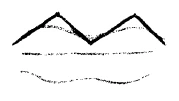
[ 26 ] So ist nämlich in Wirklichkeit die Schrift entstanden, nur sieht man es heute den Worten schwer noch an, daß die Buchstaben Bilder waren, weil die Worte alle im Verlaufe der Sprachentwickelung verschoben worden sind. Ursprünglich hatte jeder Laut eben sein Bild, und seine Bildmöglichkeit war eindeutig.
[ 26 ] This is how writing really originated, only today it is difficult to recognise from the words themselves that the letters were once pictures, because the words have all been subject to change in the course of the evolution of speech. Originally each sound had its own image and each picture could have but one meaning.
[ 27 ] Man braucht nun nicht auf diese ursprünglichen Charaktere zurückzugehen, aber man kann erfinden. Erfinderisch muß der Lehrer sein; er muß aus dem Geiste der Sache heraus schaffen.
[ 27 ] You do not need to go back to these original characters, but you can invent ways and means of your own. The teacher must be inventive, he must create out of the spirit of the thing.
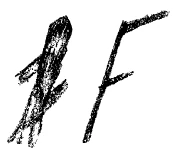
[ 28 ] Nehmen wir das Wort «Fisch», das ja auch im Englischen «fish» ist. Lassen Sie das Kind zeichnend, malend eine Art Fisch darstellen, lassen Sie den Anfang des Wortes sprechen: F; Sie kriegen nach und nach das F heraus aus dem Bilde.
[ 28 ] Let us take the word “fish.” Let the child draw or paint some kind of fish. Let him say the beginning of the word: “F,” and you can gradually get the F out of the picture (see drawing).
[ 29 ] Und so finden Sie in der Tat für alle Konsonanten, für alle Mitlaute, wenn Sie erfinderisch sind, die Bilder, können sie aus dem malenden Zeichnen, zeichnenden Malen herausholen.
[ 29 ] And thus, if you are inventive, you can find in point of fact, pictures for all the consonants. They can be worked out from a kind of painting-drawing, or drawing-painting.
[ 30 ] Das ist unbequemer als die Methoden, die man heute vielfach anwendet. Vor allen Dingen muß man dann, wenn man das die Kinder hat machen lassen zwei oder drei Stunden lang, hinterher das Gemalte aufräumen, muß all das, was die Kinder benutzt haben, wegräumen. Aber das muß eben geschehen, es bleibt nichts anderes übrig.
[ 30 ] This is more awkward to deal with than the methods of today. For it is of course essential that after the children have been doing this painting for an hour or two you have to clear it all away. But this just has to be so, there is nothing else to be done.
[ 31 ] Daraus ersehen Sie, wie man aus dem Bilde heraus den Buchstaben holen kann und das Bild wiederum holen kann aus dem unmittelbaren Leben. Und das soll man tun. Ja nicht zuerst lesen lehren, sondern zuerst vom zeichnenden Malen, malenden Zeichnen ausgehen, daraus die Buchstaben entstehen lassen, und dann erst dazu übergehen, zu lesen.
[ 31 ] From this you can see how the letters can be developed out of pictures and the pictures again directly out of life. This is the way you must do it. On no account should you teach reading first, but proceeding from your drawing-painting and painting-drawing, you allow the letters to arise out of these, and then you can pass over to reading.
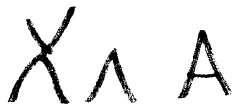
[ 32 ] Für die Konsonanten werden Sie überall etwas finden, wo Sie von Dingen ausgehen können. Sie müssen nur suchen. Sie werden überall so etwas finden, um den Anfangslaut, den Anfangsbuchstaben aus einem Worte entstehen zu lassen. Für die Vokale ist es nicht so leicht. Aber für die Vokale ist vielleicht folgendes möglich. Denken Sie einmal, Sie sagen dem Kinde: Sieh einmal die schöne Sonne! Die mußt du doch bewundern. Stelle dich einmal so auf, daß du hinaufschaust, um die schöne Sonne zu bewundern. - Nun steht es so da, schaut hinauf und drückt die Verwunderung aus: Ah! - Das malen Ste auch noch hinzu. Es ist sogar dann das hebräische A, der Laut der Verwunderung. Sie brauchen jetzt das nur klein werden zu lassen und können allmählich auf das A übergehen.
[ 32 ] If you look around you will find plenty of objects which you can use to develop the consonants in this way. All the consonants can be developed from the initial letters of the words describing these objects. It is not so easy for the vowels. But perhaps for the vowels the following is possible. Suppose you say to the child: “Look at the beautiful sun! You must really admire it; stand like this so that you can look up and admire the glorious sun.” The child stands, looks up and then expresses its wonder thus: Ah! Then you paint this gesture and you actually have the Hebrew A, the sound Ah, the sound of wonder. Now you only need to make it smaller and gradually turn it into the letter A (see drawing).
[ 33 ] Und so werden Sie - wenn Sie inneres Seelisches, namentlich eurythmische Begriffe vor das Kind hinstellen, es selber in diese Lage versetzen -, so werden Sie auch die Vokale herausbringen. Die Eurythmie wird Ihnen da eine ungeheuer starke Hilfe geben können, weil schon die Laute im Eurythmischen gebildet sind. Denken Sie nur an O - man umfaßt etwas; liebend umfaßt man etwas.
[ 33 ] And so if you bring before the child something of an inner soul quality and above all what is expressed in Eurythmy, letting him take up this position or that, then you can develop the vowels also in the way I have mentioned. Eurythmy will be of very great help to you because the sounds are already formed in the Eurythmy gestures and movements. Think for instance of an O. One embraces something lovingly.

[ 34 ] Daraus kann man das Lautzeichen O bekommen. Man kann tatsächlich aus der Geste, aus der Gebärde, die Vokale bekommen.
[ 34 ] Out of this one can obtain the O (see drawing). You can really get the vowels from the gesture, the movement.
[ 35 ] So arbeitet man aus dem Anschauen, aus der Phantasie heraus. Man wird es dann erreichen, daß die Kinder nach und nach die Laute, die Buchstaben aus den Dingen gewinnen. Vom Bilde muß man ausgehen. Der Buchstabe, wie er heute fertig in der Zivilisation vorliegt, hat ja eine Geschichte hinter sich. Der ist etwas aus einem Bilde Vereinfachtes, und man erkennt aus dem heutigen Zauberzeichen nicht mehr, wie das Bild war.
[ 35 ] Thus you must work out of observation and imagination, and the children will then come to know the sounds and the letters from the things themselves. You must start from the picture. The letter, as we know it today in its finished form, has a history behind it. It is something that has been simplified from a picture, but the kind of magical signs of the printed letters of the present day no longer tell us what the picture was like.
[ 36 ] Als die Europäer, diese «besseren Menschen», nach Amerika gekommen sind, als noch Wilde da waren, die Indianer - noch in der Mitte des 19. Jahrhunderts haben sich solche Dinge zugetragen -, und haben diesen Wilden Schriftzeichen, Gedrucktes vorgewiesen, da sind die Indianer davongelaufen, weil sie das für kleine Teufelchen hielten, was da als Buchstaben vorhanden war, und sie haben gesagt: Die Blaßgesichter - wie man die Europäer unter den Indianern nannte - verständigen sich durch kleine Teufelchen, durch Dämonen.
[ 36 ] When the Europeans, these “better men,” went to America at the time when the “savages,” the Indians, were still there,—even in the middle of the nineteenth century such things happened—they showed these savages printed writing and the Indians ran away from it because they thought the letters were little devils. And they said: The Pale-faces, as the Indians called the Europeans, communicate with each other by means of little devils, little demons.
[ 37 ] Aber das sind ja die Buchstaben auch für Kinder. Sie bedeuten ja gar nichts für die Kinder. Das Kind empfindet - und es hat recht in den Buchstaben etwas Dämonisches; sie sind ja schon ein Zaubermittel geworden, weil sie Zeichen sind.
[ 37 ] But this is just what letters are for children. They mean nothing to them. The child feels something demonic in the letters, and rightly so. They have already become a means of magic because they are merely signs.
[ 38 ] Man muß vom Bilde ausgehen. Das Bild ist kein Zauberzeichen, es ist etwas Reales, und so muß man aus dem heraus arbeiten.
[ 38 ] You must begin with the picture. That is not a magic sign but something real and you must work from this.
[ 39 ] Da kommen dann die Leute und sagen: Ja, aber die Kinder lernen dann spät erst Lesen und Schreiben. - Das sagt man ja nur, weil man heute nicht weiß, wie schädlich es ist, wenn die Kinder früh lesen und schreiben lernen. Es ist sehr schlimm, wenn man früh schreiben kann. Lesen und Schreiben, so wie wir es heute haben, ist eigentlich erst etwas für den Menschen im späteren Lebensjahre, so im 11., 12. Lebensjahre. Und je mehr man damit begnadigt ist, kein Lesen und Schreiben vorher fertig zu können, desto besser ist es für die späteren Lebensjahre. Derjenige,. der noch nicht ordentlich schreiben konnte mit dem 14., 15. Lebensjahre - ich kann da aus eigener Erfahrung sprechen, weil ich es nicht konnte mit 14, 15 Jahren -, der verlegt sich nicht so viel für die spätere spirituelle Entwickelung als derjenige, der früh, mit 7, 8 Jahren schon fertig lesen und schreiben konnte. Das sind Dinge, die gerade der Lehrer beobachten muß.
[ 39 ] People will object that the children then learn to read and write too late. This is only said because it is not known today how harmful it is when the children learn to read and write too soon. It is a very bad thing to be able to write early. Reading and Writing as we have them today are really not suited to the human being till a later age, in the eleventh or twelfth year, and the more one is blessed with not being able to read and write well before this age, the better it is for the later years of life. A child who cannot write properly at thirteen or fourteen (I can speak out of my own experience because I could not do it at that age) is not so hindered for later spiritual development as one who early, at seven or eight years, can already read and write perfectly. These are things which the teacher must notice.
[ 40 ] Natürlich wird man heute, da man mit einer Privatschule die Kinder ja ins öffentliche Leben hineinzustellen hat, nicht so vorgehen können, wie man eigentlich sollte. Aber man kann dennoch viel, viel erreichen, wenn man die Dinge kennt. Ums Kennen handelt es sich dabei. Vor allen Dingen soll man durchdringend wissen, erkennen, daß man nicht das Lesen-Lehren vor dem Schreiben-Lehren treiben soll, denn im Schreiben, insbesondere, wenn es aus dem malenden Zeichnen, zeichnenden Malen herausgeholt ist, betätigt sich der ganze Mensch. Die Finger sind dabei beteiligt, die Lage des Körpers, der ganze Mensch ist dabei beteiligt. Beim Lesen ist nur der Kopf beteiligt. Und man sollte möglichst spät dasjenige an das Kind heranbringen, was nur einen Teil des Organismus in Tätigkeit versetzt und den anderen gleichgültig läßt. Das allerwichtigste ist, daß man zuerst den ganzen Menschen in Bewegung, in Regsamkeit bringt und dann einen Teil.
[ 40 ] Naturally one will not be able to proceed as one really should today because the children have to pass from your Independent School into public life. But a very great deal can be done nevertheless when one knows these things. It is a question of knowledge. And your knowledge must show you, above all, that it is quite wrong to teach reading before writing, for in writing, especially if it is developed from the painting-drawing, drawing-painting, that I have spoken of, the whole human being is active. The fingers take part, the position of the body, the whole man is engaged. In reading only the head is occupied and anything which only occupies a part of the organism and leaves the remaining parts impassive should be taught as late as possible. The most important thing is first to bring the whole being into movement, and later on the single parts.
[ 41 ] Allerdings, wenn man so vorgehen will, kann man nicht bis ins kleinste gehende Anweisungen bekommen, sondern nur eine Direktive, eine Richtung. Daher können Sie gerade bei dieser Unterrichtsmethode, wie sie aus der Anthroposophie folgt, mit nichts anderm rechnen als mit der absoluten Freiheit, aber auch mit der freien, schaffenden Phantasie des Lehrenden und Erziehenden.
[ 41 ] Naturally if you want to work in this way you cannot expect to be given instructions for all the little details, but only an indication of the path to be followed. Therefore just in this method of education which arises out of Anthroposophy you can build on nothing else but absolute freedom, though this freedom must include the free creative fancy of the teacher and educator.
[ 42 ] In der Waldorfschule sind wir ja, ich möchte sagen, mit einem recht bedenklichen Erfolge gesegnet. Wir haben mit 130, 140 Schülern angefangen, die wir noch dazu aus dem Industriebetrieb von Emil Molt bekommen haben, die also damals gewissermaßen Zwangskinder waren, und einigen Kindern von Anthroposophen. In der kurzen Zeit des Bestandes der Waldorfschule ist sie so gewachsen, daß wir jetzt über 800 Kinder und zwischen 40 und 50 Lehrkräfte haben - also ein bedenklicher Erfolg, weil nach und nach die Dinge unüberschaubar werden. Aus den Einrichtungen der Waldorfschule, die ich Ihnen schildern werde, werden Sie schon ersehen, wie schwer das dann noch zu überschauen ist. Es kann natürlich überschaut werden, aus Gründen, die ich auch später andeuten werde. Da haben wir haben wir Parallelklassen einrichten müssen, drei nebeneinanderlaufende 5. und 6. Klassen, a, b, c. Die sind noch immer überfüllt, haben noch immer mehr Kinder als andere Klassen der Schule.
[ 42 ] In the Waldorf School we have been blessed with what I might call a very questionable success. We began with one hundred and thirty to one hundred and forty pupils; but these pupils came from the industrial works of Emil Molt, so they were at that time to a certain extent “compulsory” children though we had some children from anthroposophical families besides.2In 1919 the first Rudolf Steiner School was founded by Emil Molt, Director of the Waldorf Astoria Cigarette Factory, Stuttgart. The first pupils were all children of the factory workers. In the short time of its existence the Waldorf School has grown so big that we have now more than eight hundred children and between forty and fifty teachers. This is a doubtful success because gradually it becomes impossible to keep a clear view of the whole. From the arrangements of the Waldorf School which I shall describe to you, you will soon see how difficult it is to survey the whole; though I shall later indicate certain ways of making this possible. We have had to form parallel classes; in the case of the fifth and sixth there are three parallel classes: A, B and C. These classes are still overfull and have more children than the other classes in the school.
[ 43 ] Da steht also eine Lehrkraft in der einen Klasse a, eine andere in der Klasse b. Denken Sie sich, wie das ist im «richtig eingerichteten» Leben. Da kommen Sie in die 1. Klasse a hinein; da drinnen wird nach einer bestimmten Methode gedrillt, die man als die beste anschaut. Jetzt gehen Sie in die 1. Klasse b hinein. Es könnte auch a drauf stehen, nur andere Kinder sitzen drinnen, denn in beiden Klassen geht es ja gleich zu, weil das die «richtige Methode» ist. Natürlich, die Menschen denken das nach Gescheitheit aus. Das Intellektuelle ist ein Eindeutiges, und so muß es sein.
[ 43 ] There is therefore a teacher in Class A, another in Class B. Just imagine how this would work out in a “proper” educational establishment of today. You come into Class I A, where you find a particular educational drill going on which is considered the best. Now you go into Class I B. It could equally well be called ‘A,’ only that different children are sitting there, for in both classes exactly the same thing goes on, because the “right method” is used. This is of course all most cleverly thought out: what is intellectual has but one meaning and it cannot be otherwise.
[ 44 ] Bei uns finden Sie das gar nicht in der Waldorfschule. Bei uns gehen Sie in die 1. Klasse a hinein, da sehen Sie einen Lehrer oder eine Lehrerin drinnen, die treibt Schreibunterricht, läßt die Kinder allerlei Formen machen, sagen wir aus Fäden, dann läßt sie diese Formen in Malerisches überführen, und es entstehen nach und nach Buchstaben. Einer zweiten Lehrerin gefällt es anders. Wenn Sie in die Klasse b hineingehen, finden Sie, daß diese Lehrerin die Kinder herumtanzen läßt; sie sollen die Formen am eigenen Leibe erleben. Dann läßt sie das fixieren. Niemals werden Sie finden, daß es in der Klasse a, b oder c ganz gleich zugeht. Es geschieht dasselbe, aber auf ganz verschiedene Art. Eine frei schaffende Phantasie waltet da. Es gibt keine Vorschrift, sondern es gibt nur einen Geist der Waldorfschule. Das ist sehr wichtig, daß man das erfaßt. Der Lehrer ist autonom. Der Lehrer kann innerhalb dieses Geistes durchaus dasjenige tun, was er für richtig hält. Sie werden sagen: Ja, wenn jeder tun kann, was er will, dann kann ja das Chaotischste in der Schule geschehen. Dann kommt man in die 5. Klasse a hinein, da wird, was weiß ich was für ein Hokuspokus getrieben. Dann kommt man in die 5. Klasse b hinein, da wird irgendwo ein Schachspiel getrieben. Das Wesentliche aber ist wiederum, daß es nicht so ist in der Waldorfschule. Sie finden überall Freiheit, und dennoch ist in jeder Klasse der Geist darinnen, der dem Lebensalter der Kinder entspricht.
[ 44 ] With us in the Waldorf School you find no such thing. You go into the first Class A. There you see a teacher, man or woman, who is teaching writing. The teacher lets the children make all kinds of forms, let us say with string. They then go on to painting the forms and gradually letters arise. A second teacher likes to do it differently. If you go into Class B you find that this teacher is letting the children “dance” the forms round the room, in order that they may experience the forms of the letters in their own bodies. Then she carries over these forms also into the letters themselves. You would never find uniformity of teaching in Classes A, B and C. The same things are taught but in completely different ways, for a free creative fancy holds sway in the class. There are no prescribed rules for teaching in the Waldorf School, but only one unifying spirit that pervades the whole. It is very important that you should realise this. The teacher is autonomous. Within this one unifying spirit he can do entirely what he thinks right. You will say: Yes, but if everyone can do as he likes, then the whole school will fall into a chaotic condition. For in Class V A, there could be goodness knows what kind of hocus-pocus going on, and in V B, you might find them playing chess. But that is exactly what does not happen in the Waldorf School, for though there is freedom everywhere you will find in each class the spirit which is in accordance with the age of the children.
[ 45 ] Wenn Sie die Seminarkurse nehmen, so werden Sie sehen, sie lassen die größte Freiheit, und dennoch, sie stellen in die Klasse dasjenige hinein, was hineingehört. Und das eigentümliche ist, kein Lehrer hat sich je dagegen aufgelehnt. Alle nehmen den einheitlichen Geist ganz freiwillig auf. Keiner lehnt sich auf, keiner will etwas extra haben. Im Gegenteil, es entsteht sogar oftmals die Sehnsucht, in den Konferenzen nur ja recht viel darüber zu reden, was in den Klassen sein soll.
[ 45 ] If you read the Seminar Course, you will see that you are allowed the greatest liberty, and yet the teaching in each class is what is right for that age3Just before the opening of the Waldorf School, in 1919, Dr. Steiner gave three simultaneous courses of lectures to the teachers two of which have been published in English under the titles ofStudy of Man and Practical Advice to Teachers. The strange thing is that no teacher has ever opposed this. They all quite voluntarily accept this principle of a unifying spirit in the work. No one opposes it or wants to have any special arrangements made for himself. On the contrary, the wish is often expressed by the teachers to have as many discussions as possible in their meetings about what should be done in the various classes.
[ 46 ] Warum lehnt sich denn kein Lehrer auf gegen den Lehrplan? Wir haben schon Jahre hinter uns. Was glauben Sie, daß der Grund davon ist? Jeder hält ihn für vernünftig. Er findet ihn gar nicht unvernünftig. Er findet ihn in seiner Freiheit ganz vernünftig, weil er mit demjenigen zusammenhängt, was nun wirkliche, echte Menschenerkenntnis ist.
[ 46 ] Why does no teacher object to the curriculum? The school has been going for several years. Why do you think that all the teachers approve of the curriculum? They do not find it at all unreasonable. They find it in its very freedom excellent because it is bound up with real true human knowledge.
[ 47 ] Aber gerade indem man auf diese Dinge kommt, das Schaffen des Unterrichtsstoffes aus der Phantasie heraus, sieht man, daß Freiheit in der Schule walten muß. Die waltet auch. Und jeder Lehrer hat bei uns das Gefühl, nicht nur daß er auf dasjenige kommt, was er selber wirklich ausdenkt und in seiner Phantasie findet, sondern ich gewinne immer mehr die Überzeugung - ob ich in den Konferenzen mit meinen Waldorf-Lehrern sitze, ob ich in die Klasse komme -, daß eigentlich jeder vergißt, wenn er in der Klasse ist, daß der Lehrplan einmal fixiert und aufgestellt worden ist. Er hält ihn eigentlich in dem Momente, wo er unterrichtet, für sein eigenes Werk. Dieses Gefühl habe ich, wenn ich hineinkomme.
[ 47 ] And just in such things as creating one's teaching matter out of fantasy it can be seen that freedom must prevail in the school. Indeed it does. Each of our teachers has the feeling that it is not only a question of what he himself thinks out and discovers out of his own fantasy, but when I sit with my Waldorf teachers in their meetings, or when I go into the classes, I get more and more the impression that when once the teachers are in their classrooms they actually forget that a plan of teaching has previously been drawn up. In the moment of teaching every teacher imagines that he himself is creating the plan of work. This is the feeling I have when I go into the classes.
[ 48 ] Das sind die Dinge, die sich ergeben, wenn wirkliche Menschenerkenntnis zugrunde gelegt wird. Ich muß es Ihnen sagen, trotzdem Sie glauben könnten, es würde aus Eitelkeit gesagt; aber es wird nicht aus Eitelkeit gesagt, sondern damit Sie es wissen und es ebenso machen können und sehen, wie dasjenige, was aus echter Menschenerkenntnis kommt, auch wirklich in das Kind hineingeht.
[ 48 ] Such is the result when real human knowledge lies at the basis of the work. I have to tell you these details even though you might think they were said out of vanity; indeed they are not said out of vanity but that you may know how it is and then go and do likewise; this will show you how what grows out of a true knowledge of man can really enter into the child.
[ 49 ] Auf die Phantasie hin ist der ganze Unterricht, die ganze Erziehung zu bauen. Man muß sich klar darüber sein, daß das Kind vor dem 9. oder 10. Lebensjahr sich nicht als ein Ich von seiner Umgebung zu unterscheiden weiß. Aus einem gewissen Instinkt heraus spricht ja das Kind längst von sich in der Ich-Form. Aber in Wahrheit fühlt sich das Kind eigentlich in der ganzen Welt drinnen. Es fühlt die ganze Welt mit sich verwandt. In dieser Beziehung herrschen ja heute recht abenteuerliche Begriffe. Man spricht von primitiven Völkern so, daß man sagt, sie haben Animismus als ihre Weltempfindung, sie behandeln leblose Gegenstände wie beseelt. Und man glaubt, das Kind zu verstehen, wenn man sagt, es verhält sich auf seinem Gebiete auch so, wie ein Wilder, wie ein primitiver Mensch. Wenn es sich stößt an einem eckigen Gegenstand, so schlägt es ihn, weil es ihn beseelt.
[ 49 ] It is on fantasy then, on imagination, that our teaching and education is to be built. You must be quite clear that before the ninth or tenth year the child does not know how to differentiate himself as an ego from his surroundings. Out of a certain instinct the child has long been accustomed to speak of himself as “P,” but in truth he really feels himself within the whole world. He feels that the whole world is connected with himself. But people have the most fantastic ideas about this. They say of primitive races that their feeling for the world is “animism,” that is, they treat lifeless objects as though they were “ensouled,” and that to understand a child you must imagine that he does the same as these primitive peoples. When he knocks against a hard object he hits it because he endows it with a quality of soul.
[ 50 ] Das ist aber gar nicht wahr. In Wirklichkeit beseelt das Kind nicht, sondern es macht nur noch nicht den Unterschied zwischen dem Lebendigen und Leblosen. Es betrachtet alles als eine Einheit, und sich mit der Umgebung auch als eine Einheit. Erst zwischen dem 9. und 10. Lebensjahre lernt eigentlich das Kind sich von der Umgebung zu unterscheiden. Das muß man im strengsten Sinne berücksichtigen, wenn man den ganzen Unterricht planvoll orientieren will.
[ 50 ] But that is not at all true. In reality, the child does not “ensoul” the object, but he does not yet distinguish between the living and the lifeless. He considers everything as a unity, and himself also as making up a unity with his surroundings. Not until the age of nine or ten does the child really learn to distinguish himself from his environment. This is something you must take into consideration in the strictest sense if you wish to give your teaching a proper basis.
[ 51 ] Es ist da notwendig, daß man alles, was an Pflanzen, an Tieren, selbst an Steinen in der Umgebung des Kindes ist, so bespricht, daß die Dinge miteinander reden, sich wie menschlich miteinander verhalten, daß sie einander Mitteilungen machen, daß sie einander hassen und lieben. Anthropomorphismen muß man in der erfinderischsten Weise gebrauchen können; alles wirklich so behandeln, wie der Mensch ist. Und nicht in geistvoller Weise etwa beseelen, sondern so, wie das Kind es aufzufassen in der Lage ist, indem es noch nicht unterscheidet zwischen Leblosem und Lebendigem. Für das Kind ist noch kein Grund dazu da, zu denken, daß der Stein keine Seele hat, der Hund eine Seele habe, sondern das Kind macht erst den Unterschied, daß sich der Hund bewegt, der Stein aber nicht. Aber die Bewegung schreibt es nicht der Beseelung zu. Es kommt darauf an, daß man in der Tat alles Beseelte und Belebte nun so behandeln kann, wie wenn Menschen miteinander sprächen, dächten, empfänden, wie wenn Menschen gegeneinander Sympathien und Antipathien entwickelten. Daher muß alles, was man an das Kind in diesem Lebensalter heranbringt, ins Märchenhafte, Legendenhafte, in die beseelte Erzählung gegossen sein. Das Kind empfängt dadurch für sein instinktives Seelisch-Phantasievolles die aller-, allerbeste Seelenanlage. Und darauf ist zu sehen.
[ 51 ] Therefore it is important to speak of everything that is around the child, plants, animals and even stones, in such a way that all these things talk to each other, that they act among themselves like human beings, that they tell each other things, that they love and hate each other. You must learn to use anthropomorphism in the most inventive ways and speak of all the plants and animals as though they were human. You must not “ensoul” them out of a kind of theory but simply treat them in the way which a child can grasp when he is not yet able to distinguish between the lifeless and the living. For as yet the child has no reason to think that the stone has no soul, whereas the dog has a soul. The first difference he notices is that the dog moves. But he does not ascribe the movement to the fact that he has a soul. One can indeed treat all things that feel and live as if they were people, thinking, feeling and speaking to one another, as if they were persons with sympathy and antipathy for each other. Therefore everything that one brings to a child at this age must be given in the form of fairy tales, legends and stories in which everything is endowed with feeling. The child receives the very best foundation for his soul life when in this way we nourish his instinctive soul qualities of fancy. This must be borne in mind.
[ 52 ] Wenn das Kind in dieser Zeit mit allerlei Intellektualismen angefüllt wird - und das wird es, wenn man nicht alles, was man an das Kind heranbringt, ins Bildhafte umsetzt -, dann wird das Kind später das an seinem Gefäßsystem, auch an seinem Zirkulationssystem zu empfinden haben. Man muß das Kind nach Geist, Seele und Leib - das muß immer wieder gesagt werden - durchaus als eine Einheit betrachten.
[ 52 ] If you fill the child with all kinds of intellectual teaching during this age (and this will be the case if we do not transform into pictures everything that we teach him) then later he will have to suffer the effects in his blood vessels and in his circulation. We must consider the child in body, soul and spirit as an absolute unity. This must be said over and over again.
[ 53 ] Um das zu können, muß der Lehrer eben künstlerischen Sinn in seiner Seele haben, artistisch veranlagt sein; denn dasjenige, was vom Lehrer auf das Kind wirkt, ist ja nicht bloß das, was man ausdenkt oder was man in Begriffe bringen kann, sondern es sind, wenn ich mich des Ausdrucks bedienen darf, eben durchaus die Imponderabilien des Lebens. Unbewußt geht ungeheuer viel vom Lehrer, vom Erziehenden, auf das Kind über. Der Lehrer muß sich dessen bewußt sein, namentlich dann, wenn er Märchen, wenn er Geschichten, die durchseelt sind, wenn er Legenden dem Kind erzählt. Da tritt ja sehr, sehr häufig in unserer materialistischen Zeit die Tatsache auf, daß man zu sehr merkt, der Lehrer betrachtet das, was er erzählt, eben als kindisch; es ist etwas, woran er selber nicht glaubt. Da, sehen Sie, tritt die Anthroposophie, wenn sie die Leiterin und Lenkerin der wahren Menschenerkenntnis ist, wirklich in richtiger Weise auf. In der Anthroposophie werden wir ja gewahr, daß man eine Sache unendlich viel reicher ausdrücken kann, wenn man sie ins Bild kleidet, als wenn man sie in den abstrakten Begriff bringt. Fin gesund veranlagtes Kind hat das Bedürfnis, alles ins Bild zu bringen und auch Bilder zu empfangen.
[ 53 ] For this task the teacher must have an artistic feeling in his soul, he must be of an artistic disposition. For what works from teacher to child is not only what one thinks out or what one can convey in ideas, but, if I may express myself so, it is the imponderable quality in life. A very great deal passes over from teacher to child unconsciously. The teacher must be aware of this, above all when he is telling fairy tales, stories or legends full of feeling. It very often happens in our materialistic times that we notice how the teacher looks upon what he is telling as childish. He is telling something which he himself does not believe. And here Anthroposophy finds its rightful place if it is to be the guide and leader of the true knowledge of man. We become aware through Anthroposophy that we can express a thing infinitely more fully and more richly if we clothe it in pictures than if we put it into abstract ideas. A child who is naturally healthy feels the necessity to express everything in pictures and to receive everything also in picture form.
[ 54 ] Man darf da immer wiederum auf Goethe hinweisen, der als Knabe Klavier spielen lernen mußte. Er wurde angewiesen, wie er den ersten Finger, den zweiten Finger und so weiter zu gebrauchen habe. Aber das war ihm unsympathisch, und er erfand selber dem trockenen, pedantischen Lehrer gegenüber - denn der alte Vater Goethe war ein Urphilister, so ein richtiger Frankfurter Philister, der nahm natürlich auch philiströse Lehrer am liebsten, weil die die guten sind, nicht wahr - nun, das war dem Buben Goethe zuwider, zu abstrakt; da erfand er sich selber den «Deuterling», nicht der Zeigefinger, das ist abstrakt, aber der Deuterling. Das Kind will das Bild, will sich selber als Bild fühlen. Da ist es eben notwendig, zu berücksichtigen, daß der Lehrer Phantasie braucht, artistisch sein muß. Dann tritt er mit der nötigen Lebendigkeit an das Kind heran. Und diese Lebendigkeit wirkt im allerbesten Sinne imponderabel auf das Kind.
[ 54 ] Remember how Goethe learnt to play the piano as a boy. He was shown how he had to use the first finger, the second finger, and so on; but he did not like this method, and this dry pedantic teacher of his was repugnant to him. For Father Goethe was an old Philistine, one of the old pedants of Frankfurt who naturally also engaged Philistine teachers for preference, because they are the good ones, as everyone knows. This kind of teaching was repugnant to the boy Goethe, it was too abstract. So he invented for himself the “ Deuterling” (“the little fellow who points”), not “Index finger,” that is too abstract, but “ Deuterling.”4Compare the old country names for the fingers referred to by Walter de la Mare inCome Hither p. 515, e.g. Tom Thumbkin, Bess Bumpkin, Long Linkin, Bill Wilkin and Little Dick. The child wants an image and he wants to think of him- self as an image too. It is just in these things that we see how the teacher needs to use his fantasy, to be artistic, for then he will meet the child with a truly “living” quality of soul. And this living quality works upon the child in an imponderable way—imponderable in the best sense.
[ 55 ] Da ist es ja so, daß wir durch die Anthroposophie wieder lernen, an die Legenden, an die Märchen, an die Mythen selber zu glauben, weil sie in der Imagination die höhere Wahrheit ausdrücken. Wir finden uns wieder hinein in die seelische Behandlung des Mythischen, des Legendenhaften, des Märchenhaften. Dadurch strömt unsere Rede, wenn wir zu dem Kinde sprechen, von dem eigenen Glauben an die Sache durchdrungen, an das Kind heran. Das bringt Wahrheit zwischen den Erziehenden und das Kind; während oftmals soviel Unwahrheit waltet zwischen den Erziehenden und den Kindern. Unwahrheit waltet sofort, wenn der Lehrer sagt: Das Kind ist dumm, ich bin gescheit; das Kind glaubt an die Märchen, die muß ich ihm daher erzählen. Das schickt sich so für das Kind. - Da kommt sogleich der Verstand hinein in das Erzählen.
[ 55 ] Through Anthroposophy we ourselves learn once more to believe in the legends, fairy tales and myths, for they express a higher truth in imaginative pictures. And then our handling of these fairy tales, legends and mythical stories will once more be filled with a quality of soul. Then when we speak to the child, our very words, permeated as they will be by our own belief in the tales, will flow over to him and carry truth with them; truth will then flow from teacher to child, whereas it is so often untruth that passes between them. Untruth at once holds sway if the teacher says: the child is stupid, I am clever, the child believes in fairy tales so I have to tell them to him. It's the proper thing for him to hear them. When a teacher speaks like this then an intellectual element immediately enters into the relating of the stories.
[ 56 ] Dafür hat das Kind gerade zwischen dem Zahnwechsel und der Geschlechtsreife das allerfeinste Gefühl, ob im Lehrer der Verstand oder die Phantasie waltet. Der Verstand wirkt verödend, verschrumpfend auf das Leben des Kindes, während die Phantasie belebt, anregt.
[ 56 ] But the child, especially in the age between the change of teeth and puberty, has a most sensitive feeling for whether the teacher is governed by his fantasy or his intellect. The intellect has a destructive and crippling effect on the child, but fantasy gives it life and impulse.
[ 57 ] Diese allgemeinen Dinge müssen wir uns durchaus aneignen. Wir werden dann in den nächsten Tagen auf diese Dinge noch eingehender zu sprechen kommen, aber eines möchte ich doch noch zum Schlusse vor Sie hinstellen.
[ 57 ] It is vital that we should make these fundamental thoughts our own. We will speak of them in greater detail during the next few days, but there is one more thing I should like to put before you in conclusion.
[ 58 ] Zwischen dem 9. und 10. Lebensjahre liegt für das Kind etwas außerordentlich Bedeutsames. Das muß der Lehrer bemerken. Abstrakt ausgesprochen liegt das vor zwischen dem 9. und 10. Jahre, daß das Kind sich unterscheiden lernt von seiner Umgebung, sich als Ich, die Umgebung eben als das Äußere, nicht zu dem Ich gehörige empfindet. Das ist aber abstrakt die Sache ausgesprochen. Die Wirklichkeit liegt so, natürlich ist das alles approximativ, annähernd, daß das Kind in diesem Lebensalter mit irgendeiner Schwierigkeit an den geliebten Lehrer oder die geliebte Lehrerin herankommt. Meistens sogar drückt das Kind gar nicht dasjenige aus, was ihm auf der Seele lastet, sondern etwas anderes. Man muß aber dann wissen, daß das aus dem innersten Untergrunde der Seele kommt. Und da muß man die rechte Antwort, das rechte Verhalten finden. Davon hängt für das ganze Leben des betreffenden Menschen ungeheuer viel ab. Denn, sehen Sie, Sie können gar nicht erziehend, unterrichtend, mit Kindern in diesem Lebensalter arbeiten, wenn Sie nicht die selbstverständliche Autorität sind, wenn das Kind nicht das Gefühl hat, etwas ist wahr, weil Sie es für wahr halten, etwas ist schön, weil Sie es schön finden und es bemerklich machen, etwas ist gut, weil Sie es für gut halten. Sie müssen für das Kind der Repräsentant sein für das Gute, Wahre und Schöne. Das Kind muß an Wahrheit, Güte und Schönheit herangezogen werden, weil es an Sie herangezogen wird.
[ 58 ] Something of very special importance happens to the child between his ninth and tenth year. Speaking in an abstract way we can say that he then learns to differentiate himself from his environment; he feels himself as an “I,” and the environment as something external which does not belong to this “I” of his. But this is an abstract way of expressing it. The reality is this, speaking of course in a general sense: the child of this age approaches his much-loved teacher, be he man or woman, with some problem or difficulty. In most cases he will not actually speak of what is burdening his soul, but will say something different. All the same one has to know that this really comes from the innermost depths of his soul, and the teacher must then find the right approach, the right answer. An enormous amount depends on this for the whole future life of the child concerned. For you cannot work with children of this age, as their teacher, unless you are yourself the unquestioned authority, unless, that is, the child has the feeling: this is true because you hold it to be true, this is beautiful because you find it beautiful, and therefore point it out to him, and this is good because you think it good. You must be for the child the representative of the good, the true and the beautiful. He must be drawn to truth, goodness and beauty simply because he is drawn to you yourself.
[ 59 ] Jetzt, zwischen dem 9. und 10. Jahre, kommt ganz instinktiv im Unterbewußten diese Empfindung über das Kind: Ich habe alles vom Lehrer, vom Erzieher, und woher hat’s der? Was steht hinter dem? Das braucht nicht weiter ausgeführt zu werden. Tritt man da in Definitionen oder in Erklärungen ein, so ist es von Schaden. Aber wichtig ist, daß man da ein herzliches seelendurchtränktes Wort findet für das Kind, oder Worte - es dauert ja in der Regel länger, die Schwierigkeiten dauern fort, durch Wochen, Monate -, so daß man über diese Klippe hinüber in dem Kinde die Autorität aufrechterhält. Da ist die Krisis des autoritativen Prinzipes beim Kinde. Ist man dieser gewachsen, weiß man soviel Seele hineinzulegen in die Art, wie man gerade den Schwierigkeiten, die in diesem Lebenspunkte auftreten, begegnet, kommt man dem Kinde mit der nötigen Innerlichkeit, Glaubhaftigkeit und Wahrhaftigkeit entgegen, daß man die Autorität bewahrt, dann ist nicht nur deshalb etwas gewonnen, weil das Kind den Autoritätsglauben gegenüber dem Lehrer behält, was natürlich gut ist für den weiteren Unterricht, sondern es liegt in der Wesenheit des Menschen, daß er gerade in diesem Lebensalter, zwischen dem 9. und 10. Lebensjahre, nicht wankend werden darf in dem Glauben an den guten Menschen. Sonst wird alle innere Sicherheit, die im Leben weiterleiten soll, ins Wanken gebracht.
[ 59 ] And then between the ninth and tenth year this feeling arises instinctively in his subconsciousness: I get everything from my teacher, but where does he get it from? What is behind him? The teacher need not enlarge on this because if you go into definitions and explanations it can only do harm. The important thing is to find a loving word, a word filled with warmth of heart—or rather many words, for these difficulties can go on for weeks and months—so that we can avert this danger and preserve the feeling for authority in the child. For he has now come to a crisis as regards the principle of authority. If you are equal to the situation, and can preserve your authority by the warmth of feeling with which you deal with these particular difficulties, and by meeting the child with inner warmth, sincerity and truth, then much will be gained. The child will retain his belief in the teacher's authority, and that is a good thing for his further education, but it is also essential that just at this age of life between nine and ten the child's belief in a good person should not waver. Were this to happen then the inner security which should be his guide through life will totter and sway.
[ 60 ] Das ist von ungeheurer Bedeutung, und an solche Dinge müssen wir uns halten. Viel wichtiger als alle die kniffligen und kleinen Miniaturdinge, die da in den Pädagogiken vorgeschrieben sind, ist es, SO etwas zu wissen, was in einem Zeitpunkte des Lebens auftritt und wie man sich dem gegenüber verhalten muß, damit dann das richtige Licht von solch einem Verhalten auf das ganze Leben des Kindes ausgestrahlt werde.
[ 60 ] This is of very great significance and must constantly be borne in mind. In the handbooks on education we find all kinds of intricate details laid down for the guidance of teachers, but it is of far greater importance to know what happens at a certain point in the child's life and how we must act with regard to it, so that through our action we may radiate light on to his whole life.