

The Art of Education
Based on Understanding Human Nature
GA 311
19 August 1924, Torquay
Translate the original German text into any language:
Versions Available:
Siebenter Vortrag
Lecture Seven
[ 1 ] Wir wollen noch aus dem Methodischen einiges herausgreifen. Es können ja natürlich während dieser kurzen Zeit wirklich nur herausgegriffene Beispiele gegeben werden.
[ 1 ] We will now speak of some further details of method, though of course in this short time I can only pick out a few examples to give you.
[ 2 ] Wenn wir die Zeit, die der Mensch zwischen seinem Zahnwechsel und der Geschlechtsreife zubringt, überblicken, so gliedert sie sich uns wiederum in drei Teile, und diese drei Teile sind zu berücksichtigen, wenn es sich darum handelt, das Kind durch die Elementarschule durchzuführen.
[ 2 ] When we consider the whole period between the change of teeth and puberty we can see that it divides itself again into three sections, and it is these three sections that we must bear in mind when we have to guide the children through these early years of school life.
[ 3 ] Da haben wir zunächst das Lebensalter bis zu dem Lebenspunkt hin, den ich charakterisiert habe, in welchem sich das Kind von seiner Umgebung zu unterscheiden beginnt, wo es den Unterschied macht zwischen Subjekt, das es selbst ist, und den Dingen der Außenwelt, die ihm Objekt sind. Bis zu diesem Zeitpunkte müssen wir durchaus das Kind so erziehen, daß alles, was im Kinde ist, und alles, was außerhalb des Kindes ist, einen einheitlichen Charakter trägt. Ich habe Ihnen ja charakterisiert, wie man das artistisch machen kann. Dann haben wir ja beim Hinweis auf das Pflanzen- und Tierreich schon gesehen, wie man zu der Beschreibung der Außenwelt übergeht. Und man kommt dann, wenn man diese Dinge ganz elementar gestaltet, bis gegen das 12. Lebensjahr heran. Von diesem 12. Lebensjahr bis zu der Geschlechtsreife ist dann der dritte Abschnitt, in dem wir eigentlich erst zu der leblosen Natur übergehen können, wo das Kind im Grunde genommen erst anfängt, wirklich das Leblose zu fassen.
[ 3 ] First we have the age up to the point of time which I have described to you here, when the child begins to differentiate himself from his environment and makes a distinction between “subject”—his own self, and “object”—the things which surround him in the outside world; up to this point of time it is essential for us to teach in such a way that everything within the child or without him bears the character of a unity. I have shown you how that can be done artistically. Then, in the second period, we saw how the transition to descriptions of the outside world can be made through our teaching of plant and animal life. You can treat these things in quite an elementary way up till the twelfth year. The third section extends from the twelfth year up to puberty, and it is really only at this time that we can pass on to lifeless nature, for it is only now that the child really begins to understand the inanimate world.
[ 4 ] So können wir sagen: Vom 7. Jahre bis etwa 9 1/2 oder 9 1/3 Jahren nimmt das Kind alles seelisch. Es ist nichts da, was das Kind nicht seelisch aufnehmen würde. Die Bäume, die Sterne, die Wolken, die Steine, alles wird seelisch aufgenommen. Von 9 1/3 etwa bis etwa 11 2/3 Jahren nimmt das Kind allerdings schon den Unterschied zwischen Seelischem, das es in sich selber erblickt, und bloß Lebendigem wahr. Und wir können von Lebendigem, von der ganzen Erde als Lebewesen sprechen. Also Seelisches und Lebendiges. Dann von 11 2/3 bis etwa zum 14. Jahr unterscheidet das Kind Seelisches, Lebendiges und Totes, also alles dasjenige, was nach Ursachen und Wirkungen zusammenhängt.
[ 4 ] We might indeed say that from the seventh year to about nine-and-a-half or nine-and-one-third the child takes in everything with his soul. There is nothing that the child would not take in with his soul. The trees, the stars, the clouds, the stones, everything is absorbed by the child's soul life. From about nine-and-a-third to about eleven-and-two-thirds the child already perceives the difference between the soul quality which he sees in himself and what is merely “living.” We can now speak of the whole earth as living. Thus we have the soul quality and the living quality. Then from eleven-and-two-thirds to about fourteen the child discriminates between what is of the soul, what is living, and what is dead, that is to say, what is based on the laws of cause and effect.
[ 5 ] Wir sollen dem Kinde gar nicht sprechen von Leblosem, bevor es gegen das 12. Lebensjahr hingeht. Dann erst sollen wir anfangen, von Mineralien, von physikalischen Erscheinungen, von chemischen Erscheinungen und so weiter zu sprechen. Man muß sich nur klarmachen, daß die Dinge wirklich so sind, daß beim Kinde zwischen dem Zahnwechsel und der Geschlechtsreife durchaus noch vorwiegend nicht der Intellekt, sondern die Phantasie tätig ist und daß man überall auf die Phantasie zählen muß. Daher muß man selber in sich, wie ich schon öfter sagte, die Phantasie besonders entwickeln. Wenn man das nicht tut, wenn man früh zu allerlei Verstandesmäßigem übergeht, dann kann das Kind auch körperlich-physisch seine Entwickelung nicht in ordentlichem Sinne durchmachen. Und manches, was an Pathologischem in unserer Gegenwart ist, rührt eben davon her, daß man in der materialistischen Zeit bei den Kindern zwischen dem Zahnwechsel und der Geschlechtsreife zu stark auf den Intellekt gesehen hat.
[ 5 ] We should not speak to the child of Inanimate things at all before he approaches his twelfth year. Only then should we begin to speak about minerals, physical phenomena, chemical phenomena and so on. We must make it clear to ourselves that this is really how things are: in the child between the change of teeth and puberty it is not the intellect but the fantasy that is predominantly active; we must constantly be thinking of the child's fantasy, and therefore, as I have often said, we must especially develop fantasy in ourselves. If we do not do this, but pass over to all kinds of intellectual things when the child is still quite young, then he cannot go through his development rightly even in his physical body. And much that is pathological at the present day arises from the fact that in this materialistic age too much attention has been paid to the intellect in children between the change of teeth and puberty.
[ 6 ] Wir dürfen erst leise anfangen mit dem Toten - denn das Tote muß eben mit dem Intellekt begriffen werden -, wenn das 12. Jahr heranrückt. Da können wir mit Mineralien, mit physikalischen, mit chemischen Erscheinungen und so weiter an das Kind herankommen. Aber auch da sollen wir womöglich überall an das Leben anknüpfen; nicht einfach, sagen wir, von der Mineraliensammlung ausgehen, sondern von dem Erdboden, vom Gebirge ausgehen, so daß wir das Gebirge zunächst beschreiben, wie es die Erde konfiguriert; dann davon sprechen, wie das Gebirge unten mit Erde umzogen ist. Je höher wir kommen, desto kahler wird das Gebirge, desto weniger finden sich dort Pflanzen. Nun fangen wir an, von dem Kahlen des Gebirges zu sprechen und dann darauf aufmerksam zu machen, daß da Mineralisches ist. Wir gehen also vom Gebirge aus und kommen an das Mineralische heran.
[ 6 ] We should only very gradually introduce the lifeless world when the child is approaching his twelfth year, for this lifeless world must be grasped by the intellect. At this time we can introduce minerals, physical and chemical phenomena and so on. But even here we should connect it up with life as far as possible, not simply start, for instance, with a collection of minerals, but start from the earth, the soil, and first describe the mountain ranges, how they bring about the configuration of the earth; then we can speak of how the mountains are surrounded with soil at their foot, and the higher we go the more bare they become and the fewer plants there are. So we come to speak of the bareness of the mountains and point out that here there are minerals. Thus we start with the mountains and lead on to the minerals.
[ 7 ] Dann, wenn wir das Gebirge so recht anschaulich beschrieben haben, dann nehmen wir irgendein Mineral und zeigen es und sagen: Das also würde man finden, wenn man diesen Weg hinaufginge auf dieses Gebirge. Dort findet man das. Hat man das für ein paar Mineralien gemacht, dann kann man übergehen, die Mineralien selbst zu behandeln. Aber das erste muß sein, daß man auch hier wiederum von dem Ganzen ausgeht und nicht von dem Teil. Das ist von einer außerordentlichen Wichtigkeit.
[ 7 ] Then when we have given a clear description of the mountains we can show the children a mineral and say: this is what you would find if you were to take this path up the mountain. This is where it is found. When you have done this with a few different minerals you can pass on to speak of the minerals themselves. But you must do the other first, here again proceeding from the whole and not from the part. This is of very great importance.
[ 8 ] Und ebenso ist es wichtig auch für physikalische Erscheinungen, vom Leben auszugehen. Nicht einfach Physik, so wie man sie heute in den Lehrbüchern findet, zu lehren anfangen, sondern etwa davon ausgehen, daß man einfach ein Zündholz anzündet und nun zunächst das Kind anschauen läßt, wie da das Zündholz anfängt zu brennen. Man soll das Kind auf alle Einzelheiten aufmerksam machen, wie die Flamme aussieht, wie die Flamme mehr nach außen aussieht, wie sie im Innern aussieht; wenn man die Flamme auslöscht, daß da ein schwarzer Fleck zurückbleibt, eine schwarze Kuppe; dann erst davon anfangen, wie das Feuer an dem Zündholz zustande gekommen ist. Das Feuer an dem Zündholz ist dadurch zustande gekommen, daß Wärme entwickelt worden ist und so weiter. Überall die Dinge an das Leben anknüpfen!
[ 8 ] For physical phenomena also it is just as important to start from life itself. You should not begin your teaching of Physics as set forth in the text books of today, but simply by lighting a match for instance and letting the children observe how it begins to burn; you must draw their attention to all the details, what the flame looks like, what it is like outside, what it is like further in, and how a black spot, a little black cap is left when you blow out the flame; and only when you have done this, begin to explain how the fire in the match came about. The fire came about through the generation of warmth, and so on. Thus you must connect everything with life itself.
[ 9 ] Also zum Beispiel nicht vom Hebel ausgehen und sagen: Ein Hebel besteht darin, daß man einen Balken hat, der unterstützt ist, am einen Arm eine Kraft hat und am andern Arm eine Kraft, so wie man es in den Physikbüchern sehr häufig ausgeführt findet. Man soll das nicht so machen, sondern von der Waage ausgehen. Man soll das Kind in Gedanken zu irgendeinem Geschäft hinführen, wo mit der Waage abgewogen wird, und von da aus erst zum Gleichgewicht übergehen, ebenso zu dem Begriff des Gewichtes, der Schwere übergehen. Also überall aus dem Leben heraus das Physikalische entwickeln. Und so auch bei chemischen Erscheinungen.
[ 9 ] Or take the example of a lever: do not begin by saying that a lever consists of a supported beam at the one end of which there is a force, and at the other end another force, as one so often finds in the Physics books. You should start from a pair of scales; let the child imagine that you are going to some shop where things are being weighed out, and from this pass on to equilibrium and balance, and to the conception of weight and gravity. Always develop your Physics from life itself, and your chemical phenomena also.
[ 10 ] Das ist das Wesentliche, daß man vom Leben ausgehend, die einzelnen physikalischen, mineralischen Erscheinungen betrachtet. Geht man anders vor, geht man von der Abstraktion aus, dann geschieht ja etwas sehr eigentümliches mit dem Kinde, dann wird das Kind leicht müde durch den Unterricht. Das Kind wird dann nicht müde, wenn man vom Leben ausgeht; es wird müde, wenn man von der Abstraktion ausgeht.
[ 10 ] That is the essential thing, to begin with real life in considering the different phenomena of the physical and mineral world. If you do it the other way, beginning with an abstraction, then something very curious happens to the child; the lesson itself soon makes him tired. He does not get tired if you start from real life. He gets tired if you start from abstractions.
[ 11 ] Nun ist es überhaupt die goldene Regel für den Unterricht, daß das Kind absolut nicht müde werde. Es ist etwas sehr eigentümliches mit der sogenannten experimentellen Pädagogik von heute. In der experimentellen Pädagogik stellt man fest, wann ein Kind durch irgendeine geistige Tätigkeit müde wird. Daraus schließt man dann, wie lange man ein Kind beschäftigen soll mit irgendeinem Gegenstande, damit es eben nicht müde werde.
[ 11 ] The golden rule for the whole of teaching is that the child should not tire. Now there is something very strange about the so-called experimental education of the present day. Experimental psychologists register when a child becomes tired in any kind of mental activity, and from this they decide how long to occupy a child with any one subject, in order to avoid fatigue.
[ 12 ] Diese ganze Anschauung ist falsch, durch und durch falsch! Denn sehen Sie, die Sache ist so - Sie können das in meinen Büchern nachlesen, namentlich in Zyklen, aber auch in meinem Buch «Von Seelenrätseln» -: Der Mensch besteht ja aus den drei Gliedern, aus dem Nerven-Sinnes-Menschen - ich will das nur in Ihr Gedächtnis zurückrufen -, das ist alles dasjenige, was den Menschen geistig in seiner Tätigkeit stützt, dem rhythmischen Menschen, worinnen aller Atmungsrhythmus, alle Blutzirkulation und so weiter enthalten ist, und dem Stoffwechsel-Gliedmaßen-Menschen, worinnen alles enthalten ist, was durch die Stoffe umgewandelt wird.
[ 12 ] This whole conception is wrong from beginning to end. The truth of the matter is as follows: you can read about it in my books, especially in the book Riddles of the Soul and in various lecture courses; all I shall do now is to remind you that man consists of three members—the nerve-senses man, that is, all that sustains man in the activity of his mind and spirit; the rhythmic man, which contains the whole rhythm of breathing, the circulation of the blood and so on; and the metabolic-limb man, in which is to be found everything that is metamorphosed by means of the different substances.
[ 13 ] Wenn man die Entwickelung des Kindes von der Geburt bis zum Zahnwechsel nimmt, so ist es insbesondere die Kopforganisation, die Nerven-Sinnes-Organisation, die da wirkt. Das Kind entwickelt sich vom Kopf aus in der ersten Zeit seines Lebens. Das müssen Sie nur genau durchschauen. Sehen Sie sich zuerst einmal einen menschlichen Embryo an, also das noch ungeborene Kind. Da ist der Kopf mächtig. Das andere alles ist noch verkümmert. Dann wird das Kind geboren. Sein Kopf ist noch immer äußerlich das Mächtigste, und vom Kopfe geht überhaupt das ganze Wachstum und alles aus.
[ 13 ] Now if you take the physical development of the child from birth to the change of teeth you will find it is specially the head-organisation, the nerve-senses organisation that is at work.1Dr. Steiner is here speaking of the process of organic development, not of the child's mental growth. There is no question of approaching the child's intellect during this first period of childhood when the head and nerves system is performing a function entirely different from later years. See Rudolf Steiner: The Education of the Child in the Light of Anthroposophy. The child develops from the head downwards in the early years of his life. You must examine this closely. Look first of all at a human embryo, an unborn child. The head is enormous and the rest of the body is still stunted. Then the child is born and his head is still outwardly the largest, strongest part, and out of the head proceeds the whole growth of the child.
[ 14 ] Das ist nicht mehr der Fall beim Kinde zwischen dem 7. und 14. Lebensjahre. Der Atmungs-Rhythmus, der Blut-Rhythmus, der ganze Rhythmus herrscht zwischen dem Zahnwechsel und der Geschlechtsreife des Kindes. Nur der Rhythmus!
[ 14 ] This is no longer the case with the child between the seventh and fourteenth year. Rhythm of breathing, rhythm of the blood, the whole rhythmic system is what holds sway between the change of teeth and puberty. Only rhythm!
[ 15 ] Wie ist es aber mit dem Rhythmus? Denken Sie doch nur einmal, wenn ich viel nachdenke, namentlich wenn ich viel studieren muß, werde ich müde, kopfmüde. Wenn ich viel gehen muß, also den Gliedmaßenorganismus anstrenge, werde ich auch müde. Der Kopforganismus, der Nerven-Sinnes-Organismus, und der Stoffwechsel-Gliedmaßen-Organismus können müde werden, aber der rhythmische Organismus kann gar nicht müde werden.
[ 15 ] But what is the real nature of rhythm? Now if I think a great deal, particularly if I have to study, I get tired, I get tired in my head. If I have to walk far, which is an exertion for my limb organism, I also tire. The head, or the nerve-senses organism, and the metabolic-limb organism can get tired. But the rhythmic organism can never tire.
[ 16 ] Denken Sie doch, während des ganzen Tages müssen Sie atmen. Ihr Herz schlägt während der Nacht auch, es darf gar nie aufhören zwischen der Geburt und dem Tode. Es muß fortwährend im Rhythmus gehen. Der darf nicht müde werden, der wird überhaupt nicht müde.
[ 16 ] For just think; you breathe all day long. Your heart beats at night as well as in the day. It must never stop, from birth to death. The rhythm of it has to go on all the time, and cannot ever tire. It never gets tired at all.
[ 17 ] Nun müssen Sie sich in der Erziehung und im Unterricht an dasjenige System wenden, welches den Menschen beherrscht. Also zwischen dem Zahnwechsel und der Geschlechtsreife müssen Sie sich mit Bildern an den Rhythmus wenden. Sie müssen alles, was Sie beschreiben, was Sie betreiben, so gestalten, daß der Kopf möglichst wenig dabei beteiligt ist, daß das Herz, der ganze Rhythmus, alles, was künstlerisch, rhythmisch ist, daran beteiligt ist. Was ist die Folge? Daß durch einen solchen Unterricht das Kind überhaupt nicht müde wird, weil man auf das rhythmische System und nicht auf den Kopf abstellt.
[ 17 ] Now in education and teaching you must address yourself to whichever system is predominant in man; thus between the change of teeth and puberty you must address yourself to rhythm in the child by using pictures. Everything that you describe or do must be done in such a way that the head has as little to do with it as possible, but the heart, the rhythm, everything that is artistic or rhythmic, must be engaged. What is the result? The result is that with teaching of this kind the child never gets tired, because you are engaging his rhythmic system and not his head.
[ 18 ] Die Leute sind ja so furchtbar gescheit, und sie haben in der materialistischen Zeit ausgedacht, daß man die Kinder zwischen den Stunden immer herumtollen lassen muß. Nun ist das ja gut, wenn man sie herumtollen läßt, aber freilich durch das Seelische, durch die Freude, die sie daran haben. Man hat dann auch Experimente gemacht und hat gefunden, daß wenn die Kinder ordentlich unterrichtet werden, sie während des Unterrichts weniger müde werden, als wenn sie draußen herumtollen. Das Bewegen der Glieder ermüdet mehr; während das, was Sie in richtiger Weise in dem Unterricht heranbringen, überhaupt nicht ermüden darf. Und je mehr Sie das Bildhafte vor den Kindern entfalten, je weniger Sie den Intellekt anstrengen, je mehr Sie lebendig schildern, desto mehr nehmen Sie bloß das rhythmische System in Anspruch, desto weniger ermüdet das Kind. Wenn also die Experimental-Psychologen kommen und untersuchen, wie stark das Kind ermüdet wird, was haben sie denn da eigentlich untersucht? Wie schlecht Sie unterrichtet haben! Wenn Sie gut unterrichtet hätten, würden sie gar keine Ermüdung konstatieren können.
[ 18 ] People are so terribly clever, and in this materialistic age they have thought out a scheme whereby the children should always be allowed to romp about between lessons. Now it is certainly good to let them romp about, but it is good because of the soul qualities in it, because of the delight they have in it. For experiments have been made and it has been found that when the children are properly taught in lesson time they are less tired than when they play about outside. The movement of their limbs tires them more, whereas what you give them in their lessons in the right way should never tire them at all. And the more you develop the pictorial element with the children and the less you exert the intellect, by presenting everything in a living way, the more you will be making demands on the rhythmic system only, and the less will the child become tired. Therefore when the experimental psychologists come and make observations to see how much the child tires, what is it they really observe? They observe how badly you have taught. If you had taught well you would find no fatigue on the part of the children.
[ 19 ] Man muß dazu kommen, für das Kind in der Volksschule nur das rhythmische System zu beanspruchen. Und für dieses rhythmische System, das nie ermüdet, das gar nicht angestrengt wird, wenn man es in der entsprechenden Weise beschäftigt, braucht man nicht das Intellektuelle, sondern das Bildhafte, das, was aus der Phantasie kommt. Daher müssen Sie in der Schule unbedingt die Phantasie walten lassen. Auch noch in den letzten Jahren, von 11 2/3 bis zum 14. Jahre, auch da noch das Tote durch die Phantasie lebendig machen, an das Leben anknüpfen! Man kann durchaus die Möglichkeit gewinnen, alle physikalischen Erscheinungen an das Leben anzuknüpfen. Dazu muß man eben Phantasie haben; das ist dasjenige, was notwendig ist.
[ 19 ] In our work with children of Elementary School age we must see to it that we engage the rhythmic system only. The rhythmic system never tires, and is not over-exerted when we employ it in the right way, and for this rhythmic system we need not an intellectual but rather a pictorial method of presentation, something that comes out of the fantasy. Therefore it is imperative that fantasy should hold sway in the school. This must still be so even in the last period of which we have spoken, from eleven-and-two-thirds to fourteen years; we must still make the lifeless things live through fantasy and always connect them with real life. It is possible to connect all the phenomena of Physics with real life, but we ourselves must have fantasy in order to do it. This is absolutely necessary.
[ 20 ] Weiter wird es sich darum handeln, daß man diese Phantasie vor allen Dingen in dem walten läßt, was man den Aufsatz nennt, wenn das Kind einen Aufsatz schreiben soll, selber etwas ausarbeiten soll. Da handelt es sich darum, daß man nichts von dem Kinde aufsatzmäßig verarbeiten läßt, was man nicht zunächst wirklich genau durchgesprochen hat, so daß das Kind mit der Sache bekannt ist. Und man soll über die Sache von sich aus als Lehrer- und Erzieherautorität gesprochen haben. Dann soll das Kind unter dem Einfluß dessen, was man selbst gesprochen hat, seinen Aufsatz liefern. Davon soll man auch nicht abgehen in den letzten Jahren vor der Geschlechtsreife. Auch da soll man nicht das Kind blind darauflos schreiben lassen, sondern in ihm das Gefühl erwecken, es sollte nichts in dem Aufsatz stehen, was ihn nicht in der Stimmung erhält, die dadurch in ihm hervorgerufen worden ist, daß? der Gegenstand des Aufsatzes mit dem Lehrer oder Erzieher besprochen worden ist. Auch da muß Lebendigkeit walten. Die Lebendigkeit des Lehrers muß auf die Lebendigkeit des Kindes übergehen.
[ 20 ] Now this fantasy should above all be the guiding principle in what are called compositions, when the children have to write about something and work it out for themselves. Here what must be strictly avoided is to let the children write a composition about anything that you have not first talked over with them in great detail, so that the subject is familiar to them. You yourself, with the authority of the teacher and educator, should have first spoken about the subject with the children; then the child should produce his composition under the influence of what you yourself have said. Even when the children are approaching puberty you must still not depart from this principle. Even then the child should not just write whatever occurs to him; he should always feel that a certain mood has been aroused in him through having discussed the subject with his teacher, and all that he then himself writes in his essay must preserve this mood.
[ 21 ] Der ganze Unterricht und die ganze Erziehung müssen, wie Sie ja aus alledem ersehen, aus dem Leben geholt werden. Das spricht man auch heute oftmals aus. Man sagt, es muß} so unterrichtet werden, daß die Sache lebendig ist, wirklichkeitsgemäß ist. Aber man muß sich erst wirklich ein Gefühl dafür aneignen für das, was wirklichkeitsgemäß ist. Wie man da, auch wenn man guten theoretischen Erziehungsgrundsätzen huldigt, manchmal in der Praxis verfährt, das möchte ich Ihnen an einem Beispiel erörtern, das ich selber erlebt habe.
[ 21 ] Here again it is “aliveness” that must be the guiding principle. “Aliveness” in the teacher must pass over to “aliveness” in the children. As you will see from all this, the whole of your teaching and education must be taken from real life. This is something which you can often hear said nowadays. People say that lessons must be given in a living way and in accordance with reality. But first of all we must acquire a feeling for what is actually in accordance with reality. I will give you an example from my own experience of what sometimes happens in practice even when in theory people hold the most excellent educational principles.
[ 22 ] Ich kam einmal in eine Schulklasse, ich will jetzt nicht sagen wo, da wurde ein Rechenexempel aufgegeben. Es wurde aufgegeben aus dem Grunde, um an das Leben eine Addition anzuknüpfen. Man sollte nicht einfach 14 2/3 und 16 5/6 und 25 3/5 addieren, sondern man sollte etwas aus dem Leben haben. Nun, das Rechenexempel lautete ungefähr so: Ein Mensch ist geboren am 25. März 1895, ein zweiter am 27. August 1898, ein dritter am 3. Dezember 1899. Wie alt sind diese drei Menschen zusammen? So wurde gefragt. Und es wurde nun ernsthaft auf folgende Weise gerechnet: von 1895 bis zum Jahre 1924 sind 29 3/4. So alt ist der eine. Der andere ist bis 1924 ungefähr 26 1/2 Jahre, und der dritte, da er am 3. Dezember erst geboren ist, können wir sagen, ist 25 Jahre. Nun wurde gesagt, wenn man das zusammenrechnet, so kommt heraus, wie alt sie zusammen sind.
[ 22 ] I once went into a classroom—I will not say where it was—where an Arithmetic example was being given which was supposed to connect addition with real life. 14 2/3, 16 5/6 and 25 3/5 for example, were not simply to be added together, but were to be related to life. This was done in the following way: The children were told that one man was born on 25th March, 1895, another on 27th August, 1888, and a third on 3rd December, 1899. How old are these three men together? That was the question. And the sum was quite seriously carried through in the following way: from the given date in 1895 to 1924 [The date of this Lecture Course.] is 29 3/4; this is the age of the first man. The second one up to 1924 is about 26 1/2 years old, and the third, from 1899, as he was born on 3rd December, we may say 25. The children were then told that when they add up these ages they will find out how old they all are together.
[ 23 ] Nun möchte ich aber fragen, wie die das machen sollen, daß sie überhaupt zusammen in irgendeiner Summe alt werden können? Wie stellt man das an? Nicht wahr, die Zahlen ergeben ganz gut eine Summe; aber wie stellt man das an, daß diese Summe irgendwo in der Wirklichkeit ist? Die leben ja alle zu gleicher Zeit. Also, sie können unmöglich das zusammen irgendwie erleben! Das ist gar nicht aus dem Leben, wenn man solch eine Rechnung aufstellt.
[ 23 ] But my dear friends, I should just like to ask how it is possible that they can make up a certain sum together with their ages? How do you set about it? Of course the numbers can quite well be made up into a sum, but where can you find such a sum in reality? The men are all living at the same time, so that they cannot possibly experience such a thing together in any way. A sum like this is not in the very least taken from life.
[ 24 ] Man konnte mir zeigen, daß dies eine aus einem Schulbuch entnommene Rechnung war. Ich sah mir dann dieses Schulbuch an. Da standen mehrere solche geistreiche Dinge.
[ 24 ] It was pointed out to me that this sum was actually taken from a book of examples.I then looked at this book and I found several other ingenious examples of the same kind.
[ 25 ] Ich habe in manchen Gegenden gefunden, daß das nun wiederum ins Leben zurückwirkt, und das ist das Wichtigste.
[ 25 ] In many places I have found that this kind of thing has repercussions in ordinary life, and that is the important thing about it.
[ 26 ] Also dasjenige, was wir in der Schule treiben, geht wiederum in das Leben zurück! Wenn wir in der Schule falsch lehren, wenn wir so unterrichten, daß wir irgend etwas, was gar keine Wirklichkeit ist, in eine Rechnung hineinbringen, dann wird diese Denkweise aufgenommen von den jungen Menschen und ins Leben hineingetragen. Ich weiß nicht, ob es in England auch so ist, aber in Mitteleuropa ist es überall so, daß wenn, sagen wir, mehrere Verbrecher zusammen angeklagt und verurteilt werden, man in den Zeitungen manchmal angegeben findet: alle fünf zusammen haben Gefängnisstrafen bekommen von 75 1/2 Jahren. Der eine hat 10, der andere 20 Jahre bekommen und so weiter, aber man rechnet das zusammen. Das können Sie in den Zeitungen immer wieder finden. Nun möchte ich wissen, was solch eine Summe in Wirklichkeit für eine Bedeutung hat. Für den einzelnen, der verurteilt ist, haben die 75 Jahre zusammen gewiß keine Bedeutung; aber alle zusammen werden auch früher fertig. Also es hat keine Realität.
[ 26 ] For what we do at school affects ordinary life, and if the school teaching is wrong, that is if we bring such an unreality into an arithmetical example, then this way of thinking will be adopted by the young people and will be taken into ordinary life. I do not know if it is the same in England, but all over Central Europe when, let us say, several criminals are accused and condemned together, then you sometimes read in the papers: all five together have received sentences of imprisonment totalling 75 1/2 years. One has ten years, another twenty and so on, but it is all added up together. This you can find repeatedly in the newspapers. I should like to know what meaning a sum like that can have in reality. For each single prisoner who is sentenced, the 75 years together certainly have no meaning; they will all of them be free long before the 75 years are over, so that it has no reality at all.
[ 27 ] Sehen Sie, das ist das Wichtige, daß man überall auf die Realität losgeht. Sie vergiften geradezu ein Kind, dem Sie eine solche Addition aufgeben, die ganz und gar nicht möglich ist in der Wirklichkeit.
[ 27 ] You see, that is the important thing, to make straight for the reality in everything: you simply poison a child to whom you give a sum like this which is absolutely impossible in real life.
[ 28 ] Sie müssen das Kind anleiten, nur solche Dinge zu denken, die auch im Leben vorhanden sind. Dann wird auch wieder vom Unterricht aus die Wirklichkeit in das Leben hineingetragen. Wir leiden in unserer Zeit geradezu furchtbar unter dem unwirklichkeitsgemäßsen Denken der Menschen. Der Lehrer hat nötig, das sich wirklich zu überlegen.
[ 28 ] You must guide the child to think only about things that are to be found in life. Then through your teaching reality will be carried back into life again. In our time we suffer terribly from the unreality of men's thinking, and the teacher has need to consider this very carefully.
[ 29 ] Es gibt in unserer Zeit eine Theorie, die, obwohl die Menschen, welche diese Theorie aufgestellt haben, als außerordentlich geistreich gelten, rein aus der Erziehung hervorgegangen ist; es ist die sogenannte Relativitätstheorie. Ich hoffe, Sie werden auch schon etwas von dieser Theorie gehört haben, die sich an den Namen Einstein knüpft. An ihr ist vieles richtig. Ich will das Richtige gar nicht anfechten, aber sie wird in der folgenden Weise ausgedehnt. Sagen wir also, irgendwo wird eine Kanone losgelassen. Jetzt sagt man: Nach soundso viel Zeit hört man den Knall der Kanone, wenn man soundso viele Meilen entfernt ist. Wenn man nun nicht stillsteht, so sagt man, sondern mit dem Schall mitgeht, in der gleichen Richtung geht, so hört man den Ton später. Man bekommt den Knalleindruck später, und je schneller man sich entfernt, desto später kommt der Schalleindruck. Macht man es umgekehrt, geht man dem Schall entgegen, so kommt er immer früher und früher.
[ 29 ] There is a theory in this age which, though postulated by men who are considered to be extraordinarily clever, is really only a product of education. It is the so-called Theory of Relativity. I hope you have already heard something of this theory which is connected with the name of Einstein; there is much in it that is correct. I do not want to combat what is right in it, but it has been distorted in the following way. Let us imagine that a cannon is fired off somewhere. It is said that if you are so many miles away, after a certain length of time you hear the report of the cannon. If you do not stand still but walk away from the sound, then you hear it later. The quicker you walk away the later you get the impression of the sound. If you do the opposite and walk towards the sound you will be hearing it sooner and sooner all the time.
[ 30 ] Nun, wenn man den Gedanken fortsetzt, so kommt man zu der Denkmöglichkeit, die aber keine Wirklichkeitsmöglichkeit ist, daß man schneller dem Schall entgegenkommt, als er selber geht. Und wenn man das zu Ende denkt, dann kommt man dazu, sich zu sagen: Es gibt auch eine Möglichkeit, den Schall früher zu hören, bevor die Kanone losgelassen ist!
[ 30 ] But now if you continue this thought you come to the possible conception, which is however an impossibility in reality, that you approach the sound more quickly than it travels itself, and then if you think this out to its conclusion you come to the point of saying to yourself: then there is also a possibility of hearing the sound before the cannon is fired off!
[ 31 ] Das ist dasjenige, wozu solche Theorien führen, die vom nichtwirklichkeitsgemäßen Denken kommen. Wer richtig in der Wirklichkeit denken kann, der kann manchmal ungeheure Schmerzen ausstehen. In den Büchern von Einstein finden Sie sogar angeführt, wie man eine Uhr nimmt, sie mit Lichtgeschwindigkeit in den Weltenraum hinausgehen läßt, und dann kommt sie wiederum zurück; es wird erklärt, wenn sie mit Lichtgeschwindigkeit hinausgeht und wiederum zurückkommt, wie es dann mit dieser Uhr zugeht. Aber nun möchte ich einmal wirklichkeitsgemäß diese Uhr anschauen, wie die aussieht, wenn sie mit dieser Geschwindigkeit hinaussaust und wieder zurückkommt. Es handelt sich darum, daß man niemals in seinem Denken von der Wirklichkeit abkommt.
[ 31 ] That is what it can lead to, if theories arise out of a kind of thinking which is not in accordance with reality. A man who can think in accordance with reality must sometimes have very painful experiences. For in Einstein's books you even find, for instance, how you could take a watch and send it out into the universe at the speed of light, and then let it come back again; we are then told what happens to this watch if it goes out at the speed of light and comes back again. I should like to get an actual sight of this watch which, having whizzed away at this speed, then comes back again; I should like to know what it looks like then! The essential thing is that we never lose sight of reality in our thinking.
[ 32 ] Darin besteht das Urübel unseres Unterrichtes, daß sich so vieles von der Wirklichkeit entfernt. Darauf beruht auch sehr vieles, was heute in den mustergültigen Kindergärten gemacht wird. Da hat man Arbeiten ausgedacht, die das Kind machen soll. In Wirklichkeit soll man das Kind nichts anderes, auch im Spiele, machen lassen, als was Nachahmung des Lebens ist. Also alle Fröbelarbeiten und so weiter, die ausgedacht sind, sind eigentlich vom Übel. Es handelt sich durchaus darum, daß man das Kind nur dasjenige machen läßt, auch im Spiel, was Nachahmung des Lebens ist. Das ist von ungeheurer Wichtigkeit.
[ 32 ] Herein lies the root of all evil in much of the education of today, and you find, for instance, in the “exemplary” Kindergartens that different kinds of work are thought out for the child to do. In reality we should make the children do nothing, even in play, that is not an imitation of life itself. All Froebel occupations and the like, which have been thought out for the children, are really bad. We must make it a rule only to let the children do what is an imitation of life, even in play. This is extremely important.
[ 33 ] Und deshalb soll man auch nicht, wie ich Ihnen schon gesagt habe, Spielwaren ausdenken, die kunstvoll, wie man sagt, gestaltet sind, sondern man soll womöglich bei Puppen oder bei irgend etwas dem Kinde noch möglichst viel für die Phantasie übriglassen. Das ist von einer großen Bedeutung.
[ 33 ] For this reason, as I have already told you, we should not think out what are called “ingenious” toys, but as far as possible with dolls or other toys we should leave as much as we can to the child's own fantasy. This is of great significance, and I would earnestly beg you to make it a rule not to let anything come into your teaching and education that is not in some way connected with life.
[ 34 ] Das ist dasjenige, was ich auch hier besonders erwähnen will, daß Sie tatsächlich darauf sehen, daß nichts in den Unterricht und die Erziehung hineinkommt, was nicht in irgendeiner Weise an das Leben anknüpft. Das muß auch immer berücksichtigt werden, wenn das Kind dazu angehalten wird, selber irgend etwas zu beschreiben. Man soll dem Kinde jederzeit bemerklich machen, wann es von der Wirklichkeit abirrt. Der Verstand geht niemals so tief in die Wirklichkeit hinein wie die Phantasie. Die Phantasie kann irren, aber sie geht in die Wirklichkeit hinein; der Verstand bleibt eigentlich immer an der Oberfläche haften. Und daher ist es für den Lehrer so unendlich notwendig, selbst wirklichkeitsgemäß in der Klasse drinnen zu stehen. Damit der Lehrer selbst wirklichkeitsgemäß in der Klasse drinnenstehen kann, haben wir in der Waldorfschul-Pädagogik die Lehrerkonferenz als Seele des ganzen Unterrichtes. In dieser Lehrerkonferenz, wo die Lehrer vereinigt sind, bringt jeder dasjenige, was er selbst an seiner Klasse, an der Summe seiner Kinder gelernt hat, so daß jeder vom andern lernen kann. Und keine Schule lebt, in der nicht in dieser Weise die Konferenz, die Versammlung der Lehrer von Zeit zu Zeit das Allerwichtigste ist.
[ 34 ] The same rule applies when you ask the children to describe something themselves. You should always call their attention to it if they stray from reality. The intellect never penetrates as deeply into reality as fantasy does. Fantasy can go astray, it is true, but it is rooted in reality, whereas the intellect remains always on the surface. That is why it is so infinitely important for the teacher himself to be in touch with reality as he stands in his class. In order that this may be so we have our Teachers' Meetings in the Waldorf School which are the heart and soul of the whole teaching. In these meetings, each teacher speaks of what he himself has learnt in his class and from all the children in it, so that each one learns from the other. No school is really alive where this is not the most important thing, this regular meeting of the teachers.
[ 35 ] Man kann da tatsächlich ungeheuer viel lernen. Wir haben in der Waldorfschule gemischte Klassen, Mädchen und Knaben nebeneinander. Nun, ganz abgesehen von dem, was sich die Knaben und Mädchen sagen oder was sie mit ihrem Bewußtsein miteinander austauschen, kann man einen deutlichen Unterschied bemerken zwischen Klassen, in denen mehr Mädchen als Knaben sind, und Klassen, in denen mehr Knaben als Mädchen sind oder in denen Knaben und Mädchen gleich verteilt sind. Jahrelang bin ich dem nachgegangen, und immer hat es sich gezeigt: Es ist etwas ganz anderes, eine Klasse, wo mehr Mädchen als Knaben sind.
[ 35 ] And indeed there is an enormous amount one can learn there. In the Waldorf School we have mixed classes, girls and boys together. Now quite apart from what the boys and girls say to each other, or what they consciously exchange with each other, there is a marked difference to be seen in the classes according to whether there are more girls than boys or more boys than girls or an equal number of each. For years I have been watching this, and it has always proved to be the case that there is something different in a class where there are more girls than boys.
[ 36 ] In einer Klasse, wo mehr Mädchen als Knaben sind, findet man sehr bald, daß man selber als Lehrer verhältnismäßig weniger müde wird, weil die Mädchen leichter auffassen, aber auch mit einem größeren Eifer auffassen als die Knaben. Aber man findet auch zahlreiche andere Unterschiede. Vor allen Dingen findet man sehr bald heraus, daß die Knaben selber in der Leichtigkeit ihrer Auffassung gewinnen, wenn sie in der Minderzahl sind, während die Mädchen verlieren, wenn sie selbst in der Minderzahl sind Und so sind zahlreiche Unterschiede da, die nicht durch das Mitteilen, nicht durch das gegenseitige Behandeln bestehen, sondern die im Imponderablen bleiben, Imponderabilien sind.
[ 36 ] In the latter case you will very soon find that you yourself as the teacher become less tired, because the girls grasp things more easily than boys and with greater eagerness too. You will find many other differences also. Above all, you will very soon discover that the boys themselves gain in quickness of comprehension when they are in a minority, whereas the girls lose by it if they are in the minority. And so there are numerous differences which do not arise through the way they talk together or treat each other but which remain in the sphere of the imponderable and are themselves imponderable things.
[ 37 ] Auf alle diese Dinge muß man ungeheuer aufmerksam sein. Alle die Dinge, sowohl diejenigen, die sich auf ganze Klassen beziehen, wie diejenigen, die sich auf die einzelnen Schüler beziehen, werden bei uns in der Konferenz durchaus behandelt, so daß eigentlich jeder Lehrer die Möglichkeit hat, auf charakteristische Schülerindividualitäten besonders hinzusehen.
[ 37 ] All these things must be very carefully watched, and everything that concerns either the whole class or individual children is spoken of in our meetings, so that every teacher really has the opportunity to gain an insight into characteristic individualities among the pupils.
[ 38 ] Fines ist natürlich bei der Waldorfschul-Methode schwierig: Man muß viel mehr als sonst beim Klassenunterricht nachdenken, wie man die Schüler wirklich vorwärtsbringt. Denn man will ja so unterrichten - und alles, was ich Ihnen auseinandergesetzt habe, ist darauf berechnet, so zu unterrichten -, daß man vom Lebensalter des Kindes abliest, was in diesem Lebensalter an es herangebracht werden soll.
[ 38 ] There is one thing that is of course difficult in the Waldorf School method. We have to think much more carefully than is usually the case in class teaching, how one can really bring the children on. For we are striving to teach by “reading” from the particular age of a child what should be given him at this age. All I have said to you is directed towards this goal.
[ 39 ] Nun denken Sie, wenn man leichten Herzens ein Kind, das gerade zwischen dem 9. und 10. Jahre ist, also in der Klasse ist, die dem Alter entspricht, wie man sagt, sitzenbleiben läßt, nicht mitkommen läßt, dann wird es ja im nächsten Jahre für ein Lebensalter unterrichtet, das es gar nicht hat. Daher vermeiden wir das unter allen Umständen, daß wir Kinder, wenn sie, wie man sagt, nicht das Lehrziel erreichen, zurückbleiben lassen. Es ist das unbequemer, als wenn man einfach die Kinder sitzenbleiben läßt, sie die Klasse repetieren läßt; aber wir vermeiden das. Wir haben nur das eine Korrektiv, daß wir diejenigen, die ganz schwach sind, in eine Klasse für geistig minderbegabte Kinder zusammenfassen. Und die sind dann unterrichtet von Dr. Karl Schubert, der ja in diesem Gebiete seine ganz besondere Aufgabe und Geschicklichkeit hat.
[ 39 ] Now suppose a teacher has a child of between nine and ten years in the class that is right for his age, but with quite an easy mind he lets this child stay down and not go up with the rest of the class; the consequence will be that in the following year this child will be receiving teaching which is meant for an age of life different from his own. Therefore under all circumstances we avoid letting the children stay down in the same class even if they have not reached the required standard. This is not so convenient as letting the children stay in the class where they are and repeat the work, but we avoid this at all costs. The only corrective we have is to put the very weak ones into a special class for the more backward children.2Dr. Steiner then added that these children were at that time being taught by Dr. Karl Schubert who had a very special task in this domain and was particularly gifted for it.
[ 40 ] Da werden aber auch von allen Klassen diejenigen zusammengefaßt, die nun in irgendeiner Weise minderbegabt sind. Wir können natürlich, da wir so viele Kinder haben, nicht auch noch viele Klassen für Schwachsinnige errichten.
[ 40 ] Children who are in any way below standard come into this class from all the other classes.
[ 41 ] Wir lassen, wie gesagt, die Kinder in der Klasse nicht zurück, sondern suchen sie unter allen Umständen mitzunehmen, so daß die Kinder wirklich dasjenige finden, was ihrem entsprechenden Lebensalter gemäß ist.
[ 41 ] Otherwise, as I have said, we do not let the children stay down but we try to bring them along with us under all circumstances, so that in this way each child really receives what is right for his particular age.
[ 42 ] Diejenigen Kinder, die nicht weiterschreiten können, nicht weiter teilnehmen können an allem Schulunterricht, als bis sie geschlechtsreif sind, bis sie also die Volksschule verlassen müssen, versuchen wir durch die ganze Anlage des Unterrichtes nach zwei Richtungen hin zu einer lebensgemäßen Weltempfindung zu bringen; dadurch, daß wir auf der einen Seite allen naturkundlichen und geschichtlichen Unterricht so anlegen, daß das Kind zuletzt eine gewisse Erkenntnis der menschlichen Wesenheit hat, also ungefähr weiß, welche Stellung der Mensch in der Welt einnimmt. Menschenkunde ist daher dasjenige, worauf wir alles hinorientieren. So daß wir wirklich eine Art von Abschluß von Menschenkunde herbeiführen können, wenn die Kinder so in der 7., 8. Klasse, das heißt also im 13., 14. Jahr angekommen sind. Da hat das Kind also dann durch alles das, was es bis dahin gelernt hat, die Möglichkeit, sich eine Vorstellung davon zu machen, was für Gesetzmäßigkeiten, Kräfte, Stoffe an dem Menschen selbst beteiligt sind, wie der Mensch zusammenhängt mit allem Physischen, mit allem Seelischen, mit allem Geistigen in der Welt. So daß das Kind weiß, in seiner Art natürlich, was ein Mensch ist innerhalb des ganzen Kosmos. Das ist es, was wir versuchen auf der einen Seite mit dem Kinde zu erreichen.
[ 42 ] We must also consider those children who have to leave school at puberty, at the end of the Elementary School period, and who cannot therefore participate in the upper classes. We must make it our aim that by this time, through the whole tenor of our teaching, they will have come to a perception of the world which is in accordance with life itself. This can be done in a two-fold way. On the one hand we can develop all our lessons on Science and History in such a manner that the children, at the end of their schooling, have some knowledge of the being of man and some idea of the place of man in the world. Everything must lead up to a knowledge of man, reaching a measure of wholeness when the children come to the seventh and eighth classes, that is when they have reached their thirteenth and fourteenth year. Then all that they have already learnt will enable them to understand what laws, forces and substances are at work in man himself, and how man is connected with all physical matter in the world, with all that is of soul in the world, with all spirit in the world. So that the child, of course in his own way, knows what a human being is within the whole cosmos. This then is what we strive to achieve on the one hand.
[ 43 ] Auf der anderen Seite versuchen wir mit dem Kinde das zu erreichen, daß wir es überleiten zu einem Lebensverständnis. Es ist Ja wirklich heute so, daß die meisten Menschen, die namentlich in der Stadt aufwachsen, keine Ahnung davon haben, wie, sagen wir, irgendein Stoff, zum Beispiel das Papier, zustande kommt und so weiter. Zahlreiche Menschen wissen nicht, wie das Papier zustande kommt, auf dem sie schreiben. Zahlreiche Menschen wissen nicht, wie irgendwie ein Stoff entsteht, den sie sich anziehen, oder wenn sie Lederschuhe haben, wie das Leder zustande kommt.
[ 43 ] On the other hand we try to give the children an understanding of life. It is actually the case today that most people, especially those who grow up in the town, have no idea how a substance, paper for instance, is made. There are a great many people who do not know how the paper on which they write or the material they are wearing is manufactured, nor, if they wear leather shoes, how the leather is prepared.
[ 44 ] Denken Sie nur, wie unzählige Menschen Bier trinken und keine Ahnung davon haben, wie das Bier gemacht wird. Das ist eigentlich im Grunde genommen etwas Ungeheuerliches. Nun, es läßt sich natürlich nicht alles in dieser Richtung tun, aber wir versuchen soviel als möglich darauf hin zu arbeiten, daß das Kind ungefähr weiß, wie gearbeitet wird in den verschiedenartigsten Gewerben, und daß das Kind auch wirklich lernt, Arbeiten zu verrichten, die im Leben drinnenstehen.
[ 44 ] Think how many people there are who drink beer and have no idea how the beer is made. This is really a monstrous state of affairs. Now we cannot of course achieve everything in this direction, but we try to make it our aim as far as possible to give the children some knowledge of the work done in the most varied trades, and to see to it that they themselves also learn how to do certain kinds of work which are done in real life.
[ 45 ] Es ist nur außerordentlich schwierig, gegenüber dem, was heute von den Behörden an Anforderungen gestellt wird an die Kinder, mit einer Erziehung aufzukommen, die wirklich lebensgemäß ist. Man macht da die bösesten Erfahrungen. So zum Beispiel mußten wir einmal, da die Verhältnisse der Eltern das notwendig machten, einen Schüler entlassen, der eben die 2. Klasse vollendet hatte und in der 3. Klasse war. Er sollte nun in einer anderen Schule weiterlernen. Da machte man uns die bittersten Vorwürfe, denn so weit hatte er es im Rechnen nicht gebracht, als man dort wollte, so weit nicht im Lesen, nicht im Schreiben. Und man schrieb uns, mit der Eurythmie und mit dem Malen und mit all dem, was er da kann, weiß man nichts anzufangen.
[ 45 ] It is, however, extraordinarily difficult, in view of what is demanded of children today by the authorities, to succeed with an education that is really in accordance with life itself. One has to go through some very painful experiences. Once for instance, owing to family circumstances, a child had to leave when he had just completed the second class and begun a new year in the third. He had to continue his education in another school. We were then most bitterly reproached because he had not got so far in Arithmetic as was expected of him there, nor in Reading or Writing. Moreover they wrote and told us that the Eurythmy and Painting and all the other things he could do were of no use to him at all.
[ 46 ] Man muß also die Kinder, wenn man sie lebensgemäß, der Menschenerkenntnis nach erzieht, schon zu einer Zeit zum fertigen Lesen, Schreiben und so weiter bringen, wie man es heute verlangt. Und so ist auch eine ganze Menge notwendig, an die Kinder heranzubringen, was einfach den heutigen Gewohnheiten gemäß verlangt wird.
[ 46 ] If therefore, we educate the children not only out of the knowledge of man, but in accordance with the demands of life, they will also have to know how to read and write properly at the age at which this is expected of them today.
[ 47 ] Daher sind wir natürlich auch in der Waldorfschule genötigt, manches an die Kinder heranzubringen, was wir nicht für so geartet halten, daß es aus einer wirklichen Menschenerkenntnis fließt. Aber trotzdem versuchen wir so weit als möglich, die Kinder an das Leben heranzubringen.
[ 47 ] And so we shall be obliged to include in the curriculum many things which are simply demanded by the customs of the time. Nevertheless we try to bring the children into touch with life as far as possible.
[ 48 ] So hätte ich, wenn das durchführbar wäre, sehr gerne einen Schuster als Lehrer angestellt. Das läßt sich nicht durchführen, weil sich das nach den heutigen Anforderungen nicht in den Lehrplan eingliedern läßt. Aber zum Exempel, damit das Kind auch wirklich lernt, einmal Schuhe zu machen, und weiß, nicht theoretisch, sondern aus dem Handgriffe, was dazu gehört, Schuhe zu machen, hätte ich sehr gern vom Anfange an in der Waldorfschule unter der Lehrerschaft auch einen Schuster gehabt. Es ging eben nicht, weil man mit den Behörden nicht zurechtkommt. Mit dem Leben würde man dadurch gerade zurechtkommen. Aber wir versuchen doch, die Kinder zu praktischen Arbeitern machen zu können.
[ 48 ] I should have dearly liked to have a shoemaker as a teacher in the Waldorf School, if this had been possible. It could not be done because such a thing does not fit into a curriculum based on present-day requirements, but in order that the children might really learn to make shoes, and to know, not theoretically but through their own work, what this entails, I should have dearly liked from the very beginning to have a shoemaker on the staff of the school. But it simply could not be done because it would not have been in accordance with the authorities, although it is just the very thing that would have been in accordance with real life. Nevertheless we do try to make the children into practical workers.
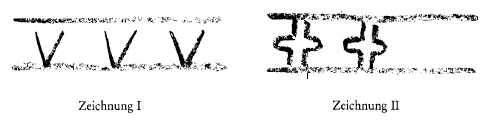
[ 49 ] Sie können sehen, wenn Sie in die Waldorfschule kommen, wie die Kinder ganz schön Bücher einbinden, allerlei Kartonarbeiten machen, auch wie sie angeleitet werden, wirklich künstlerisch Handarbeiten zu machen. Bei uns wird der weibliche Handarbeitsunterricht nicht so erteilt, wie man heute im allgemeinen die Dinge sieht. Betrachten wir zum Beispiel, was von Frauen als Kleider getragen wird. Da wird kein Unterschied gemacht, sehen Sie, zwischen irgend etwas, was man hier oben trägt, als Gürtel oder unten als Besatz trägt. Es wird nicht darauf gesehen, daß in der entsprechenden Weise etwas, was man oben am Hals trägt, den Charakter dessen tragen muß, daß es oben am Hals getragen werden muß (siehe Zeichnung I); es ist nur schematisch gezeichnet. Es wird nicht darauf gesehen, daß man etwas, was man am Gürtel trägt, ansieht, da ist oben etwas, da ist unten etwas und so weiter (siehe Zeichnung II).
[ 49 ] When you come to the Waldorf School you will see that the children are quite good at binding books and making boxes; you will see too how they are led into a really artistic approach to handwork; the girls will not be taught to produce the kind of thing you see nowadays when you look at the clothes that women wear, for instance. It does not occur to people that the pattern for a collar should be different from that of a belt or the hem of a dress. People do not consider that here for example (see drawing a.) the pattern must have a special character because it is worn at the neck. The pattern for a belt (see drawing b.) must lead both upwards and downwards, and so on.
[ 50 ] Oder man läßt Kinder niemals bei uns, sagen wir, ein Kissen machen, was auf der einen und auf der anderen Seite gleich ist, sondern man sieht dem Kissen an, wo man sich darauflegt. Man sieht es dem Kissen auch an, daß ein Unterschied ist zwischen rechts und links und so weiter. Also es wird auch in alles, was da gemacht wird, das Leben hineingewirkt und hineingewoben. Und daran lernen die Kinder sehr viel. So suchen wir auch wiederum die Kinder in das Leben hineinzustellen.
[ 50 ] Or again, we never let our children make a cushion with an enclosed pattern, but the pattern itself should show where to lay your head. You can also see that there is a difference between right and left, and so forth. Thus here too life itself is woven and worked into everything that the children make, and they learn a great deal from it. This then is another method by which the children may learn to stand rightly in life.
[ 51 ] Das versuchen wir in allen Einzelheiten, zum Beispiel auch durch das Zeugniswesen. Ich habe niemals im Leben mir einen Begriff verschaffen können davon, was das heißt, die Fähigkeiten eines Kindes entsprechen 2 oder 3 oder 2 1/2. Ich weiß nicht, ob man das auch in England macht, daß man bei den Zeugnissen Zahlen oder Buchstaben gibt, die andeuten sollen, was das Kind kann. In Mitteleuropa gibt man 3 oder 4. Solche Zeugnisse geben wir nicht, sondern bei uns kennt jeder Lehrer jedes Kind und beschreibt es im Zeugnis, beschreibt, was es in seinen Fähigkeiten wirklich leistet, mit seinen eigenen Worten, mit seinen Fähigkeiten und mit seinem Fortschritt. Und dann geben wir jedem Kinde jedes Jahr in das Zeugnis hinein einen Lebensspruch, der ihm im nächsten Jahr ein Geleitwort sein kann. So sieht das Zeugnis aus: Zunächst steht da der Name des Kindes und dann ein Lebensspruch; dann charakterisiert der Lehrer, ohne stereotype Buchstaben oder Zahlen, einfach wie das Kind beschaffen ist, wie es in den einzelnen Lehrgegenständen vorwärtsgekommen ist. So daß das Zeugnis immer eine Darstellung ist. An diesen Zeugnissen haben die Kinder immer eine große Freude, und es bekommen auch die Eltern eine richtige Vorstellung von dem, wie das Kind sich in der Schule verhält.
[ 51 ] We endeavour to carry this out in every detail, for example in the giving of reports. I could never in my life imagine what it means to mark the capacities of the children with a 2, or 3, or 21-. I do not know if that is done in England too, giving the children numbers or letters in their reports which are supposed to show what a child can do. In Central Europe it is customary to give a 3, or a 4. At the Waldorf School we do not give reports like this, but every teacher knows every child and describes him in the report; he describes in his own words what the child's capacities are and what progress he has made. And then every year each child receives in his report a motto or verse for his own life, which can be a word of guidance for him in the year to come. The report is like this: first there is the child's name and then his verse, and then the teacher without any stereotyped letters or numbers, simply characterises what the child is like, and what progress he has made in the different subjects. The report is thus a description. The children always love their reports, and their parents also get a true picture of what the child is like at school.
[ 52 ] Großen Wert legen wir darauf, daß wir in bezug auf jedes Kind wirklich mit dem Elternhaus in Kontakt stehen, so daß man von der Schule aus durch das Kind auf das Elternhaus hinaussieht. Dadurch wird einem das Kind erst verständlich; dadurch weiß man auch, wie man jede Eigenschaft bei dem Kinde zu behandeln hat. Es ist nicht so, daß, wenn man an dem Kinde eine Eigenschaft bemerkt, das dasselbe ist, wie wenn man diese Eigenschaft an einem anderen Kinde bemerkt; denn dieselbe Eigenschaft bedeutet bei dem einen Kinde etwas ganz anderes als bei dem anderen Kinde.
[ 52 ] We lay great stress upon keeping in touch with all the parents so that from the school we may see into the home through the child. Only in this way can we come to understand each child, and to know how to treat every peculiarity. It is not the same thing when we notice the same peculiarity in two children, for it has quite a different significance in the two cases.
[ 53 ] Sagen wir zum Beispiel, ein Kind zeigt eine gewisse Aufgeregtheit; ein anderes Kind zeigt auch Aufgeregtheit. Ja, es kommt gar nicht darauf an, daß man bloß weiß, das Kind ist aufgeregt, und man soll etwas beitragen zu seiner Beruhigung, sondern es kommt darauf an, daß man bei dem einen Kinde findet: Das ist aufgeregt, weil es einen aufgeregten Vater hat und den imitiert; das andere Kind ist aufgeregt, weil es ein schlechtes Herz hat, herzkrank ist. So muß man überall auf dasjenige eingehen können, was den Eigenschaften zugrunde liegt. Und dazu sind gerade die Lehrerkonferenzen da. Die sind dazu da, wirklich den Menschen zu studieren und dadurch in der Menschenkunde, ich möchte sagen, einen fortlaufenden Strom durch die Schule fließen zu lassen. Man studiert die Schule in den Lehrerkonferenzen. Dadurch ergibt sich das andere, was man braucht, schon von selber. Das Wesentliche ist, daß die Lehrerkonferenzen ein fortlaufendes, ein fortdauerndes Studium sind.
[ 53 ] Suppose for instance that two children each show a certain excitability. It is not merely a question of knowing that the child is excitable and giving him something to help him to become quiet, but it is a question of finding out that in the one case the child has an excitable father whom he has imitated, and in the other case the child is excitable because he has a weak heart. In every case we must be able to discover what lies at the root of these peculiarities. This is the real purpose of the Teachers' Meetings, to study man himself, so that a real knowledge of man is continually flowing through the school. The whole school is the concern of the teachers in their meetings, and all else that is needed will follow of itself. The essential thing is that in the Teachers' Meetings there is study, steady, continual study.
[ 54 ] Das sind so die Bedingungen, die ich Ihnen für die praktische Einrichtung sagen wollte.
[ 54 ] These are the indications I wanted to give you for the practical organisation of your school.
[ 55 ] Nun würde sich natürlich manches noch sagen lassen, wenn wir diesen Kursus mehrere Wochen hindurch fortsetzen könnten. Aber das können wir ja nicht. Daher werde ich Sie bitten, morgen, wenn wir hier zusammenkommen, dasjenige, was Sie auf dem Herzen haben, in Form von Fragen zu stellen, so daß wir dann die morgige Stunde dazu benützen, daß Sie Fragen stellen und ich Ihnen diese Fragen beantworten kann.
[ 55 ] There are of course many things that could still be said if we could continue this course for several weeks. But that we cannot do, and therefore I want to ask you tomorrow, when we come together, to put in the form of questions anything which you may have upon your minds, so that we may use the time for you to put your questions which I will then answer for you.