

Physiological Therapeutics
based on Spiritual Science
GA 314
23 April 1924, Dornach
Translate the original German text into any language:
Versions Available:
Physiological Therapeutics based on Spiritual Science, tr. SOL
Besprechungen bei Arztezusammenkünften II
Discussions at Medical Conferences II
[ 1 ] In Anknüpfung an die Frage, die gestern Herr Dr. Husemann gestellt hat, haben wir beschlossen, zwei Fälle aus dem Buche, das durch Frau Dr. Wegman demnächst erscheinen wird, vorzulesen. Es kann dann an die Vorlesung dieser Fälle das angeschlossen werden, was ja noch im Sinne Ihrer Frage als wissenswertes Bedürfnis auftritt.
[ 1 ] Following up on the question posed yesterday by Dr. Husemann, we have decided to read aloud two cases from the book that Dr. Wegman will be publishing shortly. The presentation of these cases can then be followed by whatever additional information you may find useful, in keeping with the spirit of your question.
[ 2 ] Natürlich werde ich bitten, daß diese Fälle zunächst als ganz diskret betrachtet werden, weil sie integrierende Teile des demnächst erscheinenden Buches sein werden.
[ 2 ] Of course, I will ask that these cases be treated with the utmost discretion for the time being, as they will be integral parts of the book to be published shortly.
[ 3 ] Es soll durch diese Fälle gezeigt werden, wie man namentlich durch Diagnose zur Therapie kommt. Gerade dieses soll anschaulich gemacht werden, und zwar aus der Anthroposophie heraus. Man wird sich bei diesem Buche nicht genieren, tatsächlich ganz anthroposophisch zu sprechen.
[ 3 ] These cases are intended to demonstrate how one arrives at a treatment, specifically through diagnosis. It is precisely this point that is to be illustrated, based on anthroposophy. In this book, we will not hesitate to speak in a truly anthroposophical manner.
Frau Dr. Wegman verliest den im Buche «Grundlegendes für eine Erweiterung der Heilkunst nach geisteswissenschaftlichen Erkenntnissen» auf Seite 97ff. [S. 107ff. in GA 27, 1984] beschriebenen «Vierten Fall»: «Ein Kind, das uns zweimal in die Klinik gebracht wurde, erst mit vier Jahren, dann mit fünfeinhalb Jahren. Dazu dessen Mutter und die Schwester der Mutter.»
Dr. Wegman reads aloud the “Fourth Case” described in the book *Fundamentals for an Expansion of the Art of Healing Based on Insights from the Spiritual Science* on page 97 ff. [pp. 107 ff. in GA 27, 1984]: “A child who was brought to our clinic twice, first at the age of four, then at five and a half. Also present were the child’s mother and the mother’s sister.”
[ 4 ] Das ist wichtig, daß Mutter und Schwester dabei waren, Sie werden sogleich sehen, warum.
[ 4 ] It's important that my mother and sister were there; you'll see why in a moment.
«Die Diagnose führte von der Erkrankung des Kindes sowohl zu derjenigen der Mutter, wie zu der der Schwester hinüber, Für das Kind konnten wir das Folgende feststellen: Es ist ein Zwillingskind, sechs Wochen zu früh geboren. Das andere Kind war im letzten Embryonalstadium abgestorben. Mit sechs Wochen erkrankte das Kind, schrie außerordentlich viel und wurde in ein Hospital verbracht. Dort stellte man die Diagnose Pylorospasmus. Das Kind wurde teilweise von einer Amme, teilweise künstlich ernährt. Mit acht Monaten wird es vom Hospital entlassen. Zu Hause angekommen, hatte es am ersten Tage einen Krampfanfall, der sich in den ersten zwei Monaten täglich wiederholte. Das Kind wurde dabei steif und verdrehte die Augen. Vor dem Anfall trat Ängstlichkeit und Weinen ein. Auch schielte das Kind mit dem rechten Auge und hatte Erbrechen, bevor der Anfall kam. Mit zweieinhalb Jahren trat wieder ein Anfall ein, der fünf Stunden dauerte. Das Kind wurde wieder steif, und lag wie tot da. Mit vier Jahren trat ein Anfall ein, der eine halbe Stunde dauerte. Für diesen wurde uns zum ersten Mal die Begleitung mit Fiebererscheinungen gemeldet. Nach den Konvulsionen, die nach dem Zurückbringen aus dem Hospital eintraten, merkten die Eltern eine Lähmung des rechten Armes und des rechten Beines. Mit zweieinhalb Jahren kommt das Kind zum ersten Gehversuch, der so ausfällt, daß nur das linke Bein schreiten kann und das rechte nachgezogen wird. Auch der rechte Arm bleibt willenlos. Der gleiche Zustand war noch vorhanden, als uns das Kind gebracht wurde. Es handelte sich darum, festzustellen, wie es mit den Organisationsgliedern des Kindes stand. Dies wurde unabhängig von dem Symptomenkomplex versucht. Es stellte sich eine starke Atrophie des Atherleibes heraus, der in gewissen Teilen nur einen sehr geringen Einfluß des astralischen Leibes aufnahm.»
“The diagnosis led from the child’s illness to those of both the mother and the sister. Regarding the child, we were able to determine the following: The child is a twin, born six weeks premature. The other child had died in the final embryonic stage. At six weeks of age, the child fell ill, cried excessively, and was taken to a hospital. There, the diagnosis of pyloric spasm was made. The child was fed partly by a wet nurse and partly by bottle. At eight months, the child was discharged from the hospital. Upon arriving home, the child had a seizure on the first day, which recurred daily during the first two months. During these episodes, the child became stiff and rolled its eyes. Anxiety and crying preceded the seizures. The child also squinted with the right eye and vomited before the seizure began. At two and a half years of age, another seizure occurred that lasted five hours. The child became stiff again and lay there as if dead. At four years of age, a seizure occurred that lasted half an hour. For the first time, we were informed that this seizure was accompanied by signs of fever. Following the convulsions that occurred after the child was brought home from the hospital, the parents noticed paralysis of the right arm and right leg. At two and a half years of age, the child made his first attempt to walk, which resulted in only the left leg being able to take steps while the right leg was dragged along. The right arm also remained unresponsive. The same condition was still present when the child was brought to us. The task was to determine the state of the child’s organizational structures. This was attempted independently of the complex of symptoms. It turned out that there was severe atrophy of the etheric body, which in certain parts was only minimally influenced by the astral body.”
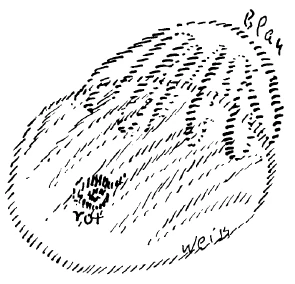
[ 5 ] Das ist im wesentlichen der Befund. Man hat es zu tun mit einem Atherleib, der an den verschiedensten Stellen atrophiert ist und an den atrophierten Stellen die Wirkung des Astralleibes nicht aufnimmt. Es sind solche Aussparungen im Ätherleib (siehe Zeichnung). An den Stellen, wo der Ätherleib atrophiert ist, da dringt der Astralleib nicht ein. Es ist an verschiedenen Stellen des Organismus so gewesen.
[ 5 ] That is essentially the finding. We are dealing with an etheric body that has atrophied in various places and does not receive the influence of the astral body in those atrophied areas. There are such gaps in the etheric body (see drawing). In the areas where the etheric body is atrophied, the astral body does not penetrate. This has been the case in various parts of the organism.
«Die Gegend der rechten Brusthälfte war im Archerleibe wie gelähmt. Dagegen zeigte sich etwas wie eine Hypertrophie des Astralleibes in der Magengegend.»
“The area of the right side of the chest felt as if it were paralyzed in Archer’s body. In contrast, there appeared to be something like a hypertrophy of the astral body in the stomach region.”
[ 6 ] Man muß da Ausdrücke gebrauchen, die ungewohnt sind. Geradeso wie der Ausdruck «Hypertrophie» gebraucht wird für zu tätige, zu regsame Stellen.
[ 6 ] One must use terms that are unfamiliar. Just as the term “hypertrophy” is used to describe areas that are too active or too restless.
«Nun handelte es sich darum, den Symptomenkomplex mit diesen Befunden in Einklang zu bringen. Es ist zweifellos durch den astralischen Leib eine starke Inanspruchnahme des Magens bei der Verdauung vorhanden, die sich aber wegen der Lähmung des Ätherleibes beim Übergang vom Darm in die Lymphgefäße staut. Dadurch ist das Blut unterernährt. Wir müssen die Brechreizerscheinungen daher als besonders wichtige Symptome nehmen. Krämpfe treten immer ein, wenn der ätherische Leib atrophisch wird und der astralische Leib einen unmittelbaren Einfluß auf den physischen Leib erlangt ohne Vermittlung des Atherleibes.»
“The task now was to reconcile the complex of symptoms with these findings. There is undoubtedly a heavy strain on the stomach during digestion due to the astral body; however, this strain causes a blockage in the transition from the intestines to the lymphatic vessels because of the paralysis of the etheric body. As a result, the blood is undernourished. We must therefore regard the symptoms of nausea as particularly important. Cramps always occur when the etheric body becomes atrophied and the astral body exerts a direct influence on the physical body without the mediation of the etheric body.”
[ 7 ] Das ist etwas prinzipiell Wichtiges. Die Krampferscheinungen beruhen darauf, daß nicht der regelmäßige Zusammenhang da ist zwischen Astralleib, Atherleib und physischem Leib. Man hat sich dieses so vorzustellen, daß der Astralleib nur mit Hilfe des Ätherleibes auf den physischen Leib einwirkt. Sind solche atrophische Stellen da, dann greift der Astralleib mit Ausschluß des Ätherleibes auf den physischen Leib. Überall tritt Krampf auf, wo das der Fall ist. Man weiß, daß an einer Stelle, wo Krampf auftritt, der Ätherleib nicht richtig vermittelt zwischen Astralleib und physischem Leib.
[ 7 ] This is a matter of fundamental importance. The symptoms of cramping arise because there is no regular connection between the astral body, the etheric body, and the physical body. One must create a mental image in which the astral body acts upon the physical body only with the help of the etheric body. If such atrophic areas are present, the astral body acts upon the physical body by bypassing the etheric body. Cramps occur wherever this is the case. It is known that in a place where cramps occur, the etheric body is not mediating properly between the astral body and the physical body.
«Das war bei dem Kinde im höchsten Maße vorhanden. Wenn dieser Zustand während der Wachstumsperiode, wie es hier der Fall war, dauernd wird, so fallen diejenigen Vorgänge aus, welche das motorische System zur normalen Aufnahme des Willens geeignet machen. Das zeigte sich bei dem Kinde bei der Unbrauchbarkeit der rechten Seite. - Wir mußten nun den Zustand des Kindes mit dem der Mutter in Verbindung bringen. Diese ist 37 Jahre alt, als sie zu uns kommt. Sie gibt an, mit 13 Jahren schon so groß gewesen zu sein wie gegenwärtig. Sie hatte früh schlechte Zähne.»
“This was present to the highest degree in the child. If this condition becomes permanent during the growth period—as was the case here—the processes that enable the motor system to respond normally to the will fail to develop. This was evident in the child’s inability to use the right side of the body. - We then had to relate the child’s condition to that of the mother. She was 37 years old when she came to us. She stated that at age 13 she was already as tall as she is now. She had poor dental health from an early age.”
[ 8 ] Das bitte ich besonders zu bemerken. Sie ist vom dreizehnten Jahre bis jetzt nicht mehr gewachsen, so daß ihr ganzes Wachstum bis zur Geschlechtsreife ein abgeschlossenes war.
[ 8 ] I would like to draw particular attention to this. She has not grown at all from the age of thirteen until now, so that her entire growth up to puberty was complete.
«Sie hatte früh schlechte Zähne, litt als Kind an Gelenkrheumatismus, behaupte: rachitisch gewesen zu sein. Die Menses traten verhältnismäßig früh ein. Die Patientin erklärt, mit 16 Jahren eine Nierenkrankheit gehabt zu haben und spricht auch von krampfartigen Zuständen, die sie gehabt hat. Mit 25 Jahren Obstipation wegen Krampf des Sphinkter ani, der gedehnt werden mußte. Hat auch jetzt bei der Entleerung Krampf. Der ohne Schlußfolgerung aus dem Symptomenkomplex in unmittelbarer Anschauung festgestellte Befund ergibt eine außerordentliche Ähnlichkeit mit dem des Kindes. Nur erweist sich alles in viel milderer Form. Man muß berücksichtigen, daß der Atherleib des Menschen zwischen dem Zahnwechsel und der Geschlechtsreife seine besondere Entwickelung erfährt. Dies kommt bei der Patientin dadurch zum Ausdruck, daß die verfügbaren Kräfte des Ätherleibes, die wenig stark sind, ein Wachstum nur bis zur Geschlechtsreife möglich machen. Mit dieser beginnt die besondere Entwickelung des Astralleibes, der mit seiner Hypertrophie nun den Ätherleib überwuchert und zu stark in die physische Organisation eingreift.»
“She had poor dental health from an early age, suffered from rheumatoid arthritis as a child, and claims to have had rickets. Her menstrual periods began relatively early. The patient states that she had kidney disease at age 16 and also mentions spasmodic episodes she experienced. At age 25, she experienced constipation due to a spasm of the anal sphincter, which had to be dilated. She still experiences spasms during bowel movements. The findings, observed directly without drawing conclusions from the complex of symptoms, show an extraordinary similarity to those of a child. However, everything manifests in a much milder form. One must take into account that the human etheric body undergoes a special phase of development between the change of teeth and sexual maturity. In the patient, this is expressed by the fact that the available forces of the etheric body—which are not very strong—allow for growth only up to sexual maturity. With the onset of puberty, the specific development of the astral body begins; with its hypertrophy, it now overgrows the etheric body and interferes too strongly with the physical organization.”
[ 9 ] Das ist der Typus bei beiden gewesen. Mutter und Kind haben ein zu starkes Eingreifen des Astralleibes in den physischen Leib.
[ 9 ] This has been the pattern in both cases. The mother and child experience excessive interference of the astral body with the physical body.
«Das tritt in dem stehenbleibenden Wachstum mit dem 13. Jahre zutage. Dabei ist die Patientin keineswegs zwerghaft, sondern sehr groß, was davon herrührt, daß die zwar geringen, aber vom Astralleib ungehemmten Wachstumskräfte des Atherleibes eine starke Volumenausdehnung des physischen Körpers bewirkten. Diese Kräfte konnten dann noch nicht regulär in die Funktionen des physischen Leibes eingreifen. Das zeigte sich in dem Auftreten des Gelenkrheumatismus und später in den Krampfzuständen.»
“This becomes apparent when growth comes to a halt at the age of 13. The patient is by no means dwarfed, but rather very tall, which stems from the fact that the growth forces of the etheric body—though weak, yet uninhibited by the astral body—caused a significant increase in the volume of the physical body. These forces were not yet able to intervene regularly in the functions of the physical body. This manifested itself in the onset of rheumatoid arthritis and, later, in convulsive episodes.”
[ 10 ] Der Gelenkrheumatismus hängt als solcher auch damit zusammen, daß der Astralleib an den Gelenken unmittelbar in den physischen Leib eingreift. Durch dieses Eingreifen entstehen dort, wo sie entstehen können, auch Entzündungszustände. Also entweder hat man es mit Krampf- oder mit Entzündungszuständen zu tun.
[ 10 ] Rheumatoid arthritis, as such, is also related to the fact that the astral body directly interacts with the physical body at the joints. This interaction can lead to inflammatory conditions wherever they can arise. Thus, one is dealing either with spasms or with inflammatory conditions.
«Durch die Schwäche des Ätherleibes tritt eine besonders starke Wirkung des Astralleibes auf den physischen Leib ein. Diese Wirkung ist eine abbauende. Sie wird in der normalen Lebensentwicklung durch die Aufbaukräfte im Schlafe, wenn der Astralleib von dem physischen und Ätherleib getrennt ist, ausgeglichen. Ist der Ätherleib zu schwach, wie im Falle unserer Patientin, so tritt ein Überschuß des Abbaues ein, was sich bei ihr darin zeigte, daß die Zähne schon im 12. Jahre die erste Plombe notwendig machten.»
“Due to the weakness of the etheric body, the astral body exerts a particularly strong influence on the physical body. This influence is a destructive one. In normal life development, it is balanced by the restorative forces at work during sleep, when the astral body is separated from the physical and etheric bodies. If the etheric body is too weak, as in the case of our patient, an excess of this degrading effect occurs, which manifested in her case by the fact that her teeth required their first filling as early as age 12.”
[ 11 ] Durch das zu starke Eingreifen des astralischen Leibes findet ein zu großer Abbau statt. Physischer Leib und Ätherleib bauen auf; Astralleib und Ich-Organisation bauen ab. Tritt nun ein Überschuß an abbauender Tätigkeit ein, dann zeigt sich das an einer solchen Erscheinung, daß sie schon mit zwölf Jahren Plomben tragen muß. Jedesmal bei der Schwangerschaft hat sie schlechtere Zähne bekommen.
[ 11 ] Excessive interference by the astral body leads to excessive breakdown. The physical body and the etheric body build up; the astral body and the ego organization break down. If there is now an excess of this breaking-down activity, it manifests in such a way that she already has to wear fillings at the age of twelve. Her teeth have deteriorated with every pregnancy.
«Wird der Ätherleib noch besonders in Anspruch genommen, wie in der Schwangerschaft, so tritt jedesmal eine Verschlechterung der Zähne ein. Die Schwäche des Atherleibes in bezug auf seine Verbindung mit dem Astralleibe zeigt sich noch besonders in der Häufigkeit der Träume und im gesunden Schlaf, der bei der Patientin vorhanden ist, trotz aller Unregelmäßigkeit.»
“Whenever the etheric body is particularly strained—as during pregnancy—the patient’s teeth deteriorate. The weakness of the etheric body in terms of its connection to the astral body is particularly evident in the frequency of dreams and in the patient’s sound sleep, despite all the irregularities.”
[ 12 ] Ist volle Regelmäßigkeit vorhanden in der Verbindung zwischen Astralleib, Atherleib und physischem Leib, so findet nicht ein Überschuß an Träumen statt. In dem Augenblick, wo der Astralleib überwiegen kann dadurch, daß der Ätherleib geschwächt ist, finden häufige und lebhafte Träume statt. Und außerdem, weil der Astralleib stark ist, kann er leicht herausgehen und der Schlaf bleibt doch gesund.
[ 12 ] If there is complete harmony in the connection between the astral body, the etheric body, and the physical body, there will not be an excess of dreams. The moment the astral body gains the upper hand—because the etheric body is weakened—frequent and vivid dreams occur. Moreover, because the astral body is strong, it can easily leave the body, and sleep remains healthy nonetheless.
«Die Schwäche des Ätherleibes zeigt sich auch darinnen, daß im physischen Körper durch den Ätherleib nicht bewältigte Fremdprozesse sich abspielen, die im Urin als Eiweiß, vereinzelte hyaline Zylinder und Salze sich zeigen.»
“The weakness of the etheric body is also evident in the fact that foreign processes, which the etheric body is unable to control, take place in the physical body and manifest in the urine as protein, isolated hyaline casts, and salts.”
[ 13 ] Das sind die Abbauprodukte, die sich durch die Hypertrophie des Astralleibes bilden. Sie muß man immer suchen, wenn man es zu tun hat mit einer Hypertrophie des Astralleibes.
[ 13 ] These are the breakdown products formed as a result of hypertrophy of the astral body. One must always look for them when dealing with hypertrophy of the astral body.
«Merkwürdig ist die Verwandtschaft dieser Krankheitsprozesse mit denen der Schwester der Mutter. Der Befund in bezug auf die Zusammensetzung der Teile der menschlichen Wesenheit ist fast ganz derselbe. Schwach wirkender Ätherleib, daher Überwiegen des Astralleibes. Nur ist der Astralleib selbst schwächer als bei der Schwester. Es kommt daher ebenso wie bei dieser zum frühen Eintritt der Menses, aber es treten bei ihr statt der Entzündungen bloße Schmerzen auf, die von einer Irritierung der Organe, zum Beispiel der Gelenke herrühren.»
“It is curious to note the similarity between these disease processes and those of the mother’s sister. The findings regarding the composition of the parts of the human being are almost exactly the same: a weak etheric body, resulting in a predominance of the astral body. However, the astral body itself is weaker than in the sister’s case. Consequently, just as with her sister, menstruation begins early, but instead of inflammation, she experiences only pain resulting from irritation of the organs—for example, the joints.”
[ 14 ] Das ist wirklich sehr interessant. Man hat fast eine gleiche Krankheitskonstitution bei Mutter und Kind. Die Schwester, die parallel geht, bringt es nur bis zu schwächeren Symptomen, die hat alles in geringerem Maße, alles, ich möchte sagen, en miniature, in Andeutungen.
[ 14 ] That is really very interesting. The mother and child have almost identical constitutional patterns of illness. The sister, who is going through the same process at the same time, only experiences milder symptoms; she has everything to a lesser degree—everything, I would say, in miniature, in hints.
«In den Gelenken muß der Atherleib besonders tätig sein, wenn die Vitalität normal vor sich gehen soll. Ist die Tätigkeit des Ätherleibes schwach, so wird die Tätigkeit des physischen Leibes überwiegend, was sich hier in Schwellungen und in chronischer Arthritis zeigt. Auf die Schwäche des Astralleibes, der zu wenig auf das subjektive Empfinden wirkt, weist die Vorliebe zu süßen Speisen hin, welche das Empfinden des Astralleibes erhöhen.»
“The etheric body must be particularly active in the joints if vitality is to function normally. If the activity of the etheric body is weak, the activity of the physical body becomes predominant, which manifests here as swelling and chronic arthritis. A preference for sweet foods, which heighten the sensations of the astral body, indicates a weakness in the astral body, which has too little effect on subjective perception.”
[ 15 ] Das ist sehr interessant. Man muß tatsächlich, um mit der Diagnose fertig zu werden, fragen, was der Betreffende gerne ißt: Süße oder bittere Dinge, Vorliebe für diese oder jene Sinneseindrücke. Manche haben eine eigentümliche Schwäche in bezug auf Geruchseindrücke. Das alles zeigt, daß der Astralleib irgendwie engagiert werden soll. Diese Vorliebe des Astralleibes zeigt, daß er nicht engagiert ist; er ist sofort engagiert, wenn er Süßigkeiten hat.
[ 15 ] That is very interesting. In order to come to terms with the diagnosis, one must indeed ask what the person in question likes to eat: sweet or bitter foods, a preference for this or that sensory experience. Some people have a peculiar weakness when it comes to olfactory sensations. All of this shows that the astral body needs to be engaged in some way. This preference of the astral body indicates that it is not engaged; it becomes engaged immediately when it has sweets.
«Ist der schwache Astralleib durch das Tagesleben noch dazu abgenützt, so treten, wenn das Schwachsein erhalten bleibt, die Schmerzen bedeutender auf. Patientin klagt über die Zunahme der Schmerzen abends. Der Zusammenhang der Krankheitszustände der drei Patienten weist in der Aszendenz auf die den beiden Schwestern vorangegangene Generation hin, insbesondere auf die Großmutter des Kindes. Bei dieser muß die Ursache gesucht werden. Das gestörte Gleichgewicht zwischen Astralund Ätherleib bei allen drei Patienten kann nur in einem ebensolchen bei der Großmutter des Kindes begründet sein. Diese Unregelmäßigkeit muß in der mangelhaften Ausbildung der embryonalen Ernährungsorgane, insbesondere der Allantois durch Astral- und Ätherleib der Großmutter bedingt sein.»
“If the weak astral body is further depleted by daily life, the pain becomes more severe if the weakness persists. The patient complains of increased pain in the evening. The connection between the medical conditions of the three patients points, in terms of ancestry, to the generation preceding the two sisters—in particular, to the child’s grandmother. The cause must be sought in her. The disturbed balance between the astral and etheric bodies in all three patients can only be attributed to a similar imbalance in the child’s grandmother. This irregularity must be due to the inadequate development of the embryonic nourishing organs—particularly the allantois—as a result of the grandmother’s astral and etheric bodies.”
[ 16 ] Es ist dieser Fall deshalb ganz besonders interessant, weil man herausbekommt, daß die Ursache wirklich liegt in der mangelhaften Ausbildung der Allantois der Großmutter. Der ganze Zustand dieses Astralleibes, der sich natürlich vehement bei der einen, der Mutter, bei der anderen geringer darstellt, der führt zurück auf die Großmutter. Es ist nicht gebunden an einen Teil, sondern es geht konstitutionell durch den ganzen Astralleib und kann nur auf jene eigentümliche Bildung zurückgehen, auf die Allantois, auf die Embryonalzeit.
[ 16 ] This case is particularly interesting because it reveals that the cause actually lies in the grandmother’s defective development of the allantois. The entire condition of this astral body—which, of course, manifests more strongly in one person (the mother) and less so in the other—can be traced back to the grandmother. It is not confined to one part but pervades the entire astral body constitutionally and can only be attributed to that peculiar formation, the allantois, during the embryonic period.
[ 17 ] Man hat da einen okkulten Befund, den man aufnehmen muß. Aber wenn man darauf gekommen ist, dann sind die einzelnen Erscheinungen durchaus geeignet, verifiziert zu werden. Entschieden muß man sich angewöhnen, die Ursachen aus den Ursachen zu verifizieren. Die Zusammensetzung der Symptome ergibt doch eigentlich nur ein unklares Bild.
[ 17 ] There is an occult finding here that must be taken into account. But once you’ve identified it, the individual manifestations are certainly amenable to verification. It is essential to get into the habit of verifying the causes of the causes. After all, the combination of symptoms really only paints an unclear picture.
«Diese mangelhafte Ausbildung der Allantois muß bei allen drei Patienten gesucht werden. Bei uns wurde sie zunächst auf rein geisteswissenschaftliche Art festgestellt. Die physische Allantois metamorphosiert sich, ins Geistige hinübergehend, in der Tüchtigkeit der Kräfte des Astralleibes.»
“This underdeveloped allantois must be sought in all three patients. In our work, it was initially identified using purely methods of Spiritual Science. The physical allantois undergoes a metamorphosis, transitioning into the spiritual realm, and manifests as the potency of the astral body’s forces.”
[ 18 ] Das kommt dazu, das konnten wir nur als Prinzip andeuten, an der physischen Allantois, die ebenso nur eine embryonale sein kann; die sämtlichen Organe, die im Embryo abgehen, sind beim geborenen Menschen vorhanden als die höheren Glieder. Was als Nebenorgan physisch ist, das ist geistig im erwachsenen Zustand, so daß wir in der Allantois nur zu sehen haben das physische Korrelat der Embryonalzeit.
[ 18 ] In addition—and we could only hint at this as a principle—there is the physical allantois, which can likewise be only embryonic; all the organs that develop in the embryo are present in the born human being as the higher members. What is physical as a secondary organ is spiritual in the adult state, so that we must regard the allantois merely as the physical counterpart of the embryonic period.
«Eine degenerierte Allantois erzeugt eine verminderte Tüchtigkeit des Astralleibes, die sich insbesondere in allen motorischen Organen äußert. Alles dieses ist bei den drei Patienten der Fall, Man kann wirklich aus der Beschaffenheit des Astralleibes diejenige der Allantois erkennen.»
“A degenerated allantois results in reduced functionality of the astral body, which manifests itself particularly in all motor organs. All of this is the case with the three patients; one can truly discern the condition of the allantois from the condition of the astral body.”
[ 19 ] Es ist so, daß man wissen muß: Amnion ist das physische Korrelat des Atherleibes, Allantois ist das physische Korrelat des Astralleibes, Chorion ist das physische Korrelat der Ich-Organisation des erwachsenen Menschen.
[ 19 ] The fact is that one must understand: the amnion is the physical counterpart of the etheric body, the allantois is the physical counterpart of the astral body, and the chorion is the physical counterpart of the “I” organization of the adult human being.
«Man wird daraus ersehen, daß unser Hinweis auf die Aszendenz nicht einer gewagten Phantasie-Schlußfolgerung, sondern einer wirklichen geisteswissenschaftlichen Beobachtung entstammt.
“It will be evident from this that our reference to ascension does not stem from a bold, imaginative conclusion, but rather from a genuine observation in the field of Spiritual Science.
Wen diese Wahrheit irritiert, dem möchten wir sagen, daß unsere Ausführungen durchaus nicht dem Triebe zum Paradoxen, sondern dem Verlangen, die nun einmal vorhandene Erkenntnis niemandem vorzuenthalten, entsprungen sind. Die mystischen Begriffe der Vererbung werden ja stets dunkel bleiben, wenn man sich scheut, die Metamorphose vom Physischen zum Geistigen und umgekehrt in der Folge der Generationen anzuerkennen.
To those whom this truth may trouble, we would like to say that our remarks stem not at all from a penchant for paradox, but rather from the desire not to withhold from anyone the knowledge that simply exists. The mystical concepts of heredity will, after all, always remain obscure if one shies away from acknowledging the metamorphosis from the physical to the spiritual—and vice versa—across generations.
Therapeutisch kann eine solche Einsicht ja nur dazu führen, eine Ansicht zu bekommen, an welchem Punkte man mit dem Heilungsprozeß anzusetzen hat.»
From a therapeutic standpoint, such insight can only lead to an understanding of where to begin the healing process.»
[ 20 ] Nun geht es in das Therapeutische hinüber.
[ 20 ] Now we move on to the therapeutic aspect.
«Würde man nicht in einer solchen Art an das Hereditäre verwiesen worden sein, sondern einfach die Unregelmäßigkeiten im Zusammenhange zwischen Ätherleib und Astralleib bemerkt haben, so hätte man Heilmittel angewendet, welche auf diese beiden Teile des Menschen wirken. Diese würden aber in unserem Falle unwirksam geblieben sein, weil die Schädigung, die durch Generationen hindurch geht, zu tief liegt, um in diesen Gliedern der menschlichen Organisation selbst ausgeglichen zu werden.»
“If one had not been led to consider heredity in this way, but had simply noticed the irregularities in the connection between the etheric body and the astral body, one would have applied remedies that act on these two parts of the human being. However, these would have remained ineffective in our case, because the damage, which has been passed down through generations, lies too deep to be balanced out within these parts of the human organism themselves.”
[ 21 ] Es ist besonders wichtig, daß wir diesen Fall betrachten. Was da vorliegt, das knüpft an die Frage von gestern an. Würde man einfach den Befund haben, daß man sagt: Astralleib und Atherleib sind nicht in inniger Zusammenstimmung, man hat nun diese oder jene Heilmittel zu nehmen — dann würde man kaum irgendeine besondere Wirkung erzielen. Geht man strikte weiter zu der Ursache, dann wird auch die Therapie eindeutiger. Indem wir abgetrieben wurden von der unmittelbaren Anschauung aus in die Generationenfolge, wurde der Weg gewiesen zu einer strikten Exaktheit.
[ 21 ] It is particularly important that we examine this case. What we have here ties in with yesterday’s question. If one were simply to conclude that the astral body and the etheric body are not in close harmony, and that one must now take this or that remedy—then one would hardly achieve any particular effect. If we proceed rigorously to the root cause, the therapy also becomes clearer. By being led away from immediate observation and into the succession of generations, the path to rigorous precision was laid out.
«Man muß in einem solchen Falle auf die Ich-Organisation wirken und in dieser alles zur Auswirkung bringen, was auf die Harmonisierung und Stärkung von Ather- und Astralleib Bezug hat. Man kann das erreichen, wenn man in gewissermaßen verstärkten Sinnesreizen (Sinnesreize wirken auf die Ich-Organisation) der Ich-Organisation beikommt. Bei dem Kinde wurde dies auf folgende Art versucht: es wurde eine Bandage der rechten Hand mit einer fünfprozentigen Pyritsalbe und gleichzeitig Einreiben der linken Kopfhälfte mit Kaiserschwammsalbe angewendet.»
“In such a case, one must work on the ego organization and bring to fruition within it everything that relates to the harmonization and strengthening of the etheric and astral bodies. This can be achieved by applying, in a sense, intensified sensory stimuli (sensory stimuli act upon the ego organization) to the ego organization. In the case of this child, this was attempted in the following manner: a bandage containing a 5 percent pyrite ointment was applied to the right hand, while at the same time the left side of the head was rubbed with Kaiserschwamm ointment.”
[ 22 ] Nun haben Sie hier die Therapie: Unmittelbar auf die Hand hin wirken wir mit Pyrit, Schwefeleisen. Dadurch kommen wir in die Lage, den Astralleib und gleichzeitig den Ätherleib zu beeinflussen, um dadurch eine Harmonisierung hervorzurufen. Wir müssen dahin arbeiten, daß wir Ätherleib und Astralleib näher aneinander zusammenbringen. Darauf beruht die Heilung. Und zwar müssen wir anwenden Mittel, die über das Unmittelbare hinausgehen, weil es auf Generationen hinging.
[ 22 ] Here, then, is the therapy: We apply pyrite, or iron sulfide, directly to the hand. This enables us to influence both the astral body and the etheric body simultaneously, thereby bringing about harmonization. We must work toward bringing the etheric body and the astral body closer together. This is the basis of healing. And to do so, we must use remedies that go beyond the immediate, because this process spans generations.
«Der Pyrit, eine Verbindung von Eisen und Schwefel, wirkt äußerlich angewendet so, daß er die Ich-Organisation anregt, den Astralleib lebhafter zu machen und seine Affinität zum Ätherleib zu vergrößern. Die Kaiserschwammsubstanz mit ihrem besonderen Inhalte an organisiertem Stickstoff wirkt so, daß eine Wirkung vom Kopfe ausgeht, die durch die Ich-Organisation den Ätherleib lebhafter macht und dessen Affinität zum Astralleibe erhöht. Der Heilungsprozeß wurde unterstützt durch Heileurythmie, die die Ich-Organisation als solche in rege Tätigkeit versetzt. Dadurch wird, was äußerlich angewendet wird, in die Tiefen der Organisation geleitet. Der damit eingeleitete Heilungsprozeß wurde dann noch verstärkt durch Mittel, welche Astral- und Ätherleib besonders empfindlich machen sollten für die Wirkung der Ich-Organisation. In rhythmischer Tagesfolge wurden dazu angewendet Bäder mit einer Auskochung von Solidago, Rückenabreibungen mit Auskochung von Stellaria media und innerlich Tee von Weidenrinde (besonders auf die Empfänglichkeit des Astralleibes wirkend) und Stannum 0,001 (besonders den Ätherleib empfänglich machend). Wir gaben auch noch Mohnsaft in schwacher Dosierung, um die geschädigte Eigenorganisation gegenüber den Heilwirkungen zurücktreten zu lassen.
Bei der Mutter wurde mehr die letzte Therapie angewendet, weil, als in einer Generation höherstehend, die Vererbungskräfte ja weniger gewirkt haben. Das gleiche gilt für die Schwester der Mutter. - Wir konnten noch, als das Kind in der Klinik war, konstatieren, daß es sich leichter dirigieren ließ und zu einer besseren seelischen Verfassung kam. Es wurde zum Beispiel gehorsamer; und die Bewegungen, die es sonst sehr ungeschickt machte, bewirkte es geschickter. Nachträglich wurde uns von der Tante berichtet, daß mit dem Kinde eine große Veränderung vorgegangen wäre. Es ist ruhiger geworden, das Übermaß unwillkürlicher Bewegungen hat abgenommen; es ist so geschickt geworden, daß es allein spielen kann; und in seelischer Beziehung ist der frühere Eigensinn verschwunden.»
“Pyrite, a compound of iron and sulfur, when applied externally, stimulates the ego-organization to enliven the astral body and increase its affinity with the etheric body. The imperial sponge substance, with its special content of organized nitrogen, acts in such a way that an effect emanates from the head, which, through the ego organization, makes the etheric body more vibrant and increases its affinity with the astral body. The healing process was supported by therapeutic eurythmy, which stimulates the ego organization itself into active function. As a result, what is applied externally is channeled into the depths of the organism. The healing process thus initiated was then further enhanced by remedies intended to make the astral and etheric bodies particularly receptive to the influence of the ego organization. In a rhythmic daily sequence, the following were applied: baths with a decoction of Solidago, back rubs with a decoction of Stellaria media, and, taken internally, willow bark tea (which acts specifically on the receptivity of the astral body) and Stannum 0.001 (which makes the etheric body particularly receptive). We also administered poppy juice in a low dosage to allow the impaired self-organization to give way to the healing effects.
For the mother, the latter therapy was used more frequently because, as she belonged to a higher generation, the forces of heredity had exerted less influence. The same applies to the mother’s sister. — While the child was still in the clinic, we were able to observe that it was easier to guide and that its mental state had improved. For example, it became more obedient; and the movements it had previously performed very clumsily were now carried out more skillfully. Subsequently, the aunt reported to us that a significant change had taken place in the child. The child has become calmer; the excess of involuntary movements has decreased; the child has become so dexterous that it can play on its own; and, emotionally speaking, the former stubbornness has disappeared.”
[ 23 ] Vielleicht möchten Sie gerne etwas sagen? Auf diese Weise leitet man die Diagnose in die Therapie hinüber. Da kommt das zustande, daß man zu Hilfe nimmt die höheren Glieder der Menschennatur. Da liegt im Ausgangspunkt das Krankheitsbild vor. Im Ausgangspunkt dieses Falles steht dieses: Es war der kranke Organismus einem Prozeß unterworfen, der einen bestimmten Lauf nimmt. Diesen Verlauf muß man zurückmachen. Dadurch, daß man den Verlauf sachgemäß durchschaut, gelangt man dazu, den Prozeß zurückzumachen, indem man darauf kommt, wie nicht nur ein Organ, sondern das ganze menschliche Innere in Zusammenhang steht mit dem, was draußen geschieht in der Welt.
[ 23 ] Perhaps you would like to say something? In this way, the diagnosis leads into therapy. This is how one comes to draw upon the higher aspects of human nature. The clinical picture is present from the outset. The starting point of this case is this: The diseased organism was subjected to a process that follows a specific course. This course must be reversed. By properly understanding the course of events, one is able to reverse the process by realizing how not only a single organ, but the entire human interior, is connected to what is happening outside in the world.
[ 24 ] Also sagen wir, Sie wollen erkennen, wie irgendeine Schädigung, sagen wir, in der Gallenblase zu behandeln ist. Da müssen Sie das studieren in dem entgegengesetzten Prozeß draußen; wenigstens den zu Hilfe nehmen, diesen entgegengesetzten Prozeß. Wenn man den einen, sagen wir, als den hingehenden Prozeß erkennt, erkennt man das andere als den hergehenden Prozeß und hat so den geschlossenen Kreislauf. Ist vielleicht noch eine Frage?
[ 24 ] So let’s say you want to figure out how to treat some kind of damage—let’s say, in the gallbladder. In that case, you have to study it in terms of the opposite process; at the very least, you have to use that opposite process as a guide. If you recognize one as, say, the outgoing process, you recognize the other as the incoming process, and thus you have a closed cycle. Do you have any more questions?
Man kann manchmal bei Erwachsenen, manchmal bei seelisch Regsamen die Diagnose erreichen. Ich habe das bei Kindern auch versucht; habe aber den Eindruck, daß ich zuweit gegangen bin in dieser Art der Diagnostik.
Sometimes the diagnosis can be made in adults, and sometimes in emotionally responsive individuals. I have also tried this with children; however, I feel that I may have gone too far with this type of diagnosis.
[ 25 ] Daß Sie durch das Eindringen in das Seelische nicht das erreichten, was Sie meinten? Das ist etwas, was wahr sein kann und was unrichtig sein kann. Es hängt das ganz davon ab, wie weit man imstande ist, die Dinge aus dem Kinde herauszukitzeln, die man haben will; dann auch davon, ob das Kind mitteilsam ist oder nicht. Auch von der Gedächtniswirkung; auch davon, ob man die richtigen seelischen Dinge herausbekommt. Prinzipiell kann das Kind wirklich Großartiges geben, insbesondere wenn verdichtete Seelenerscheinungen vorliegen. Wenn man mit dem Kindlichen rechnet, und es das von verdichteten Seelenerscheinungen Gesehene erzählt, kann man sehr tief hineinschauen in Unregelmäßigkeiten; die sind immer das Korrelat davon. Man muß den Fall ganz individuell betrachten.
[ 25 ] That by delving into the child’s inner world, you did not achieve what you had intended? That is something that may be true and something that may be false. It depends entirely on how well one is able to draw out of the child the things one is looking for; and also on whether the child is communicative or not. It also depends on the effect on memory; and on whether one is able to draw out the right psychological aspects. In principle, a child can truly reveal something remarkable, especially when condensed soul phenomena are present. If one takes the child’s account seriously, and the child recounts what they have seen of these condensed soul phenomena, one can gain a very deep insight into irregularities; these are always the correlate of such phenomena. One must consider each case entirely on its own merits.
[ 26 ] Bei Erwachsenen ist natürlich das seelische Eindringen ziemlich leicht, wenn man den seelischen Organismus als solchen kennt, wenn man weiß, so erzählen einem die Leute irgend etwas. Nun schreitet man vor. Meist ist es nicht wahr, was sie erzählen. Zunächst fängt es damit an, daß der Patient nicht sagt, wie es ist. Nun muß man irgendwo einhaken. Man kommt auf etwas, was am meisten wahr ist. Hat man das erfaßt, dann kann man weitergehen. Man muß unterscheiden, ob das eine zu dem anderen stimmt. Es kann nicht ein Tier, das den Schnabel eines Adlers hat, zu gleicher Zeit die Füße eines Straußes haben. So passen auch die Dinge im Seelischen aufeinander. Man muß den Patienten darauf führen. Bis man eingehakt hat, glaubt man alles, das heißt man glaubt nichts, aber man macht ihm begreiflich, daß man ihm alles glaubt. Hat man eingehakt an einer Stelle, wo die Sache wahr sein muß, dann macht man ihn sehr scharf aufmerksam auf das, was nicht sein kann. Da kriegt man eine Art Seelenorganismus zustande, der sehr stark auf den körperlichen Organismus hinweist. So ist es schon nützlich, auf einer seelischen Diagnostik zu fußen.
[ 26 ] With adults, of course, it is fairly easy to penetrate the psyche if one understands the psychological organism as such—if one knows that people tend to tell you certain things. Then one proceeds. Most of the time, what they say isn’t true. It begins with the patient not telling it like it is. Now one must find a point of entry. You arrive at what is most true. Once you’ve grasped that, you can proceed. You have to determine whether one thing fits with another. An animal with an eagle’s beak cannot at the same time have the feet of an ostrich. In the same way, things in the soul fit together. You have to guide the patient toward this. Until you’ve found a foothold, you believe everything—that is to say, you believe nothing—but you make it clear to the patient that you believe everything they say. Once you’ve found a foothold at a point where the matter must be true, you draw their attention very sharply to what cannot be. This creates a kind of psychological organism that points very strongly to the physical organism. Thus, it is indeed useful to base one’s approach on psychological diagnosis.
Ein Teilnehmer äußert sich.
A participant speaks.
[ 27 ] Die Richtung, auf die Sie gestern hinwiesen, ist diese: Ich diagnostiziere, habe die Diagnose vor mir. Ich weiß, wenn sich dies herausstellt, stellen sich mir zur Verfügung diese Heilmittel. Unter denen kann ich auswählen. Nun wollten Sie wissen: Wie kann man eigentlich wählen? Die Antwort kann nur gegeben werden in der Weise, daß man sagt: Kann: ich wählen zwischen mehreren Heilmitteln, so muß ich annehmen, daß ich die Diagnose noch nicht fertig habe, daß ich weitergehen muß in der Diagnose, bis ich auf ein eindeutiges Heilmittel komme. Ein eigentlich willkürliches Wählen gibt es im Prinzip nicht. Dies war wirklich ein glücklicher Fall, über den ich erstaunt war. Daß man von der Beschaffenheit des Kindes zur Allantois der Großmutter geht, ist etwas, was sonst in der Diagnose nicht vorkommt. Ich war höchst erstaunt, daß das das Motiv war; auf der anderen Seite zeigt das Resultat, daß man bis zur letzten Ursache muß vorzudringen versuchen.
[ 27 ] The approach you pointed out yesterday is this: I make a diagnosis; I have the diagnosis before me. I know that if this turns out to be the case, these remedies will be available to me. I can choose from among them. Now you wanted to know: How does one actually choose? The answer can only be given by saying: If I can choose between several remedies, then I must assume that I have not yet finalized the diagnosis, that I must continue with the diagnosis until I arrive at a clear remedy. In principle, there is no such thing as a truly arbitrary choice. This was truly a fortunate case that astonished me. To proceed from the child’s constitution to the grandmother’s allantois is something that does not normally occur in the diagnosis. I was extremely surprised that this was the motive; on the other hand, the result shows that one must try to get to the root cause.
Frau Dr. Wegman verliest den in dem eingangs erwähnten Buche auf den Seiten 114—116 beschriebenen «Fünften Fall»:
«Eine 26-jährige Patientin kam in unsere Klinik mit den schweren Folgen einer Grippe, die 1918 mit Lungenkatarrh verbunden durchgemacht worden ist, und die einer 1917 abgelaufenen Brustfellentzündung gefolgt war. Seit der Grippe konnte sich die Patientin nicht mehr so recht erholen. 1920 war sie sehr abgemagert, schwach und hatte leichtes Fieber und Nachtschweiße. Bald nach der Grippe setzten Kreuzschmerzen ein, die sich bis ins Spätjahr 1920 fortwährend steigerten; und dann zeigte sich unter heftigen Schmerzen eine Verkrümmung im Kreuz. Auch trat eine Schwellung des rechten Zeigefingers ein. Eine Liegekur brachte angeblich Besserung der Rückenschmerzen. - Als Patientin bei uns ankam, hatte sie einen Senkungsabszeß am rechten Oberschenkel, aufgetriebenen Leib mit etwas Aszites und über den Lungenspitzen katarrhalische Geräusche, sowohl rechts als links. Verdauung und Appetit ist gut. Urin ist konzentriert, zeigt Spuren von Eiweiß. Die geisteswissenschaftliche Untersuchung ergab: Überempfindlichkeit des Astralleibes und der Ich-Organisation; eine solche Abnormität drückt sich zunächst im Atherleibe dadurch aus, daß derselbe nicht die eigentlichen Ätherfunktionen, sondern einen ätherischen Abdruck der Astralfunktionen entwickelt.»
Dr. Wegman reads aloud the “Fifth Case” described on pages 114–116 of the book mentioned at the beginning:
“A 26-year-old female patient was admitted to our clinic suffering from the severe aftereffects of an influenza she had contracted in 1918, which was complicated by bronchitis and had followed a case of pleurisy that had resolved in 1917. Since contracting the influenza, the patient had been unable to fully recover. By 1920, she was very emaciated, weak, and had a low-grade fever and night sweats. Soon after the flu, lower back pain set in, which steadily worsened through late 1920; and then, accompanied by severe pain, a curvature of the lower back became apparent. Swelling of the right index finger also developed. A course of bed rest reportedly brought relief from the back pain. — When the patient arrived at our clinic, she had a subcutaneous abscess on her right thigh, a distended abdomen with some ascites, and catarrhal sounds over the lung apices, both on the right and left. Digestion and appetite are good. Urine is concentrated and shows traces of protein. The Spiritual Science examination revealed: hypersensitivity of the astral body and the ego organization; such an abnormality initially manifests in the etheric body in that it does not develop the actual etheric functions, but rather an etheric imprint of the astral functions.”
[ 28 ] Das ist sehr interessant, wenn in diesem Fall, wie hier, der Ätherleib so schwach ist, daß er nicht seine eigenen Funktionen ausführt, sondern wie eine Matrix, wie Wachs sich erweist, in das der Astralleib seine eigenen Funktionen hineindrückt. Wir haben einen Ätherleib, der eigentlich als maskierter Astralleib wirkt. Das ist hier der Fall.
[ 28 ] It is very interesting when, as in this case, the etheric body is so weak that it does not perform its own functions, but rather acts like a matrix—like wax—into which the astral body imprints its own functions. We have an etheric body that actually functions as a masked astral body. That is the case here.
«Die Astralfunktionen sind abbauende. Es mußten sich daher die Vitalität und der normale Prozeß in den physischen Organen verkümmert zeigen. Das ist immer verbunden mit gewissermaßen außermenschlichen Prozessen, die sich im menschlichen Organismus abspielen.»
“The astral functions are degenerative. Consequently, vitality and the normal processes in the physical organs must have shown signs of atrophy. This is always associated with, so to speak, non-human processes that take place within the human organism.”
[ 29 ] Das müssen wir streng festhalten. Wenn irgend etwas in den menschlichen Organismus eintritt, sei es aus irgendeinem Aggregatzustand oder sei es warme Luft und so weiter, muß es in dem menschlichen Organismus — grob gesprochen innerhalb der menschlichen Haut — eine Veränderung durchmachen. Nichts ist gleich außer und in dem menschlichen Organismus. Die menschliche Organisation muß alles, was von außen kommt, durcharbeiten. Kein Wärmeprozeß darf sich so im Körper abspielen wie im Stein er sich abspielt, wo einfach eine Temperatur durchgeht und den Stein durchwärmt. Werden wir von außen erwärmt, also wie ein unorganischer Körper, so verarbeiten wir die Wärme, die an uns herantritt, so tief, daß sie ganz durchbelebt ist. Tritt eine Erkältungserscheinung ein, wenn auch eine innere Erkältungserscheinung der inneren Organe, so rührt sie nicht von innen, sondern von einem von außen aufgedrängten Wärmezustand her.
[ 29 ] We must firmly hold on to this. When anything enters the human organism—whether from any state of matter or whether it is warm air and so on—it must undergo a transformation within the human organism—roughly speaking, within the human skin. Nothing remains the same outside and inside the human organism. The human organism must process everything that comes from the outside. No thermal process may take place in the body the way it does in a stone, where a temperature simply passes through and warms the stone. When we are warmed from the outside—that is, like an inorganic body—we process the heat that comes to us so deeply that it is completely enlivened. If a symptom of a cold occurs—even an internal cold affecting the internal organs—it does not originate from within, but from a state of heat imposed from the outside.
[ 30 ] Das geht bis hinunter zu den Stoffwechselzuständen. Wenn eine Substanz eintritt, so muß sie bis in ihre intimsten Prozesse hinein umgewandelt werden im menschlichen Organismus. Haben wir irgend etwas — meinetwillen ein Kohlehydrat — aufgenommen: es findet im Organismus noch ein Prozeß statt. Der Kohlenstoff-Wasserstoff-Sauerstoff-Prozeß, der außer der menschlichen Natur stattfindet, darf nicht in derselben Weise da drinnen sein. Da ist ein der menschlichen Natur fremder Prozeß in dem Menschen drinnen. Darauf beruhen im wesentlichen alle Krankheitszustände, die auf Stoffwechselablagerung beruhen. Alle beruhen im Grunde darauf, daß nicht durch den Menschen selber Wärmeprozesse vorgehen, sondern Prozesse, die entstehen als eigentliche Prozesse der Materie, weil die menschliche Organisation in irgendeinem Teile nicht stark genug ist. Wenn zum Beispiel die Ich-Organisation zu schwach ist, wird man finden, daß das aufgenommene Fett nicht in richtiger Weise verarbeitet wird. Ist die Astralorganisation zu schwach, wird man finden, daß Kohlehydrate nicht richtig verarbeitet werden. Ist die Atherorganisation zu schwach, so wird man finden, daß die aufgenommenen Eiweißzustände nicht in richtiger Weise verarbeitet werden. Das ist etwas, was zu beachten ist.
[ 30 ] This extends all the way down to metabolic states. When a substance enters the human organism, it must be transformed right down to its most intimate processes. If we have ingested something—say, a carbohydrate—a process still takes place within the organism. The carbon-hydrogen-oxygen process, which takes place outside of human nature, must not be present inside the body in the same way. There is a process within the human being that is foreign to human nature. Essentially, all disease states based on metabolic deposits stem from this. All of them are fundamentally based on the fact that the thermal processes taking place are not generated by the human being itself, but are processes that arise as inherent processes of matter, because the human organism is not strong enough in some respect. If, for example, the “I” organization is too weak, one will find that the fat ingested is not processed properly. If the astral organization is too weak, one will find that carbohydrates are not processed properly. If the etheric organization is too weak, one will find that the proteins ingested are not processed properly. This is something to keep in mind.
«Der Senkungsabszeß, die Rückenschmerzen, die Aufgetriebenheit des Leibes, die katarrhalischen Erscheinungen der Lungen und auch die mangelhafte Eiweißverarbeitung rühren davon her. Es handelt sich bei der Therapie darum, die Empfindlichkeit des Astralleibes und der Ich-Organisation herabzusetzen. Man erreicht das dadurch, daß man Kieselsäure verabreicht, welche immer die Eigenkraft gegenüber der Empfindlichkeit verstärkt.»
“The abscess, the back pain, the bloating of the body, the catarrhal symptoms in the lungs, and even the poor processing of protein all stem from this. The goal of the therapy is to reduce the sensitivity of the astral body and the ego organization. This is achieved by administering silicic acid, which always strengthens the body’s own power against this sensitivity.”
[ 31 ] Also Kieselsäure verstärkt immer die Eigenkraft gegenüber der Empfindlichkeit.
[ 31 ] So silicic acid always enhances one's own strength relative to sensitivity.
«Wir taten es in diesem Falle, indem wir pulverisierte Kieselsäure in die Speisen taten und als Klistiere gaben. Ebenso leiteten wir die Empfindlichkeit ab, indem wir auf den unteren Rücken Senfpflaster legten. Dessen Wirkung beruht darauf, daß es von sich aus die Empfindlichkeit bewirkt und sie dadurch dem Astralleib und der Ich-Organisation abnimmt.»
“In this case, we did so by adding powdered silica to the food and administering it as enemas. We also alleviated the sensitivity by applying mustard plasters to the lower back. Their effect is based on the fact that they themselves induce sensitivity, thereby relieving it from the astral body and the ego organization.”
[ 32 ] Sehen Sie, wie man sich hilft: Man legt unten Senfpflaster auf; dadurch wird künstliche Empfindlichkeit hervorgerufen. Diese künstliche Empfindlichkeit nimmt dem Astralleib seine innere Empfindlichkeit ab, schafft auf diese Weise eine Intimation. Das ist oft der Fall, wenn irgend etwas nicht in Ordnung ist in den menschlichen Gliedern, schafft man eine Intimation; also hier eine starke Intimation des astralischen Leibes nach unten. Wird die stark genug, dann ist die Empfindlichkeit nicht mehr da. Die Empfindlichkeit des Astralleibes nimmt nach unten ab. Zieht sich die Empfindlichkeit nach oben, so wird sie erhöht.
[ 32 ] See how one can help oneself: One applies mustard plasters to the lower body; this induces an artificial sensitivity. This artificial sensitivity takes away the astral body’s inner sensitivity, thereby creating an intimation. This is often the case when something is wrong with the human limbs; an intimation is created—in this instance, a strong intimation from the astral body downward. If this becomes strong enough, the sensitivity is no longer present. The sensitivity of the astral body decreases downward. If the sensitivity moves upward, it increases.
«Durch einen Prozeß, der die Überempfindlichkeit des Astralleibes im Verdauungstrakt dämpft, erreichen wir ein Ableiten dieser astralischen Tätigkeit auf den Ätherleib, wo sie normalerweise sein soll. Wir bewirkten das durch geringe Dosen von Kupfer und Carbo animalis. Der Möglichkeit, daß sich der Ätherleib der ihm ungewohnten normalen Verdauungstätigkeit entzieht, begegnen wir, indem wir Pankreassaft geben.»
“Through a process that dampens the hypersensitivity of the astral body in the digestive tract, we redirect this astral activity to the etheric body, where it normally belongs. We achieved this through small doses of copper and Carbo animalis. We counter the possibility that the etheric body might withdraw from normal digestive activity—which is unfamiliar to it—by administering pancreatic juice.”
[ 33 ] Das ist nur eine Hilfe, eine letzte Hilfe.
[ 33 ] This is just a helping hand, a last resort.
«Der Senkungsabszeß wurde einige Male punktiert. Es entleerten sich durch Aspiration große Eitermengen. Der Abszeß ging zurück und die Bauchschwellung nahm ab, indem die Eiterbildung stetig nachließ und zuletzt verschwand. Während der Eiter noch floß, wurden wir eines Tages überrascht durch einen erneuten Fieberanstieg. Derselbe erschien uns nicht unerklärlich, da bei der oben geschilderten Konstitution des Astralleibes geringe psychische Aufregungen solches Fieber bewirken können. Man muß aber unterscheiden zwischen der Erklärlichkeit des Fiebers in solchen Fällen und seiner stark schädigenden Wirkung. Denn es ist unter den angegebenen Voraussetzungen solches Fieber geradezu der Vermittler für ein tiefgehendes Eingreifen der Abbauprozesse in den Organismus. Und man muß sogleich für eine Stärkung des Ätherleibes sorgen, damit diese die schädigende Wirkung des Astralleibes paralysiert. Wir wandten hochpotenzierte Silberinjektionen an und erreichten Rückgang des Fiebers. - Patientin hat die Klinik mit 20 Pfund Gewichtszunahme und in gestärktem Zustande verlassen. Wir geben uns keiner Täuschung darüber hin, daß in diesem Falle noch eine Nachkur die Heilung befestigen muß.»
“The inguinal abscess was punctured several times. Large amounts of pus were drained by aspiration. The abscess subsided and the abdominal swelling decreased as pus formation steadily diminished and eventually ceased. While pus was still draining, we were surprised one day by a renewed rise in fever. This did not seem inexplicable to us, since, given the constitution of the astral body described above, even minor psychological agitation can cause such a fever. However, one must distinguish between the explainability of the fever in such cases and its highly damaging effect. For under the conditions described, such a fever is, in fact, the very mediator for a profound intervention of degenerative processes in the organism. And one must immediately take steps to strengthen the etheric body so that it can paralyze the damaging effect of the astral body. We administered highly potent silver injections and achieved a reduction in the fever. — The patient left the clinic having gained 20 pounds and in a strengthened condition. We are under no illusion that, in this case, a follow-up course of treatment will be necessary to consolidate the cure.”
[ 34 ] Also der Fall soll zeigen, wie man wirklich darauf kommen kann, dasjenige, was sonst mehr theoretisch über Astralleib und Atherleib gesagt wird, therapeutisch zu verwerten. Man kann jetzt vor der Frage stehen, die immer von «wohlwollenden» Leuten aufgeworfen worden ist: Soll man die Ausdrücke, die hier gebraucht worden sind, als die nackte Wahrheit und Wirklichkeit sagen, oder soll man sie kaschieren? — «Wohlwollende» Leute haben gesagt, man soll nicht Atherleiib sagen, sondern funktionelle Prozesse oder ähnlich. Da kann man bis zum Astralleib nicht heraufkommen. Nun liegt die Sache so, daß die meisten Krankheiten nicht getroffen werden in ihrem Wesen, wenn man nicht bis zum Astralleib hinaufgeht. Die Schädigungen, die durch die Ich-Organisation eintreten, also die starken Schädigungen, die auftreten durch Stoffwechselablagerungen: da liegt die Sache so, daß sie schon offenbar da sind, diese Schädigungen. Dagegen mehr heimtückisch sind die Abbauschädigungen, die durch den Astralleib auftreten. Gerade von dem muß man durchaus wirklich reden.
[ 34 ] So this case is meant to show how one can actually come to apply, in a therapeutic context, what is otherwise discussed more theoretically regarding the astral body and the etheric body. One might now be faced with the question that has always been raised by “well-meaning” people: Should the terms used here be presented as the plain truth and reality, or should they be veiled? — “Well-meaning” people have said that one should not speak of the etheric body, but rather of functional processes or something similar. One cannot then ascend as far as the astral body. The fact is that most illnesses are not addressed in their very essence unless one ascends as far as the astral body. The damage caused by the ego organization—that is, the severe damage resulting from metabolic deposits—is already clearly present. In contrast, the degenerative damage caused by the astral body is more insidious. It is precisely this that we must speak of in all seriousness.
[ 35 ] Nun wird die Sache so sein, daß man einfach sagen kann — ja, so werden viele Leute sagen —, man sollte nicht den Leuten gleich kommen mit Astralleib und Ätherleib. Aber wenn man den Leuten nicht damit kommt, ist gar kein Grund da, überhaupt zu glauben, daß hier irgend etwas Neues vorliegt. Die Leute glauben, es ist hier nur ein klein wenig das eine oder andere geändert, es wird hier ebenso wie anderswo gemacht, es ist höchstens so ein kleiner Fortschritt. So ist es nicht! Und das muß mit aller radikalen Deutlichkeit vor die Leute hingestellt werden. Wenn man zeigt, daß es nicht abstrakte Dinge sind, sondern in diesen vielen ganz konkreten Einzelfällen hinweist, wie die Einzelfälle beschaffen sind, und dann zeigt, wie die Diagnose in die Therapie hineinläuft, und wie, sobald die Therapie angewendet wird, die Heilung fortschreitet: ist es doch so, daß das verstanden werden muß, sonst müßte man überhaupt am Verstehenkönnen der Menschheit verzweifeln. Ich bin vollständig überzeugt, daß nur diese Methode uns helfen kann: ganz mutig und kühn die Dinge sagen.
[ 35 ] Now, the situation is such that one could simply say—and indeed, many people will say—that one shouldn’t immediately start talking to people about the astral body and the etheric body. But if one doesn’t bring these concepts up, there is absolutely no reason to believe at all that there is anything new here. People believe that only a few minor changes have been made here, that things are done here just as they are elsewhere, and that at most it’s just a small step forward. That’s not the case! And this must be presented to people with the utmost clarity. If one shows that these are not abstract concepts, but instead points out in these many very concrete individual cases what the nature of those cases is, and then demonstrates how the diagnosis leads into the therapy, and how, as soon as the therapy is applied, the healing progresses—it is indeed the case that this must be understood; otherwise, one would have to despair of humanity’s ability to understand at all. I am completely convinced that only this method can help us: to speak the truth boldly and fearlessly.
Es wird gefragt, wie sich das wissenschaftliche Bild darstellt beim intimen Studium des Karzinoms.
The question is raised as to what the scientific picture looks like upon close examination of the carcinoma.
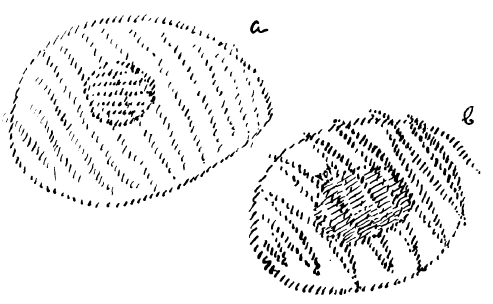
[ 36 ] Man hat es beim Karzinom überhaupt damit zu tun, daß an einer Stelle der Organisation, wo keine Veranlassung ist, ein Sinnesorgan hervorzurufen, ein Sinnesorgan hervorgerufen wird. Nehmen Sie die, ich möchte sagen, radikalste Sinnesorganisation — nur um die Sache einzusehen —, nehmen Sie das Auge. Wodurch kommt das Auge zustande? Sie wissen, es ist eigentlich halb von außen gebildet; es ist dem Organismus eingegliedert. Der Organismus spart von sich aus grob gesprochen die Augenhöhle aus. Dann wird das Auge eingelagert. Damit ist angedeutet, daß in der Bildung des Auges im wesentlichen außermenschliche Prozesse wirken. Das Auge wird nur umfaßt vom Menschen. Wenn wir so ein eklatantes Sinnesorgan haben wie das Auge, können wir sagen: Es wird dem menschlichen Organismus ein Fremdkörper eingegliedert. Das ist radikal gesprochen, weil es so ganz ungewohnt ist. Es würde nie aus dem menschlichen Organismus heraus so etwas wie die Form der Linse oder des Glaskörpers, oder die substantielle Zusammensetzung der Linse oder des Glaskörpers erfolgen. Nun das alles, was sich da einlagert, was zum Teil sogar noch beim Auge ätherische, nicht bloß physische Einlagerung ist, das wird umfaßt durch den astralischen Leib und die Ich-Organisation, die eigentlich möglichst emanzipiert sind vom Physischen und Atherischen beim Auge. Beim Auge ist ein ganz anderer Zusammenhang zwischen Ich, Astralleib, Atherleib und physischem Leib als, sagen wir, bei einem Stück Muskel. An einem Stück Wadenmuskel sehen Sie eine sehr innige Zusammenfügung von Ich, Astralleib, Atherleib und physischem Leib. Es ist die normale Konstitution in der Zusammenfügung darin. Wenn ich nach Art einer chemischen Formel schreiben würde, beim Auge ist das so, daß eng aneinander gebunden sind Ich und Astralleib (siehe Zeichnung I und A), ebenso sind die beiden andern intensiv aneinander gebunden! Lose Affinität ist zwischen Ätherleib und Astralleib. Das ist nur so beim Auge der Fall.
[ 36 ] In the case of carcinoma, what we are dealing with is that a sensory organ is formed in a part of the organism where there is no reason to produce one. Take what I would call the most radical sensory organ—just to illustrate the point—take the eye. How does the eye come into being? As you know, it is actually formed partly from the outside; it is incorporated into the organism. Roughly speaking, the organism hollows out the eye socket on its own. Then the eye is embedded within it. This suggests that, in the formation of the eye, essentially non-human processes are at work. The eye is merely encompassed by the human being. When we have such a striking sense organ as the eye, we can say: a foreign body is incorporated into the human organism. This is a radical way of putting it, because it is so completely unfamiliar. Something like the shape of the lens or the vitreous body—or the substantial composition of the lens or the vitreous body—would never arise from within the human organism itself. Now, everything that is incorporated there—which in the case of the eye is in part even an etheric, not merely physical, incorporation—is encompassed by the astral body and the “I” organization, which are actually as emancipated as possible from the physical and etheric aspects of the eye. In the eye, there is a completely different relationship between the “I,” the astral body, the etheric body, and the physical body than, say, in a piece of muscle. In a piece of calf muscle, you see a very intimate interconnection between the I, the astral body, the etheric body, and the physical body. This is the normal constitution of that interconnection. If I were to write it out like a chemical formula, in the eye the I and the astral body are closely bound together (see Diagram I and A), and the other two are also intensely bound to one another! There is a loose affinity between the etheric body and the astral body. This is only the case with the eye.
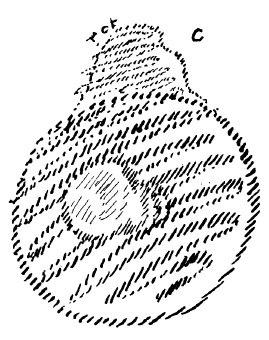
[ 37 ] Bei andern Sinnesorganen, zum Beispiel beim Ohr, ist es nicht so, da kann es nicht so ausgesprochen werden. Da ist schon eigentlich die lose Affinität zwischen der Ich-Organisation und dem Astralleib und wiederum zwischen physischem Leib und Ätherleib. Es ist bei jedem Sinn etwas anders.
[ 37 ] With other sense organs—for example, the ear—this is not the case; it cannot be expressed in this way. There is, in fact, a loose affinity between the “I” organization and the astral body, and likewise between the physical body and the etheric body. It is slightly different for each sense.
[ 38 ] Wenn irgendwo im menschlichen Organismus, wo keine Sinnesorganisation sein sollte, die Tendenz zu einer Sinnesorganisation auftritt — und an jedem Teil des menschlichen Organismus kann die Tendenz auftreten; das was an einem anderen Orte geschehen soll, es kann an irgendeinem anderen Orte die Tendenz dazu auftreten —, dann sieht man doch, wie physischer Leib und Atherleib auf einer Seite, Astralleib und Ich auf der anderen Seite, auseinanderfallen.
[ 38 ] If, anywhere in the human organism where there should be no sensory organization, a tendency toward sensory organization arises—and this tendency can arise in any part of the human organism; what is meant to happen in one place may instead give rise to a tendency toward it in some other place—then one can see how the physical body and the etheric body on the one hand, and the astral body and the “I” on the other, begin to drift apart.
[ 39 ] Nehmen Sie einen ganz konkreten Fall. Bei einem starken physischen Insult, sagen wir bei einem Stoß auf die Brustdrüse, setzt sich der Stoß nach innen so fort, daß er innerhalb der Haut — grob gesprochen — einen Wirkungsverlauf zeigt, der von außen seinen Ursprung hat, — also ein mechanischer Insult, der sich nach innen fortsetzt. Für ein Brustkarzinom wird dies in den meisten Fällen der wirkliche Ursprung sein. Es könnte nur noch ein längerer Überhitzungs- oder ein Verbrennungsprozeß sein. Immer wird es in dem Sinne — äußerlich gesprochen, wie ich es hier anführe — ein Insult sein, der das herbeiführt. Nun tritt in diesem Falle das ein, was sehr stark an der Stelle den Astralleib erscheinen läßt, der sonst absorbiert ist vom Ätherleib. Wenn der Astralleib plötzlich an der Stelle erscheint, dann zeigt er sich in, ich möchte sagen, Glimmerlicht; er tritt auf, wie wenn er brennen würde. Wird er so bemerkbar, dann hat man an der Stelle die Tendenz zur Bildung einer Sinneswirkung, da entsteht ein Karzinom. Da ist es nicht eine Frage, daß man mindestens mit den sieben ersten Impfungen beginnen kann.
[ 39 ] Consider a very specific case. In the event of a severe physical trauma—say, a blow to the mammary gland—the impact continues inward in such a way that, roughly speaking, it follows a path within the skin that originates from the outside—that is, a mechanical trauma that propagates inward. In most cases, this will be the actual origin of breast cancer. The only other possibility would be a prolonged process of overheating or a burn. It will always be, in this sense—externally speaking, as I am describing it here—an insult that brings it about. Now, in this case, what occurs is that the astral body, which is otherwise absorbed by the etheric body, appears very strongly at that spot. When the astral body suddenly appears at that spot, it manifests, I might say, in a glimmering light; it appears as if it were burning. Once it becomes noticeable in this way, there is a tendency at that spot to form a sensory effect, and a carcinoma develops. In such cases, there is no question that one can begin with at least the first seven vaccinations.
[ 40 ] Die Zusammenhänge da, die werden ganz besonders interessant, wenn man sieht, wie das eine mit dem anderen zusammenhängt. Nehmen Sie an, Sie haben jemand, der nicht mehr ganz jung ist. Sie sind genötigt, das Karzinom zu entfernen. Es äußert sich aber dasjenige, was in einem ziemlich stark entwickelten Karzinom da ist, so, daß eigentlich im ganzen Körper, weil der Organismus doch eines ist, eine Tendenz vorliegt, außermenschliche Prozesse sich abspielen zu lassen. Es ändert sich das Karzinom in seinem Verlauf in ganz merkwürdiger Art. Das lokale Karzinom wird nach einiger Zeit ein Ventil, um die karzinomatöse Entwickelung zu konzentrieren. Schneiden Sie das Karzinom heraus, so ist plötzlich das Ventil weg. Aber Sie bekommen, wenn Sie es mit einem älteren Menschen zu tun haben, dieses Vermögen, Ventile für die vorhandene Neigung, Außermenschliches im Menschen zu haben, nun in das Organ hinein, das am meisten das unorganische Außermenschliche aufnimmt, in die Lunge. Daher werden Sie besonders bei im Alter vorhandenem Karzinom den Prozeß auflösen in Lungenentzündung. Wenn der Organismus sklerotisch ist, so läuft der Prozeß im Alter mit Lungenentzündung aus. Das hängt damit zusammen, daß der alte Organismus noch mehr und leichter als der jüngere das Außermenschliche aufnimmt. Dasjenige Organ, das am leichtesten außermenschliche Prozesse aufnimmt, ist die Lunge; es wird dabei geschädigt. Es gibt ein Organ, das die außermenschlichen Prozesse leicht aufnehmen kann und dabei nicht geschädigt wird; das ist die Leber. Die ist sehr dickfellig gegen außermenschliche Prozesse. Die Lunge nimmt sie auf, wird aber dadurch geschädigt. Das ist das Wesentliche, daß die Lunge leicht aufnimmt und dabei geschädigt wird.
[ 40 ] These connections become particularly interesting when you see how one thing relates to another. Suppose you have a patient who is no longer very young. You are compelled to remove the carcinoma. However, what is present in a fairly advanced carcinoma manifests itself in such a way that—since the organism is, after all, a single entity—there is actually a tendency throughout the entire body to allow non-human processes to unfold. The carcinoma changes in a very peculiar way as it progresses. After some time, the localized carcinoma becomes a valve through which the carcinomatous development is concentrated. If you excise the carcinoma, the outlet is suddenly gone. But when dealing with an elderly person, you find that this tendency—to harbor non-human elements within the human being—now finds its outlet in the organ that most readily absorbs inorganic, non-human elements: the lungs. Therefore, especially in the case of carcinoma present in old age, the process will resolve into pneumonia. If the organism is sclerotic, the process in old age culminates in pneumonia. This is related to the fact that the elderly organism absorbs the non-human even more readily and easily than the younger one. The organ that most readily absorbs non-human processes is the lung; and it is damaged in the process. There is one organ that can easily absorb non-human processes without being damaged; that is the liver. It is very resilient against non-human processes. The lungs absorb them but are damaged as a result. This is the essential point: that the lungs absorb them easily but are damaged in the process.
Frage über die Vererblichkeit der Anlage zu Karzinomen.
Question about the heritability of a predisposition to carcinomas.
[ 41 ] Das hängt zusammen mit aufgenommenen Vorstellungen. An sich ist bei dem Menschen keine Neigung, sich vor dem Karzinom zu fürchten. Dies geht daraus hervor, daß diese Furcht eigentlich nur vorhanden ist mehr bei zivilisierten Menschen gebildeter Stände. Bauern auf dem Lande haben keine Furcht. Sie tragen das Karzinom, sterben daran, haben gar nichts von dem Karzinom gewußt. Das ist etwas, was auf Erziehung beruht, gegen die man wirken muß.
[ 41 ] This is related to ingrained mental images. In and of itself, humans have no natural tendency to fear cancer. This is evident from the fact that this fear is actually more prevalent among educated members of civilized societies. Farmers in the countryside have no fear. They contract cancer, die from it, and knew absolutely nothing about it. This is something rooted in upbringing, which must be counteracted.
Wieweit ist bei diesen beiden Fällen übersinnliches Schauen nötig und wie ist es angewandt?
To what extent is extrasensory perception necessary in these two cases, and how is it applied?
[ 42 ] Die Vorgänge müssen diese sein: Zunächst muß man doch, um überhaupt anzufangen, geisteswissenschaftliches Schauen vollständig zu beherrschen — das stellt sich heraus im Laufe der Zeit —, sehen, wie dasjenige, was geisteswissenschaftlich konstatierbar ist, verbunden ist mit Symptomen nach außen. Ist sonst nichts angegeben, dann ist immer ersichtlich der rein geisteswissenschaftliche Befund.
[ 42 ] The process must be as follows: First of all, in order to even begin—and this becomes clear over time—one must have fully mastered the perspective of Spiritual Science and see how what can be established through Spiritual Science is connected to outward symptoms. Unless otherwise specified, the purely spiritual-scientific finding is always evident.
Wie äußert sich das nach außen?
How does this manifest externally?
[ 43 ] Ebensogut kann man jetzt wiederum sagen: Es sollte natürlich meditativ sein. Sie können den Gelenkrheumatismus meditieren, können Diabetes meditieren. Dadurch werden Sie aber wiederum zurückgetrieben. Es ist das ein sehr guter Weg, um zu geisteswissenschaftlicher Beobachtung zu kommen, wenn Sie einen Krankheitsprozeß nach den Symptomen meditieren. Es kann nur nicht leicht der umgekehrte Weg gegangen werden. Sie können es sogar machen wie die Homöopathen, die den Symptomenkomplex zusammensetzen und nach diesem die Therapie machen. Nur da kommt es — ich sage nicht einmal: es kann, ich weiß, daß es so ist — immer wieder vor, daß Symptome überschätzt und unterschätzt werden, daß sie falsch zusammengestellt werden, so daß zuweilen ein Symptomenkomplex, der von Homöopathen zusammengesetzt ist, überhaupt eine Karikatur der Wirklichkeit ist. Wenn Sie das meditieren, meditieren Sie sich hinein in die Karikaturen. Wenn Sie eine wirkliche geisteswissenschaftliche Ursache haben, ist das maßgebend für den Symptomenkomplex, dann überschätzen und unterschätzen Sie keines der Symptome. Sie werden bemerkt haben, die Symptome haben wir vorangestellt, das sind keine Karikaturen, sondern gut ausgebildete Symptomenkomplexe. Wenn Sie meditieren, kommen Sie zur Unmöglichkeit, geisteswissenschaftliche Befunde zu machen. Und wenn jemand sagt, das geht nicht, da muß ich sagen: Probiere es einmal, aber nicht von einem beliebig zusammengestellten Symptomenkomplex, sondern von einem geisteswissenschaftlich konstatierten Symptomenkomplex.
[ 43 ] One might just as well say: Of course, it should be meditative. You can meditate on rheumatoid arthritis; you can meditate on diabetes. But that, in turn, will set you back. It is a very good way to arrive at observation under Spiritual Science if you meditate on a disease process based on its symptoms. It’s just not easy to take the reverse approach. You can even do it like homeopaths do, who compile a complex of symptoms and base the treatment on it. But there—I’m not even saying “it can happen”; I know it’s true—it happens time and again that symptoms are overestimated or underestimated, that they’re incorrectly compiled, so that sometimes a symptom complex put together by homeopaths is nothing more than a caricature of reality. When you meditate on this, you’re meditating your way into these caricatures. If you have a genuine Spiritual Science cause—which is decisive for the symptom complex—then you will neither overestimate nor underestimate any of the symptoms. You will have noticed that we have listed the symptoms first; these are not caricatures, but well-defined symptom complexes. When you meditate, you will come to realize the impossibility of arriving at Spiritual Science findings. And if someone says that’s not possible, I must say: Try it once—but not with a randomly assembled complex of symptoms, rather with a complex of symptoms established through Spiritual Science.
Worauf beruht die Eurythmie?
What is the basis of eurythmy?
[ 44 ] Im menschlichen Organismus beruht alles darauf, daß ein Bewußtes auf ein Unbewußtes zurückgeht. Eurythmie beruht darauf, daß der Mensch, wenn er auf die Welt kommt und sich ausleben will, ihm nicht eine Sprache als solche fehlt, sondern das Ausleben im Gebrauche der Gliederbewegungen. Das wird zurückgeschlagen, er darf es nicht tun und kann es nicht tun. Heute wird das nicht bemerkt, dieses Zurückgeschlagene, weil es schon durch die Vererbung zurückgeschlagen ist. Alles das gliedert sich ein, metamorphosiert sich um, kommt an die Luft gebunden heraus und lebt sich in die Sprache ein. Weiß man, wie das sich in die Sprache hineingelebt hat, weiß man, daß das der Ursprung der Sprache ist, so gelangt man zu den Bewegungen von der Sprache zurück, umgekehrt bewußt. Auch da ist es so: Geisteswissenschaftliche Diagnose beleuchtet den Symptomenkomplex. Bildet man sich ihn und meditiert ihn, so kommt man wieder zur geisteswissenschaftlichen Diagnostik. Ich muß es bei diesen drei Stunden bewenden lassen; ich hoffe, daß wir uns wiedersehen werden. Aber wenn Sie öfters kommen, wird aus dem kleinen sozialen Wesen der Schlüssel für künftiges Wirken werden.
[ 44 ] In the human organism, everything is based on the fact that the conscious stems from the unconscious. Eurythmy is based on the fact that when a human being comes into the world and wants to express themselves, they do not lack a language as such, but rather the ability to express themselves through the use of limb movements. This is suppressed; the person is not allowed to do it and cannot do it. Today, this suppression goes unnoticed because it has already been suppressed through heredity. All of this becomes integrated, undergoes a metamorphosis, emerges bound to the air, and finds expression in language. If one knows how this has become embedded in language, if one knows that this is the origin of language, then one returns to the movements from which language arose, consciously and in reverse. The same applies here: a diagnosis by Spiritual Science sheds light on the complex of symptoms. If one forms a picture of it and meditates on it, one returns to a diagnosis by Spiritual Science. I must conclude these three hours here; I hope we will see each other again. But if you come more often, this small social being will become the key to future work.
[ 45 ] Jedenfalls war es schön, daß wir wieder einmal über die Dinge haben sprechen können.
[ 45 ] In any case, it was nice that we were able to talk about things again.