

Remedial Education Course
GA 317
28 June 1924, Dornach
Translate the original German text into any language:
Versions Available:
Curative Education, tr. Adams
Vierter Vortrag
Lecture Four
[ 1 ] Nun, meine lieben Freunde, wir wollen heute eine Art Abrundung versuchen der einleitenden Betrachtungen und werden dann von morgen ab zu der praktischen Betrachtung einzelner Fälle übergehen können. Es handelt sich darum, daß eine wirkliche Betrachtung des Wesens des sogenannten seelischen Krankseins auch notwendigerweise dazu führen muß, Anhaltspunkte zu gewinnen für dieBehandlung. Daß die Behandlung bei Erwachsenen unseren Methoden heute noch Schwierigkeiten bieten muß, das hat seine Gründe in dem, was ich gestern ausgeführt habe: daß zu der Behandlung solcher Dinge gewisse Vorbedingungen da sein müssen, die, solange die Weltverhältnisse so stehen, wie sie jetzt stehen, überhaupt nicht innerhalb unserer Gesellschaft für seelisch Kranke verwirklicht werden können. Dagegen liegt bei Kindern die Sache so, daß die Erziehung in der Tat außerordentlich viel machen kann. Wie Sie aber eingesehen haben, meine lieben Freunde, handelt es sich bei seelischen Erkrankungen - natürlich bei andern auch, aber hier viel tiefer, in viel tieferem Sinne, in viel bestimmterem Sinne - um karmische Zusammenhänge, die in den Krankheiten zum Vorschein kommen.
[ 1 ] I would like today to try as it were to round off our introductory studies, so that we may be able, from tomorrow onwards, to pass on to the practical consideration of particular cases; for it is indeed so, that a faithful study of the nature of so-called illnesses of the soul will of itself afford clues for the discovery of their right treatment. The treatment of adult patients by our methods still presents difficulties. As I explained yesterday, the treatment would require certain conditions for the patients which, so long as things are in the world as they are today, cannot be realised within the work of our Society. For children, on the other hand, a very great deal can be achieved—by education. It will already be clear to you, dear friends, that in illnesses of the soul we have to do with karmic connections which come to manifestation in the illness. This is, of course, true of other illnesses too, but it is true in a much deeper sense, and more specifically, of illnesses of the soul. We are therefore perfectly justified in asking the question—we do not formulate it in so many words, but it is bound to arise in the unconscious, and we must have a feeling for what lies behind it.
[ 2 ] So ist natürlich die Frage berechtigt aufgeworfen - nicht so sehr ausdrücklich, sie muß unbewußt aufgeworfen werden, wir müssen es fühlen, was da zugrunde liegt -: Wie weit kann eine Besserung herbeigeführt werden? — Jeder Grad von Besserung, den wir herbeiführen können, ist für den kranken Menschen ein Gewinn. Wir dürfen uns niemals trösten damit: das Karma ist so, und daher nehmen die Dinge so diesen Verlauf. Das sagen wir bei äußeren Schicksalsereignissen und können es auch tun; können es aber niemals tun bei demjenigen, was die freiströmende Gedanken-, Gefühls-, Tatenrichtung ist im Menschen selbst. Denn da kann das Karma verschiedene Wege gehen. Und es kann ein Abbiegen des Karmas stattfinden, so daß nicht etwa die Dinge nicht erfüllt werden, die zu erfüllen sind, aber sie können auf verschiedene Weise erfüllt werden. Ich habe oftmals, wenn davon gesprochen worden ist, vorgeburtliche Erziehung soll geübt werden, womit man meint, Erziehung in der Embryonalzeit, ich habe oftmals gesagt: Solange das Kind nicht atmet, handelt es sich um Erziehung und das Verhalten der Mutter. Und im übrigen soll man nicht in das Werk der Götter eingreifen. Da handelt es sich ganz um das, was sich abspielt bei der Mutter selbst.
[ 2 ] The question, namely: how far can we expect to bring about an improvement? Any degree of improvement that we are able to bring about is so much gain for the patient. We must never take refuge in the thought that, owing to the patient's karma, things are bound to take their course in such and such a way. We can say this about the external events; that a person encounters on the path of destiny; but it is never possible to speak so in regard to the free flow within him of his thoughts and feelings and deeds. For here karma can take different roads; karma can even be turned aside, so that the fulfilment comes in some quite other way. Not that it ever fails to come, but karma can be fulfilled in many ways. I have frequently said, when people have raised the question of pre-natal education—meaning education in the embryonic time—that so long as the child does not yet breathe, it is the education and whole manner of life of the mother that is of importance. For the rest, we should not intervene in the work of God. In the embryonic period, it is entirely a matter of how things are with the mother.
[ 3 ] Nun aber, eine sachgemäße Betrachtung kann so angestellt werden, wie wir sie für das epileptische Irresein gestern begonnen haben, wobei berücksichtigt wird physischer Leib, Ätherleib, astralischer Leib und Ich-Organisation. Nun, was haben wir herausbekommen für all die Formen des kindlichen Irreseins, die epileptisch oder epileptoid sind? Wir haben gefunden, daß es sich handelt um ein Stauen des astralischen Leibes und der Ich-Organisation in irgendeinem Organ. Die Oberfläche eines Organs läßt nicht heraus den Astralleib und die Ich-Organisation, die stauen sich. Die stauen sich innerhalb des Organs. Es entsteht eine verdichtete astralische und Ich-Atmosphäre innerhalb des Organs. Das gibt die Veranlassung zu den Krämpfen. Denn jedesmal, wenn ein Krampf vorhanden ist, ist folgendes vorhanden: Das Wesen des Krampfes besteht darinnen, daß wenn hier ein Organ ist (siehe Tafel 6, links), mit seinem Ätherleib darin, so besteht ein ganz bestimmtes Verhältnis zwischen diesem physischen Leib und Ätherleib für jedes Organ, zum astralischen Leib und zum Ich.
[ 3 ] We can now usefully carry further the study we began yesterday when we were considering the epileptic disorder—the study, that is, in regard to physical body, ether body, astral body and ego organisation. What conclusion did we come to as regards all those forms of illness in children, that are of an epileptic nature? We found that in these illnesses we have to do with a congestion of astral body and ego organisation in some organ. The surface of the organ does not allow the astral body and ego organisation to make their way out, and they become congested. They are, as it were, jammed in the organ. An astral and ego atmosphere of high pressure arises there. This causes fits. For what is really taking place, when a fit occurs?
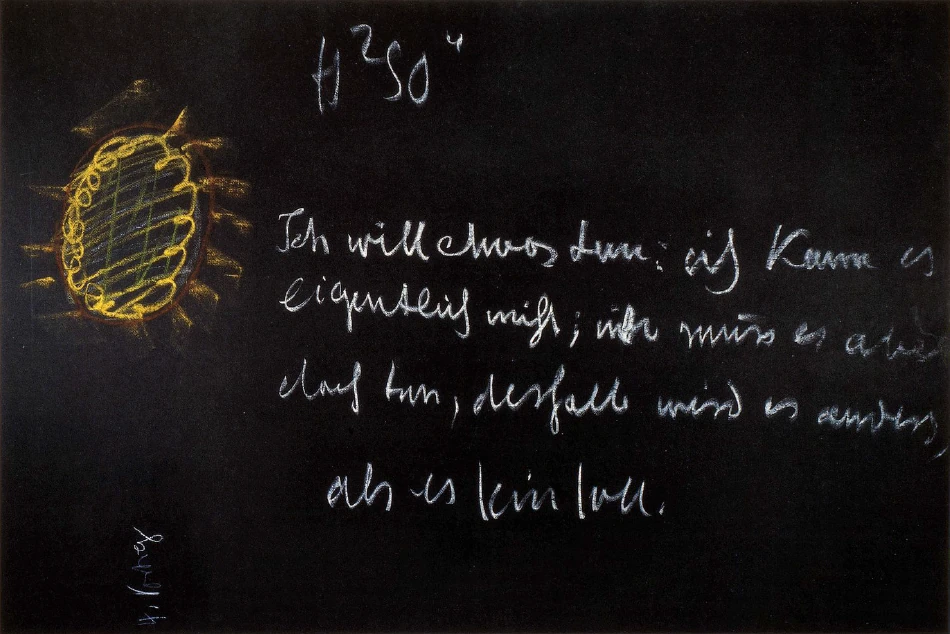
[ 4 ] Nicht wahr, Sie alle kennen ja das - man kann nur, wenn man solche Voraussetzungen macht, darüber sprechen -, was die bestimmten äußeren Verhältnisse sind, in denen sich in der unorganischen äußeren Natur die Stoffe miteinander verbinden. Wie es die Chemie tut, ist es zwar nicht richtig, aber bestimmte Verhältnisse bestehen - ich sage nicht Atom- oder Gewichtsverhältnisse, weil das schon in die Theorie greift -, aber die Tatsache besteht, daß in einem bestimmten Verhältnis Wasserstoff und Sauerstoff sich verbinden. Wenn wir die Schwefelsäure haben, H,SO,, so haben wir darinnen Wasserstoff, Schwefel und Sauerstoff in einem bestimmten Verhältnis, in dem sie zueinander gehören. Wenn dieses ein anderes wird, so kann unter Umständen der Stoff, der da entsteht, ein ganz anderer sein. Wenn wir ein anderes Verhältnis haben als in der Schwefelsäure zwischen Wasserstoff, Schwefel und Sauerstoff, so bekommen wir da die schweflige Säure, H,SO,, obwohl dieselben Stoffe darinnen enthalten sind.
[ 4 ] Suppose you have an organ with its ether body within it. For each single organ there is a definite relationship that should obtain between physical body and ether body on the one hand and astral body and ego on the other hand. Now I assume of course that all of you are familiar with the fact that in inorganic external Nature, substances combine with one another in certain definite relationships. The descriptions of this that you find in the chemistry books are not correct; nevertheless there are these well-defined relationships. I purposely do not say relationships of weight, nor do I say atomic relationships for there we would come into the realm of theory; nevertheless it is a fact that hydrogen and oxygen, for example, combine in a certain definite relationship. If we have sulphuric acid (H2S04), we have in it hydrogen, sulphur and oxygen in a particular relation to one another. If this relation were to change, then the combination might under certain circumstances give rise to an altogether different substance. We can, for example, if we have a certain relation of hydrogen, sulphur and oxygen that is different from the relation in sulphuric acid, obtain sulphurous acid (H2S03)—obtain, that is to say, a different substance, although composed of the same three original substances.
[ 5 ] So besteht ein ganz bestimmtes Verhältnis im sogenannten normalen Menschen; ich sage sogenannt, weil der Ausdruck «bei dem normalen Menschen» absolut philiströs ist, da glaubt man, es ist eine Grenze da. Nun, innerhalb bestimmter Grenzen ist das Verhältnis variabel. Aber wenn es über eine bestimmte Variabilität hinauskommt, und die kann wiederum individuell sein für einzelne Menschen, wenn es über eine bestimmte Grenze hinauskommt, so ist Abnormität, Krankhaftigkeit vorhanden. - Es ist also so, daß in einem Organ astralischer Leib und Ich-Organisation darinnen sitzen, so daß sie es in einem bestimmten Verhältnis nicht ausfüllen können und nicht über das Organ so hinausragen können, wie wir es gestern als notwendig erkannt haben, über den physischen Leib. Staut sich nun der Astralleib und das Ich in einem bestimmten Organ, dann ist der überschüssige Astralleib und die überschüssige Ich-Organisation in diesem Organ drinnen, dann ist nicht die gehörige Menge darinnen, sondern es ist eine gestaute Menge, eine überschüssige Menge darinnen, und das Organ wird dadurch so, daß es die Astralität spüren muß, empfinden muß. Wenn die richtige Menge der Astralität darinnen ist, so empfindet das Organ die Astralität nicht. Denn jede nicht ins Organ gehörige Tätigkeit des Astralleibes und der Ich-Organisation muß das Organ empfinden. Geht irgend etwas nicht ins Bewußtsein über, staut es sich, so daß eine zu große Menge von Astralität und Ich-Organisation da ist, die nicht ins Bewußtsein übergeht, dann entsteht der Krampf. Und damit haben Sie schon die Begleiterscheinung gegeben, die Bewußtseinsstörung. Die Bewußtseinsstörung muß dann immer eintreten, wenn es sich um ein Organ handelt, das überhaupt mit Bewußtsein zu tun hat. Handelt es sich um ein Organ, das nicht direkt etwas mit dem Bewußtsein zu tun hat - es gibt auch solche Organe, welche nicht direkt, sondern invers mit dem Bewußtsein etwas zu tun haben, welche Hemmungsorgane sind -, dann entsteht nicht Bewußtlosigkeit, sondern Schmerz. Schmerz ist erhöhtes, nicht abgeschwächtes Bewußtsein. Der Krampfzustand als solcher ist ja nicht schmerzhaft, das ist einfach eine Tatsache; das, was als Schmerz eintreten kann, ist dann das, was eintritt, wenn in einem Hemmungsorgan, nicht in einem bewußtseinsfördernden Organ, sondern in einem bewußtseineinhaltenden Organ die Stauung stattfindet. Da tritt erhöhtes Bewußtsein, Schmerz ein. Das ist das Wesen des Schmerzes.
[ 5 ] In a similar way, physical body and ether body stand in a certain definite relation to astral body and ego in the so-called normal human being. (I say “so-called”, because the expression “normal human being” is a purely conventional one, founded on the belief that there is a fixed boundary dividing human beings into normal and abnormal.) This relationship is, within limits, a variable one. But if it exceeds a certain limit of variability—and this again can be individual for the particular human being—we have abnormality, a state of illness; in some organ astral body and ego organisation will be present, but in such a way that they cannot fill it in a right relationship. This will mean, that they are unable to come forth from it, they cannot get out. You will remember, we recognised yesterday the necessity for astral body and ego organisation to come forth again out of an organ, out of the physical body. When the astral body and ego are jammed and squeezed in this way in some organ, then there is too much astral body, too much ego in that organ; there is not the proper amount, there is a surplus—with the result that the organ cannot help feeling the astrality. If the organ has in it the right and proper amount, it does not perceive or feel the astrality, it does not sense the presence of astrality within it. But if there is in an organ an activity of astral body and ego organisation that does not belong there, then the organ is bound to feel it. If something is there in the organ that does not pass over into consciousness, if there is congestion, so that a great amount of astrality and ego organisation is present which does not go over into consciousness, then a fit takes place. The very description I have given you contains an indication of the accompanying phenomenon—namely, disturbance of consciousness. Disturbance of consciousness is bound to occur whenever this congestion happens in an organ that is in any way connected with consciousness. When such congestion of astral body and ego organisation takes place in an organ that has not direct positive connection with consciousness—for there are organs that are not directly but inversely connected with consciousness, organs that in fact hinder or arrest consciousness—then we have, not loss of consciousness, but pain. Pain is heightened—not lessened—consciousness. A fit as such is not painful, as you know; that is simply a fact. Pain occurs when the congestion takes place, not in an organ that promotes consciousness, but in an organ that retards or arrests consciousness. Here the congestion will lead to enhanced consciousness—to pain. That is the real nature of pain.
[ 6 ] Nun, damit haben wir alle diejenigen Formen des Irreseins erfaßt, auch im kindlichen Organismus, die ins Epileptische oder Epileptoide ausmünden, die wir genau besprechen werden, aber am besten an individuellen Fällen.
[ 6 ] We have now arrived at some understanding of all those forms of disorder which, occurring in childhood, lead to epileptic and related illnesses; we shall afterwards have to speak more specifically of these illnesses, but that we can do better when we have individual cases before us.
[ 7 ] Nun werden Sie aber leicht einsehen, die Sache kann ja auch anders sein. Sie kann so sein, daß nun nicht ein Organ auftritt so, daß seine Oberfläche in sich die Ich-Organisation und den Astralleib zurückhält, sondern daß die Oberfläche zu viel durchläßt, daß gewissermaßen das Organ nicht genügend für seinen eigenen Verbrauch in sich selber zurückhält, so daß hier also nicht die Astralität, wozu auch die IchOrganisation gehört, sich staut, sondern daß sie gewissermaßen über das Organ leicht hinausfließt (siehe Tafel 6). Man könnte sagen, die Oberfläche wird für die Astralität und die Ich-Organisation zu durchlässig, das Organ rinnt aus in bezug auf seine Astralität und IchOrganisation. Wir sehen dann mit dem imaginativen Bewußtsein das Organ ausstrahlen, es rinnt aus. Solch ein ausrinnendes Organ ist immer verbunden mit dem physischen Korrelat der Sekretion, die natürlich bei gewissen Organen nicht stark auftritt, die aber durchaus auch bemerkbar auftreten kann. Wir werden davon zu sprechen haben. Sehen Sie, da haben wir es dann, wenn es das kindliche Alter betrifft, zu tun mit einer Erscheinung, die nur dadurch geheilt werden kann, daß man den Astralleib und die Ich-Organisation befestigt, sozusagen zurückbringt ins Organ.
[ 7 ] But now you will easily see that we may also have a quite different state of affairs. Instead of an organ whose surface holds back within the organ the ego organisation and the astral body, we could have an organ whose surface lets too much through, an organ that does not, as it were, keep back sufficient for its own use. Here the astrality, with which is associated also the ego organisation, is not dammed up, but tends, on the contrary, to overflow the organ. The surface becomes, as it were, porous for the astrality and the ego organisation; they “leak” out of the organ. With imaginative consciousness we do actually see rays streaming forth from the organ. In an organ that “leaks” in this way you will always find also the physical correlate of secretion; even where the secretion is not strikingly present, you will find that it can occur and can be detected. We shall have more to say about this later. When a human being is affected with this condition in childhood, the condition can be healed only if we are able to hold fast the astral body and ego organisation—bring them back, as it were, into the organ.
[ 8 ] Nun, zu welchen Formen, zu welchen äußerlich wahrnehmbaren Symptomkomplexen führt dann eine solche innere Beschaffenheit? Da kommen wir auf ein Kapitel, wo für das kindliche Alter etwas anderes auftritt als für den Erwachsenen. Da kommen wir zu Formen des Irreseins, die für die Zeit der menschlichen Entwickelung von der Geburt bis zur Geschlechtsreife besondere Formen annehmen müssen, wir kommen da zu Formen des hysterischen Irreseins. In diesen Formen des hysterischen Irreseins leben heute alle Unklarheiten der äußeren Wissenschaft. Es leben darinnen alle unsachlichen Wortprägereien. Das beginnt schon bei der allerersten Anschauung, die man über diese Sache hat; denn man wird natürlich in irgendeiner Weise nach den heutigen Anschauungen dieses hysterische Irresein mehr oder weniger in Zusammenhang zu bringen haben mit dem Geschlechtsleben. Man bringt es sogar in Formen, die man darunter notifiziert, mehr als mit dem Geschlechtsleben des Mannes mit dem Geschlechtsleben der Frau in Zusammenhang. Nicht die Wortbezeichnung ist es, worauf es ankommt. Welche Fälle man heute darunter notifiziert, ob sie die Bezeichnung hysterisches Irresein, so wie man das meint, verdienen, oder ob man einen viel größeren Komplex erfassen muß, darauf kommt es an.
[ 8 ] To what forms of illness, to what outwardly perceptible complexes of symptoms does such an inner condition lead? Here we come to a chapter in our study, where the phenomena that show themselves differ according as we are dealing with children or adults. For we come to illnesses that are bound to assume quite special forms for the period in human development between birth and puberty. We come, in effect, to the various kinds of hysteria. Now it is just in the realm where we are concerned with the forms of hysterical disorder, that the deplorable lack of clarity in modern science proclaims itself. Words are coined to name the various forms without any regard for reality. This shows itself at once in the first picture people begin to make of the matter; for in conformity with the modern way of looking at such things they are, of course, bound to bring this hysterical condition into connection somehow or other with the sexual life, and more so in the case of the woman than of the man; and then the forms of illness are named accordingly. The words by which the various forms are designated are of no importance. What is important for us is to make sure whether all the cases that are today reckoned under these names really deserve to be called hysteria, in the way the word is understood, or whether we do not rather need to have recourse to a much wider classification.
[ 9 ] Nun liegt die Sache so, daß einfach das Kind bis zur Geschlechtsreife diese Form des Irreseins eigentlich gar nicht haben kann, die man ihm zuschreibt, wenn man an das Geschlecht bei der Hysterie denkt, sondern daß das Kind überhaupt in seinen ersten Lebensepochen etwas haben kann, was ich beschrieben habe als das Hinausragen des astralischen Leibes und der Ich-Organisation über ein Organ. Nur das kann es haben. Wir müssen von allen Beschreibungen, die da bestehen für das Erfassen des hysterischen Irreseins, absehen, denn alle diese Beschreibungen haben das schon an sich, daß man an gewisse Oberbegriffe dabei denkt; wenn man aber dabei an einen gewissen Oberbegriff denkt, so wird die Beschreibung falsch. Und so sind heute zahlreiche Beschreibungen auf dem Gebiet der Psychiatrie einfach falsch. Man kann so etwas nicht machen, wie man es heute eben macht.
[ 9 ] Now, as a matter of fact, the child who has not yet attained puberty cannot possibly have the form of disorder from which he is frequently said to suffer. He cannot have hysteria—if it is assumed that hysteria is associated with sex. The child can, however, certainly have in his earliest childhood what I have described as a protrusion of astral body and ego organisation beyond an organ. That he can have, but only that. We must turn a deaf ear to the various descriptions that have been given for the better comprehension of hysterical disorder. All these descriptions are made with reference to one ruling idea; and when an idea is set up in this way and all descriptions are made with reference to it, then these descriptions cannot but be false. Countless descriptions in psychiatry today are false just on this account. You cannot do things that way.
[ 10 ] Sehen wir uns einmal an, was da in Wirklichkeit vorliegt. Das Kind erfaßt die Außenwelt, wie ich es gestern gesagt habe, schwer. Es erfaßt schwer den Gleichgewichtszustand mit der Flüssigkeit, den Gleichgewichtszustand mit der Luft, die Differenzierungen in der Wärme, die Differenzierungen im Lichte, die Differenzierungen im Chemismus, die Differenzierung im allgemeinen Weltenleben, diese erfaßt es, statt, wie es bei dem epileptischen Irresein der Fall ist, zu schwach, zu stark; es steckt überall in die Umgebung, in die Schwere, in die Wärme steckt es seinen Astralleib und das Ich hinein, es erfaßt ein jegliches in so intensiver Weise, wie es eigentlich beim sogenannten Normalen nicht möglich ist. Was entsteht denn da?
[ 10 ] Let us see what it is we really have before us in a young child who is said to be suffering from hysteria. He has difficulty in making contact with the external world. I explained yesterday what this means. He has difficulty in taking hold rightly of the equilibrium that belongs to the fluid element, of the equilibrium that is associated with air, of the differentiations in warmth, in light, in chemical action, and in the universal cosmic life. But instead of grasping all these too weakly, as is the case with the epileptic, the child takes hold too strongly, he puts his astral body and Ego into his whole environment—into weight, into warmth; he seizes hold of all the elements more intensely than is really possible for a so-called normal person. And what is the result?
[ 11 ] Nun, Sie brauchen sich nur vorzustellen, Sie haben irgendwo die Haut geritzt und Sie greifen ein Ding an mit einer wunden Fläche, mit einer Fläche, wo Sie die Haut abgeschürft haben, wo Sie empfindlich sind. Sie sind deshalb empfindlich, weil Sie da mit Ihrem innerlich astralischen Leibe zu stark an die Außenwelt kommen. Man darf mit seinem astralischen Leib und der Ich-Organisation nur in einem gewissen Maße an die Außenwelt herankommen. Das Kind, das nun von vorneherein seinen astralischen Leib hinausbringt, ergreift in feiner Art alle Dinge gerade so, wie wenn es verwundet wäre. Dadurch entsteht ganz selbstverständlich das Erlebnis einer Hyperempfindlichkeit, einer hyperempfindlichen Hingabe an die ganze Umgebung. Es empfindet dann ein solches Menschenwesen viel stärker, viel intensiver die Umgebung, spiegelt sie auch viel stärker in sich. Es entstehen daher auch Vorstellungen, die in sich weh tun. In dem Augenblicke, wo man den Willen entfaltet demgegenüber, greift man hinein in etwas, demgegenüber man überempfindlich ist. Es entsteht in den bewußten Partien eine eigentümliche Tatsache, wenn man den Willen entfaltet: es entsteht ein zu großes Bewußtsein an der Willensentfaltung, es entsteht ein Schmerz bei der Willensentfaltung; im Entstehungsstadium ist dieser Schmerz da, im Status nascendi. Man will ihn zurückhalten. Das geschieht intensiv. Man zappelt im Tun, weil man den Schmerz zurückhalten will.
[ 11 ] You have only to remind yourself how it is with you when you have grazed your skin at some spot. Suppose you then grasp hold of some object with the sore surface, where the skin has been rubbed away. You know how it hurts! The reason for your being so sensitive is that at that spot (where the surface is raw) you come up against the external world too vigorously with your inner astral body. Only in moderation are we able to contact the external world with our astral body (and ego organisation). The child who from the first brings his astral body right out—such a child will touch and take hold of things delicately, just as though he had been wounded. Nor shall we be surprised to find in him this hyper-sensitiveness, this hyper-sensitive response to the world around him. A human being in this condition is bound to feel his environment much more keenly, much more intensely; and he will moreover have within him a much more powerful reflection of his environment. And now ideas will begin also to arise in the child which are painful in themselves. It comes about in the following way. The moment he begins to develop will in any direction, the child has to reach out into something in regard to which he is hyper-sensitive. And then as soon as the will begins to develop, a strange condition arises in the conscious part of him. He becomes super-conscious of the unfolding of the will; in other words, the unfolding of the will causes him pain. Pain is present in nascent state as soon as the will begins to appear, and the child tries to hold back the pain. This happens with great intensity. He makes restless, struggling movements, because he is trying to hold back the pain.
[ 12 ] Sie sehen, man bekommt da Beschreibungen, die in ganz bestimmtem Sinne ins Leben münden. Sie bekommen da Beschreibungen heraus, wo das Kind etwas tun will, und die Sache ist so: es spürt einen Schmerz und kann es nicht tun, hat aber statt dessen, daß das Seelenleben ins Tun ausfließt, ein furchtbar starkes Innenerleben, vor dem es zurückschaudert. Es schaudert vor sich selbst zurück. Oder auch, wenn es sich nicht um ein Tun handelt, sondern um ein maskiertes Tun, das im Vorstellungsleben liegt — da lebt nämlich der Wille mit -, wenn es sich um ein Tun im Vorstellungsleben handelt, wenn Vorstellungen sich entwickeln sollen, so kann es sein, daß die Vorstellungen im Moment, wo sie entstehen sollen, bei gewissen Formen des Krankseins Angst hervorrufen und nicht entstehen können. Jede solche Vorstellung, die im Moment, wo sie ins Bewußtsein kommen soll, im Moment des Entstehens Angst hervorruft, jede solche Vorstellung bewirkt zu gleicher Zeit, daß das Gefühlsleben unter ihr sich entfaltet. Die Gefühle schäumen auf, der depressive Zustand beginnt dann immer. Die Gefühle, die von Vorstellungen nicht erfaßt werden, sind depressiv; nur die Gefühle sind nicht depressive Gefühle, die sogleich vom Vorstellungsleben erfaßt werden, wenn sie entstehen.
[ 12 ] Here, you see, I have given you descriptions of inner conditions which find their outlet in life in a clearly recognisable manner. A child wants to do something but feels a pain and cannot do it; instead of the soul-life flowing out into action, he has a terribly powerful inward experience before which he shudders—he shudders at himself. But now it may equally well be a question, not of an outward action, but of a concealed or disguised action in the sphere of thought—for the will lives also in the sphere of thought. When it is a question of an action in the life of thought, when it is ideas that should unfold, it may be that in certain forms of illness these ideas, at the moment they should develop, evoke fear, evoke anxiety and fear and are unable to arise in the mind. Every such idea which, at the moment when it should come to consciousness, evokes fear—every such idea simultaneously causes the life of feeling to develop below it; feelings surge up, and depression invariably sets in. Feelings which are not comprehended, not taken hold of by ideas, give rise to depression; only those feelings are not of a depressing nature, which, as soon as they arise, are immediately apprehended by the life of thought and ideation.
[ 13 ] Das, was man aus der Sache heraus beschreibt, kann man sehen, und das ist schon im Grunde ein Symptomenkomplex. Lernt man also erkennen das Wesen einer solchen Abnormität, dann kann man es in der Anschauung unmittelbar sehen. Das ist es, um was es sich handeln muß, wenn Geisteswissenschaft mit ihrer Anschauung in diese praktischen Gebiete des Lebens eingreift. Da müssen für die, die da eingreifen sollen, die Beschreibungen nun ganz aus dem Abstrakten herausgehen, ganz ins Lebendige hineingehen, so daß die Beschreibung dort mündet, wo dann derjenige, der die Beschreibung hat, es am Kranken sieht. Und hier sehen Sie förmlich das, was da geschieht: das Ausrinnen irgendeines Organes oder irgendeines Organkomplexes an Astralität oder Ich-Organisation.
[ 13 ] The condition that has been described as arising out of the nature of the case can be seen in the patient; it is there before us as a complex of symptoms. If we have learned to know an abnormality for what it really is, then we shall find that this true and essential nature of the abnormality shows itself to us quite plainly in the patient. And that is how it should be, when we take with us into the practical spheres of life perceptions that have been arrived at in Spiritual Science. When speaking to those who will have to intervene in illnesses of this kind with practical help, descriptions must leave the realm of the abstract entirely and enter right into the realm of living reality, so that the person who listens to the description can see it taking place in the patient before him. And in such a case as we are considering, you do actually see what is happening; in some organ, or nexus of organs, you perceive an outflowing of the astrality or ego organisation.
[ 14 ] Eine ganz grobe Erscheinung beim Kinde, die äußerlich gewissermaßen den Symptomenkomplex vergröbert ausdrücken wird, wird das Bettnässen sein. Es ist ganz selbstverständlich. Damit aber rücken Sie das Bettnässen des Kindes erst in seine richtige Perspektive. Es hat seinen Ursprung in dieser Tatsache. Sie können also überall, wo es sich um das Bettnässen handelt, voraussetzen: Da rinnt der astralische Leib heraus. Denn alle Art von Aus- und Abscheidungen hat es zu tun mit der Tätigkeit des astralischen Leibes und der Ich-Organisation. Die müssen in Ordnung sein, wenn die Aus- und Abscheidungen in Ordnung sein sollen.
[ 14 ] A phenomenon in a child, which brings the complex of symptoms to expression with somewhat rude plainness, is nocturnal enuresis. It happens quite naturally; but only in the light of what has been explained will you see the phenomenon of bed-wetting in a child in its right perspective. For it has its origin in the condition we have been describing. Whenever you have a case of bed-wetting, you can assume that the astral body is running out, is overflowing. As a matter of fact, secretions and excretions of every kind are always connected with the activity of the astral body and ego organisation. These must therefore be in order, if we want the secretions and excretions to be in order.
[ 15 ] Nun können wir wiederum sagen, daß also die Ich-Organisation und der astralische Leib durch den physischen Leib im Zusammenhang stehen mit den gewöhnlichen sogenannten vier Elementen, daß im Ätherleib die Ich-Organisation und der astralische Leib mehr im Zusammenhang stehen mit den oberen Elementen, mit einem Teil der Wärme, mit dem Lichte, mit dem Chemismus und mit dem allgemeinen Weltenleben. Wenn man also Ausdrücke, die ganz bezeichnend sein können, ausdehnt auf das Geistige, wie es durchaus auch früher im instinktiven Hellsehen geschehen ist, wo man noch nicht so stark das Physische von dem Geistigen unterschieden hat, so kann man sagen: Es gibt ein seelisches Wundsein des Kindes. Und dieses seelische Wundsein des Kindes, das umgreift als Oberbegriff all das, was da auftritt. Und es wird, wenn dieses seelische Wundsein eben durch Heilpädagogik nicht gebessert werden kann, dann bei der Geschlechtsreife die weibliche oder die männliche Form dieses Wundseins auftreten. Die weibliche Form wird dann den Charakter des Hysterischen haben, wie man es bezeichnet hat, solange man eine Anschauung gehabt hat; die männliche Form hat eine andere Gestaltung, die wir auch besprechen können, aber die in anderer Art auftritt.
[ 15 ] Now it is through the physical body that the ego organisation and astral body are connected with the four elements (as they are called), whilst in the etheric body, the ego organisation and astral body are connected more with the higher elements, with a part of the warmth, with the light, with the chemical ether and with the universal life-ether. If now we may borrow from the physical realm a word which can be most expressive when we extend its application to the spiritual (as was continually done in earlier times, when men had instinctive clairvoyance and made no such sharp distinction as we do between physical and spiritual), let us take the word “soreness” and speak of a child having soreness of soul. The child is sore in his soul, and this soreness of soul becomes a dominant idea in him, overriding everything else. If it cannot be made better by means of curative education, then, when the child attains puberty, either the feminine or the masculine form of this soreness will appear. The feminine form will have the character of hysteria, as it was called when there was still a true perception of it. The masculine form will have a different character. We shall be able to speak about that also; we shall find that it assumes quite other forms.
[ 16 ] So werden Sie also überall dazu geführt, überall wo ein solches dem epileptischen oder epileptoiden Irresein Entgegengesetztes vorliegt, darauf zu achten, wie die Ausscheidungen beschaffen sind. Sie werden darauf geführt, insbesondere die Schwitzverhältnisse des Kindes ordentlich ins Auge zu fassen. Sie werden namentlich sorgfältig achtgeben müssen darauf, ob, wenn Sie dem Kinde etwas beibringen wollen, also Vorstellungen hervorrufen wollen, die innere Wundheit gegenüber einer Vorstellung sich auslebt in Schwitzzuständen. Dabei besteht eine gewisse Schwierigkeit. Sie werden unter den gewöhnlichen Verhältnissen glauben, daß, wenn man nun irgend etwas hervorgerufen hat von einem solchen inneren Zustand, dann nachträglich gleich die Schwitzverhältnisse beobachtet werden können. Das kann in gewissen Verhältnissen der Fall sein, braucht aber nicht der Fall zu sein. Denn da tritt das Eigentümliche ein, daß das, was da an innerer Angst oder innerer Zurückhaltung, an Empfindung des inneren Wundseins da ist, nicht so wirkt wie eine äußere Wundempfindung, sondern daß dasjenige, was da entsteht, erst im Menschen verdaut wird und manchmal noch die sonderbarsten Wege im Inneren des Menschen durchmacht und nicht in der allernächsten Zeit, sondern kurioserweise erst nach einiger Zeit, im Laufe der nächsten drei oder dreieinhalb Tage, zum Vorschein kommt. Man hat es bei alledem, was bei der Vergrößerung des Astralleibes und der Ich-Organisation eintritt, mit demjenigen zu tun, was bei der normal eintretenden Vergrößerung des Astralleibes und der Ich-Organisation im Tode eintritt. Wenn es sich um eine Stauung gehandelt hat, da tritt das Entgegengesetzte vom Sterben ein. Im Epileptischen liegt der Versuch vor, das Leben im Organismus zusammenzustauen, nachzuahmen in einem abnormen Verhältnis das Hineinkriechen in den physischen Organismus beim Heruntersteigen. Bei den Zuständen, von denen wir jetzt sprechen, hat man es mit dem Nachahmen dessen zu tun, was im Sterben geschieht: Der Astralleib und das Ich dehnen sich aus mit dem Zerfließen des Lebens nach dem Tode. Mit dem hat man es zu tun.
[ 16 ] Whenever therefore you have a case where the conditions are the opposite of what are found in epileptic or epileptoid trouble, you will always have to give your attention to the excretions. And you will find you need to observe particularly how the child sweats. Whenever you want to bring something home to the child, to call up ideas in him, then watch carefully to see whether the inner soreness of soul, that is experienced at the origination of an idea, does not express itself in conditions of sweating. There is a certain difficulty here. In the ordinary way, one might imagine that when something like sweating had been stimulated by an inner condition of soul, the sweating would be noticeable immediately afterwards. It may be so in some circumstances but it is not necessarily so. For, the peculiar thing is that the inner anxiety or shrinking, the feeling of tenderness and soreness, does not work as does an outer feeling of soreness; but what arises as the result of it is first of all “digested” in the human being, and will sometimes take then the strangest paths in the interior of the human being, making its appearance not at all quickly but, curiously enough, only after some time, in the course of the next three to three and a half days. Now, everything that is caused by expansion of astral body and ego organisation, is connected with what meets us in the normal expansion of astral body and ego organisation at death. When it is a question of congestion, the opposite condition from dying sets in. In epileptic phenomena there is the attempt to damn up life within the organism, to imitate, under abnormal circumstances, the process of creeping into the physical organism when the descent to earth takes place. But in the condition of which we are speaking now, we have to do with an imitation of what happens at death. After death the astral body and ego expand at the same time as life flows away; and it is with an imitation of this condition that we are here concerned.
[ 17 ] Hat man dieses Gefühl, so eignet man sich nach und nach das an, was wichtig ist bei der Beobachtung solcher Fälle: Man bekommt ein Geruchsorgan für dasjenige, was im Kinde vorhanden ist, man riecht dieses Ausfließen. Man riecht es nämlich in Wirklichkeit. Und das ist schon zu dem esoterischen Teil dieser Dinge gehörig, daß man sich eine Geruchsempfindung dafür aneignet, daß das Aurische anders sich anriecht von solchen Kindern als von normalen Kindern. Und tatsächlich: etwas leise Leichenartiges haben solche Kinder in ihren aurischen Ausschwitzungen. Dadurch aber sehen Sie, daß das so ist, es treten auch die Begleiterscheinungen dieses Sterbens auf, nämlich dieses Schwitzen aus dem einen oder andern Grund. Die können auftreten im Laufe der nächsten drei Tage, annähernd in dem Zeitraum, in dem diese Rückschau nach dem Tode auch auftritt, wenn die Vergrößerung stattfindet von astralischem Leib und Ich-Organisation.
[ 17 ] When once we are able to feel this, we come to acquire, little by little, something that is important in the observation of such cases. We acquire, namely, an organ of smell for what is present in the child; we smell this outflow. For it can really be smelled, and it belongs to the esoteric side of our work to acquire this perception and to experience how the aura of these children smells differently from the aura of normal children. There is actually something faintly corpse-like in the auric sweatings of these children. Such a fact can help to bring it home to you that we do indeed have here a kind of imitation of death; the accompanying phenomena of “dying” appear, in the sweatings that occur in consequence of this or that symptom. Such phenomena can make their appearance in the course of the next three days, approximating to the period during which the backward review after death takes place, when the astral body and ego organisation are expanding.
[ 18 ] Sie müssen sich also aus einer solchen Erkenntnis heraus angewöhnen, festzuhalten an irgend etwas, was Sie in dem Vorstellungs- oder Willenszusammenhang eines solchen Kindes bemerkt haben, und müssen dann das Kind durch die nächsten drei bis vier Tage verfolgen. Dann bekommen Sie heraus, ob nun wirklich die Form vorliegt des abnormen Seelenlebens, von der ich eben gesprochen habe. Dann entsteht für Sie schon mit ganz entsprechenden Vorbedingungen die Frage: Wie behandele ich ein solches Kind?
[ 18 ] Working with this knowledge, you will have to accustom yourselves to imprint in your memory something you have noticed in the connections of mind or will of such a child, and then go on observing him for the next three or four days. This will enable you to discover whether you have before you the form of abnormal soul-life of which I have been speaking. And now we are at last rightly equipped for tackling the question: How am I to treat such a child?
[ 19 ] Ein solches Kind tritt mir so entgegen, daß ich in jeder Handlung, die es tut, schon seine Seele offen daliegen habe. Seine Seele fließt mit hinein in alles dasjenige, was das Kind um mich herum tut. Sie begreifen, daß in einem solchen Falle, wenn gewissermaßen die Seele des Kindes an einen heranflutet, die Erziehung ganz besonders von dem abhängt, was nun der Erzieher seinerseits in seiner Seelenverfassung, in seiner ganzen Stimmung dem Kinde entgegenbringen kann, indem er selber irgend etwas in seiner Umgebung handhabt, indem er selber etwas tut. Nehmen wir nun an, Sie seien ein zappliger Erzieher, so ein Mensch, der fortwährend so handelt, daß er mit dem, was er tut, den andern Menschen einen Schock verursacht. Diese Charaktereigentümlichkeit, die eine menschliche Temperamentseigentümlichkeit ist, ist im Leben viel verbreiteter, als man denkt. Sie ist häufig in der Lehrerschaft ganz außerordentlich verbreitet. Wenn man einen trivialen Ausdruck gebrauchen dürfte: Sind nicht die meisten Lehrer heute häsebäsig? Dieses zapplige Wesen, das sich im Tun fortwährend überschlägt! Das muß so sein, weil die Seminarbildung so ist, wie sie ist. Die Seminarbildung ist heute so, daß sie tatsächlich hypertrophiert dasjenige, was in den Menschen hineingebracht werden soll. Vor allen Dingen dürften die Seminaristen — und da ich heute nur die Aufgabe habe, über die Lehrerseminaristen zu sprechen, kommen die andern nicht in Betracht -, vor allem dürften die Lehrerseminaristen niemals einem Examen unterzogen werden. Denn das Examen ist schon dasjenige, was einen in Stimmungen hineinbringt, die in diese Zappligkeit hineinführen.
[ 19 ] The soul of the child lies open to my view in his every action. His soul flows into everything I see him doing around me. In such a case, where the soul of the child comes streaming towards you, you will realise that the education must more than ever depend upon what the teacher, on his part, is able to bring to the child in his own attitude of soul—in his whole mood, when he is dealing with something in his own surroundings, when he is himself doing something. Suppose you are a very nervy teacher, a person who is continually doing things in such a way as to give a shock to other people. This quality of character or temperament is much more widespread than one imagines; it is exceedingly frequent among teachers. If I may use a frivolous expression—are not most teachers today inclined to be “jumpy”? This state of nerves, where people are so easily put out or upset, simply cannot be avoided, so long as the training of teachers continues to be as it is today, where the student is overloaded with an enormous amount of undigested knowledge. Those who take teachers' training courses (we are concerned here with the training of teachers, so I say nothing about other courses of training!) ought never on any account to have to go in for an examination. The examination in front of them puts them into the frame of mind which leads to this nervy condition.
[ 20 ] Nun sehen Sie gleich, in welche sonderbare Lage man hineinkommt, wenn man aus der Sache heraus die Dinge entwickeln muß. Es handelt sich um die Einrichtung des Lauensteinschen Institutes für minderwertige Kinder. Aus der Polizeigesetzgebung heraus muß denjenigen, die das Institut übernehmen, geraten werden, daß sie ihr Examen machen. Wenigstens einer muß es machen. Aber das ist ganz unsachlich, weil es selbstverständlich ein weiteres Mittel zum Zappligwerden ist. Das ist etwas, was in ganz trockenem Sinne einfach eingesehen werden muß, sonst geht man mit verbundenen Augen durch die Welt. Es bleibt also nichts anderes übrig, als nach dem Examen sich die Zappligkeit wieder abzugewöhnen. Das tun die meisten nicht.
[ 20 ] You will see at once in what a difficult position we are placed when we have to develop our work on the background of present-day conditions! We are at this moment faced with the question of organising the Lauenstein Home for backward children. In view of the government regulations, those who are to take charge would be well advised to take the examination. One of them, at any rate, will have to do so. And yet there is no sense in it; because it is, of course, only another opportunity of becoming nervy. This is a situation which we must face quite dispassionately—unless we want to go through the world blindfold! There is nothing to be done but to take the examination, and after it gradually get rid of the nervous tendencies. That is, however, what most people do not succeed in doing.
[ 21 ] Also alles muß vermieden werden in der Umgebung des Kindes, was leise Schockwirkungen hervorruft, wenn sie aus dem Unbewußten, aus dem Temperament des Lehrers kommen, Warum? Weil der Lehrer es ganz in der Hand haben muß, ganz aus seinem Bewußtsein heraus, mit Willkürlichkeit, solche Schockwirkungen auszuführen. Denn sie sind manchmal für solche Zustände die allerbesten Heilmittel. Aber sie wirken nur, wenn man sie nicht gewohnheitsmäßig tut; sie wirken nur dann, wenn man sie in vollem Bewußtsein, durch und durch beobachtend, vor dem Kinde vollbringt.
[ 21 ] Anything in the environment that may cause even a slight shock to the child—if it originates in the unconscious, in the temperament, of the teacher—must be avoided. And do you know why? Because the teacher must also be capable of inducing shock, consciously and deliberately; shocks are often the very best remedy for these conditions! They take effect, however, only if they do not proceed from unconscious habit, but are given consciously and deliberately, the teacher watching intently all the time to observe the effect on the child.
[ 22 ] Sie müssen also, wenn Sie einen solchen Symptomenkomplex beim Kinde bemerken, das Kind nehmen, und - nun bringen Sie ihm bei, irgend etwas zu schreiben, zu lesen oder zu malen -, aber jetzt, was tun? Sie versuchen, das Kind so weit kommen zu lassen, als es eben seiner besonderen Menschenbeschaffenheit nach kommen kann. An einem bestimmten Punkte versuchen Sie, das ganze Tempo der Arbeit in ein schnelleres übergehen zu lassen. Dadurch wird dasKind genötigt, nicht das Wundsein zurücktreten zu lassen, wohl aber die Ängstlichkeit gegenüber dem Wundsein, weil Sie ja vor dem Kinde sind und das Kind dadurch in die Ängstlichkeit hineinsteigen muß. Dadurch aber, daß es in diesem Moment in die Ängstlichkeit hineinsteigen muß, daß das Kind jetzt in einen künstlich hervorgerufenen Eindruck hineingeht, der von dem vorhergehenden Eindruck abweicht, dadurch, daß es in einen solchen Eindruck hineingeht, stärkt es dasjenige, was ausfließen will in seinem Innern, konsolidiert es. Und wenn Sie solches systematisch mit einem Kinde immer und immer wieder durchführen, dann tritt die Konsolidierung des Ich und des Astralleibes ein. Nur müssen Sie nicht ermüden, müssen es immer und immer wieder machen, den ganzen Unterricht so vorbereiten, daß er methodisch so verfließt, daß er an gewissen Stellen einfach sich umbiegt. Dazu müssen Sie den Unterricht selber in der Hand haben. Wenn Sie alle dreiviertel Stunde einen andern Gegenstand haben, dann können Sie nach dieser Richtung nichts beabsichtigen. Sie können aufbauen einen Unterricht für abnorme Kinder, wenn Sie auf Grundlage desjenigen, was wir in der Waldorfschule eingeführt haben, auf der Grundlage des Epochenunterrichtes arbeiten, wo also in den hauptsächlichsten Unterrichtsstunden ein einziger Gegenstand durch Wochen hindurch fortgeführt wird, wo man also durch Wochen hindurch die Möglichkeit hat, zwischen acht und zehn Uhr gar keinen Stundenplan zu haben; man kann machen, was man will, was man eben methodisch als das Richtige einsieht.
[ 22 ] Suppose you have observed this complex of symptoms in a child. You must take the child and get him to write, or read, or paint. Well, and what then? Having first tried to bring him to do as much as he with his particular constitution is capable of doing, then, at a certain point, try to bring the work into a quicker tempo. This will mean that the child is then obliged to let, not the feeling of soreness, but the anxiety connected with the soreness, retire, because you are there in front of him and he cannot help getting into a fresh state of anxiety on that account. The fact that the child is at this moment compelled to come into a new state of anxiety, compelled to enter into an experience that has been artificially promoted and is different from the previous one, brings it about that he strengthens within him, consolidates within him, the ego and astral that are trying to flow out. If you repeat such things systematically with a child, over and over again, a consolidation of ego and astral body will take place. But you must not grow tired! You must do the thing over and over again, preparing your whole teaching in such a way that, as it proceeds, at certain moments it suddenly takes a new turn. For this, it is, of course, essential that you have the arranging of the teaching in your own hands. If, let us say, every three-quarters of an hour you are obliged to take a different subject, then all your plans will be frustrated. A form of teaching for abnormal children can be built up on the basis of what we have introduced in the Waldorf School—period lessons where, during the main teaching hours, one subject is continued for weeks at a time. For we have, as you know, no set curriculum for the early morning hours between 8 and l0 a.m.; the teacher can take what he chooses, what he sees to be right, in accordance with the principles on which he works.
[ 23 ] Aus einer solchen pädagogischen Grundlage können Sie nun auch herausarbeiten dasjenige, was Sie dann für die abnormen Kinder tun müssen. Da können Sie hineinbringen jene Methode, die fortwährend die Umwandlung des Unterrichtes, die Änderungen im Tempo des Unterrichtes bewirkt. Und mit solchen Dingen werden Sie ungeheuer stark auf die Drüsensekretion und damit auf die Konsolidierung des astralischen Leibes beim Kinde wirken. Sie müssen dabei nur eine gewisse Resignation haben; denn die Welt wird nicht bemerken, wo Heilung eingetreten ist, wenn die Kinder so behandelt worden sind, daß die Kinder gesund geworden sind. Die Welt wird nur bemerken, daß im einzelnen Fall keine Heilung eingetreten ist, weil man immer im Leben das Normalwerden als etwas Selbstverständliches ansieht. Es ist aber das Normalwerden gar nicht etwas so Selbstverständliches. Das ist das eine.
[ 23 ] On this basis you can also work out what you must do for abnormal children. You will be able, for instance, to introduce such a method as I was describing, where you are continually changing the teaching, altering the tempo. By such means you will find you can work very strongly indeed upon glandular secretion, and therewith on the consolidation of the astral body in the child. But you will have to practise a certain resignation, for where this kind of treatment has been given and healing has begun, people will not notice that the children have begun to grow healthy. They will notice only that in a particular case there has been in their view no healing, since “becoming normal” is regarded by them as the right and natural thing to expect. What the world calls “becoming normal” is however not at all a thing to be so taken for granted.
[ 24 ] Sie sehen also: hat es sich beim epileptischen und epileptoiden Irresein darum gehandelt, mehr manuelle und moralische Maßnahmen zu ergreifen, wie ich gestern ausgeführt habe, so handelt es sich bei diesem Irresein, das ich heute behandelt habe, vorzugsweise darum, didaktische Methoden auszubilden, welche die Sache bekämpfen können. Diese Schockwirkungen hervorrufen, ist das eine. Das andere ist: sorgfältig beobachten, wie die Zustände zwischen Depression und einer Art Maniewirkungen, Heiterkeits-Lustanwandlungen, abwechseln.
[ 24 ] So you see, whereas in cases of epileptic or epileptoid trouble it was a question (as I explained yesterday) of adopting rather methods that call for bodily activity, or else methods that work purely in the moral sphere, it is mainly didactic methods that will be needed for combating this other trouble of which I have been speaking today. To give these “shocks”—that is one thing you must do. And the other is as follows.
[ 25 ] Denn wodurch entsteht nun bei diesen Formen des Krankseins der Wechsel von Depressionszuständen und manischen Zuständen? Er findet ja fortwährend statt deshalb, weil das Kind innerlich wund ist und die Sehnsucht hat, den Willen überhaupt nicht zur Entfaltung kommen zu lassen. Kommt der Wille im Vorstellungsleben nicht zur Entfaltung, dann entstehen die depressiven Zustände. Wiederum, wenn das lange geschehen ist und das Kind nicht mehr zurückhalten kann, sondern sich einmal entladen muß, dann entsteht, weil zurückgedämpft wird das innere Wundsein, weil das Kind im Herausfließen im Astralischen ganz ausfließen kann, ein erhöhtes Wohlgefühl, und es wechseln dann Zustände von Traurigsein und Heitersein, die man gerade bei einem solchen Kinde, das die andern Symptome: Schwitzen, Bettnässen, äußerlich zeigt, sorgfältig beobachten muß.
[ 25 ] Observe carefully how the condition alternates between depression on the one hand, and on the other hand a kind of excitement or mania, outbursts of mirth and cheerfulness. What is the cause, when they occur in these forms of illness, of such alternation between states of depression and mania? Owing to the inward soreness, there is a perpetual longing not to let the will come to expression. If the will fails to unfold in the life of ideas, then conditions of depression arise. But when this has been happening for a long time and the child can no longer restrain himself but must give vent, there arises—because the inner soreness is repressed and the child can now flow right out, together with the astral outflow—an enhanced feeling of well-being. So we have in this way alternating conditions of sadness and hilarity, which, when they occur in a child who has also the other symptoms of sweating and bed-wetting, should be carefully watched. For this is where we must intervene as teachers.
[ 26 ] Denn man muß nun gerade die Didaktik in diese Wechselzustände hineintreiben. Nehmen wir an, wir haben einen depressiven Zustand des Kindes. Wir werden einem solchen depressiven Zustand in dem Augenblick beikommen, wo das Kind das Gefühl bekommt: wir sind recht stark mit seinem Inneren verbunden, wir verstehen es. Aber das Kind hat gerade, weil es sich da handelt um eine Art Hypertrophie des Vorstellungs- und Willenslebens, das Bedürfnis, da nicht zu erleben eine Teilnahme bloß an der Traurigkeit. Wenn wir mit dem Kinde bloß verstimmt und traurig werden, hat das Kind nichts davon. Sondern es wird nur etwas davon haben, wenn wir dem Zustande, den wir miterleben können, gewachsen sind, und das Kind wirksam trösten können, wenn das Kind einen wirksamen Trost erhält.
[ 26 ] Suppose we are faced with depression in the child. The first step will have been taken, the moment the child feels that we are strongly united with him inwardly, that we understand him. But because we are dealing here with a kind of hypertrophy of the life of thought and will, what the child needs is more than that we simply share his sorrow. If we are merely dejected and sorrowful with the child—that is no good to him! We can help him only if we are ourselves competent to cope with the depression we are experiencing with him, and able therefore to give him effective consolation, so that he feels comfort and relief.
[ 27 ] Da wird der Erzieher, der verständnisvoll auf diese Dinge eingehen kann, sich Typisches aneignen. Er wird zum Beispiel wissen, daß eine ständige Vorstellung bei solchen Kindern die ist, daß sie meinen, sie sollten etwas tun, können es aber nicht. Es ist eine komplizierte Vorstellung, aber man muß sie studieren können: Sie sollen etwas tun und können es nicht, sie müssen es doch tun, dann wird es anders, als sie es haben tun wollen. Prüfen Sie nur bei solchen Kindern, von denen ich gesprochen habe, das Seelenleben und gehen Sie geradezu darauf aus, abzufangen im Seelenleben dasjenige, was man so bezeichnen kann:
[ 27 ] A teacher who can understand these things will learn to find for himself the methods he can use. He will know, for example, that a constant idea in such children is that they think they ought to do something, and yet they cannot do it. It is a complicated idea, but one must be able to study it and understand it. They ought to do something and cannot do it; but they have to do it notwithstanding, and then it turns out differently from how they would have liked. Examine the soul-life of such children and try to get hold of the idea in their soul. One could express it in the following words:
[ 28 ] Ich will etwas tun: ich kann es eigentlich nicht; ich muß es aber doch tun — deshalb wird es anders, als es sein soll.
[ 28 ] “I want to do it. I cannot do it. And yet I must do it ... And then it turns out differently from what it ought to be.”
[ 29 ] In diesem Vorstellungskomplex lebt nämlich die ganze Krankheit des Kindes. Das Kind spürt, fühlt die eigentümliche Konstitution, die in dem Ausfließen des Astralleibes und der Ich-Organisation besteht. Das selber wirkt schon so, wie ein Hinauswirken in die Welt des Astralleibes. Ich will etwas tun - aber das Kind weiß, es kommt sogleich an die äußere Welt, an die Agenzien heran. Da ist die Wundheit, es schmerzt; und es muß spüren: Ich kann es eigentlich nicht. -— Aber nun weiß das Kind: Es muß ja doch geschehen. Ich muß hinausgreifen mit meinem Astralleib in die Agenzien der Welt. Da bewältige ich das nicht, was ich in die Hand nehme; da bin ich so ungeschickt mit meinem ausfließenden astralischen Leib; es wird anders, weil ich nicht ganz dabei sein kann. Der Leib fließt zu stark aus.
[ 29 ] In this complex of ideas the whole of the child's illness is really contained. The child detects in himself the peculiar constitution which consists in the out-flowing of astral body and ego organisation. It manifests as a kind of working outwards-into-the-world of the astral body—“I will do it.” But the child knows that then he comes immediately up against the external world and its reagents. Here is the soreness, here it hurts. The child is forced to perceive: “I cannot do it!” Then he knows that it has to be done, nevertheless. He feels: “I have to reach out with my astral body into the agents of the world. But I have no control over what I take in hand, I am so unskilful with my out-flowing astral body. The thing turns out different, because I am not in full control; the astral body flows out too strongly.”
[ 30 ] Gerade an solchen Kindern bemerkt man in der wunderbarsten Weise, was das Unterbewußtsein, das in das Empfindungsleben hinaufragt, was es eigentlich tut. Es ist ja so furchtbar gescheit. Es prägt in die deutlichsten Begriffe dasjenige, was in der inneren Konstitution und im Verhältnis zwischen Menschen und der Umgebung vorgeht. Das löst sich im Unterbewußtsein los, nur kommt es nicht in sein Bewußtsein herauf. So also kann man sagen: Man muß losgehen darauf, diese inneren unbewußten Vorstellungskomplexe beim Kinde zu entdecken. — Und jetzt: Er tritt auf. Man merkt ihn, Er ist fast jedesmal da, wenn das Kind etwas beginnen soll im äußeren Tun oder durch Denken. Er ist fast immer da. Greifen Sie in diesem Moment so ein, daß Sie sanft und mild mittun in dem, was das Kind tun soll, daß Sie gewissermaßen jede Handbewegung in der eigenen Handbewegung fühlen, dann hat das Kind das Gefühl, der zweite Teil wird korrigiert durch das, was Sie tun. Aber natürlich hat das Kind nichts davon, wenn Sie wirklich alles machen, was das Kind machen soll. Sie müssen nur fiktiv eingreifen. Sie lassen das Kind malen, malen aber nicht selbst, fahren aber mit dem Pinsel nebenher, nahe in der Nachbarschaft weiter, indem Sie jede Bewegung begleiten. Sie lassen das Kind so vorstellen, daß Sie das Kind, indem es seine Vorstellungen bildet, sanft leiten, indem Sie möglichst wohlwollend und deutlich dasjenige, was das Kind machen soll, mitmachen, es seelisch in der Nachbarschaft streichelnd begleiten. Bis in solche Intimitäten hinein können wir durch wirkliche Beobachtung der Sachlage finden, was wir zu tun haben.
[ 30 ] It is precisely in such children that we can observe, in the most wonderful way, what the sub-consciousness, which reaches up into the life of feeling, is really doing. The sub-conscious is so terribly clever! It stamps into the clearest concepts what is going on in the inner constitution of the child, and in his relationship with others as well as with his environment. All this is, so to speak, disentangled in the child's sub-consciousness. But it does not rise up into consciousness. We have to go in search of it. We have to put forth all our efforts to discover these inner, unconscious complexes of ideas in the child. And now suppose the moment comes when such a complex shows itself to you. You notice it. As a matter of fact, it is there almost every time the child is about to begin something in the way of outer action or even also in the way of thought; it is nearly always there. If you intervene at this moment by gently helping in what the child has to do—doing it with him, feeling, as it were, every movement of his hand in your hand, then the child will have the feeling that the second stage is being corrected for him by what you are doing. Naturally the child is not helped at all if you simply do for him the things he has to do. You must intervene only fictitiously. Say, you get the child to paint. You do not paint yourself; but you sit down by him and move your paint brush, accompanying with your brush each movement he makes with his. The child will have the idea that you are gently guiding him, while thus, with love in your heart, you do with him what he has to do; the fact that you are there beside him in this way—he will feel it like a gentle caress in his soul. Even down to intimate details of this nature, we shall be able to find, if we practise a really careful observation, the right thing to do.
[ 31 ] Nun müssen wir wissen, daß es bei dem, was Geisteswissenschaft geben kann, sich immer nur handeln kann um den Appell an den Menschen. Man strebt immer nach Vorschriften: Das sollst du so machen und das andere so. — Derjenige, der Erzieher werden will für abnorme Kinder, der ist nie fertig, für den ist jedes Kind wieder ein neues Problem, ein neues Rätsel. Aber er kommt nur darauf, wenn er nun geführt wird durch die Wesenheit im Kinde, wie er es im einzelnen Fall machen muß. Es ist eine unbequeme Arbeit, aber sie ist die einzig reale.
[ 31 ] In everything Spiritual Science can give, you will always find that there is at last this summons to the individual human being; he must do his part. People are for ever wanting prescriptions: Do this in this way, do that in that way! But the fact is, anyone who sets out to educate abnormal children will never have finished learning. Each single child will be for him a new problem, a new riddle. And the only way he can succeed in finding what he must do in the individual case, is to let himself be guided by the being in the child. It is not easy, but it is the only real way to work.
[ 32 ] Daher handelt es sich im Sinne dieser Geisteswissenschaft so stark darum, daß wir gerade als Erzieher im allereminentesten Sinne Selbsterziehung pflegen.
[ 32 ] And this is the reason why it is of such paramount importance that, as teachers, we should take in hand our own self-education.
[ 33 ] Wir werden die beste Selbsterziehung üben, wenn wir mit Interesse die Krankheitssymptome verfolgen. Wenn wir das Gefühl haben: so ein Krankheitssymptom ist eigentlich etwas Wunderbares. Man darf es aber nicht hinausposaunen: Die Irrsinnigen sind die eigentlich göttlichen Menschen. — Man darf es nicht tun in unserer Zeit. Aber man muß sich klar sein: Wenn ein abnormes Symptom auftritt, so ist etwas da, das, geistig angesehen, näher dem Geistigen steht als dasjenige, was der Mensch in seinem gesunden Organismus tut, Dies Näher-demGeistigen-Stehen kann nur nicht in der entsprechenden Weise im gesunden Organismus sich betätigen. Hat man einmal das, dann wird man auf solche Intimitäten hingewiesen werden.
[ 33 ] The best kind of self-education will be found to consist in following the symptoms of illness with interest, so that ever and anon we have the feeling: there is something quite wonderful about that symptom! Not that we should go about the world, proclaiming with a flourish of trumpets that it is the insane who are the really divine human beings. One must not do that—not in our time! We should however be fully awake to the fact that when an abnormal symptom makes its appearance, something is there which, seen spiritually, stands nearer to the Spiritual than the things that are done by man in his healthy organism. Only, this standing-nearer-to-the-Spiritual cannot become active in the healthy organism in the corresponding way. If we have once grasped this, then many intimate truths will reveal themselves to us.
[ 34 ] Sie sehen: es ist einmal so, daß auf jedem Gebiete die Diagnostik und Pathologie zu einer wirklichen Therapie führt, wenn die Diagnostik auf das Wesen der Sache eingehen kann.
[ 34 ] It is, as you see, indeed the case that in every domain diagnosis and pathology lead—of themselves—to a real therapy, provided the diagnosis can succeed in penetrating to the essence of the trouble.