

Remedial Education Course
GA 317
1 July 1924, Dornach
Translate the original German text into any language:
Versions Available:
Curative Education, tr. Adams
Sechster Vortrag
Lecture Six
[ 1 ] Meine lieben Freunde, den heutigen Tag möchte ich so betrachten, daß wir ihn als Beispiel auffassen, das nach den verschiedenen Seiten dann ausgreifen kann. Ich möchte zunächst, damit wir eine Grundlage haben für das Besprechen, die Krankengeschichte des Sandroe behandeln.
[ 1 ] I would like, dear friends, to consider today’s lecture as affording a kind of typical example of how we intend to proceed with the rest of the course. We may naturally have occasion to extend or modify our method from time to time. To begin with, we will take as a basis for our discussion together, the case of a boy who will presently be brought in. The history of the case is as follows.
[ 2 ] Der Junge ist hier seit dem 11. September 1923; er ist neunjährig hier angekommen. Während der Schwangerschaft fühlte sich die Mutter sehr gut und machte im fünften Monat eine Reise durch Spanien. Die Geburt war sehr schwer, er mußte gewendet und mit der Zange geholt werden. Der Junge befand sich im ersten Jahr sehr gut, so daß man gar nicht an eine Abnormität dachte. Mit sechs Monaten hat er einmal sehr lange in der Sonne gelegen, und bekam danach durch dieses Lange-in-der-Sonne-Sein eine Art Ohnmacht und nachher Fieber. Er ist nur drei Monate mit Muttermilch ernährt worden. Dann vom neunten Monate bis zum dritten Jahre aß er sehr schlecht. Er wollte damals gar nichts essen. Im zweiten Sommer fiel den Eltern auf, daß die Augen sich veränderten und weniger klar wurden. Und er konnte auch im zweiten Jahre noch nicht sprechen und noch nicht gehen und begann meistens nachts um vier Uhr ohne Ursache zu schreien. Er hat die Gewohnheit entwickelt - die Gewohnheit, die wir immer zu beachten haben -, am Daumen zu lutschen. Er bekam deshalb Kartons am Ellbogen und nachts bekam er Aluminiumglocken an der Hand zu tragen. Die trug er drei Jahre. Dann blieb die Entwickelung immer zurück. Mit fünf Jahren konnte er noch immer nicht zusammenhängend sprechen. Nun beginnt die Periode des Zahnwechsels. Sie beginnt mit dem siebenten Jahre, die mittleren Zähne sind gewechselt, die oberen noch nicht alle gewechselt. — Hat er noch Zähne gewechselt? Einen Zahn hat er noch bekommen. Der eine Vorderzahn ist auch noch nicht da? — Jetzt ist er da. Der andere war schon dazumal stark entwickelt. Die Mutter gibt an, daß auch sein Vater sich spät entwickelt und auch sehr spät den Zahnwechsel gehabt hat. Nun war er dazumal, als er ankam, schwächlich; 24 Kilo Gewicht. Er hat zarte Knochen. Hände und Füße im Verhältnis zum Körper sind sehr groß. Die Hände sind sehr ungeschickt. Aller äußere Befund ist negativ. Dann haben wir fortschreitend ein Unruhiger- und Schwierigerwerden zu beobachten. Er ißt etwas unmanierlich. Die körperlichen Funktionen sind in Ordnung. Seit Januar 1924 ist er wesentlich ruhiger, menschlicher geworden. Die Dinge der Außenwelt begannen ihn zu interessieren und setzten ihn in Erstaunen. Dasjenige ist eingetreten, was gesucht werden muß herbeizuführen: Aufmerksamkeit auf die Außenwelt, und zwar nicht bloß intellektuelle, sondern vor allen Dingen gemüthafte Aufmerksamkeit auf die Dinge der Außenwelt zu entwickeln. Dinge der Außenwelt setzen ihn in Erstaunen. Es handelt sich darum, daß intellektuelle Aufmerksamkeit nicht therapeutisch wirken kann, sondern daß man das Gefühl, den Willen engagieren muß bei der Aufmerksamkeit gegenüber der Außenwelt. Er wird zu den Menschen zutraulich, und, während er anfangs ziemlich teilnahmslos an den Menschen vorbeigegangen ist, erkennt er sie jetzt wieder. Zum Handeln ist er schwer zu bringen. Was er tut, tut er nicht gern, doch hat er bis zum Januar die nützliche Beschäftigung des Strickens etwas gelernt. Es handelt sich darum, daß man eine solche Beschäftigung an das Kind heranbringt, die es auf der einen Seite zum Mechanischen, zum Bewegtwerden bringt, und auf der andern Seite dazu, doch aufmerksam zu sein; denn man kann beim Stricken Maschen verlieren. Sein liebstes Spiel ist ein Wagen oder Schlitten. Er kann stundenlang nichts anderes sprechen als von seinem Wagen; das ist eine Sache, die anklingt an dasjenige, was ich gestern besprochen habe. Er lernt schnell deutsch sprechen und verstehen. Nun, das ist dasjenige, was der unmittelbare Befund war.
[ 2 ] The boy has been with us since 11th September, 1923, and was nine years old when he came. During the time of pregnancy the mother felt quite well; in the fifth month she made a tour through Spain. The birth was very difficult, the child had to be turned and helped out with forceps. In the first year, he was well and healthy, and there was no thought at all of abnormality. When six months old, he lay once for a very long time in the sun, with the result that he was overcome afterwards with a kind of faintness, followed later by fever. He was breast-fed for three months only, and from nine months to three years old was a very poor eater. During all this time he had really no desire for food at all. In the second summer of his life, the parents noticed that the boy's eyes were changing and becoming less clear. In this second year he was also not yet able to speak or to walk; and he would frequently start screaming and crying at about four o'clock in the morning, without apparent cause. He developed a habit at this time that should never be disregarded in children—the habit, namely, of sucking his thumb. Cardboard splints were on this account strapped to his elbows, and at night he was made to wear aluminum shields on his hands. The wearing of the shields was continued for three years. The boy was all this time backward in his development and at the age of five was still unable to speak connectedly. Then we come to the time of the change of teeth, beginning from the seventh year. The middle teeth have been changed, but the other upper teeth are not all changed yet. Or has he by now changed some more? Yes, he has got one new tooth. One of the front teeth is also not yet there. Yes, I see it has come through. The other was already strongly developed when he came to us. The mother informs us that the father too as a child was very late in his development, and the second dentition was with him also very considerably delayed. At the time when he came to us, the boy was in a weak state of health. He weighed scarcely 53 lb. He has delicate bones, and his hands and feet are disproportionately large. He is very clumsy with his hands. External tests all give a negative result. After he came, he showed signs of increasing restlessness, and grew more and more difficult to manage. His manners are rather bad. The bodily functions are in good order. Since January of this year, the boy has become decidedly quieter and more human. The things in the world outside have begun to interest him and arouse his wonder. A quality is developing in him which we must do our utmost to encourage—attentiveness to the world around. I do not mean an attentiveness merely of the intellect, but a turning with heart and feeling to the things of the world. Things he sees around him call forth wonder and astonishment in him. Let me take this opportunity to emphasize that mere intellectual attention to the world can never work therapeutically; the feeling and the will must also be engaged. The boy is moreover becoming friendly; whereas at first he would pass people by with indifference, he now recognises them again. It is not easy to rouse him to be active in any way. What he does, he does unwillingly. By January, however, he did manage to acquire some proficiency in the useful art of knitting. What is important is that one introduces the child to an occupation of this kind which on the one hand brings him into mechanical movement, but yet on the other hand makes him pay attention, for in knitting one can easily drop a stitch! He likes best of all to play with a little cart or sledge. He will talk for hours at a time of nothing but his little cart. That will remind you of the symptom of which I was speaking yesterday. He is also learning quite quickly to speak and understand German. There, then, you have the description of the immediate facts and findings.
[ 3 ] Nun, wenn Sie den Jungen einmal betrachten - komm einmal her, Sandroe! -, dann werden Sie allerlei bemerken. Vor allen Dingen mache ich Sie aufmerksam darauf, daß er eine stark ausgebildete untere Gesichtshälfte hat: Sehen Sie sich diesen Nasenschnitt an und die Mundpartie. Er trägt den Mund ein bißchen offen, wodurch die Zahnbildung bewirkt ist und was nicht unberücksichtigt bleiben darf aus dem Grund, weil diese Dinge Zusammenhang haben durchaus mit der ganzen geistig-seelischen Konstitution. Und man darf hier nicht das Umgekehrte sagen, wegen der Zahnbildung ist der Mund offen; sondern das führt auf gemeinschaftliche Ursachen zurück, daß nämlich von seiten des oberen Menschen der untere Mensch nicht vollkommen beherrscht werden kann. Indem Sie sich das ansehen, werden Sie viel bemerken. Stellen wir uns vor, daß hier der Sitz der Kraft des oberen Menschen ist, des Sinnes-Nervenmenschen. Der wirkt auf den ganzen übrigen Menschen ein. Denn dieser Teil ist ja in der ersten Lebenszeit derjenige, der am meisten entwickelt ist und die meisten Kräfte mitbringt, aus der Embryonalzeit mitbringt und in der Embryonalzeit die meist entwickelten Kräfte hat. Alles übrige ist sozusagen wiederum abhängig. Während das Untere direkt aus der Konstitution des mütterlichen Leibes sich bildet, ist alles übrige abhängig mittelbar von dem, was sich hier bildet. Dasjenige, was sich hier als Kiefersystem, als Gliedmaßensystem bildet — und zu ihm gehört auch das Kiefersystem; das ist Gliedmaßensystem -, das ist völlig einbezogen in das Kopfsystem. Hier ist das Kopfsystem nicht stark genug, um das Gliedmaßensystem völlig einzubeziehen, daher wirken auf das Gliedmaßensystem die äußeren Kräfte zu stark ein. Wenn Sie einen wohlgebildeten Menschen haben mit einem harmonischen Ansatz der unteren Kopfpartie, dann müssen Sie sich vorstellen, daß in möglichst großem Maße das Nervensystem der Beherrscher des Stoffwechsel-Gliedmaßensystems ist. Dann wirken keine äußeren Kräfte in übermäßiger Weise ein. Ist der Kopf nicht fähig, das ganze übrige System zu beherrschen, dann wirken zu stark die äußeren Kräfte ein auf das übrige System. Insbesondere können Sie das sehen daran, daß die Arme nicht das Maß haben und die Beine auch nicht, das sie haben würden, wenn sie einbezogen würden, aber sie sind zu groß entwickelt, weil zu viel äußere Kräfte hineinwirken. Er faßt das mit Humor auf. Ich glaube, Fräulein Dr. Bockholt fragte ihn, warum er den Mund offen habe. Er sagte, damit die Fliegen hereinkommen. Er ist fest dieser Ansicht. Das alles ist zunächst das Obere der Organisation.
[ 3 ] And now, if you will begin to observe the child for yourselves—(to the boy) Come here a minute!—you will find many things to notice. Let me draw your attention, first of all, to the strongly developed lower half of the face. Look at the shape of the nose and the mouth. The mouth is always a little open. With this symptom is connected also the peculiar formation of the teeth. It is important to note these things, for they are unquestionably bound up with the whole soul-and spirit constitution of the child. We must not make the mistake of attributing the open mouth to the formation of the teeth; both are to be traced to a common cause, namely, that in this child the lower man is not fully under the control and mastery of the upper man. If you can see that, then much will become clear to you. Imagine that here you have the upper man, the nerves-and-senses man. This works upon the whole of the rest of the human being. For, as you know, this is the part of man that is the most developed in the first period of life; it brings the most forces with it from the embryonic time, and during that time had in it the most highly developed forces. The rest of the body is more or less dependent on what forms itself here in the upper man. Whereas the lower man forms itself directly from the constitution of the mother body, the rest of man is only indirectly dependent on what forms itself here. The formation you see here in the jaws—the jaws belong, of course, to the limb system—should be completely taken into the head system. But in this case the head system is not strong enough to bring the limb system fully into itself; consequently, external forces work too powerfully upon this limb-system. Look at a well-formed human being, where the lower part of the head is in harmony with the rest of the head. You will be quite right in concluding that you will find in such a person a nervous system that is in the highest possible degree master of the metabolism-and-limbs system. No external forces will in this case exercise undue influence. If however the head is incapable of controlling the rest of the body, then the forces that come from without will work too strongly into the rest of the body. In the child before us, we have clear evidence of this in the fact that the arms, and also the legs, have not the proportions they would have if they were brought into right relation with the upper part of the body, but have grown too big, because external forces have worked upon them in excess. (Look, he's amused! I think Fraulein B. was asking him why he keeps his mouth open, and his reply was: “To let the flies come in.” This is a firmly fixed opinion of his.)
[ 4 ] Sie können nun beobachten, daß der Kopf nach beiden Seiten hier (vorne)etwas schmal ist und gerade nach rückwärts zusammengedrückt ist. Da haben Sie wiederum die Schmalköpfigkeit hier. Die drückt aus, daß das intellektuelle System wenig vom Willen durchdrungen ist. Diese Partie (rückwärtige Partie) drückt aus, daß sie stark willensdurchdrungen ist; diese Partie des Kopfes (Vorderkopf) ist diejenige, die für äußere Einflüsse nur zugänglich ist auf dem Wege der Sinneswahrnehmung, während der Hinterkopf allen möglichen äußeren Einflüssen zugänglich ist, so daß schon hier beginnt dieses, was dann stark hervortritt bei den Armen und Beinen. Es vergrößert sich das Gehirn, es breitet sich das Gehirn im Hinterkopfe aus.
[ 4 ] All that we have been describing is, you see, due in the first place to a weakness in the upper part of the organisation. Observe now how the head is narrow here (in front) on both sides, and pressed back; so we have in this boy the symptom of narrow-headedness, a sign that the intellectual system is but little permeated with will. This part (at the back) expresses strong permeation by the will. The front part of the head is accessible only to external influences that come via sense-perception, whereas the back part of the head is accessible to all manner of influences from without. You have therefore here a beginning of what manifests so strikingly in the arms and legs; the brain enlarges and spreads out at the back of the head.
[ 5 ] In gewisser Beziehung ist die Betrachtung eines solchen Kindes sehr interessant. Sandroe ist schon interessanter als manches normale Kind, obwohl manches normale Kind angenehmer ist. Hier (vorne) liegt vorzugsweise diejenige Partie des Gehirns, der ganzen Hauptesorganisation des Menschen, die ihre Substanzen, ihre Stoffe aus dem übrigen Organismus heraufgeliefert bekommt. Hier lagert sich dasjenige ab, was der Substanz nach, nicht den Kräften nach, ganz und gar aus der äußeren Nahrung stammt. Dagegen beginnt hier (hinten) dasjenige, was der Substanz nach nicht aus der Nahrung stammt, sondern was aufgenommen werden muß durch die Atmung, durch die Sinne und so weiter, was kosmischen Ursprungs ist. Der Hinterkopf ist schon der Substanz nach kosmischen Ursprungs.
[ 5 ] The study of such a child can be very interesting; indeed a child like this is more interesting than many normal children, although many a normal child is easier and pleasanter to deal with. Here (in the front) you have that part of the whole head organisation which has its substance supplied to it from the rest of the organism. What is deposited here in the way of substance—not forces, but substance—is derived entirely from external nourishment. Here, on the other hand (at the back) substance begins to be supplied, not from food, but from that which is received through the breathing, through the senses, etc., and is cosmic in origin. The back of the head is, as regards substance, of cosmic origin.
[ 6 ] Dadurch, daß hier (vorne) der Kopf zusammengedrückt ist, was auf einen rein mechanischen Insult zurück weist bei der Geburt beziehungsweise im Embryonalzustand — wahrscheinlich ist es, daß hier ein rein mechanischer Insult vorliegt, wobei Sie auf nichts anderes sehen können als auf das Karma, denn es liegt in den Vererbungskräften nicht begründet -, dadurch, daß hier der Kopf zusammengedrückt'ist, dadurch ist er geneigt, zu wenig Substanz aus den Nahrungsstoffen heraufzubefördern. Überhaupt hat er keine Neigung, gleich die Nahrung in sich zu verarbeiten, weil das Fordernde (vorne) für diese Nahrung hier zu wenig vorhanden ist, so daß Sie aus der äußeren Kopfform einfach sehen, daß er zu einer gewissen Zeit appetitlos sein muß. Hier beginnt die zu geringe Anhäufung desjenigen, was durch die Nahrung aufgenommen wird.
[ 6 ] Here (in the front) as we remarked, the head is pressed together. In all probability this points back to a purely mechanical injury, either at birth or during pregnancy, a mechanical injury in which we can see nothing else than a working of karma, for it can have no connection with the forces of heredity. As a result of this compression, the head tends not to let enough substance get carried up into it from the food that is eaten as nourishment. For it has anyway no inclination to start working upon the nourishment that does reach it, the demand for nourishment being so slight in this front part of the head. You can see therefore, simply by observing the external form of the head, that the boy is bound to be at some time quite without appetite. Here, in this front part of the head, the accumulation of what is received by way of nourishment begins to be deficient.
[ 7 ] Die geringe Beherrschung, die ausgeübt wird auf das ganze Gliedmaßensystem, die wirkt sich aus auf das ganze Atmungssystem. Es ist wenig beherrscht, es hat die Tendenz, sich aufzuplustern. Das hängt zusammen mit der ganzen Bildung des Unterkiefers. Er bekommt viel Luft in sich hinein, zu viel Luft. Dadurch aber, daß er zu viel Luft in sich hineinbekommt, sammelt sich Substantielles zu stark hier an und in den Gliedern. So daß bei einem solchen Kinde vor allen Dingen das vorliegt, daß die Einatmung nicht das richtige Verhältnis zur Ausatmung hat. Er hat im Verhältnis zur Ausatmung eine zu starke Einatmung. Dadurch hat er nicht die Möglichkeit, in ausreichendem Maße in sich die Kohlensäure zu entwickeln. Er ist dadurch zu kohlensäurearm.
[ 7 ] The insufficiency in the control exercised upon the whole limb system has its influence upon the breathing system. The entire system of the breath is very little under control, and breathing tends to become disturbed and uneasy. This is connected with the whole way in which the lower jaw is formed. The lower jaw receives into itself a great quantity of air—too much, indeed; with the result that substance is accumulated in too great measure, both here in the lower jaw and in the limbs. Hence the symptom that is so conspicuous in a child of this kind: the inbreathing is not in right relation to the outbreathing, it is too vigorous as compared with the outbreathing. Consequently, the boy is unable to develop within him the right and necessary quantity of carbonic acid; he is deficient in carbonic acid.
[ 8 ] Sie sehen da aber auch zugleich, daß bei einem kohlensäurearmen Menschen das Gliedmaßensystem zu stark entwickelt ist. Damit hängt alles zusammen, was im motorischen System begründet ist. Das motorische System muß nach und nach im Laufe des Lebens ein Diener werden desjenigen, was im intellektuellen System liegt.
[ 8 ] So here you have also a clear demonstration of the fact that in a human being who is deficient in carbonic acid the limb system will be found to be over-developed; and with the limb system is of course connected everything in the human being that has fundamentally to do with movement. What ought to happen is that gradually, in the course of life, the whole system of movement in man should become a servant of the intellectual system.
Herr Dr. Steiner sagt zum Kinde:
To the boy
[ 9 ] Nun bleib einmal ein bißchen stehen, geh zu mir her, mach so.
[ 9 ] Stand still a minute! And now come here to me and do this!
Herr Dr. Steiner macht ihm vor, wie es nach etwas greifen soll. Es macht es nicht.
Dr. Steiner makes a movement with his arm as if to take hold of something; the boy does not make the movement.
[ 10 ] Das schadet nichts, wir müssen ihn nicht zwingen, daß er es macht. Sie sehen, daß es ihm schwer wird, es zu machen. Aus alldem ersehen Sie, daß er nicht die entsprechende Kraft hat, sein Stoffwechsel-Gliedmaßensystem richtig zu beherrschen. Würde er es beherrschen, so würde er in der richtigen Weise den Arm heben.
[ 10 ] Never mind! We mustn't force him. Do you see? It is difficult for him to do anything; he has not the power to exercise the right control over his metabolism-and-limbs system. If he had, he would have lifted his arm in the way I showed him. With this is also connected the lateness of the second dentition.
[ 11 ] Nun, damit hängt zusammen, daß er die verspätete Zahnbildung hat, denn der richtige Zahnwechsel muß damit zusammenhängen, daß gerade zusammenwirken das Sinnes-Nervensystem und das Stoffwechsel-Gliedmaßensystem, welches hergeben muß dasjenige, was dem Zahnwechsel zugrunde zu liegen hat. Alle diese Erscheinungen stehen stark miteinander im Einklang.
[ 11 ] In order for the change of teeth to go forward in the right way, there must be a co-operation between senses-and-nerves system and metabolism-and-limbs system. The working together of the two systems provides the foundation for the change of teeth. These phenomena are all closely connected with one another.
[ 12 ] Was ist die Folge? Die Folge ist, daß der Junge zunächst, als er geboren wurde und das Stoffwechsel-Gliedmaßensystem noch nicht ausgebildet war, wie es eben bei einem Kinde der Fall ist, daß er es in der ersten Zeit gut beherrschen konnte. Man merkte gar nicht, daß etwas abnorm an ihm war. Erst im Laufe der Zeit, als es herausgewachsen war, erst dann konnte das hervortreten, was als Abnormität vorliegt. Daher liegt die Sache so, daß man erwarten konnte, daß er verhältnismäßig spät zu alldem kommen würde, was auf der Beherrschung des unteren Systems durch das obere beruht: das Sprechen- und Gehenlernen. In den ersten Jahren wäre natürlich die richtige Erziehung diese gewesen, daß man darauf stark Rücksicht genommen hätte, daß man zum Beispiel bei diesem Jungen schon in ganz früher Zeit, wie er noch nicht gehen konnte, angefangen hätte einfach dadurch, daß man seine Gliedmaßen selbst in eurythmischem Sinne bewegt hätte, daß man angefangen hätte mit einer Heileurythmie. Würde man damit begonnen haben, so hätte man dasjenige, was man ausführt in den Gliedmaßen, zur Spiegelung gebracht im Nerven-Sinnesorganismus, und es würde in der Zeit, in der noch alles biegsam war, sich sogar die Kopfform erweitert haben. Man erreicht durch Bewegungsformen, die man frühzeitig auf das Kind anwendet, immerhin sehr viel in der Formierung des Kopfes und man muß ungeheuer froh sein, wenn man in der Formierung des Kopfes so viel erreichen kann. Hier - es wird am Kinde gezeigt - ist es schwierig, wo der Kopf, die Schädelknochen eingeengt sind durch den äußeren Insult, hier ist es schwierig, daß sich der Kopf vergrößert.
[ 12 ] And now what is the result of all this? As we have seen, when the child was born, and for as long as the metabolism and-limbs system had not yet developed—as is the case, of course, with a very young child—he was able to be in control of his body. No one noticed that there was anything abnormal. Only in course of time, when he had grown quite a bit, could the abnormality, which was present all along, show itself. And it is just as we might expect, that he should attain comparatively late those faculties which depend on the upper system's having the lower system under control. He was late, namely, in learning to speak and to walk. What would have been the right educational treatment for this child in very early years? Obviously a special effort should have been made to begin with Curative Eurythmy even before he was able to walk, simply moving his limbs oneself in eurythmic movements. If this had been done, then the movements carried out in this way in the limbs would have been reflected in the nerves-and-senses organism, and since at that early age everything, is still supple in the child, the form of the head could actually have grown wider. By beginning in good time to produce in a child movements that have the right forms, a great deal can be accomplished for the forming of the head, and one cannot but rejoice at the results that can be achieved in this direction. In the case of the boy before us, where the very bones of the skull have been narrowed by external pressure, it is certainly difficult for the head to grow any bigger.
[ 13 ] Ich hatte einen abnormen Knaben, während meiner Erziehungstätigkeit, im Lebensalter von elfeinhalb Jahren bekommen. Diesem abnormen Knaben standen die Eltern und der Hausarzt, von dem ich im sechsten Kapitel meines «Lebensganges» geschrieben habe, ratlos gegenüber. Der Junge mußte ein Handwerk lernen. Das war etwas Furchtbares. Außer der Mutter, die ruhig war, waren alle außer sich, denn das war etwas Schändliches bei einer angesehenen Bürgerfamilie, daß man einen Jungen ins Handwerk bringen sollte. Dies alles zu besprechen war nicht meine Aufgabe. Der Junge war noch außer allem übrigen hydrozephal, und ich hatte die Bedingung gestellt, daß der Junge mir völlig überlassen würde. Nun handelte es sich darum, daß der Junge so weit gekommen war: er hatte kurz vorher das Examen für eine der ersten Klassen der Volksschule sich abnehmen lassen. Alles, was er da geleistet hat, war, daß er mit einem großen Radiergummi ein großes Loch in ein Heft hineinradiert hat. Außerdem hatte er die merkwürdige Angewohnheit, daß er bei Tisch nichts essen wollte und dasjenige, was an Kartoffelschalen in den Mülleimer hineingetan wurde, mit großem Vergnügen aß. Nach eineinhalb Jahren war es dazu gekommen, daß er die erste Gymnasialklasse besuchen konnte. Die Sache beruhte darauf, daß die Bewegung der Gliedmaßen stark in die Hand genommen wurde und dadurch der Hydrozephalus verschwand. Der Kopf ist kleiner geworden, und das ist ein Anzeichen, daß man einen Erfolg haben kann.
[ 13 ] During the time when I was engaged in teaching, an abnormal boy of eleven and a half years old was given into my care. I have written about him in The Story of My Life. The parents and the family doctor were at their wit's end what to do with this child. He would have to be put to learn some trade—and that was terrible to contemplate! With the exception of his mother, who took the matter quietly, everyone was frantic about it; what a disgrace for a highly respectable city family to have to put their boy to a trade! To pass comment or criticism on the matter was not my business. The boy was, among other things, hydrocephalic. I stipulated that he should be left entirely to me. His attainments up to that time may be judged from the fact that he had completely failed a short while before in the entrance examination for one of the lowest classes in the “Volksschule1Primary School up to age of fourteen. All he had done in the allotted time was to rub a large hole into a copy-book with a piece of india-rubber. The boy had also the strange and singular habit of not wanting to eat at all at table, but of eating with great relish potato skins that had been thrown away as refuse. After a year and a half had passed, the boy had progressed so far as to be able to attend the First Class in the “Gymnasium”.2Grammar School from age of eleven or twelve. The secret of the matter lay in the care and attention given to the movements of the limbs; through this, it came about that the hydrocephalic condition disappeared. The head became smaller—a clear sign that results can be achieved in this direction.
[ 14 ] Der Kopf, der eingeengt ist hier in die durch einen äußeren Insult zusammengedrängten Schädelknochen, der wird Mühe haben, sich zu vergrößern, aber noch hätte man etwas erreichen können.
[ 14 ] Where, as in the boy before us, the bones of the skull have been pressed together by a blow from outside, there will, as I said, be great difficulty in achieving any enlargement of the head, but some improvement might nevertheless have been attained.
[ 15 ] Nun entsteht für uns die Frage: Was ist das allerbedeutsamste Kennzeichen des Knaben für die Erziehung? - Das allerbedeutsamste Kennzeichen ist das, daß er in einen nicht harmonisch in seinen Kräften ausgebildeten Körper sein geistig-seelisches Wesen hineinzutragen hat. Da liegen karmische Verwicklungen zugrunde. Sie mögen mir es glauben oder nicht, der Junge ist ein Genie. Was meine ich damit? - er versteht es nicht -, ich meine nach seinen karmischen Antezedenzien könnte er es sein. Aber es liegt insoferne eine Abnormität vor, als er unter den gegenwärtigen Verhältnissen, worunter er doch geboren werden mußte, das, was nach seinen Antezedenzien vorliegt, nicht hat ausbilden können. Die Wahl seiner Eltern liegt vor. Die ist in einer gewissen Beziehung eine schwierige. Und so schaut er sich die Welt an durch schwierige körperliche Verhältnisse, die er zunächst dadurch, daß die Kräfte des oberen und unteren Menschen nicht harmonisch ineinander eingreifen, so versteift und verhärtet hat. Man hat es zu tun mit einer Verhärtung des Organismus. Wenn er aufwacht, können der astralische Leib und die Ich-Organisation nicht ordentlich untertauchen. Sie stoßen auf so etwas wie eine Felsennatur des Organismus auf. Nun hängt die ganze Aufmerksamkeit, die wir der Welt entgegenbringen, davon ab, daß wir mit unserem Geistig-Seelischen in der richtigen Weise ins Körperlich-Physische eingreifen können. Es bleibt bei Menschen, die das nicht können, wenn es sich nur um Oberflächliches handelt, zunächst eine Ungeschicklichkeit. Ein Rest von Nicht-EingreifenKönnen, muß ich sagen, der zeigt sich jetzt bei den allermeisten Menschen. Ich finde, verzeihen Sie das harte Wort, daß die meisten Menschen höchst ungeschickt sind. Die Menschen werden nicht geschickt. Sie haben es schwer, geschickt zu werden. Wenn ich Umschau halte über die achthundert Kinder, die wir in der Waldorfschule haben, so kann man nicht sagen, daß sich ein großer Prozentsatz durch große Geschicklichkeit auszeichnet. Sie werden überall bemerken, daß dieses Hineingegossensein des astralischen Leibes und der Ich-Organisation in die physische Organisation bei den meisten Menschen fehlt, weil wir in der Hochblüte des intellektualistischen Zeitalters leben. Unsere Geistesart greift nur ins Knochensystem, nicht mehr ins Muskelsystem ein. Der Mensch, der seine Knochen benützen will, wird deshalb nicht geschickt. Das Intellektuelle ist nur geeignet, ins Knochensystem und seine Beweglichkeit einzugreifen, aber das muß es mit Hilfe der Muskeln tun. Nun ist aber die Unterkriechfähigkeit des astralischen Leibes und der Ich-Organisation ins Muskelsystem denkbar gering. Das hängt davon ab, daß das Zeitalter als solches nicht den tief-religiösen, den ehrlich-religiösen Charakter hat. Die Konfessionen sind nicht wirklich Religion erzeugend. Die Ausbildung von Muskeln an den Knochen hängt davon ab, daß große Vorbilder in der Welt vorhanden sind. Selbst wenn der Mensch nur dem Gedanken nach auf Vorbilder hinschauen kann, entwickelt sich ein Ineinandergreifen des Muskel- und Knochensystems. Die Interesselosigkeit bei diesem Jungen war also von Anfang an ganz besonders vorhanden.
[ 15 ] And now the question is: What guidance can we gain from our observation of the child, as to how we are to proceed with his education? Of primary significance for us as educators is the fact that the boy has had to bring his soul-and-spirit nature into a body whose forces are not harmoniously developed. Karmic complications lie behind this. Believe it or not, the boy is a genius. What do I mean by that? (He doesn't understand what we are saying.) I mean that, in accordance with his karmic antecedents, he could have been a genius. In the conditions, however, under which the boy finds himself at the present day (and he was of course obliged to be born into these conditions) he has been unable to develop the possibilities that were present in him by virtue of his antecedents; hence, and to that extent, there is abnormality. The choice of his parents has clearly had its bearing on the situation. It has made things difficult for him; he looks out upon the world under difficult bodily conditions. For he has a body that has grown hard and rigid, owing to the fact that the forces of the upper and of the lower man do not interlink properly, do not fit well together. We have thus to do here with a hardening of the organism. When the boy wakes up, the astral body and the I organisation cannot dive down into the organism as they should. They come up against a kind of brick wall. But now man's whole faculty of attention, the ability we possess to be attentive to the world around us, depends on our being able to establish the right adjustment between soul-and-spirit on the one hand and the bodily-physical nature on the other hand. Suppose we are unable to do this. Then, in so far as we are concerned merely with the more superficial side of life, the inability to establish the right adjustment will show itself in clumsiness, in unskilfulness. Traces of this sort of inability can be observed in the majority of people today. In my experience—I apologise for the hard verdict!—most persons are highly unskilful. They find it difficult to develop skill and deftness. If I go over in my mind all the eight hundred children we have in the Waldorf School, I cannot say that any large percentage of them are distinguished for skill and ingenuity. And wherever you go, you will find evidence that this inpouring of the astral body and I organisation into the physical organization does not come off as it should. The reason is to be sought in the fact that we are now living in the full flower of the age of intellectualism. The thinking, the mental and spiritual activity, that belongs to our time, reaches only into the bones—not into the muscles. And a person who sets out to make use of his bones does not thereby become skilful! The intellectual system in man is adapted for making its way into the bony system, but in order to get the bony system moving, it requires the help of the muscles; and the ability of the astral body and I organisation to insinuate themselves into the muscular system is in our time astonishingly small. How is this? The root of the trouble lies in the fact that this intellectual age of ours is not devout, is not genuinely religious in character; the churches of the various denominations do not really make for deep and sincere religion. But now, the development of the muscles attached to the bones depends on the presence in the world of great men who are revered as examples, as heroes. As soon as a human being can look up, even if only in thought, to great souls and see in them his pattern and example, then a right contact begins to be established between his muscular and his bony systems. And in the boy we are considering, lack of interest has been from the first a marked characteristic.
[ 16 ] Sie sehen aber: das bewahrheitet sich bei diesem Jungen vollständig, daß die Gedanken nicht alteriert werden. Denn die Gedanken, die ein Mensch produziert, die können als solche nicht falsch sein. Es handelt sich nur darum, ob der Mensch sie bei der richtigen Gelegenheit produziert, ob er zu viel oder zu wenig produziert. Sie sind Spiegelungen der äußeren Ätherkonstitution. Wenn er gefragt wird, warum er den Mund offen hält, antwortet er: Damit die Fliegen hineinfliegen können. — Das ist ungeheuer gescheit, das ist aber ein Gedanke, der falsch angewendet ist. Würde er ihn anwenden später, im Gedanken an eine Maschine, die erfunden werden soll, so könnte dieser Gedanke ein großartiger Erfindergedanke werden. Gedanken sind immer richtig, denn sie sind in der Gedankenkonstitution des Weltenäthers darinnen.
[ 16 ] And now you can also see in this boy a striking confirmation of what I told you earlier—that thoughts do not themselves undergo change. The thoughts a person produces cannot ever be false. It is only a question of whether he produces the thoughts at the right occasion, or again of whether he produces too many thoughts, or too few. The thoughts themselves are reflections of the external ether. When the boy is asked why he keeps his mouth open, and replies: So that the flies can fly in—that is an exceedingly clever answer; the thought is, however, wrongly applied. The same thought, applied later in life to some machine that people were trying to invent, could turn out to be the grand idea of a clever inventor. Thoughts are, in themselves, always right and correct; for they are part of the world ether, they are contained in the thought constitution of the world ether.
[ 17 ] Das Wesentliche ist, daß eine gewisse Möglichkeit vorliegt, das Geistig-Seelische durch die Körperhülle mit der Außenwelt in der richtigen Weise zu verbinden. Da handelt es sich darum, daß man bei einem solchen Kinde in zweifacher Beziehung wirkt. Es ist so, daß es sich nun bei einem solchen Jungen darum handelt, daß man möglichst wenig Eindrücke vor ihn hinstellt und diese wenigen Eindrücke zur Assoziation zu bringen versucht. Daß man alles, was man unterrichtend an ihn heranbringt, in so wenig Elementen an ihn heranbringt, daß es übersichtlich ist. Nun werden die Dinge übersichtlich dadurch, daß man sie übersichtlich macht, daß man möglichst darauf sieht — das gilt nicht nur für ihn, das wird sich bewahrheiten auch bei den andern Kindern -, daß dasjenige, was die Kinder tun sollen, begleitet wird von solchen Dingen, welche die Aufmerksamkeit erregen. Für solche Kinder, die nicht herauskönnen aus ihrem Körper, die das Seelische nicht hineinbringen, die das Körperliche nicht beherrschen, handelt es sich darum, daß wir ihnen Gelegenheit geben, möglichst viel Interesse zu entwikkeln. Nehmen wir an, wir fangen an zu malen (siehe Tafel 9). Da werden wir vor allen Dingen darauf bedacht sein, daß wir gar nicht ängstlich werden, wenn die Kinder — das geschieht auch in der Waldorfschule, verzeihen Sie den harten Ausdruck — Schweinereien machen. Wenn wir darauf sehen, daß alles immer ganz sauber ist, wenn wir darauf sehen, daß immer alles sauber bleibt, wenn die Kinder aus der Klasse herausgehen, das ist dann ein falsches Prinzip. Darauf muß weniger gesehen werden, dagegen muß darauf gesehen werden: die scharfe Aufmerksamkeit von seiten des Unterrichtenden muß darauf verwendet werden, daß die Kinder jeden Handgriff, alles was sie tun, in einer gewissen Weise mit Aufmerksamkeit begleiten müssen. Da gehört dazu, daß man wirklich beim Unterrichten ganz dabei ist, und mehr als bei andern Kindern ist es notwendig, daß man bei diesen Kindern beim Unterrichten ganz dabei ist, vor allen Dingen versucht, durch dieses Dabeisein die Gedankenlosigkeit zu vermeiden.
[ 17 ] It is of the greatest importance that the possibility should be there, for the soul-and-spirit to make proper connection with the world outside via its own bodily sheaths. In dealing with such a child, we have to go to work on a twofold principle. We must put before him as few impressions as possible; and we must try to bring these few impressions into association with one another. The instruction we set out to give must be so simplified, must contain so few elements, that it can quickly be perceived as a connected whole. And it will be, if we take the trouble to make it so. Whenever we want to get children to do something—for what I am saying now is true not for this boy alone; you will be able to prove its truth with the other children too—whenever we want to get them to do something, we must take special pains to accompany what the children have to do with things to stimulate the children's interest and attention. Where we have children of this kind, who are unable to come forth out of their body, who fail to bring the soul into the body and so become master of their own bodily nature, the important thing will be to provide every possible opportunity for their interest to develop. Suppose we are beginning to give them painting. We must, in the first place, be careful to avoid getting at all anxious or worried if the children make a dreadful mess of their work! (This warning has been equally necessary in the Waldorf School.) If we teachers are bent on having everything left perfectly clean and tidy when the lesson is finished, we shall be following a false principle. Tidiness is a matter of quite secondary importance. On the other hand, it is of very great importance that the teacher should be constantly watching to see that the children are attentive to each single movement they are making with their hands, to see that the children follow with close attention all that they are doing. This requires that the teacher shall be himself fully “there”. Even more than with other children is it necessary with these, that the teacher is wide-awake and on the spot the whole time, not allowing himself ever to lapse into vacancy or vagueness of thought.
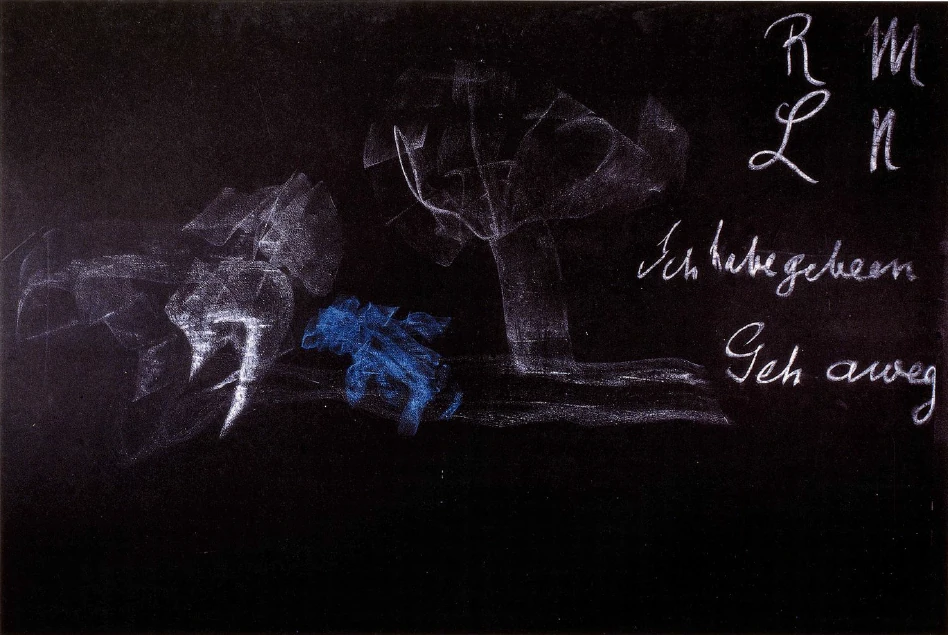
[ 18 ] Sieh, jetzt nimm dir den Pinsel, jetzt streichst du über das Papier. Wenn man in dieser Weise die ganze Handhabung begleitet mit dem, was die Aufmerksamkeit erregt, dann hat man viel erreicht. Man wird sehen, daß da bis ins zwölfte, dreizehnte, vierzehnte Jahr hinein noch viel im Biegsamwerden des Organismus geleistet werden kann. Wenn man die Dinge durchführt, da muß man die Möglichkeit haben, zu sagen: Sieh einmal, da ist der Baum, jetzt mach den Baum, der draußen steht (siehe Tafel 9). Man ist eben ganz dabei. Sieh, da kommt das Pferdchen gelaufen. -— Dabei weist man auf die Farben hin. Jetzt kommt dem Pferdchen der Mussolini entgegen, der kleine Hund. Der kleine Hund bellt das Pferdchen an, und das Pferdchen, das macht jetzt so mit den Beinen. — Man versucht, mit möglichster Lebendigkeit das Ganze zu verfolgen. Diese Lebendigkeit, die Geistiges trägt, die überträgt sich wirklich auf die Kinder. Man muß, wenn man in dieser Weise auf die Kinder wirken will, Enthusiasmus und Temperament sich anschaffen. Wenn man im Behandeln des Kindes stumpf ist, wenn man immer sitzen will, wenn man nicht aufstehen will, wenn man nicht geneigt ist, möglichst viel selber in Beweglichkeit überzugehen, dann kann man nicht erziehen. Es handelt sich nicht darum, daß man da besonders abgezirkelte Kunstgriffe anwenden kann, sondern daß man von Fall zu Fall dasjenige tut, um was es sich handelt.
[ 18 ] “Look! Take up your brush! And now draw it over the paper!” If we accompany the whole process with a constant rousing of interest and attention, we shall achieve something; we shall find that even right up to the twelfth, thirteenth and fourteenth years, a great deal can be done in this way in the direction of rendering the organism more supple and pliant. As we go on, we must find it possible to talk to the child somewhat as follows: “Look! Do you see the tree out there? I want you to draw that tree. Look at its branches! Can you show me now on your paper what the tree is like?” One has, you see, to be right there the whole time. “Look, there comes the pony! He's running!” At the same time you point out the colour of the tree, the pony, etc. “And now there's Mussolini, the little dog, going to meet him! The little dog is barking at the pony, and the pony is going like this with his legs!” You must try to live the whole story with intense vivacity. And this lively participation in everything that happens, which is really a manifestation of spirit, is infectious; the children catch it! You will find that if you want to help children in this way you need plenty of verve and enthusiasm. If you are dull or apathetic, if you are the sort of person who prefers to remain seated and dislikes having to stand up, the sort of person who has not the smallest inclination to be constantly rousing himself into activity and movement—then you will never succeed in anything you undertake in the way of education. For it is not a matter of being ready with all sorts of cleverly thought-out devices; it is a matter of doing, on each single occasion, just what that particular occasion demands.
[ 19 ] Dann sollte man bei diesen Kindern nicht versäumen, möglichst viel Konversation zu machen. Auf diese Konversation ist er nicht eingegangen. Jetzt geht er darauf ein. Sie können sehen, wie weit er darauf eingeht. Erinnerst du dich, wie du mir gesagt hast einmal, ein Pferdchen ist gekommen? Sag mir einmal, wie groß ist das Pferdchen, hast du das Pferdchen auch schon geführt? — Ja, im Sonnenhof läuft das Pferdchen immer herum. Es tut im Grase liegen. — Ist es im Stall, wenn es regnet, ist auch ein großes Pferdchen dabei? — Ja, es heißt Markis. - Wenn man sich mit ihm beschäftigt, macht er schon jetzt in der Konversation mit, während er früher einen angebrüllt hat. Da ist es außerordentlich interessant, daß er, als wir ihn bekommen haben, nur englisch sprach. Nun hat er sich verhältnismäßig schnell das Deutschsprechen angeeignet. Sie sehen an ihm, wie an einem schönen Beispiel, wie die Sprache sich hier hineingegossen hat in den Ätherleib und physischen Leib. Aber die Organisation der Sprache ist bei ihm fester als bei andern Kindern. Daher wird man bei ihm wunderbar studieren können, wie die Sprachorganisation drinnen sitzt. Er sagt nicht: Ich bin gewesen -, sondern: Ich habe gebeen. - Er findet sich mit der Konfiguration der englischen Sprache in die deutsche Sprache hinein. Ähnliche Dinge sagt er viel. Geh aweg. - Und Sie können sehen an der Art, wie sich die englische Sprache in ihm festgelegt hat, wie versteift der Körper ist. Wenn man nun darauf sieht, daß er viel redet, daß man viel Konversation mit ihm macht, sehen Sie, dann ist Stärkeres zu überwinden als bei andern Kindern. Denn dasjenige, was er schon gelernt hat, setzt sich furchtbar stark fest. Dadurch, daß man aber Leben in ihn hineinbringt, immer neues Leben hineinbringt, dadurch wird das Versteifte innerlich beweglich; wenn man es bei ihm zustande kriegt, daß er sagt: Ich bin gewesen —, so hat er viel überwunden. Dann hat er in sich Beweglichkeit hervorgerufen. Das soll man nicht durch Eintrichtern machen, sondern durch unermüdliches Fortsetzen der Konversation. Vor allen Dingen muß ein solches Kind darauf aufmerksam werden, daß man sich für es interessiert, daß man teilnimmt an dem, was es tut. Man fragt ein solches Kind um dasjenige, was es wissen muß, aus dem, was es vorgenommen hat. Man zeigt Teilnahme an dem, was es erlebt hat. Das ist von Wichtigkeit.
[ 19 ] Another thing you must do with children of this kind is to engage them in conversation—as much as ever you can. This boy did not at first take part in conversation. Now he does. Listen, and you will see how far he has advanced in this respect. (To the boy) Do you remember, you told me one day that a pony had arrived? Tell me now, how big is the pony? Have you ever taken him out?—“Yes, the pony runs about in the Sonnenhof3The home for backward children in Arlesheim, Switzerland. all the time; and it lies down on the grass.”—Is it in the stable when it rains? And is there a big pony too?—“Yes, the big pony is called Markis.”—You see, if you make conversation with him in this way, he joins in and talks with you; whereas before, he used to roar and bellow at you. Another extraordinarily interesting thing to observe is the following. When he came to us the boy spoke English only. He has learned comparatively quickly to speak German. You can indeed see in him a beautiful example of how language pours itself right down into the ether body and physical body. But the construction of his own language had become more firmly fixed in him than it is in other children; we have, in fact, in this boy a wonderful opportunity to study how the construction of a language sticks fast. He does not say “Ich bin gewesen” (I have been), but “Ich have gebeen”. He is finding his way into the German language quite well, but takes with him into the German the form and configuration of the English. He has many other similar expressions. Instead of “Geh weg!” (Go away!), he says “Geh aweg!” From this very firmness with which the English language has established itself in him, you can see how stiff and rigid his body is. If you take pains to get him to talk, doing all you can to draw him out, you will discover that he has a great deal more to overcome than most children. For what he has already learned sits terribly tight in him. By bringing life into him however, constantly new life, we shall gradually enable the stiffened body to grow inwardly supple and mobile. If you can, for instance, get him to say “Ich bin gewesen”, that will be a real achievement on his part; for it will mean he has roused himself to inner mobility. Beware however of trying to reach the result by force, by driving it home, as it were; no, it must be arrived at by conversation, by engaging the boy again and again, untiringly, in conversation. A child of this kind should be able to notice that we take an interest in him, and share in what he is doing. We must ask him questions, for instance, about things he has had to do with, things with which he must obviously be familiar, making plain to him in this way that we ourselves are concerned in what he has experienced. That is for him very important.
[ 20 ] Nun brauchen Sie sich nur zu vergegenwärtigen, wie Heileurythmie auf einen solchen Jungen wirken kann. Nehmen wir: er macht Rund L. R ist die Drehung, da dreht sich etwas, da ist schon die Beweglichkeit drinnen. Die meisten von Ihnen, die ja beim Eurythmiekurs sitzen, wissen nun aber auch, was das L bedeutet. Denken Sie nur, was die Zunge für Gestaltungskräfte in sich entwickelt beim L. Daher ist L der Buchstabe, der anzeigt das Anschmiegen, das sich Hineinversetzen in etwas. Er braucht das Geschmeidigmachen des Organismus, um sich hineinzuversetzen in etwas. Nun, wenn Sie bedenken, daß bei einem solchen Jungen der Einatmungsprozeß, wie ich es auseinandergesetzt habe, den Ausatmungsprozeß überwiegt, dann werden Sie sich sagen müssen: Wir müssen sehen, daß der Ausatmungsprozeß möglichst mit Teilnahme angeregt wird, das geschieht im M. Das ist der Ausatmungslaut. Wenn man ihn hervorbringt eurythmisch, so kommt in ihm eben das ganze Gliedmaßensystem zu Hilfe. Im N liegt das Zurückleiten ins Intellektuelle. So daß man machen wird RLMN. - Sie sehen aber auch da: überschaut man einen Tatbestand, dann ist die Sache so, daß man weiß, was man zu tun hat. Man muß wissen, welches die Natur des Lautes ist. Man muß in der Eurythmie darinnenstehen, man muß auf der andern Seite aber auch tatsächlich hineinschauen in die körperliche Organisation. Beides sind Dinge, die man lernen kann, die in der gegenwärtigen Pädagogik vollständig fehlen.
[ 20 ] It will not, I think, be difficult for you to realise how helpful Curative Eurythmy can be for a boy like this. Suppose he does the movements for R and L. R is a “turning”; something is turning round, is revolving. There at once you have mobility. Most of you are attending the lecture course on Eurythmy, and will know also what L signifies. Think what formative forces the tongue is developing when L is spoken! L is the sound that signifies yielding or compliance, adapting oneself to fall in with something. And that is what the boy's organism needs: to be made pliant and supple, so that it shall be ready to adapt itself. And then you will remember how I said that in him the inbreathing process outweighs the outbreathing process. We have therefore to see that the outbreathing is stimulated as much as ever possible, and that the boy himself participates in it. This happens in M. M is the sound that belongs particularly to the outbreathing. When it is done in Eurythmy, the whole limb system comes in to help. And N provides the tendency to lead back into what belongs to the intellect. We shall accordingly have for this boy R, M, L, N. As you see, once we have a comprehensive picture of the child's condition, we know what we have to do. For this we must, of course, know, first of all, the true nature of each particular sound, and be absolutely at home in Eurythmy; then, we must on the other hand have also the ability to look with clarity and discernment into the bodily organisation of the child. Both of these are things that can quite well be learned, but both are completely lacking in the pedagogy of the present day.
[ 21 ] Dann wird man bei einem solchen Jungen selbstverständlich in einem noch höheren Maße einhalten müssen, daß er auf dem Wege des Malens das Schreiben lernen kann. Daher handelt es sich darum, daß man den Unterricht beginnt mit dem Malen in der Weise, wie ich es angedeutet habe.
[ 21 ] In the case of such a child as we have now before us, I need hardly say it is even more urgent than with other children that he should be led to writing by way of painting. We shall therefore begin our teaching with lessons in painting, working in the way I indicated a little while ago.
[ 22 ] Aus alldem können Sie sehen, daß der astralische Leib und die IchOrganisation nicht hineindringen in diesen physischen Leib und Ätherleib. Man muß dem zu Hilfe kommen. Man muß daher auch therapeutisch eingreifen. Was muß man unterstützen? Das Nervensystem, insoferne es die Grundlage ist für den astralischen Leib und die IchOrganisation. Wie kann man das erreichen? Auf das Nervensystem müssen wir zunächst wirken. Wie tut man das? Wir haben da vorzugsweise drei Wege, auf Menschen therapeutisch zu wirken: per os, durch Injektion, durch Bäder oder Abwaschungen. Wenn Sie dem Menschen etwas innerlich eingeben, auf was wirkt es? Auf das Stoffwechselsystem im Grunde genommen. Sie rechnen darauf, daß einfach auf das Stoffwechselsystem gewirkt wird, wenn Sie eingeben. Wollen Sie auf das rhythmische System wirken, dann müssen Sie injizieren, wollen Sie auf das Nervensystem wirken, dann müssen Sie von außen herankommen, dann müssen Sie Bäder geben oder Abwaschungen. Nun wirkt auf die Beweglichkeit des astralischen Leibes, insoferne der astralische Leib untertauchen will, und auch auf die Form des astralischen Leibes stark das Arsen. Leute, die Arsenkuren machen, denen kann man ansehen, wie ihr astralischer Leib ihnen in den physischen Leib hineinrutscht. So daß bei einem solchen Kinde, wo es sich darum handelt, einen Einklang hervorzurufen zwischen astralischem Leib und Ätherleib und physischem Leib, Arsenbäder dasjenige sind, um was es sich handeln muß. Ein gewisses Quantum Levicowasser von bestimmtem Prozentgehalt und darinnen baden lassen, dadurch wird auf das Nervensystem gewirkt und der astralische Leib stark gemacht. Nun muß man hier, da es sich um ein zu schwaches Kräftewirken des Kopfsystems auf den übrigen Körper handelt, muß man auch dem zu Hilfe kommen. Man kann dem Strömen, das vom Kopfe nach der unteren Organisation geht, das insbesondere in den ersten Lebensjahren stark ist, aber auch noch anhält zwischen Zahnwechsel und Geschlechtsreife, ja sogar am Ende der Periode stärker ist als im siebenten, neunten oder elften Jahre, kann man diesem Strömen bei einem solchen Kinde zu Hilfekommen, damit Korrespondenz zwischen Stoffwechselsystem und Nervensystem ist, dadurch, daß man das Sekret der Hypophyse nimmt. Man nimmt das Sekret der Hypophyse — wir erzeugen es -; es hat die Eigentümlichkeit, daß es diesem Kräfteströmen entgegenkommt und vom Kopfe aus harmonisierend auf das Gliedmaßensystem wirkt. So daß sich zusammensetzen wird die Behandlung aus der Hypophysis cerebri, Arsenbädern und Heileurythmie in der Weise, wie ich es angegeben habe. Wenn diese Dinge zusammenwirken, wird man mit einem solchen Jungen weiterkommen.
[ 22 ] All that I have described to you will have helped to make it clear that in this boy the astral body and the I organisation do not penetrate the physical body and ether body. We must come to their help. And for this purpose we shall have to intervene also therapeutically. What is it that needs our support, our backing, as it were? The nervous system, in so far as it is the foundation for the astral body and I organisation. How can we strengthen the nervous system? What can we do? There are, as you know, three main ways in which we can work upon the human being therapeutically: by medicines taken internally, by injections, and by means of baths or lotions. When you give a person medicine to take internally, upon what does the medicine work? Fundamentally upon the metabolic system. You reckon, do you not, on the medicine taking effect in a simple, straightforward manner on the metabolic system. If you want to help the rhythmic system, you must give injections. But if you want to work upon the nervous system, you will have to give baths or lotions. Now, arsenic has a powerful effect on the mobility of the astral body, the mobility it requires for diving down into the physical and ether bodies—and, in fact, also on the form of the astral body. It can be observed in people who have undergone arsenic cures that their astral body just slips into the physical body, glides smoothly into it. When therefore you have a child in whom you want to produce a right harmony between astral and ether and physical bodies, arsenic baths will be your obvious remedy. Prepare a certain quantity of Levico4water [A Spa water containing iron arsenic. of a particular percentage and let the child have a bath in it. This will work upon the nervous system and strengthen the astral body. And now there is somewhere else where our help is needed. The forces of the head system are too feeble in their influence upon the rest of the body. We must come to the help of the stream of forces which goes from the head to the lower organism. This stream of forces is particularly powerful in the earliest years of life, but it is still maintained between change of teeth and puberty, and even increases in strength during that period, being at the end of it more powerful than in the seventh, ninth or eleventh year. We can strengthen this stream of forces and so help to induce a right correspondence between metabolic system and nervous system, by making use of a secretion of hypophysis.5A Weleda preparation is certainly meant. For this gives, as it were, a helping hand to the stream of forces, and exercises from the direction of the head a harmonising influence upon the metabolic system. We shall therefore have, side by side, treatment with hypophysis cerebri, arsenic baths and Curative Eurythmy.
[ 23 ] Aber sehen Sie, es ist wirklich gerade bei so etwas zu betonen, wie man Sinn haben muß für das Dabeisein bei den Dingen. Man muß gerade beim Erziehen und Unterrichten solcher Kinder durchaus dabei sein. Und aus der anthroposophischen Bewegung werden sich die Möglichkeiten entwickeln, daß man viel dabei ist bei diesen Dingen, wenn überhaupt die Gesinnung da ist, bei allem möglichst viel dabei zu sein. Dem steht doch manches entgegen. Man kriegt manchmal ein bißchen Schmerzen, wenn man in anthroposophische Ansiedlungen oder Zusammenrottungen kommt. Da ist manchmal eine solche bleierne Schwere. Man kriegt die Leute nicht zum Beweglichwerden. Bleierne Schwere ist da; wenn man eine Diskussion beginnt, macht keiner den Mund auf, weil auch die Zunge bleiern schwer ist. Die Leute machen ein «Gesicht bis ans Bauch». Sie sind so wenig geneigt, zum Heiterwerden, zum Lachen zu kommen!
[ 23 ] With these three working together, we shall make progress with a boy of this kind. And now finally I want to ask your special attention again to what I said of the need to be always alive and alert, the need to be right there in whatever we are doing. Particularly in the education and teaching of backward children, the importance of the need cannot be over-emphasised. If once we have the inclination and goodwill to try to attain this, then we shall find that our study and work in the Anthroposophical Movement will make us more ready to be wide-awake and alert in all that we undertake. There are, it is true, tendencies at work among us in an exactly opposite direction. One suffers at times a kind of pain when one comes into an assemblage of Anthroposophists. Such a heaviness in the air! No inducing the members to get a move on! If one begins a discussion, no one else so much as opens his mouth; why, their very tongues are heavy—heavy as lead! And they pull such long faces! Out of the question to expect them to look happy or to laugh!
[ 24 ] Vor allen Dingen, was gehört zum Erziehen von solchen Kindern dazu? Nicht die bleierne Schwere, sondern Humor, wirklicher Humor, Lebenshumor. Man wird trotz allen möglichen gescheiten Kunstgriffen solche Kinder nicht erziehen können, wenn man nicht den nötigen Lebenshumor hat. Also es wird schon Platz greifen müssen in der anthroposophischen Bewegung, daß man Sinn hat für Beweglichkeit. Ich will nicht auf zu viel hinweisen. Aber es ist schon wirklich wahr, am wenigsten wird man verstanden mit dem, was ich, wenn ich gefragt werde, wenn es sich um die eine oder andere Kalamität handelt, was sollen wir tun, wenn ich da antworte: Enthusiasmus haben. Enthusiasmus haben, das ist dasjenige,auf was es ankommt. — Und auf Enthusiasmus kommt es gerade bei Kindern an, welche abnorm sind.
[ 24 ] And yet, do you know what is the first and most essential qualification for a teacher of these children? Humour! Yes, real humour, the humour of life. You may have mastered every possible clever method and device, but you will not be able to educate these children unless you have the necessary humour. There will have to be a feeling and understanding in the anthroposophical movement for what “movement”, mobility, really is! I do not want to enlarge on this subject, but I can assure you that I never meet with less understanding than when, in answer to a question as to what is to be done in a certain situation, I reply: “Have enthusiasm!” Enthusiasm—that is what counts; and particularly in dealing with children who are abnormal.
[ 25 ] Das ist dasjenige, was ich Ihnen noch heute habe sagen wollen.
[ 25 ] This is what I wanted to say to you today.