

The Essence of Anthroposophy
GA 74
23 May 1920, Dornach
Translate the original German text into any language:
Versions Available:
The Philosophy of Thomas Aquinas, tr. SOL
2. Das Wesen des Thomismus
2. The Essence of Thomism
[ 1 ] Was ich mich gestern besonders hervorzuheben bemühte, das war, daß in jener geistigen Entwickelung des Abendlandes, die dann ihren Ausdruck in der Scholastik gefunden hat, nicht bloß dasjenige spielt, was man in abstrakten Begriffen erfassen kann und was sich etwa in abstrakten Begriffen, in einer Entwickelung abstrakter Begriffe vollzogen hat, sondern daß dahinter eine reale Entwickelung der Impulse der abendländischen Menschheit steht. Ich meine das so: Man kann zunächst, wie man ja das zumeist in der Philosophiegeschichte macht, den Blick auf dasjenige richten, was man bei den einzelnen Philosophenpersönlichkeiten findet. Man kann verfolgen, wie gewissermaßen die Ideen, die man bei einer Persönlichkeit des 6., 7., 8., 9. Jahrhunderts findet, dann fortgesponnen werden von Persönlichkeiten des io0., I1., 12., 13. Jahrhunderts, und man kann durch eine solche Betrachtung den Eindruck gewinnen, ein Denker habe von dem anderen gewisse Ideen übernommen und es liege eine gewisse Evolution von Ideen vor.
[ 1 ] What I particularly sought to emphasize yesterday was that in that intellectual development of the West, which then found its expression in Scholasticism, it is not merely that which can be grasped in abstract concepts—and which, so to speak, took place in abstract concepts or in the development of abstract concepts—that plays a role, but rather that behind it lies a real development of the impulses of Western humanity. What I mean is this: One can, as is usually done in the history of philosophy, first focus on what is found in the individual philosophers. One can trace how, so to speak, the ideas found in a figure from the 6th, 7th, 8th, 9th centuries are then further developed by thinkers of the 10th, 11th, 12th, and 13th centuries; and through such an examination, one might gain the impression that one thinker adopted certain ideas from another and that there is a certain evolution of ideas.
[ 2 ] Das ist eine geschichtliche Betrachtung des geistigen Lebens, die allmählich verlassen werden müßte. Denn dasjenige, was sich so abspielt, was sich offenbart aus den einzelnen menschlichen Seelen heraus, das sind doch eigentlich nur Symptome für ein tieferes Geschehen, das gewissermaßen hinter der Szene der äußeren Vorgänge liegt. Und dieses Geschehen, das sich abspielte von etwa ein paar Jahrhunderten an schon bevor das Christentum begründet worden ist, dann in den ersten nachchristlichen Jahrhunderten bis in die Zeit der Scholastik hinein, ist ein ganz organischer Vorgang im Werden der abendländischen Menschheit. Ohne den Blick hinzurichten auf diesen organischen Vorgang, ist es ebenso unmöglich, darüber Aufschluß zu bekommen, wie über dasjenige, was Entwickelung, sagen wir vom zwölften bis zum zwanzigsten menschlichen Lebensjahre ist, wenn man nicht den wichtigen Einschlag in diesem Lebensalter ins Auge fassen würde, der mit der Geschlechtsreife und all den Kräften, die sich da aus den Untergründen der menschlichen Wesenheit heraufarbeiten, verbunden ist. So wühlt sich herauf aus den Tiefen dieses ganzen großen Organismus europäischer Menschheit etwas, was man eben dadurch charakterisieren kann — man könnte auch andere Charakteristiken erfinden —, daß man sagt: Sehr ehrlich und aufrichtig haben jene alten Dichter gesprochen, die etwa wie Homer begannen ihre epischen Gedichte: Singe mir, Göttin, den Zorn des Peleiden Achilleus —, oder: Singe mir, Muse, die Taten des vielgewanderten Mannes. — Diese Leute haben nicht eine Phrase sagen wollen, diese Leute haben empfunden als inneren Tatbestand ihres Bewußtseins, daß nicht ein einzelnes individuelles Ich sich da aussprechen will, sondern daß sich aussprechen will, was in der Tat empfunden wurde als ein höheres Geistig-Seelisches, das hereinspielt in den gewöhnlichen Bewußtseinszustand des Menschen.
[ 2 ] This is a historical perspective on spiritual life that should gradually be abandoned. For what unfolds in this way—what is revealed from within individual human souls—is, after all, merely a symptom of a deeper process that lies, so to speak, behind the scenes of external events. And this process, which began some two centuries before Christianity was founded, continued through the first centuries of the Christian era, and extended into the period of Scholasticism, is a wholly organic process in the development of Western civilization. Without directing our gaze toward this organic process, it is just as impossible to gain insight into it as it is into what we call development, let us say from the twelfth to the twentieth year of human life, if one were not to take into account the significant turning point at this age, which is connected with sexual maturity and all the forces that well up from the depths of the human being. Thus, something wells up from the depths of this entire great organism of European humanity that can be characterized precisely by this—one could also devise other characteristics—by saying: Those ancient poets spoke very honestly and sincerely when, like Homer, they began their epic poems: “Sing to me, O Goddess, of the wrath of Achilles, son of Peleus”—or: “Sing to me, O Muse, of the deeds of the man who wandered far and wide.” — These people did not intend to utter a mere phrase; they felt, as an inner reality of their consciousness, that it was not a single individual “I” that wished to express itself, but rather that which was in fact perceived as a higher spiritual-soul element that intervenes in the ordinary state of human consciousness.
[ 3 ] Und wiederum — ich sagte es schon gestern — war Klopstock aufrichtig und durchschaute in einer gewissen Beziehung diesen Tatbestand, wenn auch vielleicht nur instinktiv, als er seine «Messias»-Dichtung begann; jetzt nicht: Singe, o Muse —, oder: Singe, o Göttin, von der Erlösung der Menschen —, sondern als er sagte: Singe, unsterbliche Seele —, also: Singe, individuelles Wesen, das in dem einzelnen Menschen als einer Individualität wohnt. — Als Klopstock seinen «Messias» schrieb, war allerdings dieses individuelle Fühlen in der einzelnen Seele schon weit vorgeschritten. Aber dieser innere Trieb, die Individualität herauszukehren, individuell das Leben zu gestalten, bildete sich im eminentesten Sinne in dem Zeitalter aus, das etwa von der Begründung des Christentums bis zu der Hochscholastik verläuft. In dem, was die Philosophen gedacht haben, kann man nur das Oberste sehen, dasjenige, was an die alleräußerste Oberfläche hinaufgeht von dem, was in den Tiefen der ganzen Menschheit sich vollzieht: das Individuellwerden des Bewußtseins europäischer Menschen. Und ein wesentliches Moment in der Verbreitung des Christentums durch diese Jahrhunderte ist die Tatsache, daß diejenigen, welche die Träger dieser Verbreitung waren, hineinsprechen mußten in eine Menschheit, die aus den Tiefen ihres Wesens heraus den Menschen immer mehr und mehr zu einem innerlichen Individuell-Erfühlen hindrängte.
[ 3 ] And once again—as I said yesterday—Klopstock was sincere and, in a certain sense, understood this reality, even if perhaps only instinctively, when he began his “Messiah” poem; not with the words: “Sing, O Muse—” or “Sing, O Goddess, of the redemption of mankind—,” but when he said: “Sing, immortal soul—,” that is: “Sing, individual being, which dwells within each human being as an individuality.” — When Klopstock wrote his *Messiah*, this individual feeling within the individual soul had, admittedly, already progressed far. But this inner drive to express individuality, to shape life individually, developed in the most eminent sense during the era spanning roughly from the founding of Christianity to the High Scholastic period. In what the philosophers have thought, one can see only the highest aspect—that which rises to the very outermost surface of what is taking place in the depths of all humanity: the individualization of the consciousness of European people. And a crucial factor in the spread of Christianity throughout these centuries is the fact that those who were the agents of this spread had to speak to a humanity that, from the depths of its being, was driving people more and more toward an inner, individual sense of self.
[ 4 ] Nur unter diesem Gesichtspunkte lassen sich die einzelnen Ereignisse verstehen, die sich in diesem Zeitalter vollziehen. Und auch nur mit dem Blick auf diese Tatsachen läßt sich verstehen, was an Seelenkämpfen in solchen Persönlichkeiten stattgefunden hat, die dann eben in den tiefsten Tiefen der Menschenseele sich auseinandersetzen wollten mit dem Christentum auf der einen Seite und mit der Philosophie auf der andern Seite, wie Albertus Magnus und Thomas von Aquino. Heute liegt den gebräuchlichen Philosophiegeschichtsschreibern viel zu wenig von den wahren Gestalten der Seelenkämpfe vor, die ihren letzten Abschluß gewissermaßen in Albert und Thomas gefunden haben, als daß dieses Zeitalter in den gebräuchlichen Philosophiegeschichten auch nur annähernd deutlich genug geschildert würde. Da spielt vieles herein in das Seelenleben des Albert und des Thomas.
[ 4 ] Only from this perspective can the individual events unfolding in this age be understood. And only by looking at these facts can we understand the inner struggles that took place within such personalities—who sought, in the very depths of the human soul, to grapple with Christianity on the one hand and philosophy on the other—such as Albertus Magnus and Thomas Aquinas. Today, the standard writers of the history of philosophy have far too little information about the true nature of these inner struggles—which, in a sense, found their ultimate resolution in Albert and Thomas—for this era to be described even approximately clearly enough in the standard histories of philosophy. Many factors play a role in the inner lives of Albert and Thomas.
[ 5 ] Äußerlich sieht es so aus, als ob Albertus Magnus, der vom 12. ins 13. Jahrhundert hinüber lebte, und Thomas, der im 13. Jahrhundert lebte, nur gewissermaßen dialektisch hätten vereinigen wollen auf der einen Seite Augustinismus, von dem wir gestern gesprochen haben, und Aristotelismus. Der eine war der 'Träger der kirchlichen Ideen, der andere der Träger der ausgebildeten philosophischen Ideen. Den Einklang zwischen beiden zu suchen zieht sich allerdings wie ein Duktus hindurch durch all dasjenige, was die beiden geschrieben haben. Aber in alldem, was da in Gedanken fixiert wird wie in einer Blüte des abendländischen Fühlens und Wollens, lebt doch unendlich viel darinnen von dem, was dann nicht auf jenes Zeitalter übergegangen ist, das sich etwa von der Mitte des 15. Jahrhunderts bis in unsere Tage erstreckt, und aus dem wir unsere gebräuchlichen Ideen für alle Wissenschaften und auch für das gesamte öffentliche Leben entnehmen.
[ 5 ] On the surface, it appears as though Albertus Magnus, who lived at the turn of the 12th and 13th centuries, and Thomas, who lived in the 13th century, sought only—in a dialectical sense—to reconcile, on the one hand, Augustinianism, which we discussed yesterday, and, on the other, Aristotelianism. One was the “bearer of ecclesiastical ideas,” the other the bearer of sophisticated philosophical ideas. The search for harmony between the two, however, runs like a thread through everything they wrote. But in all that is captured in thought—as in a blossoming of Western feeling and will—there lives within it an infinite amount of what did not carry over into that era, which extends roughly from the middle of the 15th century to the present day, and from which we derive our common ideas for all the sciences and also for public life as a whole.
[ 6 ] Dem heutigen Menschen erscheint es eigentlich nur wie etwas Paradoxes, wenn er hört, was wir gestern hören mußten von der Lebensanschauung des Augustinus: daß Augustinus tatsächlich der Anschauung war, daß ein Teil der Menschen von vornherein dazu bestimmt sei, die göttliche Gnade ohne Verdienst zu empfangen — denn eigentlich müßten sie nach der Erbsünde alle zugrunde gehen —, die göttliche Gnade zu empfangen und gerettet zu werden, seelisch-geistig gerettet zu werden; ein anderer Teil der Menschheit müsse seelisch-geistig zugrunde gehen, gleichgültig was er auch unternimmt. — Für den heutigen Menschen erscheint das paradox, vielleicht sogar sinnlos. Wer sich hineinfühlen kann in das Zeitalter, in dem Augustinus gelebt hat, in dem Augustinus all diejenigen Ideen und Empfindungen empfangen hat, die ich gestern charakterisierte, der wird anders fühlen. Der wird fühlen, daß man — noch dazu als ein Mensch wie Augustinus, der mittendrinnen stand in dem Kampfe zwischen dem Gedanken, der die ganze Menschheit als eine Einheit umfaßte, und jenem Gedanken, der die Individualität des Menschen herauskristallisieren wollte aus dieser einheitlichen Menschheit —, daß man es begreiflich finden kann, daß Augustinus auf diese Weise noch festhalten wollte an den Gedanken, die noch nicht als die altertümlichen Gedanken Rücksicht nahmen auf den einzelnen Menschen, die noch unter dem Einflusse solcher Ideen wie die des Plotinismus, den ich gestern charakterisiert habe, eben einzig und allein das Allgemeinmenschliche im Sinne hatten. Aber auf der anderen Seite wühlte auch in der Seele des Augustinus der Drang nach Individualität. Daher bekommen dieseIdeen eine so prägnante, seelen- und herzensmäßig prägnante Fassung, daher sind sie so erfüllt von menschlichem Erleben, und dadurch wird gerade Augustinus jene unendlich sympathische Gestalt, welche so tiefen Eindruck macht, wenn wir den Blick zurückwenden auf die Jahrhunderte, die der Scholastik vorangegangen sind.
[ 6 ] To people today, it actually seems like nothing more than a paradox when they hear what we had to hear yesterday about Augustine’s view of life: that Augustine actually held the view that a portion of humanity was predestined from the outset to receive divine grace without merit—for, in fact, they would all be doomed to perish as a result of original sin—to receive divine grace and be saved, to be saved spiritually and mentally; while another part of humanity must perish spiritually and mentally, no matter what it does. — To people today, this seems paradoxical, perhaps even senseless. Anyone who can put themselves in the mindset of the era in which Augustine lived—the era in which Augustine received all those ideas and feelings that I described yesterday—will feel differently. They will feel that one—especially a person like Augustine, who stood right in the midst of the struggle between the idea that encompassed all of humanity as a single entity and the idea that sought to crystallize the individuality of the human being out of this unified humanity —that one can find it understandable that Augustine, in this way, still wanted to hold fast to the ideas that, as archaic concepts, did not yet take the individual human being into account, but were still, under the influence of ideas such as those of Plotinus—which I described yesterday—concerned solely and exclusively with the universal human condition. But on the other hand, the urge for individuality was also stirring in Augustine’s soul. That is why these ideas take on such a vivid form—one that resonates deeply with the soul and the heart—and why they are so imbued with human experience; and it is precisely this that makes Augustine that infinitely sympathetic figure who makes such a deep impression when we look back on the centuries that preceded Scholasticism.
[ 7 ] Über Augustinus hinaus hat sich dann für viele dasjenige, was den einzelnen Menschen des Abendlandes als Christ zusammenhielt mit seiner Kirche — aber nur in den Ideen des Augustinus —, erhalten. Nur waren diese Ideen, so wie ich sie Ihnen gestern gezeigt habe, eben nicht annehmbar für diese abendländische Menschheit, die den Gedanken nicht ertrug, die Gesamtmenschheit, das Einheitliche, als ein Ganzes zu nehmen und sich darinnen nur etwa zu fühlen wie ein Glied, noch dazu wie ein Glied, das zu dem Teil der Menschheit gehört, der dem Untergang, der Vernichtung verfallen ist. Und so sah sich die Kirche gedrängt, zu einem Ausweg zu greifen.
[ 7 ] Beyond Augustine, what held individual Westerners together as Christians with their Church—but only in Augustine’s ideas—was preserved for many. However, as I showed you yesterday, these ideas were simply unacceptable to Western humanity, which could not bear the thought of regarding all of humanity—that unified whole—as a single entity and seeing itself within it merely as a member, and moreover as a member belonging to that part of humanity doomed to ruin and destruction. And so the Church found itself compelled to seek a way out.
[ 8 ] Augustinus führte noch seinen gewaltigen Kampf gegen den Pelagius, jenen Mann, der schon ganz erfüllt war von dem Individualimpuls des Abendlandes. Es war dies jene Persönlichkeit, bei der wir als einem Zeitgenossen des Augustinus sehen können, wie voraus erscheint das Sich-als-Individualität-Fühlen, wie es sonst erst die Menschen der späteren Jahrhunderte gehabt haben. Daher kann er nicht anders als sagen: Es kann keine Rede davon sein, daß der Mensch ganz unbeteiligt bleiben müsse an seinem Schicksal in der sinnlichen Welt; es muß aus der Menschenindividualität selbst herausgeboren werden können die Kraft, durch welche die Seele den Anschluß findet an das, was sie aus der Umstrickung der Sinnlichkeit erhebt in die reinen geistigen Regionen, wo sie ihre Erlösung und Rückkehr zur Freiheit und Unsterblichkeit finden kann. — Das war dasjenige, was Augustinus’ Gegner geltend machten: daß der einzelne Mensch die Kraft finden müsse, die Erbsünde zu überwinden.
[ 8 ] Augustine was still waging his formidable struggle against Pelagius, that man who was already entirely imbued with the Western impulse toward individuality. This was the figure in whom, as a contemporary of Augustine, we can see how far ahead of his time the sense of self as an individual was—a sense that people of later centuries would otherwise have been the first to experience. Therefore, he cannot help but say: There can be no question that human beings must remain entirely uninvolved in their fate in the sensory world; the power through which the soul finds a connection to that which lifts it from the snares of sensuality into the pure spiritual realms—where it can find its redemption and return to freedom and immortality—must be able to arise from human individuality itself. — This was precisely what Augustine’s opponents argued: that the individual must find the strength to overcome original sin.
[ 9 ] Die Kirche stand mittendrinnen zwischen den beiden Gegnern, und sie suchte nach einem Ausweg. Dieser Ausweg wurde vielfach besprochen. Es wurde gewissermaßen hin und her geredet, und man ergriff dann die Mitte, und ich kann es jedem einzelnen von Ihnen überlassen, ob er diese Mitte in diesem Falle als die goldene Mitte oder als die kupferne Mitte ansieht. Man ergriff die Mitte: den Semipelagianismus. Man fand eine Formel, die eigentlich nicht recht Schwarz und nicht recht Weiß sagte, die verkündete: Es ist zwar so, wie Augustinus gesagt hat, aber es ist doch nicht ganz so, wie Augustinus gesagt hat; es ist auch nicht ganz so, wie Pelagius gesagt hat, aber es ist in einem gewissen Sinne auch so, wie er gesagt hat. Und so könne man sagen, daß zwar nicht durch einen weisheitsvollen ewigen Ratschluß der Gottheit die einen zur Sünde, die anderen zur Gnade verurteilt sind, daß die Menschen Anteil haben an ihrem Sündhaftwerden oder an ihrem Erfülltsein mit Gnade; aber die Sache sei denn doch so, daß zwar nicht eine göttliche Vorherbestimmung vorliege, aber ein göttliches Vorherwissen. Die Gottheit weiß vorher, ob der eine ein Sünder sein werde oder der andere ein Gnadenerfüllter sein werde.
[ 9 ] The Church stood right in the middle between the two opposing sides, and it sought a way out. This way out was discussed at length. There was, so to speak, a back-and-forth debate, and then a middle ground was adopted—and I’ll leave it up to each of you to decide whether, in this case, you view this middle ground as the golden mean or the copper mean. A middle ground was adopted: Semipelagianism. A formula was found that was neither quite black nor quite white, which proclaimed: It is true that things are as Augustine said, but they are not quite exactly as Augustine said; nor are they quite exactly as Pelagius said, but in a certain sense they are also as he said. And so one could say that, although it is not through a wise, eternal decree of the Godhead that some are condemned to sin and others to grace—and although human beings have a part in their own descent into sin or in their being filled with grace—the matter is nevertheless such that, while there is no divine predestination, there is divine foreknowledge. The Deity knows in advance whether one person will be a sinner or another will be filled with grace.
[ 10 ] Dabei wurde nicht weiter darauf Rücksicht genommen, als dieses Dogma verbreitet wurde, daß es sich im Grunde gar nicht um ein Vorherwissen handelte, sondern daß es sich darum handelte, klipp und klar Stellung zu nehmen zu dem, ob nun der einzelne individuelle Mensch sich verbinden kann mit den Kräften in seinem individuellen Seelenleben, die ihn herausheben aus seiner Trennung von dem göttlich-geistigen Wesen der Welt und ihn wieder zurückführen können zu dem göttlich-geistigen Wesen der Welt. So bleibt für das Dogmenwesen im Grunde genommen die Frage ungelöst, und ich möchte sagen: Auf der einen Seite genötigt, den Blick nach dem Dogmengehalt der Kirche zu richten, auf der anderen Seite aber aus innerster Empfindung heraus mit tiefster Verehrung für die Größe des Augustinus erfüllt, standen in der Hochscholastik Albertus und Thomas dem gegenüber, was sich als abendländische Geistesentwickelung innerhalb der christlichen Strömung ausbildete. Und hinein spielte doch noch manches aus früheren Zeiten. Es lebte fort so, daß man es sieht, wenn man genau hinblickt auf die Seele des Albertus, des Thomas, daß man es sieht auf dem Grunde ihrer Seele tätig sein, aber daß man auch einsieht, daß es ihnen selber nicht ganz vollbewußt ist, daß es in ihre Gedanken hineinspielt, daß sie es aber nicht zu einer präzisen Fassung bringen können.
[ 10 ] When this dogma was propagated, no further consideration was given to the fact that it was not really a matter of foreknowledge at all, but rather a matter of take a clear and unambiguous stance on whether the individual human being can connect with the forces within his or her own soul life that can lift him or her out of separation from the divine-spiritual essence of the world and lead him or her back to that divine-spiritual essence. Thus, for the dogmatic system, the question remains fundamentally unresolved, and I would like to say: On the one hand compelled to turn their gaze toward the dogmatic teachings of the Church, yet on the other hand, out of their innermost feelings and filled with the deepest reverence for the greatness of Augustine, Albertus and Thomas, in the era of High Scholasticism, stood in opposition to what was developing as Western intellectual thought within the Christian tradition. And yet, many influences from earlier times still played a role. It lived on in such a way that one can see it—if one looks closely at the soul of Albertus and Thomas—one can see it at work in the depths of their souls, yet one also realizes that they themselves are not fully aware of it, that it influences their thoughts, but that they cannot articulate it precisely.
[ 11 ] Das muß man bedenken, mehr bedenken für diese Zeit der Hochscholastik des Albert und des Thomas, als man eine ähnliche Erscheinung zum Beispiel in unserer Zeit bedenken müßte. Das Warum habe ich mir schon erlaubt hervorzuheben in meinen «Welt- und Lebensanschauungen im neunzehnten Jahrhundert», die dann erweitert wurden zu meinem Buche «Die Rätsel der Philosophie», wo dann die Aufgabe anders gestellt war und daher die betreffende Stelle nicht wiederkehren konnte, wie ich mir noch erlauben will zu bemerken. Das gilt durchaus — und das wird uns morgen noch eingehend zu beschäftigen haben, jetzt will ich es nur erwähnen —, daß wir aus diesem Emporringen der Individualität bei den Denkern, die nun philosophisch ausbildeten dieses Emporringen der Individualität, dasjenige erleben, was höchste Blüte logischer Urteilskraft ist, man könnte sagen höchste Blüte logischer Technik.
[ 11 ] One must take this into account—and give it even greater consideration in the context of the high scholasticism of Albert and Thomas than one would need to for a similar phenomenon in our own time, for example. I have already taken the liberty of highlighting the “why” in my *Worldviews and Philosophies of Life in the Nineteenth Century*, which was later expanded into my book *The Riddles of Philosophy*; there, the task was framed differently, and therefore the passage in question could not be included again, as I would like to note. It is certainly true—and this will occupy us in detail tomorrow; for now I merely wish to mention it—that from this surge of individuality among thinkers, who now developed this surge of individuality philosophically, we experience what is the highest flowering of logical judgment; one might say, the highest flowering of logical technique.
[ 12 ] Man kann schimpfen wie man will von diesem oder jenem Parteistandpunkte über die Scholastik — all dieses Schimpfen ist in der Regel wenig von einer wirklichen Sachkenntnis erfüllt. Denn wer Sinn hat für die Art und Weise, wie sich, ganz abgesehen jetzt von.dem sachlichen Inhalt, der Scharfsinn der Gedanken abspielt bei irgend etwas, was wissenschaftlich oder sonst erklärt wird, wer Sinn dafür hat zu erkennen, wie Zusammenhänge zusammengedacht werden, die zusammengedacht werden müssen, wenn das Leben Sinn bekommen soll —, wer für alles das und für manches andere Sinn hat, für den geht es schon auf, daß so präzis, so innerlich logisch gewissenhaft niemals gedacht worden ist vorher, und nachher niemals gedacht worden ist als in der Zeit der Hochscholastik. Gerade das ist das Wesentliche, daß da das reine Denken mit mathematischer Sicherheit von Idee zu Idee, von Urteil zu Urteil, von Schlußfolgerung zu Schlußfolgerung so verläuft, daß über den kleinsten Schritt und über das kleinste Schrittchen diese Denker sich immer Rechenschaft geben.
[ 12 ] One can rail all one wants against this or that party position on scholasticism—but all such railing is, as a rule, devoid of any real expertise. For whoever has a sense of the way—leaving aside for the moment the factual content—in which the acuity of thought unfolds in anything that is explained scientifically or otherwise; whoever has a sense of how connections are conceived that must be conceived if life is to make sense— who has a sense for all of this and for many other things—it becomes clear to them that never before, and never since, has thought been carried out with such precision, such inner logical rigor, as during the era of High Scholasticism. This, precisely, is the essential point: that pure thought proceeds with mathematical certainty from idea to idea, from judgment to judgment, from conclusion to conclusion, in such a way that these thinkers always account for even the smallest step and the tiniest little step.
[ 13 ] Man muß nur bedenken, in welchem Milieu sich dieses Denken abspielte. Das war nicht ein Denken, das sich etwa so abspielte wie jetzt sich das Denken abspielt in der geräuschvollen Welt. Das war ein Denken, das sich abspielte in der stillen Klosterzelle oder sonst fern von dem Weltengetriebe. Das war ein Denken, das ganz aufging in dem Gedankenleben, und das war ein Denken, das auch noch durch andere Umstände die reine Denktechnik ausbilden konnte. Es ist heute tatsächlich schwer, diese reine Denktätigkeit auszubilden, denn kaum wird es irgendwie versucht, solche Denktätigkeit vor die Öffentlichkeit hinzustellen, die nichts anderes möchte als, durch ihren Inhalt bedingt, Gedanken an Gedanken reihen, dann kommen die unsachlichen Leute, die unlogischen Leute, greifen alles mögliche auf, werfen ihre brutalen Parteimeinungen entgegen. Und da man schon einmal ein Mensch unter Menschen ist, muß man sich auseinandersetzen mit diesen Dingen, die eigentlich nichts anderes sind als hineingeworfene Brutalitäten, die gar nichts zu tun haben oftmals mit demjenigen, um was es sich eigentlich handelt. Da ist sehr bald jene innere Ruhe verloren, der sich Denker des 12. und 13. Jahrhunderts hingeben konnten, die nicht auf den Widerspruch der Unvorbereiteten in ihrem sozialen Leben so außerordentlich viel zu geben brauchten.
[ 13 ] One need only consider the context in which this thinking took place. It was not a form of thinking that unfolded in the same way as thinking does today in our noisy world. It was a way of thinking that took place in the quiet monastery cell or elsewhere far removed from the hustle and bustle of the world. It was a way of thinking that was wholly absorbed in the life of thought, and it was a way of thinking that, thanks to other circumstances, was also able to develop a pure technique of thinking. It is indeed difficult today to cultivate this pure act of thinking, for as soon as one attempts in any way to present such thinking to the public—which, by its very nature, seeks nothing more than to string thoughts together based on their content—the unobjective people, the illogical people, pounce on every possible point and hurl their brutal partisan opinions in response. And since one is, after all, a human being among other human beings, one must grapple with these things, which are really nothing more than brutal outbursts thrown into the mix—outbursts that often have absolutely nothing to do with the matter at hand. Very soon, one loses that inner peace to which the thinkers of the 12th and 13th centuries were able to devote themselves—thinkers who did not have to pay so much attention to the objections of the unprepared in their social lives.
[ 14 ] Dieses und noch manches andere hat gerade in diesem Zeitalter jene auf der einen Seite wunderbare plastische, aber auch in feinen Konturen verlaufende Denktätigkeit hervorgerufen, welche die Scholastik kennzeichnet und welche namentlich bewußt angestrebt worden ist von Leuten wie Albertus und Thomas.
[ 14 ] This and many other factors gave rise, particularly in this era, to that mode of thought which is, on the one hand, wonderfully vivid but also characterized by subtle nuances—a mode of thought that defines Scholasticism and that was consciously pursued by figures such as Albertus and Thomas.
[ 15 ] Aber nun bedenke man dieses: Auf der einen Seite sind Forderungen des Lebens da, die sich so ausnehmen, daß man es zu tun hat mit nicht ins Klaregebrachten Dogmen, was in zahlreichen Fällen ähnlich war dem charakterisierten Semipelagianismus, und daß man kämpfte, um aufrechtzuerhalten dasjenige, von dem man glaubte, daß es aufrechterhalten werden müsse, weil es die dazu berechtigte Kirche aufgestellt hat, daß man das aufrechterhalten wollte mit dem scharfsinnigsten Denken. Man stelle sich nur vor, was es heißt, gerade mit dem scharfsinnigsten Denken hineinzuleuchten in das, was so geartet war, wie ich es Ihnen nach dem Augustinismus charakterisieren mußte. Man muß schon in dieses Innere des scholastischen Strebens hineinschauen und nicht bloß am Faden der Begriffe, die man aufgelesen hat, diesen Hergang von der Parristik bis zu der Scholastik charakterisieren wollen.
[ 15 ] But now consider this: On the one hand, there are demands of life that appear to involve dogmas that have not been clarified, which in numerous cases were similar to the characterized semi-Pelagianism, and that one struggled to uphold that which one believed must be upheld because the Church, which was entitled to do so, had established it—and that one sought to uphold it with the most acute reasoning. Just imagine what it means to shed light—precisely with the most astute reasoning—on something of the nature I had to describe to you in terms of Augustinianism. One must look into the very heart of scholastic endeavor and not merely attempt to characterize this development from parristics to scholasticism by following the thread of concepts one has picked up along the way.
[ 16 ] Es spielte eben vieles halb Unbewußte in diese Geister der Hochscholastik hinein, und man kommt eigentlich nur zurecht, wenn man über das, was ich schon gestern charakterisiert habe, hinausblickend, noch etwa eine solche Gestalt ins Auge faßt wie die, die halb mysteriös vom sechsten Jahrhundert an in das europäische Geistesleben eintrat, die bekannt geworden ist unter dem Namen des Dionysius des Areopagiten. Ich kann heute, weil die Zeit dazu nicht ausreichen würde, nicht eingehen auf all die Streitigkeiten darüber, ob nun irgend etwas daran ist, daß diese Schriften erst im sechsten Jahrhundert verfaßt worden sind oder ob die andere Anschauung die richtige ist, die wenigstens das Traditionelle dieser Schriften in viel frühere Zeiträume zurückführt. Auf all das kommt es ja nicht an, sondern darauf kommt es an, daß vorlagen die Anschauungen des Dionysius des Areopagiten für die Denker des siebenten, achten Jahrhunderts bis noch in die Zeiten des Thomas von Aquino, und daß diese Schriften durchaus mit christlicher Nuance dasjenige in einer besonderen Gestalt enthielten, was ich Ihnen gestern als den Plotinismus, als den Neuplatonismus des Plotin charakterisiert habe, aber eben in einer besonderen Gestalt, durchaus mit christlicher Nuance. Und ganz besonders bedeutsam ist es geworden für die christlichen Denker des ausgehenden Altertums und des Beginnes des Mittelalters bis in die Mitte des Mittelalters, eben bis zur Hochscholastik, wie sich der Schreiber der Dionysiusschen Schriften verhalten hat zu dem Aufsteigen der menschlichen Seele bis zu einer Anschauung über das Göttliche.
[ 16 ] Many semi-unconscious elements played a role in shaping these figures of High Scholasticism, and one can truly come to terms with them only by looking beyond what I characterized yesterday and considering a figure such as the one who, in a somewhat mysterious way, entered European intellectual life from the sixth century onward—a figure who has become known as Dionysius the Areopagite. I cannot go into all the disputes today—since there would not be enough time—regarding whether there is any truth to the claim that these writings were composed only in the sixth century, or whether the other view is correct, which at least traces the traditional origins of these writings back to much earlier periods. None of that really matters, however; what matters is that the ideas of Dionysius the Areopagite were available to thinkers of the seventh and eighth centuries right up to the time of Thomas Aquinas, and that these writings, imbued with a distinctly Christian nuance, contained in a particular form what I characterized to you yesterday as Plotinism—that is, the Neoplatonism of Plotinus—but precisely in a particular form, thoroughly imbued with a Christian nuance. And it became particularly significant for Christian thinkers from the late antiquity and the beginning of the Middle Ages through to the middle of the Middle Ages—that is, up to High Scholasticism—how the author of the Dionysian writings addressed the ascent of the human soul toward a vision of the divine.
[ 17 ] Dieser Dionysius wird ja gewöhnlich so geschildert, als ob er zwei Wege zum Göttlichen hätte. Die hat er auch. Der eine Weg ist der, daß er verlangt: Wenn der Mensch aufsteigen will von den Außendingen, die uns umgeben in der Welt, zu dem Göttlichen, so muß er versuchen herauszufinden aus all den Dingen, die da sind, ihre Vollkommenbheiten, ihr Wesentliches, muß versuchen zurückzugehen zu dem Allervollkommensten, muß die. Möglichkeit haben, das Allervollkommenste so mit Namen zu benennen, daß er einen Inhalt hat für dieses Göttlich-Vollkommenste, der nun wiederum sich gleichsam ausgießen und durch Individualisierung und Differenzierung die einzelnen Dinge der Welt aus sich hervorbringen kann. — So, möchte man sagen, ist für diesen Dionysius die Gottheit diejenige Wesenheit, die mit den Namen im reichlichsten Umfange versehen werden muß, die belegt werden muß mit den Prädikaten, die man als auszeichnendste Prädikate nur herausfinden kann aus allen Vollkommenheiten der Welt, die man zusammenfinden kann: Nimm all das, was dir auffällt in den Dingen der Welt an Vollkommenbheit, benenne es und benenne dann damit die Gottheit, dann kommst du zu einer Vorstellung über die Gottheit. — Das ist der eine Weg, den Dionysius vorschlägt.
[ 17 ] This Dionysius is usually described as if he had two paths to the Divine. And indeed, he does. One path is this: if a person wishes to ascend from the external things that surround us in the world to the divine, he must try to discover, in all the things that exist, their perfections, their essence; he must try to go back to the most perfect of all; he must have the. be able to name the Most Perfect in such a way that he has a content for this Divine Most Perfect, which in turn can, as it were, pour itself out and, through individualization and differentiation, bring forth the individual things of the world from within itself. — Thus, one might say, for this Dionysius, the deity is that entity which must be endowed with names to the fullest extent, which must be attributed with the predicates that—as the most distinctive predicates—can only be discovered from all the perfections of the world that can be gathered together: Take everything that strikes you as perfection in the things of the world, name it, and then use that to name the deity; then you will arrive at a conception of the deity. — That is the one path that Dionysius proposes.
[ 18 ] Der andere Weg ist, daß er sagt: Du erreichst die Gottheit nie, wenn du ihr auch nur einen einzigen Namen gibst, denn der ganze Seelenprozeß, der darauf hinausgeht, Vollkommenheiten in den Dingen zu finden, der darauf hinausläuft, das Wesenhafte der Dinge zu suchen, es zusammenzufassen, um es dann in dieser Zusammenfassung der Gottheit anzuheften, das führt niemals zu dem, was man Erkennen der Gottheit nennen kann. Du mußt so werden, daß du dich frei machst von alledem, was du in den Dingen erkannt hast. Du mußt dein Bewußtsein vollständig reinigen von alldem, was du an den Dingen erfahren hast. Du mußt nichts mehr wissen von demjenigen, was dir die Welt sagt. Du mußt alle Namen, die du gewohnt bist, den Dingen zu geben, vergessen und dich in einen Seelenzustand versetzen, wo du von der ganzen Welt nichts weißt. Wenn du das in deinem Seelenzustand erleben kannst, dann erlebst du den Namenlosen, der sofort verkannt wird, wenn man ihm irgendeinen Namen beilegt; dann erkennst du den Gott, den Übergott in seiner Überschönheit. Aber schon die Namen Übergott und Überschönheit würden störend sein. Sie können nur dazu dienen, dich hinzuweisen auf dasjenige, was du als Namenloses erleben mußt.
[ 18 ] The other way is for him to say: You will never attain the Divine if you give it even a single name, for the entire process of the soul—which aims to find perfection in things, which seeks the essence of things, summarizes it, and then attaches it to the Divine in this summary—never leads to what can be called the recognition of the Divine. You must become such that you free yourself from everything you have recognized in things. You must completely purify your consciousness of everything you have experienced in things. You must know nothing more of what the world tells you. You must forget all the names you are accustomed to giving to things and place yourself in a state of soul where you know nothing of the whole world. If you can experience this in your state of soul, then you will experience the Nameless One, who is immediately misunderstood the moment any name is attached to Him; then you will recognize God, the Super-God, in His transcendent beauty. But even the names “Supergod” and “Supreme Beauty” would be a distraction. They can only serve to point you toward that which you must experience as the Nameless.
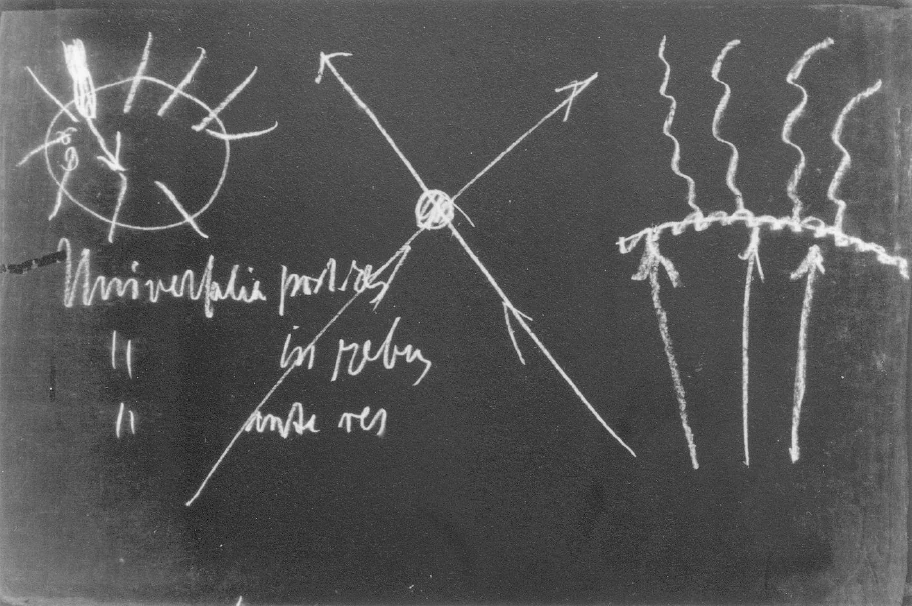
[ 19 ] Wie kommt man zurecht mit einer Persönlichkeit, die einem nicht eine Theologie gibt, die einem zwei Theologien gibt, eine positive und eine negative, eine rationalistische und eine mystische Theologie? Wer sich eben hineinversetzen kann in die Geistigkeit der Zeitalter, aus denen heraus das Christentum geboren ist, der kommt ganz gut damit zurecht. Wenn man allerdings den Verlauf der Menschheitsentwickelung auch für die ersten christlichen Jahrhunderte so schildert, wie die heutigen Materialisten das tun, dann erscheint einem so etwas wie die Schriften des Areopagiten mehr oder weniger als Narretei, als Hirnverbranntheit. Dann weist man sie in der Regel aber auch einfach zurück. Wenn man aber sich hineinversetzen kann in das, was damals erlebt und erfühlt worden ist, dann sieht man ein, was ein Mensch wie der Areopagite eigentlich wollte: im Grunde genommen nur ausdrücken, was Unzählige anstrebten. Für sie war nämlich die Gottheit ein Wesen, das man überhaupt nicht erkennen konnte, wenn man nur einen Weg zu ihr einschlug. Für ihn war die Gottheit ein Wesen, dem man sich nähern mußte auf rationellem Wege durch Namengebung und Namenfindung. Aber geht man nur diesen einen Weg, dann verliert man den Pfad, dann verliert man sich in dasjenige, was gewissermaßen der gottentleerte Weltenraum ist. Dann gelangt man nicht zu Gott. Aber man muß ihn gehen, diesen Weg, denn ohne ihn zu gehen, kommt man auch nicht zu dem Gotte. Aber man muß noch einen anderen Weg gehen. Das ist eben der, der das Namenlose anstrebt. Geht man jeden allein, dann findet man ebensowenig die Gottheit; aber geht man beide, so kreuzen sie sich, und man findet in dem Durchkreuzungspunkte die Gottheit. Es genügt nicht, zu streiten darüber, ob der eine Weg oder der andere Weg richtig sei. Beide sind sie richtig; aber jeder einzelne, für sich gegangen, führt zu nichts. Beide gegangen führen, wenn die Menschenseele sich im Kreuzungspunkte findet, zu dem, was angestrebt wird.
[ 19 ] How does one come to terms with a figure who does not offer a single theology, but rather two—one positive and one negative, one rationalistic and one mystical? Anyone who can immerse themselves in the spiritual climate of the eras from which Christianity emerged will find it quite easy to come to terms with this. However, if one describes the course of human development—including the early Christian centuries—in the same way that today’s materialists do, then something like the writings of the Areopagite appears more or less like folly, like madness. Then, as a rule, one simply rejects them. But if one can put oneself in the shoes of those who lived and felt as they did back then, one comes to understand what a person like the Areopagite actually wanted: essentially, merely to express what countless others were striving for. For them, the deity was a being that could not be known at all by taking just any path toward it. For him, the Deity was a being one had to approach by rational means—through naming and the discovery of names. But if one follows only this one path, one loses the way; one loses oneself in what is, so to speak, the godless expanse of the universe. Then one does not reach God. Yet one must walk this path, for without walking it, one cannot reach God either. But one must also take another path. This is precisely the one that strives toward the Nameless. If one takes each path alone, one will find the Divine just as little; but if one takes both, they intersect, and one finds the Divine at the point of intersection. It is not enough to argue about whether one path or the other is correct. Both are correct; but each one, taken on its own, leads nowhere. When both are taken, and the human soul finds itself at the point of intersection, they lead to that which is sought.
[ 20 ] Ich kann begreifen, wie manche Menschen der Gegenwart, die gewöhnt sind an das, was als Polemik gilt, zurückschrecken vor dem, was hier von dem Areopagiten gefordert wird. Aber dasjenige, was hier gefordert wird, das lebte bei den Menschen, die in den ersten christlichen Jahrhunderten die führenden geistigen Persönlichkeiten waren, und es lebte dann traditionell noch weiter fort in der christlich-philosophischen Strömung des Abendlandes, und es lebte bis auf Albertus Magnus und bis auf Thomas von Aquino. Es lebte zum Beispiel durch jene Persönlichkeit, deren Namen ich schon gestern genannt habe, durch den am Hofe Karls des Kahlen lebenden Scotus Erigena. Dieser Scotus Erigena erinnert einen lebhaft an dasjenige, was ich Ihnen gestern sagte: Ich habe nie einen so sanften Menschen gekannt wie Vincenz Knauer, den Philosophiegeschichtsschreiber. Vincenz Knauer war immer sanft, aber er fing an wie ein Rohrspatz zu schimpfen, wenn die Rede kam auf Plotin oder das, was Plotin ähnlich war. Und Franz Brentano, der geistreiche Philosoph, der immer feierlich war, er wurde ganz unfeierlich und schimpfte in seinem Buch «Was für ein Philosoph manchmal Epoche macht» —, er meint «Plotin».
[ 20 ] I can understand how some people today, who are accustomed to what is considered polemics, recoil from what the Areopagite demands here. But what is called for here was embodied by the people who were the leading intellectual figures in the early centuries of Christianity, and it then lived on traditionally in the Christian-philosophical tradition of the West, continuing through Albertus Magnus and Thomas Aquinas. It lived on, for example, through that figure whose name I mentioned yesterday—Scotus Erigena, who lived at the court of Charles the Bald. This Scotus Erigena vividly brings to mind what I told you yesterday: I have never known a gentler person than Vincenz Knauer, the historian of philosophy. Vincenz Knauer was always gentle, but he would start ranting like a magpie whenever the conversation turned to Plotinus or anything similar to Plotinus. And Franz Brentano, the witty philosopher who was always solemn, became quite unsolent and railed in his book *What Kind of Philosopher Sometimes Marks an Epoch*—he means “Plotinus.”
[ 21 ] Diejenigen, die mehr oder weniger, wenn auch mit Scharfsinn und Geistreichigkeit, dem Rationalismus zugeneigt sind, die werden schon schimpfen, wenn sie das zu Gesicht, zum geistigen Gesichte bekommen, was etwa da ausströmte von dem Areopagiten, und was dann eine letzte bedeutende Offenbarung fand in diesem Erigena. Er war in den letzten Lebensjahren noch Benediktinerprior. Aber seine eigenen Mönche haben ihn, wie die Sage sagt — die Sage; ich sage ja nicht, daß das wörtlich wahr ist, aber wenn es nicht ganz wahr ist, so ist es annähernd wahr —, die haben ihn so lange mit Stecknadeln bearbeitet, bis er tot war, weil er noch den Plotinismus hereinbrachte in das neunte Jahrhundert. Aber über ihn hinaus lebten seine Ideen, die zugleich die weitere Fortbildung der Ideen des Areopagiten waren. Seine Schriften sind mehr oder weniger bis in späte Zeiten hinein verschwunden gewesen; sie sind dann ja doch auf die Nachwelt gekommen. Im 12. Jahrhundert ist Scotus Erigena als Ketzer erklärt worden. Aber das hat ja noch nicht eine solche Bedeutung gehabt wie später und wie heute. Trotzdem sind Albertus Magnus und Thomas von Aquino tief beeinflußt auch von den Ideen des Scotus Erigena.
[ 21 ] Those who, to a greater or lesser extent—albeit with acumen and wit—are inclined toward rationalism will surely grumble when they catch sight of—or, so to speak, perceive intellectually—what emanated, as it were, from the Areopagite, and what then found its final significant expression in Erigena. In the final years of his life, he was still a Benedictine prior. But his own monks—as the legend goes (the legend; I’m not saying it’s literally true, but even if it isn’t entirely true, it’s close to the truth)—they pricked him with pins until he died, because he was still introducing Plotinus’s teachings into the ninth century. But his ideas lived on beyond him; these ideas were, at the same time, a further development of the ideas of the Areopagite. His writings had more or less disappeared until much later; they did, after all, eventually reach posterity. In the 12th century, Scotus Erigena was declared a heretic. But that did not carry the same significance then as it did later and as it does today. Nevertheless, Albertus Magnus and Thomas Aquinas were also deeply influenced by the ideas of Scotus Erigena.
[ 22 ] Das ist das eine, was wir gewissermaßen als eine Erbschaft aus früheren Zeiten auf dem Grunde der Seelen erblicken müssen, wenn wir vom Wesen des Thomismus sprechen wollen. Noch ein anderes aber kommt in Betracht. Im Plotinismus, den ich Ihnen gestern in bezug auf seine Kosmologie zu charakterisieren versuchte, findet sich eine sehr bedeutsame, aus einer sinnlich-übersinnlichen Schauung hervorgegangene Charakteristik des menschlichen Wesens. Man bekommt vor diesen Dingen eigentlich erst wiederum Respekt, wenn man sie aus geisteswissenschaftlichen Untergründen heraus wieder findet. Da macht man auch ohne weiteres gern das folgende Geständnis. Da sagt man: Wenn man so unvorbereitet liest etwas wie den Plotin oder das, was von ihm überliefert ist, dann sieht es auch ziemlich chaotisch und kraus aus. Wenn man aber die entsprechenden Wahrheiten selber wieder entdeckt, dann gewinnen Ansichten, wenn sie auch anders ausgesprochen waren in der damaligen Zeit, als sie heute ausgesprochen werden müssen, doch ein ganz besonderes Antlitz. Und so ist denn bei Plotin eine Anschauung zu finden, die ich etwa in der folgenden Weise charakterisieren möchte.
[ 22 ] This is one thing we must, so to speak, recognize as a legacy from earlier times lying at the very core of the soul when we wish to speak of the essence of Thomism. But there is yet another aspect to consider. In Plotinism—which I attempted to characterize for you yesterday in terms of its cosmology—there is a very significant characterization of human nature that arose from a sensory-supersensory vision. One actually regains a sense of respect for these things only when one rediscovers them from the foundations of spiritual science. Then one readily makes the following admission: one says, “If one reads something like Plotinus—or what has been handed down from him—without proper preparation, it looks rather chaotic and convoluted.” But when one rediscovers the corresponding truths for oneself, these views—even if they were expressed differently in that era than they must be expressed today—take on a very special character. And so, in Plotinus, one finds a perspective that I would like to characterize in roughly the following way:
[ 23 ] Plotin betrachtet die menschliche Wesenheit mit ihren leiblich-seelisch-geistigen Eigentümlichkeiten. Er betrachtet sie zunächst von zwei Gesichtspunkten aus. Er betrachtet sie zuerst von dem Gesichtspunkte der Arbeit der Seele am Leib. Wollte ich in der heutigen Charakteristik sprechen, so müßte ich folgendes sagen. Plotin sagt sich zunächst: Wenn man ein Kind betrachtet, das hereinwächst in die Welt, dann sieht man, wie gewissermaßen noch fertig entwickelt wird dasjenige, was aus Geistig-Seelischem heraus sich als menschlicher Leib gestaltet. Für Plotin ist alles das, was materiell auftritt namentlich am Menschen — wenn ich den Ausdruck, bitte stoßen Sie sich nicht daran, gebrauchen darf — eine Ausschwitzung des Geistig-Seelischen, eine Krustation gewissermaßen des Geistig-Seelischen. Wir können alles das, was leiblich auftritt, als eine Krustation des Geistig-Seelischen auffassen. Dann aber, wenn der Mensch herangewachsen ist bis zu einem gewissen Grade, dann hören die geistig-seelischen Kräfte auf, ins Leibliche hineinzuarbeiten.
[ 23 ] Plotinus considers the human being with its physical, soulful, and spiritual characteristics. He initially examines it from two perspectives. First, he considers it from the perspective of the soul’s work on the body. If I were to speak in today’s terms, I would have to say the following. Plotinus first says to himself: When one observes a child growing into the world, one sees how, in a sense, that which takes shape as the human body—arising from the spiritual-soul aspect—is still being fully developed. For Plotinus, everything that appears in a material form, particularly in human beings—if I may use the expression, please do not take offense—is an exudation of the spiritual-psychic, a sort of encrustation of the spiritual-psychic. We can regard everything that appears physically as a crusting of the spiritual-psychic. But then, when the human being has grown to a certain degree, the spiritual-psychic forces cease to work into the physical body.
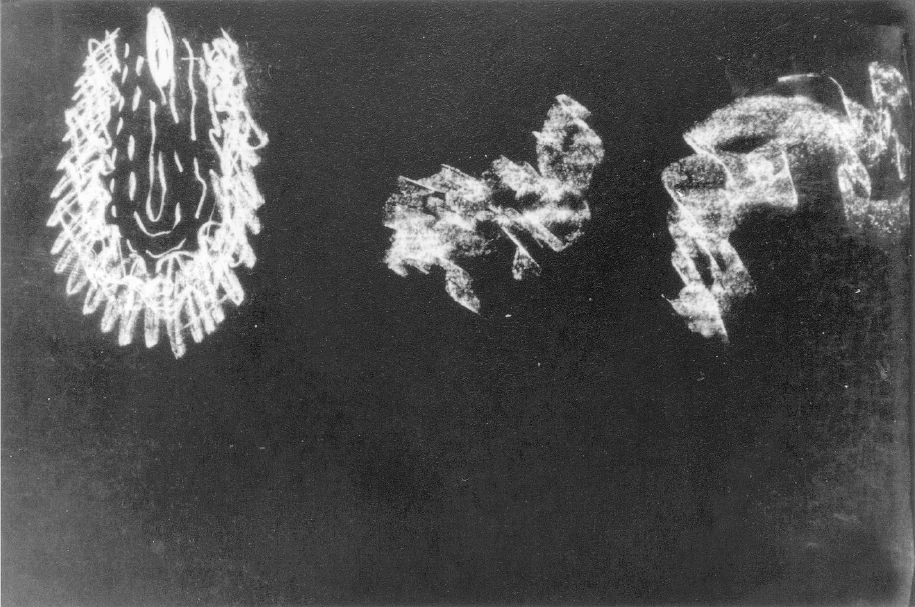
[ 24 ] Man könnte also sagen (es wird gezeichnet): Zunächst haben wir es zu tun mit einer solchen Betätigung des GeistigSeelischen am Leiblichen, daß dieses Leibliche herausgestaltet, herausorganisiert wird aus dem Geistig-Seelischen. Die Menschheitsorganisation ist aus dem Geistig-Seelischen heraus gearbeitet. Wenn ein gewisser Reifezustand eingetreten ist für irgend etwas in der organischen Tätigkeit, sagen wir zum Beispiel für diejenige Tätigkeit, auf welche die Kräfte verwendet werden, die später als die Kräfte des Gedächtnisses erscheinen, so treten eben diese Kräfte, die früher in den Leib hineingearbeitet haben, in einer geistig-seelischen Metamorphose auf. Was also zuerst materiell gearbeitet hat vom Geistig-Seelischen, das befreit sich, wenn es fertig ist mit seiner Arbeit, und tritt auf als selbständige Wesenheit: Seelenspiegel müßte man etwa sagen, wenn man im Sinne des Plotin sprechen wollte.
[ 24 ] One could therefore say (as is illustrated): First of all, we are dealing with a process in which the spiritual-soul aspect acts upon the physical, such that the physical is shaped and organized out of the spiritual-soul aspect. The organization of humanity is worked out from the spiritual-soul aspect. When a certain state of maturity has been reached for something in organic activity—let us say, for example, for the activity to which the forces are applied that later appear as the forces of memory—then precisely these forces, which previously worked their way into the body, emerge in a spiritual-soul metamorphosis. Thus, that which initially worked in a material sense from the spiritual-psychic realm frees itself once its work is complete and emerges as an independent entity: one might call it a “mirror of the soul,” to use Plotinus’s terminology.
[ 25 ] Es ist außerordentlich schwierig, mit unseren heutigen Begriffen diese Dinge zu charakterisieren. Man kommt ihnen nahe, wenn man etwa das Folgende denkt: Man sehe, wie der Mensch von einem gewissen Reifezustand seines Gedächtnisses an sich erinnern kann. Das kann er nicht als kleines Kind. Wo sind die Kräfte, mit denen er sich erinnert? Sie arbeiten zunächst am Organismus, sie gestalten den Organismus. Haben sie am Organismus gearbeitet, dann emanzipieren sie sich rein geistig-seelisch und bearbeiten jetzt, aber noch immer als Geistig-Seelisches, den Organismus. Dann erst wohnt wiederum in diesem Seelenspiegel drinnen der eigentliche Kern, das Ich. In Charakteristiken, in einem Ideengehalt, der außerordentlich bildhaft ist, arbeiten diese Anschauungen von dem, was Seelisches tätig arbeitet, und von dem, was dann bleibt, was gewissermaßen passiv wird gegenüber der Außenwelt, so daß es wie das Gedächtnis aufnimmt die Eindrücke der Außenwelt, sie dann behält —, in einer außerordentlich bildhaften Weise wird diese zweifache Arbeit der Seele, diese Gliederung der Seele in einen aktiven Teil, der eigentlich den Leib aufbaut, und in einen passiven Teil, von jener älteren Schichte menschlichen Empfindens und menschlicher Weltanschauung geschildert, die in Plotin ihren letzten Ausdruck gefunden hat und die dann über‚gegangen ist auf Augustinus und seine Nachfolger.
[ 25 ] It is extremely difficult to characterize these things using our current concepts. One can come close to them by considering the following: Consider how a person, once their memory has reached a certain stage of maturity, is able to remember things. A small child cannot do this. Where are the forces with which the child remembers? They first act upon the organism; they shape the organism. Once they have acted upon the organism, they emancipate themselves into the purely spiritual-soul realm and now influence the organism—but still as spiritual-soul forces. Only then does the actual core, the “I,” dwell once more within this mirror of the soul. In characterizations, in a body of ideas that is extraordinarily vivid, these insights into what the soul actively works upon and into what then remains—what, so to speak, becomes passive in relation to the external world, so that, like memory, it takes in the impressions of the external world and then retains them— in an extraordinarily vivid manner, this twofold work of the soul—this division of the soul into an active part, which actually builds up the body, and a passive part—is described by that older stratum of human feeling and human worldview that found its ultimate expression in Plotinus and was subsequently passed on to Augustine and his successors.
[ 26 ] Rationalisiert, in mehr physische Begriffe umgesetzt, finden wir diese Anschauung im Aristotelismus. Aristoteles hatte auch wiederum von Plato her und auch von dem, worauf wiederum Plato fußte, dieses Schauen vorliegend. Aber wenn man Aristoteles liest, ist es so, als ob man sagen müßte: Aristoteles selber bestrebt sich, alles in abstrakte Begriffe zu fassen, was er an alten Anschauungen vor sich hatte. Und so sehen wir in dem aristotelischen System, das sich nun auch fortpflanzte, das gewissermaßen die rationalistische Gestalt desjenigen war, was Plotin gegeben hat in der anderen Gestalt, wir sehen in dem, was sich als Aristotelismus fortpflanzt bis zu Albertus und bis zu Thomas dem Aquinaten, eine gewissermaßen rationalisierte Mystik, eine rationalistische Beschreibung des geistigen Geheimnisses der menschlichen Wesenheit.
[ 26 ] Rationalized and translated into more physical terms, we find this view in Aristotelianism. Aristotle, in turn, had this perspective at his disposal, derived from Plato and from the sources on which Plato himself was based. But when one reads Aristotle, it is as if one were compelled to say: Aristotle himself strives to express everything he encountered in ancient conceptions in abstract terms. And so we see in the Aristotelian system—which subsequently spread and was, in a sense, the rationalistic form of what Plotinus had presented in a different form—we see in what spread as Aristotelianism all the way to Albertus and Thomas Aquinas a kind of rationalized mysticism, a rationalistic description of the spiritual mystery of human existence.
[ 27 ] Daß Aristoteles gewissermaßen heruntergeholt hat durch abstrakte Begriffe dasjenige, was die anderen in Schauungen gehabt haben, davon haben ein Bewußtsein Albertus und Thomas. Deshalb stehen sie auch dem Aristoteles wahrhaftig nicht so gegenüber wie die jetzigen Philosophiephilologen, die kuriose Streite entfaltet haben über zwei Begriffe, die von Aristoteles herrühren. Aber da die Aristotelischen Schriften nicht vollständig auf die Nachwelt gekommen sind, so findet man diese beiden Begriffe, ohne daß man sie bei Aristoteles im Zusammenhang hat — was ja immer eine Tatsache ist, die für viele gelehrte Streitigkeiten den Unterschied bieten kann —, man findet zwei Ideen bei Aristoteles. Aristoteles sieht ja in der menschlichen Wesenheit das, was zu einer Einheit zusammenfaßt das vegetative Prinzip des Menschen, das animalische Prinzip des Menschen, das niedere menschliche Prinzip, und dann das höhere menschliche Prinzip, dasjenige, was Aristoteles den Nous, was die Scholastik dann den Intellekt nennt. Aber Aristoteles unterscheidet zwischen dem Nous poietikos und dem Nous pathetikos, zwischen dem tätigen und leidenden Geiste des Menschen. Die Ausdrücke sind nicht mehr so bezeichnend, wie die griechischen waren, aber man kann doch sagen, Aristoteles unterscheidet zwischen dem aktiven Verstand, dem tätigen Geist des Menschen und dem passiven Verstand des Menschen. Was ist damit gemeint?
[ 27 ] Albertus and Thomas are aware that Aristotle, in a sense, brought down to earth through abstract concepts what others had experienced in visions. That is why they truly do not view Aristotle in the same way as today’s philosophers of philosophy, who have engaged in curious disputes over two concepts that originate with Aristotle. But since Aristotle’s writings have not been preserved in their entirety for posterity, one finds these two concepts without seeing them in context in Aristotle—which is, after all, a fact that can make all the difference in many scholarly disputes—one finds two ideas in Aristotle. Aristotle, after all, sees in human nature that which unites into a single unity the vegetative principle of man, the animal principle of man, the lower human principle, and then the higher human principle—that which Aristotle calls the Nous and which Scholasticism later called the intellect. But Aristotle distinguishes between the *nous poietikos* and the *nous pathetikos*, between the active and the passive mind of man. The terms are no longer as descriptive as the Greek ones were, but one can still say that Aristotle distinguishes between the active intellect—the active mind of man—and the passive intellect of man. What is meant by this?
[ 28 ] Man begreift nicht, was damit gemeint ist, wenn man nicht auf den Ursprung dieser Begriffe zurückgeht. Geradeso wie die anderen Seelenkräfte sind in einer anderen Metamorphose die beiden Arten des Verstandes an dem Aufbau der menschlichen Seele betätigt: der Verstand, insofern er wirkt als tätiger, noch im Aufbau des Menschen wirksam, aber als Verstand, nicht wie das Gedächtnis einmal aufhörend und dann als Gedächtnis sich emanzipierend, sondern als Verstand das ganze Leben hindurch wirkend, das ist der Nous poietikos, das ist dasjenige, was aus dem Weltenall heraus sich individualisierend den Leib aufbaut im Sinne des Aristoteles. Es ist nichts anderes als das, was die den menschlichen Leib aufbauende tätige Seele des Plotin auch ist. Und dasjenige, was dann sich emanzipiert, was nur noch dazu da ist, um die äußere Welt aufzunehmen und die Eindrücke der äußeren Welt dialektisch zu verarbeiten, das ist der Nous pathetikos, das ist der leidende Intellekt, der intellectus possibilis. Es geht zurück, was in scharfer Dialektik, in präziser Logik in der Scholastik uns entgegentritt, auf diese alten Überlieferungen. Und man kommt nicht zurecht mit dem, was in den Seelen der Scholastiker sich abspielte, wenn man nicht dieses Hereinspielen uralter Traditionen berücksichtigt.
[ 28 ] One cannot understand what is meant by this unless one goes back to the origin of these concepts. Just as the other powers of the soul are involved in the structure of the human soul through a different metamorphosis, so too are the two types of intellect: the intellect, insofar as it acts as an active power, is still at work in the formation of the human being—but as intellect, not like memory, which ceases at one point and then emancipates itself as memory, but rather as intellect acting throughout one’s entire life; this is the *nous poietikos*, that is, that which, emerging from the cosmos and becoming individualized, builds up the body in the sense of Aristotle. It is nothing other than what Plotinus’ active soul—which constructs the human body—also is. And that which then emancipates itself, which exists solely to receive the external world and dialectically process the impressions of the external world—that is the Nous pathetikos, the suffering intellect, the intellectus possibilis. What confronts us in Scholasticism—with its sharp dialectics and precise logic—traces back to these ancient traditions. And one cannot make sense of what was taking place in the minds of the Scholastics unless one takes into account the influence of these ancient traditions.
[ 29 ] Dadurch, daß das alles, was ich Ihnen geschildert habe, in die Seele der Scholastiker hineinspielte, entstand für sie die große Frage, die man so gewöhnlich als das eigentliche Problem der Scholastik empfindet. In der Zeit, in der es für die Menschheit ein Schauen gab, das solche Dinge hervorbrachte wie den Platonismus oder seine rationalistische Filtrierung, den Aristotelismus, in der aber auch noch nicht das individuelle Fühlen bis zu seinem Höhepunkt gekommen war, in dieser Zeit konnte es die Scholastikprobleme noch nicht geben. Denn dasjenige, was wir heute Verstand nennen, was wir heute Intellekt nennen, und was nach der einen Seite hin seinen Ursprung in der Scholastikterminologie hat, das ist gerade ein Ausfluß des individuellen Menschen. Wenn wir alle gleich denken, so kommt es nur davon, daß wir alle gleich individuell organisiert sind und daß der Verstand geknüpft ist an dies in allen Menschen gleich organisierte Individuelle. Sie denken schon, insoferne Sie differenziert sind, auch verschieden. Das sind aber Nuancen, die mit der eigentlichen Logik nichts zu tun haben. Das eigentliche logische und dialektische Denken ist aber ein Ausfluß der allgemeinen menschheitlichen, aber individuell differenzierten Organisation.
[ 29 ] Because everything I have described to you resonated deeply within the souls of the Scholastics, it gave rise to the great question that is so commonly regarded as the very problem of Scholasticism. In the era when humanity possessed a mode of perception that gave rise to such things as Platonism or its rationalistic interpretation, Aristotelianism—but in which individual feeling had not yet reached its zenith—the problems of Scholasticism could not yet exist. For what we today call reason, what we today call intellect—and which, on the one hand, has its origin in Scholastic terminology—is precisely an outflow of the individual human being. If we all think alike, it is only because we are all organized individually in the same way and because reason is linked to this individuality, which is organized equally in all human beings. You do think differently, insofar as you are differentiated. But these are nuances that have nothing to do with logic proper. True logical and dialectical thinking, however, is an outflow of the general human, yet individually differentiated, organization.
[ 30 ] So steht dann der Mensch, wenn er fühlt, er ist eine Individualität, da und sagt sich: Da steigen im Menschen auf die Gedanken, durch die die Außenwelt innerlich repräsentiert wird; da werden gewissermaßen von innen heraus die Gedanken zusammengestellt, die in ihrer Zusammenstellung wiederum ein Bild der Welt geben sollen. Da arbeiten im Innern des Menschen auf der einen Seite Vorstellungen, die sich knüpfen an einzelne individuelle Dinge, wie an einen einzelnen Stier oder an einen einzelnen Menschen, sagen wir wie Augustinus. Dann aber kommt der Mensch zu anderen inneren Erlebnissen, wie zu seinen Träumen, für die er einen solchen äußeren Repräsentanten zunächst nicht findet. Da kommt er zu denjenigen Erlebnissen, die er sich bildet, die rein Schimäre sind, wie hier auch schon für die Scholastik der Kentaur oder dergleichen Schimäre waren.
[ 30 ] This, then, is how a person stands when he feels that he is an individual, and says to himself: It is within the person that thoughts arise through which the external world is represented internally; it is, as it were, from within that thoughts are assembled, and their assembly, in turn, is meant to provide a picture of the world. On the one hand, there are ideas at work within the human being that are linked to individual things, such as a single bull or a single human being—to use Augustine’s terminology. But then the human being comes to other inner experiences, such as dreams, for which he initially finds no such external counterpart. There he arrives at those experiences that he creates for himself, which are pure chimeras—just as the centaur or similar chimeras were for Scholasticism.
[ 31 ] Dann sind aber auf der anderen Seite diejenigen Begriffe und Ideen, die eigentlich nach beiden Seiten hin schillern: die Menschheit, der Typus Löwe, der Typus Wolf, und so weiter. Das sind die allgemeinen Begriffe, welche die Scholastiker nach altem Gebrauch die Universalien nannten. Als die Sache für die Menschen so lag, wie ich sie Ihnen gestern geschildert habe, als man herauf sich erhob gewissermaßen zu diesen Universalien und sie empfand als die unterste Grenze der sich dem Menschen durch Schauen offenbarenden Geistwelt, da waren eben einfach diese Universalien — Menschheit, Tierheit, Löwenheit und so weiter — dasjenige, durch das sich die Geistwelt, die intelligible Welt offenbarte, dasjenige, was die Seele als einen Ausfluß der übersinnlichen Welt erlebte. Um so zu erleben, war es nötig, jenes individuelle Gefühl noch nicht in sich zu haben, das sich dann in den charakterisierten Jahrhunderten auslebte. Jenes individualisierte Gefühl brachte es dahin, daß man sich sagte: Man steigt von den Sinnendingen auf bis zu jener Grenze, wo die mehr oder weniger abstrakten, aber doch erlebten Dinge sind, die Universalien Menschheit, Löwenheit, und so weiter.
[ 31 ] On the other hand, however, there are those concepts and ideas that actually shimmer in both directions: humanity, the lion archetype, the wolf archetype, and so on. These are the general concepts that the Scholastics, following ancient usage, called “universals.” When things stood for people as I described them to you yesterday—when they rose, so to speak, to these universals and perceived them as the lowest threshold of the spiritual world revealed to human beings through intuition—it was precisely these universals — humanity, animality, lionhood, and so on — were precisely that through which the spiritual world, the intelligible world, revealed itself; they were what the soul experienced as an outflow from the supersensible world. To experience it in this way, it was necessary not yet to possess within oneself that individual feeling which then found its full expression in the centuries I have described. That individualized feeling led people to say to themselves: One ascends from sensory things up to that boundary where the more or less abstract, yet still experienced things lie—the universals of humanity, lionhood, and so on.
[ 32 ] Das sah die Scholastik sehr gut ein, daß man nicht ohne weiteres sagen kann: Das sind bloße Konzeptionen, bloße Zusammenfassungen der äußeren Welt —, sondern für die Scholastik wurde das ein Problem, mit dem sie rang. Wir müssen uns aus unserer Individualität heraus solche allgemeinen Begriffe bilden, solche Universalbegriffe. Wenn wir aber auf die Welt hinausschauen, so haben wir nicht die Menschheit, sondern einzelne Menschen, nicht die Wolfheit, sondern einzelne Wölfe. Aber auf der andern Seite: Wir können nicht dasjenige, was wir uns als die Wolfheit ausbilden oder als die Lammbheit ausbilden, nur sehen gewissermaßen so, daß wir einmal die Materie in einer Weise lammhaft gebildet haben, ein anderes Mal sie wolfhaft gebildet haben und die Wolfheit und die Lammheit nur so Zusammenstellungen wären, und das Materielle, das in diesen Zusammenfassungen drinnen ist, nur das einzig Wirkliche sei. Das können wir auch nicht ohne weiteres annehmen, denn wenn wir das annehmen, dann müßten wir ja annehmen: Sperren wir einen Wolf ein und schauen wir darauf, daß er durch eine gewisse Zeit hindurch, bis sein Stoffwechsel vollständig umgesetzt ist, nur Lämmer frißt, da erfüllt er sich dann ganz mit Lammesmaterie; aber er wird kein Lamm. Die Materie macht es nicht, er bleibt Wolf. Die Wolfheit ist also doch etwas, was nicht so ohne weiteres bloß mit dem Materiellen in einen Zusammenhang gebracht wird, denn materiell ist der ganze Wolf Lamm, aber er bleibt Wolf.
[ 32 ] Scholasticism recognized very well that one cannot simply say: “These are mere concepts, mere summaries of the external world”—but for Scholasticism, this became a problem with which it grappled. We must form such general concepts, such universal concepts, out of our individuality. But when we look out into the world, we do not see humanity, but individual human beings; not wolfness, but individual wolves. On the other hand, however: We cannot view what we conceive as “wolfness” or “lambness” merely in such a way that, so to speak, we have at one time formed the material in a lamb-like manner and at another time in a wolf-like manner, and that “wolfness” and “lambness” are merely such combinations, while the material contained within these generalizations is the only reality. Nor can we simply accept this, for if we did, we would have to conclude: If we lock up a wolf and ensure that, for a certain period of time—until its metabolism has completely adapted—it eats only lambs, it will then become entirely filled with lamb-like matter; yet it will not become a lamb. Matter alone does not make it so; it remains a wolf. “Wolfness,” then, is something that cannot simply be reduced to the material, for in material terms the entire wolf is a lamb, yet it remains a wolf.
[ 33 ] Es ist heute vielfach ein Problem, das die Menschen gar nicht ernst nehmen. Es ist ein Problem gewesen, mit dem man mit allen Fasern der Seele gerungen hat in der Scholastik, gerade in ihrer Blütezeit. Und dieses Problem, das war in unmittelbarem Zusammenhang stehend mit den kirchlichen Interessen. Wie es mit den Kircheninteressen im Zusammenhang steht, davon können wir uns eine Vorstellung machen, wenn wir das Folgende berücksichtigen.
[ 33 ] Today, this is often a problem that people do not take seriously at all. It was a problem that people grappled with with every fiber of their being during the Scholastic period, especially during its heyday. And this problem was directly connected to the interests of the Church. We can get an idea of how it relates to the interests of the Church if we consider the following.
[ 34 ] Bevor Albertus Magnus und Thomas von Aquino mit ihrer besonderen Ausgestaltung der Philosophie auftraten, war es so, daß allerdings Leute schon aufgetreten waren wie Roscellin zum Beispiel, die die Behauptung aufgestellt haben und auch durchaus der Meinung waren: Diese allgemeinen Begriffe, diese Universalien sind eigentlich nichts anderes als dasjenige, was wir zusammenfassen von den äußeren individuellen Dingen; sie sind eigentlich bloße Worte, bloße Namen. — Und es hatte sich ausgebildet ein gewisser Nominalismus, der in den allgemeinen Dingen, in den Universalien, nur Worte sah. Aber Roscellin, der hat dogmatisch Ernst gemacht mit dem Nominaliismus und hat ihn auf die Trinität angewendet und hat gesagt: Wenn — was er als Richtiges ansah — dasjenige, was Zusammenfassung ist, nur ein Wort ist, dann ist die Dreieinigkeit nur ein Wort, und die Individuen sind das einzig Wirkliche: der Vater, der Sohn, der Heilige Geist. Dann fasse nur der menschliche Verstand durch einen Namen diese drei: Vater, Sohn und Heiliger Geist. — Mittelalterliche Geister haben bis in die letzten Konsequenzen hin solche Dinge ausgedehnt. Die Kirche war genötigt, auf der Synode zu Soissons diese Anschauung des Roscellin für einen partiellen Polytheismus und die Lehre für häretisch zu erklären. Also man war in einer gewissen Kalamität gegenüber dem Nominalismus. Es war also ein dogmatisches Interesse, das sich mit einem philosophischen zusammenschloß.
[ 34 ] Before Albertus Magnus and Thomas Aquinas emerged with their particular interpretations of philosophy, it was true that people such as Roscellin, for example, had already appeared who put forward the claim and were also firmly of the opinion that: These general concepts, these universals, are actually nothing other than what we summarize from external individual things; they are, in fact, mere words, mere names.—And a certain form of nominalism had developed that saw only words in general things, in universals. But Roscellin took nominalism seriously in a dogmatic sense, applied it to the Trinity, and said: If—as he considered correct—that which is a generalization is merely a word, then the Trinity is merely a word, and the individuals are the only reality: the Father, the Son, and the Holy Spirit. Then let the human mind grasp these three—Father, Son, and Holy Spirit—through a single name. —Medieval thinkers took such ideas to their ultimate logical conclusions. At the Synod of Soissons, the Church was compelled to declare Roscellin’s view to be a form of partial polytheism and his doctrine to be heretical. Thus, there was a certain crisis regarding nominalism. It was, therefore, a dogmatic concern that merged with a philosophical one.
[ 35 ] Heute empfindet man selbstverständlich eine solcheSituation nicht mehr als etwas Reales. In der damaligen Zeit hat man es allerdings als etwas sehr Reales empfunden, und gerade mit dem Verhältnis der Universalien zu den individuellen Dingen ringen die beiden geistig, Thomas und Albertus, und das ist für sie das wichtigste Problem. Im Grunde genommen ist alles andere nur eine Folge, das heißt insofern eine Folge, als alles andere eine gewisse Schattierung bekommen hat durch die Art und Weise, wie sie sich zu diesem Problem gestellt haben. Aber gerade in die Art und Weise, wie sich Albertus und Thomas zu diesem Problem gestellt haben, spielen hinein alle die Kräfte, die ich Ihnen bis jetzt geschildert habe, alle die Kräfte, die noch als Tradition geblieben waren von dem Areopagiten, die geblieben waren von Plotin, die durchgegangen waren durch die Seele des Augustinus, durch Erigena und durch viele andere, — all das spielt herein in die besondere Art der Gedankenformung, welche nun zutage trat zunächst durch Albertus und dann in einer weitläufigen philosophischen Begründung durch Thomas. Und man wußte ja noch: Da hat es Menschen gegeben, die über die Begriffe hinaufsahen in die geistige Welt, in die intellektuelle Welt, in diejenige Welt, von der auch der Thomismus als von einer Wirklichkeit spricht, in der er die materiefreien intellektuellen Wesen erblickt, die er die Engel nennt. Das sind nicht bloße Abstraktionen, das sind reale Wesenheiten, die nur keine Leiber haben. Es sind jene Wesenheiten, die Thomas versetzt in die zehnte Sphäre. Indem er sich umkreist denkt die Erde von der Sphäre des Mondes, des Merkur, der Venus, der Sonne und so weiter, kommt er dann über die achte zur neunten Sphäre und zu dem, was das Empyreum war, also zur zehnten Sphäre. Er denkt sich das alles durchaus durchsetzt von Intelligenzen, und die Intelligenzen, auf die er zunächst rekurriert, es sind diejenigen, welche das, was sie zu ihrer untersten Grenze haben, gewissermaßen hinunterscheinen lassen so, daß die menschliche Seele es erleben kann.
[ 35 ] Today, of course, one no longer perceives such a situation as something real. At that time, however, it was perceived as something very real, and it is precisely the relationship between universals and individual things that Thomas and Albertus grapple with intellectually; for them, this is the most important problem. Essentially, everything else is merely a consequence—that is, a consequence insofar as everything else has taken on a certain nuance due to the way they approached this problem. But it is precisely in the way Albertus and Thomas approached this problem that all the forces I have described to you so far come into play—all the forces that had remained as tradition from the Areopagite, that had remained from Plotinus, that had passed through the soul of Augustine, through Erigena, and through many others— — all of this plays a role in the particular mode of thought formation that now came to light, first through Albertus and then in a comprehensive philosophical exposition by Thomas. And it was still known that: There have been people who looked beyond concepts into the spiritual world, into the intellectual world, into that world of which Thomism also speaks as a reality—in which it perceives the immaterial intellectual beings it calls angels. These are not mere abstractions; they are real entities that simply have no bodies. These are the beings that Thomas places in the tenth sphere. As he envisions the Earth circling the spheres of the Moon, Mercury, Venus, the Sun, and so on, he then moves beyond the eighth to the ninth sphere and to what was the Empyrean—that is, to the tenth sphere. He conceives of all this as thoroughly permeated by intelligences, and the intelligences to which he initially refers are those that, as it were, allow what lies at their lowest boundary to shine down so that the human soul can experience it.
[ 36 ] Aber so, wie ich es jetzt ausgesprochen habe, in dieser Form, in der es mehr angelehnt ist an den Plotinismus, kommt es nicht heraus aus dem bloßen individuellen Fühlen, zu dem sich gerade die Scholastik durchgerungen hatte, sondern es blieb für Albertus und für Thomas ein Glaube, daß es über den abstrakten Begriffen oben die Offenbarung dieser abstrakten Begriffe gebe. Und für sie entstand die Frage: Welche Realität haben denn diese abstrakten Begriffe?
[ 36 ] But as I have just expressed it, in this form—which is more closely aligned with Plotinus—it does not transcend the mere individual feeling to which Scholasticism had just managed to arrive; rather, for Albertus and for Thomas, it remained a belief that, above the abstract concepts, there is a revelation of these abstract concepts. And for them, the question arose: What reality do these abstract concepts actually have?
[ 37 ] Nun hatten sowohl Albertus wie Thomas noch eine Vorstellung von dem Tatbestand des Arbeitens des SeelischGeistigen an dem Leiblichen und des nachherigen Sichspiegelns des Seelisch-Geistigen, wenn genügend am Leiblichen gearbeitet ist. Von alldem hatten sie Vorstellungen. Sie hatten nun Vorstellungen auch von dem, was der Mensch in seinem einzelnen individuellen Leben wird, wie er von Jahr zu Jahr, von Jahrzehnt zu Jahrzehnt sich weiterentwickelt gerade durch dasjenige, was er an Eindrücken der Außenwelt aufnimmt und durch Eindrücke der Außenwelt verarbeitet. Und so bildete sich aus der Gedanke, daß wir allerdings die Welt um uns herum haben, aber diese Welt ist eine Offenbarung dessen, was überweltlich ist, was geistig ist. Indem wir die Welt betrachten, indem wir uns zu den einzelnen Mineralien, Pflanzen und Tieren hinwenden, ahnen wir gewissermaßen, daß dahintersteckt dasjenige, was sich offenbart aus höheren geistigen Welten.
[ 37 ] Now, both Albertus and Thomas still had a conception of the process by which the soul-spiritual works upon the physical, and of the subsequent reflection of the soul-spiritual once sufficient work has been done on the physical. They had ideas about all of this. They also had ideas about what a person becomes in his or her individual life, how he or she develops from year to year, from decade to decade, precisely through the impressions of the external world that he or she takes in and processes. And so the idea took shape that, while we certainly have the world around us, this world is a revelation of what is supraterrestrial, of what is spiritual. As we observe the world, as we turn our attention to individual minerals, plants, and animals, we sense, in a sense, that behind them lies that which reveals itself from higher spiritual worlds.
[ 38 ] Betrachten wir dann mit logischer Zergliederung, mit alldem, wozu uns unsere Seele fähig macht, mit alldem, was an Denkkraft in uns ist, die Welt der Naturreiche, so kommen wir zu dem, was von der geistigen Welt in die Naturreiche hineingelegt ist. Dann aber müssen wir uns klarwerden darüber: Wir wenden unseren Blick, unsere übrigen Sinnesorgane hin auf diese Welt. Da stehen wir mit der Welt in Verkehr. Wir gehen dann weg von der Welt. Wir bewahren gewissermaßen als Erinnerung dasjenige auf, was wir aus der Welt aufgenommen haben. Wir blicken in der Erinnerung wiederum zurück. Da erscheint uns eigentlich erst das Universelle, das Allgemeine, so etwas wie «Menschheit» und dergleichen, das erscheint uns erst in der inneren begrifflichen Gestalt. So daß Albertus und Thomas sagen: Blickst du zurück, wenn dir deine Seele reflektiert dasjenige, was ssiean der Außenwelt erlebt hat, dann hast du in deiner Seele lebend die Universalia. Du hast dann Universalia. Du bildest dir aus all den Menschen heraus, die dir begegnet sind, den Begriff der Menschheit. Du könntest ja überhaupt, wenn du nur individuelle Dinge erinnertest, bloß in irdischen Namen leben. Indem du überhaupt nicht bloß in irdischen Namen lebst, mußt du Universalia erleben. Da hast du die universalia post res, diejenigen, die nach den Dingen in der Seele leben. Während der Mensch seine Seele hinwendet zu den Dingen, hat er nicht dasselbe in seiner Seele, was er nachher hat, wenn er sich daran erinnert, wenn es ihm gewissermaßen vom Innern reflektiert wird, sondern er steht in einer realen Beziehung zu den Dingen. Er erlebt an den Dingen ihr Geistiges; er übersetzt es sich nur in die Form der Universalien post rem.
[ 38 ] If we then examine the world of the natural realms through logical analysis—using all that our soul enables us to do, all the power of thought within us—we arrive at what has been implanted in the natural realms by the spiritual world. But then we must become clear about this: We turn our gaze, our other sense organs, toward this world. There we are in communion with the world. We then turn away from the world. We preserve, as it were, as a memory, that which we have taken in from the world. We look back again in memory. It is only then that the universal, the general—something like “humanity” and the like—actually appears to us; it appears to us only in its inner conceptual form. Thus, as Albertus and Thomas say: When you look back, as your soul reflects upon what it has experienced in the outer world, you then have the universals alive within your soul. You then possess universals. From all the people you have encountered, you form the concept of humanity. After all, if you remembered only individual things, you could live solely in earthly names. Since you do not live solely in earthly names, you must experience universals. There you have the universalia post res—those that live in the soul after the things themselves. While a person turns his soul toward things, he does not have within his soul the same thing that he has afterward when he recalls them—when they are, so to speak, reflected back to him from within—but rather he stands in a real relationship to the things. He experiences their spiritual aspect in the things themselves; he merely translates it into the form of universals post rem.
[ 39 ] Indem Albertus und Thomas annehmen, daß der Mensch in dem Augenblicke, wo er durch sein Denkvermögen in Beziehung steht zu seiner Umgebung, zu einem Realen in Beziehung steht, also nicht bloß zu dem, was der Wolf ist dadurch, daß das Auge ihn sieht, das Ohr ihn hört und so weiter, sondern dadurch, daß der Mensch über ihn denken kann, sich den Typus «Wolf» herausbildet, erlebt er etwas, was in den Dingen unanschaulich gedanklich erfaßt wird, was auch nicht in den Sinnenentitäten aufgeht. Er erlebt die universalia in rebus, in den Dingen.
[ 39 ] By assuming that, at the moment when a human being relates to his surroundings through his capacity for thought, he relates to a real entity, that is, not merely to what the wolf is insofar as the eye sees it, the ear hears it, and so on, but insofar as human beings can think about it and form the concept of “wolf,” they experience something that is grasped intellectually in an abstract way within things, something that is not subsumed under sensory entities. They experience the universalia in rebus, in things.
[ 40 ] Nun ist die Unterscheidung nicht ganz leicht zu machen, weil man gewöhnlich denkt, dasjenige, was man im Innern seiner Seele hat zuletzt als Reflexion, das sei auch in den Dingen dasselbe. Nein, es ist nicht dasselbe im Sinne des Thomas von Aquino. Was der Mensch als Idee in seiner Seele erlebt, mit seinem Verstande sich erklärt, das ist dasjenige, wodurch er das Reale, das Universelle erlebt. So daß der Form nach die Universalien iz den Dingen verschieden sind von den Universalten nach den Dingen, die in der Seele dann bleiben; aber innerlich sind sie dasselbe. Da haben Sie einen der scholastischen Begriffe, die man sich gewöhnlich nach ihrer ganzen Schärfe nicht vor die Seele führt. Die Universalien in den Dingen und die Universalien nach den Dingen in der Seele sind inhaltlich dasselbe, nur der Form nach verschieden.
[ 40 ] Now, this distinction is not entirely easy to make, because one usually thinks that what one has within one’s soul—ultimately as a reflection—is the same as what exists in things. No, it is not the same in the sense of Thomas Aquinas. What a person experiences as an idea in his soul—and explains to himself with his intellect—is that through which he experiences the real, the universal. Thus, in form, the universals from things differ from the universals concerning things that then remain in the soul; but internally, they are the same. Here you have one of the scholastic concepts that people do not usually bring before their minds in all its sharpness. The universals in things and the universals derived from things in the soul are the same in content, differing only in form.
[ 41 ] Dann aber kommt noch dazu, daß nun das, was in den Dingen ausgebreitet, individualisiert lebt, wiederum hinweist auf dasjenige, was ich gestern als im Plotinismus liegend, als die eigentlich intelligible Welt charakterisierte. Da sind wiederum dieselben Inhalte, die in den Dingen, nach den Dingen in der Menschenseele sind, inhaltlich gleich, formell verschieden, sind wiederum in anderer Form enthalten, aber wiederum von gleichem Inhalt: das sind die universalia ante res, vor den Dingen. Das sind die Universalien, wie sie in dem göttlichen Verstande und in dem Verstande der Diener des Göttlichen, der englischen Wesenheiten, enthalten sind.
[ 41 ] But then there is the additional fact that what is now spread out and exists in an individualized form within things points back to that which I characterized yesterday as lying within Plotinus’s philosophy—the truly intelligible world. There, once again, are the same contents that exist in things and, through things, in the human soul—identical in content, yet different in form—contained once more in a different form, yet again with the same content: these are the universalia ante res, prior to things. These are the universals as they are contained in the divine intellect and in the intellect of the servants of the Divine, the English entities.
[ 42 ] So wird dasjenige, was einer älteren Zeit unmittelbar geistig-sinnlich-übersinnliches Anschauen war, zu Anschauungen, die nur eben in sinnlichen Bildern abgebildet wurden, weil man das, was man übersinnlich schaut, selbst nach dem Areopagiten nicht einmal mit einem Namen benennen kann, wenn man es in seiner wahren Gestalt behandeln will. Man kann nur hinweisen und sagen: Es ist das alles nicht, was die äußeren Dinge sind. — So wird dasjenige, was für die Alten Schauung war, was für die Alten sich als eine Realität in der geistigen Welt darstellte, für dieScholastik etwas, worüber zu entscheiden hat eben all jener Scharfsinn des Denkens, all jene Plastizität und feine Logik, von der ich Ihnen heute gesprochen habe. Es ist heruntergeholt das Problem, das früher durch Schauen abgemacht wurde, in die Sphäre des Denkens, in die Sphäre der Ratio. Das ist das Wesen des Thomismus, das Wesen des Albertinismus, das Wesen der Hochscholastik. Sie sieht vor allen Dingen, daß in ihrer Zeit das Erfühlen der menschlichen Individualität in der Kulmination angelangt ist. Sie sieht vor allen Dingen alle Probleme vor sich in der rationellen Gestalt, in der logischen Gestalt, in der Gestalt, wie sie der Denker auffassen muß.
[ 42 ] Thus, what in earlier times was direct spiritual-sensory-supersensory perception becomes perceptions that were merely represented in sensory images, because—even according to the Areopagite—one cannot even give a name to what one perceives supersensory if one wishes to treat it in its true form. One can only point to it and say: It is none of the things that external objects are. — Thus, what was contemplation for the ancients—what presented itself to them as a reality in the spiritual world—becomes, for Scholasticism, something to be decided upon by precisely all that acuity of thought, all that flexibility, and all that subtle logic of which I have spoken to you today. The problem that was previously resolved through intuition has been brought down into the sphere of thought, into the sphere of reason. This is the essence of Thomism, the essence of Albertinism, the essence of high Scholasticism. It recognizes, above all, that in its time, the experience of human individuality has reached its culmination. It sees, above all, all problems before it in their rational form, in their logical form, in the form in which the thinker must grasp them.
[ 43 ] Mit dieser Gestalt der Weltenprobleme in der Form des Denkens ringt wesenhaft die Scholastik. Und mit diesem Ringen und Denken steht die Scholastik mitten im kirchlichen Leben drinnen, das ich Ihnen nach den verschiedensten Seiten gestern und heute, wenn auch nur mit einzelnen Lichtern, beleuchtet habe. Da steht dasjenige, wovon man im 13., im 12. Jahrhundert glauben konnte, es ist zu erringen mit dem Denken, mit der scharfsinnigen Logik; da steht auf der anderen Seite dasjenige, was als kirchliche Dogmen überliefert ist, da steht der Glaubensinhalt.
[ 43 ] Scholasticism is fundamentally grappling with this conception of the world’s problems as they present themselves in the realm of thought. And through this struggle and this thinking, scholasticism stands at the very heart of church life, which I have illuminated for you from various angles—both yesterday and today—albeit only with scattered glimpses. On the one hand, there is what people in the 13th and 12th centuries believed could be attained through thought and sharp logic; on the other hand, there is what has been handed down as ecclesiastical dogmas—the content of faith.
[ 44 ] Nehmen wir ein Beispiel, wie ein solcher Denker wie Thomas von Aquino zu den beiden Dingen steht. Da sagt Thomas von Aquino: Kann man das Dasein Gottes beweisen durch Logik? Ja, man kann es. — Thomas von Aquino gibt eine ganze Reihe von Beweisen. Einer derselben ist zum Beispiel der, daß er sagt: Erkenntnisse können wir zunächst nur gewinnen, indem wir an die universalia in rebus herangehen, in die Dinge hineinblicken. Wir können nicht durch Schauen — das ist einfach persönliches Erlebnis dieses Zeitalters — in die geistige Welt eindringen. Wir können nur dadurch mit menschlichen Kräften in die geistige Welt eindringen, daß wir uns in die Dinge vertiefen, aus den Dingen dasjenige herausholen, was wir universalia in rebus nennen können. Dann kann man zurückschließen, wie das mit diesen universalia ante res ist vorher —, so sagt er. Die Welt sehen wir bewegt; ein Ding bewegt immer das andere, weil es selbst bewegt ist. So kommen wir von einem bewegten Ding zu einem anderen bewegten Ding, von dem anderen bewegten Ding zu einem weiteren bewegten Ding. Das kann nicht so fortgehen, sondern wir müssen zu einem ersten Beweger kommen. Wäre der aber wieder bewegt, so würde es sich darum handeln, daß wir zu einem anderen Beweger übergehen. Wir müssen also zu einem unbewegten Beweger kommen. — Damit ist Thomas gerade angelangt — und auch Albertus macht ja denselben Schluß — bei dem aristotelischen unbewegten Beweger, bei der ersten Ursache. Den Gott als eine notwendig erste Wesenheit, als einen notwendig unbewegten ersten Beweger anzuerkennen, das ist dem logischen Denken gegeben.
[ 44 ] Let’s take an example of how a thinker like Thomas Aquinas views these two things. Thomas Aquinas says: Can one prove the existence of God through logic? Yes, one can. — Thomas Aquinas provides a whole series of proofs. One of them, for example, is his assertion that we can initially gain knowledge only by approaching the universalia in rebus—by looking into things. We cannot penetrate the spiritual world through mere observation—that is simply a personal experience of our age. We can penetrate the spiritual world with human powers only by delving deeply into things, extracting from them what we can call universalia in rebus. Then, he says, one can deduce how things stand with these universalia ante res beforehand. We see the world in motion; one thing always moves another because it itself is moved. Thus we proceed from one moving thing to another moving thing, and from that other moving thing to yet another moving thing. This cannot go on indefinitely; rather, we must arrive at a first mover. But if that first mover were itself moved, we would then have to proceed to yet another mover. We must therefore arrive at an unmoved mover. — This is precisely where Thomas has arrived—and Albertus, too, reaches the same conclusion—at the Aristotelian unmoved mover, at the first cause. To recognize God as a necessarily first being, as a necessarily unmoved first mover, is a given of logical thinking.
[ 45 ] Für die Trinität gibt es keinen solchen Gedankengang, der zu ihr hinführt. Sie ist aber überliefert. Man kann mit dem menschlichen Denken nur so weit kommen, daß man probiert, ob die Trinität widersinnig ist. Da findet man: Sie ist nicht widersinnig, aber man kann sie nicht beweisen, man muß sie glauben, man muß sie hinnehmen als einen Inhalt, bis zu dem sich die auf sich selbst gestellte menschliche Intellektualität nicht erheben kann.
[ 45 ] There is no line of reasoning that leads to the Trinity. Yet it has been handed down. Human reasoning can only go so far as to test whether the Trinity is absurd. One finds that it is not absurd, but it cannot be proven; one must believe in it, one must accept it as a reality to which human intellect, left to its own devices, cannot ascend.
[ 46 ] So steht die Scholastik vor der damals so bedeutungsvollen Frage: Wie weit kommt man mit dem sich selbst überlassenen menschlichen Verstande? Aber durch die Zeitentwickelung war sie noch in ganz besonderer Weise hineingestellt in die Tiefen dieses Problems, denn andere Denker gingen voran. Die hatten etwas scheinbar ganz Absurdes angenommen. Die hatten gesagt, es könne etwas theologisch wahr und philosophisch falsch sein. Man könne rundweg sagen: Es kann durchaus sein, daß Dinge dogmatisch überliefert sind, wie zum Beispiel die Trinität; wenn man dann nachdenkt über dieselbe Frage, so kommt man zum entgegengesetzten Resultat. Es ist durchaus möglich, daß die Vernunft zu anderen Ergebnissen führt als der Glaubensinhalt. — Und das ist wichtig, das war das andere, wovor die Scholastiker standen: die Lehre von der doppelten Wahrheit. Das ist dasjenige, worauf die beiden Denker Albertus und Thomas ganz besonderen Wert legten: den Glaubensinhalt in Einklang zu bringen mit dem Vernunftinhalt, keinen Widerspruch zu suchen zwischen dem, was die Vernunft denken kann, allerdings nur bis zu einer gewissen Grenze, und dem Glaubensinhalt. Aber was die Vernunft denken kann, darf nicht widersprechen dem Glaubensinhalt, der Glaubensinhalt darf nicht widersprechen der Vernunft.
[ 46 ] Scholasticism thus faced the question that was so significant at the time: How far can one go with human reason left to its own devices? But due to historical developments, it was drawn into the depths of this problem in a very special way, for other thinkers had gone before it. They had accepted something that seemed utterly absurd. They had said that something could be theologically true and philosophically false. One could say outright: It is entirely possible that certain things are handed down dogmatically, such as the Trinity; yet when one reflects on the same question, one arrives at the opposite conclusion. It is entirely possible that reason leads to conclusions different from those of faith. — And that is important; that was the other challenge facing the Scholastics: the doctrine of double truth. This is what the two thinkers, Albertus and Thomas, placed particular emphasis on: reconciling the content of faith with the content of reason, seeking no contradiction between what reason can conceive—though only up to a certain limit—and the content of faith. But what reason can conceive must not contradict the content of faith, and the content of faith must not contradict reason.
[ 47 ] Das war dazumal ein Radikalismus, denn die Mehrzahl der tonangebenden Kirchenautoritäten hielt fest an der Lehre der doppelten Wahrheit: daß einfach der Mensch müsse auf der einen Seite etwas Vernünftiges denken, inhaltlich in einer Gestalt, und der Glaubensinhalt könne es ihm in einer anderen Gestalt geben, und er müsse mit diesen zweiGestalten der Wahrheit leben. — Ich glaube, man könnte ein Gefühl bekommen für das geschichtliche Werden, wenn man bedenken würde, daß die Menschen mit ihren ganzen Seelenkräften vor so wenigen Jahrhunderten in solchen Problemen drinnensteckten. Denn diese Dinge tönen noch fort in unsere Zeiten. Wir leben auch noch in diesen Problemen. Wie wir darinnen leben, das wollen wir dann morgen besprechen. Heute wollte ich das Wesen des Thomismus im allgemeinen so charakterisieren, wie er in der damaligen Zeit gelebt hat.
[ 47 ] At the time, this was considered radical, for the majority of influential church authorities firmly adhered to the doctrine of double truth: that, on the one hand, human beings simply had to think rationally—in one form—while the content of faith could present itself to them in another form, and they had to live with these two forms of truth. — I believe one could gain a sense of how history unfolded if one considered that, just a few centuries ago, people were grappling with such problems with all their spiritual powers. For these issues still resonate in our own time. We, too, still live with these problems. How we live with them is what we will discuss tomorrow. Today, I wanted to characterize the essence of Thomism in general, as it was lived out in that era.
[ 48 ] Nun, sehen Sie, so war es, daß das Hauptproblem, das sich vor Albertus und Thomas hinstellte, das war: Wie verhält sich der Vernunftinhalt des Menschen zu dem Glaubensinhalt? Wie kann dasjenige, was die Kirche zu glauben vorgibt, erstens verstanden werden, zweitens verteidigt werden gegen das, was ihm entgegengesetzt ist? Darinnen hatten ja auch Leute wie Albertus und Thomas viel zu tun. Denn in Europa lebte nun nicht eben ausschließlich das, was ich charakterisiert habe, sondern es lebten noch allerlei andere Ansichten. Mit der Ausbreitung des Islam, mit der Ausbreitung der Araber haben sich noch andere Anschauungen in Europa geltend gemacht. Und etwas von jenen Anschauungen, die ich gestern als die manichäischen charakterisiert habe, war über ganz Europa hin geblieben.
[ 48 ] Well, you see, the main problem facing Albertus and Thomas was this: How does the content of human reason relate to the content of faith? How can what the Church prescribes to be believed be, first, understood, and second, defended against what is opposed to it? People like Albertus and Thomas certainly had their hands full with this. For what I have described was by no means the only thing prevalent in Europe at the time; all sorts of other views were also prevalent. With the spread of Islam and the expansion of the Arabs, other worldviews also gained a foothold in Europe. And some of those views—which I characterized yesterday as Manichaean—had persisted throughout Europe.
[ 49 ] Aber auch so etwas lebte wie dasjenige, was man als Repräsentation kennt durch die Lehre des Averroës aus dem 12. Jahrhundert, der da sagte: Was der Mensch denkt mit seinem reinen Intellekt, das gehört ihm nicht besonders, das gehört der ganzen Menschheit an. — Averroes sagt: Wir haben nicht etwa einen Verstand für uns; wir haben jeder einen Leib für uns, aber nicht jeder hat einen Verstand für sich. Der A hat einen eigenen Leib, aber der Verstand, der ist derselbe, den auch der B und wieder der C hat. — Man könnte sagen, für Averroes ist die Menschheit so, daß eine einheitliche Intelligenz, Verstand, da ist; in den tauchen alle Individuen unter. Da leben sie mit ihrem Kopf gewissermaßen. Wenn sie sterben, zieht sich der Leib zurück aus diesem universellen Verstande. Eine Unsterblichkeit gibt es nicht in dem Sinne eines individuellen Weiterdauerns nach dem Tode. Was da dauert, ist nur der universelle Verstand, ist nur das, was allen Menschen gemeinsam ist. .
[ 49 ] But something akin to what is known as “representation” also existed in the teachings of the 12th-century philosopher Averroës, who said: “What a person thinks with his pure intellect does not belong to him alone; it belongs to all of humanity.” — Averroës says: We do not have a mind of our own; each of us has a body of our own, but not everyone has a mind of their own. A has his own body, but the mind—that is the same one that B and, in turn, C also have.—One could say that, for Averroes, humanity is such that there is a unified intelligence, a mind, into which all individuals are immersed. There, they live, so to speak, with their minds. When they die, the body withdraws from this universal intellect. There is no immortality in the sense of an individual’s continued existence after death. What endures is only the universal intellect—that which is common to all human beings. .
[ 50 ] Für Thomas lag die Sache so, daß er zu rechnen hatte mit dieser Universalität des Verstandes, daß er aber sich stellen mußte auf den Standpunkt, daß dasjenige, was universeller Verstand ist, sich nicht nur so innig vereinigt mit dem, was oben nun individuelles Gedächtnis ist im einzelnen Menschen, sondern was während des Lebens sich so vereinigt auch mit dem, was die tätigen Kräfte der Organisation, der leiblichen Organisation sind, so vereinigt, so eine Einheit bildet, daß all das, was im Menschen wirkt als die gestaltenden, vegetativen Kräfte, animalen Kräfte, als die Kräfte des Gedächtnisses, daß all das gewissermaßen während des Lebens angezogen wird von dem universellen Verstande und der Gesinnung. So daß sich Thomas das so vorstellt, daß der Mensch das Individuelle durch das Universelle anzieht und dann in die geistige Welt hineinzieht dasjenige, was sein Universelles angezogen hat, so daß er es da hineinträgt. Es kann also für Albertus und Thomas keine Präexistenz geben, wohl aber eine Postexistenz. Das ist ja dasjenige, was auch für Aristoteles da war. In dieser Beziehung wird auch der Aristotelismus fortgesetzt von diesen Denkern.
[ 50 ] For Thomas, the situation was such that he had to reckon with this universality of the intellect, but he also had to adopt the standpoint that what constitutes the universal intellect is not only intimately united with what is now, at the highest level, individual memory in the individual human being, but that which, during the course of life, is also united with what constitutes the active forces of the organism—the physical organism— unites in such a way, forming such a unity, that everything acting within the human being—the formative, vegetative, and animal forces, as well as the forces of memory—is, so to speak, drawn during life toward the universal intellect and the spirit. Thus, Thomas conceives it in such a way that the human being draws in the individual through the universal and then draws into the spiritual world that which his universal has drawn in, so that he carries it into that realm. Thus, for Albertus and Thomas, there can be no pre-existence, but there can certainly be a post-existence. This is, after all, what Aristotle also held. In this regard, Aristotelianism is also continued by these thinkers.
[ 51 ] So schließen sich zusammen die großen logischen Fragen der Universalien mit den Fragen, die das Weltenschicksal der einzelnen Menschen betreffen. In alles spielt schließlich — auch wenn ich Ihnen die Kosmologie des Thomas von Aquino, wenn ich Ihnen die außerordentlich weite, über fast alle Gebiete sich erstreckende, zahlreiche Bände umfassende Naturgeschichte des Albertus charakterisieren würde —, in all die Einzelheiten spielt hinein dasjenige, was ich Ihnen als das allgemeine logische Wesen des Albertinismus und des Thomismus charakterisieren mußte. Diese logische Wesenheit bestand darinnen: Wir können mit unserer Vernunft, was man dazumal eben den Intellekt nannte, nicht hinaufreichen; bis zu einer gewissen Grenze können wir alles in scharfsinniger Logik und Dialektik durchdringen, dann müssen wir eindringen in den Glaubensinhalt. Und so, wie ich es charakterisiert habe, standen beide diesen zwei Dingen gegenüber, ohne daß sie sich widersprechen: Was wir mit unserer Vernunft erfassen und was durch den Glaubensinhalt geoffenbart ist, beides kann nebeneinandergehen.
[ 51 ] Thus, the great logical questions of universals are intertwined with the questions concerning the fate of individual human beings in the world. Ultimately, everything—even if I were to describe to you the cosmology of Thomas Aquinas, or the extraordinarily vast natural history of Albertus, which spans nearly all fields and comprises numerous volumes—even in all these details, what I had to characterize as the general logical essence of Albertism and Thomism plays a role. This logical essence consisted in the following: We cannot reach beyond the limits of our reason—what was then called the intellect; up to a certain limit, we can penetrate everything through sharp logic and dialectics, but then we must turn to the content of faith. And as I have characterized it, both stood in relation to these two things without contradicting one another: what we grasp with our reason and what is revealed through the content of faith—both can coexist.
[ 52 ] Was lag denn nun aber eigentlich vor? Ich glaube, man kann diese Frage von den verschiedensten Seiten anfassen. Was lag da eigentlich welthistorisch vor als Wesen des Albertinismus und als Wesen des Thomismus? Sehen Sie, für Thomas ist eigentlich charakteristisch und wichtig, daß er, indem er die Vernunft anstrengt, den Gott zu beweisen, zu gleicher Zeit zusetzen muß: Man kommt zu einer Gottesvorstellung, wie sie mit Recht im Alten Testament als Jahve bezeichnet worden ist. — Das heißt, indem Thomas ausgeht von den vernünftigen Wegen, welche die einzelne Menschenseele machen kann, kommt er zu jenem einheitlichen Gotte, den auch das Alte Testament als den Jahve-Gott bezeichnet hat. Will man zu dem Christus kommen, muß man zu dem Glaubensinhalt übergehen; zu ihm kann man nicht durch das kommen, was die menschliche Seele an eigenem Geistigen erlebt.
[ 52 ] But what was actually at issue here? I believe this question can be approached from a variety of angles. What, in terms of world history, was the essence of Albertinism and the essence of Thomism? You see, what is actually characteristic and important for Thomas is that, in exerting his reason to prove the existence of God, he must at the same time add: One arrives at a conception of God as rightly designated in the Old Testament as Yahweh. — That is to say, by proceeding from the rational paths that the individual human soul can take, Thomas arrives at that unified God whom the Old Testament also designated as the God Yahweh. If one wishes to arrive at Christ, one must turn to the content of faith; one cannot reach him through what the human soul experiences in its own spiritual life.
[ 53 ] Nun steckt in den Auseinandersetzungen, gegen die sich die Hochscholastik einfach aus dem Zeitgeiste heraus wenden mußte, in diesen Anschauungen von der doppelten Wahrheit — daß etwas theologisch wahr und philosophisch falsch sein könne —, in ihnen steckt doch noch etwas Tieferes darinnen, was man allerdings in dem Zeitalter nicht überschauen konnte, in dem man überall umgeben war von dem Streben der Menschheit nach Rationalismus, nach Logik; es steckte doch etwas Tiefes dahinter. Es steckte nämlich das Folgende dahinter: daß diejenigen, die von der doppelten Wahrheit sprachen, allerdings nicht der Ansicht waren, daß theologisch Geoffenbartes und durch die Vernunft zu Erreichendes letzten Endes zweierlei ist, sondern vorläufig zweierlei Wahrheiten sind, und daß der Mensch deshalb zu zweierlei Wahrheiten kommt, weil er bis in das Innerste der Seele hinein den Sündenfall mitgemacht hat.
[ 53 ] Now, within the controversies that high scholasticism was compelled to reject simply because of the spirit of the times—within these views of “double truth”—that is, the idea that something could be theologically true and philosophically false— there is still something deeper at work within them—something that, admittedly, could not be fully grasped in an age when humanity was universally driven by a quest for rationalism and logic; there was indeed something profound underlying it all. Namely, the following lay behind it: that those who spoke of double truth did not, in fact, hold the view that what is theologically revealed and what is attainable through reason are ultimately two different things, but rather that they are, for the time being, two different truths; and that human beings arrive at these two truths because they have experienced the Fall right down to the innermost depths of the soul.
[ 54 ] Diese Frage glimmt gewissermaßen in den Untergründen der Seele bis zu Albertus und 'Thomas hin. In den Untergründen der Seele glimmt die Frage: Ja, haben wir nicht auch in unserem Denken, in dem, was wir als Vernunft in uns sehen, die Erbsünde aufgenommen? Ist es nicht gerade, weil die Vernunft abgefallen ist von der Geistigkeit, daß uns die Vernunft andere Wahrheitsgehalte vorgaukelt als die wirkliche Wahrheit? — Nehmen wir in unsere Vernunft den Christus auf, nehmen wir in unsere Vernunft etwas auf, was diese Vernunft also umwandelt, was diese Vernunft weiterentwickelt, dann erst stellt sie sich in Einklang mit der Wahrheit, die der Glaubensinhalt ist. Die Sündhaftigkeit der Vernunft lag in einer gewissen Weise zugrunde, indem die Denker der voralbertinischen und vorthomistischen Zeit von zwei Wahrheiten sprachen. Mit der Lehre von der Erbsünde und der Lehre von der Erlösung durch Christus wollten sie Ernst machen. Sie hatten noch nicht die Gedankenkraft, die Logizität dazu, aber sie wollten das ernsthaft machen. Sie legten sich die Frage vor: Wie erlöst der Christus in uns die Wahrheit der Vernunft, die der geistig geoffenbarten Wahrheit widerspricht? Wie werden wir bis in das Innerste hinein Christen? Denn unsere Vernunft ist schon verderbt; in ihr lebt die Erbsünde, daher widerspricht sie der reinen Glaubenswahrheit.
[ 54 ] This question smolders, as it were, in the depths of the soul all the way back to Albertus and Thomas. In the depths of the soul, the question smolders: Yes, have we not also taken on original sin in our thinking, in what we regard as reason within ourselves? Is it not precisely because reason has fallen away from spirituality that reason deceives us into believing in truths other than the real truth? — If we receive Christ into our reason—if we receive into our reason something that thus transforms this reason, that further develops this reason—only then does it come into harmony with the truth that is the content of faith. The sinfulness of reason lay, in a certain sense, at the root of the fact that thinkers of the pre-Alberti and pre-Thomist eras spoke of two truths. They wanted to take the doctrine of original sin and the doctrine of redemption through Christ seriously. They did not yet possess the intellectual power or the logical rigor to do so, but they wanted to do so earnestly. They posed the following question: How does Christ within us redeem the truth of reason that contradicts the spiritually revealed truth? How do we become Christians to the very core of our being? For our reason is already corrupted; original sin dwells within it, and therefore it contradicts the pure truth of faith.
[ 55 ] Und nun traten Albertus und Thomas auf, und für sie schien es zunächst, daß es unrichtig ist, daß, wenn wir uns rein logisch in die universalia in rebus vertiefen, wenn wir in uns aufnehmen dasjenige, was in den Dingen Wirklichkeit ist, daß wir uns dann in Sündhaftigkeit über die Welt ergehen. Es darf. nicht die gewöhnliche Vernunft sündhaft sein. Im Grunde lebt die Frage der Christologie in dieser Frage der Hochscholastik. Und was nicht gelöst werden konnte für die Hochscholastik, das war die Frage: Wie tritt der Christus in das menschliche Denken ein? Wie wird das menschliche Denken durchchristet? Wie führt der Christus das eigene menschliche Denken hinauf in die Sphäre, wo es zusammenwachsen kann mit dem, was nur der geistige Glaubensinhalt ist?
[ 55 ] And now Albertus and Thomas spoke up, and at first it seemed to them that it is incorrect to say that, when we delve purely logically into the universalia in rebus—when we take into ourselves that which is reality in things—we then act sinfully toward the world. Ordinary reason must not be sinful. Fundamentally, the question of Christology lives within this question of High Scholasticism. And what could not be resolved for High Scholasticism was the question: How does Christ enter into human thought? How is human thought “Christified”? How does Christ lead one’s own human thought upward into the sphere where it can grow together with what is purely the spiritual content of faith?
[ 56 ] Das steckte noch als das eigentlich Bewegende in den Seelen der Scholastiker drinnen. Daher ist es, trotzdem die vollkommenste logische Technik in der Scholastik lebt, vor allen Dingen wichtig, daß man nicht die Resultate der Scholastik nimmt, sondern daß man durch die Antwort hinschaut auf die Fragestellungen; daß man absieht von dem, wozu sich im i12., im 13. Jahrhundert die Menschen hindurchringen können; daß man sieht auf die großen Probleme, die damals aufgestellt worden sind. Man war noch nicht mit der Christologie so weit gekommen, daß man die Erlösung der Menschen von der Erbsünde bis in das menschliche Denken hinein hat verfolgen können. Daher mußten Albertus und Thomas der Vernunft das Recht absprechen, die Stufen zu überschreiten, über die hinaufschreitend sie in die geistige Welt selbst eintreten könne. Und es blieb von der Hochscholastik die Frage zurück: Wie entwickelt sich das menschliche Denken hinauf zu einer Anschauung der geistigen Welt?
[ 56 ] That was still the true driving force within the souls of the scholastics. That is why, even though scholasticism embodies the most perfect logical technique, it is above all important not to take the results of scholasticism at face value, but rather to look beyond the answers to the questions themselves; to look beyond what people in the 12th and 13th centuries were able to grapple with; and to focus on the great problems that were raised at that time. Christology had not yet advanced far enough to trace humanity’s redemption from original sin all the way into human thought. Therefore, Albertus and Thomas had to deny reason the right to transcend the stages beyond which, by ascending, it could enter the spiritual world itself. And the question remained from high scholasticism: How does human thought develop upward toward a vision of the spiritual world?
[ 57 ] Selbst das wichtigste Ergebnis der Hochscholastik ist eine Frage, ist nicht dasjenige, was als Inhalt von der Hochscholastik existiert. Es ist die Frage: Wie trägt man die Christologie in das Denken hinein? Wie wird das Denken christlich gemacht? — Diese Frage steht welthistorisch da in dem Augenblicke, als Thomas von Aquino 1274 stirbt. Bis zu diesem Momente konnte er sich nur durchringen zu der Frage. Die Frage steht mit aller Herzinnigkeit da in der europäischen Geisteskultur. Was aus ihr werden soll, das konnte nur zunächst so angedeutet werden, daß man sagte: Der Mensch dringt bis zu einem gewissen Grade in das Wesen, in das geistige Wesen der Dinge ein. Aber dann muß der Glaubensinhalt kommen. Und die beiden dürfen einander nur nicht widersprechen, sie müssen in Konkordanz miteinander sein. Aber die gewöhnliche Vernunft kann den Inhalt der höchsten Dinge, wie zum Beispiel die Trinität, die Inkarnation des Christus in dem Menschen Jesus und so weiter, nicht von sich aus begreifen. Die Vernunft kann begreifen nur so weit, daß sie sagen kann: Die Welt könnte in der Zeit entstanden sein, könnte aber auch von Ewigkeit her sein. Aber die Offenbarung sagt, sie ist in der Zeit entstanden. Wenn Sie die Vernunft noch einmal fragen, so finden Sie die Gründe, warum das In-der-Zeit-Entstehen das Vernünftigere, das Weisere ist.
[ 57 ] Even the most important result of High Scholasticism is a question; it is not the content that High Scholasticism itself constitutes. It is the question: How does one incorporate Christology into thought? How is thought made Christian? — This question stands in world history at the very moment when Thomas Aquinas died in 1274. Up to that moment, he had only just managed to bring himself to ask the question. The question stands with all the intensity of the heart within European intellectual culture. What was to become of it could only be hinted at initially by saying: Human beings penetrate to a certain degree into the essence, into the spiritual essence of things. But then the content of faith must come into play. And the two must not contradict one another; they must be in harmony with one another. Yet ordinary reason cannot, on its own, comprehend the content of the highest truths—such as the Trinity, the Incarnation of Christ in the man Jesus, and so on. Reason can only comprehend to the extent that it can say: The world could have come into being within time, but it could also have existed from eternity. But revelation says that it came into being within time. If you consult reason once more, you will find the reasons why coming into being within time is the more reasonable, the wiser option.
[ 58 ] So ist der Scholastiker hineingestellt in die ganze Zeit. Mehr als man denkt, lebt in aller heutigen Wissenschaft, in dem ganzen öffentlichen Leben der Gegenwart noch dasjenige fort, aber allerdings in einer besonderen Gestalt, was von der Scholastik übriggeblieben ist. Wie lebendig im Grunde genommen die Scholastik noch in unseren Seelen ist und welche Stellung zu dem, was noch lebt von der Scholastik, der gegenwärtige Mensch eigentlich einnehmen muß, davon wollen wir dann morgen sprechen.
[ 58 ] Thus, the scholastic is situated within the whole of history. More than one might think, what remains of Scholasticism still lives on in all of today’s scholarship and in the entire public life of the present—albeit in a particular form. Tomorrow we will discuss just how alive Scholasticism still is, fundamentally speaking, in our souls, and what stance modern people must actually take toward what still lives on from Scholasticism.