Self-Knowledge and God-Knowledge I
GA 90a
13 August 1904, Berlin
Translate the original German text into any language:
Versions Available:
Self-Knowledge and God-Knowledge I, tr. SOL
52. Uralte Weisheit
52. Ancient Wisdom
[ 1 ] Wie eigentlich ursprünglich das beschaffen war, was man «Uralte Weisheit» nennt und wie sie auf die Erde gekommen ist, ist das heutige Thema.
[ 1 ] Today’s topic is what was actually the nature of what is called “Ancient Wisdom” and how it came to Earth.
[ 2 ] Zwei Arten von Wissen und Erkenntnis gibt es. Denken wir uns den Erfinder einer Uhr -, er macht eine, zwei, drei Uhren nach dem Plan, der ursprünglich bei ihm vorhanden war. Es war also erst der Gedanke, dann kam die reale Wirklichkeit. Dies ist eine Art des Wissens von einer Sache.
[ 2 ] There are two kinds of knowledge and insight. Let’s imagine the inventor of a clock—he makes one, two, three clocks based on the plan he originally had. So first came the idea, then came the actual reality. This is one kind of knowledge about a thing.
[ 3 ] Um die andere Art kennenzulernen, wollen wir uns denken, dass der Uhrmacher gestorben sei; die Uhren sind da und ein anderer studiert sie, findet den Plan heraus und macht andere Uhren. Er hat dasselbe Wissen, aber auf andere Art erhalten; für ihn war zuerst die Sinnesuhr, dann die Idee, für den andern zuerst die Idee.
[ 3 ] To understand the other approach, let’s imagine that the watchmaker has died; the watches are still there, and someone else studies them, figures out the design, and makes other watches. He has the same knowledge, but acquired it in a different way; for him, the sensory watch came first, then the idea; for the other, the idea came first.
[ 4 ] Diese zwei Arten, Wissen zu erwerben, sind auch im großen Weltall vorhanden. Solch einen Gedanken, der den Gesetzen der Wirklichkeit entspricht und da ist vor dem Sinnesobjekt, nennt man «Intuitiver Gedanke. Er ist aus dem Geiste selbst geboren, ein Kind der mentalen Welt. Der andere ist ein Kind der Sinneswelt, man nennt ihn «Induktiver Gedanke.
[ 4 ] These two ways of acquiring knowledge also exist in the vast universe. A thought that corresponds to the laws of reality and exists prior to the object of the senses is called an “intuitive thought.” It is born of the mind itself, a child of the mental world. The other is a child of the sensory world; it is called an “inductive thought.”
[ 5 ] Jetzt wollen wir sehen, wie sich der Unterschied ausmachen würde zwischen den Vorigen und den Schülern. Der Erfinder wird seine Gedanken mitteilen können, weil er Bildner, Schöpfer ist, weil er dabei war, als aus dem Mentalen heraus das Sinnliche entstand. Der, welcher nachgebildet hat, wird auch /Lücke in der Mitschrift]
[ 5 ] Now let’s see what the difference would be between the former and the students. The inventor will be able to share his thoughts because he is a creator, a maker—because he was there when the sensory world emerged from the mental realm. The one who imitated it will also /gap in the transcript]
[ 6 ] Derselbe Unterschied ist zwischen den ersten Lehrern der Menschheit und allen späteren. Denn die ersten Lehrer der Menschheit sind mitbeteiligt gewesen an der Schöpfung, sind mit die Bildner gewesen, sie haben, als die Welt noch kosmischer Gedanke war, mitgewirkt. Sie [Lücke in der Mitschrift]
[ 6 ] The same distinction exists between the first teachers of humanity and all those who came later. For the first teachers of humanity participated in creation; they were among its creators, and they played a part when the world was still a cosmic thought. They [gap in the transcript]
[ 7 ] Die ersten Arhat oder Maha sind mitbeteiligt gewesen an der Schöpfung der Welt. In der Mitte der dritten Wurzelrasse, als das Menschenreich entstand, verkörperten sich auch A [Lücke in der Mitschrift]. Sie brachten Wissen aus der Werkstätte mit, und das ist «uralte Weisheit»; Miterlebtes brachten sie.
[ 7 ] The first Arhats or Mahas were involved in the creation of the world. In the middle of the third root race, when the human kingdom came into being, A [gap in the transcript] also incarnated. They brought knowledge from the workshop with them, and that is “ancient wisdom”; they brought with them what they had experienced firsthand.
[ 8 ] Die Erkenntnis, die man hinterher gewinnt, ist dieselbe wie diejenige, die die ursprünglichen großen Geister aus den Schaffensgesetzen selbst haben. [Lücke in der Mitschrift] Wenn man wirklich etwas weiß, dann hat man auch diejenigen Gesetze, nach denen die Welt geschaffen ist. Manas und Mahat ist daher dasselbe dem Inhalte nach. Nur Manas ist in uns: Ich. Und Mahat ist ausgebreitet als Tableau über die ganze Welt. Nur die Art zu sein, ist verschieden, der Inhalt ist derselbe. Je mehr wir zunehmen an Wissen, desto mehr /Lücke in der Mitschrift]
[ 8 ] The insight one gains afterward is the same as that which the original great minds derived from the very laws of creation. [Gap in the transcript] If one truly knows something, then one also possesses those laws by which the world was created. Manas and Mahat are therefore the same in terms of content. Only Manas is within us: the “I.” And Mahat is spread out like a tableau over the entire world. Only the manner of being is different; the content is the same. The more our knowledge increases, the more /gap in the transcript]
[ 9 ] Was damals aus der schöpferischen Tätigkeit der Bildner gelehrt worden ist, war die erste Weisheit, und sie ist deshalb mehr, als was alle Wissenschaft erwerben kann. Dieser okkulte Satz, dass die Welt in kosmischen Gedanken ihren Ursprung hat und dass die Erkenntnis in menschlicher Gedankenbildung gipfelt /Lücke in der Mitschrift]
[ 9 ] What was learned at that time from the creative activity of the artists was the first wisdom, and it is therefore more than what all science can attain. This occult statement, that the world has its origin in cosmic thoughts and that knowledge culminates in human thought formation /gap in the transcript]
[ 10 ] Das Ich tritt ein in die Weltenbildung; außerhalb des Ich - Mahat. Das Ich, der Bildner umfasst Mahat. Die Entwicklung besteht darin, dass das Ich seine Sphäre über den ganzen Mahat ausdehnt, und am Ende ist Mahat selbst im Ich darinnen. Worin besteht der Unterschied? Anfang: Mahat ist außer dem Ich, Ende: Mahat ist in dem Ich.
[ 10 ] The Self enters into the formation of the world; outside the Self lies Mahat. The Self, the Creator, encompasses Mahat. The process consists of the Self expanding its sphere to encompass the entire Mahat, and in the end, Mahat itself is within the Self. What is the difference? At the beginning, Mahat is outside the Self; at the end, Mahat is within the Self.
[ 11 ] Anfang und Ende unterscheiden sich somit nur dadurch, dass das Ich sich als Sonderwesen geopfert hat und als Gewinn dieses Opfers Mahat als Inhalt erworben hat.
[ 11 ] The beginning and the end thus differ only in that the “I” sacrificed itself as a unique being and, as the reward for this sacrifice, acquired Mahat as its essence.
[ 12 ] Der Weltbildungsprozess besteht darin, dass das Ich, das vorher ausgeschlossen war von Mahat, hinterher Mahat zu seinem Inhalt hat. Nicht Mahat, sondern das Ich hat eine Entwicklung durchgemacht. Bedeutungsvoller Satz: Die Welt ist in kosmischer Gedankenbildung geschl [Lücke in der Mitschrift], das Ich draußen.
[ 12 ] The process of world formation consists in the fact that the “I,” which was previously excluded from Mahat, subsequently has Mahat as its content. It is not Mahat, but the “I” that has undergone a development. Significant sentence: The world is enclosed in cosmic thought formation [gap in the transcript], the “I” outside.
[ 13 ] Das ist nur zum Teil wahr, denn in Wirklichkeit ist das Ich ein Teil von Mahat. Bei uns ist jeder Gedanke ein Teil von Mahat; versuchen wir uns einen als Inhalt zu symbolisieren. Nehmen wir den Satz: Die Evolution besteht darinnen, dass jeder Teil von Mahat soweit wächst, dass er mit dem ganzen Mahat identisch wird. Es geschieht die Anähnlichung aller Einzelnen an den ganzen Mahat. Es geschieht das große Opfer. Der ganze Mahat gibt sein Wesen an alle Teile ab, das ist Entwicklung. Zweck der Welt besteht darin, dass das Ganze sein Wesen an jeden seiner Teile abgibt. Gewiss ist, dass das Ganze am Anfang vollkommen war; aber hätte es keine Teile, würde es bleiben wie es ist. Da er sie hat, hat er jedem der Teile sein ganzes Wesen abgegeben, damit seine eigene Vollkommenheit am Ende in jedem seiner Teile enthalten ist.
[ 13 ] This is only partly true, because in reality the “I” is a part of Mahat. For us, every thought is a part of Mahat; let us try to symbolize one as its content. Let us take the sentence: “Evolution consists in every part of Mahat growing to the point where it becomes identical with the whole of Mahat.” What takes place is the assimilation of all individual parts into the whole Mahat. The great sacrifice takes place. The whole Mahat imparts its essence to all its parts; that is development. The purpose of the world is for the Whole to impart its essence to each of its parts. It is certain that the Whole was perfect in the beginning; but if it had no parts, it would remain as it is. Since it has them, it has imparted its entire essence to each of the parts, so that its own perfection is ultimately contained in each of its parts.
[ 14 ] Anfang: Mahat ist außer dem «Ich»
[ 14 ] Beginning: Mahat is distinct from the “I”
[ 15 ] Ende: Mahat ist in dem «Ich»
[ 15 ] Conclusion: Mahat is in the “I”
[ 16 ] Anfang und Ende unterscheiden sich somit nur dadurch, dass das Ich sich als Sonderwesen geopfert hat, und als Gewinn dieses Opfers Mahat als Inhalt erhalten hat.
[ 16 ] The beginning and the end thus differ only in that the “I” sacrificed itself as a unique being and, as the reward for this sacrifice, received Mahat as its essence.
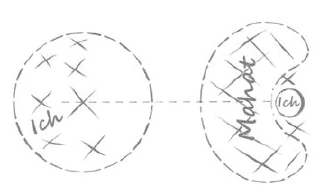
[ 17 ] [ 18 ] Die Evolution besteht darinnen, dass jeder Teil von Mahat so weit wächst, dass er mit dem ganzen Mahat identisch wird. Es geschieht das «große Opfer: Der ganze Mahat gibt sein Wesen an alle seine Teile ab. Das ist Entwicklung.
[ 17 ] [ 18 ] Evolution consists in each part of Mahat growing to the point where it becomes identical with the whole of Mahat. The “great sacrifice” takes place: the whole of Mahat imparts its essence to all its parts. This is development.