

Original Impulses of Spiritual Science
GA 96
20 October 1906, Berlin
Translate the original German text into any language:
Versions Available:
Original Impulses of Spiritual Science, tr. SOL
9. Der Erkenntnispfad und seine Stufen
9. The Path of Knowledge and Its Stages I
Der rosenkteuzerische Geistesweg
The Rosicrucian Spiritual Path
[ 1 ] Heute soll ein Bild des Erkenntnispfades gegeben werden, und es soll auch gezeigt werden, welches die Früchte dieses Pfades sind. Sie kennen einige Hauptgesichtspunkte, die dabei in Betracht kommen. Aber auch für diejenigen, die schon einschlägige Vorträge über den Erkenntnispfad gehört oder den «Lucifer», namentlich das zweiunddreißigste Heft gelesen haben, wird sich etwas Neues bieten, wenn wir den Erkenntnispfad so besprechen, wie es nur im intimen Kreise von Schülern der Geisteswissenschaft geschehen kann. Dabei wird es sich hauptsächlich darum handeln, diesen Erkenntnispfad zu besprechen, insofern er durch die rosenkreuzerische abendländische Geistesströmung vorgezeichnet ist, die seit dem 14. Jahrhundert die europäische Kultur an unbekannten Fäden geistig lenkt und leitet.
[ 1 ] Today we will present an overview of the path of knowledge and also show what the fruits of this path are. You are already familiar with some of the main points to be considered here. But even for those who have already heard relevant lectures on the path of knowledge or read *Lucifer*, specifically the thirty-second issue, there will be something new to discover when we discuss the path of knowledge in the way that is possible only within the intimate circle of students of spiritual science. The focus will be primarily on discussing this path of knowledge as it is outlined by the Western Rosicrucian spiritual current, which has been spiritually guiding and directing European culture along unseen threads since the 14th century.
[ 2 ] Die rosenkreuzerische Bewegung wirkte bis zum letzten Drittel des 19. Jahrhunderts ganz im Verborgenen. Was wirkliche Rosenkreuzerei war, konnte in keinem Buche gelesen werden, durfte auch nicht öffentlich ausgesprochen werden. Erst seit etwa dreißig Jahren sind einige der rosenkreuzerischen Lehren durch die theosophische Bewegung der Außenwelt bekanntgemacht worden, nachdem sie früher nur in streng geschlossenen Bünden gelehrt worden waren. Die elementarsten Lehren sind in dem, was man heute 'Theosophie nennt, vielfach enthalten - aber nur die elementarsten. Erst nach und nach ist es möglich, die Menschen tiefer hineinschauen zu lassen in die Weisheit, die seit dem Ende des 14. Jahrhunderts in jenen Rosenkreuzerschulen in Europa gepflegt worden ist.
[ 2 ] The Rosicrucian movement operated entirely in secret until the last third of the 19th century. What true Rosicrucianism was could not be read in any book, nor was it permitted to be spoken of publicly. Only in the last thirty years or so have some of the Rosicrucian teachings been made known to the outside world through the Theosophical Movement, after having previously been taught only within strictly closed societies. The most basic teachings are frequently found in what is today called “theosophy”—but only the most basic ones. Only gradually is it becoming possible to allow people a deeper insight into the wisdom that has been cultivated in those Rosicrucian schools in Europe since the end of the 14th century.
[ 3 ] Zunächst wollen wir uns klarmachen, daß es nicht nur eine Art von Erkenntnispfad gibt, sondern es kommen drei Arten in Betracht. Das ist jedoch nicht so aufzufassen, als ob es drei Wahrheiten gäbe. Die Wahrheit ist eine einzige, so wie sich allen, die auf dem Gipfel eines Berges stehen, die gleiche Aussicht eröffnet. Aber es gibt verschiedene Wege, um auf den Gipfel des Berges zu gelangen. Während des Aufstiegs hat man von jedem Punkt aus einen anderen Ausblick. Erst wenn man oben ist - und man kann den Gipfel von verschiedenen Seiten aus ersteigen -, hat man den freien vollen Ausblick nach der eigenen Perspektive. So ist es auch mit den drei Erkenntnispfaden. Der eine ist der orientalische Yogaweg, der zweite der christlich-gnostische Weg, der dritte der christlich-rosenkreuzerische Weg. Diese drei Wege führen zu der einzigen Wahrheit.
[ 3 ] First, let us make it clear that there is not just one kind of path to knowledge, but rather three kinds. However, this should not be understood to mean that there are three truths. There is only one truth, just as everyone standing on the summit of a mountain is presented with the same view. But there are different paths to reach the summit of the mountain. During the ascent, the view is different from every point along the way. Only when one is at the top—and one can ascend the summit from different sides—does one have the unobstructed, full view from one’s own perspective. So it is with the three paths of knowledge. The first is the Eastern path of yoga, the second the Christian-Gnostic path, and the third the Christian Rosicrucian path. These three paths lead to the one truth.
[ 4 ] Es gibt drei verschiedene Pfade, weil auf unserem Erdenrund die Menschennaturen verschieden sind. Man hat drei Typen von menschlichen Naturen zu unterscheiden. Wie es nicht richtig wäre, wenn jemand, um auf den Bergesgipfel zu kommen, nicht den nächsten, sondern einen von ihm weit abliegenden Fußpfad wählen würde, so wäre es auch nicht gut, wenn ein Mensch einen anderen als den ihm angemessenen geistigen Pfad einschlagen wollte. Darüber herrschen heute auch innerhalb der theosophischen Bewegung, die sich erst noch aus ihrem Anfangsstadium herausentwickeln muß, vielfach recht verworrene Vorstellungen. Man denkt vielfach, daß es nur einen einzigen Erkenntnispfad gäbe, und meint, dies sei der Yogaweg. Nun ist aber der orientalische Yogaweg weder der einzige Erkenntnispfad, noch ist er für Menschen, die innerhalb des europäischen Kulturgebietes leben, auch nur der günstige. Wer die Sache nur von außen betrachtet, kann freilich kaum die Einsicht haben, worum es sich hier handelt, weil die menschliche Natur doch im Grunde genommen bei den verschiedenen Rassen nicht so verschieden erscheint. Wenn man aber mit okkulten Kräften die große Verschiedenheit der Menschentypen betrachtet, kommt man darauf, daß etwas, das für die Orientalen, vielleicht auch für ganz einzelne Menschen in unserer Kultur gut sein mag, durchaus nicht für alle richtig ist. Es gibt auch Menschen, aber nur wenige innerhalb der europäischen Verhältnisse, die den orientalischen Yogaweg gehen können. Für die allermeisten Europäer ist er aber ungangbar. Er bringt Illusionen und auch seelische Zerstörung mit sich. Mögen sie auch äußerlich, selbst in den Augen des heutigen Wissenschafters, nicht so verschieden erscheinen — die östliche und die abendländische Natur sind total verschieden. Ein morgenländisches Gehirn, eine morgenländische Phantasie und ein morgenländisches Herz, sie wirken ganz anders als die Organe des Abendländers. Was man einem Menschen zumuten kann, der unter östlichen Verhältnissen aufgewachsen ist, darf man nie und nimmer einem Abendländer zumuten. Nur wer glaubt, daß Klima, Religion und soziales Leben keinen Einfluß auf den menschlichen Geist hätten, könnte meinen, es sei einerlei, unter welchen äußeren Verhältnissen jemand eine okkulte Schulung durchmacht. Weiß man aber, welchen tiefgehenden geistigen Einfluß alle diese äußeren Umstände auf die menschliche Natur haben, so versteht man, daß sich der Jogaweg nur für wenige Europäer und eigentlich nur für solche eignet, die sich gründlich und radikal aus den europäischen Verhältnissen herausreißen, daß er aber für Menschen unmöglich ist, welche innerhalb der europäischen Kultur stehenbleiben.
[ 4 ] There are three different paths because human natures vary across our globe. We must distinguish between three types of human nature. Just as it would be wrong for someone seeking to reach a mountain peak to choose not the nearest trail but one far removed from it, so too would it be wrong for a person to embark on a spiritual path other than the one suited to them. Even within the Theosophical Movement—which has yet to develop beyond its initial stage—there are today many rather confused notions on this subject. It is often thought that there is only a single path to knowledge, and it is believed that this is the path of yoga. However, the Eastern path of yoga is neither the only path to knowledge, nor is it even the most suitable one for people living within the European cultural sphere. Of course, anyone who views the matter only from the outside can hardly grasp what is at stake here, because human nature does not, after all, appear so different among the various races. But when one observes the great diversity of human types through occult powers, one comes to realize that something which may be good for Easterners—and perhaps also for very few individuals in our culture—is by no means suitable for everyone. There are also people—though only a few within the European context—who can follow the Eastern path of yoga. For the vast majority of Europeans, however, it is impassable. It brings with it illusions and even spiritual destruction. Even if they may not appear so different outwardly—even in the eyes of today’s scientists—Eastern and Western natures are entirely different. An Eastern mind, an Eastern imagination, and an Eastern heart function quite differently from the faculties of a Westerner. What one can reasonably expect of a person who has grown up under Eastern conditions must never, under any circumstances, be expected of a Westerner. Only someone who believes that climate, religion, and social life have no influence on the human spirit could think that it makes no difference under what external conditions a person undergoes occult training. But if one is aware of the profound spiritual influence that all these external circumstances have on human nature, one understands that the path of yoga is suitable only for a few Europeans—and really only for those who thoroughly and radically break away from European conditions—but that it is impossible for people who remain within European culture.
[ 5 ] Menschen, die heute noch innerlich aufrichtige und ehrliche Christen sind, die noch von gewissen Hauptsätzen des Christentums durchdrungen sind, mögen den christlich-gnostischen Weg wählen, der nicht sehr verschieden von dem kabbalistischen Weg ist. Für die Europäer ist aber im allgemeinen der rosenkreuzerische Weg der einzig richtige Pfad. Heute soll dieser europäische Rosenkreuzerweg besprochen werden, und zwar die verschiedenen Verrichtungen, die dieser Weg den Menschen vorschreibt, und auch das, was dem Menschen als Frucht winkt, wenn er diesen Erkenntnispfad geht. Niemand soll glauben, daß dies nur ein Weg für wissenschaftlich gebildete Menschen oder gar für Gelehrte sei. Der einfachste Mensch kann ihn beschreiten. Wenn man aber diesen Weg geht, wird man sehr bald in der Lage sein, jedem Einwand der europäischen Wissenschaft gegen den Okkultismus zu begegnen. Das war eine der Hauptaufgaben der rosenkreuzerischen Meister: diejenigen, die den Erkenntnispfad gehen, so auszurüsten, daß sie das okkulte Wissen verteidigen und diesen Pfad auch der Welt gegenüber durchführen können. Der einfache Mensch, der nur ein paar populäre Vorstellungen aus der modernen Wissenschaft oder auch gar nichts davon besitzt, aber einen ehrlichen Wahrheitsdrang in sich hat, wird den Rosenkreuzerweg ebenso gehen können wie der Gebildetste und Gelehrte.
[ 5 ] People who are still, deep down, sincere and honest Christians today—who are still imbued with certain fundamental principles of Christianity—may choose the Christian-Gnostic path, which is not very different from the Kabbalistic path. For Europeans, however, the Rosicrucian path is generally the only correct one. Today we shall discuss this European Rosicrucian path—specifically, the various practices it prescribes for people, as well as the fruits that await those who walk this path of knowledge. No one should believe that this is a path reserved only for scientifically educated people, let alone for scholars. Even the simplest person can follow it. But once one walks this path, one will very soon be able to counter any objection raised by European science against occultism. This was one of the main tasks of the Rosicrucian Masters: to equip those who walk the path of knowledge so that they can defend occult knowledge and also uphold this path before the world. The ordinary person, who possesses only a few popular notions from modern science—or perhaps none at all—but who has an honest thirst for truth within, will be able to walk the Rosicrucian path just as well as the most educated and learned person.
[ 6 ] Zwischen den drei Erkenntniswegen bestehen große Unterschiede. Der erste betrifft das Verhältnis des Schülers zu dem okkulten Lehrer, der allmählich der Guru wird oder das Verhältnis zum Guru vermittelt. Die Eigentümlichkeit des orientalischen Jogaweges bringt es mit sich, daß dieses Verhältnis das denkbar strengste ist. Der Guru ist unbedingte Autorität für den Schüler. Wenn das nicht der Fall wäre, könnte diese Schulung nicht den richtigen Erfolg haben. Eine orientalische Yogaschulung ist ohne eine strenge Unterwerfung unter die Autorität des Guru gar nicht möglich. Bei dem christlich-gnostischen und bei dem kabbaistischen Weg wird schon ein etwas loseres Verhältnis zu dem Guru auf dem physischen Plan vorausgesetzt. Der Guru führt den Schüler zu dem Christus Jesus hin, er ist der Vermittler. Und bei dem Rosenkreuzerweg wird der Guru immer mehr der Freund, dessen Autorität auf innerer Zustimmung beruht. Ein anderes Verhältnis als ein streng persönliches Vertrauensverhältnis ist hier nicht möglich. Würde auch nur ein klein wenig Mißtrauen zwischen Schüler und Lehrer entstehen, so würde das Band, das zwischen beiden bestehen muß, zerrissen werden und jene Kräfte, die zwischen Lehrer und Schüler spielen, würden nicht mehr wirken. Über die Rolle seines Lehrers wird sich der Schüler mitunter falsche Vorstellungen machen. Leicht wird es ihm vorkommen, als ob er da oder dort den Lehrer unbedingt sprechen, als ob er oft mit ihm physisch zusammen sein müßte. Zwar ist es manchmal eine dringende Notwendigkeit, daß der Lehrer an den Schüler physisch herantritt, aber das ist nicht so oft der Fall, wie der Schüler glauben mag. Die Wirkung, die der Lehrer auf den Schüler ausübt, kann dieser anfangs nicht in der richtigen Weise beurteilen. Der Lehrer hat Mittel, die sich erst allmählich dem Schüler enthüllen. Manches Wort, von dem der Schüler glaubt, es sei zufällig gesprochen, ist von großer Bedeutung. Es wirkt unbewußt in der Seele des Schülers wie eine Richtkraft fort, die ihn lenkt und leitet. Übt der Lehrer die okkulten Einflüsse richtig aus, dann ist auch das reale Band zwischen ihm und dem Schüler da. Dazu kommen dann die auf liebevoller Teilnahme beruhenden Wirkungen in die Ferne, die dem Lehrer immer zur Verfügung stehen und die sich dem Schüler erst später immer mehr enthüllen, wenn er Eingang in die höheren Welten findet. Aber unbedingt notwendig ist das absoluteste Vertrauen, sonst ist es besser, das Band zwischen Lehrer und Schüler zu lösen.
[ 6 ] There are major differences between the three paths of knowledge. The first concerns the student’s relationship to the occult teacher, who gradually becomes the guru or facilitates the relationship with the guru. The distinctive nature of the Eastern yoga path means that this relationship is the strictest conceivable. The guru is the student’s unconditional authority. If this were not the case, this training could not achieve the proper success. Eastern yoga training is not possible at all without strict submission to the guru’s authority. In the Christian-Gnostic and Kabbalistic paths, a somewhat looser relationship with the guru on the physical plane is already presupposed. The guru leads the disciple to Christ Jesus; he is the mediator. And on the Rosicrucian path, the guru increasingly becomes a friend whose authority is based on inner consent. No relationship other than a strictly personal one of trust is possible here. If even the slightest mistrust were to arise between student and teacher, the bond that must exist between them would be severed, and the forces at work between teacher and student would cease to operate. The student will sometimes form false ideas about the role of his teacher. It will easily seem to him as if he absolutely must speak with the teacher here or there, as if he often had to be physically present with him. Although it is sometimes an urgent necessity for the teacher to approach the student physically, this is not as often the case as the student might believe. At first, the student cannot properly assess the influence the teacher exerts on him. The teacher possesses means that are revealed to the student only gradually. Many a word that the student believes was spoken by chance is of great significance. It continues to work unconsciously in the student’s soul as a guiding force that directs and leads him. If the teacher exercises these occult influences correctly, then the real bond between him and the student is established. Added to this are the effects at a distance, based on loving participation, which are always available to the teacher and which are revealed to the student more and more only later, when he gains access to the higher worlds. But absolute trust is absolutely essential; otherwise, it is better to sever the bond between teacher and student.
[ 7 ] Nun sollen die Regeln, welche innerhalb der rosenkreuzerischen Schulung eine gewisse Rolle spielen, kurz Erwähnung finden. Die Dinge brauchen nicht genau so aufzutreten, wie sie hier aufgezählt werden. Je nach der Individualität, dem Beruf, dem Lebensalter des Schülers wird der Lehrer aus den verschiedenen Gebieten dies oder jenes herauszunehmen und es in dieser oder jener Weise anzuordnen haben. Nur eine Übersicht soll hier zur Kenntnisnahme gegeben werden.
[ 7 ] Now we shall briefly mention the rules that play a certain role within Rosicrucian training. Things do not have to occur exactly as they are listed here. Depending on the student’s individuality, profession, and age, the teacher will have to select this or that from the various fields and arrange it in this or that way. Only a general overview is provided here for your information.
[ 8 ] Was bei der Rosenkreuzerschulung in hohem Grade notwendig ist, wird gewöhnlich bei aller okkulten Schulung nicht genügend beachtet. Es ist ein klares und logisches Denken — oder wenigstens das Streben danach. Zunächst soll alles verworrene oder vorurteilsvolle Denken ausgemerzt werden. Der Mensch hat sich daran zu gewöhnen, die Zusammenhänge in der Welt nach großen, selbstlosen Gesichtspunkten zu denken. Dazu ist der beste Weg, wenn man als schlichter Mensch diesen Rosenkreuzerpfad durchmachen will, das Studium der elementaren Lehren der Geisteswissenschaft. Es ist kein berechtigter Einwand, zu sagen: Was nützt es mir, die Lehren über die höheren Welten, über die Menschenrassen und Kulturen, über Karma und Reinkarnation zu studieren, da ich das alles doch nicht selbst sehen und wahrnehmen kann. — Es ist dies kein richtiger Einwand, denn gerade das Beschäftigen mit diesen Wahrheiten reinigt das Denken und diszipliniert es so, daß der Mensch reif für die anderen Maßnahmen wird, die zum okkulten Pfad führen. Der Mensch denkt im gewöhnlichen Leben meistens sehr ungeordnet. Die Richtlinien und Abschnitte der menschlichen Entwickelung und der planetatischen Evolution, die großen Gesichtspunkte, die von den Wissenden erschlossen werden, bringen das Denken in geordnete Formen. Alles dies ist ein Teil der rosenkreuzerischen Schulung. Man nennt dies das Studium. Daher wird der Lehrer dem Schüler anheimgeben, sich in die elementaren Lehren über Reinkarnation und Karma, über die drei Welten, die Akasha-Chronik, die Evolution der Erde und die Menschenrassen hineinzudenken. Der Umfang der elementaren Geisteswissenschaft, wie sie heute verbreitet wird, ist für den schlichten Menschen die beste Vorbereitung.
[ 8 ] What is of the utmost importance in Rosicrucian training is usually not given sufficient attention in any form of occult training. It is clear and logical thinking—or at least the striving toward it. First and foremost, all confused or prejudiced thinking must be eradicated. One must accustom oneself to thinking about the interrelationships in the world from broad, selfless perspectives. The best way to do this—if one wishes to follow this Rosicrucian path as an ordinary person—is to study the elementary teachings of spiritual science. It is not a valid objection to say: “What good does it do me to study the teachings about the higher worlds, about the human races and cultures, about karma and reincarnation, since I cannot see or perceive any of this myself?” — This is not a valid objection, for it is precisely the engagement with these truths that purifies the mind and disciplines it in such a way that a person becomes ready for the other steps leading to the occult path. In ordinary life, a person’s thinking is usually very disorganized. The guidelines and stages of human development and planetary evolution—the broad perspectives revealed by those who are knowledgeable—bring thought into orderly forms. All of this is part of Rosicrucian training. This is called “the study.” Therefore, the teacher will entrust the student with the task of delving into the elementary teachings on reincarnation and karma, on the three worlds, the Akashic Records, the evolution of the Earth, and the human races. The scope of elementary spiritual science, as it is taught today, is the best preparation for the ordinary person.
[ 9 ] Denen aber, welche schärfer in das Denken hineingehen mögen, um sich noch intensiver auf das eigentliche Grundgerüst der menschlichen Seele einzulassen, seien zum Studium solche Bücher empfohlen, die gerade dazu geschrieben worden sind, um das Denken in disziplinierte Bahnen zu bringen. Die Bücher, die zu diesem Zwecke geschrieben worden sind — wenn auch in ihnen nicht das Wort Theosophie steht -, sind meine beiden Bücher «Wahrheit und Wissenschaft» und «Die Philosophie der Freiheit». Man schreibt ja solche Bücher, damit sie einen Zweck erfüllen. Diejenigen, welche auf Grund einer energischen Schulung des logischen Denkens an das weitere Studium herankommen wollen, werden gut daran tun, ihren Geist einmal dem «seelischen und geistigen Turnen» zu unterwerfen, welches diese Bücher erfordern. Das gibt ihnen den Grund, auf welchem das Rosenkreuzerstudium aufgebaut ist.
[ 9 ] However, for those who wish to delve more deeply into thought in order to engage even more intensely with the very foundation of the human soul, I recommend studying books that have been written specifically to channel thought along disciplined lines. The books written for this purpose—even if the word “theosophy” does not appear in them—are my two books, *Truth and Science* and *The Philosophy of Freedom*. After all, such books are written to serve a purpose. Those who, through rigorous training in logical thinking, wish to proceed to further study would do well to subject their minds to the “mental and spiritual exercises” that these books require. This provides them with the foundation upon which Rosicrucian study is built.
[ 10 ] Wenn man den physischen Plan beobachtet, nimmt man gewisse Sinneseindrücke wahr, Farben und Licht, Wärme und Kälte, Geruch und Geschmack, Druck- und Tastempfindungen und die Gehörseindrücke. Man verbindet mit alledem die Gedanken- und Verstandestätigkeit. Der Verstand, der Gedanke gehört noch zum physischen Plan. Das alles können Sie auf dem physischen Plan wahrnehmen. Anders sind die Wahrnehmungen auf dem Astralplan, sie sehen ganz anders aus. Und wieder anders sind die Wahrnehmungen auf dem Devachanplan, geschweige in den noch höheren Geistgebieten. Der Mensch, der noch nicht einen Einblick in die höheren Welten erlangt hat, kann sich jedoch eine bildliche Vorstellung davon machen. Durch Bilder eine Anschauung von diesen Welten zu geben, wird auch in der mir geläufigen Darstellungsweise versucht. Wer dann in die höheren Gebiete aufsteigt, sieht selber, wie sie auf ihn wirken. Auf jedem Plan macht der Mensch neue Erfahrungen. Aber eines gibt es, das durch alle Welten hindurch bis hinauf zum Devachan dasselbe bleibt, das sich nicht ändert: Das ist das logisch geschulte Denken. Erst auf dem Buddhiplan hat das Denken nicht mehr die gleiche Geltung wie auf dem physischen Plan. Da muß ein anderes Denken eintreten. Aber für die drei Welten unterhalb des Buddhiplanes, für den physischen, astralen und devachanischen Plan, gilt überall das gleiche Denken. Wer sich also durch das Studium in der physischen Welt ordentlich im Denken schult, wird in den höheren Welten in diesem Denken einen guten Führer haben und nicht so leicht straucheln wie der, welcher mit verworrenem Denken in die Geistgebiete aufsteigen will. Daher lehrt die Rosenkreuzerschulung die Menschen, sich in den höheren Welten frei zu bewegen, indem sie dieselben dazu anhält, ihr Denken zu disziplinieren. Wer in diese Welten hinaufgelangt, lernt zwar Wahrnehmungsweisen kennen, die es auf dem physischen Plan nicht gibt, aber er wird sie mit seinem Denken beherrschen können.
[ 10 ] When observing the physical plane, one perceives certain sensory impressions: colors and light, heat and cold, smell and taste, sensations of pressure and touch, and auditory impressions. One associates all of this with the activity of thought and the intellect. Intellect and thought still belong to the physical plane. You can perceive all of this on the physical plane. Perceptions on the astral plane are different; they look entirely different. And perceptions on the Devachan plane are different still, not to mention those in the even higher spiritual realms. However, a person who has not yet gained insight into the higher worlds can still form a mental picture of them. The method of presentation with which I am familiar also attempts to provide a visual conception of these worlds through images. Whoever then ascends into the higher realms will see for themselves how they affect them. On every plane, a person has new experiences. But there is one thing that remains the same throughout all the worlds, all the way up to Devachan—something that does not change: that is thinking trained in logic. Only on the Buddha plane does thinking no longer hold the same validity as on the physical plane. There, a different kind of thinking must take its place. But for the three worlds below the Buddha plane—the physical, astral, and Devachan planes—the same kind of thinking applies everywhere. Therefore, whoever properly trains their thinking through study in the physical world will have a good guide in this thinking in the higher worlds and will not stumble as easily as one who seeks to ascend into the spiritual realms with confused thinking. For this reason, the Rosicrucian training teaches people to move freely in the higher worlds by urging them to discipline their thinking. Those who ascend into these worlds will indeed encounter modes of perception that do not exist on the physical plane, but they will be able to master them through their thinking.
[ 11 ] Das zweite, das der Schüler auf dem rosenkreuzerischen Erkenntnispfade lernt, ist die Imagination. Sie wird dadurch vorbereitet, daß der Schüler selbst allmählich lernt, in solche bildlichen Vorstellungen einzudringen, die im Sinne des Goetheschen Wortes « Alles Vergängliche ist nur ein Gleichnis» die höheren Welten darstellen. So wie der Mensch gewöhnlich durch die physische Welt geht, nimmt er die Dinge auf, wie sie sich seinen Sinnen darstellen, aber nicht das, was dahinter ist. Er wird wie mit einem Bleigewicht in die physische Welt hinabgezogen. Der Mensch wird von dieser physischen Welt erst frei, wenn er lernt, die Dinge um sich herum als Sinnbilder zu nehmen. Deshalb muß er ein moralisches Verhältnis zu ihnen zu gewinnen suchen. Der Lehrer wird ihm auch dafür manche Anleitungen geben, um äußere Erscheinungen als Symbole für Geistiges zu betrachten, aber der Schüler kann auch selbst viel dazu tun. Zum Beispiel kann er eine Herbstzeitlose und ein Veilchen betrachten. Wenn ich in der Herbstzeitlose das Symbol für ein melancholisches Gemüt sehe, habe ich sie nicht nur so aufgefaßt, wie sie mir äußerlich entgegentritt, sondern als Sinnbild für eine Eigenschaft. Im Veilchen mag man dagegen das Sinnbild für ein stilles, frommes Gemüt erblicken. So gehen Sie von Gegenstand zu Gegenstand, von Pflanze zu Pflanze, von Tier zu Tier und betrachten sie als Sinnbilder für Geistiges. Dadurch machen Sie Ihr Vorstellungsvermögen flüssig und lösen es von den scharfen Konturen des sinnlichen Wahrnehmens los. Man kommt etwa dazu, in jeder 'Tiergattung das Sinnbild für eine Eigenschaft zu erblicken. Man nimmt das eine Tier als Symbol der Stärke, ein anderes als Symbol der Schlauheit. Nicht flüchtig, sondern ernst und auf Schritt und Tritt müssen wir solche Dinge zu verfolgen suchen.
[ 11 ] The second thing the student learns on the Rosicrucian path of knowledge is imagination. It is prepared by the student gradually learning to penetrate into those pictorial representations which, in the sense of Goethe’s words, “Everything transitory is but a parable,” depict the higher worlds. Just as a person usually moves through the physical world, they perceive things as they appear to their senses, but not what lies behind them. They are drawn down into the physical world as if by a lead weight. A person becomes free from this physical world only when they learn to regard the things around them as symbols. Therefore, they must seek to develop a moral relationship with them. The teacher will also provide some guidance on how to view external phenomena as symbols of the spiritual, but the student can also do much on their own. For example, they can observe an autumn crocus and a violet. If I see the autumn crocus as a symbol of a melancholic disposition, I have not merely perceived it as it appears to me outwardly, but as a symbol of a quality. In the violet, on the other hand, one might see the symbol of a quiet, devout disposition. In this way, you move from object to object, from plant to plant, from animal to animal, and regard them as symbols of the spiritual. Through this, you make your imagination fluid and free it from the sharp contours of sensory perception. One comes to see, for example, in every “animal species” a symbol of a particular quality. One regards one animal as a symbol of strength, another as a symbol of cunning. We must seek to pursue such things not fleetingly, but earnestly and at every turn.
[ 12 ] Im Grunde spricht die ganze menschliche Sprache in Symbolen. Die Sprache ist nichts anderes als ein Sprechen in Symbolen. Jedes Wort ist ein Symbolum. Auch die Wissenschaft, die den Glauben hat, einen jeden Gegenstand nur objektiv zu bezeichnen, muß sich der Sprache bedienen, und ihre Worte wirken sinnbildlich. Wenn Sie von Lungenflügeln sprechen, so wissen Sie, daß das keine Flügel sind, aber Sie pflegen sie doch so zu bezeichnen. Für den, der auf dem physischen Plan bleiben will, wird es gut sein, sich nicht zu stark in dieser Symbolik zu verlieren, aber der fortgeschrittene Schüler wird sich auch nicht darin verlieren. Wenn man nachforscht, empfindet man, welche Tiefe ursprünglich in der menschlichen Sprache liegt. Solche tiefe Naturen wie Paracelsus und Jakob Böhme verdanken ihre Entwickelung mit dem Umstande, daß sie sich nicht scheuten, im Gespräch mit Bauern und Landstreichern die imaginative Bedeutung der Sprache zu studieren. Da wirkten die Worte Natur, Geist, Seele noch ganz anders. Sie wirkten stärker. Wenn draußen auf dem Lande die Bauersfrau der Gans eine Feder ausrupfte, nannte sie das Innere die Seele der Feder. Solche Symbole in der Sprache muß der Schüler selbst finden. Dadurch löst er sich von der physischen Welt los und lernt es, sich zur Imagination zu erheben. Es hat eine starke Wirkung, wenn so die Welt dem Menschen zum Gleichnis wird. Wenn der Schüler das lange genug übt, wird er entsprechende Wirkungen bemerken. Beim Anschauen einer Blume wird sich zum Beispiel nach und nach etwas von der Blume loslösen. Die Farbe, die zuerst nur an der Oberfläche der Blume haftete, steigt wie eine kleine Flamme auf und schwebt frei im Raume. So gestaltet sich die imaginative Erkenntnis heraus. Es ist dann bei allen Dingen so, als ob sich ihre Oberfläche loslöste. Der ganze Raum erfüllt sich mit der Farbe, die flammenartig im Raume verschwebt. Auf diese Weise scheint sich die ganze Lichtwelt aus der physischen Wirklichkeit herauszuziehen. Wenn sich ein solches Farbenbild herauszieht und frei im Raume schwebt, fängt es bald an, an etwas zu haften. Es drängt zu etwas hin, es bleibt nicht beliebig irgendwo stehen; es faßt eine Wesenheit ein, die nun selbst als geistige Wesenheit in der Farbe erscheint. Was der Schüler aus den Dingen der physischen Welt als Farbe herausgezogen hat, umkleidet die geistigen Wesenheiten des astralen Raumes.
[ 12 ] Essentially, all human language speaks in symbols. Language is nothing other than speaking in symbols. Every word is a symbol. Even science, which believes it can describe every object purely objectively, must make use of language, and its words function symbolically. When you speak of “lungs,” you know that they are not wings, yet you still tend to refer to them as such. For those who wish to remain on the physical plane, it is best not to lose themselves too deeply in this symbolism, but the advanced student will not lose themselves in it either. When one investigates, one senses the depth that originally lies within human language. Profound figures such as Paracelsus and Jakob Böhme owe their development to the fact that they did not shy away from studying the imaginative meaning of language in conversation with farmers and vagabonds. There, the words “nature,” “spirit,” and “soul” had a very different effect. They had a stronger impact. Out in the countryside, when a farmer’s wife plucked a feather from a goose, she called the inner part the “soul” of the feather. The student must discover such symbols in language for themselves. In doing so, they detach themselves from the physical world and learn to rise to the level of imagination. It has a powerful effect when the world thus becomes a parable for the human being. If the student practices this long enough, he will notice corresponding effects. When looking at a flower, for example, something will gradually detach itself from the flower. The color, which at first clung only to the flower’s surface, rises like a small flame and hovers freely in space. This is how imaginative insight takes shape. It is then as if the surface of all things were detaching itself. The entire room fills with the color, which floats through the space like a flame. In this way, the entire world of light seems to draw itself out of physical reality. When such a color image emerges and floats freely in space, it soon begins to attach itself to something. It is drawn toward something; it does not come to rest arbitrarily anywhere; it encompasses a being that now appears within the color as a spiritual entity. What the student has drawn out as color from the things of the physical world envelops the spiritual beings of the astral realm.
[ 13 ] Hier ist der Punkt, wo der Rat des okkulten Lehrers eingreifen muß, weil der Schüler sonst leicht den Boden verlieren kann. Dies könnte aus zwei Gründen geschehen. Der eine ist der folgende: Durch eine bestimmte Erfahrung muß jeder Schüler hindurchgehen. Die Vorstellungen, die sich aus den physischen Dingen herausschälen —es sind nicht nur Farben, sondern auch Geruchs- und Gehörvotrstellungen -, zeigen sich in merkwürdigen häßlichen, vielleicht auch schönen Gestalten, Tiergesichtern, Formen von Pflanzen, auch häßlichen Menschenantlitzen. Dieses erste Erlebnis stellt ein Spiegelbild der eigenen Seele dar. Die eigenen Leidenschaften und Triebe, das noch in der Seele ruhende Böse tritt vor den vorgeschrittenen Schüler wie in einem Spiegel im Astralraum auf. Da braucht er den Rat des okkulten Lehrers, der ihm sagt, daß das nichts Objektives ist, sondern ein Spiegelbild seiner eigenen inneren Wesenheit.
[ 13 ] This is the point where the guidance of the occult teacher must come into play, because otherwise the student can easily lose his footing. This could happen for two reasons. The first is as follows: Every student must go through a certain experience. The images that emerge from physical objects—not only colors, but also sensations of smell and sound—manifest as strange, ugly, and perhaps even beautiful forms: animal faces, plant shapes, and even ugly human faces. This first experience is a reflection of the student’s own soul. One’s own passions and instincts, the evil still slumbering in the soul, appear before the advanced student as if in a mirror in the astral realm. Here the student needs the guidance of the occult teacher, who tells him that this is not something objective, but a reflection of his own inner being.
[ 14 ] Daß er auf diesen Rat des Lehrers angewiesen ist, werden Sie begreifen, wenn noch etwas über die Art, wie solche Bilder auftreten, gesagt wird. Oft ist betont worden, daß im Astralraum alles umgekehrt ist, daß alles in Spiegelbildern auftritt. Der Schüler kann daher leicht durch Gaukelbilder irregeführt werden, namentlich wenn es sich um Spiegelungen seines eigenen Wesens handelt. Das Spiegelbild einer Leidenschaft tritt nicht nur so auf, daß es wie ein Tier ausschaut, das auf ihn zukommt — das wäre noch das geringste -, sondern man muß hier noch mit anderem rechnen. Nehmen wir an, in dem Menschen wäre eine verborgene recht böse Leidenschaft. Als Spiegelung erscheint ein solcher Trieb oder eine Begierde sehr häufig in verlockender Gestalt, während sich gerade gute Eigenschaften manchmal gar nicht verlockend ausnehmen. Wieder liegt hier etwas vor, was die Sage wunderbar dargestellt hat. Sie finden ein Bild dafür in der Herkulesmythe. Als Herkules seinen Weg antritt, stehen die bösen und die guten Eigenschaften vor ihm. Das Laster kleidet sich in die verführerische Gestalt der Schönheit, die Tugend aber in das Gewand der Anspruchslosigkeit.
[ 14 ] You will understand why he is dependent on this advice from his teacher once we have said a little more about the way such images appear. It has often been emphasized that in the astral realm everything is reversed, that everything appears as a mirror image. The student can therefore easily be misled by illusory images, especially when they are reflections of his own being. The reflection of a passion does not merely appear as an animal approaching him—that would be the least of it—but one must also expect other things here. Let us suppose that a person harbors a hidden, quite evil passion. As a reflection, such an impulse or desire very often appears in an alluring form, whereas good qualities, on the other hand, sometimes do not appear alluring at all. Once again, we have here something that legend has depicted wonderfully. You will find an illustration of this in the myth of Hercules. As Hercules sets out on his journey, the evil and the good qualities stand before him. Vice cloaks itself in the seductive form of beauty, while virtue dons the garb of modesty.
[ 15 ] Es kommt nun noch etwas anderes hinzu. Selbst wenn der Schüler bereits in der Lage ist, die Dinge objektiv zu sehen, so ist noch immer die andere Möglichkeit vorhanden, daß sich seine innere Willkür wie eine Kraft äußert, welche die Erscheinungen lenkt und leitet. Er muß es dahin bringen, daß er dies durchschaut und versteht, denn der Wunsch hat einen starken Einfluß auf dem astralen Plan. Alles, was als dirigierende Kraft hier in der physischen Welt wirkt, ist nicht vorhanden, wenn man in die imaginative Welt kommt. Wenn Sie sich auf dem physischen Plan einbilden, Sie hätten etwas getan, was Sie in Wahrheit nicht getan haben, dann werden Sie sich bald davon überzeugen, daß es sich nicht so verhält, indem Ihnen die Tatsachen auf dem physischen Plan entgegentreten. So ist es aber nicht im Astralraum. Da gaukeln Ihnen die eigenen Wünsche Bilder vor, da müssen Sie von einem Wissenden Anleitung haben, wie diese imaginativen Bilder zusammenzusetzen sind, um ihre wahre Bedeutung zu erkennen.
[ 15 ] There is now another factor to consider. Even if the student is already able to view things objectively, there is still the possibility that his inner arbitrariness will manifest as a force that directs and guides phenomena. He must come to see through and understand this, for desire exerts a strong influence on the astral plane. Everything that acts as a directing force here in the physical world is absent when one enters the world of imagination. If, on the physical plane, you imagine that you have done something that you have not actually done, you will soon be convinced that this is not the case when the facts on the physical plane confront you. But this is not how it is in the astral realm. There, your own desires conjure up images; you must receive guidance from someone knowledgeable on how to interpret these imaginative images in order to recognize their true meaning.
[ 16 ] Das dritte in der Rosenkreuzerschulung ist das Lernen der okkulten Schrift. Was ist diese okkulte Schrift? Es gibt gewisse Bilder, Symbole, die durch einfache Linien hergestellt oder durch Farben aneinander gefügt werden. Solche Symbole stellen eine ganz bestimmte okkulte Zeichensprache dar. Um ein Beispiel zu erwähnen, sei das Folgende gesagt. Es gibt in der höheren Welt einen Vorgang, der sich auch in die physische Welt hinein auswirkt: das Drehen des Wirbels. Sie können das Drehen des Wirbels beobachten, wenn Sie einen Sternnebel, beispielsweise den Orionnebel, ansehen. Da sehen Sie eine Spirale. Nur ist das auf dem physischen Plan. Aber Sie können das auch auf allen Planen betrachten. Es stellt sich so dar, daß sich ein Wirbel in einen anderen hineinschwingt. Das (a) ist eine Figur, die auf dem Astralplan bei allen möglichen Bildungen vorkommt. Wenn Sie diese Figur verstehen, begreifen Sie durch sie auch, wie eine Menschenrasse sich in eine andere verwandelt. Beim Entstehen der ersten Unterrasse unserer gegenwärtigen Hauptrasse stand die Sonne gerade im Zeichen des Krebses. Damals schlang sich also eine Rasse in die andere hinein; deshalb hat man für den Krebs das okkulte Zeichen (b). So sind die Tierkreiszeichen alle okkulte Zeichen. Man muß nur ihre Bedeutung kennenlernen und verstehen.
[ 16 ] The third aspect of Rosicrucian training is the study of occult script. What is this occult script? There are certain images and symbols created by simple lines or assembled through colors. Such symbols constitute a very specific occult sign language. To give an example, consider the following. There is a process in the higher world that also has an effect on the physical world: the rotation of the vortex. You can observe the rotation of the vortex when you look at a nebula, such as the Orion Nebula. There you will see a spiral. But that is on the physical plane. You can also observe this on all planes. It manifests as one vortex swinging into another. Figure (a) is a form that occurs on the astral plane in all manner of formations. If you understand this figure, you will also come to understand through it how one human race transforms into another. When the first subrace of our present-day main race came into being, the Sun was precisely in the sign of Cancer. At that time, one race thus intertwined with another; that is why Cancer has the occult symbol (b). Thus, the signs of the zodiac are all occult symbols. One need only learn and understand their meaning.
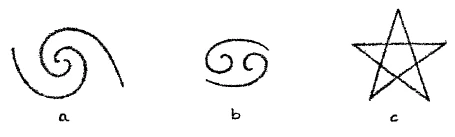
[ 17 ] Ein solches Zeichen ist auch das Pentagramm (c). Der Schüler lernt, mit diesem Zeichen besondere Empfindungen und Gefühle zu verbinden. Sie sind das Gegenbild von astralen Vorgängen. Diese Zeichensprache, die als okkulte Schrift gelernt wird, ist nichts anderes als die Wiedergabe der Gesetze höherer Welten. So ist das Pentagramm ein Zeichen, das Verschiedenes ausdrückt. Wie der Buchstabe B bei den verschiedensten Worten verwendet wird, so können auch die Zeichen der okkulten Schrift mannigfache Bedeutungen haben. Das Pentagramm, das Hexagramm, der Winkel und andere Figuren lassen sich zu einer okkulten Schrift zusammensetzen, und diese ist wieder ein Wegweiser in den höheren Welten. Das Pentagramm ist das Zeichen für den fünfgliedrigen Menschen, ferner das Zeichen der Verschwiegenheit, aber auch das Zeichen, das der Gattungsseele der Rose zugrunde liegt. Wenn Sie die Blütenblätter der Rose im Bilde verbinden, bekommen Sie das Pentagramm heraus. Wie das B in den Worten Band und Beben jeweils etwas anderes besagt, so bedeuten also auch die Zeichen in der okkulten Schrift Unterschiedliches. Man lernt sie in der richtigen Weise anordnen. Das sind die Wegweiser auf den astralen Plan. Geradeso wie sich ein Analphabet zu einem Leser auf dem physischen Plan verhält, verhält sich jemand, der nur die Bilder als solche sieht, zu einem solchen, der die okkulte Schrift gelernt hat. Auf dem physischen Plan sind die Schriftzeichen vielfach willkürlich, ursprünglich waren sie aber Abbilder der astralen Zeichensprache. Nehmen Sie ein uraltes astrales Symbol, den Hermesstab mit der Schlange. Das ist in unserer Schrift zum Zeichen E geworden.
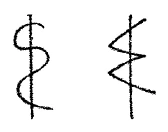
[ 17 ] The pentagram (c) is another such symbol. The student learns to associate specific sensations and feelings with this symbol. They are the antithesis of astral processes. This symbolic language, which is learned as an occult script, is nothing other than the representation of the laws of higher worlds. Thus, the pentagram is a symbol that expresses various things. Just as the letter B is used in a wide variety of words, so too can the symbols of occult script have manifold meanings. The pentagram, the hexagram, the angle, and other figures can be combined to form an occult script, and this, in turn, serves as a guide to the higher worlds. The pentagram is the symbol of the fivefold human being, as well as the symbol of secrecy, but also the symbol underlying the species soul of the rose. If you connect the petals of the rose in the illustration, you will form a pentagram. Just as the letter “B” conveys a different meaning in the words “band” and “beben,” so too do the symbols in occult script carry different meanings. One learns to arrange them in the correct manner. These are the signposts to the astral plane. Just as an illiterate person relates to a reader on the physical plane, so does someone who sees only the images as such relate to one who has learned the occult script. On the physical plane, written characters are often arbitrary, but originally they were representations of the astral sign language. Take an ancient astral symbol, the Caduceus with the serpent. In our script, this has become the letter E.
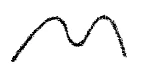
[ 18 ] Oder nehmen Sie das Zeichen W, welches die Wellenbewegung des Wassers bezeichnet. Es ist das Seelenzeichen des Menschen, zugleich das Zeichen für das Wort. Das M ist nichts anderes als die nachgebildete Oberlippe. Im Laufe der Entwickelung ist das alles mehr willkürlich geworden. Auf den okkulten Planen herrscht dagegen Notwendigkeit. Da kann man diese Dinge leben.
[ 18 ] Or take the letter W, which represents the undulating motion of water. It is the soul symbol of humankind, and at the same time the symbol for the word. The letter M is nothing other than a representation of the upper lip. In the course of evolution, all of this has become more arbitrary. On the occult planes, however, necessity reigns. There, one can live these things.
[ 19 ] Das vierte ist der sogenannte Lebensrhythmus. Einen solchen Rhythmus kennen die Menschen im profanen Leben sehr wenig. Sie leben egoistisch darauf los. Höchstens für die Kinder in der Schule bedeutet der Stundenplan noch einen gewissen Lebensrhythmus, denn da wiederholt sich der Ablauf der täglichen Schulstunden von Woche zu Woche. Aber wer tut das im gewöhnlichen Leben? Dennoch steigt man zu einer höheren Entwickelung nur dadurch auf, daß man Rhythmus, Wiederholung in sein Leben hineinbringt. In der ganzen Natur herrscht Rhythmus. Im Gang der Planeten um die Sonne, im jährlichen Erscheinen und Verblühen der Pflanzen, bis ins Tierreich, bis ins sexuelle Leben der Tiere hinein ist alles rhythmisch geregelt. Erst dem Menschen ist es gestattet, damit er frei handeln kann, auch ohne Rhythmus zu leben. Aber er muß aus freien Stücken wieder Rhythmus in das Chaos hineinbringen. Ein guter Rhythmus besteht darin, täglich zu bestimmten Zeiten okkulte Verrichtungen vorzunehmen. Deshalb muß der Schüler seine Meditations- und Konzentrationsübungen zur selben Stunde vollziehen, so wie die Sonne zur selben Zeit im Frühling ihre Kräfte zur Erde hinuntersendet. Das ist ein solches Rhythmisieren des Lebens. Ein anderes ist das, was nach Anweisung des okkulten Lehrers als Rhythmisierung des Atmungsprozesses auftritt. Das Einatmen, Atemhalten und Ausatmen muß für eine kurze Zeit des Tages in einen Rhythmus gebracht werden, der von den Erfahrungen der okkulten Lehrer bestimmt ist. So wird durch den Menschen ein neuer Rhythmus an die Stelle des alten gesetzt. Eine solche Rhythmisierung des Lebens gehört zu den Vorbedingungen für ein Aufsteigen zu den höheren Welten. Aber niemand kann das ohne die Anleitung eines Lehrers tun. Es sollte hier nur zur Kenntnis gebracht werden, worum es sich grundsätzlich handelt.
[ 19 ] The fourth is what is known as the rhythm of life. People are largely unfamiliar with such a rhythm in their everyday lives. They live selfishly, without regard for anything else. At most, for children in school, the class schedule still provides a certain rhythm of life, since the sequence of daily school hours repeats itself from week to week. But who does that in everyday life? Nevertheless, one ascends to a higher level of development only by introducing rhythm and repetition into one’s life. Rhythm prevails throughout nature. In the planets’ orbits around the sun, in the annual blooming and withering of plants, all the way down to the animal kingdom and even into the sexual lives of animals—everything is governed by rhythm. Only human beings are permitted to live without rhythm so that they can act freely. But they must, of their own free will, reintroduce rhythm into the chaos. A good rhythm consists of performing occult practices at specific times each day. Therefore, the student must perform their meditation and concentration exercises at the same hour, just as the sun sends its powers down to the earth at the same time in spring. This is one form of bringing rhythm to life. Another is what, according to the instructions of the occult teacher, constitutes the rhythmic regulation of the breathing process. Inhalation, breath retention, and exhalation must be brought into a rhythm for a short period of the day, a rhythm determined by the experience of the occult teachers. In this way, a new rhythm is established by the human being in place of the old one. Such a rhythmic structuring of life is one of the prerequisites for ascending to the higher worlds. But no one can do this without the guidance of a teacher. The purpose here is merely to bring to light what this is fundamentally about.
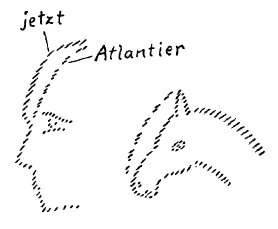
[ 20 ] Das fünfte ist dasjenige, was man das Lernen der Entsprechung zwischen dem Mikrokosmos und Makrokosmos nennt. Es besteht darin, daß der Lehrer dem Schüler Anleitung gibt, seine Gedanken auf bestimmte Körperteile zu konzentrieren. Diejenigen, welche den Vortrag über die Beziehung der Sinne zu den höheren Welten gehört haben, werden sich erinnern, daß die ganze Welt an dem Zustandekommen des physischen Leibes beteiligt ist. Das Auge ist vom Licht geschaffen, von den Geistern, die im Lichte wirken. Jeder Punkt des physischen Leibes steht im Zusammenhang mit einer bestimmten Kraft im Kosmos. Betrachten wir den Punkt an der Nasenwurzel. Es gab eine Zeit, da der ätherische Kopf über den physischen Leib weit herausragte. Noch bei den Atlantiern war an der Stirn ein Punkt, wo der ätherische Kopf über den physischen herausstand, wie es noch jetzt beim Pferde und anderen "Tieren der Fall ist. Beim Pferde ragt auch heute der Ätherkopf weit heraus. Beim heutigen Menschen ist der genannte Punkt im Ätherkopf und im physischen Kopf zur Deckung gebracht, und das gibt ihm die Fähigkeit, solche Teile des physischen Gehirns zu entwickeln, welche es ihm ermöglichen, zu sich Ich zu sagen. Das Organ, welches den Menschen dazu befähigt, zu sich Ich zu sagen, hängt mit einem ganz bestimmten Vorgang während der atlantischen Erdenentwickelung zusammen. Nun weist der okkulte Lehrer seinen Schüler an: Lenke deine Gedanken und konzentriere sie auf diesen Punkt! Dann gibt er ihm ein Mantram. Dadurch wird in diesem Teile des Kopfes eine Kraft geweckt, die einem bestimmten Vorgang im Makrokosmos entspricht. Auf solche Weise wird eine Korrespondenz zwischen dem Mikrokosmos und dem Makrokosmos hervorgerufen. Durch eine entsprechende Konzentration auf das Auge wird auch die Erkenntnis der Sonne erlangt. Man findet so die ganze Organisation des Makrokosmos geistig in seinen eigenen Organen.
[ 20 ] The fifth is what is called learning the correspondence between the microcosm and the macrocosm. It consists of the teacher guiding the student to concentrate his thoughts on specific parts of the body. Those who have heard the lecture on the relationship of the senses to the higher worlds will recall that the entire world is involved in the formation of the physical body. The eye is created by light, by the spirits who work in the light. Every point of the physical body is connected to a specific force in the cosmos. Let us consider the point at the root of the nose. There was a time when the etheric head protruded far beyond the physical body. Even among the Atlanteans, there was a point on the forehead where the etheric head protruded beyond the physical one, as is still the case today with horses and other animals. In horses, too, the etheric head still protrudes far beyond the physical body. In modern humans, this point in the etheric head and the physical head has been brought into alignment, and this gives them the ability to develop those parts of the physical brain that enable them to say “I” to themselves. The organ that enables human beings to say “I” to themselves is connected to a very specific process that took place during the Atlantean period of Earth’s evolution. Now the occult teacher instructs his student: “Direct your thoughts and concentrate them on this point!” Then he gives him a mantra. This awakens a force in this part of the head that corresponds to a specific process in the macrocosm. In this way, a correspondence between the microcosm and the macrocosm is brought about. Through corresponding concentration on the eye, knowledge of the sun is also attained. In this way, one finds the entire organization of the macrocosm spiritually within one’s own organs.
[ 21 ] Wenn der Schüler das genügend lange geübt hat, darf er dazu übergehen, sich in die Dinge, die er so aufgefunden hat, hineinzuversenken. Zum Beispiel kann er in der Akasha-Chronik jenen Zeitpunkt in der atlantischen Epoche aufsuchen, in welchem an der Nasenwurzel der Punkt zustande gekommen ist, auf den er sich konzentriert hat. Oder er findet die Sonne, indem er sich auf das Auge konzenttiert. Diese sechste Stufe, das Versenken in den Makrokosmos, nennt man die Kontemplation. Das gibt dem Schüler die Welterkenntnis, und dadurch erweitert er seine Selbsterkenntnis über die Persönlichkeit hinaus. Das ist etwas anderes als jenes beliebte Schwatzen von Selbsterkenntnis. Man findet das Selbst nicht, wenn man in sich hineinschaut, sondern wenn man aus sich hinausschaut. Es ist dies das gleiche Selbst, welches das Auge geschaffen hat, das die Sonne hervorgebracht hat. Wenn Sie den Teil des Selbst, welcher dem Auge entspricht, suchen wollen, so haben Sie ihn in der Sonne zu suchen. Was draußen außer Ihnen ist, müssen Sie als Ihr Selbst wahrnehmen lernen. Das Hineinschauen nur in sich führt zur Verhärtung in sich selbst, zu einem höheren Egoismus. Wenn die Menschen sagen: Ich brauche nur mein Selbst sprechen zu lassen -, so haben sie keine Ahnung von der Gefahr, die darin liegt. Selbsterkenntnis darf nur geübt werden, wenn der Schüler des weißen Pfades sie mit Selbstentäußerung verbindet. Wenn er zu jedem Dinge sagen lernt: Das bin ich — dann ist er reif zur Selbsterkenntnis, wie es Goethe in den Worten Fausts ausspricht:
[ 21 ] Once the student has practiced this long enough, he may proceed to immerse himself in the things he has discovered in this way. For example, in the Akashic Records, they can seek out that moment in the Atlantean epoch when the point at the root of the nose—the one on which they have been concentrating—came into being. Or they can find the sun by concentrating on the eye. This sixth stage—immersing oneself in the macrocosm—is called contemplation. This gives the student an understanding of the world, and through this, he expands his self-knowledge beyond the personality. This is something different from that popular chatter about self-knowledge. One does not find the Self by looking within oneself, but by looking outward from oneself. It is this same Self that created the eye and brought forth the sun. If you wish to seek the part of the Self that corresponds to the eye, you must seek it in the sun. You must learn to perceive what is outside of yourself as your Self. Looking inward alone leads to a hardening within oneself, to a higher form of egoism. When people say, “I need only let my Self speak,” they have no idea of the danger that lies therein. Self-knowledge may be practiced only if the student of the White Path combines it with self-renunciation. When he learns to say of every thing, “This is me”—then he is ripe for self-knowledge, as Goethe expresses it in the words of Faust:
«Du führst die Reihe der Lebendigen
Vor mir vorbei und lehrst mich meine Brüder
Im stillen Busch, in Luft und Wasser kennen.»
“You lead the procession of the living
Past me and teach me to recognize my brothers
In the silent bush, in the air, and in the water.”
[ 22 ] Überall sind draußen die Teile unseres Selbst. Das ist zum Beispiel auch in der Dionysos-Mythe dargestellt. Daher legt die Rosenkteuzerschulung auch so viel Wert auf eine objektive und ruhige Betrachtung der äußeren Welt: Willst du dich selbst erkennen, dann schau dich im Spiegel der äußeren Welt und Wesen an! Viel deutlicher wird dir aus dem Auge des Mitmenschen sprechen, was in deiner Seele ist, als wenn du dich in dir selbst verhärtest und in die eigene Seele versenkst! — Das ist eine wichtige und wesentliche Wahrheit, die keiner, der den weißen Pfad beschreiten will, außer acht lassen darf. Es gibt in der Gegenwart viele Menschen, die ihren gewöhnlichen Egoismus in einen raffinierten Egoismus verwandelt haben. Sie nennen es theosophische Entwickelung, wenn sie ihr gewöhnliches, alltägliches Selbst so hoch wie möglich steigern. Sie möchten das Persönliche ja recht hervorholen. Die wirkliche okkulte Erkenntnis zeigt dem Menschen dagegen, wie sich sein Inneres aufschließt, wenn er sein höheres Selbst in der Welt erkennen lernt.
[ 22 ] Parts of our self are everywhere out there. This is depicted, for example, in the myth of Dionysus. That is why the Rosicrucian training places so much emphasis on an objective and calm observation of the external world: If you want to know yourself, then look at yourself in the mirror of the external world and beings! What is in your soul will speak to you much more clearly through the eyes of your fellow human beings than if you harden yourself within and sink into your own soul! — This is an important and essential truth that no one who wishes to walk the White Path may ignore. There are many people today who have transformed their ordinary selfishness into a sophisticated form of selfishness. They call it theosophical development when they elevate their ordinary, everyday self as high as possible. They want to bring out the personal aspect quite strongly. True occult knowledge, on the other hand, shows a person how their inner being opens up when they learn to recognize their higher self in the world.
[ 23 ] Wenn der Mensch in der Kontemplation diese Gesinnung herangebildet hat, wenn sein Selbst über alle Dinge ausfließt, wenn er die Blume, die ihm entgegenwächst, so fühlt wie den Finger, den er sich selbst entgegenbewegt, wenn er weiß, daß die ganze Erde und die ganze Welt sein Leib ist, dann lernt er sein höheres Selbst erkennen. Dann spricht er zur Blume wie zu einem Glied seines eigenen Körpers: Du gehörst zu mir, du bist ein Teil meines Selbst. - Allmählich empfindet er das, was man den siebenten Grad der Rosenkreuzerschulung nennt: die Gottseligkeit. Sie stellt sich als das notwendige Gefühlselement ein, das den Menschen in die höheren Welten hinaufgeleitet, wo er über die höheren Welten nicht bloß denken darf, sondern in diesen Welten fühlen lernt. Dann zeigen sich ihm die Früchte, wenn er so bestrebt ist, unter der fortdauernden Anleitung seines Lehrers zu lernen, und er braucht nicht zu fürchten, daß sein okkulter Weg in einen Abgrund führen könnte. Alle Dinge, die als Gefahren der okkulten Entwickelung geschildert werden, kommen nicht in Frage, wenn diese in die richtigen Wege gelenkt wird. Geschieht das, so wird der okkulte Pfadsucher ein wirklicher Helfer der Menschheit.
[ 23 ] When a person has cultivated this state of mind through contemplation, when his self flows out over all things, when he feels the flower growing toward him as he feels his own finger moving toward himself, when he knows that the entire earth and the entire world are his body, then he learns to recognize his higher self. Then he speaks to the flower as if to a limb of his own body: “You belong to me; you are a part of my Self.”—Gradually, he experiences what is called the seventh degree of Rosicrucian training: the divine state. It manifests as the essential emotional element that guides the human being up into the higher worlds, where he is not merely permitted to think about the higher worlds, but learns to feel within them. Then the fruits will reveal themselves to him if he strives to learn in this way, under the continuous guidance of his teacher, and he need not fear that his occult path might lead into an abyss. All the things described as dangers of occult development are out of the question if this development is steered onto the right path. When this happens, the seeker on the occult path becomes a true helper of humanity.
[ 24 ] Während der Imagination stellt sich die Möglichkeit ein, daß der Mensch einen gewissen Teil der Nacht in bewußtem Zustande durchmacht. Sein physischer Leib schläft wie sonst, aber ein Teil seines Schlafzustandes wird von sinnvollen, inhaltsvollen Träumen belebt. Diese sind die erste Ankündigung seines Eintrittes in die höheren Welten. Allmählich führt er seine Erlebnisse in das gewöhnliche Bewußtsein hinüber. Er sieht dann in seiner ganzen Umwelt, auch hier im Saal zwischen den Stühlen oder draußen in Wald und Flur, die astralen Wesenheiten.
[ 24 ] During the process of imagination, the possibility arises that a person may spend a certain part of the night in a conscious state. His physical body sleeps as usual, but part of his sleep is enlivened by meaningful, rich dreams. These are the first signs of his entry into the higher worlds. Gradually, they carry these experiences over into ordinary consciousness. They then see the astral beings all around them—even here in the hall between the chairs, or outside in the woods and fields.
[ 25 ] Drei Stufen erreicht der Mensch während der imaginativen Erkenntnis. Auf der ersten Stufe erkennt er die Wesenheiten, die hinter den physischen Sinneseindrücken stehen. Hinter der roten oder blauen Farbe steht eine Wesenheit, hinter jeder Rose; hinter jedem Tier steht die Gattungs- oder Gruppenseele. Er wird taghellsehend. Wenn er nun noch eine Weile wartet und seine Imagination ruhig übt, sich auch in die okkulte Schrift vertieft, so wird er auch taghellhörend. Das dritte ist dann, daß er alle die Dinge kennenlernt, die man in der astralen Welt findet, die den Menschen herunterziehen und zum Bösen verleiten, die eigentlich nun dazu bestimmt sind, ihn hinaufzuführen. Er lernt Kamaloka kennen.
[ 25 ] A person attains three stages during the process of imaginative cognition. At the first stage, he perceives the beings that lie behind physical sensory impressions. Behind the color red or blue lies a being; behind every rose; behind every animal lies the species or group soul. He becomes clairvoyant. If they then wait a while longer, calmly practice their imagination, and immerse themselves in occult literature, they will also develop the ability to hear as clearly as if in broad daylight. The third stage is when they come to know all the things found in the astral world—those that pull people down and lead them toward evil, yet are actually intended to guide them upward. They come to know Kamaloka.
[ 26 ] Durch dasjenige, was den vierten, fünften und sechsten Teil der Rosenkreuzerschulung bildet, den Lebensrhythmus, die Beziehung des Mikrokosmos zum Makrokosmos, die Kontemplation des Makrokosmos, erreicht der Mensch drei weitere Stufen. Auf der ersten Stufe gelangt er zum Erkennen der Verhältnisse des Lebens zwischen dem Tode und einer neuen Geburt. Das tritt ihm in Devachan entgegen. Das nächste ist die Möglichkeit, zu sehen, wie die Formen sich ineinander umwandeln, die Transmutation, die Metamorphose der Formen. Der Mensch hatte zum Beispiel nicht immer seine heutige Lunge: er besitzt sie erst seit der lemurischen Zeit. In der vorangegangenen hyperboräischen Zeit hatte er wieder eine andere Form, davor hatte er eine andere Form, weil er sich im Astralzustand befand, und eine andere vorher, weil er in Devachan war. Man sagt auch: der Mensch lernt auf dieser Stufe die Verhältnisse zwischen den verschiedenen Globen kennen, das heißt, er erfährt, wie ein Globus oder Formzustand in den anderen übergeht. Als letztes, bevor er in noch höhere Welten übergeht, erschaut er die Metamorphose der Lebenszustände. Er erkennt, wie die verschiedenen Wesenheiten durch die verschiedenen Reiche oder Runden hindurchgehen, wie ein Reich ins andere übergeht. Dann muß er zu noch höheren Stufen aufsteigen, die aber heute keine Besprechung mehr erfahren können.
[ 26 ] Through what constitutes the fourth, fifth, and sixth parts of the Rosicrucian training—the rhythm of life, the relationship of the microcosm to the macrocosm, and the contemplation of the macrocosm—the human being attains three further stages. At the first stage, they come to recognize the conditions of life between death and a new birth. This is what they encounter in Devachan. The next stage is the ability to see how forms transform into one another—the transmutation and metamorphosis of forms. For example, human beings did not always have the lungs they have today; they have possessed them only since the Lemurian era. In the preceding Hyperborean era, they had yet another form; before that, they had a different form because they were in the astral state, and another form before that because they were in Devachan. It is also said that at this stage, human beings come to understand the relationships between the various globes—that is, they learn how one globe or state of form transitions into another. Finally, before passing into even higher worlds, he beholds the metamorphosis of the states of life. He recognizes how the various beings pass through the different kingdoms or cycles, and how one kingdom transitions into another. Then he must ascend to even higher stages, which, however, cannot be discussed here today.
[ 27 ] Was hier ausgeführt worden ist, wird Ihnen einstweilen zum Verarbeiten genug Material geben. Diese Dinge müssen wirklich erarbeitet werden. Es ist dies der erste Schritt, um in die Höhe zu kommen. Daher ist es gut, einmal in geordneter Weise den Pfad vorgezeichnet zu bekommen. Es mag sein, daß man auf dem physischen Plan, auch ohne eine Landkarte zu haben, reisen kann. Auf dem Astralplan ist es aber notwendig, sich eine solche Landkarte geben zu lassen. Betrachten Sie diese Mitteilungen als eine Art von Landkarte, und sie wird Ihnen nützlich sein, nicht nur in diesem Leben, sondern auch wenn Sie die Pforte zu den höheren Welten durchschreiten. Wer diese Dinge dutch die Geisteswissenschaft aufnimmt, wird nach dem Tode gute Dienste von dieser Landkarte haben. Der Okkultist weiß, wie kläglich es den Menschen oft ergeht, wenn sie drüben auf der anderen Seite ankommen und keine Ahnung davon haben, wo sie eigentlich leben und was das ist, was sie da erleben. Diejenigen, die durch die geisteswissenschaftlichen Lehren hindurchgegangen sind, kennen sich aus und wissen die Dinge selbst zu charakterisieren. Wenn der Mensch nicht zurückschrecken würde, den Erkenntnispfad zu betreten, so würde ihm dies in der anderen Welt großen Nutzen bringen.
[ 27 ] What has been explained here will provide you with enough material to work through for the time being. These things really must be worked through. This is the first step toward reaching higher levels. Therefore, it is good to have the path laid out for you in an orderly manner. It may be that on the physical plane, one can travel even without a map. On the astral plane, however, it is necessary to be given such a map. Consider these teachings as a kind of map, and they will be useful to you, not only in this life but also when you pass through the gate to the higher worlds. Those who absorb these teachings through spiritual science will find this map to be of great service after death. The occultist knows how miserably people often fare when they arrive on the other side and have no idea where they actually are or what it is they are experiencing there. Those who have studied the teachings of spiritual science are well-versed and know how to characterize these things for themselves. If people were not afraid to embark on the path of knowledge, it would be of great benefit to them in the other world.