

Original Impulses of Spiritual Science
GA 96
20 October 1906, Berlin
Translated by Steiner Online Library
9. The Path of Knowledge and Its Stages I
The Rosicrucian Spiritual Path
[ 1 ] Today we will present an overview of the path of knowledge and also show what the fruits of this path are. You are already familiar with some of the main points to be considered here. But even for those who have already heard relevant lectures on the path of knowledge or read *Lucifer*, specifically the thirty-second issue, there will be something new to discover when we discuss the path of knowledge in the way that is possible only within the intimate circle of students of spiritual science. The focus will be primarily on discussing this path of knowledge as it is outlined by the Western Rosicrucian spiritual current, which has been spiritually guiding and directing European culture along unseen threads since the 14th century.
[ 2 ] The Rosicrucian movement operated entirely in secret until the last third of the 19th century. What true Rosicrucianism was could not be read in any book, nor was it permitted to be spoken of publicly. Only in the last thirty years or so have some of the Rosicrucian teachings been made known to the outside world through the Theosophical Movement, after having previously been taught only within strictly closed societies. The most basic teachings are frequently found in what is today called “theosophy”—but only the most basic ones. Only gradually is it becoming possible to allow people a deeper insight into the wisdom that has been cultivated in those Rosicrucian schools in Europe since the end of the 14th century.
[ 3 ] First, let us make it clear that there is not just one kind of path to knowledge, but rather three kinds. However, this should not be understood to mean that there are three truths. There is only one truth, just as everyone standing on the summit of a mountain is presented with the same view. But there are different paths to reach the summit of the mountain. During the ascent, the view is different from every point along the way. Only when one is at the top—and one can ascend the summit from different sides—does one have the unobstructed, full view from one’s own perspective. So it is with the three paths of knowledge. The first is the Eastern path of yoga, the second the Christian-Gnostic path, and the third the Christian Rosicrucian path. These three paths lead to the one truth.
[ 4 ] There are three different paths because human natures vary across our globe. We must distinguish between three types of human nature. Just as it would be wrong for someone seeking to reach a mountain peak to choose not the nearest trail but one far removed from it, so too would it be wrong for a person to embark on a spiritual path other than the one suited to them. Even within the Theosophical Movement—which has yet to develop beyond its initial stage—there are today many rather confused notions on this subject. It is often thought that there is only a single path to knowledge, and it is believed that this is the path of yoga. However, the Eastern path of yoga is neither the only path to knowledge, nor is it even the most suitable one for people living within the European cultural sphere. Of course, anyone who views the matter only from the outside can hardly grasp what is at stake here, because human nature does not, after all, appear so different among the various races. But when one observes the great diversity of human types through occult powers, one comes to realize that something which may be good for Easterners—and perhaps also for very few individuals in our culture—is by no means suitable for everyone. There are also people—though only a few within the European context—who can follow the Eastern path of yoga. For the vast majority of Europeans, however, it is impassable. It brings with it illusions and even spiritual destruction. Even if they may not appear so different outwardly—even in the eyes of today’s scientists—Eastern and Western natures are entirely different. An Eastern mind, an Eastern imagination, and an Eastern heart function quite differently from the faculties of a Westerner. What one can reasonably expect of a person who has grown up under Eastern conditions must never, under any circumstances, be expected of a Westerner. Only someone who believes that climate, religion, and social life have no influence on the human spirit could think that it makes no difference under what external conditions a person undergoes occult training. But if one is aware of the profound spiritual influence that all these external circumstances have on human nature, one understands that the path of yoga is suitable only for a few Europeans—and really only for those who thoroughly and radically break away from European conditions—but that it is impossible for people who remain within European culture.
[ 5 ] People who are still, deep down, sincere and honest Christians today—who are still imbued with certain fundamental principles of Christianity—may choose the Christian-Gnostic path, which is not very different from the Kabbalistic path. For Europeans, however, the Rosicrucian path is generally the only correct one. Today we shall discuss this European Rosicrucian path—specifically, the various practices it prescribes for people, as well as the fruits that await those who walk this path of knowledge. No one should believe that this is a path reserved only for scientifically educated people, let alone for scholars. Even the simplest person can follow it. But once one walks this path, one will very soon be able to counter any objection raised by European science against occultism. This was one of the main tasks of the Rosicrucian Masters: to equip those who walk the path of knowledge so that they can defend occult knowledge and also uphold this path before the world. The ordinary person, who possesses only a few popular notions from modern science—or perhaps none at all—but who has an honest thirst for truth within, will be able to walk the Rosicrucian path just as well as the most educated and learned person.
[ 6 ] There are major differences between the three paths of knowledge. The first concerns the student’s relationship to the occult teacher, who gradually becomes the guru or facilitates the relationship with the guru. The distinctive nature of the Eastern yoga path means that this relationship is the strictest conceivable. The guru is the student’s unconditional authority. If this were not the case, this training could not achieve the proper success. Eastern yoga training is not possible at all without strict submission to the guru’s authority. In the Christian-Gnostic and Kabbalistic paths, a somewhat looser relationship with the guru on the physical plane is already presupposed. The guru leads the disciple to Christ Jesus; he is the mediator. And on the Rosicrucian path, the guru increasingly becomes a friend whose authority is based on inner consent. No relationship other than a strictly personal one of trust is possible here. If even the slightest mistrust were to arise between student and teacher, the bond that must exist between them would be severed, and the forces at work between teacher and student would cease to operate. The student will sometimes form false ideas about the role of his teacher. It will easily seem to him as if he absolutely must speak with the teacher here or there, as if he often had to be physically present with him. Although it is sometimes an urgent necessity for the teacher to approach the student physically, this is not as often the case as the student might believe. At first, the student cannot properly assess the influence the teacher exerts on him. The teacher possesses means that are revealed to the student only gradually. Many a word that the student believes was spoken by chance is of great significance. It continues to work unconsciously in the student’s soul as a guiding force that directs and leads him. If the teacher exercises these occult influences correctly, then the real bond between him and the student is established. Added to this are the effects at a distance, based on loving participation, which are always available to the teacher and which are revealed to the student more and more only later, when he gains access to the higher worlds. But absolute trust is absolutely essential; otherwise, it is better to sever the bond between teacher and student.
[ 7 ] Now we shall briefly mention the rules that play a certain role within Rosicrucian training. Things do not have to occur exactly as they are listed here. Depending on the student’s individuality, profession, and age, the teacher will have to select this or that from the various fields and arrange it in this or that way. Only a general overview is provided here for your information.
[ 8 ] What is of the utmost importance in Rosicrucian training is usually not given sufficient attention in any form of occult training. It is clear and logical thinking—or at least the striving toward it. First and foremost, all confused or prejudiced thinking must be eradicated. One must accustom oneself to thinking about the interrelationships in the world from broad, selfless perspectives. The best way to do this—if one wishes to follow this Rosicrucian path as an ordinary person—is to study the elementary teachings of spiritual science. It is not a valid objection to say: “What good does it do me to study the teachings about the higher worlds, about the human races and cultures, about karma and reincarnation, since I cannot see or perceive any of this myself?” — This is not a valid objection, for it is precisely the engagement with these truths that purifies the mind and disciplines it in such a way that a person becomes ready for the other steps leading to the occult path. In ordinary life, a person’s thinking is usually very disorganized. The guidelines and stages of human development and planetary evolution—the broad perspectives revealed by those who are knowledgeable—bring thought into orderly forms. All of this is part of Rosicrucian training. This is called “the study.” Therefore, the teacher will entrust the student with the task of delving into the elementary teachings on reincarnation and karma, on the three worlds, the Akashic Records, the evolution of the Earth, and the human races. The scope of elementary spiritual science, as it is taught today, is the best preparation for the ordinary person.
[ 9 ] However, for those who wish to delve more deeply into thought in order to engage even more intensely with the very foundation of the human soul, I recommend studying books that have been written specifically to channel thought along disciplined lines. The books written for this purpose—even if the word “theosophy” does not appear in them—are my two books, *Truth and Science* and *The Philosophy of Freedom*. After all, such books are written to serve a purpose. Those who, through rigorous training in logical thinking, wish to proceed to further study would do well to subject their minds to the “mental and spiritual exercises” that these books require. This provides them with the foundation upon which Rosicrucian study is built.
[ 10 ] When observing the physical plane, one perceives certain sensory impressions: colors and light, heat and cold, smell and taste, sensations of pressure and touch, and auditory impressions. One associates all of this with the activity of thought and the intellect. Intellect and thought still belong to the physical plane. You can perceive all of this on the physical plane. Perceptions on the astral plane are different; they look entirely different. And perceptions on the Devachan plane are different still, not to mention those in the even higher spiritual realms. However, a person who has not yet gained insight into the higher worlds can still form a mental picture of them. The method of presentation with which I am familiar also attempts to provide a visual conception of these worlds through images. Whoever then ascends into the higher realms will see for themselves how they affect them. On every plane, a person has new experiences. But there is one thing that remains the same throughout all the worlds, all the way up to Devachan—something that does not change: that is thinking trained in logic. Only on the Buddha plane does thinking no longer hold the same validity as on the physical plane. There, a different kind of thinking must take its place. But for the three worlds below the Buddha plane—the physical, astral, and Devachan planes—the same kind of thinking applies everywhere. Therefore, whoever properly trains their thinking through study in the physical world will have a good guide in this thinking in the higher worlds and will not stumble as easily as one who seeks to ascend into the spiritual realms with confused thinking. For this reason, the Rosicrucian training teaches people to move freely in the higher worlds by urging them to discipline their thinking. Those who ascend into these worlds will indeed encounter modes of perception that do not exist on the physical plane, but they will be able to master them through their thinking.
[ 11 ] The second thing the student learns on the Rosicrucian path of knowledge is imagination. It is prepared by the student gradually learning to penetrate into those pictorial representations which, in the sense of Goethe’s words, “Everything transitory is but a parable,” depict the higher worlds. Just as a person usually moves through the physical world, they perceive things as they appear to their senses, but not what lies behind them. They are drawn down into the physical world as if by a lead weight. A person becomes free from this physical world only when they learn to regard the things around them as symbols. Therefore, they must seek to develop a moral relationship with them. The teacher will also provide some guidance on how to view external phenomena as symbols of the spiritual, but the student can also do much on their own. For example, they can observe an autumn crocus and a violet. If I see the autumn crocus as a symbol of a melancholic disposition, I have not merely perceived it as it appears to me outwardly, but as a symbol of a quality. In the violet, on the other hand, one might see the symbol of a quiet, devout disposition. In this way, you move from object to object, from plant to plant, from animal to animal, and regard them as symbols of the spiritual. Through this, you make your imagination fluid and free it from the sharp contours of sensory perception. One comes to see, for example, in every “animal species” a symbol of a particular quality. One regards one animal as a symbol of strength, another as a symbol of cunning. We must seek to pursue such things not fleetingly, but earnestly and at every turn.
[ 12 ] Essentially, all human language speaks in symbols. Language is nothing other than speaking in symbols. Every word is a symbol. Even science, which believes it can describe every object purely objectively, must make use of language, and its words function symbolically. When you speak of “lungs,” you know that they are not wings, yet you still tend to refer to them as such. For those who wish to remain on the physical plane, it is best not to lose themselves too deeply in this symbolism, but the advanced student will not lose themselves in it either. When one investigates, one senses the depth that originally lies within human language. Profound figures such as Paracelsus and Jakob Böhme owe their development to the fact that they did not shy away from studying the imaginative meaning of language in conversation with farmers and vagabonds. There, the words “nature,” “spirit,” and “soul” had a very different effect. They had a stronger impact. Out in the countryside, when a farmer’s wife plucked a feather from a goose, she called the inner part the “soul” of the feather. The student must discover such symbols in language for themselves. In doing so, they detach themselves from the physical world and learn to rise to the level of imagination. It has a powerful effect when the world thus becomes a parable for the human being. If the student practices this long enough, he will notice corresponding effects. When looking at a flower, for example, something will gradually detach itself from the flower. The color, which at first clung only to the flower’s surface, rises like a small flame and hovers freely in space. This is how imaginative insight takes shape. It is then as if the surface of all things were detaching itself. The entire room fills with the color, which floats through the space like a flame. In this way, the entire world of light seems to draw itself out of physical reality. When such a color image emerges and floats freely in space, it soon begins to attach itself to something. It is drawn toward something; it does not come to rest arbitrarily anywhere; it encompasses a being that now appears within the color as a spiritual entity. What the student has drawn out as color from the things of the physical world envelops the spiritual beings of the astral realm.
[ 13 ] This is the point where the guidance of the occult teacher must come into play, because otherwise the student can easily lose his footing. This could happen for two reasons. The first is as follows: Every student must go through a certain experience. The images that emerge from physical objects—not only colors, but also sensations of smell and sound—manifest as strange, ugly, and perhaps even beautiful forms: animal faces, plant shapes, and even ugly human faces. This first experience is a reflection of the student’s own soul. One’s own passions and instincts, the evil still slumbering in the soul, appear before the advanced student as if in a mirror in the astral realm. Here the student needs the guidance of the occult teacher, who tells him that this is not something objective, but a reflection of his own inner being.
[ 14 ] You will understand why he is dependent on this advice from his teacher once we have said a little more about the way such images appear. It has often been emphasized that in the astral realm everything is reversed, that everything appears as a mirror image. The student can therefore easily be misled by illusory images, especially when they are reflections of his own being. The reflection of a passion does not merely appear as an animal approaching him—that would be the least of it—but one must also expect other things here. Let us suppose that a person harbors a hidden, quite evil passion. As a reflection, such an impulse or desire very often appears in an alluring form, whereas good qualities, on the other hand, sometimes do not appear alluring at all. Once again, we have here something that legend has depicted wonderfully. You will find an illustration of this in the myth of Hercules. As Hercules sets out on his journey, the evil and the good qualities stand before him. Vice cloaks itself in the seductive form of beauty, while virtue dons the garb of modesty.
[ 15 ] There is now another factor to consider. Even if the student is already able to view things objectively, there is still the possibility that his inner arbitrariness will manifest as a force that directs and guides phenomena. He must come to see through and understand this, for desire exerts a strong influence on the astral plane. Everything that acts as a directing force here in the physical world is absent when one enters the world of imagination. If, on the physical plane, you imagine that you have done something that you have not actually done, you will soon be convinced that this is not the case when the facts on the physical plane confront you. But this is not how it is in the astral realm. There, your own desires conjure up images; you must receive guidance from someone knowledgeable on how to interpret these imaginative images in order to recognize their true meaning.
[ 16 ] The third aspect of Rosicrucian training is the study of occult script. What is this occult script? There are certain images and symbols created by simple lines or assembled through colors. Such symbols constitute a very specific occult sign language. To give an example, consider the following. There is a process in the higher world that also has an effect on the physical world: the rotation of the vortex. You can observe the rotation of the vortex when you look at a nebula, such as the Orion Nebula. There you will see a spiral. But that is on the physical plane. You can also observe this on all planes. It manifests as one vortex swinging into another. Figure (a) is a form that occurs on the astral plane in all manner of formations. If you understand this figure, you will also come to understand through it how one human race transforms into another. When the first subrace of our present-day main race came into being, the Sun was precisely in the sign of Cancer. At that time, one race thus intertwined with another; that is why Cancer has the occult symbol (b). Thus, the signs of the zodiac are all occult symbols. One need only learn and understand their meaning.
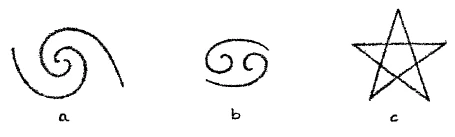
[ 17 ] The pentagram (c) is another such symbol. The student learns to associate specific sensations and feelings with this symbol. They are the antithesis of astral processes. This symbolic language, which is learned as an occult script, is nothing other than the representation of the laws of higher worlds. Thus, the pentagram is a symbol that expresses various things. Just as the letter B is used in a wide variety of words, so too can the symbols of occult script have manifold meanings. The pentagram, the hexagram, the angle, and other figures can be combined to form an occult script, and this, in turn, serves as a guide to the higher worlds. The pentagram is the symbol of the fivefold human being, as well as the symbol of secrecy, but also the symbol underlying the species soul of the rose. If you connect the petals of the rose in the illustration, you will form a pentagram. Just as the letter “B” conveys a different meaning in the words “band” and “beben,” so too do the symbols in occult script carry different meanings. One learns to arrange them in the correct manner. These are the signposts to the astral plane. Just as an illiterate person relates to a reader on the physical plane, so does someone who sees only the images as such relate to one who has learned the occult script. On the physical plane, written characters are often arbitrary, but originally they were representations of the astral sign language. Take an ancient astral symbol, the Caduceus with the serpent. In our script, this has become the letter E.
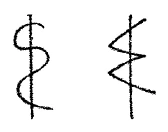
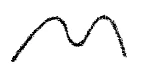
[ 18 ] Or take the letter W, which represents the undulating motion of water. It is the soul symbol of humankind, and at the same time the symbol for the word. The letter M is nothing other than a representation of the upper lip. In the course of evolution, all of this has become more arbitrary. On the occult planes, however, necessity reigns. There, one can live these things.
[ 19 ] The fourth is what is known as the rhythm of life. People are largely unfamiliar with such a rhythm in their everyday lives. They live selfishly, without regard for anything else. At most, for children in school, the class schedule still provides a certain rhythm of life, since the sequence of daily school hours repeats itself from week to week. But who does that in everyday life? Nevertheless, one ascends to a higher level of development only by introducing rhythm and repetition into one’s life. Rhythm prevails throughout nature. In the planets’ orbits around the sun, in the annual blooming and withering of plants, all the way down to the animal kingdom and even into the sexual lives of animals—everything is governed by rhythm. Only human beings are permitted to live without rhythm so that they can act freely. But they must, of their own free will, reintroduce rhythm into the chaos. A good rhythm consists of performing occult practices at specific times each day. Therefore, the student must perform their meditation and concentration exercises at the same hour, just as the sun sends its powers down to the earth at the same time in spring. This is one form of bringing rhythm to life. Another is what, according to the instructions of the occult teacher, constitutes the rhythmic regulation of the breathing process. Inhalation, breath retention, and exhalation must be brought into a rhythm for a short period of the day, a rhythm determined by the experience of the occult teachers. In this way, a new rhythm is established by the human being in place of the old one. Such a rhythmic structuring of life is one of the prerequisites for ascending to the higher worlds. But no one can do this without the guidance of a teacher. The purpose here is merely to bring to light what this is fundamentally about.
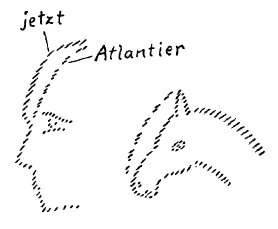
[ 20 ] The fifth is what is called learning the correspondence between the microcosm and the macrocosm. It consists of the teacher guiding the student to concentrate his thoughts on specific parts of the body. Those who have heard the lecture on the relationship of the senses to the higher worlds will recall that the entire world is involved in the formation of the physical body. The eye is created by light, by the spirits who work in the light. Every point of the physical body is connected to a specific force in the cosmos. Let us consider the point at the root of the nose. There was a time when the etheric head protruded far beyond the physical body. Even among the Atlanteans, there was a point on the forehead where the etheric head protruded beyond the physical one, as is still the case today with horses and other animals. In horses, too, the etheric head still protrudes far beyond the physical body. In modern humans, this point in the etheric head and the physical head has been brought into alignment, and this gives them the ability to develop those parts of the physical brain that enable them to say “I” to themselves. The organ that enables human beings to say “I” to themselves is connected to a very specific process that took place during the Atlantean period of Earth’s evolution. Now the occult teacher instructs his student: “Direct your thoughts and concentrate them on this point!” Then he gives him a mantra. This awakens a force in this part of the head that corresponds to a specific process in the macrocosm. In this way, a correspondence between the microcosm and the macrocosm is brought about. Through corresponding concentration on the eye, knowledge of the sun is also attained. In this way, one finds the entire organization of the macrocosm spiritually within one’s own organs.
[ 21 ] Once the student has practiced this long enough, he may proceed to immerse himself in the things he has discovered in this way. For example, in the Akashic Records, they can seek out that moment in the Atlantean epoch when the point at the root of the nose—the one on which they have been concentrating—came into being. Or they can find the sun by concentrating on the eye. This sixth stage—immersing oneself in the macrocosm—is called contemplation. This gives the student an understanding of the world, and through this, he expands his self-knowledge beyond the personality. This is something different from that popular chatter about self-knowledge. One does not find the Self by looking within oneself, but by looking outward from oneself. It is this same Self that created the eye and brought forth the sun. If you wish to seek the part of the Self that corresponds to the eye, you must seek it in the sun. You must learn to perceive what is outside of yourself as your Self. Looking inward alone leads to a hardening within oneself, to a higher form of egoism. When people say, “I need only let my Self speak,” they have no idea of the danger that lies therein. Self-knowledge may be practiced only if the student of the White Path combines it with self-renunciation. When he learns to say of every thing, “This is me”—then he is ripe for self-knowledge, as Goethe expresses it in the words of Faust:
“You lead the procession of the living
Past me and teach me to recognize my brothers
In the silent bush, in the air, and in the water.”
[ 22 ] Parts of our self are everywhere out there. This is depicted, for example, in the myth of Dionysus. That is why the Rosicrucian training places so much emphasis on an objective and calm observation of the external world: If you want to know yourself, then look at yourself in the mirror of the external world and beings! What is in your soul will speak to you much more clearly through the eyes of your fellow human beings than if you harden yourself within and sink into your own soul! — This is an important and essential truth that no one who wishes to walk the White Path may ignore. There are many people today who have transformed their ordinary selfishness into a sophisticated form of selfishness. They call it theosophical development when they elevate their ordinary, everyday self as high as possible. They want to bring out the personal aspect quite strongly. True occult knowledge, on the other hand, shows a person how their inner being opens up when they learn to recognize their higher self in the world.
[ 23 ] When a person has cultivated this state of mind through contemplation, when his self flows out over all things, when he feels the flower growing toward him as he feels his own finger moving toward himself, when he knows that the entire earth and the entire world are his body, then he learns to recognize his higher self. Then he speaks to the flower as if to a limb of his own body: “You belong to me; you are a part of my Self.”—Gradually, he experiences what is called the seventh degree of Rosicrucian training: the divine state. It manifests as the essential emotional element that guides the human being up into the higher worlds, where he is not merely permitted to think about the higher worlds, but learns to feel within them. Then the fruits will reveal themselves to him if he strives to learn in this way, under the continuous guidance of his teacher, and he need not fear that his occult path might lead into an abyss. All the things described as dangers of occult development are out of the question if this development is steered onto the right path. When this happens, the seeker on the occult path becomes a true helper of humanity.
[ 24 ] During the process of imagination, the possibility arises that a person may spend a certain part of the night in a conscious state. His physical body sleeps as usual, but part of his sleep is enlivened by meaningful, rich dreams. These are the first signs of his entry into the higher worlds. Gradually, they carry these experiences over into ordinary consciousness. They then see the astral beings all around them—even here in the hall between the chairs, or outside in the woods and fields.
[ 25 ] A person attains three stages during the process of imaginative cognition. At the first stage, he perceives the beings that lie behind physical sensory impressions. Behind the color red or blue lies a being; behind every rose; behind every animal lies the species or group soul. He becomes clairvoyant. If they then wait a while longer, calmly practice their imagination, and immerse themselves in occult literature, they will also develop the ability to hear as clearly as if in broad daylight. The third stage is when they come to know all the things found in the astral world—those that pull people down and lead them toward evil, yet are actually intended to guide them upward. They come to know Kamaloka.
[ 26 ] Through what constitutes the fourth, fifth, and sixth parts of the Rosicrucian training—the rhythm of life, the relationship of the microcosm to the macrocosm, and the contemplation of the macrocosm—the human being attains three further stages. At the first stage, they come to recognize the conditions of life between death and a new birth. This is what they encounter in Devachan. The next stage is the ability to see how forms transform into one another—the transmutation and metamorphosis of forms. For example, human beings did not always have the lungs they have today; they have possessed them only since the Lemurian era. In the preceding Hyperborean era, they had yet another form; before that, they had a different form because they were in the astral state, and another form before that because they were in Devachan. It is also said that at this stage, human beings come to understand the relationships between the various globes—that is, they learn how one globe or state of form transitions into another. Finally, before passing into even higher worlds, he beholds the metamorphosis of the states of life. He recognizes how the various beings pass through the different kingdoms or cycles, and how one kingdom transitions into another. Then he must ascend to even higher stages, which, however, cannot be discussed here today.
[ 27 ] What has been explained here will provide you with enough material to work through for the time being. These things really must be worked through. This is the first step toward reaching higher levels. Therefore, it is good to have the path laid out for you in an orderly manner. It may be that on the physical plane, one can travel even without a map. On the astral plane, however, it is necessary to be given such a map. Consider these teachings as a kind of map, and they will be useful to you, not only in this life but also when you pass through the gate to the higher worlds. Those who absorb these teachings through spiritual science will find this map to be of great service after death. The occultist knows how miserably people often fare when they arrive on the other side and have no idea where they actually are or what it is they are experiencing there. Those who have studied the teachings of spiritual science are well-versed and know how to characterize these things for themselves. If people were not afraid to embark on the path of knowledge, it would be of great benefit to them in the other world.