

Introduction to the Basics of Theosophy
GA 111
29 March 1909, Rome
Translate the original German text into any language:
Versions Available:
Introduction to the Basics of Theosophy, tr. SOL
30. Einführung In Die Theosophie V
30. Introduction to Theosophy V
[ 1 ] Heute wollen wir von der christlichen Einweihung sprechen. Vorher aber müssen wir uns klar werden über das Einweihungsprinzip, damit wir verstehen, was wir tun müssen, um es zu erlangen. Meine Worte werden nur eine allgemeine Übersicht geben können, da es Jahrzehnte bedarf, um sie vollkommen zu begreifen.
[ 1 ] Today we want to talk about Christian initiation. But first, we must clarify the principle of initiation so that we understand what we must do to attain it. My words can only provide a general overview, since it takes decades to fully comprehend it.
[ 2 ] Zuerst sehen wir, dass es drei Grundkräfte im Menschen gibt: Denken, Fühlen und Wollen. Jedem dieser Kräfte entspricht ein System, ein Weg zur Einweihung. Wir haben den indischen Weg, der zusammenhängt mit der Gedankenentwicklung, den eigentlichen christlichen Weg im Zusammenhang mit der Gefühlsentwicklung und endlich den Rosenkreuzerweg, der mit der Willensentwicklung zusammenhängt. Heute wollen wir also die eigentliche christliche Einweihung ins Auge fassen.
[ 2 ] First, we see that there are three fundamental forces within the human being: thinking, feeling, and willing. Each of these forces corresponds to a system, a path to initiation. We have the Indian path, which is connected with the development of thought; the true Christian path, connected with the development of feeling; and finally, the Rosicrucian path, which is connected with the development of the will. Today, then, we will consider the true Christian initiation.
[ 3 ] Denken wir an den Zustand des Menschen, wenn er schläft, wenn das Ich und der Astralleib außerhalb des physischen Leibes sind. Weil der Astralleib weder Ohren noch Augen hat, nimmt der Mensch nichts wahr während der Nacht. Deswegen muss er in seinem Astralleib geistige Organe entwickeln. Dies erreicht man durch die «Reinigung oder «Katharsis, wie sie im alten Griechenland genannt wurde. Das ist die erste Stufe. Auf der zweiten Stufe muss der Mensch seinem Ätherleib die Wahrnehmungen des Astralleibes einprägen. Die Wahrnehmung wird gleich, nachdem sie gemacht ist, wie ein Abdruck im Ätherleib wiederholt.
[ 3 ] Let us consider the state of a person when they are asleep, when the “I” and the astral body are outside the physical body. Because the astral body has neither ears nor eyes, a person perceives nothing during the night. For this reason, they must develop spiritual organs in their astral body. This is achieved through “purification” or “katharsis,” as it was called in ancient Greece. This is the first stage. In the second stage, a person must imprint the perceptions of the astral body onto their etheric body. As soon as a perception is made, it is repeated in the etheric body like an imprint.
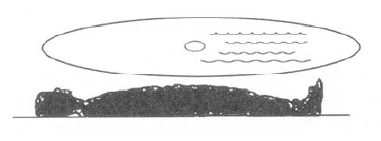
[ 4 ] In der christlichen Einweihung musste der Einzuweihende, um dies zustande zu bringen, in sich die heftigsten Gefühle hervorrufen. Es handelt sich dabei nicht um die Gefühle des täglichen Lebens, die sich nicht auf den Astralleib beziehen. Es sollen viel tiefere Gefühle sein, die kräftig auf den Astralleib einwirken, wenn er außerhalb des physischen Leibes ist.
[ 4 ] In Christian initiation, the initiate had to evoke the most intense feelings within himself in order to bring this about. These are not the feelings of everyday life, which have no connection to the astral body. They must be much deeper feelings that have a powerful effect on the astral body when it is outside the physical body.
[ 5 ] Die erste Empfindung, die der Einzuweihende in sich erleben musste, ergab sich durch den Unterricht des Meisters. Dieser führte ihn an einen stillen entfernten Ort, und dort lenkte er die Aufmerksamkeit des Schülers auf die ruhige Natur, während er ihm sagte: Sieh diese Pflanze an, wie sie ihre Wurzeln in die Erde versenkt hat und nach oben hin ihren Stängel getrieben hat mit den Blättern, den Blumen, den Früchten — wie hat sie das gemacht? Vermittels der Kräfte, die sie von der Erde eingesogen hat. Sodass, könnte sie reden, so würde sie zu dem leblosen mineralischen Boden sagen: Ich erhebe mich über dich, aber mein Leben verdanke ich dir, und dankbar beuge ich mich zu dir nieder. Dieses demütige Gefühl der Dankbarkeit musste der Kandidat Wochen und Wochen lang auf sich einwirken lassen.
[ 5 ] The first sensation that the initiate had to experience within himself arose from the Master’s instruction. The Master led him to a quiet, secluded place, and there he directed the student’s attention to the tranquil natural world, saying: “Look at this plant—how it has sunk its roots into the earth and driven its stem upward with its leaves, flowers, and fruits—how did it do that?” Through the forces it has drawn from the earth. So that, if it could speak, it would say to the lifeless, mineral soil: “I rise above you, but I owe my life to you, and in gratitude I bow down to you.” The candidate had to allow this humble feeling of gratitude to take hold of him for weeks on end.
[ 6 ] Dann ging der Meister dazu über, ihm die Tiere zu zeigen, die ihrerseits für ihre Nahrung wieder von der Pflanzenwelt abhängig sind. Der gleiche Zusammenhang besteht zwischen dem Menschenreich und dem Tierreich und zwischen den Menschen untereinander, sodass ein Gefühl gegenseitigen Dankes alle Reiche der Natur verbindet. Eben das Gefühl musste der Kandidat in sich erleben.
[ 6 ] Then the Master proceeded to show him the animals, which in turn depend on the plant kingdom for their food. The same connection exists between the human kingdom and the animal kingdom, and among human beings themselves, so that a sense of mutual gratitude unites all the kingdoms of nature. It was precisely this feeling that the candidate had to experience within himself.
[ 7 ] An einem gewissen Punkt angelangt, hat der Diszipel eine Vision, die immer für alle Schüler dieselbe ist. Er sieht, was im JohannesEvangelium im dreizehnten Kapitel beschrieben wird. Er sieht den Christus, der seinen zwölf Aposteln die Füße wäscht. Dieses SichHinneigen des Höheren zum Niederen deutet darauf hin, dass das Höhere nicht ohne das Niedere bestehen kann. Das Symptom, das diese Vision begleitet, ist die Empfindung von strömendem Wasser, das über die Füße fließt. Diese Tatsache ist die geistige Waschung.
[ 7 ] At a certain point, the disciple has a vision that is always the same for all students. He sees what is described in the thirteenth chapter of the Gospel of John. He sees Christ washing the feet of his twelve apostles. This bending down of the Higher toward the Lower indicates that the Higher cannot exist without the Lower. The sensation that accompanies this vision is the feeling of flowing water running over the feet. This is the spiritual washing.
[ 8 ] In dieser Weise ist der Schüler für die folgende Empfindung reif geworden. Der Meister sagt ihm: Du musst deine Seele erfüllen mit allen Schmerzen der Welt, jeden Tag und immer intensiver. Dann fühlt der Diszipel eine Zeit lang einen stechenden Schmerz, weil dieses Gefühl sich in seinen Astralleib einverwoben hat. Dann hat er die Vision des Christus, wie er gegeißelt wird; als äußeres Symptom fühlt er, wie wenn er selbst gegeißelt würde.
[ 8 ] In this way, the student has become ready for the following experience. The Master tells him: “You must fill your soul with all the suffering of the world, every day and with ever-increasing intensity.” Then, for a time, the disciple feels a piercing pain, because this sensation has become interwoven with his astral body. Then he has a vision of Christ being scourged; as an outward symptom, he feels as if he himself were being scourged.
[ 9 ] Dann kommt das Astralische ihm entgegen, und der Schüler erlebt ein drittes Gefühl. Der Meister sagt ihm: Du musst in dir so erleben, als ob das Allerheiligste, das es für dich auf der Welt gibt, in Staub zertreten wird. Nach Wochen und Monaten und Jahren bisweilen erlebt der Schüler wie Stiche, die ihm in den Kopf dringen, und sieht dabei den Christus mit Dornen gekrönt.
[ 9 ] Then the astral realm comes to meet him, and the student experiences a third sensation. The Master tells him: You must experience within yourself as if the holiest thing that exists for you in the world were being trampled into dust. After weeks, months, and years, the student sometimes experiences sensations like stabs piercing his head, and in doing so sees Christ crowned with thorns.
[ 10 ] Dann kommt die vierte Stufe, und der Meister sagt zum Schüler: Bis jetzt hast du deinen Leib
[ 10 ] Then comes the fourth stage, and the master says to the student: “Until now, you have called your body ‘I’; now you must learn to regard it as a mere tool. It should become like a foreign object to you, like an axe, and you must remain in this state of mind even if it sustains any injury.” The disciple must reach the point where he says: “I do not walk through the door, but I carry my body through it.” This is easy to say, but it requires great strength and perseverance to truly experience it and put it into practice. The effect is that, while the disciple is completely absorbed in the feeling of separation between himself and his body, he receives the five stigmata on his body—on his hands, his feet, and one on his right side. One must, however, be cautious and [not attribute every such manifestation to spiritual development], because the stigmata can also be caused by certain pathological conditions. At this point, one has a vision of Christ carrying his cross, and the disciple, through his bleeding wounds, becomes the bearer of the cross; the cross is his body, which he drags behind him through the world.
[ 11 ] Darauf folgt eine noch höhere Stufe, in der der Mensch den Gekreuzigten betrachtet und so tief über die Kreuzigung meditiert, dass er für die äußere Welt blind und taub wird und das Gefühl hat, selbst gekreuzigt zu sein. So erreicht er den «mystischen Tod, die fünfte Stufe. An diesem Punkte erscheint ihm die ganze Welt verfinstert, der Boden vergeht unter seinen Füßen, er hört nichts mehr - es ist die furchtbarste Probe. Der Einzuweihende erlebt alle Schmerzen, alle Laster, alle Sünden. Es ist der «Gang zur Hölle. Und er vernimmt, dass, wie viel Leiden und Schmerzen es auch in der Welt gäbe, ihrer immer noch mehr entstehen können. Dann kommt ein wichtiger Augenblick: Die Finsternis hört auf, und die geistige Welt zeigt sich. Das ist eben das «Entzweireißen des Vorhangs. In dem Augenblick zum ersten Mal sieht der Kandidat die Tat des Christus; und nur so und auf keinem andern Weg kann diese Tat vollständig begriffen werden. Dieser Übergang wird wie eine Befreiung erlebt und darf auch so bezeichnet werden. Der Schüler lernt den Sinn der Worte: Stirb und Werde.
[ 11 ] This is followed by an even higher stage, in which a person contemplates the Crucified One and meditates so deeply on the crucifixion that he becomes blind and deaf to the outside world and feels as if he himself were crucified. Thus he attains “mystical death,” the fifth stage. At this point, the entire world appears darkened to him, the ground vanishes beneath his feet, he hears nothing anymore—it is the most terrible trial. The initiate experiences all pain, all vices, all sins. It is the “journey to hell.” And he realizes that, no matter how much suffering and pain there may be in the world, even more can arise. Then comes a crucial moment: the darkness ceases, and the spiritual world reveals itself. This is precisely the “tearing of the veil.” At that moment, for the first time, the candidate sees the deed of Christ; and only in this way—and in no other—can this deed be fully understood. This transition is experienced as a liberation and may also be described as such. The student learns the meaning of the words: “Die and become.”
[ 12 ] Von diesem Augenblicke an hat sich der Kandidat einen klaren Begriff gemacht von der Gerechtigkeit, die in der moralischen Welt waltet, wie das Gleichgewicht die physische Welt aufrechterhält, und er sieht nicht nur die Wirkungen, sondern auch die Ursachen; er sträubt sich nicht mehr gegen die «göttliche Gerechtigkeit» bei irgendeiner Katastrophe, wie zum Beispiel die vor Kurzem geschehene in Messina, Reggio [Calabria] und so weiter, bei der das Erdbeben Schuldige und Unschuldige zugrunde richtete. Er erkennt, dass es in der Welt einen steten Ausgleich gibt.
[ 12 ] From that moment on, the candidate has formed a clear understanding of the justice that prevails in the moral world, just as equilibrium sustains the physical world, and he sees not only the effects but also the causes; he no longer resists the idea of “divine justice” in the face of any catastrophe, such as the one that recently occurred in Messina, Reggio [Calabria], and so on, where the earthquake destroyed both the guilty and the innocent. He recognizes that there is a constant balance in the world.
[ 13 ] Wenn der Kandidat in die Zeit zurückschaut und zum Beispiel die atlantische Katastrophe betrachtet, durch die eine so ungeheure Anzahl von Menschen zugrunde ging, erkennt er, dass die jetzigen Katastrophen, mit [dieser] verglichen, nur Kleinigkeiten sind, und dass auf keine Weise das Prinzip der Gerechtigkeit durchbrochen wird. Die Atlantier nämlich kannten die Gebrauchsweise der treibenden Naturkräfte, die in einem geheimnisvollen Zusammenhang stehen zum Wasser und zur Luft. Und weil sie diese Kräfte nicht zum Guten anwendeten, wurde die verheerende Reaktion in diesen beiden Elementen hervorgerufen und der Kontinent überschwemmt.
[ 13 ] When the candidate looks back in time and considers, for example, the Atlantean catastrophe, in which such an immense number of people perished, he realizes that today’s catastrophes, compared to [that one], are mere trifles, and that the principle of justice is in no way violated. For the Atlanteans knew how to harness the driving forces of nature, which are mysteriously connected to water and air. And because they did not use these forces for good, a devastating reaction was triggered in these two elements, and the continent was flooded.
[ 14 ] In unserer Zeit aber ist die Ursache der heutigen Katastrophen anderswo zu suchen, und zwar in der materialistischen Denkweise, die im Zusammenhang steht mit dem Feuer und mit der Erde. Sodass, je mehr die Menschen materialistisch fühlen, denken und wollen, desto kräftiger die Einwirkung auf diese Elemente ist. Dadurch entstehen dann die Erdbeben. Und weil man überhaupt nicht glaubt an den engen Zusammenhang zwischen dem menschlichen Tun und Treiben und der Natur, und dieser doch besteht, deshalb wirkt er zurück, nicht nur auf den einzelnen Menschen, sondern auch auf die Gesamtmasse der Menschheit. Daher die große Anzahl von Persönlichkeiten, die betroffen werden. Es sterben Schuldige und Unschuldige bei solchen Katastrophen; aber für die Unschuldigen wird es in den folgenden Inkarnationen ausgeglichen. In der Atlantis waren es ganze Völkerschaften, die durch ihren verirrten Willen einen schlechten Gebrauch ihrer magischen Kräfte machten und die eben genannte Katastrophe hervorriefen.
[ 14 ] In our time, however, the cause of today’s catastrophes is to be found elsewhere, namely in the materialistic way of thinking, which is connected to fire and earth. Thus, the more people feel, think, and desire in a materialistic way, the stronger the impact on these elements becomes. This, in turn, gives rise to earthquakes. And because people do not believe at all in the close connection between human actions and nature—even though this connection does exist—it has a reciprocal effect, not only on the individual but also on the entire human race. Hence the large number of people who are affected. Both the guilty and the innocent die in such catastrophes; but for the innocent, this is compensated for in subsequent incarnations. In Atlantis, entire peoples, through their misguided will, made misuse of their magical powers and brought about the catastrophe just mentioned.
[ 15 ] Wir dagegen haben jene magischen Kräfte nicht mehr; dennoch verursachen wir ungeheure Umwälzungen durch unsere Gedanken und durch den schlechten Gebrauch der Naturkräfte, von denen wir Besitz ergreifen. Daraus sehen wir, dass der Begriff des Karma derselbe ist wie der Begriff der Handlung — wie es im Sanskrit heißt —, und man kann ebenso gut Karma wie Handlung sagen. Das KarmaGesetz zeigt dem Menschen seine Stellung und seine Wirkung. Der Hellseher sieht, wie diejenigen, die zusammen von derselben Katastrophe betroffen worden sind, sich, wenn sie sich wieder verkörpern, zusammenfinden in ein und derselben Gruppe von Menschen und dasselbe Ideal haben für das Wohl der Menschheit.
[ 15 ] We, on the other hand, no longer possess those magical powers; yet we cause tremendous upheavals through our thoughts and through the misuse of the forces of nature that we have taken possession of. From this we see that the concept of karma is the same as the concept of action—as it is called in Sanskrit—and one can just as well say “karma” as “action.” The law of karma reveals to human beings their position and their impact. The clairvoyant sees how those who have been affected together by the same catastrophe, when they reincarnate, come together in one and the same group of people and share the same ideal for the good of humanity.
[ 16 ] Kehren wir jetzt zu den Einweihungsstufen zurück und betrachten wir die sechste Stufe. Der Schüler erfährt, dass alles, was ihn außerhalb seines Leibes umgibt, seinem Leibe zugehört, das heißt die Mineralien, die Pflanzen, die Tiere - in einem Worte: die ganze Erde, auf die sein Bewusstsein sich erstreckt. In dieser Weise wird in ihm das Gefühl des Getrenntseins ausgelöscht. Er begreift, dass dieses Gefühl eine Täuschung ist, dass er im Gegenteil mit allem verbunden ist wie der Finger am Körper, und dass die Möglichkeit, frei nach seinem Willen herumzugehen auf der Erde, gar nicht das Losgelöst-Sein von einem inneren Zusammenhang mit der Umgebung in sich schließt. Wir sind mit unserer Umgebung verbunden zuallererst durch die Atmungs- und Ernährungs-Funktionen. Diese Stufe wird bezeichnet als die «Grablegung. Dann wird einem klar der Sinn der Worte des Christus «Der mein Brot isset, tritt mich mit Füßen», die wörtlich aufgefasst werden müssen, weil alles auf Erden der Leib des Christus ist. Auf dieser sechsten Stufe wird der Mensch dem Christus einverleibt, in Christus begraben. In demselben Augenblick wird er zum Bewohner der geistigen Welt; er lebt in ihr, und nur scheinbar ist er an seinen physischen Leib gebunden.
[ 16 ] Let us now return to the stages of initiation and consider the sixth stage. The student learns that everything surrounding him outside his body belongs to his body—that is, the minerals, the plants, the animals—in a word: the entire Earth over which his consciousness extends. In this way, the feeling of separateness is eradicated within him. He understands that this feeling is an illusion, that, on the contrary, he is connected to everything just as a finger is connected to the body, and that the ability to move freely about the earth according to his will does not at all imply detachment from an inner connection with his surroundings. We are connected to our surroundings first and foremost through the functions of breathing and nutrition. This stage is referred to as the “burial.” Then the meaning of Christ’s words becomes clear: “He who eats my bread tramples me underfoot,” which must be taken literally, because everything on earth is the body of Christ. At this sixth stage, the human being is incorporated into Christ, buried in Christ. At that very moment, he becomes an inhabitant of the spiritual world; he lives within it, and is bound to his physical body only in appearance.
[ 17 ] Die siebte Stufe ist nicht mit Menschenworten zu beschreiben, weil nur derjenige, der ohne das physische Gehirn denken kann, sich einen Begriff von ihr machen kann. Sie ist die höchste Seligkeit, die innere ‹Himmelfahrt›.
[ 17 ] The seventh stage cannot be described in human terms, because only those who can think without the physical brain can grasp it. It is the highest bliss, the inner “ascension.”
[ 18 ] Durch den Durchgang durch die sieben Stufen wird der Astralleib des Einzuweihenden vollständig umgewandelt, und er erlangt die «Erleuchtung. Das Ziel dieses ungeheuer schweren Weges ist die Erkenntnis des Christus. Der Kandidat schaut dann in vollkommenem Lichte die Wahrheit dessen, was sich in Palästina zugetragen hat, das, was historisch nur undeutlich erscheint. Es geht ihm wie einem, der in einem dunklen Zimmer ist, wo er nichts sehen kann und plötzlich ein Licht seinem Auge alles offenbart.
[ 18 ] By passing through the seven stages, the astral body of the initiate is completely transformed, and he attains “enlightenment.” The goal of this immensely difficult path is the knowledge of Christ. The candidate then beholds, in perfect light, the truth of what took place in Palestine—that which appears only dimly in history. It is as if he were in a dark room where he can see nothing, and suddenly a light reveals everything to his eyes.
[ 19 ] Von der ersten bis zur siebten Stufe ist es ein Schreiten von der Finsternis zu dem immer helleren Lichte, bis das Licht seine höchste Intensität erhält durch die Mission des Christus, der alles beleuchtet mit seinen Strahlen.
[ 19 ] From the first to the seventh stage, it is a journey from darkness toward an ever-brighter light, until the light reaches its highest intensity through the mission of Christ, who illuminates everything with his rays.