

The Connection Between Man
and the Elemental World
GA 158
14 November 1914, Dornach
Translated by Steiner Online Library
Second Lecture
[ 1 ] If we consider only the human physical body, it is very difficult to arrive at insights such as those we discussed last time. This is particularly true of the peoples of the New World, Europe, and America.
[ 2 ] In these regions, the physical human body is shaped from within to a far lesser extent than is the case, for example, in Asia and Africa. Among the peoples of Asia and Africa, the physical body is shaped and formed more from within, by the forces residing in the etheric body. Among the peoples of Europe and America, the greater influence on the formative and shaping forces of the physical body stems from external influences.
[ 3 ] We might put it this way: As soon as we look for the forces that constitute and shape the human physical body, we must find etheric forces. For the inhabitants of Africa and Asia, these etheric forces lie more within their own etheric body. For the inhabitants of Europe and America, they lie more in the etheric world that surrounds human beings from the outside.
[ 4 ] People in Africa and Asia are thus more closely connected to the inner etheric forces, while people in Europe and America are more closely connected to the outer etheric forces and, through them, to the nature spirits.
[ 5 ] If I were to put it simply, without giving too much weight to what has become clear to us precisely through Spiritual Science observation, I would have to say: The physical body of African and Asian peoples is shaped more from within, more by inner formative forces. The bodies of European and American peoples are shaped more by their orientation toward the conditions of the external world. External forces are imprinted more strongly on the plastic forms and therefore shape the forms of the physical body to a greater extent.
[ 6 ] In my book The Threshold of the Spiritual World, I pointed out that when we consider the human etheric body, we find that human beings are connected to the entire organism of the Earth to a greater extent than one might suppose by looking solely at the physical body. The Earth itself is a kind of living being. But while human beings appear to us as living beings in a sense as self-contained units, so that we must also perceive them as units, we must regard the Earth as a living organism in such a way that we see within it a multitude of natural beings interacting with one another.
[ 7 ] The Earth consists, first and foremost, of the solid Earth itself, which forms the continents. However, what we refer to as this material, solid aspect of the Earth is nothing other than maya. Reality is a vast collection of nature spirits, who in turn are guided by spirits of higher hierarchies. The fact that this, as it were, coalesces and functions as solid earth is maya. The Earth is spirit through and through. This has often been emphasized.
[ 8 ] Now, the Earth comprises not only solid land but also the waters that permeate it; and insofar as the Earth’s matter manifests itself in the liquid state, we are once again dealing with water as maya. In reality, however, we are dealing with a great multitude of nature spirits. The same is true of the air, and likewise of the warmth that permeates and surrounds the Earth. All of this is a sum of nature spirits, and the material is merely the outer maya.
[ 9 ] More so than is the case in Asia and Africa, there is—to limit ourselves to this for the moment—a sort of constant exchange of impulses between the inner etheric forces and the elemental beings contained in fire, water, air, and earth in European human beings. These elemental beings act from the outside onto the human etheric bodies, and through this they receive the formative and shaping forces that then manifest in the appearance and activities of the physical body, extending even into speech. For speech is certainly also an activity of the physical body. But of course, the impulses for this lie in the etheric body.
[ 10 ] Now, you see, when considering human beings as they live on Earth—that is, as Earth beings who, through the etheric body, belong to the Earth—one must take into account the various ways in which the individual entities of the Earth, water, air, and so on, act upon the human etheric body. For the elemental and etheric entities of the earth are of a completely different nature, and the etheric and elemental entities of water are of a completely different nature, so that we can say: Simply by the fact that a person lives as a physical being in the mountains or on the seashore, different entities have a greater influence on his etheric body. For the person who lives on the seashore, the elemental beings that find their Maya expression in water have a much greater influence than for the person who lives in the mountains. For a person who lives in the mountains, the beings that live in the earth have a greater influence than the beings that find their Maya expression in water.
[ 11 ] Now, what is formed out of the human being is brought about through this interaction—I am speaking now mainly of the European human being—of the elemental spirits; I say “brought about,” and in the way these elemental spirits of nature work, there lies something of what forms the human being from the spiritual world, insofar as this human being is an earthly being.
[ 12 ] Last time I spoke to you about how Eastern culture preceded European culture; let us say, a cultural layer whose people were such that they still had something in their souls of what is now more repressed into the subconscious in modern people, that they had something in their everyday lives of a division of the soul into the soul of feeling, the soul of understanding or the soul of emotion, and the soul of consciousness. I have pointed out to you that the Finnish people—the great Finnish people of old — today’s people are merely a remnant of a once-extensive Finnish people — possessed such a soul that, through a certain ancient clairvoyance they had developed and their direct experience of daily life, the souls of these people exhibited a division into a soul of feeling, a soul of understanding or emotion, and a soul of consciousness.
[ 13 ] I have told you that the great epic Kalewala portrays, through the three figures of Väinämöinen, Ilmarinen, and Lemminkäinen, how this tripartite soul is shaped—or, as it were, judged—by the cosmos.
[ 14 ] Well, how could something like this have come about in the first place? How could a great people—we ask ourselves—have developed in a particular part of Europe, a people with a spirit of the kind I have described?
[ 15 ] Now, the way in which human beings develop their true self—the gift of the earth—stems from the fact that the spirits of the earth act upon them from below, through the maya of earthly matter. From below, as it were through the solid earth, the spirits of the earth act, and in our cycle it is the case that these spirits of the earth are essentially used to bring forth the ego-nature in the human being.
[ 16 ] If, in a tribal people such as the ancient Finns, something were to shine into the soul—something that lies, as it were, beneath the ego-nature, something more spiritual than the ego-nature, something more closely connected with the divine forces—for when the soul feels itself to be threefold, it is more closely connected with the divine forces than when it does not —,, should such a thing arise, then in a certain sense it was not merely the earthly realm with its elemental spirits that was allowed to radiate upward from below into the earthly realm of the human being, but something else had to radiate into this earthly realm, another elemental influence.
[ 17 ] Just as the human being’s physical existence is intimately connected with the spirits of the earth—physical existence, insofar as it is an earthly existence, and in which the human ego develops—is connected with the spirits that act from the earth itself, from below to above; so too is the human soul, which manifests itself as the natural, temperamental, and character-based soul life of the human being, connected with all that lives on earth as the watery element, as the liquid element. Thus, spirits of the watery, the liquid element must work into these souls, which are thus threefold.
[ 18 ] Now, for our present cycle of time, the earthly element is the self-forming element—that is, the one that matters most. When another element comes into play, such as the watery element, it extends more from the spiritual world. It is not contained within the human being himself. It must, as it were, sink into the human being as a spiritual being so that the human being may receive into his earthly nature something that leads him into the spiritual world.
[ 19 ] Suppose the surface of the earth were the place from which the earth’s elemental forces emerge; if a spiritual element were to sink into it, this must originate from the earth’s own organism, from something that is spiritual in itself. There must be a being there, a real being that is not the human being itself, which, as it were, inspires the human being toward the threefold division of the soul. There must therefore be a being that acts upon the soul, as it were, from the spiritual essence of nature, in such a way that the feeling soul, the intellectual or emotional soul, and the conscious soul separate from one another, so that the souls can truly say: For my feeling soul, something like Wäinämöinen acts from nature, flowing toward me like a nature being, giving me the powers of the feeling soul.
[ 20 ] But there is also something that works upon me like Ilmarinen, something that gives me the powers of the intellectual or emotional soul, and there is furthermore something that works upon me like Lemminkäinen, something that gives me the powers of the conscious soul. If there is a being that, as it were, extends its feelers into nature through a sort of neck, if a being that has, as it were, its main group body here and extends its feelers here, so that we have one of the feelers here with the sensory soul, and the second feeler extends in here and the third feeler here, then the natural being has a body and extends its soul life, as it were, like soul antennae into it in order to inspire, and there the etheric bodies can form, which give the soul the ability to feel itself as threefold.
[ 21 ] The ancient Finns, the people of ancient Finland, said: We live here, but we sense something like three mighty beings that are not of the physical plane, but are beings of nature. They reveal themselves from the west; they are three parts, as it were, organs of a great being that has its body over there, but it extends its antennae toward us here: Wäinämöinen, Ilmarinen, Lemminkäinen. A mighty sea creature spreads out from west to east, extending its antennae and endowing this tribe with what is the threefold soul.
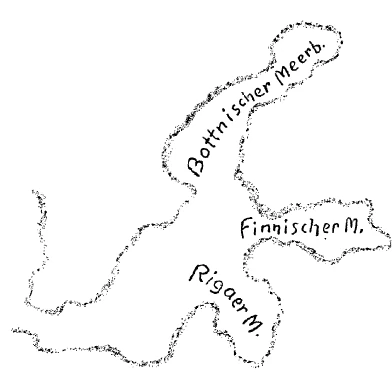
[ 22 ] The peoples who still sensed this felt and spoke in this way, including in the Kalevala, as I have explained. Modern people, who today live only on the physical plane, say that the Western Sea extends in this direction; that is the Gulf of Bothnia, that is the Gulf of Finland, and that is the Gulf of Riga. But when we seek to penetrate the spiritual aspect of the outer physical world—that which appears to us as a cross-section of nature—we perceive the following. Down there is still a great deal of water; over there is the air; human beings breathe air; and the sea world is a great, powerful being, merely formed differently than we are accustomed to. This is a mighty being that spreads out over it, and the human beings of the earlier race stood in a very distinct, specifically configured relationship with this being. And when we now speak of national spirits, these national spirits have in the elemental beings—who live in numerous such soul manifestations—the tools to work. They organize, as it were, an army to work, to work their way into the etheric body and, from the etheric body, to shape the human being in such a way that his physical body becomes an instrument for whatever he is meant to be for his specific mission on Earth.
[ 23 ] Only when we can view the forms we encounter in nature as expressions of the spiritual do we understand nature itself in its connection to humanity—when we do not simply gaze thoughtlessly at the boundaries of the sea and the land, but understand what is expressed in these forms. It might occur to someone, looking at a human face, to say: Yes, there are such forms there. That is where flesh and air meet. — But if someone says this, they will have understood very little of it. One has only truly understood it when one perceives it as an expression of the human being, as a face. So here, too, one has only truly understood it when one regards it as a certain physiognomy of a mighty being that extends certain parts of its main body out of the ocean, that extends this part of its physiognomy.
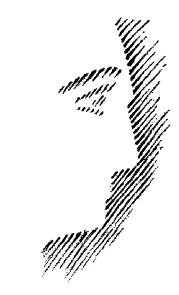
[ 24 ] Much truly takes place below the threshold of consciousness, and the Spirits of Form have not placed these forms in nature for no reason. These forms can be understood. They are the expression of inner essence. And when we become the disciples of the spirits of form, then we ourselves create forms that express what lives in the inner essence of the natural and the spiritual.
[ 25 ] For example, in our architraves—the parts above the columns—forms should be created that truly express the spiritual quality intended to be associated with what is to take place within the building. Human beings are indeed beings who, as it were, emerge with their surface from a sea—a sea of reality, of hidden reality—into which they have been immersed.
[ 26 ] You see, this is yet another example of how we actually have to look beyond appearances if we truly want to understand what is before us in the world, especially if we want to understand human beings with all their expressions. We often have to delve into what lives within a person without their knowing it, or what they only gradually learn through the imparting of knowledge.
[ 27 ] In fact, whenever we turn our gaze in any direction, we cannot help but first look at the outer maya, and we must be aware that behind this outer maya lies something extraordinarily complex.
[ 28 ] If we were inclined to delve everywhere into that which lies behind maya, then there could be infinite harmony and unity throughout the entire human existence, for in a sense, this human existence is connected through infinite subterranean impulses to a harmonious unity of being, and everything that exists in the world can only be understood if one examines it in relation to what lies beneath the surface of existence.
[ 29 ] There is always a one-sidedness when one considers anything solely in relation to maya. I would like to interject something here. Isn’t it true that things like those we have just discussed can only be fully understood little by little? I want to show how, even in ordinary life, it is difficult to truly engage with everything that lies within the things that come to us. For example, perhaps very few of our dear friends will have noticed that in a recent lecture I spoke at length about Switzerland, about something that is deeply connected to Swiss nature. I do not know how many people are actually aware of what I am speaking of. But you may recall that I followed the four lectures I gave on occult reading and hearing with a lecture in which I spoke, from a purely external, historical perspective, at length about Herman Grimm. That was a lecture in which, in fact, an extraordinary amount was said about Switzerland, but one must go back to the inner essence of the matter, to what lies beneath the surface. Why is that?
[ 30 ] You see, the human being—and I am repeating something quite basic—consists, as we know, of the physical body, the etheric body, the astral body, and the I-nature. We know that when a person is asleep, the ego nature and the astral body leave the physical and etheric bodies and, as it were, dwell outside, more in the spiritual world—in a world of which we can say: At night we are within this world, where the elemental, etheric beings also reside. — But there are also those spiritual elemental beings within it that are connected to the entire structure of our physical being. They are all there and active within it. A number of elemental beings are connected to the entire structure of our physical being. I once drew attention to this in a lecture series I gave in Kassel on the connection between the Gospel of John and the other Gospels, explaining how the human being, through their ancestors, is connected to the beings of the elemental nature. I drew attention to the fact—you can read about it in that lecture series—that when we arrange the human being’s four members in this way—here the physical body, here the ego, here the etheric body, here the astral body—he has inherited from his father’s side that which lives more in his physical body and his ego.
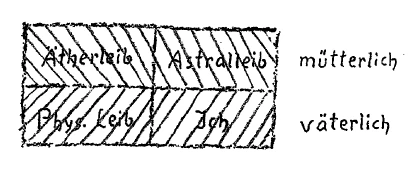
[ 31 ] Anyone who has read the lecture series carefully will recall that what lives more in the etheric body and the astral body is inherited from the maternal side. When we sleep, our physical and etheric bodies lie in bed—that is, something paternal and something maternal. But our ego and astral body are outside. The astral body contains that which imprints itself upon our feelings and our entire temperamental disposition—that which gives us our soul character. And into this very thing that gives us our soul character, elemental beings in turn work their way in through the course of time—beings who carry the forces from ancestors to descendants, so that these descendants become, in a certain sense,
[ 32 ] There is something quite unique about a personality such as Herman Grimm. One senses an aftereffect in Herman Grimm of who his immediate ancestors were. His immediate ancestors—his father and his uncle—were the collectors of Children’s and Household Tales, and they had heard these tales told. They simply listened when they were told, and then wrote them down. But one does not do such a thing unless one has a particularly well-developed astral body that is predisposed to it. Such things must be deeply rooted in the entire course of events.
[ 33 ] Herman Grimm has a certain way of expressing himself with subtle intellectual depth, a way that comes very close to Spiritual Science. This is inherent in him because his ancestors already had a penchant for the fairy-tale-like and for that in which the spirit of nature lives. Here we see how the nature spirits have carried something into him that they allowed to resonate even when Herman Grimm, with his ego and astral body, was outside his physical and etheric bodies. Who, then, first told the fairy tales to his father and uncle with such vividness—as if standing within them like an elemental being? Herman Grimm’s father’s wife, that is, Herman Grimm’s mother. Herman Grimm’s mother was the animating element in this transmission of fairy tales. She took special delight in listening to these fairy tales as they lived among the people, and she absorbed them in such a way that the two Grimm brothers—Herman Grimm’s father and uncle—were able to write them down.
[ 34 ] Who was this mother? Dorothea Grimm, née Wild, came from an old Bernese family. She herself was still a citizen of that city. Her ancestors had fought in the Battle of Murten. The whole feeling she had gained there, with all the elemental spirits, was then carried up to Hesse, because her father, who had emigrated from Bern—Herman Grimm’s grandfather—had learned the apothecary’s trade, then moved to Kassel and founded the Sonnenapotheke there. So if we seek what the elemental spirits were at work in Herman Grimm specifically—what, so to speak, constituted the particular configuration of this spirit, since these spirits, so to speak, were at work within him while he slept—then we must think of Switzerland, and when we speak of what is characteristic of Herman Grimm, we are actually speaking of what is characteristically Bernese-Swiss.
[ 35 ] Thus, what is essential sometimes presents itself to us, outwardly completely overshadowed by maya. One listens to what is the essence in the mind of Herman Grimm’s mother when one considers the peculiar structure of his spirit, so that I actually said something immediately Swiss in the spiritual realm—in what I have highlighted as lying beneath the threshold of consciousness—and spoke of the Swiss, specifically the Bernese, when I spoke of Herman Grimm. It was therefore to be expected that precisely this manner, to which allusions have been made, would have evoked quite familiar, homely feelings among many of our friends.
[ 36 ] It is not merely a matter of what, so to speak, confronts us externally, but of what lives within that which confronts us externally. The Earth, with all that is upon it, is in fact intimately connected; the Earth, as a unified being, is in fact intimately connected with what the human being can be upon it, with what takes shape and forms around the human being indirectly through the etheric body.
[ 37 ] Now that I have used the present example to clarify how we must pass through the maya if we wish to understand what is there, let us return once more to the sea dragon, who is, as it were, the inspirer of European humanity, who pushed his way across from the Atlantic Ocean to become the inspirer of European humanity. If we consider the totality of its elemental-etheric beings, it contains everything that is spiritual in European humanity. If we were to fully understand this dragon, if we could surrender ourselves completely to it, then we would all be clairvoyant. But European humanity does not have the task of merely being clairvoyant; rather, it has the task of developing precisely that part of the soul that rises above clairvoyance, just as islands rise out of the sea. That which now had to develop in a very special way as, I might say, the archetypes of the fifth post-Atlantean cultural epoch, had to bear the fundamental character of standing out as a nature of consciousness, of standing out from the merely soul-world. This had to be inspired by the nature spirits working through the Earth. It had to have the possibility of being connected everywhere, as it were, connected through countless flowing impulses with this inspiring being. But it had to stand out; it had to send the earthly into the watery. And this came about through the British Isles rising up with the sum of all their nature spirits from the inspiring sea that completely surrounded them.
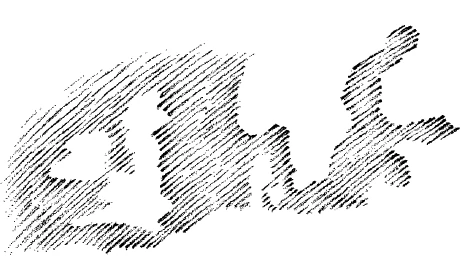
[ 38 ] When a true Spiritual Science finally comes into being, we will know that in such a continental region of the human being, the soul-bearers—the physical and etheric bodies—must form in a way dictated by the relationship between sea and land. Just as the elevation of the land above the sea is determined by the sea, so too must the human being, by his very nature, fill certain spaces not by allowing them to remain as muscles, but by transforming them into bones—that is, in such a way that the soft substance and the hard substance maintain a specific relationship to one another.
[ 39 ] This is also how things unfold out there in the great Earth Mother, namely in such a way that the solid element emerges from the liquid element. One might say: The Earth sends up from its depths the elemental spirits that shape the Earth into a specific configuration, at a specific point of spiritual inspiration, so that a soil may arise on which such bodies can dwell, in which the consciousness-soul develops.
[ 40 ] The solid land in the sea is truly like a skeletal framework within the elemental realm. Just as our skeletal system is embedded within the soft muscular system, so too is the solid earth configured within the sea. And the continents do not arise as haphazardly as geology depicts, but rather take shape just as regularly as the skeletal system forms within us—though not through cells, as bones are formed. We must only learn to understand why the individual continents are formed in this or that shape. I would like to use one more comparison, which is not intended to lead you into a misunderstanding. I would like to say: In order for that view we have spoken of to arise here among this ancient Finnish people, it was necessary for such a land configuration to arise in the sea bays.
[ 41 ] Just as the human lungs draw in air, so too are the tentacles of that great being—which is connected to the entire configuration of Europe—outlined in this landform, as if drawn into it.
[ 42 ] Last time we spoke of the bodies that are bestowed upon the Russian soul when that soul incarnates in a Russian body. We have shown, last time and also in the course of other reflections, that within a Russian body the Russian soul forms itself expectantly, that it preforms within itself that which may one day receive a future. For this, it is necessary that this soul remain in a certain way connected to the spiritual. Otherwise, the Spirit-Self could not be formed at all. But on the other hand, this soul must be prevented from developing too early into those regions that are actually preformed within it.
[ 43 ] Let us suppose that here—where the Baltic Sea is now—there were land, and that here—where Russia is—it were all sea. Only peninsula-like formations would jut out, such as Italy and so on. The Gulf of Bothnia, the Gulf of Finland, and the Gulf of Riga would extend all the way to the Caspian Sea, instead of us having Russian land here. Then we would have a seafaring people here who would navigate these inlets. But as a result, the bodies here would not be able to form as they are meant to. For the being that extends its tentacles over here would exhale what these seafarers would receive, and they would unfold their potential prematurely—that is, too early. They would unfold too early what ought to wait for a later time. The Spirit-Self must wait a certain time; it must not be unfolded too early. Therefore, there must not be a sea here, but the land must emerge to such an extent that the Spirit-Self is not developed too early, yet the possibility remains to receive the inspirations of this great being. Thus, there must be neither high mountains like the Alps nor flat lands, but only such elevations that the Spirit-Self is not received too early. There must be just enough land to generate the Spirit-Self: that is, extensive, mostly flat land areas. If there were a seafaring people here, this seafaring people would have developed the Spirit-Self long ago. But that would be premature; development would occur at the wrong time.
[ 44 ] And now we come to the Earth’s cosmic intelligence. The Earth possesses a cosmic intelligence that determines its form—a form that raises the land wherever necessary so that the appropriate elemental spirits may come into contact with the beings on Earth, and, on the other hand, preserves the water wherever necessary so that the inspiring genii may act.
[ 45 ] We get the impression that we are literally looking at our Earth and can see in such a formation of land something similar to when we make this or that facial expression, where the soul also comes to light in the expression through this or that configuration of the face. The soul of the Earth confronts us in the configuration of the Earth. Indeed: as soon as we come to the human etheric body, this essence of the human etheric body extends, as it were, over the entire organization of the Earth, and everywhere there is a connection between the human etheric body and the organism of the Earth. Everywhere we find that what is truly earthly—that is, the maya for the earth spirits—is connected for modern humans with their ego nature, with the outer physical nature. Everything that is water and air—viewed spiritually—is connected with what he develops in opposition to his ego-nature. For the whole Earth exists precisely to form the earthly human being. The other aspect consists in nuancing this earthly human being. This nuancing is brought about by the Earth through the mutual relationship of land, water, and air.
[ 46 ] When we look at Europe from the south, and in particular at the Greek and Italian peninsulas, we find that the way land and water are distributed there has prepared the earth for bodies capable of bearing the fourth post-Atlantean culture, in which the intellectual or emotional soul finds such a distinctive expression.
[ 47 ] If the countries in southern Europe had been larger and the inlets smaller, something would have had to emerge in Greece and Italy that was not destined to emerge until later; in other words, something would have come into being that was of no use to evolution. In order for the Greek character to find its repetition in the Roman character in the manner I have described, a landmass wider than that of Greece had to extend toward the seas. This is the case in France. And in the relationship I have described as existing between France and Greece, you can find a precise expression of this in the physiognomy of Greece, as it is indented everywhere by the sea, and in the physiognomy of France, as it extends its promontories toward the sea to a greater extent.
[ 48 ] Today, I wanted to give you some points of reference for various matters that will need to be discussed in greater detail during our meeting. We will then build on these points tomorrow.