

Artistic and Existential Questions
in the Light of Spiritual Science
GA 162
8 August 1915, Dornach
Translate the original German text into any language:
Versions Available:
Artistic and Existential Questions, tr. SOL
Dreizehnter Vortrag
Thirteenth Lecture
[ 1 ] Bedenken wir, daß der Mensch in langer, komplizierter Entwickelung aufgebaut ist durch die Saturn-, Sonnen- und Mondenzustände und die bis jetzt abgewickelten Erdenzustände. Wir haben betont, daß die erste Anlage zu Sinnesorganen des Menschen schon in der alten Saturnzeit gewesen ist, daß diese Sinnesorgane selbstverständlich in jener alten Zeit nicht dazu geeignet waren, Wahrnehmungen nach Art der heutigen menschlichen Wahrnehmungen zu machen, sondern daß sie eben als während der Saturnzeit noch unlebendige Organanlagen vorhanden waren, sich dann verwandelt haben und eigentlich erst durch die verschiedenen Vorgänge, die vom Kosmos aus auf den Menschen gewirkt haben, wahrnehmungsfähig geworden sind.
[ 1 ] Let us consider that human beings have been formed through a long and complex process of evolution, encompassing the Saturn, Sun, and Moon stages, as well as the Earth stages that have unfolded up to the present. We have emphasized that the first rudiments of human sense organs already existed in the ancient Saturn era, that these sense organs were, of course, not capable in that ancient time of perceive in the manner of today’s human perceptions, but that they existed during the Saturn era as still-lifeless organ rudiments, which then underwent transformation and actually only became capable of perception through the various processes that acted upon human beings from the cosmos.
[ 2 ] Das erste aber, was sich uns mit besonderer Deutlichkeit ergibt, wenn wir den ganzen Hergang der Menschenentwickelung beachten, das ist, daß diese Sinnesorgane als solche zu tun haben mit dem, was wir nennen können, physikalische Wirkungen. Auf dem alten Saturn ist Ja schon die erste Anlage der Sinnesorgane als eine bloß physikalische Anlage entstanden, und immer wieder und wieder schreitet die Entwickelung der Sinnesorgane des Menschen dadurch fort, daß physikalisches Geschehen sich eingliedert in dasjenige, was sich sonst beim Menschen ausbildet; so daß also im wesentlichen die Sinnesorgane, wie sie heute sind, physikalische Organe sind. Es wird Ihnen ja unschwer auffallen können, daß die Augen physikalische Organe sind, daß die Ohren physikalische Organe sind und so weiter. Gewiß, die niederen Sinne sind wie chemische Organe, aber trotzdem hat das alles mit dem Physikalisch-Chemischen zu tun.
[ 2 ] The first thing, however, that becomes particularly clear to us when we consider the entire course of human development is that these sense organs, as such, are involved in what we might call physical effects. On ancient Saturn, the first rudiments of the sense organs had already emerged as a purely physical structure, and time and again the development of the human sense organs proceeds through the integration of physical processes into what otherwise develops in human beings; so that, in essence, the sense organs as they are today are physical organs. It will not be difficult for you to see that the eyes are physical organs, that the ears are physical organs, and so on. Certainly, the lower senses are like chemical organs, but nevertheless, all of this has to do with the physical-chemical realm.
[ 3 ] So müssen wir die Sache auffassen, daß gewissermaßen als das äußerste seiner Entwickelungsglieder der Mensch in die Welt hinein dasjenige vorstreckt, was man nennen kann sein Physikalisches. Dieses Physikalischsein der Sinnesorgane geht auch schon daraus hervor, daß während des Schlafens die Ohren selbstverständlich genau so beeinflußt werden wie während des Wachens, nur daß sich das Ich und der astralische Leib nicht damit befassen. Würden wir die Augen während des Schlafens offen haben, so würde selbstverständlich ganz genau dasselbe geschehen in unserem Auge, wie während des Wachens.
[ 3 ] We must therefore understand the matter in such a way that, as it were, at the very outer end of his developmental stages, the human being projects into the world what might be called his physical aspect. This physical nature of the sense organs is also evident from the fact that during sleep, the ears are, of course, affected in exactly the same way as during wakefulness, except that the ego and the astral body are not concerned with it. If we were to keep our eyes open during sleep, exactly the same thing would, of course, happen in our eyes as during wakefulness.
[ 4 ] Wir können uns jetzt zusammenfassend so ausdrücken: Der Mensch streckt sein äußeres Wahrnehmungsvermögen der Welt vor.
[ 4 ] To summarize, we can say the following: Human beings extend their external powers of perception toward the world.
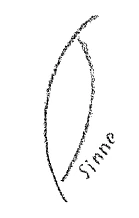
[ 5 ] Was ich also hier schematisch zeichnete, das ist aufzufassen als die Eingliederung der sämtlichen Sinnesapparate in unseren Organismus. Und es ist tatsächlich so, daß, wenn ich jetzt den Ätherleib einfüge, er selbstverständlich gewissermaßen die Sinnesapparate durchdringt, sonst wären sie nicht Lebensapparate; aber es bleibt einiges außerhalb des ätherischen Bereichs als etwas, was ganz physisch ist. So daß das Verhältnis so gezeichnet werden muß, daß etwas außerhalb des Ätherleibes bleibt.
[ 5 ] What I have drawn here schematically should be understood as the integration of all the sensory organs into our organism. And it is indeed the case that when I now introduce the etheric body, it naturally permeates the sensory organs to a certain extent—otherwise they would not be life-organisms—but some elements remain outside the etheric realm as something that is entirely physical. Thus, the relationship must be depicted in such a way that something remains outside the etheric body.
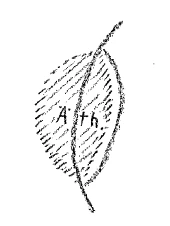
[ 6 ] In einer ähnlichen Weise müßte ich dann zeichnen das Verhältnis des Astralleibes in seiner Wirksamkeit zu den anderen Organen. Ich müßte das so zeichnen:
[ 6 ] In a similar way, I would then have to draw the relationship between the astral body and its effects on the other organs. I would have to draw it like this:
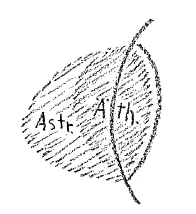
[ 7 ] Und wollte ich das Ich noch einfügen, so müßte ich das schematisch in der folgenden Weise tun. Dieses Ich würde sich da nach den Weiten des ganzen Makrokosmos öffnen.
[ 7 ] And if I were to insert the “I” here, I would have to do so schematically in the following manner. This “I” would then open itself up to the vastness of the entire macrocosm.
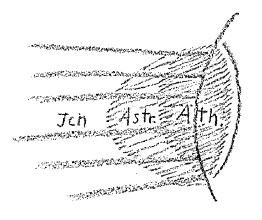
[ 8 ] Natürlich ist das schematisch gezeichnet, und wir müssen uns klar darüber sein, daß, wenn wir nicht ein Schema zeichnen, sondern wirklich ein Bild des Menschen entwerfen würden, sich das dann viel komplizierter ausnehmen würde.
[ 8 ] Of course, this is a schematic drawing, and we must be clear that if we were to draw not a schematic but a real picture of a human being, it would look much more complicated.
[ 9 ] Nun können Sie aber daraus entnehmen, daß gewissermaßen eine dünne Zone, eine dünne Außenzone aus dem Physikalischen heraus der Sinn ist; aus dem, was eben als die Außenwelt wirkt. Sie können das ja mit einem physikalischen Geschehen vergleichen: das Auge kann wie eine Dunkelkammer betrachtet werden, wo die Gegenstände von außen herein ihre Abbilder erzeugen wie in einem photographischen Apparat; und das, was da drinnen erzeugt wird, das wird erst aufgefangen von dem Ätherleib, Astralleib und dem Ich. Wir haben also mit der Außenwelt eine physikalische Wechselwirkung, die in unserer Peripherie stattfindet. Und auf diese Wechselwirkung mit der Außenwelt bauen wir erst unseren Seelenprozeß auf, insofern dieser Prozeß Wahrnehmung der Außenwelt ist und Verarbeitung der Wahrnehmung in der Seele.
[ 9 ] Now, however, you can infer from this that, in a sense, a thin zone—a thin outer zone—emerging from the physical realm is what constitutes the sense; from that which appears as the external world. You can compare this to a physical process: the eye can be regarded as a darkroom, where objects from the outside produce their images inside it, just as in a camera; and what is produced there is first received by the etheric body, the astral body, and the ego. We therefore have a physical interaction with the external world that takes place at our periphery. And it is upon this interaction with the external world that we first build our soul process, insofar as this process consists of the perception of the external world and the processing of that perception within the soul.
[ 10 ] So wie ich das jetzt dargestellt habe, müßte die Sache beim Menschen sein, wenn er sich rein fortentwickelt hätte, so wie ihn die göttlich-geistigen Wesenheiten veranlagt haben. Aber wir wissen, daß sich luziferisch-ahrimanische Wesenheiten geltend gemacht haben. Und wir können hier an einer Stelle klar und deutlich die ahrimanischen und luziferischen Geister abfangen, richtig abfangen, möchte ich sagen.
[ 10 ] As I have just described it, this is how things would be with human beings if they had developed purely in the way the divine-spiritual beings had intended. But we know that Luciferic-Ahrimanic beings have asserted themselves. And here, at this point, we can clearly and distinctly discern the Ahrimanic and Luciferic spirits—discern them correctly, I would say.
[ 11 ] Den Ätherleib durfte ich nur bis hierher (Zeichnung unten $. 265) zeichnen. Das ist der Ätherleib, wie er sich gebildet hat vom Sonnendasein angefangen, durch das Monden- und Erdendasein hindurch. Da bleibt also außerhalb dieses Ätherleibes, der sich regelrecht fortgebildet hat durch Sonnen-, Mond- und Erdendasein hindurch, die physikalische Sinneszone gleichsam außen. Würde aber das wirklich so sein beim Menschen (wie auf der Zeichnung), würde er sich wirklich nur so entwickelt haben, dann würde ja der Mensch gewissermaßen immer abwarten müssen, wie die physischen Prozesse in seinem Auge, in seinem Ohr entstehen, und er würde diese physischen Prozesse mit seinem Astralleib und seinem Ich erfassen. Er würde immer ein Vorstellungsbild haben: in meinem Auge ist eine Farbe, in meinem Ohr ist ein Ton und so weiter; er würde nicht nach außen seine Sinne geöffnet haben, er würde nur das, was in seinem Inneren ist, wahrgenommen haben, er würde die Empfindung haben: in mir ist eine Zone, die ist ganz durchsetzt von Wirkungen des Makrokosmos, und die nehme ich wahr.
[ 11 ] I was only allowed to draw the etheric body up to this point (drawing below, p. 265). This is the etheric body as it has formed, beginning with the solar stage and continuing through the lunar and earthly stages. Thus, outside this etheric body—which has developed steadily through the solar, lunar, and terrestrial stages—the physical sensory zone remains, as it were, on the outside. But if this were truly the case with human beings (as shown in the drawing)—if they had really developed only in this way—then human beings would, so to speak, always have to wait and see how the physical processes arise in their eyes and ears, and they would perceive these physical processes with their astral body and their I. They would always have a mental image: there is a color in my eye, a sound in my ear, and so on; they would not have their senses open to the outside world; they would perceive only what is within them; they would have the sensation: within me is a zone that is entirely permeated by the effects of the macrocosm, and I perceive it.
[ 12 ] Es ist interessant, daß in den ersten Kinderjahren das Kind, wenn auch schwach und traumhaft, wirklich dieses Bewußtsein hat. Es achtet nicht auf die Außenwelt, sondern merkt auf dasjenige, was es als Wahrnehmungen in seinem eigenen Inneren hat. Das hört später immer mehr und mehr auf. Die Kinder sind vorzüglich an dem eigenen Leibe interessiert, achten nicht der Außenwelt, sondern haben eben ein traumhaftes Bewußtsein, so daß sie da eingeschlossen sind wie in einer Sphäre, die wirklich die Wirkungen der Außenwelt wie Bilder da hereinbringt. Das Kind fühlt wirklich die Haut als eine Art Umhüllung und achtet auf dasjenige, was als Gemälde und Töne dadrinnen stattfindet.
[ 12 ] It is interesting that in the early years of childhood, the child—albeit in a faint and dreamlike way—truly possesses this awareness. The child pays no attention to the outside world but focuses on what it perceives within itself. This gradually ceases more and more as the child grows older. Children are primarily interested in their own bodies; they pay no attention to the outside world but instead have a dreamlike consciousness, so that they are enclosed within it as if in a sphere that truly brings the effects of the outside world into them as images. The child truly feels the skin as a kind of covering and pays attention to what takes place inside it in the form of images and sounds.
[ 13 ] Wir könnten nun fragen: Warum bleibt das nicht so das ganze Leben lang? — Weil der luziferische Einfluß stattgefunden hat und weil er eben dasjenige, was sich als rechtmäßiger Fortgang im Ätherleib von der alten Sonne an gebildet hat, ausfüllt. Das heißt, die luziferischen Geister strecken ihren Einfluß von außen nach innen her. (Zeichnung $. 268.) Während der Ätherleib so vom Menschen nach der Innenperipherie heraus wirkt, wirkt Luzifer so herein. Und es ist auch wahr: in den physikalischen Apparat der Augen streckt sich etwas wie Äther-Fühlarme von Luzifer herein, ebenso in den Apparat der Ohren und so weiter. Überall stopft Luzifer in die Sinne seine Arme hinein, die er von außen herein erstreckt. Und in unseren Sinnen ist die Begegnung zwischen unserer eigenen Äthertätigkeit, das heißt Lebenstätigkeit, und derjenigen Luzifers, der seine Arme da hineinerstreckt. So daß wir sagen können: Des Kindes Unschuld hört schon allein dadurch auf, daß Luzifer allmählich die Sinne durchdringt: er nimmt Besitz von dem Physischen unserer Sinne, schließt die Augen auf, schließt die Ohren auf, so daß wir nicht mehr Bilder als die Wirkung des von den Göttern uns Gegebenen wahrnehmen, sondern unsere Sinne nach außen aufgeschlossen sind, und wir die Welt selber sehen.
[ 13 ] We might now ask: Why doesn’t this remain the same throughout one’s entire life? — Because the Luciferic influence has taken place, and because it fills precisely that which has formed in the etheric body as a legitimate continuation from the old Sun. That is to say, the Luciferic spirits extend their influence from the outside inward. (Drawing $. 268.) While the etheric body acts outward from the human being toward the inner periphery, Lucifer acts inward in this way. And it is also true that something like etheric feelers from Lucifer extend into the physical apparatus of the eyes, as well as into the apparatus of the ears, and so on. Everywhere, Lucifer thrusts his arms—which he extends from the outside—into the senses. And within our senses lies the encounter between our own etheric activity—that is, life activity—and that of Lucifer, who extends his arms into them. So that we can say: A child’s innocence ceases simply because Lucifer gradually penetrates the senses; he takes possession of the physical aspect of our senses, opens the eyes, opens the ears, so that we no longer perceive images as the effect of what the gods have given us, but rather our senses are opened to the outside world, and we see the world for ourselves.
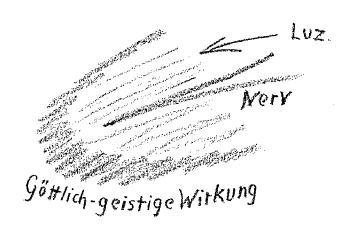
[ 14 ] Es ist außerordentlich wichtig, dieses ins Auge zu fassen. Denn erst, wenn die Wissenschaft einmal wirkliche Geisteswissenschaft sein wird und das, was jetzt gesagt worden ist, verstanden sein wird, erst dann wird die Zeit gekommen sein, wo man auch einsehen wird, daß Luzifer ziemlich frech war, als er auch hinter die Sinne seine Wirkungen vorstreckte. Da wo die Nerven einmünden ins Gehirn, da begegnet sich die luziferische Wirkung mit der auch den Nervensträngen entlang gehenden göttlich-geistigen Wirkung. Man muß geradezu, wenn man von außen nach innen gehend zeichnen will den Verlauf eines Nerves, so zeichnen, daß Luzifer sich vorstreckt und sich begegnet und verschlingt mit den normalen göttlichgeistigen Wirkungen. So strahlt von außen nach innen die luziferische Wirkungsrichtung hinein.
[ 14 ] It is extremely important to bear this in mind. For only when science has truly become a Spiritual Science, and what has just been said is understood, only then will the time have come when people will also realize that Lucifer was quite audacious when he extended his influence even beyond the senses. Where the nerves enter the brain, the Luciferic influence encounters the divine-spiritual influence that also travels along the nerve pathways. In fact, if one were to draw the course of a nerve from the outside in, one would have to depict Lucifer reaching in, encountering, and entangling himself with the normal divine-spiritual forces. Thus, the direction of Lucifer’s influence radiates inward from the outside.
[ 15 ] Sie sehen daran, daß es in der ursprünglichen göttlich-geistigen Absicht lag, den Menschen sich selbst so zu geben, daß — indem er sich selbst durchschaute — er die Welt innerlich verarbeitet hätte. Luzifer hat gemacht, daß der Mensch in dieser Beziehung sich selbst entrissen wurde, und nun die Welt rings herum anschaut und wahrnimmt. Das heißt, Luzifer hat den Menschen der Welt gegeben, er hat ihn hineingestellt in das Erdendasein, er hat ihn aus sich herausgeführt. Tief, tief bedeutsam ist das biblische Wort: Ihr werdet den Göttern gleich sein, Eure Sinne werden aufgeschlossen werden —, denn es war nicht beabsichtigt, sie aufzuschließen, sondern sie so zu lassen, daß der Mensch in seinem Denken zurückschaut zum alten Mondendasein und in diesem Denken dasjenige einfängt, was an seiner Peripherie der Makrokosmos bewirkt, das was da herein von den Göttern gegeben war.
[ 15 ] You can see from this that it was part of the original divine-spiritual intention to give human beings to themselves in such a way that—by looking within themselves—they would have processed the world inwardly. Lucifer caused humanity to be torn away from itself in this regard, so that it now looks at and perceives the world around it. That is to say, Lucifer gave humanity to the world; he placed it within earthly existence; he led it out of itself. The biblical words are deeply, deeply significant: “You will be like gods; your senses will be opened”—for it was not intended to open them, but to leave them such that human beings, in their thinking, would look back to the old lunar existence and, in this thinking, grasp what the macrocosm brings about at its periphery—that which was given there by the gods.
[ 16 ] Nun ist aber auch der Mensch als ein ethisch-moralisches Wesen dadurch in die Welt hereingestellt; denn wir könnten so manches nicht erleben als Menschen, wenn wir nicht dieses Hervorstrecken der Wirksamkeit Luzifers in uns hätten. Wir wären zum Beispiel niemals zornig oder ängstlich, wir würden nicht hassen, uns nicht verfolgt glauben, keine Antipathie gegen einen Menschen entwikkeln: das alles würden wir nicht können. Es würde dem Menschen niemals gelungen sein, wenn Luzifer ihm nicht vorgearbeitet hätte, irgendein Schimpfwort oder ein dem anderen Menschen abträgliches Wort der Sprache einzuverleiben. Nur durch die Wirkungen Luzifers ist es möglich, daß wir zornig oder ängstlich sind, daß wir Haß oder abträgliche Gesinnung gegen den anderen Menschen entwickeln, oder daß wir ihn beschimpfen und so weiter.
[ 16 ] But human beings, as ethical and moral beings, are also placed in the world in this way; for we would be unable to experience many things as human beings if we did not have this projection of Lucifer’s influence within us. For example, we would never be angry or fearful; we would not hate, would not feel persecuted, and would not develop antipathy toward another person: we would be incapable of all of that. Human beings would never have succeeded in incorporating into language any kind of insult or word harmful to another person if Lucifer had not paved the way for them. It is only through the effects of Lucifer that it is possible for us to be angry or fearful, to develop hatred or hostile feelings toward another person, or to insult them, and so on.
[ 17 ] Und man muß sich durchaus mit Bezug darauf nicht der geringsten Illusion hingeben. Derjenige, der glaubt, wenn er den anderen haßt, das sei gerecht, der mag das sagen, es mag gerecht sein, aber Luzifer steht doch daneben. Es gibt keine andere Ursache für Zorn und Haß und Antipathie als den luziferischen Einfluß.
[ 17 ] And one must certainly not entertain the slightest illusion in this regard. Anyone who believes that hating others is just may say so, and it may indeed be just, but Lucifer stands aside from it. There is no other cause for anger, hatred, and antipathy than the Luciferic influence.
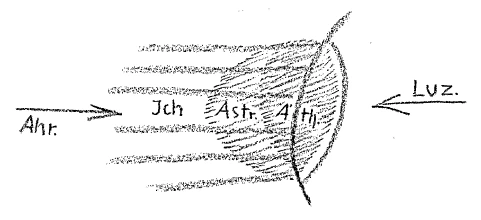
[ 18 ] Und dadurch, daß dieses möglich geworden ist, ist wiederum ein anderes möglich geworden. So zum Beispiel ist es nur dadurch, daß Luzifer so seine Fangarme von außen hereinstreckt, möglich geworden, daß die normal fortschreitenden Götter den Ahriman von der anderen Seite zugelassen haben, so daß er von der anderen Seite eingreift. Nicht nur die Sprache, sondern auch das Denken durchsetzt er, und aus dieser Mischung heraus entsteht dasjenige, was Heuchelei, gewollte oder nicht gewollte Lügenhaftigkeit geworden ist. Wir dürfen uns niemals schmeicheln, daß, wenn wir irgend jemandem gegenüber heucheln, es von irgendwo anders herkommt als von dem Bündnis des Luzifer mit Ahriman.
[ 18 ] And because this has become possible, something else has in turn become possible. For example, it is only because Lucifer extends his tentacles from the outside that the normally progressing gods have allowed Ahriman to enter from the other side, so that he intervenes from there. He permeates not only language but also thought, and out of this mixture arises what has become hypocrisy—deliberate or unintentional deceit. We must never flatter ourselves that, when we are hypocritical toward anyone, it comes from anywhere other than the alliance between Lucifer and Ahriman.
[ 19 ] Man ist allerdings geneigt, über solche Dinge leicht hinwegzugehen. Denn wie oft sagt der Mensch: Ich tue dieses oder jenes nicht um meinetwillen, sondern im Dienste der Welt. Ich habe oftmals die Anekdote erzählt von der «Gesellschaft für Selbstlosigkeit». Darinnen war eine esoterische Sektion, und in dieser Sektion sollten alle nur ganz objektiv, niemals in bezug auf sich selber denken. Die Folge war, daß einmal ein Mitglied zu einem anderen Mitglied kam und sagte: Ich darf ja nicht von mir sprechen, denn das wäre persönlich und gegen die Regeln unserer Gesellschaft. Aber von den anderen darf ich sprechen; da bin ich ja ganz selbstlos, wenn ich dir erzähle, wie die anderen sind, und was sie alles Böses tun! — Und nun zog er über die andern her. Weil die Mitglieder dieser Gesellschaft nicht von sich sprechen durften, sprachen sie immer von den anderen, und was die anderen ihnen antaten. Sie wurden dadurch nicht selbstloser.
[ 19 ] One is, however, inclined to gloss over such things. For how often do people say: “I do this or that not for my own sake, but in the service of the world.” I have often told the anecdote about the “Society for Selflessness.” It had an esoteric section, and in that section, everyone was supposed to think only completely objectively, never in relation to themselves. The result was that once a member approached another member and said: “I’m not allowed to speak of myself, because that would be personal and against the rules of our society.” “But I am allowed to speak about the others; after all, I am being completely selfless when I tell you what the others are like and all the evil things they do!” — And then he launched into a tirade against the others. Because the members of this society were not allowed to speak about themselves, they always spoke about the others and what the others were doing to them. This did not make them any more selfless.
[ 20 ] Ich will damit sagen, daß es nicht darauf ankommt, was man glaubt. Man kann glauben, alle Mittel anzuwenden, um Luzifer und Ahriman zu entrinnen; man ist dann nur in der Lage, etwas unwahrhaftiger zu sein durch dieses Bestreben, als man vor diesem Bestreben war. Man sprach es wenigstens vorher nicht aus, daß man das Beste will und so weiter. Nachher spricht man es auch noch aus, indem man sich aber täuscht über die wahre Lage, in der man ist.
[ 20 ] What I mean to say is that it doesn’t matter what one believes. One may believe that one is using every means to escape Lucifer and Ahriman; but through this endeavor, one is only capable of being somewhat more untruthful than one was before this endeavor. At least before, one did not say out loud that one wanted the best and so on. Afterward, one says it out loud as well, but in doing so, one deceives oneself about the true situation in which one finds oneself.
[ 21 ] Über alle diese Dinge wird man sich klar, wenn man den wirklichen Sachverhalt ins Auge faßt, wenn man sich ganz klar ist, daß in unserem Erdendasein Luzifer und Ahriman nötig sind, und man ihnen nicht entrinnen kann, sondern nur dazu kommen kann, sie richtig zu beherrschen, wirklich richtig zu beherrschen.
[ 21 ] One becomes aware of all these things when one faces the true state of affairs, when one is fully aware that Lucifer and Ahriman are necessary in our earthly existence, and that one cannot escape them, but can only come to master them properly—truly master them.
[ 22 ] Klar muß man sich darüber sein, daß mit Bezug auf das Zusammenwirken von Luzifer und Ahriman, gerade wenn man geisteswissenschaftlich vorschreitet, die mannigfaltigsten Komplikationen möglich sind. Ein sehr häufig vorkommender Fall ist der folgende. Irgend jemand hat eine Antipathie gegen einen anderen Menschen. Es kann sein, daß der Zorn auf diesen Menschen, der im Unbewußten sitzt, ins Oberbewußstsein heraufdrängt, nach außen drängt; und die Folge davon ist, daß während man einen nicht zum Bewußtsein gekommenen Grund für seine Antipathie hat, und zum Bewußtsein nur der Zorn kommt, der Haß oder die Antipathie nach außen drängt, in die Sphäre des Luzifer herauf drängt; und da, in der Sphäre des Luzifer, entstehen die einleuchtendsten Visionen und Imaginationen von allem Möglichen, was einem der betreffende Mensch antut. Und nun kann im Unterbewußten, im Unterbewußtsein, der Zorn herausdrängen und es entstehen dann alle möglichen erphantasierten Dinge, die von der gehaßten Persönlichkeit ausgehen könnten. Und man verbirgt die wahren Gründe für die Antipathie hinter dem, was man also vorgibt, erfahren zu haben.
[ 22 ] It must be clear that, with regard to the interplay between Lucifer and Ahriman—especially as one advances in Spiritual Science—the most diverse complications are possible. A very common scenario is the following. Someone harbors antipathy toward another person. It may be that the anger toward this person, which lies in the unconscious, pushes its way up into the conscious mind and manifests outwardly; and the result is that, while one has an unrecognized reason for one’s antipathy—and only the anger comes to consciousness—the hatred or antipathy pushes outward, surging up into the sphere of Lucifer; and there, in the sphere of Lucifer, the most vivid visions and imaginings arise of all sorts of things that the person in question is supposedly doing to one. And now, in the subconscious, the anger can push its way out, giving rise to all sorts of fantasized scenarios that might originate from the hated person. And one hides the true reasons for the antipathy behind what one thus claims to have experienced.
[ 23 ] Es ist selbstverständlich, daß gegenüber solchen Tatsachen der geistigen Welt gefragt werden kann: Wie hütet man sich vor solchen Dingen? — Die Antwort wäre nur dadurch gegeben, daß die betreffende Persönlichkeit verwiesen würde auf ein allmähliches Hinausarbeiten aus den Illusionen des Lebens, in denen sie nur allzu tief darinnen steckt. Man kann alle die Gründe des Sich-selbst-etwasVormachens am allermeisten in sich haben, wenn man glaubt, sich gar nichts vorzumachen, sondern nur auf die Tatsachen zu achten. Also, dieser gute Wille, wirklich an seine Selbstvervollkommnung von diesem Gesichtspunkte aus zu denken, nur der hilft über diese Dinge hinweg. Eines ist vor allen Dingen notwendig, meine lieben Freunde: zu verstehen, wie die Impulse der Geisteswissenschaft wirken, wenn wir nach einer Selbstvervollkommnung streben, wie sehr wir aber geneigt sind, uns viel mehr zuzuschreiben an Selbstlosigkeit, als wozu wir schon befugt sind. Dabei will ich eine goldene Regel angeben.
[ 23 ] It goes without saying that, in the face of such facts about the spiritual world, one might ask: How does one guard against such things? — The answer would be simply to direct the person in question toward gradually working their way out of the illusions of life, in which they are all too deeply entrenched. One may harbor all the reasons for self-deception most of all within oneself when one believes one is not deceiving oneself at all, but merely paying attention to the facts. So, this good will—truly thinking about one’s self-improvement from this perspective—is the only thing that helps one overcome these things. One thing is necessary above all else, my dear friends: to understand how the impulses of Spiritual Science work when we strive for self-improvement, and how much we are inclined to attribute far more selflessness to ourselves than we are actually capable of. In this regard, I would like to offer a golden rule.
[ 24 ] Vor allem sollen wir uns ganz klar darüber sein, daß indem wir vorschreiten in der geisteswissenschaftlichen Selbsterziehung, wir durchaus uns zunächst herausarbeiten müssen aus unserem Zusammenhang mit der Außenwelt. Luzifer hat uns in die Außenwelt hineingestellt. Dadurch kommen wir nicht weiter, daß wir das, was wir sonst wollen, uns verwandeln lassen von Ahriman, indem wir sagen: Wir wollen jetzt Missionen ausführen und so weiter. Der nächste Schritt, den wir machen müssen, das ist ein Ablenken der Welt von uns, so daß wir dadurch vor der Gefahr stehen, wirklich egoistischer zu werden, als wir vorher waren. Diese Gefahr ist nicht gering. Selbstverständlich soll man sich dadurch nicht abhalten lassen, den Weg in die geistige Welt hinein zu betreten, aber die Versuchung zum Egoismus ist da. Und wir sollen nicht so ohne weiteres hochmütig sein gegenüber denjenigen, die — man muß sagen, leider noch nicht einsehen können, daß die geisteswissenschaftliche Weltanschauung für unsere Zeit notwendig ist und die draußen stehend, sagen: Liebevoll nehmen sich diese Geisteswissenschafter wahrhaftig nicht aus —; und wir sollten wirklich nicht über diesen Einwand immer hinweggehen, sondern seine Berechtigung, seine relative Berechtigung schon einsehen.
[ 24 ] Above all, we must be absolutely clear that as we progress in our self-education in Spiritual Science, we must first detach ourselves from our connection to the external world. Lucifer has placed us in the outer world. We will not make progress by allowing Ahriman to transform us into what we otherwise desire—by saying, “We now want to carry out missions” and so on. The next step we must take is to turn the world away from us, which means we face the danger of actually becoming more selfish than we were before. This danger is not insignificant. Of course, one should not allow this to deter one from entering the path into the spiritual world, but the temptation toward selfishness is there. And we should not be so quick to be haughty toward those who—it must be said—unfortunately cannot yet see that the Spiritual Science worldview is necessary for our time, and who, standing on the outside, say: “These Spiritual Scientists certainly do not come across as loving”—and we really should not always brush aside this objection, but rather recognize its validity, its relative validity.
[ 25 ] Ich weiß nicht, meine lieben Freunde, ob der Recht hatte, der vor kurzem einmal behauptet hat: es komme sogar vor, daß — durch diese Steigerung des Egoismus in einer geisteswissenschaftlichen Strömung — als Tatsache festzustellen wäre, daß sich in geisteswissenschaftlichen Gesellschaften Menschen finden, die, nachdem sie einige Zeit darinnen sind, noch viel mehr streiten, als sie vorher gestritten haben. Manches spricht doch schon leise dafür, daß die Diskrepanzen in solchen Gesellschaften durchaus nicht so ohne weiteres aufhören wollen! Wenn es wirklich so wäre, daß jeder über den anderen nur Gutes sagen würde, dann würde sich das Bild darbieten, daß... außerhalb des Ringes, der diesen Kreis umgibt, Luzifer mit seiner Schar wohl lauerte, aber nicht so recht hinein könnte!
[ 25 ] I do not know, my dear friends, whether the person who recently claimed the following was right: it even happens that—due to this rise in selfishness within a Spiritual Science movement—it can be observed as a fact that there are people in Spiritual Science societies who, after having been members for some time, argue even more than they did before. There are, after all, subtle indications that the disagreements in such societies are by no means likely to cease so easily! If it were truly the case that everyone spoke only well of one another, then the picture that would present itself would be that... outside the ring surrounding this circle, Lucifer and his host were lying in wait, but could not quite break in!
[ 26 ] Wenn also der Mensch in seinem gewöhnlichen wachen Verhalten ist, so treffen sich in seiner Sinnesperipherie das Ätherische seiner eigenen Wesenheit und das Ätherische der Luzifer-Wesenheit. Das ist dasjenige, was den Worten zugrundeliegt: Eure Augen werden aufgetan werden. — Von allen okkulten Schulen wird von jeher ganz besonders auf diesen Grundsatz verwiesen.
[ 26 ] Thus, when a person is in their ordinary waking state, the etheric aspect of their own being and the etheric aspect of the Luciferic being meet at the periphery of their senses. This is what underlies the words: “Your eyes will be opened.” — All occult schools have always placed particular emphasis on this principle.
[ 27 ] Erkenntnis ist schon dasjenige, was uns auf der einen Seite ganz genau zum Bewußtsein bringen soll, das, was da vorliegt, auf der anderen Seite aber uns dazu anleiten soll, die Dinge hinzunehmen, so wie sie sind. Solange wir nicht in unsere Gedanken diese Dinge aufnehmen können, solange bleiben sie in dem Gebiete der Sympathie und Antipathie, da wühlen sie. Sie sind nicht etwa nicht da, wenn wir von ihnen nicht wissen: sie sind immer da. Und besonders zu dieser Zeit ist die Menschheit an dem Punkte ihrer Entwickelung angekommen, wo solche Dinge bewußt werden müssen.
[ 27 ] Insight is, on the one hand, what is meant to make us fully aware of what is right before us, and on the other hand, what is meant to guide us to accept things as they are. As long as we cannot incorporate these things into our thoughts, they remain in the realm of sympathy and antipathy, where they continue to stir things up. It is not that they are not there when we are unaware of them: they are always there. And especially at this time, humanity has reached the point in its development where such things must be brought into consciousness.
[ 28 ] So haben wir uns einiges Genauere verschafft an Erkenntnis über unsere Sinnesperipherie. Gestern haben wir von dieser Sinnesperipherie so gesprochen, wie sich in die Sinnesanschauung das Begehren mischt. Jetzt haben Sie den realen Grund dafür. Denn Luzifer kommt heran und läßt die Sinnesempfindungen nicht wie neutrale objektive Geschehnisse an uns herankommen, sondern mischt sein Wesen herein.
[ 28 ] In this way, we have gained a more precise understanding of the periphery of our senses. Yesterday we spoke of this periphery of the senses in terms of how desire intermingles with sensory perception. Now you have the real reason for this. For Lucifer intervenes and does not allow sensory perceptions to reach us as neutral, objective events, but rather intermingles his own nature with them.
[ 29 ] Und schreiten wir von der Sinnesperipherie nach innen, so kom_ men wir da auf das Denken, das Vorstellungsleben. Wir wissen, daß dieses Vorstellungsleben uns wiederum durch Luzifers Einfluß als uns gehörend erscheint, während wir in Wirklichkeit dasjenige, was wir denken, in der Sphäre des alten Mondes, der dauernd ist, erblicken müssen. Damit haben wir den ganzen Sinn erfaßt von dem Abtrennen des alten Mondes von dem Sonnen-Erdendasein. Denn daß der Mensch heute überhaupt jemals Gedankliches in die Seele hat hineinbringen können, das hängt zusammen mit der Abtrennung des alten Mondes von der Sonne. So daß wir sagen können: Gedankliches, so wie wir Menschen es erfassen können, kommt daher, daß sich etwas abgetrennt hat als alter Mond von dem fortlaufenden Saturn-, Sonnen-, Mondendasein. Aber wie ist es mit dem, was da geschehen ist, mit dem, was sich da abgetrennt hat?
[ 29 ] And as we move inward from the periphery of the senses, we arrive at thinking, the life of the imagination. We know that this life of imagination, through Lucifer’s influence, appears to us as something that belongs to us, whereas in reality we must perceive what we think as belonging to the sphere of the old Moon, which is eternal. With this, we have grasped the full meaning of the separation of the old Moon from the Sun-Earth existence. For the very fact that human beings today have ever been able to bring thought into the soul at all is connected with the separation of the old Moon from the Sun. So we can say: Thought, as we human beings are able to grasp it, arises from the fact that something has separated itself as the old Moon from the continuing existence of Saturn, the Sun, and the Moon. But what of what happened there, of what separated itself?
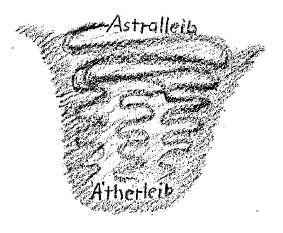
[ 30 ] Das können wir Menschen als sinnlich inkarnierte Wesen nur erfassen durch Geisteswissenschaft. Es handelt sich darum, wie diese Gedanken auf das, was sich da abgetrennt hat, auf das Außergedankliche, wirken. Unser Gedankliches wird angeregt von unserem Astralleibe, aber es wirkt hinunter in den Ätherleib. Nun kann man folgendes beobachten: Wenn das ein Stück unseres Ätherleibes ist, auf den man das geschulte geistige Auge richtet, so findet man, wenn man nun im Astralleib Gedanken anregt, daß diese Gedanken dann im Ätherleib gleichsam hinunterströmen, so einströmen in den Ätherleib. — Sie müssen sich das nicht räumlich, sondern als Kräfte vorstellen; dann sieht man, daß diese Gedanken im Ätherleib Bewegungen, Tätigkeit hervorrufen. Die Gedanken lösen sich gleichsam auf, und im Ätherleib entsteht Bewegung. Es rinnt gleichsam der Gedanke aus dem Astralleib in die Äthersubstanz hinein und ruft im Ätherleib Bewegungen hervor.
[ 30 ] We humans, as beings incarnated in the physical world, can only grasp this through Spiritual Science. The question is how these thoughts affect what has separated itself—the non-mental realm. Our mental activity is stimulated by our astral body, but it acts downward into the etheric body. Now one can observe the following: If one directs the trained spiritual eye toward a part of one’s etheric body, and then stimulates thoughts in the astral body, one finds that these thoughts then, as it were, flow downward into the etheric body—they pour into the etheric body. — You must not create a mental image of this in spatial terms, but rather as forces; then you will see that these thoughts evoke movements and activity in the etheric body. The thoughts dissolve, as it were, and movement arises in the etheric body. The thought, as it were, flows from the astral body into the etheric substance and evokes movements in the etheric body.
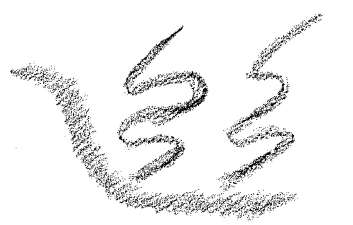
[ 31 ] Nehmen wir an, jemand sagt: Ich will jetzt weggehen, — da würde der Hellseher den Gedanken zunächst sehen: «Ich will jetzt weggehen!» Aber er würde wahrnehmen, wie der Gedanke in den Ätherleib strömt und in dem Ätherleib Bewegungen, innere Bewegungen hervorruft, nur solche Bewegungen zunächst — (Zeichnung unten S. 274). Dadurch kann der Ätherleib wiederum auf den physischen Leib wirken. Und diese Wirkung auf den physischen Leib ist jetzt so, daß (Lücke im Stenogramm). Nun, denken Sie sich einmal, hier diese Bewegung wird immer reger und reger, und dadurch geht gewissermaßen die Äthersubstanz weg aus der Umgebung, sie zieht sich zusammen; da wird sich das stark bewegen, das ist von dem umgebenden Äther herausgenommen.
[ 31 ] Let’s suppose someone says, “I want to leave now”—the clairvoyant would first see the thought: “I want to leave now!” But he would perceive how the thought flows into the etheric body and causes movements—inner movements—within the etheric body, only such movements at first—(illustration below, p. 274). Through this, the etheric body can in turn affect the physical body. And this effect on the physical body is now such that (gap in the stenographic record). Now, imagine that this movement here becomes more and more vigorous, and as a result, the etheric substance, so to speak, is drawn away from the surroundings; it contracts; that which is moving strongly is being drawn out of the surrounding ether.
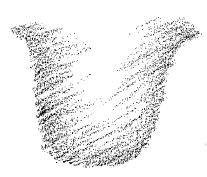
[ 32 ] Der Gedanke strömt also ein, ruft in der Äthersubstanz Bewegung hervor, und die Äthersubstanz ruft in ihrer Umgebung hier Hohlheit hervor. Denn das, was die Äthersubstanz da braucht, das nimmt sie von ihrer Umgebung, und es entstehen Hohlräume. Und diese Hohlräume entstehen, wenn der Mensch denkt, oder wenn die höheren Wesenheiten, Angeloi, Archangeloi, ihre Gedanken in ihn hereinlassen, was ja fortwährend geschieht.
[ 32 ] The thought thus flows in, causing movement in the etheric substance, and the etheric substance in turn creates a void in its surroundings. For whatever the etheric substance needs there, it takes from its surroundings, and cavities are formed. And these cavities arise when a human being thinks, or when the higher beings—Angels and Archangels—allow their thoughts to enter him, which happens continuously.
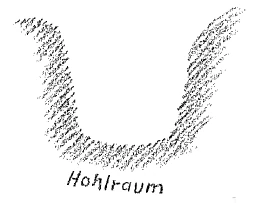
[ 33 ] Das heißt, wir stehen da, wir sehen sich bewegen den Äther durch die Gedankenwirkung, und dazwischen sind Hohlräume. Und diese Hohlräume sind eigentlich im Grunde der physische Leib. Es ist schon wirklich so, daß das Reale überall dort ist, wo das Physische nicht ist, und das Physische, das ist überhaupt nichts, das ist eine Hohlheit in der Welt.
[ 33 ] That is to say, we stand there, we see the ether moving through the effect of thought, and there are voids in between. And these voids are, in essence, the physical body. It is indeed true that the Real is everywhere where the physical is not, and the physical—that is nothing at all; it is a void in the world.
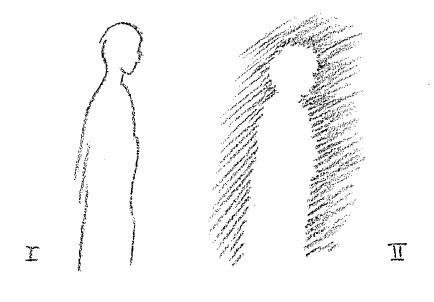
[ 34 ] Dasjenige, was der gewöhnliche materialistische Physiologe an unserem Kopf studiert, das ist natürlich nicht das Gedankenmäßige im Astralleib, nicht die Gedankenbewegung im Ätherleib, sondern das ist in Wahrheit der Hohlkopf. Und nur deshalb kann man nicht in diese Hohlräume hinein, weil man nur so weit vordringen kann, als das Reale geht, und man hier an den Hohlraum stößt. So kann man da nicht hinein in die Hohlräume. Es ist gerade so, wie wenn Sie sich eine Säule Selterswasser vorstellen und darin die leeren Luftperlen sind. Das Dünnere erscheint dem Wesen, das in dem dichteren Elemente lebt, furchtbar hart. So können wir auch in die eigentlichen Hohlräume nicht hinein, aber nur deshalb, weil da nichts ist, weil es hohl ist. So daß eigentlich, wenn man okkultistisch den Menschenkopf zeichnen wollte, man ihn nicht so zeichnen müßte (Zeichnung I), sondern im Negativ, und das, was da drinnen hohl bleibt, das wäre der Mensch (Zeichnung II). Das heißt, wo der Maler gewöhnlich die Farben anlegt, und meint, er malt den Menschen, da müßte er eigentlich aussparen: dann würde man spirituell-realistisch malen, denn sonst malt man, wo nichts ist, und läßt frei, wo etwas ist.
[ 34 ] What the ordinary materialistic physiologist studies in our head is, of course, not the mental aspect of the astral body, nor the movement of thought in the etheric body, but is in truth the empty space. And the only reason one cannot enter these cavities is that one can only penetrate as far as reality allows, and here one encounters the cavity. Thus, one cannot enter the cavities. It is just as if you were to have a mental image of a column of Seltzer water containing empty air bubbles. What is more ethereal appears terribly hard to a being living in a denser element. So we, too, cannot enter the actual cavities, but only because there is nothing there—because they are hollow. So that, in fact, if one were to draw the human head from an occult perspective, one would not have to draw it this way (Drawing I), but rather in negative form; and what remains hollow inside would be the human being (Drawing II). This means that where the painter usually applies the colors, thinking he is painting the human being, he should actually leave that area blank: then one would be painting in a spiritually realistic manner, for otherwise one paints where there is nothing and leaves blank where there is something.
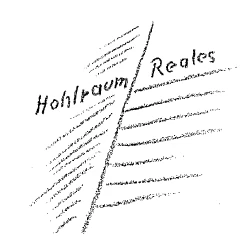
[ 35 ] Das tut man aber schon im ganz gewöhnlichen menschlichen Sinnesanschauen, denn nicht anders verläuft das menschliche Sinnesanschauen.
[ 35 ] But this is already what happens in ordinary human sensory perception, for human sensory perception does not proceed in any other way.
[ 36 ] Sie sehen, wie wir eine Änderung unserer Begriffe vornehmen müssen, wenn wir zu den Realitäten vordringen wollen.
[ 36 ] You can see how we must redefine our terms if we want to get to the heart of reality.
[ 37 ] Nun zum Schluß noch eines. Ich habe gestern darauf aufmerksam gemacht, daß sich die heutigen menschlichen Anschauungen charakterisieren lassen als «Wurm-Philosophie», die nur Ursachen und Wirkungen miteinander verknüpft. So machen es die menschlichen «Würmer». Sie können zum Beispiel eine reiche Literatur finden über den Wechsel von Wachen und Schlafen, wo die Ursache für dasjenige, was im Schlafen geschieht, gesucht wird in dem physischen Leib: Ermüdungsstoffe und dergleichen. Man beachtet nicht, daß da oben etwas Geistiges ist, was heraus will und beim Aufwachen wieder hinein will, was lebt in einem regelmäßigen Zyklus, so wie die Sonne abwechselnd Tag und Nacht verursacht. Man lese, was darüber Fritz Mauthner in seinem Wörterbuch geschrieben hat. Darin ist nichts über das Schlafen, das Träumen oder das Ich zu finden, nichts von all diesen Dingen, die Menschen kennen müssen, um überhaupt über den Menschen etwas zu wissen.
[ 37 ] Now, one final point. Yesterday I pointed out that today’s human views can be characterized as a “worm philosophy,” which links only causes and effects. That is how human “worms” operate. For example, you can find a wealth of literature on the alternation of waking and sleeping, where the cause of what happens during sleep is sought in the physical body: fatigue-inducing substances and the like. No attention is paid to the fact that there is something spiritual up there that wants to come out and, upon waking, wants to go back in—something that lives in a regular cycle, just as the sun alternately brings about day and night. Read what Fritz Mauthner wrote about this in his dictionary. In it, there is nothing to be found about sleep, dreaming, or the “I”—nothing about all these things that people must know in order to know anything at all about human beings.