

The Riddle of Man
The Spiritual Background of Human History
GA 170
7 August 1916, Dornach
Translated by Steiner Online Library
Sixth Lecture
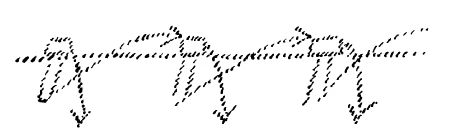
[ 1 ] It may seem complicated to some what needs to be said whenever the topic of the human being and its connection to the universe comes up again and again. “There is so much to the human being!”—some might say. But the fact remains that human beings are formed in a complex way out of the universe, and we simply have to accept this. We must come to terms with this fact, especially in the present age, because otherwise—and this must be said—it could be too late. People are currently living in incarnations in which it is still just about possible not to know much about the complex nature of the human being; but times will come—and human souls will be incarnated again in those times—when that will no longer be possible. Then the souls will have to begin to finally understand how the human being is connected to the universe. One could say that we are currently just barely passing through that age in which it is not yet left up to human beings themselves to hold together the various aspects of their nature—which we were able to outline yesterday from a certain perspective; we are living in an epoch in which these various aspects are still held together without our intervention, where the complacent person can come along and say: “Oh, how complicated this anthroposophical wisdom is; but truth is simple, and what is not simple is not the real truth!” — Today, one can still hear this statement quite often. Those who utter this statement under Luciferic seduction have no idea how, precisely through such a statement, they are deluding themselves with the so-called simplicity of truth, how they are deceiving themselves with it. For there will indeed come times when human beings will find themselves quite complicated through experience, and when they will be able to hold themselves together only through knowledge. But the entire future must be prepared, and the task of the spiritual-scientific worldview movement is to prepare the development of earthly culture for that age in which human beings will have to know how to hold themselves together from their various parts. Let us now recall this fundamental truth, which we have elaborated on in some detail in recent days: that human beings can essentially be described as having a dual nature, and that even their outward appearance reveals this dual nature, in that the head—one might say—is constructed from a completely different perspective than the rest of the organism. When we look at a person’s head as it is today, it is essentially the result of what has become of the body from the previous incarnation. And our present body—excluding the head—will, once we have passed through the period between death and rebirth, become the head of our next incarnation. Thus, we could schematically depict the human being’s progression through the incarnations as follows: The human being has his head; he has the rest of his body. What is now his head he essentially loses; what is the rest of his body will appear transformed in the next incarnation as his head, and he will again receive his body from the earth. This body will then become the head again in the next incarnation, and he will again receive his body from his ancestors, from the earth. The head is always lost. Of course, what is at stake here are the forces. The matter of the rest of the body is, of course, also lost. But it is not this outer matter that is at issue—which is, in the truest sense, a maya—but rather all the forces that reside in the body, excluding the head; these are transformed during our passage through the time between death and new birth into the forces of the head. And now we truly possess within our head those forces that were bound to our body in our previous incarnation. That was the basic concept, which we have elaborated on in more detail.
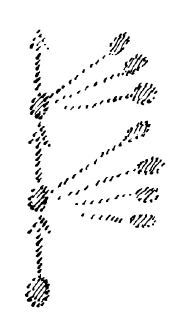
[ 2 ] Now let us draw on other insights we have gained to understand these things better and better. We must first ask ourselves: What actually transforms our present body—and the powers of our present body—so that it can become a head in the next incarnation? After all, it is difficult at first to conceive of our body being transformed into a head. What makes this transformation possible? — that is the question we must ask.
[ 3 ] To answer this question, we must first turn our inner gaze to what we have said about the imaginative and cognitive aspects of the human soul—which are now connected to the head—and about the aspects of truth and wisdom. People today generally believe that what we acquire through cognition serves only to form images of the external world and to learn something about it. There are philosophical epistemologists who theorize over and over again about how concepts or ideas are actually connected, and what mysterious relationship exists between the nature of the concept and the thing represented by the concept. Such theories all suffer from a common flaw. For now, I can only make this flaw clear to you by using a metaphor. Imagine, for a moment, a botanist or a gardener who wanted to investigate the nature of a grain of wheat, and he would go about it by saying: “I will use chemistry to examine the grain of wheat to determine to what extent it contains the components that humans need to nourish themselves through wheat grains, wheat flour, or the like.” And in this context—the relationship the wheat grain has to human nutrition—the botanist would seek the essence of the wheat grain, that is, the reasons why it consists of certain components. Such a person would be laboring under a rather curious misconception if they believed they could learn anything about the essence of the wheat grain by investigating to what extent it is a good food source for humans. The grain of wheat arises within the entire wheat plant as the fruit of the wheat plant, and only the one who investigates to what extent a new wheat plant develops from the grain of wheat can discover why the grain of wheat is, in its essence, as it is. And the fact that it contains the components necessary for human nutrition is merely a secondary aspect added to the essence of the wheat grain; this has absolutely nothing to do with the inner nature of the wheat grain. Anyone who views everything solely in terms of its utility and wishes to make the knowledge of utility the truest science will simply examine the grain of wheat chemically and find: something arises in nature that can serve as human food. — But the fact that humans feed on it has absolutely nothing to do with the inner nature of the grain of wheat. As I said, what has to do with its inner nature is that a new wheat plant can grow from the grain of wheat.
[ 4 ] To those who see through things with insight, with the power of imagination, the various philosophical epistemologists appear just like people who examine a grain of wheat for its ability to nourish human beings. For if one were to ask the grain of wheat about its original purpose—why it exists—it would not answer: “to nourish human beings,” but rather, “to give rise to a new wheat plant.” Those who see through the realm of knowledge and the realm of the conceptual perceive such a mistake—as I have just characterized it—in the philosophical epistemologists. For what we call the cognitive aspect—what lives within us as an idea, as truth, as wisdom—is not originally intended at all to represent external things. This representation of external things is just as much a secondary function as it is for the grains of wheat to feed human beings. Knowledge is not at all meant merely to create images of external things; rather, it is meant for something else. It is meant to work, weave, and live within the human being in a certain way. As we live here in the existence between birth and death, we gradually accumulate wisdom, and at the same time we use that wisdom in such a way that it can serve as a representation of the external world, just as we use the grain of wheat as food. But by using the grain of wheat as food, we deprive it of its inherent purpose of forming a new plant. In the same way, we deprive wisdom of its true purpose by using everything we employ to comprehend the external world. For the conceptual, the truthful, is not initially intended for that at all. What is this truthful aspect intended for—I mean in the sense that the grain of wheat is intended to bring forth a new wheat plant? For our cognitive activity, our work in accordance with truth, is intended to develop forces within us between birth and death that transform our organism after death—that is, its form of power—into the form of power of the head! This is the remarkable connection one discovers when one considers the human journey, on the one hand, between birth and death, and on the other hand, between death and a new birth. The knowledge a person acquires serves, first and foremost, to transform their organism—excluding the head—into a head, which then becomes the head of the next incarnation. You will say: But there are so many people who acquire no knowledge at all and remain so terribly stupid; only a few become intelligent—and one usually counts oneself among them. — But those who have said—and several people have said this, independently of one another—that a person learns more and absorbs more wisdom in the first three or four years of life than during the three years of academic study are, in a sense, somewhat right. In the first three years of life, we really do learn quite a lot of what we can only learn through our head while on Earth. We acquire the knowledge necessary to speak, to understand what is spoken, and much, much more. We truly learn a great deal during that time. And that is part of what must be called the content of wisdom.
[ 5 ] Through this—which human beings acquire as their wisdom, and in which people are actually not all that different—there surges and weaves, as a force, that which transforms our organism into a head as it passes through the time between death and a new birth. It is, in essence, a rather complex structure that we take in through our imagination and our cognition. And only occasionally, in dreams such as the one I cited for you yesterday at the end—from a Polish poet—is a faint glimpse revealed to us of what, so to speak, surges and weaves between the ideas of which we become fully conscious. But what surges and weaves there is precisely what works within us to pass into actuality after death and transform our organism. Everything gained through cognition accumulates to transform our organism, with the exception of what we use to perceive the external world. What we use to perceive the external world in the ordinary sense is, in a certain way, lost to our development; we withdraw it from our development. Just as we withdraw from the overall process of the wheat’s development all the grains of wheat—far more than those that are sown back into the earth—that we use as food, so too do we in fact withdraw far more from ourselves—especially in the present period of human development—than we retain by appropriating the external world. Let us think back to earlier times, when people knew what they knew even more through inner clairvoyant knowledge. They did not rely so heavily on the external world. Peoples such as the ancient Egyptians and the ancient Chaldeans knew what they knew through atavistic clairvoyance, and only to a small extent through external development. Today we live in an age that is, in a sense, the opposite in this regard. Today, much is absorbed from the outside, and little is added from within the process of development. The Greeks occupied that wonderful middle ground of a certain cultural development, which was not determined solely by the fact that the Greeks were so uniquely gifted. They certainly were, but that alone is not enough. They also owe the coherence of their entire culture to the fact that the area of the earth occupied by the Greek people was relatively small, even in terms of their knowledge of the rest of the world. What did the Greeks really know of anything beyond Asia Minor, toward Asia? What did they know of Africa? They knew absolutely nothing of America; nor did they know anything of a large part of Europe. The fact that Plato was still able to possess knowledge of morality, of sophrosyne and dikaiosyne, is largely due to the fact that the sphere of Greek knowledge was, externally speaking, a small one. Therefore, it was still possible to retain many of the spiritual powers of wisdom for inner development. But they devoted less to inner development than, for example, the ancient Egyptians or Chaldeans, or even the ancient Persians or Indians. In our time, when the entire Earth has gradually been explored and made accessible, people seek to acquire as much external knowledge as possible. How this has increased! If it were as intensive as it is extensive, then people would take with them infinitely little—and the most educated, in particular, much, much less than any farmer—to transform the physical body into the physical head of the next incarnation. But thank God, most have traveled in such a way that they haven’t seen much, but have carefully followed the Baedeker or other guidebooks, and despite covering a wide area, have not really come to know much; thus, they do not deprive themselves of everything. Otherwise, especially for those who chase after sensations everywhere—who want to know everything they know only from the outside—there would be the danger that in their next incarnation they would be born with a head that is little more than the transformed remainder of the body, that is, one that would look very animal-like; for that would be their fate if few formative forces were accumulated.
[ 6 ] But then, comparisons drawn from the imagination can also be expanded. We may ask ourselves: If it is the case that what we use outwardly for cognition, for the acquisition of external knowledge, is stripped of its actual inner essence—just as the grain of wheat, when made into food, is stripped of the inner nature of the grain of wheat—what similarity then exists with regard to what external knowledge is, what becomes external knowledge, and the fact that grains of wheat are also used as food? There is an inner similarity, but it must be brought to light.
[ 7 ] Let us once again turn our attention to this peculiar fact: that a large number of wheat grains are not used to produce more wheat plants, but are instead consumed as human food! Then we can say: The wheat grain is thus removed from its linear course of development. Isn’t that right? We have a grain of wheat that produces a grain, which in turn produces another grain, and so on. But numerous grains of wheat are diverted; they actually pass into an entirely different realm—the realm of human food—which has nothing to do with the ongoing flow.
[ 8 ] Nature offers you the opportunity to form a concept of something that must be taken very, very seriously if you wish to acquire a true worldview. Our external science has gradually led to the terrible situation where everything is explained in such a way that the latter is always supposed to be the result of the former—effect always following cause. There is nothing more foolish than this standardization of the world in the imagination, as if one must always proceed from effect to cause and from cause to effect. Later effects arise that have no direct causal connection whatsoever to a preceding cause; for how could the cause that a grain of wheat will become human food possibly lie within the grain itself? At most, according to the simplistic teleology that was still partly in vogue in the eighteenth century—according to which the presence of certain cork-like substances in nature was explained by the notion that mysterious spirits had created these things so that champagne corks could be made—no, the wheat grain truly transcends into another sphere.
[ 9 ] And the same is true when we gain insights into external nature, into external things. There, things pass into a different sphere. And I ask you to take this truth very, very deeply to heart. We humans can withdraw a very large portion of what is truly within us—what we must use to carry over from the body of our present incarnation into the head of our next incarnation. We can withdraw much in order to acquire present-day knowledge, but we must bear in mind that this knowledge must serve a different purpose. Just as grains of wheat are, so to speak, ennobled by being used as human food—they are given something appropriate in return for being removed from their original nature—so it must also be with human external knowledge, which is developed entirely contrary to the nature of the imaginative and the truthful. Everything that a human being acquires as truth, which consists of images of the external world, should be surrendered to the gods in the depths of their soul. They should always bear this awareness within themselves: If you acquire knowledge that you withdraw from the flowing stream, then be clear that the acquisition of knowledge must be a service to the gods. Whatever knowledge is acquired without our being aware that it is a sacred service in the development of humanity—without our surrendering what we appropriate from the external world to the higher spirits who nourish themselves on it and take it into themselves— — whatever knowledge we acquire that is not accompanied by this sense of reverence, that which we simply acquire thoughtlessly, is like grains of wheat that fall into the earth and rot; that is, they achieve no purpose—neither their own nor that of others, which serves as human nourishment.
[ 10 ] Here you see a point where you must feel how necessary it is that a very specific practical result emerge from our spiritual scientific endeavors—that we do not merely absorb something as learning, do not merely turn it into knowledge, but that, through the absorption of spiritual science, an overall feeling is instilled in our soul. We associate with the concept of knowledge the feeling that knowledge should be a divine service, and that it is, in essence, a sin against the divine purpose of evolution to profane knowledge, to lower knowledge from its divine destiny.
[ 11 ] I said: It is actually only in more recent times that the possibility of acquiring a great deal of external knowledge has arisen. Among the Egyptians, almost all knowledge was still internal, with very little external knowledge; only the most immediate things constituted external knowledge. During the Greco-Roman cultural epoch, the opportunity arose for human beings to acquire more and more external knowledge. That was not so long ago. But with it also came the opportunity to find the path to transform this knowledge into divine service, when Christ came to Earth with his message.
[ 12 ] Here again, we see a connection that sheds light on history. At the very moment in human development when knowledge becomes primarily knowledge of the external world, at that very moment Christ appears as emerging from the spiritual world to bring about the possibility that human beings, in their sense of Christ’s divine guidance, may transform knowledge into a form of worship by aligning it with Christ. Even if humanity today has not yet progressed very far in developing this sense of turning knowledge into a form of worship, to the extent that humanity comes to understand more and more how Christ deifies earthly life, it will also learn to turn knowledge into a form of worship.
[ 13 ] Thus, we live through everything of which our head is the outward sign, in such a way that we, as it were, use a small foundation to transform our body into a head. And the other aspect—when we accompany it with the right feeling, as I have just described—we use it so that higher spiritual beings may receive a certain nourishment through the concepts we have formed. We seek to acquire knowledge for the gods, just as wheat grows to serve as food for human beings. This is indeed the case; but this purpose must first become appropriate to it. In the same way, the purpose I have just described must first become appropriate to our knowledge through our feeling. Much, very much will depend on whether such sensations, such feelings, can be developed if the development of humanity is to be healthy.
[ 14 ] In the ancient mysteries and mystery schools, it was still taken for granted that those who were permitted to acquire this knowledge would also hold it sacred. After all, that was one of the main reasons why not everyone was admitted to the mysteries. Those who were to be admitted to the mysteries had to offer a guarantee that they would truly hold the knowledge sacred, regarding it as a service to the gods. This was still present through an atavistic sense of the spiritual. Now humanity must regain this. Humanity has gone through a period—we know this is justified—in which it has developed toward materialism. It must recover from this materialism, and it will recover only if such feelings of sacred service—as were once associated with knowledge—are once again linked to it. But in the future, this must happen out of conscious awareness. And this will be possible only if spiritual science continues to spread ever more widely among humanity. Knowledge should not resemble a seed that rots in the earth. Whatever is placed solely in the service of external utility or external mechanical arrangements is like a seed that rots. Whatever is not placed in divine service is lost. It is neither used to help us in our next incarnation nor used as nourishment for higher spiritual beings. The rotting of the seed is a real process; something does indeed happen. The squandering of knowledge, without turning it into a divine process, a service to the gods, is also a real process. It would take us too far afield today if I were to explain to you what the rotting of a grain of wheat means—but it is a worthless rotting, because it cannot sprout; because it is bound to perish. But the knowledge that is not placed in divine service is seized by Ahriman; it passes into Ahriman’s service and forms Ahriman’s power, which he, through his spiritual servants, inserts into the world process and thereby introduces more obstacles into the world process—for Ahriman is, after all, also the god of obstacles—than should justly be there, than must be there.
[ 15 ] This gives you a sense of the full significance of what lives within us in terms of ideas and truth. In the next two lectures, I will discuss beauty and morality, and then summarize these three topics, thereby opening up a new possibility for understanding the human being even more deeply.