

The Spiritual Backgrounds of the Outer World
The Fall of the Spirits of Darkness
GA 177
7 October 1917, Dornach
Translated by Steiner Online Library
Fifth Lecture
[ 1 ] Before the lecture, Rudolf Steiner offered introductory remarks in memory of the deceased members Heinrich Mitscher and Olga von Sivers. These remarks are printed in “Unsere Toten,” GA 261.
[ 2 ] It is due to the spiritual constitution of the present age that we must familiarize ourselves—as you have already seen—with profound insights and profound truths of the spiritual world. For I had to emphasize: Insights of the kind that humanity finds convenient according to present-day habits are not sufficient for the future. But one must know the reasons why they are insufficient. Only then can one connect, in all seriousness and with full dignity, to these impulses that must now be given in the present for the development of humanity. What I wish to say today will perhaps be best understood if I take as my starting point the fact that within the fourth post-Atlantean cultural epoch—which, as you know, began in the 8th century before the Mystery of Golgotha and ended in the 15th century after the Mystery of Golgotha, human beings essentially had a very different relationship to their environment—to the external world—than they must have now in the fifth post-Atlantean cultural epoch. I have often emphasized: One must take the development of humanity seriously. Souls change far more than people realize, and it is merely a convenient modern notion to believe that everything in human souls—say, in Greek times—was the same as it is today. But today I wish to focus, with regard to this nature of the soul, solely on the relationship of the soul to the surrounding world.
[ 3 ] The complacent person will say: The Greeks and the Romans perceived the sensory world around them, and we, too, perceive the sensory world around us; therefore, there is no significant difference. — But such a significant difference does exist. One might even say: People today, who are only at the beginning of the fifth post-Atlantean cultural period, perceive this environment—including the sensory environment—in a completely different way than, for example, the Greeks did. The Greeks also saw colors and heard sounds, but through the colors they still perceived spiritual beings. They did not merely think of spiritual beings; spiritual beings were revealed to them through the very nature of the colors themselves.
[ 4 ] I have tried to weave this very peculiarity of the Greek worldview like a common thread through my discussions in The Riddles of Philosophy. Modern people think thoughts. The Greeks did not think thoughts to the same extent as modern people, for they saw thoughts. These thoughts came to them from what they perceived in their environment. The environment itself was not merely blue and red; rather, the blue and the red conveyed to them the thoughts that they then thought. This creates an intimate relationship with the environment. It also gives rise to a feeling—an intense feeling—that one is connected to the environment as something spiritual. And this, in turn, is related to the entire nature of the human constitution in general during this fourth post-Atlantean epoch.
[ 5 ] In the evolution of the Earth—as you know from the general overview in Outlines of Esoteric Science—we must distinguish between major periods: the First Age, the Second Age, the Lemurian Age, the Atlantean Age, our own age (the Post-Atlantean Age), and the two ages that follow. One could say that during the Atlantean epoch, both the Earth and humanity had reached the midpoint of Earth’s evolution. Up to that point, everything had been, one might say, a process of growth and development. In a certain sense, this has no longer been the case since the Atlantean epoch. This is already no longer the case with the Earth itself. When we walk over the Earth’s crust today—as I have often hinted at—we are walking over something that is crumbling, over something that, in contrast to the growth patterns of earlier times, does not behave as if it were continuing to grow, but rather as if it were crumbling away. The Earth was much more of a growing, sprouting organism before the Atlantean epoch, up until the middle of the Atlantean epoch. Then it began, I would say, to develop cracks and fissures, and only then did the present-day rock types, marked by these cracks and fissures, come into being. This is not known today only to spiritual science. That our present-day Earth is one that is cracking and shattering—one that is heading toward its dissolution—is beautifully illustrated by the external sciences in Süss’s great and significant work, The Face of the Earth. This groundbreaking work by Sueß summarizes in broad strokes what can be said about the Earth’s structure—based on the current nature of the rocks, the types of rock, the various formations on and within the Earth, the organic beings within the Earth, and the Earth’s external structure—that is, in a sense, about the face of the Earth. And as mentioned, proceeding solely from the facts of external science, Sueß arrives at the realization that we are now dealing with a world that is dying, a world that is crumbling. But this is also true of all creatures, insofar as they inhabit this Earth as physical beings. They are in a state of descending evolution, and have essentially been so since the middle of the Atlantean epoch. It’s just that everything proceeds in a certain wave-like motion within the course of evolution. One could say: In the fourth post-Atlantean period, the Greco-Latin era, there was, so to speak, a kind of repetition of what had occurred in the Atlantean era, so that even up to the time of the Greeks, one could not yet observe in such a decisive way that human beings were in a state of descending evolution. Greek civilization—as I have often emphasized—still has the distinctive feature that the soul is in complete harmony with the body. This harmony was, of course, greatest in the middle of the Atlantean epoch. But in Greek civilization, this harmony is repeated. We have, after all, spoken on various occasions—notably in our characterization of Greek art—about the overall human constitution that the Greeks possessed, an art we know arose from impulses entirely different from those of later peoples. The Greeks, for example, still felt within themselves the ethereal, formative, and figurative aspects of the human being; they did not need models, as modern people do, because they felt the form within themselves. So one can say: Up until the Greek era, in a certain sense, the human-physical was conditioned and sustained by the immediate spatial external world. There was an intimate relationship between human beings and their spatial surroundings. This changed with the beginning of the fifth post-Atlantean epoch. As strange as it may sound to you, it is nevertheless true: we are actually no longer in the world today to care for our own physical organization. We do still incarnate, but this no longer serves the purpose of ensuring our own organization, for this organization was part of an ascending development that lasted until the middle of the Atlantean era or up to the time of the Greeks. At that time, human bodies were as perfect as they can be during the Earth era. Humanity will not experience a higher level of perfection than physicality again until the Jupiter epoch. We are actually here to belong to a development that is now waning, to incarnate in such a way that we experience all manner of things through the fact that we are in bodies that are dying off, crumbling more and more, and withering away. These expressions are, of course, very radical. But what we develop in our souls—what we are inwardly—no longer translates into outward physicality to the same extent as before. This, however, will bring about various changes in our development. In March of this year, a very significant figure passed away in Zurich: Franz Brentano. You will find an obituary for Franz Brentano in my forthcoming book On the Mysteries of the Soul. The book will be divided into three parts and an appendix: in the first, I will discuss the relationship between anthropology and anthroposophy; in the second part, I will use the example of the individual Dessoir to show how contemporary so-called scholarship aligns with anthroposophy; and in the third, I will demonstrate how a refined mind like Franz Brentano, though held in the shackles of contemporary science, nevertheless comes as close as possible to anthroposophy through his psychology. I will then include an appendix that briefly touches on some of what, under current circumstances, can really only be addressed briefly, but which could perhaps even be the subject of several books. I have summarized it in individual, short chapters in this recent work precisely because the circumstances of our increasingly difficult times do not allow for a more extensive treatment. One already has the feeling, with much of what is written in this vein for the present, that the author is, in a certain sense, writing something akin to a testament. Anyone who feels the full weight of current events within themselves will be able to sense this.
[ 6 ] Among the many insights he offered from his subtle mind, Franz Brentano also wrote a treatise on genius. What is peculiar about this treatise is that Brentano actually argues the concept of genius away, showing throughout how genius possesses no different qualities or impulses of the soul than other people do, how the genius’s memory and capacity for combination are merely more agile, more comprehensive, and so on. Franz Brentano outlines a concept of genius that differs greatly from the one commonly held. But this conventional concept of genius—like the convenient conceptual templates of the present day in general—contains a great deal of vagueness anyway. In general, one can say: The way Brentano characterizes genius does not correspond to what genius has been up to now, but it does correspond to what genius will become! In the sense that genius has existed up to now, it will not continue into the future. For what were the geniuses of the past based on? They were based on the fact that souls still possessed the power to send impulses into physicality—whether through heredity or through the forces of upbringing—so that the intuitions, inspirations, and imaginations of genius arose unconsciously from the physical realm. With the rise of physicality, genius was present. With the crumbling physicality of the future, this will no longer be the case. Where something resembling genius appears in the future, it will be based on the fact that the souls in question—who may well still be called geniuses—will look more deeply into the life of the spiritual environment; that is, the impulses will not rise from the unconscious physical realm, but rather these individuals will look more deeply into the spiritual world. It is precisely in something like the transformation of genius that we see the profound divide between what development was in the past and what development will be in the future. One might say: The genius of the past arose from the physical realm; what will take the place of genius in the future will arise from the soul’s insight into the spiritual realm. This is what a spirit such as Brentano—who feels in tune with the development of the present—perceives, just as Süss observes that the earth is, in a sense, dying out.
[ 7 ] But what is the basis for all this? It is based on the fact that the relationship between human beings and their environment has changed compared to the past. Today, the spatial environment no longer speaks to human beings the way it did when their bodies were, shall we say, fresh. It no longer conveys the spiritual through its spatial qualities. Colors no longer speak as spirit-filled elements; sounds no longer resonate as spirit-filled elements; they resonate as mere materials. That which is within the human being has become more inward. That is a strange statement, isn’t it—that one must say: The superficial human being of the present has actually become more inward. But he has indeed become more inward. It is indeed peculiar that one can say of the superficial person of the present: He is so superficial because, as he exists in his physical form, he cannot at all penetrate to his true inner being. He does not become aware of his true inner being at all; he does not develop the power to know himself; he does not realize what he actually is.
[ 8 ] Thus, the one who views the world spiritually sees quite a few people walking around who are not really themselves at all. That, again, is putting it in radical terms. They are walking bodies, and the soul is not fully within them. Why? Well, because this soul no longer has the task of fully permeating the body, which is already crumbling, but rather because its task is to prepare itself for what will take place on Jupiter. Our soul is already making preparations for the future.
[ 9 ] And one need only recognize and understand this situation. We are entirely predisposed to hear a comprehensive being speak to us: “My kingdom is not of this world.” Yet people will only slowly and gradually resolve to understand this truth. Despite outward superficiality, we are indeed less and less of this world—but this must not be confused with anything else. If one were now to believe that one could go about, like Nietzsche’s followers who called themselves “blonde beasts,” and say: “We are simply in the spiritual world; we do not belong to the physical world”—then one would have to reply: Yes, that which you yourself know about yourself already belongs to the physical world; the other is occult, hidden. — But we do have the task, with all our insight and all our inner strength, of becoming aware of this essential being within us that can no longer be fully absorbed into the body, that can no longer fully permeate the body. We must see ourselves as the candidates of the Jupiter era. But this happens slowly and gradually. For the time being, people still remain within what their environment provides them—that is, they remain within what is among them. But with each incarnation, we actually withdraw further from physicality and hover more and more above it.
[ 10 ] If this were not the case, the future of human development would be in dire straits. If human beings were entirely limited to being only what the Greeks were, then the future of human development would be bleak. For, as strange as it may sound today, conscientious occult research that seeks to penetrate the laws of human evolution reveals a truth that may at first seem disturbing—it shows us that in the not-too-distant future, perhaps as early as the 7th millennium, all women on Earth will become infertile. That is how far the withering and crumbling of the bodies will go: in the 7th millennium, the women of Earth will become infertile! Just imagine: if the relationships that can only be lived out between the human soul and the human physical body were to remain, then eventually human beings would have nothing left to do on Earth at all. Not all Earth periods will have run their course by the time human women can no longer bear children. Human beings will then have to find a different relationship to earthly existence. The final epochs of Earth’s development will compel human beings to renounce physical embodiment altogether while still being present on Earth. Existence is, after all, more mysterious than one might like to assume based on the crude scientific concepts of the present day.
[ 11 ] This matter, too, was instinctively sensed and felt during the twilight of the fourth and the dawn of the fifth post-Atlantean epoch, respectively. Some people said things back then that are already connected to the development of our own age. But they could not be properly understood; often, they did not even understand themselves correctly. Just think of such seemingly cruel teachings as those of Augustine, and even those of Calvin: that from the very beginning, one part of humanity was destined for salvation, the other for damnation; some for good, others for evil. Such teachings have existed. They seem cruel. And yet: from a proper perspective, these teachings do not appear entirely incorrect, just as many things that seem incorrect actually possess a certain relative truth. What could be known about human beings in Augustine’s time and the centuries that followed does not actually pertain to human souls or the human spirit—as you know, the human spirit was even abolished at the Council of Constantinople—but rather to the human being walking the earth. I will try to speak as clearly as possible about what really matters.
[ 12 ] You may encounter one person and then another, and in the spirit of Augustinian teaching, one might say: This one is destined for good, that one for evil—but only in terms of their outward physicality, not their individuality! — The Augustinian era did not speak at all of true individuality. If one now has a number of people before one, one can say—though this has only made sense since more recent times; it would have made no sense to the Greeks—: There are human souls; they are, of course, the architects of their own destiny. There are no impulses of predestination. But they dwell in bodies that are destined for good or for evil. — And as Earth’s evolution progresses, people will be less and less able to align the development of their souls entirely with that of their bodies. Why should it not be possible for an individuality to incarnate in a body that, by its very constitution, is destined for evil? After all, the person can still be good on the inside, because the individuality is no longer in an intimate connection with the physical body. Again, this is not a comfortable truth, but it is a truth one must come to terms with.
[ 13 ] In short, the process of internalization in human beings is increasing more and more. As we consider what is relevant to human beings, we must take into account more and more the fact that, in the final epochs of Earth’s evolution, human beings are withdrawing from their external physicality. However, as I have often emphasized, people can only slowly and gradually accustom themselves to these things through the force of facts. But the facts will compel an understanding of these things. If one observes people today based on their outward appearance, one has one picture. If one observes people based on what they are not immediately apparent to be, one has another picture. These images already differ from one another today and will increasingly diverge. It is therefore absolutely necessary for people today not to rely solely on what the external world provides when they wish to form concepts, but rather to form concepts in accordance with that which can only act upon human beings from the spirit.
[ 14 ] In particular, such concepts will be necessary for the future in all areas of politics, socialism, and so on, and especially in the field of education. The concepts provided by the environment—those that do not originate from the spiritual realm—are no longer sufficient for what human beings need. Hence the inadequacy of contemporary political and socialist theories. People want to judge things solely based on what is in their immediate surroundings; they do not want to be inspired by anything spiritual. That is why these theories—and political programs as well—are so inadequate. We no longer live in an age when one can devise programs such as those Woodrow Wilson is currently devising; rather, our time demands that world programs be devised from other, deeper sources. The spirit must provide support when world programs are devised today.
[ 15 ] But people have not yet managed to truly bring to their consciousness the inner truth of everything I have just explained to you. They are stumbling along. They have long since become people of the fifth post-Atlantean period, yet they still want to judge things as people of the fourth post-Atlantean period did. Yes, back in the time of the Greeks, that was right; it was something great, something harmonious. To judge today as a Greek would is absurd, because the Greeks’ environment provided them with everything they needed. Today, that environment no longer exists. To begin with, in many respects, I would say a certain hatred is palpable, an aversion—which is merely another aspect of fear—toward the inner contemplation of the human being. People want to remain at the level of the external. And so reminiscences arise that are merely reminiscences, in which people do not have full control over themselves.
[ 16 ] Here is a very interesting phenomenon that I would simply ask you to consider very carefully: Suppose we are dealing here with a number of minds that perhaps form an assembly—after all, enlightened assemblies exist everywhere today. Yes, the true spiritual essence has already broken free; it is no longer really present in people’s minds—it has been internalized. Even if superficial people are present at a gathering, the others—the true, genuinely spiritual minds—are actually hidden there; but those who are sitting there know nothing of it. So it may be that there are gatherings—or even individual people—in whom, like the gears of a clock, old ideas run their course: in the visible, physical minds, old ideas rumble about inside, old ideas roll on. These people know nothing of what is relevant to the times. These automatically functioning brains can allow all sorts of things to linger. It is interesting that precisely such things occur from time to time.
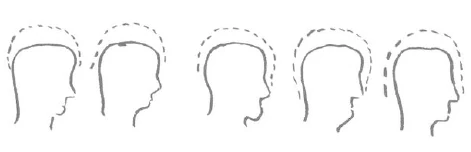
[ 17 ] There was a conference held in London in 1912 on a completely new science: eugenics. People usually give grandiose names to precisely those things that are, in and of themselves, the most foolish. The ideas behind this eugenics actually sprang from people’s minds, not from their souls. What does eugenics aim to achieve? It seeks to establish institutions so that, in the future, only a healthy human race will be produced—and no inferior individuals will be conceived; it aims, step by step, through the combination of economics and anthropology, to devise laws that will bring men and women together in such a way as to produce the strongest possible race.
[ 18 ] Yes, one does indeed begin to think about these things. The ideal of this congress, presided over by Darwin’s son, was to examine different social classes to determine how large the skulls are among the rich, how large the skulls are among the poor, who have fewer educational opportunities, how great the capacity for sensation is among the rich, how great it is among the poor, how strong the resistance to fatigue is among the rich, how strong it is among the poor, and so on. And now, in this way, attempts are being made to gain insights into human physicality that might one day in the future lead to the precise determination of: this is how he must look, this is how she must look, if there is to be a true human being of the future; he must have such a degree of fatigue tolerance, she must have such a degree of fatigue tolerance, he must have a skull of this size, and she a skull of a corresponding size, and so on.
[ 19 ] This is a rumbling, a natural rumbling in the brains that have been emptied of souls, a rumbling of those ideas that were a reality in the Atlantean era. It was indeed the case back then that there were certain laws through which people could bring about size, growth, and all manner of things through crossbreeding, backcrossing, and the like. That was, at the time, a kind of science, a widespread science, which—as I hinted to you again yesterday—was so greatly abused, especially during the Atlantean era. This science, which operated on the basis of physical kinship, knew that if one brought together such a man with such a woman—and men and women were fundamentally different in those days than they are today—a certain kind of being would result, and then one could, in turn, vary the results, just as plant breeders do today. The Mysteries then established order out of this interbreeding, out of this bringing together of the related and the different; they formed groups and withdrew from humanity what had to be withdrawn from it. But truly the blackest magical nonsense arose from what was carried out during the Atlantean Age, and order was only established by forming classes, by withholding these things from humanity. And in this way the nations arose, the races of today arose. This contributed to the formation of today’s races. And the question of nations is also stirring up trouble again in the present age as an echo of the soulless minds of the Atlantean era. How much is spoken today about national issues! But it is only the physical aspect that speaks. The withdrawn spiritual realm already belongs to a completely different world today. This is the discrepancy between reality and all the declamations that refer today to the so-called national principle. This can never lead to salvation; rather, it must lead time and again into chaos if one seeks to base politics on national issues that are no longer matters of the present, because the soul belongs to entirely different orders and contexts than those expressed in the physical being. These are all things that must be known, but which can only be known through spiritual science. This turmoil in brains that have been emptied of their souls is the reason why, in the present day, such endeavors arise that seek to shape human beings according to certain laws.
[ 20 ] And such a clamour of worn-out ideas manifests itself in yet another way—ideas that may still have an effect in withering minds, but no longer spring from the soul. The soul must be strengthened so that spiritual science can penetrate it. Then, once again, the individuality of human beings will speak for itself. You have certainly already become acquainted with all the material that appears today, which seeks to explain the most diverse kinds of people from the standpoint of psychopathology. In fact, these days, all one has to do is write a good poem, and immediately the doctor comes along and explains what illness the author has. Thus we have the most diverse treatises: Viktor Scheffel from a psychiatric standpoint, Nietzsche from a psychiatric standpoint, Goethe from a psychiatric standpoint, Conrad Ferdinand Meyer from a psychiatric standpoint. If one reads between the lines of all these writings, one can sense that their authors are actually saying: It’s a shame he wasn’t treated at the right time. Had he been treated at the right time, he wouldn’t have written things like those by Conrad Ferdinand Meyer, for example, which can only be written from a state of illness. — But this is something thoroughly contemporary in this sense: that no attention is paid to the inner life of the human being, which sometimes—precisely in people like Conrad Ferdinand Meyer—must manifest itself in such a way that their outward physical form must exhibit this or that symptom of illness, so that the inner life, independent of the physical, can attain the highest spiritual level artistically.
[ 21 ] These matters are not being discussed here with the intention of taking a stand against them. From a purely medical standpoint, the facts are, of course, correct; there is absolutely nothing to object to. From a purely medical standpoint, one can also do something else, which has in fact been done: One can go through the Gospels and, based on various passages in them, demonstrate how this remarkable individual, Jesus Christ, came into being through the convergence of very specific causes of illness. Such a book has also been written and can be read by anyone: Jesus Christ from the Psychiatrist’s Point of View. So there is also a book that demonstrates that everything that emanates from the person of Jesus could only have emanated from him because this very person was ill in such and such a way.
[ 22 ] One must understand all these things, one must grasp them thoroughly, if one wishes to approach current developments with understanding. In this context, I will also discuss the problem of education in particular, to show you how society today must no longer view the growing child as if the only thing that matters is what can be expressed outwardly today. For then one would sometimes miss the very things that are retreating into the innermost depths of the child’s being. Because people pay no attention to such things, there is so little understanding of human nature today and so much philistinism. In a certain sense, philistinism is the antithesis of a genuine understanding of human nature, for the philistine likes to have, in some way, the image of a “normal” person before his soul. Anything that deviates from this is simply “abnormal.” But with such a principle, one cannot arrive at an understanding of the world around us—and above all, not at an understanding of human beings. It is indeed one of the things that should be cultivated within a society such as the Anthroposophical Society: learning to understand people so that one can respond to the individuality of each person; for individual personalities are far more diverse than one might think, because—since the human being is no longer fully in harmony in his or her soul life with his or her outer physical being—the human being today is truly a complex being.
[ 23 ] But this, of course, brings other things in its wake—things that, by their very nature, are currently handled only with clumsy hands, but which we can hope that spiritual science will lead people to no longer handle with such clumsy hands. Just consider that, if we go back to Greek culture, one might say that the full body is indeed filled by the full human soul, that the one corresponds completely to the other—and that this is no longer the case today. To a certain extent, bodies remain empty. I do not mean to speak in a derogatory sense of “empty heads”; they remain empty—that is simply a fact of development. But in reality, nothing in the world remains empty. Something remains empty only of a certain quality that was once destined to fill it. Nothing actually remains completely empty. And as human beings increasingly withdraw their souls from the physical body, that physical body becomes increasingly exposed to the danger of being filled by something else. And if souls are unwilling to receive impulses that can come only from spiritual knowledge, then the body will be filled by demonic forces. Humanity is heading toward this fate: that bodies may be filled by demonic forces, by Ahrimanic-demonic forces. Consider that, in addition to what I said yesterday about future developments, we will in the future encounter people who, outwardly in everyday life, are Hans Kunz—because social circumstances dictate it—but whose bodies are so empty that a powerful Ahrimanic being can dwell within them. We will encounter Ahrimanic-demonic beings. A person will only appear to be the person they are. Individuality lies very, very deep within, while outwardly a completely different image presents itself.
[ 24 ] Life will become that complicated in the future. One can already say: There will be situations in the future where one won’t really know who one is dealing with. And the fact that Ricarda Huch feels such a longing for the devil is truly connected to what is coming. The institutions, the concepts, and the social ideas that people form today are abstract and crude; they are clumsy in the face of the complex circumstances that are approaching. And because people are unable to grasp what actually exists in reality with their concepts and their ideas, they find themselves sinking deeper and deeper into chaos—as is already amply evident from these wartime events. This chaos stems precisely from the fact that reality is different—and ever more complex—than what people can conceive of or construct in their minds. And we will have to realize that we are faced with a choice: either, because we do not know how to bring order to the world, to continue with the fighting, with the current shooting at one another; or to begin developing concepts and ideas that are capable of coping with these complex circumstances. There must be a spiritual current within humanity that is directed toward developing concepts capable of coping with real circumstances. For those who wish to cling to what has been rumbling on from ancient times will be very numerous—today they are still in the minority— and they will shape concepts and ideas from the outside—not only through external observation but also because their bodies are filled with Ahrimanic spirituality, which seeks to shape concepts, ideas, and actions from the realm of external space—they will shape concepts and ideas from the outside. We must not delude ourselves. We are facing a very specific movement. Just as the spirit was abolished at that Council of Constantinople—that is, just as it was dogmatically decreed that “human beings consist only of body and soul, and to speak of a spirit is heretical”—so will efforts be made, in a different form, to abolish the soul, the life of the soul. And the time will come—perhaps not so far in the future—when, at a congress such as the one that took place in 1912, something entirely different will develop, when entirely different tendencies will emerge, and when people will say: It is already a sign of mental illness in a human being to think of spirit and soul at all. Only those people who speak exclusively of the body will be considered healthy. — It will be regarded as a symptom of illness if a person develops to the point where they can conceive of the idea that there is a spirit or a soul. — Such people will be considered sick. And people will find—of that you can be quite certain—the appropriate remedy through which to act. Back then, they abolished the spirit. The soul will be abolished by means of a remedy. Based on a “healthy worldview,” a vaccine will be developed that treats the organism as early as possible in youth—ideally right at birth—so that this human body never arrives at the thought: “There is a soul and a spirit.” — The two worldviews will clash with such intensity. One will have to consider how concepts and ideas should be developed so that they are capable of addressing real reality—the reality of the spirit and the soul. The others—the successors of today’s materialists—will seek a “vaccine” that makes the body “healthy,” that is, one that ensures this body, by virtue of its constitution, no longer speaks of such silly things as soul and spirit, but speaks “healthily” of the forces that live in machines and chemistry, which constitute planets and suns in the cosmic nebula. This will be brought about through physical procedures. It will be entrusted to the materialist physicians to drive the souls out of humanity.
[ 25 ] Yes, those who believe that one can look into the future using frivolous concepts are very much mistaken. One must look into the future using serious, thorough, and profound concepts. Spiritual science is not a game; it is not merely a theory; rather, spiritual science is a genuine duty toward the development of humanity.
[ 26 ] We'll talk more about that tomorrow.