

The Polarity of Duration and Development in Human Life
GA 184
6 October 1918, Dornach
Translated by Steiner Online Library
Twelfth Lecture
[ 1 ] Yesterday, drawing on the science that must be called the science of initiation, I made two remarks that I would like to remind you of, because we must build on them. First, with regard to the Mystery of Golgotha, I said: The deepest truths pertaining to this Mystery of Golgotha must, by their very nature, be such that they cannot be substantiated by external, sensory, historical evidence. Anyone who seeks proof of the events that took place in connection with the Mystery of Golgotha through external historical means—just as one seeks historical evidence for other events—will not be able to find such evidence, because the Mystery of Golgotha is meant to be embedded in humanity in such a way that access to its truths is ultimately mediated through supersensible means. People must, so to speak—if I may put it in trivial terms—become accustomed to having the most important aspect of earthly existence in such a way that they can approach it not through the senses, but only through supersensible means. The second point I made yesterday is this: with the understanding allotted to them as earthly beings according to their level of development, human beings do not, in fact, reach a point—even up to their death, mind you—where they could grasp the Mystery of Golgotha through their own understanding, which develops within the sensory world. I said: Only after death, only post mortem, does the understanding—or rather, the powers leading to that understanding—develop within the human being, that is, during the human being’s sojourn in the supersensible world, which can provide full insight into the Mystery of Golgotha. That is why I said something yesterday that will, quite naturally, be dismissed by the outer world as an absurdity, as a paradox. I said that even Christ’s contemporaries could not truly come to an understanding until the 2nd and 3rd centuries, after the Mystery of Golgotha had taken place—that is, only in their life beyond— and that what was written in those centuries about the Mystery of Golgotha was written under the inspiration of those who had been his contemporaries and who, from the spiritual world, from the supersensible world, inspired the true writers of the 2nd and 3rd centuries.
[ 2 ] This is only seemingly at odds with the fact that the Gospels—which are, after all, books of inspiration, as you can see from my discussion in Christianity as a Mystical Fact—are inspired writings of Christianity. The inspired Gospels were able to express the truth about Christianity only because, as I have often emphasized, they were not written from the very essence of human nature, but still drew upon the last remnants of atavistic-clairvoyant wisdom concerning the Mystery of Golgotha.
[ 3 ] What I have said about humanity’s relationship to the Mystery of Golgotha is drawn directly from the science of initiation itself. Once one has explored such matters through this supersensory knowledge, one may well ask: How does this stand up to comparison with the facts of external historical life? — Therefore, at the beginning of our reflections today, I would like to highlight—as a particularly characteristic case, and for now merely as a question whose answer will become clear to us at the end of today’s reflections—a typical Church writer of the 2nd century. I could just as easily—though I would then, of course, have to present the entire discussion to you here in a different form—choose Clement of Alexandria, Origen, or any other Church writer. I choose one who is often mentioned: Tertullian. I would like to raise the following question in connection with the figure of Tertullian: How did the outward course of Christian life relate to these supernatural realities, of which I spoke yesterday and whose essential content I have repeated to you today?
[ 4 ] Tertullian is a very peculiar figure. Anyone who hears the things that are usually said about Tertullian—well, that person gains little more than a knowledge dominated by the notion that Tertullian is said to have been the one who justified belief in the divinity of Christ, in his sacrificial death, and in the Resurrection by having supposedly said: Credo, quia absurdum est — I believe precisely because it is absurd, because it defies reason. — The words “Credo, quia absurdum est” are nowhere to be found in Tertullian’s entire body of work. Nor are they found in the writings of the other Church Fathers; they are purely fabricated, yet they are precisely what has often turned later opinions about Tertullian into dogma to this very day. If, on the other hand, one approaches Tertullian himself—one truly need not become his follower—then the more closely one gets to know Tertullian’s personality, the more and more respect one develops for this remarkable man. Above all, one comes to respect the way Tertullian wields the Latin language—this Latin language, which is, after all, an expression of the most abstract human mode of thought; this Latin language, which even in his own time had already become, among other writers, the expression of thoroughly prosaic Roman culture—with a true fiery spirit: he infuses his style with temperament, agility, feeling, and a sacred passion. And although he is a typical Roman who expresses himself as abstractly as any Roman might regarding what is often truly called—and although, in the view of the Greek-educated people of that time, he is not even a particularly educated man— he writes with forcefulness, with inner strength; he writes in such a way that, emerging from the abstract Roman language, he has virtually become the creator of the Christian mode of expression. And the way in which he speaks—this Tertullian—is truly forceful enough. In a kind of defense of the Christians, he speaks—one might say—in such a way that the written word has the same effect as if one were hearing it spoken directly by a man seized by holy passion. There are passages where Tertullian becomes the defender of Christians who, when accused and subjected to a procedure very similar to torture, do not deny but confess that they are Christians and what they believe. There Tertullian says: Everywhere else, those who are tortured are accused of denying their faith; but with Christians, it is the opposite: they are declared wicked when they confess what is in their souls. The aim of torture is not to force them to tell the truth—which alone would make sense—but to force them to tell a lie while they are telling the truth. And when they confess the truth from the depths of their souls, they are regarded as villains.
[ 5 ] In short, Tertullian was a man who had a keen sense of the absurdity of life. And Tertullian was already a mind that had become one with what had developed as Christian consciousness and Christian wisdom—a keen observer of life. So it is truly significant when he tosses out a remark like this: “You have proverbs; very often in life, speaking from the most immediate feelings of the soul, you say: ‘God be with you,’ ‘God wills it’—and so on.” But that is the Christian faith: the soul professes itself to be Christian even when it speaks unconsciously. — Tertullian is also a man of independent spirit. Tertullian is a man who says to the Romans, to whom he himself belongs: “Consider the Christian God, and then reflect on what you might feel regarding true religiosity.” And I ask you whether what you, as Romans, are introducing into the world corresponds to true religiosity, or whether what the Christians want corresponds to true religiosity. You are introducing war, murder, and manslaughter into the world; that is precisely what the Christians do not want. Your sanctuaries are blasphemies, because they are symbols of victory, and symbols of victory are not sanctuaries, but signs of the desecration of sanctuaries. — That is what Tertullian said to his fellow Romans! He was a man with a sense of independence, and looking at the goings-on in Rome, he said: Does one perhaps pray by naturally looking up at the sky, or by looking toward the Capitol? — Yet Tertullian was by no means a man who was absorbed in abstract Romanism, for he was deeply imbued with the presence of the supernatural and essential in the world. One would be hard-pressed to find anyone, even within that era—when the supernatural was still closer to people than it would be later—who speaks as independently and freely, and at the same time so deeply from the supernatural, as Tertullian! And Tertullian did not merely say in a rationalistic manner: “The Christians speak the truth; you declare them to be evildoers”—when in fact one should only declare people to be evildoers because they speak untruths under torture. — Certainly, that was rationalistic, though courageous, but Tertullian said other things as well; Tertullian said, for example: “If you Romans would only truly look at your gods, who are demons, and truly question these demons, then you would learn the truth.” But you do not want to learn the truth from the demons. If you place a person possessed by a demon—through whom the demon speaks—face to face with an accused Christian, and have the Christian question him in the proper way, the demon will reveal himself as a demon; and even if with fear, he will also say of the God whom the Christian acknowledges: “This is the God who now belongs in the world!” Tertullian invokes not only the testimony of Christians but also that of the demons, stating that the demons will also confess themselves to be demons if they are merely questioned—questioned without fear—and that, just as described in the Gospels, they will acknowledge Jesus Christ as the true Jesus Christ.
[ 6 ] In any case, he is a remarkable figure who, in the 2nd century, stood as a Roman among the Romans. This figure becomes particularly striking when we consider his attitude toward the mystery of Golgotha. The words Tertullian spoke about the mystery of Golgotha are roughly as follows: “The Son of God was crucified. We are not ashamed, because it is shameful. The Son of God has died; it is entirely credible because it is foolish. — Tertullian’s words are: Prorsus credibile est, quia ineptum est. It is credible, entirely credible, because it is foolish. — So: The Son of God has died; it is entirely credible because it is foolish. And he was buried, and he rose again; it is certain because it is impossible. — From this phrase: Prorsus credibile est, quia ineptum est—from this phrase, the other falsehood has been coined: Credo, quia absurdum est.
[ 7 ] Let us understand correctly the words Tertullian speaks here about the mystery of Golgotha. Tertullian says: “The Son of God was crucified.” When we humans look upon this crucifixion, we are not ashamed of it, because it is shameful. — What does he mean by this? He means that the best thing that could happen on earth must be shameful, because it is human nature to do what is shameful, not what is excellent. If anything, Tertullian argues, were to be presented as the most beautiful deed—the most beautiful deed done by human beings—it could not be the most excellent for the course of earthly events. The most excellent deed in the history of the earth will be the one that brings shame upon humanity, not glory; that is what he means.
[ 8 ] Next: God’s Son has died. It is entirely credible because it is foolish. — God’s Son has died; it is entirely credible because human reason finds it foolish. If human reason found it sensible, it would not be credible, for that which human reason finds sensible cannot be the highest, cannot be the highest on earth. For human reason is not so exalted in its sensibility that it attains the highest; rather, it attains the highest when it becomes foolish.
[ 9 ] He is buried; he has risen. It is certain because it is impossible. — Within the realm of natural phenomena, it is impossible for a dead person to rise again; but, in Tertullian’s view, the mystery of Golgotha has nothing to do with natural phenomena. If one were to designate anything as a natural phenomenon, it would not be the most precious thing on earth. That which is the most precious thing on earth cannot be a natural phenomenon; it must therefore be impossible within the realm of nature. Precisely for this reason, he was buried and rose again, and it is certain precisely because it is impossible.
[ 10 ] First of all, I would like to present this Tertullian—in particular through the words from his book De carne Christi that I have just quoted—as a kind of question. I attempted to characterize him, first, as a free, independent spirit, and second, as a spirit who perceives the demonic and supernatural even in the immediate surroundings of human beings. But at the same time, I presented you with three of his statements, because of which Tertullianus should actually be regarded by all intelligent people as a fool.
[ 11 ] It is, however, always strange in such matters that people judge one-sidedly; when they come up with a statement like “Credo, quia absurdum est”—which is, moreover, false—they then use it to judge an entire person. But it is precisely necessary to view these three statements—which, admittedly, are not immediately obvious (nor does Tertullian intend them to be so)—in conjunction, first, with Tertullian’s independent spirit, and second, with his complete awareness of the supernatural world’s influence within the human environment.
[ 12 ] And now let us bring before our souls that which is capable of shedding some light, once again from a different perspective, on the Mystery of Golgotha. What is capable of shedding light on the Mystery of Golgotha are two phenomena in human life, about which I have already spoken briefly in the reflection from the day before yesterday: the first phenomenon is death, the second is heredity. Death, which is connected with the end of life, and heredity, which is connected with birth. With regard to death and heredity, it is important to see clearly in relation to human life and human science. From everything I have been presenting to you over the past few weeks, you can indeed deduce the following: When a person observes their surroundings with their senses and seeks to make sense of the sensory world through their intellect, the phenomena of heredity also come to meet them among the phenomena of the senses: that, so to speak, the characteristics of ancestors haunt their descendants, and the person acts out of the subconscious influence of these inherited forces. That which is connected with the mystery of birth—all these various inherited characteristics—we often study them without even thinking of them as such: when we engage in ethnology, for example, we are always speaking of inherited characteristics without even realizing it. One cannot study a people without actually viewing everything one studies within the context of inherited characteristics. When you speak of any people—the Russians, the English, the Germans, and so on—you are speaking of those qualities that belong to the realm of heredity, which the son always acquires from the father, the father from the grandfather, and so on. The realm of heredity, which is connected to the mystery of birth, is indeed a vast one, and when we speak of the external life in which human beings are placed, we often speak of the facts and forces of heredity without always being aware of it. That the mystery of death enters into people’s inner lives is, after all, a fact that is constantly before our eyes, so that there is no need to say much about it. But if we now, I might say, look back at the human capacity for knowledge, something else becomes apparent. It becomes apparent, namely, that this human capacity for knowledge is suited to grasping much within the natural order, yet this capacity declares itself sovereign and seeks to comprehend everything that occurs within this natural order. Now, this human capacity for knowledge is never suited to grasping the fact of heredity—which is connected to the mystery of birth—nor the fact of death. And a peculiar phenomenon occurs in human life: the entire human worldview is permeated by false concepts, because this worldview classifies as phenomena of the sensory world those that, while they do manifest themselves in the sensory world, are in their very essence of a spiritual nature. We count human death—the death of animals and plants is a different matter, as I pointed out the day before yesterday—among the phenomena that take place in the sensory world, because that is how it appears to be. But this does not enable us to learn anything about human death. A natural science could never say anything about human death; rather, we merely end up transforming our entire human perception into an illusion, because we mix the facts of death into everything. And we learn something about nature in its truth only when we leave out death and when we leave out hereditary characteristics. The peculiarity of human knowledge is that it becomes corrupted—if I may use that expression—and is turned into an illusion, because it believes it can speak about the entire sensory world, including death and birth; and because it mixes death and birth into its conception of nature, it corrupts its entire view of the sensory world. One can never arrive at a true understanding of what the human being is as a sensory being if one includes the characteristics of heredity—which are, after all, connected with birth—within the sensory world. One distorts the entire picture of the human being—I have described three currents: the straight line, normal development, the lateral Luciferic current, and the lateral Ahrimanic current—the entire development of the human being, which is precisely continuing, if one includes birth and death as part of the human being’s essence, insofar as the human being belongs to the sensory world.
[ 13 ] Such is the strange nature of human cognitive faculties. Under the guidance of nature itself, these faculties are driven to think falsehoods, because if they were capable of thinking the truth, they would have to distill from nature a picture in which neither heredity nor death is present in human life. One would have to abstract from death and heredity; one would also have to disregard death and birth and, setting these aside, form a picture; then one would arrive at a picture of nature. In Goethe’s worldview, inherited traits and death have no place. They do not enter into it; they do not fit into it. That is precisely what is distinctive about Goethe’s worldview: one cannot incorporate death and heredity into it. That is precisely why it is so good, and why one can accept it as a true natural picture of reality—because death and heredity have no place in it.
[ 14 ] Up until the time of the Mystery of Golgotha, people naturally thought about death and heredity in terms of certain spiritual underpinnings. The Semitic population regarded inherited traits as a direct continuation of the influence of the god Yahweh; one can only understand the concept of Yahweh if one knows this. They distinguished what pertained to heredity—at least where the Yahweh conception was still well understood—from mere nature, and saw in it a direct continuation of Yahweh’s influence. The God of Abraham, the God of Isaac, the God of Jacob—these were nothing other than the continuing, inherited characteristics. And the Greek worldview, in turn—even if it succeeded only to a limited extent in its decadence—sought to grasp something in human nature that lives within a person even between birth and death, yet has nothing to do with death; it sought to single out something from the sum of phenomena into which death cannot intrude. The Greek worldview had a certain horror of comprehending death; precisely because it was oriented toward the sensory realm, it did not want to comprehend death, since it instinctively sensed: If one directs one’s gaze purely toward the sensory world—as Goethe did once again—then death is a stranger. It does not fit into the sensory world; it is a stranger.
[ 15 ] But certain other views arose from this, and this transformation of certain old views became particularly evident among the leading nations and individuals as the time approached the Mystery of Golgotha. People—if I may put it in layman’s terms—increasingly lost the ability to look into the spiritual world through atavism; as a result, they came more and more to believe that birth and death, or heredity and death, also belong to the sensory world. After all, heredity and death are present in the sensory world—in a very tangible way, I might say. People came more and more to the view that heredity and death belong to the sensory world. And this took root in the entire human worldview. Centuries before the Mystery of Golgotha, the entire human worldview had already been permeated by the belief that heredity and death had something to do with the sensory world. As a result, something very, very strange developed. You will only understand it if you allow the spirit of what I have said these past few days to take effect within you in the right way.
[ 16 ] The fact of heredity was perceived by placing it within natural phenomena. It was believed to be a natural phenomenon; the belief that heredity was a natural phenomenon became increasingly widespread. Every such fact that occurs in life gives rise to its polar opposite; in human life, one cannot devote oneself to a fact without that fact giving rise to its opposite. Human life unfolds precisely in the balance of opposites. It is a fundamental condition of all knowledge that one recognizes that life unfolds in opposites, and that only a state of balance between opposites can be sought. What, then, was the consequence of this belief—that heredity falls within the realm of natural phenomena, that it belongs to natural phenomena? The consequence was a terrible denigration of the human will. This denigration of the human will, consists in the fact that—because the opposition developed—a fact from the past, which we know in esoteric science as the influence of the Luciferic-Ahrimanic spirits, was introduced into the human will; and a fact that one actually sought in the realm of nature has such an effect on the human soul that it drove one into a moral worldview. Because heredity was emphasized in natural phenomena and thus misunderstood, a contradiction arose: the belief that what is now known as original sin—which pervades the world—was once brought about by human will. It was precisely through the erroneous classification of heredity within natural phenomena that the fundamental evil was created: the shifting of original sin onto the moral plane.
[ 17 ] Thus, people’s thinking was also corrupted; for this thinking never came to embrace the true belief that, just as people usually imagine original sin to be, the entire concept is blasphemy—a terrible blasphemy. A God who, as most people imagine—one might say, purely out of ambition—allows what is usually described as happening in Paradise to occur there; a God who does not act out of the intentions described in Outline of Esoteric Science, but rather as is commonly portrayed—such a God would truly not be a high God. And to attribute this ambition to God is blasphemy. Only when one comes to view inherited traits—that which is passed down from ancestors to descendants—not in a moral light, but as a self-evident fact already in the supersensible light, only when one looks toward the supersensible and does not first attempt a moral interpretation—when one views in the supersensible light that which should not be translated into a moral interpretation of the world through rabbinic theology—only then does one arrive at what is truly at stake in this realm. Rabbinic theology will always reinterpret through the intellect that which manifests as hereditary forces in the sensory world—and for which one should train oneself through spiritual contemplation—so that one may discover the Spirit even within the inherited characteristics of the sensory world. That is what matters. And I place the greatest value on your understanding this: Without this Mystery of Golgotha, humanity would have come to deny the spirit during the time of the Mystery of Golgotha, because it would have strayed from recognizing the spirit in the hereditary characteristics that exist within the sensory world; for people have come to substitute rabbinical as well as socialist interpretations more and more for spiritual insight. An immense amount depends on this, so much so that one feels compelled to say: You understand nothing in the sensory world unless you equip yourself for that which is already a supersensory stranger within the sensory world, because it has spiritual connections. One must point to the connections of heredity with a spiritual, a supersensory perspective. But the intellect that has transformed the sensory—which is already supersensible, already spiritual—into a moral concept grasped by the intellect—this spirit is the very one opposed by the Spirit of Christ, the Spirit of the Mystery of Golgotha. This applies both to heredity and to death.
[ 18 ] Certainly, the Church Fathers themselves were able to observe that even among the pagans there were many who were convinced of immortality. But what is this really about? Well, in ancient times, the point was that people had recognized: Death is, even within the sensory world, already a supersensory phenomenon. As early as the time of the Mystery of Golgotha, people had already corrupted their worldview by regarding death as a sensory phenomenon and thereby extending the forces of death throughout the rest of the sensory world. Death must be regarded as a stranger within the sensory world. Only then can pure science of the natural order arise.
[ 19 ] Added to this is what some philosophers of late antiquity conceived regarding immortality. They turned their attention to the immortal aspect within the human being. They were right to do so, for they said to themselves: Death is present in the sensory world. — But they said this from a corrupted worldview; for from an uncorrupted worldview they would have had to say: Death is not present in the sensory world; it only appears to enter the sensory world. — And they gradually came to conceive of the sensory world in such a way that death has a place within it. But in doing so, one corrupts all other things. Of course, one spoils all other things when one conceives of them in such a way that death has a place within them. But if they said this based on a corrupted worldview, then they had to tell themselves something else as well; they had to say to themselves: We must turn to something that contradicts death, to a supersensible realm that contradicts death. — Yes, it was precisely because people in late antiquity, acting out of a corrupted worldview, turned to the impersonal spiritual that this immortal spiritual world—even if they called it by another name—was the Luciferic world. It does not matter how people name things; what matters is what truly powers their conceptions: and so it was the Luciferic world. And however the words may have differed, the philosophers of late paganism had, in all their interpretations, said nothing other than: As souls, by escaping death, we wish to take refuge with Lucifer, who receives us so that we may attain immortality. We die into the realm of Lucifer. — That was the true meaning.
[ 20 ] The stragglers among the forces that govern human knowledge—based on all the premises I have mentioned to you today—can still be seen at work today. For what must you actually tell yourselves if you take seriously the words I have spoken to you again today, drawn from the wisdom of initiation? You must say: There is the origin of the human being, and there is its end. Neither may be grasped with the human intellect that is suited to nature. One arrives at a false view of both the supersensible and the sensible realms when one mixes birth and death into the sensible realm, where they do not belong, for they are strangers there. One corrupts both: one corrupts one’s conception of the spirit and one corrupts one’s conception of nature. What is the consequence? Well, one of the consequences, for example, is this: there is an anthropology that traces the origin of humankind back to very low beings and proceeds entirely in a scientific manner, acting very cleverly in the process. Go through all these anthropologies that trace human origins back to lower beings, which they imagine as if what is still found among primitive peoples today had been the starting point of the human race! — One judges quite correctly from a scientific standpoint when one holds such a view. But the conclusion one should draw from this is precisely the following: Precisely because this is so correct from a scientific standpoint—correct in relation to natural science, which believes that birth and death belong to the sensory world—it is therefore wrong; therefore, the true origin of humankind was different. And when Kant and Laplace devised their theory, they formulated their Kant-Laplacean theory based on natural science. There seems to be no objection to this, but it was precisely different because the Kant-Laplacean theory is correct from the standpoint of modern natural science. You arrive at the correct conclusion when you recognize as true—both regarding the origin and destiny of humankind and the origin and destiny of the Earth—the opposite of what is considered correct in natural science in the modern sense. The more anthroposophy contradicts what can be said [about these matters] by modern science—as understood today—the more accurately it will describe the origin of the Earth. Therefore, anthroposophy is [once again] not in contradiction with modern natural science! It acknowledges the validity of natural science, but it does not extend it beyond its limits; rather, it points out precisely those areas where supersensible insight must intervene. The more logical anthropology is—the more accurate it is with regard to the present-day natural order, which is necessary and innate to human beings—the less it will say about what did not exist at the starting point of human existence and the Earth! And the more natural science fantasizes about death based on its own concepts, the less it will hit the mark when it comes to death.
[ 21 ] But without the Mystery of Golgotha, this would initially have become the fate of humanity on Earth: that precisely the most important matters would have had to be conceived from a corrupted worldview; for this did not depend at all on human will, nor at all on human guilt, but depended solely on human development. In the course of human evolution, people simply came to regard this complex of flesh, blood, and bone in which they are embedded as their very selves. An ancient Egyptian, in the older, better days of Egypt, would certainly have been terribly amused if someone had claimed that what walks around on two legs, consisting of blood, flesh, and bones, is a human being. But these things do not depend on theoretical considerations; they cannot be spun into existence or spun out of existence. Rather, it gradually became a self-evident characteristic for human beings to regard the form of flesh, blood, and bone—which is in truth a reflection of all hierarchies—as themselves. So much error has been spread about this matter that, curiously enough, some individuals who stumbled upon this error ended up falling into an even greater one.

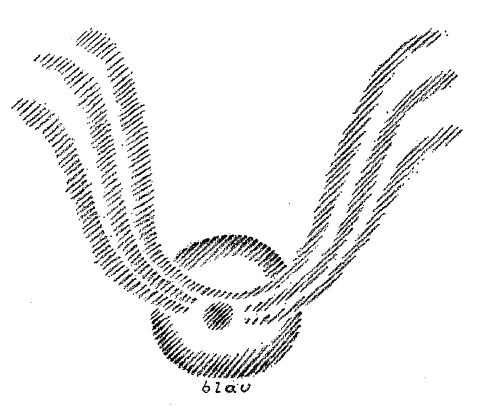
[ 22 ] Certainly, some had already come to realize—though they did so in an Ahrimanic-Luciferic way—that human beings are not merely what consists of flesh, blood, and bones. They said: If we are something better than this combination of flesh, blood, and bones, then above all we must despise the physical, then we must regard the human being as something higher, then we must cast aside the sensual human being! — Yet it is precisely this image of flesh, blood, and bones, together with the etheric and astral bodies, as the human being perceives it, that is an illusion. In reality, it is the purest image of the Deity. It is a mistake—as I have explained—not because we are supposed to see the devil in the world, but because we are supposed to see God in our own world, within ourselves; that is why it is a mistake to identify with our physical nature. It is also entirely wrong to say to oneself: “Yes, I am now a very high being, a tremendously high being, a tremendously high soul, and there (drawing) is this inferior, hideous environment.” — That is not the case; rather, the matter is this: There are the realms of the higher hierarchies, all divine beings (see drawing $248); they have set as their divine goal the task of forming a structure (blue circle) that is their image. This structure presents itself outwardly as the visible human body. And into this form—which is an image of the Deity and which is slandered, miserably slandered, when it is regarded as lowly—into this form, the Spirits of Form have placed the human “I,” the present soul, which is the infant among human beings, as I have often said (the dot within the blue circle).
[ 23 ] If, then, the Mystery of Golgotha had not taken place, human beings would have been able to form only false views about heredity and death, and these false views would have intensified more and more. Now they sometimes manifest in an atavistic way—just as in some socialist groups today a worldview is espoused that is an atavism—in such views that count death and birth among sensory phenomena. And in the further development of humanity, this would mean that the gate to the supersensible world would close completely before human beings, and whatever they can already find in the sensory world that pertains to the supersensible—heredity and death—would become their seducers, who act insidiously by saying, “We are sensory”—while they are not at all. Only when we do not believe in a nature that presents death and birth to us as reality do we arrive at the truth. That is simply how paradoxically human beings are placed in the world.
[ 24 ] Something had to be instilled in human beings that could maintain a balance in this development, something that could lead them away from the belief that heredity and death are sensory phenomena in human life. To this end, something had to be set before them that would make it clear to them: Death and heredity are supersensible phenomena, not sensory ones. Therefore, the event that once again reveals the truth about these things to humanity must not be accessible to ordinary human powers, for these are, after all, on the path to corruption and must be set aright by a powerful counter-impulse. And this opposing impulse was the Mystery of Golgotha, in that it has placed itself within human evolution as something supersensible, so that the choice now lies with the individual: Either you believe in this supersensible reality and approach it with supersensible insight, or you fall into all those views that inevitably arise when you regard death and inherited characteristics as belonging to the sensory world. — Therefore, the two defining facts of the Mystery of Golgotha are the essential elements of a true understanding of this mystery: the Resurrection, which cannot be conceived without its connection to the Immaculate Conception—born not in the manner in which birth is presented as a fact of humanity, but in a supersensible way—and having passed through death in a supersensible way. These are the two fundamental facts that must define the life of Christ Jesus. No one understands the Resurrection—which is meant to be the true conception set against the false conception that death belongs to the sensory world—no one understands this Resurrection unless they also accept its counterpart, the Immaculate Conception, birth as a supersensory fact. People want to understand this—the Resurrection and the Conceptio immaculata—and the more recent Protestant theologians even want to grasp this fact within theology itself using ordinary human reason, which, however, is merely a disciple of the sensory world, and specifically of the corrupted sensory perception that has developed since the Mystery of Golgotha. And when they cannot grasp it, they become Harnackians or something similar, deny the Resurrection, and come up with all sorts of arguments about it. As for the Immaculate Conception, they regard it from the outset as something a reasonable person cannot even speak of.
[ 25 ] Nevertheless, it is intimately connected with the Mystery of Golgotha that the Mystery of Golgotha contains the metamorphosis of death—that is, its transformation from a sensory fact into a supersensory fact—and the metamorphosis of heredity, that is, that what the sensory world presents to us regarding heredity—which is connected to the mystery of birth—is transposed into the supersensible realm in the Conceptio immaculata.
[ 26 ] Whatever erroneous or inadequate things may have been said about these matters, it is not humanity’s task to accept them uncritically, but rather to acquire such supersensible knowledge that they may learn to comprehend these things—which cannot be grasped through the sensible realm—through the supersensible. If you consider the various cycles in which these matters have been discussed—and if you think in particular of the content of the fifth Gospel I have discussed—you will find a number of paths to understanding these two things, but only through a supersensible approach. For it is true that—as long as the student’s intellect remains bound to the sensory realm, as it must appear to people today in their worldview—human beings cannot grasp this fact. Precisely when the highest realities of earthly life are such that the intellect, which is bound to the sensory realm, cannot grasp them, precisely then they are true. It is therefore not at all surprising that the science of initiation is opposed by so-called external science, for it speaks of things that—precisely because they do not contradict true natural science—must, quite naturally, contradict that order of nature which arises from a corrupted view of nature. And in many ways, theology, too, has fallen prey—albeit in a different direction—to this corrupted view of nature. And if you consider the other point I made yesterday—that a person can only arrive at a true understanding of the Mystery of Golgotha after death—you will no longer find this incomprehensible when you reflect that through death, through the gate of death, a person enters a world in which they can no longer be led to believe that death belongs to the sensory world, for they see death from the other side—I have described these things many times—and they learn more and more to view death from the other side. Through this, however, they become increasingly mature in their ability to view the Mystery of Golgotha in its true form. And so one must say: If the Mystery of Golgotha had not come—though what is said here can only be understood through supersensible knowledge—then human beings would die. Evil would still be in the world, and wisdom would still be in the world. But since human beings, through their development, were bound to fall into a corrupted view of nature, they were bound to have a false view of death. Consequently, in their desire to turn toward immortality, they turn to Lucifer, and they fall prey to Lucifer precisely when they seek to turn toward the Spirit. They become like the dear animals if they do not turn toward the Spirit, and they fall prey to Lucifer when they do turn toward the Spirit. Looking forward at the world: one seeks immortality in Lucifer; looking backward: one reinterprets the world by translating that which is already supersensible as a hereditary trait into the moral realm, thereby fabricating the medieval blasphemy of original sin.
[ 27 ] True devotion to the Mystery of Golgotha protects us from all these things. It brings into the world a true insight—a true insight gained through supersensible means—into birth and death. And through such true insight, people are to be healed of the false, corrupted view. That is why Christ Jesus is also the Healer, the Savior. That is why he works—because human beings have not chosen the path of a corrupted worldview merely out of idleness, but have come to it through their development, through their nature—that is why he also works to heal; that is why he is truly not only the Teacher, but the Physician of humanity.
[ 28 ] These are things one must consider—but as I have said, I must repeat this again and again: what can only be perceived through supersensible knowledge—when one asks: What insights might the souls have arrived at who, in the second Christian century, inspired a figure such as Tertullian? We must look to the dead, who may have been contemporaries of Jesus Christ and who inspired a figure like Tertullian. Certainly, because there was so much corruption of knowledge in the world, many things came out distorted, clouded, in this or that murky nuance. But if we listen through Tertullian’s words to those contemporaries of Christ who were dead at the time yet remained inspiring, then we understand words such as Tertullian’s; then we understand that he could say something like: “The Son of God was crucified.” We are not ashamed of this because it is shameful. — People had to be led into what is shameful through a corrupted perspective; that which is the very essence of the earth will manifest itself in human life as a shameful act. The Son of God has died. It is entirely credible precisely because it is foolish: Prorsus credibile est, quia ineptum est. — Because it is folly in relation to what human beings themselves can attain in the physical realm through their ordinary intellect until the end of their lives, it is precisely that which is true in the sense I have explained to you today. And he was buried and rose again; this is certain because it is impossible—because within the corrupted view of nature, such a thing does not even exist.
[ 29 ] If you take Tertullian’s words in a supernatural sense—as inspired by Christ’s contemporaries, who had long since passed away—you might say to yourself: Yes, certainly, Tertullian received them in the way that his spiritual disposition allowed him to! —but you will be able to sense their inspired origin. Of course, only a man who was so thoroughly immersed in the supernatural through his inner knowledge could gain access to such an origin—a man who spoke of the demons as witnesses to the Divine just as he spoke of human witnesses; for Tertullian spoke of how the demons themselves say they are demons, and that they acknowledge Christ. This was the prerequisite for Tertullian to be able to perceive anything at all that was inspired in him.
[ 30 ] For those who want to be Christians in the wrong sense, there is something very, very unsettling about this—something quite unsettling. For just think: if even the demons speak the truth and point to the true Christ, then one day, those demons might end up being questioned by a Jesuit! It could happen that someone—whom the Jesuit claims is in contact with demons—might be drawn into a conversation by these demons about the true origin of the Jesuit Christ, and the demon might then say: “Yours is not the Christ; rather, it is the other’s.” — You understand the Jesuits’ fear of the spiritual world! You understand that there is something very frightening about being exposed to the danger of being disavowed from some corner of the supernatural world! Then one could bring Tertullian forward as a key witness and say: “Yes, look here, dear Jesuit, the demon himself says that your God is the false one, and Tertullian—whom you must surely acknowledge as a true Church Father—says that it is precisely demons who speak the truth about themselves and about Christ, just as it is written in the Bible.” — In short, the situation becomes very precarious as soon as it is admitted—even if only in an unwarranted form—that demons bear witness to the truth. For even if one were to quote Lucifer, he would not speak untruths about Christ! But it might turn out that something else is the untruth about Christ.
[ 31 ] Initiatory truths sometimes sound different from what people find convenient to accept. However, this leads to a great deal of confusion when attempts are made to introduce initiatory truths into the outer world today, especially when such truths must be introduced into immediate reality. Indeed, as soon as the field opens up where one speaks from the supersensible realm, quite peculiar conflicts sometimes arise when this is pitted against that which does not spring from the supersensible!
[ 32 ] We can often apply this to everyday life. I felt a certain satisfaction that a suggestion I had made only to myself within the context of the teaching—and the things I say within the teaching, I say as my own conviction, which is not intended to be directly binding on anyone—that this suggestion was acted upon, and that this building, arising from the overall conditions of our contemporary experience, was named the “Goetheanum.” I say that, even with the influence of certain supersensible impulses, this strikes me as something right and good. But if someone were to demand of me, on an intellectual level, all the reasons for this—and ask me to count them off on my thumb and the other fingers—I would feel extremely philistine if I were to list all possible intellectual reasons for what is felt out of a deep necessity; all the reasons, both for and against, would strike me as mere talmudean wisdom. This is often the case when one invokes supernatural impulses in support of the will. People often say: “I don’t understand that; I can’t grasp it.”—Well, does it really matter all that much whether the other person or oneself grasps the matter? For what does “grasping” mean? To “grasp” means nothing other than to see the matter placed in the light where the thoughts rest that one has, for decades, found conveniently suited to oneself. Otherwise, what people call “understanding” means nothing more than that! What one calls “understanding” oneself often means very little in comparison to the truths revealed from the supersensible world. It is precisely in the most supersensible realms—when they are not merely doctrine but are meant to take hold of the will and influence the world of action—that there is always something problematic when one is asked, in terms of human reason: Why, why, why is this or that the case? Or: How can one understand this, this, and this? In this regard, one should get used to drawing a parallel between certain aspects of the supersensible world and what one constantly accepts as facts of nature—but only as a parallel. I don’t know—if you walk out of here, and Flock or Wolf or whatever this dog’s name is bites you, and you hadn’t been bitten before but were bitten afterward—whether you would then ask: Why did it bite me? Or: How can I understand this? — What kind of context for understanding is that? You’ll let the fact itself explain it to you. So the point is precisely that certain supersensible things, too, must be recounted. And that there are many of them, you can gather from what I’ve hinted at today: that in the sensory world there are two appearances that conceal their own essence: the death and birth of the human being, which actually carry the supersensible into the sensory world; they are strangers in the sensory world, yet they mask themselves and pass themselves off as sensory phenomena, thereby spreading their false mask over the rest of nature as well, so that the rest of nature, too, must be viewed incorrectly by modern human beings.
[ 33 ] To understand these things thoroughly, to assimilate them thoroughly into one’s mindset of knowledge—this is one of the requirements of human life in the future, especially among the requirements that the spirits of the age themselves place upon those who wish to seek knowledge for the future, who wish to develop their will in any field. In particular, the spiritual branches of culture—theology, medicine, jurisprudence, philosophy, the natural sciences, technology itself, social life, and even politics—must be embraced; politics, yes, yes, truly, even this peculiar construct! Into all of this, those who understand the times must introduce what follows from spiritual science.