

Michael's Message
The True Mysteries of Human Natur
GA 194
22 November 1919, Dornach
Translate the original German text into any language:
Versions Available:
Michael's Message: The True Mysteries of Human Nature, tr. SOL
Zweiter Vortrag
Second Lecture
[ 1 ] Ich habe Ihnen gestern von jenem Irrtum gesprochen, der eingezogen ist in unser neuzeitliches Geistesleben und der heute noch von wenigen Menschen eigentlich in der richtigen Weise bemerkt wird. Sie haben wohl aus diesen Auseinandersetzungen herausgefühlt, daß wir gerade mit dem Hinweis auf diesen Irrtum an einer sehr wichtigen Stelle geisteswissenschaftlicher Betrachtungen stehen. Es wird durchaus notwendig sein für eine gedeihliche Entwickelung des geistigen Lebens der Menschheit, daß in diesem Punkte klar gesehen werde. Ich habe Sie hingewiesen auf solche Kulturerzeugnisse, die wie Miltons «Verlorenes Paradies» oder Klopstocks «Messias» so recht herausgeboren sind aus dem allgemeinen populären Denken der letzten Jahrhunderte. Ich habe Sie aber auch darauf hingewiesen, wie gerade an diesen, in bezug auf das Künstlerische, in bezug auf das allgemein Geistige hervorragenden Kulturerzeugnissen, bemerkbar ist, vor welchen Gefahren das menschliche Seelenleben steht, wenn nicht durchschaut wird, wie unmöglich der Mensch zu einem wahren, für ihn notwendigen Gottesbegriff und damit auch Christus-Begriff kommen kann, wenn er sich nur vorstellt, daß die Weltstruktur, das Geistige inbegriffen, im Sinnbilde einer Zweiheit zu begreifen ist. Gerade indem man gewissermaßen nur die Zweiheit unterschied, auf der einen Seite das Gute, auf der anderen Seite das Böse, verfiel man in den Fehler, zum Bösen alles hinzuzurechnen, was wir bezeichnen mußten im Laufe der Zeit als das Luziferische und als das Ahrimanische. Nur hat man nicht erkannt, daß man zusammengeworfen hat zwei Weltelemente in eines. Dadurch ist es gekommen, daß man auf der anderen Seite nach dem Guten hin in der Tat die luziferischen Elemente geschoben hat, daß man mit anderen Worten glaubte, Göttliches zu verehren, Göttliches zu erkennen, daß man vom Göttlichen mit Namen sprach, aber doch das luziferische Element in dieses Göttliche hineinmischte. Dadurch aber wird es auch unserer Zeit so schwer, zu einem reinen Begriff des Göttlichen und zu einem reinen Begriff des Christus-Impulses in der Menschheits- und Weltenentwickelung zu kommen. Wir sind gewohnt worden, aus der Kultur der Jahrhunderte heraus, wegen der Anerkennung dieser Zweiheit auf der einen Seite zu sprechen von dem Seelischen, auf der anderen Seite zu sprechen von dem Leiblichen oder Körperlichen. Und wir haben den Zusammenhang verloren zwischen jenen Vorstellungen, die uns das Seelisch-Geistige vermitteln, und denjenigen Vorstellungen, die uns das Leibliche vermitteln. Wir sprechen heute, und am meisten tut das unsere Schulpsychologie, wenn wir vom Denken, vom Wollen, vom Gemüte, vom Fühlen sprechen, kaum von etwas anderem als von Wortklängen. Wir kommen zu keinen wirklichen inneren inhaltsvollen Vorstellungen von diesem seelischen Elemente. Und wir sprechen auf der anderen Seite von einem entgeistigten Materiellen, von einem seelenlosen Materiellen, und wir klopfen gleichsam auf dieses äußere harte, steinhafte, seelenlose Materielle und können keine Brücke bauen von ihm zum Seelischen hinüber.
[ 1 ] Yesterday I spoke to you about that error that has crept into our modern spiritual life and which even today is properly recognized by only a few people. You have probably sensed from these discussions that, precisely by pointing out this error, we are at a very important juncture in spiritual scientific considerations. It will be absolutely necessary for the flourishing development of humanity’s spiritual life that this point be clearly understood. I have pointed out to you cultural works—such as Milton’s Paradise Lost or Klopstock’s Messiah—that have truly sprung from the general popular thinking of the past centuries. But I have also pointed out to you how, precisely in these cultural works—which are outstanding in terms of their artistic and general spiritual qualities—it is evident what dangers the human soul faces if one fails to recognize how impossible it is for a person to arrive at a true concept of God—and thus also a concept of Christ—that is necessary for them, if they merely imagine that the structure of the world, including the spiritual, is to be understood in terms of a duality. Precisely by distinguishing, as it were, only this duality—good on the one hand, evil on the other—people fell into the error of classifying as evil everything that we have had to designate over time as the Luciferic and the Ahrimanic. But people failed to recognize that they had conflated two world elements into one. As a result, they effectively shifted the Luciferic elements over to the side of the Good; in other words, they believed they were worshiping the Divine, recognizing the Divine, and speaking of the Divine by name, yet they were mixing the Luciferic element into this Divine. Consequently, it has become so difficult for our time to arrive at a pure concept of the Divine and a pure concept of the Christ impulse in the development of humanity and the world. Through the culture of the centuries, and because of the recognition of this duality, we have become accustomed to speaking, on the one hand, of the soul, and on the other, of the physical or corporeal. And we have lost the connection between those concepts conveyed to us by the soul-spiritual realm and those conveyed to us by the physical realm. Today, when we speak of thinking, willing, the mind, and feeling—and our school psychology does this most of all—we are speaking of little more than the sounds of words. We do not arrive at any real, inner, meaningful concepts of this spiritual element. And on the other hand, we speak of a de-spiritualized material world, of a soulless material world, and we tap, as it were, on this outer, hard, stony, soulless material world and cannot build a bridge from it to the spiritual realm.
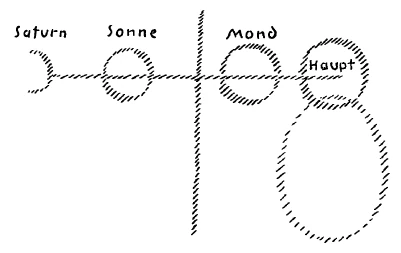
[ 2 ] In zwei Elemente auseinandergefallen ist uns das Geistige, das überall, und das Leibliche, das zu gleicher Zeit ein Geistiges ist. Mit bloßen Theorien kommt man zu einer solchen Brücke zwischen dem Leiblichen und Geistigen nicht. Und da man nicht dazu kommt, hat vor allen Dingen unser ganzes wissenschaftliches Denken diesen Charakter eines Zwiespaltes zwischen Leiblichem und Geistigem oder Seelischem angenommen. Man möchte sagen: Auf der einen Seite sind die verschiedenen Glaubensbekenntnisse dahinein verfallen, auf ein Geistiges hinzuweisen, ohne in der Lage zu sein, darzulegen, wie dieses Geistige unmittelbar eingreift ins Leiblich-Körperliche, wie es schöpferisch tätig ist an dem Leiblich-Körperlichen, auf der anderen Seite aber betrachtet heute ein seelenloses Wissen, eine seelenlose Naturanschauung das Körperliche so, daß sie nirgends durch die leiblichen Vorgänge hindurchschauen kann auf das in diesen leiblichen Vorgängen waltende Geistig-Seelische. Wer von diesem Gesichtspunkte aus die naturwissenschaftliche Anschauung, wie sie sich entwickelt hat im Laufe des 19. Jahrhunderts und in das 20. Jahrhundert herein, überblickt, der wird sich sagen müssen: Alles dasjenige, was uns da auftritt, erscheint wie eine Folge dessen, was eben charakterisiert worden ist. Wir müssen aber vor allen Dingen das Richtige, das uns jetzt schon folgen kann aus mannigfachen Voraussetzungen, die wir ja hier auch hinlänglich besprochen haben, hinzusetzen, bevor wir den Irrwahn, der heute das Richtige zudeckt, voll einsehen können. Man spricht heute vom Menschen wie von einer einheitlichen Wesenheit, gleichgültig, ob man vom Seelischen spricht oder ob man vom Leiblichen spricht. Man spricht vom Seelischen als einer einheitlichen Wesenheit, man spricht vom Leiblichen als einer einheitlichen Wesenheit. Und dennoch, Sie werden aus unseren Betrachtungen gesehen haben, daß im Menschenwesen vor allen Dingen der Ihnen schon angedeutete große Gegensatz waltet zwischen all dem, was Hauptes- oder Kopfbildung ist, und all dem — wir wollen es jetzt nicht weiter gliedern, Sie wissen, es kann auch weiter gegliedert werden, aber wir wollen es jetzt in eins zusammenfassen —, was der Mensch an sich trägt außer seiner Hauptes- oder Kopfesbildung. (Es wurde der rechte Teil der Zeichnung, siehe $. 30, skizziert.) Man fragt nach der Entwickelung des Menschen. Man muß in ganz anderer Art fragen nach der Entwickelung des Menschen in bezug auf seine Hauptesbildung, Kopfbildung, und nach der Entwickelung des Menschen in bezug auf die übrige Leibesbildung.
[ 2 ] The spiritual—which is everywhere—and the physical—which is at the same time spiritual—have broken apart into two elements. Mere theories cannot build such a bridge between the physical and the spiritual. And since we cannot do so, our entire scientific thinking, above all, has taken on this character of a dichotomy between the physical and the spiritual or psychological. One might say: On the one hand, the various creeds have fallen into the trap of pointing to a spiritual realm without being able to explain how this spiritual realm directly intervenes in the physical-bodily realm, how it is creatively active within it; on the other hand, however, a soulless form of knowledge today, a soulless view of nature regards the physical in such a way that it cannot, anywhere, see through the physical processes to the spiritual-psychic forces at work within them. Anyone who, from this perspective, surveys the scientific worldview as it developed throughout the 19th century and into the 20th century will have to admit: Everything that presents itself to us here appears to be a consequence of what has just been characterized. But above all, we must first establish the truth—which can already be deduced from the manifold premises we have discussed at length here—before we can fully grasp the delusion that today obscures the truth. Today people speak of the human being as a unified entity, regardless of whether they are referring to the soul or the body. They speak of the soul as a unified entity; they speak of the body as a unified entity. And yet, as you will have seen from our considerations, what prevails above all in the human being is the great contrast—which I have already hinted at—between everything that constitutes the head formation and everything else—we will not break this down further now; you know it can be broken down further, but we will summarize it as a single category for now—that which the human being carries within themselves apart from their head formation. (The right side of the drawing, see § 30, was sketched.) One asks about the development of the human being. One must ask in a completely different way about the development of the human being with regard to the formation of the head, and about the development of the human being with regard to the rest of the physical form.
[ 3 ] Wenn wir die Kopfbildung des Menschen — fassen wir sie zunächst ganz körperlich auf — ins Auge fassen, insofern diese Kopfbildung den Organismus enthält für das sinnliche Wahrnehmen oder für das Denken oder Vorstellen, dann müssen wir allerdings weit zurückblicken in die kosmische Entwickelung des Menschen. Dann müssen wir uns sagen: Dasjenige, was heute seinen Ausdruck findet in der menschlichen Hauptesbildung, das hat sich nach und nach entwickelt und umgeformt. Es hat sich hindurchentwickelt durch die alte Saturnbildung, durch die alte Sonnenbildung, durch die alte Mondenbildung und ist dann weiterentwickelt worden während der Erdenzeit. Aber so ist es nicht mit dem, was die andere Leiblichkeit des Menschen ist. Es wäre ganz falsch, eine einheitliche Entwickelungsgeschichte zu suchen für den ganzen Menschen. Wir können sagen (es wird weitergezeichnet): Die Hauptesbildung, die weist zurück auf die vorhergehenden planetarischen Stufen unserer Erdenbildung: Mondenbildung, Sonnenbildung, Saturnbildung. Dasjenige, was zuletzt seinen unmittelbaren Abschluß gefunden hat in dem menschlichen Haupte, das geht auf eine weite Entwickelung zurück. Wenn wir aber dazufügen alles übrige, was : zum Menschen gehört, so dürfen wir nicht zurückgehen bis zu der Saturnbildung, sondern wir müssen sagen: Dasjenige, was der Mensch an sich trägt außer seinem Haupte, das können wir höchstens, insoweit es die Brustbildung ist, zurückverfolgen bis in die planetarische Mondenzeit (Zeichnung: senkrechter Trennungsstrich), dasjenige, was die Gliedmaßen sind, ist erst während der Erdenformation an den Men sehen herangekommen.
[ 3 ] If we consider the formation of the human head—let us initially view it in purely physical terms—insofar as this formation contains the organism for sensory perception, thinking, or imagination, then we must indeed look far back into the cosmic evolution of the human being. Then we must tell ourselves: What finds its expression today in the structure of the human head has gradually developed and been transformed. It developed through the ancient Saturn stage, through the ancient Sun stage, through the ancient Moon stage, and was then further developed during the Earth era. But this is not the case with what constitutes the other physical aspects of the human being. It would be entirely wrong to seek a single, unified history of development for the whole human being. We can say (as will be further illustrated): The structure of the head points back to the preceding planetary stages of our Earth’s formation: the Lunar stage, the Solar stage, and the Saturn stage. That which has most recently found its direct culmination in the human head goes back to a long process of development. But if we add everything else that belongs to the human being, we must not go back as far as the Saturn stage; rather, we must say: What the human being carries within themselves besides their head—insofar as it pertains to the formation of the chest—we can trace back at most to the planetary Moon epoch (drawing: vertical dividing line); the limbs, however, did not develop in humans until the Earth formation period.
[ 4 ] Wir betrachten den Menschen nur dann richtig, wenn wir etwa das Folgende vergleichsweise sagen. Aber bitte, fassen Sie das vergleichsweise auf. Sie können sich sehr leicht hypothetisch vorstellen: durch irgendwelche organischen Verhältnisse im Kosmos, durch irgendwelche Anpassungsverhältnisse, verbunden mit inneren Wachstumsverhältnissen, würde der Mensch irgendwelche neue Gliedmaßen ansetzen. Sie würden dann nicht zurück verfolgen die ganze Menschengestalt bis zur früheren Entwickelung, sondern Sie würden sagen: Der Mensch, insofern er sich entwickelt hat, muß zurückverfolgt werden; aber in einem gewissen Zeitpunkte hat sich erst dieses oder jenes Glied angesetzt. Daß wir versucht sind, nicht so zu denken mit Bezug auf das Haupt und den übrigen Menschen, das rührt nur davon her, weil, rein in bezug auf die äußere Raumesgröße, der übrige Mensch größer ist als sein Haupt. Die Wahrheit ist doch diese, daß die Hauptesbildung am weitesten zurückgeht und daß die andere Bildung erst spätere Ansätze darstellt. Spricht man überhaupt von einem Zusammenhang des Menschen mit der Tierwelt in bezug auf die Entwickelung, dann kann man nur sagen: Dasjenige, was im menschlichen Haupte ist, das geht zurück auf eine frühere Tierbildung. Das menschliche Haupt ist umgewandelte Tiergestalt, sehr stark umgewandelte Tiergestalt.
[ 4 ] We can only truly understand human beings if we make a comparative statement such as the following. But please, take this as a comparison. You can very easily imagine, hypothetically, that through certain organic conditions in the cosmos, through certain adaptive processes combined with internal growth processes, human beings might develop new limbs. You would then not trace the entire human form back to its earlier stages of development, but you would say: Human beings, insofar as they have developed, must be traced back; but at a certain point in time, this or that limb first developed. The fact that we are tempted not to think this way with regard to the head and the rest of the human body stems solely from the fact that, purely in terms of external size, the rest of the human body is larger than the head. The truth, however, is that the formation of the head goes back the farthest, and that the formation of the rest of the body represents later developments. If one speaks at all of a connection between human beings and the animal world in terms of evolution, then one can only say: What is present in the human head can be traced back to an earlier animal form. The human head is a transformed animal form—a very strongly transformed animal form.
[ 5 ] Der Mensch hat äußerlich, allerdings in ganz anderen physikalischen Verhältnissen, eine Tierbildung gehabt, als es noch gar keine Tiere gab. Die Tiere haben sich später zum Menschen hinzugebildet. Dasjenige aber, was im Menschen Tierbildung gehabt hat, das ist heute menschliches Haupt, menschlicher Kopf geworden. Und dasjenige, was an den Kopf angesetzt ist als der übrige Organismus, das ist erst gleichzeitig mit der Entwickelung der Tiere an den Kopf angesetzt worden, das hat also nichts zu tun mit einer wirklichen Tierabstammung. So daß wir eigentlich sagen müssen: Das zunächst scheinbar edelste Glied des Menschen, sein Kopf, weist uns zurück auf die Tierheit; in bezug auf das hat der Mensch selbst früher eine Art Tiergestalt gehabt. Dasjenige aber, was wir sonst an uns tragen, das haben wir neben der Entwickelung der Tiere als gewissermaßen organischen Ansatz zum Kopfe in der kosmischen Entwickelung hinzu erhalten.
[ 5 ] Outwardly, though under entirely different physical conditions, human beings had an animal form long before any animals existed. Animals later evolved into human beings. But that which had an animal form in human beings has today become the human head. And that which is attached to the head—the rest of the organism—was only attached to the head simultaneously with the evolution of animals; it therefore has nothing to do with actual animal descent. So we must actually say: The part of the human being that at first glance appears to be the noblest—the head—points us back to animality; in this respect, human beings themselves once had a kind of animal form. But what we otherwise carry within us was acquired alongside the evolution of the animals as, so to speak, an organic appendage to the head in the course of cosmic evolution.
[ 6 ] Nun ist das Haupt in einem gewissen Sinne unser Denkorgan geworden. Unser Denkorgan ist also gerade dasjenige geworden, welches Tierabstammung hat, wenn wir so sagen dürfen. Nur hat es allerdings eine sonderbare Tierabstammung. Wenn Sie heute ein menschliches Haupt nehmen, so werden Sie ihm anatomisch vielleicht nicht gleich das ansehen, was zurück weist auf Tiergestalt. Genauer angesehen werden Sie aber doch erkennen, wenn Sie nur richtig zu deuten verstehen die Form der Organe des Hauptes, wie sie umgestaltete Organe der Tierheit sind.
[ 6 ] Now, in a certain sense, the head has become our organ of thought. Our organ of thought has thus become precisely that part which has an animal origin, if we may put it that way. It does, however, have a peculiar animal origin. If you take a human head today, you may not immediately see, from an anatomical perspective, what points back to an animal form. But upon closer inspection, if you know how to interpret the shape of the head’s organs correctly, you will recognize that they are transformed animal organs.
[ 7 ] Nun, wenn wir dieses ins Auge fassen, müssen wir allerdings zugleich erwähnen, daß die Umgestaltung aus der Tierheit heraus für das menschliche Haupt dadurch zustande gekommen ist, daß in dieses Haupt bereits eingezogen ist eine rückwärts gerichtete Entwickelung. Dasjenige, was voll lebendigen Lebens war in früheren Stadien der Entwickelung, ist im menschlichen Haupte bereits auf dem Wege des Absterbens, ist im menschlichen Haupte in einer rückwärts gerichteten Entwickelung. Ich habe einmal gesagt: Würden wir als Menschen nur Haupt sein, so könnten wir eigentlich niemals leben, so müßten wir im Grunde fortwährend sterben, denn der organische Zusammenhang des menschlichen Hauptes durch die Kräfte des Hauptes selbst ist nicht ein Lebensvorgang, sondern ein Sterbensvorgang. Das, was im Haupte ist, wird fortwährend neu belebt vom übrigen Organismus aus. Daß das Haupt auch teilnimmt am allgemeinen Leben des Organismus, das verdankt es dem übrigen Leben des Organismus. Würde sich das Haupt nur denjenigen Kräften überlassen können, für die es organisiert ist, den sinnlichen Wahrnehmungskräften und den Vorstellungskräften, so würde das Haupt fortwährend absterben. Das Haupt hat fortwährend die Tendenz zu sterben, es muß fortwährend belebt werden. Und wenn wir denken, wenn wir sinnlich wahrnehmen, so geht in unserem Haupte, in unserem Nervensystem überhaupt und seiner Verbindung mit den Sinnesorganen, nicht ein aufsteigender, dem Wachstum oder dergleichen angemessener Lebensprozeß vor sich, denn da würden wir nur schlafen können, in tiefen Schlaf versunken sein, da würden wir niemals hell denken können. Nur dadurch, daß fortwährend der Tod durch unser Haupt zieht, daß eine fortwährende Rückentwickelung da ist, daß die organischen Prozesse fortwährend zurückgenommen werden, dadurch greift in unserem Haupte das Denken und das sinnliche Wahrnehmen Platz.
[ 7 ] Now, when we consider this, we must also mention that the transformation of the human head from its animal state came about because a backward-directed development had already taken hold within that head. That which was full of living life in earlier stages of development is already in the process of dying off in the human head; it is undergoing a retrograde development in the human head. I once said: If we as human beings were nothing but a head, we could never actually live; we would, in essence, have to be dying constantly, for the organic connection of the human head—through the head’s own forces—is not a process of life, but a process of dying. What is in the head is constantly being revitalized by the rest of the organism. The fact that the head also participates in the general life of the organism is due to the rest of the organism’s life. If the head could rely solely on the forces for which it is organized—the powers of sensory perception and the powers of imagination—then the head would be constantly dying off. The head has a constant tendency to die; it must be continually revitalized. And when we think, when we perceive through our senses, there is no ascending life process taking place in our head—in our nervous system as a whole and its connection to the sense organs—that corresponds to growth or the like; for then we would only be able to sleep, to be plunged into a deep sleep, and we would never be able to think clearly. It is only because death constantly passes through our head, because there is a constant process of regression, because the organic processes are constantly being reversed, that thinking and sensory perception take place in our head.
[ 8 ] Wer in materialistischer Weise aus Gehirnprozessen das Denken oder das Sinneswahrnehmen erklären will, der weiß eben gar nicht, welche Vorgänge im Haupte vor sich gehen, der glaubt, da gehen solche Prozesse vor sich, die sich mit dem organischen Wachstum oder dergleichen vergleichen lassen. Das ist nicht der Fall. Dasjenige, was parallel geht dem Sinneswahrnehmen und dem Vorstellen, das sind Absterbeprozesse, das sind Abtrageprozesse, Zerstörungsprozesse. Das Organische, das Materielle muß erst abgetragen, muß erst zerstört werden, dann erhebt sich über dem organischen Zerstörungsprozeß der Denkprozeß.
[ 8 ] Anyone who attempts to explain thinking or sensory perception in a materialistic way based on brain processes simply has no idea what processes are actually taking place; they believe that processes are occurring there that can be compared to organic growth or the like. That is not the case. What occurs in parallel with sensory perception and imagination are processes of decay, processes of erosion, and processes of destruction. The organic, the material, must first be eroded, must first be destroyed; only then does the thought process rise above the organic process of destruction.
[ 9 ] Diese Dinge werden heute von der Menschheit so aufgefaßt, daß man versucht, ihre Natur äußerlich zu erschließen. Der Mensch denkt, der Mensch nimmt sinnlich wahr, was aber da parallel in seinem Organismus vorgeht, davon weiß er nichts, das bleibt ihm ganz im Unbewußten sitzen. Nur durch diejenigen Vorgänge, die ich geschildert habe in meinem Buche «Wie erlangt man Erkenntnisse der höheren Welten?», kann man allmählich aufsteigen zu einer solchen Erkenntnis, die nicht bloß in dem lebt, was man fast nur mit seiner Wortbedeutung das Seelische nennt: im Sinneswahrnehmen und im Denken. Bei einer Entwickelung, die die Seele durchmacht in dieser Art, kann sie auf der einen Seite sich dem Denken, dem Sinneswahrnehmen hingeben und gleichzeitig wahrnehmen, was da im Gehirn geschieht. Da nimmt man nicht dasjenige wahr, was man sonst etwa als Wachstumsprozeß empfindet, da nimmt man wahr einen Abbauprozef, der stets wiederum ausgeglichen werden muß vom übrigen Organismus aus.
[ 9 ] Today, humanity perceives these things in such a way that it attempts to understand their nature from an external perspective. People think and perceive with their senses, but they know nothing of what is happening in parallel within their own organism; this remains entirely in their unconscious. Only through the processes I have described in my book How Does One Attain Knowledge of the Higher Worlds? can one gradually ascend to a kind of knowledge that does not dwell merely in what is almost exclusively referred to by the term “the soul”—that is, in sensory perception and thinking. In a development of this kind that the soul undergoes, it can, on the one hand, devote itself to thinking and sensory perception while simultaneously perceiving what is happening in the brain. Here one does not perceive what one might otherwise experience as a growth process; rather, one perceives a process of breakdown that must constantly be balanced out by the rest of the organism.
[ 10 ] Das ist die tragische Begleiterscheinung einer wirklichen Erkenntnis unserer Hauptestätigkeit. Der hellsichtige Mensch kann sich nicht erfreuen etwa an einem Aufblühen der organischen Prozesse des Hauptes, wenn er denkt, wenn er sinnlich wahrnimmt, sondern er muß sich bekanntmachen mit einem Zerstörungsprozeß. Er muß sich aber auch bekanntmachen damit, daß der materialistisch Gesinnte annimmt, solche Prozesse spielen sich im menschlichen Haupte ab, welche gerade ausgeschlossen sind, wenn der Mensch denkt oder wenn der Mensch sinnlich wahrnimmt. Gerade das Gegenteil von dem, was wirklich wahr ist, muß der Materialismus für sich annehmen.
[ 10 ] This is the tragic consequence of a true understanding of our brain’s main activity. The clairvoyant cannot take pleasure, for example, in the flourishing of the brain’s organic processes when he thinks or perceives through the senses; rather, he must come to terms with a process of destruction. But they must also come to terms with the fact that the materialist assumes that processes take place in the human head which are precisely excluded when a person thinks or perceives through the senses. Materialism must assume precisely the opposite of what is actually true.
[ 11 ] Also wir haben es beim menschlichen Haupte zu tun mit einer Entwickelung zwar aus der Tierheit heraus, aber jetzt schon mit einer rückläufigen Entwickelung, mit einem Abbauprozeß. In aufsteigender Entwickelung ist unser anderer menschlicher Organismus. Von diesem anderen menschlichen Organismus dürfen wir nicht etwa glauben, daß er nun keinen Anteil hat an dem Seelisch-Geistigen und seinem Erleben im Menschen. Fortwährend wird nicht nur das Blut aus dem übrigen Organismus heraufgesendet in das Haupt, sondern fortwährend steigen auch auf in das Blut jene seelisch-geistigen Gedankengebilde, aus denen die Welt gewoben ist, aus denen auch unser Organismus gewoben ist. Diese seelisch-geistigen Gedankengebilde, die nimmt der Mensch heute in seinem normalen Zustande noch nicht wahr, aber es ist das Zeitalter eingetreten, in dem der Mensch beginnen muß, dasjenige wahrzunehmen, was aus seinem eigenen Wesen aufsteigt an Gedankengebilden. Sie wissen ja, wir schlafen nicht bloß vom Einschlafen bis zum Aufwachen, mit einem Teil unseres Wesens schlafen wir den ganzen Tag über. Wir sind eigentlich nur wach in bezug auf unser Denken, Vorstellen und Sinneswahrnehmen. Wir träumen in bezug auf unser Gefühlsleben, wir schlafen völlig in bezug auf unser Willensleben. Denn von dem, was wir wollen, wissen wir ja nur die Gedanken, die Ideen, nicht den Vorgang des Willens. Was der Wille eigentlich macht, das vollzieht sich für unser Bewußtsein so unbewußt wie das Schlafesleben vom Einschlafen bis zum Aufwachen. Aber wenn wir fragen: Auf welchen Wegen kann allein das Wissen von dem wirklich Göttlichen an den Menschen herankommen? — dann können wir nicht verweisen auf den Weg durch das Haupt, auf den Weg durch die Sinneswahrnehmung und durch das Denken, sondern dann können wir nur verweisen auf den Weg, der durchgeht durch unseren übrigen Organismus. Und das große, gewaltige Geheimnis liegt vor, daß der Mensch sein Haupt entwickelt hat in einer langen Entwickelungsreihe, daß dann hinzugekommen ist dasjenige, was sein übriger Organismus ist, daß das Haupt bereits eine rückläufige Entwickelung angetreten hat, daß aber dasjenige, was der Mensch als sein Göttliches empfinden kann, durch den übrigen Organismus zu ihm sprechen muß, nicht durch das Haupt. Denn das ist wichtig, daß man sich klar ist darüber: Durch das Haupt sprachen zu Menschen zunächst nur die luziferischen Wesenheiten. Und wir können sagen: Dem Menschen wurde zu seinem Haupte hinzu erschaffen der übrige Organismus, damit zu ihm sprechen können seine Götter. Am Ausgangspunkt der Bibel steht nicht: Und Gott sandte dem Menschen den Lichtstrahl und er ward eine lebendige Seele — sondern: Gott blies dem Menschen den lebendigen Odem ein und er ward eine lebendige Seele. — Hier wird richtig erkannt, daß durch eine Nicht-Hauptestätigkeit zu dem Menschen der göttliche Impuls kam.
[ 11 ] So, in the case of the human head, we are dealing with a development that, while emerging from the animal realm, is now already characterized by a regressive development—a process of decay. Our other human organism, however, is undergoing an ascending development. We must not assume that this other human organism has no part in the soul-spiritual realm and its experience within the human being. Not only is blood continually sent up from the rest of the organism to the head, but those soul-spiritual thought-forms from which the world is woven—and from which our organism is also woven—are also continually rising into the blood. Human beings today, in their normal state, do not yet perceive these soul-spiritual thought-forms, but we have entered an age in which human beings must begin to perceive the thought-forms that arise from their own being. As you know, we do not sleep only from the moment we fall asleep until we wake up; with a part of our being, we sleep throughout the entire day. We are actually only awake in terms of our thinking, imagining, and sensory perception. We dream in terms of our emotional life; we are completely asleep in terms of our life of the will. For of what we will, we are aware only of the thoughts and ideas, not of the process of the will itself. What the will actually does takes place for our consciousness just as unconsciously as the life of sleep from falling asleep to waking up. But when we ask: By what paths alone can knowledge of the truly divine reach human beings? — then we cannot point to the path through the head, to the path through sensory perception and through thinking; rather, we can only point to the path that runs through the rest of our organism. And the great, mighty mystery lies in the fact that human beings developed their head over a long evolutionary sequence, that what constitutes the rest of their organism was added later, that the head has already begun a process of regression, but that what human beings can perceive as their divine nature must speak to them through the rest of their organism, not through the head. For it is important to be clear about this: At first, only the Luciferic beings spoke to human beings through the head. And we can say: The rest of the organism was created for human beings in addition to their head so that their gods could speak to them. The Bible does not begin with: “And God sent a ray of light to the human being, and he became a living soul”—but rather: “God breathed the breath of life into the human being, and he became a living soul.”—Here it is correctly recognized that the divine impulse came to the human being through an activity not centered in the head.
[ 12 ] Daraus wird es Ihnen aber auch verständlich sein, daß zunächst dieser göttliche Impuls zum Menschen nur kommen konnte in einer Art unbewußten Hellsehens, oder wenigstens durch ein Verständnis desjenigen, was durch unbewußtes Hellsehen gegeben wurde. Wenn Sie von unserer Bibel das Alte Testament ansehen, so werden Sie es finden müssen — wir wissen das ja von anderen Betrachtungen aus — als ein Ergebnis eines unbewußten Hellsehens. Dessen waren sich auch diejenigen bewußt, die Mithilfe geleistet haben beim Zustandekommen des Alten Testaments. Ich kann Ihnen heute hier nicht das Zustandekommen des Alten Testaments schildern, aber ich möchte Sie doch hinweisen darauf, in wie vielen Betrachtungen wir über solche Dinge uns ergangen haben, wie Sie bei den Lehrern des alten hebräischen Volkes durchaus das Bewußtsein überall finden, daß ihr Gott zu ihnen gesprochen hat nicht durch die unmittelbaren Sinneswahrnehmungen, nicht durch das gewöhnliche Denken, nicht durch alles dasjenige also, wofür das Haupt der Vermittler ist, sondern daß ihr Gott zu ihnen gesprochen hat durch Träume — worunter sie nicht gewöhnliche Träume, sondern von Wirklichkeit durchtränkte Träume verstanden —, was da Gott zu ihnen gesprochen hat durch solche hellseherischen Momente wie zu Moses aus dem Dornbusch und ähnlichem. Und wenn man die Eingeweihten dieser alten Zeit gefragt hat, wie sie sich vorstellen, daß die göttlichen Rufe zu ihnen kommen, dann haben sie gesagt: Zu uns spricht der Herr, dessen Name unaussprechlich ist, aber er spricht durch sein Antlitz zu uns. — Und das Antlitz ihres Gottes nannten sie den Michael, jene geistige Macht, die wir zu der Hierarchie der Archangeloi rechnen. Ihren Gott empfanden sie als den unbekannt hinter den Erscheinungen auch des Hellsehers bleibenden. Wenn der Hellseher aber sich durch die innere Verfassung seiner Seele zu seinem Gotte erhob, so sprach zu ihm Michael. Aber dieser Michael sprach nur dann, wenn die Menschen sich versetzen konnten in einen anderen Zustand, als der gewöhnliche Bewußtseinszustand war, wenn die Menschen sich versetzen konnten in einen Zustand einer gewissen Hellsichtigkeit, durch den dasjenige ins Bewußtsein hereintrat, was sonst nur am Menschen schafft und lebt entweder vom Einschlafen bis zum Aufwachen, oder aber durch den unterbewußt bleibenden Willen, der eigentlich auch schläft, auch dann, wenn wir tagwachend sind.
[ 12 ] From this, however, it will also be clear to you that, at first, this divine impulse could only reach human beings through a kind of unconscious clairvoyance, or at least through an understanding of what was conveyed through unconscious clairvoyance. If you look at the Old Testament in our Bible, you will find—as we know from other considerations—that it is the result of unconscious clairvoyance. Those who contributed to the creation of the Old Testament were also aware of this. I cannot describe the origins of the Old Testament to you here today, but I would like to point out to you how often we have reflected on such matters—for you will find throughout the teachings of the ancient Hebrew people a consistent awareness that their God spoke to them not through direct sensory perceptions, not through ordinary thinking, not through anything for which the mind serves as the mediator, but that their God spoke to them through dreams—by which they meant not ordinary dreams, but dreams imbued with reality—and that God spoke to them through such clairvoyant moments as to Moses from the burning bush and the like. And when the initiates of that ancient time were asked how they imagined the divine calls to them came, they said: The Lord, whose name is unpronounceable, speaks to us, but he speaks to us through his face. — And they called the face of their God “Michael,” that spiritual power which we count among the hierarchy of the Archangels. They perceived their God as remaining unknown even to the clairvoyant, hidden behind all appearances. But when the clairvoyant, through the inner state of his soul, rose up to his God, Michael spoke to him. But this Michael spoke only when people were able to enter a state different from the ordinary state of consciousness—when they were able to enter a state of a certain clairvoyance through which that which otherwise only creates and lives within the human being—either from falling asleep until waking up, or through the will that remains subconscious—which is actually also asleep, even when we are awake during the day.
[ 13 ] Und so nannte man in der alten hebräischen Geheimlehre die JahveOffenbarung die Offenbarung der Nacht und empfand die JahveOffenbarung durch die Michael-Offenbarung als die Offenbarung der Nacht. Man sah auf der einen Seite hinein in die Welt nach dem, was sie einem geben konnte durch die Sinneswahrnehmung und durch das menschliche verständige Denken, und sagte sich: Auf diesem Wege kommen Erkenntnisse, kommt ein Wissen an den Menschen heran, das zunächst das Göttliche nicht enthält. Wenn aber der Mensch aus diesem Bewußtseinszustand heraus sich zu einem anderen Bewußtseinszustand entwickelt, dann spricht zu ihm Gottes Angesicht, der Michael, und offenbart ihm die eigentlichen Geheimnisse, die mit dem Menschenwesen zusammenhängen, offenbart ihm dasjenige, was ihm eine Brücke baut zwischen dem Menschen und jenen Mächten, die nicht wahrgenommen werden können in der äußeren Sinneswelt, die nicht erdacht werden können mit dem an das Gehirn gebundenen Verstand.
[ 13 ] And so, in the ancient Hebrew esoteric teachings, the Yahweh Revelation was called the Revelation of the Night, and the Yahweh Revelation—as perceived through the Michael Revelation—was regarded as the Revelation of the Night. On the one hand, people looked into the world to see what it could offer them through sensory perception and human rational thought, and said to themselves: In this way, insights and knowledge come to human beings—knowledge that initially does not contain the divine. But when a person evolves from this state of consciousness to another, then the face of God, Michael, speaks to them, and reveals to him the true mysteries connected with the human being, reveals to him that which builds a bridge between humanity and those powers that cannot be perceived in the outer sensory world, that cannot be conceived by the intellect bound to the brain.
[ 14 ] So muß man sagen: Es lebten die Menschen in den vorchristlichen Zeiten so, daß sie hinschauen konnten auf der einen Seite auf die Sinneserkenntnis — die war da als Richtschnur für die Erdenverrichtungen — und hinschauten auf der anderen Seite nach jener Erkenntnis, die der Mensch nur haben würde — er hat sie nicht gehabt — für das gewöhnliche Bewußtsein, wenn dieses Bewußtsein wach bliebe, während es schläft zwischen dem Einschlafen und Aufwachen. Der Mensch ist in der Umgebung von geistigen Wesenheiten — das wußte man —, wenn er wacht. Und diese geistigen Wesenheiten sind nicht seine schöpferischen Wesenheiten — so dachte man im Alten Testament in der Zeit, aus der das Alte Testament stammt —, diese Wesenheiten sind die luziferischen Wesenheiten. Die Wesenheiten, die als die schöpferischgöttlichen gegenüber der Menschheit empfunden wurden, die wirkten an dem Menschenwesen vom Einschlafen bis zum Aufwachen, oder an denjenigen Teilen des Menschenwesens, die auch während des Tagwachens schlafen. Den Regierer der Nacht, so nannte man in der Zeit, aus der das Alte Testament stammt, den Gott Jahve, und den Diener des Regierers der Nacht, so nannte man, wie man sagte, das Antlitz Jahves, den Michael. Und an den Michael dachte man, wenn man all die prophetischen Eingebungen meinte, durch die man mehr begriff als dasjenige, was durch die Erkenntnis der Sinneswelt kommen würde.
[ 14 ] So one must say: In pre-Christian times, people lived in such a way that they could look, on the one hand, to sensory knowledge—which served as a guide for their earthly activities—and, on the other hand, to that knowledge which human beings would only come to possess—they did not possess it — for ordinary consciousness, if that consciousness were to remain awake while it sleeps between falling asleep and waking up. It was known that when a person is awake, they are surrounded by spiritual beings. And these spiritual beings are not their creative beings—as was thought in the Old Testament during the time from which the Old Testament originates—these beings are the Luciferic beings. The beings who were perceived as the creative-divine ones in relation to humanity were those who acted upon the human being from the moment of falling asleep until waking, or upon those parts of the human being that also sleep during the waking hours of the day. The Ruler of the Night—as the god Yahweh was called in the time from which the Old Testament originates—and the servant of the Ruler of the Night—who was said to be the face of Yahweh—was Michael. And people thought of Michael whenever they referred to all the prophetic inspirations through which they understood more than what could be gained through knowledge of the sensory world.
[ 15 ] Und welches Bewußtsein steckt denn hinter all dem? Hinter all dem steckt das Bewußtsein, das herausgewachsen ist aus jener Seinssphäre, in welcher die den Jahve mit umschließenden Mächte wesen, während die menschliche Hauptesbildung umgeben ist von luziferischer Wesenheit. Es war ein Geheimnis, das man durch alle alten Tempel trug, und mit dem man der Wahrheit wirklich recht nahestand, daß, indem aus dem Organismus des Menschen herausragt das menschliche Haupt, der Mensch sich durch sein Haupt zugewendet hat den luziferischen Wesenheiten. Man wußte gewissermaßen, indem das Haupt aus dem menschlichen Organismus herausragt, ragt Luzifer aus dem menschlichen Organismus heraus. Diejenige Macht, welche das menschliche Haupt aus der Tierheit heraus zu seiner jetzigen Gestalt geführt hat, ist eine luziferische Macht. Und diejenige Macht, die der Mensch als göttliche empfinden soll, die muß aus dem Nachtzustand des übrigen Organismus in das menschliche Haupt heraufströmen. So lag dasjenige, was der Mensch wissen konnte in den vorchristlichen Zeiten.
[ 15 ] And what consciousness lies behind all of this? Behind all of this lies the consciousness that has grown out of that sphere of being in which the powers surrounding Yahweh dwell, while the formation of the human head is surrounded by Luciferic essence. It was a mystery carried through all the ancient temples—and one that brought one truly close to the truth—that, because the human head protrudes from the human organism, human beings have turned toward the Luciferic beings through their heads. It was known, so to speak, that just as the head protrudes from the human organism, so too does Lucifer protrude from the human organism. The power that has guided the human head from the animal realm to its present form is a Luciferic power. And the power that human beings are meant to perceive as divine must flow upward from the state of sleep of the rest of the organism into the human head. Such was the knowledge available to human beings in pre-Christian times.
[ 16 ] Dann schlug ein in die Erdenentwickelung das Mysterium von Golgatha. Und wir wissen ja, daß das Mysterium von Golgatha bedeutet eine Vereinigung eines überirdischen Wesens mit der menschlichen Erdenentwickelung durch den Leib des Jesus von Nazareth, eine solche Vereinigung, daß durch den Tod auf Golgatha diese Wesenheit, die wir die Christus-Wesenheit nennen, sich verbunden hat mit der menschlichen Erdenwesenheit. Was ist dadurch in der Erdenentwickelung geschehen? Ja, dadurch hat die Erdenentwickelung eigentlich erst ihren Sinn bekommen. Dann hätte die Erde nicht ihren Sinn, wenn der Mensch auf dieser Erde sich entwickeln würde, dastehen würde mit seinen Sinnen und mit seinem an das Haupt gebundenen Verstande, die zunächst einen luziferischen Ursprung haben, die äußere Erdenwelt, die auf die Erde strömende Lichteswelt der Sonne und der Sterne wahrnehmen würde, aber im Schlafeszustand verharren müßte, um das Göttliche wahrzunehmen. Nimmermehr würde dadurch die Erde ihren Sinn bekommen, denn der wachende Mensch gehört mit der Erde zusammen. Der schlafende Mensch ist sich seines Zusammenhanges mit dem Erdensein zunächst nicht bewußt. Dadurch, daß die ChristusWesenheit gewohnt hat in einem Menschenleib, der durch den Tod gegangen ist, dadurch hat sich innerhalb der Erdenentwickelung etwas wie ein Ruck vollzogen. Alles in dieser Erdenentwickelung hat einen neuen Sinn bekommen. Die Möglichkeit hat sich zunächst herausgebildet, daß der Mensch nach und nach fähig werde, seine schöpferischen göttlichen Mächte auch während des Tages, während des gewöhnlichen Wachens, das heißt im gewöhnlichen Bewußtseinszustande, zu erkennen. Darüber herrscht heute nur noch Irrtum aus dem Grunde, weil die seit dem Mysterium von Golgatha verflossene Zeit noch nicht hingereicht hat, den Menschen dazu zu führen, auch im Tagwachen nun hineinzuschauen in diejenige Welt, in die hineinschauen konnten die Propheten des Alten Testamentes in den Zeiten, die sie empfanden als durchdrungen von Offenbarungen ihres Regierers der Nacht, des Jahve, und seines Antlitzes, des Michael. Es bedurfte einer Durchgangszeit. Aber mit dem Ablauf des 19. Jahrhunderts — die ganze orientalische Weisheit weist hin, aber von einem völlig anderen Gesichtspunkte, auf die Wichtigkeit dieses Ablaufes des 19. Jahrhunderts — ist die Zeit eingetreten, wo die Menschen erkennen müssen, daß etwas erfüllt ist, was früher nicht erfüllt war, wo die Menschen erkennen müssen: Jetzt ist in ihnen die Fähigkeit latent, jetzt ist in ihnen die Fähigkeit zum Aufwecken reif, durch die Tagesoffenbarung hindurch zu sehen dasjenige, was früher nur in der Nachtoffenbarung durch Michael vermittelt worden ist.
[ 16 ] Then the Mystery of Golgotha intervened in the evolution of the Earth. And we know, of course, that the Mystery of Golgotha signifies a union of a super-earthly being with human earthly evolution through the body of Jesus of Nazareth—a union such that, through the death on Golgotha, this being, whom we call the Christ Being, became united with the human earthly being. What did this accomplish in the Earth’s evolution? Indeed, it was only through this that the Earth’s evolution truly acquired its purpose. Otherwise, the Earth would have no purpose if human beings on this Earth were to develop, standing there with their senses and their intellect—which is bound to the head and has a Luciferic origin—perceiving the outer earthly world and the world of light streaming onto the Earth from the sun and the stars, yet having to remain in a state of sleep in order to perceive the Divine. The Earth would never thereby find its purpose, for the waking human belongs to the Earth. The sleeping human is initially unaware of his connection to earthly existence. Through the fact that the Christ Being dwelt in a human body that had passed through death, something like a jolt has taken place within the Earth’s evolution. Everything in this earthly evolution has taken on a new meaning. The possibility has initially emerged that human beings will gradually become capable of recognizing their creative, divine powers even during the day, during ordinary wakefulness—that is, in the ordinary state of consciousness. Today, only error prevails regarding this, simply because the time that has elapsed since the Mystery of Golgotha has not yet been sufficient to lead human beings to look, even while awake during the day, into that world into which the prophets of the Old Testament were able to look in the times they perceived as permeated by revelations from their Ruler of the Night, Yahweh, and his face, Michael. A transitional period was necessary. But with the passing of the 19th century—all Eastern wisdom points to the importance of this passing of the 19th century, though from a completely different perspective—the time has come when people must recognize that something has been fulfilled that was not fulfilled before, when people must recognize: Now the capacity lies latent within them; now the capacity for awakening has ripened within them to see, through the revelation of the day, that which was previously conveyed only in the night revelation through Michael.
[ 17 ] Dem aber mußte noch ein großer Irrtum vorangehen, gewissermaßen eine Erkenntnisnacht vorangehen. Ich habe ja öfters gesagt, daß ich durchaus nicht übereinstimme mit denjenigen, die immer sagen, unsere Zeit ist eine Übergangsepoche. Ich weiß ganz gut, jede Zeit ist eine Übergangsepoche. Aber bei solchen formal abstrakten Bestimmungen will ich nicht stehenbleiben, denn es kommt darauf an, daß man angebe, worinnen der Übergang einer bestimmten Zeit besteht. Der Übergang in unserer Zeit besteht darinnen, daß die Menschen erkennen sollen: Durch die Tagerkenntnis hindurch muß kommen dasjenige, was früher nur Nachterkenntnis war. Mit anderen Worten: Michael war der Öffenbarer durch die Nacht und soll werden in unserer Zeit der Offenbarer während des Tages. Michael soll werden aus einem Nachtgeist ein Taggeist. Für ihn bedeutet das Mysterium von Golgatha die Umwandlung aus einem Nachtgeist in einen Taggeist.
[ 17 ] But this had to be preceded by a great error—a “night of enlightenment,” so to speak. I have often said that I do not at all agree with those who always claim that our time is a transitional era. I know full well that every age is a transitional era. But I do not wish to dwell on such formally abstract definitions, for what matters is specifying in what the transition of a particular age consists. The transition in our time consists in the fact that people must recognize: what was formerly only night-time knowledge must now come through day-time knowledge. In other words: Michael was the Revealer through the night and is to become, in our time, the Revealer during the day. Michael is to be transformed from a spirit of the night into a spirit of the day. For him, the Mystery of Golgotha signifies the transformation from a spirit of the night into a spirit of the day.
[ 18 ] Aber dieser Erkenntnis, die sich schneller als wir heute glauben, Bahn brechen sollte unter den Menschen, dieser Erkenntnis mußte ein noch größerer Irrtum vorangehen, der größtdenkbare Irrtum, der eigentlich in der Menschheitsentwickelung möglich war, trotzdem man ihn heute noch in vielen Kreisen als eine besonders wichtige und wesentliche Wahrheit ansieht. Völlig verhüllt hat sich der neueren Menschheit der Ursprung des menschlichen Hauptes, völlig verhüllt hat sich die mit dem menschlichen Haupte verbundene luziferische Geistigkeit. Der Mensch wurde, wie ich sagte, auch leiblich als eine Einheit genommen. Man fragte nach seiner Abstammung, und es wurde einem zur Antwort gegeben, der Mensch stamme von der Tierheit ab, während in Wahrheit nur dasjenige, was am Menschen das Luziferische ist, von der Tierheit abstammt. Dasjenige aber, durch das früher gesprochen haben zu ihm aus seinem Schlafeszustande heraus seine göttlichen Schöpfer, das ist erst entstanden — nachdem nebenher die Tiere entstanden sind — als Ansatz des menschlichen Hauptes. Man hat alles am Menschen zusammengeworfen und spricht von der Abstammung des Menschen von der Tierheit. Das ist etwas wie eine Erkenntnisstrafe, die in die Menschheit hereingekommen ist, wobei ich das Wort «Strafe» in einem etwas umgedeuteten Sinne meine.
[ 18 ] But for this insight—which was to gain ground among people more quickly than we believe today—to emerge, it had to be preceded by an even greater error, the greatest conceivable error that was actually possible in human development, even though it is still regarded in many circles today as a particularly important and essential truth. The origin of the human head has been completely veiled from modern humanity; the Luciferic spirituality connected with the human head has been completely veiled. As I said, human beings were also regarded as a unity in the physical sense. People asked about human ancestry, and the answer given was that human beings are descended from the animal kingdom, whereas in truth only that which is Luciferic in human beings is descended from the animal kingdom. But that through which his divine creators once spoke to him from his state of sleep—that arose only after the animals had come into being—as the beginning of the human head. Everything about the human being has been lumped together, and people speak of the human being’s descent from the animal kingdom. This is something like a “punishment of knowledge” that has entered humanity, though I use the word “punishment” in a somewhat reinterpreted sense.
[ 19 ] Woher kann denn eigentlich diese Tendenz stammen, daß der Mensch die Dichtung erfand, er stamme von der Tierheit ab, während der wahre Vorgang der ist, den wir zunächst hingestellt haben bezüglich der Abstammung des Hauptes und des übrigen Organismus. Was hat dem Menschen eingegeben die Dichtung: der ganze Mensch stamme von der Tierheit ab?
[ 19 ] Where, then, does this tendency actually come from—the idea that humans invented the notion that they are descended from animals, when the true process is the one we initially described regarding the origin of the head and the rest of the organism? What inspired humans to create the myth that the whole human being is descended from the animal realm?
[ 20 ] Sehen Sie, in der Zwischenzeit, die zwischen dem Mysterium von Golgatha und unseren Tagen verflossen ist, und die in gewissem Sinne eine Vorbereitung war für das Verständnis des Mysteriums von Golgatha, in dieser Zeit, in der zurückgetreten ist die alte heidnische Weisheit, durch die man ja zunächst auch das Christentum erfassen wollte, und in der noch nicht völlig reif war die neue Geist-Erkenntnis, in dieser Zeit stahl sich allmählich in die Menschheitsentwickelung herein das ahrimanische Element. Und indem man nicht erkannte das luziferische Element in dem menschlichen Haupte, konnte man auch nicht erkennen das ahrimanische Element, mit dem das Göttliche im Kampfe liegt, in der übrigen menschlichen Organisation. Und so entstand denn die rein ahrimanische Dichtung, der Mensch stamme ab aus der 'Tierreihe.
[ 20 ] You see, in the interval that has elapsed between the Mystery of Golgotha and our own day—an interval that, in a certain sense, served as a preparation for understanding the Mystery of Golgotha—during this time, when the old pagan wisdom, through which one initially sought to grasp Christianity, had receded, and in which the new spiritual insight was not yet fully mature—during this time, the Ahrimanic element gradually crept into human evolution. And because people failed to recognize the Luciferic element in the human head, they were also unable to recognize the Ahrimanic element—with which the Divine is in conflict—in the rest of the human organism. And so arose the purely Ahrimanic notion that human beings are descended from the “animal kingdom.”
[ 21 ] Daß der Mensch von der Tierreihe abstamme, ist eine ahrimanische Eingebung. Diese Wissenschaft hat rein ahrimanischen Charakter. Der Verdunkelung jener Weisheit, welche uns darauf hinweist, wie im menschlichen Haupte luziferische Bildung ist, verdankt man den Irrwahn, der Mensch stamme ab von der Tierreihe. Indem man das eine in bezug auf die Abstammung des menschlichen Hauptes nicht mehr in der richtigen Weise durchschauen konnte, lernte man auch das andere nicht in der richtigen Weise durchschauen. Und so schlich sich herein in das menschliche Anschauen die Meinung von der Verwandtheit des Menschen als ganzen Wesens mit der Tierheit. Und so schlich sich in die Auffassung des menschlichen Wesens dasjenige auch ein, was im Grunde genommen in der neueren Zivilisationsentwickelung eine ganze Weltanschauung durchdrungen hat: das menschliche Haupt wurde zum Edelsten gemacht, das andere ihm entgegengestellt, so wie man entgegenstellt Gutes und Böses in der Welt, den Himmel und die Hölle, eine Zweiheit statt der Dreiheit. In Wahrheit hätte man wissen sollen, daß der Mensch zunächst dasjenige, was er durch sein Haupt in der Welt erringt, zwar der Weisheit der Welt verdankt, aber der luziferischen Weisheit, und daß diese luziferische Weisheit erst nach und nach durchdrungen werden muß von anderen Elementen.
[ 21 ] The idea that human beings are descended from the animal kingdom is an Ahrimanic inspiration. This science is purely Ahrimanic in character. The delusion that human beings are descended from the animal kingdom stems from the obscuring of that wisdom which points out how the human head is a Luciferic formation. Because people could no longer perceive the one aspect correctly—namely, the origin of the human head—they also failed to perceive the other aspect correctly. And so the notion that the human being as a whole is related to the animal kingdom crept into human perception. And so what has, in essence, permeated an entire worldview in the recent development of civilization also crept into the conception of the human being: the human head was elevated to the noblest part, while the other was set in opposition to it, just as one sets good and evil in the world, heaven and hell—a duality instead of a trinity. In truth, one should have known that what human beings initially attain in the world through their head is indeed owed to the wisdom of the world—but to Luciferic wisdom—and that this Luciferic wisdom must first be gradually permeated by other elements.
[ 22 ] Diejenige geistige Macht, welche — nachdem die Menschheitsentwikkelung durchgegangen war durch Saturn-, Sonnen- und Mondenentwickelung und die Erdenentwickelung begonnen hatte — das luziferische Wesen in die menschliche Hauptesbildung einorganisiert hat, das ist die Michael-Macht. «Und er stieß seine gegnerischen Geister herunter auf die Erde», das heißt: Durch dieses Herunterwerfen der dem Michael gegnerischen luziferischen Geister wurde der Mensch zunächst durchdrungen mit seiner Vernunft, mit dem, was dem menschlichen Haupte entsprießt.
[ 22 ] The spiritual power that—after human evolution had passed through the Saturn, Sun, and Moon phases and the Earth phase had begun—incorporated the Luciferic being into the structure of the human head is the Michael power. “And he cast his opposing spirits down to Earth”—that is to say: Through this casting down of the Luciferic spirits opposed to Michael, human beings were first imbued with their reason, with that which springs from the human head.
[ 23 ] So ist es Michael, der seine Gegner dem Menschen gesandt hat, damit der Mensch durch die Aufnahme dieses gegnerischen, dieses luziferischen Elementes zunächst seine Vernunft erhalten hat. Dann trat in der Menschheitsentwickelung das Mysterium von Golgatha ein. Die Christus-Wesenheit ging durch den Tod des Jesus von Nazareth. Die Christus-Wesenheit verband sich mit der Menschheitsentwickelung.
[ 23 ] Thus it was Michael who sent his adversaries to humankind, so that humankind might first acquire reason by assimilating this adversarial, this Luciferic element. Then the Mystery of Golgotha entered the course of human development. The Christ Being passed through the death of Jesus of Nazareth. The Christ Being united with the development of humanity.
[ 24 ] Die Vorbereitungszeit ist verflossen. Michael selber hat in übersinnlichen Welten an den Ergebnissen des Mysteriums von Golgatha teilgenommen. Michael hat seit dem letzten Drittel des 19. Jahrhunderts eine ganz besondere Stellung innerhalb der Menschheitsentwickelung. Das erste, was eintreten muß durch eine richtige Erkenntnis dieser Stellung des Menschen zu dem Michael, muß sein, daß man hineinsieht in solche Geheimnisse, wie wir sie zum Beispiel mit Bezug auf das menschliche Haupt und den übrigen menschlichen Organismus heute versuchen hinzustellen.
[ 24 ] The period of preparation has come to an end. Michael himself has participated in the results of the Mystery of Golgotha in the supersensible worlds. Since the last third of the 19th century, Michael has held a very special position within human evolution. The first thing that must come about through a correct understanding of this relationship between human beings and Michael is that we gain insight into such mysteries as those we are attempting to present today, for example, with regard to the human head and the rest of the human organism.
[ 25 ] Das Wesentliche muß sein, daß den Menschen klar werde: Weil sie nicht erkannt haben den wirklichen Ursprung des menschlichen Hauptes, konnten sie nur in einen Irrwahn verfallen mit Bezug auf den Ursprung des ganzen Menschen. Weil sie sich nicht vorstellen wollten, daß die luziferische Bildung zunächst Platz gegriffen hat im menschlichen Haupte, verfielen die Menschen in den Wahn, daß dasjenige, was mit dem menschlichen Haupte zusammenhängt, zurückzuführen sei auf gleichen Ursprung mit dem ganzen übrigen Menschen. Diese Geheimnisse muß die Menschheit durchschauen. Die Menschheit muß zu der Möglichkeit kommen, kühn und tapfer sich gegenüberzustellen der Erkenntnis, daß sie an sich von innen aus durch das Ergreifen neuer göttlicher Geheimnisse etwas zu verbessern habe an alledem, was ihr gegeben werden kann durch die bloße Einsicht des Hauptes, durch die bloße menschliche irdische Weisheit oder Gescheitheit. Und zuerst muß Korrektur geübt werden können an dem großen Irrtum, der der Umkehr hat vorausgehen müssen, an dem Irrtum, der da liegt in der materialistischen Ausdeutung der Entwickelungslehre von dem Ursprung des ganzen Menschen aus der Tierreihe heraus.
[ 25 ] The essential point must be that people come to realize: Because they have failed to recognize the true origin of the human head, they could only fall into delusion regarding the origin of the whole human being. Because they did not want to imagine that the Luciferic formation had first taken hold in the human head, people fell into the delusion that whatever is connected with the human head could be traced back to the same origin as the rest of the human being. Humanity must see through these mysteries. Humanity must come to the point where it can boldly and courageously face the realization that, from within itself, by grasping new divine mysteries, it has the potential to improve upon all that can be given to it through mere intellectual understanding of the head, through mere human, earthly wisdom or cleverness. And first of all, it must be possible to correct the great error that must have preceded the reversal—the error that lies in the materialistic interpretation of the theory of evolution regarding the origin of the entire human being from the animal kingdom.
[ 26 ] Nur das wird der Weg sein, um wiederum zur Möglichkeit zu kommen, überhaupt in diesem Menschen, wie er vor uns steht, nicht auf der einen Seite ein bloß Geistig-Seelisches, das nur in einem Leibe wohnt, zu sehen, und auf der anderen Seite ein seelenloses Leibliches, sondern zu schauen das Konkret-Geistige, das da arbeitet, wenn auch in einer luziferischen Weise, an dem menschlichen Haupte, das Konkret-Göttlich-Geistige, das an dem ganzen Menschen arbeitet, das einen Gegner allerdings bekommt in der außer dem Haupte befindlichen Organisation in der ahrimanischen Natur.
[ 26 ] Only this will be the way to once again arrive at the possibility of not seeing in this human being, as he stands before us, on the one hand merely a spiritual-soul aspect that simply dwells in a body, nor, on the other hand, a soulless physical being, but to perceive the concrete-spiritual that is at work—albeit in a Luciferic manner—on the human head, and the concrete-divine-spiritual that is at work on the whole human being, which, however, encounters an adversary in the Ahrimanic nature found in the organism outside the head.
[ 27 ] In Imaginationen gesprochen, können wir zurückweisen darauf, wie das Luziferische dem Menschen einverleibt worden ist durch den Michael-Impuls; durch dasjenige, was der Michael geworden ist, muß ihm nun wiederum das Ahrimanische genommen werden. Vor unserer äußeren Wissenschaft steht heute unserem Bewußtsein gegenüber der Mensch so, als wäre das die Wahrheit, was wir durch Anatomie, Physiologie und so weiter erkennen, oder was wir in der äußeren Sinnesbeobachtung an dem Menschen vor uns haben. Wir müssen fähig werden, den Menschen so anzusehen, daß wir in jeder seiner Fibern das Geistige, das konkret-geistige Wesen mit dem Leiblichen schauen. Wir müssen uns bewußt sein: Im lebendigen Menschen rinnendes Blut ist nicht dasjenige, was wir abtropfen lassen, sondern dieses im lebendigen Menschen rinnende Blut ist durchgeistigt in einer besonderen Art. Aber wir müssen den Geist kennenlernen, der durch das Blut pulst. Wir müssen den Geist kennenlernen, der durch das Nervensystem dann pulsiert, wenn das Nervensystem gerade in einer Absterbephase ist und so weiter. Wir müssen in allen einzelnen Lebensäußerungen das geistige Element mit sehen können.
[ 27 ] In terms of imagination, we can point to how the Luciferic element was incorporated into the human being through the Michael impulse; through that which Michael has become, the Ahrimanic element must now in turn be taken away from the human being. In our external science today, our consciousness perceives the human being as if what we recognize through anatomy, physiology, and so on—or what we observe in the human being before us through external sensory observation—were the truth. We must become capable of viewing the human being in such a way that we see, in every fiber of his being, the spiritual—the concrete-spiritual essence—along with the physical. We must be aware that the blood flowing through a living human being is not the same as what we let drip out; rather, this blood flowing through a living human being is imbued with spirit in a special way. But we must come to know the spirit that pulses through the blood. We must come to know the spirit that pulsates through the nervous system even when the nervous system is in a phase of decay, and so on. We must be able to perceive the spiritual element in every single manifestation of life.
[ 28 ] Michael ist der Geist der Stärke. Er muß befähigen, indem er in die Menschheitsentwickelung einzieht, nicht die abstrakte Geistigkeit auf der einen Seite zu haben, und auf der anderen die Materialität, die wir beklopfen, die wir durchschneiden, und von der wir keine Ahnung haben, daß sie im Grunde genommen nur eine äußere Offenbarungsform auch des Geistigen ist, Michael muß uns durchdringen als die starke Kraft, die das Materielle durchschauen kann, indem sie im Materiellen zu gleicher Zeit das Geistige sieht, indem im Materiellen überall der Geist gesehen wird. Auf eine alte Stufe des Menschheitsbewußtseins wurde hingewiesen, da wurde gesagt: Es lebte in dieser alten Zeit das Wort in geistiger Weise, aber das Wort ist Fleisch geworden und hat unter uns gewohnet — so drückt es der Evangelist aus. Es hat sich vereinigt mit dem Fleische das Wort, und die MichaelOffenbarung ist dem vorangegangen. Das alles sind Vorgänge im menschlichen Bewußtsein, auf die da hingedeutet wird. Der umgekehrte Prozeß muß beginnen, dieser umgekehrte Prozeß, der darinnen besteht, daß man zu dem Worte des Evangelisten ein anderes hinzuzufügen hat. In unserem Bewußtsein muß die Kraft sich ansetzen, zu sehen, wie der Mensch aufnimmt dasjenige, was aus geistigen Welten durch den Christus-Impuls sich mit der Erde vereinigt hat und mit der Menschheit sich verbinden muß, damit die Menschheit nicht mit der Erde zugleich zugrunde gehe. Gesehen muß werden, wie der Mensch nicht nur in sein Haupt herein, sondern in seinen ganzen Menschen aufnimmt das Geistige, wie er sich ganz durchdringt mit dem Geistigen. Dazu kann nur der Christus-Impuls helfen. Dazu muß aber auch die Interpretation des Christus-Impulses durch den Michael-Impuls helfen. Dann wird hinzugefügt werden können zu den Worten des Evangelisten: Und die Zeit muß kommen, da das Fleisch wiederum zum Worte wird und lernet im Reich des Wortes zu wohnen.
[ 28 ] Michael is the spirit of strength. By entering into human development, he must enable us not to have, on the one hand, abstract spirituality, and on the other, materiality—which we tap into, which we cut through, and of which we have no idea that it is, in essence, merely an outer form of manifestation of the spiritual as well— Michael must permeate us as the powerful force that can see through the material world by simultaneously perceiving the spiritual within it, so that the Spirit is seen everywhere in the material world. Reference was made to an ancient stage of human consciousness, when it was said: In those ancient times, the Word lived in a spiritual sense, but the Word became flesh and dwelt among us—as the Evangelist puts it. The Word united with the flesh, and the Michael Revelation preceded this. All of these are processes in human consciousness to which reference is being made here. The reverse process must begin—this reverse process, which consists in adding another word to the evangelist’s words. Within our consciousness, the power must arise to see how human beings take in that which, through the Christ impulse, has united with the Earth from the spiritual worlds and must connect with humanity, so that humanity does not perish along with the Earth. We must see how human beings take in the spiritual not only into their heads but into their whole being, how they become completely permeated by the spiritual. Only the Christ impulse can help with this. But the interpretation of the Christ impulse through the Michael impulse must also help. Then it will be possible to add to the words of the evangelist: “And the time must come when the flesh once again becomes the Word and learns to dwell in the realm of the Word.”
[ 29 ] Es ist nicht eine Erfindung irgendeines späteren Hinzuschreibers, wenn am Schluß der Evangelien steht, daß manches ausgelassen ist. Mit diesem ist zugleich hingewiesen auf dasjenige, was erst nach und nach sich der Menschheit enthüllen kann. Der versteht die Evangelien schlecht, der sie so betrachtet, als ob sie zu bleiben haben, wie sie sind, und nicht angetastet werden dürfen. Sie müssen ausgelegt werden nach dem Worte des Christus Jesus, das sagte ich immer zu Ihnen: Ich bin bei euch alle Tage bis ans Ende der Erdenzeiten. — Das heißt aber: Ich habe mich euch nicht nur geoffenbart in den Tagen, in denen die Evangelien geschrieben sind, ich werde durch meinen Taggeist Michael hereinsprechen zu euch immerdar, wenn ihr den Weg zu mir sucht. Ihr werdet hinzufügen dürfen durch die fortlaufende Christus-Offenbarung zu den Evangelien, was zwar nicht im Evangelium des ersten Jahrtausends, wohl aber im Evangelium des zweiten Jahrtausends gewußt werden kann, und zu dem immer Neues hinzugefügt werden kann in den folgenden Jahrtausenden. — Denn so wahr es ist, was in dem Evangelium steht: Im Urbeginne war das Wort, und das Wort ist Fleisch geworden und hat unter uns gewohnet — ebenso wahr ist es, daß wir hinzufügen müssen der Offenbarung: und das Menschenfleisch muß wiederum durchgeistigt werden, damit es fähig werde, im Reiche des Wortes zu wohnen, um zu schauen die göttlichen Geheimnisse. — Die Fleischwerdung des Wortes ist die erste Michael-Offenbarung, die Geistwerdung des Fleisches muß die zweite Michael-Offenbarung sein.
[ 29 ] It is not an invention of some later editor that the Gospels conclude by stating that much has been omitted. This also points to that which can only be revealed to humanity little by little. Anyone who regards the Gospels as if they must remain exactly as they are and must not be touched does not understand them well. They must be interpreted according to the words of Christ Jesus; I have always told you: “I am with you always, even to the end of the age.” — But this means: I have not only revealed Myself to you in the days when the Gospels were written; I will speak to you forever through My Day Spirit Michael whenever you seek the path to Me. Through the ongoing revelation of Christ, you will be able to add to the Gospels what cannot be known in the Gospel of the first millennium, but can be known in the Gospel of the second millennium—and to which new insights can always be added in the millennia to come. — For just as true as what is written in the Gospel—“In the beginning was the Word, and the Word became flesh and dwelt among us”—it is equally true that we must add to the revelation: and human flesh must once again be spiritualized so that it may become capable of dwelling in the Kingdom of the Word, to behold the divine mysteries. — The Incarnation of the Word is the first Michael Revelation; the spiritualization of the flesh must be the second Michael Revelation.